EP0920226A2 - Commande d'accèss aleatoire dans un système de communication mobile sans interompre des communications continuées - Google Patents
Commande d'accèss aleatoire dans un système de communication mobile sans interompre des communications continuées Download PDFInfo
- Publication number
- EP0920226A2 EP0920226A2 EP98122435A EP98122435A EP0920226A2 EP 0920226 A2 EP0920226 A2 EP 0920226A2 EP 98122435 A EP98122435 A EP 98122435A EP 98122435 A EP98122435 A EP 98122435A EP 0920226 A2 EP0920226 A2 EP 0920226A2
- Authority
- EP
- European Patent Office
- Prior art keywords
- random access
- base station
- mobile station
- information
- communication channel
- Prior art date
- Legal status (The legal status is an assumption and is not a legal conclusion. Google has not performed a legal analysis and makes no representation as to the accuracy of the status listed.)
- Withdrawn
Links
Images






Classifications
-
- H—ELECTRICITY
- H04—ELECTRIC COMMUNICATION TECHNIQUE
- H04W—WIRELESS COMMUNICATION NETWORKS
- H04W74/00—Wireless channel access
- H04W74/08—Non-scheduled access, e.g. ALOHA
- H04W74/0866—Non-scheduled access, e.g. ALOHA using a dedicated channel for access
-
- H—ELECTRICITY
- H04—ELECTRIC COMMUNICATION TECHNIQUE
- H04W—WIRELESS COMMUNICATION NETWORKS
- H04W28/00—Network traffic management; Network resource management
- H04W28/16—Central resource management; Negotiation of resources or communication parameters, e.g. negotiating bandwidth or QoS [Quality of Service]
- H04W28/26—Resource reservation
-
- H—ELECTRICITY
- H04—ELECTRIC COMMUNICATION TECHNIQUE
- H04W—WIRELESS COMMUNICATION NETWORKS
- H04W48/00—Access restriction; Network selection; Access point selection
- H04W48/08—Access restriction or access information delivery, e.g. discovery data delivery
- H04W48/12—Access restriction or access information delivery, e.g. discovery data delivery using downlink control channel
Definitions
- the present invention relates to a method of controlling random access in a mobile communication system.
- the above control process is effective to increase the throughput of packet communications.
- reservation packets for random access and information representing data packets that are continuous information and speech are transmitted and received within the same frequency band by code multiplexing. If the transmission power for reservation packets is large or reservation packets are concentrated to the extent beyond the communication capacity limit, then the level of interference within the same frequency band becomes higher than the allowable level for communications that use the frequency band. As a result, all communications that use the same frequency band fail to be received, interrupting the transmission and reception of continuous information such as speech information.
- random access communications by mobile station for reserving an idle communication channel at a base station and continuous communications such as speech communications between the mobile and base stations are effected in different frequency bands or time slots respectively. Consequently, any effect which variations in the load of random access communications have on continuous communications such as speech communications can be eliminated or minimized.
- a mobile station lowers the spreading ratio and symbol rate for random access communications, thereby reducing the frequency band assigned for the random access communications. Consequently, the proportion of continuous communications such as speech communications can be increased.
- random access communications and continuous communications such as speech communications are effected in different frequency bands or time slots respectively, and the mobile station transmits a packet of continuous information such as speech information via a random access channel to the base station.
- the base station notifies the mobile station of the fact that the reception of the packet is successful.
- continuous communications such as speech communications are prevented from being interrupted.
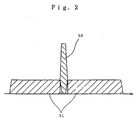
- random access communications 50 and continuous communications such as speech communications 51 are separated from each other by being assigned to different frequency bands.
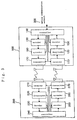
- Fig. 3 shows in block form a mobile communication system for carrying out a method of controlling random access according to a first embodiment of the present invention.
- the mobile communication system generally comprises a mobile communication network 300, a base station 100, and a mobile station 200 for communicating with the base station 100.
- the mobile station 200 comprises a receiver 210, a despreader 220, a decoder 230, a controller 240, an encoder 250, a spreader 260, and a transmitter 270.
- the receiver 210 receives a signal transmitted from the base station 100.
- the despreader 220 despreads the signal received by the receiver 210 according to a predetermined despreading code.
- the decoder 230 decodes information contained in the received signal which has been despread by the despreader 220.
- the encoder 250 encodes a signal to be transmitted which is generated by the controller 240.
- the spreader 260 spreads the signal to be transmitted which has been encoded by the encoder 250 according to a predetermined spreading code.
- the transmitter 270 transmits the signal spread by the spreader 260.
- the controller 240 controls the receiver 210, the despreader 220, and the decoder 230 to receive and decode a signal transmitted from the base station 100.
- the controller 240 also controls the encoder 250, the spreader 260, and the transmitter 270 to transmit information to the base station 100.
- the controller 240 controls the receiver 210, the despreader 220, and the decoder 230 to receive a signal transmitted from the base station 100 and decode idle information about a frequency band for random access which is contained in the received signal. If there is an idle frequency band for random access, then the controller 240 controls the spreader 260 and the transmitter 270 to spread a reservation packet for reserving a packet transmission according to the predetermined spreading code, and transmits the reservation packet using the idle frequency band for random access.
- the controller 240 controls the receiver 210, the despreader 220, and the decoder 230 to receive and decode a signal representing the permission for the packet transmission. Then, the controller 240 also controls the encoder 250, the spreader 260, and the transmitter 270 to transmit the packet at a permitted time according to the spreading code.
- the base station 100 comprises a receiver 110, a despreader 120, a decoder 130, a controller 140, an encoder 150, a spreader 160, and a transmitter 170.
- the receiver 110 receives a signal transmitted from the mobile station 200.
- the despreader 120 despreads the signal received by the receiver 110 according to a predetermined despreading code.
- the decoder 130 decodes information contained in the received signal which has been despread by the despreader 120.
- the encoder 150 encodes a signal to be transmitted which is generated by the controller 140.
- the spreader 160 spreads the signal to be transmitted which has been encoded by the encoder 150 according to a predetermined spreading code.
- the transmitter 170 transmits the signal spread by the spreader 160.
- the controller 140 controls the receiver 110, the despreader 120, and the decoder 130 to receive and decode a signal transmitted from the mobile station 200.
- the controller 140 also controls the encoder 150, the spreader 160, and the transmitter 170 to transmit information to the mobile station 200.
- the controller 140 controls the encoder 150, the spreader 160, and the transmitter 170 to transmit a broadcasting signal representing idle information about a frequency band for random access to the mobile station 200.
- the mobile station 200 transmits a reservation packet, if necessary, to the base station 100.
- the controller 140 controls the receiver 110, the despreader 120, and the decoder 130 to receive the reservation packet from the mobile station 200 in a frequency band for random access according to a spreading code for random access.
- the controller 140 controls the encoder 150, the spreader 160, and the transmitter 170 to transmit broadcast information to the mobile station 200, which contains information indicative of permission for a packet transmission and information indicative of a transmission time and a spreading code.
- the mobile station 200 now transmits a packet in response to the permission of the packet transmission.
- the controller 140 controls the receiver 110, the despreader 120, and the decoder 130 to receive the packet from the mobile station 200 at the transmission time indicated by the broadcast information according to the spreading code indicated by the broadcast information.
- Fig. 4 shows an operation sequence of the mobile communication system shown in Fig. 3.
- the mobile communication system carries out random access communications in a frequency band which does not degrade, or minimizes adverse effects, on continuous communications such as speech communications, e.g., a frequency band adjacent to a frequency band used for continuous communications as shown in Fig. 2.
- the base station 100 transmits idle information about a frequency band for random access in step 11.
- the mobile station 200 receives the transmitted idle information about the frequency band for random access in step 12.
- the mobile station 200 decides whether the frequency band for random access is idle or not in step 13. If a frequency band for random access is idle, then the mobile station 200 transmits a reservation packet in the frequency band for random access according to a spreading code for random access in step 14. If a frequency band for random access is not idle, then the mobile station 200 waits until a frequency band for random access becomes idle.
- the base station 100 receives the reservation packet in the frequency band for random access according to the spreading code for random access from the mobile station 200.
- the base station 100 broadcasts information representing permission, a transmission time, and a spreading code for a packet transmission to the mobile station 200 from which the received reservation packet has been received, in step 16.
- step 17 the mobile station 200 receives the information representing the permission of the packet transmission from the base station 100.
- the mobile station 200 transmits a packet at the transmission time according to the spreading code in step 18.
- the base station 100 receives the packet from the mobile station 200 at the indicated time according to the indicated spreading code.
- the mobile station 200 carries out random access communications in a frequency band which does not degrade, or minimizes adverse effects on, continuous communications such as speech communications, as described above. If a frequency band for random access communications and a frequency band for continuous communications such as speech communications are completely separate from each other in a frequency space, then the quality of the continuous communications such as speech communications is not impaired by the random access communications.
- a frequency band for random access communications and a frequency band for continuous communications such as speech communications overlap each other in frequency space, then the quality of the continuous communications such as speech communications is adversely affected by the random access communications because they interfere with each other depending on the power overlapped. Since the available frequency bands are limited, it is an effective practice to establish a frequency band used for random access communications in a valley between frequency bands used for continuous communications such as speech communications for effectively utilizing frequencies and allowing a certain amount of quality degradation, as shown in Fig. 2.
- a frequency band used for random access communications can be narrowed, the extent the frequency band is narrowed can be used for continuous communications such as speech communications.
- the frequency band is narrowed to 1/10 when the spreading ratio is 1/10.
- the code rate is 10 kcps (chips/second) and the frequency band is 10 kHz.
- the code rate is 1 kcps and the frequency band is 1 kHz. Therefore, by lowering one or both of the spreading ratio for random access communications and the symbol rate, the frequency band can be narrowed.
- FIG. 7 A specific example of the first embodiment described above will be described below.
- an FDD (Frequency Division Duplex) process in which different frequencies are used by upstream and downstream communications is employed, and a frequency band for random access communications is assigned to a valley between upstream and downstream frequency bands.
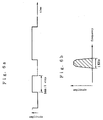
- the specific example employs a mobile communication system which is basically the same as the mobile communication system according to the first embodiment described above. Therefore, operation of the specific example will be described below with reference to Figs. 3, 4, 7, 8a - 8c, and 9a - 9d.
- each of the upstream and downstream frequency bands is 5 MHz
- the upstream frequency band has a central frequency of 1997.5 MHz
- the downstream frequency band has a central frequency of 2002.5 MHz
- the frequency band for random access communications is 50 kHz and has a central frequency of 2000 MHz.
- the base station 100 transmits a FACH (Forward Access Channel) for controlling random access communications in step 11.
- the FACH contains idle information I/B (Idle/Busy) about the frequency band for random access communications, a mobile station identifier MSI (Mobile Subscriber Identifier) of a mobile station whose packet transmission is permitted, a start frame number FRN (FRame Number), and a frame number LEN (LENgth) at which a packet is to be transmitted.
- I/B Idle/Busy
- MSI Mobile Subscriber Identifier
- FRN FRame Number
- LEN LEN
- the mobile station 200 receives the FACH and decodes the idle information I/B about the frequency band for random access communications in step 12.
- the mobile station 200 decides whether the frequency band for random access is idle or not in step 13. If the frequency band for random access is idle, i.e., if the idle information I/B indicates "Idle", then the mobile station 200 transmits a RACH (Random Access Channel) in the frequency band for random access according to a spreading code for random access in step 14. As shown in Fig. 8b, the RACH contains a mobile station identifier MSI and a frame number LEN at which a packet is to be transmitted. In this example, the mobile station identifier MSI is 0001 and the number of frames with which a packet is to be transmitted is 3. If the frequency band for random access is not idle, i.e., if the idle information I/B indicates "Busy", then the mobile station 200 waits until the frequency band for random access becomes idle.
- a RACH Random Access Channel
- the base station 100 receives the RACH in the frequency band for random access according to the spreading code for random access from the mobile station 200.
- the FACH sent by the base station 100 is shown in Fig. 9c.
- a mobile communication system for carrying out a method of controlling random access according to a second embodiment of the present invention is basically the same as the mobile communication system for carrying out the method of controlling random access according to the first embodiment of the present invention.
- the method of controlling random access according to the second embodiment of the present invention will be described below with reference to Figs. 3 and 10.
- the controller 240 controls the receiver 210, the despreader 220, and the decoder 230 to receive and decode idle information about a time slot for random access. If the time slot for random access is idle, then the spreader 260 and the transmitter 270 transmit a reservation packet in the time slot for random access according to a spreading code for random access.
- the receiver 210, the despreader 220, and the decoder 230 receive and decode information, transmitted from the base station 100, indicative of a permission of a packet transmission from the mobile station 200.
- the controller 240 controls the encoder 250, the spreader 260, and the transmitter 270 to transmit a packet at a transmission time permitted by the base station 100 according to a spreading code permitted by the base station 100.
- the controller 140 also controls the encoder 150, the spreader 160, and the transmitter 170 to transmit idle information about a time slot for random access to the mobile station 200.
- the mobile station 200 transmits a reservation packet, if necessary, to the base station 100.
- the receiver 110, the despreader 120, and the decoder 130 in the base station 100 receive the reservation packet from the mobile station 200 in a time slot for random address according to a spreading code for random access.
- the encoder 150, the spreader 160, and the transmitter 170 in the base station 100 transmit broadcast information to the mobile station 200 that has transmitted the reservation packet, which contains information indicative of a permission of a packet transmission and information indicative of a transmission time and a spreading code.
- the mobile station 200 whose packet transmission is permitted now transmits a packet to the mobile station 100.
- the receiver 110, the despreader 120, and the decoder 130 in the mobile station 200 receive the packet from the mobile station 200 at the indicated transmission time according to the indicated spreading code.
- Fig. 10 illustrates how time slots are used in the method of controlling random access according to the second embodiment of the present invention.
- time slots 60 for random access communications and time slots 61 for continuous communications such as speech communications are separate from each other, and hence will be separately used.
- Fig. 11 shows an operation sequence of the base station 100 and the mobile station 200 in the method of controlling random access according to the second embodiment of the present invention. Operation of the mobile communication system for carrying out the method of controlling random access according to the second embodiment of the present invention will be described below with reference to Fig. 11.
- the base station 100 transmits idle information about a time slot for random access in step 21.
- the mobile station 200 receives the transmitted idle information about the time slot for random access in step 22. Then, the mobile station 200 decides whether the time slot for random access is idle or not in step 23. If the time slot for random access is idle, then the mobile station 200 transmits a reservation packet in the time slot for random access according to a spreading code for random access in step 24. If the time slot for random access is not idle, then the mobile station 200 waits until the time slot for random access becomes idle.
- step 25 the base station 100 receives the reservation packet in the time slot for random access according to the spreading code for random access from the mobile station 200.
- the base station 100 sends information representing a permission, a transmission time, and a spreading code for a packet transmission to the mobile station 200 from which the received reservation packet has been received, in step 26.
- step 27 the mobile station 200 receives the information representing the permission of the packet transmission from the base station 100.
- the mobile station 200 transmits a packet at the permitted transmission time according to the permitted spreading code in step 28.
- the base station 100 receives the packet from the mobile station 200 at the indicated time according to the indicated spreading code in step 29.
- a mobile communication system for carrying out a method of controlling random access according to a third embodiment of the present invention is basically the same as the mobile communication system for carrying out the method of controlling random access according to the first embodiment of the present invention. Therefore, the mobile communication system for carrying out the method of controlling random access according to the third embodiment of the present invention will not be described below in detail.
- the mobile station 200 transmits speech information or the like with a packet for random access, without using a reservation packet.
- broadcast information containing congestion information about a frequency band for random access communications and information about random access communications which have successfully been received by the base station 100 is sent from the base station 100 to the mobile station 200 via a downstream broadcast channel (BCCH).
- BCCH downstream broadcast channel
- the congestion information contained in the broadcast information sent via the downstream channel represents no congestion
- a packet is transmitted from the mobile station 200 to the base station 100 via an upstream random access channel.
- Fig. 12 shows an operation sequence of the above process according to the third embodiment.
- the base station 100 transmits congestion information as idle information about a frequency band for random access in step 31.
- the mobile station 200 receives the congestion information in step 32.
- the mobile station 200 decides whether the congestion information represents no congestion, i.e., whether the frequency band for random access is idle or not, in step 33. If the congestion information represents no congestion, i.e., if the frequency band for random access is idle, then the mobile station 200 transmits a desired packet for random access in the frequency band for random access according to a spreading code for random access in step 34. If the frequency band for random access is not idle, then the mobile station 200 waits until the frequency band for random access becomes idle.
- the base station 100 receives the packet for random access from the mobile station 200 in the frequency band for random access according to the spreading code in step 35.
- the base station 100 indicates to the mobile station 200 that the reception of the packet for random access communications has been successful in step 36.
- a mobile communication system for carrying out a method of controlling random access according to a fourth embodiment of the present invention is basically the same as the mobile communication system for carrying out the method of controlling random access according to the first embodiment of the present invention. Therefore, the mobile communication system for carrying out the method of controlling random access according to the third embodiment of the present invention will not be described below in detail.
- the mobile station 200 transmits desired information with a packet for random access, without using a reservation packet.
- broadcast information containing congestion information about a time slot for random access communications and information about random access communications which have successfully been received by the base station 100 is sent from the base station 100 to the mobile station 200 via a downstream broadcast channel.
- a packet is transmitted from the mobile station to the base station via an upstream random access channel. Specifically, if the congestion information about the time slot for random access communications, contained in the broadcast information, represents no congestion, the packet is transmitted in the time slot which is idle. In this manner, packets are transmitted at random from the mobile station to the base station. When the reception of the packet is successful, the base station transmits the information about random access communications which have successfully been received, contained in the broadcast information.
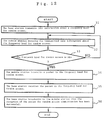
- Fig. 13 shows an operation sequence of the above process according to the fourth embodiment.
- the base station 100 transmits idle information about a time slot for random access in step 41.
- the mobile station 200 receives the idle information about the time slot for random access in step 42.
- the mobile station 200 decides whether the time slot for random access is idle or not, in step 43. If the time slot for random access is idle, then the mobile station 200 transmits a packet for random access in the time slot for random access according to a spreading code for random access in step 44. If the time slot for random access is not idle, then the mobile station 200 waits until the time slot for random access becomes idle.
- the base station 100 receives the packet for random access from the mobile station 200 in the frequency band for random access according to the spreading code in step 45.
- the base station 100 indicates to the mobile station 200 that the reception of the packet for random access communications has been successful in step 46.
- continuous communications such as speech communications are prevented from being interrupted regardless of whether the load of random access communications is large or small, so that the quality of communications is kept at a high level.
Landscapes
- Engineering & Computer Science (AREA)
- Computer Networks & Wireless Communication (AREA)
- Signal Processing (AREA)
- Quality & Reliability (AREA)
- Computer Security & Cryptography (AREA)
- Mobile Radio Communication Systems (AREA)
Applications Claiming Priority (3)
| Application Number | Priority Date | Filing Date | Title |
|---|---|---|---|
| JP32906397 | 1997-11-28 | ||
| JP32906397A JP3127867B2 (ja) | 1997-11-28 | 1997-11-28 | 移動通信システムにおけるランダムアクセス制御方法 |
| JP329063/97 | 1997-11-28 |
Publications (2)
| Publication Number | Publication Date |
|---|---|
| EP0920226A2 true EP0920226A2 (fr) | 1999-06-02 |
| EP0920226A3 EP0920226A3 (fr) | 2001-04-25 |
Family
ID=18217205
Family Applications (1)
| Application Number | Title | Priority Date | Filing Date |
|---|---|---|---|
| EP19980122435 Withdrawn EP0920226A3 (fr) | 1997-11-28 | 1998-11-26 | Commande d'accèss aleatoire dans un système de communication mobile sans interompre des communications continuées |
Country Status (6)
| Country | Link |
|---|---|
| US (1) | US6351459B1 (fr) |
| EP (1) | EP0920226A3 (fr) |
| JP (1) | JP3127867B2 (fr) |
| KR (1) | KR100306234B1 (fr) |
| CN (1) | CN1115065C (fr) |
| BR (1) | BR9805549A (fr) |
Cited By (8)
| Publication number | Priority date | Publication date | Assignee | Title |
|---|---|---|---|---|
| US6674731B1 (en) | 1999-08-27 | 2004-01-06 | Tachyon, Inc. | Transmission and reception of TCP/IP data over a wireless communication channel |
| US6735188B1 (en) | 1999-08-27 | 2004-05-11 | Tachyon, Inc. | Channel encoding and decoding method and apparatus |
| US6847626B1 (en) | 1998-07-21 | 2005-01-25 | Tachyon, Inc. | Method and apparatus for multiple access in a communication system |
| US6982969B1 (en) | 1999-09-28 | 2006-01-03 | Tachyon, Inc. | Method and system for frequency spectrum resource allocation |
| US7298721B2 (en) | 2000-02-02 | 2007-11-20 | Ntt Docomo, Inc. | Single-carrier/DS-CDMA packet transmitting method, uplink packet transmitting method in multi carrier/DS-CDMA mobile communication system, and structure of downlink channel in multi carrier/DS-CDMA mobile communication system |
| US7787519B2 (en) | 2001-11-08 | 2010-08-31 | Ntt Docomo, Inc. | Preamble transmission method, mobile station, mobile communication system, preamble transmission program and computer data signal |
| WO2015094046A1 (fr) * | 2013-12-18 | 2015-06-25 | Telefonaktiebolaget L M Ericsson (Publ) | Dispositifs sans fil émetteur et récepteur et procédés respectifs mis en œuvre par eux pour transmission de données dans un réseau sans fil à contention |
| WO2018102037A1 (fr) * | 2016-12-01 | 2018-06-07 | Qualcomm Incorporated | Techniques d'écoute avant de parler dans des systèmes synchrones |
Families Citing this family (19)
| Publication number | Priority date | Publication date | Assignee | Title |
|---|---|---|---|---|
| US6674730B1 (en) | 1998-08-04 | 2004-01-06 | Tachyon, Inc. | Method of and apparatus for time synchronization in a communication system |
| US6563809B1 (en) | 1999-04-28 | 2003-05-13 | Tantivy Communications, Inc. | Subscriber-controlled registration technique in a CDMA system |
| US6665292B1 (en) | 1999-08-27 | 2003-12-16 | Tachyon, Inc. | Transmission and reception of TCP/IP data over a wireless communication channel |
| US6650636B1 (en) | 1999-08-27 | 2003-11-18 | Tachyon, Inc. | Transmission and reception of TCP/IP data over a wireless communication channel |
| US6532220B1 (en) | 1999-08-27 | 2003-03-11 | Tachyon, Inc. | System and method for efficient channel assignment |
| EP1401157B1 (fr) * | 2001-06-29 | 2006-10-25 | Mitsubishi Denki Kabushiki Kaisha | Systeme, procede et programme de transmission de paquets et moyen d'enregistrement pour ce programme |
| US7167913B2 (en) * | 2002-06-05 | 2007-01-23 | Universal Electronics Inc. | System and method for managing communication links |
| JP2005130256A (ja) * | 2003-10-24 | 2005-05-19 | Ntt Docomo Inc | 移動局装置、基地局装置、無線通信システムおよび無線通信方法 |
| JP4515312B2 (ja) * | 2005-03-31 | 2010-07-28 | 株式会社エヌ・ティ・ティ・ドコモ | 移動局、送信方法および移動無線通信システム |
| JP4527067B2 (ja) * | 2005-03-31 | 2010-08-18 | 株式会社エヌ・ティ・ティ・ドコモ | 移動局、送信方法及び移動通信システム |
| US8503413B2 (en) | 2006-08-29 | 2013-08-06 | Sharp Kabushiki Kaisha | Mobile communication system, mobile station apparatus, base station apparatus and random access channel transmitting method |
| US8130780B2 (en) | 2007-06-15 | 2012-03-06 | Futurewei Technologies, Inc. | Method and apparatus for assigning resources in a wireless system with multiple regions |
| US8614985B2 (en) * | 2007-06-15 | 2013-12-24 | Futurewei Technologies, Inc. | Method and apparatus for sharing a group resource in a wireless SDMA system |
| US20080310359A1 (en) * | 2007-06-15 | 2008-12-18 | Mcbeath Sean Michael | Method and Apparatus for Sharing Resources in a Wireless System |
| US9544911B2 (en) | 2007-08-10 | 2017-01-10 | Futurewei Technologies, Inc. | System and method for assigning communications resources in a wireless communications system |
| US8254942B2 (en) * | 2007-11-27 | 2012-08-28 | Futurewei Technologies, Inc. | System and method for resource allocation in a wireless communications system |
| US8457618B2 (en) * | 2008-06-20 | 2013-06-04 | Motorola Mobility Llc | Preventing random access based on outdated system information in a wireless communication system |
| JP2011530929A (ja) * | 2008-08-14 | 2011-12-22 | コーニンクレッカ フィリップス エレクトロニクス エヌ ヴィ | ネットワークにおいて通信するための方法、そのための二次局及びシステム |
| US20150163847A1 (en) * | 2011-12-05 | 2015-06-11 | Srikathyayani Srikanteswara | Techniques for managing the transfer of a wireless connection between wireless networks, channels or bands |
Family Cites Families (12)
| Publication number | Priority date | Publication date | Assignee | Title |
|---|---|---|---|---|
| EP0565507A3 (en) * | 1992-04-10 | 1994-11-30 | Ericsson Ge Mobile Communicat | Power control for random access call set-up in a mobile telephone system |
| SE500565C2 (sv) * | 1992-10-26 | 1994-07-18 | Ericsson Telefon Ab L M | Metod att åstadkomma slumpmässig access i ett mobilradiosystem |
| DE69433336T3 (de) * | 1993-03-05 | 2008-06-19 | Ntt Mobile Communications Network Inc. | Cdma kommunikationsverfahren mit selektivem zugriff und anordnung für mobile stationen in denen dieses verfahren angewandt wird |
| JPH06276176A (ja) | 1993-03-18 | 1994-09-30 | Fujitsu Ltd | Cdma通信方式 |
| GB2281470B (en) * | 1993-04-02 | 1998-07-15 | Motorola Ltd | Multichannel random access communications system |
| FI98427C (fi) * | 1994-06-08 | 1997-06-10 | Nokia Mobile Phones Ltd | Järjestelmäpakettidatan siirtämiseksi eri bittinopeuksilla TDMA-solukkojärjestelmässä |
| US5689503A (en) * | 1994-07-15 | 1997-11-18 | Ntt Mobile Communications Network Inc. | Random access system of a mobile communication system |
| US5673259A (en) * | 1995-05-17 | 1997-09-30 | Qualcomm Incorporated | Random access communications channel for data services |
| JP3212238B2 (ja) | 1995-08-10 | 2001-09-25 | 株式会社日立製作所 | 移動通信システムおよび移動端末装置 |
| JP2912884B2 (ja) | 1995-12-14 | 1999-06-28 | エヌ・ティ・ティ移動通信網株式会社 | Cdma移動通信システムにおけるマルチアクセス方法および移動局ならびに基地局 |
| US6314081B1 (en) * | 1996-01-18 | 2001-11-06 | Ericsson Inc. | High power short message service using dedicated carrier frequency |
| US6181941B1 (en) * | 1997-07-23 | 2001-01-30 | Nortel Networks Corporation | Method of integrating handoff queuing with adaptive handoff reserve channels |
-
1997
- 1997-11-28 JP JP32906397A patent/JP3127867B2/ja not_active Expired - Fee Related
-
1998
- 1998-11-24 US US09/198,512 patent/US6351459B1/en not_active Expired - Fee Related
- 1998-11-26 EP EP19980122435 patent/EP0920226A3/fr not_active Withdrawn
- 1998-11-27 KR KR1019980051367A patent/KR100306234B1/ko not_active Expired - Fee Related
- 1998-11-27 CN CN98124874A patent/CN1115065C/zh not_active Expired - Fee Related
- 1998-11-27 BR BR9805549A patent/BR9805549A/pt not_active IP Right Cessation
Cited By (12)
| Publication number | Priority date | Publication date | Assignee | Title |
|---|---|---|---|---|
| US6847626B1 (en) | 1998-07-21 | 2005-01-25 | Tachyon, Inc. | Method and apparatus for multiple access in a communication system |
| US7203204B2 (en) | 1998-07-21 | 2007-04-10 | Tachyon Networks Incorporated | Method and apparatus for multiple access in a communication system |
| US6674731B1 (en) | 1999-08-27 | 2004-01-06 | Tachyon, Inc. | Transmission and reception of TCP/IP data over a wireless communication channel |
| US6735188B1 (en) | 1999-08-27 | 2004-05-11 | Tachyon, Inc. | Channel encoding and decoding method and apparatus |
| US6982969B1 (en) | 1999-09-28 | 2006-01-03 | Tachyon, Inc. | Method and system for frequency spectrum resource allocation |
| US7298721B2 (en) | 2000-02-02 | 2007-11-20 | Ntt Docomo, Inc. | Single-carrier/DS-CDMA packet transmitting method, uplink packet transmitting method in multi carrier/DS-CDMA mobile communication system, and structure of downlink channel in multi carrier/DS-CDMA mobile communication system |
| US8005110B2 (en) | 2000-02-02 | 2011-08-23 | Ntt Docomo, Inc. | Single carrier/DS-CDMA packet transmission method, an uplink packet transmission method in a multi-carrier/DS-CDMA mobile communications system, and a structure of a downlink channel in a multi-carrier/DS-CDMA mobile communications system |
| US7787519B2 (en) | 2001-11-08 | 2010-08-31 | Ntt Docomo, Inc. | Preamble transmission method, mobile station, mobile communication system, preamble transmission program and computer data signal |
| WO2015094046A1 (fr) * | 2013-12-18 | 2015-06-25 | Telefonaktiebolaget L M Ericsson (Publ) | Dispositifs sans fil émetteur et récepteur et procédés respectifs mis en œuvre par eux pour transmission de données dans un réseau sans fil à contention |
| US10285201B2 (en) | 2013-12-18 | 2019-05-07 | Telefonaktiebolaget Lm Ericsson (Publ) | Transmitting and receiving wireless devices and respective methods performed thereby for transmission of data in a contention based wireless network |
| WO2018102037A1 (fr) * | 2016-12-01 | 2018-06-07 | Qualcomm Incorporated | Techniques d'écoute avant de parler dans des systèmes synchrones |
| US10721769B2 (en) | 2016-12-01 | 2020-07-21 | Qualcomm Incorporated | Listen-before-talk techniques in synchronous systems |
Also Published As
| Publication number | Publication date |
|---|---|
| CN1219082A (zh) | 1999-06-09 |
| JPH11164367A (ja) | 1999-06-18 |
| JP3127867B2 (ja) | 2001-01-29 |
| BR9805549A (pt) | 1999-11-03 |
| KR100306234B1 (ko) | 2001-11-02 |
| CN1115065C (zh) | 2003-07-16 |
| EP0920226A3 (fr) | 2001-04-25 |
| KR19990045655A (ko) | 1999-06-25 |
| US6351459B1 (en) | 2002-02-26 |
Similar Documents
| Publication | Publication Date | Title |
|---|---|---|
| US6351459B1 (en) | Control random access in mobile communication system without interrrupting continuous communications | |
| EP1217852B1 (fr) | Procédé pour l'allocation de ressources radio et station de base utilisant ledit procédé | |
| AU734579B2 (en) | Channel assigning device and method in CDMA communication system | |
| EP0948149B1 (fr) | Méthode de communication entre station mobile et station de base dans un système de communication mobile | |
| JP2912884B2 (ja) | Cdma移動通信システムにおけるマルチアクセス方法および移動局ならびに基地局 | |
| JP3144778B2 (ja) | 通信システムへのアクセス | |
| JP4546135B2 (ja) | 無線端末装置、基地局、及び符号分割多重接続方式における逆方向共通チャネルのランダム接続方法 | |
| US5790534A (en) | Load control method and apparatus for CDMA cellular system having circuit and packet switched terminals | |
| JP4246379B2 (ja) | スペクトラム拡散通信システムにおけるパケットデータ通信スケジューリング | |
| US9198172B2 (en) | Deferred access method for uplink packet channel | |
| US5878350A (en) | Scheme for controlling transmission powers during soft handover in a CDMA mobile communication system | |
| JP4027647B2 (ja) | 通信制御方法、通信制御システム、移動機及び基地局 | |
| JP4376515B2 (ja) | 移動体通信システム | |
| JP3613379B2 (ja) | 通信システムのための非対称多重アクセスプロトコル | |
| US8005047B2 (en) | Handover method in code division multiple access communication system and system thereof | |
| KR101502922B1 (ko) | 통신시스템에서 트래픽 채널을 할당하기 위한 방법 및 장치 | |
| KR100461890B1 (ko) | 통신 단말 장치 | |
| US7024216B2 (en) | Method and apparatus for allocating a communication resource in a broadband communication system | |
| US6788659B1 (en) | Transmission control without limitation of the number of users | |
| EP1063855B1 (fr) | Système de transmission asymétrique de données dans un système de communication radio | |
| JP3387413B2 (ja) | 無線送受信方法 | |
| EP1102422A1 (fr) | Méthode et système pour améliorer l'efficacité de transmission dans des systèmes de communication TDMA multi-porteuses | |
| JPWO1999016279A1 (ja) | 無線通信装置及びその方法 |
Legal Events
| Date | Code | Title | Description |
|---|---|---|---|
| PUAI | Public reference made under article 153(3) epc to a published international application that has entered the european phase |
Free format text: ORIGINAL CODE: 0009012 |
|
| AK | Designated contracting states |
Kind code of ref document: A2 Designated state(s): DE GB |
|
| AX | Request for extension of the european patent |
Free format text: AL;LT;LV;MK;RO;SI |
|
| PUAL | Search report despatched |
Free format text: ORIGINAL CODE: 0009013 |
|
| AK | Designated contracting states |
Kind code of ref document: A3 Designated state(s): AT BE CH CY DE DK ES FI FR GB GR IE IT LI LU MC NL PT SE |
|
| AX | Request for extension of the european patent |
Free format text: AL;LT;LV;MK;RO;SI |
|
| 17P | Request for examination filed |
Effective date: 20010820 |
|
| AKX | Designation fees paid |
Free format text: DE GB |
|
| 17Q | First examination report despatched |
Effective date: 20080414 |
|
| STAA | Information on the status of an ep patent application or granted ep patent |
Free format text: STATUS: THE APPLICATION IS DEEMED TO BE WITHDRAWN |
|
| 18D | Application deemed to be withdrawn |
Effective date: 20080826 |