EP0920449B1 - Peptide abgeleitet aus dem morbillivirus - Google Patents
Peptide abgeleitet aus dem morbillivirus Download PDFInfo
- Publication number
- EP0920449B1 EP0920449B1 EP97942832A EP97942832A EP0920449B1 EP 0920449 B1 EP0920449 B1 EP 0920449B1 EP 97942832 A EP97942832 A EP 97942832A EP 97942832 A EP97942832 A EP 97942832A EP 0920449 B1 EP0920449 B1 EP 0920449B1
- Authority
- EP
- European Patent Office
- Prior art keywords
- amino acid
- vaccine
- acid sequence
- peptide
- morbillivirus
- Prior art date
- Legal status (The legal status is an assumption and is not a legal conclusion. Google has not performed a legal analysis and makes no representation as to the accuracy of the status listed.)
- Expired - Lifetime
Links
Images












Classifications
-
- C—CHEMISTRY; METALLURGY
- C07—ORGANIC CHEMISTRY
- C07K—PEPTIDES
- C07K14/00—Peptides having more than 20 amino acids; Gastrins; Somatostatins; Melanotropins; Derivatives thereof
- C07K14/005—Peptides having more than 20 amino acids; Gastrins; Somatostatins; Melanotropins; Derivatives thereof from viruses
-
- C—CHEMISTRY; METALLURGY
- C07—ORGANIC CHEMISTRY
- C07K—PEPTIDES
- C07K16/00—Immunoglobulins [IG], e.g. monoclonal or polyclonal antibodies
- C07K16/08—Immunoglobulins [IG], e.g. monoclonal or polyclonal antibodies against material from viruses
- C07K16/10—RNA viruses
- C07K16/11—Paramyxoviridae (F); Pneumoviridae (F), e.g. respiratory syncytial virus [RSV]
-
- A—HUMAN NECESSITIES
- A61—MEDICAL OR VETERINARY SCIENCE; HYGIENE
- A61K—PREPARATIONS FOR MEDICAL, DENTAL OR TOILETRY PURPOSES
- A61K39/00—Medicinal preparations containing antigens or antibodies
-
- C—CHEMISTRY; METALLURGY
- C07—ORGANIC CHEMISTRY
- C07K—PEPTIDES
- C07K2317/00—Immunoglobulins specific features
- C07K2317/30—Immunoglobulins specific features characterized by aspects of specificity or valency
- C07K2317/34—Identification of a linear epitope shorter than 20 amino acid residues or of a conformational epitope defined by amino acid residues
-
- C—CHEMISTRY; METALLURGY
- C12—BIOCHEMISTRY; BEER; SPIRITS; WINE; VINEGAR; MICROBIOLOGY; ENZYMOLOGY; MUTATION OR GENETIC ENGINEERING
- C12N—MICROORGANISMS OR ENZYMES; COMPOSITIONS THEREOF; PROPAGATING, PRESERVING, OR MAINTAINING MICROORGANISMS; MUTATION OR GENETIC ENGINEERING; CULTURE MEDIA
- C12N2760/00—MICROORGANISMS OR ENZYMES; COMPOSITIONS THEREOF; PROPAGATING, PRESERVING, OR MAINTAINING MICROORGANISMS; MUTATION OR GENETIC ENGINEERING; CULTURE MEDIA ssRNA viruses negative-sense
- C12N2760/00011—Details
- C12N2760/18011—Paramyxoviridae
- C12N2760/18411—Morbillivirus, e.g. Measles virus, canine distemper
- C12N2760/18422—New viral proteins or individual genes, new structural or functional aspects of known viral proteins or genes
Definitions
- the present invention relates to vaccines comprising peptides having an amino acid sequence corresponding to or imitating at least one sequential antigenic determinant of the hemagglutinin protein of a morbillivirus, wherein said antigenic determinant is the binding site of a neutralizing and protective antibody of a morbillivirus to certain sequential antigenic determinants and to peptides comprising such antigenic determinants.
- Morbillivirus such as, for example the measles, virus belong to Paramyxoviridae of RNA virus.
- Measles virus was first isolated in cell culture in 1954 (Enders, J.F. et al, Proc. Soc. Exp. Biol. Med., 86, 227-286, 1954) from David Edmonston. The Edmonston strain of measles virus became the progenitor for many live attenuated measles vaccine strains.
- the measles virus like many members of the paramyxovirus family, contains six major structural proteins: the matrix protein, the hemagglutinin protein, the fusion protein, the large protein, the phosphoprotein and the nucleocapsid protein. Of these, the envelope glycoprotein, hemagglutinin and fusion protein have been shown to be responsible for induction of measles virus neutralizing antibodies (see Varsanyl et al.; J. Gen. Viriol. 65, 365 (1984); Giraudon et al.
- Virol., 68, 1486-1493 (1994) have mapped neutralizing epitopes of measles virus hemagglutinin (MV-H) by sequencing escape mutants resistant to neutralizing antibodies. With this approach, amino acids were identified which were important for the integrity of the monoclonal antibodies (mAb) binding sites. In general neutralizing antibodies are mostly directed against conformational epitopes.
- Linear binding sites of the MV-H specific antibodies have been mapped with sera from late convalescent donors by peptide ELISA using a full set of overlapping peptides of the MV-H protein (Muller et al. 1993).
- the present invention relates to the preparation of immunogens and candidate vaccines made of peptides containing amino acid sequences mimicking sequential antigenic determinants of the hemagglutinin protein of morbilliviruses in general and of the measles virus (MV) in particular.
- MV measles virus
- a vaccine comprising a peptide having an amino acid sequence corresponding to or mimicking at least one sequential antigenic determinant of the hemagglutinin protein of a morbillivirus, wherein the antigenic determinant is the binding site of a neutralizing and protective antibody of a morbillivirus.
- This peptide in a vaccine alone or in combination with a T cell epitope is capable of eliciting a mammal to produce antibodies against said morbillivirus.
- Said peptide is either involved in the hemagglutination of Monkey Erythrocytes and/or in the neutralization of morbillivirus in vitro and/or in inducing a protection against a morbillivirus in vivo.
- the antigenic determinant is, according to a preferred embodiment, a binding site of an in vitro neutralizing and in vivo protective antibody of a morbillivirus,
- the protein may be the hemagglutinin (H) protein of a measles virus (MV).
- H hemagglutinin
- MV measles virus
- the peptide must preferably be recognized by an antibody which protects in vivo against the measles virus.
- said amino acid sequence comprises or mimicks at least a part of the amino acid sequence corresponding to amino acids 361 to 420 (HNE region) of the hemagglutinin protein of the Edmonston strain of MV or the corresponding domain of another morbillivirus, or a portion, variation, mutant or mimotope or conjugate thereof.
- said amino acid sequence comprises at least a part of the amino acid sequence corresponding to amino acids 381 to 400 of the hemagglutinin protein of the Edmonston strain of MV or the corresponding domain of another morbillivirus, or a portion, variation, mutant or mimotope or conjugate thereof.
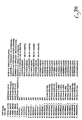
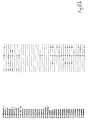
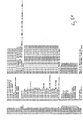
- said amino acid sequence is selected from any of the amino acid sequences set forth in Fig. 7 or a portion, variation, mutant or mimotope or conjugate of any such sequence.
- Said mutations may or may not involve one or more of the Cys residues.
- Said peptide can be in an oxidized or a reduced form wherein said oxidized form has disulfide bridges between sulfur-containing amino acids.
- the oxidized form is probably more active, than the reduced form but the reduced form is also active.
- a vaccine comprising a peptide wherein said amino acid sequence comprises at least a part of the amino acid sequence corresponding to amino acids 226 to 255 of the hemagglutinin protein of the Edmonston strain of MV or the corresponding domain of another morbillivirus, or a portion, variation, mutant or mimotope or conjugate thereof.
- Said peptide comprises preferably an amino acid sequence that corresponds to. amino acids 241 to 251 of the hemagglutinin protein of the Edmonston strain of MV or the corresponding domain of another morbillivirus, or a portion, variation, mutant or mimotope or conjugate.
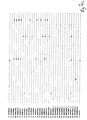
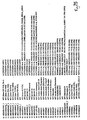
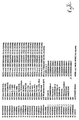
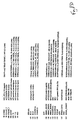
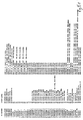
- said amino acid sequence is at least one selected from any of the amino acid sequences set forth in Fig. 15-18 or a portion, variation, mutant or mimotope or conjugate of any such sequence.
- the peptide has preferably less than 60 amino acid residues and most preferably less than 30 amino acid residues.
- the vaccine is suitable for the prevention of measles.
- the vaccine may comprises the peptide in an amount of about 0.1 micrograms to about 100 milligrams and further comprises, if necessary, a pharmaceutically acceptable diluent, adjuvant, carrier, T cell epitope or excipient.
- the peptide as described above is used in the manufacture of a medicament for the prevention and/or treatment of measles.
- a sequential antigenic determinant comprising at least a part of the amino acid sequence corresponding to amino acids 226 to 255 and/ or 361 to 410 of the hemagglutinin protein of the Edmonston strain of MV or a portion, variation, mutant or mimotope or conjugate of any such sequences.
- the invention also comprises peptides comprising at least one such sequential antigenic determinant.
- the peptide may also be used as a medicament in the prevention and/or treatment of a disease caused by a morbillivirus in general or for the prevention and/or treatment of measles in particular.
- antigenic determinant designates the structural component of a molecule that is responsible for specific interaction with corresponding antibody (immunoglobulin) molecules elicited by the same or related antigen.
- sequence antigenic determinant designates an antigenic determinant wherein the structural components of a molecule that are responsible for specific interaction with corresponding antibody (immunoglobulin) molecules elicited by the same or related antigen, are contained within a sequence of 30 amino acids of a protein sequence.
- Sequential antigenic determinants in the present peptides comprise chemically active surface groupings of a sequence of less than 30 amino acid residues independent (i) of whether the antigenic determinant requires a specific conformation or not, and (ii) independent of the location of the structural components within the amino acid sequence of the viral protein.
- Antigenic determinants to which this ad hoc definition does not apply are here referred to as "conformation antigenic determinants”.
- antigen means an entity that is bound by an antibody.
- immunogen describes an entity that induces antibody production in the host mammal. In some instances the antibody and the immunogen are the same entity while in other instances the two entities are different.
- immunogenic peptide is not a natural protein or a cleaved fragment of a natural protein, but a manufactured polypeptide which induces production of antibodies that bind to the inducing polypeptide and also to the naturally occurring protein which it replaces.
- the peptide may have the same or a similar amino acid sequence or may have a completely different sequence which mimicks the peptide.
- the latter peptide is referred to as a mimotope.
- peptide as used herein, describes an entity that is composed of a determined sequence of amino acid residues. “peptide” means that it can be produced by any well known methods of producing peptides, including the production by an organism which has eventually been genetically engineered, and then subsequently extracted, purified and/or modified.
- the MV Edmonston strain (ATCC VR-24 was grown in Vero cell cultures and its early passage supernatants were used for neutralization assays.
- BH216 Western blot and for one immunization (BH216) the virus was further concentrated and purified by sucrose gradient centrifugation (Muller et al ., J. Gen. Virol., 76, 1371-1380 (1995)).
- Virus used for all other immunizations was purified by affinity chromatography and inactivated by propiolactone. Ltk-cells transfected with H (Ltk-H; kindly provided by Drs. Wild and Beauverger; Beauverger et al ., J. Virol. Methods, 44, 199-210 (1993), J. Gen.
- Virol., 74, 2357-2363 (1994)) and a persistently infected human EBV-transformed B cell line (WMPT) were used to test the reactivity of the monoclonal antibodies with MV or MV-H protein by flow cytometry as described (Muller et al ., J. Gen. Virol., 76, 1371-1380 (1995)).
- mice 8-10 week old Balb/c mice were immunized by intraperitoneal or multifocal subcutaneous injections with purified native or denatured (5 min. boiling in 1 mg/ml SDS under non-reducing conditions) MV emulsified in incomplete Freund's Adjuvant (Sigma, USA). The animals were boosted with the same antigen preparation on day 21 and 38 (denatured MV) or day 49 (native MV). On day 41 or 52, the spleen cells were explanted and fused with Sp2/0 myeloma cells to generate monoclonal antibodies.
- Hybridomas specific for the MV by ELISA or by Western blot were cloned by limiting dilution in Dulbecco's modified Eagle medium (DMEM) supplemented with 10 mM hypoxanthine, 1 mM glutamine, 1 mM sodium pyruvate, 100 IU/ml penicillin, 100 ⁇ g/ml streptomycin and 10% fetal bovine serum (FBS; all products from GIBCO).
- Antibodies were purified from the same but FBS-free medium or from ascites and purified by affinity chromatography on a protein G column (Pharmacia, Sweden). Concentrations were estimated by O.D. 280 nm. Ig subclasses and isotypes were determined with the mouse monoclonal antibody isotyping kit (Hycult Biotechnology, NL).
- peptides were modified C-terminally by two ⁇ -amino caproic acid residues and one lysine residue which separate the peptide from the biotin residue which was coupled to the N ⁇ -amino group of lysine amide.
- peptides were biotinylated at their N-terminus using a similar spacer. All peptides are designated by the position of their N-terminal amino acid and correspond to 15mers unless stated otherwise Whenever stated, peptides were reduced with 140 mM 2-mercaptoethanol. Even much higher concentrations did not directly interfere with the ELISA assay, as was measured with an antibody specific for a peptide containing a single Cys.
- peptides were protected with 0.01% vitamin C from oxidation. When indicated, peptides were oxidized by bubbling air through a 5 ⁇ g/ml solution. Some peptides including truncation-, elongation- and glycin-substitution analogues have been synthesized as free peptides, which were used in competition peptide ELISA.
- MV-ELISA MV-specific antibodies were detected using a commercial ELISA based on human diploid cells (Enzygnost, Behringwerke Marburg).For the titration of the mAbs, microtiter plates coated overnight with MV concentrate were used.
- Free binding sites were saturated with 1% BSA (Sigma, USA) in TBS.
- the blocking buffer contained 10% BSA, 10% saccharose and 2% v/v normal goat serum (ICN Biomedical, Belgium) in PBS.
- the plates were either incubated for 1.5 hours at 37°C or overnight at 4°C with mouse sera or hybridoma supernatants diluted 1/200- or 1/20-fold respectively in dilution buffer (10 mM Tris buffered saline, 1% BSA, 0.1% Tween, pH 7.4) respectively.
- the ELISAs were developed with alkaline phosphatase-conjugated goat immunoglobulin (whole molecule) specific for ⁇ -chain of mouse or human IgG (Sigma, St. Louis, USA) at a dilution of 1:500 in dilution buffer using p-nitrophenylphosphate (Sigma, USA) as a substrate. Absorbance was measured at 405 nm.
- Microtiter plates were coated with measles virus overnight and blocked with blocking buffer. Premixed solution of saturated concentration of monoclonal antibody and decreasing concentrations of peptide were added to the plate and incubated for one hour. The ELISA was developed as described above.
- NT Neutralization
- HI hemagglutination inhibition
- PR plaque reduction
- NT and HI were performed as described earlier (Muller et al., J.Gen. Virol. 76:1371; 1995).
- the plaque reduction assay was done by preincubating 5-fold dilutions of purified mAbs with 40 pfu MV for 1h at 4°C in DMEM containing 2% Ultraser and antibiotics. Then the mixture was added to Vero cells grown in the same medium. After 1h incubation at 37°C, the inocculum was washed out. The cells were covered with the same tissue culture medium containing 1% agar gel. The number of plaques were counted after staining with neutral red.
- mice (CBA or Balb/c) were immunized with on day 0, and boosted on day 14 with 25ug peptide coupled to KLH-maleimide-Cys emulsified in CFA/IFA. Animals were bled on day 21.
- the screening was performed essentially according to the standard method described by Parmley and Smith, Gene 73:305-318 (1988). Panning tubes (Maxisorb, Nunc) were coated with 20 ⁇ g of antibody and after blocking with the above blocking buffer, they were incubated with 2x10 11 infective phages from the library. After washing off the non-binders, the bound phages were eluted from the tubes and amplified in bacteria. After three rounds of screening, a negative selection on an irrelevant antibody was done to select specific phages.
- a panel of 60 H-specific clones were obtained after immunization with native or denatured MV. Linear epitopes of these clones were mapped using an ELISA based on biotinylated peptides. 7 monoclonal antibodies were found to react with peptides corresponding to the amino acids 361-410 .
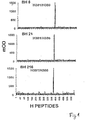
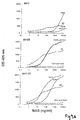
- MAb BH168 and BH171 reacted with peptides H361/H366, BH6, BH21 and BH216 with H381/H386 (Fig. 1), BH147 and BH195 with H386/H391/H396. The specificity of the binding has been confirmed by competition with free amide peptides (data not shown).
- the above monoclonal antibodies recognized the MV both in a certified diagnostic ELISA (Enzygnost, Behringwerke, Marburg) or when purified MV was coated to the plates ( Table 1 ).
- BH6, BH21 and BH216 reacted about 500-times stronger than BH171, 168 or 195 (data not shown). Under non-reducing conditions they all identified a 160 kD protein in the Western blot, corresponding to the dimeric form of the H protein (Gerlier et al ., J. Gen. Virol., 69, 2061-2069 (1988); Rima, J. Gen. Virol., 64, 1205-1219 (1983)). This was confirmed both with purified MV and recombinant H protein.
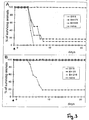
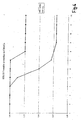
- Fig. 3 shows that 62+/-6 ⁇ g BH6, BH21, BH216 were sufficient to protect animals from lethal challenge. In contrast, a 5-6 fold higher dose of mAb BH147 and BH195 (which recognize an overlapping region) or BH168 and BH171 did not protect in vivo.
- BH6, BH21 and BH216 recognized the MV only under non-reducing conditions suggesting that a disulfide bridge is required for binding.
- the 15mer peptide H381 has a Cys in position 381 and shares two additional Cys in position 386 and 394 with peptide H386.
- a 20mer peptide (381-400) corresponding to the sequence of peptide H381 and H386 inhibited binding of monoclonal antibodies BH6, BH21 and BH216 to these 15mers, but inhibition was lost when the three Cys were replaced by amino butyric acid (Abu; data not shown).
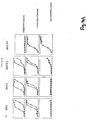
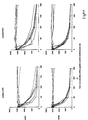
- Fig. 4a shows that BH6, BH21 reacted about 4 times stronger with peptide H381 than with H386, while BH216 reacts equally well with H381 and H386.
- the three monoclonal antibodies recognized the oxidized peptides 4-64 times more efficiently than the reduced species.
- MAb BH195 reacts with peptide H386 and H391 irrespective of the disulfide bond.
- Fig. 4b shows that the substitution of Cys386 by Abu decreases binding of monoclonal antibodies BH6 and BH21 to oxidized H386 almost 100-fold. Substitution of Cys394, either alone or together with Cys386 completely obliterates binding of these monoclonal antibodies. Binding of BH216 was considerably less sensitive to reduction and to Abu-substitution. Virtually no difference in binding is found between oxidized and reduced Abu-derivatives. The reaction of BH195 is independent of Abu-substitution or the oxidation state. The results showed that a cystin loop is required for optimal binding of the neutralizing antibodies BH6, BH21 but not of BH216. However, it also shows that some of the reactivity is to a linear part of the peptide. Therefore, peptide H386 was truncated from the C-terminus.
- C-terminal truncation of peptide H386 showed that both in the reduced or oxidized state of the 14mer is required for maximal binding of mAb BH6, BH21 and BH216, both in the reduced and oxidized state ( Fig. 4c ).
- the antibodies did not react with the 10mer or shorter peptides even at the highest concentrations used (not shown).
- C-terminal elongation did not further enhance binding.
- the C-terminal linear tail contributes to the binding affinity.
- the H protein of the MV is about 60% homologous with the RPV (Tsukiyama et al., Virology, 160, 48-54 (1987); Yamanaka et al., Virology, 166, 251-253 (1988)) and about 34% with CDV (Curran et al., J. Gen. Virol., 72, 443-447 (1991)).
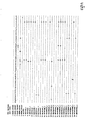
- the amino acid sequence 381 to 400 of the H-protein of different morbillivirus (Fig. 7) shows very little homology but the Cys residues are fully conserved, indicating that these Cys are functionally critical.
- the present antibodies against H381-400 region define a local loop protruding from the surface of the MV-H which contains an epitope involved in hemagglutination and neutralization ("HNE-loop") and which can be imitated by short peptide loops.
- HNE-loop epitope involved in hemagglutination and neutralization
- Such peptides are of interest for being incorporated into a subunit vaccine.
- the HNE region is defined by the following procedure:
- Cys381 will be designated Cys I, Cys 386 as Cys II, Cys394 as Cys III,
- the functional region of the virus corresponds to the region from Cysl to Cys III plus at least 6 amino acids.
- a particular interesting sequence of the functional region is defined by the cysteine cluster region comprising at least two cysteines in position 386 and cysteine C394 of the Edmonston strain (C386KGKIQALC394ENPEWA)
- a peptide with at least 16 amino acids comprising at least two cysteine residues separated by between 4 and 14 other amino acids is capable of immunologically mimicking a morbillivirus in general and the measles virus in particular.
- the peptide has preferably less than 60 amino acids and most preferably less than 30 amino acids.
- the peptide may comprise at least one third cysteine residue which is separated from one of the other cysteine residues by between 4 and 14 and preferably by 7 other amino acids.
- the peptide is maybe in an oxidized or reduced form wherein said oxidized form has disulfide bridges between sulfur-containing amino acids.
- peptide-based MV vaccines are their potential to escape maternal antibodies transferred from the mother onto the child.
- Such a subunit vaccine could be used conceivably to induce neutralizing antibodies in the presence of antibodies from vaccinated or wild-type infected mothers
- BH1 recognized the pentadecamer (226-240) but not the free octamer (226-233). H226 in a competition ELISA, indicating that the amino acids 233-240 are critical for binding of this mAb.
- BH47, BH59, BH103 and BH129 were found to bind to peptides H236 and H241, covering the amino acids 236-255. The specificity of the binding has been confirmed by competition with free amide peptides and irrelevant peptides (data not shown).
- the mAbs generated a typical band of 80kD under denaturating and reducing conditions by Western blot.
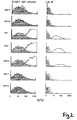
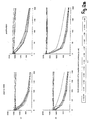
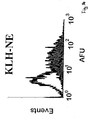
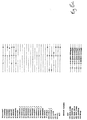
- the epitope defined by the peptides H236 and H241 was further studied using free truncation analogues ( Figure 11 ) and a series of peptides with monosubstitutions of each amino-acid by glycin ( Figure 12 ). These data localized the epitope between amino acids 241-250.
- the amino acids E245, L246, Q248, and L249 were critical amino acids for binding of BH47, BH59, BH103 and BH129.
- S247 seems to play a role.
- the other amino acids did not seem to be substantially involved in the binding of these mAbs.
- Table 2 shows that BH47, BH59 and BH129 neutralize the measles virus in vitro. They have low or no hemagglutination inhibition activity.
- BH47, BH59, BH103 and BH129 were injected intraperitoneally into 3 week old CBA mice, which were challenged two days later with a lethal dose of CBA-adapted MV. These mAbs gave full protection at a concentration of 375 ⁇ g/mouse whereas the mAbs BH189 and BH164 did not at twice this concentration ( Fig. 13 ).
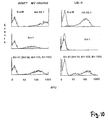
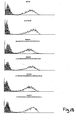
- mice were immunized with peptide H236 (15mer) coupled to KLH-maleimide-Cys emulsified in FCA and boosted with the same conjugate 2 weeks later. Sera reacted with MV-infected WMPT cells ( Figure 14 ) but not with non-infected cells. Such anti-peptide sera can protect susceptible CBA mice against a lethal challenge of a rodent-adapted measles virus (data not shown).
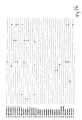
- the amino acid sequence 241-250 of the MV-H showed a high degree of conservation (Fig. 14).
- Phage displayed random 6-mer libraries were screened using standard methodology (Scott, J. K. and Smith, G. P., Science, 249 (1990) 386; Parmley, S.F. and Smith, G.P., Gene, 73 (1988) 305) with the monoclonal antibody BH129 specific for the sequential epitope of the measles virus hemagglutinin protein described in example 5 2. After two rounds of non-specific selection (panning on BH129) and one round of specific selection (panning on BH129 with blocked antigen binding sites or on an irrelevant isotype subclass-matched mAb) phages were obtained which shared only up to 3 amino acids with the wild-type epitope.
- Figure 17 (A,B) represents the 50% inhibition concentration of a series of mimotopes of different length.
- the best mimotope blocked BH129 binding to the MV 40-120 better than the wild-type peptides.
- Fig.18 demonstrates that such mimotopes can also induce antibodies which recognize the measles virus.
- mimotopes were developed against a sequential epitope.
- a phage displayed library with a random insert of the format CX9 as described by Koivunen et al. Biotechnology 13:265-270 was screened with monoclonal antibody BH81 using standard procedures described by Parmley and Smith, Gene 73:305-318, (1988). After non-selective and selective screening inserts were detected which specifically reacted with the binding site of BH81.
- BH81 is an example of an antibody which does not react with measles virus in the Western blot; which reacts with MV-infected WMPT cells but not uninfected WMPT cells; which reacts with MV-H transfected Ltk cells but wild-type Ltk cells; which does not react with the 15mer peptides corresponding to the hemagglutinin protein described by Ziegler et al. J. Gen. Virol. 77:2479-2489, 1996; BH81 inhibits hemagglutination.
- BH81 inhibits hemagglutination.
Landscapes
- Chemical & Material Sciences (AREA)
- Life Sciences & Earth Sciences (AREA)
- Organic Chemistry (AREA)
- Health & Medical Sciences (AREA)
- Virology (AREA)
- Biophysics (AREA)
- General Health & Medical Sciences (AREA)
- Genetics & Genomics (AREA)
- Medicinal Chemistry (AREA)
- Molecular Biology (AREA)
- Proteomics, Peptides & Aminoacids (AREA)
- Biochemistry (AREA)
- Immunology (AREA)
- Gastroenterology & Hepatology (AREA)
- Peptides Or Proteins (AREA)
- Medicines Containing Antibodies Or Antigens For Use As Internal Diagnostic Agents (AREA)
Claims (18)
- Impfstoff, welcher ein Peptid mit einer Aminosäuresequenz enthält, die mindestens einer der sequentiellen antigenen Determinanten des Hämagglutinin-Proteins eines Morbillivirus entspricht, oder diese imitiert, wobei die antigene Determinante die Bindestelle eines ein Morbillivirus neutralisierenden und davor schützenden Antikörpers darstellt.
- Impfstoff nach Anspruch 1, wobei die antigene Determinante eine Bindestelle eines ein Morbillivirus in vitro neutralisierenden und in vivo davor schützenden Antikörpers darstellt.
- Impfstoff nach einem der Ansprüche 1 bis 2, wobei das Protein das Hämagglutinin (H)-Protein eines Masernvirus (MV) ist.
- Impfstoff nach einem der Ansprüche 1 bis 3, wobei die Aminosäuresequenz zumindest einen Teil der Aminosäuresequenz umfaßt oder imitiert, welche den Aminosäuren 361 bis 420 des Hämagglutinin-Proteins vom Edmonston-Stamm des Masernvirus, oder der entsprechenden Domäne eines anderen Morbillivirus, oder einem Teil, einer Variation, einer Mutante oder einem Mimotop oder einem Konjugat davon entspricht.
- Impfstoff nach einem der Ansprüche 1 bis 4, wobei die Aminosäuresequenz zumindest einen Teil der Aminosäuresequenz umfaßt, welche den Aminosäuren 381 bis 400 des Hämagglutinin-Proteins vom Edmonston-Stamm des Masernvirus, oder der entsprechenden Domäne eines anderen Morbillivirus, oder einem Teil, einer Variation, einer Mutante oder einem Mimotop oder einem Konjugat davon entspricht.
- Impfstoff nach einem der Ansprüche 1 bis 5, wobei die Aminosäuresequenz aus einer der Aminosäuresequenzen aus Fig. 7 oder einem Teil, einer Variation, einer Mutante oder einem Mimotop oder einem Konjugat davon ausgewählt ist.
- Impfstoff nach einem der Ansprüche 1 bis 6, wobei das Peptid in einer oxidierten oder einer reduzierten Form vorliegt, und die oxidierte Form Disulfidbrücken zwischen Schwefel enthaltenden Aminosäuren hat.
- Impfstoff nach einem der Ansprüche 1 bis 3, wobei die Aminosäuresequenz zumindest einen Teil der Aminosäuresequenz umfaßt, welche den Aminosäuren 226 bis 255 des Hämagglutinin-Proteins vom Edmonston-Stamm des Masernvirus, oder der entsprechenden Domäne eines anderen Morbillivirus, oder einem Teil, einer Variation, einer Mutante oder einem Mimotop oder einem Konjugat davon entspricht.
- Impfstoff nach den Ansprüchen 1 bis 3, wobei die besagte Aminosäuresequenz zumindest einen Teil der Aminosäuresequenz umfaßt, welche den Aminosäuren 241 bis 250 des Hämagglutinin-Proteins vom Edmonston-Stamm des Masernvirus, oder der entsprechenden Domäne eines anderen Morbillivirus, oder einem Teil, einer Variation, einer Mutante oder einem Mimotop oder einem Konjugat davon entspricht.
- Impfstoff nach einem der Ansprüche 3, 5, 8 und/oder 9, wobei die Aminosäuresequenz aus einer der Aminosäuresequenzen aus den Figuren 15-18 oder einem Teil, einer Variation, einer Mutante oder einem Mimotop oder einem Konjugat einer dieser Aminosäuresequenzen ausgewählt ist.
- Impfstoff nach einem der vorhergehenden Ansprüche, wobei das Peptid, welches in einem der vorhergehenden Ansprüche beschrieben ist, weniger als 60 Aminosäuren und vorzugsweise weniger als 30 Aminosäuren besitzt.
- Impfstoff nach einem der Ansprüche 1 bis 11, welcher zur Vorbeugung gegen eine Morbillivirus-Infektion geeignet ist.
- Impfstoff nach Anspruch 12, welcher das Peptid in einer Menge von ungefähr 0,1 Mikrogramm bis ungefähr 100 Milligramm enthält.
- Impfstoff nach Anspruch 12 oder 13, welcher außerdem ein Verdünnungsmittel, ein Adjuvans, einen Träger, ein T-Zell-Epitop oder einen Arzneistoffträger enthält, die pharmazeutisch verträglich sind.
- Verwendung des Peptids, welches in einem der Ansprüche 1 bis 11 beschrieben ist, zur Herstellung eines Medikaments zur Vorbeugung und/oder zur Behandlung von Masern.
- Sequentielle antigene Determinante, welche zumindest einen Teil der Aminosäuresequenz umfaßt, die den Aminosäuren 361 bis 420 des Hämagglutinin-Proteins vom Edmonston-Stamm des Masernvirus, oder einem Teil, einer Variation, einer Mutante oder einem Mimotop oder einem Konjugat davon entspricht.
- Sequentielle antigene Determinante, welche zumindest einen Teil der Aminosäuresequenz umfaßt, die den Aminosäuren 226 bis 255 des Hämagglutinin Proteins vom Edmonston-Stamm des Masernvirus, oder einem Teil, einer Variation, einer Mutante oder einem Mimotop oder einem Konjugat davon entspricht.
- Peptid, welches zumindest eine der sequentiellen antigenen Determinanten nach Anspruch 16 oder 17 enthält.
Priority Applications (1)
| Application Number | Priority Date | Filing Date | Title |
|---|---|---|---|
| EP97942832A EP0920449B1 (de) | 1996-07-31 | 1997-07-26 | Peptide abgeleitet aus dem morbillivirus |
Applications Claiming Priority (4)
| Application Number | Priority Date | Filing Date | Title |
|---|---|---|---|
| EP96112341 | 1996-07-31 | ||
| EP96112341 | 1996-07-31 | ||
| EP97942832A EP0920449B1 (de) | 1996-07-31 | 1997-07-26 | Peptide abgeleitet aus dem morbillivirus |
| PCT/EP1997/004070 WO1998005682A2 (en) | 1996-07-31 | 1997-07-26 | Peptides corresponding or imitating at least one antigenic determinant of the hamagglutinin protein of mobillivirus |
Publications (2)
| Publication Number | Publication Date |
|---|---|
| EP0920449A2 EP0920449A2 (de) | 1999-06-09 |
| EP0920449B1 true EP0920449B1 (de) | 2002-10-23 |
Family
ID=8223060
Family Applications (1)
| Application Number | Title | Priority Date | Filing Date |
|---|---|---|---|
| EP97942832A Expired - Lifetime EP0920449B1 (de) | 1996-07-31 | 1997-07-26 | Peptide abgeleitet aus dem morbillivirus |
Country Status (5)
| Country | Link |
|---|---|
| EP (1) | EP0920449B1 (de) |
| AT (1) | ATE226594T1 (de) |
| AU (1) | AU4452897A (de) |
| DE (1) | DE69716609T2 (de) |
| WO (1) | WO1998005682A2 (de) |
Cited By (1)
| Publication number | Priority date | Publication date | Assignee | Title |
|---|---|---|---|---|
| US20230173022A1 (en) * | 2020-05-20 | 2023-06-08 | Fundación Para El Fomento De La Investitación Sanitaria Y Biomédica De La Comunitat Valenciana | Peptide for use in the prevention and/or treatment of a disease caused by a virus affecting the respiratory tract |
Family Cites Families (1)
| Publication number | Priority date | Publication date | Assignee | Title |
|---|---|---|---|---|
| JP3045581B2 (ja) * | 1991-10-14 | 2000-05-29 | 社団法人北里研究所 | 麻疹ワクチンウイルス株同定方法 |
-
1997
- 1997-07-26 WO PCT/EP1997/004070 patent/WO1998005682A2/en not_active Ceased
- 1997-07-26 EP EP97942832A patent/EP0920449B1/de not_active Expired - Lifetime
- 1997-07-26 AT AT97942832T patent/ATE226594T1/de not_active IP Right Cessation
- 1997-07-26 AU AU44528/97A patent/AU4452897A/en not_active Abandoned
- 1997-07-26 DE DE69716609T patent/DE69716609T2/de not_active Expired - Lifetime
Cited By (2)
| Publication number | Priority date | Publication date | Assignee | Title |
|---|---|---|---|---|
| US20230173022A1 (en) * | 2020-05-20 | 2023-06-08 | Fundación Para El Fomento De La Investitación Sanitaria Y Biomédica De La Comunitat Valenciana | Peptide for use in the prevention and/or treatment of a disease caused by a virus affecting the respiratory tract |
| US12527837B2 (en) * | 2020-05-20 | 2026-01-20 | Fundacion Para El Fomento De La Investigación Sanitaria Y Biomédica De La Comunitat Valenciana (Fisabio) | Peptide for use in the prevention and/or treatment of a disease caused by a virus affecting the respiratory tract |
Also Published As
| Publication number | Publication date |
|---|---|
| WO1998005682A3 (en) | 1998-08-06 |
| DE69716609D1 (de) | 2002-11-28 |
| EP0920449A2 (de) | 1999-06-09 |
| AU4452897A (en) | 1998-02-25 |
| ATE226594T1 (de) | 2002-11-15 |
| WO1998005682A2 (en) | 1998-02-12 |
| DE69716609T2 (de) | 2003-07-03 |
Similar Documents
| Publication | Publication Date | Title |
|---|---|---|
| Godet et al. | TGEV corona virus ORF4 encodes a membrane protein that is incorporated into virions | |
| Dietzschold et al. | Localization and immunological characterization of antigenic domains of the rabies virus internal N and NS proteins | |
| KR100291247B1 (ko) | 엡스타인 바르 바이러스와 관련된 펩티드 및 핵산 서열 | |
| Niesters et al. | Epitopes on the peplomer protein of infectious bronchitis virus strain M41 as defined by monoclonal antibodies | |
| Furze et al. | Antigenically distinct G glycoproteins of BRSV strains share a high degree of genetic homogeneity | |
| HUT51296A (en) | Process for producing hn env-coded peptide for producing antibodies for inhibiting human hiv virus in mammalian | |
| Van Binnendijk et al. | Human HLA class I-and HLA class II-restricted cloned cytotoxic T lymphocytes identify a cluster of epitopes on the measles virus fusion protein | |
| US6824778B2 (en) | Prophylactic and therapeutic monoclonal antibodies | |
| Ni et al. | Mapping and characterization of a sequential epitope on the rabies virus glycoprotein which is recognized by a neutralizing monoclonal antibody, RG719 | |
| Jackson et al. | Antigenic determinants of influenza virus hemagglutinin XII. The epitopes of a synthetic peptide representing the C-terminus of HA1 | |
| JP2009280589A (ja) | エプスタイン・バールウイルスのペプチド及びこれらのペプチドに対する抗体 | |
| Heinz et al. | Monoclonal antibodies to the structural glycoprotein of tick-borne encephalitis virus | |
| Matheise et al. | Antigenic analysis of the F protein of the bovine respiratory syncytial virus: identification of two distinct antigenic sites involved in fusion inhibition | |
| WO1995031999A1 (en) | Compositions of transactivating proteins of human immunodeficiency virus | |
| AU662954B2 (en) | Synthetic peptides for a rubella vaccine | |
| EP0920449B1 (de) | Peptide abgeleitet aus dem morbillivirus | |
| Obeid et al. | Immunological analysis of the protective responses to the chimeric synthetic peptide representing T-and B-cell epitopes from the fusion protein of measles virus | |
| Chassot et al. | Fine mapping of neutralization epitopes on duck hepatitis B virus (DHBV) pre-S protein using monoclonal antibodies and overlapping peptides | |
| Palomo et al. | Induction of a neutralizing immune response to human respiratory syncytial virus with anti-idiotypic antibodies | |
| Heber-Katz et al. | Immune response to synthetic herpes simplex virus peptides: the feasibility of a synthetic vaccine | |
| Morenkov et al. | Immunological characterisation of glycoprotein E of Aujeszky's disease virus | |
| US5350575A (en) | IBDV VP2 epitope recognized by virus neutralizing and protective monoclonal antibodies | |
| EP0581353A1 (de) | Monoklonale Antikörper gegen HIV-1 gp120, Zellinien die sie herstellen und entsprechende Epitope-Strukturen | |
| El Kasmi et al. | A hemagglutinin-derived peptide-vaccine ignored by virus-neutralizing passive antibodies, protects against murine measles encephalitis | |
| EP0370090B1 (de) | Von gemeinsamen sequenzen von antigenen und antiidiotypischen antikörpern oder von antikörpern mit spezifizität für die zellulären rezeptoren der antigene abgeleitete immunogene und biologisch aktive peptide |
Legal Events
| Date | Code | Title | Description |
|---|---|---|---|
| PUAI | Public reference made under article 153(3) epc to a published international application that has entered the european phase |
Free format text: ORIGINAL CODE: 0009012 |
|
| 17P | Request for examination filed |
Effective date: 19990226 |
|
| AK | Designated contracting states |
Kind code of ref document: A2 Designated state(s): AT BE CH DE DK ES FI FR GB GR IE IT LI LU NL PT SE |
|
| 17Q | First examination report despatched |
Effective date: 19990615 |
|
| GRAG | Despatch of communication of intention to grant |
Free format text: ORIGINAL CODE: EPIDOS AGRA |
|
| RTI1 | Title (correction) |
Free format text: MORBILLIVIRUS-DERIVED PEPTIDES |
|
| GRAG | Despatch of communication of intention to grant |
Free format text: ORIGINAL CODE: EPIDOS AGRA |
|
| GRAH | Despatch of communication of intention to grant a patent |
Free format text: ORIGINAL CODE: EPIDOS IGRA |
|
| GRAH | Despatch of communication of intention to grant a patent |
Free format text: ORIGINAL CODE: EPIDOS IGRA |
|
| GRAA | (expected) grant |
Free format text: ORIGINAL CODE: 0009210 |
|
| AK | Designated contracting states |
Kind code of ref document: B1 Designated state(s): AT BE CH DE DK ES FI FR GB GR IE IT LI LU NL PT SE |
|
| PG25 | Lapsed in a contracting state [announced via postgrant information from national office to epo] |
Ref country code: NL Free format text: LAPSE BECAUSE OF FAILURE TO SUBMIT A TRANSLATION OF THE DESCRIPTION OR TO PAY THE FEE WITHIN THE PRESCRIBED TIME-LIMIT Effective date: 20021023 Ref country code: LI Free format text: LAPSE BECAUSE OF FAILURE TO SUBMIT A TRANSLATION OF THE DESCRIPTION OR TO PAY THE FEE WITHIN THE PRESCRIBED TIME-LIMIT Effective date: 20021023 Ref country code: IT Free format text: LAPSE BECAUSE OF FAILURE TO SUBMIT A TRANSLATION OF THE DESCRIPTION OR TO PAY THE FEE WITHIN THE PRESCRIBED TIME-LIMIT;WARNING: LAPSES OF ITALIAN PATENTS WITH EFFECTIVE DATE BEFORE 2007 MAY HAVE OCCURRED AT ANY TIME BEFORE 2007. THE CORRECT EFFECTIVE DATE MAY BE DIFFERENT FROM THE ONE RECORDED. Effective date: 20021023 Ref country code: GR Free format text: LAPSE BECAUSE OF FAILURE TO SUBMIT A TRANSLATION OF THE DESCRIPTION OR TO PAY THE FEE WITHIN THE PRESCRIBED TIME-LIMIT Effective date: 20021023 Ref country code: FI Free format text: LAPSE BECAUSE OF FAILURE TO SUBMIT A TRANSLATION OF THE DESCRIPTION OR TO PAY THE FEE WITHIN THE PRESCRIBED TIME-LIMIT Effective date: 20021023 Ref country code: CH Free format text: LAPSE BECAUSE OF FAILURE TO SUBMIT A TRANSLATION OF THE DESCRIPTION OR TO PAY THE FEE WITHIN THE PRESCRIBED TIME-LIMIT Effective date: 20021023 Ref country code: BE Free format text: LAPSE BECAUSE OF FAILURE TO SUBMIT A TRANSLATION OF THE DESCRIPTION OR TO PAY THE FEE WITHIN THE PRESCRIBED TIME-LIMIT Effective date: 20021023 Ref country code: AT Free format text: LAPSE BECAUSE OF FAILURE TO SUBMIT A TRANSLATION OF THE DESCRIPTION OR TO PAY THE FEE WITHIN THE PRESCRIBED TIME-LIMIT Effective date: 20021023 |
|
| REF | Corresponds to: |
Ref document number: 226594 Country of ref document: AT Date of ref document: 20021115 Kind code of ref document: T |
|
| REG | Reference to a national code |
Ref country code: GB Ref legal event code: FG4D |
|
| REG | Reference to a national code |
Ref country code: CH Ref legal event code: EP |
|
| REG | Reference to a national code |
Ref country code: IE Ref legal event code: FG4D |
|
| REF | Corresponds to: |
Ref document number: 69716609 Country of ref document: DE Date of ref document: 20021128 |
|
| PG25 | Lapsed in a contracting state [announced via postgrant information from national office to epo] |
Ref country code: SE Free format text: LAPSE BECAUSE OF FAILURE TO SUBMIT A TRANSLATION OF THE DESCRIPTION OR TO PAY THE FEE WITHIN THE PRESCRIBED TIME-LIMIT Effective date: 20030123 Ref country code: PT Free format text: LAPSE BECAUSE OF FAILURE TO SUBMIT A TRANSLATION OF THE DESCRIPTION OR TO PAY THE FEE WITHIN THE PRESCRIBED TIME-LIMIT Effective date: 20030123 Ref country code: DK Free format text: LAPSE BECAUSE OF FAILURE TO SUBMIT A TRANSLATION OF THE DESCRIPTION OR TO PAY THE FEE WITHIN THE PRESCRIBED TIME-LIMIT Effective date: 20030123 |
|
| NLV1 | Nl: lapsed or annulled due to failure to fulfill the requirements of art. 29p and 29m of the patents act | ||
| PG25 | Lapsed in a contracting state [announced via postgrant information from national office to epo] |
Ref country code: ES Free format text: LAPSE BECAUSE OF FAILURE TO SUBMIT A TRANSLATION OF THE DESCRIPTION OR TO PAY THE FEE WITHIN THE PRESCRIBED TIME-LIMIT Effective date: 20030429 |
|
| REG | Reference to a national code |
Ref country code: CH Ref legal event code: PL |
|
| ET | Fr: translation filed | ||
| PG25 | Lapsed in a contracting state [announced via postgrant information from national office to epo] |
Ref country code: IE Free format text: LAPSE BECAUSE OF NON-PAYMENT OF DUE FEES Effective date: 20030728 |
|
| PLBE | No opposition filed within time limit |
Free format text: ORIGINAL CODE: 0009261 |
|
| STAA | Information on the status of an ep patent application or granted ep patent |
Free format text: STATUS: NO OPPOSITION FILED WITHIN TIME LIMIT |
|
| 26N | No opposition filed |
Effective date: 20030724 |
|
| REG | Reference to a national code |
Ref country code: IE Ref legal event code: MM4A |
|
| PGFP | Annual fee paid to national office [announced via postgrant information from national office to epo] |
Ref country code: LU Payment date: 20100723 Year of fee payment: 14 Ref country code: FR Payment date: 20100802 Year of fee payment: 14 Ref country code: DE Payment date: 20100830 Year of fee payment: 14 |
|
| PGFP | Annual fee paid to national office [announced via postgrant information from national office to epo] |
Ref country code: GB Payment date: 20100727 Year of fee payment: 14 |
|
| GBPC | Gb: european patent ceased through non-payment of renewal fee |
Effective date: 20110726 |
|
| REG | Reference to a national code |
Ref country code: FR Ref legal event code: ST Effective date: 20120330 |
|
| PG25 | Lapsed in a contracting state [announced via postgrant information from national office to epo] |
Ref country code: FR Free format text: LAPSE BECAUSE OF NON-PAYMENT OF DUE FEES Effective date: 20110801 Ref country code: DE Free format text: LAPSE BECAUSE OF NON-PAYMENT OF DUE FEES Effective date: 20120201 |
|
| REG | Reference to a national code |
Ref country code: DE Ref legal event code: R119 Ref document number: 69716609 Country of ref document: DE Effective date: 20120201 |
|
| PG25 | Lapsed in a contracting state [announced via postgrant information from national office to epo] |
Ref country code: GB Free format text: LAPSE BECAUSE OF NON-PAYMENT OF DUE FEES Effective date: 20110726 |
|
| PG25 | Lapsed in a contracting state [announced via postgrant information from national office to epo] |
Ref country code: LU Free format text: LAPSE BECAUSE OF NON-PAYMENT OF DUE FEES Effective date: 20110726 |