EP0922694B1 - Procédé pour la préparation d'esters - Google Patents
Procédé pour la préparation d'esters Download PDFInfo
- Publication number
- EP0922694B1 EP0922694B1 EP19980310194 EP98310194A EP0922694B1 EP 0922694 B1 EP0922694 B1 EP 0922694B1 EP 19980310194 EP19980310194 EP 19980310194 EP 98310194 A EP98310194 A EP 98310194A EP 0922694 B1 EP0922694 B1 EP 0922694B1
- Authority
- EP
- European Patent Office
- Prior art keywords
- acid
- group
- reaction
- chloride
- phenol
- Prior art date
- Legal status (The legal status is an assumption and is not a legal conclusion. Google has not performed a legal analysis and makes no representation as to the accuracy of the status listed.)
- Expired - Lifetime
Links
- 238000002360 preparation method Methods 0.000 title description 8
- 150000002148 esters Chemical class 0.000 title description 4
- 238000000034 method Methods 0.000 claims description 27
- 238000006243 chemical reaction Methods 0.000 claims description 23
- NGNBDVOYPDDBFK-UHFFFAOYSA-N 2-[2,4-di(pentan-2-yl)phenoxy]acetyl chloride Chemical compound CCCC(C)C1=CC=C(OCC(Cl)=O)C(C(C)CCC)=C1 NGNBDVOYPDDBFK-UHFFFAOYSA-N 0.000 claims description 17
- HEMHJVSKTPXQMS-UHFFFAOYSA-M sodium hydroxide Inorganic materials [OH-].[Na+] HEMHJVSKTPXQMS-UHFFFAOYSA-M 0.000 claims description 17
- 239000002253 acid Substances 0.000 claims description 14
- -1 phenol ester Chemical class 0.000 claims description 14
- FYSNRJHAOHDILO-UHFFFAOYSA-N thionyl chloride Chemical compound ClS(Cl)=O FYSNRJHAOHDILO-UHFFFAOYSA-N 0.000 claims description 14
- 239000007864 aqueous solution Substances 0.000 claims description 12
- 238000001914 filtration Methods 0.000 claims description 12
- 150000002989 phenols Chemical class 0.000 claims description 11
- JUJWROOIHBZHMG-UHFFFAOYSA-N Pyridine Chemical group C1=CC=NC=C1 JUJWROOIHBZHMG-UHFFFAOYSA-N 0.000 claims description 6
- 239000003054 catalyst Substances 0.000 claims description 6
- 150000007529 inorganic bases Chemical class 0.000 claims description 6
- 150000001263 acyl chlorides Chemical class 0.000 claims description 5
- 239000008394 flocculating agent Substances 0.000 claims description 5
- 125000000217 alkyl group Chemical group 0.000 claims description 4
- JBKVHLHDHHXQEQ-UHFFFAOYSA-N epsilon-caprolactam Chemical compound O=C1CCCCCN1 JBKVHLHDHHXQEQ-UHFFFAOYSA-N 0.000 claims description 4
- 230000007062 hydrolysis Effects 0.000 claims description 4
- 238000006460 hydrolysis reaction Methods 0.000 claims description 4
- 150000007530 organic bases Chemical class 0.000 claims description 4
- RPDPHDFTWFJKNL-UHFFFAOYSA-M sodium;2-[6-(nonanoylamino)hexanoyloxy]benzenesulfonate Chemical compound [Na+].CCCCCCCCC(=O)NCCCCCC(=O)OC1=CC=CC=C1S([O-])(=O)=O RPDPHDFTWFJKNL-UHFFFAOYSA-M 0.000 claims description 4
- MCTWTZJPVLRJOU-UHFFFAOYSA-N 1-methyl-1H-imidazole Chemical compound CN1C=CN=C1 MCTWTZJPVLRJOU-UHFFFAOYSA-N 0.000 claims description 3
- SLXKOJJOQWFEFD-UHFFFAOYSA-N 6-aminohexanoic acid Chemical compound NCCCCCC(O)=O SLXKOJJOQWFEFD-UHFFFAOYSA-N 0.000 claims description 3
- DGAQECJNVWCQMB-PUAWFVPOSA-M Ilexoside XXIX Chemical compound C[C@@H]1CC[C@@]2(CC[C@@]3(C(=CC[C@H]4[C@]3(CC[C@@H]5[C@@]4(CC[C@@H](C5(C)C)OS(=O)(=O)[O-])C)C)[C@@H]2[C@]1(C)O)C)C(=O)O[C@H]6[C@@H]([C@H]([C@@H]([C@H](O6)CO)O)O)O.[Na+] DGAQECJNVWCQMB-PUAWFVPOSA-M 0.000 claims description 3
- 229960002684 aminocaproic acid Drugs 0.000 claims description 3
- UMJSCPRVCHMLSP-UHFFFAOYSA-N pyridine Natural products COC1=CC=CN=C1 UMJSCPRVCHMLSP-UHFFFAOYSA-N 0.000 claims description 3
- HRPVXLWXLXDGHG-UHFFFAOYSA-N Acrylamide Chemical compound NC(=O)C=C HRPVXLWXLXDGHG-UHFFFAOYSA-N 0.000 claims description 2
- WHXSMMKQMYFTQS-UHFFFAOYSA-N Lithium Chemical group [Li] WHXSMMKQMYFTQS-UHFFFAOYSA-N 0.000 claims description 2
- 125000003342 alkenyl group Chemical group 0.000 claims description 2
- 125000002947 alkylene group Chemical group 0.000 claims description 2
- 125000002091 cationic group Chemical group 0.000 claims description 2
- 150000001768 cations Chemical class 0.000 claims description 2
- 150000001875 compounds Chemical class 0.000 claims description 2
- 230000008878 coupling Effects 0.000 claims description 2
- 238000010168 coupling process Methods 0.000 claims description 2
- 238000005859 coupling reaction Methods 0.000 claims description 2
- 238000004519 manufacturing process Methods 0.000 claims description 2
- ZIUHHBKFKCYYJD-UHFFFAOYSA-N n,n'-methylenebisacrylamide Chemical class C=CC(=O)NCNC(=O)C=C ZIUHHBKFKCYYJD-UHFFFAOYSA-N 0.000 claims description 2
- PSHKMPUSSFXUIA-UHFFFAOYSA-N n,n-dimethylpyridin-2-amine Chemical group CN(C)C1=CC=CC=N1 PSHKMPUSSFXUIA-UHFFFAOYSA-N 0.000 claims description 2
- 239000002736 nonionic surfactant Substances 0.000 claims description 2
- 125000004043 oxo group Chemical group O=* 0.000 claims description 2
- 150000007965 phenolic acids Chemical class 0.000 claims description 2
- 229920002401 polyacrylamide Polymers 0.000 claims description 2
- 229920000867 polyelectrolyte Polymers 0.000 claims description 2
- 239000012429 reaction media Substances 0.000 claims description 2
- KWYUFKZDYYNOTN-UHFFFAOYSA-M Potassium hydroxide Chemical compound [OH-].[K+] KWYUFKZDYYNOTN-UHFFFAOYSA-M 0.000 claims 3
- WMFOQBRAJBCJND-UHFFFAOYSA-M lithium hydroxide Inorganic materials [Li+].[OH-] WMFOQBRAJBCJND-UHFFFAOYSA-M 0.000 claims 2
- 229920003118 cationic copolymer Polymers 0.000 claims 1
- YXFVVABEGXRONW-UHFFFAOYSA-N Toluene Chemical compound CC1=CC=CC=C1 YXFVVABEGXRONW-UHFFFAOYSA-N 0.000 description 21
- 239000000243 solution Substances 0.000 description 18
- ISWSIDIOOBJBQZ-UHFFFAOYSA-N Phenol Natural products OC1=CC=CC=C1 ISWSIDIOOBJBQZ-UHFFFAOYSA-N 0.000 description 11
- 239000000047 product Substances 0.000 description 11
- WFDIJRYMOXRFFG-UHFFFAOYSA-N Acetic anhydride Chemical compound CC(=O)OC(C)=O WFDIJRYMOXRFFG-UHFFFAOYSA-N 0.000 description 6
- IJGRMHOSHXDMSA-UHFFFAOYSA-N Atomic nitrogen Chemical compound N#N IJGRMHOSHXDMSA-UHFFFAOYSA-N 0.000 description 6
- 239000000463 material Substances 0.000 description 6
- 229960003742 phenol Drugs 0.000 description 6
- 239000002904 solvent Substances 0.000 description 6
- 230000000694 effects Effects 0.000 description 5
- XLYOFNOQVPJJNP-UHFFFAOYSA-N water Substances O XLYOFNOQVPJJNP-UHFFFAOYSA-N 0.000 description 5
- IULJSGIJJZZUMF-UHFFFAOYSA-N 2-hydroxybenzenesulfonic acid Chemical class OC1=CC=CC=C1S(O)(=O)=O IULJSGIJJZZUMF-UHFFFAOYSA-N 0.000 description 4
- 241000499489 Castor canadensis Species 0.000 description 4
- 235000011779 Menyanthes trifoliata Nutrition 0.000 description 4
- 239000000203 mixture Substances 0.000 description 4
- 239000011541 reaction mixture Substances 0.000 description 4
- BLXAGSNYHSQSRC-UHFFFAOYSA-M sodium;2-hydroxybenzenesulfonate Chemical compound [Na+].OC1=CC=CC=C1S([O-])(=O)=O BLXAGSNYHSQSRC-UHFFFAOYSA-M 0.000 description 4
- 239000007858 starting material Substances 0.000 description 4
- UHOVQNZJYSORNB-UHFFFAOYSA-N Benzene Chemical compound C1=CC=CC=C1 UHOVQNZJYSORNB-UHFFFAOYSA-N 0.000 description 3
- 239000002585 base Substances 0.000 description 3
- 230000015572 biosynthetic process Effects 0.000 description 3
- 239000006227 byproduct Substances 0.000 description 3
- 238000001035 drying Methods 0.000 description 3
- 239000012442 inert solvent Substances 0.000 description 3
- VLKZOEOYAKHREP-UHFFFAOYSA-N n-Hexane Chemical compound CCCCCC VLKZOEOYAKHREP-UHFFFAOYSA-N 0.000 description 3
- 229910052757 nitrogen Inorganic materials 0.000 description 3
- 150000003839 salts Chemical class 0.000 description 3
- 239000002002 slurry Substances 0.000 description 3
- VHYFNPMBLIVWCW-UHFFFAOYSA-N 4-Dimethylaminopyridine Chemical compound CN(C)C1=CC=NC=C1 VHYFNPMBLIVWCW-UHFFFAOYSA-N 0.000 description 2
- YOFDKNMBODQGDQ-UHFFFAOYSA-N 6-(nonanoylamino)hexanoyl chloride Chemical compound CCCCCCCCC(=O)NCCCCCC(Cl)=O YOFDKNMBODQGDQ-UHFFFAOYSA-N 0.000 description 2
- CSCPPACGZOOCGX-UHFFFAOYSA-N Acetone Chemical compound CC(C)=O CSCPPACGZOOCGX-UHFFFAOYSA-N 0.000 description 2
- QGZKDVFQNNGYKY-UHFFFAOYSA-O Ammonium Chemical compound [NH4+] QGZKDVFQNNGYKY-UHFFFAOYSA-O 0.000 description 2
- ZMXDDKWLCZADIW-UHFFFAOYSA-N N,N-Dimethylformamide Chemical compound CN(C)C=O ZMXDDKWLCZADIW-UHFFFAOYSA-N 0.000 description 2
- 238000003436 Schotten-Baumann reaction Methods 0.000 description 2
- WYURNTSHIVDZCO-UHFFFAOYSA-N Tetrahydrofuran Chemical compound C1CCOC1 WYURNTSHIVDZCO-UHFFFAOYSA-N 0.000 description 2
- 239000012190 activator Substances 0.000 description 2
- 150000008064 anhydrides Chemical class 0.000 description 2
- JXLHNMVSKXFWAO-UHFFFAOYSA-N azane;7-fluoro-2,1,3-benzoxadiazole-4-sulfonic acid Chemical compound N.OS(=O)(=O)C1=CC=C(F)C2=NON=C12 JXLHNMVSKXFWAO-UHFFFAOYSA-N 0.000 description 2
- 239000007844 bleaching agent Substances 0.000 description 2
- 125000004432 carbon atom Chemical group C* 0.000 description 2
- 125000003178 carboxy group Chemical group [H]OC(*)=O 0.000 description 2
- 238000010924 continuous production Methods 0.000 description 2
- 238000011068 loading method Methods 0.000 description 2
- FBUKVWPVBMHYJY-UHFFFAOYSA-N nonanoic acid Chemical compound CCCCCCCCC(O)=O FBUKVWPVBMHYJY-UHFFFAOYSA-N 0.000 description 2
- CTSLXHKWHWQRSH-UHFFFAOYSA-N oxalyl chloride Chemical compound ClC(=O)C(Cl)=O CTSLXHKWHWQRSH-UHFFFAOYSA-N 0.000 description 2
- 238000010926 purge Methods 0.000 description 2
- 239000000523 sample Substances 0.000 description 2
- 229910052708 sodium Inorganic materials 0.000 description 2
- 239000011734 sodium Substances 0.000 description 2
- 239000007787 solid Substances 0.000 description 2
- 238000003786 synthesis reaction Methods 0.000 description 2
- QAEDZJGFFMLHHQ-UHFFFAOYSA-N trifluoroacetic anhydride Chemical compound FC(F)(F)C(=O)OC(=O)C(F)(F)F QAEDZJGFFMLHHQ-UHFFFAOYSA-N 0.000 description 2
- SBLCUTIOHNPTHL-UHFFFAOYSA-N 6-(nonanoylamino)hexanoic acid Chemical compound CCCCCCCCC(=O)NCCCCCC(O)=O SBLCUTIOHNPTHL-UHFFFAOYSA-N 0.000 description 1
- XTHFKEDIFFGKHM-UHFFFAOYSA-N Dimethoxyethane Chemical compound COCCOC XTHFKEDIFFGKHM-UHFFFAOYSA-N 0.000 description 1
- CTQNGGLPUBDAKN-UHFFFAOYSA-N O-Xylene Chemical compound CC1=CC=CC=C1C CTQNGGLPUBDAKN-UHFFFAOYSA-N 0.000 description 1
- 239000002202 Polyethylene glycol Substances 0.000 description 1
- ZLMJMSJWJFRBEC-UHFFFAOYSA-N Potassium Chemical compound [K] ZLMJMSJWJFRBEC-UHFFFAOYSA-N 0.000 description 1
- NPYPAHLBTDXSSS-UHFFFAOYSA-N Potassium ion Chemical compound [K+] NPYPAHLBTDXSSS-UHFFFAOYSA-N 0.000 description 1
- 230000002378 acidificating effect Effects 0.000 description 1
- 238000013019 agitation Methods 0.000 description 1
- 125000001931 aliphatic group Chemical group 0.000 description 1
- 229910052783 alkali metal Inorganic materials 0.000 description 1
- 150000001340 alkali metals Chemical class 0.000 description 1
- 150000001336 alkenes Chemical class 0.000 description 1
- 150000001408 amides Chemical class 0.000 description 1
- 238000003556 assay Methods 0.000 description 1
- 239000012298 atmosphere Substances 0.000 description 1
- 238000010923 batch production Methods 0.000 description 1
- 230000009286 beneficial effect Effects 0.000 description 1
- PASDCCFISLVPSO-UHFFFAOYSA-N benzoyl chloride Chemical compound ClC(=O)C1=CC=CC=C1 PASDCCFISLVPSO-UHFFFAOYSA-N 0.000 description 1
- 125000002915 carbonyl group Chemical group [*:2]C([*:1])=O 0.000 description 1
- 239000000084 colloidal system Substances 0.000 description 1
- 229920001577 copolymer Polymers 0.000 description 1
- 238000004132 cross linking Methods 0.000 description 1
- 238000007872 degassing Methods 0.000 description 1
- 230000032050 esterification Effects 0.000 description 1
- 238000005886 esterification reaction Methods 0.000 description 1
- 239000012467 final product Substances 0.000 description 1
- 150000008282 halocarbons Chemical class 0.000 description 1
- 238000010438 heat treatment Methods 0.000 description 1
- 150000004679 hydroxides Chemical class 0.000 description 1
- 229910052744 lithium Inorganic materials 0.000 description 1
- 229910052751 metal Inorganic materials 0.000 description 1
- 239000002184 metal Substances 0.000 description 1
- 239000012452 mother liquor Substances 0.000 description 1
- JRZJOMJEPLMPRA-UHFFFAOYSA-N olefin Natural products CCCCCCCC=C JRZJOMJEPLMPRA-UHFFFAOYSA-N 0.000 description 1
- 230000020477 pH reduction Effects 0.000 description 1
- 238000005192 partition Methods 0.000 description 1
- 239000003444 phase transfer catalyst Substances 0.000 description 1
- HOBSGKWFTBDQCH-UHFFFAOYSA-N phenol;sodium Chemical compound [Na].[Na].OC1=CC=CC=C1 HOBSGKWFTBDQCH-UHFFFAOYSA-N 0.000 description 1
- 229920001223 polyethylene glycol Polymers 0.000 description 1
- 229920000642 polymer Polymers 0.000 description 1
- 229910052700 potassium Inorganic materials 0.000 description 1
- 239000011591 potassium Substances 0.000 description 1
- 159000000001 potassium salts Chemical class 0.000 description 1
- 230000035484 reaction time Effects 0.000 description 1
- 238000004064 recycling Methods 0.000 description 1
- 238000010992 reflux Methods 0.000 description 1
- 238000013341 scale-up Methods 0.000 description 1
- 159000000000 sodium salts Chemical class 0.000 description 1
- MIKSWWHQLZYKGU-UHFFFAOYSA-M sodium;2-benzoyloxybenzenesulfonate Chemical compound [Na+].[O-]S(=O)(=O)C1=CC=CC=C1OC(=O)C1=CC=CC=C1 MIKSWWHQLZYKGU-UHFFFAOYSA-M 0.000 description 1
- HXJUTPCZVOIRIF-UHFFFAOYSA-N sulfolane Chemical compound O=S1(=O)CCCC1 HXJUTPCZVOIRIF-UHFFFAOYSA-N 0.000 description 1
- BDHFUVZGWQCTTF-UHFFFAOYSA-N sulfonic acid Chemical class OS(=O)=O BDHFUVZGWQCTTF-UHFFFAOYSA-N 0.000 description 1
- 239000004094 surface-active agent Substances 0.000 description 1
- 238000005809 transesterification reaction Methods 0.000 description 1
- 238000005406 washing Methods 0.000 description 1
- 239000008096 xylene Substances 0.000 description 1
Classifications
-
- C—CHEMISTRY; METALLURGY
- C07—ORGANIC CHEMISTRY
- C07C—ACYCLIC OR CARBOCYCLIC COMPOUNDS
- C07C231/00—Preparation of carboxylic acid amides
- C07C231/12—Preparation of carboxylic acid amides by reactions not involving the formation of carboxamide groups
Definitions
- the invention relates to an improved process for the preparation of phenol esters which have utility as bleach activators.
- EP 148148 describes the reaction of anhydrous sodium phenol sulphonate with an alkanoyl halide at 90-200°C in the absence of a solvent.
- EP 120591 describes a similar reaction but uses refluxing halocarbon solvents as the reaction medium. Additionally, 1.2-1.5 mole equivalents of alkanoyl halide are employed as are extended reaction times (20 hours) to effect the reaction.
- EP 150532 describes the reaction of an acyl chloride with anhydrous disodium phenol sulphonate (approx. 1:1 mole ratio) in glyme as a solvent. Typical reaction yields are 60-80%.
- EP 166571 describes a similar process but uses a 1.2-1.5 mole equivalent of acyl chloride to give products in isolated yields of 40-65%.
- EP 164786 describes the use of potassium salts of phenolsulphonic acid instead of the sodium salt to improve reaction yields although no quantitative data is provided.
- US 5523434 describes two-stage reactions in which the amino acid halides are prepared in a first step using inorganic acid halides or oxalyl chloride.
- EP 125641 teaches the use of transesterification to effect the desired reaction whereby phenol esters of aliphatic acids are reacted with hydroxybenzene sulphonate salts. Very large molar excesses of phenol esters are used (up to 5:1) resulting in isolated yields of only 20-30% based on the starting phenol ester employed.
- US 4544503 describes the reaction of phenol sulphonate salts with CO and an olefin at >125°C and >500 psig in an inert atmosphere with a metal carbonyl catalyst. Moderate yields are given ( ⁇ 60%), and products are highly coloured.
- EP 153222 describes the use of a symmetric anhydride to effect the reaction, acetic anhydride is disclosed but this process suffers from the principal disadvantage of only giving a maximum yield of 50% based on the starting acid on a first-pass process. Recycling is necessary and this is described.
- R 1 is a linear or branched alkyl or alkenyl group of 3 to 20 carbon atoms optionally interrupted by -O- or -NH- and optionally substituted by an oxo group
- L is a group of formula or in which R 2 is an alkyl group or alkylene chain containing 1 to 8 carbon atoms and Y is a group -CO 2 ⁇ M ⁇ , -SO 3 ⁇ M ⁇ or -PO 4 ⁇ M ⁇ in which M ⁇ is a cation, preferably an alkali metal, ammonium or substituted ammonium cation.
- M ⁇ may be a sodium or potassium cation.
- the -O- or -NH- in R 1 can be adjacent to the oxo substituent thus forming an ester or amide linkage.
- an acid chloride corresponding to R 1 -CO- as defined above if appropriate in an inert solvent, is reacted with a substituted phenol corresponding to L as defined above, in aqueous solution, in the presence of an inorganic base.
- a substituted phenol corresponding to L is reacted with an inorganic base.
- the desired phenol ester is isolated by filtration in the presence of a flocculating agent, washing and drying.
- an organic base such as a pyridine or an N-alkylimidazole, is present as a catalyst.
- the invention avoids the need for drying of the phenolsulphonate salt starting material, a process which presents considerable problems on scale-up, and allows use of commercially available phenolsulphonic acid solution.
- the group R 1 -CO- represents the residue of a 6-acylamidohexanoic acid
- it can be prepared by the base hydrolysis of caprolactam in aqueous conditions (via either a batch or a continuous process), the resultant wet 6-aminohexanoic acid then being coupled with the relevant acid chloride under Schotten-Baumann conditions.
- the coupling product, 6-acylamidohexanoic acid may be isolated by acidification and filtration or preferably may extracted into a suitable solvent for the next reaction stage. This represents a considerable improvement over the prior art in which such materials are prepared from 6-aminohexanoic acid itself.
- the acid chloride corresponding to R 1 -CO- may be prepared by the addition of 1 molar equivalent of thionyl chloride to the acid over a period of 10 minutes to 2 hours at room temperature.
- the acid may be suspended in a suitable solvent such as hexane, benzene, toluene, xylene, acetone, THF, DMF, sulpholane.
- Toluene is the preferred solvent and is used at a level of approximately 500 ml/mol of acid.
- Use of more than 1 equivalent of thionyl chloride leads to increased colour in the final product.
- the acid chloride solution is heated to a suitable temperature while being purged with nitrogen.
- Suitable temperatures are in the range 50-100°C, a temperature of 80°C being preferred. Such a heating period has the effect of driving off from the solution the acidic by-products from the acid chloride preparation which are held in the system at ambient temperatures. Failure to remove such by-products results in significantly reduced yields and a drop in assay of the isolated product.
- the preparation of the acid chloride can be carried out by a batch or continuous process.
- both the thionyl chloride and the solution of the acid are added to a stirred tank reactor at such a rate as to maintain the correct stoichiometry and give the desired residence time.
- the degassing stage is carried out in a second continuous reactor system.
- aqueous solution of the phenol salt containing about 1 molar equivalent of an inorganic base is prepared.
- a mixture can be prepared by the addition of 2 equivalents of base to an aqueous solution of the corresponding phenolic acid.
- Suitable bases include the hydroxides of lithium, potassium, and sodium, sodium hydroxide being preferred.
- the solution also contains as catalyst an organic base such as a pyridine, preferably dimethylaminopyridine, or an N-alkylimidazole, preferably N-methylimidazole, at a loading of between 1-5 mol%, based on the amount of acid chloride to be charged.
- the solution may contain between 0.08-0.14% by weight of a non-ionic surfactant such as a polyethylene glycol.
- a non-ionic surfactant such as a polyethylene glycol.
- the presence of such a surfactant gives the product in a much more filterable form.
- the solution may contain up to 30% by weight of the phenol salt, for example about 10-11% by weight. More concentrated solutions lead to problems of agitation.
- the stirred aqueous solution is then cooled to below 5°C. Use of higher temperatures can result in loss of yield due to hydrolysis of the product.
- the solution of the acid chloride is then added, typically over a period of between 1-3 hours. Sufficient acid chloride is prepared as to provide 1 molar equivalent of the acid chloride with respect to the phenol salt. This also represents a considerable improvement over the prior art in which relatively large excesses of the acid chloride are required in order to achieve moderate yields.
- the pH of the system is maintained at the desired level by the addition of an aqueous solution of the inorganic base. The pH should be held between 9-12, preferably at 10-10.5. Use of lower pH values gives much reduced yields. Higher pH values lead to an increased probability of hydrolysis of the product.
- the system is stirred for a further period, preferably at below 5°C.
- a further period can be from 30 minutes to 15 hours.
- a further useful aspect of the process is the possibility of recovering unreacted acid R 1 -COOH at the end of the reaction for recylcing and use as starting material.
- the mother liquor is contacted with an inert solvent, for example one of those specified above and preferably toluene, heated and acidified.
- the acid R 1 -COOH will partition into the inert solvent and can be used as an input material after reaction with thionyl chloride as described above.
- the invention is particularly applicable to the synthesis of sodium (6-nonamidohexanoyl)oxybenzene sulphonate.
- the reaction mixture used in the preparation of this compound may contain a small amount of nonanoic acid, for example as a by-product of the production of the nonamidohexanoic acid starting material which need not be purified out before using the starting material.
- 6-Nonamidohexaonic acid 90.0 kg
- toluene 200L
- Thionyl chloride 39.0 kg was added over 25 minutes at room temperature.
- the mixture was then stirred at room temperature for 1 hour.
- the resultant solution was then heated to 80°C for a further 1 hour with a nitrogen purge passing through the reaction mixture.
- 6-Nonamidohexanoic acid (15.0 kg), and toluene (33L) were charged to a 10 gallon glass-lined Pfaudler reactor equipped with a beaver tail baffle containing a thermocouple pocket, a retreat 3 bladed turbine, a sparge pipe, a 50L pipette vessel, and a condenser system.
- Thionyl chloride (6.50 kg) was added over 5 minutes at room temperature. The mixture was then stirred at room temperature for 1 hour. The resultant solution was then heated to 80°C for a further 1 hour with a nitrogen purge passing through the reaction mixture.
- Reactions were carried out at 0.15 molar scale with an agitator speed of 1500 rpm. At the end of the reaction aliquots were taken and flocculant added to give required dose. The flocculant addition was made at 1,500 rpm over 10 seconds, material stirred for a further 2 minutes at 1500 rpm and 2 minutes at 400 rpm. The material was filtered through a 7 cm Buchner funnel using grade 54 papers. Filtration time is the time for a cake to form, deliquour time is the time for liquour to then stop passing into receiver ( ⁇ 1 drop in 30 seconds). Wash time is the time for 20 ml water to stop passing through the undisturbed cake. Flocculant used in this example is Zetag 89.
Landscapes
- Chemical & Material Sciences (AREA)
- Organic Chemistry (AREA)
- Chemical Kinetics & Catalysis (AREA)
- Organic Low-Molecular-Weight Compounds And Preparation Thereof (AREA)
Claims (14)
- Procédé de préparation d'un phénol ester de formule I(dans laquelle R1 est un groupe alcoyle ou alcényle, linéaire ou ramifié, interrompu éventuellement par un groupe - O - ou - NH - et substitué éventuellement par un groupe oxo et L est un groupe de formules

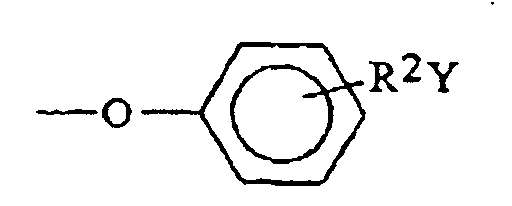 ou
ou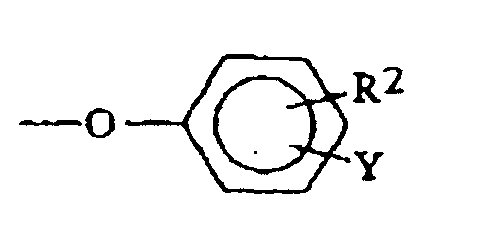 dans lesquelles R2 est un groupe alcoyle ou une chaíne alcoylène et Y est un groupe -CO2 -M+, SO3 -M+ ou PO4 -M+ (dans lesquelles M est un cation)) comprenant le stade de réaction d'un chlorure d'acide correspondant à R1-CO- sur un phénol substitué correspondant à L, en solution aqueuse, en la présence d'une base minérale et comme catalyseur d'une base organique, suivie d'une filtration, caractérisé en ce que la filtration s'effectue en la présence d'un agent de floculation.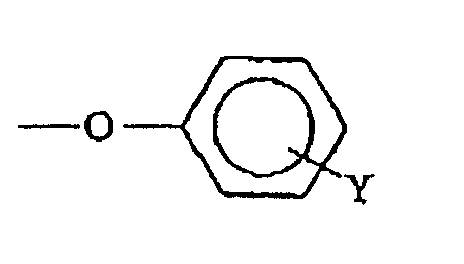
- Procédé suivant la revendication 1, dans lequel l'agent de floculation est un polyélectrolyte cationique à base de polyacrylamide et/ou de ses dérivés.
- Procédé suivant la revendication 2, dans lequel l'agent de floculation est un (co) polymère cationique d'acrylamide et/ou d'un ou de plusieurs aminoalcoylacrylamides et éventuellement d'un ou de plusieurs de ses analogues bis-acrylamide.
- Procédé suivant l'une quelconque des revendications 1 à 3, dans lequel la base organique est choisie parmi la pyridine ou un N-alcoylimidazole.
- Procédé suivant la revendication 4, dans lequel le catalyseur est la diméthylaminopyridine ou le N-méthyl-imidazole.
- Procédé suivant l'une quelconque des revendications 1 à 5, dans lequel le chlorure d'acide et le phénol substitués sont mis à réagir en un rapport molaire de sensiblement 1 : 1.
- Procédé suivant l'une quelconque des revendications 1 à 6, dans lequel on effectue la réaction à un pH de 9 à 12.
- Procédé suivant l'une quelconque des revendications précédentes, dans lequel la base minérale est l'hydroxyde de lithium, l'hydroxyde de sodium ou l'hydroxyde de potassium.
- Procédé suivant l'une quelconque des revendications précédentes, dans lequel on prépare le chlorure d'acide en faisant réagir l'acide correspondant sur du chlorure de thionyle.
- Procédé suivant l'une quelconque des revendications précédentes, dans lequel on prépare la solution aqueuse du phénol substitué par addition de 2 équivalents d'une base minérale à une solution aqueuse de l'acide phénolique correspondant.
- Procédé suivant l'une quelconque des revendications précédentes, dans lequel un agent tensioactif non-ionique est présent dans le milieu de réaction.
- Procédé suivant l'une quelconque des revendications précédentes dans lequel R1CO- est un groupe 6-acylamidohexanoyle.
- Procédé suivant la revendication 12 dans lequel on prépare l'acide 6-acylamidohexanoique correspondant au groupe 6-acylamidohexanoyle par hydrolyse basique de caprolactame et couplage de l'acide 6-aminohexanoique obtenu avec un chlorure d'acyle.
- Procédé suivant la revendication 12 ou revendication 13, dans lequel le composé de formule (I) est le 6-(nonamidohexanoyl)-oxybenzène sulfonate de sodium.
Applications Claiming Priority (2)
| Application Number | Priority Date | Filing Date | Title |
|---|---|---|---|
| GB9726247 | 1997-12-11 | ||
| GBGB9726247.1A GB9726247D0 (en) | 1997-12-11 | 1997-12-11 | Preparation of esters |
Publications (3)
| Publication Number | Publication Date |
|---|---|
| EP0922694A2 EP0922694A2 (fr) | 1999-06-16 |
| EP0922694A3 EP0922694A3 (fr) | 2001-04-04 |
| EP0922694B1 true EP0922694B1 (fr) | 2004-12-08 |
Family
ID=10823482
Family Applications (1)
| Application Number | Title | Priority Date | Filing Date |
|---|---|---|---|
| EP19980310194 Expired - Lifetime EP0922694B1 (fr) | 1997-12-11 | 1998-12-11 | Procédé pour la préparation d'esters |
Country Status (3)
| Country | Link |
|---|---|
| EP (1) | EP0922694B1 (fr) |
| DE (1) | DE69828022T2 (fr) |
| GB (1) | GB9726247D0 (fr) |
Families Citing this family (2)
| Publication number | Priority date | Publication date | Assignee | Title |
|---|---|---|---|---|
| DE19956862A1 (de) | 1999-11-25 | 2001-06-21 | Axiva Gmbh | Verfahren zur Gewinnung und Reinigung substituierter Benzolsulfonate |
| US6790981B2 (en) * | 2002-12-13 | 2004-09-14 | Clariant Finance (Bvi) Limited | Process for the preparation of acyloxybenzenesulfonates |
Family Cites Families (4)
| Publication number | Priority date | Publication date | Assignee | Title |
|---|---|---|---|---|
| GB8304990D0 (en) * | 1983-02-23 | 1983-03-30 | Procter & Gamble | Detergent ingredients |
| US5466840A (en) * | 1994-08-22 | 1995-11-14 | Eastman Chemical Company | Process for preparing purified alkali metal salts of 4-sulfophenyl-[(1-oxyalkanoyl)amino]alkanoate without isolation of intermediates |
| US5523434A (en) * | 1995-03-15 | 1996-06-04 | The Procter & Gamble Company | Synthesis of bleach activators |
| US5650527A (en) * | 1995-06-05 | 1997-07-22 | Eastman Chemical Company | Preparation of amido ester compounds |
-
1997
- 1997-12-11 GB GBGB9726247.1A patent/GB9726247D0/en not_active Ceased
-
1998
- 1998-12-11 DE DE1998628022 patent/DE69828022T2/de not_active Expired - Fee Related
- 1998-12-11 EP EP19980310194 patent/EP0922694B1/fr not_active Expired - Lifetime
Also Published As
| Publication number | Publication date |
|---|---|
| GB9726247D0 (en) | 1998-02-11 |
| EP0922694A3 (fr) | 2001-04-04 |
| DE69828022D1 (de) | 2005-01-13 |
| EP0922694A2 (fr) | 1999-06-16 |
| DE69828022T2 (de) | 2005-12-08 |
Similar Documents
| Publication | Publication Date | Title |
|---|---|---|
| CA1223881A (fr) | Synthese de derives d'esters phenoliques hydrophiles | |
| EP0390042B1 (fr) | Procédé de préparation d'esters aromatiques substitués par le brome d'acides alpha-bêta insaturés | |
| EP0859756B1 (fr) | Preparation de composes amido-ester | |
| US4695412A (en) | Preparation of acyloxybenzenesulfonic acids and their alkali metal and alkaline earth metal salts | |
| EP0922694A2 (fr) | Procédé pour la préparation d'esters | |
| KR910008936B1 (ko) | 2,4-디클로로-5-플루오로-벤조산의 제조방법 | |
| US2790826A (en) | Method of preparing alkenylaryloxy aliphatic carboxylic acids | |
| US5359127A (en) | Process for the preparation of acyloxyalkanesulfonates | |
| USH1760H (en) | Process for glycol esters of an alkali metal salt of 5-sulfoisophthalic acid | |
| EP0922695B1 (fr) | Préparation d'esters | |
| US4705649A (en) | Preparation of acyloxybenzenesulfonic acids and their alkali metal and alkaline earth metal salts | |
| US4053510A (en) | Process for the production of aromatic and cycloaliphatic dicarboxylic acid diamides | |
| EP0853077B1 (fr) | Procédé pour la préparation d'alkyl 3-amino-4-substitué benzoates | |
| US5395964A (en) | Preparation process for hydroxyphenylacetic acids | |
| US2527880A (en) | Alkyl esters of sulfonated monohydroxy-benzoic acids | |
| US3522300A (en) | Preparation of alpha-hydroxy-beta-alkoxypropionic acids or salts thereof | |
| JP2915515B2 (ja) | O―メチルイソ尿素硫酸塩の製造方法 | |
| KR20010040542A (ko) | 혼합 고순도 (메트)아크릴산 무수물의 향상된 제조 방법 | |
| RU527064C (ru) | Тринатриевые соли сульфонатов моноэфиров дисульфомалеиновой кислоты как поверхностно-активные вещества и способ их получени | |
| EP0652862B1 (fr) | Acides amides obtenus par l'hydrolyse alcaline d'esters amides | |
| JP2907520B2 (ja) | 界面活性剤の製造方法 | |
| US3427306A (en) | Process for the manufacture of n-(5 - nitro - 2 - furfuryliden) - 1 - amino-hydantoin | |
| US3399230A (en) | Preparation of thiodisuccinic acid values | |
| US4877901A (en) | Process for synthesizing N,N'-dithiobis(sulfonamides) | |
| US5099043A (en) | 3-methylsulfonylmethyl-4-sulfomethyl-pyrrolidinium-betaines and process for their preparation |
Legal Events
| Date | Code | Title | Description |
|---|---|---|---|
| PUAI | Public reference made under article 153(3) epc to a published international application that has entered the european phase |
Free format text: ORIGINAL CODE: 0009012 |
|
| AK | Designated contracting states |
Kind code of ref document: A2 Designated state(s): CH DE FR GB LI |
|
| AX | Request for extension of the european patent |
Free format text: AL;LT;LV;MK;RO;SI |
|
| PUAL | Search report despatched |
Free format text: ORIGINAL CODE: 0009013 |
|
| AK | Designated contracting states |
Kind code of ref document: A3 Designated state(s): AT BE CH CY DE DK ES FI FR GB GR IE IT LI LU MC NL PT SE |
|
| AX | Request for extension of the european patent |
Free format text: AL;LT;LV;MK;RO;SI |
|
| RIC1 | Information provided on ipc code assigned before grant |
Free format text: 7C 07C 303/22 A, 7C 07C 303/44 B, 7C 07C 309/42 B, 7C 07C 231/12 B |
|
| 17P | Request for examination filed |
Effective date: 20010919 |
|
| AKX | Designation fees paid |
Free format text: CH DE FR GB LI |
|
| 17Q | First examination report despatched |
Effective date: 20011219 |
|
| GRAP | Despatch of communication of intention to grant a patent |
Free format text: ORIGINAL CODE: EPIDOSNIGR1 |
|
| GRAS | Grant fee paid |
Free format text: ORIGINAL CODE: EPIDOSNIGR3 |
|
| GRAA | (expected) grant |
Free format text: ORIGINAL CODE: 0009210 |
|
| AK | Designated contracting states |
Kind code of ref document: B1 Designated state(s): CH DE FR GB LI |
|
| REG | Reference to a national code |
Ref country code: GB Ref legal event code: FG4D |
|
| REG | Reference to a national code |
Ref country code: CH Ref legal event code: EP |
|
| REF | Corresponds to: |
Ref document number: 69828022 Country of ref document: DE Date of ref document: 20050113 Kind code of ref document: P |
|
| REG | Reference to a national code |
Ref country code: CH Ref legal event code: NV Representative=s name: A. BRAUN, BRAUN, HERITIER, ESCHMANN AG PATENTANWAE |
|
| PLBE | No opposition filed within time limit |
Free format text: ORIGINAL CODE: 0009261 |
|
| STAA | Information on the status of an ep patent application or granted ep patent |
Free format text: STATUS: NO OPPOSITION FILED WITHIN TIME LIMIT |
|
| 26N | No opposition filed |
Effective date: 20050909 |
|
| PGFP | Annual fee paid to national office [announced via postgrant information from national office to epo] |
Ref country code: FR Payment date: 20051202 Year of fee payment: 8 |
|
| PGFP | Annual fee paid to national office [announced via postgrant information from national office to epo] |
Ref country code: GB Payment date: 20051205 Year of fee payment: 8 |
|
| ET | Fr: translation filed | ||
| PGFP | Annual fee paid to national office [announced via postgrant information from national office to epo] |
Ref country code: CH Payment date: 20051221 Year of fee payment: 8 |
|
| PGFP | Annual fee paid to national office [announced via postgrant information from national office to epo] |
Ref country code: DE Payment date: 20051230 Year of fee payment: 8 |
|
| PG25 | Lapsed in a contracting state [announced via postgrant information from national office to epo] |
Ref country code: LI Free format text: LAPSE BECAUSE OF NON-PAYMENT OF DUE FEES Effective date: 20061231 Ref country code: CH Free format text: LAPSE BECAUSE OF NON-PAYMENT OF DUE FEES Effective date: 20061231 |
|
| REG | Reference to a national code |
Ref country code: CH Ref legal event code: PFA Owner name: INNOSPEC LIMITED Free format text: THE ASSOCIATED OCTEL COMPANY LIMITED#BERKELEY SQUARE HOUSE, BERKELEY SQUARE#LONDON W1X 6DT (GB) -TRANSFER TO- INNOSPEC LIMITED#INNOSPEC MANUFACTURING PARK OIL SITES ROAD#ELLESMERE PORT, CHESHIRE CH65 4EY (GB) |
|
| PG25 | Lapsed in a contracting state [announced via postgrant information from national office to epo] |
Ref country code: DE Free format text: LAPSE BECAUSE OF NON-PAYMENT OF DUE FEES Effective date: 20070703 |
|
| REG | Reference to a national code |
Ref country code: CH Ref legal event code: PL |
|
| REG | Reference to a national code |
Ref country code: FR Ref legal event code: CD |
|
| GBPC | Gb: european patent ceased through non-payment of renewal fee |
Effective date: 20061211 |
|
| REG | Reference to a national code |
Ref country code: FR Ref legal event code: ST Effective date: 20070831 |
|
| PG25 | Lapsed in a contracting state [announced via postgrant information from national office to epo] |
Ref country code: GB Free format text: LAPSE BECAUSE OF NON-PAYMENT OF DUE FEES Effective date: 20061211 |
|
| PG25 | Lapsed in a contracting state [announced via postgrant information from national office to epo] |
Ref country code: FR Free format text: LAPSE BECAUSE OF NON-PAYMENT OF DUE FEES Effective date: 20070102 |