EP0923148B1 - Electrolyte solide conducteur d'ions lithium et pile au lithium à electrolyte solide - Google Patents
Electrolyte solide conducteur d'ions lithium et pile au lithium à electrolyte solide Download PDFInfo
- Publication number
- EP0923148B1 EP0923148B1 EP98122839A EP98122839A EP0923148B1 EP 0923148 B1 EP0923148 B1 EP 0923148B1 EP 98122839 A EP98122839 A EP 98122839A EP 98122839 A EP98122839 A EP 98122839A EP 0923148 B1 EP0923148 B1 EP 0923148B1
- Authority
- EP
- European Patent Office
- Prior art keywords
- ion
- lithium
- ges
- conductive
- solid electrolyte
- Prior art date
- Legal status (The legal status is an assumption and is not a legal conclusion. Google has not performed a legal analysis and makes no representation as to the accuracy of the status listed.)
- Expired - Lifetime
Links
- 239000007784 solid electrolyte Substances 0.000 title claims description 85
- WHXSMMKQMYFTQS-UHFFFAOYSA-N Lithium Chemical compound [Li] WHXSMMKQMYFTQS-UHFFFAOYSA-N 0.000 title claims description 13
- 229910052744 lithium Inorganic materials 0.000 title claims description 13
- 239000000126 substance Substances 0.000 claims description 88
- 229910001216 Li2S Inorganic materials 0.000 claims description 60
- 229910005842 GeS2 Inorganic materials 0.000 claims description 54
- 229910005228 Ga2S3 Inorganic materials 0.000 claims description 45
- 239000000203 mixture Substances 0.000 claims description 24
- 229910052950 sphalerite Inorganic materials 0.000 claims description 15
- 229910052984 zinc sulfide Inorganic materials 0.000 claims description 15
- 229910009293 Li2S-GeS2-Ga2S3 Inorganic materials 0.000 claims description 11
- 229910009108 Li2S—GeS2—Ga2S3 Inorganic materials 0.000 claims description 11
- HBBGRARXTFLTSG-UHFFFAOYSA-N Lithium ion Chemical compound [Li+] HBBGRARXTFLTSG-UHFFFAOYSA-N 0.000 claims description 11
- 229910001416 lithium ion Inorganic materials 0.000 claims description 11
- 229910004600 P2S5 Inorganic materials 0.000 claims description 10
- 229910020343 SiS2 Inorganic materials 0.000 claims description 9
- 229910009331 Li2S-SiS2-P2S5 Inorganic materials 0.000 claims description 8
- 229910007298 Li2S—SiS2—P2S5 Inorganic materials 0.000 claims description 8
- 229910009135 Li2S—GeS2—X Inorganic materials 0.000 claims description 4
- 239000006183 anode active material Substances 0.000 claims description 2
- 239000006182 cathode active material Substances 0.000 claims description 2
- 229910007299 Li2S:GeS2 Inorganic materials 0.000 claims 7
- 229910007309 Li2S:SiS2 Inorganic materials 0.000 claims 1
- VYPSYNLAJGMNEJ-UHFFFAOYSA-N Silicium dioxide Chemical compound O=[Si]=O VYPSYNLAJGMNEJ-UHFFFAOYSA-N 0.000 description 20
- 150000002500 ions Chemical class 0.000 description 20
- 238000003786 synthesis reaction Methods 0.000 description 19
- 230000015572 biosynthetic process Effects 0.000 description 18
- 238000005259 measurement Methods 0.000 description 10
- 239000000377 silicon dioxide Substances 0.000 description 10
- 238000002441 X-ray diffraction Methods 0.000 description 9
- 238000012360 testing method Methods 0.000 description 9
- 230000004913 activation Effects 0.000 description 8
- 239000000463 material Substances 0.000 description 8
- 239000007787 solid Substances 0.000 description 8
- 229910009130 Li2S—GeS2—ZnS Inorganic materials 0.000 description 7
- 239000007858 starting material Substances 0.000 description 7
- 150000001875 compounds Chemical class 0.000 description 6
- 239000006104 solid solution Substances 0.000 description 6
- OKTJSMMVPCPJKN-UHFFFAOYSA-N Carbon Chemical compound [C] OKTJSMMVPCPJKN-UHFFFAOYSA-N 0.000 description 5
- 238000010586 diagram Methods 0.000 description 5
- PCHJSUWPFVWCPO-UHFFFAOYSA-N gold Chemical compound [Au] PCHJSUWPFVWCPO-UHFFFAOYSA-N 0.000 description 5
- 229910052737 gold Inorganic materials 0.000 description 5
- 239000010931 gold Substances 0.000 description 5
- 239000010416 ion conductor Substances 0.000 description 5
- 229910052799 carbon Inorganic materials 0.000 description 4
- 239000003792 electrolyte Substances 0.000 description 4
- 229910020358 SiS4 Inorganic materials 0.000 description 3
- 239000010949 copper Substances 0.000 description 3
- 238000000354 decomposition reaction Methods 0.000 description 3
- CSCPPACGZOOCGX-UHFFFAOYSA-N Acetone Chemical compound CC(C)=O CSCPPACGZOOCGX-UHFFFAOYSA-N 0.000 description 2
- XKRFYHLGVUSROY-UHFFFAOYSA-N Argon Chemical group [Ar] XKRFYHLGVUSROY-UHFFFAOYSA-N 0.000 description 2
- 229910011788 Li4GeS4 Inorganic materials 0.000 description 2
- 229910032387 LiCoO2 Inorganic materials 0.000 description 2
- 229910010944 LiGaS2 Inorganic materials 0.000 description 2
- BQCADISMDOOEFD-UHFFFAOYSA-N Silver Chemical compound [Ag] BQCADISMDOOEFD-UHFFFAOYSA-N 0.000 description 2
- 239000006230 acetylene black Substances 0.000 description 2
- 229910052782 aluminium Inorganic materials 0.000 description 2
- XAGFODPZIPBFFR-UHFFFAOYSA-N aluminium Chemical compound [Al] XAGFODPZIPBFFR-UHFFFAOYSA-N 0.000 description 2
- 238000004458 analytical method Methods 0.000 description 2
- 239000004020 conductor Substances 0.000 description 2
- 239000011888 foil Substances 0.000 description 2
- 239000007789 gas Substances 0.000 description 2
- 238000000034 method Methods 0.000 description 2
- 238000002156 mixing Methods 0.000 description 2
- 239000008188 pellet Substances 0.000 description 2
- 238000000634 powder X-ray diffraction Methods 0.000 description 2
- 238000011160 research Methods 0.000 description 2
- 238000005070 sampling Methods 0.000 description 2
- 229910052709 silver Inorganic materials 0.000 description 2
- 239000004332 silver Substances 0.000 description 2
- XOLBLPGZBRYERU-UHFFFAOYSA-N tin dioxide Chemical compound O=[Sn]=O XOLBLPGZBRYERU-UHFFFAOYSA-N 0.000 description 2
- RYGMFSIKBFXOCR-UHFFFAOYSA-N Copper Chemical compound [Cu] RYGMFSIKBFXOCR-UHFFFAOYSA-N 0.000 description 1
- JPVYNHNXODAKFH-UHFFFAOYSA-N Cu2+ Chemical compound [Cu+2] JPVYNHNXODAKFH-UHFFFAOYSA-N 0.000 description 1
- 229910005871 GeS4 Inorganic materials 0.000 description 1
- 239000002227 LISICON Substances 0.000 description 1
- 229910009290 Li2S-GeS2-P2S5 Inorganic materials 0.000 description 1
- 229910009324 Li2S-SiS2-Li3PO4 Inorganic materials 0.000 description 1
- 229910009328 Li2S-SiS2—Li3PO4 Inorganic materials 0.000 description 1
- 229910009110 Li2S—GeS2—P2S5 Inorganic materials 0.000 description 1
- 229910007295 Li2S—SiS2—Li3PO4 Inorganic materials 0.000 description 1
- 229910014143 LiMn2 Inorganic materials 0.000 description 1
- 229910003005 LiNiO2 Inorganic materials 0.000 description 1
- UCKMPCXJQFINFW-UHFFFAOYSA-N Sulphide Chemical compound [S-2] UCKMPCXJQFINFW-UHFFFAOYSA-N 0.000 description 1
- PNEYBMLMFCGWSK-UHFFFAOYSA-N aluminium oxide Inorganic materials [O-2].[O-2].[O-2].[Al+3].[Al+3] PNEYBMLMFCGWSK-UHFFFAOYSA-N 0.000 description 1
- 239000010405 anode material Substances 0.000 description 1
- 229910052786 argon Inorganic materials 0.000 description 1
- 239000012300 argon atmosphere Substances 0.000 description 1
- 239000012298 atmosphere Substances 0.000 description 1
- 239000003990 capacitor Substances 0.000 description 1
- 239000010406 cathode material Substances 0.000 description 1
- 239000000919 ceramic Substances 0.000 description 1
- 239000000470 constituent Substances 0.000 description 1
- 238000001816 cooling Methods 0.000 description 1
- 229910052802 copper Inorganic materials 0.000 description 1
- 229910001431 copper ion Inorganic materials 0.000 description 1
- 239000013078 crystal Substances 0.000 description 1
- 230000003247 decreasing effect Effects 0.000 description 1
- 238000011161 development Methods 0.000 description 1
- 238000009792 diffusion process Methods 0.000 description 1
- 230000003467 diminishing effect Effects 0.000 description 1
- 238000001704 evaporation Methods 0.000 description 1
- 230000001747 exhibiting effect Effects 0.000 description 1
- APFVFJFRJDLVQX-UHFFFAOYSA-N indium atom Chemical compound [In] APFVFJFRJDLVQX-UHFFFAOYSA-N 0.000 description 1
- 229910052500 inorganic mineral Inorganic materials 0.000 description 1
- 229910052909 inorganic silicate Inorganic materials 0.000 description 1
- 239000011244 liquid electrolyte Substances 0.000 description 1
- 239000011707 mineral Substances 0.000 description 1
- 239000004570 mortar (masonry) Substances 0.000 description 1
- 239000012299 nitrogen atmosphere Substances 0.000 description 1
- 239000003960 organic solvent Substances 0.000 description 1
- 239000005518 polymer electrolyte Substances 0.000 description 1
- 238000002360 preparation method Methods 0.000 description 1
- 238000012827 research and development Methods 0.000 description 1
- 229910001220 stainless steel Inorganic materials 0.000 description 1
- 239000010935 stainless steel Substances 0.000 description 1
- 238000004017 vitrification Methods 0.000 description 1
Images



Classifications
-
- H—ELECTRICITY
- H01—ELECTRIC ELEMENTS
- H01M—PROCESSES OR MEANS, e.g. BATTERIES, FOR THE DIRECT CONVERSION OF CHEMICAL ENERGY INTO ELECTRICAL ENERGY
- H01M10/00—Secondary cells; Manufacture thereof
- H01M10/05—Accumulators with non-aqueous electrolyte
- H01M10/056—Accumulators with non-aqueous electrolyte characterised by the materials used as electrolytes, e.g. mixed inorganic/organic electrolytes
- H01M10/0561—Accumulators with non-aqueous electrolyte characterised by the materials used as electrolytes, e.g. mixed inorganic/organic electrolytes the electrolyte being constituted of inorganic materials only
- H01M10/0562—Solid materials
-
- C—CHEMISTRY; METALLURGY
- C03—GLASS; MINERAL OR SLAG WOOL
- C03C—CHEMICAL COMPOSITION OF GLASSES, GLAZES OR VITREOUS ENAMELS; SURFACE TREATMENT OF GLASS; SURFACE TREATMENT OF FIBRES OR FILAMENTS MADE FROM GLASS, MINERALS OR SLAGS; JOINING GLASS TO GLASS OR OTHER MATERIALS
- C03C3/00—Glass compositions
- C03C3/32—Non-oxide glass compositions, e.g. binary or ternary halides, sulfides or nitrides of germanium, selenium or tellurium
- C03C3/321—Chalcogenide glasses, e.g. containing S, Se, Te
-
- C—CHEMISTRY; METALLURGY
- C03—GLASS; MINERAL OR SLAG WOOL
- C03C—CHEMICAL COMPOSITION OF GLASSES, GLAZES OR VITREOUS ENAMELS; SURFACE TREATMENT OF GLASS; SURFACE TREATMENT OF FIBRES OR FILAMENTS MADE FROM GLASS, MINERALS OR SLAGS; JOINING GLASS TO GLASS OR OTHER MATERIALS
- C03C4/00—Compositions for glass with special properties
- C03C4/18—Compositions for glass with special properties for ion-sensitive glass
-
- H—ELECTRICITY
- H01—ELECTRIC ELEMENTS
- H01M—PROCESSES OR MEANS, e.g. BATTERIES, FOR THE DIRECT CONVERSION OF CHEMICAL ENERGY INTO ELECTRICAL ENERGY
- H01M6/00—Primary cells; Manufacture thereof
- H01M6/14—Cells with non-aqueous electrolyte
- H01M6/18—Cells with non-aqueous electrolyte with solid electrolyte
-
- H—ELECTRICITY
- H01—ELECTRIC ELEMENTS
- H01M—PROCESSES OR MEANS, e.g. BATTERIES, FOR THE DIRECT CONVERSION OF CHEMICAL ENERGY INTO ELECTRICAL ENERGY
- H01M10/00—Secondary cells; Manufacture thereof
- H01M10/05—Accumulators with non-aqueous electrolyte
- H01M10/052—Li-accumulators
-
- H—ELECTRICITY
- H01—ELECTRIC ELEMENTS
- H01M—PROCESSES OR MEANS, e.g. BATTERIES, FOR THE DIRECT CONVERSION OF CHEMICAL ENERGY INTO ELECTRICAL ENERGY
- H01M4/00—Electrodes
- H01M4/02—Electrodes composed of, or comprising, active material
- H01M4/36—Selection of substances as active materials, active masses, active liquids
- H01M4/48—Selection of substances as active materials, active masses, active liquids of inorganic oxides or hydroxides
- H01M4/52—Selection of substances as active materials, active masses, active liquids of inorganic oxides or hydroxides of nickel, cobalt or iron
- H01M4/525—Selection of substances as active materials, active masses, active liquids of inorganic oxides or hydroxides of nickel, cobalt or iron of mixed oxides or hydroxides containing iron, cobalt or nickel for inserting or intercalating light metals, e.g. LiNiO2, LiCoO2 or LiCoOxFy
-
- Y—GENERAL TAGGING OF NEW TECHNOLOGICAL DEVELOPMENTS; GENERAL TAGGING OF CROSS-SECTIONAL TECHNOLOGIES SPANNING OVER SEVERAL SECTIONS OF THE IPC; TECHNICAL SUBJECTS COVERED BY FORMER USPC CROSS-REFERENCE ART COLLECTIONS [XRACs] AND DIGESTS
- Y02—TECHNOLOGIES OR APPLICATIONS FOR MITIGATION OR ADAPTATION AGAINST CLIMATE CHANGE
- Y02E—REDUCTION OF GREENHOUSE GAS [GHG] EMISSIONS, RELATED TO ENERGY GENERATION, TRANSMISSION OR DISTRIBUTION
- Y02E60/00—Enabling technologies; Technologies with a potential or indirect contribution to GHG emissions mitigation
- Y02E60/10—Energy storage using batteries
Definitions
- the present invention relates to a lithium-ion-conductive substance which can be used as an electrolyte of solid electrochemical devices, such as solid-electrolyte batteries, capacitors and solid electro-chromic display units. Moreover, the present invention relates to a solid-electrolyte lithium battery as well.
- Solid-electrolyte lithium batteries of high safety have been developed as the new-generation lithium secondary battery.
- the materials for making the solid electrolytes are required to exhibit conductivity as high as possible, and to be stable chemically as well as electrochemically. Crystalline solid electrolytes are most expected materials in terms of stability. However, no crystalline substances of high conductivity have been discovered yet.
- the studies on solid electrolytes are the history of investigative researches on how to stabilize the high ionic conduction, which is usually present at elevated temperatures, at low temperatures; and how to synthesize materials exhibiting the high ionic conduction at low temperatures.
- the researches started at crystalline substances, and have developed into glassy and polymeric substances.
- an inorganic glassy electrolyte of high ionic conductivity and of good chemical-and-electrochemical stability an Li 2 S-SiS 2 -Li 3 PO 4 solid electrolyte disclosed in Japanese Unexamined Patent Publication (KOKAI) No. 4-202,024 ; and an Li 2 S-GeS 2 -LiI glassy solid electrolyte disclosed in Japanese Unexamined Patent Publication (KOKAI) No. 59-151,770 .
- the advantages of the glassy solid electrolyte are as follows: it is easy to synthesize the glassy solid electrolyte; it is relatively easy to carry out the material designing of the glassy solid electrolyte; the glassy solid electrolyte exhibits the isotropic ionic conduction; and the glassy solid electrolyte can be readily turned into an actual electrolyte.
- the glassy solid electrolyte exhibits an expanded vitrification range so that it is possible to attain compositions and structures which are appropriate for the ionic conduction of lithium ion.
- the crystalline solid electrolytes and the amorphous solid electrolytes depend on different basic ideas in terms of the material designing.
- the amorphous solid electrolytes exhibit the degree of freedom in the material designing far greater than the crystalline solid electrolytes.
- the crystalline solid electrolytes can form structures which are adequate for the ionic conduction, there can exist substances which are far superior to the amorphous solid polymer electrolytes in terms of the ionic conductivity and the chemical-and-electrochemical stability.
- Crystalline Rb 4 Cu 14 I 7 Cl 13 is a substance which has exhibited the maximum ion conductivity at room temperature so far.
- the ion conductivity of crystalline Rb 4 Cu 14 I 7 Cl 13 is better than those of the corresponding glassy silver solid electrolytes and copper solid electrolytes by a couple of digits, and additionally is larger than those of liquid electrolytes at room temperature.
- Considering the relationship between the crystalline solid electrolytes and amorphous solid electrolytes it is possible to think of the presence of corresponding crystalline solid electrolyte, since there exist the glassy solid electrolytes whose structures are based on SiS 4 and PO 4 tetrahedrons.
- it is natural that such crystalline solid electrolyte would exhibit a much higher ion conductivity than the glassy substances.
- the substance is an oxide, and is usually referred to as "LISICON".
- a framework structure is formed.
- the framework structure includes SiO 4 , PO 4 and ZnO 4 tetrahedrons. Lithium ions diffuse in the framework structure.
- oxide substances are well known, since they exist as minerals on the earth.
- crystalline substances whose structures are based on SiS 4 and PS 4 tetrahedrons have not been known yet to exist as such oxide substances, since they are not present in nature. Hence, the inventor of the present invention has decided to study these novel substances.
- the present inventor has started investigating the crystalline substances whose structures are based on SiS 4 , PO 4 , PS 4 and PN 4 tetrahedrons. Then, he aimed at constructing substance systems which are appropriate for the lithium ion diffusion, and at applying them to solid electrolytes for secondary batteries.
- the present inventor investigated into Li 2 S-GeS 2 -Ga 2 S 3 , Li 2 S-GeS 2 -ZnS and Li 2 S-GeS 2 -P 2 S 5 ternary systems for novel substances, and revealed whether the electrochemical characteristics of the investigated novel substances are appropriate for solid electrolytes. As a result, he discovered that one of the Li 2 S-GeS 2 -Ga 2 S 3 ion conductors exhibited a remarkably high ion conductivity of 6.49 x 10 -5 Scm -1 at room temperature. Thus, he completed the present invention.
- a lithium-ion-conductive solid electrolyte according to the present invention comprises:
- the present lithium-ion-conductive solid electrolyte is a novel substance whose composition differs from those of the conventional lithium-ion solid electrolytes. Moreover, the present lithium-ion-conductive solid electrolyte is crystalline. In addition, the present lithium-ion-conductive solid electrolyte having a specific composition exhibits a remarkably high ion conductivity of 6.49 x 10 -5 Scm -1 at room temperature.
- a solid-electrolyte lithium battery according to the present invention employs the above-described lithium-ion-conductive substance as a solid electrolyte.
- the present solid-electrolyte lithium battery comprises, the solid electrolyte, a cathode, and an anode.
- the present solid-electrolyte lithium battery is superb in terms of stability and safety at elevated temperatures, since the electrolyte is a crystalline solid which can exhibit a high ion conductivity.
- the present lithium-ion-conductive solid electrolyte is crystalline, and accordingly can exhibit a high lithium-ion conductivity.
- the lithium-ion-conductive solid electrolyte can be used as the solid electrolyte for the present solid-electrolyte lithium battery, since it is stable and safe at elevated temperatures.
- the present lithium-ion-conductive solid electrolyte is expressed by a general formula Li 2 S-GeS 2 -X or Li 2 S-SiS 2 -P 2 S 5 .
- "X" is at least one member selected from the group consisting of Ga 2 S 3 and ZnS.
- the present lithium-ion-conductive solid electrolyte is crystalline.
- the present lithium-ion-conductive solid electrolyte can preferably have a composition which is surrounded by points "A", “B", “C” and “D” shown in a ternary system: Li 2 S-GeS 2 -Ga 2 S 3 illustrated in accompanying Fig. 1 .
- Li 2 S was present in the area where Li 2 S was in excess; LiGaS 2 was present in the lower area where Li 2 S was in scarce; Li 4 GeS 4 was present in the left-hand side area where GeS 2 was in excess; and Li 5 GaS 4 was present in the right-hand side area where Ga 2 S 3 was in excess.
- the novel compound was found to exist as a solid solution in the composition area surrounded by the points "A", “B", “C” and "D" specified in accompanying Fig. 1 .
- the present lithium-ion-conductive solid electrolyte or the solid solution can be expressed by a chemical formula Li 4+x+d (Ge 1-x Ga x ) 1-d S 4 , wherein the value "x” falls in the range of 0.2 ⁇ "x” ⁇ 0.6, and the value "d” falls in the range of 0.00 ⁇ "d” ⁇ 0.05.
- the present lithium-ion-conductive solid electrolyte can be expressed by a chemical formula L 4-2 yGe 1-y Zn y S 4 . If such is the case, the value "y” can preferably fall in the range of 0 ⁇ "y” ⁇ 0.1.
- the present solid-electrolyte lithium battery employs the above-described present lithium-ion-conductive substance as the solid electrolyte.
- the following can be used as the cathode and anode of the present solid-electrolyte lithium battery: LiCoO 2 , LiNiO 2 , LiMn 2 O 4 -carbon, SnO 2 and In.
- the cathode can preferably include a mixture of a cathode active material and the present lithium-ion conductive substance.
- the anode can preferably include a mixture of an anode active material and the present lithium-ion conductive substance.
- the synthesis was carried out in two ways: namely; a powdered synthesis; and a pelletized synthesis.
- the powdered syntheses the powdered specimens were sealed in a silica tube in vacuum.
- the silica tube was carbon-coated, and had an inside diameter of 6.5 mm and a thickness of 0.8 mm.
- the pelletized synthesis the mixed specimens were first formed as pellets having a diameter of 7.1 mm, and were then sealed in a silica tube in vacuum.
- the silica tube was carbon-coated, and had an inside diameter of 8.5 mm and a thickness of 0.8 mm. Thereafter, the silica tubes were heated at 700 °C for 8 hours to react the starting materials.
- the silica tubes were carbon-coated in the following manner: acetone was put into silica tubes in a small amount; and the silica tubes were heated rapidly in an electric furnace whose temperature was held at 950 °C.
- a powder X-ray diffraction measurement was employed in order to collect data for identifying the synthesized product specimens and analyzing their structures.
- an X-ray diffractometer "Geiger Flex RAD-IA” made by "RIGAKU DENKI” Co., Ltd. was used.
- a special holder was prepared. The holder was made from stainless steel, and was sealed with an aluminum foil. The aluminum foil had a thickness of 7 ⁇ m.
- the data were collected by a stepwise scanning method, in which the FT measurement was carried out at sampling positions, under the following conditions:
- the ion conductivity of the resulting product specimens was measured by using the alternate current impedance method.
- "Impedance/Gain Phase Analyzer S11260” made by “Solar Toron” Co., Ltd. was used as for the test specimens.
- the synthesized product specimens were formed as a pellet, and the resultant pelletized specimens were ground on the surfaces by a sandpaper.
- a gold paste was applied on the test specimens.
- the gold paste worked as an electrode. Thereafter, the gold paste was dried in vacuum at 130 °C for 3 hours, thereby evaporating an organic solvent included in the gold paste.
- test specimens were sealed in a silica tube in vacuum, and were heated to bake the gold paste thereon at 350 °C for 5 hours.
- the silica tube had an inside diameter of 8.5 mm and a thickness of 0.8 mm.
- the measurement of the ion conductivity was carried out in an N 2 atmosphere whose content of N 2 was 99.999%. The data were collected under the following conditions:
- the decomposition voltage was measured by applying a constant voltage to the test specimens in the range of from 0 to 10 V.
- the data were collected by reading the magnitudes of the currents which flowed in the test specimens at the constant voltage.
- a material for the cathode was prepared by mixing LiCoO 2 in an amount of 0.1 g, each of the synthesized lithium-ion-conductive substances in an amount of 0.135 g and acetylene black in an amount of 0.01 g.
- the acetylene black worked as a conductor.
- a material for the anode was prepared by mixing an indium powder in an amount of 0.1 g and each of the synthesized lithium-ion-conductive substances in an amount of 0.065 g.
- each of the synthesized lithium-ion-conductive substances and the anode material were laminated in three layers to prepare all-solid batteries for testing. Note that the synthesized lithium-ion-conductive substances were weighed by 0.7 g, respectively.
- Fig. 1 illustrates a ternary diagram on the Li 2 S-GeS 2 -Ga 2 S 3 three-component system.
- the positions marked with dots ( ⁇ ) specify the compositions of the synthesized substances.
- the synthesized substances whose compositions lay in the area surrounded by the points "A", “B", “C” and “D” specified in Fig. 1 exhibited novel X-ray diffraction patterns which resulted from novel compounds.
- Fig. 2 illustrates X-ray diffraction patterns which were exhibited the aforementioned novel substances.
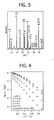
- Fig. 3 shows an X-ray diffraction pattern indexed by an orthorhombic cell.
- a broad solid solution area was present. According to Fig.
- Li 2 S was confirmed to exist on the upper side of the area surrounded by the points "A", “B", “C” and “D” where Li 2 S was in excess; LiGaS 2 was confirmed to exist on the lower side of the area where Li 2 S was in scarce; Li 4 GeS 4 was confirmed to exist on the left-hand side of the area where GeS 2 was in excess; and Li 5 GaS 4 was confirmed to exist on the right-hand side of the area where Ga 2 S 3 was in excess.
- the solid solution could be expressed by a chemical formula Li 4+x+d (Ge 1-x Ga x ) 1-d S 4 . In the solid solution area, the value “x” could be judged to fall in the range of 0.2 ⁇ "x” ⁇ 0.6. Moreover, the axes "a” and “b” were reduced as the value "x” was decreased.
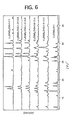
- Fig. 4 shows the temperature dependency of the ion conductivity which was exhibited by the above-described synthesized substances.
- the compositions of the synthesized substances were expressed by the general formula Li 4+x+d (Ge 1-x Ga x ) 1-d S 4 wherein the value "x" was fixed at 0.2, 0.25, 0.3, 0.4 and 0.5, and the value "d” was fixed at 0.025.
- the ion conductivity was increased as the content of GeS 2 was increased.
- Fig. 5 illustrates the variations of the ion conductivity and activation energy with respect to the compositional variation of the aforementioned synthesized substances.
- the blank circles ( ⁇ ) exhibit the ion conductivity at room temperature
- the blank squares ( ⁇ ) exhibit the activation energy at room temperature
- the solid squares ( ⁇ ) exhibit the activation energy at specific temperatures.
- the synthesized substances exhibited the diminishing ion conductivity at room temperature.
- the synthesized substances exhibited the enlarging activation energy.
- this synthesized substance exhibited the activation energy of 18.2 kJ/mole at a temperature of 150 °C or more.
- the small activation energy is the characteristic property of a conductor having a high ion conductivity.
- the Li 2 GeZnS 4 had a framework structure in which the apexes of the constituent tetrahedrons were shared in the direction of the "c" axis.
- the tetrahedrons were herein constituted by LiS 4 , GeS 4 and ZnS 4 , respectively. Specifically, the tetrahedrons were oriented in a predetermined direction.
- the Li 2 GeZnS 4 had the same structure as that of the low-temperature-phase ⁇ -Li 2 PO 4 .
- a lithium-ion-conductive solid electrolyte includes a lithium-ion-conductive substance expressed by a general formula Li 2 S-GeS 2 -X wherein "X" is at least one member selected from the group consisting of Ga 2 S 3 and ZnS, or Li 2 S-SiS 2 -P 2 S 5 . It is superb in terms of stability and safety at elevated temperatures, since it is a crystalline solid of high ion conductivity. It can be applied to a solid electrolyte for lithium batteries.
Landscapes
- Chemical & Material Sciences (AREA)
- General Chemical & Material Sciences (AREA)
- Engineering & Computer Science (AREA)
- Chemical Kinetics & Catalysis (AREA)
- Manufacturing & Machinery (AREA)
- Geochemistry & Mineralogy (AREA)
- Materials Engineering (AREA)
- Organic Chemistry (AREA)
- Electrochemistry (AREA)
- Life Sciences & Earth Sciences (AREA)
- Inorganic Chemistry (AREA)
- General Physics & Mathematics (AREA)
- Condensed Matter Physics & Semiconductors (AREA)
- Physics & Mathematics (AREA)
- Conductive Materials (AREA)
- Secondary Cells (AREA)
- Inorganic Compounds Of Heavy Metals (AREA)
- Glass Compositions (AREA)
- Battery Electrode And Active Subsutance (AREA)
Claims (14)
- Electrolyte solide conducteur d'ions lithium comprenant :une substance conductrice d'ions lithium exprimée par la formule générale Li2S-GeS2-X où "X" est au moins un membre choisi dans le groupe consistant en Ga2S3 et ZnS, où ladite substance conductrice d'ions lithium est cristalline.
- Electrolyte solide conducteur d'ions lithium selon la revendication 1 où ladite substance conductrice d'ions lithium inclut Li2S, GeS2 et X dans un rapport molaire Li2S:GeS2:X = (de 0,25 à 6) : (de 0 (non inclusif) à 1) : (de 0 ( non inclusif) à 1).
- Electrolyte solide conducteur d'ions lithium selon la revendication 2 où ladite substance conductrice d'ions lithium inclut Li2S, GeS2 et X dans un rapport molaire Li2S:GeS2:X = (de 2,2 à 2,3) : (de 0,5 à 0,8) : (de 0,1 à 0,25).
- Electrolyte solide conducteur d'ions lithium selon la revendication 1 où ladite substance conductrice d'ions lithium a une composition entourée par les points "A", "B", "C" et "D" représentés dans un système ternaire : Li2S-GeS2-Ga2S3;
où aux points "A", "B", "C", "D" le rapport molaire Li2S:GeS2:Ga2S3 est 2,3:0,8:0,1, 2,5:0,4:0,3, 2,3:0,4:0,3 et 2,1:0,8:0,1, respectivement. - Electrolyte solide conducteur d'ions lithium selon la revendication 1 où ladite substance conductrice d'ions lithium inclut Li2S, GeS2 et Ga2S3 dans un rapport molaire Li2S:GeS2:Ga2S3 = 2,2:0,8:0,1.
- Electrolyte solide conducteur d'ions lithium selon la revendication 1 où ladite substance conductrice d'ions lithium inclut Li2S, GeS2 et Ga2S3 dans un rapport molaire Li2S:GeS2:Ga2S3 = 2,225:0,75:0,125.
- Electrolyte solide conducteur d'ions lithium selon la revendication 1 où ladite substance conductrice d'ions lithium inclut Li2S, GeS2 et Ga2S3 dans un rapport molaire Li2S:GeS2:Ga2S3 = 2,25:0,7:0,15.
- Electrolyte solide conducteur d'ions lithium selon la revendication 1 où ladite substance conductrice d'ions lithium est exprimée par la formule chimique Li4+x+d (Ge1-xGax)1-dS4 où la valeur "x" est située dans la plage de 0,2<"x"<0,6 et la valeur "d" est située dans la plage de 0,00<"d"<0,05.
- Electrolyte solide conducteur d'ions lithium selon la revendication 1 où ladite substance conductrice d'ions lithium est exprimée par la formule chimique Li4-2yGe1-yZnyS4 où la valeur "y" est située dans la plage de 0<"y"<0,1.
- Electrolyte solide conducteur d'ions lithium selon la revendication 1 où ladite substance conductrice d'ions lithium inclut Li2S, GeS2 et ZnS dans un rapport molaire Li2S:GeS2:ZnS = (de 1,0 à 2,0): 1,0: (de 0,0 non inclusif à 1,0).
- Electrolyte solide conducteur d'ions lithium comprenant :une substance conductrice d'ions lithium exprimée par la formule générale Li2S-SiS2-P2S5 où ladite substance conductrice d'ions lithium est cristalline.
- Electrolyte solide conducteur d'ions lithium selon la revendication 11 où ladite substance conductrice d'ions lithium inclut Li2S, SiS2 et P2S5 dans un rapport molaire Li2S:SiS2:P2S5 = (de 1,5 à 2,0) : (de 0,0 non inclusif à 1,0) : (de 0,0 non inclusif à 0,5).
- Pile ou accumulateur au lithium à électrolyte solide comprenant
un électrolyte solide incluant une substance conductrice d'ions lithium,
la substance conductrice d'ions lithium selon les revendications 1 à 12,
une cathode; et
une anode. - Pile ou accumulateur à électrolyte solide selon la revendication 13 où
la cathode inclut un mélange d'une matière active cathodique et de la substance conductrice d'ions lithium selon les revendications 1 à 12 et
l'anode inclut un mélange d'une matière active anodique et de la substance conductrice d'ions lithium selon les revendications 1 à 12.
Applications Claiming Priority (2)
| Application Number | Priority Date | Filing Date | Title |
|---|---|---|---|
| JP33916997A JP3744665B2 (ja) | 1997-12-09 | 1997-12-09 | リチウムイオン伝導性固体電解質および電池 |
| JP33916997 | 1997-12-09 |
Publications (2)
| Publication Number | Publication Date |
|---|---|
| EP0923148A1 EP0923148A1 (fr) | 1999-06-16 |
| EP0923148B1 true EP0923148B1 (fr) | 2008-10-29 |
Family
ID=18324900
Family Applications (1)
| Application Number | Title | Priority Date | Filing Date |
|---|---|---|---|
| EP98122839A Expired - Lifetime EP0923148B1 (fr) | 1997-12-09 | 1998-12-01 | Electrolyte solide conducteur d'ions lithium et pile au lithium à electrolyte solide |
Country Status (4)
| Country | Link |
|---|---|
| US (1) | US6277524B1 (fr) |
| EP (1) | EP0923148B1 (fr) |
| JP (1) | JP3744665B2 (fr) |
| DE (1) | DE69840163D1 (fr) |
Families Citing this family (52)
| Publication number | Priority date | Publication date | Assignee | Title |
|---|---|---|---|---|
| DE10154912B4 (de) * | 2001-11-08 | 2007-11-29 | Birke-Salam, Fatima, Dr. | Wiederaufladbarer Lithiumakkumulator |
| JP4800589B2 (ja) * | 2004-05-13 | 2011-10-26 | 三洋電機株式会社 | リチウム二次電池用固体電解質含有電極 |
| CN100502111C (zh) * | 2007-02-13 | 2009-06-17 | 中国科学院上海硅酸盐研究所 | 用于全固态锂电池的锂硫体系固体电解质材料及制备方法 |
| CN100524927C (zh) * | 2007-02-13 | 2009-08-05 | 中国科学院上海硅酸盐研究所 | 用于全固态锂电池固体电解质材料体系及制备方法 |
| US9093707B2 (en) * | 2007-06-11 | 2015-07-28 | Alliance For Sustainable Energy, Llc | MultiLayer solid electrolyte for lithium thin film batteries |
| JP5678297B2 (ja) * | 2008-06-10 | 2015-02-25 | 友寄 壹 | リチウムイオン電池の製法及びリチウム電池の製法 |
| JP5288346B2 (ja) * | 2008-09-11 | 2013-09-11 | トヨタ自動車株式会社 | 電池 |
| KR101201166B1 (ko) | 2009-02-09 | 2012-11-13 | 도요타지도샤가부시키가이샤 | 고체 전해질 재료 함유 시트의 제조 방법 |
| JP5333184B2 (ja) * | 2009-03-16 | 2013-11-06 | トヨタ自動車株式会社 | 全固体二次電池 |
| WO2010107084A1 (fr) * | 2009-03-18 | 2010-09-23 | 株式会社三徳 | Batterie au lithium tout solide |
| JP5168269B2 (ja) | 2009-11-25 | 2013-03-21 | トヨタ自動車株式会社 | Liイオン伝導性材料およびリチウム電池 |
| JP5641193B2 (ja) * | 2010-03-08 | 2014-12-17 | 独立行政法人産業技術総合研究所 | 全固体リチウム二次電池 |
| CN102884666B (zh) * | 2010-03-26 | 2015-12-02 | 丰田自动车株式会社 | 固体电解质材料和全固态锂二次电池 |
| US8865354B2 (en) | 2010-03-30 | 2014-10-21 | West Virginia University | Inorganic solid electrolyte glass phase composite and a battery containing an inorganic solid electrolyte glass phase composite |
| CN102280660B (zh) * | 2011-07-04 | 2014-01-01 | 中国科学院上海硅酸盐研究所 | 一种固体电解质材料及其制备方法 |
| JP5701741B2 (ja) * | 2011-12-28 | 2015-04-15 | 三井金属鉱業株式会社 | 硫化物系固体電解質 |
| US9362546B1 (en) | 2013-01-07 | 2016-06-07 | Quantumscape Corporation | Thin film lithium conducting powder material deposition from flux |
| EP2997611B1 (fr) | 2013-05-15 | 2026-04-22 | QuantumScape Battery, Inc. | Catholyte ou électrolyte à semi-conducteurs pour une batterie utilisant le liampbsc (m = si, ge, et/ou sn) |
| WO2015011937A1 (fr) | 2013-07-25 | 2015-01-29 | 三井金属鉱業株式会社 | Électrolyte solide à base de sulfure pour batterie au lithium-ion |
| US9466834B2 (en) | 2013-08-23 | 2016-10-11 | Ut-Battelle, Llc | Lithium-conducting sulfur compound cathode for lithium-sulfur batteries |
| US10403931B2 (en) | 2013-10-07 | 2019-09-03 | Quantumscape Corporation | Garnet materials for Li secondary batteries and methods of making and using garnet materials |
| US9853323B2 (en) | 2013-10-31 | 2017-12-26 | Samsung Electronics Co., Ltd. | Positive electrode for lithium-ion secondary battery, and lithium-ion secondary battery |
| DE102014207531A1 (de) | 2014-04-22 | 2015-10-22 | Bayerische Motoren Werke Aktiengesellschaft | Galvanisches Element mit Festkörperzellenstapel |
| US9859560B2 (en) | 2014-06-04 | 2018-01-02 | Quantumscape Corporation | Electrode materials with mixed particle sizes |
| JP5873533B2 (ja) | 2014-07-16 | 2016-03-01 | 三井金属鉱業株式会社 | リチウムイオン電池用硫化物系固体電解質 |
| EP3240089B1 (fr) | 2014-12-26 | 2019-04-24 | Mitsui Mining and Smelting Co., Ltd. | Electrolyte solide a base de sulfure pour pile au lithium-ion, et compose electrolytique solide |
| EP3283449B8 (fr) | 2015-04-16 | 2021-05-05 | QuantumScape Battery, Inc. | Plaques d'enfournement de grenat bourrées de lithium destinées à la fabrication d'un électrolyte solide |
| WO2016210371A1 (fr) | 2015-06-24 | 2016-12-29 | Quantumscape Corporation | Électrolytes composites |
| RU2607471C1 (ru) * | 2015-07-03 | 2017-01-10 | Акционерное общество АО "Энергия" | Эликтролитная смесь для теплового химического источника тока |
| JP6678405B2 (ja) * | 2015-07-09 | 2020-04-08 | 国立大学法人東京工業大学 | リチウム固体電解質 |
| US20170022112A1 (en) | 2015-07-21 | 2017-01-26 | Quantumscape Corporation | Processes and materials for casting and sintering green garnet thin films |
| US10446872B2 (en) | 2015-08-04 | 2019-10-15 | Samsung Electronics Co., Ltd. | Solid electrolyte and lithium battery including the same |
| KR102765039B1 (ko) | 2015-12-04 | 2025-02-11 | 퀀텀스케이프 배터리, 인코포레이티드 | 리튬, 인, 황 및 요오드를 포함하는 전해질 및 음극액 조성물, 전기화학적 장치를 위한 전해질 막, 및 이들 전해질 및 음극액을 제조하는 어닐링 방법(annealing method). |
| US9966630B2 (en) | 2016-01-27 | 2018-05-08 | Quantumscape Corporation | Annealed garnet electrolyte separators |
| WO2017197406A1 (fr) | 2016-05-13 | 2017-11-16 | Quantumscape Corporation | Agent de liaison de séparateur d'électrolyte solide |
| WO2018027200A1 (fr) | 2016-08-05 | 2018-02-08 | Quantumscape Corporation | Séparateurs translucides et transparents |
| US11342630B2 (en) | 2016-08-29 | 2022-05-24 | Quantumscape Battery, Inc. | Catholytes for solid state rechargeable batteries, battery architectures suitable for use with these catholytes, and methods of making and using the same |
| WO2018075809A1 (fr) | 2016-10-21 | 2018-04-26 | Quantumscape Corporation | Électrolytes de grenat remplis de lithium ayant une densité de défauts de surface réduite et procédés de fabrication et d'utilisation de ces derniers |
| US10396395B2 (en) | 2017-03-31 | 2019-08-27 | Tokyo Institute Of Technology | Solid electrolyte material and method for producing the same |
| CN108695549B (zh) | 2017-03-31 | 2021-07-16 | 国立大学法人东京工业大学 | 固体电解质材料及其制造方法 |
| ES2973278T3 (es) | 2017-06-23 | 2024-06-19 | Quantumscape Battery Inc | Electrolitos de granate rellenos de litio con inclusiones de fase secundaria |
| US10347937B2 (en) | 2017-06-23 | 2019-07-09 | Quantumscape Corporation | Lithium-stuffed garnet electrolytes with secondary phase inclusions |
| US11600850B2 (en) | 2017-11-06 | 2023-03-07 | Quantumscape Battery, Inc. | Lithium-stuffed garnet thin films and pellets having an oxyfluorinated and/or fluorinated surface and methods of making and using the thin films and pellets |
| US10749214B2 (en) * | 2018-05-30 | 2020-08-18 | GM Global Technology Operations LLC | Sulfide and oxy-sulfide glass and glass-ceramic solid state electrolytes for electrochemical cells |
| KR102905859B1 (ko) | 2018-06-06 | 2025-12-31 | 퀀텀스케이프 배터리, 인코포레이티드 | 고체-상태 배터리 |
| US11264602B2 (en) | 2019-05-08 | 2022-03-01 | Samsung Electronics Co., Ltd. | Sulfide glass-ceramic lithium-ion solid-state conductor |
| JP7708766B2 (ja) | 2020-01-15 | 2025-07-15 | クアンタムスケープ バッテリー,インコーポレイテッド | 電池用の高グリーン密度セラミック |
| CN112028114B (zh) * | 2020-08-12 | 2022-01-11 | 中南大学 | 一种硫化锌/二硫化锗@碳复合材料的制备方法和应用 |
| KR102498657B1 (ko) * | 2021-03-25 | 2023-02-09 | 순천대학교 산학협력단 | 리튬이온 전도성 황화물계 고체전해질 및 이의 제조방법 |
| CN113659196A (zh) * | 2021-07-22 | 2021-11-16 | 河北光兴半导体技术有限公司 | 一种硫化物固态电解质及其制备方法和全固态锂电池 |
| CN114203965B (zh) * | 2021-12-07 | 2024-01-30 | 远景动力技术(江苏)有限公司 | 电化学装置和电子设备 |
| GB2627468A (en) * | 2023-02-22 | 2024-08-28 | Univ Liverpool | Lithium-Ion conductor materials |
Family Cites Families (13)
| Publication number | Priority date | Publication date | Assignee | Title |
|---|---|---|---|---|
| JPS5973850A (ja) * | 1982-10-19 | 1984-04-26 | Sanyo Electric Co Ltd | 固体電解質電池 |
| JPH0670906B2 (ja) | 1983-02-16 | 1994-09-07 | 三洋電機株式会社 | 固体電解質電池 |
| US4465745A (en) * | 1983-06-29 | 1984-08-14 | Union Carbide Corporation | Crystalline solid lithium cation conductive electrolyte |
| US5217826A (en) * | 1990-07-31 | 1993-06-08 | Matsushita Electric Industrial Co., Ltd. | Lithium-ion conducting solid electrolyte |
| JP3184517B2 (ja) * | 1990-11-29 | 2001-07-09 | 松下電器産業株式会社 | リチウムイオン伝導性固体電解質 |
| US5455206A (en) * | 1990-09-14 | 1995-10-03 | Kaun; Thomas D. | Corrosion resistant ceramic materials |
| JP3343936B2 (ja) | 1992-05-12 | 2002-11-11 | 松下電器産業株式会社 | 非晶質リチウムイオン伝導性固体電解質並びにその合成法 |
| JP3284215B2 (ja) | 1992-09-29 | 2002-05-20 | 松下電器産業株式会社 | 硫化物系リチウムイオン導電性固体電解質の製造法 |
| CA2126883C (fr) * | 1993-07-15 | 2005-06-21 | Tomoari Satoh | Materiau pour cathode de pile secondaire au lithium et methode de production de bioxyde de nickel contenant du lithium et de fabrication de piles secondaires au lithium |
| TW284922B (fr) * | 1994-05-10 | 1996-09-01 | Sumitomo Chemical Co | |
| JP3510420B2 (ja) * | 1996-04-16 | 2004-03-29 | 松下電器産業株式会社 | リチウムイオン伝導性固体電解質およびその製造方法 |
| US6022640A (en) * | 1996-09-13 | 2000-02-08 | Matsushita Electric Industrial Co., Ltd. | Solid state rechargeable lithium battery, stacking battery, and charging method of the same |
| KR100378004B1 (ko) * | 1997-06-10 | 2003-06-09 | 삼성에스디아이 주식회사 | 유리-고분자복합전해질및그제조방법 |
-
1997
- 1997-12-09 JP JP33916997A patent/JP3744665B2/ja not_active Expired - Fee Related
-
1998
- 1998-12-01 EP EP98122839A patent/EP0923148B1/fr not_active Expired - Lifetime
- 1998-12-01 DE DE69840163T patent/DE69840163D1/de not_active Expired - Lifetime
- 1998-12-08 US US09/206,961 patent/US6277524B1/en not_active Expired - Lifetime
Also Published As
| Publication number | Publication date |
|---|---|
| EP0923148A1 (fr) | 1999-06-16 |
| DE69840163D1 (de) | 2008-12-11 |
| JPH11176236A (ja) | 1999-07-02 |
| JP3744665B2 (ja) | 2006-02-15 |
| US6277524B1 (en) | 2001-08-21 |
Similar Documents
| Publication | Publication Date | Title |
|---|---|---|
| EP0923148B1 (fr) | Electrolyte solide conducteur d'ions lithium et pile au lithium à electrolyte solide | |
| US4302518A (en) | Electrochemical cell with new fast ion conductors | |
| Mizushima et al. | LixCoO2 (0< x<-1): A new cathode material for batteries of high energy density | |
| Kanno et al. | Synthesis of a new lithium ionic conductor, thio-LISICON–lithium germanium sulfide system | |
| Goodenough et al. | Solid-solution oxides for storage-battery electrodes | |
| Holleck et al. | Transition metal sulfides as cathodes for secondary lithium batteries—II. titanium sulfides | |
| Chakraborty et al. | Mg-doped NASICON-type electrolyte for rechargeable solid-state sodium-ion batteries | |
| EP2747187B1 (fr) | Corps électroconducteur au lithium-ion et son procédé de fabrication, batterie rechargeable au lithium entièrement solide | |
| CA2552230C (fr) | Element electrochimique destine a de hautes temperatures | |
| US12132165B2 (en) | All-solid-state battery | |
| US12300780B2 (en) | Electrode for power storage device, and power storage device | |
| Kawakita et al. | Structural properties of Li1+ xV3O8 upon lithium insertion at ambient and high temperature | |
| KR20200003929A (ko) | 리튬 이차 전지의 고체 전해질 및 당해 고체 전해질용 황화물계 화합물 | |
| EP4317059A1 (fr) | Électrolyte solide | |
| KR20230022158A (ko) | 고체 전해질, 전극 합제 및 전지 | |
| Thangadurai et al. | Tailoring ceramics for specific applications: a case study of the development of all-solid-state lithium batteries | |
| WO2022182313A2 (fr) | Mise au point de nouveaux oxydes métalliques stratifiés de type o3-naxmo2 stables à l'air pour batteries au sodium-ion | |
| US10403933B2 (en) | Solid electrolyte material and method for producing the same | |
| EP4186862A1 (fr) | Matériau d'électrolyte solide et batterie l'utilisant | |
| WO2024096111A1 (fr) | Électrolyte composite, électrolyte pour batterie et batterie | |
| PL209387B1 (pl) | Stały element elektrochemiczny oraz jego zastosowanie do dostarczania energii elektrycznej w podwyższonej temperaturze | |
| Xu et al. | A lithium conductor Li6. 96Sn1. 55Si1. 71P0. 8S12 with a cubic argyrodite-type structure in the Li2S–SnS2–SiS2–P2S5 system: synthesis, structure, and electrochemical properties | |
| JP7731058B2 (ja) | 固体電解質材料およびそれを用いた電池 | |
| Machida et al. | Electrochemical insertion of lithium ions into V2O5 glasses containing transition-metal oxides | |
| EP3800708A1 (fr) | Utilisation d'un composé de sulfure métallique de transition dans une électrode positive pour batteries à semi-conducteurs |
Legal Events
| Date | Code | Title | Description |
|---|---|---|---|
| PUAI | Public reference made under article 153(3) epc to a published international application that has entered the european phase |
Free format text: ORIGINAL CODE: 0009012 |
|
| 17P | Request for examination filed |
Effective date: 19981201 |
|
| AK | Designated contracting states |
Kind code of ref document: A1 Designated state(s): DE FR |
|
| AX | Request for extension of the european patent |
Free format text: AL;LT;LV;MK;RO;SI |
|
| AKX | Designation fees paid |
Free format text: DE FR |
|
| 17Q | First examination report despatched |
Effective date: 20010402 |
|
| 17Q | First examination report despatched |
Effective date: 20010402 |
|
| GRAP | Despatch of communication of intention to grant a patent |
Free format text: ORIGINAL CODE: EPIDOSNIGR1 |
|
| GRAS | Grant fee paid |
Free format text: ORIGINAL CODE: EPIDOSNIGR3 |
|
| GRAA | (expected) grant |
Free format text: ORIGINAL CODE: 0009210 |
|
| AK | Designated contracting states |
Kind code of ref document: B1 Designated state(s): DE FR |
|
| REF | Corresponds to: |
Ref document number: 69840163 Country of ref document: DE Date of ref document: 20081211 Kind code of ref document: P |
|
| PLBE | No opposition filed within time limit |
Free format text: ORIGINAL CODE: 0009261 |
|
| STAA | Information on the status of an ep patent application or granted ep patent |
Free format text: STATUS: NO OPPOSITION FILED WITHIN TIME LIMIT |
|
| 26N | No opposition filed |
Effective date: 20090730 |
|
| PGFP | Annual fee paid to national office [announced via postgrant information from national office to epo] |
Ref country code: DE Payment date: 20131127 Year of fee payment: 16 |
|
| PGFP | Annual fee paid to national office [announced via postgrant information from national office to epo] |
Ref country code: FR Payment date: 20131209 Year of fee payment: 16 |
|
| REG | Reference to a national code |
Ref country code: DE Ref legal event code: R119 Ref document number: 69840163 Country of ref document: DE |
|
| REG | Reference to a national code |
Ref country code: FR Ref legal event code: ST Effective date: 20150831 |
|
| PG25 | Lapsed in a contracting state [announced via postgrant information from national office to epo] |
Ref country code: DE Free format text: LAPSE BECAUSE OF NON-PAYMENT OF DUE FEES Effective date: 20150701 |
|
| PG25 | Lapsed in a contracting state [announced via postgrant information from national office to epo] |
Ref country code: FR Free format text: LAPSE BECAUSE OF NON-PAYMENT OF DUE FEES Effective date: 20141231 |