EP0923220A2 - Verfahren zur Verwaltung teilnehmerindividueller Daten eines Telekommunikationsendgerätes - Google Patents
Verfahren zur Verwaltung teilnehmerindividueller Daten eines Telekommunikationsendgerätes Download PDFInfo
- Publication number
- EP0923220A2 EP0923220A2 EP98123612A EP98123612A EP0923220A2 EP 0923220 A2 EP0923220 A2 EP 0923220A2 EP 98123612 A EP98123612 A EP 98123612A EP 98123612 A EP98123612 A EP 98123612A EP 0923220 A2 EP0923220 A2 EP 0923220A2
- Authority
- EP
- European Patent Office
- Prior art keywords
- data
- specific data
- subscriber
- memory
- telecommunications terminal
- Prior art date
- Legal status (The legal status is an assumption and is not a legal conclusion. Google has not performed a legal analysis and makes no representation as to the accuracy of the status listed.)
- Withdrawn
Links
Images


Classifications
-
- H—ELECTRICITY
- H04—ELECTRIC COMMUNICATION TECHNIQUE
- H04M—TELEPHONIC COMMUNICATION
- H04M1/00—Substation equipment, e.g. for use by subscribers
- H04M1/26—Devices for calling a subscriber
- H04M1/27—Devices whereby a plurality of signals may be stored simultaneously
-
- H—ELECTRICITY
- H04—ELECTRIC COMMUNICATION TECHNIQUE
- H04M—TELEPHONIC COMMUNICATION
- H04M1/00—Substation equipment, e.g. for use by subscribers
- H04M1/247—Telephone sets including user guidance or feature selection means facilitating their use
-
- H—ELECTRICITY
- H04—ELECTRIC COMMUNICATION TECHNIQUE
- H04M—TELEPHONIC COMMUNICATION
- H04M3/00—Automatic or semi-automatic exchanges
- H04M3/42—Systems providing special services or facilities to subscribers
- H04M3/42314—Systems providing special services or facilities to subscribers in private branch exchanges
-
- H—ELECTRICITY
- H04—ELECTRIC COMMUNICATION TECHNIQUE
- H04M—TELEPHONIC COMMUNICATION
- H04M1/00—Substation equipment, e.g. for use by subscribers
- H04M1/247—Telephone sets including user guidance or feature selection means facilitating their use
- H04M1/2471—Configurable and interactive telephone terminals with subscriber controlled features modifications, e.g. with ADSI capability [Analog Display Services Interface]
-
- H—ELECTRICITY
- H04—ELECTRIC COMMUNICATION TECHNIQUE
- H04M—TELEPHONIC COMMUNICATION
- H04M3/00—Automatic or semi-automatic exchanges
- H04M3/38—Graded-service arrangements, i.e. some subscribers prevented from establishing certain connections
- H04M3/382—Graded-service arrangements, i.e. some subscribers prevented from establishing certain connections using authorisation codes or passwords
-
- H—ELECTRICITY
- H04—ELECTRIC COMMUNICATION TECHNIQUE
- H04M—TELEPHONIC COMMUNICATION
- H04M3/00—Automatic or semi-automatic exchanges
- H04M3/42—Systems providing special services or facilities to subscribers
- H04M3/42229—Personal communication services, i.e. services related to one subscriber independent of his terminal and/or location
Definitions
- the invention is based on a method for administration participant-specific data of a Telecommunications terminal according to the genus of Main claim.
- Telephone terminals are already known which have a Have speed dial memory, in the individual subscriber Speed dial destinations can be saved and called up if necessary can.
- the inventive method with the features of The main claim has the advantage that the participant-specific data in a memory with the center connected to the telecommunications terminal Connection of several telecommunication terminals, in particular a private branch exchange, and that the participant-specific data after a request from Central store to at least one authorized and the central connected telecommunications terminal be transmitted.
- the Storage of subscriber-specific data in the memory of the Central can also be used for telecommunication terminals performed according to its own memory to make a backup copy of the individual Realizing data. In the event of malfunctions or Data loss in the telecommunications terminal can then data backed up at the central office Telecommunications terminal can be made available.
- a user can access any of the Central connected telecommunications terminal via the individual data assigned to him, if he has authorization so that he can Use of various connected to the central Telecommunication terminals are not always new Enter or program individual subscriber data got to. In this way, moves are made to one PBX connected subscribers within a company possible without the telecommunications terminal of the participant must be moved. The participant keeps still his usual participant individual Settings. Even when exchanging one with the head office connected for example defective Telecommunications terminal are the individual data due to the storage in the head office is still available.
- Another advantage is that more than one Central connected telecommunication terminals with the same subscriber-specific data from the head office can be supplied so that, for example Pre-configuration of these telecommunications terminals with specific standard data is possible without great effort, so that individual participants based on this Pre-configuration on your telecommunications terminal Enter further participant-specific data or can program.
- the subscriber-specific data between the Telecommunications terminal and the headquarters to one predetermined time can be transmitted. In this way low-traffic times can be used, so that the Establishment of telecommunications connections by the Exchange of participant-specific data between the Telecommunications terminal and the headquarters only insignificantly is affected.
- Another advantage is that the subscriber-specific data from the telecommunications terminal transmitted to the control center at predetermined intervals and be stored there in memory. In this way, one automatic backup of subscriber-specific data in the headquarters realized. It also ensures that those stored in the control panel memory subscriber-specific data are as up to date as possible. A in the meantime change of participant-specific data for example, by entering or Programming by the user on Telecommunications terminal can be recorded and stored in memory the central office can be saved. If data is lost on Telecommunications terminal are thus available to the user The most current subscriber-specific data in the memory at the headquarters.
- Another advantage is that Individual data encrypted in the memory of the Central are stored and only to an authorized Telecommunication terminal are transmitted decrypted. In this way, data protection for the Improve subscriber-specific data significantly. At unauthorized access to the control panel memory the participant-specific data cannot be evaluated.
- a signaling data channel preferably a D channel according to the ISDN standard (Integrated Services Data Network)
- Another advantage is that the transfer of the subscriber-specific data between the Telecommunications terminal and the headquarters in at least a user data channel, preferably a B channel according to the ISDN standard. This way, for the Transfer of subscriber-specific data a higher Data rate can be used so that the corresponding Data exchange can take place faster. This is special an advantage with a large amount of data.
- FIG. 1 shows a block diagram of a Control center with connected telecommunication terminals
- Figure 2 is a flow chart for the operation of a Control of the control center during storage subscriber-specific data
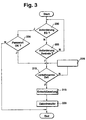
- Figure 3 is a flow chart for the functionality of the control during a data transfer from the central office to a telecommunications terminal.
- 15 indicates a private branch exchange trained headquarters.
- the center comprises a memory 20 and an interface 45 which are connected to each other and are each connected to a controller 40.
- the Controller 40 can be integrated into private branch exchange 15 or externally, for example in the form of a personal computer be connected to the private branch exchange 15. in the The described embodiment is the controller 40 in the private branch exchange 15 is integrated.
- About a first Data channel 25 is a first telecommunications terminal 1 the interface 45 connected.
- Over a second Data channel 30 is a second telecommunication terminal 5 connected to the interface 45.
- About a third Data channel 35 is a third telecommunication terminal 10 connected to the interface 45.
- Data can also be sent from the interface 45 to the Telecommunication terminals 1, 5, 10 are sent.
- Memory 20 can be written and readable as non-volatile Mass storage be designed.
- Participant-specific data entered or programmed can, for example Speed dial destinations, phone book memory entries, Keyboard assignments, i.e. the individual assignment of Keys with activatable features, authorizations of the participant, that is, the determination of the participant usable features, basic display settings, for example the display of your own telephone number, language the display or the like.
- Participant-specific programming of a user interface become. The user interface can be shown in one of FIG not shown memory of the respective Telecommunications terminal 1, 5, 10 are stored.
- this memory can also be used as Phonebook memory can be used and include subscriber-specific phone book entries. Become Memory contents of the memory of the respective Telecommunications terminal 1, 5, 10 consciously or from Accidentally deleted, the corresponding data should be included Need again on the respective telecommunications terminal 1, 5, 10 can be entered. This represents one depending on the amount of data corresponding effort. This effort can be omitted if in the memory 20 of the control center 15 a backup copy the participant-specific data of the Telecommunications terminals 1, 5, 10 is present. About the Data channels 25, 30, 35 can then, if necessary subscriber-specific data from the memory 20 of the Central 15 to the corresponding Telecommunication terminals 1, 5, 10 are transmitted.
- Controlling the storage of individual subscribers Data in the memory 20 of the control center 15 and the transfer of the subscriber-specific data from the center 15 to the Subscriber terminals 1, 5, 10 are controlled by the controller 40 carried out.
- the controller 40 can also be external the central 15 operated personal computers become. How the controller works for storage of the subscriber-specific data in the memory 20 of the Central station 15 is based on a flow chart according to FIG. 2 shown.
- the flow chart describes the process of Storage of subscriber-specific data one of the three Telecommunications terminals 1, 5 shown in Figure 1, 10.
- the request for saving can Participant-specific data in the memory 20 of the control center 15 from the corresponding telecommunications terminal or from Central 15 go out.
- the control center 15 can do this for example, the telecommunications terminals 1, 5, 10 predetermined times or at predetermined time intervals Request submission of participant-specific data.
- Procedure according to the flow chart of Figure 2 should can be assumed as an example that individual participants Data of the first telecommunications terminal 1 for Storage in the memory 20 of the control center 15 are provided.
- the controller 40 checks whether from the first telecommunications terminal 1 in the interface 45 a request signal for storing the subscriber-specific data in the memory 20 of the control center 15 was received. If this is the case, it becomes one Program point 135 branches, otherwise it becomes one Program item 105 branches. At program point 105 the checks Control 40 whether a predetermined time interval for the cyclical prompt to the first Telecommunications terminal 1 for sending the Participant-specific data passed to the central office 15 is. If this is the case, then a program point 110 branches, otherwise program point 100 branched back.
- Access authorization code can be entered by the user on the first Telecommunications terminal 1, for example in the form of a Password and / or by means of an access authorization card, those in a corresponding, not shown in Figure 1 Card reader of the first telecommunication terminal 1 is introduced.
- the controller 40 checks whether there is a low-traffic time, that means whether the headquarters to a comparatively small extent with higher priority data processing processes is busy and / or whether on the first data channel 25 between the first telecommunications terminal 1 and the Central 15 currently has the smallest possible number of data is transmitted. If this is the case, it becomes one Program point 115 branches, otherwise it becomes a Program item 130 branches. At program point 130 a Go through the holding pattern. Then becomes Program point 110 branched back. At program point 115 the controller 40 causes the interface 45 to Sending a request signal to the first Telecommunications terminal 1. This will be the first Telecommunications terminal 1 for sending the participant-specific data to the central office 15. At a program point 120, those in the interface 45 received subscriber-specific data of the first Telecommunication terminal 1 from the controller 40 encrypted. At a program point 125 the encrypted subscriber-specific data in the memory 20 the head office 15 filed. Then the program part leave.
- a low-traffic time that means whether the headquarters to a comparatively small extent with higher priority
- FIG. 3 shows a flow chart for the controller 40 shown that the process in the transfer of im Memory 20 of the control center 15 stored participant-specific data to at least one authorized of the three shown in Figure 1 Telecommunication terminals 1, 5, 10 describes.
- Such Transfer of subscriber-specific data from the headquarters 15 to at least one of the telecommunication terminals 1, 5, 10 can after data malfunction with data loss in memory of the respective telecommunications terminal be of use.
- the Central 15 itself the transmission of individual subscribers Data from the memory 20 of the control center 15 to at least one authorized the connected to the central 15 Telecommunication terminals 1, 5, 10 causes.
- the controller 40 checks whether in the interface 45 a request signal from the first Telecommunication terminal 1 for transmission subscriber-specific data from the memory 20 of the center 15 received at the first telecommunications terminal 1 has been. If this is the case, then a program point becomes 230 branches, otherwise a program point 205 branches.
- the controller 40 checks whether at the control center 1, for example not via one in FIG shown input unit a request command for Transfer of subscriber-specific data from the headquarters 15 entered to the first telecommunications terminal 1 has been. If this is the case, then a program point 210 branches, otherwise program point 200 branched back.
- the control checks at program point 230 40, whether an access authorization code in the interface 45 was received by the first telecommunications terminal 1 and whether this access authorization code with in the memory 20 of the Central 15 stored access authorization data matches. If this is the case, a user of the first telecommunications terminal 1 recognized as authorized and branched to program point 210. Otherwise the User of the first telecommunications terminal 1 as recognized without authorization and left the program part.
- the Enter the access authorization code on the first Telecommunication terminal 1 takes place here as well two other telecommunications terminals 5, 10 in the already described by means of password entry and / or the introduction of an access authorization card.
- Program point 210 checks the controller 40 whether a there is little traffic, that is, whether the head office is in comparatively small extent with higher priorities Data processing is busy and / or on the first data channel 25 the smallest possible number of data between the first telecommunications terminal 1 and the Interface 45 is exchanged. If so, so is branched to a program point 215, otherwise branches to a program point 225. At program point 225 will be put on hold. Then becomes Program point 210 branched back. At program point 215 controller 40 loads the first one Telecommunications terminal 1 assigned subscriber-specific data from the memory 20 and decrypts it. At a program point 220, the Control 40 interface 45 for sending the subscriber-specific data via the first data channel 25 to the first telecommunications terminal 1. Then leave the program part.
- the central 15 data are stored, not only for one of the 15 connected to the control center Individual telecommunication terminals 1, 5, 10 are. You can preferably in the same time described manner from the center 15 to the corresponding telecommunications terminals provided that they are operated by authorized users become. For example, one for all three Telecommunications terminals 1, 5, 10 alike usable standard setting for example for the User interface from the memory 20 of the control center 15 to the three Telecommunication terminals 1, 5, 10 are transmitted. This default setting is in the Telecommunications terminals 1, 5, 10 stored. The The default setting is therefore also individual for each participant.
- the respective user can build on the Change the default setting and in the save the respective telecommunications terminal 1, 5, 10.
- the memory 15 of the control center 15 could be used by everyone the central 15 connected telecommunications terminals 1, 5, 10 uniform phone book entries can be saved and to the three telecommunication terminals 1, 5, 10 be transmitted. The uniform phone book entries could then in the three telecommunication terminals 1, 5, 10 can be saved each. The uniform Phone book entries could be made by users of each Telecommunication terminals 1, 5, 10 individually expanded become. The individual participants in this way extended phone book entries could also be in the respective telecommunications terminal 1, 5, 10 stored and in accordance with the flow chart described in FIG Memory 20 of the control center 15 are backed up.
- the subscriber-specific data in the memory 20 den can be assigned to corresponding users, they are those also stored in the memory 20 of the control center 15 assigned corresponding access authorization data.
- This Access authorization data must be used when transferring the participant-specific data from the Telecommunication terminals 1, 5, 10 to the central office 15 for example in the form of the access authorization code are also transmitted. Become applications for several Telecommunications terminals 1, 5, 10 regardless of respective user saved, so this can be done without Assignment to the access authorization data.
- Telecommunications terminals 1, 5, 10 In front especially in the event that these for several Data accessible to telecommunication terminals not all connected to the control center 15 Telecommunications terminals 1, 5, 10 be accessible it is advisable to use this data with the associated data Access authorization data in the memory 20 of the control center 15 assign so that they only match the corresponding Telecommunication terminals can be transmitted, the Users are authorized for this data.
- the corresponding Access authorization data must be used both for the case are included that the participant-specific data entered on a telecommunications terminal or can be programmed as well in case the Participant-specific data on the in Figure 1 not input unit of the control center 15 shown become.
- a new feature can also be described Way at least part of the to the central office 15th connected telecommunications terminals 1, 5, 10 through Transmission of the corresponding data from the control center 15 the corresponding telecommunications terminals are available be put. This feature then needs also only once either at one to the central office 15 connected telecommunications terminal or at the Central 15 can be entered yourself.
- the data channel 25, 30, 35 for the transmission of participant-specific data between the respective Telecommunications terminal 1, 5, 10 and the center 15 can for example as a signaling data channel, preferably as a D channel according to the ISDN standard with a data rate of 16 kbit / s.
- a signaling data channel preferably as a D channel according to the ISDN standard with a data rate of 16 kbit / s.
- a telecommunications terminal and the head office 15 also more than one signaling data channel for the transmission of the individual data are switched.
- Data exchange can be specified in the D-channel protocol, whereby for this purpose in this protocol, for example, the PSF section (Private specific facility) can be used.
- the data channel 25, 30, 35 for the transmission of subscriber-specific data between one of the Telecommunication terminals 1, 5, 10 and the central office 15 can also be used as a user data channel, preferably as a B channel the ISDN standard with a data rate of 64kBit / s be trained. Depending on the amount of data, more than a user data channel for the transmission of subscriber-specific data can be provided.
- the input unit of the not shown in FIG Control center 15 can be used externally to the control center 15 connected personal computers also to these be connected.
Landscapes
- Engineering & Computer Science (AREA)
- Signal Processing (AREA)
- Computer Vision & Pattern Recognition (AREA)
- Human Computer Interaction (AREA)
- Telephonic Communication Services (AREA)
Abstract
Description
Claims (10)
- Verfahren zur Verwaltung teilnehmerindividueller Daten eines Telekommunikationsendgerätes (1, 5, 10), dadurch gekennzeichnet, daß die teilnehmerindividuellen Daten in einem Speicher (20) einer mit dem Telekommunikationsendgerät (1, 5, 10) verbundenen Zentrale (15) zum Anschluß mehrerer Telekommunikationsendgeräte (1, 5, 10), insbesondere einer Nebenstellenanlage, abgelegt werden und daß die teilnehmerindividuellen Daten nach einer Aufforderung vom Speicher (20) der Zentrale (15) an mindestens ein berechtigtes und an die Zentrale (15) angeschlossenes Telekommunikationsendgerät (1, 5, 10) übertragen werden.
- Verfahren nach Anspruch 1, dadurch gekennzeichnet, daß teilnehmerindividuelle Daten vom Telekommunikationsendgerät (1, 5, 10) an die Zentrale (15) übertragen werden, wenn die Zentrale (15) das Telekommunikationsendgerät (1, 5, 10) als berechtigt erkannt hat.
- Verfahren nach Anspruch 1 oder 2, dadurch gekennzeichnet, daß die Berechtigung eines Telekommunikationsendgerätes (1, 5, 10) anhand eines vom Telekommunikationsendgerät (1, 5, 10) an die Zentrale (15) übertragenen Zugangsberechtigungscodes geprüft wird.
- Verfahren nach Anspruch 1, 2 oder 3, dadurch gekennzeichnet, daß die teilnehmerindividuellen Daten zwischen dem Telekommunikationsendgerät (1, 5, 10) und der Zentrale (15) zu einer vorgegebenen Zeit übertragen werden.
- Verfahren nach einem der vorherigen Ansprüche, dadurch gekennzeichnet, daß die teilnehmerindividuellen Daten vom Telekommunikationsendgerät (1, 5, 10) in vorgegebenen Zeitabständen an die Zentrale (15) übertragen und dort im Speicher (20) abgelegt werden.
- Verfahren nach einem der vorherigen Ansprüche, dadurch gekennzeichnet, daß die teilnehmerindividuellen Daten verschlüsselt im Speicher (20) der Zentrale (15) abgelegt werden und nur an ein berechtigtes Telekommunikationsendgerät (1, 5, 10) entschlüsselt übertragen werden.
- Verfahren nach einem der vorherigen Ansprüche, dadurch gekennzeichnet, daß die Übertragung der teilnehmerindividuellen Daten vom Telekommunikationsendgerät (1, 5, 10) ausgelöst wird.
- Verfahren nach einem der vorherigen Ansprüche, dadurch gekennzeichnet, daß die Übertragung der teilnehmerindividuellen Daten von der Zentrale (15) ausgelöst wird.
- Verfahren nach einem der vorherigen Ansprüche, dadurch gekennzeichnet, daß die Übertragung der teilnehmerindividuellen Daten zwischen dem Telekommunikationsendgerät (1, 5, 10) und der Zentrale (15) in mindestens einem Signalisierungsdatenkanal, vorzugsweise einem D-Kanal gemäß dem ISDN-Standard (Integrated Services Data Network), übertragen werden.
- Verfahren nach einem der vorherigen Ansprüche, dadurch gekennzeichnet, daß die Übertragung der teilnehmerindividuellen Daten zwischen dem Telekommunikationsendgerät (1, 5, 10) und der Zentrale (15) in mindestens einem Nutzdatenkanal, vorzugsweise einem B-Kanal gemäß dem ISDN-Standard, übertragen werden.
Applications Claiming Priority (2)
| Application Number | Priority Date | Filing Date | Title |
|---|---|---|---|
| DE19755012 | 1997-12-11 | ||
| DE19755012A DE19755012A1 (de) | 1997-12-11 | 1997-12-11 | Verfahren zur Verwaltung teilnehmerindividueller Daten eines Telekommunikationsendgerätes |
Publications (2)
| Publication Number | Publication Date |
|---|---|
| EP0923220A2 true EP0923220A2 (de) | 1999-06-16 |
| EP0923220A3 EP0923220A3 (de) | 2003-09-10 |
Family
ID=7851524
Family Applications (1)
| Application Number | Title | Priority Date | Filing Date |
|---|---|---|---|
| EP98123612A Withdrawn EP0923220A3 (de) | 1997-12-11 | 1998-12-09 | Verfahren zur Verwaltung teilnehmerindividueller Daten eines Telekommunikationsendgerätes |
Country Status (2)
| Country | Link |
|---|---|
| EP (1) | EP0923220A3 (de) |
| DE (1) | DE19755012A1 (de) |
Cited By (3)
| Publication number | Priority date | Publication date | Assignee | Title |
|---|---|---|---|---|
| DE10138228A1 (de) * | 2001-08-03 | 2003-02-20 | Siemens Ag | Telefon |
| EP1418736A1 (de) * | 2002-11-08 | 2004-05-12 | Nec Corporation | Verfahren und System zum Sichern von Speicherdaten in einem Mobiltelefon |
| EP1528817A1 (de) * | 2003-10-28 | 2005-05-04 | Tenovis GmbH & Co. KG | Verfahren zur Administration von Konfigurationsdaten für Telekommunikationsdienste |
Families Citing this family (2)
| Publication number | Priority date | Publication date | Assignee | Title |
|---|---|---|---|---|
| DE10055328B4 (de) * | 2000-11-08 | 2007-11-22 | Sagem Orga Gmbh | Bereitstellung von Daten in einem Mobilfunkendgerät |
| DE10146664A1 (de) * | 2001-09-21 | 2003-02-13 | Peter Eimannsberger | Verfahren zum Abspeichern von Daten eines Funktelefons auf ein Backup-Speichersystem |
Family Cites Families (5)
| Publication number | Priority date | Publication date | Assignee | Title |
|---|---|---|---|---|
| US5012466A (en) * | 1987-10-13 | 1991-04-30 | At&T Bell Laboratories | Call service initialization arrangement |
| US5206899A (en) * | 1991-09-05 | 1993-04-27 | At&T Bell Laboratories | Arrangement for outbound telecommunications |
| FI92536C (fi) * | 1993-03-04 | 1994-11-25 | Nokia Telecommunications Oy | Menetelmä radiopuhelinjärjestelmässä |
| CA2100699C (en) * | 1993-07-16 | 1997-07-08 | Mitel Corporation | Portable telephone user profiles using central computer |
| US5483586A (en) * | 1994-07-18 | 1996-01-09 | Sussman; Lester | Electronic on-line subscriber telephone directory |
-
1997
- 1997-12-11 DE DE19755012A patent/DE19755012A1/de not_active Ceased
-
1998
- 1998-12-09 EP EP98123612A patent/EP0923220A3/de not_active Withdrawn
Cited By (4)
| Publication number | Priority date | Publication date | Assignee | Title |
|---|---|---|---|---|
| DE10138228A1 (de) * | 2001-08-03 | 2003-02-20 | Siemens Ag | Telefon |
| DE10138228C2 (de) * | 2001-08-03 | 2003-08-21 | Siemens Ag | Telefon |
| EP1418736A1 (de) * | 2002-11-08 | 2004-05-12 | Nec Corporation | Verfahren und System zum Sichern von Speicherdaten in einem Mobiltelefon |
| EP1528817A1 (de) * | 2003-10-28 | 2005-05-04 | Tenovis GmbH & Co. KG | Verfahren zur Administration von Konfigurationsdaten für Telekommunikationsdienste |
Also Published As
| Publication number | Publication date |
|---|---|
| DE19755012A1 (de) | 1999-06-24 |
| EP0923220A3 (de) | 2003-09-10 |
Similar Documents
| Publication | Publication Date | Title |
|---|---|---|
| DE68914117T2 (de) | Verfahren zum Herstellen einer Datenverbindung zwischen zwei Terminals sowie für dieses Verfahren geeignetes Terminal. | |
| EP0203424A2 (de) | Verfahren und Schaltungsanordnung zum Überprüfen der Berechtigung des Zugangs zu einem Signalverarbeitungssystem | |
| EP0295470B1 (de) | Verfahren für eine rechnergesteuerte Vermittlungseinrichtung, insbesondere für eine sogenannte KEY-Fernsprechvermittlungseinrichtung mit der Möglichkeit der Rufweiterleitung | |
| DE10218148B4 (de) | Server für ein Telekommunikationssystem und Verfahren zum Erstellen einer Telekommunikationsverbindung | |
| EP0923220A2 (de) | Verfahren zur Verwaltung teilnehmerindividueller Daten eines Telekommunikationsendgerätes | |
| EP0990367A2 (de) | Verbindungsaufbau-überwachungsvorrichtung | |
| EP0153753A2 (de) | Verfahren für eine Fernsprechanlage, insbesondere Fernsprechnebenstellenanlage, mit Zuordnung besonderer Bedienfunktion zu Endstellen | |
| CH683308A5 (de) | Verfahren und Vorrichtung zur Belegung eines Amtssatzes in einer Fernmeldenebenstellenanlage. | |
| DE19548296C2 (de) | Bidirektionaler Datenaustausch (Protokoll) zwischen einer TK-Anlage und einer Endeinrichtung | |
| EP0535601A2 (de) | Verfahren zur Herstellung von Konferenzverbindungen in einer rechnergesteuerten Kommunikationsanlage | |
| DE4336791C1 (de) | Verfahren zur Auswahl einer Rufnummer aus einem Rufnummernspeicher | |
| DE4038320C2 (de) | ||
| EP1089532B1 (de) | Verfahren zum Anmelden einer Applikation an einer Kommunikationsanlage | |
| EP0460403B1 (de) | Verfahren für Datenübertragungen in Kommunikations-Vermittlungsanlagen | |
| EP0352700B1 (de) | Verfahren zur Durchführung einer leistungsmerkmalsbezogenen Steuerprozedur in einem rechnergesteuerten Kommunikationssystem insbesondere einem Key-Kommunikationssystem, mit der Möglichkeit des sogenannten "Anklopfens" | |
| EP0758829B1 (de) | Verfahren zur Verbesserung der Betriebsweise eines programmgesteuerten Kommunikationssystems | |
| EP0767997B1 (de) | Verfahren für eine nebenstellenkommunikationsanlage zum aktivieren einer nachtschaltungskonfiguration | |
| DE3312161C1 (de) | Verfahren zum Steuern des Verbindungsauf- und -abbaus in einer zeitmultiplexen Fernmelde-,insbesondere Fernsprechvermittlungsanlage | |
| DE2758722A1 (de) | Verfahren fuer die abwicklung von vermittlungsvorgaengen in einer fernsprechanlage, insbesondere fernsprechnebenstellenanlage, bei der eingabe von daten zur aenderung des inhalts des kundendatenspeichers | |
| DE19844672B4 (de) | Programmgesteuertes Kommunikationssystem zur Vermittlung von daran angeschlossenen analogen und digitalen Kommunikationsendgeräten | |
| DE19756548C2 (de) | Verfahren zur Behandlung einer in einem Kommunikationssystem vorliegenden Wahlinformation | |
| DE2810283B1 (de) | Anordnung zur Abwicklung von Funktionsablaeufen in einer Fernsprechanlage,insbesondere Fernsprechnebenstellenanlage,mit einer zentralen Steuereinrichtung und mit verbindungszustandsindividuell veraenderbaren und nicht veraenderbaren Datenspeichern | |
| DE4330757A1 (de) | Verfahren und Anordnung zum Realisieren von Endgerätefunktionen durch einen mit einem Kommunikationssystem verbundenen Personal-Computer | |
| EP0866594A2 (de) | Kommunikationssystem, insbesondere programmgesteuertes Nebenstellenkommunikationssystem, bei dem eine Terminfunktion realisiert ist | |
| DE2810245B1 (de) | Anordnung zur Abwicklung von Funktionsablaeufen in einer Fernsprechanlage,insbesondere Fernsprechnebenstellenanlage,mit einer zentralen Steuereinrichtung und mit verbindungsindividuell veraenderbaren und nicht veraenderbaren Datenspeichern |
Legal Events
| Date | Code | Title | Description |
|---|---|---|---|
| PUAI | Public reference made under article 153(3) epc to a published international application that has entered the european phase |
Free format text: ORIGINAL CODE: 0009012 |
|
| AK | Designated contracting states |
Kind code of ref document: A2 Designated state(s): AT BE CH CY DE DK ES FI FR GB GR IE IT LI LU MC NL PT SE |
|
| AX | Request for extension of the european patent |
Free format text: AL;LT;LV;MK;RO;SI |
|
| RAP1 | Party data changed (applicant data changed or rights of an application transferred) |
Owner name: TENOVIS GMBH & CO. KG |
|
| PUAL | Search report despatched |
Free format text: ORIGINAL CODE: 0009013 |
|
| AK | Designated contracting states |
Kind code of ref document: A3 Designated state(s): AT BE CH CY DE DK ES FI FR GB GR IE IT LI LU MC NL PT SE |
|
| AX | Request for extension of the european patent |
Extension state: AL LT LV MK RO SI |
|
| STAA | Information on the status of an ep patent application or granted ep patent |
Free format text: STATUS: THE APPLICATION IS DEEMED TO BE WITHDRAWN |
|
| 18D | Application deemed to be withdrawn |
Effective date: 20030701 |