EP0923257B1 - Nachrichtenaustausch zwischen Heimatsdateien in einem zellularen Kommunikationssystem - Google Patents
Nachrichtenaustausch zwischen Heimatsdateien in einem zellularen Kommunikationssystem Download PDFInfo
- Publication number
- EP0923257B1 EP0923257B1 EP98309997A EP98309997A EP0923257B1 EP 0923257 B1 EP0923257 B1 EP 0923257B1 EP 98309997 A EP98309997 A EP 98309997A EP 98309997 A EP98309997 A EP 98309997A EP 0923257 B1 EP0923257 B1 EP 0923257B1
- Authority
- EP
- European Patent Office
- Prior art keywords
- home location
- subscriber
- message
- location register
- request message
- Prior art date
- Legal status (The legal status is an assumption and is not a legal conclusion. Google has not performed a legal analysis and makes no representation as to the accuracy of the status listed.)
- Expired - Lifetime
Links
Images

Classifications
-
- H—ELECTRICITY
- H04—ELECTRIC COMMUNICATION TECHNIQUE
- H04W—WIRELESS COMMUNICATION NETWORKS
- H04W8/00—Network data management
- H04W8/02—Processing of mobility data, e.g. registration information at HLR [Home Location Register] or VLR [Visitor Location Register]; Transfer of mobility data, e.g. between HLR, VLR or external networks
- H04W8/08—Mobility data transfer
- H04W8/12—Mobility data transfer between location registers or mobility servers
-
- H—ELECTRICITY
- H04—ELECTRIC COMMUNICATION TECHNIQUE
- H04W—WIRELESS COMMUNICATION NETWORKS
- H04W8/00—Network data management
- H04W8/02—Processing of mobility data, e.g. registration information at HLR [Home Location Register] or VLR [Visitor Location Register]; Transfer of mobility data, e.g. between HLR, VLR or external networks
- H04W8/04—Registration at HLR or HSS [Home Subscriber Server]
Definitions
- This invention relates to cellular communications systems or networks, and in particular to the storage and retrieval of subscriber information in such systems.
- a number of cellular communications systems are currently being installed to provide communications facilities to mobile terminals.
- mobile terminals are served by base stations via a radio or air link, each base station defining a system cell.
- a central database containing subscriber information which can be accessed as required.
- this central store is known as the home location register (HLR).
- HLR home location register
- a particular problem is the need to store information relating to subscribers on the system home location register, as it will be appreciated that the installed storage capacity of a home location register is finite. Although systems have been designed to allow for future expansion, the unexpected growth in the number of mobile subscribers will soon exceed the storage limits of the present home location registers.
- One solution to this problem is the installation of a larger home location register to replace existing equipment. However, this is generally undesirable both on the grounds of cost and the possible system disruption that can occur during installation.
- An alternative solution is the provision of second home location register to which new subscribers are allocated when the existing register becomes full thus effectively doubling the storage capacity. It has been found however that this introduces a routing problem as each request then requires the inclusion of a code indicating the identity of the particular home location register to which the subscriber has been allocated. This requires modification of the network routing tables to accommodate this additional information and can lead to a complex routing which is difficult to manage.
- HLR primary home location register
- cascaded home location registers to which some of the subscribers are allocated. This permits sharing of the workload in processing the subscriber information requests that are involved in the setting up of calls. Routing of requests to the correct HLR is simplified by routing all such requests to the original or master HLR and forwarding only those requests for which data is stored on one of the back-up or cascaded HLRs. This avoids the need for changes in the existing system routing plan when new subscribers are added or when a subscriber's details are transferred from one HLR to another.
- serial No 08/884309 addressed the problem of introducing a second or auxiliary home location register to an existing system to meet subscriber growth without the need for changes to existing network routing tables.
- the routing of messages to a home location register is normally based on the subscriber number, the IMSI or the MSISDN.
- the IMSI which is provided on the subscriber's SIM card, is an internal network identification of the subscriber and the MSISDN is the subscriber's diallable phone number. Ideally, there will be a co-ordination between the allocation of a subscriber's MSISDN and IMSI.
- WO 9707644 Mobile Communication System Architecture and Routing Method Therefore considers the issue of forwarding said routing information to the correct HLR when the IMSI of the called party is assigned to a unique and defined range for that HLR. In WO 9707644, however, no indication of the number of previous times routing information has been forwarded is provided in a format which can be accessed in the component portion of a subscriber information request message.
- the subscribers will generally be partitioned logically between the registers.
- a subscriber In order for a subscriber to gain access to the network, he must first obtain a SIM card, usually from a mobile phone retailer.
- SIM card usually from a mobile phone retailer.
- the distribution of SIM cards to retailers and their subsequent allocation to subscribers cannot be strictly controlled, and the direct co-ordination between IMSIs and MSISDNs may be lost.
- network translations should route IMSI and MSISDN based messages to the same HLR.
- IMSI and MSISDN based messages cannot be routed to one HLR and a MSISDN message for the same subscriber to be routed from that HLR to another HLR.
- MSISDN message for the same subscriber to be routed from that HLR to another HLR.
- a home location register arrangement for a mobile communications system comprising:
- the technique overcomes the network routing problem by ensuring that subscriber requests routed to an incorrect HLR are rerouted to the correct HLR via a subscriber specific rerouting function.
- the technique overcomes the network routing problem by ensuring that subscriber requests routed to an incorrect HLR are rerouted to the correct HLR via a subscriber specific rerouting function.
- new home location registers can be introduced to an existing system on a retrofit basis to accommodate subscriber growth without the need to alter the system request routing plan.
- New subscribers can be allocated to a newly installed home location register, or existing subscribers can be transferred from one register to another to balance the system workload.
- Selection of a home location register to which a message should initially be routed may be performed on a random or on a rota basis.
- subscribers can be allocated to a home location register e.g. on a random basis, or on a geographical basis determined from their home location.
- the allocation of subscribers to home location registers may be determined on the basis of user profiles so as to balance the system work load. Subscribers may also be transferred from one home location to another to facilitate work load balancing.
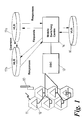
- FIG 1 there is depicted in highly schematic form part of a mobile cellular communications network or system.
- the service area of the system is subdivided into a plurality of contiguous cells 11 in each of which mobiles 10 are serviced via a respective base station 12.
- Operation of a group of base stations 12 is controlled via a base station controller 13 and, in turn, a number of base station controllers are serviced by a mobile switching centre (MSC) 14 which may provide an interface to the public telecommunications network (not shown).
- MSC mobile switching centre
- the mobile switching centre 14 may service, via the base station controllers 13 and the base stations 12, typically over one hundred individual cells 11.
- VLR visitors location register
- FIG. 1 depicts only one MSC and its associated VLR, but it will be appreciated that the system will incorporate a number of MSCs each servicing is respective zone.
- the International Mobile Subscriber Identity is used for non-call related requests to the HLR typically from the VLR, for example location updating.
- the IMSI is held in the subscriber identity module (SIM) of the mobile station, typically on a 'SIM card' and is not visible nor accessible to the subscriber.
- SIM subscriber identity module
- MSISDN Mobile Subscriber ISDN
- the MSISDN is used for call related requests to the HLR typically from the gateway MSC, for example "Send Routing Information".
- the MSISDN is associated with a teleservice in the HLR and is visible to caller and subscriber as the 'dialled number'.
- An MSC originated message will only carry an MSISDN and will not carry an IMSI.
- a VLR originated message will only carry an IMSI and not an MSISDN.
- requests to a HLR from the network will be based on either the IMSI or MSISDN.
- MSISDN MSISDN
- a second important point is that from the network perspective there is no intrinsic relationship between an IMSI and a MSISDN other than routing derived from them should result in a message arriving at the same HLR for the same subscriber to which they refer .
- the system of figure 1 incorporates two or more master databases or home location registers 17a, 17b, each of which stores subscriber information and is arranged to respond to request messages from MSCs or from VLRs for subscriber information.
- figure 1 shows only the MSC request and response communication paths, but it will be understood that similar communication paths will be provided between the visitors location register and the home location registers for carrying requests and responses therebetween.
- each system subscriber is allocated to one of the home location registers
- a mobile terminal enters the service area of the MSC 14, it registers with that MSC/VLR so that the terminal can then originate or terminate calls.
- information or data relating to that mobile it is necessary for information or data relating to that mobile to be retrieved by the MSC from the appropriate home location register on which that subscriber's details are stored, and these details are then stored in the visitors location register until such time as the mobile terminal leaves the service area of the MSC.
- the system is constantly updated with the current location of each mobile terminal so that calls to that mobile can be routed to the correct mobile switching centre for termination at the mobile.
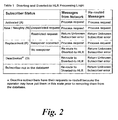
- FIG 2 this illustrates a message diversion logic for a pair of home location registers for use in the system of figure 1.
- FIG 3 is a flow chart of the request message handling process for the system.
- the home location register receiving a request message is referred to as the diverting HLR (whether or not message diversion is in fact required) and the home location register receiving a diverted message from the diverting HLR is referred to as the diverted-to HLR.
- each home location register can function both as a diverting HLR and as a diverted-to HLR.
- the mobile switching centre or visitors location register sending the request message for subscriber details does not know, nor has any need to know, which of the home location registers contains that subscriber's details.
- the request messages sent to a home location register and the responses to those messages are encoded to prevent potential "eavesdropping" which could compromise the security of the system.
- Each request message incorporates an addressing portion and a user data portion, the former being referred to as a signalling connection control part (SCCP) and the latter a transaction capability application part (TCAP).
- SCCP signalling connection control part
- TCAP transaction capability application part
- the SCCP message incorporates the called party address (CdPA) and the calling party address (CgPA).
- the TCAP message comprises a transaction portion incorporating the subscriber information request, an optional dialogue portion and a component portion.
- a request message can be sent to any one of the home location registers, i.e. that home location register can be the diverting HLR for that particular message. Selection of the home location register to which the request message is sent can be determined on a rota basis, on a random basis, or the home location register with the shortest message queue can be selected. In a further embodiment, those subscribers with the highest volume of call traffic and/or a high degree of mobility can be identified and appropriately allocated to selected home location registers so as to spread or balance the system work load. This ensures that no one HLR is so unduly overloaded that it cannot readily identify and divert those requests for which subscriber information resides on another HLR.
- the received request message is processed up to the point where the subscriber's identity (IMSI or MSISDN) is identified and verified. This is done by decoding the message to recover the IMSI or MSISDN. If the subscriber's details are found, and it is confirmed that the subscriber is entitled to have access to the network, and if the relevant subscriber details then are found on the diverting HLR, the request is processed and the appropriate details are returned to the originator of the request message. If an improper or unauthorised subscriber identity is determined, an 'unknown subscriber' error message is returned to the sender so that access to the network is denied. Further processing of that request is then terminated.
- IMSI or MSISDN subscriber's identity
- an indicator component is added to the message which is then re-encoded and rerouted to the diverted-to HLR.
- the message is again decoded to recover the IMSI or MSISDN and a search is made for the subscriber details. If the relevant subscriber details are found on the diverted-to HLR, the request is processed and the appropriate details are returned to the originator of the request message. If the subscriber details cannot be found and the added indicator component is determined to be present in the decoded message, an error or 'unknown subscriber' message is returned to the message originator.
- This indicator component of a message to identify a diverted message prevents a message relating to an unknown subscriber from being bounced back and forth between the home location registers.
- the indicator component technique described above can be extended to a system having more than two home location registers.
- the indicator component is used either to identify the number of times a message has been diverted or to list the identities of those home location registers that have previously diverted the message.
- the number of diversions is one less than the number of home location registers and the subscriber details cannot be found, an 'unknown subscriber' error message is generated and no further diversions are permitted.
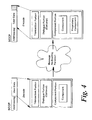
- the message rerouting function employed in the system of figure 1 is illustrated in figure 4.
- a diverting HLR decides to reroute a message, it calls up the message rerouting function.
- This function reconstructs the original TCAP message by decoding the user data portion, and appends another component to its component portion. It is the presence of this further component in the message that will provide an indication to the diverted-to HLR that the message has been diverted from the diverting HLR.
- the diverted-to HLR number is placed in the called party address (CdPA) in the SCCP portion of the message.
- the calling party address (CgPA) of the message is preserved so that any subsequent response from a diverted-to HLR can be returned to the original requester.
- the diverted request message reaches the diverted-to HLR and there is a problem in processing the message, e.g. the subscriber is not registered with the diverted-to HLR, an error message indicative of the problem is returned to the original requester whose calling party address has been preserved in the message.
- message diversion technique can be applied to all types of calls including FAX and SMS in addition to voice and data.
Landscapes
- Engineering & Computer Science (AREA)
- Databases & Information Systems (AREA)
- Computer Networks & Wireless Communication (AREA)
- Signal Processing (AREA)
- Mobile Radio Communication Systems (AREA)
Claims (14)
- Verfahren zur Verarbeitung von Teilnehmerinformations-Abfragemitteilungen in einem zellularen Kommunikationsnetz, bei dem Daten, die einen Teilnehmer registrieren, auf einem einer Anzahl von Heimatregistern (17a, 17b) für das Netz gespeichert ist, wobei das Verfahren an einem Heimatregister (17a, 17b) Folgendes umfasst:wobei das Verfahren dadurch gekennzeichnet ist, dass:Decodieren einer empfangenen Teilnehmerinformations-Abfragemitteilung; undBestimmen der Identität eines Teilnehmers;wenn die Teilnehmerdaten, die der Identität des Teilnehmers entsprechen, nicht auf dem Heimatregister gespeichert sind, ein Komponenten-Teil der decodierten Teilnehmerinformations-Abfragemitteilung verarbeitet wird, um festzustellen, ob eine Anzeigekomponente der Mitteilung in der decodierten Mitteilung vorliegt, die die Mitteilung als von einem anderen Heimatregister (17a, 17b) umgelenkt identifiziert, wobei die Anzeigekomponente in dem Komponenten-Teil der Teilnehmerinformations-Abfragemitteilung angeordnet ist und eine Anzeige für das Heimatregister (17a, 17b) liefert, dass die Abfragemitteilung umgelenkt wurde, und derart, dass die Abfragemitteilung einer begrenzten vorgegebenen Anzahl von Umlenkungen unterworfen wird.
- Verfahren nach Anspruch 1, bei dem das Verfahren in dem Schritt der Verarbeitung des Komponenten-Teils der decodierten Teilnehmerinformations-Abfragemitteilung zur Feststellung, ob eine Anzeigekomponente vorhanden ist, bei Auffinden keiner Anzeige weiterhin an dem Heimatregister (17a, 17b) die folgenden Schritte umfasst:Erzeugen einer Anzeigekomponente und Hinzufügen der Anzeigekomponente zu einem Komponenten-Teil der Mitteilung;erneutes Codieren der Mitteilung; undUmlenken der Abfragemitteilung an ein anderes Heimatregister (17a, 17b).
- Verfahren nach Anspruch 2, bei dem in dem Schritt der Umlenkung der Abfragemitteilung die Mitteilung zu einem oder mehreren anderen Heimatregistern (17a, 17b) umgelenkt wird, um die Verarbeitung der Abfragemitteilung an einem der anderen Heimatregister (17a, 17b) zu versuchen.
- Verfahren nach Anspruch 1, bei dem das Verfahren weiterhin an dem Heimatregister (17a, 17b) die folgenden Schritte umfasst:Feststellen, ob Teilnehmer-Einzelheiten, die der Teilnehmer-Identität entsprechen, an dem Heimatregister (17a, 17b) gespeichert sind; undVerarbeiten der empfangenen Abfragemitteilung an dem Heimatregister (17a, 17b), wenn die entsprechenden Teilnehmer-Einzelheiten auf diesem Heimatregister (17a, 17b) gespeichert sind, um passende Einzelheiten zurückzugewinnen und sie an den Urheber der Teilnehmerinformations-Abfragemitteilung zurückzuliefern.
- Verfahren nach Anspruch 3, bei dem in dem Schritt der Feststellung, ob eine Anzeigekomponente in der Mitteilung vorliegt, die Anzeigekomponente zur Identifikation der Anzahl der Umlenkungen verwendet wird, denen die Abfragemitteilung unterworfen wird.
- Verfahren nach Anspruch 3, bei dem die Anzeigekomponente zur Auflistung der Identität der Heimatregister (17a, 17b) verwendet wird, die vorher die Mitteilung umgelenkt haben.
- Verfahren zum Lenken von Teilnehmerinformations-Abfragemitteilungen in einem zellularen Kommunikationsnetz, das eine Anzahl von Heimatregistern (17a, 17b) enthält, wobei auf diesen Registern Teilnehmerdaten derart gespeichert sind, dass jeder Teilnehmer einem ausgewählten der Register zugeteilt ist, wobei das Verfahren die folgenden Schritte einschließt:Lenken einer Abfragemitteilung an eines der Anzahl von Heimatregistern (17a, 17b);Verarbeiten der Teilnehmerinformations-Abfragemitteilung entsprechend dem Verfahren nach Anspruch 3 an dem Einen der Anzahl von Heimatregistern (17a, 17b).
- Verfahren nach Anspruch 7, bei dem jeder Teilnehmer einem ausgewählten Einen der Register für Sprache- und/oder Datenverbindungen zugeteilt ist.
- Verfahren nach einem der vorhergehenden Ansprüche, bei dem jede Abfragemitteilung einen Adressierteil, der den Ursprung der Mitteilung und das Ziel der Mitteilung anzeigt, und einen Datenteil umfasst.
- Verfahren nach Anspruch 9, bei dem der Datenteil jeder Mitteilung einen Komponenten-Teil und einen Transaktionsteil umfasst, wobei der Transaktionsteil die Anfrage für Teilnehmerinformationen enthält.
- Verfahren nach Anspruch 10, bei dem der Datenteil jeder der Mitteilungen einen Dialogteil beinhaltet.
- Heimatregister-(17a, 17b) Anordnung für ein Mobilkommunikationssystem, wobei die Anordnung Folgendes umfasst:wobei die Anordnung dadurch gekennzeichnet ist, dass die Anzeige, dass eine Mitteilung von einem Heimatregister (17a, 17b) umgelenkt wurde, eine Anzeigekomponente umfasst, die in dem Komponenten-Teil der Mitteilung durch dieses Heimatregister (17a, 17b) eingefügt wird.eine Anzahl von Heimatregistern (17a, 17b), auf denen sich auf Systemteilnehmer beziehende Teilnehmerdaten gespeichert sind und an die im Betrieb Abfragemitteilungen für Teilnehmerdaten gelenkt werden, wobei jeder Teilnehmer einem ausgewählten der Register für Sprache- und/oder Datenverbindungen zugeteilt ist:;jedem Heimatregister (17a, 17b) zugeordnete Einrichtungen zum Beantworten der Abfragemitteilung, wenn die Daten für den jeweiligen Teilnehmer auf diesem Heimatregister (17a, 17b) gespeichert sind, undMitteilungs-Umlenkungseinrichtungen, die jedem Heimatregister (17a, 17b) zugeordnet sind, um die Teilnehmerdaten-Abfragemitteilung an ein anderes der weiteren Heimatregister (17a, 17b) weiterzuleiten, wenn die Daten für den jeweiligen Teilnehmer nicht auf dem ersten Heimatregister (17a, 17b) gespeichert sind, und zur Bereitstellung einer Anzeige an das weitere Heimatregister (17a, 17b), das die Abfragemitteilung umgelenkt wurde, derart, dass die Abfragemitteilung einer begrenzten vorgegebenen Anzahl von Umlenkungen unterworfen wird;
- Mobilkommunikationssystem, das die Heimatregister-Anordnung nach Anspruch 12 beinhaltet, mit:Einrichtungen zum Lenken von Abfragemitteilungen für Teilnehmerdaten an ein ausgewähltes Eines der Heimatregister (17a, 17b).
- Verfahren zur Rückgewinnung von Teilnehmerinformationen in einem zellularen Kommunikationsnetz, das eine Anzahl von Heimatregistern (17a, 17b) beinhaltet, wobei auf diesen Registern Teilnehmerdaten derart gespeichert sind, dass jeder Teilnehmer einem ausgewählten Einen der Register für Spracheund/oder Datenverbindungen zugeteilt ist, wobei das Verfahren Folgendes einschließt:Erzeugen einer Teilnehmerinformations-Abfragemitteilung, die eine Anfrage für Teilnehmerinformationen beinhaltet, die sich auf einen der Teilnehmer beziehen;Lenken der Teilnehmerinformations-Abfragemitteilung unter Verwendung des Verfahrens nach Anspruch 7 an eines der Anzahl von Heimatregistern (17a, 17b), von dem die angeforderte Teilnehmerinformation zurückgewonnen werden kann; undAntworten von dem Heimatregister (17a, 17b) auf die Abfragemitteilung, wenn die sich auf diese Anfrage beziehenden Teilnehmerdaten auf diesem Heimatregister (17a, 17b) gespeichert sind.
Applications Claiming Priority (2)
| Application Number | Priority Date | Filing Date | Title |
|---|---|---|---|
| US986810 | 1997-12-08 | ||
| US08/986,810 US6138017A (en) | 1997-12-08 | 1997-12-08 | Cellular communications system |
Publications (3)
| Publication Number | Publication Date |
|---|---|
| EP0923257A2 EP0923257A2 (de) | 1999-06-16 |
| EP0923257A3 EP0923257A3 (de) | 2000-04-05 |
| EP0923257B1 true EP0923257B1 (de) | 2004-11-03 |
Family
ID=25532766
Family Applications (1)
| Application Number | Title | Priority Date | Filing Date |
|---|---|---|---|
| EP98309997A Expired - Lifetime EP0923257B1 (de) | 1997-12-08 | 1998-12-07 | Nachrichtenaustausch zwischen Heimatsdateien in einem zellularen Kommunikationssystem |
Country Status (5)
| Country | Link |
|---|---|
| US (1) | US6138017A (de) |
| EP (1) | EP0923257B1 (de) |
| CA (1) | CA2255529A1 (de) |
| DE (1) | DE69827344T2 (de) |
| GB (1) | GB2332125A (de) |
Cited By (1)
| Publication number | Priority date | Publication date | Assignee | Title |
|---|---|---|---|---|
| US7751389B2 (en) | 2004-07-01 | 2010-07-06 | Hewlett-Packard Development Company, L.P. | Telecommunications system and method for forwarding messages based upon subscriber identification information |
Families Citing this family (42)
| Publication number | Priority date | Publication date | Assignee | Title |
|---|---|---|---|---|
| GB9816087D0 (en) * | 1998-07-23 | 1998-09-23 | Simoco Int Ltd | Radio communications network |
| US7013139B1 (en) * | 1999-04-02 | 2006-03-14 | Nortel Networks Limited | HLR data migration |
| WO2001015338A1 (en) | 1999-08-25 | 2001-03-01 | Stratos Global Limited | System and apparatus for avoiding interference between fixed and moveable base transceiver station |
| AU765497B2 (en) | 1999-08-25 | 2003-09-18 | Stratos Global Limited | Communication between a fixed network and a movable network with means for suspending operation of the moveable network |
| GB0009359D0 (en) | 2000-04-14 | 2000-05-31 | British Telecomm | Mobile cellular radio |
| AU760188B2 (en) | 1999-09-14 | 2003-05-08 | Stratos Global Limited | Call diversion system |
| CA2386022A1 (en) * | 1999-11-03 | 2001-05-10 | Stratos Global Limited | Mobile cellular radio system |
| CA2390005A1 (en) | 1999-11-03 | 2001-06-07 | Stratos Global Limited | Mobile telephony |
| US6836477B1 (en) * | 1999-12-23 | 2004-12-28 | Tekelec | Methods and systems for routing messages in a communications network |
| US7496924B2 (en) * | 2000-03-27 | 2009-02-24 | Siemens Communications, Inc. | Dispatching messages among registered software modules in telecommunications system including telephony internet server coupled between packet network and PBX |
| AU2001262565A1 (en) | 2000-04-14 | 2001-10-30 | Stratos Global Limited | Cellular radio system |
| AU2000245676A1 (en) * | 2000-05-22 | 2001-12-03 | Nokia Corporation | System and method for providing a connection in a communication network |
| US7848767B2 (en) | 2002-10-15 | 2010-12-07 | Tekelec | Methods and systems for migrating between application layer mobile signaling protocols |
| US7120451B2 (en) * | 2002-12-20 | 2006-10-10 | Lucent Technologies Inc. | Method for optimizing home location register queries in a wireless communication system |
| US7379737B2 (en) | 2003-08-12 | 2008-05-27 | Redknee Inc. | Telecommunications subscriber profile management system |
| JP4378182B2 (ja) * | 2003-12-22 | 2009-12-02 | 株式会社ケンウッド | 移動体通信システム、移動体通信制御方法及びプログラム |
| US7844745B1 (en) * | 2004-08-19 | 2010-11-30 | Nortel Networks Limited | Alternate home subscriber server (HSS) node to receive a request if a first HSS node cannot handle said request |
| US20090264122A1 (en) * | 2005-10-04 | 2009-10-22 | Koninklijke Kpn N.V. | Method and System for Updating Home Location Register in Mobile Network |
| US7889716B2 (en) | 2005-12-01 | 2011-02-15 | Tekelec | Methods, systems, and computer program products for using an E.164 number (ENUM) database for message service message routing resolution among 2G and subsequent generation network systems |
| CN101433070B (zh) | 2006-02-15 | 2011-10-05 | 泰克莱克公司 | 选择性地处理或重定向信令连接控制部分(sccp)消息的方法、系统和装置 |
| US7787445B2 (en) | 2006-07-20 | 2010-08-31 | Tekelec | Methods, systems, and computer program products for routing and processing ENUM queries |
| US8254551B2 (en) | 2006-12-07 | 2012-08-28 | Tekelec, Inc. | Methods, systems, and computer program products for providing quality of service using E.164 number mapping (ENUM) data in a communications network |
| JP4806728B2 (ja) * | 2007-04-06 | 2011-11-02 | トムソン ライセンシング | Dhcpネットワークシステムにおける輻輳を減少させるための改良された方法及び装置 |
| US7996541B2 (en) | 2007-06-15 | 2011-08-09 | Tekelec | Methods, systems, and computer program products for identifying a serving home subscriber server (HSS) in a communications network |
| US8538000B2 (en) | 2007-08-10 | 2013-09-17 | Tekelec, Inc. | Methods, systems, and computer program products for performing message deposit transaction screening |
| EP2258128B1 (de) | 2008-03-07 | 2017-01-11 | Tekelec Global, Inc. | Verfahren, system und computerlesbare medien zum routen einer nachrichtendienstnachricht durch ein kommunikationsnetz |
| WO2010060087A2 (en) | 2008-11-24 | 2010-05-27 | Tekelec | Systems, methods, and computer readable media for location-sensitive called-party number translation in a telecommunications network |
| WO2010111561A2 (en) | 2009-03-25 | 2010-09-30 | Tekelec | Methods, systems, and computer readable media for providing home subscriber server (hss) proxy |
| WO2010132436A2 (en) | 2009-05-11 | 2010-11-18 | Tekelec | Methods, systems, and computer readable media for providing scalable number portability (np) home location register (hlr) |
| US8224337B2 (en) | 2009-09-16 | 2012-07-17 | Tekelec, Inc. | Methods, systems, and computer readable media for providing foreign routing address information to a telecommunications network gateway |
| US9313759B2 (en) | 2009-10-16 | 2016-04-12 | Tekelec, Inc. | Methods, systems, and computer readable media for providing triggerless equipment identity register (EIR) service in a diameter network |
| US8750126B2 (en) | 2009-10-16 | 2014-06-10 | Tekelec, Inc. | Methods, systems, and computer readable media for multi-interface monitoring and correlation of diameter signaling information |
| US8958306B2 (en) | 2009-10-16 | 2015-02-17 | Tekelec, Inc. | Methods, systems, and computer readable media for providing diameter signaling router with integrated monitoring functionality |
| WO2011106690A2 (en) | 2010-02-25 | 2011-09-01 | Tekelelec | Systems, methods, and computer readable media for using a signaling message routing node to provide backup subscriber information management service |
| JP6010546B2 (ja) | 2010-12-23 | 2016-10-19 | テケレック・インコーポレイテッドTekelec, Inc. | 課金機能ノードへ向けられたDiameter信号メッセージを修正する方法およびシステム、ならびに、当該方法をコンピュータに実行させるためのプログラム |
| WO2012100057A2 (en) | 2011-01-21 | 2012-07-26 | Tekelec | Methods, systems, and computer readable media for screening diameter messages within a diameter signaling router (dsr) having a distributed message processor architecture |
| US8831016B2 (en) | 2011-03-18 | 2014-09-09 | Tekelec, Inc. | Methods, systems, and computer readable media for configurable diameter address resolution |
| US9100796B2 (en) | 2011-12-15 | 2015-08-04 | Tekelec, Inc. | Methods, systems, and computer readable media for seamless roaming between diameter and non-diameter networks |
| US8855654B2 (en) | 2013-01-28 | 2014-10-07 | Tekelec Global, Inc. | Methods, systems, and computer readable media for tracking and communicating long term evolution (LTE) handset communication capability |
| US9143942B2 (en) | 2013-03-14 | 2015-09-22 | Tekelec Global, Inc. | Methods, systems, and computer readable media for providing a multi-network equipment identity register |
| US9635526B2 (en) | 2013-03-15 | 2017-04-25 | Tekelec, Inc. | Methods, systems, and computer readable media for utilizing a diameter proxy agent to communicate short message service (SMS) messages |
| US10117127B2 (en) | 2015-07-08 | 2018-10-30 | Oracle International Corporation | Methods, systems, and computer readable media for communicating radio access network congestion status information for large numbers of users |
Family Cites Families (12)
| Publication number | Priority date | Publication date | Assignee | Title |
|---|---|---|---|---|
| SE465198B (sv) * | 1990-02-02 | 1991-08-05 | Televerket | Foerfarande och anordning foer att utoeka kapaciteten i ett mobiltelefonsystem |
| GB2246269B (en) * | 1990-07-20 | 1994-06-08 | Racal Vodafone Ltd | Telecommunication network |
| GB2269962B (en) * | 1992-08-19 | 1996-04-10 | Northern Telecom Ltd | Communications systems |
| SE501088C2 (sv) * | 1993-03-31 | 1994-11-07 | Ericsson Telefon Ab L M | Återupprättande av en hemmadatabas i mobilradiosystem |
| US5623532A (en) * | 1995-01-12 | 1997-04-22 | Telefonaktiebolaget Lm Ericsson | Hardware and data redundant architecture for nodes in a communications system |
| US5854982A (en) * | 1995-08-21 | 1998-12-29 | Motorola, Inc. | Communication system architecture and method of routing therefor |
| US5878347A (en) * | 1996-03-26 | 1999-03-02 | Ericsson, Inc. | Routing a data signal to a mobile station within a telecommunications network |
| US5839072A (en) * | 1996-03-26 | 1998-11-17 | Ericsson Inc. | Routing an incoming call to a ported mobile station within a telecommunications network |
| US5953662A (en) * | 1996-04-30 | 1999-09-14 | Ericsson, Inc. | Dual home location registers in a mobile radio system |
| US5878348A (en) * | 1996-05-30 | 1999-03-02 | Telefonaktiebolaget Lm Ericsson (Publ) | System and method for implementing multiple home location registers for a single mobile station in a cellular telecommunications network |
| GB2314733B (en) * | 1996-06-27 | 2001-01-17 | Northern Telecom Ltd | Cellular communications system |
| US5884179A (en) * | 1996-09-16 | 1999-03-16 | Ericsson Inc. | Optimized routing of terminating calls within a mobile telecommunications network |
-
1997
- 1997-12-08 US US08/986,810 patent/US6138017A/en not_active Expired - Lifetime
-
1998
- 1998-02-25 GB GB9803829A patent/GB2332125A/en not_active Withdrawn
- 1998-12-07 EP EP98309997A patent/EP0923257B1/de not_active Expired - Lifetime
- 1998-12-07 DE DE69827344T patent/DE69827344T2/de not_active Expired - Fee Related
- 1998-12-07 CA CA002255529A patent/CA2255529A1/en not_active Abandoned
Cited By (1)
| Publication number | Priority date | Publication date | Assignee | Title |
|---|---|---|---|---|
| US7751389B2 (en) | 2004-07-01 | 2010-07-06 | Hewlett-Packard Development Company, L.P. | Telecommunications system and method for forwarding messages based upon subscriber identification information |
Also Published As
| Publication number | Publication date |
|---|---|
| GB2332125A (en) | 1999-06-09 |
| DE69827344D1 (de) | 2004-12-09 |
| DE69827344T2 (de) | 2005-05-12 |
| CA2255529A1 (en) | 1999-06-08 |
| GB9803829D0 (en) | 1998-04-22 |
| EP0923257A3 (de) | 2000-04-05 |
| US6138017A (en) | 2000-10-24 |
| EP0923257A2 (de) | 1999-06-16 |
Similar Documents
| Publication | Publication Date | Title |
|---|---|---|
| US6138017A (en) | Cellular communications system | |
| US6144857A (en) | Cellular communications systems | |
| EP1727378B1 (de) | Verfahren und Vorrichtung zum Bestimmen und Aktualisieren von mobilen Diensten | |
| CA2274821C (en) | Providing location-based call forwarding within a mobile telecommunications network | |
| US5903726A (en) | System using portion of a short message payload to identify short message service types and delivering the message if user subscribes to the services | |
| US6810257B1 (en) | Method and apparatus for providing partitioned telecommunication services | |
| US6625461B1 (en) | Method and system for providing compatibility between telecommunication networks using different transmission signaling systems | |
| EP1197096B1 (de) | Nummernübertragbarkeitsdienst in einem telekommunikationssystem | |
| EP1157568B1 (de) | Verfahren und vorrichtung zur wegleitung einer ussd-nachricht | |
| US20020022481A1 (en) | Method for providing roaming service among private mobile switching centers | |
| US6633755B1 (en) | Method and nodes for routing a call in a mobile telecommunication network | |
| EP2149275B1 (de) | System und verfahren zur verwendung eines gemeinsamen netzwerkes mit einem mobilen netzwerkcode | |
| US20030100304A1 (en) | System and method of providing access to intelligent network services from a plurality of telecommunications networks | |
| US6701147B1 (en) | Method and system for handling a call from a mobile station within a wireless communication network | |
| WO2000045611A2 (en) | Handling of a digital wireless office system user profile | |
| WO1997028663A1 (en) | Telephone interexchange carrier selection in a wireless communication network | |
| Haran | Deploying IN Services in a Mobile Environment |
Legal Events
| Date | Code | Title | Description |
|---|---|---|---|
| PUAI | Public reference made under article 153(3) epc to a published international application that has entered the european phase |
Free format text: ORIGINAL CODE: 0009012 |
|
| AK | Designated contracting states |
Kind code of ref document: A2 Designated state(s): DE FR GB |
|
| AX | Request for extension of the european patent |
Free format text: AL;LT;LV;MK;RO;SI |
|
| RAP3 | Party data changed (applicant data changed or rights of an application transferred) |
Owner name: NORTEL NETWORKS CORPORATION |
|
| PUAL | Search report despatched |
Free format text: ORIGINAL CODE: 0009013 |
|
| AK | Designated contracting states |
Kind code of ref document: A3 Designated state(s): AT BE CH CY DE DK ES FI FR GB GR IE IT LI LU MC NL PT SE |
|
| AX | Request for extension of the european patent |
Free format text: AL;LT;LV;MK;RO;SI |
|
| RAP1 | Party data changed (applicant data changed or rights of an application transferred) |
Owner name: NORTEL NETWORKS LIMITED |
|
| 17P | Request for examination filed |
Effective date: 20001005 |
|
| AKX | Designation fees paid |
Free format text: DE FR GB |
|
| 17Q | First examination report despatched |
Effective date: 20011008 |
|
| RAP1 | Party data changed (applicant data changed or rights of an application transferred) |
Owner name: NORTEL NETWORKS LIMITED |
|
| GRAP | Despatch of communication of intention to grant a patent |
Free format text: ORIGINAL CODE: EPIDOSNIGR1 |
|
| GRAS | Grant fee paid |
Free format text: ORIGINAL CODE: EPIDOSNIGR3 |
|
| GRAA | (expected) grant |
Free format text: ORIGINAL CODE: 0009210 |
|
| AK | Designated contracting states |
Kind code of ref document: B1 Designated state(s): DE FR GB |
|
| REG | Reference to a national code |
Ref country code: GB Ref legal event code: FG4D |
|
| REF | Corresponds to: |
Ref document number: 69827344 Country of ref document: DE Date of ref document: 20041209 Kind code of ref document: P |
|
| PLBE | No opposition filed within time limit |
Free format text: ORIGINAL CODE: 0009261 |
|
| STAA | Information on the status of an ep patent application or granted ep patent |
Free format text: STATUS: NO OPPOSITION FILED WITHIN TIME LIMIT |
|
| ET | Fr: translation filed | ||
| 26N | No opposition filed |
Effective date: 20050804 |
|
| PGFP | Annual fee paid to national office [announced via postgrant information from national office to epo] |
Ref country code: DE Payment date: 20051230 Year of fee payment: 8 |
|
| PG25 | Lapsed in a contracting state [announced via postgrant information from national office to epo] |
Ref country code: DE Free format text: LAPSE BECAUSE OF NON-PAYMENT OF DUE FEES Effective date: 20070703 |
|
| REG | Reference to a national code |
Ref country code: GB Ref legal event code: 732E Free format text: REGISTERED BETWEEN 20101014 AND 20101020 |
|
| REG | Reference to a national code |
Ref country code: FR Ref legal event code: TP |
|
| REG | Reference to a national code |
Ref country code: GB Ref legal event code: 732E Free format text: REGISTERED BETWEEN 20140703 AND 20140709 |
|
| REG | Reference to a national code |
Ref country code: FR Ref legal event code: PLFP Year of fee payment: 18 |
|
| REG | Reference to a national code |
Ref country code: GB Ref legal event code: 732E Free format text: REGISTERED BETWEEN 20160218 AND 20160224 |
|
| REG | Reference to a national code |
Ref country code: FR Ref legal event code: TP Owner name: LENOVO INNOVATIONS LIMITED (HONG KONG), HK Effective date: 20161004 Ref country code: FR Ref legal event code: CA Effective date: 20161004 |
|
| REG | Reference to a national code |
Ref country code: FR Ref legal event code: PLFP Year of fee payment: 19 |
|
| REG | Reference to a national code |
Ref country code: FR Ref legal event code: PLFP Year of fee payment: 20 |
|
| PGFP | Annual fee paid to national office [announced via postgrant information from national office to epo] |
Ref country code: FR Payment date: 20171228 Year of fee payment: 20 |
|
| PGFP | Annual fee paid to national office [announced via postgrant information from national office to epo] |
Ref country code: GB Payment date: 20171228 Year of fee payment: 20 |
|
| REG | Reference to a national code |
Ref country code: GB Ref legal event code: PE20 Expiry date: 20181206 |
|
| PG25 | Lapsed in a contracting state [announced via postgrant information from national office to epo] |
Ref country code: GB Free format text: LAPSE BECAUSE OF EXPIRATION OF PROTECTION Effective date: 20181206 |