EP0927767A2 - Essai de thrombine amélioré pour Antithrombine III en utilisant un dérivé d'héparine - Google Patents
Essai de thrombine amélioré pour Antithrombine III en utilisant un dérivé d'héparine Download PDFInfo
- Publication number
- EP0927767A2 EP0927767A2 EP98310023A EP98310023A EP0927767A2 EP 0927767 A2 EP0927767 A2 EP 0927767A2 EP 98310023 A EP98310023 A EP 98310023A EP 98310023 A EP98310023 A EP 98310023A EP 0927767 A2 EP0927767 A2 EP 0927767A2
- Authority
- EP
- European Patent Office
- Prior art keywords
- heparin
- thrombin
- plasma
- atiii
- derivative
- Prior art date
- Legal status (The legal status is an assumption and is not a legal conclusion. Google has not performed a legal analysis and makes no representation as to the accuracy of the status listed.)
- Withdrawn
Links
Images



Classifications
-
- C—CHEMISTRY; METALLURGY
- C12—BIOCHEMISTRY; BEER; SPIRITS; WINE; VINEGAR; MICROBIOLOGY; ENZYMOLOGY; MUTATION OR GENETIC ENGINEERING
- C12Q—MEASURING OR TESTING PROCESSES INVOLVING ENZYMES, NUCLEIC ACIDS OR MICROORGANISMS; COMPOSITIONS OR TEST PAPERS THEREFOR; PROCESSES OF PREPARING SUCH COMPOSITIONS; CONDITION-RESPONSIVE CONTROL IN MICROBIOLOGICAL OR ENZYMOLOGICAL PROCESSES
- C12Q1/00—Measuring or testing processes involving enzymes, nucleic acids or microorganisms; Compositions therefor; Processes of preparing such compositions
- C12Q1/56—Measuring or testing processes involving enzymes, nucleic acids or microorganisms; Compositions therefor; Processes of preparing such compositions involving blood clotting factors, e.g. involving thrombin, thromboplastin, fibrinogen
-
- G—PHYSICS
- G01—MEASURING; TESTING
- G01N—INVESTIGATING OR ANALYSING MATERIALS BY DETERMINING THEIR CHEMICAL OR PHYSICAL PROPERTIES
- G01N2333/00—Assays involving biological materials from specific organisms or of a specific nature
- G01N2333/90—Enzymes; Proenzymes
- G01N2333/988—Lyases (4.), e.g. aldolases, heparinase, enolases, fumarase
Definitions
- the present invention generally relates to protocols for evaluating the hemostasis of a patient at risk of developing thrombosis, and specifically, to diagnostic assays for determining the level of antithrombin III present in a plasma sample withdrawn from a patient.
- the invention particularly relates, in a preferred embodiment, to a chromogenic thrombin-based (ie, type IIa) assay for determining antithrombin III.
- the invention also relates to a heparin derivative, to a reagent composition and to a high-calibrator plasma reference useful in such assays and to kits employing the same.
- the level of thrombin present in vivo is primarily regulated by the heparin-catalyzed thrombin inhibitor, antithrombin III (ATIII).
- ATIII antithrombin III
- the level of ATIII present in vivo is of significant clinical importance for diagnosing and monitoring patients at risk for excessive bleeding, due to abnormally high levels of ATIII, or at risk for developing thrombi, due to abnormally low levels of ATIII.
- One type of assay for antithrombin III is based on the capability of ATIII present in a plasma sample to inhibit the proteolytic activity of exogenously added thrombin in the presence of heparin.
- the residual, uninhibited thrombin is then determined by methods typically involving, for example, thrombin-specific chromogenic substrates and spectrophotometric analyses, or alternatively, fibrinogen and clot-forming analyses.
- thrombin-based ATIII assays also referred to as factor IIa ATIII assays -- are inaccurate due to the activity of a second heparin-catalyzed thrombin-inhibitor, heparin cofactor II (HCII).
- HCII heparin cofactor II
- thrombin-based assays known in the art measure the levels of exogenous thrombin remaining after the thrombin has reacted with both ATIII and HCII -- not just with ATIII. The inaccuracy of such assays are of particular clinical concern for ATIII-deficient patients. In cases where HCII is in the high normal range and ATIII is determined using thrombin-based assays known in the art, an ATIII deficiency can be masked by the HCII antithrombin activity.
- the ATIII assay is performed using exogenously added factor Xa as an indicator instead of thrombin.
- factor Xa is not inhibited by HCII.
- factor Xa-type ATIII assays are more expensive than factor IIa-type assays.
- factor Xa can be less stable than thrombin under certain conditions, and the factor Xa-based assays can require a greater degree of dilution. As such, factor Xa ATIII assays are less suitable for use with automated analyzers.
- the dilution factor e.g. 2 for a 1:1 dilution
- the present invention is directed to a method for determining antithrombin III in a plasma sample.
- the plasma sample is combined with thrombin and with a heparin derivative to form an assay mixture.
- a complex is formed between antithrombin III and thrombin in the assay mixture.
- the uncomplexed thrombin in the assay mixture is then determined and the determined uncomplexed thrombin is correlated to the antithrombin III in the plasma sample.
- ATIII in a plasma sample is determined by preparing an assay mixture comprising the plasma sample, exogenous thrombin, and a heparin derivative.
- the heparin derivative is effective for enhancing the formation of a thrombin-antithrombin III complex, but is substantially less effective than unmodified heparin for enhancing heparin cofactor II activity against thrombin.
- the assay mixture is then incubated, and the uncomplexed thrombin in the incubated assay mixture is determined.
- the determined uncomplexed thrombin is correlated to the antithrombin III in the plasma sample.
- an assay mixture comprising the plasma sample, exogenous thrombin, and a heparin derivative is prepared.
- the assay mixture is incubated, and then the uncomplexed thrombin in the incubated assay mixture is determined.
- the determined uncomplexed thrombin is correlated to the antithrombin III in the plasma sample.
- Heparin cofactor II contributes about 15% or less to the determined antithrombin activity of antithrombin III.
- a modified heparin composition prepared by enzymatically digesting heparin is obtained, an assay mixture comprising the plasma sample, exogenous thrombin, and the modified heparin composition is prepared.
- the assay mixture is then incubated, and the uncomplexed thrombin in the incubated assay mixture is determined.
- the determined uncomplexed thrombin is correlated to the antithrombin III in the plasma sample.
- the invention is also directed to a modified heparin compound.
- the modified compound comprises a heparin derivative which is effective for enhancing the antithrombin III activity against thrombin, but which is less effective than unmodified heparin for enhancing the heparin cofactor II activity against thrombin.
- the heparin derivative can be one prepared by reacting heparin with an enzyme to form the heparin derivative and one or more disaccharides.
- the heparin derivative can also be one prepared by reacting heparin with a chondroitinase.
- the invention is further directed to a modified heparin composition prepared by enzymatically digesting heparin.
- Another aspect of the invention is directed to a method for preparing a heparin derivative.
- the method comprises forming a solution comprising heparin, adding an enzyme to the heparin solution, and allowing the enzyme to react with heparin to form a heparin derivative and an unsaturated disaccharide.
- the method for preparing a heparin derivative comprises reacting heparin with a chondroitinase.
- the invention is directed as well to a reagent useful in a thrombin-based antithrombin III assay.
- the reagent is a lyophilized composition comprising (1) thrombin and (2) heparin or a heparin derivative.
- a further aspect of the invention is directed to a kit for a thrombin-based antithrombin III assay useful to determine antithrombin III in a plasma sample.
- the kit includes (1) a diluent composition comprising a chondroitinase ACI-treated heparin and an alkali metal-halide salt, (2) a reagent composition comprising an chondroitinase ACI-treated heparin, an alkali metal-halide salt and thrombin, and (3) a chromogenic thrombin substrate.
- the invention is directed, in a different aspect, to a method for preparing a high-calibrator reference plasma suitable for use as a standard for determination of a plasma constituent.
- a normal reference plasma is obtained and a volume, V 1 , of the normal reference plasma is lyophilized.
- the lyophilized normal reference plasma is reconstituted to form a reconstituted plasma of a volume, V 2 , where the ratio of V 2 :V 1 ranges from about 7:8 to about 1:8.
- a normal reference plasma comprising a plasma constituent at a concentration ranging from about 90% of normal to about 110% of normal is obtained.
- a volume, V 1 , of the normal reference plasma is lyophilized, and the lyophilized normal reference plasma is then reconstituted to form a reconstituted plasma of a volume, V 2 .
- V 2 is less than V 1 and the reconstituted plasma comprises the plasma constituent at a concentration of about 120% of normal or greater.
- the plasma constituent is preferably ATIII.
- the invention is directed, moreover, to a kit that includes (1) a lyophilized reference plasma comprising a plasma constituent at a concentration ranging from about 90% of normal to about 110% of normal, and (2) instructions to reconstitute the lyophilized reference plasma with a volume sufficient to form a reconstituted plasma which includes the plasma constituent at a concentration of about 120% of normal or greater.
- the present invention is advantageous over prior art methods for determining ATIII, and solves the several problems associated with such known methods.
- the present invention provides compounds, reagents and methods by which the HCII activity against thrombin is essentially removed. Moreover, this is accomplished without sacrificing sensitivity of the ATIII assay and without using expensive and potentially unstable reagents.
- the reagents of the present invention can be used to determine ATIII according to simplified protocols.
- the high-calibrator plasma samples of the invention can be used to simplify the protocols for determining ATIII and/or other plasma constituents for patient plasma samples having constituent values greater than about 110% of normal.
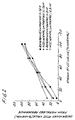
- FIG. 1 shows determined ATIII values for plasma samples having various known ATIII concentrations.
- Reference samples were prepared by dilution of a normal reference plasma with saline, and HCII-normal samples prepared by dilution of a normal reference plasma with ATIII-deficient plasma (Affinity Biologicals) having less than 1% normal ATIII level, but containing normal levels of heparin cofactor II (HCII) as well as other plasma constituents.
- the reference samples were assayed using a thrombin-based assay with unmodified heparin (standard curve designated as "reference/ untreated" -- closed squares).
- HCII-normal samples were assayed with a thrombin-based assay using unmodified heparin (standard curve designated "HCII-normal/ untreated” -- open squares), and independently, with the thrombin-based assay of the present invention using a heparin derivative prepared using chondroitinase AC (standard curve designated "HCII-normal/treated” -- triangles) . Values are reported in percent normals.
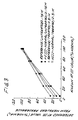
- FIG. 2 shows determined ATIII values for plasma samples having various known ATIII concentrations.
- Reference samples were prepared by dilution of a normal reference plasma with saline, and HCII-normal samples were prepared by dilution of a normal reference plasma with ATIII-deficient plasma (Affinity Biologicals) having less than 1% normal ATIII level, but containing normal levels of heparin cofactor II (HCII) as well as other plasma constituents.
- ATIII-deficient plasma Affinity Biologicals
- the reference samples and the HCII-normal samples were assayed using unmodified heparin in assay mixtures in which the sodium chloride concentration was 175 mM or 310 mM, with the results designated as “reference/untreated/0.175M” (closed squares), as “HCII-normal/untreated/0.175M” (diamonds), as “reference/untreated/0.310M” (triangles), and as "HCII-normal/untreated/0.310M (open squares). Values are reported in percent normals.
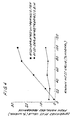
- FIG. 3 shows determined ATIII values for plasma samples having various known ATIII concentrations.
- Reference samples were prepared by dilution of a normal reference plasma with saline, and HCII-normal samples were prepared by dilution of a normal reference plasma with ATIII-deficient plasma (Affinity Biologicals) having less than 1% normal ATIII level, but containing normal levels of heparin cofactor II (HCII) as well as other plasma constituents.
- the reference samples and the HCII-normal samples were assayed using an assay mixture including chondroitinase AC-treated heparin and 310 mM sodium chloride, and, independently, using an assay mixture including unmodified heparin and 175 mM sodium chloride.
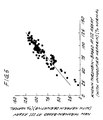
- FIG. 4 shows determined ATIII values for ATIII-depleted plasma samples having various known concentrations of HCII.
- ATIII-depleted samples were prepared by diluting ATIII-immunodepleted plasma (Affinity Biologicals) having less than 1% normal ATIII level, but containing normal levels of heparin cofactor II (HCII) as well as other plasma constituents.
- the ATIII-depleted samples were assayed using an assay mixture including chondroitinase AC-treated heparin and 310 mM sodium chloride, and, as an independent control, using an assay mixture including unmodified heparin and 175 mM sodium chloride.
- the standard curves are referred to as "ATIII-depleted/untreated/0.175M" (closed square), and as "ATIII-depleted/treated/0.310M” (diamonds).
- FIG. 7 compares normal and abnormal determined ATIII ranges for a population of healthy volunteers assayed using a Factor Xa-based assay, a known thrombin-based assay (using unmodified heparin), and the thrombin-based assay of the present invention (using a heparin derivative prepared with chondroitinase AC). Abnormal samples were selected as ⁇ 75% normal based on the Factor Xa assay.
- the present invention involves a modified heparin compound which, like heparin, effectively enhances the antithrombin activity of ATIII, but which, unlike heparin, does not substantially enhance the antithrombin activity of HCII.
- the modified heparin compound of the present invention is a heparin derivative which enhances HCII activity against thrombin substantially less than unmodified heparin enhances the HCII activity against thrombin.
- the heparin derivative preferably enhances the HCII antithrombin activity at least about 2 times less than unmodified heparin, more preferably at least about 4 times less than unmodified heparin, and most preferably at least about 5 times less than unmodified heparin.
- the modified heparin compound of the present invention is prepared, according to a preferred embodiment, by enzymatically digesting heparin to form a heparin derivative and one or more unsaturated disaccharides. (See Example 1).
- the type of heparin used as a starting material for preparing the heparin derivative is not narrowly critical.
- the heparin can be heterogeneous heparin or low molecular weight heparin.
- the heparin can, moreover, be from any animal source, including for example, human, bovine and/or porcine heparin.
- the heparin is preferably heterogeneous heparin and is preferably obtained from either bovine or porcine. Heterogeneous porcine heparin is most preferred, and is available commercially from Sigma Chemical, St. Louis, Missouri. (Catalog No. H3393).
- a buffered solution comprising unmodified heparin is preferably formed by combining heparin with a buffer and adjusting the pH to range from about 4 to about 10, and most preferably to be about 7.2. While any suitable buffer may be employed, a sodium phosphate buffer is preferred.
- the concentration of heparin in the solution preferably ranges from about 0.01 U/ml to about 100,000 U/ml, more preferably from about 1 U/ml to about 20,000 U/ml, and is most preferably about 10,000 U/ml.
- U is defined as per the United States Pharmacopeia (USP).
- An enzyme having an activity which cleaves one or more disaccharides from heparin to form a heparin derivative is added to the heparin-containing bufferred solution to form a reaction solution.
- the enzyme is preferably a chondroitinase enzyme, and is, more preferably, a chondroitinase enzyme derived from Flavobacterium heparinium.
- Chondroitinase ACI is a most preferred enzyme and is available commercially from Sigma Chemical, St. Louis, Missouri, as chondroitinase AC. (Catalog No. C2780).
- Other enzymes, including chondroitinase ABC, chondroitinase B, chondroitinase C and chondroitinase ACII may also be suitable for practicing the invention.
- the concentration of enzyme in the reaction solution preferably ranges from about 0.01 unit/ml to about 100 unit/ml, more preferably from about 0.1 unit/ml to about 10 unit/ml, and is most preferably about 1 unit/ml.
- One unit of chondroitinase ACI activity is defined herein as an amount which causes a delta OD232 of 1.0/min acting on chondroitin sulfate A at pH 7.3 at 37 °C.
- the concentrations and/or volumes can be adjusted to form a reaction solution in which the ratio of the chondroitinase ACI to the heparin preferably ranges from about 1:10 to about 1:100,000, more preferably from about 1:1000 to about 1:20,000, and is most preferably about 1:10,000 units.
- the enzymatic digestion is preferably effected by mixing the reaction solution and then incubating the reaction solution at a temperature preferably ranging from about 12 °C to about 56 °C, more preferably from about 30 °C to about 45 °C, and preferably at a temperature of about 37 °C for a period of time ranging from about 12 hours to about 60 hours, preferably from about 24 hours through about 48 hours, and most preferably for about 40 hours.
- the enzyme is preferably inactivated by suitable methods known in the art.
- a preferred inactivation step includes heating the reaction solution to an elevated temperature for a period sufficient to inactivate the enzyme.
- Chondroitinase ACI can be inactivated, for example, by submersing the container or vial that holds the reaction solution in a boiling water bath for about 5 minutes.
- the resulting modified heparin composition which comprises a heparin derivative and one or more disaccharides, can be characterized based on its spectrophotometric absorbance at OD232.
- the modified heparin composition preferably has an increased absorbance at OD232 relative to the reaction solution prior to enzymatic digestion.
- the OD232 absorbance of the modified heparin composition preferably increases by an amount ranging from about 0.05% to about 50% of its original value, more preferably from about 0.1% to about 25% of its original value, and is most preferably about 10% of its original value.
- the heparin derivative can be isolated from the modified heparin composition using separation protocols known in the art.
- the heparin derivative can be separated by size using chromatographic protocols and/or by sulfate content.
- the modified heparin composition containing the heparin derivative is used directly in an assay mixture, as described below.
- the unmodified heparin to which the heparin derivative is compared for HCII-enhancing activity is preferably unmodified heparin which is analogous to the heparin from which the heparin derivative is prepared. That is, the unmodified heparin to which the heparin derivative is compared is preferably of the same molecular-weight heterogenicity as (e.g. heterogeneous heparin versus low-molecular weight heparin), and is preferably species-homologous or species-autologous to the heparin used as a starting material for preparing the heparin derivative.
- the HCII-enhancing activity of the heparin derivative is preferably compared to the HCII-enhancing activity of heterogeneous, unmodified porcine heparin.
- the heparin derivative of the present invention while preferably derived as described above from unmodified heparin, can also be prepared by other methods known in the art.
- the heparin derivative can be isolated, as described above, and then synthetically prepared.
- the synthetic preparation can involve organic synthesis protocols known in the art and can, if appropriate, also involve recombinant DNA technology, including, but not limited to the use of genetically engineered plasmids or other vectors, and corresponding host cell systems.
- the unmodified heparin to which the heparin derivative is compared for HCII-enhancing activity is preferably unmodified heterogeneous bovine heparin or unmodified heterogeneous unmodified porcine heparin, and preferably heterogeneous unmodified porcine heparin.
- the heparin derivative can be advantageously employed in an improved thrombin-based ATIII assay.
- the ATIII assay is performed by obtaining a plasma sample, combining the plasma sample with a heparin derivative and with thrombin to form an assay mixture, forming a complex between ATIII and thrombin without forming a diagnostically significant degree of complex between HCII and thrombin, determining the uncomplexed thrombin present in the assay mixture, and correlating the determined uncomplexed thrombin to the antithrombin III present in the plasma sample.
- the plasma sample is preferably a human plasma sample, and can be obtained from blood drawn from a patient according to conventional methods known in the art.
- the plasma sample is collected and stored in accordance with NCCLS (National Committee for Clinical Laboratory Standards, Inc., Wayne, PA) guidelines H21-A2.
- NCCLS National Committee for Clinical Laboratory Standards, Inc., Wayne, PA
- venous blood is drawn into a plastic or siliconized syringe, avoiding stasis and contamination with tissue fluid.
- the blood (9 parts by volume) is immediately transferred to a tube containing a 3.2% or 3.8% solution of sodium citrate (1 part by volume).
- the blood may be drawn into commercial vacuum tubes containing the citrate solution.
- the citrated blood is mixed and then centrifuged at 2500 x g for 15 minutes to obtain a citrated plasma.
- the plasma is transferred to a test tube for storage at a temperature ranging from about 2 °C to about 8 °C for up to 4 hours after collection, or alternatively, at about -20 °C for up to one month after collection, and then thawed at 37 °C for 30 minutes before use.
- Known antithrombin III deficiencies include, for example, genetic deficiencies (e.g. Type I and Type II) and acquired deficiencies such as those occurring in consumptive coagulopathies (e.g. DVT, DIC, pulmonary emboli), other disease states (e.g. severe liver disease, nephrotic syndrome), surgery, pregnancy, trauma and certain courses of therapy (e.g. L-asparaginase).
- ATIII levels may be lower in infants up to six months in age and in women. ATIII levels also decrease with age.
- the plasma sample can be used to form the assay mixture directly as an undiluted plasma sample or after diluting, as a diluted plasma sample. While the plasma sample will typically be one which is withdrawn from a patient to be determined for ATIII for diagnostic or monitoring purposes, the plasma sample can also, as discussed in more detail below, be a standard plasma sample having a known concentration of ATIII for development of a correlation standard.
- the plasma sample is combined with a heparin derivative and with exogenous thrombin to form an assay mixture.
- the heparin derivative described above, is preferably present in the assay mixture in an excess, non-limiting amount, relative to the amount of ATIII present in the plasma sample.
- the heparin derivative is, more specifically, preferably present in the assay mixture at a concentration preferably ranging from about 0.1 U to about 10 U, more preferably from about 0.2 U to about 1.2 U, and most preferably from about 0.3 U to about 0.7 U, where the unit, U, is defined in the same manner as for heparin.
- the concentration of the chondroitinase ACI-treated heparin is most preferably about 0.5 U.
- the thrombin can be any suitable thrombin, including human, bovine, porcine, horse or goat thrombin. Bovine thrombin is preferred, and is commercially available from Sigma Chemical, St. Louis, Missouri (Cat. No. T 4648, and others). The thrombin is present in the assay mixture in stoichiometric molar excess relative to that required to complex with ATIII, whereby residual, uncomplexed thrombin will be present in the assay mixture after the ATIII-thrombin reaction is complete.
- the concentration of thrombin present in the assay mixture preferably ranges from about 1 IU/ml to about 25 IU/ml, and more preferably from about 5 IU/ml to about 15 IU/ml.
- the thrombin is most preferably present in the reaction mixture at a concentration of about 8 IU/ml.
- the plasma sample can be combined with a heparin derivative and with thrombin by adding the heparin derivative to the plasma sample first, incubating to form a heparinized plasma sample, and then adding thrombin to the heparinized plasma sample.
- the heparin derivative and thrombin can be added to the plasma sample at about the same time.
- the assay mixture is formed by adding a heparin derivative to the plasma sample, with or without incubating, to form a heparinized plasma sample and then adding both thrombin and additional heparin derivative to the heparinized plasma sample.
- the assay mixture preferably also includes a salt.
- the salt can be an organic salt such as citrate.
- the salt can also be, additionally or alternatively, an inorganic salt.
- Preferred inorganic salts include alkali metal halides such as sodium halides or potassium halides, with sodium chloride, NaCl, or potassium chloride, KCl, being more preferred.
- Sodium chloride is a most preferred salt.
- the concentration of salt present in the assay mixture during formation of the ATIII-thrombin complex is preferably sufficient for the heparin derivative to enhance the ATIII activity for thrombin without substantially enhancing the HCII activity for thrombin.
- An optimized concentration of salt is one in which (1) the heparin derivative complexes with ATIII, but (2) does not complex to a diagnostically significant degree with HCII, yet (3) is not so high as to effect adverse allosteric changes to thrombin.
- a diagnostically significant degree of complexing is, as explained in more detail below, generally one in which HCII contributes 15% or less of the determined ATIII/HCII antithrombin activity, more preferably 10% or less of the determined antithrombin activity, even more preferably 5% or less of the determined antithrombin activity, and most preferably 2% or less of the combined antithrombin activity.
- the concentration of salt preferably ranges from about 0.175 M to about 0.3 M, more preferably from about 0.2 M to about 0.25 M, and most preferably about 0.22 M. While the recited ranges are presently preferred for the preferred embodiment, the concentration of salt in the reaction mixture can, in general, be optimized by a person of skill in the art, according to the guidelines presented herein.
- the assay mixture can also include other compounds and/or reagents known in the art.
- the assay mixture preferably includes a buffer with the pH of the assay mixture being adjusted to range from about 6 to about 10, and most preferably to be about 8.2.
- Suitable buffers include, for example, tris, phosphate, barbital, glycylglycine, BES, MOPS, TES, HEPES, TAPSO and TAPS.
- TAPS is a preferred buffer.
- the assay mixture can also include surfactants (e.g. Tween 80 or Triton X-100 - (polyoxyethylene(10)isooctylphenyl ether)), cheating agents (e.g. EDTA), preservatives (e.g.
- a preferred assay mixture comprises the plasma sample, an chondroitinase ACI-treated heparin, thrombin and NaCl as described above, as well as suitable amounts of TAPS, EDTA, Tween 80, gelatin, sodium azide, dextran and bovine serum albumin. ( See Example 3).
- the assay mixture is preferably formed from prepared compositions that include a heparin derivative and, optionally, thrombin, in combination with each of the other compounds to be added to the plasma sample.
- a heparin-derivative diluent composition can be prepared that includes a heparin derivative and salt in an appropriate buffer, and additionally, surfactants, chelating agents, preservatives and other compounds commonly employed.
- the concentration of heparin derivative in the diluent composition preferably ranges from about 0.05 U/ml to about 10 U/ml, more preferably from about 0.2 U/ml to about 1.2 U/ml, and is most preferably about 0.5 U/ml.
- a preferred heparin-derivative diluent composition includes chondroitinase ACI-treated heparin, NaCl, TAPS, EDTA, Tween 80, gelatin, sodium azide, dextran and bovine serum albumin. ( See Example 2).
- a heparin-derivative-thrombin reagent composition can include thrombin in addition to each of the components of the diluent composition.
- the concentration of thrombin in the reagent composition preferably ranges from about 1 IU/ml to about 100 IU/ml, more preferably from about 4 IU/ml to about 25 IU/ml, and is most preferably about 8 IU/ml.
- a preferred heparin-derivative-thrombin reagent composition includes thrombin, chondroitinase ACI-treated heparin, NaCl, TAPS, EDTA, Tween 80, gelatin, sodium azide, dextran and bovine serum albumin. ( See Example 2).
- the heparin derivative in the diluent composition or in the reagent composition is preferably provided to these compositions as a modified heparin composition resulting from the preparation of the heparin derivative, without isolation of the heparin derivative, as described above.
- the plasma sample can be diluted with the diluent composition before forming the assay mixture.
- the assay mixture can be formed by combining a plasma sample, whether diluted or not, with the reagent composition.
- a complex is formed between antithrombin present in the plasma sample (now part of the assay mixture) and thrombin added to the plasma sample.
- the nature of the complex formed is not critically significant. Without being bound by theory, the complex is believed to be based on ionic and/or covalent interactions between ATIII and thrombin.
- the heparin derivative is thought to induce a conformational change in ATIII, and/or to act as a polysaccharide bridge between thrombin and ATIII.
- the complex is preferably formed by incubating the assay mixture at a temperature and time sufficient, in combination to allow complex formation.
- the complex is formed by incubating the assay mixture for periods ranging from about 15 seconds to about 30 minutes, more preferably from about 1 minute to about 3 minutes, and most preferably for about 2 minutes at temperatures ranging from about 18 °C to about 45 °C., and more preferably at temperatures ranging from about 34 °C to about 40 °C and most preferably at a temperature of about 37 °C.
- the heparin derivative effectively enhances the ATIII activity against thrombin but does not substantially enhance the HCII activity against thrombin. As such, no detectable complex, or at most, minimally detectable complex is formed between HCII and thrombin. ( See Figure 1, Example 2).
- the degree of HCII-thrombin complexing is preferably less than would be diagnostically significant.
- a diagnostically significant degree of HCII-thrombin complex formation is one in which HCII accounts for more than about 15% of the determined ATIII/HCII antithrombin activity, as measured using a thrombin-based ATIII assay, such as shown in Example 2.
- HCII Reducing the contribution of HCII to about 15% or less offers advantages over presently known thrombin-based ATIII assays, in which HCII accounts for about 25% to 30% of the determined ATIII activity. HCII preferably accounts for about 10% or less of the determined antithrombin activity, more preferably about 5% or less of the determined antithrombin activity, and most preferably about 2% or less of the determined antithrombin activity.
- the advantageous effect of the heparin derivative is enhanced, in a preferred embodiment, by using the heparin derivative in combination with an increased salt concentration. ( See Examples 5, 6, 7 and 8).
- Uncomplexed thrombin can be determined by any method known in the art, including, for example, clot-forming assays and chromogenic assays.
- a clot-forming assay the residual, uncomplexed thrombin is determined by adding fibrinogen and measuring the clotting time using a fibrometer.
- a chromogenic assay is employed in which a chromogenic thrombin substrate is added to the incubated assay mixture and the amount of uncomplexed thrombin is measured with a spectrophotometer.
- SAR-PRO-ARG p-Nitroanilide S-2238 (H-D-Phe-Pip-Arg-pNA), Spectrozyme-TH (H-D-CHT-Ala-Arg-pNA), CBS-34-47 (H-D)CHG-But-Arg-pNA) and 2AcOH-H-D-HHT-Ala-Arg-pNA, among others.
- SAR-PRO-ARG p-Nitroanilide Sigma Chemical, St. Louis, Missouri, Cat. No. T 1553
- SAR-PRO-ARG p-Nitroanilide Sigma Chemical, St. Louis, Missouri, Cat. No. T 1553
- SAR-PRO-ARG p-Nitroanilide Sigma Chemical, St. Louis, Missouri, Cat. No. T 1553
- SAR-PRO-ARG p-Nitroanilide Sigma Chemical, St. Louis, Missouri, Cat. No. T 1553
- the mixture is further incubated, preferably at about 37 °C, to allow the chromogenic thrombin substrate to react with the uncomplexed thrombin, and the color to develop.
- Either a rate measurement or an endpoint measurement is obtained using a spectrophotometer (405 nm with the preferred thrombin substrate).
- the rate measurement reports the change in absorbance per unit time, and is typically associated with automated analyzers.
- the endpoint measurement reports the absorbance of the mixture after a certain period of time (e.g. about 2 minutes).
- the thrombin reactions are stopped at an appropriate time by adding a stop reagent.
- Suitable stop reagents include glacial acetic acid (Sigma Chemical, St. Louis, Missouri, Cat. No. A 6283), and 2% citric acid solution, formed, for example, from 2 g. citric acid monohydrate (Sigma Chemical, St. Louis, Missouri, Cat. No. C 1909) in 100 ml water.
- Other stop reagents are known in the art.
- the determined amount of uncomplexed thrombin is then correlated to the amount of antithrombin III which was originally present in the plasma sample being assayed.
- the ATIII content in the sample is inversely proportional to the determined uncomplexed thrombin.
- the determined uncomplexed thrombin is preferably correlated to ATIII using a standard curve.
- the standard curve should be prepared using the same laboratory equipment and methods as are employed for determining ATIII of a patient's plasma sample. Briefly, a standard curve is prepared by assaying plasma samples having known ATIII levels and then plotting the absorbance measurement (e.g. value or rate), typically on the y-axis, against the known ATIII concentration, typically on the x-axis. Once the standard curve is obtained, it can be used to determine unknown ATIII levels in a patient plasma sample by obtaining the absorbance measurement and then reading it against the curve to determine the corresponding ATIII level.
- the absorbance measurement e.g. value or rate
- a preferred standard can be prepared as follows.
- a normal reference plasma such as ACCUCLOTTM (Sigma Chemical, St. Louis, Missouri, Cat. No. A7432), or a citrated normal plasma pool (NPP) with an assumed value of 100% normal is diluted using the preferred diluent composition described above.
- a 100%-ATIII standard plasma sample is prepared by combining the NRP or NPP (25 ⁇ l) with the diluent composition (975 ⁇ l).
- a 50%-ATIII standard plasma sample is prepared by further diluting the 100%-ATIII standard (500 ⁇ l) with the diluent composition (500 ⁇ l) .
- a 0%-ATIII standard plasma sample can be the diluent composition (1000 ⁇ l) itself.
- the preferred standard samples can be prepared by serially diluting the NRP in physiological saline and then combining 25 ⁇ l of each diluted sample to 975 ⁇ l of the diluent composition.
- An alternatively preferred standard curve can be prepared from a high-calibrator reference plasma to cover a wider range of ATIII concentrations. ( See Example 9 and Example 10). While the high-calibrator reference plasma is described herein in connection with ATIII assays, its use is not limited to ATIII calibration.
- the high-calibrator reference plasma can be used as a standard for any plasma constituent, including for example, besides ATIII, other plasma proteins such as protein C, protein S, factor II, factor V, factor VIII, factor IX, factor X, factor XI, factor XII, kallikrein, prekallikrein, tPA, PAI-1, fibrinogen and plasminogen.
- a high-calibrator reference plasma allows for determination of a plasma constituent (e.g. ATIII) in a patient plasma sample having higher than normal amounts of the constituent (e.g. over 110% normal), without having to reassay the sample in prediluted form in a second assay.
- the high-calibrator reference plasma can be used to construct standard curves that will encompass a wider range of high-end constituent values and will, thereby, avoid time consuming reassaying of high-end samples.
- a high-calibrator reference plasma can be made by obtaining a normal reference plasma, lyophilizing a volume, V 1 , of the normal reference plasma, and reconstituting the lyophilized normal reference plasma with deionized water to form a reconstituted plasma of a volume, V 2 , where V 2 is less than V 1 .
- V 2 is preferably an amount sufficient to form a reconstituted plasma having the plasma constituent at a concentration of about 120% of normal or greater, preferably at a concentration ranging from about 120% to about 175% of normal and most preferably ranging from about 130% to about 150% of normal.
- the ratio of the second volume to the first volume, V 2 :V 1 preferably ranges from about 7:8 to about 1:8, more preferably from about 3:4 to about 1:4, even more preferably from about 3:4 to about 1:2, and is most preferably about 2:3.
- the resulting reconstituted plasma is the high-calibrator reference plasma which comprises a plasma constituent at a concentration of about 120% of normal or greater.
- the reference plasma preferably comprises a plasma constituent (indeed, each of the plasma constituents) at a concentration ranging from about 120% to about 175% of normal and most preferably ranging from about 130% to about 150% of normal.
- the normal reference plasma employed in preparing a high-calibrator plasma reference is preferably human plasma.
- the normal reference plasma can be obtained from commercial sources or by pooling plasma samples from healthy individuals. Such normal plasma pools are typically citrated and have assumed value of 100% normal. Preferably at least about 7 units of human plasma are pooled.
- the pool may, if desired, be tested for ATIII content or for the content of any other plasma constituent for which the reference plasma will be used as a calibration standard. In general, the pool will be considered to have a value of 90% normal to 110% normal for ATIII. For other plasma constituents, the range of normal values may extend from 80% (e.g. Factor VIII) to 130% (e.g. Factor XII).
- the pooled plasma can be mixed with an appropriate buffer to obtain a pH ranging from about 6 to about 8.5, and preferably a pH of about 7.3. Glycine can also be added to the pooled plasma. The plasma can be mixed and then filtered to remove any particulates.
- the normal reference plasma is dispensed into vials or other suitable containers at a volume, V 1 , and then lyophilized according to methods known in the art.
- the plasma is frozen under vacuum at a temperature sufficient and for a period of time sufficient to form the lyophilized plasma.
- the temperature, vacuum and period of time are not narrowly critical, but lyophilization can be generally performed as follows.
- the plasma is frozen to a deep freeze temperature typically ranging from about -60 °C to about -20 °C without vacuum for a period of time ranging from about 2 hours to about 24 hours.
- a vacuum is then applied, preferably ranging from about 10 millitorr (about 1.33Pa) to about 200 millitorr (about 26.66Pa).
- the shelf temperature is then raised somewhat, typically to a temperature ranging from about 0 °C to about 25 °C, for a period of time sufficient to lyophilize the plasma.
- the lyophilization is, more preferably, performed by first deep-freezing the sample in a chamber to a temperature of about -40 °C without vacuum for a period of about 4 hours, then drawing a vacuum in the chamber of less than about 200 millitorr (about 26.66Pa), and subsequently raising the temperature preferably to about 25 °C for a period sufficient for the product to reach about 25 °C for about 4 hours.
- 1.5 ml of a normal reference plasma is supplied to a vial and lyophilized by freezing for about 4 hours at -40 °C without vacuum.
- a vacuum of less than about 200 millitorr (about 26.66Pa) is subsequently applied, and the shelf temperature is raised to about 25 °C for a period of time sufficient to lyophilize the plasma sample.
- the lyophilized plasma sample is preferably sealed under vacuum.
- the lyophilized plasma sample can be stored, prior to reconstituting, for about 2 years at temperatures from about 2 °C to about 8 °C.
- the lyophilized plasma sample is reconstituted with a suitable solvent to form a reconstituted plasma having a volume, V 2 , as described above.
- Water is a preferred reconstituting solvent, and is deionized water is most preferred.
- other solvents and/or solutions such as the aforedescribed heparin-derivative diluent composition or heparin-derivative-thrombin reagent composition can also be employed to reconstitute the lyophilized plasma sample.
- the high-calibrator reference plasma is, for the preferred embodiment discussed above, reconstituted with deionized water to 1.0 ml, such that the ratio of V 2 :V 1 is 3:2.
- the high-calibrator plasma reference can be stored, in reconstituted form, for about 96 hours at about 2 °C to about 8 °C for ATIII. Storage times may vary for other plasma constituents.
- the reconstituted plasma be calibrated against a verified primary or secondary, traceable standard before use in forming standard samples.
- the high-calibrator reference plasma can be verified using the WHO 2 nd International Standard for Antithrombin, Plasma 93/768 (established 1994). (International Institute for Biological Standards and Controls, Potters Bar, U.K.). Verification can be done by diluting the reconstituted high-calibrator reference plasma with saline (e.g. 1:1), determining the value of the plasma constituent of interest (e.g. ATIII) against the verification standard, and then multiplying the determined value by the dilution factor (e.g., by 2 for a 1:1 dilution).
- a high-calibrator reference plasma prepared and verified as describe above should recover within typical assay specifications (typically 5-8%).
- the verified high-calibrator reference plasma can be used to form standard calibration curves for any plasma constituent, as generally known in the art, and as described herein for ATIII.
- the verified high-calibrator reference plasma can be supplied, in kit form, as a reconstituted plasma solution, as a lyophilized high calibrator reference plasma.
- a kit can include (1) a lyophilized normal reference plasma comprising a plasma constituent at a concentration ranging from about 90% of normal to about 110% of normal, and (2) instructions to reconstitute the lyophilized reference plasma with a volume sufficient to form a reconstituted plasma which includes the plasma constituent at a concentration of about 120% of normal or greater, and preferably at the preferred ranges and concentrations of the high-calibrator reference plasma set forth above.
- the ATIII assay can be performed using manual or automated protocols, regardless of the reference plasma employed.
- a plasma sample is obtained from a patient as described above.
- the plasma sample (25 ⁇ l) is diluted with the preferred heparin-derivative diluent composition (1000 ⁇ l) described above, which includes the preferred heparin derivative.
- the diluted plasma sample (200 ⁇ l) is incubated in a glass or plastic test tube at 37 °C for 2-4 minutes.
- the plasma sample is then combined with the preferred heparin-derivative-thrombin reagent composition (200 ⁇ l), described above, which includes the preferred heparin derivative and thrombin, to form an assay mixture.
- the assay mixture is then incubated at 37 °C for 2 minutes and then stopped using a stop reagent.
- the preferred chromogenic thrombin substrate 200 ⁇ l, described above, is then added to the incubated assay mixture, mixed, and incubated for 2 minutes to form a developed assay mixture. The reaction is then stopped. Water (200 ⁇ l) may, at this point, be optionally added to the developed assay mixture.
- the absorption is then read at 405 nm against a reagent blank prepared in the following order: 200 ⁇ l stop reagent, 200 ⁇ l diluent composition, 200 ⁇ l reagent composition, 200 ⁇ l chromogenic thrombin substrate, and if water is added to the developed assay mixture, 200 ⁇ l water.
- the absorbance obtained is then correlated against a standard curve prepared using the same protocols for samples having known amounts of ATIII, as described above.
- an AMELUNG AMAX CS-190TM Coagulation Analyzer can be used according to operational instructions.
- the analyzer is programmed to take 5 ⁇ l of undiluted plasma sample, to add 275 ⁇ l of the described heparin-derivative-thrombin reagent composition to form an assay mixture, to incubate the assay mixture for 3 minutes at 37 °C and to then add 50 ⁇ l chromogenic thrombin substrate.
- the analyzer measures reaction kinetics (mE/min) after 20 seconds, 40 seconds and 60 seconds, and automatically calculates ATIII activity, reported as percent normal, from a calibration curve developed by reference calibration performed by the instrument.
- a diluted plasma sample can be employed, with appropriate programming of the analyzer to account for the dilution.
- Kits for performing the described ATIII assay can include a heparin-derivative diluent composition, as described, a heparin-derivative-thrombin reagent composition, as described, and a chromogenic substrate.
- the kit can also include instructions for forming the assay mixture according to the methods provided herein.
- a diluent composition for a preferred kit includes a heparin derivative, preferably chondroitinase ACI-treated heparin, and a salt, preferably an alkali metal halide salt.
- a reagent composition for a preferred kit includes a heparin derivative, preferably chondroitinase ACI-treated heparin, a salt, preferably an alkali metal halide salt, and thrombin.
- concentration of salt in the assay mixture prepared from these compositions according to the instructions of the kit preferably ranges from about 0.175 M to about 0.3 M.
- the heparin-derivative diluent and the heparin-derivative-reagent composition are provided in the kit as lyophilized compositions.
- a lyophilized diluent composition comprises a heparin derivative.
- a lyophilized reagent composition comprises thrombin and a heparin derivative.
- the lyophilized compositions can also include an appropriate buffer, an inorganic salt, and additionally, surfactants, chelating agents, preservatives and other compounds commonly employed.
- a preferred lyophilized reagent composition preferably comprises chondroitinase ACI-treated heparin, thrombin, NaCl, TAPS, EDTA, Tween 80, gelatin, sodium azide, dextran and bovine serum albumin.
- a preferred lyophilized diluent composition is the same as the preferred reagent composition but without thrombin.
- the lyophilized reagent composition can be prepared by lyophilizing a heparin-derivative-thrombin reagent solution in which the concentration of heparin derivative preferably ranges from about 0.5 U/ml to about 6 U/ml, more preferably from about 1.0 U/ml to about 2.5 U/ml, and is most preferably about 1.5 U/ml, and in which the concentration of thrombin preferably ranges from about 8 IU/ml to about 96 IU/ml, more preferably from about 16 IU/ml to about 40 IU/ml, and is most preferably about 24 IU/ml.
- concentrations of heparin derivative and thrombin in the reagent solution represent preferred ranges of from 1x to 12x of the preferred concentrations in the heparin-derivative-thrombin reagent composition (from which the aforedescribed assay mixture is preferably formed).
- the more preferred ranges are from 2x to 5x, with the most preferred concentration being a 3x composition.
- compositions can be lyophilized by freezing at a temperature and under vacuum for a period of time sufficient to form the lyophilized plasma.
- the temperature, vacuum and period of time are not narrowly critical, but lyophilization can be generally performed as follows.
- the compositions are frozen to a deep freeze temperature typically ranging from about -60 °C to about -20 °C without vacuum for a period of time ranging from about 2 hours to about 24 hours.
- a vacuum is then applied, preferably ranging from about 10 millitorr (about 1.33Pa) to about 200 millitorr (about 26.66Pa).
- the shelf temperature is then raised somewhat, typically to a temperature ranging from about 0 °C to about 25 °C, for a period of time sufficient to lyophilize the composition.
- the lyophilization is, more preferably, performed by first deep-freezing the composition in a chamber to a temperature of about -40 °C without vacuum for a period of about 4 hours, then drawing a vacuum in the chamber of less than about 200 millitorr (about 26.66Pa), and subsequently raising the temperature preferably to about 25 °C for a period sufficient for the product to reach about 25 °C for about 4 hours.
- 4 ml of a the reagent solution is supplied to a vial and lyophilized by freezing for about 4 hours at -40 °C without vacuum.
- a vacuum of less than about 200 millitorr (about 26.66Pa) is subsequently applied, and the shelf temperature is raised to about 25 °C for a period of time sufficient to lyophilize the solution.
- the lyophilized composition is preferably sealed under vacuum.
- the lyophilized composition can be stored, prior to reconstituting, for about 2 years at temperatures from about 2 °C to about 8 °C.
- the lyophilized reagent composition comprises both heparin derivative and thrombin in a single lyophilized composition.
- the lyophilized reagent composition allows for a simplified thrombin-based ATIII assay protocol.
- a reagent composition suitable for use in the ATIII assay can be obtained by reconstituting the lyophilized reagent composition with only water. While other reconstituting solvents or solutions could be employed as well, water, and preferably deionized water offers the most user-friendly assay protocol.
- lyophilized reagent composition described above for use in connection with the present invention includes a heparin-derivative and thrombin
- a lyophilized reagent composition comprising both unmodified heparin and thrombin could also be prepared to obtain the same advantages for use of unmodified heparin and thrombin in connection with other assay protocols.
- concentration of unmodified heparin in a heparin-thrombin reagent composition solution prepared for use in forming a lyophilized heparin-thrombin-reagent composition can be the same described above for the heparin derivative.
- a 50 mM sodium phosphate buffer was prepared with sodium phosphate monobasic and the pH was adjusted to 7.2.
- Sodium salt of heparin (grade A-1, Porcine Intestinal Mucosa, activity 170 USP units/mg Sigma Cat No. H3393) was used to make a 10,000 U/ml solution of heparin in the sodium phosphate buffer prepared above.
- Chondroitinase AC (Sigma Catalog C2780, from Flavobacterium heparinum 0.5-1.5 U/mg, 1 unit causes a delta OD232 of 1.0/min due to release of unsaturated disaccharide from chondroitin sulfate A at pH 7.3 at 37C) was reconstituted in deionized water to 10U/ml immediately before use.
- the Chondroitinase AC was added to the heparin stock solution to give a final concentration of 1 unit/ml. Concentrations and or volumes were adjusted such that the ratio of chondroitinase AC to heparin was 1 unit/10,000 units.
- the solution was mixed thoroughly, and the OD232 was determined using the phosphate buffer as a blanking solution.
- the mixture was then sealed and incubated at 37C for 24-48 hours. At the end of the incubation time the OD232 was again determined and an increase in OD of approximately 10% relative to the initial reading indicated that enzymatic digestion had occurred, and that disaccharides had been cleaved from the heparin to form heparin derivative.
- the vial was resealed and submerged in a boiling water bath for 5 minutes.
- Example 2 Preparation of Heparin-Derivative-Thrombin Reagent Composition, Heparin-Derivative Diluent Composition, and Chromogenic Thrombin Substrate
- a heparin-derivative-thrombin reagent composition was prepared as follows. Thrombin (2-12 IU/ml) was added to a buffer containing, N-tris[hydroxymethyl]methyl-3-amino-propanesulfonic acid (TAPS - 38 mM), 0.175M NaCl as well as ethylene diamine tetraacetic acid (EDTA - 3.75 mM), tween 80 (polyoxyethylenesorbitan monooleate - 0.015%), sodium azide (0.003%), gelatin (bovine, autoclaved - 33 ug/ml), dextran (1.5%), bovine serum albumin (0.1%) polyethylene glycol (8000MW - 0 - 1%) and chondroitinase AC-treated heterogeneous porcine heparin (0.5 U/ml) at pH 8.2.
- TAPS N-tris[hydroxymethyl]methyl-3-amino-propanesulfonic acid
- a heparin-derivative diluent composition was prepared as described immediately above, but without thrombin.
- a chromogenic thrombin substrate composition was prepared by dissolving sarcosyl-proline-arginine p-nitroanilide dihydrochloride to 2-3 mM in 1% mannitol.
- ATIII assays were performed on two sets of standard plasma samples having known ATIII levels to create two standard curves -- a reference curve and a HCII-normal curve.
- a first set of standard plasma samples referred to herein as reference samples, were used to prepare the reference curve.
- the reference samples were prepared from a 100%-ATIII normal reference plasma (NRP), Sigma Cat. No. A 7432, by diluting with saline to obtain 75%-ATIII, 50%-ATIII and 0%-ATIII reference samples having progressively lower levels of all plasma constituents -- including both ATIII and HCII.
- HCII-normal samples A second set of standard plasma samples, referred to herein as HCII-normal samples, were used to prepare the HCII-normal curve. These samples were prepared from a 100%-ATIII normal reference plasma (NRP) by diluting with an ATIII-immunodepleted plasma (Affinity Biologicals) having less than 1% normal ATIII level, but containing normal levels of heparin cofactor II (HCII). The HCII-normal samples had progressively lower levels of ATIII (75%-ATIII, 50%-ATIII and 0%-ATIII), with all other inhibitors, including HCII, remaining constant at its normal (100%-HCII) level.
- ATIII assays were performed on each of the HCII-normal samples with protocols involving heparin derivative prepared according to Example I.
- the HCII-normal samples were diluted 1/40 in the heparin-derivative diluent composition, prepared according to Example II (25 ⁇ l plasma sample + 975 ⁇ l diluent composition), and equilibrated to 37C. 200 ⁇ l of this mixture was mixed with 200 ⁇ l of the heparin-derivative-thrombin reagent composition prepared according to Example II and also equilibrated to 37C to form an assay mixture.
- the assay mixture which included 175 mM sodium chloride, was incubated for 2 minutes at 37 °C.
- Control assays using unmodified porcine heparin were performed on each of the reference samples and, independently, on each of the HCII-normal samples.
- a heparin-diluent composition and a heparin-thrombin reagent composition were prepared as in Example II except that unmodified heparin was used in place of the chondroitinase AC-treated heparin.
- An ATIII assay employing these unmodified-heparin based compositions was then performed analogously to the assay described immediately above. The resulting standard curves are shown in Figure 1 for the HCII-normal samples, designated as "HCII-normal/untreated" (open squares), and for the reference samples, designated as "reference/untreated” (closed squares).
- the contribution of HCII to the determined antithrombin activity for thrombin-based assays employing unmodified heparin is shown by comparing the two control curves -- the HCII-normal/untreated (open squares) and the reference/untreated curve (closed squares).
- the difference between the determined ATIII values for these curves at 5%-ATIII represents the contribution to the determined activity made by non-ATIII inhibitors, predominantly HCII.
- the contribution of HCII to the determined ATIII activity for assays using unmodified heparin is about 25%.
- HCII-related assays employing the preferred heparin derivative is shown by comparing the determined ATIII values for the HCII-normal/treated (triangles) and the HCII-normal/untreated standard curves of Figure 1 at the known 5%-ATIII value.
- the assayed HCII-normal samples contained 100%-HCII, the HCII contributed only to the determined ATIII when unmodified heparin was used in the assay, and significantly, the HCII in these samples did not contribute to the determined ATIII levels when the heparin derivative was used in the assay.
- ATIII assays were performed on reference samples and HCII-normal samples essentially as described in Example 3 using unmodified heparin in assay mixtures in which the sodium chloride concentration was varied from 175 mM to 600 mM.
- Standard curves were prepared for 175 mM and 310 mM samples. These curves are referred to herein and in Figure 2 as “reference/ untreated/0.175M” (closed squares), as “HCII-normal/ untreated/0.175M” (diamonds) , as “reference/untreated/ 0.310M” (triangles), and as "HCII-normal/untreated/0.310M (open squares).
- the difference between the determined ATIII values at the known 5%-ATIII level for the reference/untreated/0.175M curve (closed squares) and the HCII-normal/untreated/0.175M curve (diamonds) represents the contribution of HCII to determined antithrombin activity using 175 mM sodium chloride -- about 25%.
- the difference between the determined ATIII values at the known 5%-ATIII level for the reference/untreated/0.310M curve (triangles) and the HCII-normal/untreated/0.310M curve (open squares) represents the contribution of HCII to determined antithrombin activity using NaCl concentrations of 310 mM -- about 5%.
- an increase in salt concentration can improve a thrombin-based ATIII assay by decreasing the effect of HCII on determined antithrombin activity.
- ATIII assays were performed to observe the combined effect of using an assay mixture comprising a heparin derivative and higher salt concentrations.
- Reference samples and HCII-normal samples were assayed essentially as in Example 3 except using an assay mixture including chondroitinase AC-treated heparin and 310 mM sodium chloride, and, independently, using an assay mixture including unmodified heparin and 175 mM sodium chloride.
- the difference between the determined ATIII values at the known 5%-ATIII level for the reference/untreated/0.175M curve (closed squares) and the HCII-normal/untreated/0.175M curve (diamonds) represents the contribution of HCII to determined antithrombin activity using unmodified heparin in a 175 mM sodium chloride assay mixture -- about 25%.
- the difference between the determined ATIII values at the known 5%-ATIII level for the reference/treated/0.310M curve (triangles) and the for the HCII-normal/treated/0.310M curve represents the contribution of HCII to determined thrombin activity using the heparin derivative and a 310 mM NaCl assay mixture -- about 6%.
- Standard plasma samples referred to herein as ATIII-depleted samples, were prepared from an ATIII-immunodepleted plasma (Affinity Biologicals) having less than 1% normal ATIII level, but containing normal levels of heparin cofactor II (HCII) as well as other plasma constituents, by diluting with saline.
- ATIII-depleted samples had progressively lower levels of HCII (75%-HCII, 50%-HCII, 25%-HCII and 0%-HCII), and each had less than 1%-ATIII.
- ATIII-depleted samples were assayed essentially as in Example 3 except using an assay mixture including chondroitinase AC-treated heparin and 310 mM sodium chloride, and, as an independent control, using an assay mixture including unmodified heparin and 175 mM sodium chloride.
- the standard curves developed are referred to herein and in Figure 4 as "ATIII-depleted/untreated/0.175M” (closed square), and as "ATIII-depleted/treated/0.310M” (diamonds).
- the ATIII determined using the unmodified heparin at 175 mM salt varies with decreasing HCII concentrations, indicating that the HCII is contributing to the determined antithrombin activity in a dose-dependent manner.
- the ATIII determined using the heparin derivative and 310 mM salt is independent of HCII concentrations, and accurately determines the actual ATIII in each of the ATIII-dependent samples.
- the advantage of the ATIII assay of the present invention is also shown by comparing the ATIII-depleted/untreated/ 0.175M curve (closed square) with the ATIII-depleted/ treated/0.310M (diamonds) at the HCII-100% position.
- Control samples were analyzed using FDA approved methods on automated instruments using a commercially available Factor Xa-based ATIII assay and a commercially available Factor IIa (thrombin)-based assay with unmodified heparin and sodium chloride levels of 175 mM.
- the ATIII assay of the present invention was used to measure the ATIII levels in the same samples according to the methods as set as set forth in Example 3, using an assay mixture having chondroitinase AC-treated heparin and NaCl concentration of 220 mM.
- the assay results were subjected to regression analysis to determine the level of correlation between the methods.
- Figure 5 and Table 1 compare the results for the ATIII assay of the present invention to those for the known thrombin-based assay (using unmodified heparin).
- Figure 6 and Table 2 compare the results for the ATIII assay of the present invention to those for the Factor Xa-based assay.
- Example 8 Differentiation of Normal and Abnormal Patient Populations in Clinical Studies using Various ATIII Assays
- ATIII levels were established for a population of healthy volunteers using a Factor Xa-based assay, a known thrombin-based assay (using unmodified heparin with a salt concentration of 175 mM), and the thrombin-based assay of the present invention (using a heparin derivative prepared with chondroitinase AC with a NaCl concentration of 220 mM).
- Thirty patient samples were selected which were determined to be abnormal (ATIII ⁇ 75% normal) based on the Factor Xa-based assay, and these samples were compared to the values obtained for the same samples using the known thrombin-based assay and the thrombin-based assay of the present invention.
- Ranges were determined for the normal and abnormal populations based on raw data and also calculated from the mean plus or minus two standard deviations of the mean. The determined ranges based on raw data are presented in Figure 7. These ranges show that both the Factor Xa-based assay and the thrombin-based assay of the present invention were able to distinguish between normal and abnormal samples. That is, the lowest values for normal samples were clearly separated from the highest values for abnormal samples when ATIII was determined using these protocols. However, the known thrombin-based assay is not able to distinguish between some normal and abnormal plasma samples, as shown by the overlap between the lowest values for normal samples and the highest values for abnormal samples. The same differentiations and overlaps are observed for the mean ⁇ 2SD data (data not shown).
- a normal reference plasma was prepared from a pool of 7 units of normal human plasma.
- the pooled plasma was mixed with a hepes/propionic acid buffer concentrate (2 M Hepes / 40g/l propionic acid) and glycine (Sigma catalog G7126 -- 10g/l).
- the bufferred plasma was mixed and filtered to remove any particulates, and then dispensed into vials at a volume of 1.5 ml. Rubber stoppers were loosely applied.
- the vials were transferred to a lyophilizer (freeze dryer) and frozen without vacuum for 2-4 hours at -40 °C.
- a vacuum was then applied ( ⁇ 200 millitorr ( ⁇ 26.66Pa)), and the shelf temperature was set for 25C. When the plasma had reached 25 °C for 4 hours, the shelves were moved together to seal the caps on the vials under vacuum.
- the lyophilized normal reference plasma was reconstituted with deionized water to 1.0 ml to form the high-calibrator plasma reference. This effectively increased the concentration of all plasma proteins, including ATIII, to approximately 1.4 times their original concentration.
- the high-calibrator reference plasma was verified against the WHO 2 nd International Standard for Antithrombin, Plasma 93/768 (established 1994). (International Institute for Biological Standards and Controls, Potters Bar, U.K.). Briefly, 16 to 24 vials of the high-calibrator reference material were diluted 1:1 with saline and then assayed for ATIII according to the methods of the present invention, in duplicate sets of experiments, using standard curves prepared from the verification standard. The determined ATIII value was multiplied by a dilution factor of 2, and indicated that the high-calibrator reference plasma had increased high-end range of 130%-140% normal.
- Example 10 ATIII Assays Using the High-Calibrator Reference Plasma as a Standard
- a standard curve was constructed as described in Example 3 using the high-calibrator reference plasma prepared as described in Example 9.
- the standard curve included a high-end ATIII values of up to about 140% of normal.
- the standard curve prepared from the high-calibrator reference plasma was employed to directly assay patient plasma samples having ATIII levels greater than about 120% of normal. Data from such direct high-end ATIII assays is included in the data presented in Figure 5 and Figure 6 ( See Example 7) and in Figure 7 (See Example 8).
- the heparin-derivative-thrombin reagent solution was prepared as set forth in Example 2, except with a concentration of heparin derivative of about 1.5 U/ml, and with a concentration of thrombin of about 24 IU/ml.
- the reagent solution was dispensed into vials at a volume of 4 ml. Rubber stoppers were loosely applied.
- the vials were transferred to a lyophilizer (freeze dryer) and frozen for 2-4 hours at -40 °C.
- a vacuum was then applied ( ⁇ 200 millitorr ( ⁇ 26.66Pa)), and the shelf temperature was set for 25 °C. When the composition had reached 25 °C for 4 hours the shelves were moved together to seal the caps on the vials under vacuum.
Landscapes
- Chemical & Material Sciences (AREA)
- Organic Chemistry (AREA)
- Life Sciences & Earth Sciences (AREA)
- Health & Medical Sciences (AREA)
- Proteomics, Peptides & Aminoacids (AREA)
- Zoology (AREA)
- Wood Science & Technology (AREA)
- Engineering & Computer Science (AREA)
- Microbiology (AREA)
- Biochemistry (AREA)
- Biotechnology (AREA)
- Immunology (AREA)
- Analytical Chemistry (AREA)
- Molecular Biology (AREA)
- Physics & Mathematics (AREA)
- Neurosurgery (AREA)
- Hematology (AREA)
- Biophysics (AREA)
- Bioinformatics & Cheminformatics (AREA)
- General Engineering & Computer Science (AREA)
- General Health & Medical Sciences (AREA)
- Genetics & Genomics (AREA)
- Measuring Or Testing Involving Enzymes Or Micro-Organisms (AREA)
- Investigating Or Analysing Biological Materials (AREA)
- Investigating Or Analysing Materials By The Use Of Chemical Reactions (AREA)
Applications Claiming Priority (2)
| Application Number | Priority Date | Filing Date | Title |
|---|---|---|---|
| US987038 | 1992-12-07 | ||
| US08/987,038 US5985582A (en) | 1997-12-09 | 1997-12-09 | Thrombin-based assay for antithrombin III |
Publications (2)
| Publication Number | Publication Date |
|---|---|
| EP0927767A2 true EP0927767A2 (fr) | 1999-07-07 |
| EP0927767A3 EP0927767A3 (fr) | 1999-12-08 |
Family
ID=25533006
Family Applications (1)
| Application Number | Title | Priority Date | Filing Date |
|---|---|---|---|
| EP98310023A Withdrawn EP0927767A3 (fr) | 1997-12-09 | 1998-12-08 | Essai de thrombine amélioré pour Antithrombine III en utilisant un dérivé d'héparine |
Country Status (5)
| Country | Link |
|---|---|
| US (1) | US5985582A (fr) |
| EP (1) | EP0927767A3 (fr) |
| JP (1) | JPH11235197A (fr) |
| AU (1) | AU730231B2 (fr) |
| CA (1) | CA2255255A1 (fr) |
Cited By (7)
| Publication number | Priority date | Publication date | Assignee | Title |
|---|---|---|---|---|
| EP1398387A1 (fr) * | 2002-08-29 | 2004-03-17 | F. Hoffmann-La Roche Ag | Amélioration de spécifité dans des méthodes de détermination de l'antithrombin III |
| GB2404981A (en) * | 2003-08-15 | 2005-02-16 | Univ Geneve | Diagnostic method for stroke |
| EP1890155A1 (fr) * | 2006-08-17 | 2008-02-20 | F. Hoffmann-Roche AG | Méthodes et dispositifs pour déterminer la fonction des plaquettes sanguines, ainsi que pour le diagnostic des maladies reliées aux plaquettes sanguines et des maladies cardiovasculaires |
| WO2008020013A2 (fr) | 2006-08-17 | 2008-02-21 | F. Hoffmann La-Roche Ag | Procédés et moyens de détermination de la fonction plaquettaire et diagnostic des troubles cardiovasculaires et des affections liées aux plaquettes |
| EP2348319A1 (fr) * | 2010-01-21 | 2011-07-27 | DIAGNOSTICA STAGO (Société par Actions Simplifiée) | Procédé pour l'ajustement du temps de coagulation dans des plasmas étalonneurs ou de contrôle |
| CN105353141A (zh) * | 2015-11-17 | 2016-02-24 | 北京美创新跃医疗器械有限公司 | 检测试剂及其应用及含有该试剂的试剂盒 |
| CN105466920A (zh) * | 2015-11-20 | 2016-04-06 | 鲁翌 | 基于凝血酶与显色基质相互作用的抗凝血酶iii快速检测试剂盒及其检测方法 |
Families Citing this family (13)
| Publication number | Priority date | Publication date | Assignee | Title |
|---|---|---|---|---|
| CA2393186A1 (fr) * | 1999-12-02 | 2001-06-07 | Ibex Technologies, Inc. | Attenuation de la proliferation de fibroblastes |
| NZ521534A (en) * | 2000-02-23 | 2004-10-29 | Besst Test Aps | Method for correlating blood coagulation activity with markers in urine |
| US8858855B2 (en) | 2006-04-20 | 2014-10-14 | Boston Scientific Scimed, Inc. | High pressure balloon |
| US7943221B2 (en) * | 2006-05-22 | 2011-05-17 | Boston Scientific Scimed, Inc. | Hinged compliance fiber braid balloon |
| US9012168B2 (en) | 2010-07-29 | 2015-04-21 | Shire Human Genetic Therapies, Inc. | Assays for detection of glycosaminoglycans |
| CN103282873B (zh) * | 2010-11-12 | 2016-08-24 | 生命科技公司 | 用于实验室测定确认或验证的系统和方法 |
| EP2809796A4 (fr) * | 2012-02-01 | 2016-08-17 | Shire Human Genetic Therapies | Dosages pour la détection de glycosaminoglycanes |
| US20140259724A1 (en) * | 2013-03-13 | 2014-09-18 | Hemcon Medical Technologies, Inc. | Low Aspect Ratio Staged Closure Devices, Systems, and Methods for Freeze-Drying, Storing, Reconstituting, and Administering Lyophilized Plasma |
| JP7110360B2 (ja) | 2017-10-09 | 2022-08-01 | テルモ ビーシーティー バイオテクノロジーズ,エルエルシー | 凍結乾燥方法 |
| CN113597532B (zh) | 2019-03-14 | 2023-02-17 | 泰尔茂比司特生物技术有限公司 | 冻干容器填充固定装置、系统及使用方法 |
| CN115586179B (zh) * | 2021-07-05 | 2026-01-09 | 深圳市帝迈生物技术有限公司 | 一种用于抗凝血酶ⅲ活性测定的试剂盒及其应用 |
| CN114958963B (zh) * | 2022-07-29 | 2023-09-05 | 深圳传世生物医疗有限公司 | 一种作用于凝血酶的抗凝药物检测试剂盒及其应用 |
| CN116256321A (zh) * | 2022-12-16 | 2023-06-13 | 国药集团上海血液制品有限公司 | 一种肝素残留量测定方法 |
Family Cites Families (16)
| Publication number | Priority date | Publication date | Assignee | Title |
|---|---|---|---|---|
| WO1982001377A1 (fr) * | 1980-10-09 | 1982-04-29 | Lill Helmut | Procede de determination d'une bm ('binding moderately') antithrombine |
| FR2504928A1 (fr) * | 1981-04-29 | 1982-11-05 | Choay Sa | Oligosaccharides a chaines courtes possedant des proprietes biologiques, leur preparation et leurs applications en tant que medicaments |
| US4473639A (en) * | 1982-09-15 | 1984-09-25 | Miles Laboratories, Inc. | Reagent strip test for antithrombin-III |
| AT379310B (de) * | 1983-05-20 | 1985-12-27 | Immuno Ag | Verfahren zur herstellung eines antithrombin iii-heparin- bzw. antithrombin iii-heparinoidkonzentrates |
| ES8702431A1 (es) * | 1984-09-21 | 1986-12-16 | Boehringer Ingelheim Int | Procedimiento para preparar una proteina inhibidora de la coagulacion de la sangre |
| US4948724A (en) * | 1985-09-05 | 1990-08-14 | Yin E Thye | Composition, kit and method for assaying heparin and a method for making the composition |
| DE3531778A1 (de) * | 1985-09-06 | 1987-03-12 | Behringwerke Ag | Verfahren zur bestimmung von proteaseinhibitoren |
| US5248596A (en) * | 1987-02-25 | 1993-09-28 | Miles Inc. | Method of detecting proteolytically modified antithrombin |
| US5221614A (en) * | 1988-03-03 | 1993-06-22 | Nippon Shoji Kabushiki Kaisha | Method and reagent for determining the biological activity of antithrombin III by measuring coagulation time |
| US5093237A (en) * | 1988-03-03 | 1992-03-03 | Nippon Shoji Kabushiki Kaisha | Method and reagent for determining the biological activity of antithrombin iii by measuring coagulation time |
| US5320945A (en) * | 1989-07-14 | 1994-06-14 | Boehringer Mannheim Gmbh | Method and reagent for the determination of antithrombin III |
| US5378829A (en) * | 1990-04-23 | 1995-01-03 | Akzo N.V. | Sulfated glycosaminoglycanoid derivatives of the heparin and heparan sulfate type |
| CA2070813C (fr) * | 1990-11-05 | 1996-10-29 | Hendrik Coenraad Hemker | Une methode permettant de determiner la concentration d'anticoagulants |
| US5262325A (en) * | 1991-04-04 | 1993-11-16 | Ibex Technologies, Inc. | Method for the enzymatic neutralization of heparin |
| JPH078298A (ja) * | 1993-06-28 | 1995-01-13 | Nippon Shoji Kk | アンチトロンビンiii活性の測定方法および該測定用試薬キット |
| AT403289B (de) * | 1996-01-30 | 1997-12-29 | Immuno Ag | Verfahren zur herstellung eines standardisierten plasmapools für diagnostische zwecke |
-
1997
- 1997-12-09 US US08/987,038 patent/US5985582A/en not_active Expired - Lifetime
-
1998
- 1998-12-02 AU AU95156/98A patent/AU730231B2/en not_active Ceased
- 1998-12-08 EP EP98310023A patent/EP0927767A3/fr not_active Withdrawn
- 1998-12-08 CA CA002255255A patent/CA2255255A1/fr not_active Abandoned
- 1998-12-09 JP JP10349902A patent/JPH11235197A/ja active Pending
Cited By (10)
| Publication number | Priority date | Publication date | Assignee | Title |
|---|---|---|---|---|
| EP1398387A1 (fr) * | 2002-08-29 | 2004-03-17 | F. Hoffmann-La Roche Ag | Amélioration de spécifité dans des méthodes de détermination de l'antithrombin III |
| GB2404981A (en) * | 2003-08-15 | 2005-02-16 | Univ Geneve | Diagnostic method for stroke |
| US7767401B2 (en) | 2003-08-15 | 2010-08-03 | Electrophoretics Limited | Diagnostic method for stroke |
| EP1890155A1 (fr) * | 2006-08-17 | 2008-02-20 | F. Hoffmann-Roche AG | Méthodes et dispositifs pour déterminer la fonction des plaquettes sanguines, ainsi que pour le diagnostic des maladies reliées aux plaquettes sanguines et des maladies cardiovasculaires |
| WO2008020013A2 (fr) | 2006-08-17 | 2008-02-21 | F. Hoffmann La-Roche Ag | Procédés et moyens de détermination de la fonction plaquettaire et diagnostic des troubles cardiovasculaires et des affections liées aux plaquettes |
| WO2008020013A3 (fr) * | 2006-08-17 | 2009-04-02 | Hoffmann La Roche | Procédés et moyens de détermination de la fonction plaquettaire et diagnostic des troubles cardiovasculaires et des affections liées aux plaquettes |
| EP2348319A1 (fr) * | 2010-01-21 | 2011-07-27 | DIAGNOSTICA STAGO (Société par Actions Simplifiée) | Procédé pour l'ajustement du temps de coagulation dans des plasmas étalonneurs ou de contrôle |
| CN105353141A (zh) * | 2015-11-17 | 2016-02-24 | 北京美创新跃医疗器械有限公司 | 检测试剂及其应用及含有该试剂的试剂盒 |
| CN105353141B (zh) * | 2015-11-17 | 2018-04-10 | 北京美创新跃医疗器械有限公司 | 检测试剂及其应用及含有该试剂的试剂盒 |
| CN105466920A (zh) * | 2015-11-20 | 2016-04-06 | 鲁翌 | 基于凝血酶与显色基质相互作用的抗凝血酶iii快速检测试剂盒及其检测方法 |
Also Published As
| Publication number | Publication date |
|---|---|
| EP0927767A3 (fr) | 1999-12-08 |
| JPH11235197A (ja) | 1999-08-31 |
| CA2255255A1 (fr) | 1999-06-09 |
| AU730231B2 (en) | 2001-03-01 |
| AU9515698A (en) | 1999-07-01 |
| US5985582A (en) | 1999-11-16 |
Similar Documents
| Publication | Publication Date | Title |
|---|---|---|
| US5985582A (en) | Thrombin-based assay for antithrombin III | |
| CN109239061A (zh) | 一种液体型抗凝血酶ⅲ活性测定试剂盒 | |
| CA2333890A1 (fr) | Inhibiteur de la trypsine du ble stabilisant le plasma derive du sang et ameliorant la sensibilite des essais de coagulation plasmatique | |
| JP3533012B2 (ja) | プロテインc/プロテインs系の障害を検出する方法 | |
| Mitchell et al. | Fluorescent substrate assay for antithrombin III | |
| EP0455733A1 (fr) | Analyse rapide de l'inhibiteur fonctionnel humain alpha 1?-proteinase | |
| EP0576038B1 (fr) | Méthode pour la mesure de l'activateur tissulaire de plasminogène, de l'antithrombine III et de fibrine soluble | |
| Pochron et al. | A fluorescent substrate assay for plasminogen | |
| US4882272A (en) | High molecular weight kininogen assay | |
| CA2421957C (fr) | Procede de mesure de l'activite de l'antithrombine | |
| AU744025B2 (en) | Plasma reference | |
| EP0727047B1 (fr) | Procede de mesure du taux d'heparine | |
| CN115586179A (zh) | 一种用于抗凝血酶ⅲ活性测定的试剂盒及其应用 | |
| CA2039173C (fr) | Dosage chromogene du facteur ix | |
| JP3773595B2 (ja) | アンチトロンビンiii 活性測定方法及び測定用試薬 | |
| US5200322A (en) | Method for assaying protein C and measuring kit for the same | |
| US5114845A (en) | Assays for plasminogen activator inhibitor and soluble fibrin | |
| EP2121965B1 (fr) | Évaluation de patients atteints d'un sepsis pour déterminer la nécessité d'une intervention thérapeutique avec un agent anti-inflammatoire et/ou anti-coagulant | |
| WO2022003349A1 (fr) | Méthode de mesure de l'activité d'un facteur de coagulation sanguine | |
| Derkx et al. | Prorenin-renin conversion by the contact activation system in human plasma: role of plasma protease inhibitors | |
| Antonsen et al. | An ELISA for elastase α1-protease inhibitor complexes in human plasma and serum | |
| Scott et al. | A new assay for high molecular weight kininogen in human plasma using a chromogenic substrate | |
| US4302538A (en) | Buffer system in an anti-thrombin III test | |
| JPH10337198A (ja) | 破骨細胞由来酸性ホスファターゼの測定方法 | |
| EP0576039A2 (fr) | Méthode pour la détermination de l'activité de l'activateur tissulaire de plasminogène dans fluides biologiques |
Legal Events
| Date | Code | Title | Description |
|---|---|---|---|
| PUAI | Public reference made under article 153(3) epc to a published international application that has entered the european phase |
Free format text: ORIGINAL CODE: 0009012 |
|
| AK | Designated contracting states |
Kind code of ref document: A2 Designated state(s): AT BE CH CY DE DK ES FI FR GB GR IE IT LI LU MC NL PT SE |
|
| AX | Request for extension of the european patent |
Free format text: AL;LT;LV;MK;RO;SI |
|
| PUAL | Search report despatched |
Free format text: ORIGINAL CODE: 0009013 |
|
| AK | Designated contracting states |
Kind code of ref document: A3 Designated state(s): AT BE CH CY DE DK ES FI FR GB GR IE IT LI LU MC NL PT SE |
|
| AX | Request for extension of the european patent |
Free format text: AL;LT;LV;MK;RO;SI |
|
| 17P | Request for examination filed |
Effective date: 20000403 |
|
| AKX | Designation fees paid |
Free format text: AT BE CH CY DE DK ES FI FR GB GR IE IT LI LU MC NL PT SE |
|
| 17Q | First examination report despatched |
Effective date: 20010502 |
|
| RAP1 | Party data changed (applicant data changed or rights of an application transferred) |
Owner name: TRINITY BIOTECH MANUFACTURING LTD. |
|
| STAA | Information on the status of an ep patent application or granted ep patent |
Free format text: STATUS: THE APPLICATION IS DEEMED TO BE WITHDRAWN |
|
| 18D | Application deemed to be withdrawn |
Effective date: 20050729 |