EP0928333B2 - Bacteries lactiques a metabolisme modifie et leur utilisation - Google Patents
Bacteries lactiques a metabolisme modifie et leur utilisation Download PDFInfo
- Publication number
- EP0928333B2 EP0928333B2 EP97935505A EP97935505A EP0928333B2 EP 0928333 B2 EP0928333 B2 EP 0928333B2 EP 97935505 A EP97935505 A EP 97935505A EP 97935505 A EP97935505 A EP 97935505A EP 0928333 B2 EP0928333 B2 EP 0928333B2
- Authority
- EP
- European Patent Office
- Prior art keywords
- lactic acid
- acid bacterium
- strain
- species
- mutant
- Prior art date
- Legal status (The legal status is an assumption and is not a legal conclusion. Google has not performed a legal analysis and makes no representation as to the accuracy of the status listed.)
- Expired - Lifetime
Links
Images






Classifications
-
- C—CHEMISTRY; METALLURGY
- C12—BIOCHEMISTRY; BEER; SPIRITS; WINE; VINEGAR; MICROBIOLOGY; ENZYMOLOGY; MUTATION OR GENETIC ENGINEERING
- C12N—MICROORGANISMS OR ENZYMES; COMPOSITIONS THEREOF; PROPAGATING, PRESERVING, OR MAINTAINING MICROORGANISMS; MUTATION OR GENETIC ENGINEERING; CULTURE MEDIA
- C12N9/00—Enzymes; Proenzymes; Compositions thereof; Processes for preparing, activating, inhibiting, separating or purifying enzymes
- C12N9/0004—Oxidoreductases (1.)
- C12N9/0006—Oxidoreductases (1.) acting on CH-OH groups as donors (1.1)
-
- A—HUMAN NECESSITIES
- A23—FOODS OR FOODSTUFFS; TREATMENT THEREOF, NOT COVERED BY OTHER CLASSES
- A23C—DAIRY PRODUCTS, e.g. MILK, BUTTER OR CHEESE; MILK OR CHEESE SUBSTITUTES; PREPARATION THEREOF
- A23C19/00—Cheese; Cheese preparations; Making thereof
- A23C19/02—Making cheese curd
- A23C19/032—Making cheese curd characterised by the use of specific microorganisms, or enzymes of microbial origin
- A23C19/0323—Making cheese curd characterised by the use of specific microorganisms, or enzymes of microbial origin using only lactic acid bacteria, e.g. Pediococcus and Leuconostoc species; Bifidobacteria; Microbial starters in general
-
- A—HUMAN NECESSITIES
- A23—FOODS OR FOODSTUFFS; TREATMENT THEREOF, NOT COVERED BY OTHER CLASSES
- A23L—FOODS, FOODSTUFFS OR NON-ALCOHOLIC BEVERAGES, NOT OTHERWISE PROVIDED FOR; PREPARATION OR TREATMENT THEREOF
- A23L29/00—Foods or foodstuffs containing additives; Preparation or treatment thereof
- A23L29/065—Microorganisms
-
- C—CHEMISTRY; METALLURGY
- C12—BIOCHEMISTRY; BEER; SPIRITS; WINE; VINEGAR; MICROBIOLOGY; ENZYMOLOGY; MUTATION OR GENETIC ENGINEERING
- C12N—MICROORGANISMS OR ENZYMES; COMPOSITIONS THEREOF; PROPAGATING, PRESERVING, OR MAINTAINING MICROORGANISMS; MUTATION OR GENETIC ENGINEERING; CULTURE MEDIA
- C12N1/00—Microorganisms; Compositions thereof; Processes of propagating, maintaining or preserving microorganisms or compositions thereof; Processes of preparing or isolating a composition containing a microorganism; Culture media therefor
- C12N1/20—Bacteria; Culture media therefor
-
- C—CHEMISTRY; METALLURGY
- C12—BIOCHEMISTRY; BEER; SPIRITS; WINE; VINEGAR; MICROBIOLOGY; ENZYMOLOGY; MUTATION OR GENETIC ENGINEERING
- C12N—MICROORGANISMS OR ENZYMES; COMPOSITIONS THEREOF; PROPAGATING, PRESERVING, OR MAINTAINING MICROORGANISMS; MUTATION OR GENETIC ENGINEERING; CULTURE MEDIA
- C12N9/00—Enzymes; Proenzymes; Compositions thereof; Processes for preparing, activating, inhibiting, separating or purifying enzymes
- C12N9/10—Transferases (2.)
- C12N9/1025—Acyltransferases (2.3)
- C12N9/1029—Acyltransferases (2.3) transferring groups other than amino-acyl groups (2.3.1)
-
- A—HUMAN NECESSITIES
- A23—FOODS OR FOODSTUFFS; TREATMENT THEREOF, NOT COVERED BY OTHER CLASSES
- A23V—INDEXING SCHEME RELATING TO FOODS, FOODSTUFFS OR NON-ALCOHOLIC BEVERAGES AND LACTIC OR PROPIONIC ACID BACTERIA USED IN FOODSTUFFS OR FOOD PREPARATION
- A23V2400/00—Lactic or propionic acid bacteria
- A23V2400/11—Lactobacillus
-
- A—HUMAN NECESSITIES
- A23—FOODS OR FOODSTUFFS; TREATMENT THEREOF, NOT COVERED BY OTHER CLASSES
- A23V—INDEXING SCHEME RELATING TO FOODS, FOODSTUFFS OR NON-ALCOHOLIC BEVERAGES AND LACTIC OR PROPIONIC ACID BACTERIA USED IN FOODSTUFFS OR FOOD PREPARATION
- A23V2400/00—Lactic or propionic acid bacteria
- A23V2400/21—Streptococcus, lactococcus
-
- A—HUMAN NECESSITIES
- A23—FOODS OR FOODSTUFFS; TREATMENT THEREOF, NOT COVERED BY OTHER CLASSES
- A23V—INDEXING SCHEME RELATING TO FOODS, FOODSTUFFS OR NON-ALCOHOLIC BEVERAGES AND LACTIC OR PROPIONIC ACID BACTERIA USED IN FOODSTUFFS OR FOOD PREPARATION
- A23V2400/00—Lactic or propionic acid bacteria
- A23V2400/31—Leuconostoc
-
- A—HUMAN NECESSITIES
- A23—FOODS OR FOODSTUFFS; TREATMENT THEREOF, NOT COVERED BY OTHER CLASSES
- A23V—INDEXING SCHEME RELATING TO FOODS, FOODSTUFFS OR NON-ALCOHOLIC BEVERAGES AND LACTIC OR PROPIONIC ACID BACTERIA USED IN FOODSTUFFS OR FOOD PREPARATION
- A23V2400/00—Lactic or propionic acid bacteria
- A23V2400/41—Pediococcus
-
- A—HUMAN NECESSITIES
- A23—FOODS OR FOODSTUFFS; TREATMENT THEREOF, NOT COVERED BY OTHER CLASSES
- A23V—INDEXING SCHEME RELATING TO FOODS, FOODSTUFFS OR NON-ALCOHOLIC BEVERAGES AND LACTIC OR PROPIONIC ACID BACTERIA USED IN FOODSTUFFS OR FOOD PREPARATION
- A23V2400/00—Lactic or propionic acid bacteria
- A23V2400/51—Bifidobacterium
-
- Y—GENERAL TAGGING OF NEW TECHNOLOGICAL DEVELOPMENTS; GENERAL TAGGING OF CROSS-SECTIONAL TECHNOLOGIES SPANNING OVER SEVERAL SECTIONS OF THE IPC; TECHNICAL SUBJECTS COVERED BY FORMER USPC CROSS-REFERENCE ART COLLECTIONS [XRACs] AND DIGESTS
- Y10—TECHNICAL SUBJECTS COVERED BY FORMER USPC
- Y10S—TECHNICAL SUBJECTS COVERED BY FORMER USPC CROSS-REFERENCE ART COLLECTIONS [XRACs] AND DIGESTS
- Y10S435/00—Chemistry: molecular biology and microbiology
- Y10S435/8215—Microorganisms
- Y10S435/822—Microorganisms using bacteria or actinomycetales
-
- Y—GENERAL TAGGING OF NEW TECHNOLOGICAL DEVELOPMENTS; GENERAL TAGGING OF CROSS-SECTIONAL TECHNOLOGIES SPANNING OVER SEVERAL SECTIONS OF THE IPC; TECHNICAL SUBJECTS COVERED BY FORMER USPC CROSS-REFERENCE ART COLLECTIONS [XRACs] AND DIGESTS
- Y10—TECHNICAL SUBJECTS COVERED BY FORMER USPC
- Y10S—TECHNICAL SUBJECTS COVERED BY FORMER USPC CROSS-REFERENCE ART COLLECTIONS [XRACs] AND DIGESTS
- Y10S435/00—Chemistry: molecular biology and microbiology
- Y10S435/8215—Microorganisms
- Y10S435/822—Microorganisms using bacteria or actinomycetales
- Y10S435/853—Lactobacillus
Definitions
- the present invention relates to the field of lactic acid bacterial starter cultures and in particular there is provided the means of metabolically engineering such bacteria to obtain mutants or variants hereof which, when they are used in the manufacturing of fermented food products produce increased amounts of desirable metabolites or reduced amounts of less desirable metabolites.
- Lactic acid bacteria are used extensively as starter cultures in the food industry in the manufacture of fermented products including milk products such as e.g. yoghurt and cheese, meat products, bakery products, wine and vegetable products.
- Lactococcus species including Lactococcus lactis are among the most commonly used lactic acid bacteria in dairy starter cultures.
- several other lactic acid bacteria such as Leuconostoc species, Pediococcus species, Lactobacillus species and Streptococcus species.
- Species of Bifidobacterium a group of strict anaerobic bacteria, are also commonly used in food starter cultures alone or in combination with lactic acid bacterial species.
- lactic acid bacterial starter culture When a lactic acid bacterial starter culture is added to milk or any other food product starting material under appropriate conditions, the bacteria grow rapidly with concomitant conversion of citrate, lactose or other sugar compounds into lactic acid/lactate and possibly other acids including acetate, resulting in a pH decrease.
- metabolites include ethanol, formate, acetaldehyde, ⁇ -acetolactate, acetoin, diacetyl, and 2,3 butylene glycol (butanediol).
- diacetyl is an essential flavour compound which is formed during fermentation of the citrate-utilizing species of e.g.
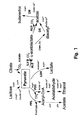
- Diacetyl is formed by an oxidative decarboxylation ( Fig. 1 ) of ⁇ -acetolactate, which is formed by the action of ⁇ -acetolactate synthetase (Als) from two molecules of pyruvate. Pyruvate is a key intermediate of several lactic acid bacterial metabolic pathways including the citrate metabolism and the degradation of lactose or glucose to lactate.
- the pool of pyruvate in the cells is critical for the flux through the metabolic pathway leading to diacetyl, acetoin and 2,3 butylene glycol (butanediol) via the intermediate compound ⁇ -acetolactate due to the low affinity of ⁇ -acetolactate synthetase for pyruvate.
- Pyruvate is converted to formate and acetyl coenzyme A (acetyl CoA) ( Fig. 1 ) by the action of pyruvate formate-lyase (Pfl).
- Pfl pyruvate formate-lyase
- This conversion takes place only under anaerobic conditions (Frey et al. 1994).
- Pfl is inactivated even at low levels of oxygen, and a switch from anaerobic to aerobic conditions will lead to significant changes in metabolic end product profiles in lactic acid bacteria with complete disappearance of ethanol and formate (Hugenholtz, 1993).
- Another factor, which regulates the activity of Pfl is the pH.
- the pH optimum of Pfl is about 7 (Hugenholtz, 1993).
- PDC pyruvate dehydrogenase complex
- acetyl CoA can be produced in lactic acid bacteria from acetate under aerobic as well as under anaerobic conditions.
- the pyruvate pool is increased under anaerobic conditions if the lactic acid bacterial strain is defective in enzyme systems involved in pyruvate consumption, including Pfl.
- an increased pyruvate pool may lead to an increased flux from pyruvate towards acetoin and diacetyl or other metabolites derived from ⁇ -acetolactate.
- fermented food products which are produced by using a lactic acid bacterial starter culture having a reduced Pfl activity or completely lacking such activity contain an increased amount of acetoin or other of the above metabolites.
- such starter cultures may produce reduced amounts of other metabolites, including ethanol and acetate and possibly, acetaldehyde.
- the suggested inactivation of Pfl activity by aeration and/or low pH is not feasible or possible in the industrial production of lactic acid bacterially fermented dairy products or other fermented food products, as the production hereof generally takes place under essentially anaerobic conditions.
- the pH of the starting materials including milk is typically about 7 and it is generally not desirable to lower the pH of the food material to be fermented.
- a method that allows isolation of mutants of gran-negative bacteria devoid of Pfl activity has been disclosed by Pascal et al., 197S.
- This method includes the selection of Pfl defective mutants of E. coli and Salmonella typhmurium based on their lack of ability to generate H 2 and CO 2 in the absence of formate, when they are incubated under anaerobic condition in media containing glucose or pyruvate.
- such a selection method cannot be used for selection of Pfl defective mutants of lactic acid bacteria, since these organisms lack the enzyme that catalyses production of H 2 and CO 2 from formate.
- the prior art does not contain any guidance with respect to designing a feasible method of isolating a lactic acid bacterial Pfl defective (Pfl - ) mutant.
- the invention provides in a first aspect a method of isolating a pyruvate formate-lyase (Pfl) defective lactic acid bacterium, the method comprising the steps of
- the invention relates to a Pfl defective mutant lactic acid bacterium which is obtainable by the above method and having, relative to the wild-type strain from which it is derived, at least one of the following characteristics:
- a method of isolating a Pfl and lactate dehydrogenase (Ldh) defective lactic acid bacterium which is not capable of growth under anaerobic conditions in the presence of acetate comprising initially selecting a Pfl defective lactic acid bacterium in accordance with the above method, and (ii) selecting from said Pfl defective lactic acid bacterium a strain which is incapable of growing under anaerobic condition in an acetate-containing medium.
- Ldh lactate dehydrogenase
- the invention pertains in another aspect to a Pfl and Ldh defective mutant lactic acid bacterium which is not capable of growing under anaerobic conditions in the presence of acetate, said bacterium being obtainable by the above method of isolating a Pfl and lactate dehydrogenase (Ldh) defective lactic acid bacterium, and having, relative to a wild-type lactic acid bacterium or its Pfl defective parent strain, at least one of the following characteristics:
- the invention relates to a method of producing a food product, comprising adding to the food product starting materials a culture of any of the above mentioned lactic acid bacteria and a method of producing a lactic acid bacterial metabolite, comprising cultivating any of the above mentioned lactic acid bacteria under conditions where the metabolite is produced, and isolating the metabolite from the culture.
- lactic acid bacterial starter culture composition comprising any of the above mentioned lactic acid bacteria.
- the present invention provides in a first aspect a method of isolating a pyruvate formate-lyase (Pfl) defective mutant lactic acid bacterium.
- Pfl pyruvate formate-lyase
- the expression "pyruvate formate-lyase defective" indicates that the lactic acid bacterial mutant as compared to the wild-type parent strain has a reduced Pfl activity or that the Pfl activity is absent irrespective of the growth conditions, Plf activity being expressed herein in terms of formate production.
- Such a mutant strain is also referred to herein as a strain having a Pfl - phenotype.
- lactic acid bacterium designates gram positive, microaerophilic or anaerobic bacteria which ferment sugar with the production of acids including lactic acid as the predominantly produced acid, acetic acid, formic acid and propionic acid.
- the industrially most useful lactic acid bacteria are found among Lactococcus species, Streptococcus species, Lactobacillus species, Pediococcus species and Brevibacterium species.
- the strict anaerobes belonging to the genus Bifidobacterium are generally included in the group of lactic acid bacteria.
- a lactic acid bacterial mutant as defined above can be derived by selecting a spontaneously occurring mutant of a wild-type strain of a lactic acid bacterium which has the characteristic that it, when it is cultivated under aerobic conditions in a medium which does not contain lipoic acid, has a growth requirement for acetate, but which under anaerobic conditions is capable of growing in such a medium in the absence of acetate.
- the mutant of the wild-type lactic acid bacterial strain can be provided by subjecting the strain to a mutagenization treatment prior to the selection of a mutant having the above characteristics of the Pfl defective strain.
- this method provides in a first step the provision of a wild-type lactic acid bacterium having the above acetate requirement characteristics, followed by subjecting the bacterium to a mutagenization treatment.
- suitable mutagens include conventional chemical mutagens and UV light.
- a chemical mutagen can be selected from (i) a mutagen that associates with or becomes incorporated into DNA such as a base analogue, e.g. 2-amino-purine or an interchelating agent such as ICR-191, (ii) a mutagen that react with the DNA including alkylating agents such as nitrosoguanidine or hydroxylamine, or ethane methyl sulphonate (EMS).
- the lactic acid bacterial mutant can be provided by subjecting a parent strain to a chemical mutagenization treatment followed by selecting a Pfl - mutant, it will be understood that it would also be possible to provide the mutant by selecting a spontaneously occurring mutant in accordance with the selection procedure as described herein.
- As an alternative to one presently preferred method of providing the mutant by random mutagenesis it is also possible to provide such a mutant by site-directed mutagenesis, e.g. by using appropriately designed PCR techniques or by using a transposable element, which is integratable in lactic acid bacterial replicons.
- the mutagenized strain is, subsequent to the mutagenization treatment, cultivated under anaerobic conditions in a defined medium not containing lipoic acid in the absence or presence, respectively of acetate, and a mutant strain, which in contrast to the wild-type parent strain does not grow under these conditions in the absence of acetate, is selected. It is assumed that such a mutant strain has a defect in the gene coding for the Pfl polypeptide implying that the production of the enzyme is at least partially blocked or that the enzyme is produced in an at least partially inactive form-This assumption can be affirmed by testing the selected mutant for lack of production of formate or alternatively, a reduced pyruvate formate-lyase activity.
- the lactic acid bacterial wild-type parent strain can be selected from any industrially suitable lactic acid bacterial species, i.e. the strain can be selected from the group consisting of a Lactococcus species, a Lactobacillus species, a Pediococcus species, a Streptococcus species and a Bifidobaccerium species.
- the lactic acid bacterium is a Lactococcus lactis or a Streptococcus thermophilus. Examples of presently preferred lactic acid bacteria are Lactococcus lactis subspecies lactis and Lactococcus lactis subspecies lactis biovar diacetylactis.
- a Pfl defective (Pfl - phenotype) mutant lactic acid bacterium which can be obtained by the above method has, relative to the wild-type parent strain one or more phenotypically recognizable characteristics distinguishing it from the parent strain.
- the Pfl - mutant strain may have the same growth rate when cultivated under aerobic conditions in M17 medium, but a reduced growth rate or a reduced acid production when cultivated under anaerobic conditions in conventional media such as the M17 medium or reconstituted skim milk (RSM), no production of formate, a reduced production of ethanol or acetate under said above anaerobic conditions and/or an increased production of at least one ⁇ -acetolactate-derived metabolite when cultivated under anaerobic conditions, e.g. in RSM.
- the strain produces lesser amounts of acids, formate, acetate or ethanol, whereas an enhanced production of ⁇ -acetolactate derived aroma or flavour compounds can be highly desirable, in particular in the production of dairy products.
- desirable compounds include acetoin, diacetyl and 2,3 butylene glycol.
- the production of such metabolites such as acetoin is increased by at least 50%, more preferably by at least 100% and in particular by at least 200%.
- a mutant strain overproducing ⁇ -acetolactate derived metabolites can also be used in the production of the metabolites as such.
- a Pfl defective (Pfl - ) mutant strain is selected from a Lactococcus species, a Lactobacillus species, a Pediococcus species, a Streptococcus species and a Bifidobacterium species.
- one preferred species is Lactococcus lactis including Lactococcus lactis subspecies lactis and Lactococcus lactis subspecies lactis biovar diacetylactis, e.g. the Lactococcus lactis subspecies lactis strain DN221, which has been deposited under the accession No.
- DSM 11034 or a mutant strain of DSM MD34 having further enzymatic defects, or the Lactococcus lactis subspecies lactis biovar diacetylactis strain DN227, which has been deposited under the accession No. 11040, or a mutant strain of DSM 11040 having further enzymatic defects.
- the Plf defective lactic acid bacterial mutant can be utilized as a host for the cloning of a pfl gene by complementation of the defective gene.
- the Plf - strain can also be used as a parent strain for isolating mutants having further useful enzymatic defects as it will be described in the following.
- Lactate dehydrogenase is, as it can be seen from Fig. 1 , another enzyme, which in lactic acid bacteria contribute to the consumption of the pyruvate pool, the activity of the enzyme predominantly resulting in the production of lactate. It was contemplated that the metabolic flux towards ⁇ -acetolactate and metabolites derived from this intermediate could be further increased by providing a mutant strain, which in addition to having a defect in the Pfl activity is defective in Ldh.
- Ldh - Ldh defective
- a strategy for isolating and selecting a lactic acid bacterium which in addition to being Pfl defective is also Ldh defective (Ldh - ), i.e. having the Pfl - Ldhphenotypes was developed based on the following considerations: During anaerobic growth of wild-type lactic acid bacteria the NADH being produced in the glycolysis is converted to NAD + during production of lactate and to some extent during the production of ethanol. Accordingly, it was hypothesized that a double mutant having the Pf1 - Ldhphenotype would be unable to grow under anaerobic conditions, i.e. such a strain would have the additional phenotype Ang(inability to grow anaerobically).
- a method of isolating a Pfl and lactate dehydrogenase (Ldh) defective lactic acid bacterium which is not capable of growth under anaerobic conditions in the presence of acetate, i.e. a Pfl - Ldh- Angphenotype was developed.
- the method comprises as a first step, the selection of a Pfl defective lactic acid bacterium in accordance with the above method, followed by selecting from this Pfl defective bacterium a strain which is incapable of growing under anaerobic conditions in an acetate-containing medium.
- this method includes the step of subjecting, prior to selection of a strain which is incapable of growing under anaerobic conditions in an acetate-containing medium, the Pfl defective lactic acid bacterium to a mutagenization treatment and subsequently selecting a mutant which under said conditions does not grow under said anaerobic conditions.
- the above method of isolating the Plf and Ldh defective mutant results in a strain having an Ldh specific activity which is reduced relative to that of its parent (Pfl defective) strain.
- the thus selected mutant has an Ldh specific activity which is less than 10 units/mg protein of a cell free extract of the bacterium.
- the thus reduced Ldh specific activity corresponds to at the most 50% activity relative to the wild-type or Pfl-parent strain, such as at the most 250% or preferably, at the most 10% activity, such as at the most 5% relative to the parent strains. It is particularly preferred that the mutant strain essentially is devoid of Ldh activity.
- the mutagenization step whereby the Pf1 Ldh - Ang - mutant is produced from the Pfl - mutant can be performed according to the methods as described above for the mutagenization of the wild-type strain. It follows from the above description of this initial step of providing the Pfl - mutant that useful strains can be selected from the group consisting of a Lactococcus species, a Lactobacillus species, a Pediococcus species, a Streptococcus species and a Bifidobacterium species.
- a presently preferred lactic acid bacterium is Lactococcus lactis including Lactococcus lactis subspecies lactis and Lactococcus lactis subspecies lactis biovar diacetylactis.
- a Pfl and Ldh defective mutant lactic acid bacterium which is obtainable by the above method.
- such a mutant strain can be distinguished from a wild-type lactic acid bacterium or its Pfl defective parent strain in one or more further characteristics.
- the mutant strain may have the same growth yield when cultivated under aerobic conditions in M17 medium, a reduced capability of converting lactose to lactic acid/lactate, increased production of ⁇ -acetolactate and/or an increased production of an ⁇ -acetolactate derived metabolite.
- the production of ⁇ -acetolactate and/or metabolites derived from ⁇ -acetolactate was not only increased under aerobic conditions where the mutant strain can grow, but also under anaerobic conditions where no growth occurred.
- Pfl - Ldh - Ang - lactic acid bacteria according to the invention preferably have a production of ⁇ -acetolactate and/or metabolites derived therefrom which, relative to a wild-type strain of the same species, is increased by at least 50%, such as by at least 100%. It is even more preferred that the production is increased by at least 200% such as at least 1000%.
- the Pfl - Ldh - Ang - lactic acid bacterium can be of any lactic acid bacterial species selected from a Lactococcus species, a Lactobacillus species, a pediococcus species, a Streptococcus species and a Bifidobacterium species.
- One preferred species is Lactococcus lactis including Lactococcus lactis subspecies lactis such as the strain designated DN223, which is described in the follow-ing and which is deposited under the accession No. DSM 11036 or a mutant or variant of DSM 11036 made by subjecting DSM 11036 to further mutagenization treatment, and Lactococcus lactis subspecies lactis biovar diacetylactis .
- such a bacterium is capable of converting a substantial proportion of the intracellular pyruvate pool to ⁇ -acetolactate and further to one or more of the metabolites, which can be formed from this intermediate compound, including acetoin, butanediol and/or diacetyl which latter compound can be formed by chemically oxidizing ⁇ -acetolactate.
- the PflLdh - Ang - lactic acid bacterium is capable of converting at least 15% of pyruvate being catabolized to acetoin, more preferably at least 30%. In even more preferred embodiments, this conversion is at least 40%, such as at least 50% or even at least 60%.
- a Pfl and Ldh defective mutant lactic acid bacterium of the above Pfl - Ldh - Ang - mutant lactic acid bacterium which is capable of growing anaerobically in the presence of acetate.
- Such a mutant or variant strain can be provided by selecting a spontaneous mutant of the above mutant bacterium, which mutant or variant strain can grow anaerobically in an acetate-containing medium.
- the mutant or variant strain can be made by subjecting the Pfl - Ldh - Ang - mutant to a further mutagenization treatment in accordance with a method as described above, and selecting a strain being capable of growing anaerobically in an acetate-containing medium.
- mutants or variants would have regained the ability to convert NADH to NAD + under anaerobic conditions, either by mutations in systems secondary to Ldh or Pfl, or by reversion of the Pfl - phenotype to Pfl + phenotype.
- the level of NADH is high and it can be oxidized via lactate and/or ethanol production, i.e. via the pyruvate metabolism.
- the implication hereof is that lactic acid bacteria produce relatively high levels of lactate and/or ethanol as compared to aerobic conditions. From this it also follows that the metabolites having an aroma effect (diacetyl, acetoin) are only produced at relatively low levels.
- the above Ang + mutant/variant may be one which has a production of acetaldehyde which relative to the original wild-type strain is increased at least 2-fold, such as at least 5-fold or even at least 8-fold.
- the mutant variant may also have a production of the diacetyl precursor ⁇ -acetolactate which, also relative to the wild-type strain, is increased at least 5-fold such as at least 10-fold.
- the production of acetoin and/or formate may be significantly increased in such a mutant/variant.
- the mutant/variant is one which, when grown anaerobically in reconstituted skim milk powder, produces in excess of 1 mM acetoin.
- a mutant or variant having the latter characteristic is assumingly Ldh defective but has the wild-type Pfl activity, i.e. it has the phenotype Pfl + Ldh - Ang + .
- One example of such a strain is the Lactococcus lactis subspecies lactis DN224 deposited under the accession No. DSM 11037 or a Lactococcus lactis strain having the characteristics of that strain.
- Another example of the present mutant or variant is a strain which is Pfl defective and has the wild-type Ldh activity, i.e. having the phenotype Pfl - Ldh + Ang + .
- the above Pfl - Ldh - Ang - mutant can be utilized as host for cloning of genes which can restore the ability of the mutant to grow under anaerobic conditions.
- Such a mutant can also, as it is described above by way of example, be used for selecting further mutants having regained the capability of growing anaerobically e.g. due to mutations whereby an increased amount of one or more NADH oxidoreductases is produced.
- oxidoreductases include diacetyl reductase (Dr) and Ldh.
- the mutant can also be one in which the mutation results in overproduction and/or enhanced activity of an enzyme, the activity of which can be limiting for a pathway in which a NADH dependent oxidoreductase is involved.
- an overproduction or enhanced activity can e.g. be of the ⁇ -acetolactate synthetase (Als), the increased production or activity of which would in turn result in an increased production of substrate for diacetyl reductase.
- the mutation may result in the above enzyme having an increased activity.
- NADH dependent oxidoreductases require a substrate.
- acetoin is the substrate for the oxidoreductase diacetyl reductase (see Fig. 1 ).
- the above Pfl - Ldh - Ang - mutant can be used for selecting a mutant which does not grow, even if the oxidoreductase substrate such as acetoin is added to the medium.
- Such a mutant will assumingly have a defect in one or more of its oxidoreductases e.g. diacetyl reductase.
- the invention relates in a further aspect to a method of producing a food product, which method comprises that a culture of a lactic acid bacterium as described herein is added to the food product starting materials, which are then kept under conditions appropriate for the bacteria to grow and/or to be metabolically active.
- the purpose of the addition of the lactic acid bacteria depends on the food product.
- a lactic acid bacterium according to invention is used to provide an increased production in the food product, such as e.g. a dairy product, of a particularly desirable aroma compound, such as diacetyl, acetoin or acetaldehyde.
- Other examples of food products where use of the present mutant strains is contemplated include meat products, vegetables, bakery products and wine.
- the invention encompasses in a still further aspect a method of-producing a lactic acid bacterial metabolite.
- a method of-producing a lactic acid bacterial metabolite comprises cultivating one or more of the lactic acid bacteria as disclosed herein in a suitable medium under industrially feasible conditions where the metabolite is produced, and isolating, if required, the metabolite from the culture.
- the metabolite can be isolated in accordance with any suitable conventional method of isolating the particular compound(s) from the cultivation medium. It is also possible to use the cultivation medium containing the outgrown culture of lactic acid bacteria directly as a source of one or more metabolites.
- starter distillate is a diacetyl-containing flavouring product conventionally made by cultivating a conventional wild-type starter culture strain of a lactic acid bacterium which produces acetoin and/or diacetyl in a suitable medium and isolating the metabolites by distillation to provide a concentrate of the metabolites.
- This product is used for flavouring of butter, margarine, spreads, cereal products and popcorn. It has been found that by using the strains DN223 or DN224, such a starter distillate can be obtained that has a content of diacetyl which, in comparison with a conventional starter distillate, is at least 2-fold.
- the lactic acid bacterium according to the invention both when it is used as a food production strain and as a production strain for metabolites, as a lactic acid bacterial starter culture composition
- a lactic acid bacterial starter culture composition comprising the lactic acid bacterium selected for the specific use.
- such compositions contain the bacterium in concentrated form e.g. at a concentration of viable cells (colony forming units, CFUs) which is in the range of 10 5 to 10 13 per g of the composition such as a range of 10 6 to 10 12 per g.
- the starter culture composition may contain further components such as bacterial nutrients, cryoprotectants or other substances enhancing the viability of the bacterial active ingredient during storage.
- the composition can be in the form of a frozen or freeze-dried composition.
- Lactococcus lactis subspecies lactis strains 1FHCY-1, MG1363 and CHCC373 (Chr. Hansen Culture Collection)
- Lactococcus lactis subspecies lactis biovar diacetylactis DB1341 and Streptococcus thermophilus strain CHCC2134 (Chr. Hansen Culture Collection).
- M17 medium (Terzaghi et al. 1975); (ii) the defined phosphate-buffered DN-medium (Dickely et al. 1995) with or without NaAcetate (DN or DN-Ac, respectively).
- the DN-medium does not contain lipoic acid, but was supplemented with NaFormate at a concentration of 0.6%; and (iii) reconstituted skim milk, RSM containing 9.5% low heat skim milk powder (Milex 240 lh, MD Foods, Denmark).
- the strains were cultivated at 30°C and growth was monitored by measuring the optical density (OD) at 600 nm and/or pH.
- OD optical density
- Anaerobic conditions for growth on agar plates were obtained by incubation in a sealed container using the Anaerocult® A system (Merck, Darmstadt, Germany).
- anaerobic growth conditions for cultures in liquid media means cultivation without shaking and aerobic cultivation means growth under shaking.
- a single colony of L. lactis was inoculated in 10 ml DN-medium and incubated for 16 hours under vigorous shaking.
- To the outgrown culture 150 ⁇ l of ethyl methane sulphonate (EMS, Sigma) was added and the mixture was incubated further under shaking. After 2 hours, 10 tubes each containing 2 ml DN-medium were each inoculated with 0.2 ml of the mutagenized culture. The tubes were incubated until the following day under shaking for phenotypic expression. Sterile glycerol was added to a final concentration of 15% (v/v) and the cultures were stored at -70°C until use.
- EMS ethyl methane sulphonate
- a single colony of L. lactis was inoculated in 10 ml M17 medium and cultivated overnight. After cooling for 15 min. on ice, the cells were harvested by centrifugation at 7000 rpm for 5 min. at 4°C, washed in 5 ml ice-cold Ldh assay buffer (50 mM Tris-Acetate pH 6.0, 0.5 mM Fructose-1,6-diphosphate) and resuspended in 1 ml ice-cold Ldh assay buffer. The resuspended cells were transferred to a 5 ml glass tube and sonicated on ice using a Branson Sonifier 250 at the following parameters: timer, 4 min.; duty cycle 25%; output 4.
- the content of the tube was transferred to an ice-cold Eppendorf tube and centrifuged at 15,000 x g for 5 min. at 4°C. The supernatant was transferred to a new ice-cold Eppendorf tube.
- the Ldh specific activity of the cell-free extract was measured at 25°C in the following manner: 5 ⁇ l of cell-free extract was added to 495 ⁇ l Ldh assay buffer containing 0.2 mM NADH and 25 mM pyruvate. As control, an assay without pyruvate was used.
- the conversion of NADH to NAD + was followed spectrophotometrically over time at 340 nm using a Spectronic® Genesys 5 spectrophotometer.
- One unit corresponds to the conversion of 1 ⁇ mol NADH min -1 ml -1 cell-free extract.
- the specific activity is expressed in units/mg protein.
- BCA Bicinchoninic acid
- the L. lactis subspecies lactis strains 1FHCY-1 and MG1363 were tested for growth on DN-medium with (DN) or without (DN-Ac) acetate, respectively.
- the tested L. lactis strains have an absolute requirement for acetate under aerobic growth conditions.
- Lactococcus lactis subspecies lactis CHCC373 was selected from the culture collection of Chr. Hansen A/S, H ⁇ rsholm, Denmark and tested for its growth requirement for acetate under aerobic and anaerobic conditions respectively by streaking a liquid culture of the strain onto a series of DN-medium plates containing increasing concentrations of NaAcetate in the range of from 0 to 0.2% (w/v).
- DN-medium with 0.1% NaAcetate (DN) or not containing NaAcetate (DN-Ac) was used.
- Mutagenized stocks of the strains CHCC373 and DB1341 were prepared as described above and plated in dilutions onto DN-medium agar plates which were incubated aerobically for 24 to 48 hours. From these plates, 980 colonies of each strain were selected and streaked onto DN and DN-Ac agar plates, respectively and these plates were incubated for 24 hours under anaerobic conditions- Two strains designated DN220 and DN221, respectively from the mutagenized CHCC373 strain and one strain designated DN227 from the mutagenized DB1341 strain, which were unable to grow in the absence of acetate under anaerobic conditions, were selected.
- Chromosomal DNA was isolated from DN220, DN221 and CHCC373, respectively and digested with Eco RI , and the fragment patterns were compared using agarose gel electrophoresis. The fragment patterns showed that both DN220 and DN221 originated from CHCC373. DN221 was selected for further experiments.
- DN220, DN221 and DN227 were deposited with Deutsche Sammlung von Mikroorganismen und Zellkulturen GmbH, Mascheroder Weg 1b, D-38124 Braunschweig, Germany on 26 June 1996 under the respective accession Nos. DSM 11033, DSM 11034 and DSM 11040.
- CHCC373 and DN221 were inoculated in M17 and the cultures were incubated under aerobic and anaerobic conditions, respectively.
- aerobic growth conditions DN221 and CHCC373 did grow equally well as judged by the OD 600 and the pH.
- the growth rate of DN221 in M17 under anaerobic conditions was considerably lower than that of CHCC373 and it declined at a lower cell mass.
- a stock of DN221 was mutagenized as described above under Materials and Methods, and the mutagenized cells were plated in dilutions onto DN-medium agar plates,which were incubated aerobically for 24-48 hours. From theses plates, 980 colonies were selected and each colony was streaked onto two DN plates and incubated 24 hours under anaerobic and aerobic conditions, respectively. Two strains (DN222 and DN223) which were unable to grow under anaerobic conditions, were selected.
- Chromosomal DNA was isolated from DN222, DN223 and CHCC373, respectively and digested with Eco RI .
- the fragment patterns were compared using agarose gel electrophoresis. The fragment patterns showed that both DN222 and DN223 originate from CHCC373.
- the Ldh activity of DN221, DN222, DN223 and CHCC373 was analyzed in accordance with the method described above, and the results are shown in Table 3.1 below.
- Table 3.1. Ldh activity of DN221. DN222. DN223 and CHCC373 Strain CHCC373 DN221 DN222 DN223 Spec. activity a NADH oxidase 0.30 0.28 0.12 0.59 Spec. activity b Ldh 21.40 19.10 16.00 0.70 % Ldh act. 100.00 89.00 75.00 3.00 a : units/mg protein; units, ⁇ mol NAD+ min -1 ml -1 extracts. Assay without pyruvate. b : as a but assay with pyruvate.
- DN223 has a defect in the Ldh activity having only 3% of the activity of CHCC373, whereas DN222 has a Ldh activity similar to that of CHCC373. Thus it can be concluded that DN223 is Pfl and Ldh defective.
- DN221, DN223 and CHCC373 had similar growth yields as judged by the OD 600 measurements.
- the OD 600 of DN222 was only about half the OD 600 of the wild-type strain.
- DN221 and DN222 both acidified the medium to the same pH level, whereas DN223 only acidified the medium slightly, even though the growth as judged by the OD 600 was similar to that of CHCC373, confirming that DN223 is Ldh defective.
- CHCC373 produces almost equal amounts of acetate and lactate. Under aerobic conditions DN221 produces similar amounts of end products as does CHCC373. DN222 produces less acetate and equal amounts of lactate as does CHCC373. The defect in DN222 is unknown. DN223 produces very small amounts of lactate as compared to CHCC373. DN223 converted the major part of pyruvate to acetoin instead of lactate. This change in pyruvate catabolism is also reflected in that the aroma compound diacetyl was increased 3-4 fold as compared to CHCC373 and in that about 55% of the catabolized pyruvate passed via ⁇ -acetolactate (ALA) to acetoin (HMEK). The percentage is probably higher as the butanediol production was not measured.
- ALA ⁇ -acetolactate
- HMEK acetoin
- a liquid culture was made from a single colony of DN223 and incubated under aerobic conditions overnight. Approximately 10 8 cells were transferred to DN-medium agar plates which were incubated under anaerobic conditions. Three strains designated DN224, DN225 and DN226 were isolated based on their ability to grow under anaerobic conditions. The three strains are all mutants or variants of DN223 having regained the ability to convert NADH to NAD + under anaerobic conditions either by mutations in secondary systems to Ldh and Pfl or by reversion of the Pfl or the Ldh defect.
- Chromosomal DNA was isolated from DN224, DN225, DN226 and CHCC373, respectively and digested with Eco RI. The fragment patterns were compared using agarose gel electrophoresis. The fragment patterns showed that DN224, DN225 and DN226 all originate from CHCC373.
- DN225 Under both aerobic and anaerobic conditions DN225 has a growth yield equal to CHCC373 indicating that this strain had lost the Ldh defect.
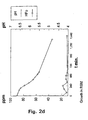
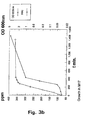
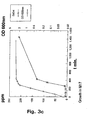
- the strains DN223, DN224 and DN226 produced acetoin in the range-of 1100-1200 ppm which is 4-6 times more than the other strains (about 200 ppm).
- DN223 produced about 10-fold more acetoin than the strains DN222 and CHCC373, even though almost no growth was observed as judged by the OD 600 value.
- DN224 and DN226 produced more than 10 ppm acetoin under anaerobic conditions, which is considerably more than the 2.5 ppm produced by CHCC373 and DN222.
- the high concentrations of acetoin produced by the three strains indicate that these strains have the potential of producing high amounts of diacetyl.
- DN224 was selected for further studies of fermentation end product formation.
Landscapes
- Life Sciences & Earth Sciences (AREA)
- Chemical & Material Sciences (AREA)
- Health & Medical Sciences (AREA)
- Engineering & Computer Science (AREA)
- Bioinformatics & Cheminformatics (AREA)
- Organic Chemistry (AREA)
- Zoology (AREA)
- Wood Science & Technology (AREA)
- Genetics & Genomics (AREA)
- Microbiology (AREA)
- Biotechnology (AREA)
- General Engineering & Computer Science (AREA)
- Biomedical Technology (AREA)
- Medicinal Chemistry (AREA)
- Biochemistry (AREA)
- General Health & Medical Sciences (AREA)
- Polymers & Plastics (AREA)
- Food Science & Technology (AREA)
- Molecular Biology (AREA)
- Virology (AREA)
- Tropical Medicine & Parasitology (AREA)
- Nutrition Science (AREA)
- Micro-Organisms Or Cultivation Processes Thereof (AREA)
- Preparation Of Compounds By Using Micro-Organisms (AREA)
Claims (30)
- Méthode pour isoler une bactérie lactique déficiente en pyruvate formate-lyase (Pfl), la méthode comprenant les étapes de(i) fourniture d'une souche sauvage de bactérie lactique qui dans des conditions aérobiques n'est pas capable de croître en absence d'acétate dans un milieu ne contenant pas d'acide lipoïque, mais qui est capable de croître dans un tel milieu dans des conditions anaérobiques, et(ii) sélection à partir de ladite souche sauvage d'un mutant qui dans lesdites conditions anaérobiques a une croissance quasi nulle en absence d'acétate.
- Méthode selon la revendication 1 dans laquelle la souche sauvage antérieurement à la sélection d'un mutant est soumise à un traitement de mutagenèse et la souche ainsi mutée est cultivée dans des conditions anaérobiques dans le milieu ne contenant pas d'acide lipoïque en absence et en présence, respectivement, d'acétate et où un mutant est choisi qui dans lesdites conditions a une croissance quasi nulle en absence d'acétate.
- Méthode selon la revendication 1 dans laquelle la bactérie lactique est choisie dans le groupe consistué par une espèce de Lactococcus, une espèce de Lactobacillus, une espèce de Pediococcus, une espèce de Streptococcus et une espèce de Bifidobacterium.
- Méthode selon la revendication 3 dans laquelle la bactérie lactique est un Lactococcus lactis.
- Méthode selon la revendication 4 dans laquelle la bactérie lactique est un Lactococcus lactis subsp. lactis.
- Une bactérie lactique mutante déficiente en Pfl qui est obtensible par la méthode de la revendication 1 et ayant, par rapport à la souche sauvage de laquelle elle est dérivée, au moins une des caractéristiques suivantes :(i) le même taux de croissance lorsque cultivée dans des conditions aérobiques en milieu M17,(ii) un taux de croissance réduit ou un taux de production d'acide réduit lorsque cultivée dans des conditions anaérobiques en milieu M17 ou dans du lait écrémé reconstitué (RSM),(iii) une production de formate quasi nulle dans les conditions anaérobiques de (ii),(iv) une production réduite d'éthanol ou d'acétate dans les conditions anaérobiques décrites ci-dessus, et/ou(vi) une production accrue d'au moins un métabolite dérivé de l'α-acétolactate lorsque cultivée dans des conditions anaérobiques en RSM.
- Bactérie lactique selon la revendication 6 qui a une production d'acétoïne qui est accrue d'au moins 100%.
- Bactérie lactique selon la revendication 6 qui est choisie dans le groupe consistué par une espèce de Lactococcus, une espèce de Lactobacillus, une espèce de Pediococcus, une espèce de Streptococcus et une espèce de Bifidobacterium.
- Bactérie lactique selon la revendication 8 qui est un Lactococcus lactis.
- Bactérie lactique selon la revendication 9 qui est choisie dans le groupe consistué par Lactococcus lactis subsp. lactis et Lactococcus lactis subsp. lactis biovar diacetylactis.
- Bactérie lactique selon la revendication 10 qui est choisie dans le groupe consistué par la souche Lactococcus lactis subsp. lactis DN221 déposée sous le numéro d'accession DSM 11034, une souche ayant essentiellement les caractéristiques de DSM 11034, la souche Lactococcus lactis subsp. lactis biovar diacetylactis DN227 déposée sous le numéro d'accession DSM 11040 et une souche ayant essentiellement les caractéristiques de DSM 11040.
- Méthode pour isoler une bactérie lactique déficiente en Pfl et en lactate déshydrogénase (Ldh) qui n'est pas capable de croître dans des conditions anaérobiques en présence d'acétate, ladite méthode comprenant(i) la sélection initiale d'une bactérie lactique déficiente en Pfl en accord avec la méthode de la revendication 1, et(ii) la sélection à partir de ladite bactérie lactique déficiente en Pfl d'une souche qui est incapable de croître dans des conditions anaérobiques dans un milieu contenant de l'acétate.
- Méthode selon la revendication 12 dans laquelle la bactérie lactique déficiente en Pfl antérieurement à la sélection d'une souche qui est incapable de croître dans des conditions anaérobiques dans un milieu contenant de l'acétate est soumise à un traitement de mutagenèse et où un mutant est choisi qui dans lesdites conditions a une croissance quasi nulle dans lesdites conditions anaérobiques.
- Méthode selon la revendication 12 dans laquelle la souche sélectionnée a une activité spécifique de la Ldh qui est réduite par rapport à celle de sa souche parente.
- Méthode selon la revendication 14 dans laquelle la bactérie lactique sélectionnée a une activité spécifique de la Ldh qui est de moins de 10 unités/mg de protéine d'un extrait de la bactérie dépourvu de cellules et/ou qui, par rapport à la souche parente dont elle est dérivée, a une activité spécifique de la Ldh de 50% au plus.
- Méthode selon la revendication 14 dans laquelle la bactérie lactique est choisie dans le groupe consistué par une espèce de Lactococcus, une espèce de Lactobacillus, une espèce de Pediococcus, une espèce de Streptococcus et une espèce de Bifidobacterium.
- Méthode selon la revendication 16 dans laquelle la bactérie lactique est un Lactococcus lactis.
- Méthode selon la revendication 17 dans laquelle la bactérie lactique est un Lactococcus lactis subsp. lactis.
- Bactérie lactique mutante déficiente en Pfl et en Ldh qui n'est pas capable de croître dans des conditions anaérobiques en présence d'acétate, ladite bactérie étant obtensible par la méthode de la revendication 12 et ayant, par rapport à une bactérie lactique ou à sa souche parente déficiente en Pfl, au moins une des caractéristiques suivantes :(i) le même rendement de croissance lorsque cultivée dans des conditions aérobiques en milieu M17,(ii) une capacité réduite à convertir le lactose en lactate,(iii) une production accrue d'α-acétolactate, et/ou(iv) une production accrue d'un métabolite dérivé de l'α-acétolactate.
- Bactérie lactique mutante selon la revendication 19 ayant une production d'α-acétolactate qui est accrue d'au moins 100%.
- Bactérie lactique mutante selon la revendication 19 ayant une production d'un métabolite dérivé de l'α-acétolactate qui est accrue d'au moins 100%.
- Bactérie lactique selon la revendication 19 qui est choisie dans le groupe consistué par une espèce de Lactococcus, une espèce de Lactobacillus, une espèce de Pediococcus, une espèce de Streptococcus et une espèce de Bifidobacterium.
- Bactérie lactique selon la revendication 20 qui est un Lactococcus lactis.
- Bactérie lactique selon la revendication 23 qui est un Lactococcus lactis subsp. lactis.
- Bactérie lactique selon la revendication 19 dans laquelle au moins 15% du pyruvate étant catabolisé est converti en acétoïne.
- Bactérie lactique selon la revendication 24 qui est Lactococcus lacris subsp. lactis DN223 déposée sous le numéro d'accession DSM 11036 ou une souche ayant essentiellement les caractéristiques de DSM 11036 et qui es capable de croissance anaérobie.
- Bactérie lactique qui est Lactococcus lactis subsp. lactis DN224 déposé sous le numéro d'accession DSM 11037 ou une souche ayant essentiellement les caractéristiques de DSM 11037.
- Méthode pour produire un produit alimentaire, la méthode comprenant l'addition aux matériaux de départ du produit alimentaire d'une culture d'une bactérie lactique choisie dans le groupe consistué par les bactéries lactiques de la revendication 6, de la revendication 19 et de la revendication 27.
- Méthode de production d'un métabolite de bactérie lactique, la méthode comprenant la cultivation d'une bactérie lactique selon une quelconque des revendications 6, 19 ou 27 dans des conditions où le métabolite est produit, et, si besoin est, l'isolation du métabolite à partir de la culture.
- Une composition de culture starter de bactérie lactique comprenant une bactérie lactique choisie dans le groupe consistué par les bactéries lactiques de la revendication 6, de la revendication 19 et de la revendication 27.
Applications Claiming Priority (3)
| Application Number | Priority Date | Filing Date | Title |
|---|---|---|---|
| US70145996A | 1996-08-22 | 1996-08-22 | |
| US701459 | 1996-08-22 | ||
| PCT/DK1997/000335 WO1998007843A1 (fr) | 1996-08-22 | 1997-08-20 | Bacteries lactiques a metabolisme modifie et leur utilisation |
Publications (3)
| Publication Number | Publication Date |
|---|---|
| EP0928333A1 EP0928333A1 (fr) | 1999-07-14 |
| EP0928333B1 EP0928333B1 (fr) | 2006-04-05 |
| EP0928333B2 true EP0928333B2 (fr) | 2009-10-07 |
Family
ID=24817471
Family Applications (1)
| Application Number | Title | Priority Date | Filing Date |
|---|---|---|---|
| EP97935505A Expired - Lifetime EP0928333B2 (fr) | 1996-08-22 | 1997-08-20 | Bacteries lactiques a metabolisme modifie et leur utilisation |
Country Status (7)
| Country | Link |
|---|---|
| US (3) | US6645754B1 (fr) |
| EP (1) | EP0928333B2 (fr) |
| AU (1) | AU723153B2 (fr) |
| BR (1) | BR9711341A (fr) |
| DE (1) | DE69735633T3 (fr) |
| DK (1) | DK0928333T4 (fr) |
| WO (1) | WO1998007843A1 (fr) |
Families Citing this family (20)
| Publication number | Priority date | Publication date | Assignee | Title |
|---|---|---|---|---|
| DK0985043T4 (en) | 1997-05-30 | 2017-04-24 | Chr Hansen As | Lactic acid bacterial starter cultures and compositions thereof |
| EP0937774A1 (fr) * | 1998-02-20 | 1999-08-25 | Chr. Hansen A/S | Bactéries lactiques ayant l'activité pyruvate déhydrogenase réduite et leur utilisation |
| FR2777905B1 (fr) * | 1998-04-23 | 2002-07-19 | Agronomique Inst Nat Rech | Bacteries surproductrices d'alpha-acetolactate, et procede d'obtention |
| DE10129711B4 (de) * | 2001-06-22 | 2007-08-23 | Forschungszentrum Jülich GmbH | Verfahren zur fermentativen Herstellung von Pyruvat |
| FR2833967B1 (fr) * | 2001-12-24 | 2004-02-20 | Agronomique Inst Nat Rech | Utilisation de bacteries lactiques pour la production d'alpha-cetoglutarate |
| WO2010139333A1 (fr) * | 2009-06-04 | 2010-12-09 | Chr. Hansen A/S | Prématuration de lait |
| ES2352633B8 (es) * | 2009-08-04 | 2012-02-20 | Fundacion Leia Centro De Desarrollo Tecnologico | Cepa mutante de lactococcus lactis lactis y método para la producción industrial de acetoína. |
| AU2010300722A1 (en) * | 2009-09-29 | 2012-04-12 | Butamax(Tm) Advanced Biofuels Llc | Improved flux to acetolactate-derived products in lactic acid bacteria |
| DE102010021027A1 (de) | 2010-05-19 | 2011-11-24 | Multivac Sepp Haggenmüller Gmbh & Co. Kg | Verfahren und Verpackungsmaschine zum Herstellen einer Verpackung |
| FR2988733B1 (fr) * | 2012-03-27 | 2016-02-05 | Carbios | Microorganisme recombinant |
| LT3143075T (lt) | 2014-05-16 | 2022-09-12 | Carbios | Mišrių pet plastiko gaminių perdirbimo būdas |
| DK2989899T3 (en) | 2014-08-28 | 2016-10-24 | Chr Hansen As | Compositions of hetero- and homofermentative lactic acid bacteria species for dual purpose silage preservation |
| PL3209771T3 (pl) | 2014-10-21 | 2021-05-31 | Carbios | Polipeptyd wykazujący działanie rozkładające poliester i jego zastosowania |
| US10626242B2 (en) | 2014-12-19 | 2020-04-21 | Carbios | Plastic compound and preparation process |
| EP3268469A1 (fr) | 2015-03-13 | 2018-01-17 | Carbios | Nouveau polypeptide présentant une activité de dégradation de polyester et ses utilisations |
| CN107709457B (zh) | 2015-06-12 | 2021-05-25 | 卡比奥斯公司 | 可生物降解聚酯组合物及其用途 |
| US10717996B2 (en) | 2015-12-21 | 2020-07-21 | Carbios | Recombinant yeast cells producing polylactic acid and uses thereof |
| CN116199935A (zh) | 2016-05-19 | 2023-06-02 | 卡比奥斯公司 | 一种降解塑料产品的方法 |
| JP6999641B2 (ja) * | 2016-07-19 | 2022-02-10 | フンダシオン テクナリア リサーチ アンド イノベイション | 2,3-ブタンジオール及び他の代謝物を産生する細菌株 |
| MX2020001972A (es) | 2017-08-31 | 2020-03-24 | Chr Hansen As | Nuevas cepas de lactobacillus curvatus utiles para la inhibicion de listeria. |
-
1997
- 1997-08-20 BR BR9711341A patent/BR9711341A/pt not_active Application Discontinuation
- 1997-08-20 US US08/981,098 patent/US6645754B1/en not_active Expired - Lifetime
- 1997-08-20 AU AU38475/97A patent/AU723153B2/en not_active Expired
- 1997-08-20 DK DK97935505.4T patent/DK0928333T4/da active
- 1997-08-20 WO PCT/DK1997/000335 patent/WO1998007843A1/fr not_active Ceased
- 1997-08-20 DE DE69735633T patent/DE69735633T3/de not_active Expired - Lifetime
- 1997-08-20 EP EP97935505A patent/EP0928333B2/fr not_active Expired - Lifetime
-
2003
- 2003-09-10 US US10/658,376 patent/US7465575B2/en not_active Expired - Fee Related
-
2008
- 2008-12-11 US US12/332,442 patent/US8043843B2/en not_active Expired - Fee Related
Non-Patent Citations (8)
| Title |
|---|
| "Hugenholtz", FEMS MICROBIOLOGY REVIEWS, no. 12, 1 January 1993 (1993-01-01), pages 165 - 178 † |
| DICKELY, MOLECULAR MICROBIOLOGY, vol. 15, 1 January 1995 (1995-01-01), pages 839 - 847 † |
| GASSON M.J. ET AL, LAIT, no. 76, 1 January 1996 (1996-01-01), pages 33 - 40 † |
| MAT-JAN ET AL, J. MICROBIOLGY, no. 171, 1 January 1989 (1989-01-01), pages 342 - 348 † |
| PLATTEEUW C. ET AL, APPLIED AND ENVIRONMENTAL MICROBIOLOGY, vol. 61, no. 11, 1 January 1995 (1995-01-01), pages 3967 - 3971 † |
| SNOEP ET AL, J. GENERAL MICROBIOLOGY, vol. 139, 1 January 1993 (1993-01-01), pages 1325 - 1329 † |
| THOMAS ET AL, J. BACTERIOLOGY, no. 144, 1 January 1980 (1980-01-01), pages 672 - 682 † |
| VARENNE ET AL, MOL. GEN. GENET., no. 141, 1 January 1975 (1975-01-01), pages 181 - 184 † |
Also Published As
| Publication number | Publication date |
|---|---|
| DK0928333T3 (da) | 2006-07-17 |
| AU3847597A (en) | 1998-03-06 |
| WO1998007843A1 (fr) | 1998-02-26 |
| DK0928333T4 (da) | 2010-01-18 |
| US6645754B1 (en) | 2003-11-11 |
| BR9711341A (pt) | 1999-08-17 |
| EP0928333B1 (fr) | 2006-04-05 |
| US20090155411A1 (en) | 2009-06-18 |
| US20040086955A1 (en) | 2004-05-06 |
| US8043843B2 (en) | 2011-10-25 |
| DE69735633D1 (de) | 2006-05-18 |
| DE69735633T3 (de) | 2010-04-15 |
| EP0928333A1 (fr) | 1999-07-14 |
| DE69735633T2 (de) | 2006-12-14 |
| US7465575B2 (en) | 2008-12-16 |
| AU723153B2 (en) | 2000-08-17 |
Similar Documents
| Publication | Publication Date | Title |
|---|---|---|
| US8043843B2 (en) | Metabolically engineered lactic acid bacteria and their use | |
| CA2291878C (fr) | Cultures starter bacteriennes d'acide lactique et compositions de ces cultures | |
| AU754472B2 (en) | Novel genetically modified lactic acid bacteria having modified diacetyl reductase activities | |
| Boumerdassi et al. | Isolation and properties of Lactococcus lactis subsp. lactis biovar diacetylactis CNRZ 483 mutants producing diacetyl and acetoin from glucose | |
| EP1078074B1 (fr) | Souches mutantes de lactobacillus bulgaricus depourvues d'activite beta-galactosidase | |
| JP3016218B2 (ja) | 低下した酸生産及び/または改良された芳香及び風味発生を有するラクトバチルス・ブルガリクス、及び前記ラクトバチルス・ブルガリクスを含む食物組成 | |
| Henriksen et al. | Redirection of pyruvate catabolism in Lactococcus lactis by selection of mutants with additional growth requirements | |
| EP0937774A1 (fr) | Bactéries lactiques ayant l'activité pyruvate déhydrogenase réduite et leur utilisation | |
| US20130052303A1 (en) | Method for Improving Flavor Production in a Fermented Food Product | |
| de Figueroa et al. | Influence of temperature on flavour compound production from citrate by Lactobacillus rhamnosus ATCC 7469 | |
| US6413765B1 (en) | Genetically modified lactic acid bacteria having modified diacetyl reductase activities | |
| Möller et al. | Production of yoghurt with mild taste by a Lactobacillus delbrueckii subsp. bulgaricus mutant with altered proteolytic properties | |
| AU783660B2 (en) | Lactic acid bacteria transformed to be provided with respiratory metabolism, and ferments comprising said lactic acid bacteria | |
| Green | Utilization of Protective Cultures to Reduce Late Gas Formation by Paucilactobacillus wasatchensis | |
| FR2833967A1 (fr) | Utilisation de bacteries lactiques pour la production d'alpha-cetoglutarate |
Legal Events
| Date | Code | Title | Description |
|---|---|---|---|
| PUAI | Public reference made under article 153(3) epc to a published international application that has entered the european phase |
Free format text: ORIGINAL CODE: 0009012 |
|
| 17P | Request for examination filed |
Effective date: 19990322 |
|
| AK | Designated contracting states |
Kind code of ref document: A1 Designated state(s): DE DK FR GB IE IT NL |
|
| 17Q | First examination report despatched |
Effective date: 20040922 |
|
| GRAP | Despatch of communication of intention to grant a patent |
Free format text: ORIGINAL CODE: EPIDOSNIGR1 |
|
| GRAS | Grant fee paid |
Free format text: ORIGINAL CODE: EPIDOSNIGR3 |
|
| GRAA | (expected) grant |
Free format text: ORIGINAL CODE: 0009210 |
|
| AK | Designated contracting states |
Kind code of ref document: B1 Designated state(s): DE DK FR GB IE IT NL |
|
| REG | Reference to a national code |
Ref country code: GB Ref legal event code: FG4D |
|
| REG | Reference to a national code |
Ref country code: IE Ref legal event code: FG4D |
|
| REF | Corresponds to: |
Ref document number: 69735633 Country of ref document: DE Date of ref document: 20060518 Kind code of ref document: P |
|
| REG | Reference to a national code |
Ref country code: DK Ref legal event code: T3 |
|
| ET | Fr: translation filed | ||
| PLBI | Opposition filed |
Free format text: ORIGINAL CODE: 0009260 |
|
| PLAX | Notice of opposition and request to file observation + time limit sent |
Free format text: ORIGINAL CODE: EPIDOSNOBS2 |
|
| 26 | Opposition filed |
Opponent name: DANISCO A/S Effective date: 20061221 |
|
| NLR1 | Nl: opposition has been filed with the epo |
Opponent name: DANISCO A/S |
|
| PLAF | Information modified related to communication of a notice of opposition and request to file observations + time limit |
Free format text: ORIGINAL CODE: EPIDOSCOBS2 |
|
| PLBB | Reply of patent proprietor to notice(s) of opposition received |
Free format text: ORIGINAL CODE: EPIDOSNOBS3 |
|
| PLAB | Opposition data, opponent's data or that of the opponent's representative modified |
Free format text: ORIGINAL CODE: 0009299OPPO |
|
| PUAH | Patent maintained in amended form |
Free format text: ORIGINAL CODE: 0009272 |
|
| STAA | Information on the status of an ep patent application or granted ep patent |
Free format text: STATUS: PATENT MAINTAINED AS AMENDED |
|
| 27A | Patent maintained in amended form |
Effective date: 20091007 |
|
| AK | Designated contracting states |
Kind code of ref document: B2 Designated state(s): DE DK FR GB IE IT NL |
|
| NLR2 | Nl: decision of opposition |
Effective date: 20091007 |
|
| REG | Reference to a national code |
Ref country code: DK Ref legal event code: T4 |
|
| NLR3 | Nl: receipt of modified translations in the netherlands language after an opposition procedure | ||
| REG | Reference to a national code |
Ref country code: FR Ref legal event code: PLFP Year of fee payment: 20 |
|
| PGFP | Annual fee paid to national office [announced via postgrant information from national office to epo] |
Ref country code: NL Payment date: 20160810 Year of fee payment: 20 |
|
| PGFP | Annual fee paid to national office [announced via postgrant information from national office to epo] |
Ref country code: DK Payment date: 20160810 Year of fee payment: 20 Ref country code: IE Payment date: 20160809 Year of fee payment: 20 Ref country code: GB Payment date: 20160817 Year of fee payment: 20 Ref country code: IT Payment date: 20160822 Year of fee payment: 20 Ref country code: DE Payment date: 20160816 Year of fee payment: 20 |
|
| PGFP | Annual fee paid to national office [announced via postgrant information from national office to epo] |
Ref country code: FR Payment date: 20160712 Year of fee payment: 20 |
|
| REG | Reference to a national code |
Ref country code: DE Ref legal event code: R071 Ref document number: 69735633 Country of ref document: DE |
|
| REG | Reference to a national code |
Ref country code: DK Ref legal event code: EUP Effective date: 20170820 |
|
| REG | Reference to a national code |
Ref country code: NL Ref legal event code: MK Effective date: 20170819 |
|
| REG | Reference to a national code |
Ref country code: GB Ref legal event code: PE20 Expiry date: 20170819 |
|
| REG | Reference to a national code |
Ref country code: IE Ref legal event code: MK9A |
|
| PG25 | Lapsed in a contracting state [announced via postgrant information from national office to epo] |
Ref country code: GB Free format text: LAPSE BECAUSE OF EXPIRATION OF PROTECTION Effective date: 20170819 Ref country code: IE Free format text: LAPSE BECAUSE OF EXPIRATION OF PROTECTION Effective date: 20170820 |