EP0929024A1 - Procédé et dispositif interdisant l'examen non intentionnel d'information sur un' écran d'ordinateur - Google Patents
Procédé et dispositif interdisant l'examen non intentionnel d'information sur un' écran d'ordinateur Download PDFInfo
- Publication number
- EP0929024A1 EP0929024A1 EP98310808A EP98310808A EP0929024A1 EP 0929024 A1 EP0929024 A1 EP 0929024A1 EP 98310808 A EP98310808 A EP 98310808A EP 98310808 A EP98310808 A EP 98310808A EP 0929024 A1 EP0929024 A1 EP 0929024A1
- Authority
- EP
- European Patent Office
- Prior art keywords
- computer equipment
- signal
- operator
- proximity
- screen
- Prior art date
- Legal status (The legal status is an assumption and is not a legal conclusion. Google has not performed a legal analysis and makes no representation as to the accuracy of the status listed.)
- Withdrawn
Links
Images

Classifications
-
- G—PHYSICS
- G06—COMPUTING OR CALCULATING; COUNTING
- G06F—ELECTRIC DIGITAL DATA PROCESSING
- G06F3/00—Input arrangements for transferring data to be processed into a form capable of being handled by the computer; Output arrangements for transferring data from processing unit to output unit, e.g. interface arrangements
- G06F3/01—Input arrangements or combined input and output arrangements for interaction between user and computer
- G06F3/03—Arrangements for converting the position or the displacement of a member into a coded form
- G06F3/033—Pointing devices displaced or positioned by the user, e.g. mice, trackballs, pens or joysticks; Accessories therefor
- G06F3/039—Accessories therefor, e.g. mouse pads
- G06F3/0395—Mouse pads
-
- G—PHYSICS
- G06—COMPUTING OR CALCULATING; COUNTING
- G06F—ELECTRIC DIGITAL DATA PROCESSING
- G06F21/00—Security arrangements for protecting computers, components thereof, programs or data against unauthorised activity
- G06F21/30—Authentication, i.e. establishing the identity or authorisation of security principals
- G06F21/31—User authentication
- G06F21/34—User authentication involving the use of external additional devices, e.g. dongles or smart cards
- G06F21/35—User authentication involving the use of external additional devices, e.g. dongles or smart cards communicating wirelessly
-
- G—PHYSICS
- G06—COMPUTING OR CALCULATING; COUNTING
- G06F—ELECTRIC DIGITAL DATA PROCESSING
- G06F21/00—Security arrangements for protecting computers, components thereof, programs or data against unauthorised activity
- G06F21/70—Protecting specific internal or peripheral components, in which the protection of a component leads to protection of the entire computer
- G06F21/82—Protecting input, output or interconnection devices
- G06F21/84—Protecting input, output or interconnection devices output devices, e.g. displays or monitors
Definitions
- the present invention relates to security and in particular to computer security.
- the information displayed on a computer screen at a workstation is often of a secret or sensitive nature, and accordingly it is desirable to be able to limit the possibility of anybody other than the operator viewing the screen while the information is being displayed.
- Security in this regard can usually be achieved to a reasonably-acceptable degree while the operator is present at the workstation, but is materially prejudiced whenever the operator leaves the workstation for even a short period of time.
- a screen-saving program is often used with computer equipment to blank the screen or replace the screen-content (for example, with graphic images) whenever there is keyboard-inactivity for a pre-set interval. But this interval for conventional operation of the equipment, is much longer that would be effective to ensure that the screen-information is not retained clearly displayed for a significant period following departure of the operator; in any event, the information can be quickly restored to the screen by anybody of ill-intent, simply by depressing a key of the keyboard or typing in a simple password. Essentially the same problem applies if power to the monitor is turned off, since the power switch can be readily operated to restore the information.
- the only secure procedure is for the operator to exit the application program or at least the displayed file, whenever he/she leaves the workstation unattended. However, such a procedure is generally time consuming and because it becomes tedious if the operator is required frequently to leave the station unattended, it can be readily omitted or overlooked.
- a security method wherein computer equipment having a visual-display screen for displaying information is operated in an active mode in dependence upon detection of proximity of an operator to the equipment, detection of such proximity being dependent upon the operator exhibiting a predetermined sensed-characteristic, and wherein while the computer equipment is in its active mode with information displayed on the screen, the computer equipment is switched to an inactive mode clearing the screen of that information when, and for as long as, proximity of the operator as aforesaid, is no longer detected.
- security apparatus for use with computer equipment having a visual-display screen for displaying information, includes means for detecting the proximity of an operator to the equipment for operating the computer equipment in an active mode, detection of such proximity being dependent upon the operator exhibiting a predetermined sensed-characteristic, and wherein the security apparatus also includes switch means for operation while the computer equipment is in its active mode with information displayed on the screen, to switch the computer equipment to an inactive mode by which the screen is cleared of that information when, and for as long as, proximity of the operator as aforesaid, is no longer detected by the detecting means.
- the sensed characteristic in the method, apparatus and equipment of the invention may be that exhibited by a signal-emitting device, for example incorporated in a badge, card or other item, carried by the operator.
- the emitted signal may be a radio-frequency signal and may be encoded.
- the device may include a transponder and in this case a radio-frequency transmission made locally of the computer equipment may invoke the transmission of a response signal from the transponder.
- the transponder may simply re-transmit the signal it receives (whether this is encoded or otherwise), but may be responsive to the received signal to transmit its response in a uniquely encoded or other form.
- the visual-display screen of the computer equipment may be the screen of a cathode-ray tube, liquid-crystal display or other visual-display device, and the inactive mode may be that in which supply of video-signals for display by the visual-display screen is interrupted.
- the supply of other signals to and/or from the computer equipment may also be interrupted in this mode.
- the connection by which data is keyed into the equipment from a keyboard may be interrupted so that control or corruption of the data already within the equipment, and control of the equipment to provide output data, is precluded.
- connections to and from a mouse or other pointer device, a printer, a computer network, and a modem or other connection for data communications may be interrupted in the inactive mode.
- Switching of the computer equipment to its inactive mode will in the normal course of events leave the visual-display screen blank. This can be avoided by replacing the display of information on the screen during the active mode, by a display which throughout the period of the inactive mode, is derived from an auxiliary source of video signals.
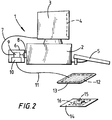
- the computer equipment 1 at the workstation comprises a data-processing unit 2, a monitor (VDU) 3 having a screen 4, and a keyboard 5.
- VDU monitor
- the keyboard 5 enabling the operator seated at the workstation to key-in data and commands for execution by the equipment 1.
- the information displayed on the screen 4 in many cases is of a secret or sensitive nature, and security in this regard is materially prejudiced if the operator leaves the workstation for even a short period of time.
- This problem is overcome with the computer equipment 1 in the present case, however, in that the equipment 1 is fitted with a unit 6 that controls video-signal supply to the monitor 3 in dependence upon the continued presence of the operator at the workstation.
- the unit 6 is powered from the low-voltage supply (not shown) to the keyboard 5, and incorporates a radio-frequency transmitter-receiver circuit 10 that controls the switching circuit 9.
- the circuit 10 is connected via a fine cable 11 to an antenna loop 12 that is conveniently incorporated into a mouse mat 13 at the workstation, and is operative to supply radio-frequency signals to the loop 12 for transmission, and to detect corresponding signals received by the loop 12.
- the operator wears a badge or card 14 that incorporates a radio-frequency transponder 15 interconnected with an antenna loop 16 of the card 14.
- radio-frequency signals which are supplied repetitively from the circuit 10 for transmission from the loop 12, are received by the loop 16.
- the transponder 15 is triggered by these received signals to supply response radio-frequency signals for transmission from the loop 16 and consequent reception by the loop 12 and detection by the circuit 10.
- the switching circuit 9 is activated to pass the video signals from the unit 2 to the monitor 3, maintaining the display on the screen 4.
- the transponder 15 is not triggered and response signals are no longer received by the loop 12 for detection by the circuit 10.
- the circuit 10 responds promptly to this condition to deactivate the switching circuit 9 so as to block supply of the video signals from the unit 2 to the monitor 3.
- the screen 4 is consequently cleared and remains blank until such time as the operator returns. Return of the operator brings the card 14 into range of the transmission from the loop 12 so that the transponder-response signals are again detected by the circuit 10 to activate the switching circuit 9.
- the transponder 15 may be triggered by the received signals to re-transmit them for reception by the antenna loop 12, but on the other hand, may be of a nature to transmit to the loop 12 signals different from the signals by which it is triggered. Also, the signals transmitted from the loop 12 may be encoded (in frequency or pulse), and in these circumstances the triggering of the transponder 15 may be dependent on recognition of the encoding. Furthermore, the signals transmitted by the transponder 15 when triggered may be encoded (in frequency or pulse) in accordance with a security code of the card 14 (for example, identifying the operator).
- the card 14 limits operator-access.
- the circuit 10 may be programmed or otherwise set, to detect only one particular security code identified by the signals received by the loop 12, so that only the one operator may operate the equipment; clearly, the circuit 10 may as an alternative be responsive to more than one security code so that operating-access to the equipment 1 is afforded to any of a limited group of operators.
- the unit 6 together with the loop 12 and the card 14 may be supplied as a kit for enhancing security of computer equipment at an existing workstation.
- the function of the unit 6 may instead be provided in a module that is incorporated in the processor unit 2 or the monitor 3 during manufacture of the equipment.
- the security function of the method, apparatus and equipment described above with reference to Figures 1 and 2 may be extended to disable other functions of the computer equipment as well as that of the monitor 3, when the operator moves away to take the card 14 out of effective range.
- the keyboard 5 may be disabled as well as the monitor 3, so that no keyed-input to the unit 2 can be made until the operator returns to bring the card 14 back into effective range of the loop 12.
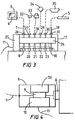
- the unit 6 may be replaced as illustrated in Figure 3 by a unit 17 (shown in schematic plan) which not only plugs into the video-output socket 8 of the unit 2 but also into the socket 18 for the input/output lead 19 of the keyboard 5; the unit 17 is powered from the low-voltage supply of the socket 18 in parallel with the keyboard 5.
- the unit 17 illustrated in this case provides an interface between the sockets 8 and 18 and the other signal sockets such as sockets 20 to 23 for serial or parallel connections to and from the unit 2;
- the sockets 20 to 23 may be those for connection, as illustrated, to and from a mouse 32 (or other pointer device), a printer 33, a computer-network node 34, and a modem 35 (or other connection) for data communications.
- the circuit 25 corresponds to the circuit 10 in that while the card 14 remains within effective range of the equipment 1 it activates the switching circuit 24 to connect the sockets 8, 18 and 20 to 23 through to corresponding sockets 26 to 31 respectively. Accordingly, all signal connections to the unit 2 that would normally be made via the sockets 8, 18 and 20 to 23 and now made via the sockets 26 to 31 respectively, remain effective and fully functioning while the operator remains with the equipment 1.
- the response of the circuit 25 is to deactivate the switching circuit 24 and thereby break the interconnections between the sockets 8, 18 and 20 to 23 and sockets 26 to 31.
- This not only blanks the screen 4 and precludes data being keyed into the unit 2 from the keyboard 5, but also blocks all other data output from, and data input to, the unit 2.
- the unit 2 is held in this condition of data isolation until the operator returns bringing the card 14 into range again to cause the circuit 25 to activate the switching circuit 24 and restore the connections between the sockets 8, 18 and 20 to 23 to the sockets 26 to 31.
- the screen 4 of the monitor 3 remains blank while the switching circuit 9 or 24 is deactivated.
- the circuit 9 or 24 may be effective to connect an auxiliary source of video signals to the monitor 3 in place of the unit 2, whenever deactivated.
- the unit 6 in this case includes an auxiliary video-signal generator 36 that is operative whenever the switching circuit 9 is deactivated, to supply video signals via the circuit 9 to the cable 7 in place of the signals from the socket 8.
- the video signals supplied are effective to produce a message and/or display pattern on the screen 4. This condition is maintained until the switching circuit 9 is again activated from the circuit 10 upon return of the operator, to restore the display to that from the unit 2.
- the units 6 and 17 are illustrated as attachments to the data-processing unit 2 of the computer equipment 1, but it will be appreciated that this is not necessarily so and that they may be incorporated functionally at least, within the unit 2 itself. Moreover, although the antenna loop 12 is illustrated as conveniently incorporated into the mouse mat 13, this too is not a necessity since the loop 12 might be embodied within the unit 6 or 17 or elsewhere within the computer equipment 1.
Landscapes
- Engineering & Computer Science (AREA)
- Theoretical Computer Science (AREA)
- General Engineering & Computer Science (AREA)
- Computer Hardware Design (AREA)
- Computer Security & Cryptography (AREA)
- Physics & Mathematics (AREA)
- General Physics & Mathematics (AREA)
- Software Systems (AREA)
- Computer Networks & Wireless Communication (AREA)
- Human Computer Interaction (AREA)
- Controls And Circuits For Display Device (AREA)
Applications Claiming Priority (4)
| Application Number | Priority Date | Filing Date | Title |
|---|---|---|---|
| GB9800164 | 1998-01-07 | ||
| GBGB9800164.7A GB9800164D0 (en) | 1998-01-07 | 1998-01-07 | Security |
| GB9812765 | 1998-06-13 | ||
| GBGB9812765.7A GB9812765D0 (en) | 1998-06-13 | 1998-06-13 | Security |
Publications (1)
| Publication Number | Publication Date |
|---|---|
| EP0929024A1 true EP0929024A1 (fr) | 1999-07-14 |
Family
ID=26312892
Family Applications (1)
| Application Number | Title | Priority Date | Filing Date |
|---|---|---|---|
| EP98310808A Withdrawn EP0929024A1 (fr) | 1998-01-07 | 1998-12-31 | Procédé et dispositif interdisant l'examen non intentionnel d'information sur un' écran d'ordinateur |
Country Status (2)
| Country | Link |
|---|---|
| EP (1) | EP0929024A1 (fr) |
| GB (1) | GB2335519A (fr) |
Cited By (5)
| Publication number | Priority date | Publication date | Assignee | Title |
|---|---|---|---|---|
| WO2003040896A1 (fr) * | 2001-11-05 | 2003-05-15 | Secure Access Management Aps | Systeme de controle d'acces personnel |
| WO2003102744A3 (fr) * | 2002-06-04 | 2004-05-21 | Sap Ag | Systeme d'affichage sensible |
| EP1521159A1 (fr) * | 2003-09-30 | 2005-04-06 | Topseed Technology Corp. | Dispositif de protection automatique d'un ordinateur non surveillé |
| US7248892B2 (en) | 2001-05-14 | 2007-07-24 | Innovision Research & Technology Plc | Electrical devices |
| US7673347B2 (en) | 2005-08-30 | 2010-03-02 | Sap Ag | Information control in federated interaction |
Families Citing this family (2)
| Publication number | Priority date | Publication date | Assignee | Title |
|---|---|---|---|---|
| JP2000003336A (ja) | 1998-06-16 | 2000-01-07 | Nec Corp | 携帯型データ通信端末装置におけるユーザ認証方法及びユーザ認証システム |
| US7149556B2 (en) * | 2002-06-07 | 2006-12-12 | Hewlett-Packard Development Company, L.P. | Method and apparatus for optimized battery life and authentication in contactless technology |
Citations (5)
| Publication number | Priority date | Publication date | Assignee | Title |
|---|---|---|---|---|
| GB2060228A (en) * | 1979-10-09 | 1981-04-29 | Mastiff Security Syst Ltd | Computer System |
| WO1994001821A1 (fr) * | 1992-07-10 | 1994-01-20 | Secure Computing Corporation | Sous-systeme de voie d'acces securise pour postes de travail |
| EP0775967A1 (fr) * | 1995-11-21 | 1997-05-28 | Bitex Limited Company | Souris sans fil |
| WO1997039553A1 (fr) * | 1996-04-17 | 1997-10-23 | Intel Corporation | Systeme d'authentification base sur un protocole d'interrogation-reponse periodique |
| DE19543455A1 (de) * | 1995-11-22 | 1997-11-27 | Peschke Peter Dipl Betriebsw | System zum Sichern eines PC vor unberechtigtem Zugriff |
Family Cites Families (3)
| Publication number | Priority date | Publication date | Assignee | Title |
|---|---|---|---|---|
| BE1003693A6 (fr) * | 1990-03-15 | 1992-05-26 | Wow Company | Systeme de securite pour systeme informatique. |
| EP0496344B1 (fr) * | 1991-01-22 | 1998-04-01 | SkiData AG | Dispositif pour l'autorisation de l'utilisation d'un appareil avec une unité d'actionnement |
| CH690048A5 (fr) * | 1995-11-28 | 2000-03-31 | C Sam S A En Formation C O Jue | Dispositif de sécurité commandant l'accès à un ordinateur ou à un terminal de réseau. |
-
1998
- 1998-12-31 EP EP98310808A patent/EP0929024A1/fr not_active Withdrawn
- 1998-12-31 GB GB9828882A patent/GB2335519A/en not_active Withdrawn
Patent Citations (5)
| Publication number | Priority date | Publication date | Assignee | Title |
|---|---|---|---|---|
| GB2060228A (en) * | 1979-10-09 | 1981-04-29 | Mastiff Security Syst Ltd | Computer System |
| WO1994001821A1 (fr) * | 1992-07-10 | 1994-01-20 | Secure Computing Corporation | Sous-systeme de voie d'acces securise pour postes de travail |
| EP0775967A1 (fr) * | 1995-11-21 | 1997-05-28 | Bitex Limited Company | Souris sans fil |
| DE19543455A1 (de) * | 1995-11-22 | 1997-11-27 | Peschke Peter Dipl Betriebsw | System zum Sichern eines PC vor unberechtigtem Zugriff |
| WO1997039553A1 (fr) * | 1996-04-17 | 1997-10-23 | Intel Corporation | Systeme d'authentification base sur un protocole d'interrogation-reponse periodique |
Cited By (10)
| Publication number | Priority date | Publication date | Assignee | Title |
|---|---|---|---|---|
| US7248892B2 (en) | 2001-05-14 | 2007-07-24 | Innovision Research & Technology Plc | Electrical devices |
| US7313422B2 (en) | 2001-05-14 | 2007-12-25 | Innovision Research & Technology Plc | Electrical devices |
| US7373170B2 (en) | 2001-05-14 | 2008-05-13 | Innovision Research & Technology Plc | Electrical devices |
| US7376439B2 (en) | 2001-05-14 | 2008-05-20 | Innovision Research & Technology Plc | Electrical devices |
| US7392059B2 (en) | 2001-05-14 | 2008-06-24 | Innovision Research & Technology Plc | Electrical devices |
| WO2003040896A1 (fr) * | 2001-11-05 | 2003-05-15 | Secure Access Management Aps | Systeme de controle d'acces personnel |
| WO2003102744A3 (fr) * | 2002-06-04 | 2004-05-21 | Sap Ag | Systeme d'affichage sensible |
| US7437765B2 (en) | 2002-06-04 | 2008-10-14 | Sap Aktiengesellschaft | Sensitive display system |
| EP1521159A1 (fr) * | 2003-09-30 | 2005-04-06 | Topseed Technology Corp. | Dispositif de protection automatique d'un ordinateur non surveillé |
| US7673347B2 (en) | 2005-08-30 | 2010-03-02 | Sap Ag | Information control in federated interaction |
Also Published As
| Publication number | Publication date |
|---|---|
| GB9828882D0 (en) | 1999-02-17 |
| GB2335519A (en) | 1999-09-22 |
Similar Documents
| Publication | Publication Date | Title |
|---|---|---|
| EP0692760B1 (fr) | Appareil d'affichage avec des moyens de communication sans fil | |
| US5717378A (en) | Security system with fall back to local control | |
| US6837422B1 (en) | Service unit for an X-ray examining device | |
| US6560711B1 (en) | Activity sensing interface between a computer and an input peripheral | |
| US20050091553A1 (en) | Security system and method | |
| KR100395870B1 (ko) | 사용자 입력 장치로부터 진단 정보를 간헐적으로 전달하는시스템 및 방법 | |
| CN108983709B (zh) | 制造装置监视系统和制造装置 | |
| EP0929024A1 (fr) | Procédé et dispositif interdisant l'examen non intentionnel d'information sur un' écran d'ordinateur | |
| US6545602B2 (en) | Fire alarm system | |
| EP0985789A3 (fr) | Appareil de commande à distance et méthode de commande à distance | |
| WO1999021152A1 (fr) | Systeme de controle de l'etat d'un dispositif de commande a distance | |
| KR100312078B1 (ko) | 화재 감시 및 관리장치 | |
| JP4276415B2 (ja) | 非接触媒体との通信方法及び装置 | |
| KR100238577B1 (ko) | 모니터 제어 장치 및 제어방법 | |
| JPH10188177A (ja) | 防災受信機の通信遠隔制御システム | |
| US6640099B1 (en) | Wireless information transmission system transmitting and receiving any continuous instruction input at predetermined intervals | |
| JP3438685B2 (ja) | 通信端末装置 | |
| KR100230547B1 (ko) | 화상 처리 수단에 의한 컴퓨터 모니터의 화면 보호 방법 | |
| JP4917736B2 (ja) | 監視システム | |
| JPH11144160A (ja) | 防犯センサ及びそれを用いた警備システム | |
| JP3632519B2 (ja) | 防災システムの表示操作装置 | |
| KR100512972B1 (ko) | 복합 영상 제품의 키보드 입력 제어 방법 | |
| KR20020030151A (ko) | 휴대용 단말기를 이용한 보안 시스템 및 보안 시스템 제어방법 | |
| KR100322487B1 (ko) | 홈 가드 시스템 | |
| KR19990013106A (ko) | 다세대 감시용 경비시스템의 경비실 기기 |
Legal Events
| Date | Code | Title | Description |
|---|---|---|---|
| PUAI | Public reference made under article 153(3) epc to a published international application that has entered the european phase |
Free format text: ORIGINAL CODE: 0009012 |
|
| AK | Designated contracting states |
Kind code of ref document: A1 Designated state(s): AT BE CH DE DK FR IE IT LI NL SE |
|
| AX | Request for extension of the european patent |
Free format text: AL;LT;LV;MK;RO;SI |
|
| 17P | Request for examination filed |
Effective date: 20000112 |
|
| AKX | Designation fees paid |
Free format text: AT BE CH DE DK ES FR IE IT LI NL SE |
|
| RBV | Designated contracting states (corrected) |
Designated state(s): AT BE CH DE DK FR IE IT LI NL SE |
|
| STAA | Information on the status of an ep patent application or granted ep patent |
Free format text: STATUS: THE APPLICATION IS DEEMED TO BE WITHDRAWN |
|
| 18D | Application deemed to be withdrawn |
Effective date: 20010703 |