EP0929173A2 - Universale Sprach/Fax/Modem Leitung über komprimierten Medien - Google Patents
Universale Sprach/Fax/Modem Leitung über komprimierten Medien Download PDFInfo
- Publication number
- EP0929173A2 EP0929173A2 EP99100098A EP99100098A EP0929173A2 EP 0929173 A2 EP0929173 A2 EP 0929173A2 EP 99100098 A EP99100098 A EP 99100098A EP 99100098 A EP99100098 A EP 99100098A EP 0929173 A2 EP0929173 A2 EP 0929173A2
- Authority
- EP
- European Patent Office
- Prior art keywords
- digital
- analog
- transmission
- information
- data
- Prior art date
- Legal status (The legal status is an assumption and is not a legal conclusion. Google has not performed a legal analysis and makes no representation as to the accuracy of the status listed.)
- Withdrawn
Links
Images


Classifications
-
- H—ELECTRICITY
- H04—ELECTRIC COMMUNICATION TECHNIQUE
- H04L—TRANSMISSION OF DIGITAL INFORMATION, e.g. TELEGRAPHIC COMMUNICATION
- H04L13/00—Details of the apparatus or circuits covered by groups H04L15/00 or H04L17/00
-
- H—ELECTRICITY
- H04—ELECTRIC COMMUNICATION TECHNIQUE
- H04N—PICTORIAL COMMUNICATION, e.g. TELEVISION
- H04N1/00—Scanning, transmission or reproduction of documents or the like, e.g. facsimile transmission; Details thereof
- H04N1/00127—Connection or combination of a still picture apparatus with another apparatus, e.g. for storage, processing or transmission of still picture signals or of information associated with a still picture
- H04N1/00281—Connection or combination of a still picture apparatus with another apparatus, e.g. for storage, processing or transmission of still picture signals or of information associated with a still picture with a telecommunication apparatus, e.g. a switched network of teleprinters for the distribution of text-based information, a selective call terminal
- H04N1/00302—Connection or combination of a still picture apparatus with another apparatus, e.g. for storage, processing or transmission of still picture signals or of information associated with a still picture with a telecommunication apparatus, e.g. a switched network of teleprinters for the distribution of text-based information, a selective call terminal with a telephonic apparatus, e.g. telephone answering machine or videotex terminal
-
- H—ELECTRICITY
- H04—ELECTRIC COMMUNICATION TECHNIQUE
- H04M—TELEPHONIC COMMUNICATION
- H04M11/00—Telephonic communication systems specially adapted for combination with other electrical systems
- H04M11/06—Simultaneous speech and data transmission, e.g. telegraphic transmission over the same conductors
-
- H—ELECTRICITY
- H04—ELECTRIC COMMUNICATION TECHNIQUE
- H04M—TELEPHONIC COMMUNICATION
- H04M7/00—Arrangements for interconnection between switching centres
- H04M7/006—Networks other than PSTN/ISDN providing telephone service, e.g. Voice over Internet Protocol (VoIP), including next generation networks with a packet-switched transport layer
-
- H—ELECTRICITY
- H04—ELECTRIC COMMUNICATION TECHNIQUE
- H04N—PICTORIAL COMMUNICATION, e.g. TELEVISION
- H04N1/00—Scanning, transmission or reproduction of documents or the like, e.g. facsimile transmission; Details thereof
- H04N1/00127—Connection or combination of a still picture apparatus with another apparatus, e.g. for storage, processing or transmission of still picture signals or of information associated with a still picture
- H04N1/00281—Connection or combination of a still picture apparatus with another apparatus, e.g. for storage, processing or transmission of still picture signals or of information associated with a still picture with a telecommunication apparatus, e.g. a switched network of teleprinters for the distribution of text-based information, a selective call terminal
-
- H—ELECTRICITY
- H04—ELECTRIC COMMUNICATION TECHNIQUE
- H04N—PICTORIAL COMMUNICATION, e.g. TELEVISION
- H04N1/00—Scanning, transmission or reproduction of documents or the like, e.g. facsimile transmission; Details thereof
- H04N1/00127—Connection or combination of a still picture apparatus with another apparatus, e.g. for storage, processing or transmission of still picture signals or of information associated with a still picture
- H04N1/00281—Connection or combination of a still picture apparatus with another apparatus, e.g. for storage, processing or transmission of still picture signals or of information associated with a still picture with a telecommunication apparatus, e.g. a switched network of teleprinters for the distribution of text-based information, a selective call terminal
- H04N1/00312—Connection or combination of a still picture apparatus with another apparatus, e.g. for storage, processing or transmission of still picture signals or of information associated with a still picture with a telecommunication apparatus, e.g. a switched network of teleprinters for the distribution of text-based information, a selective call terminal with a digital transmission apparatus, e.g. a switched network of teleprinters for the distribution of text-based information, SMS or ISDN device
Definitions
- the invention relates generally to an interface between a telecommunications network and a data communications network, and more specifically to an interface between an analog telephone network and a digital data communications network for facilitating transmission of compressed voice information via the digital data network.
- IP Internet Protocol
- LANs Local Area Networks
- ITU International Telecommunications Union
- IP telephony has made it possible to connect both analog and digital telephone networks.
- the network access servers facilitating the connections between these networks enable communication between devices which previously were incompatible, such as an analog telephone and a computer on a LAN enabled for IP telephony.
- an analog fax can exchange data with a digital fax on a LAN.
- Compression algorithms are well known for compressing voice information transmitted over digital networks, such as LANs. Compression of voice information represents a significant economic benefit, as compressed voice occupies a much smaller bandwidth than uncompressed voice, thereby enabling many conversations to be multiplexed on a single channel. Compression algorithms such as G.723 are known as lossy compression algorithms because, with each successive compression, a measurable quantity of the information contained within a transmission is lost. The amount of information loss is not significant enough to perceptibly affect the quality of voice telephony communication. However, data transmitted by fax machines and modems are corrupted by lossy compression algorithms.
- an analog data communications device such as a fax or a modem
- an analog telephone connected to the IP telephony network.
- the analog telephone and the fax or modem can be connected to separate lines, a compressed line and a non-compressed line, thereby enabling compression of the voice information transmitted by the telephone while preventing corruption of the data transmitted by the fax or modem.
- leasing separate lines represents a potentially significant extra expense for the user.
- many modern fax machines feature a telephone integrally constructed within the same unit so that the two devices must share the same telephone line.
- a second alternative is to utilize a single non-compressed line for transmitting both telephone and fax or modern calls. This alternative deprives the user of the benefits of compressed voice transmissions.
- a network access server 18 enabled for generating non-compressed transmissions to a token ring network 22 is connected to the analog telephone 12, the modem 14, and the fax 16 via a single analog telephone line. Utilizing a non-compressed line for transmitting fax and modem calls reduces the susceptibility of the transmissions to corruption of the data contained therein. Although a user is able to connect both data communications devices and a telephone to the same telephone line by utilizing the non-compressing network access server 18, the user is also denied the benefits of compressed voice transmissions.
- Fig. 2 illustrates an alternative prior art configuration of analog data and voice communications devices connected to the token ring network 22.
- the fax 16 and modem 14 are connected to the token ring network via the non-compressing network access server 18, whereas the analog telephone 12 is connected via a compressing network access server 20.
- the user thus derives the benefits of the compressed voice transmissions. However, the user also incurs the expense of an additional line.
- switching from the fax mode to the telephone mode requires disconnecting from the non-compressed line and connecting to the compressed line.
- An apparatus for selectively compressing information to be transmitted over a communications network includes an analog line monitor connected to multiple communications devices, including an analog telephone and a data communications device.
- the analog line monitor is configured for detecting carrier tone signals associated with a data transmission generated by the data communications device.
- An analog-to-digital/digital-to-analog (AD/DA) converter is connected to the analog line monitor and is enabled to convert the information contained in calls generated by the communications devices from an analog format to a digital format.
- Compression circuitry is responsive to detection of the carrier tone signal by the analog line monitor, such that detection of the carrier tone signal triggers an inactive mode, wherein compression of data transmitted by the data communications device is suppressed.
- the AD/DA converter is enabled to demodulate data prior to transmission of the data over the communications network.
- a transmitting device is connected to the AD/DA converter and to the compression circuitry to transmit information generated by the analog telephone and the analog data communications device to a remotely located communications device.
- a preferred embodiment includes a digital line monitor connected to a digital communications device.
- Decompression circuitry is connected to the digital line monitor and is configured for decompressing information contained in a digital transmission generated by the digital communications device.
- a signaling information extractor is connected to the decompression circuitry to extract signaling information from the decompressed digital information contained in the digital transmission.
- a signaling log is connected to the signaling information extractor and has memory for storing signaling information extracted by the decompression circuitry.
- the transmitting device transmits digitally formatted information converted by the AD/DA converter and the digital information contained in the digital transmission received by the digital line monitor to a remotely located terminal.
- a method for selectively compressing voice information to be transmitted over a communications network includes a step of monitoring an analog telephone line connected to the communications network for carrier tone signals associated with data transmissions.
- a call is received via the analog telephone line from a communications device containing information to be transmitted over the communications network, and a determination is made as to whether the call has an associated carrier tone signal. If the call has no associated carrier tone signal, the information contained in the call is compressed. Optionally, if the call has an associated carrier tone signal, the information contained in the call is demodulated prior to transmission over the communications network.
- One embodiment of the method includes receiving a digital transmission over a digital line. If this information is already compressed, then the information contained in the digital transmission is stored in a buffer, a copy of the information is decompressed, and the signaling information is extracted. The compressed information is passed to the network from the buffer, eliminating the need for subsequent compression.
- a selective compression network access server 10 is connected to an analog telephone 12, two analog data communications devices, such as a modem 14 and a fax 16 via an analog telephone line 28.
- the server is also connected to a digital telephone 24 supported by a digital line 26.
- the network access server 10 may be associated with operation of a private branch exchange (PBX), not shown, which supports the above-mentioned communications devices 12, 14, 16 and 24.
- PBX private branch exchange
- the outgoing analog line 28 supporting the analog telephone 12, modem 14, and fax 16 is connected to an analog line monitor 30 which monitors the telephone line for carrier tone signals associated with analog data transmissions.
- Carrier tone signals are conventionally utilized by analog data communications devices to identify a call as containing data.
- a sending data communications device After establishing a connection to a remote communications device that is to receive data, a sending data communications device transmits a carrier tone signal to alert the remote device of the impending data transmission. Detection of a carrier tone signal by the analog line monitor 30 thus alerts the analog line monitor 30 that a data transmission will follow.
- An analog-to-digital/digital-to-analog (AD/DA) converter 34 is connected to the analog line monitor 30 to convert the analog signals contained in calls from the analog communications devices 12, 14, and 16 to digital signals for transmission over a communications network 50.
- the communications network is a digital data network equipped for Internet Protocol (IP) telephony.
- IP Internet Protocol
- Lossy compression algorithms such as G.723.1, are commonly utilized to compress voice information prior to transmission of the voice information to a terminal on the IP telephony network. As previously noted, lossy compression algorithms are prone to corruption of data.
- the ability of the selective compression network access server 10 to differentiate between analog voice transmissions and analog data transmissions and to selectively compress only voice information makes the selective compression network access server 10 particularly well suited for providing an interface between an IP telephony network and the analog line 28 supporting the fax 16, the modem 14, and the analog telephone 12.
- the selective compression network access server 10 might be connected to any other network which employs lossy compression algorithms, such as a digital telephone network, or an analog telephone network which employs digital lines to connect the trunk sides of central offices.
- the AD/DA converter 34 is connected to compression/decompression circuitry 36 for selective compression of voice information.
- the analog line monitor 30 communicates with the compression/decompression circuitry 36 to direct the compression/decompression circuitry to only compress voice information and not data.
- the compression/decompression circuitry 36 utilizes a lossy compression algorithm such as G.723.1, G.728, or G.729 to compress voice information.
- the compression/decompression circuitry 36 is connected to a controller 38 to transfer any signaling information necessary to route the voice information in a call from the analog telephone 12 to the remotely located communications device on the network 50. Signaling protocols for routing a transmission generated by an analog communications device to a terminal on a digital data network, a digital telephone network, or an analog telephone network are well known.
- the compression/decompression circuitry 36 also transfers digitized and packetized voice information to the controller 38 for transmission to the remotely located communications device.
- the AD/DA converter 34 is connected directly to the controller 38 to transfer the data and any signaling information the controller 38 requires to route the data to a remote communication device on the network 50.
- the AD/DA converter 34 is configured to selectively demodulate data contained in transmissions from both the fax 16 and the modem 14. Local demodulation of the data frees the remote communications device to which the data is transmitted from having to perform the demodulation.
- the AD/DA converter 34 is also configured to packetize the data and include signaling information which causes a controller 38 to alert a remote receiving terminal that the data has been locally demodulated.
- the AD/DA converter 34 converts the information contained in the transmission from a digital format into an analog format compatible with the analog communications devices 12, 14, and 16.
- the compression/decompression circuitry 36 decompresses voice information transmitted from the remotely located terminal. If the voice information is not decompressed prior to being converted to an analog format, the voice information would not be intelligible to a user of the analog telephone 12.
- the selective compression network access server 10 is able to provide access to the analog telephone 12, the analog fax 16, and the modem 14 over a single line with voice compression capability because the carrier tone signals that are conventionally associated with data transmissions distinguish fax and modem calls from analog telephone calls. If the analog line monitor 30 detects no carrier tone signal in a call, it is established that the call is a telephone call containing voice information which will be compressed prior to transmission to the remote communications device. The voice information is transferred from the analog line monitor 30 to the AD/DA converter, which digitizes the voice information and transfers the voice information to the compression/decompression circuitry 36. The compression/decompression circuitry 36 compresses and packetizes the voice information for efficient transmission over the network 50 by the controller 38. As previously mentioned, compression and packetization of voice information enables more efficient transmission over the network 50 because the compressed voice information occupies less bandwidth than would the same voice information if it were uncompressed.
- the network access server 10 is also configured to provide an interface between the digital telephone 24 and a communications device connected to the network 50. Although a digital telephone 24 is shown in Fig. 3, a computer or a digital fax can be substituted. Providing a network access server capable of interfacing both analog and digital telephone lines to the network 50 is preferred, because a PBX will often support both digital and analog network connections. Thus, in the embodiment in which the network access server 10 is located on the front end of a PBX, the network access server 10 is able to interface both digital and analog lines to the network 50, instead of utilizing separate network access servers for the analog and digital lines.
- a digital line monitor 40 monitors transmissions from the digital telephone 24 supported by the digital line 26 and is able to determine if information received in the call is compressed or not.
- a buffer 42 provides temporary storage of information contained in a transmission until the information is transmitted to the network 50 or, in the case of uncompressed voice, via the compression circuitry 36.
- Decompression circuitry 46 receives a copy of the information stored in the buffer 42. The decompression circuitry 46 is in communication with the digital line monitor 40 so that the decompression circuitry is activated only if the information contained in the digital call is determined to be compressed.
- Signal information extraction circuitry 48 is connected to the decompression circuitry to extract signaling information from the information contained in the transmission.
- a signaling log 44 is connected to the signal extraction circuitry 48 and has a memory for storing information such as the address to which a call was directed, the time at which the connection was established, and the duration of the connection.
- the signal extraction circuitry 48 is also connected to the controller 38 to provide the necessary signaling information for routing a transmission to a terminal on the network 50.
- the controller 38 has at least two configurations for receiving a transmission from a terminal on the network 50 which is directed to the digital telephone 24; one in which the controller 38 is connected directly to the digital line 26 which supports the digital telephone, and the other in which the controller is configured for transferring the information to the buffer 42 for processing by the decompression circuitry 46 and the signal information extraction circuitry 48.
- the controller 38 may route a call directly to the digital line 26, if it is not a priority to maintain a log of signaling information for calls directed from terminals on the network 50 to the digital telephone. If maintaining such a log is desired, the controller is configured to transfer the information to the buffer 42 for processing. The information is stored temporarily in the buffer 42, and a copy of the information is generated and transferred to the decompression circuitry where it is decompressed and transferred to the signal information extraction circuitry. The extracted signaling information is then stored in the signaling log 44.
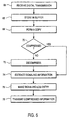
- a method for selectively compressing voice information utilizing the network access server 10 of Fig. 3 includes receiving an analog transmission from an analog communications device, such as the analog telephone 12, the modem 14, or the fax 16 in step 52 over the analog line 28.
- the analog line 28 supporting the analog telephone 12, the fax 16, and the modem 14 is monitored for the presence of carrier tone signals in step 54.
- a determination is made as to whether a call has an associated carrier tone signal in step 56. If the call has no associated carrier tone signal, it is determined that the call contains voice information transmitted by the analog telephone 12 and the voice information will be compressed prior to transmission to a terminal connected to the network 50.
- step 60 the voice information is converted from an analog format to a digital format by the AD/DA converter 34 to provide the information with the appropriate format for transmission over the network 50.
- the digitized voice information is compressed in step 62 to enable multiplexing of multiple conversations over the same channel.
- step 64 the controller 38 transmits the voice information to the remotely located terminal.
- step 56 If, in step 56, a carrier tone signal is not detected, it is determined that the call was generated from either the fax 16 or the modem 14, and consequently it is unnecessary to compress the data within the call.
- step 58 the data is demodulated. Demodulation of the data at the server 10 is not critical to practicing the invention. However, it may be performed to save the terminal receiving the data from having to perform the demodulation. Signals must be transmitted by the controller 38 to indicate that the data being transmitted has already been demodulated to avoid an unnecessary second demodulation of the information by the receiving terminal. The data is then converted to a digital format in step 63 by the analog-to-digital converter 34. In step 64, the data is transmitted to a terminal on the network 50.
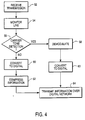
- a method for transmitting digital information received over the digital line 26 of Fig. 3 to a terminal on the network 50 includes receiving a digital transmission from the digital telephone 24 in step 66.
- the information contained in the transmission is stored in the buffer 42 in step 68, and a copy of the information in the transmission is formed in step 69.
- the decompression circuitry 46 extracts signaling information for storage in the signaling log 44 and for use by the controller 38 in routing the transmission to the correct terminal on the network 50.
- Signaling information is entered into the signaling log 44 in step 76 to record information such as the calling endpoint, the called endpoint, the time that the call was made, and the duration of the call.
- the signaling information is used by the controller 38 to route the transmission to the remotely located terminal.
- the original information contained in the call, which was stored in the buffer 42 in step 68, is transmitted over the network 50 in step 78.
- transmission of the information stored in the buffer 42 is preferable to recompression of the decompressed information, because the compression procedure may induce information loss.
Landscapes
- Engineering & Computer Science (AREA)
- Signal Processing (AREA)
- Computer Networks & Wireless Communication (AREA)
- Human Computer Interaction (AREA)
- Multimedia (AREA)
- General Engineering & Computer Science (AREA)
- Telephonic Communication Services (AREA)
- Facsimiles In General (AREA)
- Time-Division Multiplex Systems (AREA)
- Analogue/Digital Conversion (AREA)
- Use Of Switch Circuits For Exchanges And Methods Of Control Of Multiplex Exchanges (AREA)
Applications Claiming Priority (2)
| Application Number | Priority Date | Filing Date | Title |
|---|---|---|---|
| US5302 | 1998-01-09 | ||
| US09/005,302 US6249531B1 (en) | 1998-01-09 | 1998-01-09 | Universal voice/fax/modem line over compressed media |
Publications (2)
| Publication Number | Publication Date |
|---|---|
| EP0929173A2 true EP0929173A2 (de) | 1999-07-14 |
| EP0929173A3 EP0929173A3 (de) | 2003-07-02 |
Family
ID=21715208
Family Applications (1)
| Application Number | Title | Priority Date | Filing Date |
|---|---|---|---|
| EP99100098A Withdrawn EP0929173A3 (de) | 1998-01-09 | 1999-01-06 | Universale Sprach/Fax/Modem Leitung über komprimierten Medien |
Country Status (5)
| Country | Link |
|---|---|
| US (1) | US6249531B1 (de) |
| EP (1) | EP0929173A3 (de) |
| JP (1) | JPH11331373A (de) |
| KR (1) | KR19990067802A (de) |
| TW (1) | TW420920B (de) |
Cited By (8)
| Publication number | Priority date | Publication date | Assignee | Title |
|---|---|---|---|---|
| WO2001019066A1 (en) * | 1999-09-08 | 2001-03-15 | Voxlab Oy | Method, system and software product for transmitting speech on internet |
| EP1571817A1 (de) * | 2004-03-02 | 2005-09-07 | Mindspeed Technologies, Inc. | Modemsignalerfassung in einem Gateway |
| US7639700B1 (en) | 2003-01-29 | 2009-12-29 | F5 Networks, Inc. | Architecture for efficient utilization and optimum performance of a network |
| US7783781B1 (en) | 2005-08-05 | 2010-08-24 | F5 Networks, Inc. | Adaptive compression |
| US7882084B1 (en) | 2005-12-30 | 2011-02-01 | F5 Networks, Inc. | Compression of data transmitted over a network |
| US8159940B1 (en) | 2004-11-11 | 2012-04-17 | F5 Networks, Inc. | Obtaining high availability using TCP proxy devices |
| US8275909B1 (en) | 2005-12-07 | 2012-09-25 | F5 Networks, Inc. | Adaptive compression |
| US8417833B1 (en) | 2006-11-29 | 2013-04-09 | F5 Networks, Inc. | Metacodec for optimizing network data compression based on comparison of write and read rates |
Families Citing this family (11)
| Publication number | Priority date | Publication date | Assignee | Title |
|---|---|---|---|---|
| DE19817007C2 (de) * | 1998-04-17 | 2001-08-09 | Deutsche Telekom Ag | Verfahren zur Nutzung digitaler Datennetze zum Zwecke der Bandbreitenreduktion bei der Übertragung von Daten über Sprachverbindungswege |
| JP3133297B2 (ja) * | 1999-02-04 | 2001-02-05 | 松下電送システム株式会社 | 通信装置 |
| US7161931B1 (en) * | 1999-09-20 | 2007-01-09 | Broadcom Corporation | Voice and data exchange over a packet based network |
| US20070110042A1 (en) * | 1999-12-09 | 2007-05-17 | Henry Li | Voice and data exchange over a packet based network |
| WO2001043455A2 (de) * | 1999-12-10 | 2001-06-14 | Siemens Aktiengesellschaft | Verfahren, vermittlungseinrichtungen und abgesetzte anschlusseinheit zum übertragen von daten verringerter bandbreite |
| JP2002190831A (ja) * | 2000-12-22 | 2002-07-05 | Fujitsu Ltd | 通信装置及び通信装置の処理方法 |
| AU2002239053A1 (en) * | 2002-03-25 | 2003-10-08 | Allied-Telesis, K.K. | Facsimile-communicable voip terminal and communication method thereof |
| US7970044B2 (en) * | 2002-08-26 | 2011-06-28 | Hardman Clayton M | Soft chip modem |
| US9197736B2 (en) * | 2009-12-31 | 2015-11-24 | Digimarc Corporation | Intuitive computing methods and systems |
| US9311639B2 (en) | 2014-02-11 | 2016-04-12 | Digimarc Corporation | Methods, apparatus and arrangements for device to device communication |
| US20230396702A1 (en) * | 2021-06-03 | 2023-12-07 | After The Tone, LLC | Rotary Phone Recording Device |
Family Cites Families (14)
| Publication number | Priority date | Publication date | Assignee | Title |
|---|---|---|---|---|
| US5528595A (en) | 1974-06-09 | 1996-06-18 | U.S. Robotics, Inc. | Modem input/output signal processing techniques |
| US4805208A (en) * | 1988-01-15 | 1989-02-14 | Niravoice, Inc. | Modem compression system for telephone network |
| US5617423A (en) * | 1993-01-08 | 1997-04-01 | Multi-Tech Systems, Inc. | Voice over data modem with selectable voice compression |
| US5555377A (en) * | 1993-12-20 | 1996-09-10 | International Business Machines Corporation | System for selectively compressing data transferred in network in response to produced first output when network utilization exceeds first threshold and data length over limit |
| US5577105A (en) | 1994-03-11 | 1996-11-19 | U.S. Robotics, Inc. | Telephone call routing and switching techniques for data communications |
| US5682386A (en) | 1994-04-19 | 1997-10-28 | Multi-Tech Systems, Inc. | Data/voice/fax compression multiplexer |
| JP2697642B2 (ja) * | 1994-11-24 | 1998-01-14 | 日本電気株式会社 | Atm音声符号化装置 |
| JP2726630B2 (ja) * | 1994-12-07 | 1998-03-11 | インターナショナル・ビジネス・マシーンズ・コーポレイション | ゲートウェイ装置及びゲートウェイ方法 |
| US5666487A (en) * | 1995-06-28 | 1997-09-09 | Bell Atlantic Network Services, Inc. | Network providing signals of different formats to a user by multplexing compressed broadband data with data of a different format into MPEG encoded data stream |
| US5646946A (en) * | 1995-10-30 | 1997-07-08 | Motorola, Inc. | Apparatus and method for selectively companding data on a slot-by-slot basis |
| US5999898A (en) * | 1996-06-20 | 1999-12-07 | International Business Machines Corporation | Voice/data discriminator |
| US5940479A (en) * | 1996-10-01 | 1999-08-17 | Northern Telecom Limited | System and method for transmitting aural information between a computer and telephone equipment |
| US5946323A (en) * | 1996-11-20 | 1999-08-31 | At&T Corp | Asynchronous transfer mode integrated access service |
| US5940598A (en) * | 1997-01-28 | 1999-08-17 | Bell Atlantic Network Services, Inc. | Telecommunications network to internetwork universal server |
-
1998
- 1998-01-09 US US09/005,302 patent/US6249531B1/en not_active Expired - Lifetime
-
1999
- 1999-01-06 EP EP99100098A patent/EP0929173A3/de not_active Withdrawn
- 1999-01-08 KR KR1019990000290A patent/KR19990067802A/ko not_active Withdrawn
- 1999-01-11 JP JP11004321A patent/JPH11331373A/ja active Pending
- 1999-02-02 TW TW088100187A patent/TW420920B/zh not_active IP Right Cessation
Cited By (16)
| Publication number | Priority date | Publication date | Assignee | Title |
|---|---|---|---|---|
| WO2001019066A1 (en) * | 1999-09-08 | 2001-03-15 | Voxlab Oy | Method, system and software product for transmitting speech on internet |
| US7639700B1 (en) | 2003-01-29 | 2009-12-29 | F5 Networks, Inc. | Architecture for efficient utilization and optimum performance of a network |
| EP1571817A1 (de) * | 2004-03-02 | 2005-09-07 | Mindspeed Technologies, Inc. | Modemsignalerfassung in einem Gateway |
| US7411941B2 (en) | 2004-03-02 | 2008-08-12 | Mindspeed Technologies, Inc. | Text telephone modem communications over packet networks |
| US8432799B1 (en) | 2004-11-11 | 2013-04-30 | F5 Networks, Inc. | Obtaining high availability using TCP proxy devices |
| US8804512B1 (en) | 2004-11-11 | 2014-08-12 | F5 Networks, Inc. | Obtaining high availability using TCP proxy devices |
| US8159940B1 (en) | 2004-11-11 | 2012-04-17 | F5 Networks, Inc. | Obtaining high availability using TCP proxy devices |
| US8203949B1 (en) | 2004-11-11 | 2012-06-19 | F5 Networks, Inc. | Obtaining high availability using TCP proxy devices |
| US8516156B1 (en) | 2005-08-05 | 2013-08-20 | F5 Networks, Inc. | Adaptive compression |
| US7783781B1 (en) | 2005-08-05 | 2010-08-24 | F5 Networks, Inc. | Adaptive compression |
| US8275909B1 (en) | 2005-12-07 | 2012-09-25 | F5 Networks, Inc. | Adaptive compression |
| US8499100B1 (en) | 2005-12-07 | 2013-07-30 | F5 Networks, Inc. | Adaptive compression |
| US7882084B1 (en) | 2005-12-30 | 2011-02-01 | F5 Networks, Inc. | Compression of data transmitted over a network |
| US9002806B1 (en) | 2005-12-30 | 2015-04-07 | F5 Networks, Inc. | Compression of data transmitted over a network |
| US8417833B1 (en) | 2006-11-29 | 2013-04-09 | F5 Networks, Inc. | Metacodec for optimizing network data compression based on comparison of write and read rates |
| US9210239B1 (en) | 2006-11-29 | 2015-12-08 | F5 Networks, Inc. | Metacodec for optimizing network data compression based on comparison of write and read rates |
Also Published As
| Publication number | Publication date |
|---|---|
| US6249531B1 (en) | 2001-06-19 |
| TW420920B (en) | 2001-02-01 |
| EP0929173A3 (de) | 2003-07-02 |
| KR19990067802A (ko) | 1999-08-25 |
| JPH11331373A (ja) | 1999-11-30 |
Similar Documents
| Publication | Publication Date | Title |
|---|---|---|
| US6249531B1 (en) | Universal voice/fax/modem line over compressed media | |
| US7307980B1 (en) | Change of codec during an active call | |
| US6700955B1 (en) | System and method for remote management of a DSL device | |
| US6011579A (en) | Apparatus, method and system for wireline audio and video conferencing and telephony, with network interactivity | |
| US7092379B1 (en) | Internet telephony arrangement and method | |
| US6130893A (en) | Method and apparatus for multiplexing telephone lines over a common access network | |
| US6345047B1 (en) | Computer telephony adapter and method | |
| JP4733832B2 (ja) | ボイス・オーバ・インターネット・プロトコル電話システムおよび方法 | |
| US6473423B1 (en) | Method and system for interactive communication between two telephone sets via the internet | |
| US5752199A (en) | Method and apparatus for sending faxes over analog cellular | |
| EP0374828A1 (de) | Fernsprech-Anschlussanordnung für einen Personal-Computer und eine Einrichtung dafür | |
| JP2001517032A (ja) | パケット形式ネットワーク上でのテレフォンコールに従来の電話機を使用する装置及び方法 | |
| US7227933B1 (en) | System and method for remote management of a DSL device | |
| EP0876735A1 (de) | Sprech- und datenendgerät für funktelefonienetz | |
| KR100607930B1 (ko) | 인터넷폰의 접속방법 및 패킷 데이터 전송방법 | |
| US7006559B1 (en) | Automatic switching between DSL and analog on a single RJ-11 DSL/analog combo modem | |
| JP3593949B2 (ja) | アダプタ装置及びそれを用いたネットワークシステム | |
| WO2000027081A1 (fr) | Systeme economique de mise en communication de deux terminaux de communication a travers l'internet | |
| JP3426012B2 (ja) | 通信端末装置 | |
| JP2002158715A (ja) | ビデオ電話通信システム及びゲートウェイ装置 | |
| JP2002044154A (ja) | データ通信装置、通信システム、通信制御方法及び記憶媒体 | |
| US20150277833A1 (en) | Communication apparatus capable of performing facsimile communication, control method therefor, and storage medium storing control program therefor | |
| WO1997023086A2 (en) | The use of compression to improve the sending of faxes over analog cellular | |
| JPS63187960A (ja) | 通信アダプタ | |
| JP2002271420A (ja) | ネットワーク電話システム、それに用いるゲートウェイ装置及びネットワーク電話システムの使用方法 |
Legal Events
| Date | Code | Title | Description |
|---|---|---|---|
| PUAI | Public reference made under article 153(3) epc to a published international application that has entered the european phase |
Free format text: ORIGINAL CODE: 0009012 |
|
| AK | Designated contracting states |
Kind code of ref document: A2 Designated state(s): AT BE CH CY DE DK ES FI FR GB GR IE IT LI LU MC NL PT SE |
|
| AX | Request for extension of the european patent |
Free format text: AL;LT;LV;MK;RO;SI |
|
| PUAL | Search report despatched |
Free format text: ORIGINAL CODE: 0009013 |
|
| AK | Designated contracting states |
Designated state(s): AT BE CH CY DE DK ES FI FR GB GR IE IT LI LU MC NL PT SE |
|
| AX | Request for extension of the european patent |
Extension state: AL LT LV MK RO SI |
|
| RIC1 | Information provided on ipc code assigned before grant |
Ipc: 7H 04L 12/64 B Ipc: 7H 04M 7/00 A |
|
| 17P | Request for examination filed |
Effective date: 20030626 |
|
| 17Q | First examination report despatched |
Effective date: 20031031 |
|
| AKX | Designation fees paid |
Designated state(s): DE FR GB IT |
|
| STAA | Information on the status of an ep patent application or granted ep patent |
Free format text: STATUS: THE APPLICATION IS DEEMED TO BE WITHDRAWN |
|
| 18D | Application deemed to be withdrawn |
Effective date: 20050427 |