EP0929982B1 - Verfahren zum verbinden eines in einer schnurloskommunikationseinrichtung ankommenden rufs an ein dualmodusendgerät - Google Patents
Verfahren zum verbinden eines in einer schnurloskommunikationseinrichtung ankommenden rufs an ein dualmodusendgerät Download PDFInfo
- Publication number
- EP0929982B1 EP0929982B1 EP97944736A EP97944736A EP0929982B1 EP 0929982 B1 EP0929982 B1 EP 0929982B1 EP 97944736 A EP97944736 A EP 97944736A EP 97944736 A EP97944736 A EP 97944736A EP 0929982 B1 EP0929982 B1 EP 0929982B1
- Authority
- EP
- European Patent Office
- Prior art keywords
- terminal
- communication device
- cordless communication
- mobile radio
- radio network
- Prior art date
- Legal status (The legal status is an assumption and is not a legal conclusion. Google has not performed a legal analysis and makes no representation as to the accuracy of the status listed.)
- Expired - Lifetime
Links
- 238000000034 method Methods 0.000 title claims abstract description 16
- 230000009977 dual effect Effects 0.000 title description 10
- 238000009434 installation Methods 0.000 title 1
- 238000004891 communication Methods 0.000 claims abstract description 137
- 241001484259 Lacuna Species 0.000 claims 1
- 230000001413 cellular effect Effects 0.000 description 21
- 230000011664 signaling Effects 0.000 description 3
- 238000010586 diagram Methods 0.000 description 2
- 230000001419 dependent effect Effects 0.000 description 1
- 230000002349 favourable effect Effects 0.000 description 1
- 230000009131 signaling function Effects 0.000 description 1
Images
Classifications
-
- H—ELECTRICITY
- H04—ELECTRIC COMMUNICATION TECHNIQUE
- H04W—WIRELESS COMMUNICATION NETWORKS
- H04W8/00—Network data management
- H04W8/02—Processing of mobility data, e.g. registration information at HLR [Home Location Register] or VLR [Visitor Location Register]; Transfer of mobility data, e.g. between HLR, VLR or external networks
-
- H—ELECTRICITY
- H04—ELECTRIC COMMUNICATION TECHNIQUE
- H04M—TELEPHONIC COMMUNICATION
- H04M3/00—Automatic or semi-automatic exchanges
- H04M3/42—Systems providing special services or facilities to subscribers
- H04M3/54—Arrangements for diverting calls for one subscriber to another predetermined subscriber
-
- H—ELECTRICITY
- H04—ELECTRIC COMMUNICATION TECHNIQUE
- H04W—WIRELESS COMMUNICATION NETWORKS
- H04W84/00—Network topologies
- H04W84/02—Hierarchically pre-organised networks, e.g. paging networks, cellular networks, WLAN [Wireless Local Area Network] or WLL [Wireless Local Loop]
- H04W84/10—Small scale networks; Flat hierarchical networks
- H04W84/16—WPBX [Wireless Private Branch Exchange]
Definitions
- the invention relates to a method for connecting a an incoming call to a cordless communication device a dual mode terminal, both as a cordless terminal this Cordless communication device is operable as also as a mobile radio terminal of a mobile radio network.
- Such as a dual mode handset (dual mode cell phone) or dual mode terminal designated end devices are nowadays offered by some manufacturers.
- a dual mode terminal is a communication terminal with a Transceiver unit and coding / decoding unit for one Mobile network and with a transceiver and one Coding / decoding unit for a stationary cordless communication system.
- a mobile network there is usually a network behind the global standard for mobile radio GMS with approx. 0.9 GHz carrier frequency or according to a standard DCS1800 with approx. 1.8 GHz Carrier frequency provided.
- GMS Global Standard for mobile radio GMS with approx. 0.9 GHz carrier frequency or according to a standard DCS1800 with approx. 1.8 GHz Carrier frequency provided.
- a cordless communication system is a digital cordless communication system according to the ETSI standard for digital extended cordless communication DECT (Digital Endhandse Cordless Telecommunication) is used.
- DECT Digital Endhandse Cordless Telecommunication
- cordless communication device with regard to a subscriber line that at one in the cordless communication facility incoming call for a certain period of time Wake-up call to the terminal for which the call has arrived, is signaled and that after this period a Call forwarding is made automatically.
- This has the Disadvantage that the called party within this particular Time to answer an incoming call if he has to wants to prevent this call from being diverted via the mobile network becomes.
- Another disadvantage of such an approach is that whenever there is one in the cordless communication device incoming call is not within a certain Signaling for one can be delivered Establishing a connection between two different communication networks takes place regardless of whether the participant in the Cellular network is reachable or not. This will make the Communication networks unnecessarily burdened.
- the object of the invention is a method for connecting a arriving in a cordless communication device Call to a device that is both a cordless device Cordless communication device is operable as well as a mobile terminal of a mobile network.
- a cordless communication device is operable as well as a mobile terminal of a mobile network.
- the dual mode terminal when the dual mode terminal is currently available a message about this to the Cordless communication device transmitted and in the Cordless communication device becomes information regarding the accessibility of the end device via the mobile network saved.
- One for the terminal in the cordless communication device incoming call will be within the cordless communication device checks whether there is any information regarding the accessibility of the terminal via the mobile network is available and if the terminal device via the Cellular network is drivable, that in the cordless communication device incoming call to the terminal in the mobile network forwarded.
- a development of the invention relates to the case that the Cordless communication device in which a call for one Communication terminal arrives, regarding this terminal Home cordless communication device is, this Terminal additionally on at least one other cordless communication device is operable, i.e. registered is.
- the further cordless communication device transmits the method a message to the mobile network, if the terminal is in the area of this further cordless communication device is reachable and the mobile network communicates to the home cordless communication device a message about the availability of the end device. If from the mobile network information about the accessibility of the Terminal in the area of the other cordless communication device to the home cordless communication facility the call is transmitted from the home cordless communication device to the further cordless communication device forwarded.
- a further development of this embodiment of an inventive one The procedure provides that a call is always made by the Home cordless communication device in the cellular network is forwarded if there is a message about the availability of the terminal from the mobile network to the home cordless communication device has been transmitted and that the home cordless communication facility in the cellular network forwarded call from the cellular network forwarded to the further cordless communication device is, if in the mobile network information about the current availability of the terminal via this additional Cordless communication device is present.
- the latter variant of a method according to the invention ensures that from the cellular network to the home cordless communication facility only one message required which indicates that knowledge within the cellular network about the accessibility of the terminal. A report about the actual accessibility location of the end device then only needs from the corresponding cordless communication device to be transmitted to the cellular network.
- a development of the invention provides that one for one Communication terminal in the home cordless communication device incoming call at in this communication facility manually set call line to a manually set forwarding destination is conveyed.
- a cordless communication device contains a control device to receive information regarding the accessibility of the terminal via the mobile network call forwarding automatically for this terminal to activate the terminal in the mobile network and to a disable such call forwarding when the communication terminal within the cordless communication device is recorded as attainable.
- Another cordless communication device has a control device to receive information regarding the accessibility of a terminal via the Mobile network for this terminal automatically a call forwarding to activate the terminal in the mobile network and around disable such call forwarding when the information regarding the accessibility of the terminal via the mobile network is revised.
- the first-mentioned cordless communication device has the Advantage that within a cordless communication device calls coming for a terminal always when the terminal about the cordless communication device can be reached, but can be reached via the mobile network, can accept the incoming call via the mobile network.
- Call forwarding is activated and also within the mobile network also automatically redirects calls activated to another cordless communication device provided that this provides a communication on the Accessibility of the terminal via this cordless communication device is the availability of the end device to a high degree ensured the required signaling effort remains very low, however.
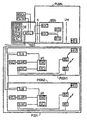
- the figure shows a block diagram in a schematic representation a network arrangement consisting of a mobile radio network, a public stationary network and a private network, consisting of two cordless communication devices.
- the figure shows a block diagram in a schematic representation of a cellular network PLMN with a network subsystem NSS (Network Subsystem) to establish a connection between at least a mobile subscriber with other subscribers and Mobility management, and with a base station subsystem to control the radio connections with mobile stations.
- NSS Network Subsystem
- a mobile station as a communication terminal KE1 shown.
- the main unit of the NSS network subsystem is a mobile services switching center MSC (Mobile Services Switching Center), which has an A interface with base station control units BSC (Base Station Controller) communicates.
- BSC Base Station Controller
- BSC Base Station Controller
- BSS shows a base station control unit BSC
- the multiple base stations BTS if necessary with the Mobile services switching center MSC connects.
- the mobile services switching center MSC serves as a more common one Mediation node and also provides everyone for treatment functionalities required by mobile subscribers such as Registration, authentication, updating of whereabouts, Handover between base stations and Call control to a in an area of a base station as participants registered in attendance ready.
- the mobile services switching center MSC also provides links to the public Networks PSTN and in the example according to the figure into one another mobile services switching center MSCx and two Cordless communication devices PISN1, PISN2 one private network ready.
- a home location register HLR and a visitor location register VLR serve together with the mobile services switching center MSC of call control and the location of subscriber terminals in the Mobile network.
- the Equipment Identity Register contains EIR a list of all the mobile devices allowed in the network, where every mobile station thanks to its international mobile equipment identification IMEI (International Mobile Equipment Identity) is identified. Are in the authentication center AC Copies of all secret, each in the SIM card of each participant stored keys filed for authentication and used for encryption over the radio channel become.
- IMEI International Mobile Equipment Identity
- each subscriber lies within the mobile network PLM provides a database assigned to it, in which its Permissions, his location and other information are stored in a retrievable manner.
- the mobile services switching center MSC communicates with the HLR, VLR, AC and EIR registers using a MAP called Protocol (Mobile Application Part Protocol).
- This standardized protocol MAP contains signaling functions that to provide services required in a mobile network required are.
- the figure also shows two cordless communication devices PISN1, PISN2 of a private network, each with one Switching device VE for setting up and clearing down connections between participants.
- the two cordless communication devices PISN1, PISN2 are shown identically and are only described once.
- the exchange VE contains a switching node SW and a switching controller SC.
- the switching device VE is via a power line connection module PLM with a public Communication network PSTN and with the mobile services switching center MSC of the cellular network PLMN connectable.
- the Switching device VE can via subscriber line modules SLMD and SLMC connections to KE2 communication terminals, Build KE2 '.
- Subscriber connection module for digital terminal device SLMD is over a line can be connected to a communication terminal KE2.
- the cordless subscriber line module shown in the figure SLMC is via a base station BS and a radio link can be connected to a communication terminal KE2 '.
- mobile terminals KE1 and KE2 twice are corresponding their access options in the individual networks shown.
- the physical realization of one for the The present invention relates to the relevant terminal however, before that both the terminal KE1 and a terminal KE2 'according to the figure is also included.
- this terminal KE1 / KE2 'is currently available in Mobile network is a message about this to the cordless communication device PISN1 transmitted and in the cordless communication facility PISN1 becomes information regarding the accessibility of the terminal KE1 / KE2 'via the Mobile network PLMN saved.
- this terminal KE1 / KE2 ' is currently available via the cordless communication device PISN1 or PISN2 becomes a related message transmitted to the PLMN mobile network and information regarding the cordless communication device PISN1 or PISN2, via which the terminal KE1 / KE2 'can be reached, is stored in the cellular network PLMN.
- the call is made on the condition that the cellular network PLMN of the home cordless communication device PISN1 a message regarding availability of the terminal KE1 / KE2 'transmitted via the mobile radio network and in the mobile network information about the current Accessibility of the terminal KE1 / KE2 'is present from the home cordless communication device PISN1 to the other Cordless communication device PISN2 forwarded, if information on the current availability in the mobile network of the terminal KE1 / KE2 'via the further cordless communication device PISN2 is present.
- the home cordless communication device PISN1 If information about the current availability of the Terminal in the mobile network in the home cordless communication device PISN1 is present, directs the home cordless communication device PISN1 the coming call in that Cellular network PLMN further and that in the cellular network PLMN forwarded call is from the cellular network PLMN to the forwarded to another cordless communication device PISN2, if in the mobile network information about the current availability of the terminal KE1 / KE2 'via the other Cordless communication device PISN2 is present.
Landscapes
- Engineering & Computer Science (AREA)
- Signal Processing (AREA)
- Databases & Information Systems (AREA)
- Computer Networks & Wireless Communication (AREA)
- Mobile Radio Communication Systems (AREA)
- Radio Relay Systems (AREA)
- Telephone Function (AREA)
Description
Claims (6)
- Verfahren zum Verbinden eines in einer ersten Schnurloskommunikationseinrichtung (PISN1) ankommenden Rufs an ein Endgerät (KE1/KE2'), das sowohl als Schnurlosendgerät dieser Schnurloskommunikationseinrichtung (PISN1) betreibbar ist, als auch als Mobilfunkendgerät eines Mobilfunknetzes (PLMN),a) bei dem bei aktueller Erreichbarkeit des Endgerätes (KE1/KE2') im Mobilfunknetz eine Meldung hierüber an die Schnurloskommunikationseinrichtung (PISN1) übermittelt wird und in der Schnurloskommunikationseinrichtung (PISN1) eine Information bezüglich der Erreichbarkeit des Endgerätes (KE1/KE2') über das Mobilfunknetz (PLMN) gespeichert wird,b) bei dem bei aktueller Erreichbarkeit des Endgerätes (KE1/KE2') über die Schnurloskommunikationseinrichtung (PISN1) eine diesbezügliche Meldung an das Mobilfunknetz (PLMN) übermittelt wird und eine Information bezüglich der Schnurloskommunikationseinrichtung (PISN1), über die das Endgerät (KE1/KE2') erreichbar ist, im Mobilfunknetz (PLMN) gespeichert wird,c) bei dem überprüft wird, ob eine Information bezüglich der Erreichbarkeit des Endgerätes (KE1/KE2') über das Mobilfunknetz (PLMN) in der Schnurloskommunikationseinrichtung gespeichert ist,d) bei dem für den Fall, daß die Überprüfung nach c) zutrifft der in der Schnurloskommunikationseinrichtung (PISN1) ankommende Ruf an das Mobilfunknetz (PLMN) weitergeleitet wird,e) und bei dem die gespeicherte Information über die Erreichbarkeit der Schnurloskommunikationseinrichtung revidiert wird, falls das Endgerät (KE1/KE2') innerhalb der Schnurloskommunikationseinrichtung als erreichbar erfaßt wird.
- Verfahren nach Anspruch 1, für den Fall, daß die Schnurloskommunikationseinrichtung (PISN1), in der ein Ruf für das Kommunikationsendgerät (KE1/KE2') ankommt, bezüglich dieses Endgerätes (KE1/KE2') zusätzlich an mindestens einer weiteren Schnurloskommunikationseinrichtung (PISN2) betreibbar ist, und daß das Mobilfunknetz (PLMN) der Heimat-Schnurloskommunikationseinrichtung (PISN1) eine Meldung bezüglich der Erreichbarkeit des Endgerätes (KE1/KE2') über das Mobilfunknetz übermittelt, falls im Mobilfunknetz eine Information über die aktuelle Erreichbarkeit des Endgerätes (KE1/KE2'),
dadurch gekennzeichnet, daß der Ruf von der Heimat-Schnurloskommunikationseinrichtung (PISN1) zu der weiteren Schnurloskommunikationseinrichtung (PISN2) weitergeleitet wird, falls im Mobilfunknetz eine Information über die aktuelle Erreichbarkeit des Endgerätes (KE1/KE2') über die weitere Schnurloskommunikationseinrichtung (PISN2) vorliegt. - Verfahren nach Anspruch 2,
dadurch gekennzeichnet, daß die Heimat-Schnurloskommunikationseinrichtung den kommenden Ruf in das Mobilfunknetz (PLMN) weiterleitet, falls eine Information über die aktuelle Erreichbarkeit des Endgerätes im Mobilfunknetz in der Heimat-Schnurloskommunikationseinrichtung vorliegt, und
daß der in das Mobilfunknetz (PLMN) weitergeleitete Ruf von dem Mobilfunknetz (PLMN) zu der weiteren Schnurloskommunikationseinrichtung (PISN2) weitergeleitet wird, falls im Mobilfunknetz eine Information über die aktuelle Erreichbarkeit des Endgerätes (KE1/KE2') über die weitere Schnurloskommunikationseinrichtung (PISN2) vorliegt. - Verfahren nach einem der vorhergehenden Ansprüche, dadurch gekennzeichnet, daß ein für ein Kommunikationsendgerät kommender Ruf bei manuell eingestellter Anrufumleitung zu einem manuell eingestellten Umleitungsziel vermittelt wird.
- Schnurloskommunikationseinrichtung zur Durchführung eines Verfahrens zum Verbinden eines in einer ersten Schnurloskommunikationseinrichtung (PISN1) ankommenden Rufs an ein Endgerät (KE1/KE2'), das sowohl als Schnurlosendgerät dieser Schnurloskommunikationseinrichtung (PISN1) betreibbar ist, als auch als Mobilfunkendgerät eines Mobilfunknetzes (PLMN), wobei bei aktueller Erreichbarkeit des Endgerätes (KE1/KE2') im Mobilfunknetz eine Meldung hierüber an die Schnurloskommunikationseinrichtung (PISN1) übermittelt wird und in der Schnurloskommunikationseinrichtung (PISN1) eine Information bezüglich der Erreichbarkeit des Endgerätes (KE1/KE2') über das Mobilfunknetz (PLMN) gespeichert wird, wobei bei aktueller Erreichbarkeit des Endgerätes (KE1/KE2') über die Schnurloskommunikationseinrichtung (PISN1) eine diesbezügliche Meldung an das Mobilfunknetz (PLMN) übermittelt wird und eine Information bezüglich der Schnurloskommunikationseinrichtung (PISN1), über die das Endgerät (KE1/KE2') erreichbar ist, im Mobilfunknetz (PLMN) gespeichert wird, wobei überprüft wird, ob eine Information bezüglich der Erreichbarkeit des Endgerätes (KE1/KE2') über das Mobilfunknetz (PLMN) in der Schnurloskommunikationseinrichtung gespeichert ist, wobei für den Fall, daß diese Überprüfung zutrifft der in der Schnurloskommunikationseinrichtung (PISN1) ankommende Ruf an das Mobilfunknetz (PLMN) weitergeleitet wird und bei dem die gespeicherte Information über die Erreichbarkeit der Schnurloskommunikationseinrichtung revidiert wird, falls das Endgerät (KE1/KE2') innerhalb der Schnurloskommunikationseinrichtung als erreichbar erfaßt wird, die eine Steuereinrichtung aufweist, um bei Erhalt einer Information bezüglich der Erreichbarkeit des Endgerätes (KE1/KE2') über das Mobilfunknetz (PLMN) für dieses Endgerät (KE1/KE2') automatisch eine Anrufumleitung zu dem Endgerät (KE1/KE2') im Mobilfunknetz (PLMN) zu aktivieren und um eine solche Anrufumleitung zu deaktivieren, wenn das Kommunikationsendgerät (KE1/KE2') innerhalb der Schnurloskommunikationseinrichtung (PISN1) als erreichbar erfaßt wird.
- Schnurloskommunikationseinrichtung zur Durchführung eines Verfahrens zum Verbinden eines in einer ersten Schnurloskommunikationseinrichtung (PISN1) ankommenden Rufs an ein Endgerät (KE1/KE2'), das sowohl als Schnurlosendgerät dieser Schnurloskommunikationseinrichtung (PISN1) betreibbar ist, als auch als Mobilfunkendgerät eines Mobilfunknetzes (PLMN), wobei bei aktueller Erreichbarkeit des Endgerätes (KE1/KE2') im Mobilfunknetz eine Meldung hierüber an die Schnurloskommunikationseinrichtung (PISN1) übermittelt wird und in der Schnurloskommunikationseinrichtung (PISN1) eine Information bezüglich der Erreichbarkeit des Endgerätes (KE1/KE2') über das Mobilfunknetz (PLMN) gespeichert wird, wobei bei aktueller Erreichbarkeit des Endgerätes (KE1/KE2') über die Schnurloskommunikationseinrichtung (PISN1) eine diesbezügliche Meldung an das Mobilfunknetz (PLMN) übermittelt wird und eine Information bezüglich der Schnurloskommunikationseinrichtung (PISN1), über die das Endgerät (KE1/KE2') erreichbar ist, im Mobilfunknetz (PLMN) gespeichert wird, wobei überprüft wird, ob eine Information bezüglich der Erreichbarkeit des Endgerätes (KE1/KE2') über das Mobilfunknetz (PLMN) in der Schnurloskommunikationseinrichtung gespeichert ist, wobei für den Fall, daß diese Überprüfung zutrifft der in der Schnurloskommunikationseinrichtung (PISN1) ankommende Ruf an das Mobilfunknetz (PLMN) weitergeleitet wird und bei dem die gespeicherte Information über die Erreichbarkeit der Schnurloskommunikationseinrichtung revidiert wird, falls das Endgerät (KE1/KE2') innerhalb der Schnurloskommunikationseinrichtung als erreichbar erfaßt wird, die eine Steuereinrichtung aufweist, um bei Erhalt einer Information bezüglich der Erreichbarkeit des Endgerätes (KE1/KE2') über das Mobilfunknetz (PLMN) für dieses Endgerät (KE1/KE2') automatisch eine Anrufumleitung zu dem Endgerät (KE1/KE2') im Mobilfunknetz (PLMN) zu aktivieren und um eine solche Anrufumleitung zu deaktivieren, wenn die Information bezüglich der Erreichbarkeit des Endgerätes (KE1/KE2') über das Mobilfunknetz (PLMN) revidiert wird.
Applications Claiming Priority (3)
| Application Number | Priority Date | Filing Date | Title |
|---|---|---|---|
| DE19640287 | 1996-09-30 | ||
| DE19640287A DE19640287A1 (de) | 1996-09-30 | 1996-09-30 | Verfahren zum Verbinden eines in einer Schnurloskommunikationseinrichtung ankommenden Rufs an ein Dualmodusendgerät |
| PCT/DE1997/002173 WO1998015137A2 (de) | 1996-09-30 | 1997-09-24 | Verfahren zum verbinden eines in einer schnurloskommunikationseinrichtung ankommenden rufs an ein dualmodusendgerät |
Publications (2)
| Publication Number | Publication Date |
|---|---|
| EP0929982A2 EP0929982A2 (de) | 1999-07-21 |
| EP0929982B1 true EP0929982B1 (de) | 2003-11-12 |
Family
ID=7807433
Family Applications (1)
| Application Number | Title | Priority Date | Filing Date |
|---|---|---|---|
| EP97944736A Expired - Lifetime EP0929982B1 (de) | 1996-09-30 | 1997-09-24 | Verfahren zum verbinden eines in einer schnurloskommunikationseinrichtung ankommenden rufs an ein dualmodusendgerät |
Country Status (8)
| Country | Link |
|---|---|
| US (1) | US6678533B1 (de) |
| EP (1) | EP0929982B1 (de) |
| KR (1) | KR20000048747A (de) |
| CN (1) | CN1254984C (de) |
| AT (1) | ATE254379T1 (de) |
| CA (1) | CA2267255C (de) |
| DE (2) | DE19640287A1 (de) |
| WO (1) | WO1998015137A2 (de) |
Families Citing this family (8)
| Publication number | Priority date | Publication date | Assignee | Title |
|---|---|---|---|---|
| FR2778302B1 (fr) * | 1998-04-30 | 2000-06-09 | Sagem | Telephone mobile d'un reseau cellulaire, utilisable en combine de telephone sans fil a usage domestique |
| KR20020052024A (ko) * | 2000-12-23 | 2002-07-02 | 송문섭 | 두개의 이동통신 서비스가 가능한 단말장치 |
| KR100757860B1 (ko) * | 2003-05-29 | 2007-09-11 | 삼성전자주식회사 | 유무선 통신 시스템을 이용한 복합 무선 서비스 장치 |
| CN100372335C (zh) * | 2004-07-13 | 2008-02-27 | 华为技术有限公司 | 一种将呼叫转移为因特网协议语音业务的方法 |
| JP4254729B2 (ja) * | 2005-03-16 | 2009-04-15 | 日本電気株式会社 | 移動通信システム及びその通信制御方法並びにそれに用いる移動局及びプログラム |
| US8301734B1 (en) * | 2006-09-26 | 2012-10-30 | Nextel Communications, Inc. | Client-based solution for seamless access to applications across networks |
| US8301780B2 (en) * | 2006-09-26 | 2012-10-30 | Nextel Communications, Inc. | Client-based solution for seamless access to applications across networks |
| EP2854429B1 (de) * | 2013-04-08 | 2019-11-13 | Huawei Technologies Co., Ltd. | Endgerätevorrichtung, interaktive sprachantwortvorrichtung, system und verfahren zur erinnerung an verpasste anrufe |
Family Cites Families (7)
| Publication number | Priority date | Publication date | Assignee | Title |
|---|---|---|---|---|
| US4989230A (en) * | 1988-09-23 | 1991-01-29 | Motorola, Inc. | Cellular cordless telephone |
| FR2693863B1 (fr) | 1992-07-17 | 1994-09-30 | Sagem | Procédé de radiotéléphonie mobile et terminal radiotéléphonique mobile d'abonné pour la mise en Óoeuvre du procédé. |
| JP2901170B2 (ja) * | 1993-05-27 | 1999-06-07 | ケイディディ株式会社 | 衛星/陸上移動体通信システム統合方式 |
| DE4343335C2 (de) * | 1993-12-18 | 1998-04-30 | Krone Ag | Verfahren zum Erreichen von Fernsprechteilnehmern in festen und mobilen Fernsprechnetzen unter Verwendung eines Mobiltelefons |
| US5537467A (en) | 1994-08-23 | 1996-07-16 | Bell Communications Research, Inc. | Method for forwarding a call to a temporarily utilized portable telephone |
| FI101508B (fi) * | 1995-09-29 | 1998-06-30 | Nokia Mobile Phones Ltd | Kiinteän viestintäverkon solukkolaajennus |
| US5890064A (en) * | 1996-03-13 | 1999-03-30 | Telefonaktiebolaget L M Ericsson (Publ) | Mobile telecommunications network having integrated wireless office system |
-
1996
- 1996-09-30 DE DE19640287A patent/DE19640287A1/de not_active Withdrawn
-
1997
- 1997-09-24 KR KR1019990702732A patent/KR20000048747A/ko not_active Abandoned
- 1997-09-24 DE DE59711005T patent/DE59711005D1/de not_active Expired - Lifetime
- 1997-09-24 CN CNB971983658A patent/CN1254984C/zh not_active Expired - Lifetime
- 1997-09-24 WO PCT/DE1997/002173 patent/WO1998015137A2/de not_active Ceased
- 1997-09-24 US US09/269,524 patent/US6678533B1/en not_active Expired - Lifetime
- 1997-09-24 AT AT97944736T patent/ATE254379T1/de not_active IP Right Cessation
- 1997-09-24 CA CA002267255A patent/CA2267255C/en not_active Expired - Fee Related
- 1997-09-24 EP EP97944736A patent/EP0929982B1/de not_active Expired - Lifetime
Also Published As
| Publication number | Publication date |
|---|---|
| CA2267255A1 (en) | 1998-04-09 |
| WO1998015137A3 (de) | 1998-07-16 |
| US6678533B1 (en) | 2004-01-13 |
| CA2267255C (en) | 2008-01-29 |
| WO1998015137A2 (de) | 1998-04-09 |
| CN1231805A (zh) | 1999-10-13 |
| DE19640287A1 (de) | 1998-04-09 |
| ATE254379T1 (de) | 2003-11-15 |
| KR20000048747A (ko) | 2000-07-25 |
| DE59711005D1 (de) | 2003-12-18 |
| CN1254984C (zh) | 2006-05-03 |
| EP0929982A2 (de) | 1999-07-21 |
Similar Documents
| Publication | Publication Date | Title |
|---|---|---|
| DE69417996T2 (de) | Anrufaufbauverfahren | |
| DE69434457T2 (de) | Betrieb einer drahtlosen teilnehmeranschlussleitung | |
| DE69324364T2 (de) | Anrufherstellungsverfahren | |
| DE69735306T2 (de) | Verbindungsaufbau in einem mobilfunksystem | |
| DE60015361T2 (de) | Mobiles Kommunikationsnetz | |
| DE69735443T2 (de) | Verfahren und einrichtung zur verwendung eines mobiltelefons in einem drahtlosen büronetz | |
| DE69534153T2 (de) | Verfahren und anordnung zur anrufweiterleitung eines an eine mobilstation gerichteten gesprächs | |
| DE69734825T2 (de) | Verfahren, einrichtung und fernsprechsystem zur bereitstellung eines gleichbleibenden dienstesatzes für umherstreifende benutzer | |
| EP1121816B1 (de) | Übergabeverfahren (roaming) für mobile endeinrichtungen | |
| DE69429432T2 (de) | Verfahren zum anrufaufbau | |
| EP0822727B1 (de) | Verfahren und System zur Teilnehmerauthentifikation und / oder Verschlüsselung von Informationen | |
| DE69513322T2 (de) | Zellulares Festendgerät | |
| DE69319035T2 (de) | Architektur für drahtloses zellular Telekommunikationssystem | |
| EP0929981B1 (de) | Verfahren zum anzeigen, dass in einem nachrichtenzentralmodul eines mobilfunknetzes eine textnachricht vorliegt | |
| EP1134997A1 (de) | Bildung von Endgerätegruppen in einem Mobilfunk-Telekommunikationsnetz | |
| EP1495650B1 (de) | Katastrophen und havarie-modus für mobiltelefone | |
| DE602004005469T2 (de) | Endgeräteadapter zur verbindung von nutzerkomponenten und zum emulieren einer netzeinheit | |
| EP0858232B1 (de) | Verfahren zur Übertragung von Informationen zwischen Mobilstationen und einem Kommunikationsnetz | |
| EP0929982A2 (de) | Verfahren zum verbinden eines in einer schnurloskommunikationseinrichtung ankommenden rufs an ein dualmodusendgerät | |
| DE69324989T2 (de) | Verbindungssteuerverfahren für persönliche Kommunikationen | |
| EP0929984B1 (de) | Verfahren zum wiederherstellen von teilnehmerbezogenen informationen in einem datenbanksystem eines kommunikationsnetzes | |
| DE69634331T2 (de) | Verfahren und vorrichtung zur mitteilung der betriebsart eines schnurlosen kommunikationsgerät an ein schnurloses netzwerk | |
| DE602005005729T2 (de) | Mobilkommunikationssysteme, Verfahren und Endgeräte zur Handhabung von Gruppenrufinformationen | |
| EP0833531A2 (de) | Mobilfunksystem zur Behandlung von Gruppenanrufen | |
| DE19639608C2 (de) | Verfahren zur Verbindungssteuerung von drahtlos an Kommunikationsnetze angeschlossenen Kommunikationsendgeräten |
Legal Events
| Date | Code | Title | Description |
|---|---|---|---|
| PUAI | Public reference made under article 153(3) epc to a published international application that has entered the european phase |
Free format text: ORIGINAL CODE: 0009012 |
|
| 17P | Request for examination filed |
Effective date: 19990319 |
|
| AK | Designated contracting states |
Kind code of ref document: A2 Designated state(s): AT CH DE FR GB IT LI |
|
| GRAH | Despatch of communication of intention to grant a patent |
Free format text: ORIGINAL CODE: EPIDOS IGRA |
|
| GRAS | Grant fee paid |
Free format text: ORIGINAL CODE: EPIDOSNIGR3 |
|
| GRAA | (expected) grant |
Free format text: ORIGINAL CODE: 0009210 |
|
| AK | Designated contracting states |
Kind code of ref document: B1 Designated state(s): AT CH DE FR GB IT LI |
|
| REG | Reference to a national code |
Ref country code: GB Ref legal event code: FG4D Free format text: NOT ENGLISH |
|
| REG | Reference to a national code |
Ref country code: CH Ref legal event code: EP |
|
| REF | Corresponds to: |
Ref document number: 59711005 Country of ref document: DE Date of ref document: 20031218 Kind code of ref document: P |
|
| GBT | Gb: translation of ep patent filed (gb section 77(6)(a)/1977) |
Effective date: 20040116 |
|
| ET | Fr: translation filed | ||
| PLBE | No opposition filed within time limit |
Free format text: ORIGINAL CODE: 0009261 |
|
| STAA | Information on the status of an ep patent application or granted ep patent |
Free format text: STATUS: NO OPPOSITION FILED WITHIN TIME LIMIT |
|
| PG25 | Lapsed in a contracting state [announced via postgrant information from national office to epo] |
Ref country code: AT Free format text: LAPSE BECAUSE OF NON-PAYMENT OF DUE FEES Effective date: 20040924 |
|
| PG25 | Lapsed in a contracting state [announced via postgrant information from national office to epo] |
Ref country code: LI Free format text: LAPSE BECAUSE OF NON-PAYMENT OF DUE FEES Effective date: 20040930 Ref country code: CH Free format text: LAPSE BECAUSE OF NON-PAYMENT OF DUE FEES Effective date: 20040930 |
|
| 26N | No opposition filed |
Effective date: 20040813 |
|
| REG | Reference to a national code |
Ref country code: CH Ref legal event code: PL |
|
| REG | Reference to a national code |
Ref country code: GB Ref legal event code: 732E Free format text: REGISTERED BETWEEN 20121025 AND 20121031 |
|
| REG | Reference to a national code |
Ref country code: FR Ref legal event code: TP Owner name: SIEMENS ENTERPRISE COMMUNICATIONS GMBH & CO. K, DE Effective date: 20130108 |
|
| REG | Reference to a national code |
Ref country code: DE Ref legal event code: R082 Ref document number: 59711005 Country of ref document: DE Representative=s name: FRITZSCHE PATENT, DE |
|
| REG | Reference to a national code |
Ref country code: DE Ref legal event code: R082 Ref document number: 59711005 Country of ref document: DE Representative=s name: FRITZSCHE PATENTANWAELTE, DE Effective date: 20130313 Ref country code: DE Ref legal event code: R082 Ref document number: 59711005 Country of ref document: DE Representative=s name: FRITZSCHE PATENT, DE Effective date: 20130313 Ref country code: DE Ref legal event code: R081 Ref document number: 59711005 Country of ref document: DE Owner name: UNIFY GMBH & CO. KG, DE Free format text: FORMER OWNER: SIEMENS AKTIENGESELLSCHAFT, 80333 MUENCHEN, DE Effective date: 20130313 Ref country code: DE Ref legal event code: R081 Ref document number: 59711005 Country of ref document: DE Owner name: SIEMENS ENTERPRISE COMMUNICATIONS GMBH & CO. K, DE Free format text: FORMER OWNER: SIEMENS AKTIENGESELLSCHAFT, 80333 MUENCHEN, DE Effective date: 20130313 |
|
| REG | Reference to a national code |
Ref country code: GB Ref legal event code: 746 Effective date: 20130418 |
|
| REG | Reference to a national code |
Ref country code: DE Ref legal event code: R082 Ref document number: 59711005 Country of ref document: DE Representative=s name: FRITZSCHE PATENT, DE |
|
| REG | Reference to a national code |
Ref country code: DE Ref legal event code: R082 Ref document number: 59711005 Country of ref document: DE Representative=s name: FRITZSCHE PATENTANWAELTE, DE Effective date: 20131112 Ref country code: DE Ref legal event code: R082 Ref document number: 59711005 Country of ref document: DE Representative=s name: FRITZSCHE PATENT, DE Effective date: 20131112 Ref country code: DE Ref legal event code: R081 Ref document number: 59711005 Country of ref document: DE Owner name: UNIFY GMBH & CO. KG, DE Free format text: FORMER OWNER: SIEMENS ENTERPRISE COMMUNICATIONS GMBH & CO. KG, 81379 MUENCHEN, DE Effective date: 20131112 |
|
| REG | Reference to a national code |
Ref country code: FR Ref legal event code: CD Owner name: UNIFY GMBH & CO.KG, DE Effective date: 20140429 |
|
| PGFP | Annual fee paid to national office [announced via postgrant information from national office to epo] |
Ref country code: IT Payment date: 20150925 Year of fee payment: 19 |
|
| REG | Reference to a national code |
Ref country code: FR Ref legal event code: PLFP Year of fee payment: 20 |
|
| REG | Reference to a national code |
Ref country code: DE Ref legal event code: R082 Ref document number: 59711005 Country of ref document: DE Representative=s name: FRITZSCHE PATENTANWAELTE, DE Ref country code: DE Ref legal event code: R081 Ref document number: 59711005 Country of ref document: DE Owner name: UNIFY GMBH & CO. KG, DE Free format text: FORMER OWNER: UNIFY GMBH & CO. KG, 81379 MUENCHEN, DE |
|
| PGFP | Annual fee paid to national office [announced via postgrant information from national office to epo] |
Ref country code: DE Payment date: 20160922 Year of fee payment: 20 Ref country code: GB Payment date: 20160921 Year of fee payment: 20 |
|
| PGFP | Annual fee paid to national office [announced via postgrant information from national office to epo] |
Ref country code: FR Payment date: 20160922 Year of fee payment: 20 |
|
| PG25 | Lapsed in a contracting state [announced via postgrant information from national office to epo] |
Ref country code: IT Free format text: LAPSE BECAUSE OF NON-PAYMENT OF DUE FEES Effective date: 20160924 |
|
| REG | Reference to a national code |
Ref country code: DE Ref legal event code: R071 Ref document number: 59711005 Country of ref document: DE |
|
| REG | Reference to a national code |
Ref country code: GB Ref legal event code: PE20 Expiry date: 20170923 |
|
| PG25 | Lapsed in a contracting state [announced via postgrant information from national office to epo] |
Ref country code: GB Free format text: LAPSE BECAUSE OF EXPIRATION OF PROTECTION Effective date: 20170923 |