EP0933333B1 - Utilisation d'un catalyseur à support - Google Patents
Utilisation d'un catalyseur à support Download PDFInfo
- Publication number
- EP0933333B1 EP0933333B1 EP99102047A EP99102047A EP0933333B1 EP 0933333 B1 EP0933333 B1 EP 0933333B1 EP 99102047 A EP99102047 A EP 99102047A EP 99102047 A EP99102047 A EP 99102047A EP 0933333 B1 EP0933333 B1 EP 0933333B1
- Authority
- EP
- European Patent Office
- Prior art keywords
- usage
- supported catalyst
- catalyst
- zeolite
- active substance
- Prior art date
- Legal status (The legal status is an assumption and is not a legal conclusion. Google has not performed a legal analysis and makes no representation as to the accuracy of the status listed.)
- Expired - Lifetime
Links
- 239000003054 catalyst Substances 0.000 title claims description 46
- 239000011148 porous material Substances 0.000 claims description 30
- 239000010457 zeolite Substances 0.000 claims description 25
- 239000012876 carrier material Substances 0.000 claims description 23
- XLYOFNOQVPJJNP-UHFFFAOYSA-N water Substances O XLYOFNOQVPJJNP-UHFFFAOYSA-N 0.000 claims description 21
- HNPSIPDUKPIQMN-UHFFFAOYSA-N dioxosilane;oxo(oxoalumanyloxy)alumane Chemical compound O=[Si]=O.O=[Al]O[Al]=O HNPSIPDUKPIQMN-UHFFFAOYSA-N 0.000 claims description 19
- 229910021536 Zeolite Inorganic materials 0.000 claims description 18
- 239000013543 active substance Substances 0.000 claims description 16
- 238000005695 dehalogenation reaction Methods 0.000 claims description 16
- 230000002209 hydrophobic effect Effects 0.000 claims description 15
- 239000008346 aqueous phase Substances 0.000 claims description 14
- 239000000463 material Substances 0.000 claims description 12
- 150000008282 halocarbons Chemical class 0.000 claims description 9
- 239000000126 substance Substances 0.000 claims description 9
- 229910052782 aluminium Inorganic materials 0.000 claims description 6
- XAGFODPZIPBFFR-UHFFFAOYSA-N aluminium Chemical compound [Al] XAGFODPZIPBFFR-UHFFFAOYSA-N 0.000 claims description 6
- 229910052751 metal Inorganic materials 0.000 claims description 5
- 239000002184 metal Substances 0.000 claims description 5
- 229910052710 silicon Inorganic materials 0.000 claims description 5
- 239000010703 silicon Substances 0.000 claims description 5
- MHAJPDPJQMAIIY-UHFFFAOYSA-N Hydrogen peroxide Chemical compound OO MHAJPDPJQMAIIY-UHFFFAOYSA-N 0.000 claims description 3
- 238000005984 hydrogenation reaction Methods 0.000 claims description 3
- 239000002253 acid Substances 0.000 claims description 2
- 230000000694 effects Effects 0.000 claims description 2
- 239000012530 fluid Substances 0.000 claims description 2
- 238000011065 in-situ storage Methods 0.000 claims description 2
- 239000012071 phase Substances 0.000 claims description 2
- 229910001410 inorganic ion Inorganic materials 0.000 claims 1
- 239000007800 oxidant agent Substances 0.000 claims 1
- RFFLAFLAYFXFSW-UHFFFAOYSA-N 1,2-dichlorobenzene Chemical compound ClC1=CC=CC=C1Cl RFFLAFLAYFXFSW-UHFFFAOYSA-N 0.000 description 83
- KDLHZDBZIXYQEI-UHFFFAOYSA-N Palladium Chemical compound [Pd] KDLHZDBZIXYQEI-UHFFFAOYSA-N 0.000 description 33
- UHOVQNZJYSORNB-UHFFFAOYSA-N Benzene Chemical compound C1=CC=CC=C1 UHOVQNZJYSORNB-UHFFFAOYSA-N 0.000 description 16
- 230000015556 catabolic process Effects 0.000 description 16
- 238000006731 degradation reaction Methods 0.000 description 16
- 229910052763 palladium Inorganic materials 0.000 description 16
- OKTJSMMVPCPJKN-UHFFFAOYSA-N Carbon Chemical compound [C] OKTJSMMVPCPJKN-UHFFFAOYSA-N 0.000 description 10
- XUIMIQQOPSSXEZ-UHFFFAOYSA-N Silicon Chemical group [Si] XUIMIQQOPSSXEZ-UHFFFAOYSA-N 0.000 description 10
- 150000008040 ionic compounds Chemical class 0.000 description 9
- 238000000034 method Methods 0.000 description 8
- AZDRQVAHHNSJOQ-UHFFFAOYSA-N alumane Chemical group [AlH3] AZDRQVAHHNSJOQ-UHFFFAOYSA-N 0.000 description 7
- 230000003197 catalytic effect Effects 0.000 description 7
- 239000008367 deionised water Substances 0.000 description 7
- 229910021641 deionized water Inorganic materials 0.000 description 7
- 239000003673 groundwater Substances 0.000 description 7
- UFHFLCQGNIYNRP-UHFFFAOYSA-N Hydrogen Chemical compound [H][H] UFHFLCQGNIYNRP-UHFFFAOYSA-N 0.000 description 6
- VYPSYNLAJGMNEJ-UHFFFAOYSA-N Silicium dioxide Chemical compound O=[Si]=O VYPSYNLAJGMNEJ-UHFFFAOYSA-N 0.000 description 6
- 229910052739 hydrogen Inorganic materials 0.000 description 6
- 239000001257 hydrogen Substances 0.000 description 6
- 239000002689 soil Substances 0.000 description 6
- 150000002430 hydrocarbons Chemical class 0.000 description 5
- 231100000572 poisoning Toxicity 0.000 description 5
- 230000000607 poisoning effect Effects 0.000 description 5
- 238000005067 remediation Methods 0.000 description 5
- 238000006243 chemical reaction Methods 0.000 description 4
- 230000002779 inactivation Effects 0.000 description 4
- PXHVJJICTQNCMI-UHFFFAOYSA-N Nickel Chemical compound [Ni] PXHVJJICTQNCMI-UHFFFAOYSA-N 0.000 description 3
- LSNNMFCWUKXFEE-UHFFFAOYSA-N Sulfurous acid Chemical compound OS(O)=O LSNNMFCWUKXFEE-UHFFFAOYSA-N 0.000 description 3
- 150000001875 compounds Chemical class 0.000 description 3
- 230000009849 deactivation Effects 0.000 description 3
- BASFCYQUMIYNBI-UHFFFAOYSA-N platinum Chemical compound [Pt] BASFCYQUMIYNBI-UHFFFAOYSA-N 0.000 description 3
- 229920006395 saturated elastomer Polymers 0.000 description 3
- CYTYCFOTNPOANT-UHFFFAOYSA-N Perchloroethylene Chemical group ClC(Cl)=C(Cl)Cl CYTYCFOTNPOANT-UHFFFAOYSA-N 0.000 description 2
- XSTXAVWGXDQKEL-UHFFFAOYSA-N Trichloroethylene Chemical group ClC=C(Cl)Cl XSTXAVWGXDQKEL-UHFFFAOYSA-N 0.000 description 2
- BZHJMEDXRYGGRV-UHFFFAOYSA-N Vinyl chloride Chemical compound ClC=C BZHJMEDXRYGGRV-UHFFFAOYSA-N 0.000 description 2
- YKTSYUJCYHOUJP-UHFFFAOYSA-N [O--].[Al+3].[Al+3].[O-][Si]([O-])([O-])[O-] Chemical group [O--].[Al+3].[Al+3].[O-][Si]([O-])([O-])[O-] YKTSYUJCYHOUJP-UHFFFAOYSA-N 0.000 description 2
- 239000000969 carrier Substances 0.000 description 2
- MVPPADPHJFYWMZ-UHFFFAOYSA-N chlorobenzene Chemical compound ClC1=CC=CC=C1 MVPPADPHJFYWMZ-UHFFFAOYSA-N 0.000 description 2
- 239000003245 coal Substances 0.000 description 2
- 239000010949 copper Substances 0.000 description 2
- 238000002474 experimental method Methods 0.000 description 2
- JLYXXMFPNIAWKQ-GNIYUCBRSA-N gamma-hexachlorocyclohexane Chemical compound Cl[C@H]1[C@H](Cl)[C@@H](Cl)[C@@H](Cl)[C@H](Cl)[C@H]1Cl JLYXXMFPNIAWKQ-GNIYUCBRSA-N 0.000 description 2
- JLYXXMFPNIAWKQ-UHFFFAOYSA-N gamma-hexachlorocyclohexane Natural products ClC1C(Cl)C(Cl)C(Cl)C(Cl)C1Cl JLYXXMFPNIAWKQ-UHFFFAOYSA-N 0.000 description 2
- 239000010931 gold Substances 0.000 description 2
- 239000012051 hydrophobic carrier Substances 0.000 description 2
- 150000002739 metals Chemical class 0.000 description 2
- 150000002896 organic halogen compounds Chemical class 0.000 description 2
- 125000005575 polycyclic aromatic hydrocarbon group Polymers 0.000 description 2
- 239000010948 rhodium Substances 0.000 description 2
- 229950011008 tetrachloroethylene Drugs 0.000 description 2
- BVKZGUZCCUSVTD-UHFFFAOYSA-L Carbonate Chemical compound [O-]C([O-])=O BVKZGUZCCUSVTD-UHFFFAOYSA-L 0.000 description 1
- ZAMOUSCENKQFHK-UHFFFAOYSA-N Chlorine atom Chemical compound [Cl] ZAMOUSCENKQFHK-UHFFFAOYSA-N 0.000 description 1
- RYGMFSIKBFXOCR-UHFFFAOYSA-N Copper Chemical compound [Cu] RYGMFSIKBFXOCR-UHFFFAOYSA-N 0.000 description 1
- XEEYBQQBJWHFJM-UHFFFAOYSA-N Iron Chemical compound [Fe] XEEYBQQBJWHFJM-UHFFFAOYSA-N 0.000 description 1
- CBENFWSGALASAD-UHFFFAOYSA-N Ozone Chemical compound [O-][O+]=O CBENFWSGALASAD-UHFFFAOYSA-N 0.000 description 1
- KJTLSVCANCCWHF-UHFFFAOYSA-N Ruthenium Chemical compound [Ru] KJTLSVCANCCWHF-UHFFFAOYSA-N 0.000 description 1
- BQCADISMDOOEFD-UHFFFAOYSA-N Silver Chemical compound [Ag] BQCADISMDOOEFD-UHFFFAOYSA-N 0.000 description 1
- 239000003463 adsorbent Substances 0.000 description 1
- 239000012736 aqueous medium Substances 0.000 description 1
- 150000001555 benzenes Chemical class 0.000 description 1
- 230000031018 biological processes and functions Effects 0.000 description 1
- 230000000711 cancerogenic effect Effects 0.000 description 1
- 231100000315 carcinogenic Toxicity 0.000 description 1
- 238000004523 catalytic cracking Methods 0.000 description 1
- 239000000460 chlorine Substances 0.000 description 1
- 229910052801 chlorine Inorganic materials 0.000 description 1
- 150000008422 chlorobenzenes Chemical class 0.000 description 1
- 229910017052 cobalt Inorganic materials 0.000 description 1
- 239000010941 cobalt Substances 0.000 description 1
- GUTLYIVDDKVIGB-UHFFFAOYSA-N cobalt atom Chemical compound [Co] GUTLYIVDDKVIGB-UHFFFAOYSA-N 0.000 description 1
- 229910052802 copper Inorganic materials 0.000 description 1
- 238000005336 cracking Methods 0.000 description 1
- 230000008021 deposition Effects 0.000 description 1
- -1 des 1,2-Dichlorbenzols Chemical class 0.000 description 1
- 239000003344 environmental pollutant Substances 0.000 description 1
- PCHJSUWPFVWCPO-UHFFFAOYSA-N gold Chemical compound [Au] PCHJSUWPFVWCPO-UHFFFAOYSA-N 0.000 description 1
- 229910052737 gold Inorganic materials 0.000 description 1
- 150000002500 ions Chemical class 0.000 description 1
- 229910052741 iridium Inorganic materials 0.000 description 1
- GKOZUEZYRPOHIO-UHFFFAOYSA-N iridium atom Chemical compound [Ir] GKOZUEZYRPOHIO-UHFFFAOYSA-N 0.000 description 1
- 230000002427 irreversible effect Effects 0.000 description 1
- 229960002809 lindane Drugs 0.000 description 1
- 239000002609 medium Substances 0.000 description 1
- 229910052759 nickel Inorganic materials 0.000 description 1
- 229910052762 osmium Inorganic materials 0.000 description 1
- SYQBFIAQOQZEGI-UHFFFAOYSA-N osmium atom Chemical compound [Os] SYQBFIAQOQZEGI-UHFFFAOYSA-N 0.000 description 1
- 230000001590 oxidative effect Effects 0.000 description 1
- 230000035515 penetration Effects 0.000 description 1
- 230000000737 periodic effect Effects 0.000 description 1
- 239000000575 pesticide Substances 0.000 description 1
- 229910052697 platinum Inorganic materials 0.000 description 1
- 231100000719 pollutant Toxicity 0.000 description 1
- 150000003071 polychlorinated biphenyls Chemical class 0.000 description 1
- 238000001556 precipitation Methods 0.000 description 1
- 239000005871 repellent Substances 0.000 description 1
- 229910052703 rhodium Inorganic materials 0.000 description 1
- MHOVAHRLVXNVSD-UHFFFAOYSA-N rhodium atom Chemical compound [Rh] MHOVAHRLVXNVSD-UHFFFAOYSA-N 0.000 description 1
- 229910052707 ruthenium Inorganic materials 0.000 description 1
- 229910052709 silver Inorganic materials 0.000 description 1
- 239000004332 silver Substances 0.000 description 1
- 231100000331 toxic Toxicity 0.000 description 1
- 230000002588 toxic effect Effects 0.000 description 1
- 230000007704 transition Effects 0.000 description 1
- 239000012808 vapor phase Substances 0.000 description 1
Images



Classifications
-
- C—CHEMISTRY; METALLURGY
- C02—TREATMENT OF WATER, WASTE WATER, SEWAGE, OR SLUDGE
- C02F—TREATMENT OF WATER, WASTE WATER, SEWAGE, OR SLUDGE
- C02F1/00—Treatment of water, waste water, or sewage
- C02F1/70—Treatment of water, waste water, or sewage by reduction
- C02F1/705—Reduction by metals
-
- B—PERFORMING OPERATIONS; TRANSPORTING
- B01—PHYSICAL OR CHEMICAL PROCESSES OR APPARATUS IN GENERAL
- B01J—CHEMICAL OR PHYSICAL PROCESSES, e.g. CATALYSIS OR COLLOID CHEMISTRY; THEIR RELEVANT APPARATUS
- B01J33/00—Protection of catalysts, e.g. by coating
-
- B—PERFORMING OPERATIONS; TRANSPORTING
- B01—PHYSICAL OR CHEMICAL PROCESSES OR APPARATUS IN GENERAL
- B01J—CHEMICAL OR PHYSICAL PROCESSES, e.g. CATALYSIS OR COLLOID CHEMISTRY; THEIR RELEVANT APPARATUS
- B01J38/00—Regeneration or reactivation of catalysts, in general
- B01J38/48—Liquid treating or treating in liquid phase, e.g. dissolved or suspended
- B01J38/60—Liquid treating or treating in liquid phase, e.g. dissolved or suspended using acids
-
- B—PERFORMING OPERATIONS; TRANSPORTING
- B01—PHYSICAL OR CHEMICAL PROCESSES OR APPARATUS IN GENERAL
- B01J—CHEMICAL OR PHYSICAL PROCESSES, e.g. CATALYSIS OR COLLOID CHEMISTRY; THEIR RELEVANT APPARATUS
- B01J38/00—Regeneration or reactivation of catalysts, in general
- B01J38/48—Liquid treating or treating in liquid phase, e.g. dissolved or suspended
- B01J38/70—Wet oxidation of material submerged in liquid
-
- B—PERFORMING OPERATIONS; TRANSPORTING
- B01—PHYSICAL OR CHEMICAL PROCESSES OR APPARATUS IN GENERAL
- B01J—CHEMICAL OR PHYSICAL PROCESSES, e.g. CATALYSIS OR COLLOID CHEMISTRY; THEIR RELEVANT APPARATUS
- B01J29/00—Catalysts comprising molecular sieves
- B01J29/04—Catalysts comprising molecular sieves having base-exchange properties, e.g. crystalline zeolites
- B01J29/06—Crystalline aluminosilicate zeolites; Isomorphous compounds thereof
- B01J29/064—Crystalline aluminosilicate zeolites; Isomorphous compounds thereof containing iron group metals, noble metals or copper
- B01J29/068—Noble metals
Definitions
- the invention relates to the dehalogenation of halogenated hydrocarbon compounds in an aqueous phase under conditions where water is fluid Phase is present, in particular in a temperature range from 0 ° C to + 70 ° C, and under normal pressure conditions, i.e. at atmospheric pressure up to approx. 35 bar.
- Halogenated hydrocarbon compounds e.g. Trichlorethylene (TCE), perchlorethylene (PCE), vinyl chloride (VC), chlorobenzenes, polychlorinated biphenyls (PBC), Pesticides such as ⁇ -hexachlorocyclohexane (lindane), and polycyclic aromatic Hydrocarbons (PAHs) make up a large part of those in contaminated soils and pollutants found in groundwater. Through dehalogenation and possibly hydrogenation, these hydrocarbon compounds can, at least some of them are highly toxic and carcinogenic, harmless and / or easily degradable Substances are converted. The dehalogenation of halogenated hydrocarbon compounds in an aqueous phase at ambient temperature and is therefore under normal pressure conditions for soil and groundwater remediation really important.
- U.S. Patents 5,177,268 and 5,196,617 both deal with hydrodehalogenation halogenated organic compounds, especially benzene compounds, in an aqueous environment for the purpose of soil and groundwater remediation.
- the use of a catalyst is used in both documents proposed, which consists essentially of a coal carrier on which Palladium is deposited.
- the hydrodehalogenation is the one to be broken down Aqueous phase containing halogenated hydrocarbon compounds with the Catalyst contacted.
- hydrogen is either direct or added by a substance serving as a hydrogen source. Then there is one Hydrodehalogenation at ambient temperatures up to 50 ° C and atmospheric pressure up to an overpressure of approx. 35 bar.
- the invention is based on the object a catalyst for dehalogenation of halogenated hydrocarbon compounds to be stated in an aqueous phase and under ambient conditions, its catalytic effect over a longer period of time even in the presence of ionic compounds in the aqueous environment is preserved.
- the poisoning of the catalyst described in the prior art is essentially attributable to the nature and properties of the carrier material.
- Coal, more precisely activated carbon is a micro- to mesoporous Carrier material, i.e. around a carrier material with a pore diameter of the order of magnitude ⁇ 2 to 50 nm.
- Activated carbon is itself, i.e. without one deposited on it catalytically active substance, an adsorbent for various substances Activated carbon can be used, for example, to remove chlorine and ozone from water as well as for adsorbing gasoline vapors.
- Carrier materials with a pore diameter of less are considered to be microporous referred to as 2 nm.
- a carrier material applies in connection with the present Invention as highly hydrophobic if it is not only amphiphilic, but actually is so apolar that it has a water- and therefore ion-repellent effect.
- a supported catalyst can also be used within the scope of the invention not only dehalogenation, but also hydrodehalogenation favored by halogenated hydrocarbon compounds.
- the average pore diameter of the carrier material is at least as large and preferably slightly larger than the diameter of the molecules of the hydrocarbon compounds to be broken down. Is the diameter the pores of the carrier material smaller than the diameter of the to be mined Molecules, then these molecules can no more than those in the aqueous Ionic compounds dissolved in the environment up to that deposited on the pore surface penetrate catalytically active substance. Dehalogenation can then only by the catalytically active deposited on the outer support surface Substance are supported, and only until they are supported by the inonic compounds present in the aqueous phase is deactivated.
- the carrier material for the supported catalyst to be used according to the invention should therefore be selected so that its average pore diameter matches the molecular diameter the hydrocarbon compounds to be broken down is coordinated.
- zeolites have proven to be a support material as particularly advantageous. So you can use both zeolites with one Simply produce the specified pore diameter as well as different zeolites strongly pronounced hydrophobic properties.
- Type Y zeolites have an average pore diameter of 0.74 nm and are therefore particularly suitable for the degradation of 1,2-dichlorobenzene, whose molecular diameter is about 0.6 nm.
- the hydrophobic properties of a zeolite is determined by the ratio of the silicon atoms to the aluminum atoms determined in the crystalline aluminum silicate structure forming the zeolite. If the ratio of silicon atoms to aluminum atoms is less than 7, shows the zeolite has hydrophilic properties.
- the transition from hydrophilic to hydrophobic Properties occurs at a ratio of approximately 7 to 10.
- the ratio of silicon atoms to aluminum atoms of the zeolite used as the carrier material is therefore significantly larger than 10. It is particularly advantageous if the ratio of silicon atoms to the aluminum atoms is even significantly larger than 100.
- An inactivation of the catalytically active substance of a supported catalyst in one aqueous medium can also result from anaerobic biological processes on the carrier surface and deposition of surface-active substances or humic substances enter. Such inactivation can be caused by a periodic oxidative Treatment of the supported catalyst can be effectively countered. To for example, the supported catalyst periodically with a hydrogen peroxide solution be rinsed. Furthermore, the inactivation of To observe catalysts in an aqueous phase by carbonate precipitation. This can be easily removed by rinsing with a weak acid.
- supported catalysts as described above are well described as reactive material in so-called reactive Walls and also as an in-situ reactor in wells with free or forced flow suitable.
- Fig. 1 shows the degradation of 1,2-dichlorobenzene to benzene in two different ways.
- the 1,2-dichlorobenzene can either are degraded to chlorobenzene in a first reaction step (R1), which in turn is degraded to benzene in a second reaction step (R2), or else be degraded directly (reaction step R3) to benzene.
- the molecular diameter of benzene is approximately 0.52 nm.
- the molecular diameter of 1,2-dichlorobenzene is approximately 0.6 nm.
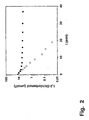
- Fig. 2 illustrates the phenomenon of poisoning known from practice catalyst used in an aqueous phase in the presence of ionic Links.
- A was used here for the hydrodehalogenation of 1,2-dichlorobenzene Supported catalyst used in the palladium as a catalytically active substance is deposited on an aluminum support. This catalyst is in deionized Water is used, so it is continuous, relatively quick and complete Degradation of 1,2-dichlorobenzene. The chronological course of the degradation is here by the unfilled circles.
- Fig. 1 illustrates that the one used here Catalyst very quickly due to the ionic present in the aqueous phase Connections is deactivated.
- FIG. 3 shows the crystalline structure of a type Y zeolite merely as an example played.
- This zeolite has a pore size of approximately 0.74 nm. Its hydrophobic properties are due to the ratio of those in the aluminum silicate structure existing silicon atoms to the aluminum atoms determined. ever higher the ratio, i.e. the larger the silicon content, the stronger the hydrophobic Characteristics of the zeolite pronounced.
- Fig. 4 shows the time course of the degradation of 1,2-dichlorobenzene in deionized Water again.
- a zeolite type ZSM-5 as a carrier material no significant degradation of the 1,2-dichlorobenzene occurs in the palladium catalyst on. This is due to the pore size of this zeolite, which is only approximate Is 0.54 nm, i.e. smaller than the diameter of the 1,2-dichlorobenzene molecule.
- zeolite-like materials of the type MCM-41 with different tested hydrophobic properties.
- the number after the Type specification MCM-41 gives the ratio of the silicon atoms to the aluminum atoms of the material again.
- a palladium catalyst with an MCM-41 as a carrier material is a continuous, very fast and complete one Degradation of 1,2-dichlorobenzene can be observed. This is on the very big one Pore diameter of this mesoporous carrier material of approx. 2.7 nm.
- the 1,2-dichlorobenzene molecules can enter the pores of the Penetrate catalyst material, so that the deposited in the pores palladium can act catalytically.
- 1,2-dichlorobenzene is namely. also not seen with Y-type zeolites that are slightly hydrophilic or only slightly are hydrophobic.
- the ionic compounds present in the aqueous phase are obviously also capable of pores with a medium diameter of 0.74 nm if the carrier material is only slightly hydrophobic.
Landscapes
- Chemical & Material Sciences (AREA)
- Engineering & Computer Science (AREA)
- Organic Chemistry (AREA)
- Materials Engineering (AREA)
- Chemical Kinetics & Catalysis (AREA)
- Life Sciences & Earth Sciences (AREA)
- Hydrology & Water Resources (AREA)
- Environmental & Geological Engineering (AREA)
- Water Supply & Treatment (AREA)
- Catalysts (AREA)
- Organic Low-Molecular-Weight Compounds And Preparation Thereof (AREA)
Claims (10)
- Application d'un catalyseur portant au moins une matière isolée et catalytiquement active qui a pour but la déshalogénation des combinaisons hydrocarbures dans une phase aqueuse à condition que l'eau soit une phase fluide et que la matière catalytiquement active soit protégée par l'application d'un porteur microporeux et hydrophobe, le zéolite Y; étant donné que la taille de ses pores ainsi que son hydrophobilité s'adaptent à la taille des molécules polluantes de manière à ce que les molécules des combinaisons halogénées de l'hydrocarbure puissent atteindre le catalyseur isolé au corps des micropores du porteur, et que par contre, dû à leur taille ou leur polarité, les combinaisons ioniques de la phase aqueuse ne puissent pas atteindre le corps des micropores du catalyseur.
- Application d'un catalyseur porteur selon exigence 1, tandis que la déshalogénation a lieu dans une température de 0°C à +70°C, et sous des conditions de pression normales, ce que signifie que la pression atmosphérique est d'environ 35 bar.
- Application selon exigence 1, tandis qu'une matière hydro traitante est utilisée comme matière active.
- Application selon exigence 1, tandis qu'un métal du groupe VIIIb ou Ib est utilisé comme matière active.
- Application selon exigence 1, tandis que la proportion entre les Si atomes et les Al atomes dans le réseau cristallin de la zéolite est supérieur à 10.
- Application selon exigence 1, tandis que la proportion entre les Si atomes et les Al atomes dans le réseau cristallin de la zéolite est supérieur à 100.
- Application d'un catalyseur porteur selon une des exigences entre 1 et 6, tandis qu'ici le catalyseur porteur est traité périodiquement de manière oxydative.
- Application d'un catalyseur porteur selon exigence 7, tandis que le catalyseur est périodiquement rincé avec une solution de peroxyde d'hydrogène.
- Application d'un catalyseur porteur selon une des exigences entre 1 et 8, tandis que le catalyseur porteur est rincé périodiquement avec un acide faible.
- Application d'un catalyseur porteur selon une des exigences entre 1 et 9 comme matériel réactivé dans des parois réactivés ou comme in situ réacteur dans des fontaines de libre écoulement ou d'écoulement forcé.
Applications Claiming Priority (2)
| Application Number | Priority Date | Filing Date | Title |
|---|---|---|---|
| DE19803635 | 1998-02-02 | ||
| DE19803635 | 1998-02-02 |
Publications (2)
| Publication Number | Publication Date |
|---|---|
| EP0933333A1 EP0933333A1 (fr) | 1999-08-04 |
| EP0933333B1 true EP0933333B1 (fr) | 2004-09-01 |
Family
ID=7856155
Family Applications (1)
| Application Number | Title | Priority Date | Filing Date |
|---|---|---|---|
| EP99102047A Expired - Lifetime EP0933333B1 (fr) | 1998-02-02 | 1999-02-02 | Utilisation d'un catalyseur à support |
Country Status (2)
| Country | Link |
|---|---|
| EP (1) | EP0933333B1 (fr) |
| DE (1) | DE59910367D1 (fr) |
Families Citing this family (3)
| Publication number | Priority date | Publication date | Assignee | Title |
|---|---|---|---|---|
| DE10133609A1 (de) * | 2001-07-13 | 2003-02-13 | Ufz Leipzighalle Gmbh | Verfahren und Vorrichtung zur Dekontamination von Wässern, insbesondere von Grundwässern, die stark und komplex mit organischen Halogenverbindungen (HKW) belastet sind |
| CA2519793A1 (fr) * | 2003-03-03 | 2004-09-16 | Adventus Intellectual Property Inc. | Materiau composite pour une barriere reactive permeable |
| CN116422363A (zh) * | 2022-12-06 | 2023-07-14 | 有研资源环境技术研究院(北京)有限公司 | 一种疏水型Pd基催化剂的制备方法以及疏水型Pd基催化剂 |
Family Cites Families (8)
| Publication number | Priority date | Publication date | Assignee | Title |
|---|---|---|---|---|
| JPS60102945A (ja) * | 1983-11-08 | 1985-06-07 | Daido Steel Co Ltd | 触媒の再生方法 |
| US4678764A (en) * | 1985-11-21 | 1987-07-07 | Mobil Oil Corporation | Reactivation of noble metal-zeolite catalysts |
| US5190668A (en) * | 1991-09-30 | 1993-03-02 | Chuang Karl T | Method for the removal of volatile organic compounds from water |
| US5196617A (en) * | 1992-01-14 | 1993-03-23 | Engelhard Corporation | Method of hydrodehalogenating halogenated organic compounds in aqueous environmental sources |
| DE69323226T2 (de) * | 1992-03-25 | 1999-06-17 | Kurita Water Ind Ltd | Verfahren zur Behandlung einer Flüssigkeit, die flüchtige, halogenierte organische Verbindungen enthält |
| DE4343169A1 (de) * | 1993-12-17 | 1995-06-22 | Solvay Deutschland | Katalytische Hydrodehalogenierung halogenhaltiger Verbindungen von Elementen der vierten Hauptgruppe |
| US5645374A (en) * | 1995-11-27 | 1997-07-08 | Her Majesty The Queen In Right Of Canada, As Represented By The Minister Of The Environment | Method for dehalogenating contaminated water and soil |
| FR2743801B1 (fr) * | 1996-01-18 | 1998-03-20 | Tredi | Desaromatisation de composes aromatiques organo-halogenes et/ou organo-oxygenes en presence d'un catalyseur a base de ruthenium |
-
1999
- 1999-02-02 EP EP99102047A patent/EP0933333B1/fr not_active Expired - Lifetime
- 1999-02-02 DE DE59910367T patent/DE59910367D1/de not_active Expired - Lifetime
Also Published As
| Publication number | Publication date |
|---|---|
| DE59910367D1 (de) | 2004-10-07 |
| EP0933333A1 (fr) | 1999-08-04 |
Similar Documents
| Publication | Publication Date | Title |
|---|---|---|
| DE69914335T2 (de) | Verfahren zur mineralisierung von organischen schadstoffen vom wasser durch katalytische ozonizierung | |
| DE3244443C2 (de) | Verfahren zur Entfernung von eisen-, calcium- und manganhaltigen Verockerungen und/oder Versinterungen aus zur Wasserversorgung betriebenen Einrichtungen | |
| DE3522713C2 (de) | Konservierungsmittel fuer trinkwasser | |
| DE2728106A1 (de) | Mikrobiozides produkt | |
| DE2840791C2 (de) | Adsorptionsmittel für Ethylen und Verfahren zu seiner Herstellung | |
| EP1938690A1 (fr) | Stérilisation et conservation de fluides | |
| DE10133609A1 (de) | Verfahren und Vorrichtung zur Dekontamination von Wässern, insbesondere von Grundwässern, die stark und komplex mit organischen Halogenverbindungen (HKW) belastet sind | |
| EP0933333A1 (fr) | Utilisation d'un catalyseur à support | |
| DE3138107A1 (de) | Verfahren zur entfernung von stoffen aus waessrigen loesungen sowie vorrichtung zur durchfuehrung des verfahrens | |
| EP1284925A1 (fr) | Procede pour la purification de solutions de peroxyde d'hydrogene | |
| DE102014002450A1 (de) | Verfahren zum oxidativen Abbau von stickstoffhaltigen Verbindungen in Abwässern | |
| DE2350327C3 (de) | Verfahren zum Reinigen von Polycarbonatlösungen | |
| DE19813451B4 (de) | Verfahren zur mikrobiologischen Reinigung | |
| DE10128129B4 (de) | Verfahren zum Abbau biologischer und/oder organischer Substanzen sowie Vollmetallkatalysator | |
| AT407521B (de) | Aufbereitung von mit gentoxischen substanzen belastetem wasser | |
| DE1271314B (de) | Synergistisch wirkendes mikrobiocides Mittel zur Bekaempfung von Mikroorganismen in Industrie-Wasseranlagen | |
| DE4302020C2 (de) | Verfahren zur oxidativen Zerstörung von organischen Substanzen | |
| DD291540A5 (de) | Verfahren zur entfernung von anorganischen verunreinigungen aus fluessigkeiten | |
| EP0819468A1 (fr) | Catalyseur d'oxydation des impuretés contenues dans les eaux usées à l'aide de peracides | |
| DE69201214T3 (de) | Verfahren zur Entkeimung und Reinigung von Kontaktlinsen. | |
| DE10130108B4 (de) | Verfahren und Reaktor zum katalytischen Abbau von halogenierten organischen Schadstoffen | |
| DE146997C (fr) | ||
| DE102024131536B3 (de) | Verfahren zur herstellung eines zur entfernung von gesundheitsschädlichen anionen aus wässriger lösung geeigneten vliesmaterials, vliesmaterial zur entfernung von gesundheitsschädlichen anionen aus wässriger lösung und verwendung des vliesmaterials | |
| DE2111118B2 (de) | Verfahren zur Reinigung von Schwefelsäure für die katalytische Synthese von Hydroxylammoniumsulfat | |
| DE102019106689A1 (de) | Verfahren zum Reinigen von Wasser, insbesondere zur Konservierung und Herstellung von Trinkwasser |
Legal Events
| Date | Code | Title | Description |
|---|---|---|---|
| PUAI | Public reference made under article 153(3) epc to a published international application that has entered the european phase |
Free format text: ORIGINAL CODE: 0009012 |
|
| AK | Designated contracting states |
Kind code of ref document: A1 Designated state(s): CH DE FR GB IT LI NL |
|
| AX | Request for extension of the european patent |
Free format text: AL;LT;LV;MK;RO;SI |
|
| 17P | Request for examination filed |
Effective date: 20000203 |
|
| AKX | Designation fees paid |
Free format text: CH DE FR GB IT LI NL |
|
| 17Q | First examination report despatched |
Effective date: 20010514 |
|
| RAP1 | Party data changed (applicant data changed or rights of an application transferred) |
Owner name: STANFORD UNIVERSITY Owner name: I.M.E.S. GESELLSCHAFT FUER INNOVATIVE MESS-, ERKUN |
|
| GRAP | Despatch of communication of intention to grant a patent |
Free format text: ORIGINAL CODE: EPIDOSNIGR1 |
|
| GRAS | Grant fee paid |
Free format text: ORIGINAL CODE: EPIDOSNIGR3 |
|
| GRAA | (expected) grant |
Free format text: ORIGINAL CODE: 0009210 |
|
| AK | Designated contracting states |
Kind code of ref document: B1 Designated state(s): CH DE FR GB IT LI NL |
|
| PG25 | Lapsed in a contracting state [announced via postgrant information from national office to epo] |
Ref country code: NL Free format text: LAPSE BECAUSE OF FAILURE TO SUBMIT A TRANSLATION OF THE DESCRIPTION OR TO PAY THE FEE WITHIN THE PRESCRIBED TIME-LIMIT Effective date: 20040901 Ref country code: GB Free format text: LAPSE BECAUSE OF FAILURE TO SUBMIT A TRANSLATION OF THE DESCRIPTION OR TO PAY THE FEE WITHIN THE PRESCRIBED TIME-LIMIT Effective date: 20040901 Ref country code: FR Free format text: LAPSE BECAUSE OF FAILURE TO SUBMIT A TRANSLATION OF THE DESCRIPTION OR TO PAY THE FEE WITHIN THE PRESCRIBED TIME-LIMIT Effective date: 20040901 |
|
| REG | Reference to a national code |
Ref country code: GB Ref legal event code: FG4D Free format text: NOT ENGLISH |
|
| REG | Reference to a national code |
Ref country code: CH Ref legal event code: EP |
|
| REF | Corresponds to: |
Ref document number: 59910367 Country of ref document: DE Date of ref document: 20041007 Kind code of ref document: P |
|
| PG25 | Lapsed in a contracting state [announced via postgrant information from national office to epo] |
Ref country code: IT Free format text: LAPSE BECAUSE OF NON-PAYMENT OF DUE FEES Effective date: 20050202 |
|
| NLV1 | Nl: lapsed or annulled due to failure to fulfill the requirements of art. 29p and 29m of the patents act | ||
| GBV | Gb: ep patent (uk) treated as always having been void in accordance with gb section 77(7)/1977 [no translation filed] |
Effective date: 20040901 |
|
| PLBE | No opposition filed within time limit |
Free format text: ORIGINAL CODE: 0009261 |
|
| STAA | Information on the status of an ep patent application or granted ep patent |
Free format text: STATUS: NO OPPOSITION FILED WITHIN TIME LIMIT |
|
| 26N | No opposition filed |
Effective date: 20050602 |
|
| EN | Fr: translation not filed | ||
| PGFP | Annual fee paid to national office [announced via postgrant information from national office to epo] |
Ref country code: CH Payment date: 20090122 Year of fee payment: 11 |
|
| PGFP | Annual fee paid to national office [announced via postgrant information from national office to epo] |
Ref country code: DE Payment date: 20100127 Year of fee payment: 12 |
|
| REG | Reference to a national code |
Ref country code: CH Ref legal event code: PL |
|
| PG25 | Lapsed in a contracting state [announced via postgrant information from national office to epo] |
Ref country code: LI Free format text: LAPSE BECAUSE OF NON-PAYMENT OF DUE FEES Effective date: 20100228 Ref country code: CH Free format text: LAPSE BECAUSE OF NON-PAYMENT OF DUE FEES Effective date: 20100228 |
|
| REG | Reference to a national code |
Ref country code: DE Ref legal event code: R119 Ref document number: 59910367 Country of ref document: DE Effective date: 20110901 |
|
| PG25 | Lapsed in a contracting state [announced via postgrant information from national office to epo] |
Ref country code: DE Free format text: LAPSE BECAUSE OF NON-PAYMENT OF DUE FEES Effective date: 20110901 |