EP0933371B1 - Amides d'acides N-halogénés - Google Patents
Amides d'acides N-halogénés Download PDFInfo
- Publication number
- EP0933371B1 EP0933371B1 EP99101466A EP99101466A EP0933371B1 EP 0933371 B1 EP0933371 B1 EP 0933371B1 EP 99101466 A EP99101466 A EP 99101466A EP 99101466 A EP99101466 A EP 99101466A EP 0933371 B1 EP0933371 B1 EP 0933371B1
- Authority
- EP
- European Patent Office
- Prior art keywords
- carbon atoms
- triazine
- reaction
- product
- group
- Prior art date
- Legal status (The legal status is an assumption and is not a legal conclusion. Google has not performed a legal analysis and makes no representation as to the accuracy of the status listed.)
- Expired - Lifetime
Links
- -1 -halo acid amides Chemical class 0.000 title claims description 49
- VEXZGXHMUGYJMC-UHFFFAOYSA-M Chloride anion Chemical compound [Cl-] VEXZGXHMUGYJMC-UHFFFAOYSA-M 0.000 claims abstract description 6
- CPELXLSAUQHCOX-UHFFFAOYSA-M Bromide Chemical compound [Br-] CPELXLSAUQHCOX-UHFFFAOYSA-M 0.000 claims abstract description 4
- XMBWDFGMSWQBCA-UHFFFAOYSA-N hydrogen iodide Chemical compound I XMBWDFGMSWQBCA-UHFFFAOYSA-N 0.000 claims abstract description 4
- KRHYYFGTRYWZRS-UHFFFAOYSA-M Fluoride anion Chemical compound [F-] KRHYYFGTRYWZRS-UHFFFAOYSA-M 0.000 claims abstract description 3
- 125000004432 carbon atom Chemical group C* 0.000 claims description 169
- 229910052736 halogen Inorganic materials 0.000 claims description 41
- 150000002367 halogens Chemical class 0.000 claims description 38
- 239000001257 hydrogen Substances 0.000 claims description 29
- 229910052739 hydrogen Inorganic materials 0.000 claims description 29
- 150000001875 compounds Chemical class 0.000 claims description 23
- 125000000217 alkyl group Chemical group 0.000 claims description 18
- UFHFLCQGNIYNRP-UHFFFAOYSA-N Hydrogen Chemical compound [H][H] UFHFLCQGNIYNRP-UHFFFAOYSA-N 0.000 claims description 15
- 125000003545 alkoxy group Chemical group 0.000 claims description 11
- 125000003118 aryl group Chemical group 0.000 claims description 10
- 125000001153 fluoro group Chemical group F* 0.000 claims description 9
- 150000002431 hydrogen Chemical class 0.000 claims description 9
- 125000004414 alkyl thio group Chemical group 0.000 claims description 7
- 125000003710 aryl alkyl group Chemical group 0.000 claims description 7
- 125000004104 aryloxy group Chemical group 0.000 claims description 7
- 125000005010 perfluoroalkyl group Chemical group 0.000 claims description 7
- 125000001188 haloalkyl group Chemical group 0.000 claims description 6
- 125000002947 alkylene group Chemical group 0.000 claims description 5
- 125000003342 alkenyl group Chemical group 0.000 claims description 4
- 125000003282 alkyl amino group Chemical group 0.000 claims description 4
- 125000005110 aryl thio group Chemical group 0.000 claims description 4
- 125000000732 arylene group Chemical group 0.000 claims description 4
- 125000004122 cyclic group Chemical group 0.000 claims description 4
- 125000004663 dialkyl amino group Chemical group 0.000 claims description 4
- 125000003106 haloaryl group Chemical group 0.000 claims description 4
- 125000002252 acyl group Chemical group 0.000 claims description 3
- 125000005089 alkenylaminocarbonyl group Chemical group 0.000 claims description 3
- 125000003302 alkenyloxy group Chemical group 0.000 claims description 3
- 125000004183 alkoxy alkyl group Chemical group 0.000 claims description 3
- 125000004453 alkoxycarbonyl group Chemical group 0.000 claims description 3
- 125000005078 alkoxycarbonylalkyl group Chemical group 0.000 claims description 3
- 125000004457 alkyl amino carbonyl group Chemical group 0.000 claims description 3
- 125000004691 alkyl thio carbonyl group Chemical group 0.000 claims description 3
- 125000005530 alkylenedioxy group Chemical group 0.000 claims description 3
- 125000003917 carbamoyl group Chemical group [H]N([H])C(*)=O 0.000 claims description 3
- 125000004966 cyanoalkyl group Chemical group 0.000 claims description 3
- 125000004985 dialkyl amino alkyl group Chemical group 0.000 claims description 3
- 125000004473 dialkylaminocarbonyl group Chemical group 0.000 claims description 3
- 125000004967 formylalkyl group Chemical group 0.000 claims description 3
- 125000005252 haloacyl group Chemical group 0.000 claims description 3
- 125000004438 haloalkoxy group Chemical group 0.000 claims description 3
- 125000004997 halocarbonyl group Chemical group 0.000 claims description 3
- 125000004429 atom Chemical group 0.000 claims description 2
- 229910052799 carbon Inorganic materials 0.000 claims 1
- 239000000203 mixture Substances 0.000 abstract description 51
- 125000005228 aryl sulfonate group Chemical group 0.000 abstract description 2
- 238000000034 method Methods 0.000 description 84
- VLKZOEOYAKHREP-UHFFFAOYSA-N n-Hexane Chemical compound CCCCCC VLKZOEOYAKHREP-UHFFFAOYSA-N 0.000 description 84
- 238000006243 chemical reaction Methods 0.000 description 78
- 239000000047 product Substances 0.000 description 77
- XKRFYHLGVUSROY-UHFFFAOYSA-N Argon Chemical compound [Ar] XKRFYHLGVUSROY-UHFFFAOYSA-N 0.000 description 70
- 239000011541 reaction mixture Substances 0.000 description 67
- RFFLAFLAYFXFSW-UHFFFAOYSA-N 1,2-dichlorobenzene Chemical compound ClC1=CC=CC=C1Cl RFFLAFLAYFXFSW-UHFFFAOYSA-N 0.000 description 54
- VZGDMQKNWNREIO-UHFFFAOYSA-N tetrachloromethane Chemical compound ClC(Cl)(Cl)Cl VZGDMQKNWNREIO-UHFFFAOYSA-N 0.000 description 54
- 239000002253 acid Substances 0.000 description 51
- JYEUMXHLPRZUAT-UHFFFAOYSA-N 1,2,3-triazine Chemical compound C1=CN=NN=C1 JYEUMXHLPRZUAT-UHFFFAOYSA-N 0.000 description 48
- JDSHMPZPIAZGSV-UHFFFAOYSA-N melamine Chemical compound NC1=NC(N)=NC(N)=N1 JDSHMPZPIAZGSV-UHFFFAOYSA-N 0.000 description 48
- 229920000877 Melamine resin Polymers 0.000 description 47
- 150000004820 halides Chemical class 0.000 description 45
- KEPNSIARSTUPGS-UHFFFAOYSA-N 2-n,4-n,6-n-trichloro-1,3,5-triazine-2,4,6-triamine Chemical compound ClNC1=NC(NCl)=NC(NCl)=N1 KEPNSIARSTUPGS-UHFFFAOYSA-N 0.000 description 41
- 150000001408 amides Chemical class 0.000 description 41
- 239000012948 isocyanate Substances 0.000 description 41
- 150000002513 isocyanates Chemical class 0.000 description 40
- 229910052786 argon Inorganic materials 0.000 description 35
- CTSLXHKWHWQRSH-UHFFFAOYSA-N oxalyl chloride Chemical compound ClC(=O)C(Cl)=O CTSLXHKWHWQRSH-UHFFFAOYSA-N 0.000 description 34
- 238000003756 stirring Methods 0.000 description 32
- OKKJLVBELUTLKV-UHFFFAOYSA-N methanol Substances OC OKKJLVBELUTLKV-UHFFFAOYSA-N 0.000 description 31
- 238000005160 1H NMR spectroscopy Methods 0.000 description 28
- 238000001644 13C nuclear magnetic resonance spectroscopy Methods 0.000 description 25
- YMWUJEATGCHHMB-UHFFFAOYSA-N Dichloromethane Chemical compound ClCCl YMWUJEATGCHHMB-UHFFFAOYSA-N 0.000 description 23
- 239000003921 oil Substances 0.000 description 23
- 238000002360 preparation method Methods 0.000 description 23
- VCBRTBDPBXCBOR-UHFFFAOYSA-N 2-n,2-n,4-n,4-n,6-n,6-n-hexachloro-1,3,5-triazine-2,4,6-triamine Chemical compound ClN(Cl)C1=NC(N(Cl)Cl)=NC(N(Cl)Cl)=N1 VCBRTBDPBXCBOR-UHFFFAOYSA-N 0.000 description 22
- 239000000460 chlorine Substances 0.000 description 22
- 239000000543 intermediate Substances 0.000 description 21
- LRHPLDYGYMQRHN-UHFFFAOYSA-N N-Butanol Chemical compound CCCCO LRHPLDYGYMQRHN-UHFFFAOYSA-N 0.000 description 20
- XLYOFNOQVPJJNP-UHFFFAOYSA-N water Substances O XLYOFNOQVPJJNP-UHFFFAOYSA-N 0.000 description 20
- KWYHDKDOAIKMQN-UHFFFAOYSA-N N,N,N',N'-tetramethylethylenediamine Chemical compound CN(C)CCN(C)C KWYHDKDOAIKMQN-UHFFFAOYSA-N 0.000 description 19
- 239000006227 byproduct Substances 0.000 description 19
- 239000002904 solvent Substances 0.000 description 19
- QTBSBXVTEAMEQO-UHFFFAOYSA-N Acetic acid Chemical compound CC(O)=O QTBSBXVTEAMEQO-UHFFFAOYSA-N 0.000 description 17
- 229910052801 chlorine Inorganic materials 0.000 description 17
- 238000003760 magnetic stirring Methods 0.000 description 17
- 238000010992 reflux Methods 0.000 description 17
- ZAMOUSCENKQFHK-UHFFFAOYSA-N Chlorine atom Chemical compound [Cl] ZAMOUSCENKQFHK-UHFFFAOYSA-N 0.000 description 16
- 229910052757 nitrogen Inorganic materials 0.000 description 16
- 150000001412 amines Chemical class 0.000 description 15
- 230000015572 biosynthetic process Effects 0.000 description 15
- IAZDPXIOMUYVGZ-WFGJKAKNSA-N Dimethyl sulfoxide Chemical compound [2H]C([2H])([2H])S(=O)C([2H])([2H])[2H] IAZDPXIOMUYVGZ-WFGJKAKNSA-N 0.000 description 14
- YGYAWVDWMABLBF-UHFFFAOYSA-N Phosgene Chemical compound ClC(Cl)=O YGYAWVDWMABLBF-UHFFFAOYSA-N 0.000 description 14
- XMJHPCRAQCTCFT-UHFFFAOYSA-N methyl chloroformate Chemical compound COC(Cl)=O XMJHPCRAQCTCFT-UHFFFAOYSA-N 0.000 description 14
- 238000010438 heat treatment Methods 0.000 description 12
- 239000000463 material Substances 0.000 description 12
- 239000000243 solution Substances 0.000 description 12
- VHYFNPMBLIVWCW-UHFFFAOYSA-N 4-Dimethylaminopyridine Chemical compound CN(C)C1=CC=NC=C1 VHYFNPMBLIVWCW-UHFFFAOYSA-N 0.000 description 11
- ZMANZCXQSJIPKH-UHFFFAOYSA-N Triethylamine Chemical compound CCN(CC)CC ZMANZCXQSJIPKH-UHFFFAOYSA-N 0.000 description 11
- NRDQFWXVTPZZAZ-UHFFFAOYSA-N butyl carbonochloridate Chemical compound CCCCOC(Cl)=O NRDQFWXVTPZZAZ-UHFFFAOYSA-N 0.000 description 11
- ODRNAKSRDQHDKC-UHFFFAOYSA-N butyl n-[4-(butoxycarbonylamino)-6-phenyl-1,3,5-triazin-2-yl]carbamate Chemical compound CCCCOC(=O)NC1=NC(NC(=O)OCCCC)=NC(C=2C=CC=CC=2)=N1 ODRNAKSRDQHDKC-UHFFFAOYSA-N 0.000 description 11
- 238000001816 cooling Methods 0.000 description 11
- 229920001971 elastomer Polymers 0.000 description 11
- 239000000376 reactant Substances 0.000 description 11
- 238000004458 analytical method Methods 0.000 description 10
- 238000000354 decomposition reaction Methods 0.000 description 10
- HCUYBXPSSCRKRF-UHFFFAOYSA-N diphosgene Chemical compound ClC(=O)OC(Cl)(Cl)Cl HCUYBXPSSCRKRF-UHFFFAOYSA-N 0.000 description 10
- 125000005843 halogen group Chemical group 0.000 description 10
- UCPYLLCMEDAXFR-UHFFFAOYSA-N triphosgene Chemical compound ClC(Cl)(Cl)OC(=O)OC(Cl)(Cl)Cl UCPYLLCMEDAXFR-UHFFFAOYSA-N 0.000 description 10
- ZMXDDKWLCZADIW-UHFFFAOYSA-N N,N-Dimethylformamide Chemical compound CN(C)C=O ZMXDDKWLCZADIW-UHFFFAOYSA-N 0.000 description 9
- IPWBHCTWOIFYJA-UHFFFAOYSA-N carbamic acid;triazine Chemical class NC(O)=O.NC(O)=O.NC(O)=O.C1=CN=NN=C1 IPWBHCTWOIFYJA-UHFFFAOYSA-N 0.000 description 9
- 238000004949 mass spectrometry Methods 0.000 description 9
- 239000000843 powder Substances 0.000 description 9
- 150000003918 triazines Chemical class 0.000 description 9
- PASDCCFISLVPSO-UHFFFAOYSA-N benzoyl chloride Chemical compound ClC(=O)C1=CC=CC=C1 PASDCCFISLVPSO-UHFFFAOYSA-N 0.000 description 8
- 239000003054 catalyst Substances 0.000 description 8
- 150000001805 chlorine compounds Chemical class 0.000 description 8
- 238000004064 recycling Methods 0.000 description 8
- QQOWHRYOXYEMTL-UHFFFAOYSA-N triazin-4-amine Chemical compound N=C1C=CN=NN1 QQOWHRYOXYEMTL-UHFFFAOYSA-N 0.000 description 8
- VGCXGMAHQTYDJK-UHFFFAOYSA-N Chloroacetyl chloride Chemical compound ClCC(Cl)=O VGCXGMAHQTYDJK-UHFFFAOYSA-N 0.000 description 7
- 239000004971 Cross linker Substances 0.000 description 7
- 238000004566 IR spectroscopy Methods 0.000 description 7
- HEDRZPFGACZZDS-MICDWDOJSA-N Trichloro(2H)methane Chemical compound [2H]C(Cl)(Cl)Cl HEDRZPFGACZZDS-MICDWDOJSA-N 0.000 description 7
- 239000007983 Tris buffer Substances 0.000 description 7
- 229960000583 acetic acid Drugs 0.000 description 7
- 229910000039 hydrogen halide Inorganic materials 0.000 description 7
- 239000012433 hydrogen halide Substances 0.000 description 7
- 239000007787 solid Substances 0.000 description 7
- 239000000126 substance Substances 0.000 description 7
- 238000004448 titration Methods 0.000 description 7
- FTVFPPFZRRKJIH-UHFFFAOYSA-N 2,2,6,6-tetramethylpiperidin-4-amine Chemical compound CC1(C)CC(N)CC(C)(C)N1 FTVFPPFZRRKJIH-UHFFFAOYSA-N 0.000 description 6
- IJGRMHOSHXDMSA-UHFFFAOYSA-N Atomic nitrogen Chemical compound N#N IJGRMHOSHXDMSA-UHFFFAOYSA-N 0.000 description 6
- WKBOTKDWSSQWDR-UHFFFAOYSA-N Bromine atom Chemical compound [Br] WKBOTKDWSSQWDR-UHFFFAOYSA-N 0.000 description 6
- 125000003277 amino group Chemical group 0.000 description 6
- GDTBXPJZTBHREO-UHFFFAOYSA-N bromine Substances BrBr GDTBXPJZTBHREO-UHFFFAOYSA-N 0.000 description 6
- 229910052794 bromium Inorganic materials 0.000 description 6
- 238000000576 coating method Methods 0.000 description 6
- 239000008367 deionised water Substances 0.000 description 6
- 229910021641 deionized water Inorganic materials 0.000 description 6
- 238000002474 experimental method Methods 0.000 description 6
- 238000010265 fast atom bombardment Methods 0.000 description 6
- RAXXELZNTBOGNW-UHFFFAOYSA-N imidazole Natural products C1=CNC=N1 RAXXELZNTBOGNW-UHFFFAOYSA-N 0.000 description 6
- 150000007974 melamines Chemical class 0.000 description 6
- HQUANQXUGDDCMT-UHFFFAOYSA-N n-(4,6-dibenzamido-1,3,5-triazin-2-yl)benzamide Chemical compound C=1C=CC=CC=1C(=O)NC(N=C(NC(=O)C=1C=CC=CC=1)N=1)=NC=1NC(=O)C1=CC=CC=C1 HQUANQXUGDDCMT-UHFFFAOYSA-N 0.000 description 6
- 239000002244 precipitate Substances 0.000 description 6
- 239000000725 suspension Substances 0.000 description 6
- RTGLJCSUKOLTEM-UHFFFAOYSA-N 2-ethylhexyl carbonochloridate Chemical compound CCCCC(CC)COC(Cl)=O RTGLJCSUKOLTEM-UHFFFAOYSA-N 0.000 description 5
- GZVHEAJQGPRDLQ-UHFFFAOYSA-N 6-phenyl-1,3,5-triazine-2,4-diamine Chemical compound NC1=NC(N)=NC(C=2C=CC=CC=2)=N1 GZVHEAJQGPRDLQ-UHFFFAOYSA-N 0.000 description 5
- KXDHJXZQYSOELW-UHFFFAOYSA-M Carbamate Chemical compound NC([O-])=O KXDHJXZQYSOELW-UHFFFAOYSA-M 0.000 description 5
- LFQSCWFLJHTTHZ-UHFFFAOYSA-N Ethanol Chemical compound CCO LFQSCWFLJHTTHZ-UHFFFAOYSA-N 0.000 description 5
- VQLQMTWSCHZPND-UHFFFAOYSA-N butyl n-[4-(butoxycarbonylamino)-6-methyl-1,3,5-triazin-2-yl]carbamate Chemical class CCCCOC(=O)NC1=NC(C)=NC(NC(=O)OCCCC)=N1 VQLQMTWSCHZPND-UHFFFAOYSA-N 0.000 description 5
- 238000004821 distillation Methods 0.000 description 5
- 239000007788 liquid Substances 0.000 description 5
- 125000002496 methyl group Chemical group [H]C([H])([H])* 0.000 description 5
- 239000003960 organic solvent Substances 0.000 description 5
- AHWALFGBDFAJAI-UHFFFAOYSA-N phenyl carbonochloridate Chemical compound ClC(=O)OC1=CC=CC=C1 AHWALFGBDFAJAI-UHFFFAOYSA-N 0.000 description 5
- 239000012265 solid product Substances 0.000 description 5
- 238000004611 spectroscopical analysis Methods 0.000 description 5
- 239000003039 volatile agent Substances 0.000 description 5
- SVDDJQGVOFZBNX-UHFFFAOYSA-N 2-chloroethyl carbonochloridate Chemical compound ClCCOC(Cl)=O SVDDJQGVOFZBNX-UHFFFAOYSA-N 0.000 description 4
- YOETUEMZNOLGDB-UHFFFAOYSA-N 2-methylpropyl carbonochloridate Chemical compound CC(C)COC(Cl)=O YOETUEMZNOLGDB-UHFFFAOYSA-N 0.000 description 4
- LVOCWUFMTNEQMK-UHFFFAOYSA-N 2-n,2-n,4-n,4-n,6-n,6-n-hexabromo-1,3,5-triazine-2,4,6-triamine Chemical compound BrN(Br)C1=NC(N(Br)Br)=NC(N(Br)Br)=N1 LVOCWUFMTNEQMK-UHFFFAOYSA-N 0.000 description 4
- KZBUYRJDOAKODT-UHFFFAOYSA-N Chlorine Chemical compound ClCl KZBUYRJDOAKODT-UHFFFAOYSA-N 0.000 description 4
- HEDRZPFGACZZDS-UHFFFAOYSA-N Chloroform Chemical compound ClC(Cl)Cl HEDRZPFGACZZDS-UHFFFAOYSA-N 0.000 description 4
- VEXZGXHMUGYJMC-UHFFFAOYSA-N Hydrochloric acid Chemical compound Cl VEXZGXHMUGYJMC-UHFFFAOYSA-N 0.000 description 4
- CSNNHWWHGAXBCP-UHFFFAOYSA-L Magnesium sulfate Chemical compound [Mg+2].[O-][S+2]([O-])([O-])[O-] CSNNHWWHGAXBCP-UHFFFAOYSA-L 0.000 description 4
- YXFVVABEGXRONW-UHFFFAOYSA-N Toluene Chemical compound CC1=CC=CC=C1 YXFVVABEGXRONW-UHFFFAOYSA-N 0.000 description 4
- 238000004587 chromatography analysis Methods 0.000 description 4
- 239000000706 filtrate Substances 0.000 description 4
- 239000012362 glacial acetic acid Substances 0.000 description 4
- 239000011521 glass Substances 0.000 description 4
- 239000013067 intermediate product Substances 0.000 description 4
- 238000003402 intramolecular cyclocondensation reaction Methods 0.000 description 4
- 150000003951 lactams Chemical class 0.000 description 4
- JOTHWXHTBLVIDW-UHFFFAOYSA-N n-[4,6-bis(4-chlorobutanoylamino)-1,3,5-triazin-2-yl]-4-chlorobutanamide Chemical compound ClCCCC(=O)NC1=NC(NC(=O)CCCCl)=NC(NC(=O)CCCCl)=N1 JOTHWXHTBLVIDW-UHFFFAOYSA-N 0.000 description 4
- 239000002243 precursor Substances 0.000 description 4
- QQKDTTWZXHEGAQ-UHFFFAOYSA-N propyl carbonochloridate Chemical compound CCCOC(Cl)=O QQKDTTWZXHEGAQ-UHFFFAOYSA-N 0.000 description 4
- JEKOCBKSHMKPRR-UHFFFAOYSA-N 1-[4,6-bis(2-oxopyrrolidin-1-yl)-1,3,5-triazin-2-yl]pyrrolidin-2-one Chemical compound O=C1CCCN1C1=NC(N2C(CCC2)=O)=NC(N2C(CCC2)=O)=N1 JEKOCBKSHMKPRR-UHFFFAOYSA-N 0.000 description 3
- CIHCYBDQYGBEHA-UHFFFAOYSA-N 2-ethylhexylcarbamic acid;triazine Chemical compound C1=CN=NN=C1.CCCCC(CC)CNC(O)=O.CCCCC(CC)CNC(O)=O.CCCCC(CC)CNC(O)=O CIHCYBDQYGBEHA-UHFFFAOYSA-N 0.000 description 3
- CDIIZULDSLKBKV-UHFFFAOYSA-N 4-chlorobutanoyl chloride Chemical compound ClCCCC(Cl)=O CDIIZULDSLKBKV-UHFFFAOYSA-N 0.000 description 3
- 0 CC*CCCC1C(C2)[C@]2(CC2)CC2C1 Chemical compound CC*CCCC1C(C2)[C@]2(CC2)CC2C1 0.000 description 3
- FGYKGLNARXRZBN-UHFFFAOYSA-N CC1(NC(CC(C1)NC(=O)NC1=NC(=NC(=N1)NC(=O)NC1CC(NC(C1)(C)C)(C)C)NC(=O)NC1CC(NC(C1)(C)C)(C)C)(C)C)C Chemical compound CC1(NC(CC(C1)NC(=O)NC1=NC(=NC(=N1)NC(=O)NC1CC(NC(C1)(C)C)(C)C)NC(=O)NC1CC(NC(C1)(C)C)(C)C)(C)C)C FGYKGLNARXRZBN-UHFFFAOYSA-N 0.000 description 3
- CKDWPUIZGOQOOM-UHFFFAOYSA-N Carbamyl chloride Chemical class NC(Cl)=O CKDWPUIZGOQOOM-UHFFFAOYSA-N 0.000 description 3
- LYCAIKOWRPUZTN-UHFFFAOYSA-N Ethylene glycol Chemical compound OCCO LYCAIKOWRPUZTN-UHFFFAOYSA-N 0.000 description 3
- WSFSSNUMVMOOMR-UHFFFAOYSA-N Formaldehyde Chemical compound O=C WSFSSNUMVMOOMR-UHFFFAOYSA-N 0.000 description 3
- DNIAPMSPPWPWGF-UHFFFAOYSA-N Propylene glycol Chemical compound CC(O)CO DNIAPMSPPWPWGF-UHFFFAOYSA-N 0.000 description 3
- WETWJCDKMRHUPV-UHFFFAOYSA-N acetyl chloride Chemical compound CC(Cl)=O WETWJCDKMRHUPV-UHFFFAOYSA-N 0.000 description 3
- 239000012346 acetyl chloride Substances 0.000 description 3
- 150000001266 acyl halides Chemical class 0.000 description 3
- 238000013459 approach Methods 0.000 description 3
- 150000004657 carbamic acid derivatives Chemical class 0.000 description 3
- 235000013877 carbamide Nutrition 0.000 description 3
- 239000003153 chemical reaction reagent Substances 0.000 description 3
- 239000003795 chemical substances by application Substances 0.000 description 3
- 125000001309 chloro group Chemical group Cl* 0.000 description 3
- 239000003431 cross linking reagent Substances 0.000 description 3
- 239000012043 crude product Substances 0.000 description 3
- MTHSVFCYNBDYFN-UHFFFAOYSA-N diethylene glycol Chemical compound OCCOCCO MTHSVFCYNBDYFN-UHFFFAOYSA-N 0.000 description 3
- RIFGWPKJUGCATF-UHFFFAOYSA-N ethyl chloroformate Chemical compound CCOC(Cl)=O RIFGWPKJUGCATF-UHFFFAOYSA-N 0.000 description 3
- IXCSERBJSXMMFS-UHFFFAOYSA-N hydrogen chloride Substances Cl.Cl IXCSERBJSXMMFS-UHFFFAOYSA-N 0.000 description 3
- 229910000041 hydrogen chloride Inorganic materials 0.000 description 3
- 239000011261 inert gas Substances 0.000 description 3
- 239000004611 light stabiliser Substances 0.000 description 3
- 238000004519 manufacturing process Methods 0.000 description 3
- PSHKMPUSSFXUIA-UHFFFAOYSA-N n,n-dimethylpyridin-2-amine Chemical compound CN(C)C1=CC=CC=N1 PSHKMPUSSFXUIA-UHFFFAOYSA-N 0.000 description 3
- 229910000104 sodium hydride Inorganic materials 0.000 description 3
- SUKJFIGYRHOWBL-UHFFFAOYSA-N sodium hypochlorite Chemical compound [Na+].Cl[O-] SUKJFIGYRHOWBL-UHFFFAOYSA-N 0.000 description 3
- 125000001424 substituent group Chemical group 0.000 description 3
- 238000006467 substitution reaction Methods 0.000 description 3
- OCJBOOLMMGQPQU-UHFFFAOYSA-N 1,4-dichlorobenzene Chemical compound ClC1=CC=C(Cl)C=C1 OCJBOOLMMGQPQU-UHFFFAOYSA-N 0.000 description 2
- KBPLFHHGFOOTCA-UHFFFAOYSA-N 1-Octanol Chemical compound CCCCCCCCO KBPLFHHGFOOTCA-UHFFFAOYSA-N 0.000 description 2
- BBMCTIGTTCKYKF-UHFFFAOYSA-N 1-heptanol Chemical compound CCCCCCCO BBMCTIGTTCKYKF-UHFFFAOYSA-N 0.000 description 2
- DCANGVYZWYRVOB-UHFFFAOYSA-N 2-amino-2-oxoacetyl chloride Chemical compound NC(=O)C(Cl)=O DCANGVYZWYRVOB-UHFFFAOYSA-N 0.000 description 2
- OPTSEOJGWOMFDM-UHFFFAOYSA-N 2-chloroethylcarbamic acid;triazine Chemical compound C1=CN=NN=C1.OC(=O)NCCCl.OC(=O)NCCCl.OC(=O)NCCCl OPTSEOJGWOMFDM-UHFFFAOYSA-N 0.000 description 2
- YIWUKEYIRIRTPP-UHFFFAOYSA-N 2-ethylhexan-1-ol Chemical compound CCCCC(CC)CO YIWUKEYIRIRTPP-UHFFFAOYSA-N 0.000 description 2
- SWHLMZXDWUEYDB-UHFFFAOYSA-N 2-methylpropylcarbamic acid;triazine Chemical compound C1=CN=NN=C1.CC(C)CNC(O)=O.CC(C)CNC(O)=O.CC(C)CNC(O)=O SWHLMZXDWUEYDB-UHFFFAOYSA-N 0.000 description 2
- DKUBZUDRKXPHQI-UHFFFAOYSA-N 2-n-chloro-1,3,5-triazine-2,4,6-triamine Chemical class NC1=NC(N)=NC(NCl)=N1 DKUBZUDRKXPHQI-UHFFFAOYSA-N 0.000 description 2
- JWAZRIHNYRIHIV-UHFFFAOYSA-N 2-naphthol Chemical compound C1=CC=CC2=CC(O)=CC=C21 JWAZRIHNYRIHIV-UHFFFAOYSA-N 0.000 description 2
- SKDHHIUENRGTHK-UHFFFAOYSA-N 4-nitrobenzoyl chloride Chemical compound [O-][N+](=O)C1=CC=C(C(Cl)=O)C=C1 SKDHHIUENRGTHK-UHFFFAOYSA-N 0.000 description 2
- 229910014265 BrCl Inorganic materials 0.000 description 2
- CEKGHIFMXTVDLN-UHFFFAOYSA-N ClN1N(N(CC=C1)Cl)Cl Chemical compound ClN1N(N(CC=C1)Cl)Cl CEKGHIFMXTVDLN-UHFFFAOYSA-N 0.000 description 2
- ROSDSFDQCJNGOL-UHFFFAOYSA-N Dimethylamine Chemical compound CNC ROSDSFDQCJNGOL-UHFFFAOYSA-N 0.000 description 2
- KFZMGEQAYNKOFK-UHFFFAOYSA-N Isopropanol Chemical compound CC(C)O KFZMGEQAYNKOFK-UHFFFAOYSA-N 0.000 description 2
- AMQJEAYHLZJPGS-UHFFFAOYSA-N N-Pentanol Chemical compound CCCCCO AMQJEAYHLZJPGS-UHFFFAOYSA-N 0.000 description 2
- LDFBLPQDWNHIKK-UHFFFAOYSA-N N=C=O.N=C=O.N=C=O.C1=CN=NN=C1 Chemical compound N=C=O.N=C=O.N=C=O.C1=CN=NN=C1 LDFBLPQDWNHIKK-UHFFFAOYSA-N 0.000 description 2
- 238000005481 NMR spectroscopy Methods 0.000 description 2
- ISWSIDIOOBJBQZ-UHFFFAOYSA-N Phenol Chemical compound OC1=CC=CC=C1 ISWSIDIOOBJBQZ-UHFFFAOYSA-N 0.000 description 2
- 239000005708 Sodium hypochlorite Substances 0.000 description 2
- NJYZCEFQAIUHSD-UHFFFAOYSA-N acetoguanamine Chemical compound CC1=NC(N)=NC(N)=N1 NJYZCEFQAIUHSD-UHFFFAOYSA-N 0.000 description 2
- FXXACINHVKSMDR-UHFFFAOYSA-N acetyl bromide Chemical compound CC(Br)=O FXXACINHVKSMDR-UHFFFAOYSA-N 0.000 description 2
- 150000007513 acids Chemical class 0.000 description 2
- HFBMWMNUJJDEQZ-UHFFFAOYSA-N acryloyl chloride Chemical class ClC(=O)C=C HFBMWMNUJJDEQZ-UHFFFAOYSA-N 0.000 description 2
- 239000007864 aqueous solution Substances 0.000 description 2
- 239000012298 atmosphere Substances 0.000 description 2
- 125000006367 bivalent amino carbonyl group Chemical group [H]N([*:1])C([*:2])=O 0.000 description 2
- 239000002981 blocking agent Substances 0.000 description 2
- 230000000903 blocking effect Effects 0.000 description 2
- CODNYICXDISAEA-UHFFFAOYSA-N bromine monochloride Chemical compound BrCl CODNYICXDISAEA-UHFFFAOYSA-N 0.000 description 2
- 230000005587 bubbling Effects 0.000 description 2
- DVECBJCOGJRVPX-UHFFFAOYSA-N butyryl chloride Chemical compound CCCC(Cl)=O DVECBJCOGJRVPX-UHFFFAOYSA-N 0.000 description 2
- 239000003518 caustics Substances 0.000 description 2
- 239000007795 chemical reaction product Substances 0.000 description 2
- MVPPADPHJFYWMZ-UHFFFAOYSA-N chlorobenzene Chemical compound ClC1=CC=CC=C1 MVPPADPHJFYWMZ-UHFFFAOYSA-N 0.000 description 2
- 230000000052 comparative effect Effects 0.000 description 2
- 125000004093 cyano group Chemical group *C#N 0.000 description 2
- VEZUQRBDRNJBJY-UHFFFAOYSA-N cyclohexanone oxime Chemical compound ON=C1CCCCC1 VEZUQRBDRNJBJY-UHFFFAOYSA-N 0.000 description 2
- MWKFXSUHUHTGQN-UHFFFAOYSA-N decan-1-ol Chemical compound CCCCCCCCCCO MWKFXSUHUHTGQN-UHFFFAOYSA-N 0.000 description 2
- 229940117389 dichlorobenzene Drugs 0.000 description 2
- JBKVHLHDHHXQEQ-UHFFFAOYSA-N epsilon-caprolactam Chemical compound O=C1CCCCCN1 JBKVHLHDHHXQEQ-UHFFFAOYSA-N 0.000 description 2
- 150000002148 esters Chemical class 0.000 description 2
- 125000001495 ethyl group Chemical group [H]C([H])([H])C([H])([H])* 0.000 description 2
- 239000012467 final product Substances 0.000 description 2
- 238000007306 functionalization reaction Methods 0.000 description 2
- 230000002140 halogenating effect Effects 0.000 description 2
- ZSIAUFGUXNUGDI-UHFFFAOYSA-N hexan-1-ol Chemical compound CCCCCCO ZSIAUFGUXNUGDI-UHFFFAOYSA-N 0.000 description 2
- YWGHUJQYGPDNKT-UHFFFAOYSA-N hexanoyl chloride Chemical compound CCCCCC(Cl)=O YWGHUJQYGPDNKT-UHFFFAOYSA-N 0.000 description 2
- 125000002887 hydroxy group Chemical group [H]O* 0.000 description 2
- ZXEKIIBDNHEJCQ-UHFFFAOYSA-N isobutanol Chemical compound CC(C)CO ZXEKIIBDNHEJCQ-UHFFFAOYSA-N 0.000 description 2
- RLSSMJSEOOYNOY-UHFFFAOYSA-N m-methyl-PhOH Natural products CC1=CC=CC(O)=C1 RLSSMJSEOOYNOY-UHFFFAOYSA-N 0.000 description 2
- 229910052943 magnesium sulfate Inorganic materials 0.000 description 2
- GTCAXTIRRLKXRU-UHFFFAOYSA-N methyl carbamate Chemical compound COC(N)=O GTCAXTIRRLKXRU-UHFFFAOYSA-N 0.000 description 2
- XKBGEWXEAPTVCK-UHFFFAOYSA-M methyltrioctylammonium chloride Chemical compound [Cl-].CCCCCCCC[N+](C)(CCCCCCCC)CCCCCCCC XKBGEWXEAPTVCK-UHFFFAOYSA-M 0.000 description 2
- ZZUIZULDVRLXNB-UHFFFAOYSA-N n-(4,6-diacetamido-1,3,5-triazin-2-yl)acetamide Chemical compound CC(=O)NC1=NC(NC(C)=O)=NC(NC(C)=O)=N1 ZZUIZULDVRLXNB-UHFFFAOYSA-N 0.000 description 2
- ZWRUINPWMLAQRD-UHFFFAOYSA-N nonan-1-ol Chemical compound CCCCCCCCCO ZWRUINPWMLAQRD-UHFFFAOYSA-N 0.000 description 2
- QWVGKYWNOKOFNN-UHFFFAOYSA-N o-methyl phenol Natural products CC1=CC=CC=C1O QWVGKYWNOKOFNN-UHFFFAOYSA-N 0.000 description 2
- GLDOVTGHNKAZLK-UHFFFAOYSA-N octadecan-1-ol Chemical compound CCCCCCCCCCCCCCCCCCO GLDOVTGHNKAZLK-UHFFFAOYSA-N 0.000 description 2
- 125000001181 organosilyl group Chemical group [SiH3]* 0.000 description 2
- IWDCLRJOBJJRNH-UHFFFAOYSA-N p-cresol Chemical compound CC1=CC=C(O)C=C1 IWDCLRJOBJJRNH-UHFFFAOYSA-N 0.000 description 2
- 238000005498 polishing Methods 0.000 description 2
- 229920000642 polymer Polymers 0.000 description 2
- 230000035484 reaction time Effects 0.000 description 2
- 238000001953 recrystallisation Methods 0.000 description 2
- 150000003839 salts Chemical class 0.000 description 2
- 239000002002 slurry Substances 0.000 description 2
- CRWJEUDFKNYSBX-UHFFFAOYSA-N sodium;hypobromite Chemical compound [Na+].Br[O-] CRWJEUDFKNYSBX-UHFFFAOYSA-N 0.000 description 2
- 229940124530 sulfonamide Drugs 0.000 description 2
- 150000003456 sulfonamides Chemical class 0.000 description 2
- 150000003536 tetrazoles Chemical class 0.000 description 2
- 238000004809 thin layer chromatography Methods 0.000 description 2
- 150000003672 ureas Chemical class 0.000 description 2
- 238000010626 work up procedure Methods 0.000 description 2
- DNIAPMSPPWPWGF-GSVOUGTGSA-N (R)-(-)-Propylene glycol Chemical compound C[C@@H](O)CO DNIAPMSPPWPWGF-GSVOUGTGSA-N 0.000 description 1
- UOCLXMDMGBRAIB-UHFFFAOYSA-N 1,1,1-trichloroethane Chemical compound CC(Cl)(Cl)Cl UOCLXMDMGBRAIB-UHFFFAOYSA-N 0.000 description 1
- FYADHXFMURLYQI-UHFFFAOYSA-N 1,2,4-triazine Chemical compound C1=CN=NC=N1 FYADHXFMURLYQI-UHFFFAOYSA-N 0.000 description 1
- WSLDOOZREJYCGB-UHFFFAOYSA-N 1,2-Dichloroethane Chemical compound ClCCCl WSLDOOZREJYCGB-UHFFFAOYSA-N 0.000 description 1
- DNCUZPKVHDLXLH-UHFFFAOYSA-N 1,3,5-trichloro-1,3,5-triazinane-2,4,6-triamine Chemical compound NC1N(Cl)C(N)N(Cl)C(N)N1Cl DNCUZPKVHDLXLH-UHFFFAOYSA-N 0.000 description 1
- 150000000211 1-dodecanols Chemical class 0.000 description 1
- NGNBDVOYPDDBFK-UHFFFAOYSA-N 2-[2,4-di(pentan-2-yl)phenoxy]acetyl chloride Chemical compound CCCC(C)C1=CC=C(OCC(Cl)=O)C(C(C)CCC)=C1 NGNBDVOYPDDBFK-UHFFFAOYSA-N 0.000 description 1
- 125000001340 2-chloroethyl group Chemical group [H]C([H])(Cl)C([H])([H])* 0.000 description 1
- NNLMLAZNAOKBBO-UHFFFAOYSA-N 2-ethylhexyl n-[2,3-bis(methoxycarbonylamino)-4h-triazin-1-yl]carbamate Chemical compound CCCCC(CC)COC(=O)NN1C=CCN(NC(=O)OC)N1NC(=O)OC NNLMLAZNAOKBBO-UHFFFAOYSA-N 0.000 description 1
- NEAQRZUHTPSBBM-UHFFFAOYSA-N 2-hydroxy-3,3-dimethyl-7-nitro-4h-isoquinolin-1-one Chemical compound C1=C([N+]([O-])=O)C=C2C(=O)N(O)C(C)(C)CC2=C1 NEAQRZUHTPSBBM-UHFFFAOYSA-N 0.000 description 1
- CFMZSMGAMPBRBE-UHFFFAOYSA-N 2-hydroxyisoindole-1,3-dione Chemical compound C1=CC=C2C(=O)N(O)C(=O)C2=C1 CFMZSMGAMPBRBE-UHFFFAOYSA-N 0.000 description 1
- GRVHWSMDYSGRMD-UHFFFAOYSA-N 2-isocyanato-1,3,5-triazine Chemical compound O=C=NC1=NC=NC=N1 GRVHWSMDYSGRMD-UHFFFAOYSA-N 0.000 description 1
- PVZUEIZARXOVMX-UHFFFAOYSA-N 2-n,4-n,6-n-trioctadecyl-1,3,5-triazine-2,4,6-triamine Chemical compound CCCCCCCCCCCCCCCCCCNC1=NC(NCCCCCCCCCCCCCCCCCC)=NC(NCCCCCCCCCCCCCCCCCC)=N1 PVZUEIZARXOVMX-UHFFFAOYSA-N 0.000 description 1
- CWKCPBNQKSQQJV-UHFFFAOYSA-N 2-n-iodo-1,3,5-triazine-2,4,6-triamine Chemical class NC1=NC(N)=NC(NI)=N1 CWKCPBNQKSQQJV-UHFFFAOYSA-N 0.000 description 1
- GUGQQGROXHPINL-UHFFFAOYSA-N 2-oxobutanoyl chloride Chemical compound CCC(=O)C(Cl)=O GUGQQGROXHPINL-UHFFFAOYSA-N 0.000 description 1
- XFZDRFRZILACMN-UHFFFAOYSA-N 3-chloro-n-(4,6-diamino-1,3,5-triazin-2-yl)propanamide Chemical compound NC1=NC(N)=NC(NC(=O)CCCl)=N1 XFZDRFRZILACMN-UHFFFAOYSA-N 0.000 description 1
- INUNLMUAPJVRME-UHFFFAOYSA-N 3-chloropropanoyl chloride Chemical compound ClCCC(Cl)=O INUNLMUAPJVRME-UHFFFAOYSA-N 0.000 description 1
- WXNZTHHGJRFXKQ-UHFFFAOYSA-N 4-chlorophenol Chemical compound OC1=CC=C(Cl)C=C1 WXNZTHHGJRFXKQ-UHFFFAOYSA-N 0.000 description 1
- MTPBUCCXRGSDCR-UHFFFAOYSA-N 4-piperidin-1-ylpyridine Chemical compound C1CCCCN1C1=CC=NC=C1 MTPBUCCXRGSDCR-UHFFFAOYSA-N 0.000 description 1
- RGUKYNXWOWSRET-UHFFFAOYSA-N 4-pyrrolidin-1-ylpyridine Chemical compound C1CCCN1C1=CC=NC=C1 RGUKYNXWOWSRET-UHFFFAOYSA-N 0.000 description 1
- OSDWBNJEKMUWAV-UHFFFAOYSA-N Allyl chloride Chemical compound ClCC=C OSDWBNJEKMUWAV-UHFFFAOYSA-N 0.000 description 1
- WVDDGKGOMKODPV-UHFFFAOYSA-N Benzyl alcohol Chemical compound OCC1=CC=CC=C1 WVDDGKGOMKODPV-UHFFFAOYSA-N 0.000 description 1
- 101150041968 CDC13 gene Proteins 0.000 description 1
- UXVMQQNJUSDDNG-UHFFFAOYSA-L Calcium chloride Chemical compound [Cl-].[Cl-].[Ca+2] UXVMQQNJUSDDNG-UHFFFAOYSA-L 0.000 description 1
- CTKINSOISVBQLD-UHFFFAOYSA-N Glycidol Chemical compound OCC1CO1 CTKINSOISVBQLD-UHFFFAOYSA-N 0.000 description 1
- OAKJQQAXSVQMHS-UHFFFAOYSA-N Hydrazine Chemical compound NN OAKJQQAXSVQMHS-UHFFFAOYSA-N 0.000 description 1
- 229910019093 NaOCl Inorganic materials 0.000 description 1
- 239000004952 Polyamide Substances 0.000 description 1
- WTKZEGDFNFYCGP-UHFFFAOYSA-N Pyrazole Chemical compound C=1C=NNC=1 WTKZEGDFNFYCGP-UHFFFAOYSA-N 0.000 description 1
- 238000003436 Schotten-Baumann reaction Methods 0.000 description 1
- VYPSYNLAJGMNEJ-UHFFFAOYSA-N Silicium dioxide Chemical compound O=[Si]=O VYPSYNLAJGMNEJ-UHFFFAOYSA-N 0.000 description 1
- KEAYESYHFKHZAL-UHFFFAOYSA-N Sodium Chemical compound [Na] KEAYESYHFKHZAL-UHFFFAOYSA-N 0.000 description 1
- DWAQJAXMDSEUJJ-UHFFFAOYSA-M Sodium bisulfite Chemical compound [Na+].OS([O-])=O DWAQJAXMDSEUJJ-UHFFFAOYSA-M 0.000 description 1
- DKGAVHZHDRPRBM-UHFFFAOYSA-N Tert-Butanol Chemical compound CC(C)(C)O DKGAVHZHDRPRBM-UHFFFAOYSA-N 0.000 description 1
- XSQUKJJJFZCRTK-UHFFFAOYSA-N Urea Chemical compound NC(N)=O XSQUKJJJFZCRTK-UHFFFAOYSA-N 0.000 description 1
- PXAJQJMDEXJWFB-UHFFFAOYSA-N acetone oxime Chemical compound CC(C)=NO PXAJQJMDEXJWFB-UHFFFAOYSA-N 0.000 description 1
- 239000004480 active ingredient Substances 0.000 description 1
- 150000001263 acyl chlorides Chemical class 0.000 description 1
- 230000010933 acylation Effects 0.000 description 1
- 238000005917 acylation reaction Methods 0.000 description 1
- 239000000654 additive Substances 0.000 description 1
- 239000000853 adhesive Substances 0.000 description 1
- 230000001070 adhesive effect Effects 0.000 description 1
- 150000001298 alcohols Chemical class 0.000 description 1
- 150000001299 aldehydes Chemical class 0.000 description 1
- 150000001350 alkyl halides Chemical class 0.000 description 1
- 125000005233 alkylalcohol group Chemical group 0.000 description 1
- 125000003368 amide group Chemical group 0.000 description 1
- 150000001409 amidines Chemical class 0.000 description 1
- 150000001450 anions Chemical class 0.000 description 1
- 239000000010 aprotic solvent Substances 0.000 description 1
- 238000010923 batch production Methods 0.000 description 1
- 235000019445 benzyl alcohol Nutrition 0.000 description 1
- 229960004217 benzyl alcohol Drugs 0.000 description 1
- 239000011230 binding agent Substances 0.000 description 1
- KFDKSWDECHPONU-UHFFFAOYSA-N bis(trichloromethyl) carbonate Chemical compound ClC(Cl)(Cl)OC(=O)OC(Cl)(Cl)Cl.ClC(Cl)(Cl)OC(=O)OC(Cl)(Cl)Cl KFDKSWDECHPONU-UHFFFAOYSA-N 0.000 description 1
- SKKTUOZKZKCGTB-UHFFFAOYSA-N butyl carbamate Chemical compound CCCCOC(N)=O SKKTUOZKZKCGTB-UHFFFAOYSA-N 0.000 description 1
- 125000000484 butyl group Chemical group [H]C([*])([H])C([H])([H])C([H])([H])C([H])([H])[H] 0.000 description 1
- 239000001110 calcium chloride Substances 0.000 description 1
- 229910001628 calcium chloride Inorganic materials 0.000 description 1
- 239000004202 carbamide Substances 0.000 description 1
- 125000002915 carbonyl group Chemical group [*:2]C([*:1])=O 0.000 description 1
- 125000003178 carboxy group Chemical group [H]OC(*)=O 0.000 description 1
- 150000001732 carboxylic acid derivatives Chemical class 0.000 description 1
- 239000003638 chemical reducing agent Substances 0.000 description 1
- BDKUKEBNWRPYGR-UHFFFAOYSA-N chloro carbamate Chemical compound NC(=O)OCl.NC(=O)OCl.NC(=O)OCl BDKUKEBNWRPYGR-UHFFFAOYSA-N 0.000 description 1
- XCBCJODJPGSCJE-UHFFFAOYSA-N chloro carbamate;triazine Chemical compound NC(=O)OCl.NC(=O)OCl.NC(=O)OCl.C1=CN=NN=C1 XCBCJODJPGSCJE-UHFFFAOYSA-N 0.000 description 1
- AOGYCOYQMAVAFD-UHFFFAOYSA-N chlorocarbonic acid Chemical class OC(Cl)=O AOGYCOYQMAVAFD-UHFFFAOYSA-N 0.000 description 1
- 125000002603 chloroethyl group Chemical group [H]C([*])([H])C([H])([H])Cl 0.000 description 1
- 238000004440 column chromatography Methods 0.000 description 1
- 239000002131 composite material Substances 0.000 description 1
- 239000000470 constituent Substances 0.000 description 1
- 238000010924 continuous production Methods 0.000 description 1
- QPJDMGCKMHUXFD-UHFFFAOYSA-N cyanogen chloride Chemical compound ClC#N QPJDMGCKMHUXFD-UHFFFAOYSA-N 0.000 description 1
- HPXRVTGHNJAIIH-UHFFFAOYSA-N cyclohexanol Chemical compound OC1CCCCC1 HPXRVTGHNJAIIH-UHFFFAOYSA-N 0.000 description 1
- XCIXKGXIYUWCLL-UHFFFAOYSA-N cyclopentanol Chemical compound OC1CCCC1 XCIXKGXIYUWCLL-UHFFFAOYSA-N 0.000 description 1
- 238000007256 debromination reaction Methods 0.000 description 1
- 125000002704 decyl group Chemical group [H]C([H])([H])C([H])([H])C([H])([H])C([H])([H])C([H])([H])C([H])([H])C([H])([H])C([H])([H])C([H])([H])C([H])([H])* 0.000 description 1
- 238000005695 dehalogenation reaction Methods 0.000 description 1
- JSYGRUBHOCKMGQ-UHFFFAOYSA-N dichloramine Chemical class ClNCl JSYGRUBHOCKMGQ-UHFFFAOYSA-N 0.000 description 1
- 239000006185 dispersion Substances 0.000 description 1
- LQZZUXJYWNFBMV-UHFFFAOYSA-N dodecan-1-ol Chemical compound CCCCCCCCCCCCO LQZZUXJYWNFBMV-UHFFFAOYSA-N 0.000 description 1
- 238000001035 drying Methods 0.000 description 1
- 230000000694 effects Effects 0.000 description 1
- 238000004070 electrodeposition Methods 0.000 description 1
- NPUKDXXFDDZOKR-LLVKDONJSA-N etomidate Chemical class CCOC(=O)C1=CN=CN1[C@H](C)C1=CC=CC=C1 NPUKDXXFDDZOKR-LLVKDONJSA-N 0.000 description 1
- 239000000284 extract Substances 0.000 description 1
- 239000004744 fabric Substances 0.000 description 1
- 238000004992 fast atom bombardment mass spectroscopy Methods 0.000 description 1
- 125000000524 functional group Chemical group 0.000 description 1
- 239000007789 gas Substances 0.000 description 1
- 238000007429 general method Methods 0.000 description 1
- 125000001475 halogen functional group Chemical group 0.000 description 1
- 230000026030 halogenation Effects 0.000 description 1
- 238000005658 halogenation reaction Methods 0.000 description 1
- 239000004009 herbicide Substances 0.000 description 1
- 125000004051 hexyl group Chemical group [H]C([H])([H])C([H])([H])C([H])([H])C([H])([H])C([H])([H])C([H])([H])* 0.000 description 1
- AVKAJOKMQSGNCI-UHFFFAOYSA-N hexyl n-ethyl-n-[2-(methoxycarbonylamino)triazin-1-yl]carbamate Chemical compound CCCCCCOC(=O)N(CC)N1C=CC=NN1NC(=O)OC AVKAJOKMQSGNCI-UHFFFAOYSA-N 0.000 description 1
- BICAGYDGRXJYGD-UHFFFAOYSA-N hydrobromide;hydrochloride Chemical compound Cl.Br BICAGYDGRXJYGD-UHFFFAOYSA-N 0.000 description 1
- 150000003840 hydrochlorides Chemical class 0.000 description 1
- 150000002483 hydrogen compounds Chemical class 0.000 description 1
- 125000004356 hydroxy functional group Chemical group O* 0.000 description 1
- 125000001841 imino group Chemical group [H]N=* 0.000 description 1
- 238000001746 injection moulding Methods 0.000 description 1
- IQPQWNKOIGAROB-UHFFFAOYSA-N isocyanate group Chemical group [N-]=C=O IQPQWNKOIGAROB-UHFFFAOYSA-N 0.000 description 1
- 238000002955 isolation Methods 0.000 description 1
- 150000002576 ketones Chemical class 0.000 description 1
- 239000003041 laboratory chemical Substances 0.000 description 1
- 235000019341 magnesium sulphate Nutrition 0.000 description 1
- VHRYZQNGTZXDNX-UHFFFAOYSA-N methacryloyl chloride Chemical compound CC(=C)C(Cl)=O VHRYZQNGTZXDNX-UHFFFAOYSA-N 0.000 description 1
- UPWHMZHKVDCSGV-UHFFFAOYSA-N methyl N-(1,3,5-triazin-2-yl)carbamate hydrochloride Chemical compound Cl.COC(=O)NC1=NC=NC=N1 UPWHMZHKVDCSGV-UHFFFAOYSA-N 0.000 description 1
- UQNKOJYOVWTPRE-UHFFFAOYSA-N methyl n-(1,3,5-triazin-2-yl)carbamate Chemical compound COC(=O)NC1=NC=NC=N1 UQNKOJYOVWTPRE-UHFFFAOYSA-N 0.000 description 1
- XNMYQMUIWGZTDX-UHFFFAOYSA-N methyl n-[1,3,5-tribromo-4,6-bis(methoxycarbonylamino)-1,3,5-triazinan-2-yl]carbamate Chemical compound COC(=O)NC1N(Br)C(NC(=O)OC)N(Br)C(NC(=O)OC)N1Br XNMYQMUIWGZTDX-UHFFFAOYSA-N 0.000 description 1
- 239000002480 mineral oil Substances 0.000 description 1
- 235000010446 mineral oil Nutrition 0.000 description 1
- 238000000465 moulding Methods 0.000 description 1
- UANVRRXUBQVSKK-UHFFFAOYSA-N n-[4,6-bis(3-chloropropanoylamino)-1,3,5-triazin-2-yl]-3-chloropropanamide Chemical compound ClCCC(=O)NC1=NC(NC(=O)CCCl)=NC(NC(=O)CCCl)=N1 UANVRRXUBQVSKK-UHFFFAOYSA-N 0.000 description 1
- ZYGXBSNKVOJQMM-UHFFFAOYSA-N n-[4,6-bis(butanoylamino)-1,3,5-triazin-2-yl]butanamide Chemical compound CCCC(=O)NC1=NC(NC(=O)CCC)=NC(NC(=O)CCC)=N1 ZYGXBSNKVOJQMM-UHFFFAOYSA-N 0.000 description 1
- YJJIEWIAKNUQIA-UHFFFAOYSA-N n-[4,6-bis[(2-chloroacetyl)amino]-1,3,5-triazin-2-yl]-2-chloroacetamide Chemical compound ClCC(=O)NC1=NC(NC(=O)CCl)=NC(NC(=O)CCl)=N1 YJJIEWIAKNUQIA-UHFFFAOYSA-N 0.000 description 1
- WIXFZUWADAUTHL-UHFFFAOYSA-N n-[4-amino-6-(diacetylamino)-1,3,5-triazin-2-yl]acetamide Chemical compound CC(=O)NC1=NC(N)=NC(N(C(C)=O)C(C)=O)=N1 WIXFZUWADAUTHL-UHFFFAOYSA-N 0.000 description 1
- WHIVNJATOVLWBW-UHFFFAOYSA-N n-butan-2-ylidenehydroxylamine Chemical compound CCC(C)=NO WHIVNJATOVLWBW-UHFFFAOYSA-N 0.000 description 1
- GOQYKNQRPGWPLP-UHFFFAOYSA-N n-heptadecyl alcohol Natural products CCCCCCCCCCCCCCCCCO GOQYKNQRPGWPLP-UHFFFAOYSA-N 0.000 description 1
- 125000000740 n-pentyl group Chemical group [H]C([H])([H])C([H])([H])C([H])([H])C([H])([H])C([H])([H])* 0.000 description 1
- 230000007935 neutral effect Effects 0.000 description 1
- 239000012299 nitrogen atmosphere Substances 0.000 description 1
- 125000001400 nonyl group Chemical group [H]C([*])([H])C([H])([H])C([H])([H])C([H])([H])C([H])([H])C([H])([H])C([H])([H])C([H])([H])C([H])([H])[H] 0.000 description 1
- WTBAHSZERDXKKZ-UHFFFAOYSA-N octadecanoyl chloride Chemical compound CCCCCCCCCCCCCCCCCC(Cl)=O WTBAHSZERDXKKZ-UHFFFAOYSA-N 0.000 description 1
- 125000002347 octyl group Chemical group [H]C([*])([H])C([H])([H])C([H])([H])C([H])([H])C([H])([H])C([H])([H])C([H])([H])C([H])([H])[H] 0.000 description 1
- 150000002923 oximes Chemical class 0.000 description 1
- 230000000361 pesticidal effect Effects 0.000 description 1
- 239000000575 pesticide Substances 0.000 description 1
- 150000002989 phenols Chemical class 0.000 description 1
- 150000003003 phosphines Chemical class 0.000 description 1
- 150000008039 phosphoramides Chemical class 0.000 description 1
- 229920002647 polyamide Polymers 0.000 description 1
- 229920005862 polyol Polymers 0.000 description 1
- 150000003077 polyols Chemical class 0.000 description 1
- 150000003141 primary amines Chemical class 0.000 description 1
- 125000002924 primary amino group Chemical group [H]N([H])* 0.000 description 1
- BDERNNFJNOPAEC-UHFFFAOYSA-N propan-1-ol Chemical compound CCCO BDERNNFJNOPAEC-UHFFFAOYSA-N 0.000 description 1
- IVRIRQXJSNCSPQ-UHFFFAOYSA-N propan-2-yl carbonochloridate Chemical compound CC(C)OC(Cl)=O IVRIRQXJSNCSPQ-UHFFFAOYSA-N 0.000 description 1
- 125000001436 propyl group Chemical group [H]C([*])([H])C([H])([H])C([H])([H])[H] 0.000 description 1
- 239000003586 protic polar solvent Substances 0.000 description 1
- 238000000746 purification Methods 0.000 description 1
- 239000002516 radical scavenger Substances 0.000 description 1
- 229920005989 resin Polymers 0.000 description 1
- 239000011347 resin Substances 0.000 description 1
- 238000012552 review Methods 0.000 description 1
- 229920006395 saturated elastomer Polymers 0.000 description 1
- 150000003335 secondary amines Chemical class 0.000 description 1
- 239000000741 silica gel Substances 0.000 description 1
- 229910002027 silica gel Inorganic materials 0.000 description 1
- 238000010898 silica gel chromatography Methods 0.000 description 1
- 239000012312 sodium hydride Substances 0.000 description 1
- 235000010267 sodium hydrogen sulphite Nutrition 0.000 description 1
- 239000007858 starting material Substances 0.000 description 1
- 239000000758 substrate Substances 0.000 description 1
- 150000003464 sulfur compounds Chemical class 0.000 description 1
- 229920001187 thermosetting polymer Polymers 0.000 description 1
- 150000003573 thiols Chemical class 0.000 description 1
- 150000003585 thioureas Chemical class 0.000 description 1
- LAYPMCGIWDGYKX-UHFFFAOYSA-N trichloromethyl hydrogen carbonate Chemical compound OC(=O)OC(Cl)(Cl)Cl LAYPMCGIWDGYKX-UHFFFAOYSA-N 0.000 description 1
- 239000001993 wax Substances 0.000 description 1
Images

Classifications
-
- C—CHEMISTRY; METALLURGY
- C07—ORGANIC CHEMISTRY
- C07D—HETEROCYCLIC COMPOUNDS
- C07D251/00—Heterocyclic compounds containing 1,3,5-triazine rings
- C07D251/02—Heterocyclic compounds containing 1,3,5-triazine rings not condensed with other rings
- C07D251/12—Heterocyclic compounds containing 1,3,5-triazine rings not condensed with other rings having three double bonds between ring members or between ring members and non-ring members
- C07D251/14—Heterocyclic compounds containing 1,3,5-triazine rings not condensed with other rings having three double bonds between ring members or between ring members and non-ring members with hydrogen or carbon atoms directly attached to at least one ring carbon atom
- C07D251/24—Heterocyclic compounds containing 1,3,5-triazine rings not condensed with other rings having three double bonds between ring members or between ring members and non-ring members with hydrogen or carbon atoms directly attached to at least one ring carbon atom to three ring carbon atoms
-
- C—CHEMISTRY; METALLURGY
- C07—ORGANIC CHEMISTRY
- C07D—HETEROCYCLIC COMPOUNDS
- C07D401/00—Heterocyclic compounds containing two or more hetero rings, having nitrogen atoms as the only ring hetero atoms, at least one ring being a six-membered ring with only one nitrogen atom
- C07D401/14—Heterocyclic compounds containing two or more hetero rings, having nitrogen atoms as the only ring hetero atoms, at least one ring being a six-membered ring with only one nitrogen atom containing three or more hetero rings
-
- C—CHEMISTRY; METALLURGY
- C07—ORGANIC CHEMISTRY
- C07D—HETEROCYCLIC COMPOUNDS
- C07D251/00—Heterocyclic compounds containing 1,3,5-triazine rings
- C07D251/02—Heterocyclic compounds containing 1,3,5-triazine rings not condensed with other rings
- C07D251/12—Heterocyclic compounds containing 1,3,5-triazine rings not condensed with other rings having three double bonds between ring members or between ring members and non-ring members
- C07D251/14—Heterocyclic compounds containing 1,3,5-triazine rings not condensed with other rings having three double bonds between ring members or between ring members and non-ring members with hydrogen or carbon atoms directly attached to at least one ring carbon atom
- C07D251/16—Heterocyclic compounds containing 1,3,5-triazine rings not condensed with other rings having three double bonds between ring members or between ring members and non-ring members with hydrogen or carbon atoms directly attached to at least one ring carbon atom to only one ring carbon atom
- C07D251/18—Heterocyclic compounds containing 1,3,5-triazine rings not condensed with other rings having three double bonds between ring members or between ring members and non-ring members with hydrogen or carbon atoms directly attached to at least one ring carbon atom to only one ring carbon atom with nitrogen atoms directly attached to the two other ring carbon atoms, e.g. guanamines
-
- C—CHEMISTRY; METALLURGY
- C07—ORGANIC CHEMISTRY
- C07D—HETEROCYCLIC COMPOUNDS
- C07D251/00—Heterocyclic compounds containing 1,3,5-triazine rings
- C07D251/02—Heterocyclic compounds containing 1,3,5-triazine rings not condensed with other rings
- C07D251/12—Heterocyclic compounds containing 1,3,5-triazine rings not condensed with other rings having three double bonds between ring members or between ring members and non-ring members
- C07D251/26—Heterocyclic compounds containing 1,3,5-triazine rings not condensed with other rings having three double bonds between ring members or between ring members and non-ring members with only hetero atoms directly attached to ring carbon atoms
- C07D251/40—Nitrogen atoms
- C07D251/54—Three nitrogen atoms
- C07D251/66—Derivatives of melamine in which a hetero atom is directly attached to a nitrogen atom of melamine
-
- C—CHEMISTRY; METALLURGY
- C07—ORGANIC CHEMISTRY
- C07D—HETEROCYCLIC COMPOUNDS
- C07D251/00—Heterocyclic compounds containing 1,3,5-triazine rings
- C07D251/02—Heterocyclic compounds containing 1,3,5-triazine rings not condensed with other rings
- C07D251/12—Heterocyclic compounds containing 1,3,5-triazine rings not condensed with other rings having three double bonds between ring members or between ring members and non-ring members
- C07D251/26—Heterocyclic compounds containing 1,3,5-triazine rings not condensed with other rings having three double bonds between ring members or between ring members and non-ring members with only hetero atoms directly attached to ring carbon atoms
- C07D251/40—Nitrogen atoms
- C07D251/54—Three nitrogen atoms
- C07D251/70—Other substituted melamines
-
- C—CHEMISTRY; METALLURGY
- C08—ORGANIC MACROMOLECULAR COMPOUNDS; THEIR PREPARATION OR CHEMICAL WORKING-UP; COMPOSITIONS BASED THEREON
- C08G—MACROMOLECULAR COMPOUNDS OBTAINED OTHERWISE THAN BY REACTIONS ONLY INVOLVING UNSATURATED CARBON-TO-CARBON BONDS
- C08G59/00—Polycondensates containing more than one epoxy group per molecule; Macromolecules obtained by polymerising compounds containing more than one epoxy group per molecule using curing agents or catalysts which react with the epoxy groups
- C08G59/18—Macromolecules obtained by polymerising compounds containing more than one epoxy group per molecule using curing agents or catalysts which react with the epoxy groups ; e.g. general methods of curing
- C08G59/40—Macromolecules obtained by polymerising compounds containing more than one epoxy group per molecule using curing agents or catalysts which react with the epoxy groups ; e.g. general methods of curing characterised by the curing agents used
- C08G59/50—Amines
- C08G59/5046—Amines heterocyclic
- C08G59/5053—Amines heterocyclic containing only nitrogen as a heteroatom
- C08G59/508—Amines heterocyclic containing only nitrogen as a heteroatom having three nitrogen atoms in the ring
- C08G59/5086—Triazines; Melamines; Guanamines
Definitions
- This invention relates to N-halo acid amides.
- the preparation of amide derivatives of acids by a reaction which combines the amino group of a haloaminotriazine with the non-halide portion of an acid halide is disclosed.
- the reaction also combines the halogen atom of said haloaminotriazine with the halogen atom of the acid halide producing a halogen molecule as a by-product.
- a process of preparing isocyanates and isocyanate adducts from haloaminotriazines and selected acid halides is disclosed.
- Amides can be prepared by the reaction of amines with acid halides. Although the reaction of amines with acid chlorides is quite general, it is sluggish and often fails to take place if the amine is deactivated by the presence of at least one electron withdrawing substituent. In some cases, preparation of an amide may be possible by first deprotonating the amine with a strong base to generate an anion and then allowing the amine to react with the acid halide. This approach, however, is often impractical, costly, and very limited in scope, and is inoperative if the amine has low solubility, high molecular weight, or both.
- Triazine tris-carbamates have been prepared by converting an aminotriazine to an isocyanate group, by reacting the aminotriazine with oxalyl chloride, followed by reaction with an alcohol. This two step approach is described in U.S. Patent Nos. 4,939,213 and 5,084,541. The patents also describe curable compositions using triazine tris-carbamates. The preparation of other carbamates by the above mentioned approach is described in an article by U.
- a chemical reaction which combines the amine group of a haloaminotriazine with the non-halide portion of an acid halide to produce an acid amide and recyclable halogen is disclosed.
- the preparation of isocyanates is accomplished by decomposing specific acid amides to the isocyanates and the isocyanate adducts are then prepared by reacting the isocyanates with active hydrogen-containing compounds.
- This invention provides novel N-halo acid amides having the formula (A) defined hereinafter.
- the amides are prepared by a reaction which combines the amino group of the haloaminotriazine with the non-halide portion of the acid halide. Concurrently, the reaction also combines the halogen atom of said haloaminotriazine with the halogen atom of said acid halide producing a halogen molecule as a recyclable by-product. Also a process for preparing isocyanates and isocyanate adducts starting from haloaminotriazines and certain acid halides is disclosed which comprises decomposing select acid amides to an isocyanate and further reacting the isocyanate with an active hydrogen-containing compound to form an isocyanate adduct.
- the processes as described herein have many advantages some of which are described hereinbelow. For example, these processes afford products which are characterized by low salt, low color, high purity, and high yield. The processes are also applicable for use with acid or base sensitive substrates, and are carried out in a neutral medium. Most importantly, the reactions allow facile functionalization and isolation of aminotriazine derivatives such as melamine and benzoguanamine without the use of formaldehyde. Another advantage described herein is that it allows the facile functionalization of insoluble amines such as melamine by a simple halogenation, acylation, and dehalogenation cycle.
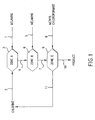
- Figure 1 schematically illustrates a process for producing triazine tris-methyl carbamate from melamine via trichloromelamine.
- Figure 2 schematically illustrate a process for producing triazine tris-methyl carbamate from melamine via hexachloromelamine.
- a process for preparing certain acid amides from a haloaminotriazine and an acid halide comprising the step of contacting said haloaminotriazine with said acid halide at a temperature and for a length of time sufficient to produce said acid amide as a product, and halogen as a by-product is disclosed.
- acid halide refers to a derivative of weak or strong hydroxylic acids wherein the hydroxy group is converted to a halogen.
- An example of an acid halide usable in this invention is acetyl chloride, which may be derived from acetic acid by converting the acid hydroxy group to chloride by a suitable reagent. Any acid halide can be employed in this invention.
- acid amide is used in the context of this invention to denote products derived from acid halides by a simple replacement of the halide atoms thereof with an amino group of a haloaminotriazine.
- a carbamate may be viewed to be an "acid amide" as defined herein, because a carbamate may be derived from a halo-formate by replacement of the halide with an amino group.
- haloaminotriazine is defined herein as an aminotriazine compound in which at least one amino nitrogen-bound hydrogen is replaced by a halogen atom.
- Equation (1) The reaction of amines with acid halides is known and may be exemplified by Equation (1):
- haloaminotriazines usable in this reaction are aminotriazine compounds wherein at least one nitrogen bound hydrogen is replaced by a halogen atom.
- the amine precursors of the haloaminotriazines of the invention may be monomeric or polymeric. They may be very soluble or sparingly soluble in organic solvents. Even haloaminotriazines which are derived from amine precursors that have solubilities less than 10 weight percent in organic solvents, particularly in halogenated organic solvents, are useful.
- haloaminotriazines usable in the process as described herein may be represented by the following formula (1): wherein
- each X group is the same or different and is selected from the group consisting of hydrogen, chloro, bromo, iodo and fluoro groups, provided that at least one X group is a halogen; and wherein each B group is the same or different and is selected from the group consisting of hydrogen, chloro, bromo, iodo, fluoro, triazino, pyrimidino, pyridino, imidazolo, tetrazolo, silyl, cyano, perfluoroalkyl, perfluoroaryl, and perfluoroaralkyl groups.
- the haloaminotriazines include monohalomelamine, dihalomelamine, trihalomelamine, tetrahalomelamine, pentahalomelamine, hexahalomelamine, isomers thereof, and mixtures thereof.
- the preferred halogen in the haloaminotriazine is chloride.
- the preferred haloaminotriazines are the chloromelamines.
- the most preferred chloromelamines are hexachloromelamine and N,N',N"-trichloromelamine isomers represented by the formulae: N,N',N"-trichloromelamine (also known as N,N',N"-trichloro-2,4,6-triamino-1,3,5-triazine) is commercially available from Aldrich Chemical Company, Milwaukee, WI, as an off white powder.
- the preparation of mono-, di-, tri-, and hexa-chloromelamine, and bromo-and iodo-melamines is reviewed in pages 159 to 162 of the article by B. Bann and S.A. Miller cited previously hereinabove and is further described in U.S. Patent No. 2,472,361 in detail.
- haloaminotriazine is a haloguanamine represented by the following formula [5] : wherein X and B are the same as defined above for formula [4] ; and wherein R is selected from the group consisting of linear alkyl of 1 to 20 carbon atoms, cyclic or branched alkyl of 3 to 20 carbon atoms, alkenyl of 2 to 20 carbon atoms, aryl of 6 to 20 carbon atoms, aralkyl of 7 to 20 carbon atoms, alkoxy of 1 to 20 carbon atoms, aryloxy of 6 to 20 carbon atoms, alkylthio of 1 to 20 carbon atoms, arylthio of 6 to 20 carbon atoms, alkylamino of 1 to 20 carbon atoms, dialkyl amino of 2 to 40 carbon atoms, morpholino, piperidino, pyrrolidino
- Haloguanamines are also among the preferred haloaminotriazines of the invention and include N-substituted mono-, di-, tri-, and tetra- halo acetoguanamines, cyclohexyl-carboguanamines and benzoguanamines. Particularly preferred are the haloguanamines where the halogen is chloride.
- the preferred halogen group is chloro
- the preferred Y group is a carbonyl group
- the preferred anchor Z group is selected from alkyl, haloalkyl, and alkoxy groups.
- acid halides usable in this invention are the following compounds represented by the formulae: wherein n is 2 to 8; wherein n is 2 to 8; and
- the most preferred acid halides are methyl chloroformate, n-butyl chloroformate, phenyl chloroformate, 2-chloroethyl chloroformate, ethyl chloroformate, propyl chloroformate, isopropyl chloroformate, isobutyl chloroformate, 2-ethylhexyl chloroformate, chloroacetyl chloride, 4-chlorobutyryl chloride, acryloyl chloride, methacryloyl chloride, oxalyl chloride, ethyloxalyl chloride, benzoyl chloride, para-nitrobenzoyl chloride, acetyl chloride, stearoyl chloride, and phosgene.
- the acid amide products of the invention may be represented by the formula: wherein A, B, Y, Z, and M are as defined previously above.
- a linear amide oligomer or polymer may be formed.
- a crosslinked polyamide network may be formed.
- N,N',N"-trichloromelamine and 4-chlorobutyryl chloride is N,N'N"-tris(4-chlorobutyryl) melamine represented by the formula:
- the trichloro tris-carbamate product may be readily reduced to the corresponding N-H compound using well known reducing agents such as alcohol/triethylamine, hydrogen halide, or sulfur compounds.
- the reduction product is the triazine tris-carbamate and is identical with a sample previously prepared by the more direct reaction of N,N',N"-trichloromelamine and methyl chloroformate described above.
- the amine-methanol reduction step is depicted below:
- the process as described herein comprises contacting a haloaminotriazine with an acid halide at a temperature and for a length of time sufficient to produce an acid amide as a product and halogen as a by-product.
- the preferred reaction temperature is in the range of from about -20°C to about 120°C, although higher or lower temperature may be employed.
- the reaction is typically carried out at about 70°C, but any temperature at which no significant decomposition of starting materials occurs is generally suitable.
- the preferred reaction time is in the range of from about 10 minutes to about 24 hours.
- the reaction is typically complete within a 2 to 8 hour period at about 70°C.
- the process may be carried out as a continuous or batch process. It is typically carried out by simply admixing, in any order, the haloaminotriazine and the acid halide reactants. Alternatively, an excess of one of the reactants may be used as a liquid medium to carry out the amide forming reaction.
- the liquid medium is typically a solvent for the haloaminotriazine and acid halide.
- the solvent is typically an aprotic solvent inert to chlorine or to the reactants.
- the reaction may also be carried out as a two phase reaction exemplified as a liquid/solid two phase reaction.
- the preferred solvent in the process as described herein is a halogenated solvent.
- the halogenated solvent is selected from the group consisting of methylene chloride, chloroform, carbon tetrachloride, 1,1,1-trichloroethane, chlorobenzene, ortho-dichlorobenzene, 1,2-dichloroethane, and a mixture of the least two of any of the aforementioned solvents.
- the reactants may generally be mixed in varying amounts, however at least one equivalent of acid halide per one equivalent of haloaminotriazine is generally required.
- the use of excess acid halide is preferred, particularly when the acid halide used is volatile, and therefore easily removable by distillation, or when the acid halide is used as a solvent in which the amide forming reaction of the invention is carried out.
- the reactants may be admixed with or without a solvent conveniently at room temperature, or at below ambient temperature particularly when the reaction is exothermic.
- the reaction mixture is typically heated to accelerate product formation.
- the reaction is usually carried out in an atmosphere of an inert gas under moisture free conditions. This minimizes the decomposition of reactants by atmospheric moisture and also minimizes the formation of undesirable hydrogen halide which may form from the reaction of moisture with the reactants.
- the halogen by-product produced during the reaction is substantially free of hydrogen halide.
- a rate accelerating catalyst such as trialkyl and triaryl phosphines, quaternary ammonium halides, or a monomeric or a polymeric 4-dialkylaminopyridine derivative may be added to the reactants, however, the process is typically carried out without adding a catalyst.
- Suitable dialkylaminopyridine catalysts include 4-dimethylaminopyridine, 4-pyrrolidinopyridine, 4-piperidinopyridine, and poly-2-vinyl-4-dimethylamino-pyridine (polydimethylaminopyridine).
- Suitable quaternary ammonium halides include ALIQUAT® 336 tricapryl methyl ammonium chloride, available from Kodak Laboratory Chemicals, Rochester, N.Y.
- the acid amide reaction product is obtained as a solution
- a process further comprising isolating the reaction product by removing the volatiles under reduced pressure may be used.
- the volatiles may be removed by distillation.
- the amide maybe precipitated by adding a solvent in which the amide is substantially insoluble.
- the product may be further purified by recrystallization, distillation, or chromatography.
- Melamine may be converted to an acid amide by two different processes, each involving recycling of the halogen by-product. No input of additional halogen is required except to make up for incidental halogen losses.
- the conversion in the first process is via the trihalomelamine, and in the second process, the conversion is via the hexahalomelamine.
- Both first and second processes are characterized by the following: the halogen by-product is recycled for use to convert additional melamine to hexahalomelamine.
- the two processes differ in that the first process comprises a step wherein a trihalomelamine is contacted with an acid halide, whereas the second process comprises a step wherein a hexahalomelamine is contacted with an acid halide.
- the first method is a process for producing an acid amide, more specifically, a triazine tris-acid amide from melamine via the trihalomelamine comprising the steps of:
- Steps (a) and (b) of this process is carried out by the procedures disclosed in U.S. Patent Nos. 2,472,361; 2,184,888; 2,184,886; and 2,184,883; and in European Patent No. 239,121.
- Step (c) is carried out under conditions described previously hereinabove in the section entitled "THE PROCESS".
- Recycling step (d) is carried out by removing the halogen by-product by means such as a stream of a carrier inert gas and collecting the halogen vapors by bubbling through an aqueous caustic solution to form a hypohalite solution to be used as the halogenating agent.
- the preferred halogens which are best suited for recycling are chlorine and bromine. Chlorine is the most preferred halogen.
- the halogen may be collected in an organic solvent and used as such to halogenate additional melamine.
- the second method is a process for producing an acid amide, more specifically, a triazine tris- acid amide from melamine via the hexahalomelamine comprising the steps of:
- Step (I) of this process is carried out by the procedures disclosed in U.S. Pat. Nos. 2,472,361; 2,184,888; 2,184,886; and 2,184,883.
- Step (II) is carried out under conditions described previously hereinabove in the section entitled the "THE PROCESS".
- Step (III) is carried out by introducing hydrogen halide slowly, over a period of several minutes to several hours, into the reaction mixture at a temperature in the range of -20° to 120°C.
- the preferred halogen halides are hydrogen chloride and hydrogen bromide.
- Gaseous hydrogen chloride is the most preferred hydrogen halide.
- Recycling step (IV) is carried out by removing the halogen by-product from both steps (II) and (III) with a stream of a carrier inert gas and with collecting the halogen vapors by bubbling through an aqueous caustic solution to be used as the halogenating agent.
- the preferred halogens which are best suited for recycling are chlorine and bromine. Chlorine is the most preferred halogen.
- the halogen may be collected in an organic solvent and used as such to halogenate additional melamine.
- FIGURE 1 illustrating the process for producing triazine tris-methyl carbamate from melamine via trichloromelamine
- melamine is introduced via line (1) and chlorine via line (2) into a reaction zone A (3) of the process and form hexachloromelamine.
- Hexachloromelamine is then sent via line (4) and additional melamine via line (5) into reaction zone B (6) of the process to form trichloromelamine by a chlorine exchange reaction between melamine and hexachloromelamine.
- Trichloromelamine is then sent via line (7) and methyl chloroformate via line (8) into a reaction zone C (9) of the process to form:
- FIGURE 2 illustrating the process for producing triazine tris-methyl carbamate from melamine via hexachloromelamine
- melamine is introduced via line (21) and chlorine via line (22) into reaction zone I (23) of the process to form hexachloromelamine.
- Hexachloromelamine is then sent via line (24) and methyl chloroformate via line (25) into reaction zone II (26) of the process to form:
- the process as described herein may also be employed to prepare isocyanates by contacting a haloaminotriazine with an acid halide selected from the group consisting of oxalyl chloride, phosgene and phosgene analogs to form an acid amide intermediate and decomposing the intermediate to an isocyanate.
- an acid halide selected from the group consisting of oxalyl chloride, phosgene and phosgene analogs to form an acid amide intermediate and decomposing the intermediate to an isocyanate.
- the acid amide intermediates are preferentially prepared in the same manner as discussed above for the acid amides.
- the acid halide employed is oxalyl chloride or phosgene
- the resulting acid amide intermediate is expected to be carbamoyl carbonyl chloride or carbamyl chloride, respectively.
- Exemplary phosgene analogs include, without limitation, diphosgene and triphosgene.
- Triphosgene (trichloromethyl carbonate) is understood by those skilled in the art to be a phosgene source. See , e.g. , M.J. Coghlan and B.A. Caley, "Trichloromethyl Carbonate as a Practical Phosgene Source” Tetrahedron Letters, Vol. 30, No. 16, pp. 2033-2036 (1989).
- the isocyanate is made by decomposing the intermediate. This decomposition can be accomplished by heating the intermediate or adding a base to act as either a catalyst or an acid scavenger.
- a typical base is triethylamine.
- the intermediate is decomposed to isocyanate by heating.
- the preferred decomposition temperature for forming the isocyanate from the acid amide intermediate is in the range of from about 40°C to about 140°C, although a higher or lower temperature may be employed if decomposition occurs.
- the reaction is typically carried out at about 100°C to 110°C, but any temperature which will cause the acid amide intermediate to decompose to an isocyanate is sufficient.
- the preferred reaction time for decomposing the acid amide intermediate to the isocyanate is in the range of about 1 hour to about 24 hours, although the time may be varied particularly depending on the temperature at which the reaction takes place.
- the intermediate may be isolated from the reaction mixture prior to decomposition.
- the acid amide intermediate is decomposed without isolating the intermediate from the reaction mixture, which typically also contains a halogenated solvent, such as ortho-dichlorobenzene.
- the process of this invention may be further employed to prepare isocyanate adducts by reacting the isocyanates prepared by the above-described process with active hydrogen-containing compounds.
- active-hydrogen containing compounds employed in this process include those known to one skilled in the art which have at least one active-hydrogen moiety selected from the group consisting of carboxyl, hydroxy, thiol, sulfonamide, amido, primary amine, secondary amine, salts thereof and mixtures thereof.
- the active-hydrogen containing compounds employed in this invention include known blocking agents.
- the active-hydrogen containing compound can comprise an aliphatic alcohol having one to twelve carbons, such as methyl, ethyl, chloroethyl, propyl, butyl, amyl, hexyl, 2-ethylhexyl, octyl, nonyl, 3, 3, 5-trimethylhexyl, decyl and lauryl alcohols and the like, cycloaliphatic alcohols such as cyclopentanol and cyclohexanol, aromatic alkyl such as phenyl carbinol, and phenols, such as phenol, o-, m-, and p-cresol, p-chlorophenol, beta naphtol and the like, as well as polyols such as ethylene glycol, propylene glycol, diethylene glycol, and the like.
- the active-hydrogen containing compounds may also comprise other known blocking groups which deblock at relatively low temperatures, e.g. below about 125°C, such as an oxime of an aldehyde or ketone (e.g., methylethyl-ketoxime, acetone oxime and cyclohexanone oxime), lactam (e.g., caprolactam), hydroxamic acid ester, imidazole, pyrazole, N-hydroxyimide (e.g., N-hydroxyphthalimide), dimethylamine, or other blocking groups such as recited in U.S. Patent No. 4,444,954,
- other known blocking groups which deblock at relatively low temperatures, e.g. below about 125°C, such as an oxime of an aldehyde or ketone (e.g., methylethyl-ketoxime, acetone oxime and cyclohexanone oxime), lactam (e.g., caprolactam
- active hydrogen-containing compounds besides blocking agents, may also be employed in the process as described herein to obtain isocyanate adducts having various functional groups appended to the acid amide.
- 4-amino-2,2,6,6,-tetramethyl piperidine can be reacted with an isocyanate to produce an isocyanate adduct having a urea linkage, the product of which may be a hindered amine light stabilizer.
- an active hydrogen-containing compound containing two or more active-hydrogen moieties may be employed resulting in an isocyanate adduct having an unreacted active-hydrogen moiety.
- the active hydrogen-containing compound used in the process as described herein includes aliphatic alcohols having 1 to 18 carbons, such as methanol, ethanol, isopropanol, propanol, isobutanol, butanol, tertiary butanol, pentanol, hexanol, heptanol, octanol, nonanol, decanol, lauryl alcohol, 2-ethyl hexanol, alkyl alcohol, glycidol and stearyl alcohol.
- aliphatic alcohols having 1 to 18 carbons such as methanol, ethanol, isopropanol, propanol, isobutanol, butanol, tertiary butanol, pentanol, hexanol, heptanol, octanol, nonanol, decanol, lauryl alcohol, 2-ethyl hexano
- the reaction temperature is preferably in a range of from about -20°C to about 100°C. Most preferably the reaction mixture is cooled to about 0°C prior to adding the active hydrogen containing compound to the isocyanate.
- the reaction mixture is stirred and chilled for a time ranging from about 5 minutes to about two hours after adding the active hydrogen-containing compound to the isocyanate. Generally, this mixture is then brought to room temperature and stirred for a time ranging from about 10 minutes to about ten hours.
- the isocyanate adducts may be isolated in any desired manner, such as by distillation of the solvent, followed by distillation of the residue under vacuum and purification by recrystallization.
- the process of preparing the isocyanates and isocyanate adducts are particularly preferred when the starting haloaminotriazine is a halomelamine or a haloguanamine.
- the process may be employed to prepare triazine tris-isocyanate or a triazine tris carbamate, such as triazine tris butyl carbamate.
- Products prepared by the processes as described herein have utility in diverse areas. In general, the utility of a particular product depends on its class.
- curable compositions members of the triazine tris-carbamate class have utility as cross-linking agents for polyfunctional active hydrogen compounds, including hydroxyfunctional and aminofunctional materials, as disclosed in detail in U.S. Patent No. 4,939,213 cited previously hereinabove.
- the curable compositions disclosed therein may be used in solvent-based, water-based, or powder coatings or they may be used as aqueous dispersions which are particularly suited to application by electrodeposition. They are thus useful in catalyzed or uncatalyzed, one component heat cured systems, for applications such as coatings, particularly powder coatings, coil coatings, and can coatings. They are also usable in non-coatings applications such as conventional moldings, reactive injection moldings, composites, adhesives, and binders.
- triazine tris-carbamates have utility as intermediates leading to other crosslinkers.
- they may be pyrolized to give triazine triisocyanates which themselves are excellent crosslinking agents as disclosed in U.S. Patent No. 4,939,213.
- the triazine tris-carbamates have utility as intermediates leading to polymer additives. They may be further converted to ultraviolet (UV) light stabilizers by substitution of at least one alkoxy or aryloxy group in the triazine tris-carbamates prepared by the process as described herein.
- UV light stabilizers by substitution of at least one alkoxy or aryloxy group in the triazine tris-carbamates prepared by the process as described herein.
- the product may be a hindered amine light stabilizer (HALS).
- reaction of triazine tris-phenylcarbamate with 4-amino-2,2,6,6-tetramethyl-piperidine at 25°C to 160°C temperature range produces, in good yield, a tris-urea derivative of melamine having the chemical name of tris-(2,2,6,6-tetramethyl-piperid-4-yl-aminocarbonyl) melamine represented by the formula:
- triacyl melamine class is the N,N',N"-tristearylmelamine which has utility in polishing waxes and in water repellant fabric finishes as disclosed in U.S. Patent No. 2,507,700.
- n is an integer from 1 to 5;
- the preferred compounds are those wherein x is chloride and n is 3 or 4.
- the tris-(omegahaloacyl) melamines are intermediates leading to the preparation of lactam-substituted triazine crosslinkers reprensented by formula: wherein n is an integer from 1 to 5.
- the preferred lactam-substituted triazine crosslinkers of the invention are those wherein n is 3 or 4.
- tris-lactam substituted triazine crosslinkers described in the immediately preceding paragraphs above are easily prepared from the corresponding tris-(omegahaloacyl)-melamines via an intramolecular cyclization reaction upon the action of a strong base, typically in a non-protic solvent having a high dielectric constant for dissolving the various ionic intermediates at room temperature.
- the intramolecular cyclization may be carried out at about 0°C to about 120°C in a period of time in the range of from 10 minutes to 24 hours.
- the product is isolated by adding a water-ice mixture to the reaction mixture to precipitate the lactam crosslinkers of the invention. Alternatively, the product may be extracted.
- N,N',N"-tris-(4-chlorobutyryl)-melamine represented by the formula: which has utility of being an intermediate leading to the N-substituted pyrrolidine crosslinking agent 2,4,6-tris(pyrrolidin-2-on-1-yl)-1,3,5-triazine, the utility of which as thermosetting resin material and hardening agents are disclosed in JP 58 146582.
- the tris-(N-pyrrolidonly)-triazine is represented by the formula: and may be easily prepared by a based-catalyzed intramolecular cyclization reaction of each of the 4-chlorobutyrylamino groups of the N,N'N"-tris-(4-chlorobutyryl) melamine precursor.
- Acylamino-s-triazine compounds are disclosed in US-A-2507700 for use as water repellants and constituents in polishing compositions and in US-A-4824845 as active ingredients in pesticidal compositions. There is no disclosure of compounds in which the imino groups are halogenated.
- the class of compounds according to the invention may be prepared by the process described above are N-halo acid amide compounds having the formula: wherein
- the compounds of the invention are useful intermediate products for the preparation of isocyanate products. Also, they are potentially useful as herbicides and pesticides as suggested by US-A-3920832, 4732899 and 4824845.
- the products prepared by the process described above are obtained by contacting haloaminotriazine and acid chloride reactants under the process conditions described above. They may comprise carboxylic acid amides, carbamates, sulfonamides, phosphoramides, ureas, thioureas, thiophosphoramides, amidines, amidate esters, and mixtures thereof.
- isocyanate products may be obtained by decomposing acid amide intermediates, such as carbamoyl chlorides, and carbamoyl carbonyl chlorides produced by contacting a haloaminotriazine with specific acid chlorides such as phosgene or oxalyl chloride.
- isocyanate adducts such as carbamates and ureas, are obtained by contacting active hydrogen-containing compounds with the isocyanates produced in accordance with this invention.
- Example 2 The procedure of Example 2 was repeated at 80°C using ethyl chloroformate (20.0 ml) in the place of methyl chloroformate.
- the product was triazine tris-ethyl carbamate (2.2g, 76% yield). m.p. greater than 300°C; decomposition started at about 200°C and peaked at about 260°C.
- Example 4 The procedure of Example 4 was essentially repeated using propyl chloroformate (10.0 ml) in the place of phenyl chloroformate.
- the product was triazine tris-propyl carbamate.
- 2.3 g of trichloromelamine was placed in a 250 ml flask equipped with a magnetic stirring bar, a reflux condenser and an argon inlet. To it was added 50 ml CCl 4 followed by 10.0 ml propyl chloroformate. The reaction mixture was gradually heated in an oil bath to 75°C and kept at 75°C for 6 hours.
- Example 4 The procedure of Example 4 was repeated using 2-chloroethyl chloroformate (3.5ml) in the place of phenyl chloroformate.
- the product was triazine tris-(2-chloroethylcarbamate). The procedure was as follows:
- Example 4 The procedure of Example 4 was repeated using 2-ethylhexyl chloroformate (86.7g) in the place of phenyl chloroformate.
- the product was triazine tris-(2-ethylhexylcarbamate).
- the procedure was as follows: A mixture of 11.5 g trichloromelamine, 150 ml o-dichlorobenzene and 86.7 g 2-ethylhexyl chloroformate was heated in a flask equipped with a magnetic stirring bar, an Argon inlet and a reflux condenser. The temperature of the oil bath was gradually increased to 67°C. After 6 hours at 67°C, the heating was discontinued and the reaction mixture concentrated under reduced pressure. Usual work-up of the reaction mixture gave a product which was characterized to be triazine tris-(2-ethylhexylcarbamate) on the basis of spectroscopic data.
- Example 3 The procedure of Example 3 was slightly modified and isobutyl chloroformate (16.4 ml) was used in the place of n-butyl chloroformate. The product was triazine tris-(iso-butylcarbamate). The slightly modified procedure was as follows:
- the reaction mixture was heated in an oil bath at 65 - 70° for 6 hours. It was then allowed to cool and excess isobutyl chloroformate and o-dichlorobenzene were removed under reduced pressure. The residue was treated with 100 ml hexanes and the precipitated material filtered and washed with 50 ml hexane and dried.
- the product was characterized to be triazine tris-isobutyl carbamate by 1 H NMR, 13 C NMR, IR, and mass spectroscopy. It decomposed starting at about 230 °C and peaked at about 245°C.
- Example 3 The procedure of Example 3 was essentially repeated using a mixture of haloformates consisting of 2-ethylhexyl chloroformate (4 ml) and methyl chloroformate (6.2 ml) in the place of n-butyl chloroformate.
- the product was a triazine tris-(mixed alkyl carbamate) wherein the mixed alkyl group consisted or 2-ethylhexyl and methyl groups in ratio in the range of from about 1:1.8 to about 1:0.77.
- the detailed experimental procedure was as follows:
- Example 6 The procedure of Example 6 was repeated at room temperature for 20 hrs, using acetyl chloride (15 ml) in the place of chloroacetyl chloride. The product was triacetyl melamine.
- Example 6 The procedure of Example 6 was essentially repeated using hexanoyl chloride (8.07g) in the place of chloroacetyl chloride. The product was trihexanoyl melamine.
- the experimental procedure as follows:
- Example 6 The procedure of Example 6 was essentially repeated using butyryl chloride (6.4 g) in the place of chloroacetyl chloride. The product was tri-butyryl melamine. The procedure was as follows:
- Example 6 The procedure of Example 6 was essentially repeated using benzoyl chloride (6.7 ml) in the place of chloroacetyl chloride. The product was tribenzoyl melamine. The procedure was as follows:
- Example 6 The procedure of Example 6 was essentially repeated using para-nitrobenzoyl chloride (5.55 g) in the place of chloroacetyl chloride. The product was tri-paranitrobenzoyl melamine. The procedure was a follows:
- Example 4 The procedure of Example 4 was essentially repeated using hexabromomelamine (5.2g). prepared by the procedure described in U.S. Pat. No. 2,472,361.
- the product was a yellow powder (2.30 g; 43% yield) which was analyzed by 1 H NMR, 13 C NMR, and IR. Titration for active bromine content gave a value of 5.85 mmol bromine per gram of product, which corresponds to 104.6% of the theoretical value. From the spectroscopic analysis and from the results of the titration, it was concluded the the product was N,N',N"-tribromo-N,N',N"-tris(methoxycarbonylamino-1,3,5-triazine).
- Acetoguanamine as a fine powder (12.5 grams) was mixed with 200 grams of deionized water and 27 grams of glacial acetic acid. The mixture was then cooled to about 13°C and to it was added with stirring an aqueous solution containing 33.5 grams of sodium hypochlorite in approximately 5 percent concentration over a period of one hour. Additional acetic acid was occasionally added during the course of the reaction to keep the solution pH below 7.
- the recovered product was characterized by 1 H NMR, 13 C NMR, and TLC analysis to be N,N',N"-triacetylmelamine, identical with the product of Example 14.
- the product was a lightly yellow tinted powder (0.66 gms, 98% yield) characterized to be the HCl salt of 2,4,6-trimethoxycarbonylamino)-1,3,5-triazine by 1 H and 13 C NMR.
- Triazine Trisbutylcarbamate from Hexachloromelamine And Phosgene
- Triazine Trisbutylcarbamate from Hexachloromelamine And Oxalyl Chloride
- Triazine Trisbutylcarbamate And Triazine Trismethylcarbamate From Hexachloromelamine And Trichloromethyl Chloroformate (Diphosgene)
- Part "A” was added to a two-neck flask containing 20 ml of n-butanol at about 0°C under argon while stirring. The reaction mixture was then stirred at room temperature for 2 hours. TLC analysis of the reaction mixture confirmed the formation of triazine trisbutylcarbamate when directly compared with an authentic sample prepared in Example 3. Volatiles were removed under reduced pressure to leave behind 1.0 gm of crude product.
- Part "B” was similarly treated with 20 ml of methanol at about 0°C to give 700 mg of crude product containing mainly triazine trismethylcarbamate confirmed by direct comparison on TLC with an authentic sample prepared in Example 2.
- Triazine Trisbutylcarbamate From Hexachloromelanine And Bis(trichloromethyl) Carbonate (Triphosgene)
- a mixture of 1.66 gm of hexachloromelamine, 1.78 gm of triphosgene and 10 ml ortho-dichlorobenzene was heated at 60°C in an oil bath with stirring under argon in a two-neck flask equipped with a reflux condenser and a glass stopper. After 24 hours at 60°C, the temperature of the oil bath was raised to 100°C for 24 hours and then the reaction mixture was slowly cooled down to about 0°C. n-Butanol (10 ml) was added to the cooled reaction mixture, which was then brought to room temperature and stirred for 4 hours. The reaction mixture was then diluted with 20 ml CH 2 Cl 2 and filtered. The filtrate showed a major spot corresponding to triazine trisbutylcarbamate on TLC, confirmed by direct comparison with an authentic sample.
- n-Butanol (10 ml) was added dropwise to the reaction mixture at about 0°C and the reaction mixture was stirred first at about 0°C for 10 minutes and then at room temperature for 4 hours. TLC analysis of the reaction mixture confirmed the formation of 2,4-di(butoxycarbonylamino)-6-phenyl-1,3,5-triazine.
- reaction mixture was then cooled to about 0°C and 10 ml n-butanol was added. The contents were stirred at about 0°C for 1 hour and at room temperature for 2 hours. TLC of the reaction mixture confirmed the formation of 2,4-di(butoxycarbonylamino)-6-phenyl-1,3,5-triazine.
Landscapes
- Chemical & Material Sciences (AREA)
- Organic Chemistry (AREA)
- Health & Medical Sciences (AREA)
- Chemical Kinetics & Catalysis (AREA)
- Medicinal Chemistry (AREA)
- Polymers & Plastics (AREA)
- Organic Low-Molecular-Weight Compounds And Preparation Thereof (AREA)
- Low-Molecular Organic Synthesis Reactions Using Catalysts (AREA)
- Plural Heterocyclic Compounds (AREA)
- Agricultural Chemicals And Associated Chemicals (AREA)
- Treatments For Attaching Organic Compounds To Fibrous Goods (AREA)
- Cosmetics (AREA)
- Heterocyclic Carbon Compounds Containing A Hetero Ring Having Nitrogen And Oxygen As The Only Ring Hetero Atoms (AREA)
Claims (1)
- Composé de formule :dans laquelle
 dans laquelleQ estou
 Q est choisi dans l'ensemble constitué des groupes alkyle linéaires comportant 1 à 20 atomes de carbone, des groupes alkyle cycliques ou ramifiés comportant 3 à 20 atomes de carbone, des groupes alcényle comportant 2 à 20 atomes de carbone, des groupes aryle comportant 6 à 20 atomes de carbone, des groupes aralkyle comportant 7 à 20 atomes de carbone, des groupes alcoxy comportant 1 à 20 atomes de carbone, des groupes aryloxy comportant 6 à 20 atomes de carbone, des groupes alkylthio comportant 1 à 20 atomes de carbone, des groupes arylthio comportant 6 à 20 atomes de carbone, des groupes alkylamino comportant 1 à 20 atomes de carbone, des groupes dialkylamino comportant 2 à 40 atomes de carbone, des groupes morpholino, pipéridino, pyrrolidino, aminotriazino, alkylaminotriazino, aminoalkylaminotniazino, hydrogène, chloro, bromo, iodo, fluoro, perfluoroalkyle, pertluoroaryle, perfluoroaralkyle; etdans lesquelles chaque R est indépendamment un groupe alkyle, aryle ou alcoxy; etX, dans chaque groupeest un hydrogène ou un halogène, à condition qu'au moins un groupe X soit un halogène choisi indépendamment dans l'ensemble constitué du chlorure, du bromure, de l'iodure et du fluorure; et
 Y, dans les groupesest identique ou différent, et chaque Y est choisi indépendamment dans l'ensemble constitué des fonctionnalités suivante représentées par les formules :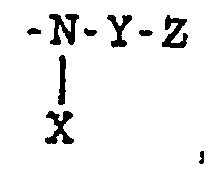


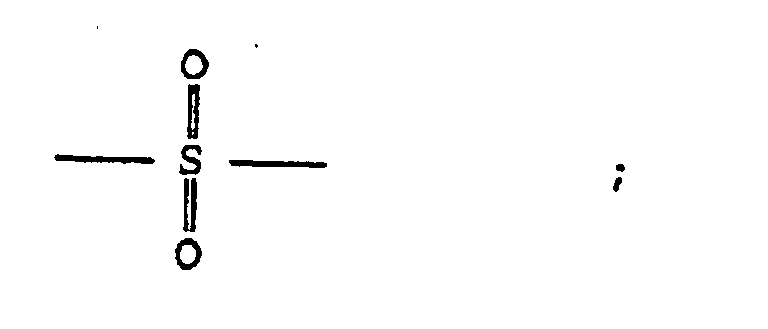
 et
et

Z est un ancrage M-fonctionnel choisi dans l'ensemble constitué d'un hydrogène, des groupes chloro, bromo, iodo, fluoro, vinyle, des groupes alkyle comportant 1 à 20 atomes de carbone, des groupes alkyléne comportant 1 à 20 atomes de carbone, des groupes arylène comportant 6 à 20 atomes de carbone, des groupes haloalkyles comportant 1 à 20 atomes de carbone, des groupes aryle comportant 6 à 20 atomes de carbone, des groupes halogénoaryle comportant 6 à 20 atomes de carbone, des groupes aralkyle comportent 7 à 20 atomes de carbone, des groupes halogénoaralkyle comportant 7 à 20 atomes de carbone, des groupes acyle comportant 2 à 20 atomes de carbone, des groupes halogénoacyle comportant 2 à 20 atomes de carbone, des groupes halogénocarbonyle, des groupes alcoxycarbonyle comportant 2 à 20 atomes de carbone, des groupes alkylthiocarbonyle comportant 2 à 20 atomes de carbone, des groupes halogénoalcoxy comportant 2 à 20 atomes de carbone, d'un groupé aminocarbonyle, des groupes alkylaminocarbonyle comportant 2 à 20 atomes de carbone, des groupes dialkylaminocarbonyle comportant 3 à 20 atomes de carbone, des groupes alcénylaminocarbonyle comportant 4 à 20 atomes de carbone,
des groupes dialcénylaminocarbonyle comportant 7 à 40 atomes de carbone, des groupes alkylalcénylaminocarbonyle comportant 5 à 20 atomes de carbone, des groupes perfluoroalkyle comportant 1 à 20 atomes de carbone, des groupes perfluoroaryle comportant 6 à 20 atomes de carbone, des groupes perfluoroaralkyle comportant 7 à 20 atomes de carbone, des groupes halogénoalkyle comportant 1 à 20 atomes de carbone, des groupes alcoxycarbonylakyle comportant 3 à 20 atomes de carbone, des groupes cyanoalkyle comportant 2 à 20 atomes de carbone, des groupes formylalkyle comportant 2 à 20 atomes de carbone, des groupes cétoalkyle comportant 3 à 20 atomes de carbone, des groupes trialcoxysilylalkyle comportant 4 à 20 atomes de carbone, des groupes dialkylaminoalkyle comportant 3 à 20 atomes de carbone, des groupes alcoxyalkyle comportant 2 à 20 atomes de carbone, des groupes alcényloxy comportant 3 à 20 atomes de carbone, des groupes alkylènedioxy comportant 2 à 20 atomes de carbone, des groupes arylènedioxy comportant 6 à 20 atomes de carbone, des groupes N,N-dialkylamino comportant 2 à 40 atomes de carbone, des groupes N,N-dialcénylamino comportant 6 à 40 atomes de carbone, des groupes N,Ndiarylamino comportant 12 à 40 atomes de carbone, des groupes N,N-alkylalcénylamino comportent 4 à 20 atomes de carbone, des groupes N,N-alkylarylamino comportant 7 à 20 atomes de carbone, des groupes N,N-alcénylarylamino comportant 9 à 20 atomes de carbone, des groupes aziridino, azétidino, pyrrolidino, pipéridino, morpholino, des groupes alkylmercapto comportant 1 à 20 atomes de carbone, des groupes alcénylmercapto comportant 3 à 20 atomes de carbone, et des groupes arylmercapto comportant 6 à 20 atomes de carbone.
Applications Claiming Priority (5)
| Application Number | Priority Date | Filing Date | Title |
|---|---|---|---|
| US79307791A | 1991-11-15 | 1991-11-15 | |
| US793077 | 1991-11-15 | ||
| US968871 | 1992-10-30 | ||
| US07/968,871 US5288865A (en) | 1991-11-15 | 1992-10-30 | Process for preparing amide derivatives from haloaminotriazines and acid halides |
| EP92119485A EP0565774B1 (fr) | 1991-11-15 | 1992-11-13 | Procédé pour la préparation de dérivés d'amides à partir de haloaminotriazines et de halogénures d'acides |
Related Parent Applications (1)
| Application Number | Title | Priority Date | Filing Date |
|---|---|---|---|
| EP92119485A Division EP0565774B1 (fr) | 1991-11-15 | 1992-11-13 | Procédé pour la préparation de dérivés d'amides à partir de haloaminotriazines et de halogénures d'acides |
Publications (2)
| Publication Number | Publication Date |
|---|---|
| EP0933371A1 EP0933371A1 (fr) | 1999-08-04 |
| EP0933371B1 true EP0933371B1 (fr) | 2003-04-09 |
Family
ID=27121360
Family Applications (5)
| Application Number | Title | Priority Date | Filing Date |
|---|---|---|---|
| EP99101493A Expired - Lifetime EP0930303B1 (fr) | 1991-11-15 | 1992-11-13 | Procédé pour la préparation de composés d'isocyanate à partir de haloaminotriazines et de halogénures d'acides |
| EP99101466A Expired - Lifetime EP0933371B1 (fr) | 1991-11-15 | 1992-11-13 | Amides d'acides N-halogénés |
| EP99101496A Withdrawn EP0933370A1 (fr) | 1991-11-15 | 1992-11-13 | Tris-(2,2,6,6-tétraméthyl-piperid-4-yl-aminocarbonyl)mélamine |
| EP99101495A Withdrawn EP0933369A1 (fr) | 1991-11-15 | 1992-11-13 | Tris-(oméga-haloacyl)mélamines |
| EP92119485A Expired - Lifetime EP0565774B1 (fr) | 1991-11-15 | 1992-11-13 | Procédé pour la préparation de dérivés d'amides à partir de haloaminotriazines et de halogénures d'acides |
Family Applications Before (1)
| Application Number | Title | Priority Date | Filing Date |
|---|---|---|---|
| EP99101493A Expired - Lifetime EP0930303B1 (fr) | 1991-11-15 | 1992-11-13 | Procédé pour la préparation de composés d'isocyanate à partir de haloaminotriazines et de halogénures d'acides |
Family Applications After (3)
| Application Number | Title | Priority Date | Filing Date |
|---|---|---|---|
| EP99101496A Withdrawn EP0933370A1 (fr) | 1991-11-15 | 1992-11-13 | Tris-(2,2,6,6-tétraméthyl-piperid-4-yl-aminocarbonyl)mélamine |
| EP99101495A Withdrawn EP0933369A1 (fr) | 1991-11-15 | 1992-11-13 | Tris-(oméga-haloacyl)mélamines |
| EP92119485A Expired - Lifetime EP0565774B1 (fr) | 1991-11-15 | 1992-11-13 | Procédé pour la préparation de dérivés d'amides à partir de haloaminotriazines et de halogénures d'acides |
Country Status (11)
| Country | Link |
|---|---|
| US (3) | US5288865A (fr) |
| EP (5) | EP0930303B1 (fr) |
| JP (1) | JP3435654B2 (fr) |
| KR (1) | KR100254047B1 (fr) |
| AT (3) | ATE258925T1 (fr) |
| AU (1) | AU655688B2 (fr) |
| BR (1) | BR9204416A (fr) |
| CA (1) | CA2082880A1 (fr) |
| DE (3) | DE69233001T2 (fr) |
| ES (1) | ES2215338T3 (fr) |
| NO (1) | NO301711B1 (fr) |
Families Citing this family (44)
| Publication number | Priority date | Publication date | Assignee | Title |
|---|---|---|---|---|
| TW328955B (en) * | 1993-05-14 | 1998-04-01 | Cytec Tech Corp | Process for preparing bis- or tris-carbamate functional 1,3,5-triazines, substantially halogen contamination free crosslinker compositions and new bis-or tris-carbamate functional 1,3,5-triazines |
| DE4331085A1 (de) * | 1993-09-13 | 1995-03-16 | Basf Ag | Stabile, nach phosgenfreien Verfahren erhältliche Polyisocyanatzusammensetzungen und ein Verfahren zu ihrer Herstellung |
| US6197957B1 (en) * | 1993-10-15 | 2001-03-06 | Cytec Technology Corp. | Process for preparing derivatives of (halo)amino-1,3,5-triazines by carbonylation |
| US5556971A (en) * | 1994-05-06 | 1996-09-17 | Cytec Technology Corp. | Process for preparing isocyanate and isocyanate-based derivatives of certain amino-1,3,5-triazines by direct phosgenation |
| US6204382B1 (en) | 1994-08-05 | 2001-03-20 | Cytec Technology Corp. | Carboxylated amino-1,3,5-triazines, derivatives thereof and processes for preparing the same |
| US6448398B1 (en) | 1994-10-18 | 2002-09-10 | Cytec Technology Corp. | Process for preparing acid amides from (Si, Ge, or Sn substituted amino)-1,3,5-triazines and acid halides |
| US5596047A (en) * | 1994-11-16 | 1997-01-21 | Cytec Technology Corp. | Water-dispersible and curable waterborne compositions containing 1,3,5-triazine carbamates |
| US5672703A (en) * | 1995-03-21 | 1997-09-30 | Cytec Technology Corp. | 1,3,5-triazine compounds substituted with acetal and/or cyclized acetal-based groups |
| US5565243A (en) * | 1995-05-01 | 1996-10-15 | Ppg Industries, Inc. | Color-clear composite coatings having improved hardness, acid etch resistance, and mar and abrasion resistance |
| CA2230604C (fr) * | 1995-08-30 | 2008-12-02 | Cytec Technology Corp. | Compositions contenant des carbamates 1,3,5-triazine et des composes epoxy |
| AU2316897A (en) * | 1996-03-01 | 1997-09-16 | Cytec Technology Corp. | Cyclic imido-1,3,5-triazine crosslinking agents |
| DE19648843C2 (de) * | 1996-11-26 | 1998-09-17 | Zts Chemie Gmbh | Melamin-polycarbonsäureamide und ihre Verwendung als Korrosionsschutzmittel |
| WO1998027166A2 (fr) | 1996-12-18 | 1998-06-25 | Basf Coatings Ag | Agent de revetement et son procede de fabrication |
| EP0946623B2 (fr) * | 1996-12-18 | 2004-06-23 | BASF Coatings Aktiengesellschaft | Agent de revetement et son procede de production |
| DE19730889A1 (de) | 1997-07-18 | 1999-01-21 | Basf Coatings Ag | Wäßriger Lack, enthaltend eine mehrkomponentige wäßrige Dispersion |
| EP1023412B1 (fr) | 1997-10-15 | 2003-01-15 | E.I. Du Pont De Nemours And Company | Compositions de revetement contenant un polymere disperse non aqueux, un polymere acrylique a fonction silane et une triazine |
| BR9911246A (pt) | 1998-06-16 | 2001-03-13 | Cytec Tech Corp | Processo para a preparação de um derivado de 1,3,5-triazina carbamato |
| DE19839453A1 (de) | 1998-08-29 | 2000-03-02 | Basf Coatings Ag | Oligomere und hochmolekulare Umsetzungsprodukte von Allophansäureestern mit nucleophilen Verbindungen und niedermolekulare, oligomere und hochmolekulare Verbindungen mit Allophanatseiten- und/oder -endgruppen sowie ihre Verwendung |
| DE19840605A1 (de) | 1998-09-05 | 2000-03-09 | Basf Coatings Ag | Hyperverzweigte Verbindungen mit einer tetrafunktionellen Zentralgruppe und ihre Verwendung |
| DE19841842C2 (de) | 1998-09-12 | 2000-07-06 | Basf Coatings Ag | Strukturviskose, von organischen Lösemitteln und externen Emulgatoren freie Pulverklarlack-Slurry, Verfahren zu ihrer Herstellung und ihre Verwendung |
| US6121446A (en) * | 1998-11-10 | 2000-09-19 | Cytec Technology Corporation | Preparation of tris-substituted alkoxycarbonylamino-1,3,5-triazine compounds |
| DE19908013A1 (de) | 1999-02-25 | 2000-08-31 | Basf Coatings Ag | Mit aktinischer Strahlung und gegebenenfalls themisch härtbare Pulverslurrys, Verfahren zu ihrer Herstellung und ihre Verwendung |
| DE10001442A1 (de) * | 2000-01-15 | 2001-10-18 | Basf Coatings Ag | Strukturviskose, von organischen Lösemitteln freie Pulverklarlack-Slurry, Verfahren zu ihrer Herstellung und ihre Verwendung |
| DE10004498A1 (de) * | 2000-02-02 | 2001-08-09 | Basf Coatings Ag | Diethyloctandioldicarbamate und Diethyloctandioldiallophanate, Verfahren zu ihrer Herstellung und ihre Verwendung |
| DE10010405A1 (de) * | 2000-03-03 | 2001-09-13 | Basf Coatings Ag | Wäßrige (Meth)Acrylatcopolymerisat-Dispersionen, Verfahren zu ihrer Herstellung und ihre Verwendung |
| DE10040223C2 (de) * | 2000-08-17 | 2002-12-05 | Basf Coatings Ag | Strukturviskose, von organischen Lösemitteln und externen Emulgatoren freie Pulverklarlack-Slurry, Verfahren zu ihrer Herstellung und ihre Verwendung |
| DE10055464B4 (de) * | 2000-11-09 | 2006-06-14 | Basf Coatings Ag | Strukturviskose, von organischen Lösemitteln und externen Emulgatoren freie Pulverklarlack-Slurry und ihre Verwendung |
| DE10126651A1 (de) * | 2001-06-01 | 2002-12-12 | Basf Coatings Ag | Pulverlacksuspensionen (Pulverslurries) und Pulverlacke, Verfahren zu ihrer Herstellung und ihre Verwendung |
| US6900270B2 (en) | 2002-10-31 | 2005-05-31 | Basf Corporation | Curable coating compositions with carbamate compounds |
| US6858674B2 (en) | 2002-10-31 | 2005-02-22 | Basf Corporation | Carbamate functional materials, a method of making said materials, and curable coating compositions containing said materials |
| US6977309B2 (en) | 2002-10-31 | 2005-12-20 | Basf Corporation | Compounds having a secondary or tertiary hydroxy of halide group separated from a primary carbamate group by three or more carbon atoms and a method of making the same |
| US20040030176A1 (en) * | 2001-09-05 | 2004-02-12 | Ohrbom Walter H. | Gamma hydroxy carbamate compounds and method of making and using the same |
| US6890994B2 (en) * | 2002-10-31 | 2005-05-10 | Basf Corporation | Curable coating compositions with carbamate-containing acrylic polymers |
| DE10259672A1 (de) * | 2002-12-18 | 2004-07-01 | Basf Ag | Verfahren zur Herstellung von Alkoxycarbonylamino-triazinen |
| DE10353638A1 (de) | 2003-11-17 | 2005-06-23 | Basf Coatings Ag | Strukturviskose, wässrige Dispersionen, Verfahren zu ihrer Herstellung und ihre Verwendung |
| US20050249879A1 (en) * | 2004-05-10 | 2005-11-10 | Jenkins Steven A | Packaging coating containing 1,3,5-triazine carbamate crosslinker |
| DE102008016050A1 (de) | 2007-12-24 | 2009-06-25 | Voest-Alpine Stahl Gmbh | Flexibler Primer und dessen Verwendung |
| US8143400B2 (en) * | 2008-01-10 | 2012-03-27 | Apotex Pharmachem Inc. | Process for the preparation and purification of cis-2-methylspiro(1,3-oxathiolane-5,3′)quiniclidine hydrochloride |
| JP6116577B2 (ja) | 2011-11-17 | 2017-04-19 | ビーエーエスエフ コーティングス ゲゼルシャフト ミット ベシュレンクテル ハフツングBASF Coatings GmbH | グリセロールジエステルを含有する被覆剤および多層塗膜における当該被覆剤の使用 |
| DE102014006519A1 (de) | 2014-05-03 | 2015-11-05 | Smart Material Printing B.V. | Verwendung magnetischer und/oder magnetisierbarer, polymerer Mikro- und/oder Nanocomposite zur Herstellung komplexer, magnetischer und/oder magnetisierbarer Formteile mithilfe additiver Fabrikatoren |
| EP3247210A1 (fr) | 2015-01-21 | 2017-11-29 | Smartmaterialprinting B.V. | Traitement biocide d'objets et d'agents de nettoyage et de soins corporels aqueux au moyen de micro- et/ou de nanoparticules de polyoxométallate |
| DE102015000814A1 (de) | 2015-01-21 | 2016-07-21 | Smart Material Printing B.V. | Biozide Ausrüstung von Gegenständen mit Polyoxometallat-Mikro- und/oder -Nanopartikeln |
| DE102018000418A1 (de) | 2018-01-20 | 2019-07-25 | Bürkle Consulting Gmbh | Mechanochemisches Verfahren zur Herstellung von von persistenten organischen Schadstoffen und anderen Organohalogenverbindungen freien Wertprodukten aus Abfällen von Kunststoffen und Kunststofflaminaten |
| DE102018003906A1 (de) | 2018-05-07 | 2019-11-07 | Smart Material Printing | Verwendung von Polyoxometallaten gegen den Befall von Eukaryotenkulturen, Virenkulturen und Mikroorganismenpopulationen durch Mollicuten sowie mollicutenhemmende und -abtötende polyoxometallathaltige Stoffe und Verfahren |
Citations (2)
| Publication number | Priority date | Publication date | Assignee | Title |
|---|---|---|---|---|
| US2507700A (en) * | 1946-11-27 | 1950-05-16 | Monsanto Chemicals | N, n', n''-triacylmelamines |
| US4824845A (en) * | 1983-12-02 | 1989-04-25 | Ciba-Geigy Corporation | Pesticidal compositions |
Family Cites Families (18)
| Publication number | Priority date | Publication date | Assignee | Title |
|---|---|---|---|---|
| US2577418A (en) * | 1951-12-04 | Tall oil-melamine reaction product | ||
| US2184886A (en) * | 1939-12-26 | Organic composition of high | ||
| US2184888A (en) * | 1939-12-26 | Halogenated material and method of | ||
| US2184883A (en) * | 1939-12-26 | Composition of matter and method | ||
| US2472361A (en) * | 1944-10-30 | 1949-06-07 | William C Arsem | Active halogen compounds and processes for their production |
| NL285972A (fr) * | 1961-11-28 | 1900-01-01 | ||
| CH436320A (de) * | 1962-02-06 | 1967-05-31 | Geigy Ag J R | Verfahren zur Herstellung von Acylmelaminverbindungen |
| BE755460A (fr) * | 1969-08-28 | 1971-02-01 | Bayer Ag | Isocyanates de s-triazinyle, leur preparation et leur utilisation dans la fabrication de resines de polyurethanes |
| US3684765A (en) * | 1970-01-08 | 1972-08-15 | Sankyo Co | Stabilization of synthetic polymers |
| US3743642A (en) * | 1971-04-02 | 1973-07-03 | Basf Ag | Triazine derivatives |
| CH572047A5 (fr) * | 1973-03-01 | 1976-01-30 | Ciba Geigy Ag | |
| US3920832A (en) * | 1974-04-18 | 1975-11-18 | Sol J Barer | N-chloro carbamates as insecticides and fungicides |
| DE2640409C2 (de) * | 1976-09-08 | 1985-04-18 | Chemische Werke Hüls AG, 4370 Marl | Epoxidharz-Härter-Mischungen zur Herstellung von Formkörpern und Überzügen |
| JPS58146582A (ja) * | 1982-02-26 | 1983-09-01 | Toshiba Corp | トリアジン系化合物およびその製造方法 |
| PH23300A (en) * | 1985-12-02 | 1989-06-30 | Ciba Geigy Ag | (di) alkoxy carbonylamino-s-triazine derivatives and the use thereof against pests which are parasite of domestic animals and cultivated plants |
| IT1188640B (it) * | 1986-03-28 | 1988-01-20 | Montedipe Spa | Processo per la produzione di tricloromelammina |
| US4939213A (en) * | 1988-12-19 | 1990-07-03 | American Cyanamid Company | Triazine crosslinking agents and curable compositions containing the same |
| US5084541A (en) * | 1988-12-19 | 1992-01-28 | American Cyanamid Company | Triazine crosslinking agents and curable compositions |
-
1992
- 1992-10-30 US US07/968,871 patent/US5288865A/en not_active Expired - Lifetime
- 1992-11-13 EP EP99101493A patent/EP0930303B1/fr not_active Expired - Lifetime
- 1992-11-13 DE DE69233001T patent/DE69233001T2/de not_active Expired - Fee Related
- 1992-11-13 EP EP99101466A patent/EP0933371B1/fr not_active Expired - Lifetime
- 1992-11-13 CA CA002082880A patent/CA2082880A1/fr not_active Abandoned
- 1992-11-13 EP EP99101496A patent/EP0933370A1/fr not_active Withdrawn
- 1992-11-13 AU AU28361/92A patent/AU655688B2/en not_active Ceased
- 1992-11-13 AT AT99101493T patent/ATE258925T1/de not_active IP Right Cessation
- 1992-11-13 DE DE69231759T patent/DE69231759T2/de not_active Expired - Fee Related
- 1992-11-13 DE DE69233302T patent/DE69233302T2/de not_active Expired - Fee Related
- 1992-11-13 ES ES99101493T patent/ES2215338T3/es not_active Expired - Lifetime
- 1992-11-13 EP EP99101495A patent/EP0933369A1/fr not_active Withdrawn
- 1992-11-13 AT AT99101466T patent/ATE236889T1/de not_active IP Right Cessation
- 1992-11-13 NO NO924394A patent/NO301711B1/no not_active IP Right Cessation
- 1992-11-13 AT AT92119485T patent/ATE200078T1/de not_active IP Right Cessation
- 1992-11-13 EP EP92119485A patent/EP0565774B1/fr not_active Expired - Lifetime
- 1992-11-14 KR KR1019920021428A patent/KR100254047B1/ko not_active Expired - Fee Related
- 1992-11-16 JP JP33005092A patent/JP3435654B2/ja not_active Expired - Fee Related
- 1992-11-16 BR BR929204416A patent/BR9204416A/pt not_active IP Right Cessation
-
1993
- 1993-11-10 US US08/150,679 patent/US5405959A/en not_active Expired - Lifetime
-
1995
- 1995-03-03 US US08/398,256 patent/US5571915A/en not_active Expired - Lifetime
Patent Citations (2)
| Publication number | Priority date | Publication date | Assignee | Title |
|---|---|---|---|---|
| US2507700A (en) * | 1946-11-27 | 1950-05-16 | Monsanto Chemicals | N, n', n''-triacylmelamines |
| US4824845A (en) * | 1983-12-02 | 1989-04-25 | Ciba-Geigy Corporation | Pesticidal compositions |
Also Published As
| Publication number | Publication date |
|---|---|
| ATE236889T1 (de) | 2003-04-15 |
| AU2836192A (en) | 1993-05-20 |
| ATE200078T1 (de) | 2001-04-15 |
| JP3435654B2 (ja) | 2003-08-11 |
| DE69233001D1 (de) | 2003-05-15 |
| ES2215338T3 (es) | 2004-10-01 |
| NO924394L (no) | 1993-05-18 |
| CA2082880A1 (fr) | 1993-05-16 |
| BR9204416A (pt) | 1993-07-20 |
| NO301711B1 (no) | 1997-12-01 |
| EP0565774B1 (fr) | 2001-03-28 |
| JPH05239038A (ja) | 1993-09-17 |
| AU655688B2 (en) | 1995-01-05 |
| EP0933371A1 (fr) | 1999-08-04 |
| DE69231759D1 (de) | 2001-05-03 |
| EP0930303B1 (fr) | 2004-02-04 |
| DE69233001T2 (de) | 2004-02-12 |
| DE69233302D1 (de) | 2004-03-11 |
| EP0933369A1 (fr) | 1999-08-04 |
| KR100254047B1 (ko) | 2000-05-01 |
| US5288865A (en) | 1994-02-22 |
| DE69231759T2 (de) | 2001-10-04 |
| EP0930303A3 (fr) | 1999-07-28 |
| US5405959A (en) | 1995-04-11 |
| DE69233302T2 (de) | 2004-07-01 |
| ATE258925T1 (de) | 2004-02-15 |
| US5571915A (en) | 1996-11-05 |
| EP0565774A2 (fr) | 1993-10-20 |
| EP0565774A3 (en) | 1994-08-17 |
| NO924394D0 (no) | 1992-11-13 |
| EP0930303A2 (fr) | 1999-07-21 |
| EP0933370A1 (fr) | 1999-08-04 |
Similar Documents
| Publication | Publication Date | Title |
|---|---|---|
| EP0930303B1 (fr) | Procédé pour la préparation de composés d'isocyanate à partir de haloaminotriazines et de halogénures d'acides | |
| EP0624577B1 (fr) | Procédé pour la préparation de 1,3,5-triazine carbamates, 1,3,5-triazine contenant au moins deux carbamates fonctionelles | |
| EP0541966A2 (fr) | Procédé pour la préparation de dérivés d'amides à partir de haloaminotriazines et de halogénures d'acides | |
| US4871861A (en) | Substituted 5-amidotetrazoles | |
| US6448398B1 (en) | Process for preparing acid amides from (Si, Ge, or Sn substituted amino)-1,3,5-triazines and acid halides | |
| KR100254048B1 (ko) | 할로아민 및 산 할라이드로 부터 아미드 유도체를제조하는 방법 | |
| ES2202360T3 (es) | Procedimiento para la preparacion de derivados isocianato y basados en isocianato de ciertas amino-1,3,5-triacinas mediante fosgenacion directa. | |
| MXPA97002550A (en) | Process for preparing amidas de ac | |
| US4921965A (en) | Method of producing alkyl substituted 5-amidotetrazoles | |
| CA2335137A1 (fr) | Procede de preparation de carbamates de triazine | |
| CA2202883A1 (fr) | Procede de preparation d'amides d'acide |
Legal Events
| Date | Code | Title | Description |
|---|---|---|---|
| PUAI | Public reference made under article 153(3) epc to a published international application that has entered the european phase |
Free format text: ORIGINAL CODE: 0009012 |
|
| 17P | Request for examination filed |
Effective date: 19990127 |
|
| AC | Divisional application: reference to earlier application |
Ref document number: 565774 Country of ref document: EP |
|
| AK | Designated contracting states |
Kind code of ref document: A1 Designated state(s): AT BE CH DE DK ES FR GB GR IE IT LI LU MC NL PT SE |
|
| RIN1 | Information on inventor provided before grant (corrected) |
Inventor name: GUPTA, RAM B. |
|
| 17Q | First examination report despatched |
Effective date: 20001228 |
|
| GRAG | Despatch of communication of intention to grant |
Free format text: ORIGINAL CODE: EPIDOS AGRA |
|
| GRAG | Despatch of communication of intention to grant |
Free format text: ORIGINAL CODE: EPIDOS AGRA |
|
| GRAG | Despatch of communication of intention to grant |
Free format text: ORIGINAL CODE: EPIDOS AGRA |
|
| GRAH | Despatch of communication of intention to grant a patent |
Free format text: ORIGINAL CODE: EPIDOS IGRA |
|
| GRAH | Despatch of communication of intention to grant a patent |
Free format text: ORIGINAL CODE: EPIDOS IGRA |
|
| GRAA | (expected) grant |
Free format text: ORIGINAL CODE: 0009210 |
|
| AC | Divisional application: reference to earlier application |
Ref document number: 0565774 Country of ref document: EP Kind code of ref document: P |
|
| AK | Designated contracting states |
Designated state(s): AT BE CH DE DK ES FR GB GR IE IT LI LU MC NL PT SE |
|
| PG25 | Lapsed in a contracting state [announced via postgrant information from national office to epo] |
Ref country code: LI Free format text: LAPSE BECAUSE OF FAILURE TO SUBMIT A TRANSLATION OF THE DESCRIPTION OR TO PAY THE FEE WITHIN THE PRESCRIBED TIME-LIMIT Effective date: 20030409 Ref country code: CH Free format text: LAPSE BECAUSE OF FAILURE TO SUBMIT A TRANSLATION OF THE DESCRIPTION OR TO PAY THE FEE WITHIN THE PRESCRIBED TIME-LIMIT Effective date: 20030409 Ref country code: AT Free format text: LAPSE BECAUSE OF FAILURE TO SUBMIT A TRANSLATION OF THE DESCRIPTION OR TO PAY THE FEE WITHIN THE PRESCRIBED TIME-LIMIT Effective date: 20030409 |
|
| REG | Reference to a national code |
Ref country code: GB Ref legal event code: FG4D |
|
| REG | Reference to a national code |
Ref country code: CH Ref legal event code: EP |
|
| REG | Reference to a national code |
Ref country code: IE Ref legal event code: FG4D |
|
| PG25 | Lapsed in a contracting state [announced via postgrant information from national office to epo] |
Ref country code: SE Free format text: LAPSE BECAUSE OF FAILURE TO SUBMIT A TRANSLATION OF THE DESCRIPTION OR TO PAY THE FEE WITHIN THE PRESCRIBED TIME-LIMIT Effective date: 20030709 Ref country code: PT Free format text: LAPSE BECAUSE OF FAILURE TO SUBMIT A TRANSLATION OF THE DESCRIPTION OR TO PAY THE FEE WITHIN THE PRESCRIBED TIME-LIMIT Effective date: 20030709 Ref country code: GR Free format text: LAPSE BECAUSE OF FAILURE TO SUBMIT A TRANSLATION OF THE DESCRIPTION OR TO PAY THE FEE WITHIN THE PRESCRIBED TIME-LIMIT Effective date: 20030709 Ref country code: DK Free format text: LAPSE BECAUSE OF FAILURE TO SUBMIT A TRANSLATION OF THE DESCRIPTION OR TO PAY THE FEE WITHIN THE PRESCRIBED TIME-LIMIT Effective date: 20030709 |
|
| REG | Reference to a national code |
Ref country code: CH Ref legal event code: PL |
|
| PG25 | Lapsed in a contracting state [announced via postgrant information from national office to epo] |
Ref country code: ES Free format text: LAPSE BECAUSE OF FAILURE TO SUBMIT A TRANSLATION OF THE DESCRIPTION OR TO PAY THE FEE WITHIN THE PRESCRIBED TIME-LIMIT Effective date: 20031030 |
|
| PG25 | Lapsed in a contracting state [announced via postgrant information from national office to epo] |
Ref country code: LU Free format text: LAPSE BECAUSE OF NON-PAYMENT OF DUE FEES Effective date: 20031113 Ref country code: IE Free format text: LAPSE BECAUSE OF NON-PAYMENT OF DUE FEES Effective date: 20031113 |
|
| ET | Fr: translation filed | ||
| PG25 | Lapsed in a contracting state [announced via postgrant information from national office to epo] |
Ref country code: MC Free format text: LAPSE BECAUSE OF NON-PAYMENT OF DUE FEES Effective date: 20031130 |
|
| PLBE | No opposition filed within time limit |
Free format text: ORIGINAL CODE: 0009261 |
|
| STAA | Information on the status of an ep patent application or granted ep patent |
Free format text: STATUS: NO OPPOSITION FILED WITHIN TIME LIMIT |
|
| 26N | No opposition filed |
Effective date: 20040112 |
|
| ET1 | Fr: translation filed ** revision of the translation of the patent or the claims | ||
| REG | Reference to a national code |
Ref country code: IE Ref legal event code: MM4A |
|
| PGFP | Annual fee paid to national office [announced via postgrant information from national office to epo] |
Ref country code: GB Payment date: 20041004 Year of fee payment: 13 |
|
| PGFP | Annual fee paid to national office [announced via postgrant information from national office to epo] |
Ref country code: NL Payment date: 20041006 Year of fee payment: 13 |
|
| PGFP | Annual fee paid to national office [announced via postgrant information from national office to epo] |
Ref country code: FR Payment date: 20041105 Year of fee payment: 13 |
|
| PGFP | Annual fee paid to national office [announced via postgrant information from national office to epo] |
Ref country code: DE Payment date: 20041130 Year of fee payment: 13 Ref country code: BE Payment date: 20041130 Year of fee payment: 13 |
|
| PG25 | Lapsed in a contracting state [announced via postgrant information from national office to epo] |
Ref country code: IT Free format text: LAPSE BECAUSE OF NON-PAYMENT OF DUE FEES Effective date: 20051113 Ref country code: GB Free format text: LAPSE BECAUSE OF NON-PAYMENT OF DUE FEES Effective date: 20051113 |
|
| PG25 | Lapsed in a contracting state [announced via postgrant information from national office to epo] |
Ref country code: BE Free format text: LAPSE BECAUSE OF NON-PAYMENT OF DUE FEES Effective date: 20051130 |
|
| PG25 | Lapsed in a contracting state [announced via postgrant information from national office to epo] |
Ref country code: NL Free format text: LAPSE BECAUSE OF NON-PAYMENT OF DUE FEES Effective date: 20060601 Ref country code: DE Free format text: LAPSE BECAUSE OF NON-PAYMENT OF DUE FEES Effective date: 20060601 |
|
| GBPC | Gb: european patent ceased through non-payment of renewal fee |
Effective date: 20051113 |
|
| PG25 | Lapsed in a contracting state [announced via postgrant information from national office to epo] |
Ref country code: FR Free format text: LAPSE BECAUSE OF NON-PAYMENT OF DUE FEES Effective date: 20060731 |
|
| NLV4 | Nl: lapsed or anulled due to non-payment of the annual fee |
Effective date: 20060601 |
|
| REG | Reference to a national code |
Ref country code: FR Ref legal event code: ST Effective date: 20060731 |
|
| BERE | Be: lapsed |
Owner name: *CYTEC TECHNOLOGY CORP. Effective date: 20051130 |