EP0936543A2 - Programmumwandlungsverfahren und -system - Google Patents
Programmumwandlungsverfahren und -system Download PDFInfo
- Publication number
- EP0936543A2 EP0936543A2 EP99103011A EP99103011A EP0936543A2 EP 0936543 A2 EP0936543 A2 EP 0936543A2 EP 99103011 A EP99103011 A EP 99103011A EP 99103011 A EP99103011 A EP 99103011A EP 0936543 A2 EP0936543 A2 EP 0936543A2
- Authority
- EP
- European Patent Office
- Prior art keywords
- program
- procedure
- sub
- routine
- function
- Prior art date
- Legal status (The legal status is an assumption and is not a legal conclusion. Google has not performed a legal analysis and makes no representation as to the accuracy of the status listed.)
- Withdrawn
Links
Images







Classifications
-
- G—PHYSICS
- G06—COMPUTING OR CALCULATING; COUNTING
- G06F—ELECTRIC DIGITAL DATA PROCESSING
- G06F8/00—Arrangements for software engineering
- G06F8/40—Transformation of program code
- G06F8/41—Compilation
- G06F8/44—Encoding
- G06F8/445—Exploiting fine grain parallelism, i.e. parallelism at instruction level
-
- G—PHYSICS
- G06—COMPUTING OR CALCULATING; COUNTING
- G06F—ELECTRIC DIGITAL DATA PROCESSING
- G06F8/00—Arrangements for software engineering
- G06F8/40—Transformation of program code
-
- G—PHYSICS
- G06—COMPUTING OR CALCULATING; COUNTING
- G06F—ELECTRIC DIGITAL DATA PROCESSING
- G06F8/00—Arrangements for software engineering
- G06F8/40—Transformation of program code
- G06F8/41—Compilation
- G06F8/44—Encoding
- G06F8/443—Optimisation
-
- G—PHYSICS
- G06—COMPUTING OR CALCULATING; COUNTING
- G06F—ELECTRIC DIGITAL DATA PROCESSING
- G06F8/00—Arrangements for software engineering
- G06F8/40—Transformation of program code
- G06F8/41—Compilation
- G06F8/44—Encoding
- G06F8/443—Optimisation
- G06F8/4441—Reducing the execution time required by the program code
- G06F8/4442—Reducing the number of cache misses; Data prefetching
-
- G—PHYSICS
- G06—COMPUTING OR CALCULATING; COUNTING
- G06F—ELECTRIC DIGITAL DATA PROCESSING
- G06F8/00—Arrangements for software engineering
- G06F8/40—Transformation of program code
- G06F8/41—Compilation
- G06F8/44—Encoding
- G06F8/447—Target code generation
Definitions
- the present invention relates generally to a program transformation method, a program transformation system and a storage medium storing a program transformation program. More particularly, the invention relates to a program transformation method and a program transformation system for transforming (compiling) a source program described by a programming language into an object program described by a language (machine language, assembly language and so forth) executable by a computer, a central processing unit (CPU) and the like.
- a program transformation method and a program transformation system for transforming (compiling) a source program described by a programming language into an object program described by a language (machine language, assembly language and so forth) executable by a computer, a central processing unit (CPU) and the like.
- Fig. 15 is a block diagram showing an example of a construction of the conventional program transformation system disclosed in Japanese Unexamined Patent Publication No. Heisei 1-118931.
- the program transformation system illustrated in Fig. 15 is constructed with a first program storage portion 151, a compiler 152, a second program storage portion 153, a third program storage portion 154, an input data storage portion 155, a program executing portion 156, a fourth program storage portion 157 and a parsing result storage portion 158.
- the compiler 152 reads out a source program described by a programming language, such as C language and so forth from the first program storage portion 152, temporarily generates an object program described by a machine language, an assembly language and so forth, and stores the temporarily generated object program in the second program storage portion 153.
- a programming language such as C language and so forth
- the temporarily generated object program is the program generated by transforming the source program into codes of machine language, assembly language or so forth in a sequential order of description. While the temporarily generated object program is executable by the computer, the central processing unit (CPU) and so forth, since the source program is simply transformed into the codes in a sequential order of that in the source program, it inherently has redundant portions to make the size (code size) of the overall object program large as held in the temporarily generated form. Therefore, a large storage capacity is required in a primary storage device which is adapted to store the temporarily generated object program. Furthermore, an execution period of the object program becomes long to lower efficiency.
- the procedure means a group of processes, such as arithmetic operation, to be executed by the computer or CPU and is often called as function or sub-routine. Throughout the disclosure and claims, the group of processes will be generally referred to as "procedure”.
- callee side procedure In a program, it can become necessary to call other procedure (hereinafter referred to as "callee” side procedure) in execution of some procedure (hereinafter referred to as “caller” side procedure) at a certain portion of the program. Therefore, when the source program is transformed into the object program and the resultant object program is stored in the primary storage device, if an instruction code of the caller side procedure and an instruction code of the caller side procedure closely related to the former are physically arranged close with each other, a procedure call instruction can be changed from that for long jump to that for short jump.
- caller side procedure some procedure
- the program executing portion 156 reads out a procedure call frequency parsing program from the fourth program storage portion 157 and executes the same. Namely, the program executing portion 156 reads out the temporary object program from the second program storage portion 153. In conjunction therewith, an input data stored in the input data storage portion 155 input by an operator is read out by the program executing portion 156. Then, the program executing portion 156 simulates execution of the temporary object program and, in conjunction therewith, integrates number of times of occurrence of call of other procedures in a certain procedure in the temporary object program. A result of integration is stored in the parsing result storage portion 158 as a procedure reference frequency parsing result.
- the compiler 152 reads out the procedure reference frequency parsing result from the parsing result storage portion 158 to calculates closeness of reference relationship between arbitrary two procedures. On the basis of a resultant closeness, arrangement optimization of the instruction code is performed to generate the final objective program to store in the third program storage portion 154.
- FIG. 16 is a block diagram showing an example of a construction of the conventional program transformation system disclosed in Japanese Unexamined Patent Publication No. Heisei 9-34725.
- the program transformation system illustrated in Fig. 16 is constructed with a source program storage portion 161, a compiler 162 and an object program storage portion 163, in general.
- the compiler 162 is generally constructed with a parsing portion 164, a procedure call occurrence counting portion 165, a code generating portion 166, a procedure call count data storage portion 167, a special space arranged procedure determining portion 168, an object program outputting portion 169.
- a special space means a special region of a finite code size set in a part of a program space.
- the parsing portion 164 reads out the source program to be parsed from the source program storage portion 161 and parses a syntax forming the source program.
- the procedure call count portion 165 counts number of times of call of respective procedure per procedure recognized by the parsing portion 164 upon parsing the syntax.
- the code generating portion 166 performs code generation twice. Namely, at first code generation, the code generating portion 166 generates a normal code if the syntax is not the procedure call instruction, and generates an instruction code using normal call instruction if the syntax is the procedure call instruction, on the basis of the result of parsing of the parsing portion 164. On the other hand, the code generating portion 166 scans the results of code generation in the first time from the leading end in the second code generation.
- the procedure call count data storage portion 167 stores a call count counted by the procedure call occurrence counting portion 165 per procedure and a code size of the code generated in the first code generation.
- the special space arranged procedure determining portion 168 selects and determines a procedure to be arranged within the special space with providing preference for the procedure having greater call count so that a sum of the code sizes of the procedures to be arranged within the special space falls within a code size of the special space on the basis of call count and code side per procedure stored in the procedure call count data storage portion 167.
- the object program output portion 169 outputs the code to a segment added an arrangement attribute to the special space when a result of inquiry to the special space arranged procedure determining portion 168 shows the code generated by the code generating portion 166 is the code of a definition portion of the special space arranged procedure, and when the code generated by the code generating portion 166 is not the code of the definition portion of the special space arranged procedure, a normal segment is output.
- the segment means a group of codes as minimum unit of arrangement when the code is arranged within the program space.
- the object program output portion 166 separates the special space arranged procedures and the normal procedures.
- the object program output portion 169 outputs data of parameter region or so forth, outputs a code portion and a data portion in combination as object program, and stores in an object program storage portion 163.
- the code size of the generated object program can be reduced. Associating with this, the program space can be saved. Also, the execution speed upon execution of the object program by the computer or the CPU can be higher.
- the object program generated by the program transformation system is to be executed by a one-chip microcomputer consisted of CPU, decoder and so forth
- the object program is stored in the external primary storage device so that each code of the object program is read out sequentially from the primary storage device.
- the CPU parses the object program for execution.
- a cache memory for temporarily having small storage capacity and high access speed and storing the codes read out from the primary storage memory which normally has large storage capacity and low access speed, is provided in the one-chip microcomputer.
- each code in the object program read out from the primary storage device cannot be decoded by the decoder and parsed and executed by the CPU until it is once stored in the cache memory.
- the one-chip microcomputer of this kind there are various method to store each code read out from the primary storage device in the cache memory. Amongst, a direct map method is one of the method for storing each code in the cache memory.
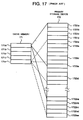
- a cache memory 171 is divided into a plurality of storage regions (hereinafter referred to as cache lines).
- each storage region of the primary storage device 172 is also divided.
- Each storage region of the primary storage device 172 is established correspondence to each cache line of the cache memory 171.
- the cache memory 171 is consisted of five cache lines 171a to 171e.
- the primary storage device 172 is divided into storage regions each having the same storage capacity to that of each cache line. Each storage region is corresponded to respective five cache lines 171a to 171e with taking five as a unit. Namely, storage regions 172-1a to 172-first embodiment of the primary storage device 172 are corresponded to the cache lines 171a to 171e as a group. Similarly, the storage regions 172-2a to 172-second embodiment are corresponded to the cache lines 171a to 171e. Final storage regions 172-na to 172-ne (n is natural number) are also corresponded to the cache lines 171a to 171e.
- the instruction code of the procedure func_A is stored in the storage regions 172-1a to 172-lc of the primary storage device 172.
- the instruction code of the procedure func_B is stored in the storage regions 172-2a to 172-2b of the primary storage device 172. Accordingly, the instruction code of the procedure func_A is corresponded to the cache memory line 171a to 171c of the cache memory 171.
- the instruction code of the procedure func_B is corresponded to the cache line 171a and 171b of the cache memory 171.
- the instruction code of the procedure func_A is read out from the storage regions 172-1a to 172-1c of the primary storage device 172 and is once stored in the cache lines 171a to 171c in the cache memory 171, and thereafter decoded by the decoder and parsed and executed by the CPU.
- the instruction code of the procedure func_B is read out from the storage regions 172-2a to 172-2b of the primary storage device 172, and temporarily stored in the cache lines 171a to 171b of the cache memory 171.
- the instruction code of the procedure func_B is stored there over (overwritten). Therefore, a part of the instruction code of the procedure func_A cannot be read subsequently.
- the instruction code of the procedure func_B stored in the cache lines 171a to 171b of the cache memory b171 are decoded by the decoder and parsed and executed by the CPU.
- the instruction code of the procedure func_A has to be executed again.
- the instruction code of the procedure func_B is already stored in the cache lines 171a and 171b of the cache memory 171, a part of the instruction code of the procedure func_A cannot be read out. Therefore, the instruction code of the procedure func_A is again read out from the storage regions 172-1a to 172-1b of the primary storage device 172. Then, the instruction code of the procedure func_A is temporarily stored in the cache lines 171a to 171b of the cache memory 171, decoded by the decoder and parsed and executed by the CPU.
- a fully associative method which permits storing of data of the primary storage device to any of the cache line on the cache memory
- a set associative method as an intermediate method of the direct map method and the fully associative method and a plurality of cache lines of the cache memory to be arranged the data of the primary storage device are present, and so forth may be used in addition to the direct map method.
- the procedure to be frequently used in execution of the object program cannot speed up the execution speed of the CPU by reading the instruction code from the primary storage device 172 and storing in the corresponding cache lines of the cache memory every time of use, since the instruction code is not stored in the cache memory 171, the instruction code cannot be read out for conflict (these are generally called as cache miss). Therefore, it becomes necessary to store the frequently used procedure in the cache memory 171 as long as possible without causing conflict.
- a program transformation method for transforming a source program described by a programming language into an object program described by a language executable by a data processing system comprises
- the procedure, function or sub-routine is at least one of that defined by a user in the source program, that defined and inspected by the user, that preliminarily prepared in a processing system in the programming language and that preliminarily prepared in a form of instruction code.
- the information is obtained by execution of a temporary object program transformed from the source program and is consisted of information indicative of number of times that the procedure, function or sub-routine is actually called and information indicative of call relationship between procedures, functions or sub-routines.
- the information is obtained by execution of a temporary object program transformed from the source program and is consisted of information indicative of number of times that the procedure, function or sub-routine is actually called and information indicative of call relationship between procedures, functions or sub-routines,
- a program transformation method for transforming a source program described by a programming language into an object program described by a language executable by a data processing system comprises
- the procedure, function or sub-routine is at least one of that defined by a user in the source program, that defined and inspected by the user, that preliminarily prepared in a processing system in the programming language and that preliminarily prepared in a form of instruction code.
- a program transformation method for transforming a source program described by a programming language into an object program described by a language executable by a data processing system comprises
- a program transformation system for transforming a source program described by a programming language into an object program described by a language executable by a data processing system, comprises
- the procedure, function or sub-routine is at least one of that defined by a user in the source program, that defined and inspected by the user, that preliminarily prepared in a processing system in the programming language and that preliminarily prepared in a form of instruction code.
- the information is obtained by execution of a temporary object program transformed from the source program and is consisted of information indicative of number of times that the procedure, function or sub-routine is actually called and information indicative of call relationship between procedures, functions or sub-routines.
- the information is obtained by execution of a temporary object program transformed from the source program and is consisted of information indicative of number of times that the procedure, function or sub-routine is actually called and information indicative of call relationship between procedures, functions or sub-routines,
- a program transformation system for transforming a source program described by a programming language into an object program described by a language executable by a data processing system, comprise
- a program transformation system for transforming a source program described by a programming language into an object program described by a language executable by a data processing system, comprises
- a computer readable memory storing a language processing program for transforming a source program described by a programming language into an object program described by a language executable by a data processing system, the language processing program comprises
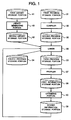
- Fig. 1 is a block diagram showing a construction of the first embodiment of a program transformation system according to the present invention.
- the shown embodiment of a program transformation system is generally constructed with first to fourth program storage portions 31 to 34, a compiler 35, a linker 36, a profiler 37, first and second information storage portions 38 and 39, an optimizing portion 40, first and second library storage portions 41 and 42, and a library generating portion 43.
- the first program storage portion 31 is constructed with a storage medium, such as a semiconductor memory including ROM, RAM or so forth, a FD (floppy disk), a HD (hard disk), CD-ROM or the like.
- a source program described by a programming language such as C language or so forth, is stored preliminarily. In the shown embodiment, discussion will be given for the case where C language is used as the programming language.
- the compiler 35 compiles the source program into a rearrangeable object program and thereafter transforms into rearrangeable object program which can be arranged, per a procedure to store in the second program storage portion 32.
- rearrangeable object program is an object program which can be stored in any storage regions of the primary storage device.
- arrangeable per procedure means that arrangement of the procedure can be done within the rearrangeable object program.
- the procedure generally represents not only the procedure as originally means but also function and sub-routine, as set forth above.
- a user procedure a user library procedure, a standard library procedure, a run-time library procedure and so forth are included.
- the user procedure is a procedure defined by the user in the source program.
- procedures func, func1 and func2 are all user procedures.
- the user library procedure is originally the user procedure, and are considered to have high general applicability and thus are stored in the first library storage portion 41 after inspection, such as debugging or so forth.
- the standard library procedure is the procedure preliminarily prepared in a processing system, such as compiler or so forth in the programming language describing the source program and can be used without definition by the user. For example, in C language, a procedure printf for outputting a character string as standard output, a procedure strlen returning a length of the character string and so forth are the standard library procedures.
- the run-time library procedure is the procedure in a form preliminarily described by instruction code for large code size while general applicability is high and preliminarily stored in the first library storage portion 41.
- An instruction string having high general applicability and having large code size should lower efficiency if the compiler 35 generates the instruction code every time of generation of the object program. Therefore, such instruction string is preliminarily established as the procedure described by the instruction code so that a code calling such procedure is generated upon generation of the object program. Then, such procedure is linked by the linker 36 later.
- float type parameter or operation is described in the source program despite of the fact that the CPU or the like executing the final object program does not have instruction of floating decimal point, the compiler 35 generates the object program using the procedure consisted of a plurality of instruction strings, such as float procedure add, float procedure sub and so forth.
- the float procedure add or float procedure sub are run-time library procedures.
- the second program storage portion 32 is constructed with the storage medium, such as semiconductor memory including RAM or the like, FD, HD and so forth and stores rearrangeable object program arrangeable per procedure.
- the storage medium such as semiconductor memory including RAM or the like, FD, HD and so forth and stores rearrangeable object program arrangeable per procedure.
- the linker 36 establishes a link between the rearrangeable object program arrangeable per procedure and stored in the second program storage portion 32 and a rearrangeable library (which will be discussed later) arrangeable per procedure stored in the second library storage portion 42, to generate an executable temporary object program to store in the third program storage portion 33.
- a link is established between the rearrangeable object program arrangeable per procedure and the rearrangeable library arrangeable per procedure to generate an executable final object program to store in the fourth program storage portion 34.
- the third program storage portion 33 is constructed with a storage medium, such as a semiconductor memory including RAM or so forth, FD, HD or so forth and stores the temporary object program.
- the fourth program storage portion 34 is constructed with a storage medium, such as a semiconductor memory including RAM or so forth, FD, HD or so forth and stores the final object program.
- the profiler 37 is consisted of a hardware emulator, a software emulator and so forth and collects dynamic information (profile information) consisted of call relationship between procedures, call count of respective procedures, loop structure information and so forth with executing the temporary object program read out from the third program storage portion 33. Then, the dynamic information thus obtained is stored in the first information storage portion 38.
- the loop structure information is information indicating that a certain procedure is called in the look structure. Particularly, certain makers which enables recognition of starting and end of the look structure during operation of the profiler 37, are written in the loop structure of the source program. Then, recognizing the start and end of the look structure with the markers by the profiler 37, it can be recognized that the procedure called in the loop structure is in the loop structure. By this, it can be judged that possibility of sequential execution of the procedures within the loop structure is high.
- the first information storage portion 38 is constructed with a storage medium, such as a semiconductor memory including RAM or so forth, FD, HD and so forth, and stores a dynamic information.
- a storage medium such as a semiconductor memory including RAM or so forth, FD, HD and so forth, and stores a dynamic information.
- the optimizing portion 40 performs arrangement optimization of all procedure on the basis of the dynamic information stored in the first information storage portion 38 for avoiding conflict of the procedures having high possibility to be executed sequentially in time axis on the cache memory and for avoiding cache miss of the frequently used procedure. Also, the optimizing portion 40 generates an arrangement information for designating arrangement of the procedure to the linker 36 and stores the arrangement information thus generated in the second information storage portion 39.
- the second information storage portion 39 is constructed with a storage medium, such as a semiconductor memory including RAM or so forth, FD, HD and so forth, and stores the arrangement information.
- a storage medium such as a semiconductor memory including RAM or so forth, FD, HD and so forth
- the first library storage portion 41 is constructed with a storage medium, such as a semiconductor memory including ROM, RAM or so forth, FD, HD, CD-ROM or so forth and stores the rearrangeable libraries including the standard library procedure, the run-time library procedure and the user library procedure.
- the rearrangeable library is rearrangeable object program.
- the rearrangeable object program stored in the first library storage portion 41 is referred to as the rearrangeable library.
- the library generating portion 43 transforms the rearrangeable library stored in the first library storage portion 41 into the rearrangeable library arrangeable per procedure to store in the second library storage portion 42.
- the second library storage portion 42 is constructed with the storage medium, such as the semiconductor memory including RAM or so forth, FD, HD or so forth and stores rearrangeable library arrangeable per procedure.
- the library generating portion 43 transforms each rearrangeable library stored in the first library storage portion 41 into rearrangeable library arrangeable per procedure, recognizing the procedure unit to store in the second library storage portion 42.
- a plurality of procedures as one group in one rearrangeable library normally are included in a section, such as text section (.text. section) which is a unit of arrangement. These procedures are aggregated together as the text section upon linking in the linker 36. Each individual procedure cannot be arranged independently per the procedure. Therefore, by dividing each individual section into sections per individual procedure, each procedure can be appropriately arranged upon establishing link by the linker 36.
- a section having distinct name per each procedure such as "procedure name_source program name” and so forth is newly generated.
- information relating to the sections in the rearrangeable library is concentrically and newly registered in a certain portion, such as a section header portion, in the rearrangeable library. If the text section is not necessary in the rearrangeable library, the relevant information is deleted.
- each rearrangeable library processed as set forth above is stored in the second program storage portion 32 as rearrangeable library arrangeable per procedure.
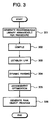
- the compiler 35 compiles the source program into the rearrangeable object program, and thereafter, performs the process similar to the process of the library generating portion 43 at step 301 for transforming the rearrangeable library into the rearrangeable library arrangeable per procedure to store in the second program storage portion 32.
- the linker 36 establishes a link between the rearrangeable object program arrangeable per procedure stored in the second program storage portion 32 and the rearrangeable library arrangeable per procedure stored in the second library storage portion 42 to generate executable temporary object program to store in the third program storage portion 33.
- the profiler 37 collects dynamic information consisted of call relationship between respective procedures, call counts of respective procedures, loop structure information and so forth with executing the temporary object program read out from the third program storage portion 33.
- the profiler 37 stores the dynamic information thus obtained in the first information storage portion 38.
- the optimizing portion 40 performs arrangement optimization for all procedures on the basis of the dynamic information stored in the first information storage portion 38 to generate the arrangement information to store in the second information storage portion 39. Detail of the arrangement optimization of the procedure will be discussed later.
- the linker 36 establishes a link between the rearrangeable object program arrangeable per procedure and the rearrangeable library arrangeable per procedure to generate the executable final object program to store in the fourth program storage portion 34. Thereafter, a sequence of process is terminated.
- arrangement optimization methods of the procedure for efficiently using the cache memory There are various kinds of arrangement optimization methods of the procedure for efficiently using the cache memory.
- arrangement method by cache line coloring disclosed in A. H. Hasemi, et al, "Efficient Procedure Mapping Using Cache Line Coloring", SIGPLAN, pp 171-182, June, 1997, is employed.
- each code of the object program generated by the program transformation system and stored in the primary storage device is read out from the primary storage device and thereafter, stored in the cache memory consisted of four cache lines by the direct map method.
- frequency of call from the procedure A to the procedure B is "90"
- frequency of call from the procedure B to the procedure C is "80”
- frequency of call from the procedure C to the procedure D is "70
- frequency of call from the procedure A to the procedure E is "40”
- frequency of call from the procedure E to the procedure C is "100”
- frequency of call from the procedure E to the procedure F is "0"
- frequency of call from the procedure F to the procedure G is "0".
- the arrangement method by cache line coloring reduces conflict on the cache memory in one generation (relationship of direct call from one procedure to the other procedure) using a procedure call graph which will be discussed later.
- "color" is assigned for each cache line, and arrangement of the procedure is performed using number of "colors” required for arrangement, namely cache line number, "colors” on which the procedures are arranged, and non-useable groups.
- read (r) is assigned for the first cache line
- green (g) is assigned for the second cache line
- blue (b) is assigned for the third cache line
- yellow (y) is assigned for the fourth cache line, respectively.
- the non-useable group are procedures in a relationship to call and to be called directly, and is referred to an aggregated group of the "colors" occupied by the already arranged procedures.
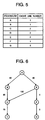
- the optimizing portion 40 generates the procedure call graph as shown in Fig. 6 on the basis of the dynamic information stored in the first information storage portion 38.
- nodes A to G represent procedures.
- Lines between the nodes represent call relationship of the procedures.
- Numerical values added for the lines represent call frequency of the call from start point nodes, namely the procedures at the routes of arrows, to end point nodes, namely the procedures at the tip of the arrows.
- lines and nodes are divided into a group having high call frequency and a group having low call frequency.
- the group having high call frequency is consisted of nodes A to E, the line from the node A to the node B, the line from the node A to the node E, the line from the node B to the node C, the line from the node C to the node D and the line from the node E to the node C.
- the group having low call frequency is consisted of the nodes F and G, the line from the node E to the node F and the line from the node F to the node G.
- the lines and the nodes are rearranged within each of the divided group. Namely, in the group having high call frequency, rearrangement is performed in descending order from the larger numerical values added to the lines. In contrast to this, in the group having low call frequency, rearrangement is performed in descending order from larger cache line number of the procedure and are arranged mainly for filling up void in the program space.
- the lines are arranged in the sequential order of the line from the node E to the node C, the line from the node A to the node B, the line from the node B to the node C, the line from the node C to the node D and the line from the node A to the node E.
- the group having low call frequency as can be appreciated from Fig. 5, since the cache line number of the procedure G is 2 and the cache line number of the procedure F is 1, the nodes are arranged in sequential order of the node G and then the node F.
- step 404 judgment is made whether the line of the group of high call frequency is left or not.
- the process is advanced to step 405. At this time, since the process is executed at the first time, all lines are left. Therefore, the result of judgment becomes "YES".
- step 405 check is performed whether the nodes at both ends of the line at the highest order in the rearranged order among remaining lines are not yet arranged or not. If the result is YES, the process is advanced to step 406. In the shown case, the line of the highest order among the remaining lines is the line from the node E to the line C, and the process is executed at the first time, the nodes E and C at both ends are not yet arranged. Accordingly, the result of judgment becomes "YES".
- the process is advanced to step 407.
- the nodes at both ends of the objective line can be arranged at arbitrary position in the program space.
- the cache line number of the procedures E and C are both 2, as can be appreciated from Fig. 5.
- portions E1 and E2 of the procedure E are arranged on the first and second cache lines (colors are red (r) and green (g)).
- Portions C1 and C2 of the procedure C are arranged on the third and fourth cache lines (colors are blue (b) and yellow (y)).
- the nodes E and C are considered to be marged to form a single node.
- Such single node will be referred to as composite node E-C.
- step 407 after updating the groups which cannot be used, the process is returned to step 404.
- the non-useable group becomes E ⁇ b, y ⁇ .
- the "colors" of the cache lines, on which the node E is in a relationship to be directly called by the code C are red (r) and green (g). Therefore, the non-useable group becomes C ⁇ r, g ⁇ .
- steps 404 to 407 set forth above are repeated until no line which has the nodes at both ends left being not arranged, is left among the lines in the group having high call frequency. If not line is left in the group having high call frequency, the result of judgment at step 404 becomes "NO". Then, process is advanced to step 416. In this case, since the line from the node A to the node B is left and the nodes A and B at both ends of the line are not yet arranged, the processes at steps 406 and 407 are performed.
- both of the procedures A and B have cache line number 1. Therefore, as shown in the first row of Fig. 7, the procedure A is arranged on the third cache line (color is blue (b)), and the procedure B is arranged on the fourth cache line (color is yellow (y)). Then, the nodes A and B becomes a composite node A-B. Next, in case of the node A, the "color" of the cache line, on which the node B in a relationship to be directly called by the node A is yellow (y), the non-useable group becomes A ⁇ y ⁇ . Similarly, in case of the node B, the "color" of the cache line, on which the node A in a relationship to be directly called by the node B is blue (b), the non-useable group becomes B ⁇ b ⁇ .
- step 405 when the line in the group having high call frequency is left but the node on either side of the left line has already being arranged, the result of judgment at step 405 becomes "NO". The process is advanced to step 408.
- step 408 check is performed whether the line as an object of process is the line connecting nodes in two different composite nodes. If the result of checking at step 408 is YES, the process is advanced to step 409. In the current condition, since the line directed from the node B to the node C, which line has the highest order among the remaining lines is the line connecting the composite node E-C and the composite node A-B, the result of judgment of the step 408 becomes YES. Therefore, the process is advanced to step 409.
- two composite nodes are marged into a single composite node. This is done by coupling the composite node having smaller number of marged nodes (hereinafter referred to as "shorter composite node") among two composite nodes to the composite nodes having greater number of marged nodes (hereinafter referred to as "longer composite node). Upon coupling the shorter composite node to the longer composite node, the shorter composite node is coupled to the longer composite node even in the program space.
- the shorter composite node is determined which side of the longer composite node, the shorter composite node is to be arranged. Particularly, judgment is made among the nodes consisting the longer composite node, to which of the left and right boundary of the longer composite node, the center position of the nodes consisting the line to be the object for process is inclined, is judged by the cache line number required for reaching the left and right boundaries. Then, the shorter composite node is determined to be arranged on the side toward which the center position is inclined.
- an orientation to arrange the shorter composite node is determined and arranged.
- the orientation of the shorter composite node is determined so that, among a plurality of nodes consisting the line to be object for process, the node other than the nodes consisting the longer composite node can be arranged as close as possible to the already arranged node in the longer composite node.
- the positions of the nodes other than the nodes consisting the longer composite node are shifted away from the nodes consisting the longer composite node until the conflict is resolved.
- both of the composite nodes E-C and A-B have two marged nodes. Therefore, both of the composite nodes can be taken as shorter composite nodes. However, in the shown case, the composite node A-B is taken as the shorter composite node.
- the center position of the node C forming the line directed from the node B to the node C, which line is object for process, is located between the portions C1 and C2 as shown in the first row of Fig. 7. Therefore, number of cache lines required for reaching to the left side boundary of the longer composite node E-C is three and whereas number of cache lines required for reaching to the right side boundary of the longer composite node E-C is one. Accordingly, the shorter composite node A-B is arranged on the right side of the longer composite node E-C.
- orientation of the shorter composite node A-B is determined so that among the nodes B and C forming the line directed from the node B to the node C, which line is an object for process, the node B other than the node C consisting the longer composite node E-C, is located as close as possible to the node C which has already been arranged.
- the composite node becomes B-A. Since no conflict is caused in the arrangement set forth above, the arrangement is maintained as is (see second row of Fig. 7). By this, new composite node E-C-B-A is generated.
- step 410 check is performed whether a vacant region is formed in the program space through the foregoing arrangement process or not. If the result of checking at step 410 is "NO", the process is advanced to step 407. In the shown case, since no vacant region is formed, the process is advanced to step 407. Then, after updating the non-useable group, the process is returned to step 404.
- step 410 when the result of checking at step 410 is "YES", namely when the vacant region in the program space is formed through the foregoing arrangement process, the process is advanced to step 411.
- step 411 the node having high order in the group having low call frequency is arranged in the vacant region. Thereafter, process is advanced to step 407.
- steps 404, 405, 408 to 411 and 407 as set forth above, are repeated until no line connecting the nodes in two mutually different composite nodes in the lines of the group having high call frequency and the node on either side has already been arranged, is found. Then, if no line of the group having high call frequency is left, the result of checking at step 404 becomes "NO". Then, the process is advanced to step 416.
- step 408 If there is no line connecting the nodes in two mutually different composite nodes in the lines of the group having high call frequency and the node on either side has already been arranged, the result of checking at step 408 becomes "NO". Then, process is advanced to step 412.
- the line from the node E to the node C, the line from the node A to the node B and the line from the node B to the node C are processed. Therefore, in the group having high call frequency, the line from the node C to the node D and the line from the node A to the node E are left. However, these lines are not the line, in which one of the nodes has already been arranged and which does not connect two different composite nodes. Therefore, the result of checking at step 408 becomes "NO". Then, process is advanced to step 412.
- step 412 check is performed whether one node among two nodes consisting the line to be object for process consists the composite node, and the other node has not yet been arranged, or not. If the result of checking at step 412 is "YES", the process is advanced to step 413. In the present case, the line from the node C to the node D, which line has the highest order among the remaining lines, has the node C consisting the composite node E-C-B-A and the node D which is not yet arranged. Therefore, the result of checking at step 412 becomes "YES”. Then, process is advanced to step 413.
- the non-arranged node of the line as object for process is coupled with the composite node.
- the non-arranged node is also coupled with the composite node even on the program space.
- the non-arranged node is determined which side of the composite node, the non-arranged node is to be arranged. Particularly, judgment is made among the nodes consisting the composite node, to which of the left and right boundary of the composite node, the center position of the nodes consisting the line to be the object for process is inclined, is judged by the cache line number required for reaching the left and right boundaries. Then, the non-arranged node is determined to be arranged on the side toward which the center position is inclined.
- the center position of the line from the node C to the node D, which line is object for process, is located between the portions C1 and C2 as shown in the first row of Fig. 7. Therefore, number of cache lines required for reaching to the left side boundary of the composite node E-C-B-A is three and whereas number of cache lines required for reaching to the right side boundary of the composite node E-C-B-A is three. Accordingly, the non-arranged node can be arranged on either of left and right side of the composite node E-C-B-A. In the shown case, the node D is determined to be arranged on left side of the composite node E-C-B-A.
- step 410 vacant region corresponding to two cache lines is formed on the right side of the portions D1 and D2 of the node D. Then, the result of checking at step 410 becomes "YES". Thus, the process is advanced to step 411.
- the node having the highest order in the group having low call frequency is arranged.
- the node G is arranged in the vacant region set forth above (see fourth row in Fig. 7).
- the process is advanced to step 407, after updating the non-useable group.
- the process is returned to step 404.
- the "colors" of the cache lines, on which the node C is in a relationship to be directly called by the node D are blue (b) and yellow (y), the non-useable group becomes D ⁇ b, y ⁇ (see third row of Fig. 7).
- steps 404, 405, 408, 412, 413, 410, 411 and 407 as set forth above, are repeated until no line not connecting the nodes in two mutually different composite nodes but connecting one of the nodes on the opposite sides is the node consisting the composite node and the node on the other side is not yet arranged in the remaining lines of the group having high call frequency and the node on either side has already been arranged, is found. Then, if no line of the group having high call frequency is left, the result of checking at step 404 becomes "NO". Then, the process is advanced to step 416.
- step 412 If no line which does not connect the nodes in two mutually different composite nodes but does connect one of the nodes on the opposite sides is the node consisting the composite node and the node on the other side is not yet arranged in the remaining lines of the group having high call frequency and the node on either side has already been arranged, is found.
- the result of checking at step 412 becomes "NO". Then, the process is advanced to step 413.
- the line from the node E to the node C, the line from the node A to the node B, the line from the node B to the node C and the line from the node C to the node D are processed. Therefore, in the group having high call frequency, only line from the node A to the node E is left. However, this lines are not the line, which does not connect the nodes in two mutually different composite nodes but does connect one of the nodes on the opposite sides is the node consisting the composite node and the node on the other side is not yet arranged in the remaining lines of the group having high call frequency and the node on either side has already been arranged. Therefore, the result of checking at step 412 becomes "NO". Then, process is advanced to step 414.
- step 414 check is performed whether one node among two nodes consisting the line to be object for process consists the composite node, and the other node has not yet been arranged, or not. If the result of checking at step 412 is "YES", the process is advanced to step 415. In the present case, the line from the node A to the node E, which line has the highest order among the remaining lines, has both the nodes A and E consisting the composite node E-C-B-A and the node E is not yet arranged. Therefore, the result of checking at step 414 becomes "YES”. Then, process is advanced to step 415.
- step 415 conflict between the nodes consisting the line as object for process is eliminated. Namely, if conflict is caused between the nodes consisting the line as object for process, one of the nodes located closer to the boundary of the composite node is shifted beyond the boundary until conflict is resolved. However, when conflict cannot be avoided at any shift position of the node, the node is returned to the initially arranged position. Then, process is advanced to step 410.
- the line as object for process is the line from the node A to the node E.
- conflict is caused between the nodes A and E.
- the node A is closer to the boundary of the composite node E-C-B-A. Therefore, the node A is shifted beyond the boundary.
- the node A is arranged at the one cache line shifted position (see the fifth row of Fig. 7).
- step 410 the vacant region of one cache line is formed on the right side of the node A. Therefore, the result of judgment at step 410 becomes "YES". Then, the process is advanced to step 411.
- step 411 in the vacant region for one cache line on the right side of the node A, the node remained in the group having low call frequency is arranged.
- the process is advanced to step 407.
- the process is returned to step 404.
- the "colors" of the cache line, on which the nodes E and B in a relationship to be directly called by the node A are arranged are red (r) and green (g), the non-useable group becomes A ⁇ r, g ⁇ (see fifth row of Fig. 7).
- the "color" of the cache line, on which the node C in a relationship of directly calling the node B and the node A in a relationship of being directly called by the node B, are arranged are blue (b) and yellow (y).
- the non-useable group becomes B ⁇ b, y ⁇ (see the fifth row of Fig. 7).
- step 404, 405, 408, 412, 414, 415, 410, 411 and 407 set forth above is repeated until no line connecting the nodes in the same composite node is left. If no line in the group having high call frequency is left, the result of judgment at step 404 becomes "NO". Then, the process is advanced to step 416.
- step 416 concerning the remaining nodes in the group having low call frequency, arrangement is performed by simple depth preferential retrieval.
- preference is given for each composite node on the basis of the call frequency to determine final arrangement. Then, a sequence of process goes END.
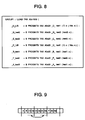
- FIG. 8 One example of the arrangement information to be obtained through the arrangement optimizing process of the procedures set forth above will be illustrated in Fig. 8.
- GROUP1 is a segment name which is given in the case when the output section is handled as one group.
- "!LOAD” represents a segment type. This field is fixed. In the shown case, “LOAD” represents the segment to be loaded in the memory.
- "?RX” represents a segment attribute which shows attribute of read/write/execute of the segment. In case of an instruction portion (text code), it is fixed at “?RX”.
- “A0x1000” represents alignment condition which represents the alignment condition upon arrangement of the segment in the memory space. In the shown case, there is illustrated the case where the alignment condition is "0x1000".
- A0x20 represents an alignment condition upon arranging the input section in the output section. Since consideration is given for the arrangement per cache line, the alignment condition is 0x20 as the size of one cache line.
- “_D_test1”, “_G_test2” and so forth represent names of the input sections to be arranged in the output section.
- "libc.a”, “test2.0” and so forth represent file names included in the input section.
- the order of arrangement of the procedure can be designated with arrangement condition.
- the library generating portion 43 for transforming the rearrangeable library into the rearrangeable library arrangeable per procedure is provided for collecting dynamic information with respect to all procedures upon dynamic parsing by the profiler 37, generates the arrangement information determining the optimal arrangement for all of the procedures on the basis of the dynamic information and arranges all procedures on the basis of the arrangement information. Therefore, conflict on the cache memory between all procedures consisting the object program can be reduced. In conjunction therewith, cache miss of frequently used procedure can be reduced. By this, execution speed can be speeded up upon execution of the object program by the computer or CPU.
- procedure call graph shown in Fig. 6, as shown in Fig. 10, the procedures C and D are standard library procedures. As in the prior art, if these procedures C and D are placed to be out of object for arrangement optimization process of the procedure, even when the arrangement method by cache line coloring as disclosed in the above-identified publication, it is not possible to completely avoid conflict for the reason set out below.
- Fig. 11 shows a process of the arrangement optimization process of the procedure by the optimizing portion in the case where the standard library procedures C and D are placed out of arrangement optimization process of the procedure.
- the line from the procedure E to the procedure C and the line from the procedure B to the procedure C are naturally placed out of process. Accordingly, as shown in the fifth row of Fig. 11, conflict of the procedure E and the procedure C can be avoided.
- Fig. 12 is a block diagram showing a construction of the second embodiment of the program transformation system according to the present invention.
- like elements to those illustrated in Fig. 1 will be identified by like reference numerals and detailed discussion for such common element will be neglected in order to avoid redundant disclosure for keeping the disclosure simple enough to facilitate clear understanding of the present invention.
- the rearrangeable library stored in the first library storage portion 41 is also supplied to the linker 36 in addition to the library generating portion 43. The following is the reason why such construction is provided.
- the rearrangeable library to be directly supplied to the linker 36 may be judged by the linker 36 on the basis of the dynamic information stored in the first information storage portion 38 or the code size of each procedure, for example.
- the final object program can be generated at a shorter period than that in the first embodiment.
- Fig. 13 is a block diagram showing a construction of the third embodiment of the program transformation system according to the present invention.
- like elements to those illustrated in Fig. 12 will be identified by like reference numerals and detailed discussion for such common element will be neglected in order to avoid redundant disclosure for keeping the disclosure simple enough to facilitate clear understanding of the present invention.
- a compiler 44 and a profiler 45 are newly provided.
- the profiler 45 has only function for simply reading the executable temporary object program stored in the third program storage portion 33 and executing the read out temporary object program.
- the compiler 44 inserts a count code counting number of times of procedures to be actually executed upon executing the temporary object program by the profiler 45 to the temporary object program upon compiling the source program into the executable temporary object program. BY this, the profiler 45 can collect dynamic information consisted of call relationship between the procedures, call counts of respective procedures and so forth by executing the temporary object program, and stores the obtained dynamic information in the first information storage portion 38.
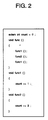
- the compiler 44 complies the source program (see Fig. 2) read out from the first program storage portion 31 into the executable temporary object program with inserting the count code to store in the second program storage portion 32.
- the linker 36 establishes a link between the temporary object program inserted the count code stored in the second program storage portion 32 and the rearrangeable library stored in the first library storage portion 41 to generate an executable temporary object program to store in the third program storage portion 33.
- the profiler 45 executes the temporary object program read out from the third program storage portion 33.
- the count code is inserted in the temporary object program
- dynamic information consisted of call relationship between the procedures, call count of each procedure and so forth are collected.
- the obtained dynamic information is stored in the first information storage portion 38.
- the optimizing portion 40 generates the arrangement information by performing arrangement optimization for all procedures on the basis of the dynamic information stored in the first information storage portion 38 to store in the second information storage portion 39.
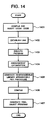
- the process of the step 1404 is substantially similar to the process of the step 305 in the first embodiment. Thus, detailed discussion for this step will be neglected in order to avoid redundant disclosure for keeping the disclosure simple enough to facilitate clear understanding of the present invention.
- the library generating portion 43 transforms each rearrangeable library stored in the first library storage portion 41 into the rearrangeable library arrangeable per procedure by recognizing per procedure to store in the second library storage portion 42.
- the process of the step 1405 substantially similar to the process at step 301 in the first embodiment. Thus, detailed discussion for this step will be neglected in order to avoid redundant disclosure for keeping the disclosure simple enough to facilitate clear understanding of the present invention.
- the compiler 35 compiles the source program into the rearrangeable object program and thereafter transforms into the rearrangeable object program arrangeable per procedure in the similar process to the process of the library generating portion 43 at step 1405, to store in the second program storage portion 32.
- the linker 36 establishes a link between the rearrangeable object program arrangeable per procedure and the rearrangeable library arrangeable per procedure on the basis of the arrangement information stored in the second information storage portion 39 to generate the executable final object program to store in the fourth program storage portion 34. Thereafter, the sequence of process goes END.
- the present invention has been illustrated and discussed in terms of an example as applied for generating one final object program from one source program in the foregoing embodiment, the present invention should not be limited to the disclosed embodiments. Namely, the present invention is applicable for the case where a plurality of source programs are complied into respective rearrangeable object programs and then thus generated rearrangeable object programs are linked by the linker 36 to generate one final object program, as a matter of course.
- respective program storage portions 31 to 34, respective information storage portions 38 and 39 and library storage portions 41 and 42 are constructed with mutually different storage media.
- the present invention is not limited to the shown embodiments. Namely, respective storage portions may be formed by different storage regions of a common storage medium.
- respective program storage portions 31 to 34 and library storage portions 41 and 42 are programs or rearrangeable libraries requiring relatively large storage capacity and thus may be constructed with FD, HD or CD-ROM/
- respective information storage portions 38 and 39 are data requiring relatively small storage capacity, these information storage portions 38 and 39 may be formed with the semiconductor memory, such as RAM, ROM or so forth.
- respective means in the foregoing embodiments are illustrated as hardware construction.
- the present invention should not be limited to the constructions shown in the illustrated embodiments. Namely, it is possible to form the program transformation system with a computer having CPU (central processing unit), an internal storage device, such as ROM, RAM or so forth, an external storage device, such as FDD (floppy disk drive), HDD (hard disk drive), CD-ROM drive and so forth, output means and input means, and the foregoing compilers 35 and 44, the linker 36 and the profilers 37 and 45 may be constructed with CPU, and a program transformation program realizing the foregoing functions may be stored in the storage medium, such as the semiconductor memory including ROM or the like, FD, HD, CD-ROM or so forth.
- CPU central processing unit
- an internal storage device such as ROM, RAM or so forth
- an external storage device such as FDD (floppy disk drive), HDD (hard disk drive), CD-ROM drive and so forth
- output means and input means and the foregoing compilers 35 and 44, the linker
- the foregoing internal storage device or the external storage device serves as respective program storage portions 31 to 34, respective information storage portions 38 and 39 and the library storage portions 41 and 42.
- the program transforming program is loaded to CPU from the storage medium to control CPU operation.
- CPU is responsive to triggering of the program transforming program to serve as the compilers 35 and 44, the linkers 36 and the profilers 37 and 45.
- the foregoing process is executed.
Landscapes
- Engineering & Computer Science (AREA)
- General Engineering & Computer Science (AREA)
- Theoretical Computer Science (AREA)
- Software Systems (AREA)
- Physics & Mathematics (AREA)
- General Physics & Mathematics (AREA)
- Memory System Of A Hierarchy Structure (AREA)
- Devices For Executing Special Programs (AREA)
- Stored Programmes (AREA)
Applications Claiming Priority (2)
| Application Number | Priority Date | Filing Date | Title |
|---|---|---|---|
| JP3285298 | 1998-02-16 | ||
| JP03285298A JP3178403B2 (ja) | 1998-02-16 | 1998-02-16 | プログラム変換方法、プログラム変換装置及びプログラム変換プログラムを記憶した記憶媒体 |
Publications (2)
| Publication Number | Publication Date |
|---|---|
| EP0936543A2 true EP0936543A2 (de) | 1999-08-18 |
| EP0936543A3 EP0936543A3 (de) | 2003-11-19 |
Family
ID=12370378
Family Applications (1)
| Application Number | Title | Priority Date | Filing Date |
|---|---|---|---|
| EP99103011A Withdrawn EP0936543A3 (de) | 1998-02-16 | 1999-02-15 | Programmumwandlungsverfahren und -system |
Country Status (5)
| Country | Link |
|---|---|
| US (1) | US6282707B1 (de) |
| EP (1) | EP0936543A3 (de) |
| JP (1) | JP3178403B2 (de) |
| KR (1) | KR19990072721A (de) |
| CN (1) | CN1228558A (de) |
Cited By (3)
| Publication number | Priority date | Publication date | Assignee | Title |
|---|---|---|---|---|
| WO2002093371A1 (en) * | 2001-05-15 | 2002-11-21 | Softageneraattori Oy | Method for developing a translator and a corresponding system |
| US7571432B2 (en) | 2003-10-17 | 2009-08-04 | Panasonic Corporation | Compiler apparatus for optimizing high-level language programs using directives |
| US7689976B2 (en) | 2003-10-16 | 2010-03-30 | Panasonic Corporation | Compiler apparatus and linker apparatus |
Families Citing this family (23)
| Publication number | Priority date | Publication date | Assignee | Title |
|---|---|---|---|---|
| JP3141836B2 (ja) * | 1998-01-26 | 2001-03-07 | 日本電気株式会社 | 言語処理方法、言語処理装置及び言語処理プログラムを記録した記憶媒体 |
| US6378066B1 (en) * | 1999-02-04 | 2002-04-23 | Sun Microsystems, Inc. | Method, apparatus, and article of manufacture for developing and executing data flow programs, and optimizing user input specifications |
| JP2001166948A (ja) * | 1999-12-07 | 2001-06-22 | Nec Corp | プログラム変換方法、プログラム変換装置及びプログラム変換プログラムを記憶した記憶媒体 |
| US6681386B1 (en) * | 2000-05-22 | 2004-01-20 | International Business Machines Corporation | Method, system, and program for parameter expansion, generation, and execution of scripts in a networked environment |
| JP2002024029A (ja) * | 2000-07-11 | 2002-01-25 | Toshiba Corp | コンパイラ、コンパイル方法及びコンパイルプログラムを記録したコンピュータ読み取り可能な記録媒体 |
| US7003507B2 (en) * | 2000-09-18 | 2006-02-21 | International Business Machines Corporation | Scalable propagation-based methods for call graph construction |
| US6918110B2 (en) * | 2001-04-11 | 2005-07-12 | Hewlett-Packard Development Company, L.P. | Dynamic instrumentation of an executable program by means of causing a breakpoint at the entry point of a function and providing instrumentation code |
| US8484282B2 (en) * | 2002-03-21 | 2013-07-09 | International Business Machines Corporation | High-speed content transformation engine |
| US7100157B2 (en) * | 2002-09-24 | 2006-08-29 | Intel Corporation | Methods and apparatus to avoid dynamic micro-architectural penalties in an in-order processor |
| JP2004362086A (ja) * | 2003-06-03 | 2004-12-24 | Matsushita Electric Ind Co Ltd | 情報処理装置および機械語プログラム変換装置 |
| JP4554241B2 (ja) * | 2004-03-16 | 2010-09-29 | 富士通セミコンダクター株式会社 | キャッシュカラーリング方法 |
| US8214819B2 (en) * | 2004-07-09 | 2012-07-03 | Hewlett-Packard Development Company, L.P. | Determining call counts in a program |
| JP2008536236A (ja) * | 2005-04-13 | 2008-09-04 | テレフオンアクチーボラゲット エル エム エリクソン(パブル) | コンピュータシステムにおけるデータ値の整合性(コヒーレンス:coherence) |
| US8266605B2 (en) * | 2006-02-22 | 2012-09-11 | Wind River Systems, Inc. | Method and system for optimizing performance based on cache analysis |
| US20070260856A1 (en) * | 2006-05-05 | 2007-11-08 | Tran Thang M | Methods and apparatus to detect data dependencies in an instruction pipeline |
| JP5272346B2 (ja) * | 2007-07-30 | 2013-08-28 | 富士通セミコンダクター株式会社 | キャッシュカラーリング方法 |
| US9454390B2 (en) * | 2008-04-04 | 2016-09-27 | Intuit Inc. | Executable code generated from common source code |
| JP4600700B2 (ja) * | 2009-03-17 | 2010-12-15 | 日本電気株式会社 | プログラムのメモリ空間への配置方法、装置、およびプログラム |
| US8103850B2 (en) * | 2009-05-05 | 2012-01-24 | International Business Machines Corporation | Dynamic translation in the presence of intermixed code and data |
| US10318400B2 (en) * | 2014-02-13 | 2019-06-11 | Infosys Limited | Methods of software performance evaluation by run-time assembly code execution and devices thereof |
| RU2016137176A (ru) | 2016-09-16 | 2018-03-19 | Оракл Интернэйшнл Корпорейшн | Связывание преобразованного исходного кода с первоначальным исходным кодом с помощью метаданных |
| RU2016137177A (ru) * | 2016-09-16 | 2018-03-19 | Оракл Интернэйшнл Корпорейшн | Усовершенствованное преобразование исходного кода языка программирования |
| WO2025027822A1 (ja) * | 2023-08-02 | 2025-02-06 | 日本電気株式会社 | 情報処理装置、情報処理方法、および、記録媒体 |
Family Cites Families (9)
| Publication number | Priority date | Publication date | Assignee | Title |
|---|---|---|---|---|
| JPH01118931A (ja) | 1987-11-02 | 1989-05-11 | Hitachi Ltd | プログラム変換方式 |
| US5193180A (en) * | 1991-06-21 | 1993-03-09 | Pure Software Inc. | System for modifying relocatable object code files to monitor accesses to dynamically allocated memory |
| US5452457A (en) * | 1993-01-29 | 1995-09-19 | International Business Machines Corporation | Program construct and methods/systems for optimizing assembled code for execution |
| JP3417984B2 (ja) * | 1993-09-10 | 2003-06-16 | 株式会社日立製作所 | キャッシュ競合削減コンパイル方法 |
| US5539907A (en) * | 1994-03-01 | 1996-07-23 | Digital Equipment Corporation | System for monitoring computer system performance |
| US5689712A (en) * | 1994-07-27 | 1997-11-18 | International Business Machines Corporation | Profile-based optimizing postprocessors for data references |
| JPH0934725A (ja) | 1995-07-15 | 1997-02-07 | Nec Corp | 言語処理装置及び言語処理方法 |
| US5724586A (en) * | 1996-09-30 | 1998-03-03 | Nec Research Institute, Inc. | Method for improving cache locality of a computer program |
| US5963972A (en) * | 1997-02-24 | 1999-10-05 | Digital Equipment Corporation | Memory architecture dependent program mapping |
-
1998
- 1998-02-16 JP JP03285298A patent/JP3178403B2/ja not_active Expired - Fee Related
-
1999
- 1999-02-12 US US09/249,705 patent/US6282707B1/en not_active Expired - Fee Related
- 1999-02-15 EP EP99103011A patent/EP0936543A3/de not_active Withdrawn
- 1999-02-18 KR KR1019990005389A patent/KR19990072721A/ko not_active Ceased
- 1999-02-23 CN CN99100822A patent/CN1228558A/zh active Pending
Non-Patent Citations (5)
| Title |
|---|
| BALL T ET AL: "Optimally profiling and tracing programs" ACM TRANSACTIONS ON PROGRAMMING LANGUAGES AND SYSTEMS, NEW YORK, NY, US, vol. 16, no. 4, July 1994 (1994-07), pages 59-64,67-70, XP002226243 * |
| GLOY N ET AL: "Procedure placement using temporal ordering information" PROCEEDINGS. THIRTIETH ANNUAL IEEE/ACM INTERNATIONAL SYMPOSIUM ON MICROARCHITECTURE (CAT. NO.97TB100184), PROCEEDINGS OF 30TH ANNUAL INTERNATIONAL SYMPOSIUM ON MICROARCHITECTURE, RESEARCH TRIANGLE PARK, NC, USA, 1-3 DEC. 1997, pages 303-313, XP002245628 1997, Los Alamitos, CA, USA, IEEE Comput. Soc, USA ISBN: 0-8186-7977-8 * |
| HASHEMI A H ET AL: "EFFICIENT PROCEDURE MAPPING USING CACHE LINE COLORING" ACM SIGPLAN NOTICES, ASSOCIATION FOR COMPUTING MACHINERY, NEW YORK, US, vol. 32, no. 5, 1 May 1997 (1997-05-01), pages 171-182, XP000655924 ISSN: 0362-1340 * |
| PETTIS K ET AL: "Profile guided code positioning" ACM SIGPLAN '90 CONFERENCE ON PROGRAMMING LANGUAGE DESIGN AND IMPLEMENTATION, WHITE PLAINS, NY, USA, 20-22 JUNE 1990, vol. 25, no. 6, pages 16-27, XP002245629 SIGPLAN Notices, June 1990, USA ISSN: 0362-1340 * |
| WU Y: "Ordering functions for improving memory reference locality in a shared memory multiprocessor system" 25TH ANNUAL INTERNATIONAL SYMPOSIUM ON MICROARCHITECTURE. MICRO 25, PORTLAND, OR, USA, 1-4 DEC. 1992, vol. 23, no. 1-2, pages 218-221, XP002245630 SIGMICRO Newsletter, Dec. 1992, USA ISSN: 0163-5751 * |
Cited By (3)
| Publication number | Priority date | Publication date | Assignee | Title |
|---|---|---|---|---|
| WO2002093371A1 (en) * | 2001-05-15 | 2002-11-21 | Softageneraattori Oy | Method for developing a translator and a corresponding system |
| US7689976B2 (en) | 2003-10-16 | 2010-03-30 | Panasonic Corporation | Compiler apparatus and linker apparatus |
| US7571432B2 (en) | 2003-10-17 | 2009-08-04 | Panasonic Corporation | Compiler apparatus for optimizing high-level language programs using directives |
Also Published As
| Publication number | Publication date |
|---|---|
| US6282707B1 (en) | 2001-08-28 |
| EP0936543A3 (de) | 2003-11-19 |
| JP3178403B2 (ja) | 2001-06-18 |
| CN1228558A (zh) | 1999-09-15 |
| JPH11232117A (ja) | 1999-08-27 |
| KR19990072721A (ko) | 1999-09-27 |
Similar Documents
| Publication | Publication Date | Title |
|---|---|---|
| US6282707B1 (en) | Program transformation method and program transformation system | |
| US6243864B1 (en) | Compiler for optimizing memory instruction sequences by marking instructions not having multiple memory address paths | |
| KR100496946B1 (ko) | 정수복원형장어명령프로세서용프로그램변환장치 | |
| US5842021A (en) | Optimizer | |
| US7707386B2 (en) | Program segment searching for extension instruction determination to design a processor that meets performance goal | |
| JP5209059B2 (ja) | ソース・コード処理方法、システム、及びプログラム | |
| EP0740251B1 (de) | Optimierungsgerät zum Entfernen von Gefahren durch Arrangierung der Befehlsreihenfolge | |
| US5963972A (en) | Memory architecture dependent program mapping | |
| US4961141A (en) | Generating efficient code for a computer with dissimilar register spaces | |
| US5832273A (en) | System for deleting redundant instructions from high level language source code containing in-line assembly instructions | |
| US20020019973A1 (en) | Compiler and method for compiling easily adaptable to processor specifications | |
| US6647546B1 (en) | Avoiding gather and scatter when calling Fortran 77 code from Fortran 90 code | |
| JPH03172936A (ja) | 手順間レジスタ割付けを伴うコンピュータプログラムのコンパイル方法及び装置 | |
| US5396627A (en) | Method of producing object program based on interprocedural dataflow analysis of a source program | |
| JPH04330527A (ja) | プログラムの最適化方法及びコンパイラ・システム | |
| CN103645930B (zh) | 汇编级跨文件调度框架的构建方法 | |
| US6675377B1 (en) | Program conversion apparatus | |
| KR20030015200A (ko) | 소프트웨어 컴파일러들을 위해 내장된 시스템들 용의튼튼한 로깅 시스템 | |
| US20010039653A1 (en) | Program conversion method, program conversion apparatus, storage medium for storing program conversion program and program conversion program | |
| CN114791808B (zh) | 一种数据流图生成方法及装置 | |
| US7689975B2 (en) | Processing of a compileable computer program | |
| US8032876B2 (en) | Method and apparatus for restructuring a software program hierarchy | |
| US6343378B1 (en) | Method of making link directive file and tool for making link directive file | |
| WO2024113831A1 (zh) | 一种内存安全管理方法及设备 | |
| Bonkowski et al. | Porting the Zed compiler |
Legal Events
| Date | Code | Title | Description |
|---|---|---|---|
| PUAI | Public reference made under article 153(3) epc to a published international application that has entered the european phase |
Free format text: ORIGINAL CODE: 0009012 |
|
| AK | Designated contracting states |
Kind code of ref document: A2 Designated state(s): AT BE CH CY DE DK ES FI FR GB GR IE IT LI LU MC NL PT SE |
|
| AX | Request for extension of the european patent |
Free format text: AL;LT;LV;MK;RO;SI |
|
| RAP1 | Party data changed (applicant data changed or rights of an application transferred) |
Owner name: NEC ELECTRONICS CORPORATION |
|
| PUAL | Search report despatched |
Free format text: ORIGINAL CODE: 0009013 |
|
| AK | Designated contracting states |
Kind code of ref document: A3 Designated state(s): AT BE CH CY DE DK ES FI FR GB GR IE IT LI LU MC NL PT SE |
|
| AX | Request for extension of the european patent |
Extension state: AL LT LV MK RO SI |
|
| 17P | Request for examination filed |
Effective date: 20031014 |
|
| 17Q | First examination report despatched |
Effective date: 20040429 |
|
| AKX | Designation fees paid |
Designated state(s): DE FR GB |
|
| STAA | Information on the status of an ep patent application or granted ep patent |
Free format text: STATUS: THE APPLICATION IS DEEMED TO BE WITHDRAWN |
|
| 18D | Application deemed to be withdrawn |
Effective date: 20050629 |