EP0937620B1 - Verfahren und Vorrichtung zur Steuerung einer Bremsanlage - Google Patents
Verfahren und Vorrichtung zur Steuerung einer Bremsanlage Download PDFInfo
- Publication number
- EP0937620B1 EP0937620B1 EP98118433A EP98118433A EP0937620B1 EP 0937620 B1 EP0937620 B1 EP 0937620B1 EP 98118433 A EP98118433 A EP 98118433A EP 98118433 A EP98118433 A EP 98118433A EP 0937620 B1 EP0937620 B1 EP 0937620B1
- Authority
- EP
- European Patent Office
- Prior art keywords
- wheel
- pressure
- fault
- axle
- brake
- Prior art date
- Legal status (The legal status is an assumption and is not a legal conclusion. Google has not performed a legal analysis and makes no representation as to the accuracy of the status listed.)
- Expired - Lifetime
Links
- 238000000034 method Methods 0.000 title claims description 10
- 230000001276 controlling effect Effects 0.000 claims description 8
- 238000012544 monitoring process Methods 0.000 claims description 7
- 230000001105 regulatory effect Effects 0.000 claims description 4
- 210000003205 muscle Anatomy 0.000 claims description 2
- 230000002411 adverse Effects 0.000 claims 3
- 230000000717 retained effect Effects 0.000 claims 1
- 230000006870 function Effects 0.000 description 7
- 230000008859 change Effects 0.000 description 3
- 230000000694 effects Effects 0.000 description 3
- 238000002955 isolation Methods 0.000 description 3
- 230000009467 reduction Effects 0.000 description 3
- 230000000712 assembly Effects 0.000 description 2
- 238000000429 assembly Methods 0.000 description 2
- 230000015556 catabolic process Effects 0.000 description 2
- 238000006731 degradation reaction Methods 0.000 description 2
- 230000001419 dependent effect Effects 0.000 description 2
- 238000001514 detection method Methods 0.000 description 2
- 230000009471 action Effects 0.000 description 1
- 230000001010 compromised effect Effects 0.000 description 1
- 230000007547 defect Effects 0.000 description 1
- 230000002950 deficient Effects 0.000 description 1
- 238000006073 displacement reaction Methods 0.000 description 1
- 239000012530 fluid Substances 0.000 description 1
- 230000003387 muscular Effects 0.000 description 1
Images
Classifications
-
- B—PERFORMING OPERATIONS; TRANSPORTING
- B60—VEHICLES IN GENERAL
- B60T—VEHICLE BRAKE CONTROL SYSTEMS OR PARTS THEREOF; BRAKE CONTROL SYSTEMS OR PARTS THEREOF, IN GENERAL; ARRANGEMENT OF BRAKING ELEMENTS ON VEHICLES IN GENERAL; PORTABLE DEVICES FOR PREVENTING UNWANTED MOVEMENT OF VEHICLES; VEHICLE MODIFICATIONS TO FACILITATE COOLING OF BRAKES
- B60T17/00—Component parts, details, or accessories of power brake systems not covered by groups B60T8/00, B60T13/00 or B60T15/00, or presenting other characteristic features
- B60T17/18—Safety devices; Monitoring
- B60T17/22—Devices for monitoring or checking brake systems; Signal devices
- B60T17/221—Procedure or apparatus for checking or keeping in a correct functioning condition of brake systems
-
- B—PERFORMING OPERATIONS; TRANSPORTING
- B60—VEHICLES IN GENERAL
- B60T—VEHICLE BRAKE CONTROL SYSTEMS OR PARTS THEREOF; BRAKE CONTROL SYSTEMS OR PARTS THEREOF, IN GENERAL; ARRANGEMENT OF BRAKING ELEMENTS ON VEHICLES IN GENERAL; PORTABLE DEVICES FOR PREVENTING UNWANTED MOVEMENT OF VEHICLES; VEHICLE MODIFICATIONS TO FACILITATE COOLING OF BRAKES
- B60T13/00—Transmitting braking action from initiating means to ultimate brake actuator with power assistance or drive; Brake systems incorporating such transmitting means, e.g. air-pressure brake systems
- B60T13/10—Transmitting braking action from initiating means to ultimate brake actuator with power assistance or drive; Brake systems incorporating such transmitting means, e.g. air-pressure brake systems with fluid assistance, drive, or release
- B60T13/66—Electrical control in fluid-pressure brake systems
- B60T13/68—Electrical control in fluid-pressure brake systems by electrically-controlled valves
- B60T13/686—Electrical control in fluid-pressure brake systems by electrically-controlled valves in hydraulic systems or parts thereof
-
- B—PERFORMING OPERATIONS; TRANSPORTING
- B60—VEHICLES IN GENERAL
- B60T—VEHICLE BRAKE CONTROL SYSTEMS OR PARTS THEREOF; BRAKE CONTROL SYSTEMS OR PARTS THEREOF, IN GENERAL; ARRANGEMENT OF BRAKING ELEMENTS ON VEHICLES IN GENERAL; PORTABLE DEVICES FOR PREVENTING UNWANTED MOVEMENT OF VEHICLES; VEHICLE MODIFICATIONS TO FACILITATE COOLING OF BRAKES
- B60T7/00—Brake-action initiating means
- B60T7/02—Brake-action initiating means for personal initiation
- B60T7/04—Brake-action initiating means for personal initiation foot actuated
- B60T7/042—Brake-action initiating means for personal initiation foot actuated by electrical means, e.g. using travel or force sensors
-
- B—PERFORMING OPERATIONS; TRANSPORTING
- B60—VEHICLES IN GENERAL
- B60T—VEHICLE BRAKE CONTROL SYSTEMS OR PARTS THEREOF; BRAKE CONTROL SYSTEMS OR PARTS THEREOF, IN GENERAL; ARRANGEMENT OF BRAKING ELEMENTS ON VEHICLES IN GENERAL; PORTABLE DEVICES FOR PREVENTING UNWANTED MOVEMENT OF VEHICLES; VEHICLE MODIFICATIONS TO FACILITATE COOLING OF BRAKES
- B60T8/00—Arrangements for adjusting wheel-braking force to meet varying vehicular or ground-surface conditions, e.g. limiting or varying distribution of braking force
- B60T8/32—Arrangements for adjusting wheel-braking force to meet varying vehicular or ground-surface conditions, e.g. limiting or varying distribution of braking force responsive to a speed condition, e.g. acceleration or deceleration
- B60T8/34—Arrangements for adjusting wheel-braking force to meet varying vehicular or ground-surface conditions, e.g. limiting or varying distribution of braking force responsive to a speed condition, e.g. acceleration or deceleration having a fluid pressure regulator responsive to a speed condition
- B60T8/40—Arrangements for adjusting wheel-braking force to meet varying vehicular or ground-surface conditions, e.g. limiting or varying distribution of braking force responsive to a speed condition, e.g. acceleration or deceleration having a fluid pressure regulator responsive to a speed condition comprising an additional fluid circuit including fluid pressurising means for modifying the pressure of the braking fluid, e.g. including wheel driven pumps for detecting a speed condition, or pumps which are controlled by means independent of the braking system
- B60T8/4072—Systems in which a driver input signal is used as a control signal for the additional fluid circuit which is normally used for braking
- B60T8/4081—Systems with stroke simulating devices for driver input
- B60T8/4086—Systems with stroke simulating devices for driver input the stroke simulating device being connected to, or integrated in the driver input device
-
- B—PERFORMING OPERATIONS; TRANSPORTING
- B60—VEHICLES IN GENERAL
- B60T—VEHICLE BRAKE CONTROL SYSTEMS OR PARTS THEREOF; BRAKE CONTROL SYSTEMS OR PARTS THEREOF, IN GENERAL; ARRANGEMENT OF BRAKING ELEMENTS ON VEHICLES IN GENERAL; PORTABLE DEVICES FOR PREVENTING UNWANTED MOVEMENT OF VEHICLES; VEHICLE MODIFICATIONS TO FACILITATE COOLING OF BRAKES
- B60T8/00—Arrangements for adjusting wheel-braking force to meet varying vehicular or ground-surface conditions, e.g. limiting or varying distribution of braking force
- B60T8/32—Arrangements for adjusting wheel-braking force to meet varying vehicular or ground-surface conditions, e.g. limiting or varying distribution of braking force responsive to a speed condition, e.g. acceleration or deceleration
- B60T8/88—Arrangements for adjusting wheel-braking force to meet varying vehicular or ground-surface conditions, e.g. limiting or varying distribution of braking force responsive to a speed condition, e.g. acceleration or deceleration with failure responsive means, i.e. means for detecting and indicating faulty operation of the speed responsive control means
- B60T8/885—Arrangements for adjusting wheel-braking force to meet varying vehicular or ground-surface conditions, e.g. limiting or varying distribution of braking force responsive to a speed condition, e.g. acceleration or deceleration with failure responsive means, i.e. means for detecting and indicating faulty operation of the speed responsive control means using electrical circuitry
-
- B—PERFORMING OPERATIONS; TRANSPORTING
- B60—VEHICLES IN GENERAL
- B60T—VEHICLE BRAKE CONTROL SYSTEMS OR PARTS THEREOF; BRAKE CONTROL SYSTEMS OR PARTS THEREOF, IN GENERAL; ARRANGEMENT OF BRAKING ELEMENTS ON VEHICLES IN GENERAL; PORTABLE DEVICES FOR PREVENTING UNWANTED MOVEMENT OF VEHICLES; VEHICLE MODIFICATIONS TO FACILITATE COOLING OF BRAKES
- B60T8/00—Arrangements for adjusting wheel-braking force to meet varying vehicular or ground-surface conditions, e.g. limiting or varying distribution of braking force
- B60T8/32—Arrangements for adjusting wheel-braking force to meet varying vehicular or ground-surface conditions, e.g. limiting or varying distribution of braking force responsive to a speed condition, e.g. acceleration or deceleration
- B60T8/88—Arrangements for adjusting wheel-braking force to meet varying vehicular or ground-surface conditions, e.g. limiting or varying distribution of braking force responsive to a speed condition, e.g. acceleration or deceleration with failure responsive means, i.e. means for detecting and indicating faulty operation of the speed responsive control means
- B60T8/92—Arrangements for adjusting wheel-braking force to meet varying vehicular or ground-surface conditions, e.g. limiting or varying distribution of braking force responsive to a speed condition, e.g. acceleration or deceleration with failure responsive means, i.e. means for detecting and indicating faulty operation of the speed responsive control means automatically taking corrective action
- B60T8/96—Arrangements for adjusting wheel-braking force to meet varying vehicular or ground-surface conditions, e.g. limiting or varying distribution of braking force responsive to a speed condition, e.g. acceleration or deceleration with failure responsive means, i.e. means for detecting and indicating faulty operation of the speed responsive control means automatically taking corrective action on speed responsive control means
-
- B—PERFORMING OPERATIONS; TRANSPORTING
- B60—VEHICLES IN GENERAL
- B60T—VEHICLE BRAKE CONTROL SYSTEMS OR PARTS THEREOF; BRAKE CONTROL SYSTEMS OR PARTS THEREOF, IN GENERAL; ARRANGEMENT OF BRAKING ELEMENTS ON VEHICLES IN GENERAL; PORTABLE DEVICES FOR PREVENTING UNWANTED MOVEMENT OF VEHICLES; VEHICLE MODIFICATIONS TO FACILITATE COOLING OF BRAKES
- B60T2270/00—Further aspects of brake control systems not otherwise provided for
- B60T2270/40—Failsafe aspects of brake control systems
- B60T2270/406—Test-mode; Self-diagnosis
Definitions
- the invention relates to a method and a device for controlling a brake system according to the preambles of the independent claims.
- Such a method or device is known, for example, from SAE Paper 960991.
- an electro-hydraulic brake system is described in which a braking request of the driver is derived from the brake pedal operation by the driver. If desired, this braking request is converted into desired brake pressures for the individual wheel brakes taking into account further operating variables.
- the desired brake pressures are adjusted for each wheel by pressure control loops on the basis of the predetermined target pressure and the actual brake pressure measured in the area of the wheel brake. Since the brake pressure in the wheel brakes in such an electro-hydraulic brake system is adjusted and modulated electrically via valve arrangements depending on the driver's braking request, emergency braking operations are to be ensured in the event of a fault, which ensure a sufficient braking effect even in the event of a fault.
- a shutdown of electrical system and switching to a hydraulic brake or electric operation only three wheel brakes proposed. Thus, most errors can be satisfactorily mastered, however, in some cases, however, switching to the hydraulic operation.
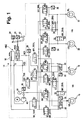
- FIG. 1 shows a preferred embodiment of an electro-hydraulic brake system
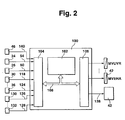
- FIG. 2 shows the control unit controlling the electro-hydraulic brake system
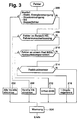
- FIG. 3 shows a flow chart illustrating a preferred implementation of the emergency operations of an electro-hydraulic brake system as a program of a microcomputer.
- Figure 1 shows a preferred embodiment of an electro-hydraulic brake system. It shows a master cylinder HBZ with reservoir 10, to which a driver operable brake pedal is mounted. Furthermore, a hydraulic unit 14 is provided which contains valve and pump arrangements for controlling the wheel brakes 16, 18, 20 and 22. To the brake pedal 12, a brake pedal switch 24 is connected, which closes upon actuation of the brake pedal, and a measuring device 26 for detecting the deflection of the brake pedal.
- the brake pedal switch can be designed as a simple closer, or to improve the monitorability as a double switch with a normally closed contact and a closer. Likewise, the measuring device 26 can be designed to be redundant for detecting the deflection of the pedal.
- a pedal travel PWS is provided, which simulates a counterforce for the driver upon actuation of the brake pedal.
- the two brake circuits HZ1 and HZ2 are connected to the master brake cylinder HBZ.
- a separating valve MV_TVR and MV_TVL are inserted, which is closed by energization in electrically controlled brake system.
- a pressure sensor 28 measures the pressure applied by the driver via the brake pedal actuation. With closed isolation valves, the master cylinder is hydraulically disconnected from the pressure control system.
- the pressure control system includes a pressure modulator for brake pressure control for each wheel brake.
- a pressure modulator consists of one inlet valve (MV_UVR, MV_UVL, MV_UHR, MV_UHL), one outlet valve (MV_DVR, MV_DVL, MV_DHR, MV_DHL) and one pressure sensor 30, 32, 34 and 36 each, which controls the pressure in the wheel brake Line measures.
- MV_UVR inlet valve
- MV_UVL MV_UHR
- MV_UHL one outlet valve
- MV_DVR MV_DVL
- MV_DHR MV_DHR
- MV_DHL pressure sensor 30, 32, 34 and 36
- relief valves MV_EVA or MV_EHA are provided for each axle, which, when de-energized, allow the pressure to be reduced from the wheel pressure modulators of one axle. They connect the pressure modulators of one axis with the return lines leading to the reservoir 10. In the electrically controlled operating state, these two valves are permanently energized, ie closed. Further, one temperature compensation valve MV_TKVL and MV_TKVR are provided for each front wheel pressure modulator, respectively. These valves are not energized closed and are opened for pressure reduction from the pressure modulator of a front wheel by energizing, if certain conditions, in particular a very long braking time, are present. The temperature compensation valves connect the brake line to the wheel brake with the return line.
- the energy for the brake pressure modulation comes from a driven by an electric motor single-piston high-pressure pump 42. This is connected to a high-pressure accumulator 44, which serves as an intermediate buffer and whose pressure is detected by a pressure sensor 46.
- the pressure line of the pump 42 leads to the intake valves of the wheel brakes, while the suction line of the pump 42 is connected to the reservoir 10.
- the relief valves MV_EVx and the temperature compensation valves MV_TKx are omitted in one embodiment.
- the brake system described in Figure 1 operates as follows.
- the driver depresses the brake pedal. He senses a path-dependent counterforce. This path dependence is formed by the defined characteristic of the pedal travel simulator.
- the isolation valves MV_TVR and MV_TVL
- the relief valves MV_EVA and MV_EHA
- the main brake cylinder HBZ builds up a pressure resulting from the pedal force. From the signals of the brake light switch 24, the displacement sensor 26 and / or the pressure sensor 28, the driver's braking request is calculated, for example, as a desired deceleration or as a desired braking force.
- the individual Sollradbremsdrücke be formed.
- these pressures are modified and adjusted via the wheel pressure modulators by valve energization.
- the actual pressures on the wheel pressure sensors are used for the setpoint / actual adjustment for each wheel brake.
- the compensation valves are closed and adjusted in each wheel, the predetermined target pressure by controlling the intake and exhaust valves in terms of a regulation of the actual brake pressure to the target brake pressure.
- the inlet valve is energized so far that forms the desired target pressure in the wheel with the desired dynamics.
- a decrease in pressure is achieved by energizing the exhaust valve, wherein brake fluid flows back into the reservoir via the return line.
- the relief valves come into effect in the event of a fault in the system. When the electrical system fails during braking, all valves return to their de-energized state. The relief valves then open the pressure modulators to the return line, so that no brake pressure can be locked. Likewise, these valves allow in the idle state the volume balance to the container in case of temperature fluctuations.
- Actuation of the pump 42 takes place when the braking operation is active and / or when the accumulator pressure in the accumulator 44 drops below a predetermined value.
- the detected accumulator pressure 46 is also evaluated within the scope of the control since it essentially represents the pressure at the inlet of the intake valves.
- the electrically operable valves and the pump 42 are driven by at least one electronic control unit, which is outlined in Figure 2. It includes at least a microcomputer 102, an input circuit 104, an output circuit 106 and a bus system 108 interconnecting these elements for mutual data exchange.
- Input circuit 104 is supplied with lines 50 and 54 from brake pedal switch 24 and pedal travel sensor 26. Further, input lines 118 to 124 connect the input circuit 104 to the sensors 30 to 36 associated with each wheel brake. Further, there is provided an input line 140 supplied from the measuring device 46 for detecting the accumulator pressure to the input line 104. Further input lines 126 to 128 connect the input circuit 104 with measuring devices 130 to 132 for detecting further operating variables of the brake system, of the vehicle and / or its drive unit.
- Such operating variables include, for example, the wheel speeds, optionally the engine torque output by the drive unit, axle loads, the pressure in the brake line (sensor 28), etc.
- Several output lines are connected to the output circuit 106. By way of example, the output lines are shown, via which the valves of the pressure modulators are actuated. Via a further output line 138, the pump 42 is driven.
- the control unit 100 controls the brake system as a function of the supplied signal quantities in the sense described above.
- FIG. 3 shows a preferred exemplary embodiment for emergency braking operations and their selection in the case of an electrohydraulic brake system.
- the sketched program runs at least one detected error, as long as the fault monitoring is active, ie when the electric brake control is not completely switched off.
- the error monitoring itself ie the determination of the error type, takes place in other programs not specifically listed here.
- the first step 200 checks whether a failure of the electrical power supply, the hydraulic pressure supply, an internal error of the control unit or a double fault, i. at least one fault has ever existed on different axles.
- the failure of the electrical power supply is e.g. detected by monitoring the battery voltage and / or the generator current, the failure of the pressure supply e.g. by monitoring for limit values of the accumulator pressure and / or the accumulator pressure gradient.
- Internal faults of the controller are eliminated by conventional monitoring of the components, e.g. detected by a watchdog, electronic memory test, potential checks, etc.
- step 202 If one of these errors has been detected, all valves are de-energized according to step 202.
- the electrical control can no longer be maintained under any circumstances.
- the pressure build-up is applied by the driver by muscular force without brake assist via the master cylinder on the front axle.
- the rear axle remains unrestrained.
- a warning is issued to the driver (step 204), e.g. via a warning lamp informing the driver about the fault and / or the emergency braking operation and terminating the program. Since the electrical control is switched off, the emergency braking operation is maintained at least until the next start of an operating cycle, the program is no longer run.
- step 206 If none of the errors described in step 200 is present, it is checked in step 206 whether there is an error in the area of the driver request acquisition, eg a failure of a sensor, an error of the pedal travel simulator, etc.
- errors, especially sensor failures are eg by comparing the Detected sensor signals with each other and optionally with another sensor signal, or by checking the signal of each sensor alone to limits.
- step 208 an emergency braking operation is initiated after step 208, which leads to a power-off of the valves of the front axle.
- the pressure build-up on the front axle must be applied as above by the driver.
- the faulty sensor can be determined, the rear axle will continue to be kept in electrically controlled operation, the error-free sensor signal being used to form the braking request.
- the wheel pressure sensors of the front axle brake in this case serve to monitor the electrical control by comparing their signals with the driver's request. In case of impermissible deviations there is a double fault, which then leads to an emergency braking operation after step 202.
- step 210 If there is no error in the area of the driver's intention determination, it is checked in step 210 whether there is an error on a component of the hydraulic unit. To determine this, extensive error checks are provided. Thus, for example, outside a braking for each wheel, the deviation between measured brake pressure and target pressure is compared with a permissible deviation. Furthermore, if an impermissible memory pressure change is detected, a highly leaking or open inlet valve can be isolated as a faulty component. If no impermissible change in the accumulator pressure is detected, a non-opening diverter valve, a non-opening temperature compensation valve or a blocked line, in the case of the rear axle brakes, is detected by a non-opening relief or balance valve or a blocked line.
- a pressure build-up phase If a pressure build-up phase is present, an inadmissible deviation of the actual pressure from the target pressure and, at the same time, too great a build-up time will result and unacceptable memory pressure drop a leaking exhaust valve or leakage in the brake system between the memory and the media burner detected. If at least one of the last two conditions does not exist, it is assumed, for example, that the inlet valve does not open.
- the drive time T is checked for exceeding a maximum pressure reduction drive time and the storage pressure gradient. If the dismantling time exceeds the maximum time and the accumulator pressure gradient is impermissibly high, a non-closing inlet valve is assumed. If one of the conditions is not met and the wheel brake pressure and desired wheel brake pressure deviate unacceptably from one another, the cause may be a non-opening exhaust valve, a suspended media separator and / or a non-opening temperature compensation valve.
- a so-called 3-wheel EHB operation is initiated according to step 212 as the emergency brake operation by the balance valve of the front axle is closed, so that built on the wheel of the front axle, where the defect has occurred, no more pressure becomes. Since a wheel-individual control of this wheel is no longer possible, wheel-specific functions (such as driving dynamics control) are disabled, but the anti-lock protection function can remain active for the remaining three wheels.
- the normally closed removal valve of the insulated wheel is briefly activated at regular time intervals in order to ensure a released brake. In order to avoid a strong yawing moment configuration, a yawing moment limitation, the basic mode of operation of which is known from the prior art, is advantageous.
- step 214 If none of the errors has been determined according to step 210, it is checked in step 214 whether a wheel pressure sensor is clearly defective is. This can be done on the basis of a hardware check (eg measuring the internal resistance, etc.).
- an adjustment of an axle is initiated in the context of a pressure control loop.
- the balance valve of the axis of the wheel on which the error has occurred is opened, and regulated in both wheel brakes this axis, the pressure in accordance with the setpoint and the actual value of the wheel, which is associated with the correct working Radtiksensor.
- Wheel-specific functions are also to be switched off here, whereby optionally the ABS function can continue to be active for the other axle not affected by the emergency brake operation.
- step 214 If also the error checked in step 214 is not present, as after steps 202, 208, 212, 216, the driver is warned, albeit without restriction or only comfort restrictions such as e.g. a harder or softer pedal. This is e.g. then the case when due to the change in the accumulator pressure in the pressure build-up in the wheels air was detected in one or more Radzangen.
- emergency braking operation is carried out by braking via muscle power operation on one wheel and electrical control of the remaining three wheels. This especially if a media burner can not move.
- the wheel to which this media burner is assigned is operated by the driver via the master cylinder, the remaining three wheels are still regulated in electro-hydraulic operation.
- the wheel brake pressure controlling valve assemblies are de-energized, that in an error in the brake request detection only the front axle associated valve assemblies de-energized be that in an error that affects the ability to build up pressure or pressure on only one wheel (eg errors of a valve assembly), an electrical control is made to only three wheel brakes and that in an error that affects only one wheel of an axis, without to affect the ability of the pressure build-up and degradation of this wheel (eg a pressure sensor error), a common control of an axis takes place within the context of a pressure control loop.
Landscapes
- Engineering & Computer Science (AREA)
- Transportation (AREA)
- Mechanical Engineering (AREA)
- Physics & Mathematics (AREA)
- Fluid Mechanics (AREA)
- Regulating Braking Force (AREA)
- Valves And Accessory Devices For Braking Systems (AREA)
- Braking Systems And Boosters (AREA)
Description
- Die Erfindung betrifft ein Verfahren und eine Vorrichtung zur Steuerung einer Bremsanlage gemäß den Oberbegriffen der unabhängigen Patentansprüche.
- Ein derartiges Verfahren bzw. eine derartige Vorrichtung ist beispielsweise aus dem SAE-Paper 960991 bekannt. Dort wird eine elektrohydraulische Bremsanlage beschrieben, bei welcher aus der Bremspedalbetätigung durch den Fahrer ein Bremswunsch des Fahrers abgeleitet wird. Dieser Bremswunsch wird gegebenenfalls unter Berücksichtigung von weiteren Betriebsgrößen in Sollbremsdrücke für die einzelnen Radbremsen umgerechnet. Die Sollbremsdrücke werden für jedes Rad durch Druckregelkreise auf der Basis des vorgegebenen Solldrucks sowie des im Bereich der Radbremse gemessenen Istbremsdrucks eingeregelt. Da der Bremsdruck in den Radbremsen bei einer derartigen elektrohydraulischen Bremsanlage abhängig vom Fahrerbremswunsch auf elektrischem Wege über Ventilanordnungen eingestellt und moduliert wird, sind im Fehlerfall Notbremsbetriebe sicherzustellen, die eine ausreichende Bremswirkung auch im Fehlerfall gewährleisten. Bei der bekannten Bremsanlage wird in diesem Zusammenhang ein Abschalten des elektrischen Systems und ein Umschalten auf eine hydraulische Bremse oder der elektrische Betrieb nur dreier Radbremsen vorgeschlagen. Damit können die meisten Fehler zufriedenstellend beherrscht werden, allerdings wird dennoch in einigen Fällen auf den hydraulischen Betrieb umgeschaltet.
- Es ist Aufgabe der Erfindung, Notbremsbetriebe einer elektrisch gesteuerten Bremsanlage anzugeben, durch die so wenig wie möglich im Fehlerfall auf eine direkte mechanische Einwirkung des Fahrers auf die Radbremsen umgeschaltet werden muß.
- Dies wird durch die kennzeichnenden Merkmale der unabhängigen Patentansprüche erreicht.
- Es wird ein Notbetriebssystem einer elektrisch gesteuerten Bremsanlage vorgestellt, bei welchem je nach Fehlerfall unterschiedliche Notbremsbetriebe eingeleitet werden. In vorteilhafter Weise wird ein vollständiges Abschalten der elektrischen Steuerung nur noch in wenigen, schwerwiegenden Fehlern erforderlich.
- Dadurch wird die Verfügbarkeit der elektrischen Steuerung verbessert, ohne daß die Betriebssicherheit gefährdet ist.
- Besonders vorteilhaft ist, daß auch im Fehlerfall eine gegenüber dem vollständigen Abschalten verbesserte Bremswirkung erreicht wird, insbesondere eine Bremskraftverstärkung stattfindet.
- Als weiterer Notbremsbetrieb steht neben dem eingangs genannten 3-Rad-EHB-Betrieb eine Regelung zur Verfügung, bei der bei einem Fehler, der nur ein Rad einer Achse betrifft, ohne die Fähigkeit des Druckauf- und -abbaus an diesem Rad zu beeinträchtigen, eine gemeinsame Regelung der Achse dieses Rades im Rahmen eines Druckregelkreises stattfindet, wobei vorgesehen ist, dass bei einem Notbremsbetrieb die radindividuelle Antiblockierfunktion der betroffenen Achse abgeschaltet werden, während die Antiblockierfunktion an der anderen Achse erhalten bleibt. Damit wird die Anzahl der Notbremsbetriebe erhöht und das Bremsverhalten im Fehlerfall erheblich verbessert.
- Weitere Vorteile ergeben sich aus der nachfolgenden Beschreibung von Ausführungsbeispielen bzw. aus den abhängigen Patentansprüchen.
- Die Erfindung wird nachstehend anhand der in der Zeichnung dargestellten Ausführungsformen näher erläutert. Dabei zeigt Figur 1 ein bevorzugtes Ausführungsbeispiel einer elektrohydraulischen Bremsanlage, während in Figur 2 die die elektrohydraulische Bremsanlage steuernde Steuereinheit dargestellt ist. Figur 3 zeigt ein Flußdiagramm, das eine bevorzugte Realisierung der Notbetriebe einer elektrohydraulischen Bremsanlage als Programm eines Mikrocomputers darstellt.
- Figur 1 zeigt ein bevorzugtes Ausführungsbeispiel einer elektrohydraulischen Bremsanlage. Sie zeigt einen Hauptbremszylinder HBZ mit Vorratsbehälter 10, an den ein vom Fahrer betätigbares Bremspedal angebracht ist. Ferner ist ein Hydraulikaggregat 14 vorgesehen, welches Ventil- und Pumpenanordnungen zur Steuerung der Radbremsen 16, 18, 20 und 22 enthält. Mit dem Bremspedal 12 ist ein Bremspedalschalter 24 verbunden, welcher bei Betätigen des Bremspedals schließt, und eine Meßeinrichtung 26 zur Erfassung der Auslenkung des Bremspedals. Der Bremspedalschalter kann als einfacher Schließer ausgelegt sein, oder zur Verbesserung der Überwachbarkeit als doppelter Schalter mit einem Öffner und einem Schließer. Ebenso kann die Meßeinrichtung 26 zur Erfassung der Auslenkung des Pedals redundant ausgelegt werden. Ferner ist ein Pedalwegsimulator PWS vorgesehen, welcher für den Fahrer bei Betätigen des Bremspedals eine Gegenkraft simuliert. An den Hauptbremszylinder HBZ sind die zwei Bremskreise HZ1 und HZ2 angeschlossen. In diesen sind jeweils ein Trennventil MV_TVR und MV_TVL eingefügt, welches bei elektrisch gesteuerter Bremsanlage durch Bestromung geschlossen wird. Vor dem Trennventil mißt in zumindest einem der Bremskreise ein Drucksensor 28 den vom Fahrer über die Bremspedalbetätigung aufgebrachten Druck. Bei geschlossenen Trennventilen ist der Hauptbremszylinder hydraulisch vom Druckregelsystem abgetrennt. Im Druckregelsystem sind für jede Radbremse ein Druckmodulator für die Bremsdruckregelung enthalten. Ein Druckmodulator besteht dabei aus je einem Einlaßventil (MV_UVR, MV_UVL, MV_UHR, MV_UHL), je einem Auslaßventil (MV_DVR, MV_DVL, MV_DHR, MV_DHL) und je einem Drucksensor 30, 32, 34 und 36, der den Druck in der zur Radbremse führenden Leitung mißt. In den beiden Vorderraddruckmodulatoren befindet sich je ein Medientrennerkolben 38 und 40 zwischen den Ventilen (Ein- und Auslaßventil) und den Drucksensoren bzw. der Radbremse. Die Druckmodulatoren sind über Ausgleichsventile MV_BVA und MV_BHA verbunden, die bei Bestromung voneinander unabhängig gesteuert werden können. Ferner sind Entlastungsventile MV_EVA bzw. MV_EHA für jede Achse vorgesehen, die in unbestromtem Zustand den Druckabbau aus den Raddruckmodulatoren einer Achse erlauben. Sie verbinden die Druckmodulatoren einer Achse mit den zum Vorratsbehälter 10 führenden Rückführleitungen. Im elektrisch gesteuerten Betriebszustand sind diese beiden Ventile permanent bestromt, d.h. geschlossen. Ferner ist jeweils ein Temperaturkompensationsventil MV_TKVL und MV_TKVR für jeden Vorderraddruckmodulator vorgesehen. Diese Ventile sind unbestromt geschlossen und werden zum Druckabbau aus dem Druckmodulator eines Vorderrades durch Bestromung geöffnet, wenn bestimmte Bedingungen, insbesondere eine sehr lange Bremsdauer, vorliegen. Die Temperaturkompensationsventile verbinden die Bremsleitung zur Radbremse mit der Rücklaufleitung. Die Energie für die Bremsdruckmodulation kommt aus einer von einem Elektromotor angetriebenen Einkolben-Hochdruckpumpe 42. Diese ist an einen Hochdruckspeicher 44 angeschlossen, der als Zwischenpuffer dient und dessen Druck durch einen Drucksensor 46 erfaßt wird. Die Druckleitung der Pumpe 42 führt zu den Einlaßventilen der Radbremsen, während die Saugleitung der Pumpe 42 mit dem Vorratsbehälter 10 verbunden ist. Bezüglich Einzelheiten der hydraulischen Schaltung wird auf das in Figur 1 dargestellte bevorzugte Ausführungsbeispiel verwiesen. Die Entlastungsventile MV_EVx und die Temperaturkompensationsventile MV_TKx entfallen in einem Ausführungsbeispiel.
- Die nachfolgend beschriebene erfindungsgemäße Vorgehensweise wird jedoch nicht nur in Verbindung mit einer solchen Hydraulikschaltung vorteilhaft angewendet, sondern überall dort, wo Notbremsbetriebe im Fehlerfall einer elektrisch gesteuerten Bremsanlage eingerichtet werden müssen.
- Im Normalbetrieb arbeitet die in Figur 1 beschriebene Bremsanlage wie folgt. Der Fahrer tritt auf das Bremspedal. Er spürt dabei eine wegabhängige Gegenkraft. Diese Wegabhängigkeit wird durch die definierte Charakteristik des Pedalwegsimulators gebildet. Bei Sensierung eines Bremswunsches über den Pedalwegsensor, den Bremspedalschalter und/oder den Drucksensor werden die Trennventile (MV_TVR und MV_TVL) und die Entlastungsventile (MV_EVA und MV_EHA) geschlossen. Im Hauptbremszylinder HBZ baut sich ein Druck auf, der aus der Pedalkraft resultiert. Aus den Signalen des Bremslichtschalters 24, des Wegsensors 26 und/oder des Drucksensors 28 wird der Bremswunsch des Fahrers beispielsweise als Sollverzögerung oder als Sollbremskraft errechnet. Aus diesem Bremswunsch werden die einzelnen Sollradbremsdrücke gebildet. Je nach Fahrzustand und Schlupfbedingung werden diese Drücke modifiziert und über die Raddruckmodulatoren durch Ventilbestromungen eingeregelt. Im geschlossenen Regelkreis werden bei jeder Radbremse die aktuellen Drücke an den Raddrucksensoren für den Soll-Ist-Abgleich herangezogen. Bei unterschiedlichen Solldrücken im linken und rechten Rad einer Achse werden die Ausgleichsventile geschlossen und in jeder Radbremse der vorgegebene Solldruck durch Ansteuern der Einlaß- und Auslaßventile im Sinne einer Regelung des Ist-Bremsdruckes auf den Sollbremsdruck eingeregelt. Zum Druckaufbau an einer Radbremse wird das Einlaßventil so weit bestromt, daß sich der gewünschte Solldruck in der Radbremse mit der gewünschten Dynamik ausbildet. Eine Druckabnahme wird entsprechend durch Bestromung des Auslaßventils erreicht, wobei Bremsflüssigkeit in den Vorratsbehälter über die Rücklaufleitung zurückfließt. Die Entlastungsventile kommen im Fehlerfall des Systems zur Wirkung. Wenn während einer Bremsung das elektrische System ausfällt, fallen alle Ventile in ihren unbestromten Zustand zurück. Die Entlastungsventile öffnen dann die Druckmodulatoren zur Rücklaufleitung, so daß kein Bremsdruck eingesperrt werden kann. Ebenso gestatten diese Ventile im Ruhezustand den Volumenausgleich zum Behälter bei Temperaturschwankungen.
- Eine Betätigung der Pumpe 42 findet bei aktivem Bremsvorgang und/oder bei einem Absinken des Speicherdrucks im Speicher 44 unter einen vorbestimmten Wert statt. Neben dieser Funktion wird der erfaßte Speicherdruck 46 auch im Rahmen der Regelung ausgewertet, da er im wesentlichen den am Eingang der Einlaßventile liegenden Druck repräsentiert.
- Die elektrisch betätigbaren Ventile sowie die Pumpe 42 werden von wenigstens einer elektronischen Steuereinheit angesteuert, die in Figur 2 skizziert ist. Sie umfaßt dabei wenigstens einen Mikrocomputer 102, eine Eingangsschaltung 104, eine Ausgangsschaltung 106 und ein diese Elemente verbindendes Bussystem 108 zum gegenseitigen Datenaustausch. Der Eingangsschaltung 104 sind die Leitungen 50 und 54 von Bremspedalschalter 24 und Pedalwegsensor 26 zugeführt. Ferner verbinden Eingangsleitungen 118 bis 124 die Eingangsschaltung 104 mit den jeder Radbremse zugeordneten Sensoren 30 bis 36. Ferner ist eine Eingangsleitung 140 vorgesehen, die von der Meßeinrichtung 46 zur Erfassung des Speicherdrucks der Eingangsleitung 104 zugeführt ist. Weitere Eingangsleitungen 126 bis 128 verbinden die Eingangsschaltung 104 mit Meßeinrichtungen 130 bis 132 zur Erfassung weiterer Betriebsgrößen der Bremsanlage, des Fahrzeugs und/oder dessen Antriebseinheit. Derartige Betriebsgrößen sind beispielsweise die Radgeschwindigkeiten, gegebenenfalls das von der Antriebseinheit abgegebene Motormoment, Achslasten, der Druck in der Bremsleitung (Sensor 28), etc. An die Ausgangsschaltung 106 sind mehrere Ausgangsleitungen angeschlossen. Beispielhaft sind die Ausgangsleitungen dargestellt, über welche die Ventile der Druckmodulatoren betätigt werden. Über eine weitere Ausgangsleitung 138 wird die Pumpe 42 angesteuert. Die Steuereinheit 100 steuert die Bremsanlage abhängig von den zugeführten Signalgrößen im oben dargestellten Sinne.
- In Figur 3 ist ein bevorzugtes Ausführungsbeispiel für Notbremsbetriebe und deren Auswahl bei einer elektrohydraulischen Bremsanlage dargestellt. Das skizzierte Programm läuft bei wenigstens einem erkannten Fehler ab, solange die Fehlerüberwachung aktiv ist, d.h. wenn die elektrische Bremsensteuerung nicht vollständig abgeschaltet ist. Die Fehlerüberwachung selbst, d.h. die Ermittlung der Fehlerart, findet in anderen, hier nicht speziell aufgeführten Programmen statt.
- Nach Start des Programms bei wenigstens einem erkannten Fehler wird im ersten Schritt 200 überprüft, ob ein Ausfall der elektrischen Energieversorgung, der hydraulischen Druckversorgung, ein interner Fehler der Steuereinheit oder ein Doppelfehler, d.h. zumindest je ein Fehler an verschiedenen Achsen vorliegt. Der Ausfall der elektrischen Energieversorgung wird z.B. durch Überwachung der Batteriespannung und/oder des Generatorstroms erkannt, der Ausfall der Druckversorgung z.B. durch Überwachung auf Grenzwerte des Speicherdrucks und/oder des Speicherdruckgradienten. Interne Fehler des Steuergerät werden durch übliche Überwachungen der Komponenten, wie z.B. mittels eines Watchdogs, elektronische Speichertest, Potentialüberprüfungen, etc. festgestellt.
- Ist einer dieser Fehler festgestellt worden, werden gemäß Schritt 202 alle Ventile stromlos geschaltet. Die elektrische Steuerung kann unter keinen Umständen mehr aufrechtgehalten werden. Im Rahmen dieses Notbremsbetriebs wird der Druckaufbau vom Fahrer durch Muskelkraft ohne Bremskraftunterstützung über den Hauptbremszylinder an der Vorderachse aufgebracht. Die Hinterachse bliebt ungebremst. Danach wird an den Fahrer eine Warnung ausgegeben (Schritt 204), z.B. über eine Warnlampe, die den Fahrer über den Fehler und/oder den Notbremsbetrieb informiert und das Programm beendet. Da die elektrische Steuerung abgeschaltet ist, bleibt der Notbremsbetrieb zumindest bis zum nächsten Start eines Betriebszyklus erhalten, das Programm wird nicht mehr durchlaufen.
- Liegt keiner der in Schritt 200 beschriebenen Fehler vor, wird im Schritt 206 überprüft, ob ein Fehler im Bereich der Fahrerwunscherfassung, z.B. ein Ausfall eines Sensors, ein Fehler des Pedalwegsimulators, etc. vorliegt. Diese Fehler, vor allem Sensorausfälle werden z.B. durch Vergleich der Sensorsignalen miteinander und gegebenenfalls mit einem weiteren Sensorsignal festgestellt, oder durch Überprüfen des Signals des jeweiligen Sensors allein auf Grenzwerte.
- Wird ein solcher Fehler erkannt, wird nach Schritt 208 ein Notbremsbetrieb eingeleitet, welcher zu einem Stromlosschalten der Ventile der Vorderachse führt. Dadurch muß der Druckaufbau an der Vorderachse wie oben vom Fahrer aufgebracht werden. Kann der fehlerhafte Sensor ermittelt werden, wird die Hinterachse weiterhin im elektrisch gesteuerten Betrieb behalten, wobei das fehlerfreie Sensorsignal zur Bildung des Bremswunsch herangezogen wird. Die Raddrucksensoren der Vorderachsbremse dienen in diesem Fall zur Überwachung der elektrischen Steuerung, indem deren Signale mit dem Fahrerwunsch verglichen werden. Bei unzulässigen Abweichungen liegt ein Doppelfehler vor, der dann zu einem Notbremsbetrieb nach Schritt 202 führt.
- Liegt kein Fehler im Bereich der Fahrerwunschermittlung vor, wird im Schritt 210 überprüft, ob ein Fehler an einer Komponente des Hydraulikaggregats vorliegt. Zu dessen Feststellung sind umfangreiche Fehlerüberprüfungen vorgesehen. So wird z.B. außerhalb einer Bremsung für jedes Rad die Abweichung zwischen gemessenem Bremsdruck und Solldruck mit einer zulässigen Abweichung verglichen. Wird ferner eine unzulässige Speicherdruckänderung festgestellt, kann als fehlerhafte Komponente ein stark undichtes bzw. offenes Einlaßventil isoliert werden. Ist keine unzulässige Änderung des Speicherdrucks zu erkennen, wird ein nichtöffnendes Trennventil, ein nichtöffnendes Temperaturkompensationsventil oder eine verstopfte Leitung, im Falle der Hinterachsbremsen durch ein nichtöffnendes Entlastungs- oder Balanceventil bzw. eine verstopften Leitung erkannt. Bei Vorliegen einer Druckaufbauphase wird bei einer unzulässigen Abweichung des Istdrucks vom Solldruck und gleichzeitiger zu großer Aufbauzeit und unzulässigem Speicherdruckabfall ein undichtes Auslaßventil oder eine Leckage im Bereich der Bremsanlage zwischen dem Speicher und dem Medienbrenner erkannt. Liegt wenigstens eine der beiden letzten Bedingungen nicht vor, wird z.B. von einem nichtöffnenden Einlaßventil ausgegangen. Bei einem Druckabbau wird die Ansteuerzeit T auf Überschreiten einer maximalen Druckabbauansteuerzeit und der Speicherdruckgradient überprüft. Überschreitet die Abbauzeit die Maximalzeit und ist der Speicherdruckgradient unzulässig groß, wird ein nicht schließendes Einlaßventil angenommen. Ist eine der Bedingungen nicht erfüllt und weichen Radbremsistdruck und Radbremssolldruck unzulässig voneinander ab, kommt als Ursache ein nichtöffnendes Auslaßventil, ein hängender Medientrenner und/oder ein nichtöffnendes Temperaturkompensationsventil in Betracht.
- Liegt einer dieser Fehler vor, wird gemäß Schritt 212 als Notbremsbetrieb ein sogenannter 3-Rad-EHB-Betrieb eingeleitet, indem das Balanceventil der Vorderachse geschlossen wird, so daß an dem Rad der Vorderachse, an dem der Defekt aufgetreten ist, kein Druck mehr aufgebaut wird. Da eine radindividuelle Regelung an diesem Rad nicht mehr möglich ist, sind radindividuelle Funktionen (z.B. Fahrdynamikregelung) abgeschaltet, die Antiblockierschutzfunktion kann jedoch für die restlichen drei Räder aktiv bleiben. Das stromlos geschlossene Abbauventil des isolierten Rades wird in regelmäßigen zeitlichen Abständen kurz angesteuert, um eine gelöste Bremse zu gewährleisten. Um einen starken Giermomentenaufbau zu vermeiden, ist eine Giermomentenbegrenzung, deren prinzipielle Funktionsweise aus dem Stand der Technik bekannt ist, vorteilhaft.
- Wurde keiner der Fehler gemäß Schritt 210 ermittelt, wird im Schritt 214 überprüft, ob ein Raddrucksensor eindeutig defekt ist. Dies kann auf der Basis einer Hardwareüberprüfung erfolgen (z.B. Messen des Innenwiderstands, etc.).
- In diesem Fall wird als Notbremsbetrieb gemäß Schritt 216 eine Regelung einer Achse im Rahmen eines Druckregelkreises eingeleitet. Dazu wird das Balanceventil der Achse des Rades, an dem der Fehler aufgetreten ist, geöffnet, und in beiden Radbremsen dieser Achse der Druck nach Maßgabe des Sollwerts und des Istwertes des Rades geregelt, dem der korrekt arbeitende Raddrucksensor zugeordnet ist. Radindividuelle Funktionen sind auch hier abzuschalten, wobei gegebenenfalls die ABS-Funktion für die andere, vom Notbremsbetrieb nicht betroffene Achse weiter aktiv sein kann.
- Liegt auch der in Schritt 214 überprüfte Fehler nicht vor, wird wie nach den Schritten 202, 208, 212, 216, der Fahrer gewarnt, allerdings ohne Einschränkung oder nur Komforteinschränkungen wie z.B. ein härteres oder weicheres Pedal. Dies ist z.B. dann der Fall, wenn aufgrund der Änderung des Speicherdrucks beim Druckaufbau in den Rädern Luft in einer oder mehreren Radzangen festgestellt wurde.
- In einer vorteilhaften Ausführung wird als Notbremsbetrieb eine Bremsung über Muskelkraftbetrieb an einem Rad und elektrischer Regelung an den restlichen drei Rädern vorgenommen. Dies vor allem dann, wenn sich ein Medientrenner nicht bewegen läßt. Das Rad, dem dieser Medienbrenner zugeordnet ist, wird vom Fahrer über den Hauptzylinder bedient, die restlichen drei Räder werden nach wie vor im elektrohydraulischen Betrieb geregelt.
- Die geschilderten Notbremsbetriebe werden auch in Verbindung mit Fehlererkennungsmaßnahmen angewendet, die sich von den vorstehend dargestellten unterscheiden.
- Wesentlich ist, daß bei einem schwerwiegenden Fehler wie ein Ausfall der elektrischen Energieversorgung, der Druckversorgung oder ein elektrischer Fehler der die Bremsen steuernden Steuereinheit die die Radbremsdrücke steuernde Ventilanordnungen stromlos geschaltet werden, daß bei einem Fehler in der Bremswunscherfassung nur die der Vorderachse zugeordneten Ventilanordnungen stromlos geschaltet werden, daß bei einem Fehler, der die Fähigkeit zum Druckaufbau oder Druckabbau an nur einem Rad betrifft (z.B. Fehler einer Ventilanordnung), eine elektrische Steuerung an nur drei Radbremsen vorgenommen wird und daß bei einem Fehler, der nur ein Rad einer Achse betrifft, ohne die Fähigkeit des Druckauf- und -abbaus an diesem Rad zu beeinträchtigen (z.B. ein Drucksensorfehler), eine gemeinsame Regelung einer Achse im Rahmen eines Druckregelkreises stattfindet.
Claims (7)
- Verfahren zur Steuerung einer Bremsanlage eines Kraftfahrzeugs, bei welchem- ein Bremswunsch in Sollradbremsdrücke für die einzelnen Radbremsen (16, 18, 20, 22) umgesetzt wird und- der Radbremsdruck unter Berücksichtigung des gemessenen Radbremsdrucks auf den Sollradbremsdruck eingeregelt wird,wobei eine Fehlerüberwachung vorgesehen ist, die unterschiedliche Fehlerarten ermittelt,
wobei in Abhängigkeit vorgegebener Fehlerarten verschiedene Notbremsbetriebe eingeleitet werden,
wobei als Notbremsbetrieb- bei einem Fehler, der die Fähigkeit zum Druckaufbau oder Druckabbau an nur einem Rad betrifft, eine elektrische Steuerung der Radbremsen der drei restlichen Räder vorgenommen wird, insbesondere im Rahmen einer Giermomentenbegrenzung,wobei vorgesehen ist, dass bei diesem Notbremsbetrieb die Antiblockierschutzfunktion für die restlichen drei Räder aktiv bleibt, und- bei einem Fehler, der nur ein Rad einer Achse betrifft, ohne die Fähigkeit des Druckauf- und -abbaus an diesem Rad zu beeinträchtigen, eine gemeinsame Regelung der Achse dieses Rades im Rahmen eines Druckregelkreises stattfindet,wobei vorgesehen ist, dass bei einem Notbremsbetrieb die radindividuelle Antiblockierfunktion der betroffenen Achse abgeschaltet werden, während die Antiblockierfunktion an der anderen Achse erhalten bleibt. - Verfahren nach Anspruch 1, daß als Notbremsbetrieb eine Bremsung über Muskelkraftbetrieb an einem Rad und elektrischer Regelung an den restlichen drei Rädern vorgenommen wird.
- Verfahren nach einem der vorhergehenden Ansprüche, dadurch gekennzeichnet, daß der Fehler, der nur ein Rad einer Achse betrifft, ein Fehler im Bereich der Ventilanordnung des Hydraulikaggregats (14) ist.
- Verfahren nach einem der vorhergehenden Ansprüche, dadurch gekennzeichnet, daß der Fehler, der nur ein Rad einer Achse betrifft, ohne die Fähigkeit des Druckauf- und -abbaus zu beeinträchtigen, ein Drucksensorfehler ist.
- Verfahren nach einem der vorhergehenden Ansprüche, dadurch gekennzeichnet, daß bei dem Notbremsbetrieb mit dem Druckregelkreis für eine Achse das der Achse zugeordnete Balanceventil (MV_BVA, MV_BHA) geöffnet ist.
- Verfahren nach einem der vorhergehenden Ansprüche, dadurch gekennzeichnet, daß die Hinterachse (HA) ungebremst ist, wenn alle Ventilanordnungen stromlos sind.
- Vorrichtung zur Steuerung einer Bremsanlage eines Kraftfahrzeugs, mit einer Steuereinheit (100), welche- einen Bremswunsch in Sollradbremsdrücke für die einzelnen Radbremsen (16, 18, 20, 22) umsetzt und- den Radbremsdruck unter Berücksichtigung des gemessenen Radbremsdrucks auf den Sollradbremsdruck einregelt,- abhängig von der Fehlerart verschiedene Notbremsbetriebe einleitet,wobei die Steuereinheit (100)- eine Fehlerüberwachung zur Ermittlung unterschiedlicher Fehlerarten enthält, und- Mittel (102) aufweist, die in Abhängigkeit vorgegebener Fehlerarten verschiedene Notbremsbetriebe einleitet,wobei die Mittel (102) im Notbremsbetrieb- bei einem Fehler, der die Fähigkeit zum Druckaufbau oder Druckabbau an nur einem Rad betrifft, eine elektrische Steuerung, insbesondere im Rahmen einer Giermomentenbegrenzung, an den Radbremsen der restlichen drei Rädern vornehmen, wobei vorgesehen ist, dass bei diesem Notbremsbetrieb die Antiblockierschutzfunktion für die restlichen drei Räder aktiv bleibt und- bei einem Fehler, der die Fähigkeit zum Druckaufbau oder Druckabbau an nur ein Rad einer Achse betrifft, ohne die Fähigkeit des Druckauf- und -abbaus an diesem Rad zu beeinträchtigen, eine gemeinsame Regelung der Achse dieses Rades im Rahmen eines Druckregelkreises durchführen, wobei Mittel vorgesehen sind, die bei einem Notbremsbetrieb die radindividuelle Antiblockierfunktion der betroffenen Achse abschalten, während die Antiblockierfunktion an der anderen Achse aufrechterhalten.
Applications Claiming Priority (2)
| Application Number | Priority Date | Filing Date | Title |
|---|---|---|---|
| DE19807369 | 1998-02-21 | ||
| DE19807369A DE19807369A1 (de) | 1998-02-21 | 1998-02-21 | Verfahren und Vorrichtung zur Steuerung einer Bremsanlage |
Publications (3)
| Publication Number | Publication Date |
|---|---|
| EP0937620A2 EP0937620A2 (de) | 1999-08-25 |
| EP0937620A3 EP0937620A3 (de) | 2000-07-19 |
| EP0937620B1 true EP0937620B1 (de) | 2006-05-24 |
Family
ID=7858526
Family Applications (1)
| Application Number | Title | Priority Date | Filing Date |
|---|---|---|---|
| EP98118433A Expired - Lifetime EP0937620B1 (de) | 1998-02-21 | 1998-09-29 | Verfahren und Vorrichtung zur Steuerung einer Bremsanlage |
Country Status (4)
| Country | Link |
|---|---|
| US (1) | US6161904A (de) |
| EP (1) | EP0937620B1 (de) |
| JP (1) | JP4495269B2 (de) |
| DE (2) | DE19807369A1 (de) |
Families Citing this family (49)
| Publication number | Priority date | Publication date | Assignee | Title |
|---|---|---|---|---|
| US5941608A (en) | 1996-03-07 | 1999-08-24 | Kelsey-Hayes Company | Electronic brake management system with manual fail safe |
| JP3738584B2 (ja) * | 1998-12-21 | 2006-01-25 | トヨタ自動車株式会社 | 車輌の制動制御装置 |
| JP3695186B2 (ja) * | 1998-12-21 | 2005-09-14 | トヨタ自動車株式会社 | 車輌の制動制御装置 |
| GB2345322B (en) * | 1998-12-31 | 2002-12-11 | Lucas Ind Plc | Driver warning of braking malfunction in electro-hydraulic (EHB) braking systems |
| WO2000053477A1 (de) * | 1999-03-08 | 2000-09-14 | Continental Teves Ag & Co. Ohg | Schaltungsanordnung für kraftfahrzeug-bremsanlagen |
| JP3607979B2 (ja) * | 1999-11-19 | 2005-01-05 | トヨタ自動車株式会社 | 車両減速力制御装置 |
| DE60002551T2 (de) | 2000-02-19 | 2004-06-09 | Robert Bosch Gmbh | Verfahren und Vorrichtung zum Erkennen eines Bremsschalterfehlers |
| DE10027667B4 (de) * | 2000-06-03 | 2010-04-08 | Robert Bosch Gmbh | Verfahren und Vorrichtung zur Ermittlung eines Basiswertes wenigstens einer Meßgröße einer Bremsanlage |
| GB2367869B (en) * | 2000-10-14 | 2004-10-06 | Trw Ltd | Rear-axle demand for use with front push-through in electrohydraulic (EHB) braking systems |
| US20050131613A1 (en) * | 2000-10-24 | 2005-06-16 | Jurgen Bohm | Method and device for controlling or regulating the brake system of a motor vehicle according to the "brake by wire" principle |
| US20050173980A1 (en) * | 2000-10-24 | 2005-08-11 | Continental Teves Ag & Co. Ohg | Method and device for controlling or regulating the brake system of a motor vehicle according to the "brake by wire" principle |
| DE10147194A1 (de) * | 2000-11-21 | 2002-06-20 | Continental Teves Ag & Co Ohg | Verfahren zum Betreiben eines elektronisch regelbaren Bremsbetätigungssystems |
| EP1339581A1 (de) * | 2000-11-21 | 2003-09-03 | Continental Teves AG & Co. oHG | Verfahren zum betreiben eines elektronisch regelbaren bremsbetätigungssystems |
| EP1339582A1 (de) | 2000-11-27 | 2003-09-03 | Continental Teves AG & Co. oHG | Verfahren zur steuerung einer elektrohydraulischen bremsanlage |
| JP3692933B2 (ja) | 2000-12-18 | 2005-09-07 | トヨタ自動車株式会社 | 車輌の制動制御装置 |
| DE10118262A1 (de) * | 2001-04-12 | 2002-10-17 | Bosch Gmbh Robert | Elektrisches Bremssystem |
| US6860569B1 (en) | 2002-05-23 | 2005-03-01 | Kelsey-Hayes Company | Electro-hydraulic brake system with four wheel push through |
| DE112005001037T5 (de) * | 2004-05-06 | 2007-05-16 | Kelsey Hayes Co | Bremskraftverstärkungssystem mit Schlupfsteuerung |
| KR20080030641A (ko) | 2005-06-30 | 2008-04-04 | 켈시-헤이즈 컴파니 | 미끄럼 제어 부스트 제동 시스템 |
| JP2007045271A (ja) * | 2005-08-09 | 2007-02-22 | Hitachi Ltd | 電動ブレーキおよびその制御装置 |
| JP4768654B2 (ja) * | 2007-03-19 | 2011-09-07 | 日立オートモティブシステムズ株式会社 | ブレーキ制御装置およびポンプアップシステム |
| JP2008230326A (ja) * | 2007-03-19 | 2008-10-02 | Hitachi Ltd | ブレーキ制御装置 |
| JP5014916B2 (ja) * | 2007-08-10 | 2012-08-29 | 日立オートモティブシステムズ株式会社 | ブレーキ制御装置 |
| JP5014919B2 (ja) * | 2007-08-17 | 2012-08-29 | 日立オートモティブシステムズ株式会社 | ブレーキ制御装置 |
| EP2212170A4 (de) | 2007-10-29 | 2013-12-11 | Kelsey Hayes Co | Hydraulikbremssystem mit gesteuerter auslösung |
| JP5030105B2 (ja) * | 2008-06-27 | 2012-09-19 | ボッシュ株式会社 | ブレーキスイッチの故障診断装置および故障診断方法 |
| US8661812B2 (en) | 2010-02-03 | 2014-03-04 | Kelsey-Hayes Company | Hydraulic brake system with controlled boost |
| JP2011073517A (ja) * | 2009-09-29 | 2011-04-14 | Advics Co Ltd | ブレーキ装置 |
| DE112011103226T5 (de) | 2010-10-26 | 2013-08-22 | Kelsey-Hayes Co. | Hydraulisches Bremssystem mit gesteuerter Verstärkung |
| CN102303595A (zh) * | 2011-06-27 | 2012-01-04 | 上海理工大学 | 车辆稳定制动控制装置 |
| US9278679B2 (en) | 2011-07-15 | 2016-03-08 | Ipgate Ag | Safety circuit for blocking drive of a brake booster |
| DE102013021871A1 (de) * | 2013-12-21 | 2014-04-03 | Audi Ag | Kraftfahrzeug |
| DE112014006308T5 (de) * | 2014-01-31 | 2016-11-17 | Hitachi Automotive Systems, Ltd. | Bremssystem |
| DE102015106089A1 (de) | 2015-04-21 | 2016-10-27 | Ipgate Ag | Diagnoseverfahren für ein Bremssystem |
| US9539993B2 (en) * | 2015-06-11 | 2017-01-10 | Ford Global Technologies, Llc | By-wire fallback braking mode for brake-by-wire systems in vehicles |
| US9975628B2 (en) | 2015-12-28 | 2018-05-22 | Goodrich Corporation | Anti-skid protection with undetected pressure sensor failure |
| US10124783B2 (en) | 2016-11-02 | 2018-11-13 | Veoneer Nissin Brake Systems Japan Co. Ltd. | Brake circuit leak detection and isolation |
| CN107351828B (zh) * | 2017-05-16 | 2023-08-11 | 中国煤炭科工集团太原研究院有限公司 | 一种具有车辆制动失效自动防护装置的矿用车辆液压系统 |
| US11014546B2 (en) | 2018-03-29 | 2021-05-25 | Veoneer-Nissin Brake Systems Japan Co., Ltd. | Brake system and method for responding to external boost requests during predetermined loss or degraded boost assist conditions |
| US10766474B2 (en) | 2018-03-30 | 2020-09-08 | Veoneer-Nissin Brake Systems Japan Co., Ltd. | Validating operation of a secondary braking system of a vehicle |
| DE102018213284A1 (de) * | 2018-08-08 | 2020-02-13 | Continental Teves Ag & Co. Ohg | Bremssystem für ein Kraftfahrzeug |
| DE202019101596U1 (de) * | 2019-02-12 | 2020-05-13 | Ipgate Ag | Hydrauliksystem mit mindestens zwei hydraulischen Kreisen und mindestens zwei Druckversorgungseinrichtungen |
| DE102019206501B4 (de) * | 2019-05-07 | 2021-10-21 | Volkswagen Aktiengesellschaft | Ausfallsichere Bremsvorrichtung für ein Kleinstfahrzeug |
| CN110525415B (zh) * | 2019-08-12 | 2020-07-07 | 中车青岛四方机车车辆股份有限公司 | 一种列车分级紧急制动控制方法、系统及列车 |
| FR3102126B1 (fr) * | 2019-10-21 | 2021-10-29 | Poclain Hydraulics Ind | Système et procédé amélioré de commande pour une valve de freinage |
| DE102020103660A1 (de) * | 2020-02-12 | 2021-08-12 | Ipgate Ag | Fahrdynamiksystem, E-Fahrzeug mit zentraler Steuerung (M-ECU) |
| DE102020130276A1 (de) * | 2020-11-17 | 2022-05-19 | Zf Cv Systems Global Gmbh | Ausfallsicherheitsventileinheit, elektronisch steuerbares pneumatisches Bremssystem, Fahrzeug, Verfahren |
| US12115960B2 (en) * | 2021-12-15 | 2024-10-15 | ZF Active Safety US Inc. | Apparatus and method for a hydraulic brake system including manual push-through |
| CN115095618B (zh) * | 2022-06-27 | 2023-07-28 | 浙江师范大学 | 一种复合式线控制动器、制动系统及控制方法 |
Family Cites Families (7)
| Publication number | Priority date | Publication date | Assignee | Title |
|---|---|---|---|---|
| GB8905311D0 (en) * | 1989-03-08 | 1989-04-19 | Lucas Ind Plc | Electronic braking system |
| DE3928874C1 (de) * | 1989-08-31 | 1991-01-10 | Mercedes-Benz Aktiengesellschaft, 7000 Stuttgart, De | |
| DE4339570B4 (de) * | 1993-11-19 | 2004-03-04 | Robert Bosch Gmbh | Elektronisches Bremssystem |
| WO1997032766A1 (en) * | 1996-03-07 | 1997-09-12 | Kelsey Hayes Company | Electronic brake management system with manual fail safe |
| US5707117A (en) * | 1996-07-19 | 1998-01-13 | General Motors Corporation | Active brake control diagnostic |
| JP3521634B2 (ja) * | 1996-08-01 | 2004-04-19 | トヨタ自動車株式会社 | ブレーキ液圧制御装置 |
| DE19706850B4 (de) * | 1997-02-21 | 2007-12-13 | Robert Bosch Gmbh | Verfahren und Vorrichtung zur Steuerung einer Bremsanlage eines Fahrzeugs |
-
1998
- 1998-02-21 DE DE19807369A patent/DE19807369A1/de not_active Ceased
- 1998-09-29 DE DE59813554T patent/DE59813554D1/de not_active Expired - Lifetime
- 1998-09-29 EP EP98118433A patent/EP0937620B1/de not_active Expired - Lifetime
-
1999
- 1999-02-19 JP JP04090599A patent/JP4495269B2/ja not_active Expired - Fee Related
- 1999-02-19 US US09/253,425 patent/US6161904A/en not_active Expired - Lifetime
Also Published As
| Publication number | Publication date |
|---|---|
| JP4495269B2 (ja) | 2010-06-30 |
| EP0937620A3 (de) | 2000-07-19 |
| DE59813554D1 (de) | 2006-06-29 |
| DE19807369A1 (de) | 1999-08-26 |
| JP2000025605A (ja) | 2000-01-25 |
| EP0937620A2 (de) | 1999-08-25 |
| US6161904A (en) | 2000-12-19 |
Similar Documents
| Publication | Publication Date | Title |
|---|---|---|
| EP0937618B1 (de) | Verfahren und Vorrichtung zur Überprüfung einer Bremsanlage | |
| EP0937620A2 (de) | Verfahren und Vorrichtung zur Steuerung einer Bremsanlage | |
| EP0937617B1 (de) | Verfahren und Vorrichtung zur Steuerung einer Bremsanlage | |
| EP0937621B1 (de) | Verfahren und Vorrichtung zur Steuerung einer Bremsanlage | |
| EP3419875B1 (de) | Verfahren zum betrieb einer bremsanlage eines kraftfahrzeugs und bremsanlage | |
| EP2627546B1 (de) | Verfahren zur überwachung einer bremsanlage sowie bremsanlage | |
| EP2719593B1 (de) | Bremssystem und Verfahren zur Erzeugung einer Bremskraft | |
| DE102010039458B4 (de) | Bremssteuerungssystem | |
| EP2229302B1 (de) | Bremsanlage für ein fahrzeug sowie bremspedaleinrichtung für eine derartige bremsanlage | |
| DE112010001460B4 (de) | Fahrzeuginterne Steuervorrichtung | |
| EP0734929B1 (de) | Elektrohydraulische Bremsanlage | |
| DE19729097B4 (de) | Verfahren und Vorrichtung zur Steuerung einer Bremsanlage | |
| DE19603863A1 (de) | Verfahren und Vorrichtung zur Überprüfung der Bremsanlage eines Fahrzeugs | |
| DE69509909T2 (de) | Hydraulische fahrzeugbremsanlagen | |
| EP1339582A1 (de) | Verfahren zur steuerung einer elektrohydraulischen bremsanlage | |
| DE112016004790T5 (de) | Bremssteuerungsvorrichtung für ein Fahrzeug | |
| EP1646544B1 (de) | Vorrichtung und verfahren zur bestimmung von hydraulischen fehlern in elektrohydraulischen bremssystemen | |
| EP0937614B1 (de) | Verfahren und Vorrichtung zur Steuerung einer Bremsanlage | |
| EP1053153A1 (de) | Verfahren zur behandlung von fehlern in einem elektronischen bremssystem und zugehörige vorrichtung | |
| EP0814983B1 (de) | Bremssystem für ein kraftfahrzeug | |
| EP1055576B1 (de) | Elektrohydraulisches Bremssystem und Verfahren zu seiner Steuerung | |
| EP0670793B1 (de) | Bremsanlage mit abs und ebv | |
| DE3828931A1 (de) | Verfahren zur ueberwachung der funktion einer bremsanlage | |
| DE102011007509B4 (de) | Verfahren zur Erkennung eines Fehlerzustandes in einem eine Rückförderpumpe aufweisenden Hydroaggregat eines Bremssystems eines Kraftfahrzeugs | |
| DE102024208791B3 (de) | Vorderachsbremsung bei Degradierung |
Legal Events
| Date | Code | Title | Description |
|---|---|---|---|
| PUAI | Public reference made under article 153(3) epc to a published international application that has entered the european phase |
Free format text: ORIGINAL CODE: 0009012 |
|
| AK | Designated contracting states |
Kind code of ref document: A2 Designated state(s): DE FR GB |
|
| AX | Request for extension of the european patent |
Free format text: AL;LT;LV;MK;RO;SI |
|
| PUAL | Search report despatched |
Free format text: ORIGINAL CODE: 0009013 |
|
| AK | Designated contracting states |
Kind code of ref document: A3 Designated state(s): AT BE CH CY DE DK ES FI FR GB GR IE IT LI LU MC NL PT SE |
|
| AX | Request for extension of the european patent |
Free format text: AL;LT;LV;MK;RO;SI |
|
| 17P | Request for examination filed |
Effective date: 20010119 |
|
| AKX | Designation fees paid |
Free format text: DE FR GB |
|
| 17Q | First examination report despatched |
Effective date: 20050208 |
|
| GRAP | Despatch of communication of intention to grant a patent |
Free format text: ORIGINAL CODE: EPIDOSNIGR1 |
|
| GRAS | Grant fee paid |
Free format text: ORIGINAL CODE: EPIDOSNIGR3 |
|
| GRAA | (expected) grant |
Free format text: ORIGINAL CODE: 0009210 |
|
| AK | Designated contracting states |
Kind code of ref document: B1 Designated state(s): DE FR GB |
|
| REG | Reference to a national code |
Ref country code: GB Ref legal event code: FG4D Free format text: NOT ENGLISH |
|
| REF | Corresponds to: |
Ref document number: 59813554 Country of ref document: DE Date of ref document: 20060629 Kind code of ref document: P |
|
| GBT | Gb: translation of ep patent filed (gb section 77(6)(a)/1977) |
Effective date: 20060918 |
|
| ET | Fr: translation filed | ||
| PLBE | No opposition filed within time limit |
Free format text: ORIGINAL CODE: 0009261 |
|
| STAA | Information on the status of an ep patent application or granted ep patent |
Free format text: STATUS: NO OPPOSITION FILED WITHIN TIME LIMIT |
|
| 26N | No opposition filed |
Effective date: 20070227 |
|
| PGFP | Annual fee paid to national office [announced via postgrant information from national office to epo] |
Ref country code: GB Payment date: 20120920 Year of fee payment: 15 |
|
| PGFP | Annual fee paid to national office [announced via postgrant information from national office to epo] |
Ref country code: FR Payment date: 20121008 Year of fee payment: 15 |
|
| REG | Reference to a national code |
Ref country code: DE Ref legal event code: R084 Ref document number: 59813554 Country of ref document: DE Effective date: 20130301 |
|
| GBPC | Gb: european patent ceased through non-payment of renewal fee |
Effective date: 20130929 |
|
| REG | Reference to a national code |
Ref country code: FR Ref legal event code: ST Effective date: 20140530 |
|
| PG25 | Lapsed in a contracting state [announced via postgrant information from national office to epo] |
Ref country code: GB Free format text: LAPSE BECAUSE OF NON-PAYMENT OF DUE FEES Effective date: 20130929 |
|
| PG25 | Lapsed in a contracting state [announced via postgrant information from national office to epo] |
Ref country code: FR Free format text: LAPSE BECAUSE OF NON-PAYMENT OF DUE FEES Effective date: 20130930 |
|
| PGFP | Annual fee paid to national office [announced via postgrant information from national office to epo] |
Ref country code: DE Payment date: 20171128 Year of fee payment: 20 |
|
| REG | Reference to a national code |
Ref country code: DE Ref legal event code: R071 Ref document number: 59813554 Country of ref document: DE |