EP0940467B1 - Promoteurs d'inhibiteurs complementaires porcins - Google Patents
Promoteurs d'inhibiteurs complementaires porcins Download PDFInfo
- Publication number
- EP0940467B1 EP0940467B1 EP97922097A EP97922097A EP0940467B1 EP 0940467 B1 EP0940467 B1 EP 0940467B1 EP 97922097 A EP97922097 A EP 97922097A EP 97922097 A EP97922097 A EP 97922097A EP 0940467 B1 EP0940467 B1 EP 0940467B1
- Authority
- EP
- European Patent Office
- Prior art keywords
- promoter
- porcine
- dna
- pmcp
- sequence
- Prior art date
- Legal status (The legal status is an assumption and is not a legal conclusion. Google has not performed a legal analysis and makes no representation as to the accuracy of the status listed.)
- Expired - Lifetime
Links
- 239000004074 complement inhibitor Substances 0.000 title abstract description 33
- 241000282898 Sus scrofa Species 0.000 title description 5
- 230000000694 effects Effects 0.000 claims description 38
- 239000012634 fragment Substances 0.000 claims description 9
- 241000282414 Homo sapiens Species 0.000 abstract description 42
- 108090000623 proteins and genes Proteins 0.000 abstract description 31
- 210000000056 organ Anatomy 0.000 abstract description 24
- 229940124073 Complement inhibitor Drugs 0.000 abstract description 20
- 241000282887 Suidae Species 0.000 abstract description 14
- 238000002054 transplantation Methods 0.000 abstract description 13
- 230000009261 transgenic effect Effects 0.000 abstract description 10
- 238000011144 upstream manufacturing Methods 0.000 abstract description 10
- 208000007536 Thrombosis Diseases 0.000 abstract description 5
- 230000002401 inhibitory effect Effects 0.000 abstract description 5
- 108020004414 DNA Proteins 0.000 description 38
- 108700039691 Genetic Promoter Regions Proteins 0.000 description 24
- 210000004027 cell Anatomy 0.000 description 19
- 101100386242 Homo sapiens CD55 gene Proteins 0.000 description 18
- 108060001084 Luciferase Proteins 0.000 description 12
- 239000002299 complementary DNA Substances 0.000 description 12
- 239000013598 vector Substances 0.000 description 12
- 239000005089 Luciferase Substances 0.000 description 11
- 238000009396 hybridization Methods 0.000 description 11
- 108091008146 restriction endonucleases Proteins 0.000 description 10
- 238000012163 sequencing technique Methods 0.000 description 10
- 238000000034 method Methods 0.000 description 9
- 239000000523 sample Substances 0.000 description 9
- 230000000295 complement effect Effects 0.000 description 7
- 239000000243 solution Substances 0.000 description 7
- 210000002889 endothelial cell Anatomy 0.000 description 6
- 210000003556 vascular endothelial cell Anatomy 0.000 description 5
- 101100297347 Caenorhabditis elegans pgl-3 gene Proteins 0.000 description 4
- 102100039373 Membrane cofactor protein Human genes 0.000 description 4
- 241001465754 Metazoa Species 0.000 description 4
- 239000000872 buffer Substances 0.000 description 4
- 230000029087 digestion Effects 0.000 description 4
- 239000013612 plasmid Substances 0.000 description 4
- 210000002966 serum Anatomy 0.000 description 4
- 108090000790 Enzymes Proteins 0.000 description 3
- 102000004190 Enzymes Human genes 0.000 description 3
- 101000961414 Homo sapiens Membrane cofactor protein Proteins 0.000 description 3
- 108091028043 Nucleic acid sequence Proteins 0.000 description 3
- HEMHJVSKTPXQMS-UHFFFAOYSA-M Sodium hydroxide Chemical compound [OH-].[Na+] HEMHJVSKTPXQMS-UHFFFAOYSA-M 0.000 description 3
- 102000012607 Thrombomodulin Human genes 0.000 description 3
- 108010079274 Thrombomodulin Proteins 0.000 description 3
- 230000024203 complement activation Effects 0.000 description 3
- 238000012217 deletion Methods 0.000 description 3
- 230000037430 deletion Effects 0.000 description 3
- 238000004520 electroporation Methods 0.000 description 3
- 229940088598 enzyme Drugs 0.000 description 3
- 238000002689 xenotransplantation Methods 0.000 description 3
- 102100022002 CD59 glycoprotein Human genes 0.000 description 2
- 102000016928 DNA-directed DNA polymerase Human genes 0.000 description 2
- 108010014303 DNA-directed DNA polymerase Proteins 0.000 description 2
- 241000588724 Escherichia coli Species 0.000 description 2
- ZHNUHDYFZUAESO-UHFFFAOYSA-N Formamide Chemical compound NC=O ZHNUHDYFZUAESO-UHFFFAOYSA-N 0.000 description 2
- 101000897400 Homo sapiens CD59 glycoprotein Proteins 0.000 description 2
- 108700018351 Major Histocompatibility Complex Proteins 0.000 description 2
- 102000050019 Membrane Cofactor Human genes 0.000 description 2
- 101710146216 Membrane cofactor protein Proteins 0.000 description 2
- 239000000020 Nitrocellulose Substances 0.000 description 2
- FAPWRFPIFSIZLT-UHFFFAOYSA-M Sodium chloride Chemical compound [Na+].[Cl-] FAPWRFPIFSIZLT-UHFFFAOYSA-M 0.000 description 2
- 108090000190 Thrombin Proteins 0.000 description 2
- 210000000709 aorta Anatomy 0.000 description 2
- 230000015572 biosynthetic process Effects 0.000 description 2
- 239000013592 cell lysate Substances 0.000 description 2
- 238000011161 development Methods 0.000 description 2
- 229940079593 drug Drugs 0.000 description 2
- 239000003814 drug Substances 0.000 description 2
- 238000001976 enzyme digestion Methods 0.000 description 2
- 238000010353 genetic engineering Methods 0.000 description 2
- 102000044446 human CD46 Human genes 0.000 description 2
- 229960003444 immunosuppressant agent Drugs 0.000 description 2
- 239000003018 immunosuppressive agent Substances 0.000 description 2
- 239000006166 lysate Substances 0.000 description 2
- 230000002934 lysing effect Effects 0.000 description 2
- 239000012528 membrane Substances 0.000 description 2
- 230000017074 necrotic cell death Effects 0.000 description 2
- 229920001220 nitrocellulos Polymers 0.000 description 2
- 238000002360 preparation method Methods 0.000 description 2
- 230000002441 reversible effect Effects 0.000 description 2
- 238000012216 screening Methods 0.000 description 2
- 239000000758 substrate Substances 0.000 description 2
- 230000020382 suppression by virus of host antigen processing and presentation of peptide antigen via MHC class I Effects 0.000 description 2
- 229960004072 thrombin Drugs 0.000 description 2
- 230000002792 vascular Effects 0.000 description 2
- 108091032973 (ribonucleotides)n+m Proteins 0.000 description 1
- JKMHFZQWWAIEOD-UHFFFAOYSA-N 2-[4-(2-hydroxyethyl)piperazin-1-yl]ethanesulfonic acid Chemical compound OCC[NH+]1CCN(CCS([O-])(=O)=O)CC1 JKMHFZQWWAIEOD-UHFFFAOYSA-N 0.000 description 1
- QKNYBSVHEMOAJP-UHFFFAOYSA-N 2-amino-2-(hydroxymethyl)propane-1,3-diol;hydron;chloride Chemical compound Cl.OCC(N)(CO)CO QKNYBSVHEMOAJP-UHFFFAOYSA-N 0.000 description 1
- 229920001817 Agar Polymers 0.000 description 1
- 241000972773 Aulopiformes Species 0.000 description 1
- 108010009575 CD55 Antigens Proteins 0.000 description 1
- 102100031609 Complement C2 Human genes 0.000 description 1
- 108090000955 Complement C2 Proteins 0.000 description 1
- 102100022133 Complement C3 Human genes 0.000 description 1
- 102100025680 Complement decay-accelerating factor Human genes 0.000 description 1
- 108090000056 Complement factor B Proteins 0.000 description 1
- PMATZTZNYRCHOR-CGLBZJNRSA-N Cyclosporin A Chemical compound CC[C@@H]1NC(=O)[C@H]([C@H](O)[C@H](C)C\C=C\C)N(C)C(=O)[C@H](C(C)C)N(C)C(=O)[C@H](CC(C)C)N(C)C(=O)[C@H](CC(C)C)N(C)C(=O)[C@@H](C)NC(=O)[C@H](C)NC(=O)[C@H](CC(C)C)N(C)C(=O)[C@H](C(C)C)NC(=O)[C@H](CC(C)C)N(C)C(=O)CN(C)C1=O PMATZTZNYRCHOR-CGLBZJNRSA-N 0.000 description 1
- 229930105110 Cyclosporin A Natural products 0.000 description 1
- 108010036949 Cyclosporine Proteins 0.000 description 1
- KCXVZYZYPLLWCC-UHFFFAOYSA-N EDTA Chemical compound OC(=O)CN(CC(O)=O)CCN(CC(O)=O)CC(O)=O KCXVZYZYPLLWCC-UHFFFAOYSA-N 0.000 description 1
- 108010073385 Fibrin Proteins 0.000 description 1
- 102000009123 Fibrin Human genes 0.000 description 1
- 108010058861 Fibrin Fibrinogen Degradation Products Proteins 0.000 description 1
- BWGVNKXGVNDBDI-UHFFFAOYSA-N Fibrin monomer Chemical compound CNC(=O)CNC(=O)CN BWGVNKXGVNDBDI-UHFFFAOYSA-N 0.000 description 1
- 101150074355 GS gene Proteins 0.000 description 1
- 239000007995 HEPES buffer Substances 0.000 description 1
- 102100027685 Hemoglobin subunit alpha Human genes 0.000 description 1
- 108091005902 Hemoglobin subunit alpha Proteins 0.000 description 1
- 101000942118 Homo sapiens C-reactive protein Proteins 0.000 description 1
- 101000901154 Homo sapiens Complement C3 Proteins 0.000 description 1
- 101000856022 Homo sapiens Complement decay-accelerating factor Proteins 0.000 description 1
- 101000922020 Homo sapiens Cysteine and glycine-rich protein 1 Proteins 0.000 description 1
- 229930193140 Neomycin Natural products 0.000 description 1
- 241000282579 Pan Species 0.000 description 1
- 241000282520 Papio Species 0.000 description 1
- 235000012364 Peperomia pellucida Nutrition 0.000 description 1
- 240000007711 Peperomia pellucida Species 0.000 description 1
- 241000288906 Primates Species 0.000 description 1
- 108010090804 Streptavidin Proteins 0.000 description 1
- 108700029229 Transcriptional Regulatory Elements Proteins 0.000 description 1
- 108090000631 Trypsin Proteins 0.000 description 1
- 102000004142 Trypsin Human genes 0.000 description 1
- 241000700605 Viruses Species 0.000 description 1
- 235000010724 Wisteria floribunda Nutrition 0.000 description 1
- ZKHQWZAMYRWXGA-MVKANHKCSA-N [[(2R,3S,4R,5R)-5-(6-aminopurin-9-yl)-3,4-dihydroxyoxolan-2-yl]methoxy-hydroxy(32P)phosphoryl] phosphono hydrogen phosphate Chemical compound C1=NC=2C(N)=NC=NC=2N1[C@@H]1O[C@H](CO[32P](O)(=O)OP(O)(=O)OP(O)(O)=O)[C@@H](O)[C@H]1O ZKHQWZAMYRWXGA-MVKANHKCSA-N 0.000 description 1
- 230000004913 activation Effects 0.000 description 1
- 230000001154 acute effect Effects 0.000 description 1
- 239000008272 agar Substances 0.000 description 1
- 239000000427 antigen Substances 0.000 description 1
- 108091007433 antigens Proteins 0.000 description 1
- 102000036639 antigens Human genes 0.000 description 1
- 238000003556 assay Methods 0.000 description 1
- 210000004369 blood Anatomy 0.000 description 1
- 239000008280 blood Substances 0.000 description 1
- 230000023555 blood coagulation Effects 0.000 description 1
- 239000006285 cell suspension Substances 0.000 description 1
- 230000007969 cellular immunity Effects 0.000 description 1
- 229960001265 ciclosporin Drugs 0.000 description 1
- 238000010367 cloning Methods 0.000 description 1
- 230000015271 coagulation Effects 0.000 description 1
- 238000005345 coagulation Methods 0.000 description 1
- 230000001332 colony forming effect Effects 0.000 description 1
- 238000012790 confirmation Methods 0.000 description 1
- 238000007796 conventional method Methods 0.000 description 1
- 210000004748 cultured cell Anatomy 0.000 description 1
- 229930182912 cyclosporin Natural products 0.000 description 1
- 230000006378 damage Effects 0.000 description 1
- 238000004925 denaturation Methods 0.000 description 1
- 230000036425 denaturation Effects 0.000 description 1
- 238000001035 drying Methods 0.000 description 1
- 230000003511 endothelial effect Effects 0.000 description 1
- 238000001400 expression cloning Methods 0.000 description 1
- 239000013604 expression vector Substances 0.000 description 1
- 229950003499 fibrin Drugs 0.000 description 1
- 239000000208 fibrin degradation product Substances 0.000 description 1
- PGBHMTALBVVCIT-VCIWKGPPSA-N framycetin Chemical compound N[C@@H]1[C@@H](O)[C@H](O)[C@H](CN)O[C@@H]1O[C@H]1[C@@H](O)[C@H](O[C@H]2[C@@H]([C@@H](N)C[C@@H](N)[C@@H]2O)O[C@@H]2[C@@H]([C@@H](O)[C@H](O)[C@@H](CN)O2)N)O[C@@H]1CO PGBHMTALBVVCIT-VCIWKGPPSA-N 0.000 description 1
- 239000000499 gel Substances 0.000 description 1
- 238000002523 gelfiltration Methods 0.000 description 1
- 102000034356 gene-regulatory proteins Human genes 0.000 description 1
- 108091006104 gene-regulatory proteins Proteins 0.000 description 1
- 239000001963 growth medium Substances 0.000 description 1
- 102000051143 human CRP Human genes 0.000 description 1
- 230000028993 immune response Effects 0.000 description 1
- 238000011534 incubation Methods 0.000 description 1
- 230000028709 inflammatory response Effects 0.000 description 1
- 238000004020 luminiscence type Methods 0.000 description 1
- 238000012423 maintenance Methods 0.000 description 1
- 239000003550 marker Substances 0.000 description 1
- 235000013372 meat Nutrition 0.000 description 1
- 108020004999 messenger RNA Proteins 0.000 description 1
- 229960004927 neomycin Drugs 0.000 description 1
- 229940053050 neomycin sulfate Drugs 0.000 description 1
- 230000003472 neutralizing effect Effects 0.000 description 1
- 239000002773 nucleotide Substances 0.000 description 1
- 125000003729 nucleotide group Chemical group 0.000 description 1
- 230000037361 pathway Effects 0.000 description 1
- 239000013641 positive control Substances 0.000 description 1
- 239000011541 reaction mixture Substances 0.000 description 1
- 230000000384 rearing effect Effects 0.000 description 1
- 230000004044 response Effects 0.000 description 1
- 230000000717 retained effect Effects 0.000 description 1
- 235000019515 salmon Nutrition 0.000 description 1
- 239000011780 sodium chloride Substances 0.000 description 1
- JUJBNYBVVQSIOU-UHFFFAOYSA-M sodium;4-[2-(4-iodophenyl)-3-(4-nitrophenyl)tetrazol-2-ium-5-yl]benzene-1,3-disulfonate Chemical compound [Na+].C1=CC([N+](=O)[O-])=CC=C1N1[N+](C=2C=CC(I)=CC=2)=NC(C=2C(=CC(=CC=2)S([O-])(=O)=O)S([O-])(=O)=O)=N1 JUJBNYBVVQSIOU-UHFFFAOYSA-M 0.000 description 1
- 241000894007 species Species 0.000 description 1
- 238000010186 staining Methods 0.000 description 1
- 239000000725 suspension Substances 0.000 description 1
- 230000000451 tissue damage Effects 0.000 description 1
- 231100000827 tissue damage Toxicity 0.000 description 1
- 238000001890 transfection Methods 0.000 description 1
- 239000012588 trypsin Substances 0.000 description 1
- 238000009281 ultraviolet germicidal irradiation Methods 0.000 description 1
- 230000003612 virological effect Effects 0.000 description 1
- 238000005406 washing Methods 0.000 description 1
Images

Classifications
-
- C—CHEMISTRY; METALLURGY
- C12—BIOCHEMISTRY; BEER; SPIRITS; WINE; VINEGAR; MICROBIOLOGY; ENZYMOLOGY; MUTATION OR GENETIC ENGINEERING
- C12N—MICROORGANISMS OR ENZYMES; COMPOSITIONS THEREOF; PROPAGATING, PRESERVING, OR MAINTAINING MICROORGANISMS; MUTATION OR GENETIC ENGINEERING; CULTURE MEDIA
- C12N15/00—Mutation or genetic engineering; DNA or RNA concerning genetic engineering, vectors, e.g. plasmids, or their isolation, preparation or purification; Use of hosts therefor
- C12N15/09—Recombinant DNA-technology
- C12N15/63—Introduction of foreign genetic material using vectors; Vectors; Use of hosts therefor; Regulation of expression
- C12N15/79—Vectors or expression systems specially adapted for eukaryotic hosts
- C12N15/85—Vectors or expression systems specially adapted for eukaryotic hosts for animal cells
- C12N15/8509—Vectors or expression systems specially adapted for eukaryotic hosts for animal cells for producing genetically modified animals, e.g. transgenic
-
- C—CHEMISTRY; METALLURGY
- C07—ORGANIC CHEMISTRY
- C07K—PEPTIDES
- C07K14/00—Peptides having more than 20 amino acids; Gastrins; Somatostatins; Melanotropins; Derivatives thereof
- C07K14/435—Peptides having more than 20 amino acids; Gastrins; Somatostatins; Melanotropins; Derivatives thereof from animals; from humans
- C07K14/46—Peptides having more than 20 amino acids; Gastrins; Somatostatins; Melanotropins; Derivatives thereof from animals; from humans from vertebrates
- C07K14/47—Peptides having more than 20 amino acids; Gastrins; Somatostatins; Melanotropins; Derivatives thereof from animals; from humans from vertebrates from mammals
- C07K14/4701—Peptides having more than 20 amino acids; Gastrins; Somatostatins; Melanotropins; Derivatives thereof from animals; from humans from vertebrates from mammals not used
- C07K14/472—Complement proteins, e.g. anaphylatoxin, C3a, C5a
-
- A—HUMAN NECESSITIES
- A01—AGRICULTURE; FORESTRY; ANIMAL HUSBANDRY; HUNTING; TRAPPING; FISHING
- A01K—ANIMAL HUSBANDRY; AVICULTURE; APICULTURE; PISCICULTURE; FISHING; REARING OR BREEDING ANIMALS, NOT OTHERWISE PROVIDED FOR; NEW BREEDS OF ANIMALS
- A01K2217/00—Genetically modified animals
- A01K2217/05—Animals comprising random inserted nucleic acids (transgenic)
-
- A—HUMAN NECESSITIES
- A01—AGRICULTURE; FORESTRY; ANIMAL HUSBANDRY; HUNTING; TRAPPING; FISHING
- A01K—ANIMAL HUSBANDRY; AVICULTURE; APICULTURE; PISCICULTURE; FISHING; REARING OR BREEDING ANIMALS, NOT OTHERWISE PROVIDED FOR; NEW BREEDS OF ANIMALS
- A01K2227/00—Animals characterised by species
- A01K2227/10—Mammal
- A01K2227/108—Swine
-
- A—HUMAN NECESSITIES
- A01—AGRICULTURE; FORESTRY; ANIMAL HUSBANDRY; HUNTING; TRAPPING; FISHING
- A01K—ANIMAL HUSBANDRY; AVICULTURE; APICULTURE; PISCICULTURE; FISHING; REARING OR BREEDING ANIMALS, NOT OTHERWISE PROVIDED FOR; NEW BREEDS OF ANIMALS
- A01K2267/00—Animals characterised by purpose
- A01K2267/02—Animal zootechnically ameliorated
- A01K2267/025—Animal producing cells or organs for transplantation
-
- A—HUMAN NECESSITIES
- A01—AGRICULTURE; FORESTRY; ANIMAL HUSBANDRY; HUNTING; TRAPPING; FISHING
- A01K—ANIMAL HUSBANDRY; AVICULTURE; APICULTURE; PISCICULTURE; FISHING; REARING OR BREEDING ANIMALS, NOT OTHERWISE PROVIDED FOR; NEW BREEDS OF ANIMALS
- A01K2267/00—Animals characterised by purpose
- A01K2267/03—Animal model, e.g. for test or diseases
-
- A—HUMAN NECESSITIES
- A61—MEDICAL OR VETERINARY SCIENCE; HYGIENE
- A61K—PREPARATIONS FOR MEDICAL, DENTAL OR TOILETRY PURPOSES
- A61K38/00—Medicinal preparations containing peptides
-
- A—HUMAN NECESSITIES
- A61—MEDICAL OR VETERINARY SCIENCE; HYGIENE
- A61K—PREPARATIONS FOR MEDICAL, DENTAL OR TOILETRY PURPOSES
- A61K48/00—Medicinal preparations containing genetic material which is inserted into cells of the living body to treat genetic diseases; Gene therapy
Definitions
- This invention provides DNA consisting of a specific base sequence. More particularly, the invention provides a promoter gene for a porcine complement inhibitor.
- MHC major histocompatibility complex
- Human blood contains endogenous antibodies against pigs (namely, natural antibodies). Consequently, if a porcine organ is transplanted to man, the natural antibodies recognize the organ (antigen) resulting in formation of antigen-antibody complexes, which activate human complements The activated human complements cause necrosis of the transplanted organ (rejection). Such a phenomenon occurs immediately (within an hour) after transplantation, so it is termed hyperacute rejection.
- complement inhibitors or complement-inhibiting factors.
- DAF decay accelerating factor, CD55
- MCP membrane cofactor protein, CD46
- the complement inhibitors are species specific. Porcine complement inhibitors can inhibit the complement activity of pigs but not that of man. The porcine complement inhibitors cannot inhibit human complements activated by the porcine organ transplanted to man. Therefore, the porcine organ transplanted to man undergoes necrosis.
- Pig-to-man organ transplantation triggers not only hyperacute rejection but also thrombin formation and platelet coagulation, resulting in thrombosis in the host's vascular system as well as the transplanted organ.
- Components of the blood coagulation pathway such as thrombin, fibrin and fibrin degradation products may also amplify tissue damage, modify immune responses and augment inflammatory responses (Xenotransplantation, vol. 3(1). 24-34, 1996).
- EMBL No: D70897 a pig mRNA for a porcine membrane cofactor protein is disclosed. Therein an isolated DNA is disclosed comprising approximately 0.05 kb from the 3'end of SEQ ID No: 1.
- transgenic pigs integrated with the human complement-inhibitor genes have been studied.
- promoters derived from the human complement-inhibitor gene or viruses have been used to prepare such transgenic pigs.
- the promoters originating from pigs may be more efficient.
- cDNA of the porcine complement inhibitors is needed. Therefore, the present inventors carried out studies to isolate and purify cDNA encoding a porcine complement inhibitor (termed pMCP in the following) and succeeded in isolating and sequencing its cDNA (see Japanese Pat. Appln. No. 178254/1995).
- the present inventors further studied and succeeded in identifying and sequencing the promoter region of pMCP by preparing porcine genomic libraries and then screening them with pMCP's cDNA as a probe.
- pMCP's promoter of the invention was derived from pMCP's genomic DNA, which was isolated by using cDNA of pMCP.
- pMCP's cDNA was derived from RNA transcribed in porcine vascular endothelial cells.
- pMCP's promoter of the invention regulates expression of pMCP in the porcine vascular endothelial cells. Consequently, by using pMCP's promoter of the invention, genes of human complement inhibitors and those of such thrombosis-inhibiting factors as thrombomodulin can be expressed in the porcine organs, particularly the porcine vascular endothelial cells.
- various structural genes can effectively, selectively and specifically be expressed in the porcine organs, particularly the porcine vascular endothelial cells.
- the promoters derived from the human complement-inhibitor gene or viral genome could neither selectively, specifically nor effectively express the human complement inhibitor in the porcine endothelial cells.
- the purpose of the invention was to provide DNA possessing an activity of pMCP's promoter.
- This invention provides an isolated promoter DNA with an approximately 4.1-, 2.4-, 1.7-, 0.9-, or 0.5- kb upstream sequence from the 3' end of the base sequence defined by Sequence No. 1; and DNA with the base sequence defined by Sequence No. 2 or fragments thereof possessing the same promoter activity.
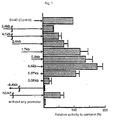
- each promoter region is shown in Fig. 1.
- the base sequence defined by Sequence No. 1 is DNA with the promoter activity of pMCP.
- DNA can be obtained by preparing genomic DNA of the structural gene of pMCP from a commercially available porcine genomic library, identifying the promoter region existing on upstream region of genomic DNA, and digesting it with appropriate restriction enzymes.
- genomic DNA of pMCP's structural gene can be cloned from porcine genomic library by the conventional plaque- or colony-hybridization method.
- plaque-hybridization method plaques formed by phages containing the pMCP's genomic DNA are identified as follows: 1 ⁇ phages containing the porcine genomic library and E.
- coli are co-cultured on agar plates to make plaques; 2 ⁇ the plaques are transferred to nitrocellulose membrane filters, and then phage DNA in the plaques are fixed on the filters; and 3 ⁇ the phage DNAs are hybridized with pMCP's probes labeled with radioisotope, and then autoradiographes of the filters are taken. By repeating such procedures, phages containing the pMCP's genomic DNA can be cloned.
- a region corresponding to the known first exon of human MCP cDNA can be excised from pMCP's cDNA and used as a probe to perform the plaque hybridization similarly as mentioned above, since the promoter gene of pMCP is believed to possess the first exon.
- pMCP's genomic DNA containing the promoter region can be prepared from the cloned phage DNA.
- the promoter region's DNA of pMCP can be prepared by digesting the upstream region of pMCP's genomic DNA with proper restriction enzymes, examining promoter activities of digested fragments, and collecting the fragments possessing the promoter activities.
- the promoter activity can conventionally be examined: e.g., integrating the restriction enzyme-digested fragment into a vector for luciferase-activity determination, transfecting the vector into proper host cells, incubating the cells for a certain period, lysing the cells and then determining fluorescence of luciferase in the cell lysate.
- the promoter region of pMCP's genomic DNA was thus obtained from the porcine genomic library. As shown in Examples described in the following, a promoter region comprising approximately 5,400 bp was obtained. By sequencing the region by a conventional method, the base sequence defined by Sequence No. 1(5,418 bases) was identified.
- DNA of the present invention may consist of a part of the base sequence defined by Sequence No.1.
- DNA of the present invention may be used as a promoter to express not only pMCP but also various other structural genes. In such cases, appropriate regions can be selected from the entire sequence, depending on the structural genes to express, host cell, and host animal.
- DNA of the invention possesses the promoter activity to express the structural genes including pMCP and can be used for various purposes.
- DNA of the invention can favorably be integrated into the upstream part of human complement-inhibitor genes and used to generate a transgenic pig transformed with the human complement-inhibitor genes.
- DNA of the invention can express the complement inhibitor on the porcine endothelial cells.
- DNA of the invention can be used as the promoter to express other various structural genes than pMCP gene.
- DNA of the present invention is not restricted to that prepared by the above-described method, but includes those prepared by other methods.
- DNA of the present invention is the promoter gene of pMCP.
- the promoter gene can be integrated into the upstream part of the human complement-inhibitor genes. Since tissues and organs of such transgenic pigs do not cause hyperacute rejection, they can be transplanted to man. Consequently, the problem of the lack of donors for transplantation can effectively be solved.
- ⁇ FIXII (Stratagene)
- full-length pMCPcDNA (prepared by expression cloning and digestion of the expression vector with Xho l and Not l) were used for hybridization as the porcine genomic library and a probe, respectively.
- the plaque hybridization was carried out as follows:
- each filter was turned upside down and immersed in an alkaline denaturation solution (0.2 M NaOH, 1.5 M NaCl) to brake nuclei for 20 sec and then in a neutralizing solution [x2 SSC, 0.4 M Tris-HCl (pH 7.5)] for 20 sec. After drying, they were cross-linked under UV irradiation (GS Gene Linker, Bio Rad).
- alkaline denaturation solution 0.2 M NaOH, 1.5 M NaCl
- x2 SSC, 0.4 M Tris-HCl (pH 7.5) for 20 sec. After drying, they were cross-linked under UV irradiation (GS Gene Linker, Bio Rad).
- these filters were blocked in a prehybridization buffer [50 % deionized formamide, x4 SSC, 50 mM HEPES (pH 7), x10 Denhardt solution, 100 mg/ml denatured salmon sperm DNA] for 4 h at 37 °C.
- a prehybridization buffer 50 % deionized formamide, x4 SSC, 50 mM HEPES (pH 7), x10 Denhardt solution, 100 mg/ml denatured salmon sperm DNA
- the probe was labeled by treating pMCPcDNA with dNTP and Klenow (DNA polymerase l) in the presence of a radioisotope [ ⁇ - 32 P] ATP.
- a radioisotope-labeled reverse chain was thus prepared with the cDNA as a template.
- the reverse chain can hybridize with the phage clone having the identical DNA sequences.
- the radio-labeled probe was placed on a gel-filtration column, spun down to remove the nonreacted and nonlabeled nucleotides, incubated for 3 min at 90 °C , chilled on ice to maintain a single-chain form of DNA, and subjected to hybridization.
- the prehybridized filters were placed in HybriPack and hybridized overnight at 37 °C with the above-described probe in the hybridization buffer.
- the filters were washed twice with SSC and SDS, allowed to react with the image-analyzer plates for 2 h at room temperature, and then analyzed with an image analyzer (Fuji Film Co.).
- the clone-containing solution was appropriately diluted and spread on plates (totally 30 plates). After that, hybridization was carried out again. Many positive plaques were observed on 20 plates. Twenty positive clones were thus obtained.
- the phage clones containing the promoter region are believed to have the first exon. Consequently, a region supposedly corresponding to the first exon of human MCP was excised ( Sal l- Sph l) from pMCPcDNA and subjected to hybridization as a probe. Four clones gave positive results.
- this phage clone contained the promoter region.
- the phage clone was digested with a combination of Fsp l and another restriction enzyme ( Eco Rl) to localize the Fsp l site of the first exon at the terminal of the digested fragment, integrated into a sequencing vector pBSHKS + (Stratagene) and sequenced (373 DNA Sequencer, Applied Biosystems, Inc.).
- Eco Rl another restriction enzyme
- this phage clone contained the pMCP's promoter region, of which the full length was approximately 13 kb upstream the genome.
- the promoter activity was determined with a system utilizing luciferase cDNA.
- a 5.4-kb promoter region of pMCP bearing a T7 primer recognition site for sequencing (as the 13-kb DNA of the phage clone was too large to integrate, it was digested at the Eco RI sites) was digested with restriction enzymes Bst EII and Bss HII from the above-described sequencing plasmid.
- DNA sequence of the 5.4-kb promoter gene was conventionally determined as shown by Sequence No. 1(5,418 bp).
- the terminal of the above-described promoter region was blunted with T4 DNA polymerase and subcloned in the pGL-3 basic vector (Promega) for luciferase-activity determination at the Sma l sites.
- the vector for luciferase activity determination itself lacks a promoter gene, so it is useful to evaluate the promoter activity by integrating a to-be-tested promoter into the upstream part of the luciferase gene and determining luciferase activity.
- the luciferase activity can be determined by lysing transformed cells to prepare enzyme-containing lysate, allowing the lysate to react with a substrate of the enzyme and reading emitting fluorescence intensity.
- deletion mutants were prepared with a Kilosequence kit (Takara).
- a pGL-3 vector bearing an SV40 promoter was prepared for control.
- Luciferase activities were determined by using a porcine aorta endothelial cell line.
- Cultured cells were detached with trypsin/EDTA solution, washed and suspended in HeBS buffer at a concentration of 3x10 6 cells/800 ⁇ l.
- a 800- ⁇ l portion of the cell suspension and a 15- ⁇ g portion of the above-described plasmids were transferred to a cuvette with 0.4-cm electrode clearance (a cuvette for cell electroporation) and electroporated with a Gene Pulser (Bio Rad) at 500 ⁇ F and 300 V.
- the plasmids were integrated into the cells.
- the above-described cells were cultured for 48 hours, collected, washed with PBS and treated with the cell-lysing solution for 10 min. Ten ⁇ l of the cell lysate was mixed with 50 ⁇ l of the substrate of luciferase. Fluorescence of the reaction mixture was read with a Luminescence Reader (Aloka).
- Fig. 1 The results are shown in Fig. 1.
- the activities per 1x10 5 viable cells were calculated.
- Each column shows a relative activity, where the activity of a control pGL-3 vector bearing SV40 promoter is defined as 100.
- a symbol of -5.4 kb means a vector bearing a reversed fragment of about 5.4-kb promoter region.
- hDAF means a vector bearing the hDAF promoter.
- DNA of an approximately 1.7-kb promoter region possessing a high activity as shown in Fig. 1 was sequenced.
- hDAFcDNA was connected to each of 5.4-kb (Sequence No. 1), 1.7-kb (Sequence No. 2) and 0.9-kb pMCP promoters or hDAF promoter. These genes were linearized, additionally ligated with a neomycin resistance gene as a selection marker and transfected into to 3x10 6 porcine cells by electroporation at 500 ⁇ F and 300 V with a Gene Pulser (Bio Rad). The cells were cultured in a culture medium containing 250 ⁇ g/ml neomycin sulfate (Gibco). Colony-forming cells were collected.
- hDAF hDAF on the cell surface was analyzed with an FACScan (Becton Dickinson) after staining the cells with biotinylated anti-hDAF monoclonal antibodies (IA10,IIH6 and VIIIA7; Kinoshita, T., et al.(1985) J. Exp. Med. 162: 75) and PE-conjugated streptavidin.
- FACScan Becton Dickinson
- Some clones obtained by the above-described method were selected. Fifteen-thousand cells of each clone were allowed to react with antibodies and complement in a 96-well plate. As the antibodies, 100 ⁇ l of inactivated human serum was added to each well and allowed to stand for 30 min at 4°C. After washing with PBS, appropriately diluted normal human serum was added to each well as a complement source and allowed to stand for 3 h at 37 °C. Surviving cells were determined with a WST-1 (Behringer Mannheim).
- the horizontal axis of Fig. 2, FL2-H represents the amount of hDAF expressed; it increases as the axis shifts rightwards.
- the vertical axis, count, represents cell number; it increases as the axis shifts upwards.
- Each peak shows the activity of a promoter indicated by the label. Black and blank peaks indicate FACScan responses obtained by cells reacted without and with anti-hDAF antibodies, respectively. As a result, no hDAF was expressed without the promoter. Comparing with hDAF promoter, any of pMCP promoters expressed hDAF effectively more than 20 times. Namely, it was confirmed that approximately 5.4-, 1.7- and 0.9-kb promoters effectively expressed the human complement inhibitor in the porcine endothelial cells.
Landscapes
- Health & Medical Sciences (AREA)
- Genetics & Genomics (AREA)
- Chemical & Material Sciences (AREA)
- Life Sciences & Earth Sciences (AREA)
- Organic Chemistry (AREA)
- Engineering & Computer Science (AREA)
- Zoology (AREA)
- Wood Science & Technology (AREA)
- Biochemistry (AREA)
- General Engineering & Computer Science (AREA)
- Molecular Biology (AREA)
- General Health & Medical Sciences (AREA)
- Bioinformatics & Cheminformatics (AREA)
- Biotechnology (AREA)
- Biophysics (AREA)
- Biomedical Technology (AREA)
- Microbiology (AREA)
- Proteomics, Peptides & Aminoacids (AREA)
- Plant Pathology (AREA)
- Veterinary Medicine (AREA)
- Toxicology (AREA)
- Gastroenterology & Hepatology (AREA)
- Medicinal Chemistry (AREA)
- Physics & Mathematics (AREA)
- Micro-Organisms Or Cultivation Processes Thereof (AREA)
- Preparation Of Compounds By Using Micro-Organisms (AREA)
- Medicines Containing Material From Animals Or Micro-Organisms (AREA)
- Acyclic And Carbocyclic Compounds In Medicinal Compositions (AREA)
- Pharmaceuticals Containing Other Organic And Inorganic Compounds (AREA)
- Medicines That Contain Protein Lipid Enzymes And Other Medicines (AREA)
Claims (2)
- ADN promoteur isolé consistant en 4,1 kb, 2,4 kb, 1,7 kb, 0,9 kb, 0,5 kb depuis l'extrémité 3' de la séquence de bases définie comme la séquence n° 1.
- ADN promoteur isolé consistant en une séquence de bases définie comme la séquence n° 2 ou des fragments de celle-ci possédant la même activité promotrice.
Applications Claiming Priority (3)
| Application Number | Priority Date | Filing Date | Title |
|---|---|---|---|
| JP14833596 | 1996-05-17 | ||
| JP14833596 | 1996-05-17 | ||
| PCT/JP1997/001677 WO1997044449A1 (fr) | 1996-05-17 | 1997-05-19 | Promoteurs d'inhibiteurs complementaires porcins |
Publications (3)
| Publication Number | Publication Date |
|---|---|
| EP0940467A1 EP0940467A1 (fr) | 1999-09-08 |
| EP0940467A4 EP0940467A4 (fr) | 2000-12-20 |
| EP0940467B1 true EP0940467B1 (fr) | 2005-12-28 |
Family
ID=15450472
Family Applications (1)
| Application Number | Title | Priority Date | Filing Date |
|---|---|---|---|
| EP97922097A Expired - Lifetime EP0940467B1 (fr) | 1996-05-17 | 1997-05-19 | Promoteurs d'inhibiteurs complementaires porcins |
Country Status (6)
| Country | Link |
|---|---|
| US (1) | US6255474B1 (fr) |
| EP (1) | EP0940467B1 (fr) |
| AT (1) | ATE314466T1 (fr) |
| AU (1) | AU2790497A (fr) |
| DE (1) | DE69734999T2 (fr) |
| WO (1) | WO1997044449A1 (fr) |
Families Citing this family (4)
| Publication number | Priority date | Publication date | Assignee | Title |
|---|---|---|---|---|
| CA2297105A1 (fr) * | 1997-07-14 | 1999-01-28 | Nippon Meat Packers, Inc. | Mammiferes transgeniques |
| US7485769B2 (en) | 2000-08-25 | 2009-02-03 | Nippon Meat Packers, Inc. | Transgenic mammals |
| US20060147429A1 (en) * | 2004-12-30 | 2006-07-06 | Paul Diamond | Facilitated cellular reconstitution of organs and tissues |
| US20060148080A1 (en) * | 2004-12-30 | 2006-07-06 | Paul Diamond | Methods for supporting and producing human cells and tissues in non-human mammal hosts |
Family Cites Families (2)
| Publication number | Priority date | Publication date | Assignee | Title |
|---|---|---|---|---|
| AU6137696A (en) | 1995-06-20 | 1997-01-22 | Nippon Meat Packers, Inc. | Dna encoding porcine complement inhibitor |
| US6166288A (en) | 1995-09-27 | 2000-12-26 | Nextran Inc. | Method of producing transgenic animals for xenotransplantation expressing both an enzyme masking or reducing the level of the gal epitope and a complement inhibitor |
-
1997
- 1997-05-19 EP EP97922097A patent/EP0940467B1/fr not_active Expired - Lifetime
- 1997-05-19 DE DE69734999T patent/DE69734999T2/de not_active Expired - Fee Related
- 1997-05-19 AT AT97922097T patent/ATE314466T1/de not_active IP Right Cessation
- 1997-05-19 WO PCT/JP1997/001677 patent/WO1997044449A1/fr not_active Ceased
- 1997-05-19 AU AU27904/97A patent/AU2790497A/en not_active Abandoned
- 1997-05-19 US US09/180,939 patent/US6255474B1/en not_active Expired - Fee Related
Non-Patent Citations (3)
| Title |
|---|
| DATABASE EMBL [online] E.B.I. HINXTON U.K.; 12 October 1995 (1995-10-12), TOYOMURA K.: "Pig mRNA for porcine membrane cofactor protein, complete cds" * |
| MCCURRY K.R. ET AL: "Human Complement Regulatory Proteins protect swine-to-primate cardiac xenografts from humoral injury", NATURE MEDICINE, vol. 1, no. 5, May 1995 (1995-05-01), pages 423 - 427, XP000563897 * |
| MURAKAMI H. ET AL: "Transgenic pigs expressing human decay-accelerating factor regulated by porcine MCP gene promoter", MOLECULAR REPRODUCTION AND DEVELOPMENT, vol. 61, no. 3, March 2002 (2002-03-01), pages 302 - 311, XP003006499, DOI: doi:10.1002/mrd.10043 * |
Also Published As
| Publication number | Publication date |
|---|---|
| WO1997044449A1 (fr) | 1997-11-27 |
| AU2790497A (en) | 1997-12-09 |
| EP0940467A1 (fr) | 1999-09-08 |
| US6255474B1 (en) | 2001-07-03 |
| DE69734999T2 (de) | 2006-09-21 |
| DE69734999D1 (de) | 2006-02-02 |
| EP0940467A4 (fr) | 2000-12-20 |
| ATE314466T1 (de) | 2006-01-15 |
Similar Documents
| Publication | Publication Date | Title |
|---|---|---|
| Li et al. | Regulation of the PU. 1 gene by distal elements | |
| Aronow et al. | Evidence for a complex regulatory array in the first intron of the human adenosine deaminase gene. | |
| Dziennis et al. | The CD11b promoter directs high-level expression of reporter genes in macrophages in transgenic mice [published erratum appears in Blood 1995 Apr 1; 85 (7): 1983] | |
| Steimle et al. | Complementation cloning of an MHC class II transactivator mutated in hereditary MHC class II deficiency (or bare lymphocyte syndrome) | |
| Chen et al. | Transcriptional enhancer factor 1 disruption by a retroviral gene trap leads to heart defects and embryonic lethality in mice. | |
| JP4309442B2 (ja) | 多発性嚢胞腎1型遺伝子及びその使用 | |
| Lennon et al. | Isolation of a B-cell-specific promoter for the human class II transactivator | |
| Goodridge et al. | Three common alleles of KIR2DL4 (CD158d) encode constitutively expressed, inducible and secreted receptors in NK cells | |
| US5595899A (en) | Methods of introducing foreign DNA into cells | |
| Xia et al. | Chromosomal localization reveals three kinesin heavy chain genes in mouse | |
| US20070117748A1 (en) | Novel apoptosis-modulating proteins, dna encoding the proteins and methods of use thereof | |
| US5596089A (en) | Oligonucleotide probe and primers specific to bovine or porcine male genomic DNA | |
| US6100443A (en) | Universal donor cells | |
| Yukawa et al. | Strain dependency of B and T lymphoma development in immunoglobulin heavy chain enhancer (E mu)-myc transgenic mice. | |
| Radomska et al. | Transgenic targeting with regulatory elements of the human CD34 gene | |
| Yamamoto et al. | Upstream and downstream of erythroid transcription factor GATA‐1 | |
| Williams et al. | Molecular genetic analysis of chromosome 9 candidate tumor‐suppressor loci in bladder cancer cell lines | |
| Giel‐Moloney et al. | Ubiquitous and uniform in vivo fluorescence in ROSA26‐EGFP BAC transgenic mice | |
| WO1999019469A1 (fr) | Cellules souches porcines comprenant un marqueur sous un promoteur oct-4 | |
| EP0940467A1 (fr) | Promoteurs d'inhibiteurs complementaires porcins | |
| Shimokawa et al. | Identification and characterization of the promoter for the gene encoding the human myeloid IgA Fc receptor (FcαR, CD89) | |
| AU782459B2 (en) | Promoters for swine complement inhibitors | |
| CA2254889C (fr) | Gene promoteur pour inhibiteur complementaire porcin | |
| JP3897858B2 (ja) | ブタ補体インヒビターのプロモーター | |
| Kim et al. | Identification of candidate target genes for EVI-1, a zinc finger oncoprotein, using a novel selection strategy |
Legal Events
| Date | Code | Title | Description |
|---|---|---|---|
| PUAI | Public reference made under article 153(3) epc to a published international application that has entered the european phase |
Free format text: ORIGINAL CODE: 0009012 |
|
| 17P | Request for examination filed |
Effective date: 19981217 |
|
| AK | Designated contracting states |
Kind code of ref document: A1 Designated state(s): AT BE CH DE DK FR GB IT LI NL SE |
|
| A4 | Supplementary search report drawn up and despatched |
Effective date: 20001107 |
|
| AK | Designated contracting states |
Kind code of ref document: A4 Designated state(s): AT BE CH DE DK FR GB IT LI NL SE |
|
| 17Q | First examination report despatched |
Effective date: 20021018 |
|
| GRAP | Despatch of communication of intention to grant a patent |
Free format text: ORIGINAL CODE: EPIDOSNIGR1 |
|
| GRAS | Grant fee paid |
Free format text: ORIGINAL CODE: EPIDOSNIGR3 |
|
| GRAA | (expected) grant |
Free format text: ORIGINAL CODE: 0009210 |
|
| AK | Designated contracting states |
Kind code of ref document: B1 Designated state(s): AT BE CH DE DK FR GB IT LI NL SE |
|
| PG25 | Lapsed in a contracting state [announced via postgrant information from national office to epo] |
Ref country code: NL Free format text: LAPSE BECAUSE OF FAILURE TO SUBMIT A TRANSLATION OF THE DESCRIPTION OR TO PAY THE FEE WITHIN THE PRESCRIBED TIME-LIMIT Effective date: 20051228 Ref country code: LI Free format text: LAPSE BECAUSE OF FAILURE TO SUBMIT A TRANSLATION OF THE DESCRIPTION OR TO PAY THE FEE WITHIN THE PRESCRIBED TIME-LIMIT Effective date: 20051228 Ref country code: IT Free format text: LAPSE BECAUSE OF FAILURE TO SUBMIT A TRANSLATION OF THE DESCRIPTION OR TO PAY THE FEE WITHIN THE PRESCRIBED TIME-LIMIT;WARNING: LAPSES OF ITALIAN PATENTS WITH EFFECTIVE DATE BEFORE 2007 MAY HAVE OCCURRED AT ANY TIME BEFORE 2007. THE CORRECT EFFECTIVE DATE MAY BE DIFFERENT FROM THE ONE RECORDED. Effective date: 20051228 Ref country code: CH Free format text: LAPSE BECAUSE OF FAILURE TO SUBMIT A TRANSLATION OF THE DESCRIPTION OR TO PAY THE FEE WITHIN THE PRESCRIBED TIME-LIMIT Effective date: 20051228 Ref country code: BE Free format text: LAPSE BECAUSE OF FAILURE TO SUBMIT A TRANSLATION OF THE DESCRIPTION OR TO PAY THE FEE WITHIN THE PRESCRIBED TIME-LIMIT Effective date: 20051228 Ref country code: AT Free format text: LAPSE BECAUSE OF FAILURE TO SUBMIT A TRANSLATION OF THE DESCRIPTION OR TO PAY THE FEE WITHIN THE PRESCRIBED TIME-LIMIT Effective date: 20051228 |
|
| REG | Reference to a national code |
Ref country code: GB Ref legal event code: FG4D |
|
| REG | Reference to a national code |
Ref country code: CH Ref legal event code: EP |
|
| REF | Corresponds to: |
Ref document number: 69734999 Country of ref document: DE Date of ref document: 20060202 Kind code of ref document: P |
|
| PG25 | Lapsed in a contracting state [announced via postgrant information from national office to epo] |
Ref country code: SE Free format text: LAPSE BECAUSE OF FAILURE TO SUBMIT A TRANSLATION OF THE DESCRIPTION OR TO PAY THE FEE WITHIN THE PRESCRIBED TIME-LIMIT Effective date: 20060328 Ref country code: DK Free format text: LAPSE BECAUSE OF FAILURE TO SUBMIT A TRANSLATION OF THE DESCRIPTION OR TO PAY THE FEE WITHIN THE PRESCRIBED TIME-LIMIT Effective date: 20060328 |
|
| NLV1 | Nl: lapsed or annulled due to failure to fulfill the requirements of art. 29p and 29m of the patents act | ||
| REG | Reference to a national code |
Ref country code: CH Ref legal event code: PL |
|
| PLBE | No opposition filed within time limit |
Free format text: ORIGINAL CODE: 0009261 |
|
| STAA | Information on the status of an ep patent application or granted ep patent |
Free format text: STATUS: NO OPPOSITION FILED WITHIN TIME LIMIT |
|
| 26N | No opposition filed |
Effective date: 20060929 |
|
| PG25 | Lapsed in a contracting state [announced via postgrant information from national office to epo] |
Ref country code: FR Free format text: LAPSE BECAUSE OF FAILURE TO SUBMIT A TRANSLATION OF THE DESCRIPTION OR TO PAY THE FEE WITHIN THE PRESCRIBED TIME-LIMIT Effective date: 20070216 |
|
| PGFP | Annual fee paid to national office [announced via postgrant information from national office to epo] |
Ref country code: DE Payment date: 20080626 Year of fee payment: 12 |
|
| PG25 | Lapsed in a contracting state [announced via postgrant information from national office to epo] |
Ref country code: FR Free format text: LAPSE BECAUSE OF FAILURE TO SUBMIT A TRANSLATION OF THE DESCRIPTION OR TO PAY THE FEE WITHIN THE PRESCRIBED TIME-LIMIT Effective date: 20051228 |
|
| PGFP | Annual fee paid to national office [announced via postgrant information from national office to epo] |
Ref country code: GB Payment date: 20080624 Year of fee payment: 12 |
|
| GBPC | Gb: european patent ceased through non-payment of renewal fee |
Effective date: 20090519 |
|
| PG25 | Lapsed in a contracting state [announced via postgrant information from national office to epo] |
Ref country code: GB Free format text: LAPSE BECAUSE OF NON-PAYMENT OF DUE FEES Effective date: 20090519 |
|
| PG25 | Lapsed in a contracting state [announced via postgrant information from national office to epo] |
Ref country code: DE Free format text: LAPSE BECAUSE OF NON-PAYMENT OF DUE FEES Effective date: 20091201 |