EP0941311B1 - Rekombinante collagenase typ i aus clostridium histolyticum und ihre verwendung zur isolierung von zellen und zellverbänden - Google Patents
Rekombinante collagenase typ i aus clostridium histolyticum und ihre verwendung zur isolierung von zellen und zellverbänden Download PDFInfo
- Publication number
- EP0941311B1 EP0941311B1 EP97947036A EP97947036A EP0941311B1 EP 0941311 B1 EP0941311 B1 EP 0941311B1 EP 97947036 A EP97947036 A EP 97947036A EP 97947036 A EP97947036 A EP 97947036A EP 0941311 B1 EP0941311 B1 EP 0941311B1
- Authority
- EP
- European Patent Office
- Prior art keywords
- seq
- sequence
- chc
- linear
- collagenase
- Prior art date
- Legal status (The legal status is an assumption and is not a legal conclusion. Google has not performed a legal analysis and makes no representation as to the accuracy of the status listed.)
- Expired - Lifetime
Links
Images

Classifications
-
- C—CHEMISTRY; METALLURGY
- C12—BIOCHEMISTRY; BEER; SPIRITS; WINE; VINEGAR; MICROBIOLOGY; ENZYMOLOGY; MUTATION OR GENETIC ENGINEERING
- C12N—MICROORGANISMS OR ENZYMES; COMPOSITIONS THEREOF; PROPAGATING, PRESERVING, OR MAINTAINING MICROORGANISMS; MUTATION OR GENETIC ENGINEERING; CULTURE MEDIA
- C12N9/00—Enzymes; Proenzymes; Compositions thereof; Processes for preparing, activating, inhibiting, separating or purifying enzymes
- C12N9/14—Hydrolases (3)
- C12N9/48—Hydrolases (3) acting on peptide bonds (3.4)
- C12N9/50—Proteinases, e.g. Endopeptidases (3.4.21-3.4.25)
- C12N9/52—Proteinases, e.g. Endopeptidases (3.4.21-3.4.25) derived from bacteria or Archaea
-
- C—CHEMISTRY; METALLURGY
- C12—BIOCHEMISTRY; BEER; SPIRITS; WINE; VINEGAR; MICROBIOLOGY; ENZYMOLOGY; MUTATION OR GENETIC ENGINEERING
- C12N—MICROORGANISMS OR ENZYMES; COMPOSITIONS THEREOF; PROPAGATING, PRESERVING, OR MAINTAINING MICROORGANISMS; MUTATION OR GENETIC ENGINEERING; CULTURE MEDIA
- C12N5/00—Undifferentiated human, animal or plant cells, e.g. cell lines; Tissues; Cultivation or maintenance thereof; Culture media therefor
- C12N5/06—Animal cells or tissues; Human cells or tissues
- C12N5/0602—Vertebrate cells
- C12N5/0676—Pancreatic cells
-
- C—CHEMISTRY; METALLURGY
- C12—BIOCHEMISTRY; BEER; SPIRITS; WINE; VINEGAR; MICROBIOLOGY; ENZYMOLOGY; MUTATION OR GENETIC ENGINEERING
- C12N—MICROORGANISMS OR ENZYMES; COMPOSITIONS THEREOF; PROPAGATING, PRESERVING, OR MAINTAINING MICROORGANISMS; MUTATION OR GENETIC ENGINEERING; CULTURE MEDIA
- C12N2509/00—Methods for the dissociation of cells, e.g. specific use of enzymes
Definitions
- the invention relates to a recombinant collagenase type I (CHC I) from Clostridium histolyticum and its use for the isolation of cells and cell assemblies.
- CHC I collagenase type I
- Bacterial collagenases e.g. from Clostridium histolyticum, are used to digest tissues and used to obtain single cells or cell assemblies (e.g. islands) (islands: Sutton et al., Transplantation 42 (1986) 689-691; Liver: Quibel et al., Anal. Biochem. 154 (1986) 26-28; Bones: Hefley et al., J. Bone Mineral Res. 2 (1987) 505-516; Umbilical cord: Holzinger et al., Immunol. Lett. 35 (1993) 109-118). From Clostridium histolyticum two different types of collagenase are known (M.F. French et al., J.
- Collagenases I were developed by M.D. Bond and H.E. Van Wart, Biochemistry 23 (1984) 3077 - 3085 and 3085 - 3091 and by H.E. Van Wart, Biochemistry 24 (1985) 6520-6526 isolated and described. According to this, the collagenases I are the collagenases ⁇ (MG 68 kD), ⁇ (MG 115 kD), ⁇ (MG 79 kD) and ⁇ (MG 130 kD) are known. Differentiate collagenases I and collagenases II their relative activity against collagen and synthetic peptides. Collagenases I have higher activities compared to collagen and gelatin and less Activities towards the short-chain peptides as collagenase II (Bond and Wart; Biochemistry 23 (1984) 3085-3091).
- the object of the present invention is to provide a highly active stable collagenase Class I from Clostridium histolyticum (CHC I).
- the object is achieved by a process for the preparation of a polypeptide which the Has properties of a CHC I from Clostridium histolyticum, a predetermined Has amino acid composition and is obtainable by expression of an exogenous Nucleic acid in prokaryotic or eukaryotic host cells and isolation of the desired polypeptide, the nucleic acid for a polypeptide of the sequence ID NO: 2 or a polypeptide which is N-terminally around one or more amino acids of the sequence ID NO: 3 is extended, coded.
- a CHC I according to the invention is a high collagenase Class I activity shows and is very stable.
- a CHC I of the amino acid sequence is preferred SEQ ID NO: 2 and a CHC I, which are N-terminal around one or more amino acids the SEQ ID NO: 3 is extended.
- the CHC I according to the invention is a high-purity enzyme which is produced in large quantities can be.
- the CHC I according to the invention contains no impurities other clostridial enzymes and is toxin free.
- the CHC I according to the invention is particularly useful for isolating cells from tissues of Mammals, preferably made of human tissue, for use in cell therapy (Transplantation, immunotherapy) and for gene therapy use in the tissues: e.g. Pancreas, liver, bone, cartilage, skin, brain and nerve tissue, fat muscle, heart, Endothelium, kidney, solid tumors and suitable for cleaning ulcers.
- this high purity enzyme preferably mixed with other high purity Enzymes (such as collagenase II and neutral protease) for the isolation of cells whose Surface molecules / markers (antigens) should not be changed, particularly suitable.
- Preferred applications for this are, for example, the dissociation of solid tumors of all kinds in vitro (e.g. colon, breast, etc.) for adoptive immunotherapy and for general Diagnostics, such as B. for the detection of rare cells from tissues and solid tumors via specific surface markers / molecules.
- the recombinant CHC I can be prepared by the methods familiar to the person skilled in the art respectively.
- a DNA molecule is produced that is able to produce a protein, which has the activity of CHC I.
- the DNA sequence is converted into a vector cloned, which can be transferred to a host cell and is replicable there.
- Such one Vector contains in addition to the CHC I sequence promoter / operator elements which are used for Expression of the DNA sequence are required.
- This vector representing the CHC I sequence and which contains promoter / operator elements is transferred to a host cell that is capable of is to express the DNA of CHC I.
- the host cell becomes under conditions that become Amplification of the vector are suitable, cultivated and CHC I obtained. This is done by appropriate measures ensure that the protein has an active tertiary structure in which it shows CHC I properties.
- Another object of the invention is a polypeptide with the property of a collagenase Class I from Clostridium histolyticum with the amino acid sequence according to SEQ ID NO: 2 or one that is N-terminally extended by one or more amino acids of SEQ ID NO: 3 Polypeptide.
- Another object of the invention is a coding for such a protein Nucleic acid.
- the protein is preferably produced recombinantly in microorganisms, in particular in prokaryotes, and there in E. coli.
- the expression vectors suitable for this must contain a promoter which allows expression of the protein in the host organism.
- promoters are known to the person skilled in the art and are, for example, lac promoter (Chang et al., Nature 198 (1977) 1056), trp promoter (Goeddel et al., Nuc. Acids Res. 8 (1980) 4057), ⁇ PL promoter (Shimatake et al., Nature 292 (1981) 128) and T5 promoter (U.S. Patent 4,689,406).
- Synthetic promoters such as, for example, tac promoter (US Pat. No. 4,551,433) are also suitable.
- Coupled promoter systems such as, for example, T7 RNA polymerase / promoter system (Studier et al., J. Mol. Biol. 189 (1986) 113) are also suitable.
- Hybrid promoters comprising a bacteriophage promoter and the operator region of the microorganism are also suitable (EP-A 0 267 851).
- An effective ribosome binding site is required in addition to the promoter.
- this ribosome binding site is referred to as the Shine-Dalgarno (SD) sequence (Sambrook et al., "Expression of cloned genes in E. coli” in Molecular Cloning: A laboratory manual (1989) Cold Spring Harbor Laboratory Press, New York, USA).
- a DNA sequence is usually used which is for the N-terminal part an endogenous bacterial protein or other stable protein, at the 5 'end the sequence coding for CHC I fused. Examples include lacZ (Phillips and Silhavy, Nature 344 (1990) 882-884), trpE (Yansura, Meth. Enzymol. 185 (1990) 161-166).
- the fusion proteins are preferably treated with enzymes (e.g. factor Xa) cleaved (Nagai et al., Nature 309 (1984) 810). More examples of the cleavage sites IgA protease cleavage site (WO 91/11520, EP-A 0 495 398) and the ubiquitin cleavage site (Miller et al., Bio / Technology 7 (1989) 698).
- enzymes e.g. factor Xa
- the proteins expressed in this way in bacteria are digested by the bacteria and protein isolation in the usual way.
- a fusion product is preferably used for this, which consists of the signal sequence which is used for the secretion of proteins in the host organisms is suitable, and consists of the nucleic acid which codes for the protein.
- the Protein is either in the medium (for gram-positive bacteria) or in the periplasmic Space (with Gram-negative bacteria) secreted.
- the signal sequence and the sequence coding for CHC I is expediently provided with a cleavage site which either during processing or in an additional step, the protein is split off allowed.
- signal sequences originate, for example, from ompA (Ghrayeb et al., EMBO J. 3 (1984) 2437), phoA (Oka et al., Proc. Natl. Acad. Sci. USA 82 (1985) 7212).
- Terminators are DNA sequences which signal the end of a transcription process. They are usually characterized by two structural characteristics: an inversely repetitive G / C-rich region, the intramolecular can form a double helix and a number of U (or T) residues. Examples are the Main terminator in the DNA of phage fd (Beck and Zink, Gene 16 (1981) 35-58) as well rrnB (Brosius et al., J. Mol. Biol. 148 (1981) 107-127).
- the expression vectors usually contain a selectable marker, um to select transformed cells.
- selectable markers are, for example Resistance genes for ampicillin, chloramphenicol, erythromycin, kanamycin, neomycin and Tetracycline (Davies et al., Ann. Rev. Microbiol. 32 (1978) 469).
- Suitable selectable ones Markers are the genes for essential substances of the biosynthesis necessary for the cell Fabrics such as Histidine, tryptophan and leucine.
- bacterial vectors are known.
- Bacillus subtilis (Palva et al., Proc. Natl. Acad. Sci. USA 79 (1982) 5582), E. coli (Aman et al., Gene 40 (1985) 183; Studier et al., J. Mol. Biol. 189 (1986) 113), Streptococcus cremoris (Powell et al., Appl. Environ. Microbiol. 54 (1988) 655), Streptococcus lividans and Streptomyces lividans (U.S. Patent 4,747,056).
- recombinant CHC I can also be expressed in eukaryotes (such as CHO cells, yeast or insect cells).
- eukaryotes such as CHO cells, yeast or insect cells.
- the yeast system or insect cells is preferred as the eukaryotic expression system.
- Expression in yeast can be via three types of yeast vectors (integrating YI P (yeast integrating plasnüds) vectors, replicating YR P (yeast replicon plasmids) vectors and episomal YE P (yeast episomal plasmids) vectors.
- yeast vectors integrating YI P (yeast integrating plasnüds) vectors, replicating YR P (yeast replicon plasmids) vectors and episomal YE P (yeast episomal plasmids) vectors.
- Another object of the invention is a method for dissolving cell tissue and Release of cells or cell aggregates contained therein by incubation of the cell tissue with a Collagenase Class I according to the invention from Clostridium histolyticum, up to Release of the cells or cell aggregates to the desired extent and separation of the cells or the cell aggregates from the cell tissue parts.
- the separation of the cells or Cell aggregates of the cell tissue parts are preferably carried out by centrifugation with a Density gradient.
- Isolation of cells or cell groups from tissues is generally done by incubation of organs, organ parts or tissues with enzymes that surround the extracellular Dissolve connective tissue matrix (Insel: Sutton et al., Transplantation 42 (1986) 689-691; Liver: Quibel et al., Anal. Biochem. 154 (1986) 26-28; Bones: Hefley et al., J. Bone Mineral Res. 2 (1987) 505-516; Umbilical cord: Holzinger et al., Immunol. Lett. 35 (1993) 109 - 118).
- tissues e.g. pancreas, liver, skin, Endothelium, umbilical cord, bone, tumor tissue
- Tumor cells isolated in this way can advantageously be used for tumor vaccination and / or adoptive immunotherapy can be used.
- Tissue disintegration can also be caused by Perfusion of the entire organ (Ricordi et al, Diabetes 37 (1988) 413-420) with enzyme solution respectively.
- the decisive factor is Duration, the pH value and the temperature of the digestion as well as the mechanical action, e.g. by shaking and adding metal balls. Because extracellular connective tissue matrix often has a high proportion of collagen, the collagenases play a special role to (Wolters, Hormone and Metabolic Research 26 (1994) 80).
- the method according to the invention for isolating islets or islet cells is preferred used from pancreatic tissue.
- proteinases e.g. neutral protease, cf. Ex. 5, or other metalloproteases
- Serine proteases such as trypsin, chymotrypsin, plasmin, etc .
- cysteine proteases Aspartate proteases
- elastases elastases, hyaluronidases, lipases or others Collagen noses
- Collagen noses can be beneficial for the quality of digestion.
- Collagenase P from Clostridium histolyticum, Boehringer Mannheim GmbH, cat. No. 1 213 857 was dissolved in 20 ml of H 2 O (Milli Q quality) and particulate constituents were separated off by centrifugation. After 60% ammonium sulfate precipitation, the precipitate was taken up in 9.5 ml of H 2 O and dialyzed overnight at 4 ° C. against 10 mM Tris-HCl, pH 7.5.
- the flow peak containing the CHC 1 fractions was measured over a Mono Q column (Pharmacia) in 10 mM / l Tris HCl, pH 7.5 using a linear gradient to 10 mM / l Tris, pH 7.5 , 0.3 M / l NaCl further separated.
- the peak containing CHC I activity (activity determined as Azocoll activity, according to Chavira et al., Anal. Biochem.
- Example 2 Derived from peptide sequences which by digestion of purified collagenase I from Clostridium histolyticum acc. Example 1 were obtained, a 1.4 kB piece of the CHC I gene was isolated by means of a PCR reaction. This piece, or fragments thereof, were used to produce a DNA probe that can be labeled with Dig, for example. Such a probe is used to screen gene banks in order to isolate the rest of the CHC I gene.
- a DNA fragment of 5.4 kB in length was isolated from a gene bank which was produced from genomic DNA of Clostridium histolyticum cut from Stu I / Hind II using a digoxigenin-labeled fragment (derived from the above 1.4 kB fragment), that contained the entire 1.4 kb probe.
- the CHC I sequence could be completed at the 3 'end and supplemented at the 5' end up to a Stu I interface.
- sequence at the 3 'end corresponds to positions 3807 to 4358 that given in SEQ ID NO: 1 Total sequence:
- This peptide largely overlaps with peptide 1-72 (SEQ ID NO: 5) but contains four additional amino acids that are not on the original 1.4 kB DNA fragment can be found.
- sequence at the 5 'end corresponds to positions 1969 to 2417 that given in SEQ ID NO: 1 Overall sequence.
- a DNA fragment could also be obtained from a Bgl II gene bank using the labeled 1.4 kB probe of 4.6 kB can be identified. This fragment as a whole turned out not to be clonable, could, however, be sequenced from the Stu I site and provided further sequence information over the 5 'area.
- a fragment of 1.85 kB was obtained, which, however, could not be cloned as a whole, but a partial sequence could be determined. It is position 1384 to position 1570 of the total sequence given in SEQ ID NO: 1.
- This sequence is in the start region and immediately upstream of the previously described Sequence for the collagenase I gene from Clostridium histolyticum.
- Genomic DNA from Clostridium histolyticum was digested with HindIII / StuI and im Agarose gel separated. The area between 1.7 and 2.2 kB was cut out (from Southern blot expected fragment is 1.9 kB).
- the DNA was made up of the gel conventional methods isolated (QiaEx) and cloned in pUC 19 via Hind III / Hind II.
- the HindIII / StuI gene bank was screened with an approximately 400 bp dig-labeled probe.
- the sequence of the probe corresponds to positions 1453 to 1852 of the total sequence given in SEQ ID NO: 1.
- the probe was made using two primers:
- This sequence gives a total length for the CHC I gene and its upstream Region of approximately 4.4 kB.
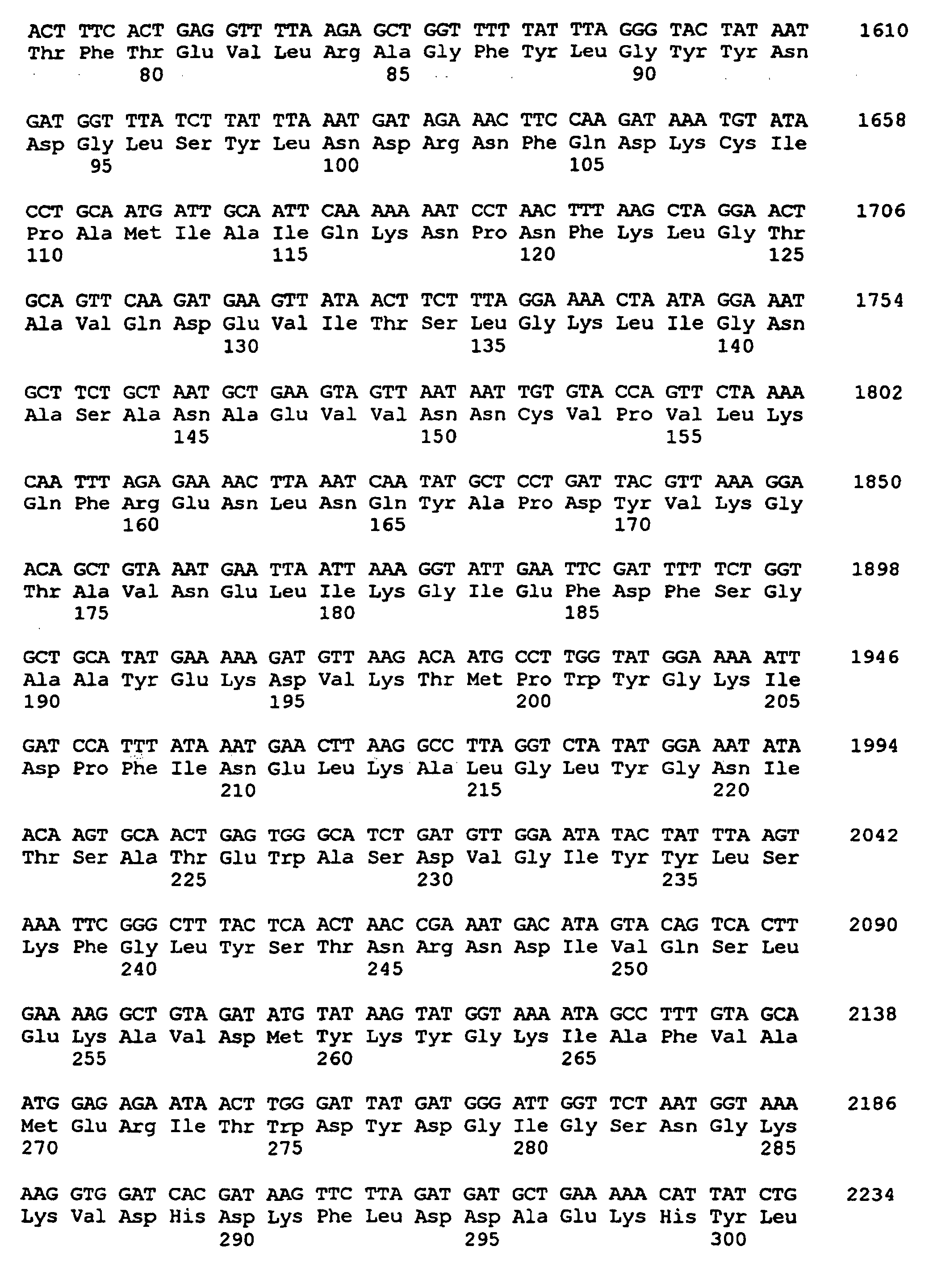
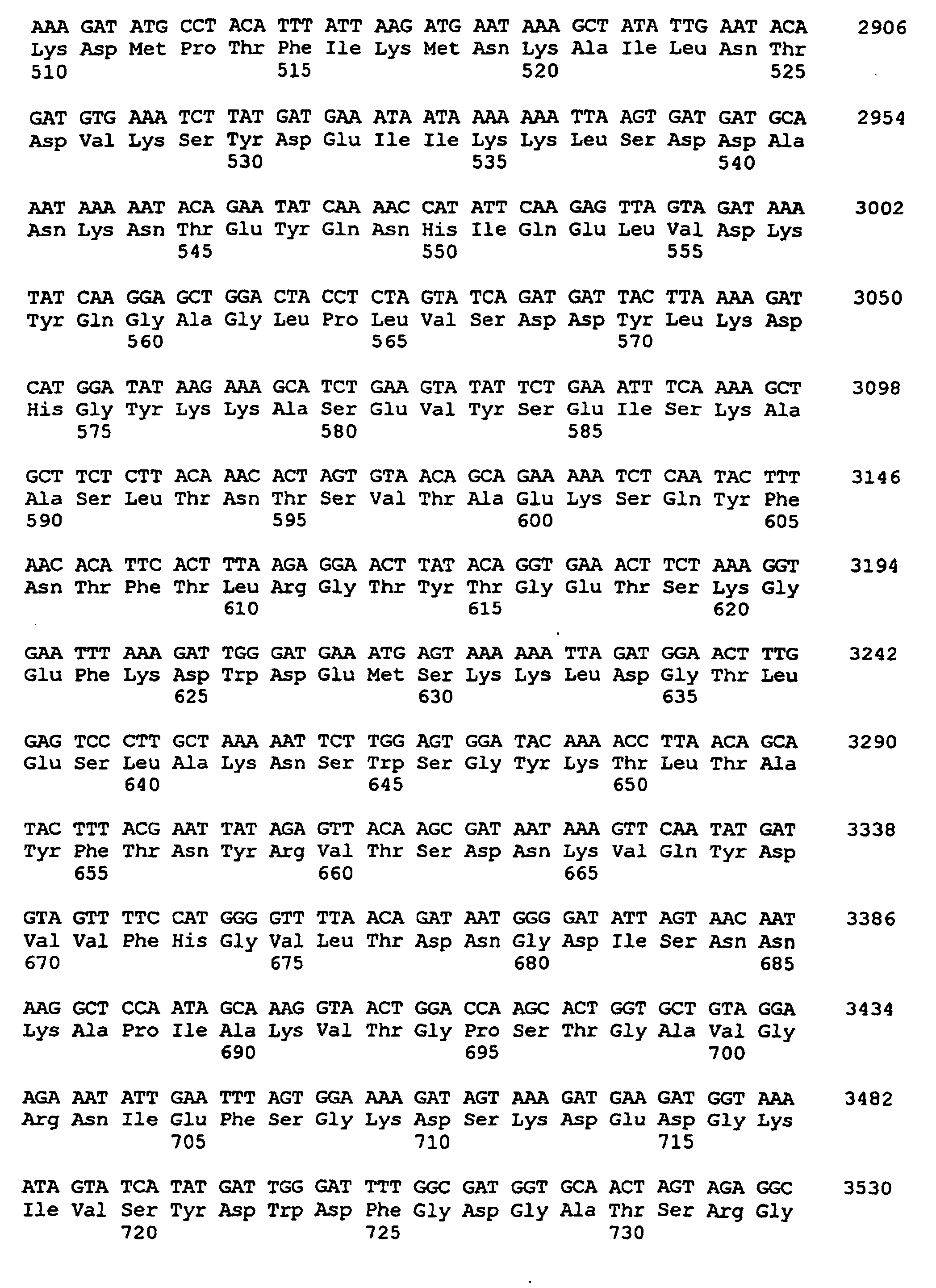
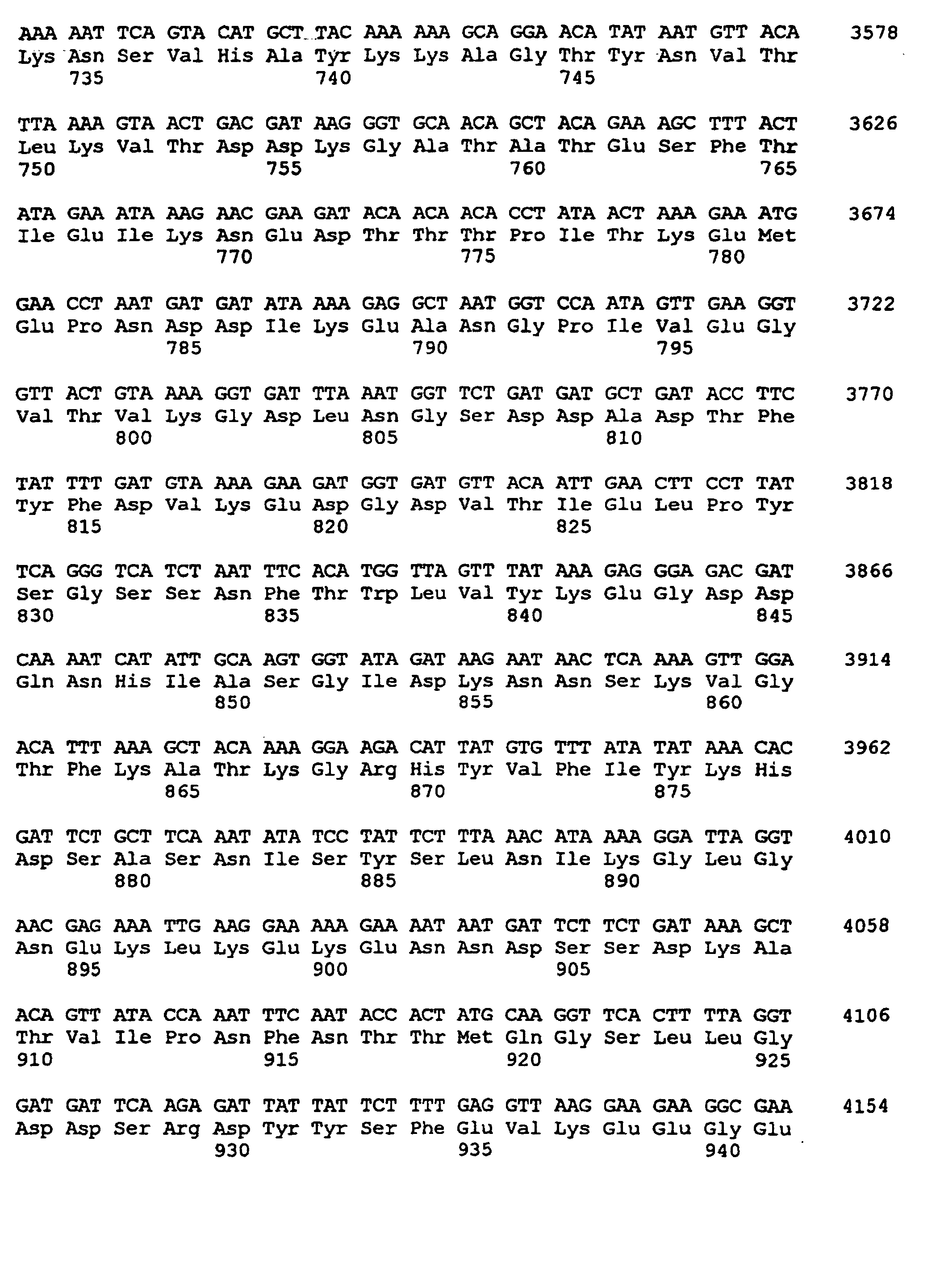
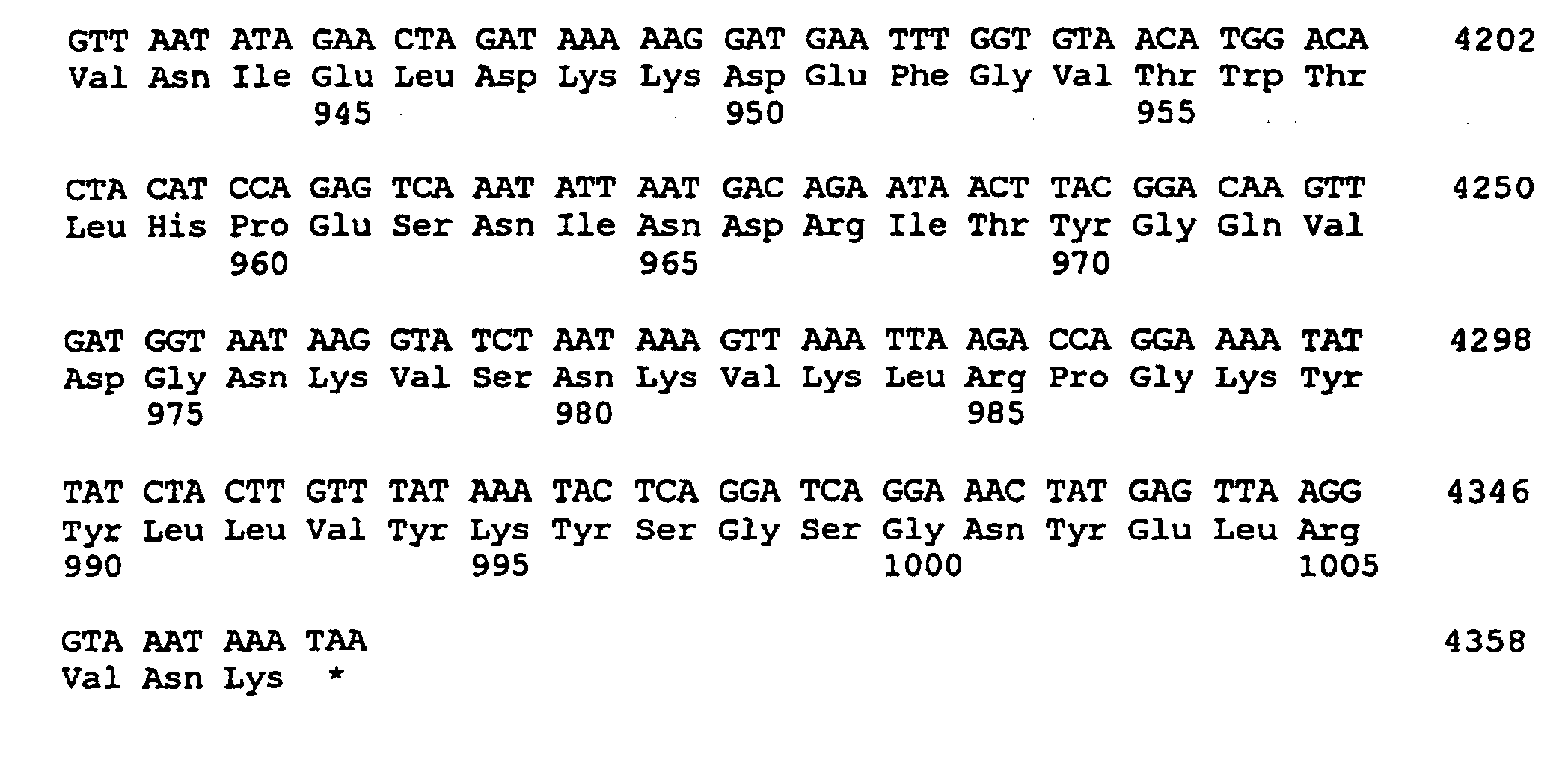
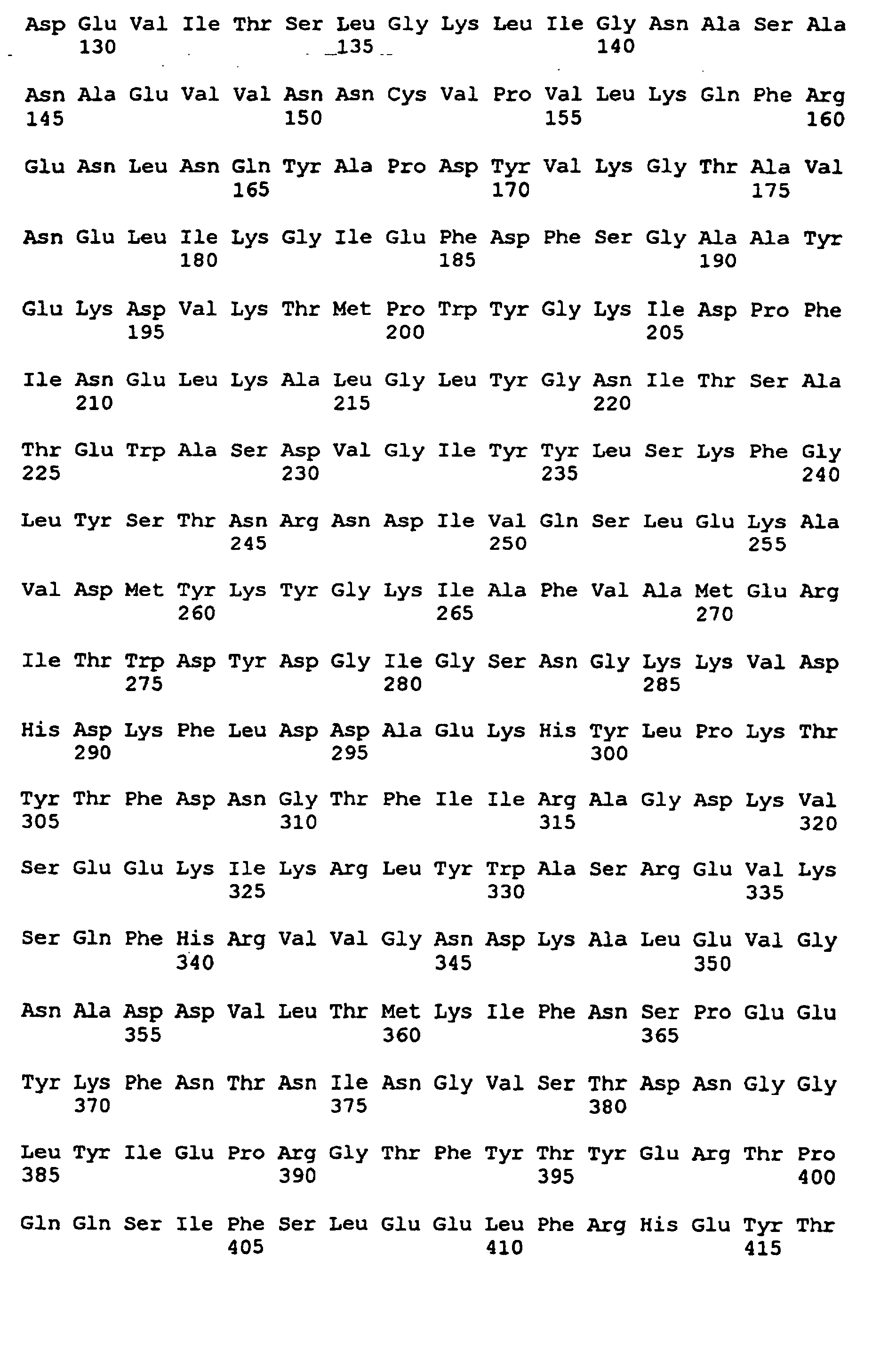
- the complete sequence is given in SEQ ID NO: 1.
- a N-terminus, determined by protein sequencing, of a possible mature form of Collagenase is at position 1332 of SEQ ID NO: 1.
- the corresponding polypeptide is shown in SEQ ID NO: 2. Since all described above Translation starting points even further 5 'and lying in the grid were several expression constructs produced, and examined their expression behavior. Surprisingly it can be seen that starts at several positions lead to actively expressed enzyme.
- an SmaI or AvaI interface 5 ' can be introduced before ATG 1002, 1029, 1110 or GTG 1176 or 1254. If a counterprimer is used which lies beyond the BfrI interface (1965 - 1970), then all others can be made from a pUCBM20 expression vector by exchanging via SmaI or AvaI and BfrI section.
- the underlined sequence is a design-related fusion component made of pUCBM20. It is known that GTG sequences can also be considered as a starting position. A particularly preferred start is with GTG 1176, which can be converted into an ATG by choosing a suitable primer:
- the expression constructs described so far use the lac promoter and the homologous signal peptide.
- Other promoters such as mgl (EP-B 0 285 152) or tac (EP-B 0 067 540), can also be used instead.
- the signal peptide can also be replaced by others, for example the mgl signal peptide.
- Such a heterologous signal peptide should preferably be inserted directly before the mature 5 'end of the collagenase gene. But it also shows here that several positions are conceivable.
- both a mgl signal in front of the peptide sequence IANTNSEK (SEQ ID NO: 19) and in front of AYLTMNTS (SEQ ID NO: 24) leads to active expression of the CHC I.
- the constructional fusion fraction from pUCBM20 is also not necessary. Expression also occurs when this portion of the fusion is shortened or completely removed. The complete removal of the signal and the cytoplasmic expression of CHC I are also conceivable.
- E. coli K12 strains such as e.g. C600, HB101 and the like.
- Other prokaryotic systems including gram-positive systems (e.g. Bacillus or Streptomyces) and expression in eukaryotic cell systems are also conceivable.
- Precultures are prepared from stock cultures (plate smear, ampoules or sequins), which are shaken and incubated at 30 - 37 ° C.
- the vaccination volume in the next higher dimension is 1 - 10% by volume.
- ampicillin 50-100 mg / l is used in the preliminary and main culture.
- Enzymatically digested protein and / or yeast extract as the N and C source and glycerin and / or glucose as an additional C source can be used as nutrients.
- the medium is buffered to pH 7 and metal salts can be added in physiologically acceptable concentrations to stabilize the fermentation process.
- the fermentation is carried out as a fed batch with a mixed protein / yeast extract dosage.
- the growth rate is regulated by the dosage rate and the pH is controlled by means of glycerol and / or glucose as an acid regulator.
- the dissolved oxygen partial pressure (pO 2 ) is kept> 20% via aeration rate, speed regulation and dosage speed in order to avoid anaerobic conditions.
- the fermentation temperature is 25 - 37 ° C.
- the growth is determined by determining the optical density at 528 nm. Using IPTG or lactose, the expression of CHC I is induced. After a fermentation period of approx. The biomass is harvested by centrifugation for 30-40 hours when the OD is at a standstill.
- the biomass is taken up in a suitable buffer and over a continuous High pressure press open at 1000 bar.
- the suspension thus obtained is again centrifuged and the supernatant, which contains the dissolved CHC I, is processed further.
- the pancreas is prepared from a freshly slaughtered pig and cooled in ice-cold HBSS buffer (Gibco) until further processing. A Braunule is inserted and fastened into the pancreatic duct, the tightness of the pancreas is checked with HBSS buffer. An enzyme solution in HBSS buffer + Ca 2+ , which contains the purified recombinant type I collagenase alone or in conjunction with a purified native or recombinant neutral protease and / or type II collagenase from Clostridium histolyticum, is injected. The pancreas treated in this way is connected to the perfusion unit (discontinuous perfusion) which also contains the above enzyme solution.
- the digestion takes place between 4 ° C - 37 ° C in a period of 5 to 120 minutes. After the time assumed to be optimal, the pump is stopped and the vessel containing the pancreas is carefully shaken by hand for 3 to 20 minutes. If necessary, previously added metal balls also facilitate the mechanical dissociation of the tissue and the release of the islands from the surrounding exocrine tissue.
- Digestion is achieved by adding ice-cold HBSS / 10% FCS (fetal calf serum) stopped and the suspension filtered through a sieve (mesh size 300 ⁇ m) to remove the coarse particles separate. The islands in the flow are 10 minutes at 100 g in 250 centrifuged ml of Naigene round bottom bottles. The supernatant is removed and that Pellet containing islets resuspended in 50 ml FCS.
- FCS fetal calf serum
Landscapes
- Health & Medical Sciences (AREA)
- Life Sciences & Earth Sciences (AREA)
- Engineering & Computer Science (AREA)
- Chemical & Material Sciences (AREA)
- Wood Science & Technology (AREA)
- Organic Chemistry (AREA)
- Zoology (AREA)
- Bioinformatics & Cheminformatics (AREA)
- Biomedical Technology (AREA)
- Genetics & Genomics (AREA)
- Biotechnology (AREA)
- Microbiology (AREA)
- Biochemistry (AREA)
- General Engineering & Computer Science (AREA)
- General Health & Medical Sciences (AREA)
- Molecular Biology (AREA)
- Medicinal Chemistry (AREA)
- Cell Biology (AREA)
- Micro-Organisms Or Cultivation Processes Thereof (AREA)
- Enzymes And Modification Thereof (AREA)
- Medicines Containing Material From Animals Or Micro-Organisms (AREA)
- Immobilizing And Processing Of Enzymes And Microorganisms (AREA)
Description
- Veränderung der Nukleinsäure, um verschiedene Erkennungssequenzen von Restriktionsenzymen zur Erleichterung der Schritte der Ligation, Klonierung und Mutagenese einzuführen
- Veränderung der Nukleinsäure zum Einbau von bevorzugten Codons für die Wirtszelle
- Ergänzung der Nukleinsäure um zusätzliche Operator-Elemente, um die Expression in der Wirtszelle zu optimieren.
- Austausch oder Deletion von Aminosäuren unter Beibehaltung der Basizität und der Raumstruktur der CHC I. Vorteilhaft ist, wenn die ursprüngliche Aminosäuresequenz zu 85 % oder mehr, vorzugsweise zu 90 % oder mehr, erhalten bleibt.








Durch DNA-Sequenzierung von den Enden der bekannten 1,4 kB Sequenz, konnte die CHC I Sequenz am 3'-Ende vervollständigt, und am 5'-Ende bis zu einer Stu I Schnittstelle ergänzt werden.


Es handelt sich um Position 1384 bis Position 1570 der in SEQ ID NO:1 agegebenen Gesamtsequenz.
Die Sequenz der Sonde entspricht Position 1453 bis 1852 der in SEQ ID NO: 1 angegebenen Gesamtsequenz.


Potentielle Startpunkte für die Translation befinden sich an Position 1002 (ATG), 1029 (ATG), 1110 (ATG), sowie 1176 (GTG) und 1254 (GTG).



Es ist bekannt, daß auch GTG-Sequenzen unter Umständen als Startposition in Frage kommen. Ein besonders bevorzugter Start ist bei GTG 1176, das durch Wahl eines geeigneten Primers in ein ATG verwandelt werden kann:

Das Signalpeptid kann auch durch andere, z.B. das mgl-Signalpeptid, ersetzt werden. Die Einsetzung eines solchen heterologen Signalpeptids sollte bevorzugt direkt vor dem reifen 5'-Ende des Collagenase-Gens erfolgen. Es zeigt sich aber auch hier, daß mehrere Positionen denkbar sind. So führt sowohl ein mgl-Signal vor Peptidsequenz IANTNSEK (SEQ ID NO:19) als auch vor AYLTMNTS (SEQ ID NO:24) zu aktiver Expression der CHC I. Der konstruktionsbedingte Fusionsanteil aus pUCBM20 ist ebenfalls nicht erforderlich. Expression erfolgt auch, wenn dieser Fusionsanteil verkürzt oder ganz entfernt wird. Denkbar ist auch die völlige Entfernung des Signals und die cytoplasmatische Expression der CHC I.
| gereinigt (Wildtyp) | ca. 115 kDa (nach SDS-Gelelektrophorese) |
| gereinigt (rec) | ca. 115 kDa (nach SDS-Gelelektrophorese) |
| theoret. (IANTNSEK) | 113897 |
| theoret. (AYLTMNTS) | 122547 |
Das Überimpfungsvolumen in die nächsthöhere Dimension beträgt jeweils 1 - 10 Vol%.
Zur Selektion gegen Plasmidverlust wird in Vor- und Hauptkultur Ampicillin (50 - 100 mg/l) eingesetzt.
Die Fermentation wird als Fedbatch mit einer gemischten Eiweiß/Hefeextrakt Dosage durchgeführt. Durch die Dosagegeschwindigkeit wird die Wachstumsgeschwindigkeit geregelt und mittels Glycerin und/oder Glucose als Säureregulans wird der pH-Wert gesteuert. Über Belüftungsrate, Drehzahlregulierung und Dosagegeschwindigkeit wird der Gelöst-Sauerstoffpartialdruck (pO2)>20 % gehalten, um anaerobe Bedingungen zu vermeiden. Die Fermentationstemperatur beträgt 25 - 37°C.




























Claims (7)
- Polypeptid mit den Eigenschaften einer Collagenase Class I aus Clostridium histolyticum (CHC I) und der Aminosäuresequenz SEQ ID NO:2, oder SEQ ID NO:2 welche N-terminal um eine oder mehrere Aminosäuren der Sequenz SEQ ID NO:3 verlängert ist.
- Polypeptid nach Anspruch 1, für welches die codierende Nukleinsäure mit Nukleotid 1002, 1029, 1110, 1176 oder 1254 von SEQ ID NO: 1 beginnt.
- Nukleinsäure, welche für ein Polypeptid mit den Eigenschaften einer Collagenase Class I aus Clostridium histolyticum (CHC I) mit SEQ ID NO:2, oder SEQ ID NO:2 welche um eine oder mehrere Aminosäuren von SEQ ID NO:3 am N-Terminus verlängert ist, codiert.
- Nukleinsäure nach Anspruch 3, welche mit Nukleotid 1002, 1029, 1110, 1176 oder 1254 von SEQ ID NO:1 1 beginnt.
- Verfahren zur Herstellung eines Polypeptids mit den Eigenschaften einer Collagenase Class I aus Clostridium histolyticum (CHC I) durch Expression einer exogenen Nukleinsäure in prokaryontischen oder eukaryontischen Wirtszellen und Isolierung des gewünschten Peptids, wobei die exogene Nukleinsäure für ein Polypeptid mit der SEQ ID NO:2 oder für ein Polypeptid gemäß SEQ ID NO:2, welches N-terminal um eine oder mehrere Aminosäuren der SEQ ID NO:3 verlängert ist, codiert.
- Verfahren nach Anspruch 5, dadurch gekennzeichnet, daß die exogene Nukleinsäure mit Nukleotid 1002, 1029, 1110, 1176 oder 1254 von SEQ ID NO:1 beginnt.
- Verwendung eines Polypeptids nach den Ansprüchen 1 oder 2 zur Isolierung von Zellen aus Gewebe von Säugetieren und aus Humangewebe.
Priority Applications (1)
| Application Number | Priority Date | Filing Date | Title |
|---|---|---|---|
| EP97947036A EP0941311B1 (de) | 1996-11-19 | 1997-10-30 | Rekombinante collagenase typ i aus clostridium histolyticum und ihre verwendung zur isolierung von zellen und zellverbänden |
Applications Claiming Priority (6)
| Application Number | Priority Date | Filing Date | Title |
|---|---|---|---|
| EP96118490 | 1996-11-19 | ||
| EP96118490 | 1996-11-19 | ||
| EP97101085 | 1997-01-24 | ||
| EP97101085 | 1997-01-24 | ||
| EP97947036A EP0941311B1 (de) | 1996-11-19 | 1997-10-30 | Rekombinante collagenase typ i aus clostridium histolyticum und ihre verwendung zur isolierung von zellen und zellverbänden |
| PCT/EP1997/006002 WO1998022574A2 (de) | 1996-11-19 | 1997-10-30 | Rekombinante collagenase typ i aus clostridium histolyticum und ihre verwendung zur isolierung von zellen und zellverbänden |
Publications (2)
| Publication Number | Publication Date |
|---|---|
| EP0941311A2 EP0941311A2 (de) | 1999-09-15 |
| EP0941311B1 true EP0941311B1 (de) | 2004-07-28 |
Family
ID=26142307
Family Applications (1)
| Application Number | Title | Priority Date | Filing Date |
|---|---|---|---|
| EP97947036A Expired - Lifetime EP0941311B1 (de) | 1996-11-19 | 1997-10-30 | Rekombinante collagenase typ i aus clostridium histolyticum und ihre verwendung zur isolierung von zellen und zellverbänden |
Country Status (9)
| Country | Link |
|---|---|
| US (1) | US6475764B1 (de) |
| EP (1) | EP0941311B1 (de) |
| JP (1) | JP2001510331A (de) |
| AT (1) | ATE272109T1 (de) |
| AU (1) | AU5222498A (de) |
| BR (1) | BR9713108A (de) |
| CA (1) | CA2272244A1 (de) |
| DE (1) | DE59711812D1 (de) |
| WO (1) | WO1998022574A2 (de) |
Families Citing this family (34)
| Publication number | Priority date | Publication date | Assignee | Title |
|---|---|---|---|---|
| US6280993B1 (en) * | 1999-08-24 | 2001-08-28 | Ichiro Yamato | Gene encoding class I collagenase |
| US7651684B2 (en) | 2001-12-07 | 2010-01-26 | Cytori Therapeutics, Inc. | Methods of using adipose tissue-derived cells in augmenting autologous fat transfer |
| US9597395B2 (en) | 2001-12-07 | 2017-03-21 | Cytori Therapeutics, Inc. | Methods of using adipose tissue-derived cells in the treatment of cardiovascular conditions |
| US20050095228A1 (en) | 2001-12-07 | 2005-05-05 | Fraser John K. | Methods of using regenerative cells in the treatment of peripheral vascular disease and related disorders |
| US7771716B2 (en) | 2001-12-07 | 2010-08-10 | Cytori Therapeutics, Inc. | Methods of using regenerative cells in the treatment of musculoskeletal disorders |
| US7585670B2 (en) | 2001-12-07 | 2009-09-08 | Cytori Therapeutics, Inc. | Automated methods for isolating and using clinically safe adipose derived regenerative cells |
| KR100930139B1 (ko) | 2001-12-07 | 2009-12-07 | 사이토리 테라퓨틱스, 인크. | 처리된 리포애스퍼레이트 세포로 환자를 치료하기 위한시스템 및 방법 |
| US20050048035A1 (en) | 2001-12-07 | 2005-03-03 | Fraser John K. | Methods of using regenerative cells in the treatment of stroke and related diseases and disorders |
| EP1433845A1 (de) * | 2002-12-23 | 2004-06-30 | Georg-August-Universität | Collagenase aus Clostridium tetani und ihre Verwendungen |
| MXPA05009044A (es) | 2003-02-20 | 2006-03-17 | Macropore Biosurgery Inc | Metodos para utilizar celulas derivadas de tejido adiposo en el tratamiento de condiciones cardiovasculares. |
| DE10331171A1 (de) * | 2003-07-09 | 2005-01-27 | Nordmark Arzneimittel Gmbh & Co. Kg | Neutrale Protease (NP) und Produkt unter Verwendung von neutraler Protease für Gewebedissoziation sowie Verfahren zu dessen Herstellung |
| ES2396689T3 (es) | 2003-12-11 | 2013-02-25 | Isto Technologies Inc. | Sistema de cartílago particulado |
| US20070231788A1 (en) * | 2003-12-31 | 2007-10-04 | Keyvan Behnam | Method for In Vitro Assay of Demineralized Bone Matrix |
| EP1916964A4 (de) | 2005-08-26 | 2015-11-04 | Zimmer Inc | Implantate und verfahren zur behebung, ersetzung und behandlung von gelenkkrankheiten |
| US7811560B2 (en) * | 2006-01-30 | 2010-10-12 | Auxilium Us Holdings, Llc | Compositions and methods for treating collagen-mediated diseases |
| US8323642B2 (en) * | 2006-12-13 | 2012-12-04 | Depuy Mitek, Inc. | Tissue fusion method using collagenase for repair of soft tissue |
| US8163549B2 (en) | 2006-12-20 | 2012-04-24 | Zimmer Orthobiologics, Inc. | Method of obtaining viable small tissue particles and use for tissue repair |
| WO2008100833A2 (en) * | 2007-02-13 | 2008-08-21 | Auxilium International Holdings, Inc. | Production of recombinant collagenases colg and colh in escherichia coli |
| AU2008240191B2 (en) | 2007-04-12 | 2013-09-19 | Zimmer, Inc. | Compositions and methods for tissue repair |
| US20100159564A1 (en) * | 2007-11-30 | 2010-06-24 | Dwulet Francis E | Protease resistant recombinant bacterial collagenases |
| EP2130551B1 (de) * | 2008-06-02 | 2012-06-06 | Roche Diagnostics GmbH | Verbesserte Reinigung von Kollagenasen aus flüssiger Clostridium histolyticum-Kultur |
| WO2010021993A1 (en) | 2008-08-19 | 2010-02-25 | Cytori Therapeutics, Inc. | Methods of using adipose tissue-derived cells in the treatment of the lymphatic system and malignant disease |
| AU2010242780B2 (en) | 2009-05-01 | 2016-04-21 | Puregraft Llc | Systems, methods and compositions for optimizing tissue and cell enriched grafts |
| CA2861033C (en) | 2012-01-12 | 2017-07-25 | Auxilium International Holdings, Inc. | Clostridium histolyticum enzymes and methods for the use thereof |
| US20140178343A1 (en) | 2012-12-21 | 2014-06-26 | Jian Q. Yao | Supports and methods for promoting integration of cartilage tissue explants |
| JP6622189B2 (ja) | 2013-09-19 | 2019-12-18 | サイトリ・セラピューティクス株式会社 | 疼痛及び/又は線維症の調節において脂肪組織由来細胞を使用する方法 |
| US10047353B2 (en) | 2014-03-06 | 2018-08-14 | Nippi, Incorporated | Grimonitia-hollisae-derived recombinant collagenase and enzyme agent for cell and tissue dissociation |
| ES3036011T3 (en) | 2017-03-01 | 2025-09-11 | Endo Operations Ltd | Apparatus and method for assessing and treating cellulite |
| KR20240001279A (ko) * | 2017-03-28 | 2024-01-03 | 엔도 벤쳐즈 리미티드 | 개선된 콜라게나제 생성 방법 |
| WO2020174005A1 (en) | 2019-02-28 | 2020-09-03 | The Regenerative Group Ltd. | Regenerative combination of plasma and adipose tissue |
| US20230114818A1 (en) | 2020-03-31 | 2023-04-13 | Amano Enzyme Inc. | Collagenase agent and use thereof |
| CN112941058B (zh) * | 2021-04-02 | 2023-12-05 | 重庆科润生物医药研发有限公司 | 一种重组溶组织梭菌ii型胶原酶及其制备方法和应用 |
| CN113025599B (zh) * | 2021-04-02 | 2023-09-12 | 重庆科润生物医药研发有限公司 | 一种重组溶组织梭菌i型胶原酶及其制备方法和应用 |
| WO2023054315A1 (ja) | 2021-09-28 | 2023-04-06 | 天野エンザイム株式会社 | コラーゲントリペプチド製造又は軟骨分解のための酵素剤 |
Family Cites Families (5)
| Publication number | Priority date | Publication date | Assignee | Title |
|---|---|---|---|---|
| US5763257A (en) * | 1984-05-29 | 1998-06-09 | Genencor International, Inc. | Modified subtilisins having amino acid alterations |
| US5177011A (en) | 1988-08-18 | 1993-01-05 | Calgene, Inc. | Plant elongation factor promoters, coding sequences and uses |
| US5177017A (en) * | 1990-03-22 | 1993-01-05 | Trigen, Inc. | Molecular cloning of the genes responsible for collagenase production from Clostridium histolyticum |
| CA2138948A1 (en) | 1992-06-22 | 1994-01-06 | Hun-Chi Lin | Molecular cloning of the genes responsible for collagenase production from clostridium histolyticum |
| DE4408940A1 (de) * | 1994-03-16 | 1995-10-05 | Boehringer Mannheim Gmbh | Rekombinante Collagenase Typ II aus Clostridium histolyticum und ihre Verwendung zur Isolierung von Zellen und Zellverbänden |
-
1997
- 1997-10-30 CA CA002272244A patent/CA2272244A1/en not_active Abandoned
- 1997-10-30 DE DE59711812T patent/DE59711812D1/de not_active Expired - Fee Related
- 1997-10-30 BR BR9713108-3A patent/BR9713108A/pt not_active IP Right Cessation
- 1997-10-30 JP JP52312098A patent/JP2001510331A/ja active Pending
- 1997-10-30 AT AT97947036T patent/ATE272109T1/de not_active IP Right Cessation
- 1997-10-30 EP EP97947036A patent/EP0941311B1/de not_active Expired - Lifetime
- 1997-10-30 AU AU52224/98A patent/AU5222498A/en not_active Abandoned
- 1997-10-30 WO PCT/EP1997/006002 patent/WO1998022574A2/de not_active Ceased
- 1997-10-30 US US09/308,453 patent/US6475764B1/en not_active Expired - Fee Related
Also Published As
| Publication number | Publication date |
|---|---|
| EP0941311A2 (de) | 1999-09-15 |
| WO1998022574A3 (de) | 1998-07-09 |
| CA2272244A1 (en) | 1998-05-28 |
| BR9713108A (pt) | 2004-06-22 |
| DE59711812D1 (de) | 2004-09-02 |
| AU5222498A (en) | 1998-06-10 |
| JP2001510331A (ja) | 2001-07-31 |
| US6475764B1 (en) | 2002-11-05 |
| ATE272109T1 (de) | 2004-08-15 |
| WO1998022574A2 (de) | 1998-05-28 |
Similar Documents
| Publication | Publication Date | Title |
|---|---|---|
| EP0941311B1 (de) | Rekombinante collagenase typ i aus clostridium histolyticum und ihre verwendung zur isolierung von zellen und zellverbänden | |
| DE69034179T2 (de) | Expressionssysteme für ein amidierendes Enzym | |
| IE58317B1 (en) | Human insulin-like growth factor (igf) produced from a recombinant host, process, expression vector and recombinant host therefore, and igf-containing pharmaceutical composition | |
| DD212532A5 (de) | Verfahren zur stabilisierung und selektion von wirtszellen, die rekombinierende dna enthalten | |
| DE60127561T2 (de) | Phagen-abhängige superproduktion biologisch aktiver proteine und peptide | |
| DE4445891A1 (de) | Rekombinante Proteinase aus Clostridium histolyticum und ihre Verwendung zur Isolierung von Zellen und Zellverbänden | |
| DD264939A5 (de) | Verfahren zur Herstellung einer Nucleinsäure | |
| DE3687141T2 (de) | Verfahren zur herstellung von peptiden. | |
| DE69233710T2 (de) | Expressionsvektor für Prolylendopeptidase von Flavobacterium meningosepticum | |
| DE3852706T2 (de) | Verfahren zur Herstellung eines physiologisch aktiven Peptids mit einem Cysteinrest. | |
| EP0373365B1 (de) | Verfahren zur Expression eines rekombinanten Gens | |
| DE69532646T2 (de) | Verfahren zur herstellung extrazellulärer proteine in bakterien | |
| DE60029968T2 (de) | Proteinherstellung | |
| DE69233245T2 (de) | Verfahren zur Herstellung von Peptiden | |
| DE69310540T2 (de) | Verhindern von spaltung von n-terminalen aminosäuren durch endogene aminopeptidasen während die expression von fremden genen in bakterien | |
| DE68923496T2 (de) | Verfahren zur Herstellung von motilinähnlichen Polypeptiden und seine Expression. | |
| DE3587205T2 (de) | Verfahren zur herstellung eines proteins und dafuer zu verwendender vektor, rekombinante dns und transformierte zelle. | |
| DE3687112T2 (de) | Verfahren zur ausscheidung von genprodukten in das wachstumsmedium von gram-negativen bakterien. | |
| DE69028935T2 (de) | Methode zur Produktion von Glukagon | |
| DE4408940A1 (de) | Rekombinante Collagenase Typ II aus Clostridium histolyticum und ihre Verwendung zur Isolierung von Zellen und Zellverbänden | |
| EP1169461B1 (de) | Verwendung von pankreatischer Procarboxypeptidase B zur Herstellung von Insulin | |
| DE3786870T2 (de) | Methode zur Herstellung von Proteinen. | |
| EP0300425A2 (de) | Verfahren zur Herstellung von Proteinen in löslicher Form | |
| DE69521281T2 (de) | Verfahren zur Herstellung von menschlichem oder humanem Matrilysin mittels rekombinanter DNA. | |
| EP0750667B1 (de) | Verwendung von rekombinantem inhibitor aus erythrina caffra zur reinigung von serinproteasen |
Legal Events
| Date | Code | Title | Description |
|---|---|---|---|
| PUAI | Public reference made under article 153(3) epc to a published international application that has entered the european phase |
Free format text: ORIGINAL CODE: 0009012 |
|
| 17P | Request for examination filed |
Effective date: 19990621 |
|
| AK | Designated contracting states |
Kind code of ref document: A2 Designated state(s): AT BE CH DE DK ES FI FR GB GR IE IT LI LU NL PT SE |
|
| GRAP | Despatch of communication of intention to grant a patent |
Free format text: ORIGINAL CODE: EPIDOSNIGR1 |
|
| GRAS | Grant fee paid |
Free format text: ORIGINAL CODE: EPIDOSNIGR3 |
|
| GRAA | (expected) grant |
Free format text: ORIGINAL CODE: 0009210 |
|
| AK | Designated contracting states |
Kind code of ref document: B1 Designated state(s): AT BE CH DE DK ES FI FR GB GR IE IT LI LU NL PT SE |
|
| PG25 | Lapsed in a contracting state [announced via postgrant information from national office to epo] |
Ref country code: NL Free format text: LAPSE BECAUSE OF FAILURE TO SUBMIT A TRANSLATION OF THE DESCRIPTION OR TO PAY THE FEE WITHIN THE PRESCRIBED TIME-LIMIT Effective date: 20040728 Ref country code: IT Free format text: LAPSE BECAUSE OF FAILURE TO SUBMIT A TRANSLATION OF THE DESCRIPTION OR TO PAY THE FEE WITHIN THE PRESCRIBED TIME-LIMIT;WARNING: LAPSES OF ITALIAN PATENTS WITH EFFECTIVE DATE BEFORE 2007 MAY HAVE OCCURRED AT ANY TIME BEFORE 2007. THE CORRECT EFFECTIVE DATE MAY BE DIFFERENT FROM THE ONE RECORDED. Effective date: 20040728 Ref country code: IE Free format text: LAPSE BECAUSE OF FAILURE TO SUBMIT A TRANSLATION OF THE DESCRIPTION OR TO PAY THE FEE WITHIN THE PRESCRIBED TIME-LIMIT Effective date: 20040728 Ref country code: GB Free format text: LAPSE BECAUSE OF FAILURE TO SUBMIT A TRANSLATION OF THE DESCRIPTION OR TO PAY THE FEE WITHIN THE PRESCRIBED TIME-LIMIT Effective date: 20040728 Ref country code: FR Free format text: LAPSE BECAUSE OF FAILURE TO SUBMIT A TRANSLATION OF THE DESCRIPTION OR TO PAY THE FEE WITHIN THE PRESCRIBED TIME-LIMIT Effective date: 20040728 Ref country code: FI Free format text: LAPSE BECAUSE OF FAILURE TO SUBMIT A TRANSLATION OF THE DESCRIPTION OR TO PAY THE FEE WITHIN THE PRESCRIBED TIME-LIMIT Effective date: 20040728 |
|
| REG | Reference to a national code |
Ref country code: GB Ref legal event code: FG4D Free format text: NOT ENGLISH |
|
| REG | Reference to a national code |
Ref country code: CH Ref legal event code: EP |
|
| REG | Reference to a national code |
Ref country code: IE Ref legal event code: FG4D Free format text: GERMAN |
|
| REF | Corresponds to: |
Ref document number: 59711812 Country of ref document: DE Date of ref document: 20040902 Kind code of ref document: P |
|
| PG25 | Lapsed in a contracting state [announced via postgrant information from national office to epo] |
Ref country code: SE Free format text: LAPSE BECAUSE OF FAILURE TO SUBMIT A TRANSLATION OF THE DESCRIPTION OR TO PAY THE FEE WITHIN THE PRESCRIBED TIME-LIMIT Effective date: 20041028 Ref country code: GR Free format text: LAPSE BECAUSE OF FAILURE TO SUBMIT A TRANSLATION OF THE DESCRIPTION OR TO PAY THE FEE WITHIN THE PRESCRIBED TIME-LIMIT Effective date: 20041028 Ref country code: DK Free format text: LAPSE BECAUSE OF FAILURE TO SUBMIT A TRANSLATION OF THE DESCRIPTION OR TO PAY THE FEE WITHIN THE PRESCRIBED TIME-LIMIT Effective date: 20041028 |
|
| PG25 | Lapsed in a contracting state [announced via postgrant information from national office to epo] |
Ref country code: AT Free format text: LAPSE BECAUSE OF NON-PAYMENT OF DUE FEES Effective date: 20041030 |
|
| PG25 | Lapsed in a contracting state [announced via postgrant information from national office to epo] |
Ref country code: LU Free format text: LAPSE BECAUSE OF NON-PAYMENT OF DUE FEES Effective date: 20041031 Ref country code: LI Free format text: LAPSE BECAUSE OF NON-PAYMENT OF DUE FEES Effective date: 20041031 Ref country code: CH Free format text: LAPSE BECAUSE OF NON-PAYMENT OF DUE FEES Effective date: 20041031 Ref country code: BE Free format text: LAPSE BECAUSE OF NON-PAYMENT OF DUE FEES Effective date: 20041031 |
|
| PG25 | Lapsed in a contracting state [announced via postgrant information from national office to epo] |
Ref country code: ES Free format text: LAPSE BECAUSE OF FAILURE TO SUBMIT A TRANSLATION OF THE DESCRIPTION OR TO PAY THE FEE WITHIN THE PRESCRIBED TIME-LIMIT Effective date: 20041108 |
|
| NLV1 | Nl: lapsed or annulled due to failure to fulfill the requirements of art. 29p and 29m of the patents act | ||
| GBV | Gb: ep patent (uk) treated as always having been void in accordance with gb section 77(7)/1977 [no translation filed] |
Effective date: 20040728 |
|
| REG | Reference to a national code |
Ref country code: IE Ref legal event code: FD4D |
|
| BERE | Be: lapsed |
Owner name: ROCHE DIAGNOSTICS G.M.B.H. Effective date: 20041031 |
|
| PG25 | Lapsed in a contracting state [announced via postgrant information from national office to epo] |
Ref country code: DE Free format text: LAPSE BECAUSE OF NON-PAYMENT OF DUE FEES Effective date: 20050503 |
|
| PLBE | No opposition filed within time limit |
Free format text: ORIGINAL CODE: 0009261 |
|
| STAA | Information on the status of an ep patent application or granted ep patent |
Free format text: STATUS: NO OPPOSITION FILED WITHIN TIME LIMIT |
|
| REG | Reference to a national code |
Ref country code: CH Ref legal event code: PL |
|
| 26N | No opposition filed |
Effective date: 20050429 |
|
| EN | Fr: translation not filed | ||
| BERE | Be: lapsed |
Owner name: *ROCHE DIAGNOSTICS G.M.B.H. Effective date: 20041031 |
|
| PG25 | Lapsed in a contracting state [announced via postgrant information from national office to epo] |
Ref country code: PT Free format text: LAPSE BECAUSE OF NON-PAYMENT OF DUE FEES Effective date: 20041228 |