EP0945033B1 - Bereitstellung einer ortsbasierten anrufumleitung in einem mobilen telekommunikationsnetzwerk - Google Patents
Bereitstellung einer ortsbasierten anrufumleitung in einem mobilen telekommunikationsnetzwerk Download PDFInfo
- Publication number
- EP0945033B1 EP0945033B1 EP97953190A EP97953190A EP0945033B1 EP 0945033 B1 EP0945033 B1 EP 0945033B1 EP 97953190 A EP97953190 A EP 97953190A EP 97953190 A EP97953190 A EP 97953190A EP 0945033 B1 EP0945033 B1 EP 0945033B1
- Authority
- EP
- European Patent Office
- Prior art keywords
- mobile station
- service area
- msc
- call forwarding
- mobile
- Prior art date
- Legal status (The legal status is an assumption and is not a legal conclusion. Google has not performed a legal analysis and makes no representation as to the accuracy of the status listed.)
- Expired - Lifetime
Links
- 238000000034 method Methods 0.000 claims description 30
- 230000002596 correlated effect Effects 0.000 abstract description 2
- 238000010586 diagram Methods 0.000 description 7
- 238000004891 communication Methods 0.000 description 5
- 230000001419 dependent effect Effects 0.000 description 2
- 238000012423 maintenance Methods 0.000 description 2
- 230000007246 mechanism Effects 0.000 description 2
- 230000004044 response Effects 0.000 description 2
- 230000011664 signaling Effects 0.000 description 2
- 230000009471 action Effects 0.000 description 1
- 230000008901 benefit Effects 0.000 description 1
- 238000011161 development Methods 0.000 description 1
- 238000012986 modification Methods 0.000 description 1
- 230000004048 modification Effects 0.000 description 1
- 230000008707 rearrangement Effects 0.000 description 1
- 238000006467 substitution reaction Methods 0.000 description 1
Images


Classifications
-
- H—ELECTRICITY
- H04—ELECTRIC COMMUNICATION TECHNIQUE
- H04M—TELEPHONIC COMMUNICATION
- H04M3/00—Automatic or semi-automatic exchanges
- H04M3/42—Systems providing special services or facilities to subscribers
- H04M3/54—Arrangements for diverting calls for one subscriber to another predetermined subscriber
-
- H—ELECTRICITY
- H04—ELECTRIC COMMUNICATION TECHNIQUE
- H04W—WIRELESS COMMUNICATION NETWORKS
- H04W4/00—Services specially adapted for wireless communication networks; Facilities therefor
- H04W4/16—Communication-related supplementary services, e.g. call-transfer or call-hold
Definitions
- the present invention relates to a telecommunications network and, in particular, to the provision of location-based call forwarding within a Public Land Mobile Network (PLMN).
- PLMN Public Land Mobile Network
- PLMNs Public Land Mobile Networks
- the international patent application WO 96/29839 for example discloses a system for telecommunications including a mobile telecommunications network and a fixed telecommunications network, wherein the system is adapted to forward an incoming call to a terminal of fixed network.
- the invented system is still quite inflexible as the call can be forwarded to a terminal of a fixed network only.
- VLRs visitor location registers
- HLR home location register
- MSC mobile switching center
- the VLR associated with the serving MSC communicates with the HLR assigned to the mobile station to retrieve the requisite subscriber data, including subscriber feature data and billing data, and provide uniform mobile service to the mobile station.
- such uniformity in service is not always desirable for a subscriber.
- such uniformity in service to a roaming mobile station is not desirable where a caller desires not so much to contact a particular mobile subscriber, but to contact a mobile subscriber if that mobile subscriber is within a certain geographical location.
- the mobile subscriber is a service provider (e.g., maintenance provider for office equipment) and the caller desires to initiate a service call
- it is desirable for such a service provider to have only a single or very few service numbers available to its customers.
- a much more desirable system would allow a mobile telecommunication system to forward to one of a predetermined set group of mobile stations based upon the location of mobile subscriber called.
- the present invention discloses a method and system for providing location-based call forwarding features to a mobile station.
- the GMSC uses the present invention method and system, when a call enters the gateway mobile switching center (GMSC), the GMSC communicates with a home location register (HLR) associated with the mobile station to determine the MSC currently serving the mobile station.
- HLR home location register
- the HLR is periodically provided with a location update signal including data identifying the service area currently serving the mobile station. By analyzing the received data, the HLR is able to determine the identity of the service area currently serving the mobile station.
- the service area determined and analyzed by the HLR includes a Public Land Mobile Network (PLMN) area currently covering the mobile station.
- PLMN Public Land Mobile Network
- the service area may also include an MSC coverage area currently covering the mobile station.
- the service area may also include a location area within a particular serving MSC coverage area.
- the location update signal transmitted by the serving MSC further includes data representing the location area currently serving the mobile station.
- the HLR finding the mobile station is busy, forwards the incoming call to one of a number of predetermined forward to numbers based upon location.
- FIGURE 1 shows a block diagram of a telecommunications systems in which the present invention method and system may be implemented.
- a public land mobile network (PLMN) 10a or 10b comprises a gateway mobile switching center (GMSC) 20, at least one mobile switching center (MSC) 30, a home location register (HLR) 40, a visiting location register (VLR) 50 and a base station controller (BSC) 60 associated with each MSC 30.
- the PLMN 10a or 10b is used to communicate with a mobile station 70 and is also linked with a public switched telephone network (PSTN) 80 to provide communications with other telephone subscribers.
- PSTN public switched telephone network
- the BSC 60 is linked with the MSC 30 using digital communications link 90 and communicates with the mobile station 70 via a radio channel 100.
- the HLR 40 comprises a database containing information about "home” subscribers, their services and their locations.
- “home” is defined as the PLMN service provider with which the subscriber has their agreement.
- the VLR 50 comprises a database containing information about "visiting" subscribers, their services and their location.
- “visiting” is defined as the situation when a mobile station has traveled out of its home PLMN and is being serviced by a MSC other than their home MSC.
- a visited MSC 30 communicates with the HLR 40 within the home PLMN 10a to authenticate and verify telecommunications service for the visiting mobile station 70 and to retrieve pertinent subscriber information from the home HLR 40. Once authenticated, the mobile station 60 is registered as a "roaming" subscriber and is provided with telecommunications service.
- a telecommunications terminal such as a wireline terminal 110, originates an outgoing call directed towards the mobile station 70 by dialing a directory number, such as a Mobile Subscriber Integrated Service Digital Network (MSISDN) number, associated with that mobile station 70.
- MSISDN Mobile Subscriber Integrated Service Digital Network
- a call setup signal is initially routed from the PSTN 80 to the GMSC 20 serving the home PLMN 10a for the mobile station 70.
- the home GMSC 20 queries the home HLR 40 in response to the call setup signal to determine the exact location of the mobile station 70.
- the home GMSC 20 accomplishes this by sending a signal requesting a routing instruction to the home HLR 40 via signal link 120.
- the home HLR 40 determines the identity of the MSC 30 currently serving the mobile station 70 and further transmits a signal requesting a roaming number to the serving MSC 30 via signal link 130.
- the serving MSC 30 verifies that the mobile station 70 is currently within its service area and returns the roaming number to the home HLR 40 via signal link 140.
- the home HLR 40 forwards the received roaming number to the GMSC 20.
- the GMSC 20 utilizing the new roaming number, reroutes the received call setup signal, such as an Initial Address Message (IAM), to the specified MSC 30 via signal link 160.
- the serving MSC 40 then pages the mobile station 70 over a page channel (PCH) and, upon receiving a response therefrom, establishes a speech connection with the mobile station 70 over a traffic channel (TCH).
- PCH page channel
- TCH traffic channel
- the HLR 40 associated with the mobile station 70 must be updated with the identity of the MSC 30 currently serving the mobile station 70. This information is later utilized by the GMSC 20 to reroute incoming calls to the appropriate serving MSC 30.
- the serving MSC 30 and its associated VLR 50 must also be updated with the requisite subscriber data to provide appropriate mobile service to the mobile station 70.
- the serving MSC 30 and the attached VLR 50 need to be updated with the necessary subscriber data specific to the visiting mobile station 70 to properly service the mobile station 70.
- Such data include subscriber feature preferences, billing account information, etc.
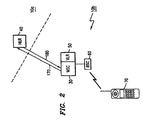
- FIGURE 2 illustrating a serving MSC 30 performing a conventional location update with the HLR 40 associated with the mobile station 70.
- IMSI International Mobile Subscriber Identity
- the serving MSC 30 utilizes the received IMSI number to transmit a location update signal (signal 170) to the HLR 40 associated with the roaming mobile station 70.
- a location update signal (signal 170) to the HLR 40 associated with the roaming mobile station 70.
- SCCP Signaling Connection Control Point
- SS7 Signaling System No. 7
- the HLR 40 associated with the roaming mobile station 70 verifies the identity of the mobile station 70 and also updates its database to take note of the MSC currently serving the mobile station 70. Such information is later utilized by the HLR 40 to reroute incoming calls.
- the HLR 40 further retrieves subscriber data associated with the mobile station 70 and communicates the retrieved data to the serving MSC performing the location update (signal 180).
- the transmitted data are then utilized by the serving MSC 30 to provide mobile service to the roaming mobile station 70.
- subscriber data includes forward-to-numbers for call forwarding features, billing data, long distance carrier data, etc.
- the serving MSC 30 Upon receiving the transmitted subscriber data, the serving MSC 30 stores the data at the attached VLR 50. Thereinafter, mobile service in accordance with the received subscriber data is provided to the roaming mobile station 70.
- the serving MSC 30 By requiring the serving MSC 30 to retrieve subscriber data from the HLR 40 specifically associated with the mobile station 70, regardless of which MSC is serving the mobile station 70, the same subscriber feature data, billing subscription, and other user defined information are utilized to provide uniform mobile service to the mobile station 70.
- FIGURES 2 and 3 illustrate the forwarding of an incoming call by a conventional system.
- the serving VLR 50 Upon performing a location update with the home HLR 40, the serving VLR 50 is updated with the requisite subscriber data including the forward-to-number for the prior art Call Forward on Busy (CFB) subscriber feature.
- another telecommunications terminal such as the wireline terminal 110, dials the MSISDN number associated with the mobile station 70 and originates a call connection.
- a generated call setup message such as an IAM signal, is first received by the serving GMSC 20 associated with the home PLMN 10a for the mobile station 70.
- the GMSC 20 then transmits a signal requesting routing instruction to the HLR 40 associated with the received MSISDN number (signal 120).
- the HLR 40 by retrieving the network address of the serving MSC 30 received during the last location update, also sends a signal requesting a roaming number to the serving MSC 30 (signal 130).
- the serving MSC 30 returns a roaming number to the HLR 40 (signal 140) and the HLR 40, in turn, forwards the received roaming number back to the GMSC 20 (signal 150). Utilizing the received roaming number, the incoming call is properly rerouted to the serving MSC 30.
- the serving MSC 30 next determines that the mobile station 70 is already in speech connection with another terminal and ascertains whether the mobile station 70 has one of the call forwarding features activated. Upon determining that the mobile station 70 has CFB activated, the serving MSC 30 retrieves the previously stored forward-to-number from the VLR 50 and accordingly forwards the received incoming call to the specified forward to number. As an illustration, a call connection between the wireline terminal 110 and a first telecommunications terminal 200 is accordingly established. Such a call connection is inefficient and wasteful if the first telecommunications terminal 200 is located outside LATA (LATA-A) from where the call was intended.
- LATA-A LATA
- the mobile subscriber would therefore be advantageous for the mobile subscriber to have the ability to have calls directed to a mobile station target forwarded to one of a predetermined set of forward to numbers within the PLMN of the called mobile station so that when the mobile station 70 is busy or otherwise not receiving calls, the calls are routed to a number on the forward to list.
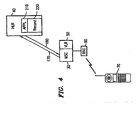
- FIGURE 4 is a block diagram illustrating the HLR 40 associated with the mobile station 70 providing location based call forwarding.
- the mobile station 70 performs a location update procedure with the serving MSC 30.
- the serving MSC 30, transmits a location update signal to the HLR 40 associated with the registering mobile station 70 (signal 170). While transmitting the location update signal, the serving MSC 30 further includes data representing the service area currently serving the mobile station 70. In case the mobile network wishes to provide PLMN or MSC service area dependent subscriber data, a network address representing the serving MSC 30 is transmitted to the HLR 40.
- the HLR 40 By analyzing the network address, for example, representing the serving MSC 30, the HLR 40 is able to determine the identity of the PLMN or MSC coverage area serving the mobile station.
- the location update signal further needs to include data representing the serving location area, such as a location area identity (LAI).
- LAI location area identity
- an application module 210 associated with the HLR 40 Upon receiving the location update signal from the serving MSC 30, an application module 210 associated with the HLR 40 analyzes the data representing the service area currently serving the mobile station and accordingly retrieves the predetermined forward to numbers associated with that service area from the data register 220. As described above, in case the analyzed service area is not included as one of the pre-stored service areas within the data register 220, the master service area data are instead retrieved.
- the HLR 40 uses a signal, such as a Mobile Application Part (MAP) based Insert_Subscriber_Data signal to the HLR 40 (signal 180).
- the serving MSC 30 stores the received call forward data to the attached VLR 50.
- the stored subscriber data are utilized by the serving MSC 30 to provide mobile service to the mobile station 70.
- one or more predetermined forward-to-numbers for CFB representing a local terminal within the serving service area are retrieved by the HLR 40 and communicated back to the MSC 30 and VLR 50.
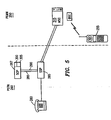
- FIGURE 5 illustrates an embodiment of the present invention implemented within an intelligent network (IN) or an advanced intelligent network (AIN).
- the PLMN 250 is used to communicate with mobile station 255 and is also linked with a public switched telephone network (PSTN) 260 to provide communications with other telephone subscribers 280.
- PSTN public switched telephone network
- SSP service switching point
- SCP service control point
- the SCP 267 includes an application module 300 including a data register 305 having the predetermined list of forward to numbers for the mobile station 310.
- line 285 and line 290 may actually represent a plurality of lines with an IN or AIN.
- the serving MSC 315 informs SSP 265 of this state along with the location of the mobile station 255.
- the SSP 265 in turn informs the SCP 267 of this information.
- the SCP 267 utilizing the application module 300 and data register 305, determines the appropriate forward to number (e.g., based upon the location of the mobile station 255) and informs the SSP 265 to reroute the call to the appropriate forward to number.
- the MSC 315 could attempt to complete the call setup without first querying the SSP 265.
- the MSC 315 would then inform the SSP 265 of the unreachable state and the location of the mobile station 255.
- the SSP 265 would, in turn, inform the SCP 267 of this information and the SCP 267 would determine the appropriate forward to number based upon the location of the mobile station 255 and provide the SSP 265 with this information so that the call could be appropriately rerouted.
- MAP Mobile Application Part
- Insert_Subscriber_Data signal is used to communicate information between the HLR and the MSC.
- TCAP Transaction Capability Application Part
- INAP Intelligent Network Application Part
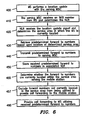
- FIGURE 6 is a flowchart illustrating the exemplary steps performed within a mobile telecommunications network for providing the location-based call forwarding feature of the present invention.
- the mobile station performs a location update with the serving MSC at step 400 and transmits its International Mobile Subscriber Identity (IMSI) number.
- IMSI International Mobile Subscriber Identity
- the serving MSC determines the identity of the HLR associated with the registering mobile station at step 410.
- the serving MSC performs a location update with the HLR associated with the mobile station to inform the HLR of the mobile station's new location and to retrieve the requisite subscriber data at step 420.
- the serving MSC further transmits data representing the service area currently serving the mobile station. If the service area includes the serving PLMN or MSC coverage area, the network address presenting the serving MSC suffices. If the service area includes the location area currently serving the mobile station, the address, such as a location area identity (LAI) or cell identity, needs to be transmitted to the HLR.
- LAI location area identity
- the HLR receives the location update signal from the serving MSC and determines the service area currently serving the roaming mobile station at step 420. Utilizing the determined service area, the HLR retrieves the subscriber data, including the location-based call forwarding data, correlated with the current service area for the roaming mobile station at step 430. Using a MAP based Insert_Subscriber_Data signal, the HLR transmits the retrieved subscriber data, including the set of call forwarding data, to the serving MSC at step 440. Included in the call forwarding data received is a set of predetermined forward to numbers previously selected by the mobile subscriber. Upon receiving the location-based forward to numbers from the HLR, the serving MSC stores the data at the attached VLR at step 450. Thereinafter, utilizing the service area dependent subscriber data, including the predetermined forward to numbers, provided by the HLR, the serving MSC provides mobile service to the roaming mobile station at step 460.
- the method further includes two steps which occur after step 450 and before step 460.
- the additional steps are: the step of determining whether the forward to numbers are currently located within the current service area for the mobile station (step 455); and, the step of excluding those forward to numbers not currently located within the service area serving the mobile station from being utilized to provide call forwarding service to the mobile station (step 457).
- forward to numbers can be excluded based upon factors other than current location. For example, a time-based system could be employed to only use forward to numbers during certain time periods (e.g., weekends, between 9 a.m. and 5 p.m.). Forward to numbers could be subject to any number of criteria before being utilized in step 460 to provide the mobile station with call forwarding.
- steps 430 through 460 are slightly modified in that the application module including the data register of the predetermined forward to numbers is associated with a SCP versus a HLR.
- a SSP within an IN or AIN is contacted by the serving MSC and, in conjunction with the SCP, the SSP reroutes calls according to the predetermined forward to numbers.
Landscapes
- Engineering & Computer Science (AREA)
- Signal Processing (AREA)
- Mobile Radio Communication Systems (AREA)
- Telephonic Communication Services (AREA)
Claims (30)
- Verfahren zum Bereitstellen von standortbasierten Rufweiterleitungsdaten an eine Mobilfunkvermittlungsstelle (Mobile Switching Center, MSC) (30), die eine bestimmte Mobilstation (70) bedient, in einem Mobiltelekommunikationsnetz, wobei ein Signal (170) an einer Heimatdatei (Home Location Register, HLR) (40) empfangen wird, die mit der bestimmten Mobilstation (70) assoziiert ist, das anzeigt, dass eine bestimmte Mobilfunkvermittlungsstelle (30) derzeit die Mobilstation (70) bedient; und wobei ein Dienstbereich, in dem sich die Mobilstation (70) derzeit befindet, durch Identifizieren der MSC (30) bestimmt wird, wobei das Verfahren durch die folgenden Schritte gekennzeichnet ist:Abrufen eines vorbestimmten Satzes von Rufweiterleitungsdaten (220) auf Grundlage des Dienstbereichs, in dem sich die Mobilstation (70) derzeit befindet; undBereitstellen des vorbestimmten Satzes von Rufweiterleitungsdaten (220) von der HLR (40) an die MSC (30).
- Verfahren nach Anspruch 1, wobei das Empfangen des Signals an der HLR (40) weiterhin durch den Schritt des Empfangens eines MAP-basierten (MAP = Mobile Application Part, Anwenderteil für Mobilfunk) Standortaktualisierungssignals (170) von der MSC (30) gekennzeichnet ist, wobei das Standortaktualisierungssignal (170) weiterhin eine Netzadresse enthält, die die MSC (30) darstellt.
- Verfahren nach Anspruch 2, wobei das Bestimmen des Dienstbereichs weiterhin durch den Schritt des Analysierens der Netzadresse, die die MSC (30) darstellt, gekennzeichnet ist.
- Verfahren nach Anspruch 1, wobei der Dienstbereich durch einen Bereich des öffentlichen Mobilfunknetzes (Public Land Mobile Network, PLMN) (260) gekennzeichnet ist.
- Verfahren nach Anspruch 1, wobei der Dienstbereich durch einen Versorgungsbereich der MSC (30) gekennzeichnet ist.
- Verfahren nach Anspruch 1, wobei das Signal (170), das von der HLR (40) empfangen wurde, weiterhin durch Daten gekennzeichnet ist, die einen Standortbereich identifizieren, in dem sich die Mobilstation (70) derzeit befindet, und der Dienstbereich den Standortbereich umfasst, der derzeit die Mobilstation (70) bedient.
- Verfahren nach Anspruch 1, wobei der abgerufene vorbestimmte Satz von Rufweiterleitungsdaten (220) weiterhin durch Teilnehmerdaten gekennzeichnet ist, die anzeigen, welcher Satz von Weiterleitungsnummern für die Mobilstation (70) in dem Dienstbereich verwendet werden sollte.
- Verfahren nach Anspruch 7, weiterhin gekennzeichnet durch den Schritt des Bestimmens, ob die Weiterleitungsnummern sich derzeit in dem Dienstbereich befinden.
- Verfahren nach Anspruch 8, wobei die Weiterleitungsnummern, die als sich nicht derzeit in dem Dienstbereich befindend bestimmt wurden, nicht verwendet werden, der Mobilstation (70) Rufweiterleitung bereitzustellen.
- Verfahren zum Abrufen von standortbasierten Rufweiterleitungsteilnehmerdaten (220), die mit einer bestimmten Mobilstation (70) assoziiert sind, von einer Heimatdatei (Home Location Register, HLR) (40), die mit der Mobilstation (70) assoziiert ist, in einem Mobiltelekommunikationsnetz, wobei das Vorhandensein einer bestimmten Mobilstation (70) von einer Mobilfunkvermittlungsstelle (Mobile Switching Center, MSC) (30) erfasst wird, die einen bestimmten Dienstbereich bedient; und wobei ein Signal (170) an die HLR (30) übertragen wird, die mit der Mobilstation (70) assoziiert ist, um der HLR (30) den derzeitigen Standort der Mobilstation (70) mitzuteilen; und wobei die Kennung des Dienstbereichs, der der Mobilstation (70) Mobilfunkdienst bereitstellt, bestimmt wird; wobei das Verfahren durch die folgenden Schritte gekennzeichnet ist:Abrufen eines Satzes von vorbestimmten Rufweiterleitungsdaten (220), die mit der Mobilstation (70) assoziiert sind, für den bestimmten Dienstbereich undBefördern der abgerufenen vorbestimmten Weiterleitungsdaten (220) von der HLR (40) an die MSC (30), die den Dienstbereich bedient.
- Verfahren nach Anspruch 10, wobei der Dienstbereich, der von der MSC (30) bedient wird, weiterhin durch einen Bereich des öffentlichen Mobilfunknetzes (Public Land Mobile Network, PLMN) (260) gekennzeichnet ist.
- Verfahren nach Anspruch 10, wobei der Dienstbereich, der von der MSC (30) bedient wird, weiterhin durch einen Versorgungsbereich der MSC gekennzeichnet ist.
- Verfahren nach Anspruch 10, wobei der Dienstbereich, der von der MSC (30) bedient wird, weiterhin durch einen Standortbereich gekennzeichnet ist.
- Verfahren nach Anspruch 13, wobei das Signal (170), das an die HLR (40) von der MSC (30) übertragen wurde, weiterhin durch Daten gekennzeichnet ist, die den Standortbereich identifizieren.
- Verfahren nach Anspruch 10, wobei der abgerufene vorbestimmte Satz von Rufweiterleitungsdaten (220) weiterhin durch Weiterleitungsnummern gekennzeichnet ist, die mit dem Dienstbereich assoziiert sind.
- Verfahren nach Anspruch 15, weiterhin gekennzeichnet durch den Schritt des Bestimmens, ob die Weiterleitungsnummern, die mit dem Dienstbereich assoziiert sind, sich derzeit in dem Dienstbereich befinden.
- Verfahren nach Anspruch 16, wobei die Weiterleitungsnummern, die als sich außerhalb des Dienstbereichs befindend bestimmt wurden, nicht verwendet werden, der Mobilstation (70) Rufweiterleitung bereitzustellen.
- System zum Bereitstellen von standortbasierten Rufweiterleitungsdaten an eine Mobilfunkvermittlungsstelle (Mobile Switching Center, MSC) (30), die eine bestimmte Mobilstation (70) bedient, in einem Mobiltelekommunikationsnetz, wobei ein Signal an einer Heimatdatei (Home Location Register, HLR) (40) empfangen wird, die mit der bestimmten Mobilstation (70) assoziiert ist, das anzeigt, dass eine bestimmte Mobilfunkvermittlungsstelle (Mobile Switching Center, MSC) (30) derzeit die Mobilstation (70) bedient; wobei ein Dienstbereich, der mit der MSC (30) und der Mobilstation (70) assoziiert ist, bestimmt wird; wobei das Verfahren durch die folgenden Schritte gekennzeichnet ist:Mittel zum Abrufen von standortbasierten Rufweiterleitungsdaten (220), die mit dem Dienstbereich und der Mobilstation (70) assoziiert sind; undMittel zum Bereitstellen der abgerufenen Rufweiterleitungsdaten (220) von der HLR (40) an die MSC (30).
- System nach Anspruch 18, wobei das Empfangen des Signals (170) an der HLR (40) weiterhin durch den Mittel zum Empfangen eines MAP-basierten (MAP = Mobile Application Part, Anwenderteil für Mobilfunk) Standortaktualisierungssignals (170) von der MSC gekennzeichnet ist, wobei das Standortaktualisierungssignal (170) weiterhin durch eine Netzadresse gekennzeichnet ist, die die MSC darstellt.
- System nach Anspruch 19, wobei das Bestimmen des Dienstbereichs weiterhin durch Mittel zum Analysieren der Netzadresse, die die MSC darstellt, gekennzeichnet ist.
- System nach Anspruch 18, wobei der Dienstbereich weiterhin durch einen Bereich des öffentlichen Mobilfunknetzes (Public Land Mobile Network, PLMN) gekennzeichnet ist.
- System nach Anspruch 18, wobei der Dienstbereich weiterhin durch einen Versorgungsbereich der MSC gekennzeichnet ist.
- System nach Anspruch 18, wobei das Signal (170), das von der HLR (40) empfangen wurde, weiterhin Daten enthält, die einen Standortbereich identifizieren, in dem sich die Mobilstation (70) derzeit befindet, und der Dienstbereich weiterhin durch den Standortbereich gekennzeichnet ist, der derzeit die Mobilstation bedient.
- System nach Anspruch 18, wobei die abgerufenen Rufweiterleitungsdaten (220) standortbasierte Weiterleitungsnummern enthalten, die anzeigen, welche Weiterleitungsnummer für die Mobilstation in dem Dienstbereich verwendet werden sollte.
- System nach Anspruch 24, weiterhin gekennzeichnet durch Mittel zum Bestimmen, ob die Weiterleitungsnummern sich derzeit in dem Dienstbereich befinden.
- System nach Anspruch 25, weiterhin gekennzeichnet durch Mittel zum Ausschließen von Weiterleitungsnummern, die sich nicht derzeit in dem Dienstbereich befinden, davon, dass sie dazu verwendet werden, der Mobilstation (70) Rufweiterleitung bereitzustellen.
- Verfahren zum Bereitstellen von standortbasierter Rufweiterleitung an einen Mobilfunkteilnehmer (70), das durch die folgenden Schritte gekennzeichnet ist:durch einen Mobilfunkteilnehmer (70), Speichern von verschiedenen Rufweiterleitungsdaten (220) für jeden von mehreren speziellen Dienstbereichen und außerdem Speichern von Standardrufweiterleitungsdaten;Bestimmen eines derzeitigen Dienstbereichs des Mobilfunkteilnehmers (70);Prüfen, ob der derzeitige Dienstbereich mit einem der mehreren speziellen Dienstbereiche übereinstimmt;falls Ja, Bereitstellen von Rufweiterleitungsdienst an den Mobilfunkteilnehmer (70) in Übereinstimmung mit den Rufweiterleitungsdaten (220), die mit dem derzeitigen Dienstbereich assoziiert sind; undfalls Nein, Bereitstellen von Rufweiterleitungsdienst an den Mobilfunkteilnehmer (70) in Übereinstimmung mit den Standardrufweiterleitungsdaten.
- Verfahren nach Anspruch 27, wobei der Schritt des Bestimmens des derzeitigen Dienstbereichs weiterhin duch den Schritt des Empfangens eines Signals (170) von einer Mobilfunkvermittlungsstelle (Mobile Switching Center, MSC) (30), die den Mobilteilnehmer (70) bedient, gekennzeichnet ist, wobei das Signal Daten enthält, die den derzeitigen Dienstbereich identifizieren.
- Verfahren nach Anspruch 27, weiterhin gekennzeichnet durch den Schritt des Bestimmens, ob die Rufweiterleitungsdaten (220) Weiterleitungsnummern enthält, die sich derzeit in dem Dienstbereich befinden.
- Verfahren nach Anspruch 29, weiterhin gekennzeichnet durch den Schritt des Ausschließens von Weiterleitungsnummern, die sich nicht derzeit in dem Dienstbereich befinden, davon, dass sie dazu verwendet werden, der Mobilstation (70) Rufweiterleitungsdienst bereitzustellen.
Applications Claiming Priority (3)
| Application Number | Priority Date | Filing Date | Title |
|---|---|---|---|
| US08/766,296 US5978673A (en) | 1996-12-13 | 1996-12-13 | Providing location-based call forwarding within a mobile telecommunications network |
| US766296 | 1996-12-13 | ||
| PCT/US1997/022883 WO1998026620A2 (en) | 1996-12-13 | 1997-12-12 | Providing location-based call forwarding within a mobile telecommunications network |
Publications (2)
| Publication Number | Publication Date |
|---|---|
| EP0945033A2 EP0945033A2 (de) | 1999-09-29 |
| EP0945033B1 true EP0945033B1 (de) | 2006-04-26 |
Family
ID=25076018
Family Applications (1)
| Application Number | Title | Priority Date | Filing Date |
|---|---|---|---|
| EP97953190A Expired - Lifetime EP0945033B1 (de) | 1996-12-13 | 1997-12-12 | Bereitstellung einer ortsbasierten anrufumleitung in einem mobilen telekommunikationsnetzwerk |
Country Status (9)
| Country | Link |
|---|---|
| US (1) | US5978673A (de) |
| EP (1) | EP0945033B1 (de) |
| CN (1) | CN1104161C (de) |
| AU (1) | AU732901B2 (de) |
| BR (1) | BR9713922A (de) |
| CA (1) | CA2274821C (de) |
| DE (1) | DE69735770T2 (de) |
| HU (1) | HU222170B1 (de) |
| WO (1) | WO1998026620A2 (de) |
Families Citing this family (88)
| Publication number | Priority date | Publication date | Assignee | Title |
|---|---|---|---|---|
| US6026298A (en) * | 1997-01-11 | 2000-02-15 | Compaq Computer Corporation | Method and apparatus for providing switch capability mediation in a mobile telephone system |
| US6157831A (en) * | 1997-01-11 | 2000-12-05 | Compaq Computer Corp. | Method and apparatus for implementing configurable call forwarding bins in a mobile telephone system |
| US6085083A (en) * | 1997-01-11 | 2000-07-04 | Tandem Computers, Inc. | Method and apparatus for providing fraud protection mediation in a mobile telephone system |
| US6198917B1 (en) * | 1997-07-17 | 2001-03-06 | Nortel Networks Ltd. | System and method of operation for correctly routing location update service messages in a cellular digital packet data system |
| US6636733B1 (en) | 1997-09-19 | 2003-10-21 | Thompson Trust | Wireless messaging method |
| KR100487237B1 (ko) * | 1997-11-20 | 2005-08-23 | 삼성전자주식회사 | 고투과페이징모드의위성통신단말기를위한호전환방법 |
| US6138007A (en) * | 1997-11-26 | 2000-10-24 | Nortel Networks Corporation | Methods and systems for late call forwarding when roaming from GSM system to IS41 system |
| US6131028A (en) * | 1997-12-10 | 2000-10-10 | Integrated Telecom Solutions, Inc. | Method of providing services specified by feature codes based upon location of a wireless telephone unit |
| US6151503A (en) * | 1997-12-17 | 2000-11-21 | Lucent Technologies Inc. | Subscriber activated wireless telephone call rerouting system |
| FI974590A0 (fi) * | 1997-12-22 | 1997-12-22 | Finland Telecom Oy | Viabestaemningsfoerfarande och- system |
| FI106424B (fi) * | 1998-02-13 | 2001-01-31 | Nokia Networks Oy | Reititysalueen päivitys pakettiradioverkossa |
| US6181936B1 (en) * | 1998-02-23 | 2001-01-30 | Telefonaktiebolaget Lm Ericsson (Publ) | System and method for accessing mobile networks |
| US6400947B1 (en) * | 1998-03-05 | 2002-06-04 | Lucent Technologies Inc | Caller line identification for GSM and wireless communications systems |
| US6091949A (en) * | 1998-06-25 | 2000-07-18 | Telefonaktiebolaget Lm Ericsson (Publ) | Location triggered barring of call forwarding |
| US7248572B2 (en) * | 1998-09-22 | 2007-07-24 | Qualcomm Incorporated | Distributed infrastructure for wireless data communications |
| US6374113B1 (en) * | 1998-09-29 | 2002-04-16 | Avaya Technology Corp. | Dynamic call coverage paths based on terminal location |
| US6363248B1 (en) * | 1998-12-28 | 2002-03-26 | Lucent Technologies Inc. | Intelligent cellular forwarding system |
| FR2789539B1 (fr) * | 1999-02-10 | 2001-04-20 | Raoul Girod | Bornes de localisation de radiotelephones |
| US6738616B1 (en) | 1999-03-15 | 2004-05-18 | Bellsouth Intellectual Property Corporation | Automatic telephone service forwarding device |
| CN1345511A (zh) * | 1999-03-31 | 2002-04-17 | 英国电讯有限公司 | 移动性管理 |
| US6477375B1 (en) * | 1999-04-16 | 2002-11-05 | Nortel Networks Limited | Method and system for reducing call setup processing cost by determining when to forward calls to detached subscribers |
| US6615037B1 (en) * | 1999-06-18 | 2003-09-02 | Nortel Networks Limited | Method apparatus and system for call forwarding when roaming from a first type network to a second type network in a communication system |
| DE19944007B4 (de) * | 1999-09-14 | 2004-02-19 | Siemens Ag | Bereitstellung detaillierter Teilnehmer-Ortsinformationen über Roaming-Nummer und Subscriberinformation |
| US7260078B1 (en) | 2000-02-08 | 2007-08-21 | Siemens Aktiengesellschaft | Method and system for providing management protocol mediation in wireless communications networks |
| US7624172B1 (en) | 2000-03-17 | 2009-11-24 | Aol Llc | State change alerts mechanism |
| US9246975B2 (en) | 2000-03-17 | 2016-01-26 | Facebook, Inc. | State change alerts mechanism |
| KR20010108926A (ko) * | 2000-06-01 | 2001-12-08 | 윤종용 | 홈존 착신 전환 서비스 방법 |
| EP1305970B1 (de) | 2000-08-04 | 2005-11-30 | Siemens Aktiengesellschaft | Positionsabhängige steuerung von leistungsmerkmalen eines kommunikationssystems |
| US7039025B1 (en) | 2000-09-29 | 2006-05-02 | Siemens Communications, Inc. | System and method for providing general packet radio services in a private wireless network |
| US7194278B1 (en) | 2000-11-20 | 2007-03-20 | Sprint Spectrum L.P. | Method and system for managing device functions based on location |
| US7003287B2 (en) | 2001-02-12 | 2006-02-21 | Siemens Ag | System and method for call forwarding in a communication system |
| US6950650B2 (en) | 2001-02-12 | 2005-09-27 | Siemens Ag | System and method for call forwarding synchronization in a communication system |
| US6920318B2 (en) * | 2001-03-22 | 2005-07-19 | Siemens Communications, Inc. | Method and system for providing message services in a communication system |
| US6987755B2 (en) * | 2001-03-22 | 2006-01-17 | Siemens Communications, Inc. | System and method for user notification in a communication system |
| NO20011465L (no) * | 2001-03-22 | 2002-09-23 | Ericsson Telefon Ab L M | Supplerende anropsgripetjeneste for mobilnett |
| US20020173297A1 (en) * | 2001-05-18 | 2002-11-21 | Phillips Alexander Lynn | Call forwarding features in mobile wireless communication devices and methods therefor |
| US7260077B2 (en) * | 2001-06-18 | 2007-08-21 | Nortel Networks Limited | Adaptive scheduling for multi-carrier systems |
| US7006833B1 (en) * | 2001-08-27 | 2006-02-28 | Bellsouth Intellectual Property Corporation | Location-based forwarding of a communication |
| US7349700B1 (en) | 2001-08-30 | 2008-03-25 | Aol Llc | Communication system and method |
| US7099677B2 (en) * | 2001-11-29 | 2006-08-29 | Bellsouth Intellectual Property Corp. | Smart call delivery GIS integration |
| FI20012529L (fi) * | 2001-12-20 | 2003-06-21 | Radiolinja Ab | Kutsunsiirtomenetelmä ja -järjestelmä |
| US20030194994A1 (en) * | 2002-04-11 | 2003-10-16 | Per Svedberg | Method for preventing call forwarding in a group call |
| AU2003281438A1 (en) * | 2002-07-08 | 2004-01-23 | Huawei Technologies Co., Ltd | Network and method of realizing local roaming for subscribers |
| US20040010553A1 (en) * | 2002-07-15 | 2004-01-15 | International Business Machines Corporation | Peer to peer location based services |
| US20040037272A1 (en) * | 2002-07-30 | 2004-02-26 | Lg Electronics Inc. | Method of forwarding packet calls in mobile communication system |
| US7082192B2 (en) * | 2002-11-07 | 2006-07-25 | International Business Machines Corporation | Locale based call forwarding |
| US7899862B2 (en) | 2002-11-18 | 2011-03-01 | Aol Inc. | Dynamic identification of other users to an online user |
| US7428580B2 (en) | 2003-11-26 | 2008-09-23 | Aol Llc | Electronic message forwarding |
| US8122137B2 (en) | 2002-11-18 | 2012-02-21 | Aol Inc. | Dynamic location of a subordinate user |
| US7640306B2 (en) | 2002-11-18 | 2009-12-29 | Aol Llc | Reconfiguring an electronic message to effect an enhanced notification |
| US8965964B1 (en) | 2002-11-18 | 2015-02-24 | Facebook, Inc. | Managing forwarded electronic messages |
| US7590696B1 (en) | 2002-11-18 | 2009-09-15 | Aol Llc | Enhanced buddy list using mobile device identifiers |
| US8005919B2 (en) | 2002-11-18 | 2011-08-23 | Aol Inc. | Host-based intelligent results related to a character stream |
| US8701014B1 (en) | 2002-11-18 | 2014-04-15 | Facebook, Inc. | Account linking |
| AU2003287671A1 (en) | 2002-11-18 | 2004-06-15 | America Online, Inc. | People lists |
| FR2847757B1 (fr) * | 2002-11-21 | 2006-06-23 | Labordere Arnaud Henry | Procede de telecommande de renvoi d'appels destines a un telephone mobile |
| JP2004186862A (ja) * | 2002-12-02 | 2004-07-02 | Hitachi Electronics Service Co Ltd | 通話録音情報転送機能付携帯電話機 |
| US20040174975A1 (en) * | 2003-03-05 | 2004-09-09 | Nortel Networks Limited | Common call routing for multiple telephony devices |
| US7035390B2 (en) * | 2003-03-07 | 2006-04-25 | Nortel Networks Limited | User controlled call routing for multiple telephony devices |
| US20040205127A1 (en) | 2003-03-26 | 2004-10-14 | Roy Ben-Yoseph | Identifying and using identities deemed to be known to a user |
| US7729686B2 (en) | 2003-04-02 | 2010-06-01 | Qualcomm Incorporated | Security methods for use in a wireless communications system |
| US6978003B1 (en) * | 2003-05-22 | 2005-12-20 | Nortel Networks Limited | Adaptive call routing for multiple telephony terminals |
| US7653693B2 (en) | 2003-09-05 | 2010-01-26 | Aol Llc | Method and system for capturing instant messages |
| DE50307704D1 (de) * | 2003-07-31 | 2007-08-30 | Siemens Ag | Verfahren zum Ermitteln eines Abrechnungstarifs zum Abrechnen einer Datenübertragung |
| EP1503538B1 (de) * | 2003-07-31 | 2007-03-07 | Siemens Aktiengesellschaft | Verfahren zum Ermitteln eines Abrechnungstarifs für eine Datenübertragung |
| CN100393090C (zh) * | 2003-08-20 | 2008-06-04 | 中兴通讯股份有限公司 | 为gsm 1x用户提供来电提示业务的方法(一) |
| IL160504A0 (en) * | 2004-02-22 | 2004-07-25 | Roy Shkedi | Location-based telecommunications redundancy protocol |
| US8843995B2 (en) | 2004-11-02 | 2014-09-23 | Blackberry Limited | Generic access network (GAN) controller selection in PLMN environment |
| CN100352313C (zh) * | 2004-11-19 | 2007-11-28 | 中兴通讯股份有限公司 | 漫游至cdma网络的gsm1x用户实现无应答呼叫前转的方法 |
| CN101243652B (zh) * | 2004-11-29 | 2013-02-13 | 捷讯研究有限公司 | 用于在无线用户设备(ue)装置中支持gan业务请求能力的系统和方法 |
| US20060168204A1 (en) * | 2004-12-01 | 2006-07-27 | Barry Appelman | Mobile blocking indicators on a contact list |
| US9002949B2 (en) | 2004-12-01 | 2015-04-07 | Google Inc. | Automatically enabling the forwarding of instant messages |
| US8060566B2 (en) | 2004-12-01 | 2011-11-15 | Aol Inc. | Automatically enabling the forwarding of instant messages |
| US7730143B1 (en) | 2004-12-01 | 2010-06-01 | Aol Inc. | Prohibiting mobile forwarding |
| US8412780B2 (en) | 2005-03-30 | 2013-04-02 | Google Inc. | Methods and systems for providing current email addresses and contact information for members within a social network |
| GB2427100B (en) * | 2005-06-09 | 2008-07-09 | Motorola Inc | A notification apparatus and method for a cellular communication system |
| US7869799B2 (en) * | 2005-07-28 | 2011-01-11 | Research In Motion Limited | Method and system for forwarding calls placed to a telecommunications destination |
| US8295851B2 (en) | 2005-08-03 | 2012-10-23 | Michael Edward Finnegan | Realtime, interactive and geographically defined computerized personal matching systems and methods |
| US8880047B2 (en) | 2005-08-03 | 2014-11-04 | Jeffrey C. Konicek | Realtime, location-based cell phone enhancements, uses, and applications |
| US8849267B2 (en) * | 2007-03-20 | 2014-09-30 | Microsoft Corporation | Location-based call control |
| US20100046731A1 (en) * | 2007-10-02 | 2010-02-25 | Douglas Gisby | Method, apparatus and system for use of presence and location information in intelligent call routing |
| CN101267678A (zh) * | 2008-04-25 | 2008-09-17 | 华为技术有限公司 | 呼叫前转的方法、设备及系统 |
| US20100311401A1 (en) * | 2009-06-09 | 2010-12-09 | Sprint Communications Company L.P. | Communication session transfer from one communication device to another based on location correlated to time |
| US8559910B2 (en) * | 2011-04-05 | 2013-10-15 | General Motors Llc. | OTA initiation method for telematics system in 2G GSM/3G WCDMA network |
| US8229471B1 (en) * | 2011-12-08 | 2012-07-24 | Google Inc. | Techniques for automatically activating or deactivating a phone associated with a virtual phone number |
| US8352546B1 (en) | 2011-12-08 | 2013-01-08 | Google Inc. | Contextual and location awareness for device interaction |
| US10567217B2 (en) * | 2016-02-29 | 2020-02-18 | Whatsapp Inc. | Techniques to perform the dynamic configuration of load-balanced relay operations |
| CN114302352A (zh) * | 2020-09-22 | 2022-04-08 | 李静波 | 移动网络业务信息管理方法、装置及系统 |
Family Cites Families (9)
| Publication number | Priority date | Publication date | Assignee | Title |
|---|---|---|---|---|
| US5557655A (en) * | 1993-10-26 | 1996-09-17 | Telefonaktiebolaget Lm Ericsson | Method for analyzing subscriber data received from an HLR in GSM MSC/VLR |
| US5504804A (en) * | 1994-01-19 | 1996-04-02 | Telefonaktiebolaget Lm Ericsson | Providing individual subscriber services in a cellular mobile communications network |
| US5497412A (en) * | 1994-04-07 | 1996-03-05 | Gte Telecommunication Services Incorporated | Enhanced call delivery system for roaming cellular subscribers |
| FI97931C (fi) * | 1994-05-13 | 1997-03-10 | Tecnomen Oy | Menetelmä tilaajan uudelleensijoittamiseksi puhepostijärjestelmässä |
| FI100080B (fi) * | 1994-12-23 | 1997-09-15 | Nokia Telecommunications Oy | Järjestely kutsunsiirtoa varten matkaviestinkeskuksessa |
| SE9501048L (sv) * | 1995-03-23 | 1996-09-24 | Telia Ab | Anordning och förfarande för automatisk registrering i ett telekommunikationsnät |
| GB2304497A (en) * | 1995-08-19 | 1997-03-19 | Northern Telecom Ltd | Cellular communications system with provision of services to visiting mobiles |
| US5689548A (en) * | 1996-05-21 | 1997-11-18 | Ericsson, Inc. | Emergency call back using MSC numbers |
| US6038445A (en) * | 1996-08-19 | 2000-03-14 | Ericsson Inc. | Providing service area dependent subscriber data within a mobile telecommunications network |
-
1996
- 1996-12-13 US US08/766,296 patent/US5978673A/en not_active Expired - Lifetime
-
1997
- 1997-12-12 DE DE69735770T patent/DE69735770T2/de not_active Expired - Lifetime
- 1997-12-12 CN CN97181770A patent/CN1104161C/zh not_active Expired - Lifetime
- 1997-12-12 BR BR9713922A patent/BR9713922A/pt not_active Application Discontinuation
- 1997-12-12 AU AU56993/98A patent/AU732901B2/en not_active Ceased
- 1997-12-12 WO PCT/US1997/022883 patent/WO1998026620A2/en not_active Ceased
- 1997-12-12 CA CA002274821A patent/CA2274821C/en not_active Expired - Lifetime
- 1997-12-12 HU HU0000534A patent/HU222170B1/hu active IP Right Grant
- 1997-12-12 EP EP97953190A patent/EP0945033B1/de not_active Expired - Lifetime
Also Published As
| Publication number | Publication date |
|---|---|
| CA2274821C (en) | 2006-08-29 |
| HU222170B1 (hu) | 2003-04-28 |
| HUP0000534A3 (en) | 2002-02-28 |
| AU5699398A (en) | 1998-07-03 |
| EP0945033A2 (de) | 1999-09-29 |
| BR9713922A (pt) | 2000-03-21 |
| DE69735770D1 (de) | 2006-06-01 |
| WO1998026620A3 (en) | 1998-11-05 |
| CA2274821A1 (en) | 1998-06-18 |
| CN1104161C (zh) | 2003-03-26 |
| US5978673A (en) | 1999-11-02 |
| HUP0000534A2 (hu) | 2000-06-28 |
| AU732901B2 (en) | 2001-05-03 |
| WO1998026620A2 (en) | 1998-06-18 |
| CN1246255A (zh) | 2000-03-01 |
| DE69735770T2 (de) | 2006-11-16 |
Similar Documents
| Publication | Publication Date | Title |
|---|---|---|
| EP0945033B1 (de) | Bereitstellung einer ortsbasierten anrufumleitung in einem mobilen telekommunikationsnetzwerk | |
| US6038445A (en) | Providing service area dependent subscriber data within a mobile telecommunications network | |
| US5832382A (en) | Optimized routing of mobile calls within a telecommunications network | |
| US5943619A (en) | Shared interworking of subscriber features within mobile telecommunications networks | |
| US5884179A (en) | Optimized routing of terminating calls within a mobile telecommunications network | |
| US6101382A (en) | Transfer of calling party identification in a mobile communication system | |
| US5991621A (en) | Optimized routing of calls to roaming subscribers within a telecommunications network | |
| US20080160997A1 (en) | International Automatic Roaming Service Method | |
| EP0903052A1 (de) | System und verfahren zur steuerung der telefonnummernübertragbarkeit in einem mobilen übertragungsnetzwerk | |
| US5873034A (en) | Default long distance carrier selection within a visited public land mobile network | |
| AU731960B2 (en) | Using number portability database to solve call tromboning | |
| WO2000013454A1 (en) | System and method for call completion to a roamer without routing through the home network | |
| WO2000033600A1 (en) | Optimized routing of mobile calls within a telecommunications network | |
| WO1999059371A1 (en) | Mobile switching center that completes a call to a roaming mobile station as if the mobile station were a local mobile station | |
| AU7707798A (en) | Providing selective reversal billing when calling roaming mobile subscribers |
Legal Events
| Date | Code | Title | Description |
|---|---|---|---|
| PUAI | Public reference made under article 153(3) epc to a published international application that has entered the european phase |
Free format text: ORIGINAL CODE: 0009012 |
|
| 17P | Request for examination filed |
Effective date: 19990522 |
|
| AK | Designated contracting states |
Kind code of ref document: A2 Designated state(s): DE GB IT |
|
| RAP1 | Party data changed (applicant data changed or rights of an application transferred) |
Owner name: ERICSSON INC. |
|
| 17Q | First examination report despatched |
Effective date: 20040901 |
|
| GRAP | Despatch of communication of intention to grant a patent |
Free format text: ORIGINAL CODE: EPIDOSNIGR1 |
|
| GRAS | Grant fee paid |
Free format text: ORIGINAL CODE: EPIDOSNIGR3 |
|
| GRAA | (expected) grant |
Free format text: ORIGINAL CODE: 0009210 |
|
| AK | Designated contracting states |
Kind code of ref document: B1 Designated state(s): DE GB IT |
|
| PG25 | Lapsed in a contracting state [announced via postgrant information from national office to epo] |
Ref country code: IT Free format text: LAPSE BECAUSE OF FAILURE TO SUBMIT A TRANSLATION OF THE DESCRIPTION OR TO PAY THE FEE WITHIN THE PRESCRIBED TIME-LIMIT;WARNING: LAPSES OF ITALIAN PATENTS WITH EFFECTIVE DATE BEFORE 2007 MAY HAVE OCCURRED AT ANY TIME BEFORE 2007. THE CORRECT EFFECTIVE DATE MAY BE DIFFERENT FROM THE ONE RECORDED. Effective date: 20060426 |
|
| REG | Reference to a national code |
Ref country code: GB Ref legal event code: FG4D |
|
| REF | Corresponds to: |
Ref document number: 69735770 Country of ref document: DE Date of ref document: 20060601 Kind code of ref document: P |
|
| PLBE | No opposition filed within time limit |
Free format text: ORIGINAL CODE: 0009261 |
|
| STAA | Information on the status of an ep patent application or granted ep patent |
Free format text: STATUS: NO OPPOSITION FILED WITHIN TIME LIMIT |
|
| 26N | No opposition filed |
Effective date: 20070129 |
|
| PGFP | Annual fee paid to national office [announced via postgrant information from national office to epo] |
Ref country code: GB Payment date: 20161228 Year of fee payment: 20 |
|
| PGFP | Annual fee paid to national office [announced via postgrant information from national office to epo] |
Ref country code: DE Payment date: 20161229 Year of fee payment: 20 |
|
| REG | Reference to a national code |
Ref country code: DE Ref legal event code: R071 Ref document number: 69735770 Country of ref document: DE |
|
| REG | Reference to a national code |
Ref country code: GB Ref legal event code: PE20 Expiry date: 20171211 |
|
| PG25 | Lapsed in a contracting state [announced via postgrant information from national office to epo] |
Ref country code: GB Free format text: LAPSE BECAUSE OF EXPIRATION OF PROTECTION Effective date: 20171211 |