EP0945721A2 - Biosensorelement für Oberflächen-Plasmon-Resonanz-Messungen und dessen Herstellungsverfahren - Google Patents
Biosensorelement für Oberflächen-Plasmon-Resonanz-Messungen und dessen Herstellungsverfahren Download PDFInfo
- Publication number
- EP0945721A2 EP0945721A2 EP99105079A EP99105079A EP0945721A2 EP 0945721 A2 EP0945721 A2 EP 0945721A2 EP 99105079 A EP99105079 A EP 99105079A EP 99105079 A EP99105079 A EP 99105079A EP 0945721 A2 EP0945721 A2 EP 0945721A2
- Authority
- EP
- European Patent Office
- Prior art keywords
- plasma polymerization
- chip
- layer
- plasmon resonance
- surface plasmon
- Prior art date
- Legal status (The legal status is an assumption and is not a legal conclusion. Google has not performed a legal analysis and makes no representation as to the accuracy of the status listed.)
- Granted
Links
Images







Classifications
-
- G—PHYSICS
- G01—MEASURING; TESTING
- G01N—INVESTIGATING OR ANALYSING MATERIALS BY DETERMINING THEIR CHEMICAL OR PHYSICAL PROPERTIES
- G01N21/00—Investigating or analysing materials by the use of optical means, i.e. using sub-millimetre waves, infrared, visible or ultraviolet light
- G01N21/17—Systems in which incident light is modified in accordance with the properties of the material investigated
- G01N21/55—Specular reflectivity
- G01N21/552—Attenuated total reflection
- G01N21/553—Attenuated total reflection and using surface plasmons
Definitions
- the present invention relates to a surface plasmon resonance biosensor, specifically, a measuring chip for the same and a method for producing the measurement chip.
- a number of methods using immunological reactions are used in clinical tests for detecting target substances.
- Conventional methods are known to be intricate and require labeling substances.
- immunological sensors using a surface plasmon resonance biosensor (SPR) is being used, in which no labeling substance is required and a ligand can be detected with high sensitivity.
- This surface plasmon resonance biosensor is based on the phenomenon that the intensity of a monochromatic light reflected from the interface between an optically transparent substance such as glass and a metal thin-film layer is dependent on the refractive index of a sample placed on the reflecting side of the metal. Accordingly, a sample can be analyzed by measuring the intensity of the reflected monochromatic light.
- porous material 5 is formed on metal thin-film 2 formed on glass substrate 1, and physiologically active substance 4, such as an enzyme or antibody, is retained or immobilized on the surface or inside of porous material 5.
- physiologically active substance 4 such as an enzyme or antibody
- porous material 5 to be used include weaved, knitted or non-woven cloths made of synthetic fibers, natural fibers, inorganic fibers or the like, and porous inorganic or organic materials (see Japanese Patent Laid-open No. 164195/1991).
- carboxymethyl dextran is used as a porous material in a commercial product (BIAcore 2000, Pharmacia Biosensor).
- physiologically active substance 4 just exists on the surface of porous material 5 and interacts with target substances.
- LB Liduir-Blodgett
- this method has a disadvantage in that LB membrane binds poorly to a metal thin-film and peels off together with the physiologically active substance.
- Japanese Patent Laid-open No. 264843/1997 discloses measuring cells for a surface plasmon resonance biosensor.
- the present inventors have now found that sensitivity of a measuring chip for a surface plasmon resonance sensor is extremely improved when only a small amount of a physiologically active substance is immobilized on a specific plasma polymerization layer.
- An objective of the present invention is to provide a measuring chip for a surface plasmon resonance sensor that can detect a small amount of target substances in high sensitivity.
- Another objective of the present invention is to provide a measuring cell for a surface plasmon resonance sensor that can detect a small amount of target substances in high sensitivity.
- Further objective of the present invention is to provide a method for producing said measuring chip.
- the present invention provides a measuring chip for a surface plasmon resonance sensor comprising a metal layer and one or more plasma polymerization layers formed on said metal layer.
- the present invention also provides a measuring chip for a surface plasmon resonance sensor comprising a metal layer, one or more plasma polymerization layers formed on said metal layer, and a biologically active substance immobilized on the surface of said plasma polymerization layer.
- the present invention also provides a measuring cell for a surface plasmon resonance sensor comprising said measuring chip.
- the present invention also provides a method for producing a measuring chip for a surface plasmon resonance sensor comprising the steps of forming a metal layer on an optically transparent substrate, forming one or more plasma polymerization layers on said metal layer, and then immobilizing a biologically active substance on the surface of said plasma polymerization layer.
- the measuring chip for a surface plasmon resonance sensor (“measuring chip”) may have optically transparent substrate (transparent substrate) 1, metal thin-film 2 formed on transparent substrate 1, plasma polymerization layer 3 formed on metal thin-film 2, and physiologically active substance 4 immobilized on the surface of plasma polymerization layer 3 as shown in Figure 1.
- Transparent substrate 1 can be any substrate customarily used in a measuring chip for a surface plasmon resonance sensor. Generally, substrates made of materials that are transparent to a laser beam such as glass can be used. The thickness of the substrate can be about 0.1 to 5 mm.
- Metal thin-film 2 is not particularly restricted, provided it can induce surface plasmon resonance.
- the metal to be used for metal thin-film 2 include gold, silver and platinum. They can be used alone or in combination.
- an auxiliary layer made of chrome or the like may be set between transparent substrate 1 and the layer made of gold, silver or the like.
- the thickness of metal thin-film 2 is preferably 100 to 2000 angstroms, most preferably 100 to 500 angstroms. If the thickness exceeds 3,000 angstroms, surface plasmon phenomena of the medium cannot be sufficiently detected. Furthermore, when an auxiliary layer made of chrome or the like is formed, the thickness of the auxiliary layer is preferably 30 to 50 angstroms.
- Plasma polymerization layer 3 can be formed by plasma polymerization of a monomer material for three-dimensional cross-linking.
- a monomer material to be used in the present invention can be any material that can immobilize a physiologically active substance by plasma polymerization.
- Examples of a monomer material for a plasma polymerization layer include compounds of formula (I): CH 3 -(CH 2 ) n -NH 2 (wherein n is an integer from 1 to 6) and compounds of formula (II): NH 2 -(CH 2 ) n -NH 2 (wherein n is an integer from 1 to 6) and compounds which comprise carbon (C), hydrogen (H) and nitrogen (N) and have double bonds or triple bonds, such as acetonitrile, vinylamine and pyridine.
- a compound further containing sulfur (S), oxygen (O) or silicon (Si) can be used as a monomer material.
- a compound appropriately containing any two or more elements selected from carbon (C), hydrogen (H), nitrogen (N), sulfur (S), oxygen (O) and silicon (Si) can be used.
- a halogen gas or a rare gas can be used as a monomer material.
- a compound containing nitrogen can be used as a monomer material.
- a compound containing sulfur can be used as a monomer material.
- examples of such compounds include cysteine, glutathione, formyl succinate, aminobenzoate, aminohexanate, mercaptobenzoate, and compounds having -C ⁇ CCH 2 OH.
- a compound containing a halogen can be used as a monomer material.
- the compound containing a halogen for a plasma polymerization layer include tetrafluoroethylene, chlorobenzene, hexachlorobenzene, hexafluorobenzene, and vinyl fluoride.
- an organic metal compound can be used as a monomer material.
- an organic metal compound for the plasma polymerization layer include an organic silicon compounds such as tetramethylsilane, tetramethyldisiloxane, hexamethyldisiloxane, hexamethyldisilazane, hexamethylcyclotrisilazane, dimethylaminotrimethylsilane, trimethylvinylsilane, tetramethoxysilane, aminopropyltriethoxysilane, octadecyldiethoxymethylsilane, hexamethyldisilane and divinyltetramethyldisiloxane.
- the thickness of plasma polymerization layer 3 is preferably 100 to 3000 angstroms, most preferably 500 to 1000 angstroms.
- Plasma polymerization layer 3 can be formed by plasma treatment to a resulting plasma layer with a polymeric or non-polymeric monomer.
- non-polymeric monomer material include nitrogen, ammonium, hydrazine, hydrogensulfide, hydrogendisulfide, oxygen, hydrogen, water, halogen gas, and rare gas (e.g., argon, neon, helium, krypton, and xenon).
- Plasma polymerization layer 3 can also be formed by lamination techniques and optionally using a mixture as a monomer material.
- Plasma polymerization layer 3 of the present invention has the following advantages:
- the metal thin-film and the plasma polymerization layer can be formed in the same chamber.
- the manufacturing process can be simplified.
- the plasma polymerization treatment is intended to include a treatment with not only a non-polymeric monomer and an inactive monomer but also a polymeric monomer.
- Physiologically active substance 4 to be immobilized is not particularly limited, provided it reacts interacts with a target substance to be measured.
- physiologically active substance 4 include nucleic acids (e.g., DNA, RNA, and PNA); non-immune proteins (e.g., avidin (streptoavidin), biotin or a receptor); immunoglobulin-binding proteins (e.
- sugar-binding proteins e.g., lectin
- sugar-recognizing sugar chains e.g., fatty acids or fatty acid esters (e.g., stearic acid, alachidic acid, behenic acid, ethyl stearate, ethyl arachidate, and ethyl behanate); polypeptides or oligopeptides having ligand binding activity; immune proteins (e.g., an antibody); and enzyme.
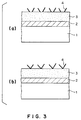
- the antibody When an antibody is used as physiologically active substance 4, the antibody can be immobilized on the surface of plasma polymerization layer 3 through its Fc fragment and a monomolecular layer of the antibody is formed.
- Fab fragments Fig. 3 (a)
- F(ab') 2 fragments Fig. 3 (b)
- the thickness of physiologically active substance 4 depends on the size of the physiologically active substance itself, but is preferably 100 to 3000 angstroms, most preferably 100 to 1000 angstroms.
- the physiologically active substance can be immobilized on the plasma polymerization layer through linking agents.
- FIG. 4 is a schematic illustration showing one embodiment of the measuring chip according to the present invention.
- the measuring chip has covalent bond layer 6 between plasma polymerization layer 3 and physiologically active substance 4.
- Substance 4 is immobilized on plasma polymerization layer 3 via covalent layer 6.
- the covalent bond can be formed with a cross-linking reagent or a condensation reagent.
- the cross-linking reagent or a condensation reagent is not particularly restricted, provided it can covalently and firmly immobilize substance 4. They can be used alone or in combination.
- cross-linking reagents include glutaraldehyde, periodic acid, N-succinimidyl-2-maleimidoacetic acid, N-succinimidyl-4-maleimidobutyric acid, N-succinimidyl-6-maleimidohexanic acid, N-succinimidyl-4-maleimidomethylcyclohexan-1-carboxylic acid, N-sulfosuccinimidyl-4-maleimidomethylcyclohexane-1-carboxylic acid, N-succinimidyl-4-maleimidomethylbanzoic acid, N-succinimidyl-3-maleimidobenzoic acid, N-sulfosuccinimidyl-3-maleimidobenzoic acid, N-succinimidyl-4-maleimidophenyl-4-butyric acid, N-sulfosuccinimidyl-4-maleimid,
- covalent layer 6 By introducing covalent layer 6 to the measuring cell to firmly mobilize physiologically active substance 4 via covalent bonds, substance 4 can be maintained immobilized when the measuring cell is washed, which enables the cell to be used for repetitive measurements for another advantageous feature.
- the thickness of covalent layer 6 is preferably 10 to 100 angstroms, most preferably 10 to 20 angstroms.
- the physiologically active substance can also be immobilized by hydrophobic bond, by integrating substance 4 into a plasma polymerization layer or by an additional plasma treatment.
- a preferred group of the measuring chip according to the present invention is a measuring chip comprising a metal layer, one or more plasma polymerization layers formed on said metal layer, and an immune protein or enzyme immobilized on the surface of said plasma polymerization layer, wherein said plasma polymerization layer comprises a monomer material selected from the group consisting of pyridine, triethylamine, diethylamine, allylamine, acrylamide, aniline, acrylonitrile, 1,2,4-triazole, 5-amino-1H-tetrazole, and acetonitrile,
- Another preferred group of the measuring chip according to the present invention is a measuring chip comprising a metal layer, one or more plasma polymerization layers formed on said metal layer, and an immune protein or enzyme immobilized on the surface of said plasma polymerization layer, wherein said plasma polymerization layer comprises a monomer material selected from the group consisting of pyridine, triethylamine, diethylamine, allylamine, acrylamide, aniline, acrylonitrile, 1,2,4-triazole, 5-amino-1H-tetrazole, and acetonitrile and wherein said immune protein or enzyme is immobilized on said plasma polymerization layer through a cross-linking reagent or a water-soluble condensation reagent.
- said plasma polymerization layer comprises a monomer material selected from the group consisting of pyridine, triethylamine, diethylamine, allylamine, acrylamide, aniline, acrylonitrile, 1,2,4-triazole, 5-amino-1H-t
- a cross-linking reagent for the preferred group above can be selected from the group consisting of glutaraldehyde, N-succinimidyl-4-maleimidomethylbanzoic acid, N-succinimidyl-3-maleimidobenzoic acid, N-succinimidyl-4-maleimidophenyl-4-butyric acid, N,N'-oxydimethylene-dimaleimide, N,N'-m-phenylene-dimaleimide, N,N'-p-phenylene-dimaleimide, N,N'-hexamethylene-dimaleimide, N-succinimidylmaleimidocarboxylic acid, N-succinimidyl-S-acetylmercaptoacetic acid, N-succinimidyl-3-(2-pyridyldithio)propionate, S-acetylmercaptosuccinic anhydride, methyl-3-(4
- the measuring chip according to the present invention can be formed as follows:
- metal thin-film 2 is formed on transparent substrate 1.
- Metal thin-film 2 can be formed by conventional methods such as sputtering, CVD, PVD, or vacuum evaporation.
- plasma polymerization layer 3 is formed on metal thin-film 2.
- Plasma polymerization layer 3 can be formed by plasma polymerization using a plasma polymerization apparatus.
- the rate of plasma formation is preferably 100 to 3000 angstroms/min, most preferably 500 to 1000 angstroms/min. If the rate exceeds 3000 angstroms/min, it becomes difficult to obtain a smooth plasma polymerization layer.
- the plasma polymerization can be preferably carried out at a monomer material flow rate of 0.05 to 100 sccm at a room temperature or at a temperature of 10 to 20°C at a pressure between 1.0 x 10 -2 and 1.0 x 10 2 Pa using a discharge power of 20 to 300 W at a discharge frequency of 10 MHz or 13.56 MHz.
- polymerization conditions are not restricted to the conditions above.
- physiologically active substance 4 is finally immobilized on plasma polymerization layer 3.
- Immobilization can be done by conventional methods. For example, a specified amount of physiologically active substance 4 can be immobilized by contacting it with plasma polymerization layer 3 for a specified period of time. If the measuring cell is a flow-cell type, a specified volume of the physiologically active substance 4 can be immobilized by contacting it with plasma polymerization layer 3 by pouring a specified volume for a specified period of time.
- a cross-linking reagent or a condensation reagent is allowed to be in contact with plasma polymerization layer 3 in the same manner as with active substance 4, after which substance 4 can be immobilized.
- the measuring cell for a surface plasmon resonance sensor comprises the measuring chip.
- the measuring chip can be mounted on an optical part to be optically analyzed.
- optical part refers to a part where a light is projected and an evanescent wave and a surface plasmon can be induced.
- the surface plasmon resonance biosensor according to the present invention comprises the measuring cell.
- FIG. 5 is a schematic view of one embodiment of the surface plasmon resonance biosensor according to the present invention.
- the surface plasmon resonance biosensor has cartridge block 7, light source 8, and detector 9 and measuring chip 10 is mounted on cartridge block 7.
- the upper side of cartridge block 7 has a hollow and this hollow and measuring chip 10 construct measuring cell 71.
- the body of measuring chip 10 comprises a transparent substrate, and a layer comprising a metal thin-film, a plasma polymerization layer formed under said metal film.
- a physiologically active substance is immobilized on the surface of said plasma polymerization layer facing the hollow of cartridge block 7.
- Measuring cell 71 is constructed from the hollow of cartridge block 7 and measuring chip 10; and cartridge block 7 has flow routes 72 and 73 providing passages to the outside of measuring cell 71 and cartridge block 7, which makes measuring cell 71 a flow-cell type.
- the present invention is not restricted to this type and a batch type cell can also be used. Using measuring cell 71 of this flow-cell type, a sample can be measured either continuously or intermittently.
- the sample flows into measuring cell 71 via flow route 72 and is discharged after measurement via flow route 73.
- the flow rate of the sample is preferably 0.5 to 5 ⁇ l/min.
- the flow rate is controlled, for example, using a computer-operated pump.
- Monochromatic light (incident light 80) is irradiated from light source 8 toward the optical part of measuring chip 10 and its reflected light 90, which is reflected by metal thin-film 2 set on the reverse side of measuring chip 10, reaches detector 9.
- Detector 9 can detect the intensity of reflected light 90.
- Light source 8 and detector 9 are not particularly restricted, and can be any types customarily used for a surface plasmon resonance biosensor.
- the incident light is wedge-shaped and the light reflected in different directions can be measured simultaneously.
- the present invention is not restricted to this type of sensor. The configuration of this type does not require a mobile part, thereby producing excellent stability and durability, and enabling real time measurement of samples as well.
- the configuration as described above yields a reflected light intensity curve that forms a trough relative to a given angle of incidence (see Figure 6).
- the trough in the reflected light intensity curve is due to surface plasmon resonance. Namely, when light is totally reflected at the interface between the transparent substrate and the exterior of measuring chip 10, a surface wave known as an evanescent wave is generated at the interface and a surface wave known as a surface plasmon is also generated on the metal thin-film. Resonance occurs when the wave number of these two surface waves coincides and a part of light energy is consumed to excite the surface plasmon, resulting in a decrease in the intensity of the reflected light.
- the wave number of the surface plasmon is affected by the refractive index of the medium proximate to the surface of the metal thin-film. Therefore, when the refractive index of the medium changes due to an interaction between the substance to be measured and the physiologically active substance, a surface plasmon resonance is induced to change the angle of incidence. Thus, a change in the concentration of the substance to be measured can be perceived by a shift of the trough in the reflected light intensity curve.
- the change in the angle of incidence is called a resonance signal and a change of 10 -4 degree is expressed as 1 RU.
- highly effective and reliable measurement can be done if measuring chip 10 is made to be freely attachable and detachable and disposable. Furthermore, if a covalent bond layer is provided between the plasma polymerization layer and the physiologically active substance, measuring chip 10 can be used repeatedly by washing the inside of measuring cell 71, resulting in a decrease in the cost.
- the surface plasmon resonance biosensor of the present invention can be used for quantitative or qualitative analysis, identification of a target substance present in a sample.
- a measuring chip having layers shown in Figure 1 on an optical recognition part was constructed.
- a glass plate with a thickness of 0.15 mm (18 mm x 18 mm) was used for a transparent substrate.
- a chrome layer and then a gold layer were deposited on this transparent substrate by sputtering.
- the sputtering was carried out at 100 W for 40 seconds for the chrome layer and at 100 W for 2 minutes and 30 seconds for the gold layer.
- the resulting chrome layer was 40 angstroms thick and the resulting gold layer was 500 angstroms thick.
- a plasma polymerization layer was formed on the metal layers.
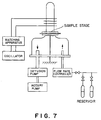
- An apparatus as shown in Figure 7 was used for plasma polymerization.
- Ethanedithiol was used as a monomer material for the plasma polymerization layer to introduce a thiol group.
- Conditions for plasma polymerization were as follows:
- a thiol group was introduced on the surface of plasma polymerization layer.
- the sensor chip with the introduced thiol group was mounted on the cartridge block of the surface plasmon resonance biosensor and maleimidized avidin (see "Ultrahigh Sensitivity Enzyme Immunoassay" by Eiji Ishikawa) was poured through a flow route into the measuring cell at a flow rate of 5 ⁇ l/min for immobilization on the thiol group on the plasma polymerization layer for 60 minutes. 50 ⁇ l of 10 ⁇ M-biotinized DNA were then poured and the probe DNA was immobilized via the avidin for 10 minutes.
- a DNA (7.5 x 10 -7 M) having a DNA sequence complementary to this probe DNA was introduced and after the reaction, a signal of about 500 RU was obtained.
- Figure 6 shows the reflected light intensity curve before and after the formation of the plasma polymerization layer, which show the intensity of reflected light corresponding to the angle of incidence ⁇ ).
- Figure 6 shows that the plasma polymerization layer is formed on the surface of the gold layer.
- the thickness of the plasma polymerization layer can be estimated from ⁇ .
- Acetonitrile was used as a monomer material for the plasma polymerization layer.
- Conditions for plasma polymerization were as follows:
- a plasma polymerization layer was formed.
- the sensor chip was mounted on the cartridge block of the surface plasmon resonance biosensor, 5% glutaraldehyde was poured through a flow route into the measuring cell at a flow rate of 5 ⁇ l/min for 10 minutes and avidin (concentration: 20 ⁇ g/ml) was also poured at a flow rate of 5 ⁇ l/min to immobilize for 60 minutes.
- 10 ⁇ M biotin-labeled probe RNA were then poured at a flow rate of 1 ⁇ l/min to immobilize the probe RNA for 10 minutes.
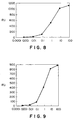
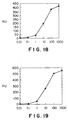
- DNA (7.5 x 10 -7 M) having a DNA sequence complementary to this probe RNA was introduced and after the reaction, a signal of about 500 RU was obtained. Concentration of complementary DNA ( ⁇ M) 0.00075 0.0075 0.075 0.75 7.5 75 RU 8 20 80 400 800 880
- the sensor chip was mounted on the cartridge block of the surface plasmon resonance biosensor, 5% glutaraldehyde was poured through a flow route into the measuring cell at a flow rate of 5 ⁇ l/min for 10 minutes and streptoavidin (concentration: 20 ⁇ g/ml) was also poured at a flow rate of 5 ⁇ l/min to immobilize for 60 minutes. 10 ⁇ M biotin-labeled probe RNA was then poured at a flow rate of 1 ⁇ l/min for 10 minutes to immobilize the probe RNA. DNA (7.5 x 10 -7 M) having a DNA sequence complementary to this probe RNA was introduced and after the reaction, a signal of about 375 RU was obtained. Concentration of complementary DNA ( ⁇ M) 0.00075 0.0075 0.075 0.75 7.5 75 RU 7.5 18.75 75 375 750 825
- a plasma polymerization layer was formed.
- the sensor chip was mounted on the cartridge block of the surface plasmon resonance biosensor, 0.4 M N-ethyl-N'-(3-dimethylaminopropyl)carbodiimide was poured through a flow route into the measuring cell at a flow rate of 5 ⁇ l/min for 10 minutes and avidin (concentration: 20 ⁇ g/ml) was also poured at a flow rate of 5 ⁇ l/min to immobilize for 60 minutes. 10 ⁇ M biotin-labeled probe RNA was then poured at a flow rate of 1 ⁇ l/min for 10 minutes to immobilize the probe RNA.
- a plasma polymerization layer was formed.
- the sensor chip was mounted on the cartridge block of the surface plasmon resonance biosensor, 5% glutaraldehyde was poured through a flow route into the measuring cell at a flow rate of 5 ⁇ l/min for 10 minutes and protein A (concentration: 400 ⁇ g/ml) was also poured at a flow rate of 5 ⁇ l/min to immobilize for 60 minutes.
- An anti-HSA antibody (concentration: 400 ⁇ l/ml) was then poured at a flow rate of 1 ⁇ l/min for 10 minutes to immobilize the antibody.
- HSA antigen (10 ⁇ g/ml) complementary to this anti-HSA antibody was introduced and after the reaction, a signal of about 250 RU was obtained.
- a plasma polymerization layer was formed.
- the sensor chip was mounted on the cartridge block of the surface plasmon resonance biosensor, 5% glutaraldehyde was poured through a flow route into the measuring cell at a flow rate of 5 ⁇ l/min for 10 minutes and protein G (concentration: 400 ⁇ g/ml) was also poured at a flow rate of 5 ⁇ l/min to immobilize for 60 minutes.
- An anti-BSA antibody (concentration: 400 ⁇ l/ml) was then poured at a flow rate of 1 ⁇ l/min for 10 minutes to immobilize the antibody.
- BSA antigen (10 ⁇ g/ml) complementary to this anti-BSA antibody was introduced and after the reaction, a signal of about 225 RU was obtained.
- a plasma polymerization layer was formed.
- the sensor chip was mounted on the cartridge block of the surface plasmon resonance biosensor, 5% glutaraldehyde was poured through a flow route into the measuring cell at a flow rate of 5 ⁇ l/min for 10 minutes and mannose-binding lectin (concentration: 200 ⁇ g/ml) was also poured at a flow rate of 5 ⁇ l/min to immobilize for 60 minutes.
- a sugar (10 ⁇ g/ml) complementary to this mannose-binding lectin was introduced and after the reaction, a signal of about 200 RU was obtained.
- a plasma polymerization layer was formed.
- the sensor chip was mounted on the cartridge block of the surface plasmon resonance biosensor, 5% glutaraldehyde was poured through a flow route into the measuring cell at a flow rate of 5 ⁇ l/min for 10 minutes and an anti-BSA antibody (concentration: 400 ⁇ g/ml) was also poured at a flow rate of 5 ⁇ l/min to immobilize for 60 minutes.
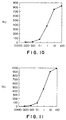
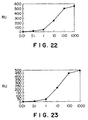
- a BSA antigen (10 ⁇ g/ml) complementary to this anti-BSA antibody was introduced and after the reaction, a signal of about 187.5 RU was obtained. Concentration of BSA antigen ( ⁇ g/ml) 0.01 0.1 1 10 100 1000 RU 3.75 9.375 37.5 187.5 375 412.5
- a plasma polymerization layer was formed.
- the sensor chip was mounted on the cartridge block of the surface plasmon resonance biosensor, 5% glutaraldehyde was poured through a flow route into the measuring cell at a flow rate of 5 ⁇ l/min for 10 minutes and an anti-BSA antibody (concentration: 400 ⁇ g/ml) was also poured at a flow rate of 5 ⁇ l/min to immobilize for 60 minutes.
- a BSA antigen (10 ⁇ g/ml) complementary to this anti-BSA antibody was introduced and after the reaction, a signal of about 200 RU was obtained. Concentration of BSA antigen ( ⁇ g/ml) 0.01 0.1 1 10 100 1000 RU 4 10 40 200 400 440
- a plasma polymerization layer was formed.
- the sensor chip was mounted on the cartridge block of the surface plasmon resonance biosensor and maleimidized anti-BSA antibody was poured through a flow route at a flow rate of 5 ⁇ l/min to immobilize for 60 minutes.
- a BSA antigen (10 ⁇ g/ml) complementary to this anti-BSA antibody was introduced and after the reaction, a signal of about 200 RU was obtained. Concentration of BSA antigen ( ⁇ g/ml) 0.01 0.1 1 10 100 1000 RU 4 10 40 200 400 440
- a plasma polymerization layer was formed.
- the sensor chip was mounted on the cartridge block of the surface plasmon resonance biosensor and maleimidized anti-BSA antibody was poured through a flow route at a flow rate of 5 ⁇ l/min to immobilize for 60 minutes.
- a BSA antigen (10 ⁇ g/ml) complementary to this anti-BSA antibody was introduced and after the reaction, a signal of about 187.5 RU was obtained. Concentration of BSA antigen ( ⁇ g/ml) 0.01 0.1 1 10 100 1000 RU 3.75 9.375 37.5 187.5 375 412.5
- a plasma polymerization layer was formed.
- the sensor chip was mounted on the cartridge block of the surface plasmon resonance biosensor, 5% glutaraldehyde was poured through a flow route into the measuring cell at a flow rate of 5 ⁇ l/min for 10 minutes and an anti-HSA antibody (concentration: 400 ⁇ g/ml) was also poured at a flow rate of 5 ⁇ l/min to immobilize for 60 minutes.
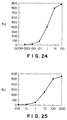
- HSA antigen (10 ⁇ g/ml) complementary to this anti-HSA antibody was introduced and after the reaction, a signal of about 250 RU was obtained. Concentration of HSA antigen ( ⁇ g/ml) 0.01 0.1 1 10 100 1000 RU 5 10 50 250 500 550
- a plasma polymerization layer was formed.
- the sensor chip was mounted on the cartridge block of the surface plasmon resonance biosensor, 5% glutaraldehyde was poured through a flow route into the measuring cell at a flow rate of 5 ⁇ l/min for 10 minutes and the Fab fragment of an anti-HSA antibody (concentration: 400 ⁇ g/ml) was also poured at a flow rate of 5 ⁇ l/min to immobilize for 60 minutes.
- HSA antigen (10 ⁇ g/ml) complementary to this Fab fragment of the anti-HSA antibody was introduced and after the reaction, a signal of about 275 RU was obtained.
- a plasma polymerization layer was formed.
- the sensor chip was mounted on the cartridge block of the surface plasmon resonance biosensor, 5% glutaraldehyde was poured through a flow route into the measuring cell at a flow rate of 5 ⁇ l/min for 10 minutes and the F(ab) 2 fragment of an anti-HSA antibody (concentration: 400 ⁇ g/ml) was also poured at a flow rate of 5 ⁇ l/min to immobilize for 60 minutes.
- HSA antigen (10 ⁇ g/ml) complementary to this F(ab) 2 fragment of the anti-HSA antibody was introduced and after the reaction, a signal of about 300 RU was obtained.
- a plasma polymerization layer was formed.
- the sensor chip was mounted on the cartridge block of the surface plasmon resonance biosensor, 5% glutaraldehyde was poured through a flow route into the measuring cell at a flow rate of 5 ⁇ l/min for 10 minutes and an anti-HSA antibody (concentration: 400 ⁇ g/ml) was also poured at a flow rate of 5 ⁇ l/min to immobilize for 60 minutes.
- a HSA antigen (10 ⁇ g/ml) complementary to this anti-HSA antibody was introduced and after the reaction, a signal of about 250 RU was obtained. Concentration of HSA antigen ( ⁇ g/ml) 0.01 0.1 1 10 100 1000 RU 5 10 50 250 500 550
- a plasma polymerization layer was formed.
- the sensor chip was mounted on the cartridge block of the surface plasmon resonance biosensor, 5% glutaraldehyde was poured through a flow route into the measuring cell at a flow rate of 5 ⁇ l/min for 10 minutes and an anti-HSA antibody (concentration: 400 ⁇ g/ml) was also poured at a flow rate of 5 ⁇ l/min to immobilize for 60 minutes.
- a HSA antigen (10 ⁇ g/ml) complementary to this anti-HSA antibody was introduced and after the reaction, a signal of about 225RU was obtained. Concentration of HSA antigen ( ⁇ g/ml) 0.01 0.1 1 10 100 1000 RU 4.5 9 45 225 450 495
- a plasma polymerization layer was formed.
- the sensor chip was mounted on the cartridge block of the surface plasmon resonance biosensor, 5% glutaraldehyde was poured through a flow route into the measuring cell at a flow rate of 5 ⁇ l/min for 10 minutes and avidin (concentration: 20 ⁇ g/ml) was also poured at a flow rate of 5 ⁇ l/min to immobilize for 60 minutes.
- 10 ⁇ M biotin-labeled probe RNA was poured at a flow rate of 1 ⁇ l/min to immobilize the probe RNA for 10 minutes.
- DNA (7.5 x 10 -7 M) having a DNA sequence complementary to this probe RNA was introduced and after the reaction, a signal of about 400 RU was obtained. Concentration of Complementary DNA ( ⁇ M) 0.00075 0.0075 0.075 0.75 7.5 75 RU 8 20 80 400 800 880
- a plasma polymerization layer was formed.
- the sensor chip was mounted on the cartridge block of the surface plasmon resonance biosensor, a 0.5 M carbodiimide solution was poured through a flow route into the measuring cell at a flow rate of 5 ⁇ l/min for 10 minutes and an anti-HSA antibody (concentration: 400 ⁇ g/ml) was also poured at a flow rate of 5 ⁇ l/min to immobilize for 60 minutes.
- a HSA antigen (10 ⁇ g/ml) complementary to this anti-HSA antibody was introduced and after the reaction, a signal of about 250 RU was obtained. Concentration of HSA antigen ( ⁇ g/ml) 0.01 0.1 1 10 100 1000 RU 5 10 50 250 500 550
- a plasma polymerization layer was formed.
- the sensor chip was mounted on the cartridge block of the surface plasmon resonance biosensor, 0.5 M carbodiimide was poured through a flow route into the measuring cell at a flow rate of 5 ⁇ l/min for 10 minutes and behenic acid (concentration: 400 ⁇ g/ml) was also poured at a flow rate of 5 ⁇ l/min to immobilize for 60 minutes.
- Skatole (10 ⁇ g/ml) complementary to this behenic acid was introduced and after the reaction, a signal of about 225 RU was obtained.
- Concentration of skatole ( ⁇ g/ml) 0.01 0.1 1 10 100 1000 RU 4.5 9 45 225 450 495
- Example 20 shows a formation of hydrophobic bond.
- a layer comprising chrome and gold was formed on a transparent substrate (glass plate) by sputtering.
- a plasma polymerization layer in which trifluoroethylene was used as a monomer was then formed on the resulting metal layer under the following conditions:
- the plasma polymerization layer obtained under the conditions described above was hydrophobic.
- An anti-HSA antibody (concentration: 100 ⁇ g/ml) was allowed to flow at a flow rate of 5 ⁇ l/min for 60 minutes to immobilize the antibody via hydrophobic bond.
- HSA at a specified concentration was further reacted with this antibody-immobilized plasma polymerization layer. The following results were obtained. Concentration of HSA antigen ( ⁇ g/ml) 0.01 0.1 1 10 100 1000 RU 3 6 30 150 300 330
- Example 21 shows an inclusion of an antibody by plasma polymerization.
- a layer comprising chrome and gold was formed on a transparent substrate (glass plate) by sputtering.
- a plasma polymerization layer in which propargyl alcohol was used as a monomer was then formed on the resulting metal layer under the following conditions:
- the plasma polymerization layer obtained under the conditions described above was highly hydrophilic.
- An antibody solution (concentration: 100 ⁇ g/ml) was spread evenly on this propargyl alcohol plasma polymerization layer and after drying, plasma treatment was further carried out on this surface under the following conditions:
- HSA at a specified concentration was reacted with the membrane in which the antibody was thus integrated and immobilized by plasma treatment. The following results were obtained, from which a calibration curve could be drawn.
Landscapes
- Physics & Mathematics (AREA)
- Health & Medical Sciences (AREA)
- Life Sciences & Earth Sciences (AREA)
- Chemical & Material Sciences (AREA)
- Analytical Chemistry (AREA)
- Biochemistry (AREA)
- General Health & Medical Sciences (AREA)
- General Physics & Mathematics (AREA)
- Immunology (AREA)
- Pathology (AREA)
- Investigating Or Analysing Materials By Optical Means (AREA)
- Apparatus Associated With Microorganisms And Enzymes (AREA)
- Investigating Or Analysing Materials By The Use Of Chemical Reactions (AREA)
Applications Claiming Priority (6)
| Application Number | Priority Date | Filing Date | Title |
|---|---|---|---|
| JP7614498 | 1998-03-24 | ||
| JP7614498 | 1998-03-24 | ||
| JP13478098 | 1998-05-18 | ||
| JP13478098 | 1998-05-18 | ||
| JP11012233A JP2000039401A (ja) | 1998-03-24 | 1999-01-20 | 表面プラズモン共鳴バイオセンサ―用測定セル及びその製造方法 |
| JP1223399 | 1999-01-20 |
Publications (3)
| Publication Number | Publication Date |
|---|---|
| EP0945721A2 true EP0945721A2 (de) | 1999-09-29 |
| EP0945721A3 EP0945721A3 (de) | 2000-01-26 |
| EP0945721B1 EP0945721B1 (de) | 2004-11-17 |
Family
ID=27279759
Family Applications (1)
| Application Number | Title | Priority Date | Filing Date |
|---|---|---|---|
| EP19990105079 Expired - Lifetime EP0945721B1 (de) | 1998-03-24 | 1999-03-24 | Biosensorelement für Oberflächen-Plasmon-Resonanz-Messungen und dessen Herstellungsverfahren |
Country Status (4)
| Country | Link |
|---|---|
| US (3) | US6627397B1 (de) |
| EP (1) | EP0945721B1 (de) |
| JP (1) | JP2000039401A (de) |
| DE (1) | DE69921872T2 (de) |
Cited By (4)
| Publication number | Priority date | Publication date | Assignee | Title |
|---|---|---|---|---|
| DE10064146A1 (de) * | 2000-12-22 | 2002-07-04 | Andreas Hofmann | Biosensor und verfahren zu seiner Herstellung |
| TWI391485B (zh) * | 2007-10-31 | 2013-04-01 | Forward Electronics Co Ltd | 生物分子固定化之方法 |
| CN103712954A (zh) * | 2013-12-27 | 2014-04-09 | 中国科学院苏州生物医学工程技术研究所 | 一种用于筛选抗肿瘤药物的spr传感芯片的制备方法 |
| CN106456847A (zh) * | 2014-07-22 | 2017-02-22 | 百多力股份公司 | 可生物降解的金属支架和方法 |
Families Citing this family (56)
| Publication number | Priority date | Publication date | Assignee | Title |
|---|---|---|---|---|
| JP2000039401A (ja) * | 1998-03-24 | 2000-02-08 | Dainippon Printing Co Ltd | 表面プラズモン共鳴バイオセンサ―用測定セル及びその製造方法 |
| JP2000298111A (ja) * | 1999-04-15 | 2000-10-24 | Sentan Kagaku Gijutsu Incubation Center:Kk | バイオセンサー |
| AU1055001A (en) * | 1999-11-04 | 2001-05-14 | Center For Advanced Science And Technology Incubation, Ltd. | Method for immobilizing material |
| JP2001337036A (ja) * | 2000-05-25 | 2001-12-07 | Masao Karube | 差動式sprセンサー及び該センサーを用いた測定法 |
| US8097433B2 (en) * | 2005-11-22 | 2012-01-17 | Common Sense, Ltd. | Diagnostic composition and article for monitoring intravaginal infections |
| DE10164309A1 (de) * | 2001-12-28 | 2003-07-10 | Fraunhofer Ges Forschung | Verbesserte strukturiert-funktionale Bindematrices für Biomoleküle |
| US7018842B2 (en) * | 2002-02-28 | 2006-03-28 | Agilent Technologies, Inc. | Reading dry chemical arrays through the substrate |
| US6791690B2 (en) * | 2002-04-30 | 2004-09-14 | Agilent Technologies, Inc. | Reading dry chemical arrays |
| WO2005010528A1 (ja) * | 2003-07-28 | 2005-02-03 | Reverse Proteomics Research Institute Co., Ltd. | 非特異的物質の除去方法 |
| US20060257558A1 (en) * | 2003-10-31 | 2006-11-16 | Hiroshi Nomura | Plasma polymerization of atomically modified surfaces |
| WO2006085898A1 (en) * | 2004-05-14 | 2006-08-17 | Becton, Dickinson & Company | Articles having bioactive surfaces and solvent-free methods of preparation thereof |
| JP4410249B2 (ja) * | 2004-06-09 | 2010-02-03 | 浜松ホトニクス株式会社 | フローセル及びこれを用いた蛍光相関分光測定装置 |
| US20060068424A1 (en) * | 2004-08-13 | 2006-03-30 | Fuji Photo Film Co., Ltd. | Biosensor |
| US7729565B2 (en) | 2004-11-25 | 2010-06-01 | The Furukawa Electric Co., Ltd. | Fiber sensor and fiber sensor device |
| TWI394004B (zh) * | 2005-03-30 | 2013-04-21 | Sumitomo Chemical Co | 適合作為酸產生劑之鹽及含有該鹽之化學放大型光阻組成物 |
| TWI378325B (en) * | 2005-03-30 | 2012-12-01 | Sumitomo Chemical Co | Salt suitable for an acid generator and a chemically amplified resist composition containing the same |
| JP4838626B2 (ja) * | 2005-04-28 | 2011-12-14 | キヤノン株式会社 | プラズモン共鳴を利用して標的物質を検出する装置に用いられる標的物質検出素子用基板、これを用いた検出素子及び検出装置 |
| US20070065954A1 (en) * | 2005-09-15 | 2007-03-22 | Minoru Taya | Surface plasmon resonance biosensor system for detection of antigens and method for determining the presence of antigens |
| TWI411881B (zh) * | 2005-10-28 | 2013-10-11 | Sumitomo Chemical Co | 適用為酸產生劑之鹽以及包含該鹽之化學增幅型阻劑組成物 |
| KR101334631B1 (ko) * | 2005-11-21 | 2013-11-29 | 스미또모 가가꾸 가부시키가이샤 | 산 발생제용으로 적합한 염 및 이를 함유하는 화학 증폭형레지스트 조성물 |
| CN1991585B (zh) * | 2005-12-27 | 2011-06-01 | 住友化学株式会社 | 适合于酸生成剂的盐和含有该盐的化学放大型抗蚀剂组合物 |
| KR100770945B1 (ko) * | 2005-12-28 | 2007-10-26 | 성균관대학교산학협력단 | 플라즈마를 이용한 단백질칩 기판의 제조 방법 및 이로부터제조된 단백질칩 기판 |
| US20070235397A1 (en) * | 2006-03-30 | 2007-10-11 | Wannop George M | Storage bin and frame system |
| JP2007263909A (ja) * | 2006-03-30 | 2007-10-11 | Hitachi Ltd | 生体分子相互作用測定装置 |
| US7862980B2 (en) * | 2006-08-02 | 2011-01-04 | Sumitomo Chemical Company, Limited | Salt suitable for an acid generator and a chemically amplified positive resist composition containing the same |
| WO2008070222A2 (en) * | 2006-08-21 | 2008-06-12 | Cytotrend Biotech Engineering Limited Usa Inc | A method of surface plasmon resonance (spr) technology to detect genomic disorders for prenatal diagnosis |
| TWI402249B (zh) * | 2006-08-22 | 2013-07-21 | Sumitomo Chemical Co | 適合作為酸產生劑之鹽及含有該鹽之化學放大型正型光阻組成物 |
| WO2008036465A2 (en) * | 2006-09-18 | 2008-03-27 | CMED Technologies Ltd. Office of Walkers Limited | A method to assess cancer susceptibility and differential diagnosis of metastases of unknown primary tumors |
| GB2454852B (en) * | 2006-09-19 | 2011-06-29 | Limited Cmed Technologies | A method for screening of infectious agents in blood |
| US20100021971A1 (en) * | 2006-09-21 | 2010-01-28 | Cmed Technologies Ltd. | Method to remove repetitive sequences from human dna |
| US20100047815A1 (en) * | 2006-09-21 | 2010-02-25 | Cmed Technologies Ltd. | Method to detect tumor markers and diagnosis of undifferentiated tumors |
| US20100041018A1 (en) * | 2006-09-25 | 2010-02-18 | Cmed Technologies Ltd. | Method to detect virus related immunological markers for the diagnosis of hepatitis c virus infection |
| US20090311699A1 (en) * | 2006-09-25 | 2009-12-17 | Cmed Technologies Ltd. | Method of surface plasmon resonance (spr) to detect genomic aberrations in patients with chronic lymphocytic leukemia |
| US8119350B2 (en) * | 2006-09-25 | 2012-02-21 | Cmed Technologies Ltd | Method of surface plasmon resonance (SPR) to detect genomic aberrations in patients with multiple myeloma |
| WO2008085554A2 (en) * | 2006-09-25 | 2008-07-17 | Cmed Technologies Ltd. | A method to detect virus related immunologigal markers for the diagnosis of hepatitis b virus infection |
| WO2008094312A2 (en) * | 2006-09-25 | 2008-08-07 | Cmed Technologies Ltd. | A method of surface plasmon resonance (spr) technology to detect genomic disorders for postnatal diagnosis |
| GB2455929B (en) * | 2006-09-25 | 2011-08-31 | Cmed Technologies Limited | A method for the identification of human immunodeficiency virus related antibodies in blood |
| WO2008066997A2 (en) * | 2006-09-27 | 2008-06-05 | Cmed Technologies Ltd. | A method for quantitative measurement of cardiac biochemical markers |
| WO2008067003A2 (en) * | 2006-09-27 | 2008-06-05 | Cmed Technologies Ltd. | A method to detect virus related immunological markers for the diagnosis of respiratory tract infections |
| US8114682B2 (en) * | 2006-09-27 | 2012-02-14 | Cmed Technologies Ltd. | Method for the quantitative evaluation of sex hormones in a serum sample |
| US8110409B2 (en) * | 2006-09-27 | 2012-02-07 | Cmed Technologies Ltd. | Method to measure serum biomarkers for the diagnosis of liver fibrosis |
| US20100021930A1 (en) * | 2006-09-27 | 2010-01-28 | Cmed Technologies Ltd. | Application of surface plasmon resonance technology to maternal serum screening for congenital birth defects |
| US20100086937A1 (en) * | 2006-09-27 | 2010-04-08 | Cmed Technologies Ltd. | method to detect treponema pallidum immunological markers for the diagnosis of syphilis |
| US8158440B2 (en) * | 2006-09-28 | 2012-04-17 | Cmed Technologies Ltd. | Method for quantitative measurement of thyroid related antibodies or antigens in a serum sample |
| US8110408B2 (en) * | 2006-09-28 | 2012-02-07 | Cmed Technologies Ltd. | Method for quantitative detection of diabetes related immunological markers |
| TWI435169B (zh) * | 2006-12-06 | 2014-04-21 | Sumitomo Chemical Co | 化學性放大阻劑組成物 |
| TWI437364B (zh) * | 2006-12-14 | 2014-05-11 | Sumitomo Chemical Co | 化學放大型阻劑組成物 |
| CN101211113B (zh) * | 2006-12-27 | 2012-01-11 | 住友化学株式会社 | 化学放大型抗蚀剂组合物 |
| JP5012122B2 (ja) * | 2007-03-22 | 2012-08-29 | 住友化学株式会社 | 化学増幅型レジスト組成物 |
| JP5021408B2 (ja) * | 2007-09-26 | 2012-09-05 | 富士フイルム株式会社 | バイオセンサー |
| US8168379B2 (en) | 2007-10-04 | 2012-05-01 | Cmed Technologies Ltd. | Application of surface plasmon resonance technology for detecting and genotyping HPV |
| DE102008027095A1 (de) * | 2008-06-06 | 2009-12-17 | Siemens Aktiengesellschaft | Interventionsvorrichtung zur Sammlung von biologischem Material und Verfahren zu ihrer Herstellung |
| US8808365B2 (en) * | 2009-01-07 | 2014-08-19 | Martin Kean Chong Ng | Chemically and biologically modified medical devices |
| JP5707030B2 (ja) * | 2009-04-02 | 2015-04-22 | 株式会社日立ハイテクノロジーズ | 核酸分析デバイス、及び核酸分析装置 |
| CN109613177B (zh) | 2014-07-01 | 2021-08-20 | 科蒙森斯公司 | 用于鉴定羊水的诊断组合物 |
| ES2950768T3 (es) | 2018-05-11 | 2023-10-13 | Carrier Corp | Sistema de detección por resonancia de plasmones de superficie |
Family Cites Families (11)
| Publication number | Priority date | Publication date | Assignee | Title |
|---|---|---|---|---|
| US5055316A (en) * | 1988-04-20 | 1991-10-08 | Washington Research Foundation | Tight binding of proteins to surfaces |
| US5028657A (en) * | 1988-07-18 | 1991-07-02 | Industrial Research Technology Institute | Use of plasma to immobilize protein on polymeric surfaces |
| SE8804074D0 (sv) * | 1988-11-10 | 1988-11-10 | Pharmacia Ab | Sensorenhet och dess anvaendning i biosensorsystem |
| WO1991002975A1 (en) * | 1989-08-21 | 1991-03-07 | The Board Of Regents Of The University Of Washington | Multiple-probe diagnostic sensor |
| JPH03164195A (ja) * | 1989-11-22 | 1991-07-16 | Idemitsu Petrochem Co Ltd | 液体試料の分析方法及び分析装置 |
| DE69110032T2 (de) * | 1991-06-08 | 1995-12-21 | Hewlett Packard Gmbh | Verfahren und Gerät zur Feststellung und/oder Konzentrationsbestimmung von Biomolekülen. |
| US5494829A (en) * | 1992-07-31 | 1996-02-27 | Biostar, Inc. | Devices and methods for detection of an analyte based upon light interference |
| JP3682335B2 (ja) | 1996-03-29 | 2005-08-10 | 征夫 軽部 | 表面プラズモン共鳴バイオセンサー用測定セル及びその製造方法 |
| US5876753A (en) * | 1996-04-16 | 1999-03-02 | Board Of Regents, The University Of Texas System | Molecular tailoring of surfaces |
| JP2000039401A (ja) * | 1998-03-24 | 2000-02-08 | Dainippon Printing Co Ltd | 表面プラズモン共鳴バイオセンサ―用測定セル及びその製造方法 |
| US6111652A (en) * | 1998-07-14 | 2000-08-29 | Texas Instruments Incorporated | High throughput surface plasmon resonance analysis system |
-
1999
- 1999-01-20 JP JP11012233A patent/JP2000039401A/ja active Pending
- 1999-03-23 US US09/274,321 patent/US6627397B1/en not_active Expired - Fee Related
- 1999-03-24 EP EP19990105079 patent/EP0945721B1/de not_active Expired - Lifetime
- 1999-03-24 DE DE1999621872 patent/DE69921872T2/de not_active Expired - Fee Related
-
2003
- 2003-06-17 US US10/462,747 patent/US20030224441A1/en not_active Abandoned
-
2007
- 2007-03-07 US US11/683,192 patent/US20070148702A1/en not_active Abandoned
Cited By (6)
| Publication number | Priority date | Publication date | Assignee | Title |
|---|---|---|---|---|
| DE10064146A1 (de) * | 2000-12-22 | 2002-07-04 | Andreas Hofmann | Biosensor und verfahren zu seiner Herstellung |
| WO2002052260A3 (de) * | 2000-12-22 | 2002-11-14 | Andreas Hofmann | Biosensor und verfahren zu seiner herstellung |
| TWI391485B (zh) * | 2007-10-31 | 2013-04-01 | Forward Electronics Co Ltd | 生物分子固定化之方法 |
| CN103712954A (zh) * | 2013-12-27 | 2014-04-09 | 中国科学院苏州生物医学工程技术研究所 | 一种用于筛选抗肿瘤药物的spr传感芯片的制备方法 |
| CN103712954B (zh) * | 2013-12-27 | 2016-02-03 | 中国科学院苏州生物医学工程技术研究所 | 一种用于筛选抗肿瘤药物的spr传感芯片的制备方法 |
| CN106456847A (zh) * | 2014-07-22 | 2017-02-22 | 百多力股份公司 | 可生物降解的金属支架和方法 |
Also Published As
| Publication number | Publication date |
|---|---|
| US20030224441A1 (en) | 2003-12-04 |
| US20070148702A1 (en) | 2007-06-28 |
| EP0945721B1 (de) | 2004-11-17 |
| DE69921872D1 (de) | 2004-12-23 |
| US6627397B1 (en) | 2003-09-30 |
| EP0945721A3 (de) | 2000-01-26 |
| DE69921872T2 (de) | 2005-11-24 |
| JP2000039401A (ja) | 2000-02-08 |
Similar Documents
| Publication | Publication Date | Title |
|---|---|---|
| US6627397B1 (en) | Measuring chip for surface plasmon resonance biosensor and method for producing the same | |
| US5492840A (en) | Surface plasmon resonance sensor unit and its use in biosensor systems | |
| Schmid et al. | Site-directed antibody immobilization on gold substrate for surface plasmon resonance sensors | |
| Corso et al. | An investigation of antibody immobilization methods employing organosilanes on planar ZnO surfaces for biosensor applications | |
| US6726881B2 (en) | Measurement chip for surface plasmon resonance biosensor | |
| JP4270511B2 (ja) | バイオセンサー | |
| US20090066962A1 (en) | Surface plasmon resonance sensor and biochip | |
| Sarcina et al. | A stable physisorbed layer of packed capture antibodies for high-performance sensing applications | |
| JP4435454B2 (ja) | バイオセンサー用表面 | |
| JP4087471B2 (ja) | 表面プラズモン共鳴バイオセンサー用測定チップ及びその製造方法 | |
| US20090036327A1 (en) | Method for chemical treatment of porous silicon surface | |
| EP1739427A1 (de) | Messverfahren mit Biosensor | |
| EP2185480A1 (de) | Verfahren zur chemischen behandlung von porösen siliciumoberflächen | |
| US7964414B2 (en) | Biosensor with suppressed non-specific adsorption | |
| JP3682335B2 (ja) | 表面プラズモン共鳴バイオセンサー用測定セル及びその製造方法 | |
| JP4087472B2 (ja) | 表面プラズモン共鳴バイオセンサー用測定チップ及びその製造方法 | |
| US8580571B2 (en) | Method for producing a biosensor | |
| JPH10267834A (ja) | 表面プラズモン共鳴バイオセンサー用測定チップ及びその製造方法 | |
| JPH11281569A (ja) | 表面プラズモン共鳴バイオセンサー用測定セル及びその製造方法 | |
| Kyprianou | Development of novel matrices for biomolecule immobilisation on sensor surfaces | |
| JP4943888B2 (ja) | バイオセンサーの製造方法 | |
| JP4484626B2 (ja) | バイオセンサー | |
| JPH10274631A (ja) | 表面プラズモン共鳴バイオセンサー用測定チップ及びその製造方法 | |
| Dzwolak et al. | Itnmunosensors in Analytical Chemistry | |
| JP2002014099A (ja) | バイオセンサー用測定チップ |
Legal Events
| Date | Code | Title | Description |
|---|---|---|---|
| PUAI | Public reference made under article 153(3) epc to a published international application that has entered the european phase |
Free format text: ORIGINAL CODE: 0009012 |
|
| AK | Designated contracting states |
Kind code of ref document: A2 Designated state(s): DE FR GB IT |
|
| AX | Request for extension of the european patent |
Free format text: AL;LT;LV;MK;RO;SI |
|
| PUAL | Search report despatched |
Free format text: ORIGINAL CODE: 0009013 |
|
| AK | Designated contracting states |
Kind code of ref document: A3 Designated state(s): AT BE CH CY DE DK ES FI FR GB GR IE IT LI LU MC NL PT SE |
|
| AX | Request for extension of the european patent |
Free format text: AL;LT;LV;MK;RO;SI |
|
| 17P | Request for examination filed |
Effective date: 20000704 |
|
| AKX | Designation fees paid |
Free format text: DE FR GB IT |
|
| 17Q | First examination report despatched |
Effective date: 20020920 |
|
| GRAP | Despatch of communication of intention to grant a patent |
Free format text: ORIGINAL CODE: EPIDOSNIGR1 |
|
| GRAS | Grant fee paid |
Free format text: ORIGINAL CODE: EPIDOSNIGR3 |
|
| GRAA | (expected) grant |
Free format text: ORIGINAL CODE: 0009210 |
|
| AK | Designated contracting states |
Kind code of ref document: B1 Designated state(s): DE FR GB IT |
|
| REG | Reference to a national code |
Ref country code: GB Ref legal event code: FG4D |
|
| REF | Corresponds to: |
Ref document number: 69921872 Country of ref document: DE Date of ref document: 20041223 Kind code of ref document: P |
|
| PG25 | Lapsed in a contracting state [announced via postgrant information from national office to epo] |
Ref country code: IT Free format text: LAPSE BECAUSE OF NON-PAYMENT OF DUE FEES;WARNING: LAPSES OF ITALIAN PATENTS WITH EFFECTIVE DATE BEFORE 2007 MAY HAVE OCCURRED AT ANY TIME BEFORE 2007. THE CORRECT EFFECTIVE DATE MAY BE DIFFERENT FROM THE ONE RECORDED. Effective date: 20050324 |
|
| PLBE | No opposition filed within time limit |
Free format text: ORIGINAL CODE: 0009261 |
|
| STAA | Information on the status of an ep patent application or granted ep patent |
Free format text: STATUS: NO OPPOSITION FILED WITHIN TIME LIMIT |
|
| ET | Fr: translation filed | ||
| 26N | No opposition filed |
Effective date: 20050818 |
|
| PGFP | Annual fee paid to national office [announced via postgrant information from national office to epo] |
Ref country code: GB Payment date: 20070315 Year of fee payment: 9 |
|
| PGFP | Annual fee paid to national office [announced via postgrant information from national office to epo] |
Ref country code: DE Payment date: 20070405 Year of fee payment: 9 |
|
| PGFP | Annual fee paid to national office [announced via postgrant information from national office to epo] |
Ref country code: FR Payment date: 20070316 Year of fee payment: 9 |
|
| GBPC | Gb: european patent ceased through non-payment of renewal fee |
Effective date: 20080324 |
|
| REG | Reference to a national code |
Ref country code: FR Ref legal event code: ST Effective date: 20081125 |
|
| PG25 | Lapsed in a contracting state [announced via postgrant information from national office to epo] |
Ref country code: DE Free format text: LAPSE BECAUSE OF NON-PAYMENT OF DUE FEES Effective date: 20081001 |
|
| PG25 | Lapsed in a contracting state [announced via postgrant information from national office to epo] |
Ref country code: FR Free format text: LAPSE BECAUSE OF NON-PAYMENT OF DUE FEES Effective date: 20080331 |
|
| PG25 | Lapsed in a contracting state [announced via postgrant information from national office to epo] |
Ref country code: GB Free format text: LAPSE BECAUSE OF NON-PAYMENT OF DUE FEES Effective date: 20080324 |
|
| PGFP | Annual fee paid to national office [announced via postgrant information from national office to epo] |
Ref country code: IT Payment date: 20080212 Year of fee payment: 10 |
|
| PGRI | Patent reinstated in contracting state [announced from national office to epo] |
Ref country code: IT Effective date: 20091201 |
|
| PGRI | Patent reinstated in contracting state [announced from national office to epo] |
Ref country code: IT Effective date: 20091201 |