EP0948075B1 - Procédé de gestion de la charge/décharge d'une batterie secondaire - Google Patents
Procédé de gestion de la charge/décharge d'une batterie secondaire Download PDFInfo
- Publication number
- EP0948075B1 EP0948075B1 EP99101016A EP99101016A EP0948075B1 EP 0948075 B1 EP0948075 B1 EP 0948075B1 EP 99101016 A EP99101016 A EP 99101016A EP 99101016 A EP99101016 A EP 99101016A EP 0948075 B1 EP0948075 B1 EP 0948075B1
- Authority
- EP
- European Patent Office
- Prior art keywords
- battery
- charging
- value
- voltage
- current
- Prior art date
- Legal status (The legal status is an assumption and is not a legal conclusion. Google has not performed a legal analysis and makes no representation as to the accuracy of the status listed.)
- Expired - Lifetime
Links
Images






Classifications
-
- H—ELECTRICITY
- H01—ELECTRIC ELEMENTS
- H01M—PROCESSES OR MEANS, e.g. BATTERIES, FOR THE DIRECT CONVERSION OF CHEMICAL ENERGY INTO ELECTRICAL ENERGY
- H01M10/00—Secondary cells; Manufacture thereof
- H01M10/42—Methods or arrangements for servicing or maintenance of secondary cells or secondary half-cells
- H01M10/44—Methods for charging or discharging
-
- H—ELECTRICITY
- H02—GENERATION; CONVERSION OR DISTRIBUTION OF ELECTRIC POWER
- H02J—ELECTRIC POWER NETWORKS; CIRCUIT ARRANGEMENTS OR SYSTEMS FOR SUPPLYING OR DISTRIBUTING ELECTRIC POWER; SYSTEMS FOR STORING ELECTRIC ENERGY
- H02J7/00—Circuit arrangements for charging or discharging batteries or for supplying loads from batteries
- H02J7/90—Regulation of charging or discharging current or voltage
- H02J7/933—Regulation of charging or discharging current or voltage the cycle being controlled or terminated in response to electric parameters
-
- H—ELECTRICITY
- H01—ELECTRIC ELEMENTS
- H01M—PROCESSES OR MEANS, e.g. BATTERIES, FOR THE DIRECT CONVERSION OF CHEMICAL ENERGY INTO ELECTRICAL ENERGY
- H01M10/00—Secondary cells; Manufacture thereof
- H01M10/05—Accumulators with non-aqueous electrolyte
-
- Y—GENERAL TAGGING OF NEW TECHNOLOGICAL DEVELOPMENTS; GENERAL TAGGING OF CROSS-SECTIONAL TECHNOLOGIES SPANNING OVER SEVERAL SECTIONS OF THE IPC; TECHNICAL SUBJECTS COVERED BY FORMER USPC CROSS-REFERENCE ART COLLECTIONS [XRACs] AND DIGESTS
- Y02—TECHNOLOGIES OR APPLICATIONS FOR MITIGATION OR ADAPTATION AGAINST CLIMATE CHANGE
- Y02E—REDUCTION OF GREENHOUSE GAS [GHG] EMISSIONS, RELATED TO ENERGY GENERATION, TRANSMISSION OR DISTRIBUTION
- Y02E60/00—Enabling technologies; Technologies with a potential or indirect contribution to GHG emissions mitigation
- Y02E60/10—Energy storage using batteries
Definitions
- the present invention relates to a method for managing charge/discharge operation of secondary batteries, especially to non-aqueous electrolyte secondary batteries.
- non-aqueous electrolyte secondary batteries represented by lithium ion secondary batteries
- lithium ion secondary batteries are attracting a great deal of attention since these are expected for realizing further higher output voltage and higher energy density.
- the lithium ion secondary batteries with a positive electrode including a complex oxide of lithium and a transition metal, and a negative electrode including a carbon material capable of absorbing and desorbing lithium in a reversible manner are put to practical use.
- the non-aqueous electrolyte secondary batteries are charged up to their fully-charged state and discharged to their exhaustively-discharged state.
- a so-called constant current-constant voltage charging scheme is widely employed in the method for charging the non-aqueous electrolyte secondary batteries.
- the disclosed system includes charging a battery at a constant current until the battery voltage reaches a predetermined value and charging it at a constant voltage until the battery is brought to a fully-charged state.
- a method for detecting the fully-charged state is proposed, for instance, in Japanese Unexamined Patent Publications Hei 6-189466, Hei 7-105980 and Hei 7-235332.
- Diagrams in FIG. 1 and FIG. 2 show variance in charging current value and that in charged capacity with time in the constant current-constant voltage charging scheme, respectively.
- the both represent the case of charging a lithium ion secondary battery with a rated capacity of 700 mAh in conformity with the conventional method or the constant current-constant voltage charging scheme.
- the battery was charged at a constant current of 500 mA (hour rate of 0.7 C) until a closed circuit voltage of the battery reaches 4.1 V at first, then charged at a constant voltage of 4.1 V. The charging was completed when the total charging period reached 2 hours.
- the charging current value decreases gradually with the time during the constant-voltage charge period.
- the charging current value is very small, and as shown in FIG. 2, the charging rate is very small accordingly.
- a long time period is required for bringing the secondary battery to the fully-charged state in the constant current-constant voltage charging scheme.
- the charging time can be hardly shortened, because the degree of decreasing in the charging current value during the constant-voltage charge period is large.
- the voltage value during the constant-voltage charge period is made large, a decomposition reaction of an electrolyte in the battery is promoted and the cycle life of the battery is extremely shortened.
- the US 5,637,981 A discloses a secondary battery charging method and a charger used therefore, in which the method uses a constant current and a constant voltage such that the secondary battery is first charged with the constant current until the terminal voltage of the battery becomes a reference voltage higher than the full charging voltage for the battery and then further charged with the constant voltage which is equal to the full charging voltage. These two charging operations are switched by using various kinds of detection and control circuits, so that the secondary battery is properly charged in a short time. Further, the charger of US 5,637,981 is provided with a circuit for charging a plurality of battery cells simultaneously or separately.
- the object of the present invention is to solve the above-mentioned problems and to provide a method for managing a charge operation of a secondary battery capable of charging a secondary battery, in particular, a non-aqueous electrolyte secondary battery, in a short time, as well as of improving ist cycle time.
- the secondary battery is first charged by a constant-current charging at a predetermined current value of not less than 1 C (one hour rate).
- a closed circuit voltage of the secondary battery reaches a predetermined voltage value
- the secondary battery is charged by a constant-voltage charging at a voltage lower than the predetermined voltage value.
- the charged capacity of the secondary battery reaches a predetermined value not more than 90% of the rated capacity, the charging is terminated.
- the charging current value gradually decreases when the scheme enters into the constant-voltage charging mode.
- an increasing rate of the charged capacity therefore decreases with time.
- the charging can be terminated before the charged capacity reaches the rated capacity when the charging is controlled based on the detected value of a charging current, variance rate with time of the charging current, or the variance rate with time of the charged capacity.
- the rated capacity of a battery is defined as a capacity in a case of charging the battery by the conventional charging scheme. That means discharge capacity of fully-charged battery.
- a timing of actuating the timer may be either of the start of the constant current charge or the start of the constant-voltage charge.
- the battery is preferably charged at the charging rate not less than 1 C up to the voltage value of not less than 4.1 V in the constant-current charge.
- the lithium ion secondary battery is then charged at a constant voltage of not more than this voltage value until the charged capacity of the battery reaches 90% of the rated capacity.
- the secondary battery can be prevented from being maintained to a state of high battery voltage although the initial charged capacity of the battery becomes low. Therefore, the decomposition of the electrolyte is suppressed and the cycle life characteristic of the battery is improved.
- impedance of the secondary battery is detected during the constant-current charge period.
- the constant-current charge is continued at a current value smaller than a predetermined value (for instance, 1 C).
- a predetermined value for instance, 1 C.
- the constant current charge is continued at a current value of the predetermined value or larger.
- non-aqueous electrolyte secondary battery such as lithium ion secondary battery
- internal impedance of the battery is large if the charged state is very low (the charged capacity is not more than 10% of the rated capacity).
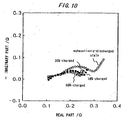
- an arc is appeared in a low frequency region from 10 Hz to 0.1 Hz. In the case of a secondary battery whose charged state is not more than 10% of the rated capacity, this arc is large.
- the radius of the arc represents a resistance value of an equivalent circuit.
- the resistance value means, in electrochemical point of view, a charge transition resistance generated at the interface between the electrode active material and the electrolyte.
- the equivalent circuit resistance value varies in compliance with the charged state of the battery, and the value has a tendency of decreasing with the progress of the charging.
- the reaction resistance resistivity against the electrode reaction
- the reaction resistance is large. If an attempt of charging is made on such a region with a large reaction resistance, a side reaction other than the normal charging reaction occurs at the interface between the electrode and the electrolyte, thereby to produce a cause for a deterioration in the battery performance. For that reason, it is preferable to charge the secondary battery before the battery is brought into an exhaustively-discharged state and not to utilize such region.
- the equivalent circuit resistance value or the radius of the arc is effective for the control.
- the resistance value is generally calculated by fitting a circle on the arc of the plotted impedance measurement values and by calculating the radius of the circle based on the intersections of the fitted circle and the real number axis. At that time, it is needless to say that the larger the number of the plotted measurement points, the higher the reliability of the obtained result.
- the real resistance value can be substituted by the impedance value obtained by a measurement on one point in a low frequency region or around 0.1 Hz.
- impedance of the battery is measured with a certain interval, and the charging rate is increased when the obtained impedance value or the valiance thereof from that of the last measurement decreases to or smaller than the predetermined value, for example. It is also possible to increase the charging rate when the variance rate in battery voltage with time while detecting the battery voltage.
- any of the AC bridge method (Akira FUJISHIMA "Electrochemistry Measurement Method” p. 216, GIHOHDO Publishing (1984)), the current (voltage)-phase detection method (Akira FUJISHIMA “Electrochemistry Measurement Method” p. 217, GIHOHDO Publishing (1984)) and the white noise inputted FET analyzing method (“Electrochemistry Measurement Method” p. 51, Japan Electrochemical Society (1988)) may be employed.
- the constant-current charge period is terminated before the closed circuit voltage reaches the decomposition voltage of the electrolyte of the battery.
- the lithium ion secondary battery currently employs the constant current-constant voltage charging scheme, the voltage thereof is maintained at about 4.2 V for a while after entering into the constant-voltage charge mode.
- the decomposition voltage of the electrolyte in the lithium ion secondary battery is 4.2 V or less, a decomposition reaction of the electrolyte occurs during the constant-voltage charge period and becomes a factor for the deterioration in the capacity accompanied by the repetition of the charge/discharge cycle. Therefore, unless a region where the charged capacity shares a certain rate for the rated capacity. further excellent cycle life characteristic can be obtained.
- a method of terminating the charging when the absolute value of a variance rate with time of a current supplied to a secondary battery becomes smaller than a predetermined value while detecting the variance rate.
- a method of terminating the charging at a previously set time can also be possible.
- the charging current value is varied temporally during the constant-current charge period, and the current value in the constant-current charging is made larger when a difference (
- a temporal change in charging current value is repeated at a predetermined interval during the constant-current charge period and the current value of a constant-current charging is made larger when a difference (
- Charging rate can be changed based on a detected behavior of battery voltage during the charging with an inserted short time charging at a different current value or short time quiescence for every given time.
- the behavior includes a change in battery voltage excluding a variance due to an IR drop, that between the present short time charging or quiescence. Since the behavior of the battery voltage excluding the variance due to the IR drop is considered to be influenced by the previously-described reaction resistance. the variance in the battery voltage is also large if the reaction resistance is large. Accordingly, the charging rate may well be made large when the variance in the battery voltage or a difference with the previous variance becomes not more than a predetermined value.
- the non-aqueous electrolyte secondary battery employed in the above is preferable to configured with a positive electrode active material comprising a complex oxide of lithium and a transition metal, and a negative electrode active material comprising a carbon material capable of absorbing and desorbing lithium in a reversible manner.
- a cylindrical lithium ion secondary battery was produced in the following manner.
- a positive electrode mixture was prepared by blending 100 parts by weight of LiCoO 2 powder as a positive electrode active material, 3 parts by weight of acetylene black as a conductive agent and 7 parts by weight of a fluorocarbon resin binding agent. Then, a paste was prepared by suspending thus obtained positive electrode mixture in an aqueous solution of carboxymethylcellulose. Next, the obtained paste was painted on an aluminum foil. The painted paste was then dried and roll-pressed, thereby to produce a positive electrode plate having a capacity of 720 mAh.
- a negative electrode mixture was prepared by mixing 100 parts by weight of graphite powder, 4 parts by weight of styrene-butadiene rubber. Then a paste was prepared by suspending thus obtained negative electrode mixture in an aqueous solution of carboxymethylcellulose. Next, the obtained paste was painted on a copper foil, then dried and pressed, thereby to produce a negative electrode plate.
- the positive electrode plate and negative electrode plate obtained in the above-mentioned manner were laminated each other with a separator made of a polypropylene porous film interposed therebetween. Then the laminated sheets were wound up together in a spiral fashion, thereby to produce an electrode group. After enclosing thus obtained electrode group in a battery case of A size, a predetermined amount of an electrolyte prepared by dissolving LiPF 6 in a mixed solvent of ethylene carbonate and ethyl methyl carbonate was injected into the battery case. An open end of the battery case was then sealed.
- the discharge capacity of the battery thus obtained was measured in the conventional charge/discharge method.
- the battery was charged at a constant current of 0.7 C (500 mA) at 20°C until the closed circuit voltage of the battery reaches 4.1 V, and the charging was then switched to a constant-voltage charge 2 hours after the start of the constant-current charging. Subsequently, the battery was discharged at a current of 1 C (720 mA) until the battery voltage dropped to 3.0 V, and the discharge capacity at that time was determined as the battery capacity.
- the battery capacity obtained at that time was 720 mAh. This value is defined as a rated capacity of the battery.
- a battery whose charged capacity was 10% of the rated capacity was charged at a constant current of 1 C, and the charging was switched to the constant-voltage charge when the closed circuit voltage of the battery reached 4.2 V.
- the charging was terminated 50 minutes after the start of the constant-current charging. Subsequently, the battery was discharged until the battery capacity decreased to 10% of the rated capacity. This charge/discharge cycle was repeated. This is named as Sample 1.
- a battery was charged at a constant current of 0.7 C, and the charging was switched to the constant-voltage charge when the closed circuit voltage of the battery reached 4.2 V. The charging was terminated 2 hours after the start of the constant current charging. Subsequently, the battery was discharged until the battery voltage dropped to 3.0 V. This charge/discharge cycle was repeated. This is named as Sample 3 (comparative example).
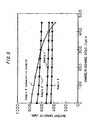
- a diagram in FIG. 3 shows the cycle life characteristics of the batteries charged in the above-mentioned different charging methods.
- the battery of Sample 3 which was charged in the conventional charge/discharge method up to the fully-charged state shows larger initial capacity than Sample 1 and Sample 2 which were charged up to only 80% of the rated capacity.
- the capacity of Sample 3 decreased greatly with the repetition of the charge/discharge cycles and the deterioration in the capacity becomes remarkable when the repetition exceeds about 300th cycle in particular.
- Sample 1 and Sample 2 demonstrated larger capacity than that of Sample 3 after 400th cycle, although these batteries had been charged up to only 80% of the rated capacity.
- the charging time is shortened in great deal and the cycle life characteristic of the battery is improved as compared with the conventional method.
- a cylindrical lithium ion secondary battery similar to that in Example 1 was produced, and the battery capacity thereof is confirmed to be 720 mAh. This value is defined as the rated capacity.
- a battery in the exhaustively-discharged state was charged at a constant current of 0.7 C until the charged capacity of the battery reached 10% of the rated capacity. and the constant-current value was then switched to 1 C and the charging was continued.
- the charging was switched to a constant-voltage charge and completed 52 minutes after the start of the constant-current charging. Subsequently, the battery was discharged until the closed circuit voltage thereof dropped to 3.0 V. This charge/discharge cycle was repeated. This is named as Sample 4.
- the battery in the exhaustively-discharged state was charged at a constant current of 0.7 C until the charged capacity of the battery reached 10% of the rated capacity, and the constant-current value was then switched to 1.2 C and the charging was continued.
- the charging was switched to a constant-voltage charge and completed 45 minutes after the start of the constant-current charging. Subsequently, the battery was discharged until the closed circuit voltage thereof dropped to 3.0 V. This charge/discharge cycle was repeated. This is named as Sample 5.
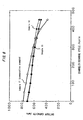
- FIG. 4 shows the cycle life characteristics of the batteries of Sample 4 and Sample 5.
- the-cycle life characteristic of the battery of Sample 3 which has been subjected to the charge/discharge in the conventional method, is also shown as Comparative example.
- the battery of Sample 3 which had been charged by the conventional charge/discharge method up to the fully-charged state shows larger initial capacity than Sample 4 and Sample 5 which have been charged up to only 80% of the rated capacity.
- the capacity of Sample 3 decreases greatly with the repetition of the charge/discharge cycles and the deterioration in the capacity becomes remarkable when the repetition exceeds about 300 cycles in particular.
- Sample 1 and Sample 2 demonstrated larger capacity than that of Sample 3 after 400th cycle, although these batteries had been charged up to only 80% of the rated capacity.
- an impedance of the battery was measured while superimposing an AC with an amplitude of 50 mA and a frequency of 100 mHz on the DC charging current during the constant-current charge period at 0.7 C (500 mA) from the start of charging.
- the charging rate was switched to 1 C or 1.2 C when the measurement value decreased from the initial value to 250 m ⁇ .
- the battery voltage reached 4.2 V, the charging was switched to the constant-voltage charge.
- the battery also demonstrated excellent cycle life characteristics similar to those of the above-mentioned Samples 4 and 5.
- a cylindrical lithium ion secondary battery similar to that in Example 1 was produced.
- the produced battery was charged at a constant-current of 500 mA at 20°C until the battery voltage reached 4.2 V. Then the charging was switched to a constant-voltage charge and terminated for 2 hours in total. Subsequently, the battery was discharged at 720 mA until the battery voltage dropped to 3.0 V and the battery capacity was conformed to be 780 mAh. This is defined as the rated capacity.
- a decomposition voltage of the electrolyte in this battery is from about 4.0 V to 4.1 V. While considering this matter, the battery was charged at a constant current of 360 mA until the closed circuit voltage thereof reached 4.0 V. Then, the battery was discharged until the closed circuit voltage dropped to 3.0 V. This is named as Sample 6.
- FIG. 5 shows the cycle life characteristics of the batteries of Sample 6 through Sample 9.
- the batteries of Sample 6 through 8 exhibit smaller charged capacities than that of Sample as the comparative example at an early stage since the charged capacities of these batteries are smaller than the rated capacity. However, these batteries also exhibit small decreases in discharge capacity. Especially, Sample 6, whose charging had been terminated before the battery voltage reached the decomposition voltage of the electrolyte, demonstrates almost no deterioration. After repeating the charge/discharge cycle, the capacities of Sample 6 through 8 become larger than that of Sample 9 as the comparative example.
- a cylindrical lithium ion secondary battery similar to that of Example 3 was produced. Then, a capacity is confirmed to be 780 mAh. This is defined as the rated capacity.
- the cycle life characteristic of the battery in the charging method of the present invention was compared with that in the conventional charging method.
- the battery was charged at a constant current of 500 mA and the charging was switched to a constant-voltage charge when the closed circuit voltage of the battery reached 4.2 V.
- the charged capacity was derived by an accumulation of the charging current value, and a variance rate thereof with time was calculated for every minutes.
- the charging was terminated when the variance rate became 0.07 mAh/sec or less. This was named as Sample 10.
- the variance rate of the charge capacity during the constant-current charge period is constant at 0.14 mAh/sec.
- a battery was charged at a constant current of 500 mA, and the charging was switched to a constant-voltage charge when the closed circuit voltage of the battery reached 4.2 V. During this constant-voltage charge period, the charging current quantity was detected and a variance rate thereof with time was calculated. This was named as Sample 11.
- the batteries of Samples 6 through 8 exhibit smaller charged capacities than that of Sample 9 as the comparative example at an early stage since the charged capacities of these batteries are smaller than the rated capacity.
- these batteries also exhibit small decreases in discharge capacity.
- Sample 6. whose charging had been terminated before the battery voltage reached the decomposition voltage of the electrolyte, demonstrates almost no deterioration. After repeating the charge/discharge cycle, the capacities of Samples 6 through 8 become larger than that of Sample 9 as the comparative example.
- a cylindrical lithium ion secondary battery similar to that of Example 3 was produced. Then, a capacity is confirmed to be 780 mAh. This is defined as the rated capacity.
- the cycle life characteristic of the battery in the charging method of the present invention was compared with that in the conventional charging method.
- a timer was actuated for detecting the change in the battery voltage.
- quiescence for 500 msec was inserted in the constant-current charge period for every 10 seconds.
- the charging current was increased to 800 mA when a difference between the variance in the battery voltage at a given quiescence excluding such portion in the variance due to an IR drop during the quiescence and the variance at the last quiescence became not more than 0.6 mV.
- the charging was switched to a constant-voltage charge when the battery voltage reached 4.2 V, and was terminated after the charging for 58 minutes in total. This was named as Sample 14.
- Sample 13 and Sample 14 as examples exhibit smaller battery capacities than the Sample 9 as the comparative example in an early stage since the charging on these batteries are terminated before reaching the rated capacity. However, they have small deterioration in capacities accompanied by the repetition of the charge/discharge cycle, and the capacities become even larger than that of the comparative example after the further repetition of the charge/discharge cycle.
- the charge time period is shortened to 58 minutes in Sample 13 and Sample 14 as contrasted with that of 85 minutes in Sample 12, although the battery capacities in Samples 13 and 14 are almost the same as that of Sample 12 of Example 4.
- Example 2 A battery similar to that in Example 1 was charged at a constant current of 500 mA at 20°C and the charging was switched to a constant-voltage charge when the closed circuit voltage of the battery reached 4.2 V. The charging was terminated when the charge period reached 2 hours in total. Then, the battery was confirmed to have a capacity of 780 mAh by discharging at 720 mA until the voltage dropped to 3.0 V. This was defined as the rated capacity.
- the battery was charged at a constant current of 500 mA at first, and the charging was switched to a constant-voltage charge when the closed circuit voltage of the battery reached 4.2 V and terminated after the charging for 110 minutes in total. Then, the battery was discharged at a constant current of 360 mA, and the discharging was terminated when the variance rate with time of the battery voltage became 0.2 mV/sec or more. After the discharging, the battery has a remaining capacity of 10% of the rated capacity. This was named as Sample 15.
- the diagram in FIG. 8 shows cycle life characteristics of the batteries of Samples 15 through 17.
- the batteries of Samples 15 and 16 in accordance with the method of this example have smaller battery capacities in an early stage of the cycles than that of Sample 17 of the comparative example. This is because the formers do not use their capacity of about 10% equivalent of the rated capacity. However, they hardly deteriorated in the capacities during the repetition of charge/discharge cycle and demonstrate larger capacity than Sample 17 of the comparative example with the further repetition of the charge/discharge cycles.
- a cylindrical lithium ion secondary battery was produced in a manner similar to that of Example 6. Then, the battery was confirm to have a capacity of 780 mAh, this was defined as the rated capacity.
- a discharge was terminated when a variance rate in battery voltage with time becomes 0.2 mV/sec or larger while discharging a battery at a constant current of 360 mA.
- the discharging is terminated while the battery remaining a discharge capacity of 10% of the rated capacity.
- charging of the battery was performed at a constant current of 500 mA at first, switched to a constant-voltage charging when the battery voltage reached 4.2 V, and terminated after the charging for 70 minutes in total. In this manner, the battery was prevented from being charged 90% or more to the rated capacity. This is named Sample 18.
- the diagram in FIG. 9 shows the cycle life characteristics of the batteries of Samples 18 and 19.
- the battery of Sample 18 in accordance with this example has smaller battery capacity in the early stage of the cycles than that of Sample 19 as the comparative example since battery capacity of about 20% of the rated capacity is not utilized.
- these batteries demonstrate only small deterioration in discharge capacity during the charge/discharge cycles and an excellent cycle life characteristic rather than those of Samples 15 and 16 in Example 6.
- the capacity becomes larger than that of Sample 19 as the comparative example with the further repetition of the charge/discharge cycles.
Landscapes
- Engineering & Computer Science (AREA)
- Power Engineering (AREA)
- Manufacturing & Machinery (AREA)
- Chemical & Material Sciences (AREA)
- Chemical Kinetics & Catalysis (AREA)
- Electrochemistry (AREA)
- General Chemical & Material Sciences (AREA)
- Secondary Cells (AREA)
- Charge And Discharge Circuits For Batteries Or The Like (AREA)
Claims (11)
- Procédé de chargement d'une batterie secondaire comprenant les étapes consistant à :dans lequel ladite étape de charge à courant constant est terminée avant que sa tension en circuit fermé atteigne une tension de décomposition de l'électrolyte qui y est contenu, etcharger une batterie secondaire avec un courant constant d'une valeur prédéterminée jusqu'à ce que la tension en circuit fermé de la batterie atteigne une valeur de tension prédéterminée,charger ladite batterie avec une tension constante ayant une valeur non supérieure à ladite valeur de tension prédéterminée, et terminer le chargement de ladite batterie par ladite tension constante avant que ladite batterie ne soit amenée à un état pleinement chargé, de préférence, à un état chargé non supérieur à 90 % de la capacité nominale de la batterie,
dans lequel ladite étape de charge à tension constante de ladite batterie est terminée lorsqu'une valeur absolue d'une valeur de courant variable avec le temps à fournir à ladite batterie par ladite tension constante devient plus petite qu'une valeur prédéterminée. - Procédé selon la revendioacion 1, dans lequel ladite étape de chargement à courant constant consiste à :détecter une impédance de ladite batterie,charger ladite batterie avec un premier courant constant ayant une valeur plus petite qu'une valeur de courant prédéterminée si l'impédance détectée de ladite batterie est égale ou supérieure à une valeur d'impédance prédéterminée, etcharger ladite batterie avec un second courant constant ayant une valeur égale ou supérieure à la valeur de courant prédéterminée si l'impédance détectée est inférieure à la valeur d'impédance prédéterminée.
- Procédé selon la revendication 1, dans lequel ladite batterie secondaire est chargée avant d'être amenée dans un état déchargé de manière exhauative.
- Procédé selon la revendication 1, dans lequel une charge à courant constant est effectuée sur ladite batterie secondaire pour maintenir une capacité de décharge d'une proportion prédéterminée pour sa capacité nominale ou une capacité supérieure.
- Procédé selon la revendication 1, dans lequel la valeur de courant est changée à une valeur plus grande lorsque la capacité chargée atteint une proportion prédéterminée pour une capacité nominale de ladite batterie secondaire.
- Procédé selon la revendication 1, dans lequel ladite étape de charge de ladite batterie secondaire est une étape de charge à tension constante continuée pendant une période de temps préalablement établie.
- Procédé selon la revendication 1, dans lequel pendant ladite étape de charge à courant constant, la valeur du courant de chargement est changée pour une valeur plus grande lorsqu'une valeur de tension variable avec le temps devient plus petite qu'une valeur prédéterminée.
- Procédé selon la revendication 2, dans lequel pendant ladite étape de charge à courant constant, la valeur du courant de chargement est changée à une valeur supérieure lorsqu'une impédance de ladite batterie secondaire ou un taux de variance avec le temps de celle-ci devient plus petite qu'une valeur prédéterminée.
- Procédé selon la revendication 1, dans lequel ladite valeur de courant est changée temporairement pendant ladite étape de charge à courant constant, et la valeur du courant est accrue lorsqu'une différence (|V1 - V2 |) entre une valeur de référence V1 après un écoulement de temps t1 à partir du début du chargement à cette valeur de courant variée et une autre valeur de tension V2 après un autre écoulement de temps t2 devient plus petite qu'une valeur prédéterminée.
- Procédé selon la revendication 1, dans lequel un changement temporel de la valeur de courant de chargement est répété avec un intervalle prédéterminé pendant ladite étape de chargement de courant, et la valeur de courant est accrue lorsqu'une différence (|V1 - V2 |) entre une valeur de tension V1 après un écoulement de temps t1 à partir du début du chargement à cette valeur de courant changée et une autre valeur de tension V2 après un autre écoulement de temps t2 devient plus petite de non moins qu'une valeur prédéterminée.
- Procédé selon la revendication 1, dans lequel ladite batterie secondaire est une batterie secondaire à électrolyte non aqueux, en particulier une batterie secondaire à ions lithium.
Applications Claiming Priority (6)
| Application Number | Priority Date | Filing Date | Title |
|---|---|---|---|
| JP00728798A JP3558515B2 (ja) | 1998-01-19 | 1998-01-19 | 非水系二次電池の充電方法 |
| JP728798 | 1998-01-19 | ||
| JP19254098 | 1998-07-08 | ||
| JP19254098A JP3558523B2 (ja) | 1998-07-08 | 1998-07-08 | 非水系二次電池の充電方法 |
| JP19850998 | 1998-07-14 | ||
| JP19850998A JP3558525B2 (ja) | 1998-07-14 | 1998-07-14 | 非水系二次電池の使用方法 |
Publications (3)
| Publication Number | Publication Date |
|---|---|
| EP0948075A2 EP0948075A2 (fr) | 1999-10-06 |
| EP0948075A3 EP0948075A3 (fr) | 2000-08-09 |
| EP0948075B1 true EP0948075B1 (fr) | 2003-10-22 |
Family
ID=27277549
Family Applications (1)
| Application Number | Title | Priority Date | Filing Date |
|---|---|---|---|
| EP99101016A Expired - Lifetime EP0948075B1 (fr) | 1998-01-19 | 1999-01-19 | Procédé de gestion de la charge/décharge d'une batterie secondaire |
Country Status (4)
| Country | Link |
|---|---|
| US (1) | US6081097A (fr) |
| EP (1) | EP0948075B1 (fr) |
| CN (1) | CN1193474C (fr) |
| DE (1) | DE69912177T2 (fr) |
Families Citing this family (49)
| Publication number | Priority date | Publication date | Assignee | Title |
|---|---|---|---|---|
| US6392385B1 (en) * | 1999-12-01 | 2002-05-21 | Jeremy Barker | Battery operation for extended cycle life |
| JP4340020B2 (ja) | 2001-04-10 | 2009-10-07 | パナソニック株式会社 | 無人搬送車用二次電池の充電制御方法 |
| JP4499966B2 (ja) * | 2001-09-14 | 2010-07-14 | 株式会社リコー | 二次電池の充電回路 |
| CN1305168C (zh) * | 2001-12-22 | 2007-03-14 | 中兴通讯股份有限公司 | 可充电电池的主动放电的方法和系统 |
| KR100508747B1 (ko) | 2003-06-19 | 2005-08-17 | 삼성전자주식회사 | 배터리 충전장치 및 방법 |
| KR100643228B1 (ko) * | 2004-07-19 | 2006-11-10 | 삼성전자주식회사 | 배터리 충전방법 및 충전시스템 |
| US7518340B2 (en) * | 2005-12-15 | 2009-04-14 | Dell Products L.P. | Method and system for charge rate adjustment to enhance battery cycle life |
| JP4586832B2 (ja) * | 2007-08-10 | 2010-11-24 | トヨタ自動車株式会社 | 電動車両 |
| JP5043777B2 (ja) * | 2007-08-22 | 2012-10-10 | パナソニック株式会社 | 非水電解質二次電池の充電方法 |
| KR100998302B1 (ko) | 2007-12-07 | 2010-12-06 | 삼성에스디아이 주식회사 | 이차 전지의 충전 방법 및 충전 장치 |
| EP2096452A1 (fr) * | 2007-12-13 | 2009-09-02 | Panasonic Corporation | Procédé d'estimation de la durée de vie et procédé pour empêcher la dégradation d'une pile rechargeable au lithium, estimateur de durée de vie et élément empêchant la dégradation, bloc-piles utilisant ceux-ci, et chargeur |
| TWI361543B (en) * | 2007-12-25 | 2012-04-01 | Ind Tech Res Inst | Charging method and battery charging system |
| CN101604851B (zh) * | 2008-06-13 | 2012-11-21 | 鸿富锦精密工业(深圳)有限公司 | 蓄电池lvd数值的监控系统及方法 |
| CN102473969B (zh) * | 2009-12-14 | 2014-07-02 | 松下电器产业株式会社 | 非水电解质二次电池的充电方法及电池包 |
| JP5307113B2 (ja) * | 2010-12-20 | 2013-10-02 | 古河電気工業株式会社 | 満充電検知装置および満充電検知方法 |
| WO2012095913A1 (fr) * | 2011-01-14 | 2012-07-19 | パナソニック株式会社 | Procédé pour évaluer une détérioration de pile secondaire lithium-ions et ensemble de piles |
| JP2012216401A (ja) * | 2011-03-31 | 2012-11-08 | Fuji Heavy Ind Ltd | リチウムイオン蓄電デバイス |
| JP5897848B2 (ja) * | 2011-08-31 | 2016-04-06 | トヨタ自動車株式会社 | 充放電支援装置 |
| KR101956088B1 (ko) * | 2011-09-09 | 2019-03-08 | 가부시키가이샤 지에스 유아사 | 상태 관리 장치, 축전 소자의 균등화 방법 |
| CN102508170B (zh) * | 2011-11-09 | 2013-11-13 | 丁国营 | 一种蓄电池容量监测方法 |
| CN102788959B (zh) * | 2012-08-31 | 2014-12-03 | 长沙理工大学 | 独立光伏发电系统的蓄电池充放电状态检测方法 |
| WO2014146016A2 (fr) | 2013-03-15 | 2014-09-18 | Alfred E. Mann Foundation For Scientific Research | Stimulateurs de courant à sorties multiples, détection de courant et allumage rapide |
| CA3075310C (fr) | 2013-07-29 | 2022-04-05 | Alfred E. Mann Foundation For Scientific Research | Circuit d'attaque de classe e commande par microprocesseur |
| US9855423B2 (en) | 2014-08-15 | 2018-01-02 | Axonics Modulation Technologies, Inc. | Systems and methods for neurostimulation electrode configurations based on neural localization |
| EP3180071B1 (fr) | 2014-08-15 | 2021-09-22 | Axonics, Inc. | Dispositif de générateur d'impulsion externe et systèmè associé pour une stimulation nerveuse d'essai |
| EP3180072B1 (fr) | 2014-08-15 | 2018-11-28 | Axonics Modulation Technologies Inc. | Positionnement d'une dérivation électromyographique et titrage de la stimulation dans un système de stimulation nerveuse pour le traitement de la vessie hyperactive |
| CN106659882A (zh) | 2014-08-15 | 2017-05-10 | 艾克索尼克斯调制技术股份有限公司 | 用于进行神经刺激以减轻膀胱功能障碍和其他适应症的可植入引线附着结构 |
| WO2016025915A1 (fr) | 2014-08-15 | 2016-02-18 | Axonics Modulation Technologies, Inc. | Programmateur clinicien électromyographique intégré destiné à être utilisé avec un neurostimulateur implantable |
| WO2016079705A1 (fr) * | 2014-11-19 | 2016-05-26 | Iveco S.P.A. | Système de charge d'une paire de batteries mutuellement connectées en série d'un véhicule poids lourd, et véhicule poids lourd mettant en œuvre le système |
| CN107427685B (zh) | 2015-01-09 | 2021-09-21 | 艾克索尼克斯股份有限公司 | 与神经刺激充电设备一起使用的附接设备及相关联方法 |
| EP3242718B1 (fr) | 2015-01-09 | 2019-05-08 | Axonics Modulation Technologies, Inc. | Antenne améliorée et procédés d'utilisation pour un stimulateur nerveux implantable |
| AU2016205047B2 (en) | 2015-01-09 | 2020-07-02 | Axonics Modulation Technologies, Inc. | Patient remote and associated methods of use with a nerve stimulation system |
| DE102015206871A1 (de) * | 2015-04-16 | 2016-10-20 | Robert Bosch Gmbh | Energiespeichersystem |
| CN107847731B (zh) | 2015-07-10 | 2019-06-28 | 艾克索尼克斯调制技术股份有限公司 | 具有无asic的内部电子设备的可植入神经刺激器以及使用方法 |
| WO2017132374A1 (fr) | 2016-01-29 | 2017-08-03 | Axonics Modulation Technologies, Inc. | Procédés et systèmes pour ajustement de fréquence pour optimiser la charge d'un neurostimulateur implantable |
| CN108697897B (zh) | 2016-02-12 | 2023-01-13 | 艾克索尼克斯股份有限公司 | 用于试验神经刺激的外部脉冲发生器设备和相关联方法 |
| JP2017178083A (ja) | 2016-03-30 | 2017-10-05 | トヨタ自動車株式会社 | ハイブリッド自動車 |
| US20180034283A1 (en) * | 2016-07-27 | 2018-02-01 | Lenovo (Singapore) Pte. Ltd. | Systems and methods to increase rate of charge of battery based on impedance |
| US10439418B2 (en) | 2016-07-29 | 2019-10-08 | Lenovo (Singapore) Pte. Ltd. | Systems and methods to charge a battery at different charge rates and indicate when charging at a faster rate is available |
| JP6369510B2 (ja) * | 2016-08-25 | 2018-08-08 | トヨタ自動車株式会社 | リチウムイオン二次電池の診断装置および診断方法 |
| CN110112794B (zh) * | 2018-02-01 | 2021-05-25 | 日立楼宇技术(广州)有限公司 | 电池监控方法、装置、电梯遥监终端、系统和存储介质 |
| CN111741789B (zh) | 2018-02-22 | 2024-07-05 | 艾克索尼克斯股份有限公司 | 用于试验神经刺激的神经刺激引线和使用方法 |
| US11642537B2 (en) | 2019-03-11 | 2023-05-09 | Axonics, Inc. | Charging device with off-center coil |
| US11848090B2 (en) | 2019-05-24 | 2023-12-19 | Axonics, Inc. | Trainer for a neurostimulator programmer and associated methods of use with a neurostimulation system |
| US11439829B2 (en) | 2019-05-24 | 2022-09-13 | Axonics, Inc. | Clinician programmer methods and systems for maintaining target operating temperatures |
| CN110703048B (zh) * | 2019-09-05 | 2022-04-12 | 力高(山东)新能源技术有限公司 | 一种电动汽车绝缘监测时间自适应方法 |
| US12420103B1 (en) | 2020-08-20 | 2025-09-23 | Axonics, Inc. | Neurostimulation leads with reduced current leakage |
| US12062937B2 (en) * | 2020-09-15 | 2024-08-13 | Panasonic Intellectual Property Management Co., Ltd. | Method of controlling secondary battery and battery system |
| KR20240084041A (ko) * | 2022-12-06 | 2024-06-13 | 주식회사 엘지에너지솔루션 | 배터리 충전 장치 및 방법 |
Family Cites Families (3)
| Publication number | Priority date | Publication date | Assignee | Title |
|---|---|---|---|---|
| JPS6282670A (ja) * | 1985-10-04 | 1987-04-16 | Showa Denko Kk | 非水二次電池の充電方法 |
| TW226496B (en) * | 1992-07-21 | 1994-07-11 | Sanyo Denki Kk | Battery charger |
| JP3384027B2 (ja) * | 1993-05-14 | 2003-03-10 | ソニー株式会社 | 充電方法および充電器 |
-
1999
- 1999-01-18 US US09/232,323 patent/US6081097A/en not_active Expired - Lifetime
- 1999-01-19 EP EP99101016A patent/EP0948075B1/fr not_active Expired - Lifetime
- 1999-01-19 CN CNB991012402A patent/CN1193474C/zh not_active Expired - Fee Related
- 1999-01-19 DE DE69912177T patent/DE69912177T2/de not_active Expired - Lifetime
Also Published As
| Publication number | Publication date |
|---|---|
| US6081097A (en) | 2000-06-27 |
| EP0948075A3 (fr) | 2000-08-09 |
| DE69912177T2 (de) | 2004-08-12 |
| DE69912177D1 (de) | 2003-11-27 |
| CN1193474C (zh) | 2005-03-16 |
| EP0948075A2 (fr) | 1999-10-06 |
| CN1230798A (zh) | 1999-10-06 |
Similar Documents
| Publication | Publication Date | Title |
|---|---|---|
| EP0948075B1 (fr) | Procédé de gestion de la charge/décharge d'une batterie secondaire | |
| JP5289558B2 (ja) | 非水電解質二次電池の充電方法及び充電装置 | |
| US8125185B2 (en) | Method for charging non-aqueous electrolyte secondary battery | |
| US7071653B2 (en) | Method for charging a non-aqueous electrolyte secondary battery and charger therefor | |
| WO2011065009A1 (fr) | Procédé de charge d'une batterie secondaire au lithium-ion, et bloc-batterie | |
| KR101478178B1 (ko) | 음의 전극을 가진 리튬 이온 전력 축전지를 충전하는 방법 | |
| JP2949705B2 (ja) | 非水電解液二次電池の放電容量回復方法とそのための回路 | |
| JP3558523B2 (ja) | 非水系二次電池の充電方法 | |
| US20210313816A1 (en) | Secondary battery charging system | |
| JP2001307781A (ja) | リチウム二次電池及びその充放電方法 | |
| JP4221636B2 (ja) | リチウムイオン二次電池の充電方法および充電装置 | |
| JP2950956B2 (ja) | 充電方法 | |
| JP5122899B2 (ja) | 放電制御装置 | |
| JP3558515B2 (ja) | 非水系二次電池の充電方法 | |
| JP2000150000A (ja) | バックアップ電源の管理方法 | |
| JPH07296854A (ja) | 充電方法および充電装置 | |
| JP2000195558A (ja) | 非水電解液二次電池の充放電制御装置 | |
| JP2006107864A (ja) | リチウム二次電池の出力回復方法及び出力回復システム | |
| JP2905581B2 (ja) | 充電装置 | |
| JPH1174001A (ja) | 鉛蓄電池の充電方法 | |
| JP3739820B2 (ja) | 充電装置 | |
| JP4517273B2 (ja) | 二次電池の充放電制御装置及び二次電池の充放電制御方法 | |
| JP2001102093A (ja) | 二次電池の劣化防止方法、並びにこの方法を実施するための充電器および電子機器 | |
| JP3558525B2 (ja) | 非水系二次電池の使用方法 | |
| JP2008186691A (ja) | 非水電解質電池の使用方法、及び、電池システム |
Legal Events
| Date | Code | Title | Description |
|---|---|---|---|
| PUAI | Public reference made under article 153(3) epc to a published international application that has entered the european phase |
Free format text: ORIGINAL CODE: 0009012 |
|
| 17P | Request for examination filed |
Effective date: 19990119 |
|
| AK | Designated contracting states |
Kind code of ref document: A2 Designated state(s): DE FR GB NL |
|
| AX | Request for extension of the european patent |
Free format text: AL;LT;LV;MK;RO;SI |
|
| PUAL | Search report despatched |
Free format text: ORIGINAL CODE: 0009013 |
|
| AK | Designated contracting states |
Kind code of ref document: A3 Designated state(s): AT BE CH CY DE DK ES FI FR GB GR IE IT LI LU MC NL PT SE |
|
| AX | Request for extension of the european patent |
Free format text: AL;LT;LV;MK;RO;SI |
|
| RIC1 | Information provided on ipc code assigned before grant |
Free format text: 7H 01M 10/44 A, 7H 02J 7/04 B, 7H 02J 7/00 B |
|
| AKX | Designation fees paid |
Free format text: DE FR GB NL |
|
| 17Q | First examination report despatched |
Effective date: 20010409 |
|
| GRAH | Despatch of communication of intention to grant a patent |
Free format text: ORIGINAL CODE: EPIDOS IGRA |
|
| GRAS | Grant fee paid |
Free format text: ORIGINAL CODE: EPIDOSNIGR3 |
|
| GRAA | (expected) grant |
Free format text: ORIGINAL CODE: 0009210 |
|
| AK | Designated contracting states |
Kind code of ref document: B1 Designated state(s): DE FR GB NL |
|
| PG25 | Lapsed in a contracting state [announced via postgrant information from national office to epo] |
Ref country code: NL Free format text: LAPSE BECAUSE OF FAILURE TO SUBMIT A TRANSLATION OF THE DESCRIPTION OR TO PAY THE FEE WITHIN THE PRESCRIBED TIME-LIMIT Effective date: 20031022 |
|
| REG | Reference to a national code |
Ref country code: GB Ref legal event code: FG4D |
|
| REF | Corresponds to: |
Ref document number: 69912177 Country of ref document: DE Date of ref document: 20031127 Kind code of ref document: P |
|
| NLV1 | Nl: lapsed or annulled due to failure to fulfill the requirements of art. 29p and 29m of the patents act | ||
| ET | Fr: translation filed | ||
| PLBE | No opposition filed within time limit |
Free format text: ORIGINAL CODE: 0009261 |
|
| STAA | Information on the status of an ep patent application or granted ep patent |
Free format text: STATUS: NO OPPOSITION FILED WITHIN TIME LIMIT |
|
| 26N | No opposition filed |
Effective date: 20040723 |
|
| PGFP | Annual fee paid to national office [announced via postgrant information from national office to epo] |
Ref country code: FR Payment date: 20120202 Year of fee payment: 14 |
|
| PGFP | Annual fee paid to national office [announced via postgrant information from national office to epo] |
Ref country code: DE Payment date: 20120111 Year of fee payment: 14 |
|
| PGFP | Annual fee paid to national office [announced via postgrant information from national office to epo] |
Ref country code: GB Payment date: 20120118 Year of fee payment: 14 |
|
| GBPC | Gb: european patent ceased through non-payment of renewal fee |
Effective date: 20130119 |
|
| REG | Reference to a national code |
Ref country code: FR Ref legal event code: ST Effective date: 20130930 |
|
| PG25 | Lapsed in a contracting state [announced via postgrant information from national office to epo] |
Ref country code: DE Free format text: LAPSE BECAUSE OF NON-PAYMENT OF DUE FEES Effective date: 20130801 |
|
| PG25 | Lapsed in a contracting state [announced via postgrant information from national office to epo] |
Ref country code: FR Free format text: LAPSE BECAUSE OF NON-PAYMENT OF DUE FEES Effective date: 20130131 Ref country code: GB Free format text: LAPSE BECAUSE OF NON-PAYMENT OF DUE FEES Effective date: 20130119 |
|
| REG | Reference to a national code |
Ref country code: DE Ref legal event code: R119 Ref document number: 69912177 Country of ref document: DE Effective date: 20130801 |