EP0950711A2 - Récepteurs de Gonadotropine - Google Patents
Récepteurs de Gonadotropine Download PDFInfo
- Publication number
- EP0950711A2 EP0950711A2 EP99200303A EP99200303A EP0950711A2 EP 0950711 A2 EP0950711 A2 EP 0950711A2 EP 99200303 A EP99200303 A EP 99200303A EP 99200303 A EP99200303 A EP 99200303A EP 0950711 A2 EP0950711 A2 EP 0950711A2
- Authority
- EP
- European Patent Office
- Prior art keywords
- seq
- dna
- receptor
- receptors
- sequences
- Prior art date
- Legal status (The legal status is an assumption and is not a legal conclusion. Google has not performed a legal analysis and makes no representation as to the accuracy of the status listed.)
- Withdrawn
Links
Images

Classifications
-
- C—CHEMISTRY; METALLURGY
- C07—ORGANIC CHEMISTRY
- C07K—PEPTIDES
- C07K14/00—Peptides having more than 20 amino acids; Gastrins; Somatostatins; Melanotropins; Derivatives thereof
- C07K14/435—Peptides having more than 20 amino acids; Gastrins; Somatostatins; Melanotropins; Derivatives thereof from animals; from humans
- C07K14/705—Receptors; Cell surface antigens; Cell surface determinants
- C07K14/72—Receptors; Cell surface antigens; Cell surface determinants for hormones
- C07K14/723—G protein coupled receptor, e.g. TSHR-thyrotropin-receptor, LH/hCG receptor, FSH receptor
Definitions
- the present invention relates to newly identified DNA sequences which code for novel gonadotropin receptors, as well as to the complete genes and the encoded proteins.
- the invention furthermore relates to a method for identification of molecules able to bind to these receptors or specific domains thereof.
- the invention therefore has useful applications in fields including basic biomedical and biochemical research and drug development.
- Gonadotropins act on specific gonadal cell types to initiate ovarian and testicular differentiation and steroidogenesis.
- the actions of these pituitary and placental hormones are mediated by specific plasma membrane receptors that are members of the large family of G-protein coupled receptors. They consist of a single polypeptide with seven transmembrane domains and are able to interact with the G s protein, leading to the activation of adenyl cyclase.
- ⁇ -subunit of hCG Since the free ⁇ -subunit of hCG is not able to elicit a biological response via the LH/CG receptor, the involvement of a novel glycoprotein receptor is very likely. Moreover, in vitro the ⁇ -subunit acts synergistically with progesterone to induce decidualisation of human endometrial stromal cells (Moy et al, 1996, Endocrin., 137 , 1332-1339). Decidual cells are important for implantation and provide nutritional support for the embryo.
- hCG and LH preparations induce ovulation at a similar dose-level.
- embryo implantation is negatively effected whereas, in contrast, LH treated animals show normal implantation.
- Preliminary experiments indicate that this different effect on implantation is only partly caused by the different half-life of hCG and LH.
- the uterus and the ovary therefore, may contain LH/CG receptors with a different affinity for hCG and LH i.e. a novel glycoprotein receptor.
- the present invention provides for such novel receptors. More specific, the present invention provides for polynucleotide sequences comprising SEQ ID NO:1, SEQ ID NO:2, SEQ ID NO:3, SEQ ID NO:7, SEQ ID NO:9, SEQ ID NO:11, SEQ ID NO:12, SEQ ID NO:13 or nucleotides 2-1487 of SEQ ID NO:7 or nucleotides 1-2541 of SEQ ID NO:9.
- sequences of the present invention can be used as probes or as a source to prepare synthetic oligonucleotides to be used as primers in DNA amplification reactions allowing the isolation and identification of the complete gene.
- the complete genetic sequence can be used in the preparation of vector molecules for expression of the protein in suitable host cells.
- genes or variants thereof can be derived from cDNA or genomic DNA from natural sources or synthesized using known methods.
- an additional embodiment of the invention is a method to isolate a gene comprising the steps: a) hybridizing a DNA according to the present invention under stringent conditions against nucleic acids being RNA, (genomic) DNA or cDNA isolated preferably from tissues which highly express the DNA of interest; and b) isolating said nucleic acids by methods known to a skilled person in the art.
- the tissues preferably are from human origin.
- ribonucleic acids are isolated from reproductive tissues, preferably ovary, testis or uterus.
- the hybridization conditions are preferably highly stringent.
- stringent means washing conditions of 1 x SSC, 0.1% SDS at a temperature of 65 °C; highly stringent conditions refer to a reduction in SSC towards 0.3 x SSC.
- the invention also includes the entire coding sequence part of which is indicated in SEQ ID NOs: 1, 2, 3, 7, 11, 12 or 13. A complete sequence is shown in SEQ ID NO:9. Furthermore, to accommodate codon variability, the invention also includes sequences coding for the same amino acid sequences as the sequences disclosed herein. Also portions of the coding sequences coding for individual domains of the expressed protein are part of the invention as well as allelic and species variations thereof. Sometimes, a gene is expressed in a certain tissue as a splicing variant, resulting in an altered 5' or 3' mRNA or the inclusion of an additional exon sequence. Alternatively, the messenger might have an exon less as compared to its counterpart as indicated in one of the sequences enlisted here. These sequences as well as the proteins encoded by these sequences all are expected to perform the same or similar functions and form also part of the invention.
- sequence information as provided herein should not be so narrowly construed as to require inclusion of erroneously identified bases.
- the specific sequence disclosed herein can be readily used to isolate the complete genes which in turn can easily be subjected to further sequence analyses thereby identifying sequencing errors.
- the present invention provides for isolated polynucleotides encoding a novel gonadotropin receptor.
- the DNA according to the invention may be obtained from cDNA.
- the coding sequence might be genomic DNA, or prepared using DNA synthesis techniques.
- the polynucleotide may also be in the from of RNA. If the polynucleotide is DNA, it may be in single stranded or double stranded form. The single strand might be the coding strand or the non-coding (anti-sense) strand.
- the present invention further relates to polynucleotides which have at least 80%, preferably 90% and more preferably 95% and even more preferably at least 98% identity with SEQ ID NOs:1, 2, 3, 7, 9, 11, 12 or 13 or with nucleotides 2-1487 of SEQ ID NO:7 or 1-2541 of SEQ ID NO:9.
- polynucleotides encode polypeptides which retain the same biological function or activity as the natural, mature protein.
- fragments of the above mentioned polynucleotides which code for domains of the receptor proteins which still are capable of binding to ligands are embodied in the invention.
- the percentage of identity between two sequences can be determined with programs such as DNAMAN (Lynnon Biosoft, version 3.2). Using this program two sequences can be aligned using the optimal alignment algorithm of Smith and Waterman (1981, J. Mol. Biol, 147 :195-197). After alignment of the two sequences the percentage identity can be calculated by dividing the number of identical nucleotides between the two sequences by the length of the aligned sequences minus the length of all gaps.
- DNA according to the invention will be very useful for in vivo or in vitro expression of the novel receptor proteins according to the invention in sufficient quantities and in substantially pure form.
- a gonadotropin receptor comprising the amino acid sequence encoded by the above described DNA molecules.
- the gonadotropin receptor according to the invention comprises an amino acid sequence shown in SEQ ID NO:4, SEQ ID NO:5, SEQ ID NO:6, SEQ ID NO:8, SEQ ID NO:10, SEQ ID NO:14, SEQ ID NO:15 or SEQ ID NO:16.
- the receptor according to the invention furthermore distinguishes itself from the other known gonadotropin receptors in differences in tissue distribution, indicating that there may be important differences between these tissues at the level of gonadotropin intermediated signaling.
- SEQ ID NO:1 is expressed in a limited number of tissues, including male but not female reproductive organs.
- SEQ ID NO:7 and SEQ ID NO:9 are extensions of SEQ ID NO:1.
- SEQ ID NO:3 is also expressed in a limited number of tissues but prominent expression is found in ovary.
- SEQ ID NO:2 is expressed in the majority of tissues tested, including ovary, testis and uterus.
- the identification of additional gonadotropin receptors could be a major step forward to the existing clinical therapies based on the existence of the known gonadotropin receptors as all gonadotropin mediated abnormalities and/or diseases are ascribed to these receptors.
- the receptors according to the invention will be useful in the development of hormone analogs that selectively activate either one of the classical gonadotropin receptors or the novel receptor according to the invention. This should be considered as one of the major advantages of the present invention. Alternatively, also analogs can be detected which inhibit the receptor function.
- the invention will facilitate better treatment of fertility associated diseases and/or the design of new drugs for contraception.
- polypeptides according to the present invention include the polypeptides comprising SEQ ID NOs:4, 5, 6, 8, 10, 14, 15 or 16 but also polypeptides with a similarity of 70%, preferably 90%, more preferably 95%. Also portions of such polypeptides still capable of conferring biological effects are included. Especially portions which still bind to ligands form part of the invention. Such portions may be functional per se, e.g. in solubilized form or they might be linked to other polypeptides, either by known biotechnological ways or by chemical synthesis, to obtain chimeric proteins. Such proteins might be useful as therapeutic agent by preventing the ligand from interacting with the natural gonadotropin receptors in the body.
- downregulation of the expression level of the receptor can be obtained by using anti-sense nucleic acids through triple-helix formation (Cooney et al., 1988, Science, 241 , 456-459) or by binding to the mRNA. This in itself could also lead to treatment of infertility or to contraception.
- useful cloning vehicles may include chromosomal, non-chromosomal and synthetic DNA sequences such as various known bacterial plasmids and wider host range plasmids and vectors derived from combinations of plasmids and phage or virus DNA.
- Vehicles for use in expression of the receptor or ligand-binding domain thereof of the present invention will further comprise control sequences operably linked to the nucleic acid sequence coding for the ligand-binding domain.
- control sequences generally comprise a promoter sequence and sequences which regulate and/or enhance expression levels.
- control and other sequences can vary depending on the host cell selected.
- Suitable expression vectors are for example bacterial or yeast plasmids, wide host range plasmids and vectors derived from combinations of plasmid and phage or virus DNA. Vectors derived from chromosomal DNA are also included. Furthermore an origin of replication and/or a dominant selection marker can be present in the vector according to the invention.
- the vectors according to the invention are suitable for transforming a host cell.
- Recombinant expression vectors comprising the DNA of the invention as well as cells transformed with said DNA or said expression vector also form part of the present invention.
- Suitable host cells according to the invention are bacterial host cells, yeast and other fungi, plant or animal host such as Chinese Hamster Ovary cells or monkey cells.
- a host cell which comprises the DNA or expression vector according to the invention is also within the scope of the invention.
- the engineered host cells can be cultured in conventional nutrient media which can be modified e.g. for appropriate selection, amplification or induction of transcription.
- the culture conditions such as temperature, pH, nutrients etc. are well known to those ordinary skilled in the art.
- the proteins according to the invention can be recovered and purified from recombinant cell cultures by common biochemical purification methods including ammonium sulfate precipitation, extraction, chromatography such as hydrophobic interaction chromatography, cation or anion exchange chromatography or affinity chromatography and high performance liquid chromatography. If necessary, also protein refolding steps can be included.
- Gonadotropin hormone receptors according to the present invention can be used for the in vitro or in vitro identification of novel ligands or hormonal analogs.
- binding studies can be performed with cells transformed with DNA according to the invention or an expression vector comprising DNA according to the invention, said cells expressing the gonadotropin receptor according to the invention.
- novel purified hormone receptor according to the invention as well as the ligand-binding domain thereof can be used in an assay for the identification of functional ligands or hormone analogs for the receptor.
- the present invention provides for a method for identifying ligands for gonadotropin receptors according to the invention, said method comprising the steps of:
- SEQ ID NO:8 comprises the C-terminal part of the receptor, including all its transmembrane domains. This part is encoded by the nucleic acid of SEQ ID NO:7 from nucleotide 2-1487. This polypeptide part can also be used in a similar screenings assay to detect low molecular weight compounds by binding or by measuring the second messenger levels. Another part of this receptor is indicated in SEQ ID NO:4 and is encoded by SEQ ID NO:1. The complete sequence of this receptor is shown in SEQ ID NO:10 and is encoded by the nucleotides 1-2541 of SEQ ID NO:9. The polypeptide of SEQ ID NO:6 is encoded by SEQ ID NO:3.
- SEQ ID NO:5 SEQ ID NO:14, SEQ ID NO:15 and SEQ ID NO:16 all belong to the same receptor ad are encoded by SEQ ID NO:2, SEQ ID NO:11, SEQ ID NO:12 and SEQ ID NO:13, respectively.
- the present invention thus provides for a quick and economic method to screen for therapeutic agents for the prevention and/or treatment of diseases related to reproductive tissues or for contraception.
- the method according to the invention furthermore provides for the selection of selective therapeutic agents discriminating between different gonadotropin receptors thus leading to a more effective therapeutic agent and/or diminishing of side effects.
- the method is especially suited to be used for the high through put screening of numerous potential compounds.
- Compounds which activate or inhibit the receptor function may be employed in therapeutic treatments to activate or inhibit the receptors of the present invention.
- antibodies especially monoclonal antibodies raised against the receptor molecule according to the invention.
- Such antibodies can be used therapeutically to inhibit receptor function and diagnostically to detect receptor molecules.
- the invention furthermore relates to the use of the receptor genes as part of a diagnostic assay for detecting fertility abnormalities or susceptibility to infertility related to mutations in the nucleic acid sequences encoding these receptors.
- mutations may e.g. be detected by using PCR (Saiki et al., 1986, Nature, 324 , 163-166).
- the relative levels of RNA can be determined using e.g. hybridization or quantitative PCR technology.
- the presence and the levels of the receptors themselves can be assayed by immunological technologies such as radioimmuno assays, Western blots and ELISA using specific antibodies raised against the receptor. Such techniques for measuring RNA and protein levels are well known to the skilled artisan.
- the determination of expression levels of different receptors in individual patients may lead to fine tuning of treatment protocols.
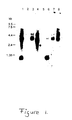
- the lanes contain poly A + RNA from the following human tissues/cell-types: spleen (1), thymus (2), prostate (3), testis (4), ovary (5), small intestine (6), colon (7) and peripheral blood leukocytes (8).
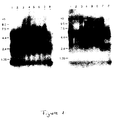
- RNA RNA from the following human tissues/cell-types: spleen (1), thymus (2), prostate (3), testis (4), ovary (5), small intestine (6), colon (7), peripheral blood leukocytes (8) and uterus (9).
- the lanes contain poly A + RNA from the following human tissues/cell-types: spleen (1), thymus (2), prostate (3), testis (4), ovary (5), small intestine (6), colon (7) and peripheral blood leukocytes (8).
- the gonadotropin receptors form a well defined family in the very large superfamily of the G-protein coupled receptors. Within this superfamily especially the seven transmembrane domains are relatively good conserved. However, there are specific motif differences between different families. Motifs in the trasmembrane domains III and VI are usually very specific for a certain family, and therefore could indicate the probability that a candidate receptor is indeed a member of the family of gonadotropin receptors. Indeed, especially trasmembrane domains III is very conserved among the novel receptors comprising SEQ ID NO:2 and 3 and the human gonadotropin receptors.
- transmembrane domain VI is very conserved among the receptors comprising SEQ ID NO:1 and SEQ ID NO:2 and the human gonadotropin receptors. Furthermore, the domains III and VI are much less conserved between the novel receptors and human G-protein coupled receptors other than gonadotropin receptors. Thus, it is concluded that the three novel protein sequences are derived from novel gonadotropin receptors.
- a human Multiple Tissue Northern blot type II was obtained from Clontech, which contains poly A + RNA from the following human tissues/cell-types: spleen (lane 1), thymus (lane 2), prostate (lane 3), testis (lane 4), ovary (lane 5), small intestine (lane 6), colon (lane 7) and peripheral blood leukocytes (lane 8).
- Prehybridization was performed in hybridization solution (0.5 M Phosphate buffer pH 7.5, 7 % Sodium Dodecyl Sulfate (SDS), 1 mM EDTA) for 1 hour at 65 °C.
- RNA detection 32 P labeled DNA fragments were generated with an Oligolabeling kit (Pharmacia) using a 440 bp fragment from receptor sequence no. 1. This fragment starts at the 5' end of the coding sequence and stops at a Hind III site approximately 440 basepairs downstream (comprising nucleotide no 1 to 426 in SEQ ID NO:1).
- the 32 P labeled probes were hybridized to the filters for 16 hours at 65 °C. Subsequently, the filters were washed in solutions with decreasing salt concentrations up to 0.3 x SSC + 0.1% SDS at 65 °C and exposed to an X-ray film (X-Omat AR, Kodak).
- gonadotropin receptor no. 1 is only expressed in a limited number of tissues, namely testis, prostate and spleen. Thus, expression of this receptor is observed in male but not in the female reproductive organs.
- the length of the mRNA in spleen and prostate is approximately 3.5-4.5 kb, while the length in testis is about 2.5-3.5 kb.
- a small mRNA of approximately 0.5-1.0 is observed in several tissues. However, the small length of this transcript suggests that it can not encode a full length gonadotropin receptor.
- This fragment starts at the 5' end of the coding sequence and stops at a Pvu II site approximately 800 basepairs downstream (comprising nucleotide no 1 to 664 in SEQ ID NO:2 plus in addition approximately 140 basepairs of unknown sequence).
- the filters were washed in solutions with decreasing salt concentrations up to 0.3 x SSC + 0.1% SDS at 65 °C and exposed to an X-ray film (X-Omat AR, Kodak).
- gonadotropin receptor no. 2 is expressed in the majority of tissues tested, including ovary, testis and uterus.
- the length of the mRNA is approximately 5.5-6.5 kilobases.
- receptor no. 3 (comprising SEQ ID NO:3) in different human tissues Northern blot analysis was performed. The methods used are comparable to those described in example 2.
- a 820 base pair fragment from receptor sequence no. 3 was used. This fragment starts at the 5' end of the coding sequence and stops at a Not I restriction enzyme cleavage site (located immediately downstream of the DNA insert within the vector sequence) approximately 820 basepairs downstream (comprising nucleotide no 1 to 606 of SEQ ID NO:3 plus additional approximately 120 basepairs of unknown sequence).
- the filters were washed in solutions with decreasing salt concentrations up to 1 x SSC + 0.1% SDS at 65 °C and exposed to an X-ray film (BioMax, Kodak).
- gonadotropin receptor no. 3 is expressed in a limited number of tissues, including ovary.
- the length of the mRNA is approximately 5-6 kilobases.
Landscapes
- Health & Medical Sciences (AREA)
- Chemical & Material Sciences (AREA)
- Life Sciences & Earth Sciences (AREA)
- Organic Chemistry (AREA)
- Biophysics (AREA)
- Medicinal Chemistry (AREA)
- Zoology (AREA)
- Gastroenterology & Hepatology (AREA)
- Immunology (AREA)
- Biochemistry (AREA)
- Cell Biology (AREA)
- General Health & Medical Sciences (AREA)
- Genetics & Genomics (AREA)
- Toxicology (AREA)
- Molecular Biology (AREA)
- Proteomics, Peptides & Aminoacids (AREA)
- Endocrinology (AREA)
- Medicines That Contain Protein Lipid Enzymes And Other Medicines (AREA)
- Investigating Or Analysing Biological Materials (AREA)
- Peptides Or Proteins (AREA)
- Preparation Of Compounds By Using Micro-Organisms (AREA)
Priority Applications (1)
| Application Number | Priority Date | Filing Date | Title |
|---|---|---|---|
| EP99200303A EP0950711A3 (fr) | 1998-02-06 | 1999-02-02 | Récepteurs de Gonadotropine |
Applications Claiming Priority (7)
| Application Number | Priority Date | Filing Date | Title |
|---|---|---|---|
| EP98200357 | 1998-02-06 | ||
| EP98200357 | 1998-02-06 | ||
| EP98202519 | 1998-07-27 | ||
| EP98202519 | 1998-07-27 | ||
| EP98203213 | 1998-09-24 | ||
| EP98203213 | 1998-09-24 | ||
| EP99200303A EP0950711A3 (fr) | 1998-02-06 | 1999-02-02 | Récepteurs de Gonadotropine |
Publications (2)
| Publication Number | Publication Date |
|---|---|
| EP0950711A2 true EP0950711A2 (fr) | 1999-10-20 |
| EP0950711A3 EP0950711A3 (fr) | 2003-09-17 |
Family
ID=27443687
Family Applications (1)
| Application Number | Title | Priority Date | Filing Date |
|---|---|---|---|
| EP99200303A Withdrawn EP0950711A3 (fr) | 1998-02-06 | 1999-02-02 | Récepteurs de Gonadotropine |
Country Status (1)
| Country | Link |
|---|---|
| EP (1) | EP0950711A3 (fr) |
Cited By (5)
| Publication number | Priority date | Publication date | Assignee | Title |
|---|---|---|---|---|
| WO2001009323A1 (fr) * | 1999-07-29 | 2001-02-08 | Helix Research Institute | Recepteurs couples a des proteines de liaison guanosine triphosphate, genes correspondants et production et utilisation de ceux-ci |
| WO2001085768A3 (fr) * | 2000-05-08 | 2002-05-23 | Millennium Pharm Inc | Nouveaux recepteurs couples a la proteine g et utilisations de ceux-ci |
| WO2002068651A3 (fr) * | 2001-02-26 | 2003-02-27 | Pe Corp Ny | Recepteurs couples a la proteine g isoles d'origine humaine, molecules d'acide nucleique codant les proteines gpcr humaines et utilisations de ces derniers |
| WO2003040371A1 (fr) * | 2001-11-06 | 2003-05-15 | Takeda Chemical Industries, Ltd. | Nouvelle proteine du recepteur couple a la proteine g et adn associe |
| WO2004058818A3 (fr) * | 2002-12-26 | 2004-09-16 | Applied Research Systems | Variants d'epissage de lgr6 |
Family Cites Families (7)
| Publication number | Priority date | Publication date | Assignee | Title |
|---|---|---|---|---|
| DE69131393T2 (de) * | 1990-09-10 | 1999-11-04 | Takeda Chemical Industries, Ltd. | Menschlicher Rezeptor für luteinisierendes Hormon und Choriongonadotropin |
| WO1992022667A1 (fr) * | 1991-06-14 | 1992-12-23 | University Of Medicine And Dentistry Of New Jersey | Analogues de recepteurs d'hormone glycoproteique liant les gonadotrophines chorioniques, les leutrophines et les follitrophines, et leurs procedes de preparation et d'utilisation |
| AU3949893A (en) * | 1992-03-30 | 1993-11-08 | Akzo Nobel N.V. | Human gonadotropin receptor (FSH receptor) |
| GB9311854D0 (en) * | 1993-06-09 | 1993-07-28 | Medical Res Council | Trh receptor action |
| EP1012160A4 (fr) * | 1997-08-04 | 2002-10-29 | Millennium Pharm Inc | Molecules d'acides nucleiques et polypeptides tango-72 et tango-77 |
| WO1999015660A1 (fr) * | 1997-09-24 | 1999-04-01 | Merck & Co., Inc. | Recepteur hormonal hg38 de glycoproteine couple a la proteine g |
| CA2304986A1 (fr) * | 1997-09-24 | 1999-04-01 | Merck & Co., Inc. | Recepteur hormonal glycoproteique aomf05 couple par proteines g |
-
1999
- 1999-02-02 EP EP99200303A patent/EP0950711A3/fr not_active Withdrawn
Cited By (5)
| Publication number | Priority date | Publication date | Assignee | Title |
|---|---|---|---|---|
| WO2001009323A1 (fr) * | 1999-07-29 | 2001-02-08 | Helix Research Institute | Recepteurs couples a des proteines de liaison guanosine triphosphate, genes correspondants et production et utilisation de ceux-ci |
| WO2001085768A3 (fr) * | 2000-05-08 | 2002-05-23 | Millennium Pharm Inc | Nouveaux recepteurs couples a la proteine g et utilisations de ceux-ci |
| WO2002068651A3 (fr) * | 2001-02-26 | 2003-02-27 | Pe Corp Ny | Recepteurs couples a la proteine g isoles d'origine humaine, molecules d'acide nucleique codant les proteines gpcr humaines et utilisations de ces derniers |
| WO2003040371A1 (fr) * | 2001-11-06 | 2003-05-15 | Takeda Chemical Industries, Ltd. | Nouvelle proteine du recepteur couple a la proteine g et adn associe |
| WO2004058818A3 (fr) * | 2002-12-26 | 2004-09-16 | Applied Research Systems | Variants d'epissage de lgr6 |
Also Published As
| Publication number | Publication date |
|---|---|
| EP0950711A3 (fr) | 2003-09-17 |
Similar Documents
| Publication | Publication Date | Title |
|---|---|---|
| EP0365657B1 (fr) | Adn codant pour des proteines receptrices d'androgene | |
| WO1998012302A1 (fr) | Genes du mecanisme de regulation ponderale et utilisations associees | |
| US20040216177A1 (en) | Congenic rats containing a mutant GPR10 gene | |
| WO1997002048A1 (fr) | Compositions destinees au traitement et au diagnostic des problemes de poids, dont l'obesite | |
| JP2003523190A (ja) | 新規化合物 | |
| AU783968B2 (en) | Human G-protein coupled 7 transmembrane receptor and polynucleotides encoding the same | |
| WO1996034288A1 (fr) | Co-transporteur de phosphate inorganique dependant du sodium du cerveau humain | |
| EP0950711A2 (fr) | Récepteurs de Gonadotropine | |
| CA2335378A1 (fr) | Methodes et compositions pour le diagnostic et le traitement de troubles du poids corporel, dont l'obesite | |
| US6987178B2 (en) | Human uncoupling proteins and polynucleotides encoding the same | |
| WO2002018621A2 (fr) | Glut 10, nouveau transporteur de glucose dans la region liee au diabete de type 2 du chromosome 20q12-13.1 | |
| AU777909B2 (en) | Mammalian cortexin-like proteins and polynucleotides encoding the same | |
| AU784052B2 (en) | Novel human proteins and polynucleotides encoding the same | |
| WO1998042726A1 (fr) | Procedes et compositions s'appliquant au diagnostique et au traitement des troubles neuropsychiatriques | |
| JP2000125884A (ja) | 新規ゴナドトロピン受容体 | |
| CA2285017A1 (fr) | Procedes et compositions s'appliquant au diagnostique et au traitement des troubles neuropsychiatriques | |
| US20050234228A1 (en) | Novel human seven transmembrane proteins and polynucleotides encoding the same | |
| US20020128462A1 (en) | Novel human 7TM proteins and polynucleotides encoding the same | |
| JP2004533847A (ja) | Gpr50の対立遺伝子変異体 | |
| AU764484B2 (en) | Orphan cytokine receptor | |
| US6670150B1 (en) | Isolated human receptor proteins, nucleic acid molecules encoding human receptor proteins, and uses thereof | |
| US7309783B2 (en) | Mammalian early developmental regulator gene | |
| AU2006202575B2 (en) | Novel seven transmembrane proteins and polynucleotides encoding the same | |
| US20020143152A1 (en) | Polypeptides, their production and use | |
| US20070298489A1 (en) | Novel human membrane proteins and polynucleotides encoding the same |
Legal Events
| Date | Code | Title | Description |
|---|---|---|---|
| PUAI | Public reference made under article 153(3) epc to a published international application that has entered the european phase |
Free format text: ORIGINAL CODE: 0009012 |
|
| AK | Designated contracting states |
Kind code of ref document: A2 Designated state(s): AT BE CH CY DE DK ES FI FR GB GR IE IT LI LU MC NL PT SE |
|
| AX | Request for extension of the european patent |
Free format text: AL;LT;LV;MK;RO;SI |
|
| PUAL | Search report despatched |
Free format text: ORIGINAL CODE: 0009013 |
|
| AK | Designated contracting states |
Kind code of ref document: A3 Designated state(s): AT BE CH CY DE DK ES FI FR GB GR IE IT LI LU MC NL PT SE |
|
| AX | Request for extension of the european patent |
Extension state: AL LT LV MK RO SI |
|
| 17P | Request for examination filed |
Effective date: 20040317 |
|
| AKX | Designation fees paid |
Designated state(s): AT BE CH CY DE DK ES FI FR GB GR IE IT LI LU MC NL PT SE |
|
| 17Q | First examination report despatched |
Effective date: 20041018 |
|
| RAP1 | Party data changed (applicant data changed or rights of an application transferred) |
Owner name: N.V. ORGANON |
|
| STAA | Information on the status of an ep patent application or granted ep patent |
Free format text: STATUS: THE APPLICATION HAS BEEN WITHDRAWN |
|
| 18W | Application withdrawn |
Effective date: 20081030 |