EP0950947A2 - Liaison statique d'appels envoyés dynamiquement en présence de liaison et chargement dynamique - Google Patents
Liaison statique d'appels envoyés dynamiquement en présence de liaison et chargement dynamique Download PDFInfo
- Publication number
- EP0950947A2 EP0950947A2 EP99302209A EP99302209A EP0950947A2 EP 0950947 A2 EP0950947 A2 EP 0950947A2 EP 99302209 A EP99302209 A EP 99302209A EP 99302209 A EP99302209 A EP 99302209A EP 0950947 A2 EP0950947 A2 EP 0950947A2
- Authority
- EP
- European Patent Office
- Prior art keywords
- function
- class
- computer
- compiled
- call
- Prior art date
- Legal status (The legal status is an assumption and is not a legal conclusion. Google has not performed a legal analysis and makes no representation as to the accuracy of the status listed.)
- Granted
Links
Images



Classifications
-
- G—PHYSICS
- G06—COMPUTING OR CALCULATING; COUNTING
- G06F—ELECTRIC DIGITAL DATA PROCESSING
- G06F9/00—Arrangements for program control, e.g. control units
- G06F9/06—Arrangements for program control, e.g. control units using stored programs, i.e. using an internal store of processing equipment to receive or retain programs
- G06F9/44—Arrangements for executing specific programs
- G06F9/448—Execution paradigms, e.g. implementations of programming paradigms
- G06F9/4488—Object-oriented
- G06F9/449—Object-oriented method invocation or resolution
- G06F9/4491—Optimising based on receiver type
Definitions
- the present invention relates to runtime compilation of software. More specifically, the invention relates to techniques for performing static binding of dynamically-dispatched calls in the presence of dynamic linking and loading.
- object-oriented languages The fundamental idea behind object-oriented languages is the combination of both data and the methods (or functions) that operate on that data into a single unit, which is called an object.
- An object's functions typically provide the only way to access the data that is encapsulated by the object. The data is accessed by sending a message to the object instructing the object to invoke the method specified by the message.
- Efficient message dispatch is of paramount importance in object-oriented languages. This is because message dispatch is a very frequent operation in object-oriented programs and is performed at runtime; therefore, it should be as fast as possible. Message dispatch, however, is far from being a trivial operation. Unlike procedural programming languages (e.g., the C programming language) that can determine a function's address before runtime, object-oriented languages must determine the method that handles a message that has been dispatched to a receiver object dynamically at runtime, and it may involve an extensive search.
- procedural programming languages e.g., the C programming language
- FIG. 1 shows a class hierarchy including methods of each class.
- a class hierarchy 1 includes at its root a parent class A 3 that defines two virtual functions foo() and bar().
- Virtual functions are functions that may be defined in a parent class and redefined in associated children classes.
- Classes B 5 and class C 7 inherently include the data and methods of the parent class A 3. As shown, class B 5 does not redefine either of the virtual functions foo() and bar(). However, class C 7 redefines the virtual function foo0.
- the method invoked will be the method defined by the class C 7, not the parent class A 3.
- Classes D 9 and E 11 also redefine the method foo().
- the search for the correct method associated with the object is performed during runtime execution or, more specifically, during message dispatch. For example, assume a method is as follows: If all of classes A-E are loaded at runtime execution, the determination of which function foo() to call will depend on which class x is an instance.
- test function may be compiled at runtime to increase performance. At runtime compilation, it is possible that only classes A 3 and B 5 are loaded. Accordingly, it appears from inspection of the loaded classes that one may assume that the message x.foo() will only invoke A::foo(). Of course, if during runtime execution class C 7 is loaded, this assumption would prove to be false.
- a method for increasing the execution performance of a function at run-time includes compiling the function, which may either be interpreted or previously compiled, and identifying a call within the function to a process.
- the method also includes adding dependency information to the function.
- the dependency information is arranged to indicate a status of the function, and contains information pertaining to the class, the name, and the signature associated with the process.
- a computer-implemented method for analyzing a first class associated with a class hierarchy of a system during run-time includes marking the first class and marking a second class that is a superclass of the first class to indicate an associated between the two class.
- a compiled function associated with the system is then inspected.
- the compiled function includes dependency information that is arranged to indicate a validity status of the compiled function as well as the optimization status of the compiled function.
- Inspecting the compiled function includes determining when at least one of the first class and the second class is identified in the dependency information. When it is determined that either the first class or both the first class and the second class is identified in the dependency information, a determination is made regarding whether the compiled function is invalid.
- the method may include de-compiling the compiled function when it is determined that the compiled function is invalid. De-compiling the compiled function may return the function to an interpreted state.
- FIG. 1 illustrates a class hierarchy of classes including virtual functions in an object-oriented environment.
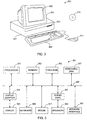
- FIG. 2 illustrates an example of a computer system that may be utilized to execute the software of an embodiment of the invention.
- FIG. 3 shows a system block diagram of the computer system of FIG. 1.
- FIG. 4 is a diagrammatic representation of a virtual machine in accordance with an embodiment of the present invention.
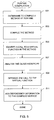
- FIG. 5 illustrates a flowchart of an embodiment of the invention that compiles a method at runtime.
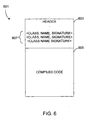
- FIG. 6 shows an embodiment of a compiled method including dependency information.
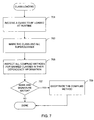
- FIG. 7 illustrates a flowchart of a process of class loading during runtime execution in accordance with an embodiment of the present invention.
- FIG. 8 shows a representation of a class hierarchy in memory in accordance with an embodiment of the present invention.
- Machine instruction An instruction that directs a computing device to perform an operation specified by an operation code (OP code) and optionally one or more operands.
- OP code operation code
- Virtual machine instruction - An instruction for a software emulated microprocessor or computer architecture (also called virtual code).
- Native machine instruction An instruction that is designed for a specific microprocessor or computer architecture (also called native code).
- Method - A software routine also called a function, subroutine, procedure, and member function.
- JavaTM programming language is an object-oriented high level programming language developed by Sun Microsystems and designed to be portable enough to be executed on a wide range of computers ranging from small devices (e.g., pagers, cell phones and smart cards) up to supercomputers.
- Computer programs written in Java may be compiled into virtual machine instructions for execution by a Java virtual machine.
- the Java virtual machine is an interpreter that decodes and executes the virtual machine instructions.
- the virtual machine instructions for the Java virtual machine are bytecodes, meaning they include one or more bytes.
- the bytecodes are stored in a particular file format called a "class file" that includes bytecodes for methods of a class.
- the class file includes a symbol table as well as other ancillary information.
- a computer program embodied as Java bytecodes in one or more class files is platform independent.
- the computer program may be executed, unmodified, on any computer that is able to run an implementation of the Java virtual machine.
- the Java virtual machine is a software emulator of a " generic" computer that is a major factor in allowing computer programs for the Java virtual machine to be platform independent.
- the Java virtual machine may be implemented as a software interpreter.
- Conventional interpreters decode and execute the virtual machine instructions of an interpreted program one instruction at a time during execution, which is in contrast to compilers that decode source code into native machine instructions prior to execution so that decoding is not performed during execution.
- the Java virtual machine may include both an interpreter and compiler for runtime compilation.
- the Java virtual machine will be written in a programming language other than the Java programming language (e.g., the C++ programming language).
- FIG. 2 illustrates an example of a computer system that may be used to execute the software of an embodiment of the invention.
- FIG. 2 shows a computer system 301 that includes a display 303, screen 305, cabinet 307, keyboard 309, and mouse 311.
- Mouse 311 may have one or more buttons for interacting with a graphical user interface.
- Cabinet 307 houses a CD-ROM drive 313, system memory and a hard drive (see FIG. 3) which may be utilized to store and retrieve software programs incorporating computer code that implements the invention, data for use with the invention, and the like.
- the CD-ROM 315 is shown as an exemplary computer readable storage medium, other computer readable storage media including floppy disk, tape, flash memory, system memory, and hard drive may be utilized.
- a data signal embodied in a carrier wave (e.g., in a network including the Internet) may be the computer readable storage medium.
- FIG. 3 shows a system block diagram of computer system 301 used to execute the software of an embodiment of the invention.
- computer system 301 includes monitor 303 and keyboard 309, and mouse 311.
- Computer system 301 further includes subsystems such as a central processor 351, system memory 353, fixed storage 355 (e.g., hard drive), removable storage 357 (e.g., CD-ROM drive), display adapter 359, sound card 361, speakers 363, and network interface 365.
- Other computer systems suitable for use with the invention may include additional or fewer subsystems.
- another computer system could include more than one processor 351 (i.e., a multi-processor system), or a cache memory.
- the system bus architecture of computer system 301 is represented by arrows 367. However, these arrows are illustrative of any interconnection scheme serving to link the subsystems. For example, a local bus could be utilized to connect the central processor to the system memory and display adapter.
- Computer system 301 shown in FIG. 3 is but an example of a computer system suitable for use with the invention. Other computer architectures having different configurations of subsystems may also be utilized.
- FIG. 4 is a diagrammatic representation of a virtual machine which is supported by computer system 301 of FIGS. 2 and 3, and is suitable for implementing the present invention.
- a computer program e.g. , a computer program written in the JavaTM programming language
- source code 410 is provided to a compiler 420 within compile-time environment 405.
- Compiler 420 translates source code 410 into bytecodes 430.
- source code 410 is translated into bytecodes 430 at the time source code 410 is created by a software developer.
- Bytecodes 430 may generally be reproduced, downloaded, or otherwise distributed through a network, e.g. , network interface 365 of FIG. 3, or stored on a storage device such as storage device 355 of FIG. 3.
- bytecodes 430 are platform independent. That is, bytecodes 430 may be executed on substantially any computer system that is running on a suitable virtual machine 440.
- Bytecodes 430 are provided to a runtime environment 435 which includes virtual machine 440.
- the virtual machine may be a JavaTM virtual machine.
- Runtime environment 435 may generally be executed using a processor or processors such as processor 351 of FIG.3.
- Virtual machine 440 includes a compiler 442, an interpreter 444, and a runtime system 446.
- Bytecodes 430 may be provided either to compiler 442 or interpreter 444.
- interpreter 444 When bytecodes 430 are provided to compiler 442, methods contained in bytecodes 430 are compiled into machine instructions.
- compiler 442 is a just-in-time compiler which delays the compilation of methods contained in bytecodes 430 until the methods are about to be executed.
- interpreter 444 When bytecodes 430 are provided to interpreter 444, bytecodes 430 are read into interpreter 444 one bytecode at a time. Interpreter 444 then performs the operation defined by each bytecode as each bytecode is read into interpreter 444. That is, interpreter 444 "interprets" bytecodes 430, as will be appreciated by those skilled in the art. In general, interpreter 444 processes bytecodes 430 and performs operations associated with bytecodes 430 substantially continuously.
- runtime system 446 may obtain the method from runtime environment 435 in the form of a sequence of bytecodes 430, which may be directly executed by interpreter 444. If, on the other hand, the method which is invoked is a compiled method which has not been compiled, runtime system 446 also obtains the method from runtime environment 435 in the form of a sequence of bytecodes 430, then may go on to activate compiler 442. Compiler 442 then generates machine instructions from bytecodes 430, and the resulting machine-language instructions may be executed directly by processor 351 of FIG.3. In general, the machine-language instructions are discarded when virtual machine 440 terminates.
- Java classes (and interfaces) are dynamically loaded, linked and initialized.
- Loading is the process of the system finding the binary form of the class (e.g., the class file) and constructing from the binary form a Class object to represent the class.
- the Class class is a class for storing or representing the structures of classes.
- Linking is the process of taking a binary form of the class and combining it into the runtime state of the system so that it may be executed.
- Initialization of a class includes executing the class' static initializers and initializers for static fields declared in the class.
- Each Java class has a constant pool associated with it.
- the constant pool is stored in the Java class file and serves a function similar to symbol tables.
- each entry in the constant pool is indexed by a number starting with one and ending with the number of entries in the constant pool.
- a method for a class accesses entries in the constant pool by the index and a method for one class may not access a constant pool for another class.
- the constant pool stores classes, methods, fields, and interfaces symbolically. By storing these entries symbolically it is meant that the name identifying the entry is stored, not the physical address. In other words, if a class A has a field F, both the names of A and F (along with a type signature for F) may be stored in the constant pool. By storing names and not address, the Java runtime system resolves the symbolic reference into a physical address dynamically at runtime.
- FIG. 5 illustrates a flowchart of an embodiment of the invention that compiles a method at runtime.
- the system determines that it is beneficial to compile a method.
- compiling a method increases the execution performance of the method.
- methods are not compiled.
- compiled methods may require more storage space than methods which are not compiled.
- that method is compiled at a step 503.
- the system identifies a call to a virtual function in the method that is being compiled.
- resolution of a virtual function call is done dynamically at runtime.
- the call is an invokevirtual instruction.
- the system analyzes the class hierarchy at runtime compilation at a step 507.
- the class hierarchy may indicate that currently only one function of a loaded class that would be the recipient of the virtual function call. If only one function of the loaded class would be the recipient of the virtual function call, the system may place a direct call to that function in the compiled method. Additionally, the system may inline the whole function into the compiled method. Inlining the whole function requires more storage space for the compiled method, but results in a faster performance.
- the system may inline a decision tree or hash table that includes direct calls to the functions and/or inline functions. That is, the call to the virtual function as discussed with respect to step 505 may be optimized at a step 909. Techniques for performing virtual function calls are described in Application No. 08/944,332, filed October 6, 1997, which is hereby incorporated by reference for all purposes.
- the system adds dependency information to the compiled method.
- the dependency information may include the class, function name, and signature (i.e., parameter types) of each virtual function that has been optimized at step 509.
- the dependency information may be checked for a compiled method to determine if the compiled method is still valid, should be deoptimized, or should be reoptimized. This process will be described in more detail below with reference to FIG. 7.
- FIG. 6 shows an embodiment of a compiled method with dependency information.
- a compiled method 609 includes a header 603 and compiled code 605.
- Header 603 includes, among other things, dependency information 607.
- Dependency information 607 in the described embodiment, is a list of the class, the name, and the signature of all the virtual function calls that were optimized in compiled method 609. Although this information may be stored as a simple list, a variety of other storage techniques may be utilized.
- FIG. 7 illustrates a flowchart of a process of class loading during runtime execution.
- the system receives a class to be loaded at runtime.
- the system marks the class and all of its superclasses at a step 703.
- the classes may be marked by setting a boolean field in a class hierarchy structure (see FIG. 8).
- the system inspects all the compiled methods to determine if they include any of the marked classes in their dependency information.
- the dependency information may be stored in a header of the compiled method. If any of the marked classes are included in a compiled method's dependency information, the system determines if there is a function name and signature match at a step 707.
- the system By determining if there is a function name and signature match, the system ascertains whether loading the class causes any of the compiled methods to effectively be invalidated. In other words, the determination of whether there is a function name and signature match determines whether loading the class generates a new, and previously unaccounted for, recipient for a virtual function call that has been optimized.
- the system may place a direct call to A::foo() (or even inline the whole function) in a compiled method since there is only one function that could be the recipient of the virtual function call.
- class C 7 is loaded then there another possible recipient for the virtual function call (i.e., C: :foo()).
- the compiled method should be either deoptimized or reoptimized. Techniques for deoptimization of compiled methods are described in Application No. 08/944,330, filed October 6, 1997, which is hereby incorporated by reference for all purposes.
- the compiled method may be deoptimized at a step 709. Deoptimizing the compiled method may include reverting, or otherwise "de-compiling," the method to its interpreted form. Additionally, the system may reoptimize the compiled method so that it now takes into account the newly loaded class.
- FIG. 8. shows a representation of a class hierarchy in memory.
- a class 801 is shown at the root indicating it is a superclass to classes below it.
- classes 803 and 805 are subclasses of class 801.
- the class information for each class may include a boolean field that is used to mark the classes as in step 703 of FIG. 7.
- the class information for each class may include a subclass pointer and a sibling pointer.
- the subclass pointer points to a first subclass, which in this example is class 803.
- the sibling pointer form a linked list of the classes that are siblings. As shown, the sibling pointer of class 803 points to class 805. Utilizing the subclass and sibling pointers, the system in an embodiment of the invention is able to easily traverse the class hierarchy.
Landscapes
- Engineering & Computer Science (AREA)
- Software Systems (AREA)
- Theoretical Computer Science (AREA)
- General Engineering & Computer Science (AREA)
- Physics & Mathematics (AREA)
- General Physics & Mathematics (AREA)
- Devices For Executing Special Programs (AREA)
Applications Claiming Priority (2)
| Application Number | Priority Date | Filing Date | Title |
|---|---|---|---|
| US7976598P | 1998-03-24 | 1998-03-24 | |
| US79765P | 1998-03-24 |
Publications (3)
| Publication Number | Publication Date |
|---|---|
| EP0950947A2 true EP0950947A2 (fr) | 1999-10-20 |
| EP0950947A3 EP0950947A3 (fr) | 2000-02-23 |
| EP0950947B1 EP0950947B1 (fr) | 2003-09-10 |
Family
ID=22152672
Family Applications (1)
| Application Number | Title | Priority Date | Filing Date |
|---|---|---|---|
| EP99302209A Expired - Lifetime EP0950947B1 (fr) | 1998-03-24 | 1999-03-22 | Liaison statique d'appels envoyés dynamiquement en présence de liaison et chargement dynamique |
Country Status (5)
| Country | Link |
|---|---|
| EP (1) | EP0950947B1 (fr) |
| JP (1) | JP5129904B2 (fr) |
| KR (1) | KR19990078174A (fr) |
| CN (2) | CN1149477C (fr) |
| DE (1) | DE69911104T2 (fr) |
Cited By (2)
| Publication number | Priority date | Publication date | Assignee | Title |
|---|---|---|---|---|
| WO1999061979A3 (fr) * | 1998-05-27 | 2000-01-27 | Sun Microsystems Inc | Commutation dynamique d'appels de fonction liee statiquement en appels de fonction liee dynamiquement sans recompilation |
| WO2000022509A3 (fr) * | 1998-10-09 | 2000-07-13 | Sun Microsystems Lab | Procede d'inclusion directe d'appels virtuels sans remplacement sur-pile |
Families Citing this family (8)
| Publication number | Priority date | Publication date | Assignee | Title |
|---|---|---|---|---|
| GB9825102D0 (en) * | 1998-11-16 | 1999-01-13 | Insignia Solutions Plc | Computer system |
| US7506323B2 (en) | 2002-06-18 | 2009-03-17 | Panasonic Corporation | Program execution processing terminal device, program execution processing method, and program |
| JP2006146613A (ja) * | 2004-11-19 | 2006-06-08 | Matsushita Electric Ind Co Ltd | プログラム変換方法 |
| US7490320B2 (en) * | 2005-02-18 | 2009-02-10 | International Business Machines Corporation | Method and apparatus for transforming Java Native Interface function calls into simpler operations during just-in-time compilation |
| KR20080039080A (ko) * | 2006-10-31 | 2008-05-07 | 에스케이 텔레콤주식회사 | 이종언어편집 라이브러리의 인터페이스 기능이 구비된단말장비, api호출방법 및 컴파일함수생성방법 |
| US8819649B2 (en) | 2011-09-09 | 2014-08-26 | Microsoft Corporation | Profile guided just-in-time (JIT) compiler and byte code generation |
| US20130205282A1 (en) * | 2012-02-07 | 2013-08-08 | Microsoft Corporation | Transferring program execution from compiled code to interpreted code |
| CN105335137B (zh) * | 2014-07-23 | 2019-01-18 | 国际商业机器公司 | 用于处理源文件的方法和装置 |
Family Cites Families (4)
| Publication number | Priority date | Publication date | Assignee | Title |
|---|---|---|---|---|
| JP3178151B2 (ja) * | 1993-03-19 | 2001-06-18 | 富士ゼロックス株式会社 | オブジェクト指向言語のメッセージコンパイル装置 |
| US5613120A (en) * | 1994-10-20 | 1997-03-18 | Silicon Graphics, Inc. | System and method for enabling, without recompilation, modification of class definitions and implementations in an object-oriented computer program |
| US5606699A (en) * | 1995-04-28 | 1997-02-25 | International Business Machines Corporation | Storing and querying execution information for object-oriented programs |
| US5748963A (en) * | 1995-05-12 | 1998-05-05 | Design Intelligence, Inc. | Adaptive binding |
-
1999
- 1999-03-22 DE DE69911104T patent/DE69911104T2/de not_active Expired - Lifetime
- 1999-03-22 EP EP99302209A patent/EP0950947B1/fr not_active Expired - Lifetime
- 1999-03-23 JP JP07773299A patent/JP5129904B2/ja not_active Expired - Lifetime
- 1999-03-24 CN CNB991043073A patent/CN1149477C/zh not_active Expired - Lifetime
- 1999-03-24 CN CNB2004100399963A patent/CN1287280C/zh not_active Expired - Lifetime
- 1999-03-24 KR KR1019990009951A patent/KR19990078174A/ko not_active Abandoned
Cited By (3)
| Publication number | Priority date | Publication date | Assignee | Title |
|---|---|---|---|---|
| WO1999061979A3 (fr) * | 1998-05-27 | 2000-01-27 | Sun Microsystems Inc | Commutation dynamique d'appels de fonction liee statiquement en appels de fonction liee dynamiquement sans recompilation |
| EP1300758A3 (fr) * | 1998-05-27 | 2004-10-06 | Sun Microsystems, Inc. | Commutation dynamique d'appels de fonction liée statiquement en appels de fonction liée dynamiquement sans recompilation |
| WO2000022509A3 (fr) * | 1998-10-09 | 2000-07-13 | Sun Microsystems Lab | Procede d'inclusion directe d'appels virtuels sans remplacement sur-pile |
Also Published As
| Publication number | Publication date |
|---|---|
| EP0950947A3 (fr) | 2000-02-23 |
| DE69911104D1 (de) | 2003-10-16 |
| CN1149477C (zh) | 2004-05-12 |
| EP0950947B1 (fr) | 2003-09-10 |
| DE69911104T2 (de) | 2004-07-08 |
| CN1287280C (zh) | 2006-11-29 |
| JP5129904B2 (ja) | 2013-01-30 |
| CN1529237A (zh) | 2004-09-15 |
| JPH11327906A (ja) | 1999-11-30 |
| KR19990078174A (ko) | 1999-10-25 |
| CN1235301A (zh) | 1999-11-17 |
Similar Documents
| Publication | Publication Date | Title |
|---|---|---|
| US6704927B1 (en) | Static binding of dynamically-dispatched calls in the presence of dynamic linking and loading | |
| US5999732A (en) | Techniques for reducing the cost of dynamic class initialization checks in compiled code | |
| AU774467B2 (en) | Automatic stub/adapter generator | |
| US7490320B2 (en) | Method and apparatus for transforming Java Native Interface function calls into simpler operations during just-in-time compilation | |
| Hookway et al. | Digital FX! 32: Combining emulation and binary translation | |
| US6910205B2 (en) | Interpreting functions utilizing a hybrid of virtual and native machine instructions | |
| US6637025B1 (en) | Dynamic selection/definition of which class/methods should or should not be jit'ed using information stored in a jar file | |
| US6704926B1 (en) | Bimodal Java just-in-time complier | |
| US8196120B2 (en) | Computer emulator employing direct execution of compiled functions | |
| EP0994416A2 (fr) | Techniques de réalisation des machines virtuelles enfichables | |
| US6412108B1 (en) | Method and apparatus for speeding up java methods prior to a first execution | |
| US20040244009A1 (en) | Inline database for receiver types in object-oriented systems | |
| KR20020085872A (ko) | 객체지향 컴퓨터 프로그램의 번역 및 실행방법 | |
| US7124407B1 (en) | Method and apparatus for caching native code in a virtual machine interpreter | |
| KR20020085876A (ko) | 객체지향 컴퓨터 프로그램의 로딩 | |
| US20040083467A1 (en) | System and method for executing intermediate code | |
| EP0950947B1 (fr) | Liaison statique d'appels envoyés dynamiquement en présence de liaison et chargement dynamique | |
| CA2167306C (fr) | Acheminement de methodes a points d'entree multiples | |
| US20220147376A1 (en) | Selective substitution of legacy load module programs with classes for execution in a java virtual machine | |
| US6976249B1 (en) | Method for embedding object codes in source codes | |
| US7181724B2 (en) | Representation of Java® data types in virtual machines | |
| US11243876B2 (en) | Techniques for accessing off-heap memory | |
| Ferreira | THE JEWEL VIRTUAL MACHINE |
Legal Events
| Date | Code | Title | Description |
|---|---|---|---|
| PUAI | Public reference made under article 153(3) epc to a published international application that has entered the european phase |
Free format text: ORIGINAL CODE: 0009012 |
|
| AK | Designated contracting states |
Kind code of ref document: A2 Designated state(s): DE FR GB NL |
|
| AX | Request for extension of the european patent |
Free format text: AL;LT;LV;MK;RO;SI |
|
| PUAL | Search report despatched |
Free format text: ORIGINAL CODE: 0009013 |
|
| AK | Designated contracting states |
Kind code of ref document: A3 Designated state(s): AT BE CH CY DE DK ES FI FR GB GR IE IT LI LU MC NL PT SE |
|
| AX | Request for extension of the european patent |
Free format text: AL;LT;LV;MK;RO;SI |
|
| 17P | Request for examination filed |
Effective date: 20000815 |
|
| AKX | Designation fees paid |
Free format text: DE FR GB NL |
|
| 17Q | First examination report despatched |
Effective date: 20020502 |
|
| GRAH | Despatch of communication of intention to grant a patent |
Free format text: ORIGINAL CODE: EPIDOS IGRA |
|
| GRAS | Grant fee paid |
Free format text: ORIGINAL CODE: EPIDOSNIGR3 |
|
| GRAA | (expected) grant |
Free format text: ORIGINAL CODE: 0009210 |
|
| AK | Designated contracting states |
Kind code of ref document: B1 Designated state(s): DE FR GB NL |
|
| PG25 | Lapsed in a contracting state [announced via postgrant information from national office to epo] |
Ref country code: NL Free format text: LAPSE BECAUSE OF FAILURE TO SUBMIT A TRANSLATION OF THE DESCRIPTION OR TO PAY THE FEE WITHIN THE PRESCRIBED TIME-LIMIT Effective date: 20030910 |
|
| REG | Reference to a national code |
Ref country code: GB Ref legal event code: FG4D |
|
| REF | Corresponds to: |
Ref document number: 69911104 Country of ref document: DE Date of ref document: 20031016 Kind code of ref document: P |
|
| NLV1 | Nl: lapsed or annulled due to failure to fulfill the requirements of art. 29p and 29m of the patents act | ||
| PGFP | Annual fee paid to national office [announced via postgrant information from national office to epo] |
Ref country code: FR Payment date: 20040309 Year of fee payment: 6 |
|
| ET | Fr: translation filed | ||
| PLBE | No opposition filed within time limit |
Free format text: ORIGINAL CODE: 0009261 |
|
| STAA | Information on the status of an ep patent application or granted ep patent |
Free format text: STATUS: NO OPPOSITION FILED WITHIN TIME LIMIT |
|
| 26N | No opposition filed |
Effective date: 20040614 |
|
| PG25 | Lapsed in a contracting state [announced via postgrant information from national office to epo] |
Ref country code: FR Free format text: LAPSE BECAUSE OF NON-PAYMENT OF DUE FEES Effective date: 20051130 |
|
| REG | Reference to a national code |
Ref country code: FR Ref legal event code: ST Effective date: 20051130 |
|
| PGFP | Annual fee paid to national office [announced via postgrant information from national office to epo] |
Ref country code: GB Payment date: 20070321 Year of fee payment: 9 |
|
| GBPC | Gb: european patent ceased through non-payment of renewal fee |
Effective date: 20080322 |
|
| PG25 | Lapsed in a contracting state [announced via postgrant information from national office to epo] |
Ref country code: GB Free format text: LAPSE BECAUSE OF NON-PAYMENT OF DUE FEES Effective date: 20080322 |
|
| PGFP | Annual fee paid to national office [announced via postgrant information from national office to epo] |
Ref country code: DE Payment date: 20180306 Year of fee payment: 20 |
|
| REG | Reference to a national code |
Ref country code: DE Ref legal event code: R071 Ref document number: 69911104 Country of ref document: DE |