EP0952502A1 - System für den Unterhalt von Aufzugsanlagen, Fahrtreppen oder Fahrsteigen - Google Patents
System für den Unterhalt von Aufzugsanlagen, Fahrtreppen oder Fahrsteigen Download PDFInfo
- Publication number
- EP0952502A1 EP0952502A1 EP99107077A EP99107077A EP0952502A1 EP 0952502 A1 EP0952502 A1 EP 0952502A1 EP 99107077 A EP99107077 A EP 99107077A EP 99107077 A EP99107077 A EP 99107077A EP 0952502 A1 EP0952502 A1 EP 0952502A1
- Authority
- EP
- European Patent Office
- Prior art keywords
- data
- data traffic
- controller
- maintenance
- maintenance personnel
- Prior art date
- Legal status (The legal status is an assumption and is not a legal conclusion. Google has not performed a legal analysis and makes no representation as to the accuracy of the status listed.)
- Granted
Links
Images


Classifications
-
- G—PHYSICS
- G05—CONTROLLING; REGULATING
- G05B—CONTROL OR REGULATING SYSTEMS IN GENERAL; FUNCTIONAL ELEMENTS OF SUCH SYSTEMS; MONITORING OR TESTING ARRANGEMENTS FOR SUCH SYSTEMS OR ELEMENTS
- G05B19/00—Program-control systems
- G05B19/02—Program-control systems electric
- G05B19/04—Program control other than numerical control, i.e. in sequence controllers or logic controllers
- G05B19/042—Program control other than numerical control, i.e. in sequence controllers or logic controllers using digital processors
- G05B19/0428—Safety, monitoring
-
- B—PERFORMING OPERATIONS; TRANSPORTING
- B66—HOISTING; LIFTING; HAULING
- B66B—ELEVATORS; ESCALATORS OR MOVING WALKWAYS
- B66B5/00—Applications of checking, fault-correcting, or safety devices in elevators
- B66B5/0006—Monitoring devices or performance analysers
- B66B5/0018—Devices monitoring the operating condition of the elevator system
- B66B5/0025—Devices monitoring the operating condition of the elevator system for maintenance or repair
Definitions
- the invention relates to a system for the maintenance of elevator systems, escalators or moving walks consisting of a human / machine interface for the maintenance data traffic between people and an elevator control, escalator control or moving walk control, the human / machine interface, on the one hand, to understand the data at a machine-level level Form and on the other hand translated into a form that is understandable at the personal level.
- the invention seeks to remedy this.
- the invention as characterized in claim 1, seeks to improve the known device and to create a system by means of which human / machine communication is simplified.
- the advantages achieved by the invention are essentially to be seen in the fact that communication with the system is possible by means of telephones which are always and everywhere available and whose operation does not require any special knowledge.
- the easy-to-use communication shortens the downtimes of the system due to faults.
- the operator can independently change operating parameters such as door opening times, parking levels, etc. without the support of maintenance personnel.
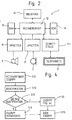
- 1 to 6, 1 designates a speech recognition / speech synthesis unit, which is provided as a human / machine interface between a controller 2 for elevators 2.1, escalators or moving walks and on-site / rear maintenance personnel 3, 4, plant operators or plant users .
- a controller 2 for elevators 2.1, escalators or moving walks and on-site / rear maintenance personnel 3, 4, plant operators or plant users .
- only control 2 is used as a collective term for control for elevators, escalators or moving walks or as a collective term for on-site / rear maintenance personnel 3, 4, system operators or system users only on-site / rear maintenance personnel 3, 4.
- the speech recognition / speech synthesis unit 1 communicates with the controller 2 by means of an interface 5. Before accessing the speech recognition / speech synthesis unit 1 and thus the controller 2, maintenance personnel 3 are identified on site by means of an identification unit 6.
- Identification can take place, for example, by means of a code card or a numerical code that can be entered via a keyboard.
- the language of the maintenance personnel 3, recorded by means of a microphone 7, can also serve as identification.
- the speech recognition / speech synthesis unit 1 After successful identification of the on-site maintenance personnel 3, the speech recognition / speech synthesis unit 1 establishes a bidirectional connection between the controller 2 and the on-site maintenance personnel 3, the microphone 7 and an as the interface between the speech recognition / speech synthesis unit 1 and the on-site maintenance personnel 3 Speaker 8 is used.
- the speech recognition / speech synthesis unit 1 can also connect to rear maintenance personnel 4 via private or public telephone network 9 or via another communication-capable network or rear maintenance personnel 4 can reach the speech recognition / speech synthesis unit 1 via telephone 10 or mobile phone 11.
- the rear maintenance personnel 4 must identify themselves by means of the numerical code entered via the keypad of the telephone 10 or mobile telephone 11. After successful identification of the rear maintenance personnel 4, the speech recognition / speech synthesis unit 1 sets up a bidirectional connection between the controller 2 and the rear maintenance personnel 4, the telephone 10 or mobile phone 11 and the like being the interface between the speech recognition / speech synthesis unit 1 and the rear maintenance personnel 4 Telephone network 9 or another communication-capable network is used.
- the controller 2 can also connect to the maintenance personnel 3, 4. In the case of rear maintenance, the controller 2 triggers a connection establishment via the telephone network 9. The controller identifies and reports with its identification number. The rear maintenance personnel 4 identify themselves as described above. After successful identification of the rear maintenance personnel 4, the speech recognition / speech synthesis unit 1 sets up a bidirectional connection between the controller 2 and the rear maintenance personnel 4.
- controller 2 The bidirectional connection between controller 2 and maintenance personnel 3, 4 enables the following communication between controller and maintenance personnel 3, 4: controller 2 reports operating states, parameters and error messages.
- controller 2 reports operating states, parameters and error messages.
- the maintenance staff 3, 4 can set parameters change and / or issue commands, the maintenance personnel 3, 4 being guided verbally, such as "press button # 1 for access to the door parameters" or "press button # 2 for querying the drive status".
- the program selection or other commands or instructions can also be entered verbally via microphone 7 or telephone 10 or mobile phone 11.
- FIG. 2 shows details of the speech recognition / speech synthesis unit 1 with a computer unit 12 which is connected to a RAM memory 13 and a ROM memory 14. Data is stored in RAM memory 13 and the system program for maintenance data traffic is stored in ROM memory 14.
- the computing unit has access to a library 15 in which speech patterns are stored, for example on a floppy disk or in a non-volatile memory, from which the computing unit 12 generates words and sentences in digital form.
- a first converter 16 decodes the digital words and sentences into analog signals, which are made audible by the loudspeaker 8 for the maintenance personnel 3.
- a second converter 17 converts the analog signals from the microphone 7 into digital signals, which are converted by the computer unit 12 together with the library 15 into machine-readable characters.
- the computer unit 12 communicates with the telephone network 9 by means of an interface 9.1.
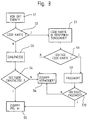
- FIG. 3 shows a flowchart to illustrate a verbal on-site access to the controller 2.
- a first step S1 the intention of the on-site maintenance personnel 3 to access the controller 2 is shown.
- the next step S2 it is checked whether the on-site maintenance staff 3 is identified by means of a keyboard and numerical code or by means of a code card.
- test step S2 If the output of test step S2 is symbolized by N, the access procedure is continued in step S3 by entering the number code. The check of the number code is done in step S4. If the test step S4 has a positive output symbolized by J, the access procedure is continued in step S5 according to FIG. 6. If the negative outcome of test step S4 is symbolized by N, access is denied in step S6.
- test step S2 has a positive output symbolized by J
- the code card is read by the identification unit 6 in step S7 and checked for validity in step S8.
- An invalid code card leads to step S6 and thus to access denial.
- a password must be entered in step S9. If the test step S10 has a positive output symbolized by J, the access procedure is continued in step S5 according to FIG. 6. An invalid password leads to step S6 and thus to access denial.
- FIG. 4 shows a flowchart to illustrate a verbal backward access to the controller 2.
- a step S11 the intention of the rear maintenance personnel 4 to access the controller 2 is shown.
- the maintenance personnel 4 dials the corresponding number on the keyboard of the telephone 10 or mobile telephone 11.
- the speech recognition / speech synthesis unit 1 answers and requests the identification.
- step S13 it is checked whether the identification of the rear maintenance personnel 4 is valid. If the output of test step S13 is symbolized by J, the access procedure is continued in step S5 according to FIG. 6. If the negative outcome of test step S13 is symbolized by N, access is denied in step S14 and the access procedure is ended in step S15 and the telephone connection is terminated.
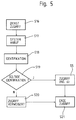
- FIG. 5 shows a flowchart to illustrate a verbal service access triggered by the controller 2.
- the controller 2 initiates a call for the rear maintenance personnel 4.
- the speech recognition / speech synthesis unit 1 establishes the telephone connection and dials the number of the rear maintenance personnel 4.
- the rear maintenance staff 4 reports by telephone 10 or by mobile phone 11, and the speech recognition / speech synthesis unit 1 presents itself verbally before and requires identification.
- step S19 it is checked whether the identification of the rear maintenance personnel 4 is valid. If the test step S19 is symbolized with J, the access procedure is continued in step S5 according to FIG. 6. If the negative outcome of test step S13 is symbolized by N, access is denied in step S20 and the access procedure is ended in step S21 and the telephone connection is terminated.
- step S22 the controller 2 reports the faults that have occurred and provides information on possible causes of the error.
- step S23 the menu selection is presented verbally.
- the door program can be selected by entering # 1 or the drive program by entering # 2.
- Menus for querying statistical data are also provided.
- step S24 maintenance personnel 3, 4 enter the number corresponding to the desired program on the keyboard.
- the program selection or other commands or instructions can also be entered verbally via microphone 7 or telephone 10 or mobile phone 11.
- step S25 the controller 2 operates in accordance with the instructions and given by the menu selection executes appropriate commands.
- step S26 it is checked whether the access should be ended. If the negative outcome of test step S26 is symbolized by N, the access continues with step S23. If the output of test step S26 is symbolized with J, the access procedure is completed in step S27.
- the process of a verbal access to the controller 2 depends on the identification. If, for example, the system operator communicates with the controller 2, no error messages are reported and the menu selection is restricted, for example, to changing operating parameters or entering driving commands.
Landscapes
- Physics & Mathematics (AREA)
- General Physics & Mathematics (AREA)
- Engineering & Computer Science (AREA)
- Automation & Control Theory (AREA)
- Maintenance And Inspection Apparatuses For Elevators (AREA)
- Indicating And Signalling Devices For Elevators (AREA)
- Escalators And Moving Walkways (AREA)
- Elevator Door Apparatuses (AREA)
- Lift-Guide Devices, And Elevator Ropes And Cables (AREA)
- Types And Forms Of Lifts (AREA)
- Professional, Industrial, Or Sporting Protective Garments (AREA)
Abstract
Description
- Die Erfindung betrifft ein System für den Unterhalt von Aufzugsanlagen, Fahrtreppen oder Fahrsteigen bestehend aus einer Mensch/Maschine-Schnittstelle für den Unterhaltsdatenverkehr zwischen Personen und einer Aufzugssteuerung, Fahrtreppensteuerung oder Fahrsteigsteuerung, wobei die Mensch/Maschine-Schnittstelle die Daten einerseits in eine auf Maschinenebene verständliche Form und andererseits in eine auf Personenebene verständliche Form umsetzt.
- Aus der Patentschrift EP 252 266 ist ein Fernverwaltungssystem bekannt geworden, bei dem mehrere Aufzugsanlagen von einer rückwärtigen Zentrale aus verwaltet und überwacht werden. Der Datenaustausch erfolgt via öffentliches Telefonnetz von der Zentrale zur peripheren Aufzugsanlage und von der Aufzugsanlage zur Zentrale. Die Aufzugsanlage kann auch vor Ort mittels Wartungskoffer mit Tastatur und Bildschirm datenmässig gewartet werden. Zentrale und Peripherie sind bezüglich Datenaustausch gleichberechtigte Partner. Zentrale oder Peripherie können einen Verbindungsaufbau zwecks Datenaustausch einleiten. Besondere Anlagezustände gibt die Peripherie automatisch an die Zentrale weiter. Als bidirektionale Mensch/Maschine-Schnittstelle dienen Tastatur und Datensichtgerät.
- Bei der bekannten Einrichtung kann es sich ungünstig auswirken, dass die Mensch/Maschine-Kommunikation in schriftlicher Form erfolgt und daher zur Bedienung des Fernverwaltungssystems für Aufzugsanlagen qualifiziertes Personal notwendig ist.
- Hier will die Erfindung Abhilfe schaffen. Die Erfindung, wie sie in Anspruch 1 gekennzeichnet ist, sucht die bekannte Einrichtung zu verbessern und ein System zu schaffen, mittels dem die Mensch/Maschine-Kommunikation vereinfacht wird.
- Die durch die Erfindung erreichten Vorteile sind im wesentlichen darin zu sehen, dass die Kommunikation mit der Anlage mittels immer und überall zur Verfügung stehenden Telefonapparaten möglich ist, deren Bedienung keine besonderen Kenntnisse erfordert. Die leicht zu handhabende Kommunikation verkürzt die störungsbedingten Stillstandszeiten der Anlage. Ausserdem kann der Betreiber dank der einfachen Mensch/Maschine-Kommunikation Betriebsparameter wie beispielsweise Türöffnungszeiten, Parkstockwerke, etc. ohne Unterstützung von Unterhaltspersonal eigenständig ändern.
- Im folgenden wird die Erfindung anhand von ein Ausführungsbeispiel darstellenden Zeichnungen näher erläutert. Es zeigen:
- Fig. 1
- ein System für den verbalen Unterhalt von Aufzugsanlagen, Fahrtreppen oder Fahrsteigen,
- Fig. 2
- eine Spracherkennungs-/Sprachsyntheseeinheit als Mensch/Maschine-Schnittstelle,
- Fig. 3
- ein Flussdiagramm zur Darstellung eines verbalen vor Ort Zugriffes auf die Steuerung,
- Fig. 4
- ein Flussdiagramm zur Darstellung eines verbalen rückwärtigen Zugriffes auf die Steuerung,
- Fig. 5
- ein Flussdiagramm zur Darstellung eines von der Steuerung ausgelösten verbalen Dienst-Zugriffes und
- Fig. 6
- Einzelheiten eines verbalen Zugriffes auf die Steuerung.
- In den Fig. 1 bis 6 ist mit 1 eine Spracherkennungs-/Sprachsyntheseeinheit bezeichnet, die als Mensch/Maschine-Schnittstelle zwischen einer Steuerung 2 für Aufzüge 2.1, Fahrtreppen oder Fahrsteige und vor Ort/rückwärtiges Unterhaltspersonal 3, 4, Anlagebetreiber oder Anlagebenutzer vorgesehen ist. Im weiteren Beschreibungsverlauf wird als Sammelbegriff für Steuerung für Aufzüge, Fahrtreppen oder Fahrsteige lediglich Steuerung 2 bzw. als Sammelbegriff für vor Ort/rückwärtiges Unterhaltspersonal 3, 4, Anlagebetreiber oder Anlagebenutzer lediglich vor Ort/rückwärtiges Unterhaltspersonal 3, 4 verwendet. Die Spracherkennungs-/Sprachsyntheseeinheit 1 kommuniziert mit der Steuerung 2 mittels einer Schnittstelle 5. Vor dem Zugriff auf die Spracherkennungs-/Sprachsyntheseeinheit 1 und somit auf die Steuerung 2 wird vor Ort Unterhaltspersonal 3 mittels einer Identifikationseinheit 6 identifiziert. Die Identifikation kann beispielsweise mittels einer Code-Karte oder eines über eine Tastatur eingebbaren Zahlencodes erfolgen. Alternativ kann auch die mittels eines Mikrofones 7 erfasste Sprache des Unterhaltspersonals 3 als Identifikation dienen. Nach erfolgreicher Identifikation des vor Ort Unterhaltspersonals 3 baut die Spracherkennungs-/Sprachsyntheseeinheit 1 eine bidirektionale Verbindung zwischen der Steuerung 2 und dem vor Ort Unterhaltspersonal 3 auf, wobei als Schnittstelle zwischen Spracherkennungs-/Sprachsyntheseeinheit 1 und vor Ort Unterhaltspersonal 3 das Mikrofon 7 und ein Lautsprecher 8 dient. Die Spracherkennungs-/Sprachsyntheseeinheit 1 kann auch mit rückwärtigem Unterhaltspersonal 4 via privates oder öffentliches Telefonnetz 9 oder via ein anderes kommunikationsfähiges Netz in Verbindung treten bzw. rückwärtiges Unterhaltspersonal 4 kann via Telefon 10 oder Mobilfon 11 die Spracherkennungs-/Sprachsyntheseeinheit 1 erreichen. Das rückwärtige Unterhaltspersonal 4 muss sich mittels über die Tastatur des Telefons 10 bzw. Mobilfons 11 eingegebenem Zahlencode identifizieren. Nach erfolgreicher Identifikation des rückwärtigen Unterhaltspersonals 4 baut die Spracherkennungs-/Sprachsyntheseeinheit 1 eine bidirektionale Verbindung zwischen der Steuerung 2 und dem rückwärtigen Unterhaltspersonal 4 auf, wobei als Schnittstelle zwischen Spracherkennungs-/Sprachsyntheseeinheit 1 und rückwärtigem Unterhaltspersonal 4 das Telefon 10 bzw. Mobilfon 11 und das Telefonnetz 9 oder ein anderes kommunikationsfähiges Netz dient. Auch die Steuerung 2 kann in Verbindung mit dem Unterhaltspersonal 3, 4 treten. Im Falle des rückwärtigen Unterhaltes löst die Steuerung 2 einen Verbindungsaufbau via Telefonnetz 9 aus. Die Steuerung identifiziert und meldet sich mit ihrer Identifikationsnummer. Das rückwärtige Unterhaltspersonal 4 identifiziert sich wie weiter oben beschrieben. Nach erfolgreicher Identifikation des rückwärtigen Unterhaltspersonals 4 baut die Spracherkennungs-/Sprachsyntheseeinheit 1 eine bidirektionale Verbindung zwischen der Steuerung 2 und dem rückwärtigen Unterhaltspersonal 4 auf.
- Die bidirektionale Verbindung zwischen Steuerung 2 und Unterhaltspersonal 3, 4 ermöglicht folgende Kommunikation zwischen Steuerung und Unterhaltspersonal 3, 4: Die Steuerung 2 meldet Betriebszustände, Parameter und Fehlermeldungen. Das Unterhaltspersonal 3, 4 kann Parameter ändern und/oder Befehle absetzen, wobei das Unterhaltspersonal 3, 4 verbal geführt wird wie beispielsweise "Taste #1 drücken für den Zugriff auf die Türparameter" oder "Taste #2 drücken für die Abfrage des Antriebszustandes". Alternativ können die Programmwahl oder sonstige Befehle oder Weisungen auch verbal via Mikrofon 7 oder Telefon 10 bzw. Mobilfon 11 eingegeben werden.
- Fig. 2 zeigt Einzelheiten der Spracherkennungs-/Sprachsyntheseeinheit 1 mit einer Rechnereinheit 12, die mit einem RAM Speicher 13 und einem ROM Speicher 14 verbunden ist. Im RAM Speicher 13 werden Daten gespeichert und im ROM Speicher 14 ist das Systemprogramm für den Unterhaltsdatenverkehr abgelegt. Die Rechnereinheit hat Zugriff auf eine Bibliothek 15, in der Sprachmuster beispielsweise auf einer Diskette oder in einem nichtflüchtigen Speicher abgelegt sind, aus denen die Rechnereinheit 12 Worte und Sätze in digitaler Form generiert. Ein erster Umsetzer 16 decodiert die digitalen Worte und Sätze in analoge Signale, welche vom Lautsprecher 8 für das Unterhaltspersonal 3 hörbar gemacht werden. Ein zweiter Umsetzer 17 wandelt die analogen Signale des Mikrofons 7 in digitale Signale um, welche von der Rechnereinheit 12 zusammen mit der Bibliothek 15 in maschinenlesbare Zeichen umgesetzt werden. Die Rechnereinheit 12 kommuniziert mit dem Telefonnetz 9 mittels einer Schnittstelle 9.1.
- Fig. 3 zeigt ein Flussdiagramm zur Darstellung eines verbalen vor Ort Zugriffes auf die Steuerung 2. In einem ersten Schritt S1 ist die Absicht des vor Ort Unterhaltspersonals 3 dargestellt, auf die Steuerung 2 zuzugreifen. Im nächsten Schritt S2 wird geprüft, ob die Identifikation des vor Ort Unterhaltspersonals 3 mittels Tastatur und Zahlencode oder mittels Code-Karte erfolgt.
- Bei einem mit N symbolisierten Ausgang des Prüfschrittes S2 wird das Zugriffssprozedere im Schritt S3 mit der Eingabe des Zahlencodes fortgesetzt. Die Prüfung des Zahlencodes wird im Schritt S4 erledigt. Bei einem mit J symbolisierten positiven Ausgang des Prüfschrittes S4 wird das Zugriffssprozedere im Schritt S5 gemäss Fig. 6 fortgesetzt. Bei einem mit N symbolisierten negativen Ausgang des Prüfschrittes S4 wird der Zugriff im Schritt S6 verweigert.
- Bei einem mit J symbolisierten positiven Ausgang des Prüfschrittes S2 wird die Code-Karte im Schritt S7 von der Identifikationseinheit 6 gelesen und im Schritt S8 auf Gültigkeit geprüft. Eine ungültige Code-Karte führt zum Schritt S6 und somit zur Zugriffsverweigerung. Nach der Erkennung einer gültigen Code-Karte muss im Schritt S9 ein Passwort eingegeben werden. Bei einem mit J symbolisierten positiven Ausgang des Prüfschrittes S10 wird das Zugriffssprozedere im Schritt S5 gemäss Fig. 6 fortgesetzt. Ein ungültiges Passwort führt zum Schritt S6 und somit zur Zugriffsverweigerung.
- Fig. 4 zeigt ein Flussdiagramm zur Darstellung eines verbalen rückwärtigen Zugriffes auf die Steuerung 2. In einem Schritt S11 ist die Absicht des rückwärtigen Unterhaltspersonals 4 dargestellt, auf die Steuerung 2 zuzugreifen. Das Unterhaltspersonal 4 wählt auf der Tastatur des Telefons 10 bzw. Mobilfons 11 die entsprechende Nummer. Im nächsten Schritt S12 antwortet die Spracherkennungs-/Sprachsyntheseeinheit 1 und verlangt die Identifikation. Im Schritt S13 wird geprüft, ob die Identifikation des rückwärtigen Unterhaltspersonals 4 gültig ist. Bei einem mit J symbolisierten Ausgang des Prüfschrittes S13 wird das Zugriffsprozedere im Schritt S5 gemäss Fig. 6 fortgesetzt. Bei einem mit N symbolisierten negativen Ausgang des Prüfschrittes S13 wird der Zugriff im Schritt S14 verweigert und das Zugriffsprozedere im Schritt S15 beendet und die Telefonverbindung aufgehoben.
- Fig. 5 zeigt ein Flussdiagramm zur Darstellung eines von der Steuerung 2 ausgelösten verbalen Dienst-Zugriffes. Im Schritt S16 löst die Steuerung 2 einen Anruf für das rückwärtige Unterhaltspersonal 4 aus. Im nachfolgenden Schritt S17 stellt die Spracherkennungs-/Sprachsyntheseeinheit 1 die Telefonverbindung her und wählt die Nummer des rückwärtigen Unterhaltspersonals 4. Im Schritt S18 meldet sich das rückwärtige Unterhaltspersonal 4 per Telefon 10 bzw. per Mobilfon 11, die Spracherkennungs-/Sprachsyntheseeinheit 1 stellt sich verbal vor und verlangt die Identifikation. Im Schritt S19 wird geprüft, ob die Identifikation des rückwärtigen Unterhaltspersonals 4 gültig ist. Bei einem mit J symbolisierten Ausgang des Prüfschrittes S19 wird das Zugriffsprozedere im Schritt S5 gemäss Fig. 6 fortgesetzt. Bei einem mit N symbolisierten negativen Ausgang des Prüfschrittes S13 wird der Zugriff im Schritt S20 verweigert und das Zugriffsprozedere im Schritt S21 beendet und die Telefonverbindung aufgehoben.
- Fig. 6 zeigt einen Ablauf eines verbalen Zugriffes auf die Steuerung 2. Im Schritt S22 rapportiert die Steuerung 2 die aufgetretenen Störungen und gibt Hinweise auf mögliche Fehlerursachen. Im Schritt S23 wird die Menüauswahl verbal vorgestellt. Beispielsweise kann das Türprogramm durch Eingabe der #1 oder das Antriebsprogramm durch Eingabe der #2 ausgewählt werden. Auch sind Menüs zur Abfrage von statistischen Daten vorgesehen. Im Schritt S24 gibt das Unterhaltspersonal 3, 4 die dem gewünschten Programm entsprechende Zahl auf der Tastatur ein. Alternativ können die Programmwahl oder sonstige Befehle oder Weisungen auch verbal via Mikrofon 7 oder Telefon 10 bzw. Mobilfon 11 eingegeben werden. Im Schritt S25 arbeitet die Steuerung 2 gemäss den durch die Menüauswahl vorgegebenen Weisungen und führt entsprechende Befehle aus. Im Schritt S26 wird geprüft, ob der Zugriff beendet werden soll. Bei einem mit N symbolisierten negativen Ausgang des Prüfschrittes S26 wird der Zugriff mit dem Schritt S23 fortgesetzt. Bei einem mit J symbolisierten Ausgang des Prüfschrittes S26 wird das Zugriffsprozedere im Schritt S27 abgeschlossen.
- Der Ablauf eines verbalen Zugriffes auf die Steuerung 2 ist abhängig von der Identifikation. Wenn beispielsweise der Anlagebetreiber mit der Steuerung 2 kommuniziert, werden keine Fehlermeldungen rapportiert und die Menüauswahl beispielsweise auf die Veränderung von Betriebsparametern oder auf die Eingabe von Fahrbefehlen eingeschränkt.
Claims (5)
- System für den Unterhalt von Aufzugsanlagen, Fahrtreppen oder Fahrsteigen bestehend aus einer Mensch/Maschine-Schnittstelle für den Unterhaltsdatenverkehr zwischen Personen und einer Aufzugssteuerung, Fahrtreppensteuerung oder Fahrsteigsteuerung, aus Kommunikationsmitteln für den vor Ort Unterhaltsdatenverkehr sowie aus Kommunikationsmitteln für den rückwärtigen Unterhaltsdatenverkehr, wobei die Mensch/Maschine-Schnittstelle die Daten einerseits in eine auf Maschinenebene verständliche Form und andererseits in eine auf Personenebene verständliche Form umsetzt, dadurch gekennzeichnet,
dass eine Einrichtung zur Kommunikation der Unterhaltsdaten in verbaler Form vorgesehen ist. - System nach Anspruch 1,
dadurch gekennzeichnet,
dass eine Spracherkennungs-/Sprachsyntheseeinheit (1) zur Umsetzung der verbalen Daten der Personen in Maschinendaten und zur Umsetzung der Maschinendaten in für Personen hörbare Daten vorgesehen ist. - System nach den vorhergehenden Ansprüchen,
dadurch gekennzeichnet,
dass die Spracherkennungs-/Sprachsyntheseeinheit (1) mit einem Telefonnetz (9) verbunden ist und dass der Unterhaltsdatenverkehr mittels Telefon (10, 11) machbar ist. - System nach einem der vorhergehenden Ansprüche,
dadurch gekennzeichnet,
dass die Spracherkennungs-/Sprachsyntheseeinheit (1) eine Rechnereinheit (12) zur Steuerung des Datenverkehrs, eine Bibliothek mit Sprachmuster, Speicher (13, 14) mit Daten und Programmen und Umsetzer (16, 17) zur Signalumwandlung aufweist. - System nach Anspruch 4,
dadurch gekennzeichnet,
dass eine Identifikationseinrichtung zur Identifikation der für den Datenverkehr berechtigten Personen vorgesehen ist.
Priority Applications (1)
| Application Number | Priority Date | Filing Date | Title |
|---|---|---|---|
| EP99107077A EP0952502B1 (de) | 1998-04-21 | 1999-04-12 | System für den Unterhalt von Aufzugsanlagen, Fahrtreppen oder Fahrsteigen |
Applications Claiming Priority (3)
| Application Number | Priority Date | Filing Date | Title |
|---|---|---|---|
| EP98810349 | 1998-04-21 | ||
| EP98810349 | 1998-04-21 | ||
| EP99107077A EP0952502B1 (de) | 1998-04-21 | 1999-04-12 | System für den Unterhalt von Aufzugsanlagen, Fahrtreppen oder Fahrsteigen |
Publications (2)
| Publication Number | Publication Date |
|---|---|
| EP0952502A1 true EP0952502A1 (de) | 1999-10-27 |
| EP0952502B1 EP0952502B1 (de) | 2004-07-14 |
Family
ID=32695686
Family Applications (1)
| Application Number | Title | Priority Date | Filing Date |
|---|---|---|---|
| EP99107077A Expired - Lifetime EP0952502B1 (de) | 1998-04-21 | 1999-04-12 | System für den Unterhalt von Aufzugsanlagen, Fahrtreppen oder Fahrsteigen |
Country Status (5)
| Country | Link |
|---|---|
| EP (1) | EP0952502B1 (de) |
| AT (1) | ATE271234T1 (de) |
| DE (1) | DE59909931D1 (de) |
| ES (1) | ES2226222T3 (de) |
| PT (1) | PT952502E (de) |
Citations (4)
| Publication number | Priority date | Publication date | Assignee | Title |
|---|---|---|---|---|
| EP0615945A1 (de) * | 1993-03-17 | 1994-09-21 | Kone Oy | Verfahren zum Zuführen, Speichern und Anzeigen von Aufzugssteuerungsdaten |
| EP0645684A1 (de) * | 1993-09-27 | 1995-03-29 | Siemens Nixdorf Informationssysteme AG | Verfahren zur Überwachung von Materialflussprozessen in der Fertigung |
| EP0672906A1 (de) * | 1994-03-18 | 1995-09-20 | Hitachi, Ltd. | Automatisierte Analysator |
| EP0789288A1 (de) * | 1996-01-20 | 1997-08-13 | Thyssen Aufzüge Gmbh | Fernüberwachungssystem und Verwendung eines mobilen Funktelefons hierfür |
Family Cites Families (3)
| Publication number | Priority date | Publication date | Assignee | Title |
|---|---|---|---|---|
| ES2016822B3 (es) * | 1986-07-07 | 1990-12-01 | Inventio Ag | Sistema para administrar a distancia instalaciones como montacargas |
| FR2690777A1 (fr) * | 1992-04-30 | 1993-11-05 | Lorraine Laminage | Procédé de commande d'un automate par reconnaissance vocale. |
| CN1177869A (zh) * | 1996-09-25 | 1998-04-01 | 合泰半导体股份有限公司 | 具有语音辩识功能的遥控装置 |
-
1999
- 1999-04-12 AT AT99107077T patent/ATE271234T1/de active
- 1999-04-12 PT PT99107077T patent/PT952502E/pt unknown
- 1999-04-12 EP EP99107077A patent/EP0952502B1/de not_active Expired - Lifetime
- 1999-04-12 DE DE59909931T patent/DE59909931D1/de not_active Expired - Lifetime
- 1999-04-12 ES ES99107077T patent/ES2226222T3/es not_active Expired - Lifetime
Patent Citations (4)
| Publication number | Priority date | Publication date | Assignee | Title |
|---|---|---|---|---|
| EP0615945A1 (de) * | 1993-03-17 | 1994-09-21 | Kone Oy | Verfahren zum Zuführen, Speichern und Anzeigen von Aufzugssteuerungsdaten |
| EP0645684A1 (de) * | 1993-09-27 | 1995-03-29 | Siemens Nixdorf Informationssysteme AG | Verfahren zur Überwachung von Materialflussprozessen in der Fertigung |
| EP0672906A1 (de) * | 1994-03-18 | 1995-09-20 | Hitachi, Ltd. | Automatisierte Analysator |
| EP0789288A1 (de) * | 1996-01-20 | 1997-08-13 | Thyssen Aufzüge Gmbh | Fernüberwachungssystem und Verwendung eines mobilen Funktelefons hierfür |
Also Published As
| Publication number | Publication date |
|---|---|
| PT952502E (pt) | 2004-10-29 |
| ES2226222T3 (es) | 2005-03-16 |
| EP0952502B1 (de) | 2004-07-14 |
| DE59909931D1 (de) | 2004-08-19 |
| ATE271234T1 (de) | 2004-07-15 |
Similar Documents
| Publication | Publication Date | Title |
|---|---|---|
| EP2209729B1 (de) | Verfahren zur festlegung eines zielrufes zur benutzung einer aufzugsanlage und eine aufzugsanlage | |
| EP1329409B1 (de) | System und Verfahren zum Führen eines Benutzers in einem Gebäude | |
| EP0021425A1 (de) | Verfahren und Vorrichtungen zur Meldung von Notrufen und Einleitung von Nothilfemassnahmen | |
| EP0356568B1 (de) | Verfahren und Anordnung zur Sprechererkennung in einer Fernsprechvermittlungsanlage | |
| DE10250137A1 (de) | Zugangssteuersystem mit einem Merkmal programmierbarer automatischer Meldung | |
| EP1184325B1 (de) | Aufzug mit Sprachsteuerung | |
| WO2001072621A1 (de) | Zielrufsteuerung für aufzüge | |
| EP1128681A1 (de) | Vorrichtung und Verfahren zur Fernabfrage und/oder Fernsteuerung einer Gebäudefunktion | |
| EP0879782B1 (de) | Eingabegerät und Verfahren zur akustischen Befehlseingabe für eine Aufzugsanlage | |
| EP1900672B1 (de) | Verfahren zur Modernisierung der Steuerung einer Aufzugsanlage | |
| DE112007003365T5 (de) | Selbstlernende dynamische Telefonmerkmalsaktivierungsprofile | |
| EP0952502B1 (de) | System für den Unterhalt von Aufzugsanlagen, Fahrtreppen oder Fahrsteigen | |
| DE69230605T2 (de) | Sprachkommunikation für Fahrstuhl | |
| EP3789331B1 (de) | Verfahren zum betrieb einer aufzuganlage | |
| DE102004007746A1 (de) | Telekommunikationsanlage | |
| DE19839466A1 (de) | Verfahren und Steuereinrichtung zur Bedienung technischer Einrichtungen eines Fahrzeugs | |
| JP2025035286A (ja) | エレベーターシステム、及び、エレベーターシステムの制御方法 | |
| DE19530128C1 (de) | Verfahren zur Verbesserung der Betriebsweise eines programmgesteuerten Kommunikationssystems | |
| EP0866594B1 (de) | Kommunikationssystem, insbesondere programmgesteuertes Nebenstellenkommunikationssystem, bei dem eine Terminfunktion realisiert ist | |
| DE3519327C2 (de) | ||
| DE19651833A1 (de) | Verfahren zum Einstellen und Durchführen frei programmierbarer Funktionen eines Fernmeldeendgeräts, sowie ein solches Fernmeldeendgerät | |
| EP1482716B1 (de) | USB-Telefon, sowie Verfahren und Bildschirmmaske zur Bedienung eines solchen Telefons | |
| EP1413123B1 (de) | Eigene rufnummer anzeigendes telefon | |
| WO2024213495A1 (de) | Aufzugssystem mit individuellen benutzeroberflächen an aufzugsbedieneinrichtungen | |
| DE19610287A1 (de) | Verfahren und Anordnung zur Einschränkung der Wahlberechtigung von Kommunikationsendgeräten |
Legal Events
| Date | Code | Title | Description |
|---|---|---|---|
| PUAI | Public reference made under article 153(3) epc to a published international application that has entered the european phase |
Free format text: ORIGINAL CODE: 0009012 |
|
| AK | Designated contracting states |
Kind code of ref document: A1 Designated state(s): AT BE CH CY DE DK ES FI FR GB GR IE IT LI LU MC NL PT SE |
|
| AX | Request for extension of the european patent |
Free format text: AL;LT;LV;MK;RO;SI |
|
| 17P | Request for examination filed |
Effective date: 20000317 |
|
| AKX | Designation fees paid |
Free format text: AT BE CH CY DE DK ES FI FR GB GR IE IT LI LU MC NL PT SE |
|
| 17Q | First examination report despatched |
Effective date: 20030124 |
|
| GRAJ | Information related to disapproval of communication of intention to grant by the applicant or resumption of examination proceedings by the epo deleted |
Free format text: ORIGINAL CODE: EPIDOSDIGR1 |
|
| GRAP | Despatch of communication of intention to grant a patent |
Free format text: ORIGINAL CODE: EPIDOSNIGR1 |
|
| GRAS | Grant fee paid |
Free format text: ORIGINAL CODE: EPIDOSNIGR3 |
|
| GRAA | (expected) grant |
Free format text: ORIGINAL CODE: 0009210 |
|
| AK | Designated contracting states |
Kind code of ref document: B1 Designated state(s): AT BE CH CY DE DK ES FI FR GB GR IE IT LI LU MC NL PT SE |
|
| PG25 | Lapsed in a contracting state [announced via postgrant information from national office to epo] |
Ref country code: IE Free format text: LAPSE BECAUSE OF FAILURE TO SUBMIT A TRANSLATION OF THE DESCRIPTION OR TO PAY THE FEE WITHIN THE PRESCRIBED TIME-LIMIT Effective date: 20040714 |
|
| REG | Reference to a national code |
Ref country code: GB Ref legal event code: FG4D Free format text: NOT ENGLISH |
|
| REG | Reference to a national code |
Ref country code: CH Ref legal event code: EP |
|
| REF | Corresponds to: |
Ref document number: 59909931 Country of ref document: DE Date of ref document: 20040819 Kind code of ref document: P |
|
| REG | Reference to a national code |
Ref country code: IE Ref legal event code: FG4D Free format text: GERMAN |
|
| GBT | Gb: translation of ep patent filed (gb section 77(6)(a)/1977) |
Effective date: 20040909 |
|
| PG25 | Lapsed in a contracting state [announced via postgrant information from national office to epo] |
Ref country code: GR Free format text: LAPSE BECAUSE OF FAILURE TO SUBMIT A TRANSLATION OF THE DESCRIPTION OR TO PAY THE FEE WITHIN THE PRESCRIBED TIME-LIMIT Effective date: 20041014 Ref country code: DK Free format text: LAPSE BECAUSE OF FAILURE TO SUBMIT A TRANSLATION OF THE DESCRIPTION OR TO PAY THE FEE WITHIN THE PRESCRIBED TIME-LIMIT Effective date: 20041014 |
|
| REG | Reference to a national code |
Ref country code: PT Ref legal event code: SC4A Free format text: AVAILABILITY OF NATIONAL TRANSLATION Effective date: 20040825 |
|
| REG | Reference to a national code |
Ref country code: SE Ref legal event code: TRGR |
|
| ET | Fr: translation filed | ||
| REG | Reference to a national code |
Ref country code: ES Ref legal event code: FG2A Ref document number: 2226222 Country of ref document: ES Kind code of ref document: T3 |
|
| REG | Reference to a national code |
Ref country code: IE Ref legal event code: FD4D |
|
| PG25 | Lapsed in a contracting state [announced via postgrant information from national office to epo] |
Ref country code: LU Free format text: LAPSE BECAUSE OF NON-PAYMENT OF DUE FEES Effective date: 20050412 Ref country code: CY Free format text: LAPSE BECAUSE OF FAILURE TO SUBMIT A TRANSLATION OF THE DESCRIPTION OR TO PAY THE FEE WITHIN THE PRESCRIBED TIME-LIMIT Effective date: 20050412 |
|
| PG25 | Lapsed in a contracting state [announced via postgrant information from national office to epo] |
Ref country code: MC Free format text: LAPSE BECAUSE OF NON-PAYMENT OF DUE FEES Effective date: 20050430 |
|
| PLBE | No opposition filed within time limit |
Free format text: ORIGINAL CODE: 0009261 |
|
| STAA | Information on the status of an ep patent application or granted ep patent |
Free format text: STATUS: NO OPPOSITION FILED WITHIN TIME LIMIT |
|
| 26N | No opposition filed |
Effective date: 20050415 |
|
| REG | Reference to a national code |
Ref country code: FR Ref legal event code: PLFP Year of fee payment: 18 |
|
| PGFP | Annual fee paid to national office [announced via postgrant information from national office to epo] |
Ref country code: NL Payment date: 20160420 Year of fee payment: 18 |
|
| PGFP | Annual fee paid to national office [announced via postgrant information from national office to epo] |
Ref country code: FI Payment date: 20160413 Year of fee payment: 18 Ref country code: ES Payment date: 20160413 Year of fee payment: 18 |
|
| PGFP | Annual fee paid to national office [announced via postgrant information from national office to epo] |
Ref country code: SE Payment date: 20160420 Year of fee payment: 18 Ref country code: IT Payment date: 20160427 Year of fee payment: 18 Ref country code: BE Payment date: 20160420 Year of fee payment: 18 Ref country code: AT Payment date: 20160421 Year of fee payment: 18 |
|
| REG | Reference to a national code |
Ref country code: FR Ref legal event code: PLFP Year of fee payment: 19 |
|
| PGFP | Annual fee paid to national office [announced via postgrant information from national office to epo] |
Ref country code: PT Payment date: 20170410 Year of fee payment: 19 |
|
| REG | Reference to a national code |
Ref country code: NL Ref legal event code: MM Effective date: 20170501 |
|
| REG | Reference to a national code |
Ref country code: AT Ref legal event code: MM01 Ref document number: 271234 Country of ref document: AT Kind code of ref document: T Effective date: 20170412 |
|
| PG25 | Lapsed in a contracting state [announced via postgrant information from national office to epo] |
Ref country code: FI Free format text: LAPSE BECAUSE OF NON-PAYMENT OF DUE FEES Effective date: 20170412 Ref country code: NL Free format text: LAPSE BECAUSE OF NON-PAYMENT OF DUE FEES Effective date: 20170501 Ref country code: AT Free format text: LAPSE BECAUSE OF NON-PAYMENT OF DUE FEES Effective date: 20170412 |
|
| PG25 | Lapsed in a contracting state [announced via postgrant information from national office to epo] |
Ref country code: SE Free format text: LAPSE BECAUSE OF NON-PAYMENT OF DUE FEES Effective date: 20170413 |
|
| REG | Reference to a national code |
Ref country code: BE Ref legal event code: MM Effective date: 20170430 |
|
| REG | Reference to a national code |
Ref country code: FR Ref legal event code: PLFP Year of fee payment: 20 |
|
| PG25 | Lapsed in a contracting state [announced via postgrant information from national office to epo] |
Ref country code: IT Free format text: LAPSE BECAUSE OF NON-PAYMENT OF DUE FEES Effective date: 20170412 Ref country code: BE Free format text: LAPSE BECAUSE OF NON-PAYMENT OF DUE FEES Effective date: 20170430 |
|
| REG | Reference to a national code |
Ref country code: ES Ref legal event code: FD2A Effective date: 20180626 |
|
| PG25 | Lapsed in a contracting state [announced via postgrant information from national office to epo] |
Ref country code: ES Free format text: LAPSE BECAUSE OF NON-PAYMENT OF DUE FEES Effective date: 20170413 |
|
| PGFP | Annual fee paid to national office [announced via postgrant information from national office to epo] |
Ref country code: DE Payment date: 20180420 Year of fee payment: 20 Ref country code: CH Payment date: 20180419 Year of fee payment: 20 |
|
| PGFP | Annual fee paid to national office [announced via postgrant information from national office to epo] |
Ref country code: FR Payment date: 20180420 Year of fee payment: 20 |
|
| PGFP | Annual fee paid to national office [announced via postgrant information from national office to epo] |
Ref country code: GB Payment date: 20180418 Year of fee payment: 20 |
|
| PG25 | Lapsed in a contracting state [announced via postgrant information from national office to epo] |
Ref country code: PT Free format text: LAPSE BECAUSE OF NON-PAYMENT OF DUE FEES Effective date: 20181012 |
|
| REG | Reference to a national code |
Ref country code: DE Ref legal event code: R071 Ref document number: 59909931 Country of ref document: DE |
|
| REG | Reference to a national code |
Ref country code: CH Ref legal event code: PL |
|
| REG | Reference to a national code |
Ref country code: GB Ref legal event code: PE20 Expiry date: 20190411 |
|
| PG25 | Lapsed in a contracting state [announced via postgrant information from national office to epo] |
Ref country code: PT Free format text: LAPSE BECAUSE OF EXPIRATION OF PROTECTION Effective date: 20190424 |
|
| PG25 | Lapsed in a contracting state [announced via postgrant information from national office to epo] |
Ref country code: GB Free format text: LAPSE BECAUSE OF EXPIRATION OF PROTECTION Effective date: 20190411 |