EP0953572A2 - An das Antigen der Knochenmarkstützzellen anbindende Peptide - Google Patents
An das Antigen der Knochenmarkstützzellen anbindende Peptide Download PDFInfo
- Publication number
- EP0953572A2 EP0953572A2 EP99107452A EP99107452A EP0953572A2 EP 0953572 A2 EP0953572 A2 EP 0953572A2 EP 99107452 A EP99107452 A EP 99107452A EP 99107452 A EP99107452 A EP 99107452A EP 0953572 A2 EP0953572 A2 EP 0953572A2
- Authority
- EP
- European Patent Office
- Prior art keywords
- bst
- peptide
- amino acid
- binding
- adp
- Prior art date
- Legal status (The legal status is an assumption and is not a legal conclusion. Google has not performed a legal analysis and makes no representation as to the accuracy of the status listed.)
- Withdrawn
Links
Images





Classifications
-
- C—CHEMISTRY; METALLURGY
- C07—ORGANIC CHEMISTRY
- C07K—PEPTIDES
- C07K7/00—Peptides having 5 to 20 amino acids in a fully defined sequence; Derivatives thereof
- C07K7/04—Linear peptides containing only normal peptide links
- C07K7/08—Linear peptides containing only normal peptide links having 12 to 20 amino acids
-
- A—HUMAN NECESSITIES
- A61—MEDICAL OR VETERINARY SCIENCE; HYGIENE
- A61P—SPECIFIC THERAPEUTIC ACTIVITY OF CHEMICAL COMPOUNDS OR MEDICINAL PREPARATIONS
- A61P29/00—Non-central analgesic, antipyretic or antiinflammatory agents, e.g. antirheumatic agents; Non-steroidal antiinflammatory drugs [NSAID]
-
- A—HUMAN NECESSITIES
- A61—MEDICAL OR VETERINARY SCIENCE; HYGIENE
- A61P—SPECIFIC THERAPEUTIC ACTIVITY OF CHEMICAL COMPOUNDS OR MEDICINAL PREPARATIONS
- A61P35/00—Antineoplastic agents
-
- A—HUMAN NECESSITIES
- A61—MEDICAL OR VETERINARY SCIENCE; HYGIENE
- A61K—PREPARATIONS FOR MEDICAL, DENTAL OR TOILETRY PURPOSES
- A61K38/00—Medicinal preparations containing peptides
Definitions
- the present invention relates to peptides binding to bone marrow stromal cell antigen-1 (referred to as "BST-1" hereinafter) and peptides that bind to the antigen BST-1 and inhibit ADP-ribosyl cyclase activity of the antigen.
- BST-1 bone marrow stromal cell antigen-1
- the peptides may be used for treating rheumatoid arthritis (sometimes referred to as "RA” hereinafter), multiple myeloma (sometimes referred to as "MM” hereinafter) and the like.
- Bone marrow stromal cell lines derived from RA patients were reported to have increased proliferation-enhancing activity on DW34 which is mouse stromal cell-dependent pre-B cell, when compared with those from normal volunteer (J. Immunol., l49 , 4088-4095, l992). It was also reported that bone marrow stromal cell lines from RA and MM patients showed increased proliferation-enhancing activity on pre-B cells, and a novel bone marrow stromal cell antigen-1 was successfully isolated based on the assumption that the bone marrow stromal cells from RA and MM patients must contain some proliferation-accelerator (Proc. Natl. Acad. Sci. USA, 91 , 5325-5329, l994).
- BST-1 is a glycosyl-phosphatidylinositol (GPl)-anchored membrane protein carrying a hydrophobic signal peptide at the C-terminus.
- BST-1 is considered to function as a signal transmitter (receptor) since intracellular proteins are phosphorylated or dephosphorylated when BST-1 is stimulated by crosslinking with its polyclonal antibodies (Biochem. Biophys. Res. Commun., 228 , 838-845, l996).
- BST-1 shows 30% homology with human lymphocyte antigen CD38 on the amino acid level, and it is known that BST-1 has cyclic ADP-ribose hydrolase activity as well as ADP-ribosyl cyclase activity like CD38 (FEBS letters, 356 , 244, l994).
- ADP is an abbreviation for adenosine 5'-diphosphate, and the cyclic ADP-ribose is referred to as cADP-ribose hereinafter.
- ADP-ribosyl cyclase activity is an enzymatic action which converts nicotinamide adenine dinucleotide (NAD) to cADP-ribose, and the latter is being watched with interest as a second messenger for releasing Ca 2+ from intracellular Ca 2+ stores with a mechanism different from inositol l,4,5-triphosphate (IP3) (Science, 253 , ll43-ll46, l993).
- IP3 inositol l,4,5-triphosphate
- cADP-ribose hydrolase activity cADP-ribose is hydrolized to ADP-ribose.
- BST-1 and CD38 have their catalytic regions on the extracellular side and, therefore, it would be an interesting theme to investigate how their extracellular enzymatic activities can perform the Ca 2+ release from intracellular Ca 2+ stores, considering that the cADP-ribose can hardly cross the plasma membrane.
- arthrosis crevicular fluid of RA patients contains a significantly high concentration of soluble BST-1 as compared with that of normal volunteers (Arthritis. Rheum., 39 , 629-637, l996), and it is suggested there may be some relation between ADP-ribosyl cyclase activity of the soluble BST-1 and pathogenesis of rheumatoid arthritis.
- unavailability of an inhibitor specifically inhibiting ADP-ribosly cyclase activity has hindered researchers from investigating this subject.
- the invention provides peptides binding to BST-1, in particular, peptides binding to BST-1 and yet inhibiting ADP-ribosyl cyclase activity of BST-1.
- BST-1 human BST-1 was expressed in insect cells and highly purified BST-1 was obtained in a large amount.
- the inventors have selected from a phage display peptide library (Jikken Igaku (Experimental Medicine), 11 , No.13, August, 95-100, 1993) two peptides consisting of l5 amino acid residues that bind to BST-1. One of them was identified to inhibit ADP-ribosyl cyclase activity. Details of the procedures are discussed below.
- Human BST-1 may be prepared by, for example, recombinant DNA technology. Host cells for the expression may be selected from E. coli, yeast, insect, and animal cells. When insect cells are used, a cDNA encoding human BST-1 (Kaisho T. et al, Proc. Natl. Acad. Sci. USA, 91 , 5325-5329, 1994) is conventionally inserted downstream of a promoter which functions in insect cells, for instance, of the polyhedrine promoter (King and Possee, The baculovirus expression system, Chapman & Hall, 1992). The purification of expressed products may be accomplished by salting out, by ion-chromatography, centrifugation, and the like.
- the peptide library method as described below may be conveniently used.
- a random peptide phage library may be constructed by binding synthetic genes having random sequences to, for instance, coat protein genes (e.g. gene III or IIIV) of phage M13 .
- coat protein genes e.g. gene III or IIIV
- the method described in Science, 249 , 386, l990, or Proc. Natl. Acad. Sci., USA, 87 , 6378, l990, may be used.
- the size of the synthetic gene to be inserted is not limitative as long as the expressed peptide is stable. However, the a gene of preferred size will be one encoding from six (6) to fifteen (15) amino acid residues so that the resulting library may cover as many random sequences as possible and can bind to the target molecule, BST-1.
- the Selection of phage capable of binding to BST-1 is accomplished by immobilizing purified BST-1 on a column or plate, directly or via a linker, such as antibodies, contacting the library with the immobilized BST-1, and then washing out unbound phage . After washing, bound phage are eluted with acids, neutralized, and amplified by infecting E. coli cells. This procedure is repeated for three or four rounds to concentrate phage having affinity to BST-1. In order to obtain a single uniform phage E. coli cells are infected with concentrated phages and single colonies are allowed to form on agar plates containing antibiotics. The colony is then cultured in a liquid medium, and the phage in the supernatant is concentrated by precipitation with polyethylene glycol. Sequencing of the phage DNA reveals the amino acid sequence of the peptide bound to BST-1.
- the peptide library containing random amino acid sequences may also be prepared by chemical synthesis by means such as method employing beads (Nature, 354 , 82, 1991), liquid phase focusing (Nature, 354 , 84, l991) and the micro plate method.
- a large-scale production of the desired peptide may be carried out by chemical synthesis or recombinant DNA technology using E. coli , yeast, insect, or animal cells as a host. Conventional peptide synthesis may be used for the former, while solid phase synthesis is preferred. In this method, the preparation of variant peptides in which one or more amino acid residues are altered may be readily accomplished (Saibo Kogaku (cell technology), extra number, Experimental protocol for anti-peptide antibody, p26-46, Shu-jun sha, 1994).
- the DNA sequence is determined according to the amino acid sequence of the peptide bound to BST-1 on the basis of codon usage, and a DNA prepared according to the DNA sequence determined is incorporated into a host cell (Maniatis et al; Molecular Cloning, Appendix D1, Cold Spring Habor Laboratory, l989). Amino acid residue(s) in the sequence can be substituted with other amino acid residue(s) by incorporation of mutations into the DNA sequence.
- the resulting DNA is linked to a promoter sequence, such as the tryptophan synthetase operon (Trp) promoter or the lactose operon (lac) promoter, a ribosome-binding sequence, such as the Shine-Dalgarno sequence, and a transcription terminator recognition site, is added thereto.
- a promoter sequence such as the tryptophan synthetase operon (Trp) promoter or the lactose operon (lac) promoter
- a ribosome-binding sequence such as the Shine-Dalgarno sequence
- a transcription terminator recognition site is added thereto.
- the resulting expression vector may be incorporated into E. coli cells according to the methods described in the aforementioned Molecular Cloning Manual. Expressed products maybe purified by, for example, various kinds of chromatography.
- the fact that the peptide thus obtained inhibits the ADP-ribosyl cyclase activity of BST-1 may be identified by comparing the ADP-ribosyl cyclase activity when measured in the absence of the peptide with the activity in the presence of the peptide.
- NAD is converted to cADP-ribose by ADP-ribosyl cyclase activity of BST-1, and therefore, the activity may be measured by reacting NAD with BST-1 and then quantitatively determining NAD and cADP-ribose after separation of them by anion-exchange chromatography (FEBS letters, 356 , 244, l994).
- NAD nicotinamide guanine dinucleotide
- cGDP-ribose cyclic guanosine-5'-diphosphate-ribose
- the present invention has enabled those skilled in the art to obtain peptides that bind to BST-1, and additional peptides that bind to BST-1 and yet specifically inhibit ADP-ribosyl cyclase activity thereof.
- the peptides may be used for treating rheumatoid arthritis and multiple myeloma.
- the peptides may be immobilized on a carrier and used as a component of a medical extraperfusion apparatus for removing BST-1 from body fluid.
- the first object of the present invention is to provide peptides capable of binding to BST-1, which comprise amino acid sequence (1) as depicted in SEQ ID NO: 1 or an amino acid sequence (2) obtained by making deletion, substitution, or insertion of one or more amino acid residues in amino acid sequence (1).
- amino acid sequence (2) which contains deletions, substitutions, or insertions of (an) amino acid residue(s) at the position of 1, 3, 6, 13, and/or 14 of the amino acid sequence of SEQ ID NO : 1.
- the second object of the invention is to provide peptides capable of binding to BST-1, which comprise an amino acid sequence (3) depicted in SEQ ID NO : 2 or an amino acid sequence (4) obtained by making deletion, substitution, or insertion of one or more amino acid residues in amino acid sequence (3).
- the third object of the invention is to provide peptides which bind to BST-1 and yet specifically inhibit ADP-ribosyl cyclase activity thereof.
- the fourth object of the invention is to provide peptides which bind to BST-1 and yet specifically inhibit cADP-ribose hydrolase activity thereof.
- the fifth embodiment of the invention is to provide a pharmaceutical formulation comprising as an essential component at least one of the peptides defined in the preceding objects.
- the sixth object of the invention is to provide a diagnostic agent for detecting BST-1, which comprises as an essential component at least one of the peptides defined in the preceding objects.
- the seventh object of the invention is to provide an adsorbing agent comprising at least one of the peptides defined in the preceding objects, said peptide(s) being immobilized on a carrier.
- the eighth object of the invention is to provide a method for the purification of BST-1 using the adsorbing agent defined above.
- the ninth object of the invention is to provide a medical extraperfusion apparatus which contains as one of the components at least one of the peptides defined in the preceding objects, said peptides being capable of inhibiting an enzymatic activities of BST-1.
- the tenth object of the invention is to provide a method of screening a substance capable of interacting with BST-1, which employs at least one of the peptides defined in the preceding objects.
- the eleventh object of the invention is to provide a method of making a pharmaceutical formulation comprising the above-mentioned method for screening for a substance capable of interacting with BST-1 and admixing the substance identified or a homologue or derivative thereof with a pharmaceutically acceptable carrier.
- the screening method referred to will often provide a so-called lead substance that is not directly used as a pharmaceutically active substance but rather used as a basis for making derivatives that have improved properties as regards their pharmaceutical activity or that is used as the basis for producing homologues that have improved pharmaceutical tolerability or activity or less side reactions.
- the person skilled in the art working in this field is aware of conventional methods for making such homologues or derivatives once it has identified the substance capable of interacting with BST-1 according to the present invention.
- BST-1 is a GPl-anchored membrane protein (Proc. Natl. Acad. Sci. USA, 91 , 5325, l994).
- BST-1 cDNA in which the 298th codon (ACA) present just before the hydrophobic domain at the C-terminus has been substituted by the termination codon (TGA) was conventionally inserted at the Smal, Xbal site of an expression plasmid for insect cells, pVL1393 (PharMingen).
- insect cells Sf9 (Funakoshi) were transfected with the resulting plasmid to obtain the recombinant virus.
- Insect cells High five (Invitrogen) were infected with the virus and the cells were conventionally cultured at 27°C for three days accordance with the conventional manner (King and Possee; The baculovirus expression system, Chapman & Hall, 1992). Soluble BST-1 secreted into the culture medium was identified by western blotting.
- the infected insect cells were cultured in a large scale, and BST-1 was purified up to 95% or more by cation-exchange chromatography and dye ligand Blue chromatography.
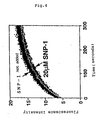
- the purified protein was confirmed to have ADP-ribosyl cyclase activity by means of the NGD method mentioned above. see Fig. 1 of the accompanying drawings.
- a phage library having random sequences consisting of 15 amino acid residues was prepared using the method described in Biochemistry, 35, 10441, 1996.
- a monoclonal antibody to BST-1, BEC7 (Okuyama Y. et al; Biochem. Biophys. Res. Commun. 228 , 838 - 845, 1996), was diluted with 10mM phosphate buffer, pH 7.0, and coated on 96-well microtiter wells at 4°C overnight at the ratio of 3 ⁇ g/well.
- Purified BST-1 was added to the microtiter wells after dilution with 10mM phosphate buffer, pH 7.0, at the ratio of 5 ⁇ g/well.
- BST-1 was thus immobilized on the wells via the antibody.
- Each well was blocked with 10mM phosphate buffer, pH 7.0, containing 1% bovine serum albumin at room temperature for one hour.
- 10 12 phage library was added to 100 ⁇ l of a buffer (10mM phosphate buffer, pH 7. 0, containing 1% bovine serum albumin, 0. 05% Tween 20) and the mixture was allowed to react with BST-1 immobilized on the wells at room temperature for one hour.
- the wells were washed with a washing buffer (10mM phosphate buffer, pH 7.0, and 0.05% Tween 20) ten times so as to remove unbound phage.
- Phage bound to BST-1 were eluted out with glycine buffer, pH 2.2, and neutralized with 1 M Tris-HCl, pH 9.5.
- E. coli K91 Kan obtained from Dr. G.P. Smith of Missouri University was infected with the phage and in order to amplify the phage the infected cells were cultured in LB medium containing tetracycline. The phages in the supernatant were concentrated by polyethylene glycol precipitation, and the concentrated phage were used in the second round. This procedure was repeated three times in total to select phage binding to BST-1.
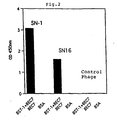
- E. coli cells K91 Kan were infected again with the phage selected in Reference Example 2 and were then cultured on LB agar plates containing tetracycline to form single colonies. The colonies were cultured overnight in LB medium containing tetracycline, and supernatants including the phage were subjected to polyethylene glycol precipitation for the purification of the phage on the next day. The phage were added to a 96-well microtiter plate, on which BST-1 had been immobilized in advance (see Reference Example 2), at the ratio of about 10 10 phage/well, and allowed to react at room temperature for one hour.
- BST-1 on the well was allowed to react with M13 phage antibody (Pharmacia) labeled with horseradish peroxidase (5000 times diluted) at room temperature for 30 minutes.
- M13 phage antibody Pharmacia
- horseradish peroxidase 5000 times diluted
- the substrate 3,3',5,5'-tetramethyl benzidine
- Absorbance at 450nm was measured using a microplate reader. The results are shown in Fig. 2.
- the nucleotide sequences of the clones that bound to BST-1 in Reference Example 3 were determined.
- the phage were subjected to deproteinization by treating them with phenol and chloroform, and the DNA was precipitated by ethanol and used as a template for nucleotide sequencing.
- a primer was established on the basis of the nucleotide sequence of the vector used, Fuse 5 vector (Smith G.P. and Scott J.K.; Methods Enzymol. 21 7, 228-257, 1993), and the nucleotide sequences of the clones were determined by using the ABI PRISM dye termination cycle sequencing ready reaction kit (Applied Biosystems). The nucleotide sequences of two clones were thus determined (SN-1: SEQ ID NO: 1, SN-16: SEQ ID NO: 2).
- Two peptides each consisting of 15 amino acid residues, were synthesized by an automated peptide synthesizer on the basis of the amino acid sequences depicted in SEQ ID NOs: 1 and 2 which were deduced from the nucleotide sequences determined.
- the synthetic peptides having the sequences depicted in SEQ ID NOs : 1 and 2 were designated as SNP-1 and SNP-16, respectively.
- the peptides were found to have a purity of 95% or more by means of reverse HPLC.
- BST-1 was immobilized at 2800 resonance units (RU) on the sensor chip CM5 of a bio-sensor for analyzing protein interactions, BIACORE (Biacore K.K.), by means of an amine coupling method.
- the synthetic peptides were passed through the sensor chip at the flow rate of 40 ⁇ l/min at the concentration of 500nM.
- the amounts (RU) of the peptides bound to BST-1 are shown in Fig. 5.
- the peptides other than #1, #3, #6, #13, and #14 have lost their binding ability, which shows that the amino acid residues other than positions 1, 3, 6, 13, and 14 are important for the binding.
- the peptides #1, #3, #6, #13, and #14 have retained their binding ability, which shows that the mutations at the positions 1, 3, 6, 13, and 14 of SNP-1 would not change the binding ability to BST-1.
- the binding ability to BST-1 of SNP-1 derivative that contains a biotinylated N-terminus or C-terminus was compared with that of the prototype SNP-1.
- the biotinylated SNP-1 was prepared by binding the amino group of the N-terminus of SNP-1 with Sulfo-NHS-LC-Biotin (PIERCE) and purifying the product using reverse HPLC.
- SNP-1 having the additional amino acid residue Lys at the C-terminus was chemically synthesized, and biotin was bound to the amino group of the Lys residue.
- the SNP-1 derivative was purified by reverse HPLC and confirmed to have more than 95% purity.
- the derivative was named SNPb-1.
- BST-1 was immobilized at 2800 resonance units (RU) on the sensor chip CM5 of a bio-sensor for analyzing protein interactions, BIACORE (Biacore K.K.), by means of an amine coupling method.
- the synthetic peptides were passed through the sensor chip at a flow rate of 40 ⁇ l/min at a concentration of from 400nM to 2000nM. An equilibrium binding value was obtained for each concentration. Based on the equilibrium binding values, dissociation constants were calculated by means of the Scatchard plot method (Hulme E. C.; Receptor-binding studies, a brief outline, in Receptor Biochemistry: A Practical Approach, 303-315, IRL press, l990).
- the control peptide described in Example 2 was used as a negative control and showed no binding ability.
- the test results are shown in Fig. 6.
- Example 6 Inhibition of cADP-ribose hydrolase activity by the synthetic peptides
- BST-1 has a cADP-ribose hydrolase activity that hydrolytically converts cADP-ribose to ADP-ribose, as well as the ADP-ribosyl cyclase activity. Accordingly, it was investigated whether or not SNP-1 can also inhibit the cADP-ribose hydrolase activity of BST-1.
- the hydrolase activity was determined according to the method described in FEBS letters, 356 , 244, l994.
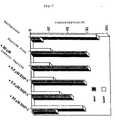
- BST-1 at the concentration of 50 ⁇ g/ml was mixed with the substrate cADP-ribose at a concentration of 20 ⁇ M and allowed to react at 37°C for four hours.
- the hydrolyzed product, ADP-ribose was separated by HPLC and the rate of ADP-ribose formation was determined on the basis of the peak area.
- the total peak area of cADP-ribose and ADP-ribose corresponds to 100%.
- SNP-1 was added to the reaction system at a concentration of 0.5 ⁇ M, 2.0 ⁇ M, or 20 ⁇ M to investigate the inhibition activity.
- 20 ⁇ M of the control peptide described in Example 2 were used as a control.
- the test results are shown in Fig. 7, which reveals that SNP-1 inhibits cADP-ribose hydrolase activity dose-dependently, while the control peptide does not inhibit the activity at all at the concentration of 20 ⁇ M.
- BST-1 was purified by affinity chromatography which takes advantage of the binding between BST-1 and SNP-1 derivative which contains biotinylated C-terminal, i.e., SNPb-1.
- an affinity column was prepared by binding 1x 10 -7 mol of SNPb-1, which was synthesized according to Example 5, to 1 ml of ultra avidin-agarose gel in a 20mM MES buffer solution, pH 6.0.
- BST-1 Fifty ml of culture supernatant containing expressed and secreted BST-1 was diluted fivefold with a 20mM acetate buffer solution, pH 5.0, and partially purified with a cation-exchange chromatography, followed by desalting by means of dialysis against a 20mM MES buffer solution, pH 6.0. Desalted BST-1 was charged into the afore-mentioned affinity chromatography column and eluted out using 0.5ml of a 20mM MES buffer (pH 6.0) containing 1.0M NaCl, to obtain purified BST-1.
- Synthetic peptide SNP-1 was mixed with a carrier therefor and encapsulated by conventionally so as to obtain capsules for treating rheumatoid arthritis.
Landscapes
- Chemical & Material Sciences (AREA)
- Health & Medical Sciences (AREA)
- Organic Chemistry (AREA)
- General Health & Medical Sciences (AREA)
- Life Sciences & Earth Sciences (AREA)
- Medicinal Chemistry (AREA)
- Nuclear Medicine, Radiotherapy & Molecular Imaging (AREA)
- Genetics & Genomics (AREA)
- General Chemical & Material Sciences (AREA)
- Animal Behavior & Ethology (AREA)
- Chemical Kinetics & Catalysis (AREA)
- Public Health (AREA)
- Veterinary Medicine (AREA)
- Biochemistry (AREA)
- Biophysics (AREA)
- Pharmacology & Pharmacy (AREA)
- Molecular Biology (AREA)
- Proteomics, Peptides & Aminoacids (AREA)
- Pain & Pain Management (AREA)
- Rheumatology (AREA)
- Peptides Or Proteins (AREA)
- Medicines That Contain Protein Lipid Enzymes And Other Medicines (AREA)
- Preparation Of Compounds By Using Micro-Organisms (AREA)
Applications Claiming Priority (2)
| Application Number | Priority Date | Filing Date | Title |
|---|---|---|---|
| JP10118586A JPH11310596A (ja) | 1998-04-28 | 1998-04-28 | 骨髄間質細胞抗原結合蛋白質 |
| JP11858698 | 1998-04-28 |
Publications (2)
| Publication Number | Publication Date |
|---|---|
| EP0953572A2 true EP0953572A2 (de) | 1999-11-03 |
| EP0953572A3 EP0953572A3 (de) | 1999-11-17 |
Family
ID=14740263
Family Applications (1)
| Application Number | Title | Priority Date | Filing Date |
|---|---|---|---|
| EP99107452A Withdrawn EP0953572A3 (de) | 1998-04-28 | 1999-04-28 | An das Antigen der Knochenmarkstützzellen anbindende Peptide |
Country Status (4)
| Country | Link |
|---|---|
| US (1) | US6414113B1 (de) |
| EP (1) | EP0953572A3 (de) |
| JP (1) | JPH11310596A (de) |
| CA (1) | CA2269103A1 (de) |
Cited By (2)
| Publication number | Priority date | Publication date | Assignee | Title |
|---|---|---|---|---|
| WO2000037089A1 (en) * | 1998-12-18 | 2000-06-29 | University Of Bath | Cyclic adenosine diphosphate ribose analogues for modulating t cell activity |
| WO2002098397A3 (en) * | 2001-06-07 | 2003-03-13 | Univ Bath | Therapeutic compositions for modulating the immune response in a mammal and use thereof |
Families Citing this family (4)
| Publication number | Priority date | Publication date | Assignee | Title |
|---|---|---|---|---|
| DE10238846A1 (de) * | 2002-08-20 | 2004-03-04 | Nemod Immuntherapie Ag | Aktive Fusionsproteine und Verfahren zu ihrer Herstellung |
| US9175092B2 (en) | 2011-06-28 | 2015-11-03 | Oxford Biotherapeutics Ltd | Antibodies to bone marrow stromal antigen 1 |
| US9447178B2 (en) * | 2011-06-28 | 2016-09-20 | Oxford Biotherapeutics Ltd. | Therapeutic and diagnostic target |
| CN117777238A (zh) * | 2017-09-15 | 2024-03-29 | 凯恩塞恩斯株式会社 | 作为自身免疫疾病及骨病治疗剂的肽的用途 |
Family Cites Families (1)
| Publication number | Priority date | Publication date | Assignee | Title |
|---|---|---|---|---|
| AU6123894A (en) | 1993-01-29 | 1994-08-15 | Board Of Trustees Of The Leland Stanford Junior University | Modulation of physiological responses of lymphocytes by cd38 or antibodies thereto |
-
1998
- 1998-04-28 JP JP10118586A patent/JPH11310596A/ja active Pending
-
1999
- 1999-04-27 US US09/300,410 patent/US6414113B1/en not_active Expired - Fee Related
- 1999-04-28 CA CA002269103A patent/CA2269103A1/en not_active Abandoned
- 1999-04-28 EP EP99107452A patent/EP0953572A3/de not_active Withdrawn
Cited By (3)
| Publication number | Priority date | Publication date | Assignee | Title |
|---|---|---|---|---|
| WO2000037089A1 (en) * | 1998-12-18 | 2000-06-29 | University Of Bath | Cyclic adenosine diphosphate ribose analogues for modulating t cell activity |
| WO2002098397A3 (en) * | 2001-06-07 | 2003-03-13 | Univ Bath | Therapeutic compositions for modulating the immune response in a mammal and use thereof |
| GB2392095A (en) * | 2001-06-07 | 2004-02-25 | Univ Bath | Therapeutic compositions for modulating the immune response in a mammal and use thereof |
Also Published As
| Publication number | Publication date |
|---|---|
| EP0953572A3 (de) | 1999-11-17 |
| JPH11310596A (ja) | 1999-11-09 |
| CA2269103A1 (en) | 1999-10-28 |
| US6414113B1 (en) | 2002-07-02 |
Similar Documents
| Publication | Publication Date | Title |
|---|---|---|
| US6548634B1 (en) | Synthetic peptides having FGF receptor affinity | |
| JP4060886B2 (ja) | Sh3結合ペプチドの単離および利用 | |
| US20200199179A1 (en) | Peptide library and use thereof | |
| JP2003518075A (ja) | 生理活性化合物の消失半減期延長のための方法及び組成物 | |
| WO1996023813A1 (en) | Peptides and compounds that bind to sh2 domains | |
| CN113150137B (zh) | 一种ndm-1单克隆抗体的制备方法及其应用 | |
| EP2197900A2 (de) | 1-adrenozeptor-antikörper inhibierende, mutierte, doppelt cyclisierte rezeptorpeptide | |
| JP4215274B2 (ja) | Src SH3結合性ペプチドとその分離法と利用法 | |
| JP2002516068A (ja) | Staphylococcusaureus遺伝子およびポリペプチド | |
| JPH10512445A (ja) | Il−2r結合ポリペプチド及びそれをコードするdna分子 | |
| CZ151696A3 (en) | Bmp receptor encoding dna sequence | |
| US6414113B1 (en) | Peptides binding to bone marrow stromal cell antigen | |
| JPH10509044A (ja) | Gapタンパク質sh3ドメインに結合可能なペプチド、それをコードするヌクレオチド配列ならびにその製造法および使用 | |
| EP1410802A1 (de) | Zelltod-induktoren für mastzellen | |
| DK1981904T3 (en) | Peptide domain from the enclosure of a HERV-W virus, which is required for reaction with a hASCT receptor | |
| JP4604184B2 (ja) | 新規糖鎖認識蛋白質及びその遺伝子 | |
| US6045797A (en) | Treatment or diagnosis of diseases or conditions associated with a BLM domain | |
| JPH05271291A (ja) | 機能性ポリペプチド | |
| US6303574B1 (en) | Scr SH3 binding peptides and methods of isolating and using same | |
| JPH02311498A (ja) | 機能性ポリペプチド | |
| US20030187223A1 (en) | Secreted frizzled related protein,sFRP, fragments and methods of use thereof | |
| JP2006513143A (ja) | タンパク質チロシンホスファターゼ阻害剤 | |
| WO1997013522A1 (en) | Generating d-peptides: methods and compositions | |
| US6812336B1 (en) | Transcription factor coactivator protein, p/CIP | |
| CA2330168A1 (en) | Protein for regulating apoptosis |
Legal Events
| Date | Code | Title | Description |
|---|---|---|---|
| PUAI | Public reference made under article 153(3) epc to a published international application that has entered the european phase |
Free format text: ORIGINAL CODE: 0009012 |
|
| PUAL | Search report despatched |
Free format text: ORIGINAL CODE: 0009013 |
|
| 17P | Request for examination filed |
Effective date: 19990525 |
|
| AK | Designated contracting states |
Kind code of ref document: A2 Designated state(s): DE FR GB |
|
| AX | Request for extension of the european patent |
Free format text: AL;LT;LV;MK;RO;SI |
|
| AK | Designated contracting states |
Kind code of ref document: A3 Designated state(s): AT BE CH CY DE DK ES FI FR GB GR IE IT LI LU MC NL PT SE |
|
| AX | Request for extension of the european patent |
Free format text: AL;LT;LV;MK;RO;SI |
|
| AKX | Designation fees paid |
Free format text: DE FR GB |
|
| 17Q | First examination report despatched |
Effective date: 20010802 |
|
| STAA | Information on the status of an ep patent application or granted ep patent |
Free format text: STATUS: THE APPLICATION IS DEEMED TO BE WITHDRAWN |
|
| 18D | Application deemed to be withdrawn |
Effective date: 20020709 |