EP0953648A2 - Bei einer transkomplementenden Zellinie erzeugter defektiver Virenimpfstoff - Google Patents
Bei einer transkomplementenden Zellinie erzeugter defektiver Virenimpfstoff Download PDFInfo
- Publication number
- EP0953648A2 EP0953648A2 EP19990106514 EP99106514A EP0953648A2 EP 0953648 A2 EP0953648 A2 EP 0953648A2 EP 19990106514 EP19990106514 EP 19990106514 EP 99106514 A EP99106514 A EP 99106514A EP 0953648 A2 EP0953648 A2 EP 0953648A2
- Authority
- EP
- European Patent Office
- Prior art keywords
- virus
- gene
- defect
- mutant
- cell
- Prior art date
- Legal status (The legal status is an assumption and is not a legal conclusion. Google has not performed a legal analysis and makes no representation as to the accuracy of the status listed.)
- Withdrawn
Links
- 229960005486 vaccine Drugs 0.000 title claims abstract description 60
- 230000002950 deficient Effects 0.000 title claims abstract description 13
- 230000003612 virological effect Effects 0.000 title claims description 11
- 241000700605 Viruses Species 0.000 claims abstract description 267
- 108090000623 proteins and genes Proteins 0.000 claims abstract description 111
- 208000015181 infectious disease Diseases 0.000 claims abstract description 48
- 102000004169 proteins and genes Human genes 0.000 claims abstract description 40
- 238000004519 manufacturing process Methods 0.000 claims abstract description 34
- 230000002458 infectious effect Effects 0.000 claims abstract description 26
- 230000002163 immunogen Effects 0.000 claims abstract description 19
- 108700005077 Viral Genes Proteins 0.000 claims abstract description 14
- 230000001717 pathogenic effect Effects 0.000 claims abstract description 14
- 244000052769 pathogen Species 0.000 claims abstract description 13
- 241000894007 species Species 0.000 claims abstract description 11
- 230000007547 defect Effects 0.000 claims abstract 18
- 241000700584 Simplexvirus Species 0.000 claims description 42
- 238000000034 method Methods 0.000 claims description 35
- 238000002360 preparation method Methods 0.000 claims description 28
- 239000002245 particle Substances 0.000 claims description 20
- 101150055782 gH gene Proteins 0.000 claims description 18
- 108090000288 Glycoproteins Proteins 0.000 claims description 14
- 102000003886 Glycoproteins Human genes 0.000 claims description 12
- 108700039887 Essential Genes Proteins 0.000 claims description 11
- 230000028993 immune response Effects 0.000 claims description 10
- 239000002773 nucleotide Substances 0.000 claims description 10
- 125000003729 nucleotide group Chemical group 0.000 claims description 10
- 230000010076 replication Effects 0.000 claims description 10
- 208000032420 Latent Infection Diseases 0.000 claims description 8
- 208000037771 disease arising from reactivation of latent virus Diseases 0.000 claims description 8
- 230000007420 reactivation Effects 0.000 claims description 7
- 230000036039 immunity Effects 0.000 claims description 6
- 230000001225 therapeutic effect Effects 0.000 claims description 6
- 230000000069 prophylactic effect Effects 0.000 claims description 5
- 241001529453 unidentified herpesvirus Species 0.000 claims description 4
- 238000012258 culturing Methods 0.000 claims description 3
- 238000004806 packaging method and process Methods 0.000 claims description 3
- 230000000737 periodic effect Effects 0.000 claims description 3
- 229960004854 viral vaccine Drugs 0.000 claims description 3
- 238000004113 cell culture Methods 0.000 claims 1
- 239000013598 vector Substances 0.000 abstract description 15
- 230000021633 leukocyte mediated immunity Effects 0.000 abstract 1
- 210000004027 cell Anatomy 0.000 description 78
- 239000013612 plasmid Substances 0.000 description 37
- 108020004414 DNA Proteins 0.000 description 26
- 239000012634 fragment Substances 0.000 description 14
- 238000002255 vaccination Methods 0.000 description 14
- 239000000427 antigen Substances 0.000 description 13
- 108091007433 antigens Proteins 0.000 description 13
- 102000036639 antigens Human genes 0.000 description 13
- 230000002238 attenuated effect Effects 0.000 description 13
- 108091026890 Coding region Proteins 0.000 description 11
- 210000000609 ganglia Anatomy 0.000 description 11
- 241000701022 Cytomegalovirus Species 0.000 description 9
- 108091034117 Oligonucleotide Proteins 0.000 description 9
- 238000012217 deletion Methods 0.000 description 9
- 230000037430 deletion Effects 0.000 description 9
- 241000700588 Human alphaherpesvirus 1 Species 0.000 description 7
- 108700002232 Immediate-Early Genes Proteins 0.000 description 6
- 241001465754 Metazoa Species 0.000 description 6
- 241000700618 Vaccinia virus Species 0.000 description 6
- 108010067390 Viral Proteins Proteins 0.000 description 6
- JLCPHMBAVCMARE-UHFFFAOYSA-N [3-[[3-[[3-[[3-[[3-[[3-[[3-[[3-[[3-[[3-[[3-[[5-(2-amino-6-oxo-1H-purin-9-yl)-3-[[3-[[3-[[3-[[3-[[3-[[5-(2-amino-6-oxo-1H-purin-9-yl)-3-[[5-(2-amino-6-oxo-1H-purin-9-yl)-3-hydroxyoxolan-2-yl]methoxy-hydroxyphosphoryl]oxyoxolan-2-yl]methoxy-hydroxyphosphoryl]oxy-5-(5-methyl-2,4-dioxopyrimidin-1-yl)oxolan-2-yl]methoxy-hydroxyphosphoryl]oxy-5-(6-aminopurin-9-yl)oxolan-2-yl]methoxy-hydroxyphosphoryl]oxy-5-(6-aminopurin-9-yl)oxolan-2-yl]methoxy-hydroxyphosphoryl]oxy-5-(6-aminopurin-9-yl)oxolan-2-yl]methoxy-hydroxyphosphoryl]oxy-5-(6-aminopurin-9-yl)oxolan-2-yl]methoxy-hydroxyphosphoryl]oxyoxolan-2-yl]methoxy-hydroxyphosphoryl]oxy-5-(5-methyl-2,4-dioxopyrimidin-1-yl)oxolan-2-yl]methoxy-hydroxyphosphoryl]oxy-5-(4-amino-2-oxopyrimidin-1-yl)oxolan-2-yl]methoxy-hydroxyphosphoryl]oxy-5-(5-methyl-2,4-dioxopyrimidin-1-yl)oxolan-2-yl]methoxy-hydroxyphosphoryl]oxy-5-(5-methyl-2,4-dioxopyrimidin-1-yl)oxolan-2-yl]methoxy-hydroxyphosphoryl]oxy-5-(6-aminopurin-9-yl)oxolan-2-yl]methoxy-hydroxyphosphoryl]oxy-5-(6-aminopurin-9-yl)oxolan-2-yl]methoxy-hydroxyphosphoryl]oxy-5-(4-amino-2-oxopyrimidin-1-yl)oxolan-2-yl]methoxy-hydroxyphosphoryl]oxy-5-(4-amino-2-oxopyrimidin-1-yl)oxolan-2-yl]methoxy-hydroxyphosphoryl]oxy-5-(4-amino-2-oxopyrimidin-1-yl)oxolan-2-yl]methoxy-hydroxyphosphoryl]oxy-5-(6-aminopurin-9-yl)oxolan-2-yl]methoxy-hydroxyphosphoryl]oxy-5-(4-amino-2-oxopyrimidin-1-yl)oxolan-2-yl]methyl [5-(6-aminopurin-9-yl)-2-(hydroxymethyl)oxolan-3-yl] hydrogen phosphate Polymers Cc1cn(C2CC(OP(O)(=O)OCC3OC(CC3OP(O)(=O)OCC3OC(CC3O)n3cnc4c3nc(N)[nH]c4=O)n3cnc4c3nc(N)[nH]c4=O)C(COP(O)(=O)OC3CC(OC3COP(O)(=O)OC3CC(OC3COP(O)(=O)OC3CC(OC3COP(O)(=O)OC3CC(OC3COP(O)(=O)OC3CC(OC3COP(O)(=O)OC3CC(OC3COP(O)(=O)OC3CC(OC3COP(O)(=O)OC3CC(OC3COP(O)(=O)OC3CC(OC3COP(O)(=O)OC3CC(OC3COP(O)(=O)OC3CC(OC3COP(O)(=O)OC3CC(OC3COP(O)(=O)OC3CC(OC3COP(O)(=O)OC3CC(OC3COP(O)(=O)OC3CC(OC3COP(O)(=O)OC3CC(OC3COP(O)(=O)OC3CC(OC3CO)n3cnc4c(N)ncnc34)n3ccc(N)nc3=O)n3cnc4c(N)ncnc34)n3ccc(N)nc3=O)n3ccc(N)nc3=O)n3ccc(N)nc3=O)n3cnc4c(N)ncnc34)n3cnc4c(N)ncnc34)n3cc(C)c(=O)[nH]c3=O)n3cc(C)c(=O)[nH]c3=O)n3ccc(N)nc3=O)n3cc(C)c(=O)[nH]c3=O)n3cnc4c3nc(N)[nH]c4=O)n3cnc4c(N)ncnc34)n3cnc4c(N)ncnc34)n3cnc4c(N)ncnc34)n3cnc4c(N)ncnc34)O2)c(=O)[nH]c1=O JLCPHMBAVCMARE-UHFFFAOYSA-N 0.000 description 6
- 108010005774 beta-Galactosidase Proteins 0.000 description 6
- 239000000047 product Substances 0.000 description 6
- 241000725303 Human immunodeficiency virus Species 0.000 description 5
- 238000013459 approach Methods 0.000 description 5
- 210000001151 cytotoxic T lymphocyte Anatomy 0.000 description 5
- LOKCTEFSRHRXRJ-UHFFFAOYSA-I dipotassium trisodium dihydrogen phosphate hydrogen phosphate dichloride Chemical compound P(=O)(O)(O)[O-].[K+].P(=O)(O)([O-])[O-].[Na+].[Na+].[Cl-].[K+].[Cl-].[Na+] LOKCTEFSRHRXRJ-UHFFFAOYSA-I 0.000 description 5
- 238000002649 immunization Methods 0.000 description 5
- 238000001727 in vivo Methods 0.000 description 5
- 239000002953 phosphate buffered saline Substances 0.000 description 5
- 230000029812 viral genome replication Effects 0.000 description 5
- 229920001817 Agar Polymers 0.000 description 4
- 241000699666 Mus <mouse, genus> Species 0.000 description 4
- 241000699670 Mus sp. Species 0.000 description 4
- 101900350318 Simian immunodeficiency virus Surface protein gp120 Proteins 0.000 description 4
- 230000001154 acute effect Effects 0.000 description 4
- 239000008272 agar Substances 0.000 description 4
- 238000003556 assay Methods 0.000 description 4
- 230000007969 cellular immunity Effects 0.000 description 4
- 108700004025 env Genes Proteins 0.000 description 4
- 101150030339 env gene Proteins 0.000 description 4
- HDKLIZDXVUCLHQ-UHFFFAOYSA-N non-3-en-2-one Chemical compound CCCCCC=CC(C)=O HDKLIZDXVUCLHQ-UHFFFAOYSA-N 0.000 description 4
- 238000005215 recombination Methods 0.000 description 4
- 230000006798 recombination Effects 0.000 description 4
- 210000003501 vero cell Anatomy 0.000 description 4
- 230000009385 viral infection Effects 0.000 description 4
- OPIFSICVWOWJMJ-AEOCFKNESA-N 5-bromo-4-chloro-3-indolyl beta-D-galactoside Chemical compound O[C@@H]1[C@@H](O)[C@@H](O)[C@@H](CO)O[C@H]1OC1=CNC2=CC=C(Br)C(Cl)=C12 OPIFSICVWOWJMJ-AEOCFKNESA-N 0.000 description 3
- 101000583086 Bunodosoma granuliferum Delta-actitoxin-Bgr2b Proteins 0.000 description 3
- 241000282412 Homo Species 0.000 description 3
- VEZXCJBBBCKRPI-UHFFFAOYSA-N beta-propiolactone Chemical compound O=C1CCO1 VEZXCJBBBCKRPI-UHFFFAOYSA-N 0.000 description 3
- 238000005119 centrifugation Methods 0.000 description 3
- 238000010276 construction Methods 0.000 description 3
- 230000029087 digestion Effects 0.000 description 3
- 241001493065 dsRNA viruses Species 0.000 description 3
- 210000005069 ears Anatomy 0.000 description 3
- 230000002068 genetic effect Effects 0.000 description 3
- 210000000987 immune system Anatomy 0.000 description 3
- 238000000338 in vitro Methods 0.000 description 3
- 238000011081 inoculation Methods 0.000 description 3
- 230000003902 lesion Effects 0.000 description 3
- 229960000380 propiolactone Drugs 0.000 description 3
- 230000001681 protective effect Effects 0.000 description 3
- 108091008146 restriction endonucleases Proteins 0.000 description 3
- 239000000523 sample Substances 0.000 description 3
- 238000010561 standard procedure Methods 0.000 description 3
- 238000011282 treatment Methods 0.000 description 3
- 238000011144 upstream manufacturing Methods 0.000 description 3
- 210000002845 virion Anatomy 0.000 description 3
- 108091032973 (ribonucleotides)n+m Proteins 0.000 description 2
- 101100296182 Caenorhabditis elegans paf-2 gene Proteins 0.000 description 2
- 241000282693 Cercopithecidae Species 0.000 description 2
- 241000991587 Enterovirus C Species 0.000 description 2
- 108090000790 Enzymes Proteins 0.000 description 2
- 102000004190 Enzymes Human genes 0.000 description 2
- 241000588724 Escherichia coli Species 0.000 description 2
- 101100145155 Escherichia phage lambda cIII gene Proteins 0.000 description 2
- 241000701074 Human alphaherpesvirus 2 Species 0.000 description 2
- 241000701024 Human betaherpesvirus 5 Species 0.000 description 2
- 206010061598 Immunodeficiency Diseases 0.000 description 2
- 208000029462 Immunodeficiency disease Diseases 0.000 description 2
- 229930193140 Neomycin Natural products 0.000 description 2
- 238000002105 Southern blotting Methods 0.000 description 2
- 239000002253 acid Substances 0.000 description 2
- 150000007513 acids Chemical class 0.000 description 2
- 239000002671 adjuvant Substances 0.000 description 2
- 230000000890 antigenic effect Effects 0.000 description 2
- 230000008901 benefit Effects 0.000 description 2
- 239000001506 calcium phosphate Substances 0.000 description 2
- 229910000389 calcium phosphate Inorganic materials 0.000 description 2
- 235000011010 calcium phosphates Nutrition 0.000 description 2
- 230000000295 complement effect Effects 0.000 description 2
- 229940079593 drug Drugs 0.000 description 2
- 239000003814 drug Substances 0.000 description 2
- 230000000694 effects Effects 0.000 description 2
- 210000003527 eukaryotic cell Anatomy 0.000 description 2
- 238000002474 experimental method Methods 0.000 description 2
- 101150036031 gD gene Proteins 0.000 description 2
- 238000010353 genetic engineering Methods 0.000 description 2
- 210000002443 helper t lymphocyte Anatomy 0.000 description 2
- 210000005260 human cell Anatomy 0.000 description 2
- 230000007813 immunodeficiency Effects 0.000 description 2
- 230000001939 inductive effect Effects 0.000 description 2
- 239000000463 material Substances 0.000 description 2
- 238000010369 molecular cloning Methods 0.000 description 2
- 229960004927 neomycin Drugs 0.000 description 2
- 210000002569 neuron Anatomy 0.000 description 2
- 239000000546 pharmaceutical excipient Substances 0.000 description 2
- 238000011160 research Methods 0.000 description 2
- 230000004044 response Effects 0.000 description 2
- 238000002741 site-directed mutagenesis Methods 0.000 description 2
- 230000000638 stimulation Effects 0.000 description 2
- 230000008093 supporting effect Effects 0.000 description 2
- 238000013518 transcription Methods 0.000 description 2
- 230000035897 transcription Effects 0.000 description 2
- 238000001890 transfection Methods 0.000 description 2
- 230000014616 translation Effects 0.000 description 2
- QORWJWZARLRLPR-UHFFFAOYSA-H tricalcium bis(phosphate) Chemical compound [Ca+2].[Ca+2].[Ca+2].[O-]P([O-])([O-])=O.[O-]P([O-])([O-])=O QORWJWZARLRLPR-UHFFFAOYSA-H 0.000 description 2
- 241000701161 unidentified adenovirus Species 0.000 description 2
- 241001430294 unidentified retrovirus Species 0.000 description 2
- 102000040650 (ribonucleotides)n+m Human genes 0.000 description 1
- 102100022717 Atypical chemokine receptor 1 Human genes 0.000 description 1
- 108020004705 Codon Proteins 0.000 description 1
- 108020004635 Complementary DNA Proteins 0.000 description 1
- 241000699800 Cricetinae Species 0.000 description 1
- 102000053602 DNA Human genes 0.000 description 1
- 241000450599 DNA viruses Species 0.000 description 1
- 101710177291 Gag polyprotein Proteins 0.000 description 1
- 206010061978 Genital lesion Diseases 0.000 description 1
- 241000700321 Herpes simplex virus (type 1 / strain SC16) Species 0.000 description 1
- 241000282414 Homo sapiens Species 0.000 description 1
- 101000678879 Homo sapiens Atypical chemokine receptor 1 Proteins 0.000 description 1
- 241001135569 Human adenovirus 5 Species 0.000 description 1
- 101150027427 ICP4 gene Proteins 0.000 description 1
- XQFRJNBWHJMXHO-RRKCRQDMSA-N IDUR Chemical compound C1[C@H](O)[C@@H](CO)O[C@H]1N1C(=O)NC(=O)C(I)=C1 XQFRJNBWHJMXHO-RRKCRQDMSA-N 0.000 description 1
- 108060003951 Immunoglobulin Proteins 0.000 description 1
- 102000043129 MHC class I family Human genes 0.000 description 1
- 108091054437 MHC class I family Proteins 0.000 description 1
- 102000043131 MHC class II family Human genes 0.000 description 1
- 108091054438 MHC class II family Proteins 0.000 description 1
- 241000282553 Macaca Species 0.000 description 1
- 101710125418 Major capsid protein Proteins 0.000 description 1
- 208000012902 Nervous system disease Diseases 0.000 description 1
- 241000700629 Orthopoxvirus Species 0.000 description 1
- 241001631646 Papillomaviridae Species 0.000 description 1
- 108010033276 Peptide Fragments Proteins 0.000 description 1
- 102000007079 Peptide Fragments Human genes 0.000 description 1
- 102000004160 Phosphoric Monoester Hydrolases Human genes 0.000 description 1
- 108090000608 Phosphoric Monoester Hydrolases Proteins 0.000 description 1
- 208000000474 Poliomyelitis Diseases 0.000 description 1
- 241000125945 Protoparvovirus Species 0.000 description 1
- 101000999689 Saimiriine herpesvirus 2 (strain 11) Transcriptional regulator ICP22 homolog Proteins 0.000 description 1
- 241000713311 Simian immunodeficiency virus Species 0.000 description 1
- 108020004682 Single-Stranded DNA Proteins 0.000 description 1
- 108091081024 Start codon Proteins 0.000 description 1
- 101710172711 Structural protein Proteins 0.000 description 1
- CZMRCDWAGMRECN-UGDNZRGBSA-N Sucrose Chemical compound O[C@H]1[C@H](O)[C@@H](CO)O[C@@]1(CO)O[C@@H]1[C@H](O)[C@@H](O)[C@H](O)[C@@H](CO)O1 CZMRCDWAGMRECN-UGDNZRGBSA-N 0.000 description 1
- 229930006000 Sucrose Natural products 0.000 description 1
- 230000005867 T cell response Effects 0.000 description 1
- 210000001744 T-lymphocyte Anatomy 0.000 description 1
- 101800000385 Transmembrane protein Proteins 0.000 description 1
- 101800003344 Vaccinia growth factor Proteins 0.000 description 1
- 206010046865 Vaccinia virus infection Diseases 0.000 description 1
- 241000700647 Variola virus Species 0.000 description 1
- 108010003533 Viral Envelope Proteins Proteins 0.000 description 1
- 208000036142 Viral infection Diseases 0.000 description 1
- MKUXAQIIEYXACX-UHFFFAOYSA-N aciclovir Chemical compound N1C(N)=NC(=O)C2=C1N(COCCO)C=N2 MKUXAQIIEYXACX-UHFFFAOYSA-N 0.000 description 1
- 229960004150 aciclovir Drugs 0.000 description 1
- 238000010171 animal model Methods 0.000 description 1
- 238000000137 annealing Methods 0.000 description 1
- 230000005875 antibody response Effects 0.000 description 1
- 210000000612 antigen-presenting cell Anatomy 0.000 description 1
- 229940031567 attenuated vaccine Drugs 0.000 description 1
- 210000003719 b-lymphocyte Anatomy 0.000 description 1
- 230000009286 beneficial effect Effects 0.000 description 1
- 102000005936 beta-Galactosidase Human genes 0.000 description 1
- 238000010804 cDNA synthesis Methods 0.000 description 1
- 239000000969 carrier Substances 0.000 description 1
- 230000006652 catabolic pathway Effects 0.000 description 1
- 239000013553 cell monolayer Substances 0.000 description 1
- 230000001413 cellular effect Effects 0.000 description 1
- 230000008859 change Effects 0.000 description 1
- 238000006243 chemical reaction Methods 0.000 description 1
- 238000002512 chemotherapy Methods 0.000 description 1
- 239000003593 chromogenic compound Substances 0.000 description 1
- 238000003776 cleavage reaction Methods 0.000 description 1
- 238000010367 cloning Methods 0.000 description 1
- 238000000975 co-precipitation Methods 0.000 description 1
- 239000002299 complementary DNA Substances 0.000 description 1
- 238000012790 confirmation Methods 0.000 description 1
- 230000001086 cytosolic effect Effects 0.000 description 1
- 230000002939 deleterious effect Effects 0.000 description 1
- 238000011161 development Methods 0.000 description 1
- 238000010790 dilution Methods 0.000 description 1
- 239000012895 dilution Substances 0.000 description 1
- 201000010099 disease Diseases 0.000 description 1
- 208000037265 diseases, disorders, signs and symptoms Diseases 0.000 description 1
- 238000001493 electron microscopy Methods 0.000 description 1
- 206010014599 encephalitis Diseases 0.000 description 1
- 230000001815 facial effect Effects 0.000 description 1
- 101150118163 h gene Proteins 0.000 description 1
- 238000003306 harvesting Methods 0.000 description 1
- 244000144980 herd Species 0.000 description 1
- 238000000265 homogenisation Methods 0.000 description 1
- 230000005745 host immune response Effects 0.000 description 1
- 230000009851 immunogenic response Effects 0.000 description 1
- 102000018358 immunoglobulin Human genes 0.000 description 1
- 230000002779 inactivation Effects 0.000 description 1
- 238000010348 incorporation Methods 0.000 description 1
- 239000000411 inducer Substances 0.000 description 1
- 230000000977 initiatory effect Effects 0.000 description 1
- 238000002347 injection Methods 0.000 description 1
- 239000007924 injection Substances 0.000 description 1
- 210000003734 kidney Anatomy 0.000 description 1
- 101150066555 lacZ gene Proteins 0.000 description 1
- 230000000670 limiting effect Effects 0.000 description 1
- 229940124590 live attenuated vaccine Drugs 0.000 description 1
- 229940023012 live-attenuated vaccine Drugs 0.000 description 1
- 239000006166 lysate Substances 0.000 description 1
- 239000003550 marker Substances 0.000 description 1
- 230000034217 membrane fusion Effects 0.000 description 1
- 239000000203 mixture Substances 0.000 description 1
- 230000035772 mutation Effects 0.000 description 1
- 210000000056 organ Anatomy 0.000 description 1
- 208000003154 papilloma Diseases 0.000 description 1
- 231100000255 pathogenic effect Toxicity 0.000 description 1
- 230000007918 pathogenicity Effects 0.000 description 1
- 230000037361 pathway Effects 0.000 description 1
- 238000003752 polymerase chain reaction Methods 0.000 description 1
- 238000001556 precipitation Methods 0.000 description 1
- 230000008569 process Effects 0.000 description 1
- 238000011321 prophylaxis Methods 0.000 description 1
- 238000001243 protein synthesis Methods 0.000 description 1
- 230000000306 recurrent effect Effects 0.000 description 1
- 230000002829 reductive effect Effects 0.000 description 1
- 230000001172 regenerating effect Effects 0.000 description 1
- 230000000717 retained effect Effects 0.000 description 1
- 230000007017 scission Effects 0.000 description 1
- 238000012216 screening Methods 0.000 description 1
- 238000000527 sonication Methods 0.000 description 1
- 230000004936 stimulating effect Effects 0.000 description 1
- 239000000126 substance Substances 0.000 description 1
- 239000000758 substrate Substances 0.000 description 1
- 239000005720 sucrose Substances 0.000 description 1
- 238000000856 sucrose gradient centrifugation Methods 0.000 description 1
- 239000006228 supernatant Substances 0.000 description 1
- 208000024891 symptom Diseases 0.000 description 1
- 238000012360 testing method Methods 0.000 description 1
- 238000004448 titration Methods 0.000 description 1
- 231100000331 toxic Toxicity 0.000 description 1
- 230000002588 toxic effect Effects 0.000 description 1
- 238000012546 transfer Methods 0.000 description 1
- 230000009261 transgenic effect Effects 0.000 description 1
- 241000712461 unidentified influenza virus Species 0.000 description 1
- 208000007089 vaccinia Diseases 0.000 description 1
- 230000017613 viral reproduction Effects 0.000 description 1
- 239000013603 viral vector Substances 0.000 description 1
- 238000001262 western blot Methods 0.000 description 1
Images


Classifications
-
- A—HUMAN NECESSITIES
- A61—MEDICAL OR VETERINARY SCIENCE; HYGIENE
- A61K—PREPARATIONS FOR MEDICAL, DENTAL OR TOILETRY PURPOSES
- A61K39/00—Medicinal preparations containing antigens or antibodies
- A61K39/12—Viral antigens
- A61K39/245—Herpetoviridae, e.g. herpes simplex virus
-
- A—HUMAN NECESSITIES
- A61—MEDICAL OR VETERINARY SCIENCE; HYGIENE
- A61K—PREPARATIONS FOR MEDICAL, DENTAL OR TOILETRY PURPOSES
- A61K39/00—Medicinal preparations containing antigens or antibodies
- A61K39/12—Viral antigens
-
- A—HUMAN NECESSITIES
- A61—MEDICAL OR VETERINARY SCIENCE; HYGIENE
- A61P—SPECIFIC THERAPEUTIC ACTIVITY OF CHEMICAL COMPOUNDS OR MEDICINAL PREPARATIONS
- A61P31/00—Antiinfectives, i.e. antibiotics, antiseptics, chemotherapeutics
- A61P31/12—Antivirals
-
- A—HUMAN NECESSITIES
- A61—MEDICAL OR VETERINARY SCIENCE; HYGIENE
- A61P—SPECIFIC THERAPEUTIC ACTIVITY OF CHEMICAL COMPOUNDS OR MEDICINAL PREPARATIONS
- A61P31/00—Antiinfectives, i.e. antibiotics, antiseptics, chemotherapeutics
- A61P31/12—Antivirals
- A61P31/20—Antivirals for DNA viruses
- A61P31/22—Antivirals for DNA viruses for herpes viruses
-
- C—CHEMISTRY; METALLURGY
- C07—ORGANIC CHEMISTRY
- C07K—PEPTIDES
- C07K14/00—Peptides having more than 20 amino acids; Gastrins; Somatostatins; Melanotropins; Derivatives thereof
- C07K14/005—Peptides having more than 20 amino acids; Gastrins; Somatostatins; Melanotropins; Derivatives thereof from viruses
-
- C—CHEMISTRY; METALLURGY
- C12—BIOCHEMISTRY; BEER; SPIRITS; WINE; VINEGAR; MICROBIOLOGY; ENZYMOLOGY; MUTATION OR GENETIC ENGINEERING
- C12N—MICROORGANISMS OR ENZYMES; COMPOSITIONS THEREOF; PROPAGATING, PRESERVING, OR MAINTAINING MICROORGANISMS; MUTATION OR GENETIC ENGINEERING; CULTURE MEDIA
- C12N15/00—Mutation or genetic engineering; DNA or RNA concerning genetic engineering, vectors, e.g. plasmids, or their isolation, preparation or purification; Use of hosts therefor
- C12N15/09—Recombinant DNA-technology
- C12N15/63—Introduction of foreign genetic material using vectors; Vectors; Use of hosts therefor; Regulation of expression
- C12N15/79—Vectors or expression systems specially adapted for eukaryotic hosts
- C12N15/85—Vectors or expression systems specially adapted for eukaryotic hosts for animal cells
- C12N15/86—Viral vectors
-
- C—CHEMISTRY; METALLURGY
- C12—BIOCHEMISTRY; BEER; SPIRITS; WINE; VINEGAR; MICROBIOLOGY; ENZYMOLOGY; MUTATION OR GENETIC ENGINEERING
- C12N—MICROORGANISMS OR ENZYMES; COMPOSITIONS THEREOF; PROPAGATING, PRESERVING, OR MAINTAINING MICROORGANISMS; MUTATION OR GENETIC ENGINEERING; CULTURE MEDIA
- C12N7/00—Viruses; Bacteriophages; Compositions thereof; Preparation or purification thereof
-
- A—HUMAN NECESSITIES
- A61—MEDICAL OR VETERINARY SCIENCE; HYGIENE
- A61K—PREPARATIONS FOR MEDICAL, DENTAL OR TOILETRY PURPOSES
- A61K39/00—Medicinal preparations containing antigens or antibodies
- A61K2039/51—Medicinal preparations containing antigens or antibodies comprising whole cells, viruses or DNA/RNA
- A61K2039/525—Virus
- A61K2039/5252—Virus inactivated (killed)
-
- A—HUMAN NECESSITIES
- A61—MEDICAL OR VETERINARY SCIENCE; HYGIENE
- A61K—PREPARATIONS FOR MEDICAL, DENTAL OR TOILETRY PURPOSES
- A61K39/00—Medicinal preparations containing antigens or antibodies
- A61K2039/51—Medicinal preparations containing antigens or antibodies comprising whole cells, viruses or DNA/RNA
- A61K2039/525—Virus
- A61K2039/5254—Virus avirulent or attenuated
-
- A—HUMAN NECESSITIES
- A61—MEDICAL OR VETERINARY SCIENCE; HYGIENE
- A61K—PREPARATIONS FOR MEDICAL, DENTAL OR TOILETRY PURPOSES
- A61K39/00—Medicinal preparations containing antigens or antibodies
-
- C—CHEMISTRY; METALLURGY
- C12—BIOCHEMISTRY; BEER; SPIRITS; WINE; VINEGAR; MICROBIOLOGY; ENZYMOLOGY; MUTATION OR GENETIC ENGINEERING
- C12N—MICROORGANISMS OR ENZYMES; COMPOSITIONS THEREOF; PROPAGATING, PRESERVING, OR MAINTAINING MICROORGANISMS; MUTATION OR GENETIC ENGINEERING; CULTURE MEDIA
- C12N2710/00—MICROORGANISMS OR ENZYMES; COMPOSITIONS THEREOF; PROPAGATING, PRESERVING, OR MAINTAINING MICROORGANISMS; MUTATION OR GENETIC ENGINEERING; CULTURE MEDIA dsDNA viruses
- C12N2710/00011—Details
- C12N2710/16011—Herpesviridae
- C12N2710/16611—Simplexvirus, e.g. human herpesvirus 1, 2
- C12N2710/16622—New viral proteins or individual genes, new structural or functional aspects of known viral proteins or genes
-
- C—CHEMISTRY; METALLURGY
- C12—BIOCHEMISTRY; BEER; SPIRITS; WINE; VINEGAR; MICROBIOLOGY; ENZYMOLOGY; MUTATION OR GENETIC ENGINEERING
- C12N—MICROORGANISMS OR ENZYMES; COMPOSITIONS THEREOF; PROPAGATING, PRESERVING, OR MAINTAINING MICROORGANISMS; MUTATION OR GENETIC ENGINEERING; CULTURE MEDIA
- C12N2710/00—MICROORGANISMS OR ENZYMES; COMPOSITIONS THEREOF; PROPAGATING, PRESERVING, OR MAINTAINING MICROORGANISMS; MUTATION OR GENETIC ENGINEERING; CULTURE MEDIA dsDNA viruses
- C12N2710/00011—Details
- C12N2710/16011—Herpesviridae
- C12N2710/16611—Simplexvirus, e.g. human herpesvirus 1, 2
- C12N2710/16634—Use of virus or viral component as vaccine, e.g. live-attenuated or inactivated virus, VLP, viral protein
-
- C—CHEMISTRY; METALLURGY
- C12—BIOCHEMISTRY; BEER; SPIRITS; WINE; VINEGAR; MICROBIOLOGY; ENZYMOLOGY; MUTATION OR GENETIC ENGINEERING
- C12N—MICROORGANISMS OR ENZYMES; COMPOSITIONS THEREOF; PROPAGATING, PRESERVING, OR MAINTAINING MICROORGANISMS; MUTATION OR GENETIC ENGINEERING; CULTURE MEDIA
- C12N2710/00—MICROORGANISMS OR ENZYMES; COMPOSITIONS THEREOF; PROPAGATING, PRESERVING, OR MAINTAINING MICROORGANISMS; MUTATION OR GENETIC ENGINEERING; CULTURE MEDIA dsDNA viruses
- C12N2710/00011—Details
- C12N2710/16011—Herpesviridae
- C12N2710/16611—Simplexvirus, e.g. human herpesvirus 1, 2
- C12N2710/16641—Use of virus, viral particle or viral elements as a vector
- C12N2710/16643—Use of virus, viral particle or viral elements as a vector viral genome or elements thereof as genetic vector
-
- C—CHEMISTRY; METALLURGY
- C12—BIOCHEMISTRY; BEER; SPIRITS; WINE; VINEGAR; MICROBIOLOGY; ENZYMOLOGY; MUTATION OR GENETIC ENGINEERING
- C12N—MICROORGANISMS OR ENZYMES; COMPOSITIONS THEREOF; PROPAGATING, PRESERVING, OR MAINTAINING MICROORGANISMS; MUTATION OR GENETIC ENGINEERING; CULTURE MEDIA
- C12N2710/00—MICROORGANISMS OR ENZYMES; COMPOSITIONS THEREOF; PROPAGATING, PRESERVING, OR MAINTAINING MICROORGANISMS; MUTATION OR GENETIC ENGINEERING; CULTURE MEDIA dsDNA viruses
- C12N2710/00011—Details
- C12N2710/16011—Herpesviridae
- C12N2710/16611—Simplexvirus, e.g. human herpesvirus 1, 2
- C12N2710/16661—Methods of inactivation or attenuation
-
- C—CHEMISTRY; METALLURGY
- C12—BIOCHEMISTRY; BEER; SPIRITS; WINE; VINEGAR; MICROBIOLOGY; ENZYMOLOGY; MUTATION OR GENETIC ENGINEERING
- C12N—MICROORGANISMS OR ENZYMES; COMPOSITIONS THEREOF; PROPAGATING, PRESERVING, OR MAINTAINING MICROORGANISMS; MUTATION OR GENETIC ENGINEERING; CULTURE MEDIA
- C12N2740/00—Reverse transcribing RNA viruses
- C12N2740/00011—Details
- C12N2740/10011—Retroviridae
- C12N2740/15011—Lentivirus, not HIV, e.g. FIV, SIV
- C12N2740/15022—New viral proteins or individual genes, new structural or functional aspects of known viral proteins or genes
Definitions
- the present invention relates to viral vaccines.
- it relates to genetically engineered mutant viruses for use as vaccines; vaccines comprising the mutant viruses; recombinant cell; and to methods relating to the production of vaccines.
- Viral vaccines are traditionally of two sorts.
- the first sort are 'killed' vaccines, which are virus preparations which have been killed by treatment with a suitable chemical such as beta-propiolactone.
- the second type are live 'attenuated' vaccines, which are viruses which have been rendered less pathogenic to the host, either by specific genetic manipulation of the virus genome, or, more usually, by passage in some type of tissue culture system.
- live 'attenuated' vaccines which are viruses which have been rendered less pathogenic to the host, either by specific genetic manipulation of the virus genome, or, more usually, by passage in some type of tissue culture system.
- the Salk vaccine a killed preparation of poliovirus
- Ig immunoglobulin
- this vaccine though it can protect the individual from the neurological complications of poliomyelitis, does not block primary infection, and so does not confer "herd immunity".
- killed viruses do no enter and replicate inside host cells. Hence any beneficial immunological response to non-structural proteins produced during replication is not available. They also cannot stimulate the production of cytotoxic T cells directed against virus antigens. "Dead" antigens can be picked up by antigen presenting cells and presented to T cells. However, the presentation occurs via MHC Class II molecules and leads to stimulation of T helper cells.
- the T helper cells help B cells to produce specific antibody against the antigen.
- virus antigens In order to stimulate the production of cytotoxic T cells, virus antigens must be processed through a particular pathway inside the infected cell, and presented as broken-up peptide fragments on MHC Class I molecules. This degradation pathway is thought to work most effectively for proteins that are synthesised inside the infected cell, and hence the only virus that enters host cells and expresses immunogenic viral protein is capable of generating virus-specific cytotoxic T cells. Therefore, killed vaccines are poor inducers of cellular immunity against virus infection. From this point of view, live attenuated vaccines are more satisfactory.
- live attenuated viruses have been made by deleting an inessential gene or partly damaging one or more essential genes (in which case, the damage is such that the genes are still functional, but do not operate so effectively).
- live attenuated viruses often retain residual pathogenicity which can have a deleterious effect on the host.
- the attenuation is caused by a specific deletion, there remains the possibility of reversion to a more virulent form. Nevertheless, the fact that some viral protein production occurs in the host means that they are often more effective than killed vaccines which cannot produce such viral protein.
- Live attenuated viruses can also be used as "vaccine vectors" for other genes, in other words carriers of genes from a second virus (or other pathogen) against which protection is required.
- members of the pox virus family eg. vaccinia virus, are used as vaccine vectors.
- vaccinia virus members of the pox virus family
- adenoviruses For adenoviruses, a human cell line was transformed with fragments of adenovirus type 5 DNA (Graham, Smiley, Russell & Nairn, J. Gen. Virol., 36, 59-72, 1977). The cell line expressed certain viral genes, and it was found that it could support the growth of virus mutants which had those genes deleted or inactivated (Harrison, Graham & Williams, Virology 77, 319-329, 1977).
- the virus grew well on this cell line (the "complementing cell line”) and produced standard viral particles, it could not grow at all on normal human cells.
- Cells expressing the T-antigen-encoding region of the SV40 virus genome have also been shown capable of supporting the replication of viruses specifically deleted in this region (Gluzman, Cell, 23,182-195, 1981).
- cell lines expressing the gB glycoprotein (Cai et al, J. Virol. 62,714-721, 1987) the gD glycoprotein (Ligas and Johnson, J. Virol. 62,1486, 1988) and the Immediate Early protein ICP4 (Deluca et al., J. Virol., 56,558, 1985) have been produced, and these have been shown capable of supporting the replication of viruses with specifically inactivated copies of the corresponding genes.
- the present invention provides a mutant virus whose genome is defective in respect of a gene essential for the production of infectious virus, and which is capable of protecting a susceptible species immunised therewith against infection by the corresponding wild-type virus.
- a mutant virus according to the invention may be infectious for cells of a susceptible species immunised therewith.
- the present invention provides a mutant virus whose genome is defective in respect of a gene essential for the production of infectious virus, and whose genome includes genetic material including an immunogenic protein from a pathogen exogenous to the virus.
- a mutant virus according to the invention may be infectious for cells of a susceptible species, whereby the exogenous immunogenic protein is expressed in cells of said species infected with the mutant virus.
- the immunogenic protein may confer immunity against said pathogen in an infected species which is normally susceptible to the pathogen.
- a mutant virus according to the invention may be capable in an infected species of establishing a latent infection with periodic reactivation.
- the exogenous protein may be from an immunodeficiency virus.
- the exogenous protein may be an immunodeficiency virus glycoprotein.
- a mutant virus according to the invention may be derived from herpes simplex virus (HSV).
- HSV herpes simplex virus
- the defective gene may be the HSV glycoprotein gH gene.
- the present invention provides the use of a mutant virus as stated herein in the preparation of a vaccine.
- the present invention provides a vaccine which comprises a mutant virus as stated herein.
- the present invention provides a method of making a mutant virus as stated herein which comprises expressing in a recombinant host cell the genome of the virus which is defective in respect of said gene, the host cell expressing also a gene which complements the viral gene so as to allow the production of said mutant virus.
- the present invention provides a mutant virus for use as a vaccine, in which a viral gene encoding a protein which is essential for the production of infectious virus has been deleted or inactivated; and wherein said virus can be grown in a cell which has a heterologous nucleotide sequence which allows said cell to express the essential protein encoded by said deleted or inactivated viral gene.
- the present invention also provides a vaccine which comprises a virus as described above, together with one or more excipients and/or adjuvants.
- the viral genome may itself provide the immunogen, or it may contain a heterologous gene insert expressing the immunogenic protein.
- the present invention also provides a complementing cell transfected with an attenuated virus as described above, for use in the preparation of a vaccine.
- the present invention also provides a method which comprises the use of a virus as described above in the preparation of a vaccine for the therapeutic or prophylactic treatment of a disease.
- the present invention also provides a method for the production of a vaccine which comprises: culturing a cell infected with a virus having a deleted or inactivated viral gene encoding a protein which is essential for the production of infectious virus,, and wherein the host cell has a heterologous nucleotide sequence comprising said viral gene and which is able to express the essential protein encoded by said gene; harvesting the virus thus produced, and using it in a vaccine.
- the virus may be derived from herpes simplex virus (HSV) in which, for example, the gene encoding glycoprotein H (gH) has been inactivated or deleted.
- the mutant virus may also comprise a heterologous sequence encoding an immunogen derived from a pathogen.
- the host cell will suitably be a recombinant eukaryotic cell line containing the gene encoding HSV glycoprotein H.
- the virus may be derived from an orthopox virus, for example, vaccinia virus, which again may comprise a heterologous sequence encoding an immunogen derived from a pathogen.
- This invention shows a unique way of combining the efficacy and safety of a killed vaccine with the extra immunological response induced by the in vivo production of viral protein by the attenuated vaccine.
- it comprises two features. Firstly, a selected gene is inactivated within the virus genome, usually by creating a specific deletion. This gene will be involved in the production of infectious virus, but preferably not preventing replication of the viral genome. Thus the infected cell can produce more viral protein from the replicated genetic material, and in some cases new virus particles may be produced, but these would not be infectious. This means that the viral infection cannot spread from the site of the inoculation.
- a second feature of the invention is a cell which provides the virus with the product of the deleted gene, thus making it possible to grow the virus in tissue culture.
- the virus lacks a gene encoding an essential protein, if it is grown in the appropriate host cell, it will multiply and produce complete virus particles which are to outward appearances indistinguishable from the original virus.
- This mutant virus preparation is inactive in the sense that it has a defective genome and cannot produce infectious virus in a normal host, and so may be administered safely in the quantity required to generate directly a humeral response in the host.
- the mutant virus need not be infectious for the cells of the host to be protected and merely operates in much the same way as a conventional killed or attenuated virus vaccine.
- the immunising virus is itself still infectious, in the sense that it can bind to a cell, enter it, and initiate the viral replication cycle and is therefore capable of initiating an infection within a host cell of the species to be protected, and producing therein some virus antigen. There is thus the additional opportunity to stimulate the cellular arm of the host immune system.
- the deleted or inactivated gene is preferably one involved as late as possible in the viral cycle, so as to provide as many viral proteins as possible in vivo for generating an immunogenic response.
- the gene may be one involved in packaging or some other post-replicative event, such as the gH glycoprotein of HSV.
- the selected gene may be one involved in the viral genome replication, and the range of proteins expressed in vivo will depend upon the stage at which that gene is normally expressed. In the case of human cytomegalovirus (HCMV) the selected gene may be one (other than the Immediate Early gene) that effectively prevents viral genome replication in vivo, since the Immediate Early gene which is produced prior to viral genome replication (and indeed is essential for it) is highly immunogenic.
- This invention can be applied to any virus where one or more essential gene(s) can be identified and deleted from or inactivated within the virus genome.
- DNA viruses such as Adeno, Herpes, Papova, Papilloma and parvo viruses
- this can be achieved directly by (i) the in vitro manipulation of cloned DNA copies of the selected essential gene to create specific DNA changes; and (ii) re-introduction of the altered version into the virus genome through standard procedures or recombination and marker rescue.
- the invention is also applicable to RNA viruses. Techniques are now available which allow complementary DNA copies of a RNA virus genome to be manipulated in vitro by standard genetic techniques, and then converted to RNA by in vitro transcription.
- RNAs may then be re-introduced into the virus genome.
- the technique has been used to create specific changes in the genome of both positive and negative stranded RNA viruses, e.g. poliovirus (Racaniello and Baltimore, Science, 214, 916-919, 1981) and influenza virus (Lutyes et al., Cell, 59, 1107-1113, 1989).
- any gene encoding an essential protein should be a potential target for this approach to the creation of attenuated viruses.
- the selection of the gene will be driven by a number of considerations.
- the nature of the mutation created in the target gene is also a matter of choice. Any change which produces a non-functional gene product is satisfactory, as long as the risk of reversion of a wild type structure is minimised. Such changes include interruption of the target with extraneous sequences and creation of specific deletions.
- the most satisfactory strategy for a vaccine to be used as a therapeutic and/or prophylactic however, would be one where a deletion is made that encompasses the entire sequence to be introduced into the complementing cell.
- the approach minimises the risk of regenerating wild type virus through recombination between the virus and cell DNA in the complementing cell.
- this invention also deals with the use of the same system to produce safe viral vectors for use as vaccines against foreign pathogens.
- HSV human immunodeficiency virus
- the HSV genome is large enough to accommodate considerable additional genetic information and several examples of recombinant HSV viruses carrying and expressing foreign genetic material have been described (e.g. Ligas and Johnson, J. Virol. 1988, op. cit.).
- a virus with a deletion in an essential virus gene as described above, and also carrying and expressing a defined foreign gene could be used as a safe vector for vaccination to generate an immune response against the foreign protein.
- HSV may become latent in neurones of infected individuals, and occasionally reactive leading to a local lesion.
- an HSV with a deletion in an essential virus gene and expressing a foreign gene could be used to produce deliberately latent infection of neurones in the treated individual. Reactivation of such a latent infection would not lead to the production of a lesion, since the virus vector would be unable to replicate fully, but would result in the onset of the initial part of the virus replication cycle. During this time expression of the foreign antigen could occur, leading to the generation of immune response.
- vaccinia virus a poxvirus
- the potential for use in humans is vast, but because of the known side effects associated with the widespread use of vaccinia as a vaccine against smallpox, there is reluctance to use an unmodified vaccinia virus on a large scale in humans.
- a further advantage of this general strategy for immunisation against heterologous proteins is that it may be possible to perform multiple effective vaccinations with the same virus vector in a way not possible with conventional live virus vectors. Since a standard live virus vaccine probably relies for its efficacy on its ability to replicate in the host animal through many cycles of infection, its usefulness will be severely curtailed in an individual with immunity against that virus. Thus a second challenge with the same virus, whether to provide a booster immunisation against the same protein, or a new response against a different protein, is likely to be ineffective. Using a virus vector with a deletion in an essential gene however, where multi-cycle replication is not desired or required, the events leading to effective immunisation will occur very soon after immunisation. The dose of the mutant virus can be relatively large (since it should be completely safe), and it is therefore unlikely that these early events will be blocked by the host immune response, which will require some time to be mobilised completely.
- the mutant virus could be defective in more than one essential gene, and/or contain more than one immunogenic pathogen protein gene.
- the mutant virus might include the gene for HIV gp 120, to act as a vaccine in the manner suggested above, and also the gene for the HIV gag protein to be expressed within the vaccinated host and presented at the surface of the host cell in conjunction with MHC-I to stimulate a T-cell response in the host.
- Herpes Simplex Virus Deleted in Glycoprotein H gH-HSV
- Herpes simplex virus is a large DNA virus which causes a wide range of pathogenic symptoms in man, including recurrent facial and genital lesions, and a rare though often fatal encephalitis. Infection with this virus can be controlled to some extent by chemotherapy using the drug Acyclovir, but as yet there is no vaccine available to prevent primary infection.
- a difficulty with vaccination against HSV is that the virus generally spreads within the body by direct transfer from cell to cell.
- humeral immunity is unlikely to be effective, since circulating antibody can only neutralise extracellular virus.
- cellular immunity Of more importance for the control of virus infection, is cellular immunity, and so a vaccine which is capable of generating both humeral and cellular immunity, but which is also safe, would be a considerable advantage.
- a suitable target gene for inactivation within the HSV genome is the glycoprotein H gene (gH).
- the gH protein is a glycoprotein which is present on the surface of the virus envelope. This protein is thought to be involved in the process of membrane fusion during entry of the virus into the infected cell. This is because temperature sensitive virus mutants with a lesion in this gene are not excreted from virus infected cells at the non-permissive temperature (Desai et al., J. Gen. Virol. 69, 1147-1156, 1988). The protein is expressed late in infection, and so in its absence, a considerable amount of virus protein synthesis may still occur.
- the gH gene is present in the Unique Long region (U L ) of the HSV type 1 genome, between nucleotides 46382 and 43868 (McGeoch et al, J. Gen. Virol. 69, 1531-1574, 1988). A cloned copy of this gene is available within the plasmid pAF2.
- This plasmid was produced by excising by BgIII-Xhol fragment, encompassing the complete gH coding sequence, from the plasmid pTZgH, and cloning it into the BgIII site of plasmid pSP64T as described (Gompels and Minson, J. Virol., 63, 4744-4755, 1989).
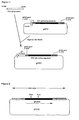
- a HindIII fragment containing the promoter sequence for the glycoprotein D (gD) gene (extending from nucleotides -392 to +11, with respect to the start of the gD gene) is then excised from the plasmid pSVD4 (Everett, Nucl. Acids Res., 11, 6647-6667, 1983), and cloned into the unique HindIII site of pAF2 to generate pGH1 (figure 1) such that the promoter sequence is in the correct orientation to drive expression of the gH gene.
- this plasmid contains the complete gH coding sequence under the control of the HSV type 1 gD gene promoter.
- This plasmid is then purified and then co-transfected into Vero cells with the plasmid pNEO (Pharmacia LKB Biotechnology Inc.) using the standard calcium phosphate co-precipitation technique (Graham and Van der Eb, Virology 52, 456-467, 1973). Vero cells which have acquired resistance to neomycin are then selected by passage of the cells in the drug G418, and colonies of these cells cloned by limiting dilution. These neomycin resistant cells are then amplified in tissue culture, and samples are then infected with HSV type 2 virus.
- Infection with the HSV type 2 virus has the effect of inducing transcription from the type 1 gD promoter present in the complementing cell genome, and so of stimulating production of the type 1 gH protein in the complementing cell.
- Lysates of the infected cells are then screened for expression of the gH protein by western blotting, using a polyclonal antiserum known to recognise specifically the type 1 gH protein (Desai et al., 1988 op cit.). Cells which express the required protein are then retained and frozen stocks prepared. This material represents the gH+ complementing cell line.
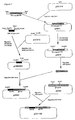
- a 6432 base pair BgIII fragment containing the coding sequence of gH together with HSV flanking sequence is excised from the plasmid pUG102 (Gompels and Minson, Virology 153, 230-247, 1986) and cloned into the plasmid pAT153 (Twigg and Sherrat, Nature, 283-216, 1980) to generate pGH2 (figure 2).
- This plasmid is digested with PvuII which cuts only within the gH coding sequence at two positions (nucleotides 44955 and 46065 according to the numbering scheme of McGeoch et al, 1988, op cit.), and the larger of the two fragments purified.
- a fragment of DNA consisting of the complete B-galactosidase gene from E coli downstream of the Immediate Early gene promoter from Cytomegalovirus (CMV) is then prepared by the following procedure.
- a pair of complementary oligonucleotides shown in figure 3a
- BgIII-digested, phosphatase-treated pSP64T Krieg and Melton, Nucl. Acids. Res. 12, 7057-7071, 1984
- the added linker also includes the initiation codon and first three codons of the B-galactosidase gene (lacZ) of E.coli.
- the "core region" of the Immediate Early gene promoter of CMV is amplified from plasmid pUG-H1 (Gompels and Minson, 1989, op cit.) by the Polymerase Chain Reaction technique (PCR-Molecular Cloning, ed. Sambrook et al., op cit.) using the two oligonucleotides shown in figure 4a, which correspond to sequences from -302 to -288, and from -13 to -36 respectively (numbered in relation to the start of the CMV Immediate Early gene as described by Akrigg et al., Virus Research, 2, 107-121, 1985).
- oligonucleotides also contain, at their 5' ends, sites for the restriction enzyme HindIII, and in the case of the oligonucleotide annealing upstream of the promoter, an additional SmaI site.
- the PCR-amplified product DNA is then digested with HindIII, and cloned into HindIII-digested pSP64Ta, to generate the plasmid pCMVIEP (figure 4b).
- a DNA fragment containing a complete copy of the E.coli B-galactosidase gene, lacking only the extreme 5' end of the coding sequence is isolated by digestion of the plasmid pSC8 (Chakrabarti et al., Mol. Cell.
- pCMVlacZ (figure 5).
- a fragment of DNA containing the B-galactosidase gene under the control of the CMV IE promoter is then isolated by digestion of pCMVlacZ with SmaI, and ligated with the purified PvuII fragment of pGH2 described above, to generate pGH3, which consists of a copy of the gH gene interrupted by a functional B-galactosidase gene (figure 6).
- the next step is to replace the wild type gH gene in the HSV genome with this interrupted version, and this is done by allowing recombination between HSV DNA and plasmid pGH3, followed by selection of those viruses which have acquired a functional B-galactosidase gene. Plasmid pGH3 DNA is therefore cotransfected into cells expressing the gH gene (the gH+ complementing cell line described in section A) along with purified HSV DNA isolated from purified HSV virions (Killington and Powell, In "Techniques in Virology: A practical Approach" (ed. B.W.J. Mahy) pp.
- the progeny HSV virus produced from this transfection experiment is then plated on monolayers of gH+ complementing cells by standard plaque assay, using an agar overlay, in the presence of 5-bromo-chloro-3-indolyl- ⁇ -D-galactoside (X-gal), a chromogenic substrate which is converted to a blue substrate by the enzyme ⁇ -galactosidase.
- X-gal 5-bromo-chloro-3-indolyl- ⁇ -D-galactoside
- virus genomes should therefore carry an interrupted version of the gH gene.
- Virus is recovered from these plaques by picking plugs of agar from the appropriate part of the plate, and virus stocks prepared through growth of virus in the gH+ complementing cell line.
- viruses since they bear non-functional versions of the gH gene, should be unable to form plaques on cells which do not contain and express an endogenous functional copy of the gH gene, and so to confirm this, a sample of the virus is assayed for its ability to form plaques on wild type Vero cell monolayers in comparison with the gH-complementing cells. Finally, virus DNA is prepared from these stocks, and checked for the expected DNA structure around the gH gene by Southern blotting.
- the protective effect of a live gH- virus preparation was compared with an inactivated preparation of wild type (WT) virus (strain SC16) as follows.
- mice were challenged by similar inoculation of the left ear with 2 x 10 6 pfu HSV-1 strain SC16 (wild type virus). Mice were killed after 5 days and assayed for virus infectivity in the left ear and left cervical ganglia cII, cIII and cIV (combined). For latency studies, other vaccinated and challenged animals were killed after 1 month, and tested for latent infection by dissecting out the cII, cIII and cIV ganglia. These were incubated in medium for five days then homogenised and assayed for the presence of infectious virus by standing plaque assay. All the following results are expressed as pfu/organ.
- Ears mean cervical ganglia mean Group A 1 5.7 2.6 2 4.4 5.2 2.3 2.3 3 5.7 2.1 Group B 1 4.2 1.9 2 3.6 3.8 3.1 1.2 3 3.5 none 4 3.8 none Group C 1 none none 2 2.5 2.0 none - 3 2.9 none 4 2.7 none Group D 1 3.9 none 2 2.0 2.6 none - 3 2.0 none 4 2.3 none Group E 1 none none 2 none - none - 3 none none 4 none Titre of challenge virus present as latent virus in the cervical ganglia after vaccination with live gH-HSV-1 Mouse No.
- Virus titre in cervical ganglia (log 10 pfu WT) Reactivation frequency Group A 1 5.4 2 4.6 3 5.0 5/5 4 4.8 5 5.3 Group B 1 none 2 1.5 3/4 3 5.1 4 5.3 Group C 1 none 2 none 1/3 3 3.2 Group D 1 none 2 none 0/4 3 none 4 none Group E 1 none 2 none 0/4 3 none 4 none Titre of latent challenge virus in the cervical ganglia after vaccination with inactivated WT HSV-1 Mouse No.
- Live gH- virus vaccination with 5 x 10 5 pfu and over was also able to block replication of the challenge virus in the cervical ganglia during the acute phase of infection, and furthermore showed a clear protective effect against the establishment of latent infection in the cervical ganglia.
- HSV lacking the gH gene as a vector for immunisation against a foreign antigen introduction of the gp120 gene of SIVmac strain 142 into the genome of gH- HSV virus
- Viruses with deletions in essential genes may, as described above, be used as safe vectors for the delivery of foreign antigens to the immune system, and the gH- HSV virus described above provides a suitable example of such a vector.
- This virus could be used to express any desired foreign antigen, but a particularly attractive possibility would be the major antigenic proteins of the AIDS virus human immunodeficiency virus (HIV).
- HIV human immunodeficiency virus
- these sequences would be inserted into the gH- HSV genome in a way that would ensure their expression during infection of normal cells (i.e. non-complementing cells) by the recombinant virus. Infection of an individual with such a virus could lead to a latent infection which, from time to time upon reactivation, would lead to a burst of production of the foreign antigen, resulting in stimulation of the immune response to that protein.
- SIV mac Simian AIDS virus isolated from macaques.
- SIV mac Simian immunodeficiency virus isolated from macaques.
- a suitable SIV gene for this purpose is that encoding the gp120 protein, one of the major antigenic targets for this virus. This gene is therefore introduced into the gH- HSV genome, and the efficacy of this virus as a vaccine to protect monkeys against challenge with SIV assessed.
- the SIV gp120 gene is first of all cloned next to the cytomagalovirus IE core promoter (Gompels and Minson, 1989, op. cit.), and subsequently a DNA cassette consisting of the gp120 gene and the upstream CMV promoter is cloned into plasmid pGH2 (figure 2).
- the resulting plasmid is then co-transfected into the gH+ complementing cell line along with DNA purified from the gH- HSV, and recombinant virus which has acquired the gp120 gene in place of the ⁇ -galactosidase gene present in the gH- HSV virus is isolated by screening for interruption of the ⁇ -galactosidase gene.
- FIG. 7 A SacI restriction enzyme fragment (corresponding to bases 5240-8721) is excised from a cloned DNA copy of the SIV genome (Chakrabarti et al., Nature 328, 543 (1987), and cloned into the SacI site of plasmid pUC118 (Viera and Messing, Methods in Enzymology, 153, 3, 1987) in order to generate plasmid pSIV1 which may be converted to single stranded DNA for manipulation by site directed mutagenesis.
- This DNA region which includes the SIV env gene (lying between 6090-8298) is then altered by site directed mutagenesis (Brierley et al., Cell 57, 537, 1989) to introduce a restriction enzyme site for the enzyme EcoRV at positions 6053-6058 using the synthetic oligonucleotide 5' GAAGAAGGCTATAGCTAATACAT.
- a second EcoRV site is then introduced at position 7671-7676 within the SIV env gene corresponding to the cleavage site between the gp120 and gp40 domains of the env gene sequence, using the synthetic oligonucleotide 5'CAAGAAATAAACTATAGGTCTTTGTGC to generate the plasmid pSIV2.
- a DNA fragment (1617 base pairs) corresponding to the gp120 portion of the SIV env gene is then prepared by digestion of SIV2 with EcoRV.
- the core region of the CMV immediate early gene promoter is obtained from the plasmid pUG-H1 (Compels and Minson, 1989, op cit.) by the PCR technique using the following two synthetic oligonucleotides. upstream primer
- the product of this reaction is then cleaved with the enzymes EcoRI and HindIII to generate a DNA fragment which is then cloned into EcoRI- and HindIII-digested plasmid pUC118 to generate the plasmid pCMVIE2 which has a unique SmaI site located just downstream of the CMV promoter sequence.
- the EcoRV fragment containing the SIV mac gp120 coding sequence prepared as described above, is then cloned into this SmaI site, and plasmid pSIV3, with the SIV coding region oriented correctly to allow expression of the coding sequence from the promoter, is then selected.
- This plasmid is then digested with EcoRV to yield a blunt-ended DNA fragment consisting of the SIV sequence together with the CMV promoter, which is then cloned into PvuII-digested pGH2 ( Figure 2) to produce pGH-120.
- DNA is purified from the gH- HSV virus constructed as detailed in the previous section, and co-transfected into gH+ complementing cells along with purified pGH-120 DNA.
- Progeny virus isolated from this transfection procedure is then plated on monolayers of the gH+ complementing cell line by standard plaque assay as before using an agar overlay in the presence of X-gal.
- the parental gH- virus carries a functional ⁇ -galactosidase gene, located within the residual gH coding sequences, and in the presence of X-gal, will form blue plaques.
- Recombinant viruses however, which have acquired the SIV gp120 coding sequence in place of the ⁇ -galactosidase gene, will produce white plaques.
- Virus is recovered from these white plaques by picking plugs of agar, and virus stocks prepared through growth of the virus in the gH+ complementing cell line. Virus DNA is prepared from these stocks, and checked for the presence of the correct DNA structure around the gH gene by Southern Blotting using appropriate probes derived from the SIV coding sequence. Finally stocks of the virus are prepared as before for vaccination studies in animals.
- a vaccine comprising the attenuated virus can be prepared and used according to standard techniques known in the art.
- the vaccine may also comprise one or more excipients and/or adjuvants.
- the effective dose of the attenuated virus to be provided by the vaccine may be determined according to techniques well known in the art.
Landscapes
- Health & Medical Sciences (AREA)
- Life Sciences & Earth Sciences (AREA)
- Chemical & Material Sciences (AREA)
- Virology (AREA)
- Organic Chemistry (AREA)
- Genetics & Genomics (AREA)
- General Health & Medical Sciences (AREA)
- Engineering & Computer Science (AREA)
- Medicinal Chemistry (AREA)
- Microbiology (AREA)
- Wood Science & Technology (AREA)
- Zoology (AREA)
- Bioinformatics & Cheminformatics (AREA)
- Biotechnology (AREA)
- Veterinary Medicine (AREA)
- Animal Behavior & Ethology (AREA)
- Pharmacology & Pharmacy (AREA)
- Public Health (AREA)
- Biochemistry (AREA)
- Immunology (AREA)
- General Engineering & Computer Science (AREA)
- Biomedical Technology (AREA)
- Molecular Biology (AREA)
- Mycology (AREA)
- Epidemiology (AREA)
- Biophysics (AREA)
- General Chemical & Material Sciences (AREA)
- Nuclear Medicine, Radiotherapy & Molecular Imaging (AREA)
- Chemical Kinetics & Catalysis (AREA)
- Oncology (AREA)
- Physics & Mathematics (AREA)
- Communicable Diseases (AREA)
- Plant Pathology (AREA)
- Gastroenterology & Hepatology (AREA)
- Proteomics, Peptides & Aminoacids (AREA)
- Micro-Organisms Or Cultivation Processes Thereof (AREA)
- Medicines Containing Antibodies Or Antigens For Use As Internal Diagnostic Agents (AREA)
- Medicines Containing Material From Animals Or Micro-Organisms (AREA)
- Pharmaceuticals Containing Other Organic And Inorganic Compounds (AREA)
- Acyclic And Carbocyclic Compounds In Medicinal Compositions (AREA)
Applications Claiming Priority (5)
| Application Number | Priority Date | Filing Date | Title |
|---|---|---|---|
| GB9020799 | 1990-09-25 | ||
| GB909020799A GB9020799D0 (en) | 1990-09-25 | 1990-09-25 | Viral vaccines |
| GB9104903 | 1991-03-08 | ||
| GB919104903A GB9104903D0 (en) | 1991-03-08 | 1991-03-08 | Viral vaccines |
| EP19910917033 EP0550553B1 (de) | 1990-09-25 | 1991-09-23 | Bei einer transkomplementenden zellinie erzeugter defektiver virenimpfstoff |
Related Parent Applications (1)
| Application Number | Title | Priority Date | Filing Date |
|---|---|---|---|
| EP19910917033 Division EP0550553B1 (de) | 1990-09-25 | 1991-09-23 | Bei einer transkomplementenden zellinie erzeugter defektiver virenimpfstoff |
Publications (2)
| Publication Number | Publication Date |
|---|---|
| EP0953648A2 true EP0953648A2 (de) | 1999-11-03 |
| EP0953648A3 EP0953648A3 (de) | 2007-09-12 |
Family
ID=26297693
Family Applications (2)
| Application Number | Title | Priority Date | Filing Date |
|---|---|---|---|
| EP19990106514 Withdrawn EP0953648A3 (de) | 1990-09-25 | 1991-09-23 | Bei einer transkomplementenden Zellinie erzeugter defektiver Virenimpfstoff |
| EP19910917033 Expired - Lifetime EP0550553B1 (de) | 1990-09-25 | 1991-09-23 | Bei einer transkomplementenden zellinie erzeugter defektiver virenimpfstoff |
Family Applications After (1)
| Application Number | Title | Priority Date | Filing Date |
|---|---|---|---|
| EP19910917033 Expired - Lifetime EP0550553B1 (de) | 1990-09-25 | 1991-09-23 | Bei einer transkomplementenden zellinie erzeugter defektiver virenimpfstoff |
Country Status (18)
| Country | Link |
|---|---|
| US (1) | US6541009B1 (de) |
| EP (2) | EP0953648A3 (de) |
| JP (1) | JP3895366B2 (de) |
| KR (1) | KR100372934B1 (de) |
| AT (1) | ATE194657T1 (de) |
| AU (1) | AU658836B2 (de) |
| BR (1) | BR9106879A (de) |
| CA (1) | CA2091678C (de) |
| DE (1) | DE69132311T2 (de) |
| DK (1) | DK0550553T3 (de) |
| ES (1) | ES2150416T3 (de) |
| FI (1) | FI110438B (de) |
| GB (1) | GB2263480B (de) |
| GR (1) | GR3034484T3 (de) |
| MX (1) | MX9203717A (de) |
| NO (1) | NO314550B1 (de) |
| OA (1) | OA09777A (de) |
| WO (1) | WO1992005263A1 (de) |
Cited By (2)
| Publication number | Priority date | Publication date | Assignee | Title |
|---|---|---|---|---|
| WO2001036651A1 (en) * | 1999-11-19 | 2001-05-25 | Cantab Pharmaceuticals Research Limited | Preparation of human or animal herpesviruses |
| EP1683858A3 (de) * | 1995-02-21 | 2006-08-02 | Cantab Pharmaceuticals Research Limited | Virale Zubereitungen, Vektoren, Immunogene und Impfstoffe |
Families Citing this family (80)
| Publication number | Priority date | Publication date | Assignee | Title |
|---|---|---|---|---|
| DE10399032I1 (de) * | 1987-08-28 | 2004-01-29 | Health Research Inc | Rekombinante Viren. |
| WO1990010693A1 (en) * | 1989-03-08 | 1990-09-20 | Health Research, Inc. | Recombinant poxvirus host selection system |
| US7374768B1 (en) | 1990-09-25 | 2008-05-20 | Xenova Research Limited | Viral vaccines |
| US5665362A (en) * | 1990-09-25 | 1997-09-09 | Cantab Pharmaceuticals Research Limited | Viral vaccines |
| DE69132311T2 (de) | 1990-09-25 | 2000-12-14 | Cantab Pharmaceuticals Research Ltd., Cambridge | Bei einer transkomplementenden zellinie erzeugter defektiver virenimpfstoff |
| US5837261A (en) * | 1990-09-25 | 1998-11-17 | Cantab Pharmaceuticals Research Limited | Viral vaccines |
| DE69229390T2 (de) * | 1991-08-26 | 1999-11-11 | Immuno Ag, Wien | Direkt molekuläre Klonierung eines modifizierten Genoms eines Chordopocken-Virus |
| TW289731B (de) * | 1992-07-09 | 1996-11-01 | Akzo Nv | |
| US5626850A (en) * | 1992-07-30 | 1997-05-06 | Akzo Nobel N.V. | Non-shedding live herpesvirus vaccine |
| US7223411B1 (en) * | 1992-07-31 | 2007-05-29 | Dana-Farber Cancer Institute | Herpesvirus replication defective mutants |
| WO1994003207A1 (en) * | 1992-07-31 | 1994-02-17 | President And Fellows Of Harvard College | Herpesvirus vaccines |
| JPH08507784A (ja) * | 1993-03-19 | 1996-08-20 | キャンタブ ファーマシューティカルズ リサーチ リミティド | ウイルス・ワクチン |
| WO1995003399A2 (en) * | 1993-07-19 | 1995-02-02 | Cantab Pharmaceuticals Research Limited | Production method for preparation of disabled viruses |
| AU7263994A (en) * | 1993-08-06 | 1995-02-28 | Kai Juhani Ernst Krohn | Novel mutated human and simian immunodeficiency viruses and vaccines containing said viruses |
| EP0659885A1 (de) * | 1993-12-21 | 1995-06-28 | Akzo Nobel N.V. | Impstoffe gegen von Antikörper abhängende Vergrösserung (ADE) der Virus-Infektivität |
| ATE298370T1 (de) * | 1994-04-29 | 2005-07-15 | Baxter Healthcare Sa | Rekombinante poxviren mit fremdenpolynukleotiden in wichtigen regionen |
| US5807557A (en) * | 1994-07-25 | 1998-09-15 | The Trustees Of The University Of Pennsylvania | Soluble herpesvirus glycoprotein complex |
| US6156319A (en) * | 1994-07-25 | 2000-12-05 | The Trustees Of The University Of Pennsylvania | Soluble herpesvirus glycoprotein complex vaccine |
| GB9415319D0 (en) * | 1994-07-29 | 1994-09-21 | Medical Res Council | HSV viral vector |
| GB9415369D0 (en) * | 1994-07-29 | 1994-09-21 | Lynxvale Ltd | Mutant virus |
| GB9423663D0 (en) * | 1994-11-23 | 1995-01-11 | Cantab Pharma Res | Viral preparations, immunogens, and vaccines |
| EP0871755A1 (de) * | 1995-03-23 | 1998-10-21 | Cantab Pharmaceuticals Research Limited | Vektoren zur verabreichung von genen |
| EP0828823A4 (de) * | 1995-06-01 | 1999-02-10 | Merck & Co Inc | Herpes simplex typ i proteasemutanten und vektoren |
| WO1997014808A2 (en) * | 1995-10-19 | 1997-04-24 | St. Jude Children's Research Hospital | Herpesvirus vectors and their uses |
| DE19709148C1 (de) * | 1997-03-06 | 1998-09-03 | Evotec Biosystems Gmbh | Verfahren zur Herstellung eines Impfstoffes gegen infektiöse Erreger |
| WO1998049321A2 (en) | 1997-04-28 | 1998-11-05 | Rhone-Poulenc Rorer S.A. | Adenovirus-mediated intratumoral delivery of an angiogenesis antagonist for the treatment of tumors |
| EP0884382A3 (de) * | 1997-06-10 | 2000-10-25 | Pfizer Products Inc. | Verfahren zur Herstellung von Marek's Krankheitsvirus unter Verwendung von Säugetier-Zellinien |
| US6875606B1 (en) | 1997-10-23 | 2005-04-05 | The United States Of America As Represented By The Department Of Veterans Affairs | Human α-7 nicotinic receptor promoter |
| GB9804632D0 (en) | 1998-03-05 | 1998-04-29 | Cantab Pharma Res | Virus preparations and methods |
| GB9808922D0 (en) | 1998-04-24 | 1998-06-24 | Cantab Pharmaceuticals Res Ltd | Virus preparations |
| US6225456B1 (en) | 1998-05-07 | 2001-05-01 | University Technololy Corporation | Ras suppressor SUR-5 |
| US6506889B1 (en) | 1998-05-19 | 2003-01-14 | University Technology Corporation | Ras suppressor SUR-8 and related compositions and methods |
| US6399354B1 (en) | 1998-07-31 | 2002-06-04 | President And Fellows Of Harvard College | Replication-competent virus expressing a detectable fusion protein |
| GB9816761D0 (en) | 1998-07-31 | 1998-09-30 | Phogen Limited | Herpesvirus preparations and their uses |
| EP1153136A2 (de) * | 1998-12-09 | 2001-11-14 | The General Hospital Corporation | Verbessertes verpacken von hsv-amplikons und herstellung von rekombinanten viralen vektoren |
| US6441156B1 (en) * | 1998-12-30 | 2002-08-27 | The United States Of America As Represented By The Department Of Health And Human Services | Calcium channel compositions and methods of use thereof |
| GB0018307D0 (en) | 2000-07-26 | 2000-09-13 | Aventis Pharm Prod Inc | Polypeptides |
| JP2003531149A (ja) | 2000-04-13 | 2003-10-21 | ザ・ロツクフエラー・ユニバーシテイ | 抗体由来の免疫応答の増強 |
| IL152738A0 (en) | 2000-05-10 | 2003-06-24 | Mayo Foundation | Human igm antibodies with the capability of inducing remyelination, and diagnostic and therapeutic uses thereof particularly in the central nervous system |
| EP1317564B1 (de) | 2000-09-14 | 2007-08-01 | Mount Sinai School of Medicine | Screening-verfahren zum identifizieren von g-proteinen und anderen verbindungen,die die phosphodiesterase (pde)-aktivität beeinflussen |
| US7060442B2 (en) | 2000-10-30 | 2006-06-13 | Regents Of The University Of Michigan | Modulators on Nod2 signaling |
| WO2002053761A2 (en) | 2000-12-28 | 2002-07-11 | Wyeth | Recombinant protective protein from $i(streptococcus pneumoniae) |
| WO2002070665A2 (en) | 2001-03-02 | 2002-09-12 | The Rockefeller University | Recombinant hybrid allergen constructs with reduced allergenicity that retain immunogenicity of the natural allergen |
| US7803982B2 (en) | 2001-04-20 | 2010-09-28 | The Mount Sinai School Of Medicine Of New York University | T1R3 transgenic animals, cells and related methods |
| MX339524B (es) | 2001-10-11 | 2016-05-30 | Wyeth Corp | Composiciones inmunogenicas novedosas para la prevencion y tratamiento de enfermedad meningococica. |
| US7785608B2 (en) | 2002-08-30 | 2010-08-31 | Wyeth Holdings Corporation | Immunogenic compositions for the prevention and treatment of meningococcal disease |
| US7432057B2 (en) | 2004-01-30 | 2008-10-07 | Michigan State University | Genetic test for PSE-susceptible turkeys |
| GB0408164D0 (en) * | 2004-04-13 | 2004-05-19 | Immune Targeting Systems Ltd | Antigen delivery vectors and constructs |
| GB0716992D0 (en) | 2007-08-31 | 2007-10-10 | Immune Targeting Systems Its L | Influenza antigen delivery vectors and constructs |
| US7604798B2 (en) | 2004-07-15 | 2009-10-20 | Northwestern University | Methods and compositions for importing nucleic acids into cell nuclei |
| AU2005274948B2 (en) | 2004-07-16 | 2011-09-22 | Genvec, Inc. | Vaccines against aids comprising CMV/R-nucleic acid constructs |
| GB2421025A (en) * | 2004-12-09 | 2006-06-14 | Oxxon Therapeutics Ltd | HSV vaccination vectors |
| US7439327B2 (en) | 2005-01-18 | 2008-10-21 | Nuvelo, Inc. | Stem cell factor-like proteins and uses thereof |
| WO2007005898A2 (en) | 2005-07-05 | 2007-01-11 | Cornell Research Foundation, Inc. | Blocking leukocyte emigration and inflammation by interfering with cd99l2 |
| WO2007016239A2 (en) * | 2005-07-29 | 2007-02-08 | President And Fellows Of Harvard College | Herpes simplex virus mutant and uses therefore |
| AR064642A1 (es) | 2006-12-22 | 2009-04-15 | Wyeth Corp | Polinucleotido vector que lo comprende celula recombinante que comprende el vector polipeptido , anticuerpo , composicion que comprende el polinucleotido , vector , celula recombinante polipeptido o anticuerpo , uso de la composicion y metodo para preparar la composicion misma y preparar una composi |
| US8093043B2 (en) | 2008-06-04 | 2012-01-10 | New York University | β-TrCP1, β-TrCP2 and RSK1 or RSK2 inhibitors and methods for sensitizing target cells to apoptosis |
| EP2650014A2 (de) | 2008-06-20 | 2013-10-16 | Wyeth LLC | Zusammensetzungen und Verfahren zur Verwendung von ORF1358 von Beta-hämolytischen Streptokokken-stämmen |
| EP3156069B8 (de) | 2008-06-20 | 2020-10-21 | Duke University | Zusammensetzungen, verfahren und kits zur auslösung einer immunreaktion |
| MX2011004755A (es) | 2008-11-05 | 2011-10-10 | Wyeth Llc | Composicion inmunogenica multicomponente para la prevencion de enfermedad estreptococica beta-hemolitica (bhs). |
| WO2010096561A1 (en) | 2009-02-18 | 2010-08-26 | The United States Of America, As Represented By The Secretary, Department Of Health And Human Services | Synthetic hiv/siv gag proteins and uses thereof |
| CA2793521A1 (en) | 2010-03-19 | 2011-09-22 | University Of South Alabama | Use of antisense gli1 for reducing the dosage of a therapeutic compound to treat needed to treat a cancer |
| CN107913396B (zh) | 2010-08-23 | 2022-03-08 | 惠氏有限责任公司 | 脑膜炎萘瑟氏菌rLP2086抗原的稳定制剂 |
| AU2011300409B2 (en) | 2010-09-10 | 2015-03-26 | Wyeth Llc | Non-lipidated variants of Neisseria meningitidis ORF2086 antigens |
| US9458456B2 (en) | 2011-04-01 | 2016-10-04 | University Of South Alabama | Methods and compositions for the diagnosis, classification, and treatment of cancer |
| HUE037408T2 (hu) | 2011-06-10 | 2018-08-28 | Univ Oregon Health & Science | CMV glikoproteinek és rekombináns vektorok |
| WO2013103401A1 (en) | 2012-01-06 | 2013-07-11 | University Of South Alabama | Methods and compositions for the treatment of cancer |
| MY198910A (en) | 2012-03-09 | 2023-10-02 | Pfizer | Neisseria meningitidis compositions and methods thereof |
| SA115360586B1 (ar) | 2012-03-09 | 2017-04-12 | فايزر انك | تركيبات لعلاج الالتهاب السحائي البكتيري وطرق لتحضيرها |
| WO2014136064A2 (en) | 2013-03-08 | 2014-09-12 | Pfizer Inc. | Immunogenic fusion polypeptides |
| WO2014164703A1 (en) | 2013-03-11 | 2014-10-09 | University Of Florida Research Foundation, Inc. | Delivery of card protein as therapy for occular inflammation |
| RU2662968C2 (ru) | 2013-09-08 | 2018-07-31 | Пфайзер Инк. | Иммуногенная композиция против neisseria meningitidis (варианты) |
| EP3049092A4 (de) | 2013-09-24 | 2017-09-06 | Duke University | Zusammensetzungen, verfahren und kits zur auslösung einer immunreaktion |
| EP3105311A1 (de) | 2014-02-10 | 2016-12-21 | Univercells NV | System, vorrichtung und verfahren zur herstellung von biomolekülen |
| US11053291B2 (en) | 2014-02-19 | 2021-07-06 | University Of Florida Research Foundation, Incorporated | Delivery of Nrf2 as therapy for protection against reactive oxygen species |
| WO2016132294A1 (en) | 2015-02-19 | 2016-08-25 | Pfizer Inc. | Neisseria meningitidis compositions and methods thereof |
| AU2018215585B2 (en) | 2017-01-31 | 2022-03-17 | Pfizer Inc. | Neisseria meningitidis compositions and methods thereof |
| CA3062549A1 (en) | 2017-05-15 | 2018-11-22 | Janssen Vaccines & Prevention B.V. | Stable virus-containing composition |
| EP3624851A1 (de) | 2017-05-15 | 2020-03-25 | Janssen Vaccines & Prevention B.V. | Stabile virushaltige zusammensetzung |
| WO2021059181A1 (en) | 2019-09-27 | 2021-04-01 | Pfizer Inc. | Neisseria meningitidis compositions and methods thereof |
Family Cites Families (12)
| Publication number | Priority date | Publication date | Assignee | Title |
|---|---|---|---|---|
| US5338683A (en) * | 1981-12-24 | 1994-08-16 | Health Research Incorporated | Vaccinia virus containing DNA sequences encoding herpesvirus glycoproteins |
| EP0213894A3 (de) * | 1985-08-23 | 1987-10-21 | Advanced Genetics Research Institute | Defektive Viruspartikelimpfstoffe und Verfahren zur Anwendung derselben |
| US4996152A (en) * | 1987-12-04 | 1991-02-26 | The United States Of America, As Represented By The Secretary Of Agriculture | Avian herpesvirus amplicon as a eucaryotic expression vector |
| WO1989009271A1 (en) * | 1988-03-21 | 1989-10-05 | Viagene, Inc. | Recombinant retroviruses |
| JP2755817B2 (ja) * | 1988-11-14 | 1998-05-25 | アメリカ合衆国 | パルボウイルスキャプシド |
| JP3140757B2 (ja) * | 1989-02-06 | 2001-03-05 | デイナ・フアーバー・キヤンサー・インステイテユート | パッケージング欠陥hivプロウイルス、細胞系及びその使用 |
| WO1990010693A1 (en) | 1989-03-08 | 1990-09-20 | Health Research, Inc. | Recombinant poxvirus host selection system |
| FR2663228A2 (fr) * | 1989-09-29 | 1991-12-20 | Agronomique Inst Nat Rech | Composition immunisante contre la maladie de newcastle et procede de preparation. |
| CA2039921A1 (en) * | 1990-04-16 | 1991-10-17 | Xandra O. Breakefield | Transfer and expression of gene sequences into central nervous system cells using herpes simplex virus mutants with deletions in genes for viral replication |
| DE69132311T2 (de) | 1990-09-25 | 2000-12-14 | Cantab Pharmaceuticals Research Ltd., Cambridge | Bei einer transkomplementenden zellinie erzeugter defektiver virenimpfstoff |
| DE69233158T2 (de) * | 1991-03-07 | 2004-05-13 | Connaught Technology Corp., Greenville | Gentechnologisch hergestellter stamm für impfstoffe |
| WO1994003207A1 (en) | 1992-07-31 | 1994-02-17 | President And Fellows Of Harvard College | Herpesvirus vaccines |
-
1991
- 1991-09-23 DE DE69132311T patent/DE69132311T2/de not_active Expired - Lifetime
- 1991-09-23 WO PCT/GB1991/001632 patent/WO1992005263A1/en not_active Ceased
- 1991-09-23 AT AT91917033T patent/ATE194657T1/de not_active IP Right Cessation
- 1991-09-23 DK DK91917033T patent/DK0550553T3/da active
- 1991-09-23 ES ES91917033T patent/ES2150416T3/es not_active Expired - Lifetime
- 1991-09-23 EP EP19990106514 patent/EP0953648A3/de not_active Withdrawn
- 1991-09-23 JP JP51739991A patent/JP3895366B2/ja not_active Expired - Fee Related
- 1991-09-23 CA CA 2091678 patent/CA2091678C/en not_active Expired - Lifetime
- 1991-09-23 AU AU86489/91A patent/AU658836B2/en not_active Ceased
- 1991-09-23 BR BR9106879A patent/BR9106879A/pt not_active Application Discontinuation
- 1991-09-23 KR KR1019930700913A patent/KR100372934B1/ko not_active Expired - Fee Related
- 1991-09-23 EP EP19910917033 patent/EP0550553B1/de not_active Expired - Lifetime
-
1992
- 1992-06-29 MX MX9203717A patent/MX9203717A/es unknown
-
1993
- 1993-03-23 GB GB9306044A patent/GB2263480B/en not_active Expired - Fee Related
- 1993-03-23 NO NO19931057A patent/NO314550B1/no not_active IP Right Cessation
- 1993-03-24 FI FI931309A patent/FI110438B/fi active
- 1993-03-25 OA OA60354A patent/OA09777A/en unknown
-
1995
- 1995-06-05 US US08/462,632 patent/US6541009B1/en not_active Expired - Fee Related
-
2000
- 2000-09-26 GR GR20000402173T patent/GR3034484T3/el not_active IP Right Cessation
Non-Patent Citations (1)
| Title |
|---|
| LIGA; JOHNSON, J. VIROL., 1988 |
Cited By (2)
| Publication number | Priority date | Publication date | Assignee | Title |
|---|---|---|---|---|
| EP1683858A3 (de) * | 1995-02-21 | 2006-08-02 | Cantab Pharmaceuticals Research Limited | Virale Zubereitungen, Vektoren, Immunogene und Impfstoffe |
| WO2001036651A1 (en) * | 1999-11-19 | 2001-05-25 | Cantab Pharmaceuticals Research Limited | Preparation of human or animal herpesviruses |
Also Published As
| Publication number | Publication date |
|---|---|
| BR9106879A (pt) | 1993-07-20 |
| GB9306044D0 (en) | 1993-06-02 |
| GR3034484T3 (en) | 2000-12-29 |
| ATE194657T1 (de) | 2000-07-15 |
| MX9203717A (es) | 1992-09-01 |
| JP3895366B2 (ja) | 2007-03-22 |
| FI931309L (fi) | 1993-03-24 |
| DE69132311D1 (de) | 2000-08-17 |
| KR100372934B1 (ko) | 2003-12-24 |
| GB2263480A (en) | 1993-07-28 |
| WO1992005263A1 (en) | 1992-04-02 |
| CA2091678A1 (en) | 1992-03-26 |
| OA09777A (en) | 1993-11-30 |
| JPH06504194A (ja) | 1994-05-19 |
| EP0953648A3 (de) | 2007-09-12 |
| AU658836B2 (en) | 1995-05-04 |
| AU8648991A (en) | 1992-04-15 |
| US6541009B1 (en) | 2003-04-01 |
| EP0550553A1 (de) | 1993-07-14 |
| HK1001656A1 (en) | 1998-07-03 |
| NO314550B1 (no) | 2003-04-07 |
| GB2263480B (en) | 1994-07-20 |
| ES2150416T3 (es) | 2000-12-01 |
| DK0550553T3 (da) | 2000-10-23 |
| EP0550553B1 (de) | 2000-07-12 |
| CA2091678C (en) | 2003-04-22 |
| FI110438B (fi) | 2003-01-31 |
| FI931309A0 (fi) | 1993-03-24 |
| NO931057D0 (no) | 1993-03-23 |
| NO931057L (no) | 1993-05-03 |
| DE69132311T2 (de) | 2000-12-14 |
Similar Documents
| Publication | Publication Date | Title |
|---|---|---|
| EP0550553B1 (de) | Bei einer transkomplementenden zellinie erzeugter defektiver virenimpfstoff | |
| US5665362A (en) | Viral vaccines | |
| KR100242671B1 (ko) | 유전학적으로 처리한 백신 균주 | |
| EP0652967B1 (de) | Selbstständig zusammenfügende replikationsdefekte hybride viruspartikel | |
| US6573090B1 (en) | Enhanced packaging of herpes virus amplicons and generation of recombinant virus vectors | |
| JPH08507784A (ja) | ウイルス・ワクチン | |
| US5824318A (en) | Avirulent herpetic viruses useful as tumoricidal agents and vaccines | |
| Watanabe et al. | Properties of a herpes simplex virus multiple immediate-early gene-deleted recombinant as a vaccine vector | |
| JP3034025B2 (ja) | 自己アセンブルド欠損非自己増殖性ウイルス粒子 | |
| JP4044131B2 (ja) | ヘルペスウイルスワクチン | |
| CA2381056A1 (en) | Recombinant hsv-1 and live viral vaccines | |
| US5837261A (en) | Viral vaccines | |
| AU725557B2 (en) | Avirulent herpetic viruses useful as tumoricidal agents and vaccines | |
| JPH10512151A (ja) | Htlv抗原を発現する組換え弱毒化ポックスウイルスを含有する免疫原性組成物 | |
| US7374768B1 (en) | Viral vaccines | |
| HK1001656B (en) | Viral defective vaccine produced by transcomplementing cell line | |
| RU2236256C2 (ru) | Вакцина, содержащая мутантный вирус герпеса | |
| CN1062601C (zh) | 病毒疫苗 | |
| Morghen et al. | Virus vectors for immunoprophylaxis | |
| US20020086035A1 (en) | Herpevirus replication defective mutants | |
| WO1996016164A1 (en) | Viral preparations, immunogens, and vaccines | |
| Batra | Herpes Simplex Virus Latency: Analysis of Viral Genes Controlling Reactivation |
Legal Events
| Date | Code | Title | Description |
|---|---|---|---|
| PUAI | Public reference made under article 153(3) epc to a published international application that has entered the european phase |
Free format text: ORIGINAL CODE: 0009012 |
|
| 17P | Request for examination filed |
Effective date: 19990419 |
|
| AC | Divisional application: reference to earlier application |
Ref document number: 550553 Country of ref document: EP |
|
| AK | Designated contracting states |
Kind code of ref document: A2 Designated state(s): AT BE CH DE DK ES FR GB GR IT LI LU NL SE |
|
| PUAL | Search report despatched |
Free format text: ORIGINAL CODE: 0009013 |
|
| AK | Designated contracting states |
Kind code of ref document: A3 Designated state(s): AT BE CH DE DK ES FR GB GR IT LI LU NL SE |
|
| RIC1 | Information provided on ipc code assigned before grant |
Ipc: C07K 14/035 20060101ALI20070802BHEP Ipc: C12N 15/86 20060101AFI19990820BHEP |
|
| 17Q | First examination report despatched |
Effective date: 20080909 |
|
| STAA | Information on the status of an ep patent application or granted ep patent |
Free format text: STATUS: THE APPLICATION IS DEEMED TO BE WITHDRAWN |
|
| 18D | Application deemed to be withdrawn |
Effective date: 20110401 |