EP0953843B1 - Inkrementaler Abtastung zur Flüssigkeitsabsorptionsmessung in Abgabespitzen - Google Patents
Inkrementaler Abtastung zur Flüssigkeitsabsorptionsmessung in Abgabespitzen Download PDFInfo
- Publication number
- EP0953843B1 EP0953843B1 EP99303195A EP99303195A EP0953843B1 EP 0953843 B1 EP0953843 B1 EP 0953843B1 EP 99303195 A EP99303195 A EP 99303195A EP 99303195 A EP99303195 A EP 99303195A EP 0953843 B1 EP0953843 B1 EP 0953843B1
- Authority
- EP
- European Patent Office
- Prior art keywords
- tip
- liquid
- light
- scanner
- detector
- Prior art date
- Legal status (The legal status is an assumption and is not a legal conclusion. Google has not performed a legal analysis and makes no representation as to the accuracy of the status listed.)
- Expired - Lifetime
Links
- 239000007788 liquid Substances 0.000 claims description 99
- 238000000034 method Methods 0.000 claims description 20
- 238000013507 mapping Methods 0.000 claims description 11
- 230000005855 radiation Effects 0.000 claims description 9
- 238000002834 transmittance Methods 0.000 claims description 7
- XLYOFNOQVPJJNP-UHFFFAOYSA-N water Substances O XLYOFNOQVPJJNP-UHFFFAOYSA-N 0.000 claims description 2
- GNFTZDOKVXKIBK-UHFFFAOYSA-N 3-(2-methoxyethoxy)benzohydrazide Chemical compound COCCOC1=CC=CC(C(=O)NN)=C1 GNFTZDOKVXKIBK-UHFFFAOYSA-N 0.000 claims 1
- FGUUSXIOTUKUDN-IBGZPJMESA-N C1(=CC=CC=C1)N1C2=C(NC([C@H](C1)NC=1OC(=NN=1)C1=CC=CC=C1)=O)C=CC=C2 Chemical compound C1(=CC=CC=C1)N1C2=C(NC([C@H](C1)NC=1OC(=NN=1)C1=CC=CC=C1)=O)C=CC=C2 FGUUSXIOTUKUDN-IBGZPJMESA-N 0.000 claims 1
- 230000005540 biological transmission Effects 0.000 description 24
- 239000008280 blood Substances 0.000 description 9
- 210000004369 blood Anatomy 0.000 description 9
- 238000012360 testing method Methods 0.000 description 9
- 238000010521 absorption reaction Methods 0.000 description 3
- 238000001514 detection method Methods 0.000 description 3
- BPYKTIZUTYGOLE-IFADSCNNSA-N Bilirubin Chemical compound N1C(=O)C(C)=C(C=C)\C1=C\C1=C(C)C(CCC(O)=O)=C(CC2=C(C(C)=C(\C=C/3C(=C(C=C)C(=O)N\3)C)N2)CCC(O)=O)N1 BPYKTIZUTYGOLE-IFADSCNNSA-N 0.000 description 2
- 230000000007 visual effect Effects 0.000 description 2
- 206010053567 Coagulopathies Diseases 0.000 description 1
- 208000035473 Communicable disease Diseases 0.000 description 1
- 102000009123 Fibrin Human genes 0.000 description 1
- 108010073385 Fibrin Proteins 0.000 description 1
- BWGVNKXGVNDBDI-UHFFFAOYSA-N Fibrin monomer Chemical compound CNC(=O)CNC(=O)CN BWGVNKXGVNDBDI-UHFFFAOYSA-N 0.000 description 1
- 102000001554 Hemoglobins Human genes 0.000 description 1
- 108010054147 Hemoglobins Proteins 0.000 description 1
- 230000005856 abnormality Effects 0.000 description 1
- 238000006243 chemical reaction Methods 0.000 description 1
- 230000035602 clotting Effects 0.000 description 1
- 229950003499 fibrin Drugs 0.000 description 1
- 239000012530 fluid Substances 0.000 description 1
- 230000002949 hemolytic effect Effects 0.000 description 1
- 208000015181 infectious disease Diseases 0.000 description 1
- 238000007689 inspection Methods 0.000 description 1
- 230000010354 integration Effects 0.000 description 1
- 230000001000 lipidemic effect Effects 0.000 description 1
- 238000005259 measurement Methods 0.000 description 1
- 230000003287 optical effect Effects 0.000 description 1
- 238000011179 visual inspection Methods 0.000 description 1
Images





Classifications
-
- G—PHYSICS
- G01—MEASURING; TESTING
- G01N—INVESTIGATING OR ANALYSING MATERIALS BY DETERMINING THEIR CHEMICAL OR PHYSICAL PROPERTIES
- G01N35/00—Automatic analysis not limited to methods or materials provided for in any single one of groups G01N1/00 - G01N33/00; Handling materials therefor
- G01N35/10—Devices for transferring samples or any liquids to, in, or from, the analysis apparatus, e.g. suction devices, injection devices
- G01N35/1009—Characterised by arrangements for controlling the aspiration or dispense of liquids
- G01N35/1016—Control of the volume dispensed or introduced
-
- G—PHYSICS
- G01—MEASURING; TESTING
- G01N—INVESTIGATING OR ANALYSING MATERIALS BY DETERMINING THEIR CHEMICAL OR PHYSICAL PROPERTIES
- G01N35/00—Automatic analysis not limited to methods or materials provided for in any single one of groups G01N1/00 - G01N33/00; Handling materials therefor
- G01N35/10—Devices for transferring samples or any liquids to, in, or from, the analysis apparatus, e.g. suction devices, injection devices
- G01N35/1009—Characterised by arrangements for controlling the aspiration or dispense of liquids
- G01N2035/1025—Fluid level sensing
-
- Y—GENERAL TAGGING OF NEW TECHNOLOGICAL DEVELOPMENTS; GENERAL TAGGING OF CROSS-SECTIONAL TECHNOLOGIES SPANNING OVER SEVERAL SECTIONS OF THE IPC; TECHNICAL SUBJECTS COVERED BY FORMER USPC CROSS-REFERENCE ART COLLECTIONS [XRACs] AND DIGESTS
- Y10—TECHNICAL SUBJECTS COVERED BY FORMER USPC
- Y10T—TECHNICAL SUBJECTS COVERED BY FORMER US CLASSIFICATION
- Y10T436/00—Chemistry: analytical and immunological testing
- Y10T436/11—Automated chemical analysis
- Y10T436/119163—Automated chemical analysis with aspirator of claimed structure
Definitions
- This invention relates to methods and apparatus for detecting improper amounts of liquid in a dispensing tip, and/or liquid at improper places in the tip.
- Condition (a) is a problem following aspiration because the nominal volume is present in the tip, plus an additional volume is present pendant from the tip. That additional volume gets added to the nominal volume at the next dispensing, so as to alter significantly the volume to be tested. It must be noted that the problem of the pendant drop can occur after dispensing as well - if all or a portion of the dispensed volume perfuses up the exterior side of the tip during dispensing, and remains there as a pendant drop after dispensing, the volume intended to have been so dispensed into a well for testing will be short by the amount of the perfused drop(s).
- Condition a) can also be indicative of a clot having formed from fibrin, now in or on the tip, which can also cause air bubbles in the tip.
- c) is caused by clotting so that the dispensing pressure forces liquid above the plunger.
- Condition (b) is a problem because, contrary to the result detected by the conductive plunger, insufficient volume is actually present for dispensing, as represented by the volume of the air bubble(s).
- a method of detecting the status of aqueous liquid in a dispensing tip having an axis of symmetry and which is capable of transmitting light therethrough of radiation between 630 and 2000 nm comprising the steps of:
- apparatus for detecting improper liquid content of a metering tip of an analyzer comprising:
- the invention is hereinafter described with respect to the preferred embodiments, wherein a conductive, opaque plunger is included within the tip, and the liquid aspirated is whole blood for testing at blood banks.
- the invention is applicable regardless of the kind of tip used to aspirate and dispense, whether or not a plunger is present, and regardless of the liquid involved and its testing, provided that the nature of the tip and the liquids tends to interfere with an inspection done visually only, i.e., by eye or by a digital camera.
- the process of the invention comprises separately detecting the amount of light transmitted through several portions of the tip when the liquid is present during use, that is, by incremental scanning, and comparing that with the light known to be transmitted if only the liquid is present only where it should be present.
- this is done preferably in two alternative ways - one represented by Fig. 2 is by subtracting from the "unknown" image a "blank" which is the values of light transmitted through the same tip with no liquid present, and integrating each of the several portions to provide an overall summed absolute value, and then comparing that value against a calibrated table or curve of values created with more or less air bubbles present.
- integrating or “integration” refers to summing broadly the transmission values over all the pixels representing the tip image, whether or not an integral function is actually used.
- the other alternative method is to map the values of the light transmittance of the "unknown" tip over a two dimensional representation and comparing that against such mapped values for a tip having only liquid present only where it should be, so that any significant deviation, hereinafter a "deviant value”, can be flagged.
- the values of the light transmission are expressed as voltages produced by the detector. Furthermore, the use of absorption values instead of the light transmission still uses the measurement of transmission, since absorption is determined as the inverse of the light transmitted through a tip with liquid present.
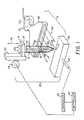
- the detecting apparatus 10 of the invention for detecting improper liquid in a metering tip 12 having an axis 14, used in an otherwise conventional clinical analyzer comprises a scanner 16 which in turn comprises a light source 18, such as an LED 20 that illuminates a light guide 22 to direct a linear beam 24 across a span to a detector 26, which is preferably a conventional linear CCD array, the LED and array being constructed to emit and detect, respectively, light of one or more wavelengths between about 630 and 2000 nm. Below 630, there is too much interference from the absorption caused by bilirubin and hemoglobin. A highly preferred wavelength is 880 nm.
- Detector 26 in turn transmits via line 28 a signal in volts that represents the light that is transmitted in inverse proportion to the amount of liquid that intercepts the beam 24.
- a tip holder 30 mounts tip 14 and is connected to an elevator such as rack 32 and drive pinion 34 driven by a conventional motor, not shown, to move tip 12, arrow 36, past beam 24 to allow scanner 16 to scan the tip at each vertical portion along axis 14, at an angle alpha where alpha is generally 90 degrees, that is, generally normal to the tip axis 14.
- an elevator such as rack 32 and drive pinion 34 driven by a conventional motor, not shown, to move tip 12, arrow 36, past beam 24 to allow scanner 16 to scan the tip at each vertical portion along axis 14, at an angle alpha where alpha is generally 90 degrees, that is, generally normal to the tip axis 14.
- "generally" when applied to this context means, plus or minus 10 degrees.
- scans are obtained for tip portions spaced vertically along the tip axis.
- An example of the spacing of the portions is a distance of between about 0.001 mm and about 1 mm.
- Any tip 12 can be used, but preferably it includes a hollow body 35 and an interior, electrically conductive plunger 37 driven along axis 14 by a conventional motor, not shown.
- Plunger 37 is conventional and includes a cone 38 that wipes against the inside surface 39 of tip 12 at a wipe line 41, to create partial vacuum or partial pressure to aspirate in or drive out liquid (shown as speckles in Fig. 1).
- Plunger 32 is electrically conductive so as to be able to detect, when cone 38 is at the bottom of tip 12, liquid levels of the container from which liquid is to be aspirated.
- a conventional controller 40 is connected to the motor driving gear 34, to ensure that signals collected by a conventional comparator 42 are collected for a plurality of adjacent portions of the tip representing all levels within the tip where liquid should be present, including just below aperture 43 of the tip where a drop of liquid might be pendant, and just above where liquid should be.
- Comparator 42 in turn compares the light transmitted through a tip of "unknown" condition, with the light transmission known to exist for the same tip containing bubble-free liquid at each of the adjacent portions of the tip, that is, liquid in contact with and below cone 38.
- controller 40 and comparator 44 are preferably and conveniently both part of electronics well-known to those skilled in the art.
- Fig. 2 In the method of the invention, one alternative noted above produces the result of Fig. 2. That is, using preferably the apparatus of Fig. 1, liquid is first aspirated into tip 12 to nominally fill it, as shown in Fig. 1. Tip 12 is then lowered, arrow 36, to scan the tip with beam 24. (Alternatively, but this is more cumbersome, tip 12 can be maintained stationary and scanner 16 moved relative to it.) As tip 12 passes through beam 24, comparator 42 receives transmission signals for each of the several positions within tip 12 where liquid nominally exists, that is, from the lowest position in tip 12 up to the point where cone 38 is in wiping contact with side surface 39. A transmission signal is also received for a position below the tip to detect any pendant drop, as well as above the cone-wiping position to detect whether liquid has been improperly ejected above the cone.
- comparator 42 From each tip portion signal, comparator 42 "subtracts" out the transmission signal produced by a dry tip but with plunger 37 in the same raised position, and an absolute value of the difference signal is produced.
- the absolute value of the difference signal noted above is integrated, or summed, over all the scanning positions, to obtain a total value of transmittance due solely to the liquid (the dry tip "blank” values having been subtracted).
- Fig. 2 is a calibration plot of the integrated absolute values of transmission for the tip in question and is obtained by plotting the values of transmission less the subtracted dry-tip blank values of each portion scanned, integrated over the entire tip from aperture 43 to wipe line 41, for either a) 4 microliters of liquid and 6 microliters of air bubbles, b) 7 microliters of liquid and 3 microliters of air, c) 9 microliters of liquid and 1 microliter of air, d) 10 microliters of liquid and no air bubbles, and e) 13 microliters of liquid and no air bubbles. Only the absolute values so integrated are plotted.
- Comparator 42 then takes the reading for the tip of "unknown" condition, and locates the summed absolute value of the signal on the x-axis. For this particular plot, if the intersect is not at the point produced by a summed signal of 75.2 volts ⁇ 7 volts, which is the value on the dashed line for 10 microliters of liquid, then the signal is representative of an error in that the nominal liquid volume of 10 ⁇ L and zero air bubbles is not present.
- This graph represents a look-up table in the analyzer, and the microprocessor therefor need only take the voltage of the transmission values and determine if it is within ⁇ 7 volts of 75.2.
- the plot of Fig. 2 does not account for any liquid pendant from the tip below aperture 43, nor liquid squeezed past plunger 38 above wipe line 41.
- the scans taken below aperture 43 and above wipe line 41 are examined, either before or after subtracting the dry-tip "blank" value. If they are not within a predetermined range of values for no liquid present, then the reading indicates an abnormality is present, and the tip reading is flagged as being in error, that is, not within the predetermined range of known total values for nominal liquid volumes.
- the "nominal volume" is one in which no liquid appears below aperture 43 as a pendant drop or above wipe line 41.
- Figs. 3A and 3B illustrate the validity of the extra step of evaluating the scan below aperture 43.
- the dry-tip blank transmission values have been subtracted.
- the numbers along the x-axis are arbitrary distance values.
- a tip with no pendent drop produced curve 50, which, at the scan at or below aperture 43, gave a reading less than -0.5 volts.
- curve 52 shows a voltage value greater than -0.5 at and below aperture 43. That is, at aperture 43 the voltage reading is -1.0.
- Curve 54 represents a pendant drop of 5 ⁇ L. It is further estimated that a 1 ⁇ L pendent drop will produce a voltage value upon scanning at or below aperture 43, of - 0.5 volts. Any pendant drop smaller than 1 ⁇ L in volume can be disregarded.
- the predetermined range allowed for the scan below the tip aperture is an absolute value less than 0.5 volts.
- curve 60 represents no pendant drop, producing a voltage value of 4.8 - 4.9 volts at or below aperture 43.
- a pendant drop of 3 ⁇ L produces, curve 62, a voltage value of 3.4 volts at aperture 43, and of 5 ⁇ L curve 64 produces a value of about 1.0 volts. It is expected a pendant drop of 1 ⁇ L will produce a value of about 4.5 volts.
- the predetermined range of acceptable values is 4.6 to 4.9 volts. Anything outside of this when not subtracting a dry-tip blank is flagged as being in error.
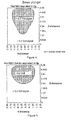
- Figs. 4 through 12 are illustrative of an alternative technique for comparing the tip in an unknown condition with the transmission values for a tip with perfect conditions, that is, with liquid present only at levels between the aperture 43 and the wipe line 41, free of air bubbles.
- the actual transmission values in volts, detected for each portion by scanning as described above is mapped over a two-dimensional representation of the tip in cross-section, and the map is compared with the map produced by a tip with liquid present under perfect conditions.
- the map is representative of a cross-section taken generally vertically through axis 14 of the tip. Scans were all taken at 880 nm.
- the x-axis values are ⁇ horizontal distances taken from axis 14, whereas the vertical axis values are distances vertically from an arbitrary zero point, which zero point is maintained even in Figs. 10-11 that map a higher portion of the tip.
- a mapped image is shown of a tip properly filled with liquid between aperture 43 and wipe line 41 with no air bubbles present.
- the curve that is shown is the boundary for transmission null voltages of less than 0.2 volts, representing just the liquid. This is to be contrasted with the mapped images of Figs. 5 and 6.
- the tip was first filled with 5 ⁇ L of H 2 O and then 5 ⁇ L of air. The result is a large air bubble at the bottom portion of the tip just above aperture 43.
- the contour lines of the transmission voltage values show a marked loss of null voltages at the bottom portion, labeled "> 0.2 volts".
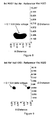
- comparator 42 electronically compares the two dimensional maps of the unknown tip conditions and the perfect tip conditions, for deviations in the contour lines of the former, over the two dimensions, that exceed 0.1 volts. That is, the voltage values of the pixels of the test map are subtracted by the analyzer from the voltage values of the same pixels on the reference or "perfect" map, to determine if there is any difference value anywhere, that is greater than 0.1 volts.
- Fig. 7 illustrates the comparison results in absolute values, wherein the tip was properly filled with no air bubbles.
- the test plot is not shown but was substantially identical to that of Fig. 4.
- Fig. 7 is a plot that has no data points, and represents a successful filling of the tip.
- the comparison plot of Fig. 8 also in absolute values, shows a large area of > 0.1 volt difference, precisely in the truncated area that is "missing" in Fig. 5.
- Fig. 9 indicates in a comparison plot, delta or difference voltages > 0.1 volts precisely at the areas of the necked in portion, Fig. 6. It is the presence of any data points in Figs. 8 or 9 (stored as a look-up table in the microprocessor) that cause the analyzer to issue an error message.
- Fig. 10 is a map similar to that of Fig. 4, but of the plunger portion of the tip above wipe line 41.
- the plunger portion of the tip represented by the map of Fig. 10 is free of any liquid above wipe line 41.
- the tip portion mapped in Fig. 11, which likewise is the plunger portion above wipe line 41 has 12 ⁇ L of H 2 O above the wipe line. (The tips for both Figs. 10 and 11 also had 10 ⁇ L of H 2 O below the wipe line.)
- the map of the contour lines of Fig. 11 is readily different in appearance from that of Fig. 10. E.g., necking-in is noted at Z-distance 5.4, representative of liquid above wipe line 41.
- the comparison plot of Fig. 12 shows error data in four different clumps, representative of the visual differences between Fig. 11 and Fig. 10.
Landscapes
- General Health & Medical Sciences (AREA)
- Health & Medical Sciences (AREA)
- Life Sciences & Earth Sciences (AREA)
- Chemical & Material Sciences (AREA)
- Analytical Chemistry (AREA)
- Biochemistry (AREA)
- Physics & Mathematics (AREA)
- General Physics & Mathematics (AREA)
- Immunology (AREA)
- Pathology (AREA)
- Automatic Analysis And Handling Materials Therefor (AREA)
- Investigating Or Analysing Materials By Optical Means (AREA)
- Investigating Or Analysing Materials By The Use Of Chemical Reactions (AREA)
Claims (11)
- Verfahren zum Nachweisen des Status einer wäßrigen Flüssigkeit in einer Abgabespitze (12) mit einer Achse (14) und einer Fähigkeit, Licht einer Strahlung mit Wellenlängen zwischen etwa 630 nm und etwa 2000 nm hierdurch zu übertragen, mit den Schritten:a) Ansaugen der Flüssigkeit in eine der Spitzen, um die Spitze (12) bis zu einem nominalen Niveau zu füllen;b) Abtasten der Flüssigkeit in der Spitze (12) mit Hilfe eines Abtasters (16), der eine Lichtquelle (18) und einen Lichtdetektor (26) umfaßt und der Strahlung bei einer der Wellenlängen aussendet bzw. nachweist;c) Liefern einer relativen Bewegung zwischen der Spitze (12) und dem Abtaster (16), während der Schritt b) ausgeführt wird, so daß der Abtaster (16) von einer ersten Stellung oberhalb von dort, wo ein herabhängender Tropfen der wäßrigen Flüssigkeit auf der Spitze (12) angeordnet sein würde, falls er anwesend wäre, zu einer vorbestimmten zweiten Stellung abtastet, die das nominale Niveau repräsentiert;d) während des Durchführens der Schritte b) und c) getrenntes Nachweisen an jedem von mehreren Abschnitten der Spitze (12) zwischen und einschließlich der ersten Stellung und der zweiten Stellung der Menge des bei der einen Wellenlänge an den Detektor übertragenen Lichts, so daß alle flüssigkeitsenthaltenden Niveaus innerhalb der Spitze nachgewiesen werden;e) Abziehen der Menge Lichts, die in dem Schritt d) übertragen wurde, von der Menge, die durch die Spitze (12) übertragen wird, wenn keine Flüssigkeit anwesend ist, für jeden der mehreren Abschnitte, um einen Übertragungswert zu erhalten, der durch die Menge der in jedem der Abschnitte anwesenden Flüssigkeit verursacht wird;f) Integrieren der Übertragungswerte aus Schritt e) für jeden der mehreren Abschnitte, um einen Gesamtübertragungswert in der Spitze (12) aufgrund der Anwesenheit von Flüssigkeit zu erhalten;g) Vergleichen des Gesamtübertragungswerts mit den Gesamtwerten, von denen bekannt ist, daß sie für ausgewählte nominale Flüssigkeitsvolumina frei von Luftblasen vorhanden sind;h) Wiederholen der Schritte c) und d) für eine Stellung unterhalb der ersten Stellung, wo ein herabhängender Tropfen anwesend sein könnte, und oberhalb der zweiten Position, wo äußere Flüssigkeit anwesend sein könnte;i) Vergleichen des Werts übertragenen Lichts sowohl an der Stellung unterhalb als auch der Stellung oberhalb mit einem Wert, der ohne die Anwesenheit von Flüssigkeit an der Stellung unterhalb bzw. der Stellung oberhalb übertragen wird; undj) Markieren des Ergebnisses als fehlerhaft, falls der Vergleich des Schrittes g) nicht innerhalb eines vorbestimmten Bereichs für das gewählte nominale Flüssigkeitsvolumen liegt oder falls der Vergleich in dem Schritt i) entweder für die Stellung unterhalb oder die Stellung oberhalb nicht innerhalb eines vorbestimmten Bereichs um den Wert bei einer Abwesenheit einer Flüssigkeit liegt.
- Verfahren zum Nachweisen des Status einer wäßrigen Flüssigkeit in einer Abgabespitze (12) mit einer Achse (14) und einer Fähigkeit, Licht einer Strahlung mit Wellenlängen zwischen etwa 630 nm und etwa 2000 nm hierdurch zu übertragen, mit den Schritten:a) Ansaugen der Flüssigkeit in eine der Spitzen, um die Spitze (12) bis zu einem nominalen Niveau zu füllen;b) Abtasten der Flüssigkeit in der Spitze (12) mit Hilfe eines Abtasters (16), der eine Lichtquelle (18) und einen Lichtdetektor (26) umfaßt und der Strahlung bei einer der Wellenlängen aussendet bzw. nachweist;c) Liefern einer relativen Bewegung zwischen der Spitze (12) und dem Abtaster (16), während der Schritt b) ausgeführt wird, so daß der Abtaster (16) von einer ersten Stellung unterhalb der Spitze, wo ein herabhängender Tropfen der wäßrigen Flüssigkeit auf der Spitze (12) angeordnet sein würde, falls er anwesend wäre, zu einer vorbestimmten zweiten Stellung oberhalb der ersten Stellung abtastet, die das nominale Niveau repräsentiert;d) während des Durchführens der Schritte b) und c) getrenntes Nachweisen an jedem von mehreren Abschnitten der Spitze (12) zwischen und einschließlich der ersten Stellung und der zweiten Stellung der Menge des an den Detektor (26) bei der einen Wellenlänge übertragenen Lichts, so daß alle flüssigkeitsenthaltenden Niveaus innerhalb der Spitze nachgewiesen werden;e) Abbilden der Mengen übertragenen Lichts auf eine zweidimensionale Darstellung des Querschnitts der Spitze (12), aufgenommen durch die Spitzenachse (14);f) Vergleichen der abgebildeten Werte mit bekannten abgebildeten Werten für eine Spitze, die eine Flüssigkeit frei von Luftblasen enthält, die nur zwischen der ersten und der zweiten Stellung angeordnet ist; undg) Markieren des Ergebnisses als fehlerhaft, falls der Vergleich von Schritt f) einen Versatz über einen vorgewählten Abweichungswert hinaus aufdeckt.
- Verfahren nach Anspruch 1 oder 2, dadurch gekennzeichnet, daß die Abschnitte um einen Abstand zwischen 0,001 mm und 1 mm getrennt beabstandet sind.
- Verfahren nach irgendeinem der Ansprüche 1 bis 3, dadurch gekennzeichnet, daß die eine Wellenlänge etwa 880 nm beträgt.
- Verfahren nach irgendeinem der Ansprüche 1 bis 4, dadurch gekennzeichnet, daß die Lichtquelle eine Leuchtdiode (LED) ist.
- Verfahren nach irgendeinem der Ansprüche 1 bis 5, dadurch gekennzeichnet, daß der Schritt des Abtastens die Strahlung in einem Winkel zu der Spitzenachse richtet, der allgemein 90° beträgt.
- Vorrichtung zum Nachweisen eines unvorschriftsmäßigen Flüssigkeitsgehalts einer Meßspitze (12) eines Analysators, wobei die Spitze eine Achse (14) aufweist, mit:a) einem Abtaster (16) mit einer Lichtquelle (18), einem Lichtdetektor (26) und Mitteln zum Übertragen von Licht von der Quelle zu dem Detektor bei einer . Wellenlänge, die zwischen etwa 630 nm und etwa 2000 nm beträgt;b) Bewegungsmittel zum Liefern einer relativen Bewegung von einer der Spitzen an dem Abtaster (16) vorbei, so daß der Abtaster die Spitze (12) und deren Inhalt abtastet;c) einer Steuereinheit (40) der Bewegungsmittel und des Detektors (26), die den Detektor richtet, um durch die Spitze (12) hindurch zu dem Detektor (26) an sowohl mindestens mehreren aneinander angrenzenden Niveaus der Spitze als auch gerade unterhalb der Spitze (12), wo irgendein herabhängender Tropfen angeordnet sein würde, übertragenes Licht nachzuweisen; undd) einem Vergleicher (42), der das an den mehreren Niveaus übertragene Licht mit dem Licht vergleicht, das bekannt ist, die Spitze, die blasenfreie Flüssigkeit enthält, bei jedem der Niveaus zu repräsentieren.
- Vorrichtung nach Anspruch 7, dadurch gekennzeichnet, daß die Lichtquelle und der Lichtdetektor bei etwa 880 nm arbeiten.
- Vorrichtung nach Anspruch 7 oder 8, dadurch gekennzeichnet, daß der Abtaster die Strahlung unter einem Winkel auf die Spitzenachse richtet, der im allgemeinen 90° beträgt.
- Vorrichtung nach irgendeinem der Ansprüche 7 bis 9, gekennzeichnet durch eine Kombination einer Meßspitze und Mitteln zum Befestigen der Spitze auf den Bewegungsmitteln, wobei die Spitze einen Hohlkörper und einen elektrisch leitfähigen Stempel innerhalb des Körpers umfaßt.
- Verfahren zum Nachweisen des Status einer wäßrigen Flüssigkeit in einer Abgabespitze (12) mit einer Achse (14) und einer Fähigkeit, Licht einer Strahlung mit Wellenlängen zwischen etwa 630 nm und etwa 2000 nm hierdurch zu übertragen, mit den Schritten:a) Ansaugen der Flüssigkeit in eine der Spitzen, um die Spitze (12) bis zu einem nominalen Niveau zu füllen;b) Abtasten der Flüssigkeit in der Spitze (12) mit Hilfe eines Abtasters (16), der eine Lichtquelle (18) und einen Lichtdetektor (26) umfaßt und der Strahlung bei einer der Wellenlängen aussendet bzw. nachweist;c) Liefern einer relativen Bewegung zwischen der Spitze (12) und dem Abtaster (16), während der Schritt b) ausgeführt wird, so daß der Abtaster (16) von einer ersten Stellung oberhalb von dort, wo ein herabhängender Tropfen der wäßrigen Flüssigkeit auf der Spitze (12) angeordnet sein würde, falls er anwesend wäre, zu einer vorbestimmten zweiten Stellung abtastet, die das nominale Niveau repräsentiert;d) während des Durchführens der Schritte b) und c) getrenntes Nachweisen an jedem von mehreren Abschnitten der Spitze (12) zwischen und einschließlich der ersten Stellung und der zweiten Stellung der Menge des an den Detektor (26) bei der einen Wellenlänge übertragenen Lichts, so daß alle flüssigkeitsenthaltenden Niveaus innerhalb der Spitze (12) nachgewiesen werden;e) Vergleichen des im Schritt d) nachgewiesenen Lichts mit Licht, welches bekannt ist, übertragen zu werden, falls eine Flüssigkeit nur an allen den Niveaus frei von Luftblasen anwesend ist; undf) Markieren des Ergebnisses als fehlerhaft, falls Wasser in der ersten Stellung nachgewiesen wird; oder falls es aufgrund von Luftblasen an irgendeinem der Niveaus innerhalb der Spitze bis hinauf zu und einschließlich der zweiten Stellung nicht nachgewiesen wird; oder falls es oberhalb der zweiten Position nachgewiesen wird.
Applications Claiming Priority (2)
| Application Number | Priority Date | Filing Date | Title |
|---|---|---|---|
| US8320898P | 1998-04-27 | 1998-04-27 | |
| US83208P | 1998-04-27 |
Publications (3)
| Publication Number | Publication Date |
|---|---|
| EP0953843A2 EP0953843A2 (de) | 1999-11-03 |
| EP0953843A3 EP0953843A3 (de) | 2000-09-06 |
| EP0953843B1 true EP0953843B1 (de) | 2003-12-10 |
Family
ID=22176874
Family Applications (1)
| Application Number | Title | Priority Date | Filing Date |
|---|---|---|---|
| EP99303195A Expired - Lifetime EP0953843B1 (de) | 1998-04-27 | 1999-04-26 | Inkrementaler Abtastung zur Flüssigkeitsabsorptionsmessung in Abgabespitzen |
Country Status (7)
| Country | Link |
|---|---|
| US (1) | US6235534B1 (de) |
| EP (1) | EP0953843B1 (de) |
| JP (1) | JPH11337559A (de) |
| AT (1) | ATE256292T1 (de) |
| AU (1) | AU760266B2 (de) |
| CA (1) | CA2269750C (de) |
| DE (1) | DE69913424T2 (de) |
Cited By (2)
| Publication number | Priority date | Publication date | Assignee | Title |
|---|---|---|---|---|
| US7764372B2 (en) | 2004-02-23 | 2010-07-27 | Moran Jr Donald James | Determining an analyte by multiple measurements through a cuvette |
| US8136690B2 (en) | 2009-04-14 | 2012-03-20 | Microsoft Corporation | Sensing the amount of liquid in a vessel |
Families Citing this family (41)
| Publication number | Priority date | Publication date | Assignee | Title |
|---|---|---|---|---|
| US6391149B1 (en) * | 1998-06-04 | 2002-05-21 | Advanced Cardiovascular Systems, Inc. | Method and apparatus for concentrating a solute in solution with a solvent |
| JP2001183382A (ja) * | 1999-12-28 | 2001-07-06 | Roche Diagnostics Gmbh | 分注機の動作確認装置および確認方法 |
| JP4606543B2 (ja) * | 2000-04-13 | 2011-01-05 | パナソニック株式会社 | 光学特性計測装置における被検溶液量確認方法および計測系制御方法 |
| US6861034B1 (en) * | 2000-11-22 | 2005-03-01 | Xerox Corporation | Priming mechanisms for drop ejection devices |
| US6943036B2 (en) * | 2001-04-30 | 2005-09-13 | Agilent Technologies, Inc. | Error detection in chemical array fabrication |
| US6739478B2 (en) * | 2001-06-29 | 2004-05-25 | Scientific Products & Systems Llc | Precision fluid dispensing system |
| US7473897B2 (en) * | 2001-09-12 | 2009-01-06 | Tecan Trading Ag | System, method, and computer program for conducting optical transmission measurements and evaluating determined measuring variables |
| US8986944B2 (en) | 2001-10-11 | 2015-03-24 | Aviva Biosciences Corporation | Methods and compositions for separating rare cells from fluid samples |
| US8980568B2 (en) * | 2001-10-11 | 2015-03-17 | Aviva Biosciences Corporation | Methods and compositions for detecting non-hematopoietic cells from a blood sample |
| US7166443B2 (en) * | 2001-10-11 | 2007-01-23 | Aviva Biosciences Corporation | Methods, compositions, and automated systems for separating rare cells from fluid samples |
| US20050043407A1 (en) * | 2003-08-22 | 2005-02-24 | Pfizer Inc | Pharmaceutical composition for the prevention and treatment of addiction in a mammal |
| US20050101025A1 (en) * | 2003-11-12 | 2005-05-12 | Ho Winston Z. | Apparatus for proteins and nucleic acids analysis |
| JP4753645B2 (ja) * | 2005-07-11 | 2011-08-24 | ベックマン コールター, インコーポレイテッド | 自動分析装置 |
| JP4593404B2 (ja) | 2005-08-29 | 2010-12-08 | シスメックス株式会社 | 液体試料吸引監視方法及び装置、並びに液体試料分析装置 |
| US7870797B2 (en) * | 2006-04-03 | 2011-01-18 | Artel, Inc. | Apparatus and method for aspirating and dispensing liquid |
| WO2007124346A2 (en) * | 2006-04-19 | 2007-11-01 | Archivex Llc | Micro-drop detection and detachment |
| JP2007303937A (ja) * | 2006-05-10 | 2007-11-22 | Olympus Corp | 自動分析装置 |
| CN101583722A (zh) * | 2006-07-14 | 2009-11-18 | 阿维瓦生物科学股份有限公司 | 从生物学样品检测稀有细胞的方法和组合物 |
| US11174458B2 (en) | 2007-04-23 | 2021-11-16 | Koligo Therapeutics, Inc. | Cell separation apparatus and methods of use |
| US8088593B2 (en) | 2007-10-02 | 2012-01-03 | Theranos, Inc. | Modular point-of-care devices, systems, and uses thereof |
| EP2112514A1 (de) * | 2008-04-24 | 2009-10-28 | bioMérieux BV | Verfahren und Vorrichtung zur Überprüfung der Flüssigkeit in einer Pipettenspitze |
| CN106323875B (zh) | 2011-01-21 | 2019-07-09 | 西拉诺斯知识产权有限责任公司 | 样品使用最大化的系统和方法 |
| JP5850665B2 (ja) * | 2011-08-02 | 2016-02-03 | 栄研化学株式会社 | 免疫測定装置、免疫測定方法 |
| CA3009281C (en) * | 2011-09-09 | 2021-10-19 | Gen-Probe Incorporated | Automated sample handling instrumentation, systems, processes, and methods |
| US20140170735A1 (en) | 2011-09-25 | 2014-06-19 | Elizabeth A. Holmes | Systems and methods for multi-analysis |
| US9632102B2 (en) | 2011-09-25 | 2017-04-25 | Theranos, Inc. | Systems and methods for multi-purpose analysis |
| US9664702B2 (en) | 2011-09-25 | 2017-05-30 | Theranos, Inc. | Fluid handling apparatus and configurations |
| US8475739B2 (en) | 2011-09-25 | 2013-07-02 | Theranos, Inc. | Systems and methods for fluid handling |
| US10012664B2 (en) | 2011-09-25 | 2018-07-03 | Theranos Ip Company, Llc | Systems and methods for fluid and component handling |
| US9810704B2 (en) | 2013-02-18 | 2017-11-07 | Theranos, Inc. | Systems and methods for multi-analysis |
| JP2015532428A (ja) * | 2012-10-12 | 2015-11-09 | コーニンクレッカ フィリップス エヌ ヴェKoninklijke Philips N.V. | 光学的充填検出 |
| US10422806B1 (en) | 2013-07-25 | 2019-09-24 | Theranos Ip Company, Llc | Methods for improving assays of biological samples |
| GB2525679A (en) * | 2014-05-02 | 2015-11-04 | Univ Singapore | A disposable measurement tip and method for use thereof |
| EP4032714B1 (de) | 2014-10-21 | 2023-12-06 | Gen-Probe Incorporated | Verfahren und vorrichtung zur probenübertragung mit einem druckmodul |
| JP6609429B2 (ja) * | 2015-06-30 | 2019-11-20 | 日本光電工業株式会社 | 血液分析方法および血液分析装置 |
| ES2922878T3 (es) | 2016-10-28 | 2022-09-21 | Becton Dickinson Co | Sensor de verificación de dispensación positiva |
| BR112019008270A8 (pt) | 2016-10-28 | 2023-04-11 | Beckman Coulter Inc | Sistema de avaliação de preparação de substância |
| DE102017212196A1 (de) * | 2017-07-17 | 2019-01-17 | Robert Bosch Gmbh | Verfahren und Steuergerät zum Detektieren von Blasen in einer Fluidkammer eines fluidischen Systems und fluidisches System |
| US12163885B2 (en) * | 2018-08-31 | 2024-12-10 | Shimadzu Corporation | Analysis device, analysis method, trace liquid collection device, and trace liquid collection method |
| CN113660961A (zh) * | 2018-12-13 | 2021-11-16 | 科力果疗法公司 | 细胞分离装置及使用方法 |
| WO2023042143A1 (en) * | 2021-09-16 | 2023-03-23 | Thermo Fisher Scientific S.P.A. | Process for analyzing of a liquid sample with bubble detection |
Family Cites Families (10)
| Publication number | Priority date | Publication date | Assignee | Title |
|---|---|---|---|---|
| JPS57168165A (en) * | 1981-04-10 | 1982-10-16 | Nippon Tectron Co Ltd | Method of and apparatus for checking suction of sample in clinically automatic chemical analyzer |
| JPS6086439A (ja) | 1983-10-19 | 1985-05-16 | Toshiba Corp | 光学式微量定量装置 |
| US5328822A (en) * | 1990-04-23 | 1994-07-12 | Solid State Farms, Inc. | Apparatus and method for sedimentation based blood analysis |
| DE4023165A1 (de) | 1990-07-20 | 1992-01-23 | Kodak Ag | Vorrichtung zum abtasten und zentrieren von behaeltern mit einer fluessigkeit |
| JPH05223830A (ja) * | 1991-04-04 | 1993-09-03 | Olympus Optical Co Ltd | 分注量検出装置および方法 |
| EP0619476B1 (de) | 1992-12-19 | 1999-09-22 | Boehringer Mannheim Gmbh | Vorrichtung zur Detektion einer Flüssigkeitphasengrenze in einem lichtdurchlässigen Messrohr |
| JPH08338849A (ja) * | 1995-04-11 | 1996-12-24 | Precision Syst Sci Kk | 液体の吸引判別方法およびこの方法により駆動制御される分注装置 |
| EP0801309A3 (de) * | 1996-04-08 | 1998-08-12 | SANYO ELECTRIC Co., Ltd. | Pipettiervorrichtung |
| US5955378A (en) * | 1997-08-20 | 1999-09-21 | Challener; William A. | Near normal incidence optical assaying method and system having wavelength and angle sensitivity |
| US6113858A (en) * | 1998-01-26 | 2000-09-05 | Tang; Ruey-Long | Monitor with in-situ optical probe for continuous concentration measurements |
-
1999
- 1999-03-09 US US09/264,806 patent/US6235534B1/en not_active Expired - Fee Related
- 1999-04-22 CA CA002269750A patent/CA2269750C/en not_active Expired - Fee Related
- 1999-04-26 AT AT99303195T patent/ATE256292T1/de not_active IP Right Cessation
- 1999-04-26 AU AU23975/99A patent/AU760266B2/en not_active Ceased
- 1999-04-26 EP EP99303195A patent/EP0953843B1/de not_active Expired - Lifetime
- 1999-04-26 DE DE69913424T patent/DE69913424T2/de not_active Expired - Lifetime
- 1999-04-27 JP JP11119747A patent/JPH11337559A/ja active Pending
Cited By (2)
| Publication number | Priority date | Publication date | Assignee | Title |
|---|---|---|---|---|
| US7764372B2 (en) | 2004-02-23 | 2010-07-27 | Moran Jr Donald James | Determining an analyte by multiple measurements through a cuvette |
| US8136690B2 (en) | 2009-04-14 | 2012-03-20 | Microsoft Corporation | Sensing the amount of liquid in a vessel |
Also Published As
| Publication number | Publication date |
|---|---|
| DE69913424D1 (de) | 2004-01-22 |
| DE69913424T2 (de) | 2004-10-14 |
| AU760266B2 (en) | 2003-05-08 |
| AU2397599A (en) | 1999-11-04 |
| CA2269750A1 (en) | 1999-10-27 |
| ATE256292T1 (de) | 2003-12-15 |
| EP0953843A3 (de) | 2000-09-06 |
| US6235534B1 (en) | 2001-05-22 |
| CA2269750C (en) | 2007-03-20 |
| EP0953843A2 (de) | 1999-11-03 |
| JPH11337559A (ja) | 1999-12-10 |
Similar Documents
| Publication | Publication Date | Title |
|---|---|---|
| US6235534B1 (en) | Incremental absorbance scanning of liquid in dispensing tips | |
| EP0866336B1 (de) | Prüfverfahren mit flüssigkeitsansaugung und mit diesem verfahren kontrolliertes abgabegerät | |
| US10429401B2 (en) | Methods and systems for tube inspection and liquid level detection | |
| JP4342643B2 (ja) | 超音波を用いて分析容器の特徴を決定するための動的非接触検出 | |
| EP2277053B1 (de) | Verfahren und vorrichtung zur überprüfung der flüssigkeit in einer pipettenspitze | |
| US9915675B2 (en) | Methods and apparatus for determining aspiration and/or dispensing volume and/or pipette positioning | |
| JP2651349B2 (ja) | 透明な測定管における流体相境界の検知装置および液量の正確な自動計量装置 | |
| US20240230694A9 (en) | Methods and apparatus adapted to identify 3d center location of a specimen container using a single image capture device | |
| US20190120682A1 (en) | Apparatus for processing a laboratory sample, laboratory automation system, and method for pipetting a laboratory sample | |
| WO2000008439A1 (en) | Method of and apparatus for performing vertical photometry with fixed optical pathlength | |
| EP0694784B1 (de) | Probensammler für flüssige Proben | |
| WO2010032507A1 (ja) | 分注装置、自動分析装置および分注不良確認方法 | |
| US7569183B2 (en) | Fecal assay method and analyzer | |
| JP7668091B2 (ja) | ピペッティングされる液体の投与を光学的に監視するための装置 | |
| KR102238130B1 (ko) | 약액 검사 장치 | |
| US20240142484A1 (en) | Automatic Analyzer | |
| JP3024890B2 (ja) | 使い捨てチップ及びそのチップを用いる分注装置 | |
| JP2000046624A (ja) | 液体残量検出機能を備えた分析装置 | |
| US20260056223A1 (en) | Cuvette for analyzing a fluid | |
| CA2183639C (en) | Method for sucking/determining liquid and pipetting device driven and controlled according to method | |
| WO2024101025A1 (ja) | 自動分析装置 | |
| Liu | Optical systems to evaluate volume of medical samples in opaque test tubes |
Legal Events
| Date | Code | Title | Description |
|---|---|---|---|
| PUAI | Public reference made under article 153(3) epc to a published international application that has entered the european phase |
Free format text: ORIGINAL CODE: 0009012 |
|
| AK | Designated contracting states |
Kind code of ref document: A2 Designated state(s): AT BE CH CY DE DK ES FI FR GB GR IE IT LI LU MC NL PT SE |
|
| AX | Request for extension of the european patent |
Free format text: AL;LT;LV;MK;RO;SI |
|
| PUAL | Search report despatched |
Free format text: ORIGINAL CODE: 0009013 |
|
| AK | Designated contracting states |
Kind code of ref document: A3 Designated state(s): AT BE CH CY DE DK ES FI FR GB GR IE IT LI LU MC NL PT SE |
|
| AX | Request for extension of the european patent |
Free format text: AL;LT;LV;MK;RO;SI |
|
| 17P | Request for examination filed |
Effective date: 20010213 |
|
| AKX | Designation fees paid |
Free format text: AT BE CH CY DE DK ES FI FR GB GR IE IT LI LU MC NL PT SE |
|
| GRAH | Despatch of communication of intention to grant a patent |
Free format text: ORIGINAL CODE: EPIDOS IGRA |
|
| GRAS | Grant fee paid |
Free format text: ORIGINAL CODE: EPIDOSNIGR3 |
|
| GRAA | (expected) grant |
Free format text: ORIGINAL CODE: 0009210 |
|
| AK | Designated contracting states |
Kind code of ref document: B1 Designated state(s): AT BE CH CY DE DK ES FI FR GB GR IE IT LI LU MC NL PT SE |
|
| PG25 | Lapsed in a contracting state [announced via postgrant information from national office to epo] |
Ref country code: NL Free format text: LAPSE BECAUSE OF FAILURE TO SUBMIT A TRANSLATION OF THE DESCRIPTION OR TO PAY THE FEE WITHIN THE PRESCRIBED TIME-LIMIT Effective date: 20031210 Ref country code: IT Free format text: LAPSE BECAUSE OF FAILURE TO SUBMIT A TRANSLATION OF THE DESCRIPTION OR TO PAY THE FEE WITHIN THE PRESCRIBED TIME-LIMIT;WARNING: LAPSES OF ITALIAN PATENTS WITH EFFECTIVE DATE BEFORE 2007 MAY HAVE OCCURRED AT ANY TIME BEFORE 2007. THE CORRECT EFFECTIVE DATE MAY BE DIFFERENT FROM THE ONE RECORDED. Effective date: 20031210 Ref country code: FI Free format text: LAPSE BECAUSE OF FAILURE TO SUBMIT A TRANSLATION OF THE DESCRIPTION OR TO PAY THE FEE WITHIN THE PRESCRIBED TIME-LIMIT Effective date: 20031210 Ref country code: CY Free format text: LAPSE BECAUSE OF FAILURE TO SUBMIT A TRANSLATION OF THE DESCRIPTION OR TO PAY THE FEE WITHIN THE PRESCRIBED TIME-LIMIT Effective date: 20031210 Ref country code: BE Free format text: LAPSE BECAUSE OF FAILURE TO SUBMIT A TRANSLATION OF THE DESCRIPTION OR TO PAY THE FEE WITHIN THE PRESCRIBED TIME-LIMIT Effective date: 20031210 Ref country code: AT Free format text: LAPSE BECAUSE OF FAILURE TO SUBMIT A TRANSLATION OF THE DESCRIPTION OR TO PAY THE FEE WITHIN THE PRESCRIBED TIME-LIMIT Effective date: 20031210 |
|
| REG | Reference to a national code |
Ref country code: GB Ref legal event code: FG4D |
|
| REG | Reference to a national code |
Ref country code: CH Ref legal event code: EP |
|
| REG | Reference to a national code |
Ref country code: IE Ref legal event code: FG4D |
|
| REF | Corresponds to: |
Ref document number: 69913424 Country of ref document: DE Date of ref document: 20040122 Kind code of ref document: P |
|
| PG25 | Lapsed in a contracting state [announced via postgrant information from national office to epo] |
Ref country code: SE Free format text: LAPSE BECAUSE OF FAILURE TO SUBMIT A TRANSLATION OF THE DESCRIPTION OR TO PAY THE FEE WITHIN THE PRESCRIBED TIME-LIMIT Effective date: 20040310 Ref country code: GR Free format text: LAPSE BECAUSE OF FAILURE TO SUBMIT A TRANSLATION OF THE DESCRIPTION OR TO PAY THE FEE WITHIN THE PRESCRIBED TIME-LIMIT Effective date: 20040310 Ref country code: DK Free format text: LAPSE BECAUSE OF FAILURE TO SUBMIT A TRANSLATION OF THE DESCRIPTION OR TO PAY THE FEE WITHIN THE PRESCRIBED TIME-LIMIT Effective date: 20040310 |
|
| REG | Reference to a national code |
Ref country code: CH Ref legal event code: NV Representative=s name: E. BLUM & CO. PATENTANWAELTE |
|
| PG25 | Lapsed in a contracting state [announced via postgrant information from national office to epo] |
Ref country code: ES Free format text: LAPSE BECAUSE OF FAILURE TO SUBMIT A TRANSLATION OF THE DESCRIPTION OR TO PAY THE FEE WITHIN THE PRESCRIBED TIME-LIMIT Effective date: 20040321 |
|
| PG25 | Lapsed in a contracting state [announced via postgrant information from national office to epo] |
Ref country code: LU Free format text: LAPSE BECAUSE OF NON-PAYMENT OF DUE FEES Effective date: 20040426 Ref country code: IE Free format text: LAPSE BECAUSE OF NON-PAYMENT OF DUE FEES Effective date: 20040426 |
|
| PG25 | Lapsed in a contracting state [announced via postgrant information from national office to epo] |
Ref country code: MC Free format text: LAPSE BECAUSE OF NON-PAYMENT OF DUE FEES Effective date: 20040430 |
|
| NLV1 | Nl: lapsed or annulled due to failure to fulfill the requirements of art. 29p and 29m of the patents act | ||
| ET | Fr: translation filed | ||
| PLBE | No opposition filed within time limit |
Free format text: ORIGINAL CODE: 0009261 |
|
| STAA | Information on the status of an ep patent application or granted ep patent |
Free format text: STATUS: NO OPPOSITION FILED WITHIN TIME LIMIT |
|
| 26N | No opposition filed |
Effective date: 20040913 |
|
| REG | Reference to a national code |
Ref country code: IE Ref legal event code: MM4A |
|
| REG | Reference to a national code |
Ref country code: CH Ref legal event code: PFA Owner name: ORTHO-CLINICAL DIAGNOSTICS, INC. Free format text: ORTHO-CLINICAL DIAGNOSTICS, INC.#100 INDIGO CREEK DRIVE#ROCHESTER, NY 14626-5101 (US) -TRANSFER TO- ORTHO-CLINICAL DIAGNOSTICS, INC.#100 INDIGO CREEK DRIVE#ROCHESTER, NY 14626-5101 (US) |
|
| PG25 | Lapsed in a contracting state [announced via postgrant information from national office to epo] |
Ref country code: PT Free format text: LAPSE BECAUSE OF NON-PAYMENT OF DUE FEES Effective date: 20040510 |
|
| PGFP | Annual fee paid to national office [announced via postgrant information from national office to epo] |
Ref country code: CH Payment date: 20110412 Year of fee payment: 13 Ref country code: DE Payment date: 20110420 Year of fee payment: 13 Ref country code: FR Payment date: 20110426 Year of fee payment: 13 |
|
| PGFP | Annual fee paid to national office [announced via postgrant information from national office to epo] |
Ref country code: GB Payment date: 20110420 Year of fee payment: 13 |
|
| REG | Reference to a national code |
Ref country code: CH Ref legal event code: PL |
|
| GBPC | Gb: european patent ceased through non-payment of renewal fee |
Effective date: 20120426 |
|
| REG | Reference to a national code |
Ref country code: FR Ref legal event code: ST Effective date: 20121228 |
|
| PG25 | Lapsed in a contracting state [announced via postgrant information from national office to epo] |
Ref country code: LI Free format text: LAPSE BECAUSE OF NON-PAYMENT OF DUE FEES Effective date: 20120430 Ref country code: GB Free format text: LAPSE BECAUSE OF NON-PAYMENT OF DUE FEES Effective date: 20120426 Ref country code: CH Free format text: LAPSE BECAUSE OF NON-PAYMENT OF DUE FEES Effective date: 20120430 |
|
| REG | Reference to a national code |
Ref country code: DE Ref legal event code: R119 Ref document number: 69913424 Country of ref document: DE Effective date: 20121101 |
|
| PG25 | Lapsed in a contracting state [announced via postgrant information from national office to epo] |
Ref country code: FR Free format text: LAPSE BECAUSE OF NON-PAYMENT OF DUE FEES Effective date: 20120430 |
|
| PG25 | Lapsed in a contracting state [announced via postgrant information from national office to epo] |
Ref country code: DE Free format text: LAPSE BECAUSE OF NON-PAYMENT OF DUE FEES Effective date: 20121101 |