EP0953899A2 - Dispositif et procédé pour un système memoire orienté objets - Google Patents
Dispositif et procédé pour un système memoire orienté objets Download PDFInfo
- Publication number
- EP0953899A2 EP0953899A2 EP99104072A EP99104072A EP0953899A2 EP 0953899 A2 EP0953899 A2 EP 0953899A2 EP 99104072 A EP99104072 A EP 99104072A EP 99104072 A EP99104072 A EP 99104072A EP 0953899 A2 EP0953899 A2 EP 0953899A2
- Authority
- EP
- European Patent Office
- Prior art keywords
- memory
- class
- int
- address
- long
- Prior art date
- Legal status (The legal status is an assumption and is not a legal conclusion. Google has not performed a legal analysis and makes no representation as to the accuracy of the status listed.)
- Withdrawn
Links
Images


Classifications
-
- G—PHYSICS
- G06—COMPUTING OR CALCULATING; COUNTING
- G06F—ELECTRIC DIGITAL DATA PROCESSING
- G06F9/00—Arrangements for program control, e.g. control units
- G06F9/06—Arrangements for program control, e.g. control units using stored programs, i.e. using an internal store of processing equipment to receive or retain programs
- G06F9/44—Arrangements for executing specific programs
- G06F9/4401—Bootstrapping
- G06F9/4411—Configuring for operating with peripheral devices; Loading of device drivers
-
- G—PHYSICS
- G06—COMPUTING OR CALCULATING; COUNTING
- G06F—ELECTRIC DIGITAL DATA PROCESSING
- G06F9/00—Arrangements for program control, e.g. control units
- G06F9/06—Arrangements for program control, e.g. control units using stored programs, i.e. using an internal store of processing equipment to receive or retain programs
- G06F9/44—Arrangements for executing specific programs
- G06F9/448—Execution paradigms, e.g. implementations of programming paradigms
- G06F9/4488—Object-oriented
Definitions
- the invention relates generally to computer memory and, more particularly, to memory methods and systems which are platform-independent.
- peripheral devices such as display screen, printers, and keyboards.
- a device driver a software component that provides for orderly exchange of data between the peripheral device and the rest of the computer system.
- a company developing, for example, a new color printer would like to insure that the printer will be usable with computers having different hardware configurations ("platforms"), including systems based upon the most popular types of central processing units, such as the SPARC manufactured by Sun Microsystems, the PowerPC manufactured by the Motorola Corporation, and the Pentium manufactured by Intel Corporation.
- platforms including systems based upon the most popular types of central processing units, such as the SPARC manufactured by Sun Microsystems, the PowerPC manufactured by the Motorola Corporation, and the Pentium manufactured by Intel Corporation.
- the printer manufacturer write a separate device driver for each platform, thereby driving up the development cost of the printer.
- the need for custom device drivers for each platform also means that when a new platform is introduced, device drivers may not be immediately available for the most popular types of peripheral devices.
- the invention provides a method for providing memory functionality to object-oriented client software components of a computer system having a CPU.
- the method comprising the steps of providing a first set of memory classes, each class of the first set being platform-independent; providing a second set of memory classes, each class of the second set being a subclass of a class of the first set and being platform-dependent; and performing client component memory functions by accessing only objects of classes of the first set.
- the invention includes apparatus for performing memory functions in an object-oriented computer system, comprising a first set of memory classes, each class of the first set being platform-independent; a second set of memory classes, each class of the second set being a subclass of a class of the first set and being platform-dependent; a device driver accessing only objects of classes of the first set; and a bus manager accessing classes of the second set.
- the invention includes a computer-readable medium containing instructions for providing memory functionality to object-oriented client software components of a computer system having a CPU.
- the instructions comprise a first set of memory classes, each class of the first set being platform-independent; and a second set of memory classes, each class of the second set being a subclass of a class of the first set and being platform-dependent.
- Fig. 1 shows a computer system 10 which includes the present invention.
- Computer system 10 includes a central processing unit (CPU) 12 which may be, for example, a Sun SPARC, a Motorola Power PC or an Intel Pentium.
- CPU central processing unit
- Computer system 10 may represent a wide variety of computing devices.
- system 10 may represent a standard personal computer, as widely used in homes and offices.
- system 10 may comprise a much more specialized "smart" system, such as a set-top box for use in receiving high definition television, or a multi-function cellular telephone.
- CPU 12 is connected to memory 14 which may include various types of memory such as random access memory (RAM) and read only memory (ROM).
- CPU 12 is also connected to an expansion bus 16 which may be, for example, a PCI bus.
- expansion bus 16 which may be, for example, a PCI bus.
- input and output devices 19, 20, and 22 are connected to bus 16.
- input device 18 may be a modem or network interface card connecting system 10 to a telephone line or local area network.
- Input device 20 may be, for example, a keyboard and output device 22 may be, for example, a printer.
- System 10 may optionally include a mass storage device 24, such as a hard disk drive connected by an I/O bus 26 which may be, for example, a SCSI bus.
- System 10 also includes a direct memory access (DMA) controller 23, under control of CPU 12, which can provide direct transfer of data between memory 14 and PCI bus 16.
- DMA direct memory access
- FIG. 2 there is shown a diagram of software stored in memory 14 of Fig. 1.
- Fig. 2 shows software logically arranged in a series of layers.
- An upper layer 30 is "platform-independent.”
- the term “platform” generally refers to a CPU, physical memory, and permanently attached devices and buses.
- a second layer 34 is platform-dependent.
- software of layer 34 must be customized for the particular platform of computer system 10.
- Platform-independent layer 32 includes an application program layer 36 which performs specific operations for the user, such as desktop publishing, managing a telephone call, or database management.
- Application layer 36 interfaces with a runtime system 38 which includes a component known as a "JavaTM Virtual Machine” (JVM).
- JVM is a software component which receives instructions in the form of machine-independent bytecodes produced by applications programs and interprets the instructions by dynamically converting and executing them.
- the JVM interfaces with a specific platform to execute desired functions.
- the disclosed embodiment employs a Java Virtual Machine, but other types of virtual machines are usable, as known to those skilled in the art.
- the operation of the JVM is well known to those skilled in the art and is discussed in, for example, the book Java! by Tim Ritchey, published by New Riders Publishing of Indianapolis, Indiana, and in The Java Virtual Machine Specification , by Lindham and Yellin, Addison-Wellesley (1997).
- Runtime system 38 also includes a device interface portion 42 which supports operation of devices such as buses 16 and 26 and devices 18, 20, 22 (Fig. 1).
- device interface 42 includes device managers 46 and miscellaneous managers 48.
- Device interface 42 also includes device drivers 50 which are object-oriented programs written for each of the devices 18, 20, and 22. Note that device drivers 50 are included in platform-independent layer 32, and thus, once written, may be used to support devices 18, 20, and 22 on any platform both existing and to be developed in the future.
- device interface 42 includes platform-independent bus managers 53 which are object-oriented programs written for buses, such as PCI bus 16 and SCSI bus 26 of Fig. 1.
- Device interface 42 also includes memory classes 52 which form part of the present invention and will be discussed below in greater detail.
- Device interface 42 also includes additional components such as a system database 56 and a system loader 54 which support operation of computer system 10.
- runtime layer 38 includes additional functions 58 supporting operations such as input/output, network operations, graphics, printing, multimedia, etc.
- Platform-dependent layer 34 includes a platform interface 60, an OS native methods layer 61, a microkernel 62, and a boot interface 64.
- Platform interface 60 includes virtual machine system function library handlers 66 which may be written in the Java programming language to provide support for system function calls received from virtual machine 40.
- Platform interface 60 further includes interrupt classes 68 also written in the Java programming language which support interrupt operations of computer system 10 and bus managers 44.
- platform interface 60 includes direct memory access (DMA) classes 70 and memory classes 72, each written in the Java programming language. DMA classes 70 and memory classes 72 are a feature of the present invention and will be discussed below in greater detail.
- DMA direct memory access
- OS native methods layer 61 includes operating system methods of classes 68, 70, 72, and 44 which are written in a language specific to CPU 12 ("native" language) and which interface with lower-level operations of microkernel 62. These methods include interrupt native methods 78, DMA native methods 80, and memory native methods 82. Methods 80 and 82 will be discussed below in greater detail.
- Microkernel 62 consists of native-language software components which support essential low-level hardware functions of CPU 12, such as resource allocation, interrupt process, security, etc.
- microkernel 62 includes a plurality of kernel functions 74 including thread management, exceptions, timing, physical memory management, hardware interrupt processing, platform control, process management, library management, I/O support, and monitor functions.
- Microkernel 62 further includes debug functions 76. Functions 74 and 76 may be performed by the Chorus microkernel commercially available from Sun Microsystems. However, other microkernels may be used, as is known to those skilled in the art.
- Boot interface 64 provides for loading and initialization of software into memory 14 (Fig. 1) when computer system 10 is initially powered up.
- Boot interface 64 may load software stored on, for example, a floppy disk, mass storage 24 (Fig. 1), or software received in the form of a computer data carrier wave over a network, via input device 18.
- Boot interface 64 forms no part of the present invention and will not be discussed in further detail.
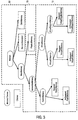
- FIG. 3 there is shown a diagram illustrating the hierarchy of memory and DMA classes 52, 70, and 72.
- Memory and DNA Classes 52, 70, and 72 have the following design goals:
- Memory and DMA classes do not provide yet another OS memory management subsystem implementation. Rather, the functionality for managing virtual memory, physical memory, I/O memory, and DMA is provided by the microkernel.
- the Memory and DMA classes do call upon such microkernel functionality via native methods, but these classes leverage that functionality, rather than Stahling it.
- each of the Memory and DMA classes is eventually a sub-class of the Memory abstract class, which only has the notion of such general attributes as a base address, length, and constraints (of both access and allocation).
- memory is either ultimately accessible (perhaps not always directly, as in the case of physical memory) by a CPU, hence MainMemory , or it is accessed externally to the CPUs via DMA, hence DMAMemory .
- MemoryDescriptor class does not provide any additional functionality beyond that provided by Memory. This is useful for bus managers to represent abstract memory before it is actually allocated.
- MainMemory abstract class only specifies abstract methods for managing caching, which is the only functionality common to its sub-classes.
- these abstract cache management methods are implemented. It is important to note that cache management is highly platform-dependent, and thus each of these implementations ultimately relies on invoking the microkernel to flush caches, set the cache mode, etc. Therefore, the device driver has full access to complete cache functions using platform-independent methods of MainMemory.
- MainMemory is either the abstract class, AccessibleMemory , which represents all memory that can be directly accessed by a CPU, or it is the PhysicalMemory class, which represents physical memory, which in general may not always be directly accessed by a CPU.
- the DMAMemory class provides methods for setting up DMA mappings to physical memory (ultimately done by the microkernel running below these classes), and for doing the corresponding unmapping. The decision was made to have the microkernel ultimately set up DMA mappings, since the full range of DMA hardware to be supported would not be something that it would be good to try to abstract at the DMAMemory class level, since doing so would be Stahling functionality that the microkernel must already support, and since it would probably not be possible to develop a sufficiently general scheme that deals with all the conceivable flavors of DMA hardware.
- the DMAMemory object is not concerned with whether the DMA addresses that the microkernel sets up for it are virtual DMA addresses that map through some IOMMU to physical DMA addresses, or whether the DMA addresses are physical DMA addresses.
- the addresses are simply DMA addresses, and such mappings are transparent to DMAMemory, and entirely maintained by the microkernel.
- Device drivers can thus obtain a base address, using methods of DMAMemory described in detail below, which can be passed to the DMA controller, thereby allowing device drivers to provide full DMA functionality in a completely platform-independent manner.
- AccessibleMemory is what is given to drivers by bus managers, so that they can always access memory in a platform-independent manner, thus allowing them to be portable across all platforms. AccessibleMemory thus defines platform-independent abstract methods, such as setByte() . Drivers should only use the methods abstracted in AccessibleMemory, or methods abstracted or implemented by the super-classes of AccessibleMemory , which are MainMemory , and Memory. Classes below AccessibleMemory, and also PhysicalMemory and DMAMemory, should only be accessed by bus managers, which understand platform specifics. That way, platform specifics will not creep into driver code. AccessibleMemory is either accessed by a CPU issuing normal load and store instructions, hence VirtualMemory, or it is accessed by a CPU issuing special I/O port instructions, hence PortIOMemory.
- PhysicalMemory is not accessible, because even on systems that do not have MMUs, the abstraction is maintained that the CPUs are really accessing virtual memory (not physical memory) that happens to be mapped one-to-one to physical memory.
- This abstraction thus provides a means of handling systems with and without MMUs in the same general way.
- the PhysicalMemory class is a sub-class of the abstract class, MainMemory, PhysicalMemory provides implementations of the cache management methods abstracted in MainMemory.
- the PhysicalMemory class allows a bus manager to specify a range of physical addresses, perhaps for registers of a device driver. By itself, though, since PhysicalMemory cannot be accessed, it is not useful. But, there are methods of VirtualMemory and of DMAMemory for mapping this physical memory into virtual memory or DMA, respectively.
- the VirtualMemory abstract class contains methods for setting up mappings to PhysicalMemory objects (mappings ultimately set up by the microkernel). As mentioned above, even on systems with no MMUs, VirtualMemory objects are mapped one-to-one to PhysicalMemory objects.
- the VirtualMemory class also has a method for allocating a specific amount of virtual memory (also ultimately done by the microkernel), without specifying any particular physical memory. There is even a method which then allows one to obtain an array of the underlying PhysicalMemory objects for a VirtualMemory object, which is especially useful when PhysicalMemory objects were not passed to construct the VirtualMemory object in the first place.
- a bus manager it is possible for a bus manager to set up DMA to virtual memory, since, given a VirtualMemory object, the array of underlying PhysicalMemory objects can be obtained, and then passed to a method of DMAMemory to set up DMA.
- VirtualMemory class also supports lock() and unlock() methods that can be used before obtaining underlying physical memory parameters before setting up a DMA operation. As set forth in detail below, there is even a lockContiguous() method, which makes sure the underlying physical pages mapped are contiguous, which is necessary on platforms that do not have a means, such as an IOMMU, of doing scatter-gather. It is, of course, up to the specific bus manager, which understands platform specifics, to decide what methods are needed for the specific platform.
- the VirtualMemory abstract class also implements cache management methods (ultimately performed by the microkernel), which are abstracted by MainMemory. These methods, too, depending upon the coherency characteristics of the platform (also platform specifics known by the bus manager), are useful when setting up DMA.
- PortIOMemory The other type of AccessibleMemory besides VirtualMemory is PortIOMemory, which is intended for CPUs issuing special port I/O operations, such as the Intel x86 series.
- PortIOMemory abstract class itself only implements the cache management operations abstracted by MainMemory. In this case, though, there is no caching, and these methods do not do much.
- PortIOMemory The bulk of the support for PortIOMemory is in its two sub-classes, SwappedPortIOMemory and UnSwappedPortIOMemory , which each implement all the memory access methods abstracted by AccessibleMemory. As the names would imply, one does byte-swapping of the data written (to support different endianness between the CPU and memory), and the other does not. It is up to the bus manager (which knows such endianness) to decide which of these two to instantiate.
- VirtualMemory is either mapped to I/O space, hence VirtualIOMemory , or it is not, hence VirtualRegularMemory .
- the reason for the two different abstract classes is that on some platforms accesses to I/O space may also require operations to flush out the pipeline.
- VirtualIOMemory and VirtualRegularMemory currently provide no functionality, but instead leave it to sub-classes to provide all functionality. Each of these two classes is only included in case there is ever anything common to its sub-classes that should be abstracted at a level higher.
- VirtualIOMemory has two sub-classes, SwappedVirtualIOMemory and UnSwappedVirtualIOMemory, which each implement all the memory access methods abstracted by AccessibleMemory.
- VirtualRegularMemory has two sub-classes, SwappedVirtualRegularMemory and UnSwappedVirtualRegularMemory , which each implement all the memory access methods abstracted by AccessibleMemory.
- DMA memory, physical memory, and virtual memory are all addressed by addresses from the same Address abstract class. Since there are significant example of systems that have addresses with non-power-of-two number of bits, the Address class supports addresses with any number of bits between 1 and 64.
- an Address object is represented as an unsigned value, along with an indication of the number of bits. Since the Java programming language does not have unsigned arithmetic as part of its foundation classes, it was necessary to develop some simple efficient algorithims for addition and comparison of addresses.
- the Address abstract class is abstract mainly because it is most efficient to use different algorithms for unsigned arithmetic, depending upon the number of bits used to represent the address value. There are two sub-classes, Address32 for addresses up to 32 bits, and Address64 , for addresses up to 64-bits.
- a bus manager When a bus manager constructs any of the Memory and DMA classes, it must provide a base Address and a length (also represented as an Address ). To do this, it must first construct each of these Address objects, and doing so requires knowing the number of bits for that the specific type of address on the specific platform (platform specific information bus managers do know).
- Drivers on the other hand, always access AccessibleMemory objects that have been constructed by bus mangers, and drivers always do so by providing an offset from the base of the AccessibleMemory object. So that drivers can be readily independent of platform specifics, such as the number of bits in a particular address, each memory access method of AccessibleMemory specifies the offset as an int. This allows memory objects up to 2 gigabytes. Although no presently known platform makes use of larger memory objects, methods can easily be added to the class to achieve even larger memory objects.
- Some of the machines that utilize the invention may have MMUs, so it is desirable to support multiple virtual address spaces, which allows there to be multiple virtual machines.
- applications always access memory in the same virtual address space as that of the drivers. But, with multiple virtual machines supported running in multiple address spaces, sometimes an application will be in a different address space from its driver. That is, a given driver will be accessing a memory object and will have synchronization methods for such access to handle the possibility of multiple threads of the same virtual machine running in that driver simultaneously.
- the virtual machines do not have efficient mechanisms for communication that could be used to provide synchronization for instances of the same driver running in separate virtual machines, but possibly accessing the same underlying memory object (say a register that is mapped in for both), it follows that a particular driver will probably always be in the same virtual address space, while applications that use that driver may be in different address spaces.
- a VirtualAddressSpace class is provided as part of the Memory and DMA Classes, and it has a single static method, getVasID() , for obtaining the virtual address space ID of the currently running thread. This ID is obtained from the microkernel. For efficiency, it is cached by getVasID(), so the microkernel does not have to be called upon each time.
- the virtual address space ID is one of the parameters of the constructor. This ID is eventually provided to the microkernel when the microkernel is requested to map the virtual memory. It follows that only the microkernel assigns semantics to the value of the virtual address space ID.
- classes 50 which constitute a first package of data types, including memory classes. These classes are platform independent and can thus be imported by platform-independent Java programming language code of the operating system, such as drivers, thereby providing fully functional platform-independent drivers. Also, since they are platform-independent, these classes do not depend upon any of the platform-dependent memory classes 72 (Fig. 2).
- Address objects All memory objects of the Memory and DMA classes use Address objects for their addresses. Since there are some actual significant examples of hardware which has addresses with non-power-of-two number of bits, addresses of any number of bits between 1 and 64 are supported. As the Address class is abstract, it is extended by
- the Address abstract class In addition to the protected constructor and public methods specified below, which are common to both sub-classes, the Address abstract class also implements a package private method for checking whether or not two Addresses are of the same type (same number of bits).
- This method is included for completeness, so that a client can form an Address which is the sum of a base Address and an offset (also represented as an Address), without the client having to implement its own algorithms for unsigned arithmetic.
- clients since clients always access (read or write) memory objects by specifying only an offset, leaving the Memory classes to compute the address of access (sum of the base Address and offset), the clients should not really need to use this method.
- This method invokes the appropriate method of the underlying Address sub-class.
- Clients access (read or write) a memory object by specifying an offset (also represented as an Address).
- an offset also represented as an Address. This method allows a client to determine whether this offset is valid (less than the length of the memory object), without having to implement its own algorithms for unsigned arithmetic. However, it is not absolutely necessary that the client use this method, since the Memory class access methods already do bounds checking.
- This method invokes the appropriate method of the underlying Address sub-class.
- the Address32 class extends the abstract Address class, and provides support for addresses whose number of bits is between 1 and 32, inclusive.
- the public methods specified here consist of construction methods and implementations of abstract public methods of the Address abstract class.
- the Address32 class also implements package private methods for unsigned 32-bit addition and unsigned 32-bit comparison, which are more efficient for internal calculations than the public methods, addAddr() and addrCompare() of the Address class. These package-private methods are more efficient because they do not have to allocate the Address object to return.
- the first of these constructors allows the client to create a general type of address of between 1 and 32 bits.
- the second constructor is provided for convenience to construct the more common 32-bit Address.
- the third constructor is provided for convenience, when the value for the Address is a long. In this case, though, only the least significant 32-bits (or less) are used.
- the Address64 class extends the abstract Address class, and provides support for addresses whose number of bits is between 33 and 64, inclusive.
- the public methods specified here consist of construction methods and implementations of abstract public methods of the Address abstract class.
- the Address64 class also implements package private methods for unsigned 64-bit addition and unsigned 64-bit comparison, which are more efficient for internal calculations than the public methods, addAddr() and addrCompare() of the Address class. These package-private methods are more efficient because they do not have to allocate the Address object to return.
- the first of these constructors allows the client to create a general type of address of between 33 and 64 bits.
- the second constructor is provided for convenience to construct the more common 64-bit Address.
- Every bus manager manages a set of address spaces.
- the memory classes themselves have three address spaces (see VirtualAddressSpace. PhysicalAddressSpace. and DMAAddressSpace) which are all logically part of the particular bus manager known as the PlatformBusManager, the highest level bus manager. Besides these address spaces, there are other address spaces that other bus managers can instantiate. All such address spaces are sub-classes of the AddressSpace abstract class.
- This constructor simply initializes protected variables with the supplied values.
- a protected initialization routine is also provided so that the sub-class can initialize the bit-size of the address space and an id for the address space. Both of these initializers might be obtained by the sub-class via native methods. In the case where there may be multiple address spaces of a particular type (e.g. virtual), the id obtained from the microkernel uniquely specifies one, so that it can be specifically identified. Using the initializer for the number of bits of the address space, the AddressSpace class computes and stores Address objects representing the lowest and highest possible addresses.
- a bus manager When a bus manager creates a memory object, it may need to specify constrains of both the allocation of the memory object, and subsequent accesses to the memory object by a driver. For example, some DMA controllers may have a limited range of addresses they can emit, thus necessitating that a DMA object (a memory object) be allocated only in that address range. As an example of access constraints, some registers may only be accessible as bytes, such that any other access may cause some sort of system failure.
- the MemoryConstraints object encapsulates such allocation and access constraints, so that they can be passed together to a constructor of a memory object.
- the MemoryConstraints class contains a constructor used to specify all the various constraints, and several methods for obtaining and setting each of the various constraints. This class also contains package private methods for checking whether a requested access satisfies the constraints, and whether a specified allocation matches the constraints.
- the maximum size allocation alignment supported is ALIGN_PAGE (5), and the minimum is, of course, ALIGN_BYTE(0), so if the specified alloc_align is greater than ALIGN_PAGE (5), it is set to 5, or if the specified alloc_align is less than ALIGN_BYTE(0), it is set to 0.
- access_min_s is less than 0, it is set to 0 (1 byte), or if the specified access_minds is greater than 3, it is set to 3 (8 bytes, a long). Similarly, if the specified access_max_s is less than 0, it is set to 0 (1 byte), or if the specified access_max_s is greater than 3, it is set to 3 (8 bytes, a long). If access_max_a is still less than access_min_a, access_max_a is set to the value of access_min_a.
- the maximum size access alignment supported is ALIGN_LONG(3), and the minimum supported is, of course, ALIGN_BYTE(0), so if the specified access_align is greater than ALIGN_LONG(3), it is set to 3, or if the specified access_align is less than ALIGN_BYTE(0), it is set to 0.
- rw is not set to READONLY, it is set to READWRITE.
- the maximum size allocation alignment supported is ALIGN_PAGE (5), and the mimimum is, of course, ALIGN_BYTE(0), so if the specified alloc_align is greater than ALIGN_PAGE (5), it is set to 5, or if the specified alloc_align is less than ALIGN_BYTE(0), it is set to 0.
- access_min_s is less than 0, it is set to 0 (1 byte), or if the specified access_min_s is greater than 3, it is set to 3 (8 bytes, a long). Similarly, if the specified access_max_s is less than 0, it is set to 0 (1 byte), or if the specified access_max_s is greater than 3, it is set to 3 (8 bytes, a long). If access_max_a is still less than access_min_a, access_max_a is set to the value of access_min_a.
- the maximum size access alignment supported is ALIGN_LONG(3), and the minimum supported is, of course, ALIGN_BYTE(0), so if the specified access_align is greater than ALIGN_LONG(3), it is set to 3, or if the specified access_align is less than ALIGN_BYTE(0), it is set to 0.
- rw is not set to READONLY, it is set to READWRITE.
- the Memory abstract class defines two abstract methods:
- the Memory class In addition to the fundamental public methods specified below that are common to all memory objects, the Memory class also implements package private methods for checking validity of an access (specified by offset within a memory object, size, mode (read or write), and count in bytes), and for obtaining the address of an access, given an offset of the memory object.
- This first protected constructor simply calculates the end Address (ba + len), saves all the parameters, along with the calculated end Address in protected variables of this class, initializes the memory to valid, and allocates protected internal data structures.
- the second protected constructor is used in the case where the underlying Memory object cannot be initialized when first constructed (e.g. VirtualMemory whose base address will not be known until the memory has been mapped in).
- a protected method is provided for later initializing the Memory object, thus completing what would have been initialized had the first protected constructor been used.
- the third protected constructor is used in the case where the memory object being constructed is a sub-range of an existing memory object.
- the memory base Address and end Address are calculated based upon the offset to the superrange Memory object, and the new Memory object is associated as a sub-range of the superrange and initialized to valid.
- Protected internal data structures area also allocated.
- MemoryDescriptor object Associated with a MemoryDescriptor object is an address space, managed by some bus manager, within which this descriptor of memory is defined.
- the first constructor simply calls the constructor of the super-class, Memory, using all but the AddressSpace argument, and then stores the AddressSpace in a private variable.
- the second constructor is provided for convenience, and is the same as the first constructor, except that null is passed to the Memory constructor for the mc (MemoryConstraints) parameter.
- All memory objects which represent memory that can be accessed ultimately by a CPU (everything except DMAMemory, the already described super-class Memory, and MainMemory itself) is a sub-class of the abstract class, MainMemory.
- MainMemory also defines the following constants to be used as parameters for implementations of setCacheMode() and return values of implementations of getCacheMode():
- Each of these protected constructors simply calls the corresponding protected constructor of the super-class, Memory.
- All memory objects of the Memory and DMA classes which represent memory that can be accessed directly by a CPU (every sub-class of MainMemory except PhysicalMemory and AccessibleMemory itself) is a sub-class of the abstract class, AccessibleMemory.
- Platform-independent code such as drivers, always access Memory via the methods of AccessibleMemory, not knowing or caring what the underlying memory object may be.
- AccessibleMemory defines the following protected abstract methods, which are internal implementations of the publicly defined access methods:
- AccessibleMemory does not implement any of the abstract methods of the two classes above it in the hierarchy, MainMemory and Memory.
- each of the access methods below checks for invalid accesses, and if there is a violation, a system message is logged, and the access is not performed.
- the reason for not simply having these methods throw an exception is that then all current calls in various drivers - and there are very many - would need to be modified to declare the exception thrown, when drivers are ported to the new Memory classes.
- Each of these protected constructors simply calls the corresponding protected constructor of the super-class, MainMemory.
- classes 72 which constitute a second package of memory classes. Unlike memory classes 50 which are platform-independent, the classes of memory package 72 are platform-dependent. These classes are primarily used by platform-dependent client code of, for example, bus managers. These classes depend upon and extend the platform-independent classes of javax.system.memory.
- the PhysicalAddressSpace is not really used by the memory classes themselves, since it is assumed that a machine only has one physical address space, but it is provided for completeness, and for use outside of the memory classes, with a MemoryDescriptor, by various bus managers.
- This constructor first calls the constructor of the super-class, AddressSpace, specifying the ExpansionBus argument and the String defined above, so that they may be used by the public methods, getExpansionBus() and getName() of AddressSpace. Then it calls the getAddressSize() and the alloc_id() native methods (see below) and supplies them to an protected initialization routine of AddressSpace, so that they may then be used by the public methods, getLowestAddress(), getHighestAddress(), and getID() of AddressSpace.
- the PhysicalAddressSpace defines the following native methods, implemented in the microkernel, which provide the size of addresses (in bits) and an ID for the address space, respectively.
- the PhysicalMemory class allows bus managers to obtain access to objects at specific physical addresses (such as device registers which are listed to be at a specific physical address in the Java system Database (JSD)) and then map them into virtual memory (see VirtualMemory constructor methods) so they can be accessed by device drivers (via the AccessibleMemory access methods). It is also possible for bus managers to set up DMA to a specified array of PhysicalMemory objects (see DMAMemory constructor methods).
- a bus manager can even set up DMA to a range of memory mapped into virtual memory, by first locking the virtual to physical mappings (see lock() method of VirtualMemory), then calling the appropriate method of VirtualMemory (see getPhysicalMemory() method) to obtain an array of PhysicalMemory objects, and then passing this array to the appropriate DMAMemory constructor.
- the reverse is also possible, where the DMAMemory object is first constructed, and then the underlying PhysicalMemory objects obtained in order to construct a VirtualMemory object (accessible via AccessibleMemory) which maps to the same PhysicalMemory objects.
- PhysicalMemory is very useful in conjunction with VirtualMemory (which is AccessibleMemory) or in conjunction with DMAMemory, it is not usable by itself. This is true even on a system which has no MMU, where a CPU accesses physical memory directly. Even in that case, the PhysicalMemory object is not an object that is accessed, but when that PhysicalMemory object is mapped to virtual memory, the VirtualMemory object can be accessed, and its virtual addresses happen to be the same as the underlying physical addresses. In this way, semantically, drivers or any other Java clients always access VirtualMemory objects, and never access PhysicalMemory objects.
- the first constructor is public and can be used by a bus manager to allocate a PhysicalMemory object. This allocation does not actually involve anything done in the microkernel corresponding to the actual physical memory. Rather, the PhysicalMemory object is merely a descriptor for physical memory, and used for construction of a VirtualMemory (actually an instantiable sub-class of VirtualMemory) or DMAMemory object. It is at the time that such a VirtualMemory or DMAMemory object is constructed that the microkernel verifies the PhysicalMemory object.
- This first constructor does not take a MemoryConstraints object as a parameter. Basically the reason is as follows. There are two types of constraints specified in a MemoryConstraints object, allocation constraints and access constraints. Allocation constraints do not apply, since nothing is actually allocated, and since the caller specifies the base address. Access constraints do not apply either, since PhysicalMemory objects are not accessible.
- the second constructor is private, and is used internally by the getSubRange() method. It merely invokes the super-class (MainMemory) constructor for sub-ranges.
- This method merely invokes the private constructor of this PhysicalMemory object.
- this method allows a bus manager to determine how the physical memory is cached if the PhysicalMemory object has just been constructed, or if CACHE_MODE_DEFAULT has been specified by setCacheMode().
- This method allows the bus manager, which should know about cache coherency of various components of the specific platform it supports, to control the caching of physical memory. For example, on platforms where a physical memory cache is not coherent with DMA accesses, it would be necessary for the bus manager to temporarily set the cache mode to CACHE-MODE_INIBIEED, while DMA transfers are set up.
- this method requests the following, depending upon the specific value of mode:
- the PhysicalMemory class defines the following native methods corresponding to the abstract cache management methods defined in MainMemory. Each of these native methods is implemented by functionality in the microkernel. For more details, refer to the Microkernel Interfaces Chapter.
- Each virtual machine has its ownVirtualAddressSpace.
- This constructor first calls the constructor of the super-class, AddressSpace, specifying the ExpansionBus argument and the String defined above, so that they may be used by the public methods, getExpansionBus() and getName() of AddressSpace. Then, it calls the getAddressSize() and the alloc-Id() native methods (see below) and supplies them to an protected initialization routine of AddressSpace, so that they may then be used by the public methods, getLowestAddress() getHighestAddress(), and getID() of AddressSpace.
- the VirtualAddressSpace defines the following native methods, implemented in the microkernel, which provide the size of addresses (in bits) and an ID for the address space, respectively.
- the ID is used when constructing VirtualMemory objects, so that the particular virtual address space for the mapping may be specified to the microkernel.
- the VirtualMemory object represents memory that can be accessed directly via load and store operations from a CPU, so it follows that VirtualMemory should be a sub-class of AccessibleMemory.
- the VirtualMemory abstract class does not actually implement any of the access methods that are abstracted by the AccessibleMemory class, as those abstract methods are all finally implemented by sub-classes of VirtualMemory.
- the Virtual Memory class does provide facilities for managing the mappings of VirtualMemory objects to PhysicalMemory objects, and these facilities are common to all the sub-classes of VirtualMemory.
- VirtualMemory objects are always mapped to some physical memory (which ones it is mapped to cannot be determined unless the mappings are locked). However, even in the case when running on a machine without an MMU, there are still VirtualMemory objects, and they are simply mapped one to-one such that a virtual address is always equal to the underlying physical address.
- VirtualMemory class is abstract, since it extends AccessibleMemory without implementing any of the abstract methods defined in AccessibleMemory. VirtualMemory does not define any more abstract methods though.
- VirtualMemory class is an abstract class, and thus cannot be instantiated, all three of the following protected constructors are used by sub-classes. Note that sometimes it is not possible to map the entire amount of memory specified, so the getMemLength() method of Memory should be called to determine the actual amount of memory mapped.
- a request is made to the microkernel to do the mapping, providing the vasid, arrays of base physical addresses and lengths, allocation constraints, and an indication that the mapping must be locked.
- the microkernel returns the base virtual address and length mapped, which this constructor then uses to initialize this Memory object.
- This third protected constructor is used by sub-classes for their getSubRange() methods. This constructor invokes the corresponding protected constructor of the super-class, AccessibleMemory. Also, a private variable is initialized to indicate that this sub-range VirtualMemory object is not locked. Note that even if the super-range is locked, we do not initially indicate that the sub-range is locked. This is because we allow the microkernel to maintain a lock count on a particular range of addresses. This means that when we lock this sub-range, the lock count for it would be whatever count already accumulated for super-ranges plus one for this lock.
- Sub-ranges are kept on private linked lists of the super-range VirtualMemory object, so that the unMap() method works as described.
- the microkernel is called to do the unmap, specifying a base virtual address and a length. If it is just a sub-range, it is merely removed from its super-range's Vector of sub-ranges. Finally, the validity of the super-class Memory is set to false.
- this method returns immediately. Otherwise, a request is made to the microkernel to get physical memory backing the entire range of virtual memory (if not already done), and to lock the mapping (or to increase the lock count in the case of a sub-range).
- the microkernel will need to keep track of multiple requests in possibly multiple virtual address spaces that have locked either virtual memory mappings or DMA mappings to physical memory (including a lock count of mappings that are locked to each physical page).
- this method returns immediately. Otherwise, provided the VirtualMemory object is not already locked, a request is made to the microkernel to get contiguous physical memory backing the entire range of virtual memory, and to lock the mapping. The microkernel will need to keep track of multiple requests in possibly multiple virtual address spaces that have locked either virtual memory mappings or DMA mappings to physical memory (including a lock count of mappings that are locked to each physical page).
- the VirtualMemory object is not locked, null is returned. Otherwise, if the PhysicalMemory objects have already been obtained for this VirtualMemory object (reference is kept in a private field of the VirtualMemory object), a reference to these pages is simply returned. Otherwise, first a request is made to the microkernel to obtain arrays of base physical addresses and lengths. Then, using the information obtained from the microkernel, each PhysicalMemory object is constructed. Before the array of PhysicalMemory objects is returned, reference to it is kept in a private field of this VirtualMemory object, so that further requests can be handled without involving the microkernel (as long as the VirtualMemory stays locked).
- this method allows a bus manager to determine how the virtual memory is cached if the bus manager did not record how it had specified the virtual memory to be cached, or if CACHE_MODE_DEFAULT had been specified by setCacheMode(), and now the bus manager wants to know how exactly it was cached as default.
- This method allows the bus manager, which should know about cache coherency of various components of the specific platform it supports, to control the caching of virtual memory. For example, on platforms where a virtual memory cache is not coherent with DMA accesses, it would be necessary for the bus manager to temporarily set the cache mode to CACHE_MODE_INHIBITED, while DMA transfers are set up (or to call flushCache() first and somehow guarantee that the CPU(s) will not access the virtual memory while DMA is done).
- this method requests the following, depending upon the particular value of mode:
- the VirtualMemory class defines the following native methods. Each of these native methods is implemented by functionality in the microkernel. For more details, refer to the Microkernel Interfaces section.
- the DMAAddressSpace is not really used by the memory classes themselves, since it is assumed that a machine only has one DMA address space, but it is provided for completeness, and for use outside of the memory classes, with a MemoryDescriptor, by various bus managers.
- This constructor first calls the constructor of the super-class, AddressSpace, specifying the ExpansionBus argument and the String defined above, so that they may be used by the public methods, getExpansionBus() and getName() of AddressSpace. Then it calls the getAddressSize() and the alloc_id() native methods (see below) and supplies them to an protected initialization routine of AddressSpace, so that they may then be used by the public methods, getLowestAddress() getHighestAddress() and getID() of AddressSpace.
- the DMAAddressSpace defines the following native methods, implemented in the microkernel, which provide the size of addresses (in bits) and an ID for the address space, respectively.
- the DMAMemory object represents memory that can be accessed only via addressing external to the CPUs on some DMA channel. These DMA addresses are mapped via the DMA hardware to physical memory addresses. Thus, a DMAMemory object is always mapped to PhysicalMemory objects. Since DMAMemory cannot be accessed either directly or indirectly by the CPU(s), DMAMemory is neither a sub-class of AccessibleMemory nor MainMemory. Rather, DMAMemory is a direct sub-class of Memory.
- a request is made to the microkernel to allocate the DMA mappings, providing the arrays of base physical addresses and lengths, and the allocation constraints.
- the microkernel returns the base DMA address and the length of DMA mapped, and then uses this information to initialize the Memory super-class.
- a request is made to the microkernel to allocate the DMA mappings, providing the length to allocate and the allocation constraints.
- the microkernel returns the base DMA address and the length of DMA mapped, and then uses this information to initialize the Memory super-class.
- This private constructor is used by the getSubRange() method. This constructor invokes the corresponding protected constructor of the super-class, Memory.
- the validity of the super-class Memory is set to null (already unmapped), this call returns immediately. This could happen if two threads were trying to call the unMap() method at about the same time, and one got in ahead of the other.
- the microkernel is called to do the DMA deallocation, specifying a base DMA address and a length. If it is just a sub-range, it is merely removed from its superrange's Vector of sub-range. Finally, the validity of the super-class Memory is set to false.
- This method merely calls the private DMAMemory constructor that is used to construct sub-ranges.
- the DMAMemory class defines the following native methods. Each of these native methods is implemented by functionality in the microkernel.
- Each of these three protected constructors is only used by sub-classes, and merely invoke the corresponding constructor of VirtualMemory. Refer to VirtualMemory for more details.
- the VirtualIOMemory abstract class currently provides no additional functionality but is merely defined in case there are ever common methods between SwappedVirtualIOMemory and UnSwappedVirtualIOMemory. Currently, this class only defines three protected constructors which merely invoke the corresponding constructors of the super-class VirtualMemory.
- This method merely invokes the third constructor method of SwappedVirtualIOMemory, which eventually invokes the third constructor method of VirtualMemory to construct the sub-range.
- the SwappedVirtualIOMemory class defines the following native methods corresponding to the abstract access methods that are defined in AccessibleMemory. Each of these native methods is implemented by functionality in the microkernel, which must handle both the fact that the memory is byteswapped, and that it is I/0 memory which may, depending upon the platform, require additional operations to deal with the fact that I/0 memory may not be coherent with other system memory.
- This method merely invokes the third constructor method of UnSwappedVirtualIOMemory which eventually invokes the third constructor method of VirtualMemory to construct the strange.
- the UnSwappedVirtualIOMemory class defines the following native methods corresponding to the abstract access methods that are defined in AccessibleMemory. Each of these native methods is implemented by functionality in the microkernel, which must handle the fact that it is I/O memory which may, depending upon the platform, require additional operations to deal with the fact that I/O memory may not be coherent with other system memory. Unlike the corresponding native methods of UnSwappedVirtualIOMemory the native methods here do not have to deal with byte-swapping.
- Each of these three protected constructors is only used by sub-classes, and merely invoke the corresponding constructor of VirtualMemory. Refer to VirtualMemory for more details.
- the VirtualRegularMemory abstract class currently provides no additional functionality, but is merely defined in case there are ever common methods between SwappedVirtualRegularMemory and UnswappedVirtualRegularMemory.
- this class only defines three protected constructors which merely invoke the corresponding constructors of the super-class VirtualMemory.
- SwappedVistuaIRegularMemory As long as SwappedVistuaIRegularMemory is supported on this platform, each of these three constructors merely invoke the corresponding constructor of VirtualRegularMemory, which in turn invokes the corresponding constructor of VirtualMemory. Refer to VirtualMemory for more details. If SwappedVirtuaIRegularMemory is not supported on this platform, NotSupportedException is thrown.
- This method merely invokes the third constructor method of SwappedVirtualRegularMemory, which eventually invokes the third constructor method of VirtualMemory to construct the sub-range.
- the SwappedVirtualRegularMemory class defines the following native methods corresponding to the abstract access methods that are defined in AccessibleMemory. Each of these native methods is implemented by functionality in the microkernel, which must handle both the fact that the memory is byte-swapped.
- This method merely invokes the third constructor method of UnSwappedVirtualRegularMemory, which eventually invokes the third constructor method of VirtualMemory to construct the sub-range.
- UnSwappedVirtualRegularMemory class defines the following native methods corresponding to the abstract access methods that are defined in AccessibleMemory. Unlike the corresponding native methods of SwappedVirtualRegularMemory, the native methods here do not have to deal with byte-swapping.
- PortIOAddressSpace is not really used by the memory classes themselves, since it is assumed that a machine only has one port I/O address space, but it is provided for completeness, and for use outside of the memory classes, with a MemoryDescriptor, by various bus managers.
- This constructor first calls the constructor of the super-class, AddressSpace, specifying the ExpansionBus argument and the String defined above, so that they may be used by the public methods, getExpansionBus(), and getName() of AddressSpace. Then it calls the getAddressSize() and the alloc_id() native methods (see below) and supplies them to an protected initialization routine of AddressSpace, so that they may then be used by the public methods, getLowestAddress(), getHighestAddress(), and getlD() of AddressSpace.
- the PortIOAddressSpace defines the following native methods, implemented in the microkernel, which provide the size of addresses (in bits) and an ID for the address space, respectively.
- the PortIOMemory abstract class provides some minor functionality that is common between SwappedPortIOMemory and UnSwappedPortIOMemory.
- This constructor merely calls the protected constructor of the super-class, AccessibleMemory.
- This method always returns CACHE_MODE_INHIBITED.
- This constructor merely calls the protected constructor of the super-class, PortIOMemory.
- This method merely invokes the constructor method of SwappedPortIOMemory.
- the SwappedPortIOMemory class defines the following native methods corresponding to the abstract access methods that are defined in AccessibleMemory. Each of these native methods is implemented by functionality in the microkernel, which must handle both the fact that the memory is byte-swapped, and that it is port memory.
- This constructor merely calls the protected constructor of the super-class, PortIOMemory.
- This method merely invokes the constructor method of UnswappedPortIOMemory.
- UnswappedPortIOMemory class defines the following native methods corresponding to the abstract access methods that are defined in AccessibleMemory. Each of these native methods is implemented by functionality in the microkernel, which must handle both the fact that the memory is port memory.
- DMA and Memory methods 80 and 82 of microkernel 62 consist entirely of the set of native methods of the various Java classes. Together, these native methods are contained in a library of functions for a particular microkernel, and each function of that library either handles the native method itself, or performs a system call to the microkernel to handle the native method.
- the PhysicalAddressSpace class defines the following native methods:
- the PhysicalMemory class defines the following native methods corresponding to the abstract cache management methods defined in MainMemory.
- the following native methods control caching of data associated with physical addresses on the particular platform.
- This native method sets the caching for physical memory, starting at the physical address, base, and continuing for a length in bytes of len.
- the caching is set based upon the following possible values of mode (for any other values of mode, do nothing):
- This native method gets the caching for physical memory, starting at the physical address, base, and continuing for a length in bytes of len.
- One of the following values is to be returned:
- Each virtual machine runs in a separate virtual address space (only one virtual address space on a machine with just one virtual machine).
- This method allows the microkernel to specify an ID (only the microkernel will interpret this ID) which can be used subsequently to identify the particular virtual address space for a mapping in native methods of the VirtualMemory class.
- the particular virtual address space is to be the one which the head calling this native method is set up to use.
- the VirtualMemory class defines the following native methods., which control virtual memory. If a platform does not really have virtual memory, then virtual memory is defined to be mapped (automatically) one-to-one to physical memory in such a way that the virtual address corresponding to a physical address is the same as that physical address.
- the first three native methods map and unmap virtual memory.
- the first native method, physmap() sets up virtual memory mapped to an array of physical memory ranges, while the second native method, map(), simply maps a specified amount of virtual memory, without specifying the physical memory to which it maps.
- the third native method, unmap() undoes the mappings that the other two methods create.
- the particular virtual address space m which this mapping is to be done is specified by vasid, which the caller is to have obtained via a call to the alloc_vasid() native method of the VirtualAddressSpace class.
- the physical memory to be mapped is specified via the arrays paddrs and sizes in such a way that the nth element of paddrs and the nth element of sizes specify the base physical address and length for a range of physical memory, respectively.
- These ranges of physical memory are to be mapped to increasingly higher virtual addresses in such a way that physical memory range n (as specified by nth elements of paddrs and sizes) is to be mapped to virtual addresses which are lower than the virtual addresses which map to physical memory range n+I.
- the virtual address ranges are to be contiguous, so that they form one virtual address range.
- any range of virtual addresses can be used, except that all virtual addresses in the range must be greater than or equal to minaddr, and all virtual addresses in the range must be less than or equal to maxaddr.
- the base virtual address is to be aligned as specified by align, which could have one of the following values:
- the virtual memory is to be cached as though cacheMode were specified for mode in a call to the native method, setcachemode().
- the base virtual address of the range is to be returned in ret[0] and the length of virtual memory mapped is to be returned in ret[1].
- the possible return values are:
- vasid The particular virtual address space in which this mapping is to be done is specified by vasid, which the caller is to have obtained via a call to the alloc_vasid() native method of the VirtualAddressSpace class.
- the amount of virtual memory to allocate is specified by size in bytes.
- any range of virtual addresses can be used, except that all virtual addresses in the range must be greater than or equal to minaddr, and all virtual addresses in the range must be less than or equal to maxaddr.
- the base virtual address is to be aligned as specified by align, which could have one of the following values:
- the virtual memory is to be cached as though cacheMode were specified for mode in a call to the native method, setcachemode().
- the base virtual address of the range is to be returned in ret[0] and the length of virtual memory mapped is to be returned in ret[1].
- the possible return values are:
- vasid The particular virtual address space in which this unmapping is to be done is specified by vasid, which the caller is to have obtained via a call to the alloc_vasid() native method of the VirtuaLAddressSpace class.
- the virtual memory to be unmapped is that starting at base and having a length of len in bytes.
- the howcreated parameter specifies how the virtual memory was mapped in the first place:
- the possible return values are:
- the next three native methods lock and unlock virtual memory mappings.
- the native method, dolock() locks virtual memory to particular physical memory without regard to the underlying physical memory being contiguous, while the native method, dolockcontig(), does the locking to contiguous physical memory.
- the native method, unlock() unlocks the mappings that the other two methods lock.
- vasid The particular virtual address space in which this locking is to be done is specified by vasid, which the caller is to have obtained via a call to the alloc_vasid() native method of the VirtualAddressSpace class.
- the virtual memory to be locked is that starting at base and having a length of len in bytes.
- ret[0] will be the total number of bytes of the range that are locked (the entire length of the range). If the locking was not successful, but if it would have been possible to lock a sub-range starting at the beginning of the range, then ret[0] is the length of that sub-range.
- the possible return values are:
- vasid The particular virtual address space in which this locking is to be done is specified by vasid, which the caller is to have obtained via a call to the alloc_vasid() native method of the VirtualAddressSpace class.
- the virtual memory to be locked is that starting at base and having a length of len in bytes.
- this particular native method is to do the locking so that the entire range of virtual addresses map to contiguous physical memory.
- the microkernel may need to remap portions of this virtual range. Note, though, that if this remapping violates any locking already done via dolock() or dolockcontig(), then this dolockcontig() call is to be failed (with NOT_ALL_LOCKED).
- ret[0] will be the total number of bytes of the range that are locked (the entire length of the range). If the locking was not successful, but if it would have been possible to lock a sub-range starting at the beginning of the range, then ret[0] is the length of that sub-range.
- the possible return values are:
- vasid The particular virtual address space in which this unlocking is to be done is specified by vasid, which the caller is to have obtained via a call to the alloc_vasid() native method of the VirtualAddressSpace class.
- the virtual memory to be unlocked is that starting at base and having a length of len in bytes. This call decrements the lock count for the range which had been incremented by either the dolock() or the dolockcontig() native methods.
- the possible return values are:
- the virtual memory is first locked, it is guaranteed that the identity of the underlying physical memory will remain the same.
- a call to the getphys() native method is used to obtain the underlying physical memory.
- vasid The particular virtual address space in which this operation is to be done is specified by vasid, which the caller is to have obtained via a call to the alloc_vasid() native method of the VirtualAddressSpace class.
- the base of the range of virtual memory is specified by base, and the length of the range by len in bytes.
- the physical memory is to be specified in the supplied arrays pBase and pLen, such that the pBase[0] and pLen[0] are the base and length of the physical memory that starts mapping the beginning of the virtual memory, and such that (pBase[n+1], pLen[n+1]) specifies physical memory to which a higher range of virtual addresses is mapped than the range of virtual addresses that map the physical memory range specified by (pBase[n], pLen(n]).
- the next native methods control caching of data associated with virtual addresses on the particular platform.
- vasid The particular virtual address space in which this operation is to be done is specified by vasid, which the caller is to have obtained via a call to the alloc_vasid() native method of the VirtualAddressSpace class.
- This native method sets the caching for virtual memory, starting at the virtual address, base, and continuing for a length in bytes of len.
- the caching is set based upon the following possible values of mode (for any other values of mode, do nothing):
- This native method gets the caching for virtual memory, starting at the virtual address, base, and continuing for a length in bytes of len.
- One of the following values is to be returned:
- the DMAAddressSpace class defines the following native methods:
- the DMAMemory class defines the following native methods. Each of these native methods is implemented by functionality in the microkernel.
- the physical memory to be mapped is specified via the arrays paddrs and sees in such a way that the nth element of paddrs and the nth element of sizes specify the base physical address and length for a range of physical memory, respectively.
- These ranges of physical memory are to be mapped to increasingly higher DMA addresses in such a way that physical memory range n (as specified by nth elements of paddrs and sizes) is to be mapped to DMA addresses which are lower than the DMA addresses which map to physical memory range n+1.
- the DMA address ranges are to be contiguous, so that they form one DMA address range.
- any range of DMA addresses can be used, except that all DMA addresses in the range must be greater than or equal to minaddr, and all DMA addresses in the range must be less than or equal to maxaddr.
- the base DMA address is to be aligned as specified by align, which could have one of the following values:
- the base DMA address of the range is to be returned in ret[0] and the length of DMA memory mapped is to be returned in ret[1].
- the possible return values are:
- the amount of DMA memory to allocate is specified by size in bytes.
- any range of DMA addresses can be used, except that all DMA addresses in the range must be greater than or equal to minaddr, and all DMA addresses in the range must be less than or equal to maxaddr.
- the base DMA address is to be aligned as specified by align, which could have one of the following values:
- the base DMA address of the range is to be returned in ret[0] and the length of DMA memory mapped is to be returned in ret[1].
- the possible return values are:
- the DMA memory to be unmapped is that starting at base and having a length of len in bytes.
- the possible return values are:
- the base of the range of DMA memory is specified by base, and the length of the range by len in bytes.
- the physical memory is to be seed in the supplied arrays pBase and pLen, such that the pBase[0] and pLen[0] are the base and length of the physical memory that starts mapping the beginning of the DMA memory, and such that (pBase[n+1], pLen[n+1]) specifies physical memory to which a higher range of DMA addresses is mapped than the range of DMA addresses that map the physical memory range specified by (pBase[n], pLen[n]).
- the various non-abstract sub-classes of AccessibleMemory define as native methods the methods abstracted in AccessibleMemory. These sub-classes consist of SwappedVirtualIOMemory, UnSwappedVirtualIOMemory, SwappedVirtualRegularMemory, UnSwappedVirtualRegularMemory, SwappedPortIOMemory, and UnSwappedPortIOMemory. For each of these sub-classes there are separate versions of these native methods.
- the byte value, x is to be written at the address, adr.
- the short value, x is to be written at the address, adr.
- the int value, x is to be written at the address, adr.
- the long value, x is to be written at the address, adr.
- This operation registers the source of a copy operation, and returns an ID, which can later be passed to the nCopy native method.
- the base address of the source, adr1, and the length in bytes to copy, len, are to be registered. It is also necessary to take into account and register the following flavors depending upon the particular nature of the source memory: Swapped/UnSwapped, IO/Regular, Virtual/Port.
- This operation performs a copy from the source as specified by copyID, to the destination specified here.
- the destination address, adr2, and length in bytes, len, are as specified.
- the source address and length may be obtained by what was registered for the source, as specified by copyID. If the length of source and destination do not agree, use the lesser of the two.
- the classes described above are stored on a computer readable medium, such as floppy disks, a CD-ROM, or optical disk. Alternatively, they are supplied to computer system 10 in a read-only memory, or provided in the form of a computer data carrier wave over a network.
Landscapes
- Engineering & Computer Science (AREA)
- Software Systems (AREA)
- Theoretical Computer Science (AREA)
- Physics & Mathematics (AREA)
- General Engineering & Computer Science (AREA)
- General Physics & Mathematics (AREA)
- Computer Security & Cryptography (AREA)
- Memory System Of A Hierarchy Structure (AREA)
- Devices For Executing Special Programs (AREA)
- Stored Programmes (AREA)
Applications Claiming Priority (2)
| Application Number | Priority Date | Filing Date | Title |
|---|---|---|---|
| US48333 | 1998-03-26 | ||
| US09/048,333 US6594708B1 (en) | 1998-03-26 | 1998-03-26 | Apparatus and method for object-oriented memory system |
Publications (2)
| Publication Number | Publication Date |
|---|---|
| EP0953899A2 true EP0953899A2 (fr) | 1999-11-03 |
| EP0953899A3 EP0953899A3 (fr) | 2002-01-23 |
Family
ID=21954011
Family Applications (1)
| Application Number | Title | Priority Date | Filing Date |
|---|---|---|---|
| EP99104072A Withdrawn EP0953899A3 (fr) | 1998-03-26 | 1999-03-17 | Dispositif et procédé pour un système memoire orienté objets |
Country Status (4)
| Country | Link |
|---|---|
| US (1) | US6594708B1 (fr) |
| EP (1) | EP0953899A3 (fr) |
| JP (1) | JPH11327905A (fr) |
| TW (1) | TW432332B (fr) |
Cited By (3)
| Publication number | Priority date | Publication date | Assignee | Title |
|---|---|---|---|---|
| WO2001088718A3 (fr) * | 2000-05-12 | 2002-03-21 | Zucotto Wireless Inc | Procedes et systemes d'applications d'interaction avec du materiel |
| US6594708B1 (en) * | 1998-03-26 | 2003-07-15 | Sun Microsystems, Inc. | Apparatus and method for object-oriented memory system |
| US6618767B1 (en) | 1998-11-17 | 2003-09-09 | Sun Microsystems, Inc. | Mechanism by which devices on unforeseen platform variants may be supported without re-release of core platform kernel software |
Families Citing this family (20)
| Publication number | Priority date | Publication date | Assignee | Title |
|---|---|---|---|---|
| US6862735B1 (en) * | 1999-02-11 | 2005-03-01 | Sun Microsystems, Inc. | Mechanism by which platform independent software may bind to and access platform dependent software |
| WO2001011480A1 (fr) * | 1999-08-11 | 2001-02-15 | Spinware, Inc. | Systeme et procede permettant de controler l'acces a des donnees stockees sur un support de memorisation portable |
| US6725369B1 (en) * | 2000-04-28 | 2004-04-20 | Hewlett-Packard Development Company, L.P. | Circuit for allowing data return in dual-data formats |
| US6681346B2 (en) * | 2000-05-11 | 2004-01-20 | Goodrich Corporation | Digital processing system including a DMA controller operating in the virtual address domain and a method for operating the same |
| US7159223B1 (en) * | 2000-05-12 | 2007-01-02 | Zw Company, Llc | Methods and systems for applications to interact with hardware |
| WO2001097486A2 (fr) * | 2000-06-09 | 2001-12-20 | Brown Charles P | Procede et systeme de protection de noms de domaines |
| US6918126B1 (en) * | 2000-09-08 | 2005-07-12 | International Business Machines Corporation | Method and apparatus for creating and enforcing protected system level Java code |
| FR2822627B1 (fr) * | 2001-03-22 | 2003-06-20 | Wavecom Sa | Module de radiocommunication hebergeant et executant un logiciel client, et procede correspondant de mise en oeuvre d'un logiciel client de pilotage |
| US7272835B2 (en) * | 2002-06-28 | 2007-09-18 | International Business Machines Corporation | Apparatus and method for obtaining a string representation of objects in displayed hierarchical structures |
| US6804729B2 (en) * | 2002-09-30 | 2004-10-12 | International Business Machines Corporation | Migrating a memory page by modifying a page migration state of a state machine associated with a DMA mapper based on a state notification from an operating system kernel |
| EP1622009A1 (fr) * | 2004-07-27 | 2006-02-01 | Texas Instruments Incorporated | Architecture et systèmes JSM |
| US8776049B2 (en) | 2004-10-20 | 2014-07-08 | Seagate Technology Llc | Address aligned resource set allocation in a memory space |
| US8412826B2 (en) * | 2005-03-21 | 2013-04-02 | Hewlett-Packard Development Company, L.P. | Message exchange between software components |
| KR100809293B1 (ko) * | 2006-03-10 | 2008-03-04 | 삼성전자주식회사 | 가상 머신에서 스택을 관리하는 장치 및 그 방법 |
| US7827374B2 (en) * | 2006-06-12 | 2010-11-02 | Oracle America, Inc. | Relocating page tables |
| US7721068B2 (en) * | 2006-06-12 | 2010-05-18 | Oracle America, Inc. | Relocation of active DMA pages |
| US7802070B2 (en) * | 2006-06-13 | 2010-09-21 | Oracle America, Inc. | Approach for de-fragmenting physical memory by grouping kernel pages together based on large pages |
| US8650342B2 (en) * | 2006-10-23 | 2014-02-11 | Dell Products L.P. | System and method for distributed address translation in virtualized information handling systems |
| CA2693938A1 (fr) | 2010-02-22 | 2011-08-22 | Ibm Canada Limited - Ibm Canada Limitee | Gestion de verrouillage d'objets logiciels basee sur des observations |
| JP6008617B2 (ja) * | 2012-06-29 | 2016-10-19 | キヤノン株式会社 | 通信装置およびその制御方法、並びにプログラム |
Family Cites Families (48)
| Publication number | Priority date | Publication date | Assignee | Title |
|---|---|---|---|---|
| US4173783A (en) | 1975-06-30 | 1979-11-06 | Honeywell Information Systems, Inc. | Method of accessing paged memory by an input-output unit |
| US4533996A (en) | 1982-02-23 | 1985-08-06 | International Business Machines Corporation | Peripheral systems accommodation of guest operating systems |
| US5694603A (en) | 1982-09-28 | 1997-12-02 | Reiffin; Martin G. | Computer memory product with preemptive multithreading software |
| JPH0658624B2 (ja) | 1990-03-30 | 1994-08-03 | インターナショナル・ビシネス・マシーンズ・コーポレーション | グラフィカル・ユーザ・インターフェース管理装置 |
| JPH0756628B2 (ja) | 1990-10-22 | 1995-06-14 | 富士ゼロックス株式会社 | グラフィカル・ユーザインターフェースの編集装置 |
| US5430836A (en) | 1991-03-01 | 1995-07-04 | Ast Research, Inc. | Application control module for common user access interface |
| US5291585A (en) | 1991-07-29 | 1994-03-01 | Dell Usa, L.P. | Computer system having system feature extension software containing a self-describing feature table for accessing I/O devices according to machine-independent format |
| US5566330A (en) | 1991-08-20 | 1996-10-15 | Powersoft Corporation | Method for forming a reusable and modifiable database interface object |
| US5309563A (en) | 1991-09-09 | 1994-05-03 | Compaq Computer Corporation | Computer implemented method for transferring command messages between a system manager for a computer system and a network operating system associated therewith |
| US5319751A (en) | 1991-12-27 | 1994-06-07 | Intel Corporation | Device driver configuration in a computer system |
| US5461710A (en) | 1992-03-20 | 1995-10-24 | International Business Machines Corporation | Method for providing a readily distinguishable template and means of duplication thereof in a computer system graphical user interface |
| JPH0683603A (ja) | 1992-04-03 | 1994-03-25 | Internatl Business Mach Corp <Ibm> | オブジェクト・クラスのバッチ登録の方法とシステム |
| US5347627A (en) | 1992-04-07 | 1994-09-13 | International Business Machines Corporation | Graphical user interface including dynamic sizing and spacing |
| US5526517A (en) | 1992-05-15 | 1996-06-11 | Lsi Logic Corporation | Concurrently operating design tools in an electronic computer aided design system |
| US5423034A (en) | 1992-06-10 | 1995-06-06 | Cohen-Levy; Leon | Network file management with user determined hierarchical file structures and means for intercepting application program open and save commands for inputting and displaying user inputted descriptions of the location and content of files |
| GB2270242A (en) | 1992-08-29 | 1994-03-02 | Ibm | A method of editing for an object oriented computer system |
| US5412772A (en) | 1992-10-13 | 1995-05-02 | Novell, Inc. | System for permitting a view of an object or a user interface to be exchanged between operating system environments |
| US5384911A (en) | 1992-12-23 | 1995-01-24 | International Business Machines Corporation | Method of transferring programs from action oriented GUI paradigm to object oriented GUI paradigm |
| US5345550A (en) | 1992-12-23 | 1994-09-06 | International Business Machines Corporation | User-modifiable popup menus for object oriented behavior |
| US5448695A (en) | 1992-12-31 | 1995-09-05 | International Business Machines Corporation | Method and apparatus for dynamic visual feedback messaging in a graphical user interface of a data processing system |
| US5436637A (en) | 1993-03-05 | 1995-07-25 | Borland International, Inc. | Graphical user interface system and methods for improved user feedback |
| JP2620576B2 (ja) | 1993-04-15 | 1997-06-18 | インターナショナル・ビジネス・マシーンズ・コーポレイション | ユーザが要求したフォントに従ってグラフィカル・ユーザ・インターフェースを調節する方法及びシステム |
| US5559942A (en) | 1993-05-10 | 1996-09-24 | Apple Computer, Inc. | Method and apparatus for providing a note for an application program |
| US5473777A (en) | 1993-07-19 | 1995-12-05 | Moeller; Christopher P. | Wrapper for enabling an object otented application to maintain virtual memory using procedural function calls |
| US5422674A (en) | 1993-12-22 | 1995-06-06 | Digital Equipment Corporation | Remote display of an image by transmitting compressed video frames representing background and overlay portions thereof |
| US5461399A (en) | 1993-12-23 | 1995-10-24 | International Business Machines | Method and system for enabling visually impaired computer users to graphically select displayed objects |
| US5548702A (en) | 1993-12-23 | 1996-08-20 | International Business Machines Corporation | Scrolling a target window during a drag and drop operation |
| US5491784A (en) | 1993-12-30 | 1996-02-13 | International Business Machines Corporation | Method and apparatus for facilitating integration of software objects between workspaces in a data processing system graphical user interface |
| US5546519A (en) | 1994-02-28 | 1996-08-13 | International Business Machines Corporation | System and method for visually programming iteration |
| US5550968A (en) | 1994-04-12 | 1996-08-27 | International Business Machines Corporation | Method and system for providing access security to controls in a graphical user interface |
| US5701476A (en) | 1994-11-29 | 1997-12-23 | Intel Corporation | Method and apparatus for dynamically loading a driver routine in a computer memory |
| US5473745A (en) | 1994-12-14 | 1995-12-05 | International Business Machines Corporation | Exposing and hiding a title bar behind its window using a visual cue |
| US5727212A (en) | 1995-04-12 | 1998-03-10 | International Business Machines Corporation | Object oriented device driver system for procedural device drivers |
| US5570462A (en) | 1995-05-05 | 1996-10-29 | Apple Computer, Inc. | System and method for object placement and sizing in a dynamic display environment |
| EP0752646B1 (fr) | 1995-07-07 | 2002-03-27 | Sun Microsystems, Inc. | Réalisation d'interface de gestion périphérique par accès de données |
| US5572643A (en) | 1995-10-19 | 1996-11-05 | Judson; David H. | Web browser with dynamic display of information objects during linking |
| US5752032A (en) | 1995-11-21 | 1998-05-12 | Diamond Multimedia Systems, Inc. | Adaptive device driver using controller hardware sub-element identifier |
| US5790887A (en) | 1996-02-15 | 1998-08-04 | International Business Machines Corporation | Method and apparatus for processing programmed input/output (PIO) operations in a computer system |
| US5860079A (en) | 1996-05-10 | 1999-01-12 | Apple Computer, Inc. | Arrangement and method for efficient calculation of memory addresses in a block storage memory system |
| US5829053A (en) | 1996-05-10 | 1998-10-27 | Apple Computer, Inc. | Block storage memory management system and method utilizing independent partition managers and device drivers |
| WO1997044739A1 (fr) | 1996-05-23 | 1997-11-27 | Advanced Micro Devices, Inc. | Dispositif de conversion de donnees entre differents formats et systeme et procede d'emploi associes |
| US5937170A (en) | 1997-02-21 | 1999-08-10 | Vlsi Technology, Inc. | Data communications with processor-assertable addresses mapped to peripheral-accessible-addresses-times-command product space |
| US5898896A (en) | 1997-04-10 | 1999-04-27 | International Business Machines Corporation | Method and apparatus for data ordering of I/O transfers in Bi-modal Endian PowerPC systems |
| US5968136A (en) | 1997-06-05 | 1999-10-19 | Sun Microsystems, Inc. | Apparatus and method for secure device addressing |
| US6016503A (en) | 1997-08-29 | 2000-01-18 | International Business Machines Corporation | Methods, systems and computer program products for preemptive avoidance of constraints for shared resources |
| US6594708B1 (en) * | 1998-03-26 | 2003-07-15 | Sun Microsystems, Inc. | Apparatus and method for object-oriented memory system |
| US6052739A (en) * | 1998-03-26 | 2000-04-18 | Sun Microsystems, Inc. | Method and apparatus for object-oriented interrupt system |
| US6202147B1 (en) * | 1998-06-29 | 2001-03-13 | Sun Microsystems, Inc. | Platform-independent device drivers |
-
1998
- 1998-03-26 US US09/048,333 patent/US6594708B1/en not_active Expired - Lifetime
-
1999
- 1999-03-17 EP EP99104072A patent/EP0953899A3/fr not_active Withdrawn
- 1999-03-26 JP JP11083263A patent/JPH11327905A/ja active Pending
- 1999-04-21 TW TW088104839A patent/TW432332B/zh not_active IP Right Cessation
Cited By (3)
| Publication number | Priority date | Publication date | Assignee | Title |
|---|---|---|---|---|
| US6594708B1 (en) * | 1998-03-26 | 2003-07-15 | Sun Microsystems, Inc. | Apparatus and method for object-oriented memory system |
| US6618767B1 (en) | 1998-11-17 | 2003-09-09 | Sun Microsystems, Inc. | Mechanism by which devices on unforeseen platform variants may be supported without re-release of core platform kernel software |
| WO2001088718A3 (fr) * | 2000-05-12 | 2002-03-21 | Zucotto Wireless Inc | Procedes et systemes d'applications d'interaction avec du materiel |
Also Published As
| Publication number | Publication date |
|---|---|
| TW432332B (en) | 2001-05-01 |
| US6594708B1 (en) | 2003-07-15 |
| EP0953899A3 (fr) | 2002-01-23 |
| JPH11327905A (ja) | 1999-11-30 |
Similar Documents
| Publication | Publication Date | Title |
|---|---|---|
| US6594708B1 (en) | Apparatus and method for object-oriented memory system | |
| US6330709B1 (en) | Virtual machine implementation for shared persistent objects | |
| US6546546B1 (en) | Integrating operating systems and run-time systems | |
| US8719548B2 (en) | Method and system for efficient emulation of multiprocessor address translation on a multiprocessor | |
| Chase et al. | Lightweight shared objects in a 64-bit operating system | |
| US9836409B2 (en) | Seamless application access to hybrid main memory | |
| US5771383A (en) | Shared memory support method and apparatus for a microkernel data processing system | |
| US5915253A (en) | Method and system for implementing objects in a storage system | |
| US7143421B2 (en) | Highly componentized system architecture with a demand-loading namespace and programming model | |
| US6125430A (en) | Virtual memory allocation in a virtual address space having an inaccessible gap | |
| US6728963B1 (en) | Highly componentized system architecture with a loadable interprocess communication manager | |
| US7409694B2 (en) | Highly componentized system architecture with loadable virtual memory manager | |
| US6061773A (en) | Virtual memory system with page table space separating a private space and a shared space in a virtual memory | |
| US6799173B2 (en) | Method and apparatus for sharing code containing references to non-shared objects | |
| US6701421B1 (en) | Application-level memory affinity control | |
| US5873127A (en) | Universal PTE backlinks for page table accesses | |
| US9189436B2 (en) | Abstracting special file interfaces to concurrently support multiple operating system levels | |
| US20060026183A1 (en) | Method and system provide concurrent access to a software object | |
| CN113168379A (zh) | 由主机计算机的虚拟存储器支持的虚拟机存储器的快速访问 | |
| US5835961A (en) | System for non-current page table structure access | |
| CN1833225A (zh) | 控制虚拟机的方法和系统 | |
| US20050226406A1 (en) | Efficient linking and loading for late binding and platform retargeting | |
| US20090133042A1 (en) | Efficient linking and loading for late binding and platform retargeting | |
| US5873120A (en) | Variable split virtual address space allocation with multi-system compatibility | |
| US7159222B1 (en) | Highly componentized system architecture with object mutation |
Legal Events
| Date | Code | Title | Description |
|---|---|---|---|
| PUAI | Public reference made under article 153(3) epc to a published international application that has entered the european phase |
Free format text: ORIGINAL CODE: 0009012 |
|
| 17P | Request for examination filed |
Effective date: 19990317 |
|
| AK | Designated contracting states |
Kind code of ref document: A2 Designated state(s): AT BE CH CY DE DK ES FI FR GB GR IE IT LI LU MC NL PT SE Kind code of ref document: A2 Designated state(s): DE FR GB |
|
| AX | Request for extension of the european patent |
Free format text: AL;LT;LV;MK;RO;SI |
|
| PUAL | Search report despatched |
Free format text: ORIGINAL CODE: 0009013 |
|
| AK | Designated contracting states |
Kind code of ref document: A3 Designated state(s): AT BE CH CY DE DK ES FI FR GB GR IE IT LI LU MC NL PT SE |
|
| AX | Request for extension of the european patent |
Free format text: AL;LT;LV;MK;RO;SI |
|
| AKX | Designation fees paid |
Free format text: DE FR GB |
|
| 17Q | First examination report despatched |
Effective date: 20061121 |
|
| STAA | Information on the status of an ep patent application or granted ep patent |
Free format text: STATUS: THE APPLICATION IS DEEMED TO BE WITHDRAWN |
|
| 18D | Application deemed to be withdrawn |
Effective date: 20071002 |