EP0953906A2 - Verfahren und Vorrichtung zum Feststellen von an einem Faden bestimmter Eingabe in einem Mehrfadenprozess - Google Patents
Verfahren und Vorrichtung zum Feststellen von an einem Faden bestimmter Eingabe in einem Mehrfadenprozess Download PDFInfo
- Publication number
- EP0953906A2 EP0953906A2 EP99303211A EP99303211A EP0953906A2 EP 0953906 A2 EP0953906 A2 EP 0953906A2 EP 99303211 A EP99303211 A EP 99303211A EP 99303211 A EP99303211 A EP 99303211A EP 0953906 A2 EP0953906 A2 EP 0953906A2
- Authority
- EP
- European Patent Office
- Prior art keywords
- thread
- active connection
- threads
- input event
- input
- Prior art date
- Legal status (The legal status is an assumption and is not a legal conclusion. Google has not performed a legal analysis and makes no representation as to the accuracy of the status listed.)
- Withdrawn
Links
Images

Classifications
-
- G—PHYSICS
- G06—COMPUTING OR CALCULATING; COUNTING
- G06F—ELECTRIC DIGITAL DATA PROCESSING
- G06F9/00—Arrangements for program control, e.g. control units
- G06F9/06—Arrangements for program control, e.g. control units using stored programs, i.e. using an internal store of processing equipment to receive or retain programs
- G06F9/46—Multiprogramming arrangements
- G06F9/54—Interprogram communication
- G06F9/542—Event management; Broadcasting; Multicasting; Notifications
-
- G—PHYSICS
- G06—COMPUTING OR CALCULATING; COUNTING
- G06F—ELECTRIC DIGITAL DATA PROCESSING
- G06F2209/00—Indexing scheme relating to G06F9/00
- G06F2209/54—Indexing scheme relating to G06F9/54
- G06F2209/543—Local
Definitions
- the present invention relates generally to the field of computer software and client/server applications. In particular, it relates to directing data from clients to appropriate processes and threads in a multi-threaded operating system.
- the types of threads contained in a process vary according to the function and overall requirements of the process and operating system. Behind each process and thread is a light weight process which enables the process or thread to execute by making system calls and performing input and output operations on behalf of the process or thread.
- a light weight process allows a piece of code to make calls to the operating system.
- a thread or process effectively can not operate without being assigned a light weight process by the operating system.
- a light weight process is assigned to a thread when the thread makes a system call.
- an operating system normally has a limited number of light weight processes it can assign and this pool can be depleted if the number of processes and threads rapidly increases.
- a process, or threads within a process may be waiting on an external event to occur or for input from an external source. For the process or thread to be "listening" for some type of external signal or data, it requires that it have a light weight process behind it. If the number of threads waiting for input or the number of processes running keeps growing, the more light weight processes the operating system will need to assign. When all the light weight processes have been assigned and a process P1 is ready to execute (and, thus, needs a light weight process), some operating systems perform context switching with another process, for example, P2 .
- Context switching is a comparatively resource-intensive operation where the operating system to accommodate the needs of P1 , saves the context of P2 , restores the context of P1 and assigns to it the now available light weight process from P2 . The system then allows P1 to run and, when it is complete or remains idle, restores the context of P2 and assigns the light weight process.
- This type of context switching i.e. saving and restoring processes' contexts
- This type of context switching i.e. saving and restoring processes' contexts
- the concept of having threads within a process stemmed from the desire to reduce process context switching.
- each thread is also undesirable to have each thread, especially in high-volume multi-threaded operating systems, assigned its own exclusive light weight process. This situation is particularly inefficient and wasteful given that, in many situations, threads are idle or in some type of input wait state most of the time, where they are not actively processing data or executing.
- the number of light weight processes can begin to run low. This problem is also true in smaller networks where the number of light weight processes available in the operating system may have been initially set to be relatively small. Even though starting and stopping a light weight process does not require significant overhead, it is very desirable for the operating system to always have them available when needed. Regardless of the size of the computing environment, threads can easily proliferate and consume valuable system resources, such as light weight processes.
- a method is provided in which a process is alerted that an input event effecting one of its active connection threads has been received.
- a special thread referred to as an input polling thread in the process is enabled and is used, in conjunction with other thread-specific data, to determine which of the threads in the process has an event directed to it. That thread is then triggered to handle the input event.
- an execution enabler such as a light weight process, is assigned to the input polling thread and then run thereby enabling the input polling thread.
- a list of threads maintained by a process is checked wherein each thread can be identified by a file descriptor and has an associated thread identifier, a thread wait variable, and an error return code. The state of a thread wait variable is changed when an input event directed to a thread associated with the thread wait variable is received.
- a method of invoking a thread in a process when an input event is received and using a reduced number of light weight processes is disclosed.
- An input event directed at an active connection thread is received and a polling thread is used to determine which active connection thread the input event is directed to.
- a single light weight process is used by the appropriate active connection thread to handle the input event only such that the light weight process is assigned to the thread only after it is determined that the input event is directed to that thread.
- a conditional wait thread is run to monitor changes made to the active connection threads receiving an input event to ensure execution of those selected active connection threads.
- a computer system configured to receive input from users where the input is directed to a specific thread contained in a process.
- An input polling thread detects input events directed to active connection threads in the process and routes the event to the selected thread. Only the input polling thread requires a light weight process for detecting the input event thereby reducing the need for light weight processes used by the active connection threads, which would previously be needed for detecting input events.
- An input wait table associated with the process is structured for monitoring and storing information on the active connection threads where the information indicates which active connection threads are executing an input event. The input polling thread polls the input wait table to determine which active connection thread an input event is directed to thereby reducing the need for the active connection threads in the process to individually monitor input events.
- a conditional wait thread monitors the input wait table to determine which selected active connection thread has had a state change. This ensures that the active connection thread with a state change is assigned a light weight process.
- a method of reducing the number of light weight processes assigned by an operating system is illustrated in the various drawings.
- an operating system it is generally desirable for an operating system to have light weight processes available to be assigned to a generic process (e.g . a parent or child process), threads operating within or outside a process, jobs, and other executable entities operating in an operating system.
- a generic process e.g . a parent or child process
- threads operating within or outside a process e.g. a parent or child process
- jobs e.g. a process
- other executable entities operating in an operating system.
- the resources available to light weight processes in an operating system is limited, and the amount of resources is proportional to the size of the system, i.e. , number of users, amount of data, etc.
- light weight processes will not have the resources they need to operate if there is significant growth on the system or if the system is not configured to make efficient use of its resources, regardless of the size of the computing environment.
- the operating system may have to perform context switching to accommodate the needs of processes, and users' requests, implemented by threads, must wait for light weight processes thereby slowing response time.
- a thread represents a client connection.
- the client connection can be to a mail message store on a server in which the user wants to access mail messages.
- An active connection in this context represents a user session to a message store in a large network.
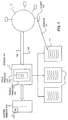
- a parent process receives user requests to access a mail message store manages several child processes, each containing typically many active connection threads. This configuration of the described embodiment is shown in Figure 1.
- FIG. 1 is a block diagram showing various components of a message access configuration and method in accordance with one embodiment of the present invention.
- the messages stored and accessed are Internet e-mail messages.
- An Internet Message (IM) access daemon 100 resides on a network mail server, such as an IMAP server which may also contain a message store.
- a parent process 102 within daemon 100 is responsive to data (typically commands or requests to connect) sent from clients 104.
- Requests to connect 106 from clients are stored in a queue and are received by the server at a port depending on the protocol in which the request is being made.
- a connection 108 with a client is established and the client can begin sending data, such as commands for accessing and manipulating mail.
- the parent process 102 has control of several concurrently operating child processes 110. It maintains a list of child processes 112 under its control. Each child process 110 has several threads of various types that can be in one of several states. In the described embodiment, there are 50 to 200 threads in each child process.
- a child process, a thread, and a connection associated with that thread each have a number or identifier.
- This information is stored in a shared memory 116, having a series of data cells 118, that can be read and updated by all child processes.
- the shared memory 116 is useful because typically child processes are not aware of each other's existence and cannot communicate. In other preferred embodiments, a shared memory may not be needed if child processes are able to communicate directly.
- shared memory cells 118 associated with that child process are allocated by the parent process. In other preferred embodiments the shared memory may be allocated by the child process itself or by other entities in the operating system.
- a thread-specific data cell 118 is assigned to that thread.
- this shared memory 116 is created and pre-allocated by the parent process when the server is activated.
- the shared memory 116 if needed, can be created by other entities in the operating system.
- the shared memory is made up of a series of data cells. These cells 118 are identified by a coordinate " i " corresponding to a process and a coordinate " j " corresponding to a thread within that process.
- cell (P i ,T j ) is a thread-specific data cell, which also contains a connection number " k ,” that allows one thread to inform other threads of its actions, such as updating a mailbox or copying messages from a mailbox.
- the thread-specific data cells 118 of the described embodiment in shared memory 116 allow a thread to inform all other threads under the same parent process of that thread's actions.
- the shared memory resides on the server and is pre-allocated and controlled by a parent process once the parent process is invoked.
- each active connection thread would have to have its own light weight process in order to detect any incoming input events directed to it.
- the number of light weight processes can be quickly depleted or reach very low levels. This would result in users on the network not being able to access their mailboxes or not allowing new users to establish connections to the message store. Both these events are highly undesirable given the high performance standards users now expect from e-mail system.
- Figure 2 is an illustration of an input wait table associated with a process in accordance with one embodiment of the present invention.
- the operating system receives an input event. This is generally some type of activity generated by a user or some external source, such as another computer network.
- the operating system is suited for a distributed computing environment.
- an operating system suitable for use in the present invention can be a Unix-based operating system such as the SolarisTM operating system of Sun Microsystems, Inc. or a DOS-based operating system such as the Windows NTTM operating system of Microsoft Corp.
- the input event can be a normal user request, such as checking for new mail or sending a request to print a document, or it can be a less frequent event such as an interrupt signal. Regardless, the input event is normally directed generally to process and specifically to a thread.
- a method in accordance with one embodiment of the present invention is described fully with regard to Figure 2.
- one table can hold information on more than one process.
- the table shown in Figure 2, referred to in the discussion of Figure 2 is associated generally with a process within the operating system, which contains different types of threads.
- the operating system of the present invention is a multi-threaded operating system.
- a process having threads representing connections to users (or external entities) has an associated input wait table for monitoring and routing input events to an event's corresponding thread or threads. It is possible that in the described embodiment a process can have only one thread or no threads.
- the input wait table for a process stores information on which connections, i.e. , threads, are in a wait state and which are executing or processing an input event.
- the operating system assigns to the process a light weight process for maintaining the process's input wait table.
- the operating system of the described embodiment schedules light weight processes which include assigning them to threads when a thread needs one ( e.g. when a thread makes a call to the operating system or performs an I/O operation).
- One type of light weight process can be described as an execution enabler that allows a thread to execute.
- an operating system may use another type of execution enabler similar to a light weight process, of which there is a limited number available in the system and should be assigned prudently and efficiently.
- the thread associated with the input wait table invokes a special thread referred to as a polling thread when an input event is received.
- the polling thread polls or scans the table to determine which connection or connections the input event is directed to and changes the state of the connection from the wait state to a state indicating that it has received input that needs to be processed.
- the input wait table of the described embodiment may be implemented using other data constructs such as a queue or a linked list.
- the polling thread would still have the same function of checking each entry in the data structure for determining which ones have received an input event.
- the receipt of an input event can be manifested in various ways in other preferred embodiments using, by way of example, semaphores, flags, or other types of variables.
- the polling thread has a single execution enabler assigned to it, which in the described embodiment is a light weight process. As will be discussed in greater detail below, this greatly reduces the need for each connection to have assigned its own light weight process.
- a conditional wait thread that monitors changes to connection entries in the table is responsible for having any altered connections assigned a light weight process or execution enabler of some sort thereby enabling that now active connection to execute.
- an input wait table 200 of the described embodiment includes a file descriptor column 202 for holding file descriptors 204 representing connections, a thread identifier column, 206 for holding thread identifiers 208, a conditional wait variable column 210 for holding wait indicators 212, and a error return column 214 for holding error return values 216.
- an input wait table may have more columns or fewer columns as appropriate without altering the primary function of the table.
- a process may use a data structure other than a table for storing data on its connections or threads and remain within the scope of the present invention.
- a connection is represented by a row 218 in table 200.
- a file descriptor 204 represents a connection of a particular process.
- a new connection is associated with a process, it is represented in the process by a file descriptor since, in the context of a process, a connection is essentially a file.
- each connection within a process is represented by a file descriptor.
- a connection when a connection is taken from the wait state to an execution (or "GO") state, and then returns to a wait state, it keeps the same file descriptor but has a new entry in the input wait table.
- the connection can keep the same file descriptor as well as the same row in the input wait table, and not need to initialize a new entry in the table.
- Thread identifier 208 is a unique value that identifies a thread and is different from the thread's file descriptor. The thread identifier 208 is used in connection with posting a thread semaphore or thread conditional wait variable 212.
- the thread conditional wait variable 212 is a flag that indicates whether the thread is in an input wait state or execution state. A polling thread scans the table to determine which thread or threads have input events directed to them and sets variable 212 to "GO.” Another thread or light weight process then starts that thread.
- wait variable 212 is a thread-specific flag used to indicate the state of a thread.
- the error return value 216 is used to store any error conditions encountered by the thread.
- the input wait table can have additional or fewer columns or fields depending on the particular platform in which the process is running or other system and application requirements.
- a process can use another type of data structure to store data regarding threads allowing a polling thread represented by a single light weight process, or similar execution enabler, to manage input events and thread execution.
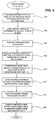
- FIG. 3 is a flowchart showing a method of executing a connection thread in response to a received input event in accordance with one embodiment of the present invention.
- the operating system detects an input event or some type of activity, for example a user request or a system interrupt.
- This input event is typically directed to a connection, represented by an active connection thread in a process.
- the operating system alerts the process containing the active connection thread, where the active connection thread is represented by a file descriptor.
- the system uses the file descriptor associated with the input event to determine which process to alert.
- each thread is represented and identified in the operating system and in the input wait table by a file descriptor 204.
- the light weight process associated with the process's polling thread is placed in a RUN state. This occurs when a process is alerted that one of its threads has an input event.
- the polling thread has a light weight process assigned to it but is asleep until its process is alerted, at which point the polling thread is awakened.
- the polling thread begins execution.
- a light weight process allows a connection thread to execute by allowing it to perform necessary functions, such as making system calls or performing input/output operations.
- the polling thread scans the input wait table to determine which file descriptors, or threads, have an input event. In the described embodiment it unblocks those file descriptors that have all event by changing tile state of the thread's conditional wait variable 212. In the described embodiment this is done by signaling the conditional wait variable to "1" if there is an input event and leaving the thread unaltered if there is no input event for the thread.
- a thread is placed in an input wait state by calling an operating system function called WaitForInput which sets the conditional wait variable 212 to "0" and waits on the conditional wait variable.
- the thread or process can call other routines or have other procedures for placing a thread in a wait state by, for example, setting a semaphore or flag.
- a conditional wait thread in the process that oversees the connection threads to detect which connection threads have had state changes ensures that those threads are assigned light weight processes so they can execute.
- this "conditional wait" light weight process checks to see what the polling thread has done to the connection threads and behaves accordingly.
- the thread deletes its entry in the input wait table before it proceeds to process the input event.
- each awakened thread processes its input event or activity, which it can now do since it has been assigned a light weight process. Once the thread has processed the input event, the thread initializes a new entry in the input wait table to indicate its return to the input wait state.
- conditional wait variable is set to "0" by calling a WaitForInput function and waiting on the conditional wait variable.
- the thread can use the same entry it had previously occupied in the input wait table without initializing a new one when it is done processing the input event. Whether the table is static in which rows are reused or dynamic in which new rows are initialized does not effect the underlying functionality and purpose of the input wait table.
- the light weight process allowing execution of the thread is released from that thread.
- the conditional wait thread mentioned above can then reassign the light weight process to another thread or return it to the pool of light weight processes in the operating system.
- the system realizes benefits of the polling thread. In previous systems, the light weight process would remain with the thread even when the thread was idle or waiting for input.
- the polling thread using the input wait table and working in conjunction with the "conditional wait" thread greatly reduces the consumption of light weight processes by connection threads by allowing them to be assigned to threads only when needed.
- the present invention employs various computer-implemented operations involving data stored in computer systems. These operations include, but are not limited to, those requiring physical manipulation of physical quantities. Usually, though not necessarily, these quantities take the form of electrical or magnetic signals capable of being stored, transferred, combined, compared, and otherwise manipulated.
- the operations described herein that form part of the invention are useful machine operations.
- the manipulations performed are often referred to in terms, such as, producing, identifying, running, determining, comparing, executing, downloading, or detecting. It is sometimes convenient, principally for reasons of common usage, to refer to these electrical or magnetic signals as bits, values, elements, variables, characters, data, or the like. It should remembered, however, that all of these and similar terms are to be associated with the appropriate physical quantities and are merely convenient labels applied to these quantities.
- the present invention also relates to a device, system or apparatus for performing the aforementioned operations.
- the system may be specially constructed for the required purposes, or it may be a general purpose computer selectively activated or configured by a computer program stored in the computer.
- the processes presented above are not inherently related to any particular computer or other computing apparatus.
- various general purpose computers may be used with programs written in accordance with the teachings herein, or, alternatively, it may be more convenient to construct a more specialized computer system to perform the required operations.
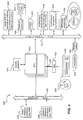
- FIG. 4 is a block diagram of a general purpose computer system 400 suitable for carrying out the processing in accordance with one embodiment of the present invention.
- Figure 4 illustrates one embodiment of a general purpose computer system.
- Computer system 400 made up of various subsystems described below, includes at least one microprocessor subsystem (also referred to as a central processing unit, or CPU) 402. That is, CPU 402 can be implemented by a single-chip processor or by multiple processors.
- CPU 402 is a general purpose digital processor which controls the operation of the computer system 400. Using instructions retrieved from memory, the CPU 402 controls the reception and manipulation of input data, and the output and display of data on output devices.
- CPU 402 is coupled bi-directionally with a first primary storage 404, typically a random access memory (RAM), and uni-directionally with a second primary storage area 406, typically a read-only memory (ROM), via a memory bus 408.
- primary storage 404 can be used as a general storage area and as scratch-pad memory, and can also be used to store input data and processed data. It can also store programming instructions and data, in the form of threads and processes, for example, in addition to other data and instructions for processes operating on CPU 402, and is used typically used for fast transfer of data and instructions in a bi-directional manner over the memory bus 408.
- primary storage 406 typically includes basic operating instructions, program code, data and objects used by the CPU 402 to perform its functions.
- Primary storage devices 404 and 406 may include any suitable computer-readable storage media, described below, depending on whether, for example, data access needs to be bi-directional or uni-directional.
- CPU 402 can also directly and very rapidly retrieve and store frequently needed data in a cache memory 430.
- a removable mass storage device 412 provides additional data storage capacity for the computer system 400, and is coupled either bi-directionally or uni-directionally to CPU 402 via a peripheral bus 414.
- a specific removable mass storage device commonly known as a CD-ROM typically passes data uni-directionally to the CPU 402, whereas a floppy disk can pass data bi-directionally to the CPU 402.
- Storage 412 may also include computer-readable media such as magnetic tape, flash memory, signals embodied on a carrier wave, PC-CARDS, portable mass storage devices, holographic storage devices, and other storage devices.
- a fixed mass storage 416 also provides additional data storage capacity and is coupled bi-directionally to CPU 402 via peripheral bus 414. The most common example of mass storage 416 is a hard disk drive.
- Mass storage 412 and 416 generally store additional programming instructions, data, and the like that typically are not in active use by the CPU 402. It will be appreciated that the information retained within mass storage 412 and 416 may be incorporated, if needed, in standard fashion as part of primary storage 404 (e.g. RAM) as virtual memory.
- peripheral bus 414 is used to provide access other subsystems and devices as well.
- these include a display monitor 418 and adapter 420, a printer device 422, a network interface 424, an auxiliary input/output device interface 426, a sound card 428 and speakers 430, and other subsystems as needed.
- the network interface 424 allows CPU 402 to be coupled to another computer, computer network, or telecommunications network using a network connection as shown. Through the network interface 424, it is contemplated that the CPU 402 might receive information, e.g ., data objects or program instructions, from another network, or might output information to another network in the course of performing the above-described method steps. Information, often represented as a sequence of instructions to be executed on a CPU, may be received from and outputted to another network, for example, in the form of a computer data signal embodied in a carrier wave.
- An interface card or similar device and appropriate software implemented by CPU 402 can be used to connect the computer system 400 to an external network and transfer data according to standard protocols.
- method embodiments of the present invention may execute solely upon CPU 402, or may be performed across a network such as the Internet, intranet networks, or local area networks, in conjunction with a remote CPU that shares a portion of the processing.
- Additional mass storage devices may also be connected to CPU 402 through network interface 424.
- Auxiliary I/O device interface 426 represents general and customized interfaces that allow the CPU 402 to send and, more typically, receive data from other devices such as microphones, touch-sensitive displays, transducer card readers, tape readers, voice or handwriting recognizers, biometrics readers, cameras, portable mass storage devices, and other computers.
- a keyboard controller 432 is Also coupled to the CPU 402 is a keyboard controller 432 via a local bus 434 for receiving input from a keyboard 436 or a pointer device 438, and sending decoded symbols from the keyboard 436 or pointer device 438 to the CPU 402.
- the pointer device may be a mouse, stylus, track ball, or tablet, and is useful for interacting with a graphical user interface.
- embodiments of the present invention further relate to computer storage products with a computer readable medium that contain program code for performing various computer-implemented operations.
- the computer-readable medium is any data storage device that can store data which can thereafter be read by a computer system.
- Tile media and program code may be those specially designed and constructed for the purposes of the present invention, or they may be of the kind well known to those of ordinary skill in the computer software arts.
- Examples of computer-readable media include, but are not limited to, all the media mentioned above: magnetic media such as hard disks, floppy disks, and magnetic tape; optical media such as CD-ROM disks; magneto-optical media such as floptical disks; and specially configured hardware devices such as application-specific integrated circuits (ASICs), programmable logic devices (PLDs), and ROM and RAM devices.
- the computer-readable medium can also be distributed as a data signal embodied in a carrier wave over a network of coupled computer systems so that the computer-readable code is stored and executed in a distributed fashion.
- Examples of program code include both machine code, as produced, for example, by a compiler, or files containing higher level code that may be executed using an interpreter.
- the input wait table can contain information on threads in more than one table by having an additional process identifier column.
- the input wait table can have more or fewer columns as needed by the system.
Landscapes
- Engineering & Computer Science (AREA)
- Software Systems (AREA)
- Theoretical Computer Science (AREA)
- Multimedia (AREA)
- Physics & Mathematics (AREA)
- General Engineering & Computer Science (AREA)
- General Physics & Mathematics (AREA)
- Bus Control (AREA)
- Alarm Systems (AREA)
Applications Claiming Priority (2)
| Application Number | Priority Date | Filing Date | Title |
|---|---|---|---|
| US09/067,546 US6457064B1 (en) | 1998-04-27 | 1998-04-27 | Method and apparatus for detecting input directed to a thread in a multi-threaded process |
| US67546 | 1998-04-27 |
Publications (2)
| Publication Number | Publication Date |
|---|---|
| EP0953906A2 true EP0953906A2 (de) | 1999-11-03 |
| EP0953906A3 EP0953906A3 (de) | 2002-03-27 |
Family
ID=22076726
Family Applications (1)
| Application Number | Title | Priority Date | Filing Date |
|---|---|---|---|
| EP99303211A Withdrawn EP0953906A3 (de) | 1998-04-27 | 1999-04-26 | Verfahren und Vorrichtung zum Feststellen von an einem Faden bestimmter Eingabe in einem Mehrfadenprozess |
Country Status (3)
| Country | Link |
|---|---|
| US (1) | US6457064B1 (de) |
| EP (1) | EP0953906A3 (de) |
| JP (1) | JP2000029724A (de) |
Cited By (1)
| Publication number | Priority date | Publication date | Assignee | Title |
|---|---|---|---|---|
| WO2008030207A3 (en) * | 2004-02-18 | 2008-05-22 | Sun Microsystems Inc | Processing events for concurrent tasks in a virtual machine |
Families Citing this family (22)
| Publication number | Priority date | Publication date | Assignee | Title |
|---|---|---|---|---|
| US6735770B1 (en) * | 1998-04-27 | 2004-05-11 | Sun Microsystems, Inc. | Method and apparatus for high performance access to data in a message store |
| JP3250729B2 (ja) * | 1999-01-22 | 2002-01-28 | 日本電気株式会社 | プログラム実行装置及びそのプロセス移動方法並びにプロセス移動制御プログラムを格納した記憶媒体 |
| US6718370B1 (en) * | 2000-03-31 | 2004-04-06 | Intel Corporation | Completion queue management mechanism and method for checking on multiple completion queues and processing completion events |
| US6934950B1 (en) * | 2000-06-06 | 2005-08-23 | International Business Machines Corporation | Thread dispatcher for multi-threaded communication library |
| US6735687B1 (en) * | 2000-06-15 | 2004-05-11 | Hewlett-Packard Development Company, L.P. | Multithreaded microprocessor with asymmetrical central processing units |
| US7051330B1 (en) * | 2000-11-21 | 2006-05-23 | Microsoft Corporation | Generic application server and method of operation therefor |
| US20020199179A1 (en) * | 2001-06-21 | 2002-12-26 | Lavery Daniel M. | Method and apparatus for compiler-generated triggering of auxiliary codes |
| US7216346B2 (en) * | 2002-12-31 | 2007-05-08 | International Business Machines Corporation | Method and apparatus for managing thread execution in a multithread application |
| US20040205716A1 (en) * | 2003-04-14 | 2004-10-14 | Abdel-Rahman Hassan Elhag | System and method for adapting non-SCCS files to SCCS file repository |
| US7584454B1 (en) | 2003-09-10 | 2009-09-01 | Nextaxiom Technology, Inc. | Semantic-based transactional support and recovery for nested composite software services |
| US7483901B1 (en) | 2003-09-10 | 2009-01-27 | Nextaxiom Technology, Inc. | System and method for data transfer between two or more connected software services |
| US7533387B1 (en) * | 2003-09-10 | 2009-05-12 | Nextaxiom Technology, Inc. | Guaranteed invocation/consumption of nested, composite software services |
| US7581205B1 (en) | 2003-09-30 | 2009-08-25 | Nextaxiom Technology, Inc. | System and method of implementing a customizable software platform |
| US8225282B1 (en) | 2003-11-25 | 2012-07-17 | Nextaxiom Technology, Inc. | Semantic-based, service-oriented system and method of developing, programming and managing software modules and software solutions |
| US7529886B2 (en) * | 2004-11-03 | 2009-05-05 | International Business Machines Corporation | Method, system and storage medium for lockless InfiniBand™ poll for I/O completion |
| US9178785B1 (en) | 2008-01-24 | 2015-11-03 | NextAxiom Technology, Inc | Accounting for usage and usage-based pricing of runtime engine |
| US20100205225A1 (en) * | 2009-02-06 | 2010-08-12 | Siemens Aktiegesellschaft | Method and Apparatus for Transforming a Process |
| US8527866B2 (en) | 2010-04-30 | 2013-09-03 | Microsoft Corporation | Multi-threaded sort of data items in spreadsheet tables |
| US20110276868A1 (en) * | 2010-05-05 | 2011-11-10 | Microsoft Corporation | Multi-Threaded Adjustment of Column Widths or Row Heights |
| US20130024875A1 (en) * | 2011-07-22 | 2013-01-24 | Yilin Wang | Event System And Methods For Using Same |
| CN102681845A (zh) * | 2012-04-24 | 2012-09-19 | 深圳创维数字技术股份有限公司 | 一种输入事件管理方法及装置 |
| US10564865B2 (en) | 2016-03-22 | 2020-02-18 | Seagate Technology Llc | Lockless parity management in a distributed data storage system |
Family Cites Families (12)
| Publication number | Priority date | Publication date | Assignee | Title |
|---|---|---|---|---|
| US5179702A (en) * | 1989-12-29 | 1993-01-12 | Supercomputer Systems Limited Partnership | System and method for controlling a highly parallel multiprocessor using an anarchy based scheduler for parallel execution thread scheduling |
| US5339415A (en) * | 1990-06-11 | 1994-08-16 | Cray Research, Inc. | Dual level scheduling of processes to multiple parallel regions of a multi-threaded program on a tightly coupled multiprocessor computer system |
| US5257372A (en) * | 1990-12-19 | 1993-10-26 | Cray Research, Inc. | Methods for efficient distribution of parallel tasks to slave processes in a multiprocessing system |
| US5305455A (en) | 1990-12-21 | 1994-04-19 | International Business Machines Corp. | Per thread exception management for multitasking multithreaded operating system |
| US5247675A (en) * | 1991-08-09 | 1993-09-21 | International Business Machines Corporation | Preemptive and non-preemptive scheduling and execution of program threads in a multitasking operating system |
| JPH07104791B2 (ja) | 1991-12-18 | 1995-11-13 | インターナショナル・ビジネス・マシーンズ・コーポレイション | タスク状態構築方法 |
| US5287508A (en) * | 1992-04-07 | 1994-02-15 | Sun Microsystems, Inc. | Method and apparatus for efficient scheduling in a multiprocessor system |
| EP0617361B1 (de) * | 1993-03-26 | 2001-11-28 | Cabletron Systems, Inc. | Ablaufssteuerungsverfahren und -gerät für ein Kommunikationsnetzwerk |
| US5933627A (en) * | 1996-07-01 | 1999-08-03 | Sun Microsystems | Thread switch on blocked load or store using instruction thread field |
| US5991790A (en) | 1996-07-01 | 1999-11-23 | Sun Microsystems, Inc. | Generation and delivery of signals in a two-level, multithreaded system |
| US5835705A (en) * | 1997-03-11 | 1998-11-10 | International Business Machines Corporation | Method and system for performance per-thread monitoring in a multithreaded processor |
| US5907702A (en) * | 1997-03-28 | 1999-05-25 | International Business Machines Corporation | Method and apparatus for decreasing thread switch latency in a multithread processor |
-
1998
- 1998-04-27 US US09/067,546 patent/US6457064B1/en not_active Expired - Lifetime
-
1999
- 1999-04-26 EP EP99303211A patent/EP0953906A3/de not_active Withdrawn
- 1999-04-27 JP JP11119434A patent/JP2000029724A/ja active Pending
Cited By (2)
| Publication number | Priority date | Publication date | Assignee | Title |
|---|---|---|---|---|
| WO2008030207A3 (en) * | 2004-02-18 | 2008-05-22 | Sun Microsystems Inc | Processing events for concurrent tasks in a virtual machine |
| US7904904B2 (en) | 2004-02-18 | 2011-03-08 | Oracle America, Inc. | Processing events for concurrent tasks in a virtual machine |
Also Published As
| Publication number | Publication date |
|---|---|
| JP2000029724A (ja) | 2000-01-28 |
| US6457064B1 (en) | 2002-09-24 |
| EP0953906A3 (de) | 2002-03-27 |
Similar Documents
| Publication | Publication Date | Title |
|---|---|---|
| US6457064B1 (en) | Method and apparatus for detecting input directed to a thread in a multi-threaded process | |
| US6223207B1 (en) | Input/output completion port queue data structures and methods for using same | |
| EP0760131B1 (de) | Verfahren und gerät zur verteilung von ereignissen in einem betriebssystem | |
| US7246167B2 (en) | Communication multiplexor using listener process to detect newly active client connections and passes to dispatcher processes for handling the connections | |
| US7299464B2 (en) | System and method for transferring data between virtual machines or other computer entities | |
| US6418542B1 (en) | Critical signal thread | |
| US5799188A (en) | System and method for managing variable weight thread contexts in a multithreaded computer system | |
| US6470398B1 (en) | Method and apparatus for supporting a select () system call and interprocess communication in a fault-tolerant, scalable distributed computer environment | |
| US7487511B2 (en) | Method and apparatus for providing and integrating high-performance message queues in a interface environment | |
| JP2005092875A (ja) | スレッドスケジューリングを使用してデータスループットを向上させるためのシステムおよび方法 | |
| US20070168525A1 (en) | Method for improved virtual adapter performance using multiple virtual interrupts | |
| US20050060710A1 (en) | System, method and program for implementing priority inheritance in an operating system | |
| US6704806B1 (en) | Method and device for monitoring the creation and destruction of child processes within an application executing in a computer system | |
| US20030204552A1 (en) | IO completion architecture for user-mode networking | |
| JPH06180654A (ja) | 送信側プロセスと複数の受信側プロセスの間でプロセス間メッセージのスイッチングを行う方法および装置 | |
| JPH03126158A (ja) | スケジユーリング方法及び装置 | |
| US6735770B1 (en) | Method and apparatus for high performance access to data in a message store | |
| JPH11328132A (ja) | サ―バのグル―プに関する作業負荷管理を行うデ―タ処理装置、方法、およびコンピュ―タ・プログラム製品 | |
| US20050097226A1 (en) | Methods and apparatus for dynamically switching between polling and interrupt to handle network traffic | |
| JP2004326774A (ja) | 論理的に区画化されたコンピュータにおける区画管理操作に関する非同期通知の選択的生成 | |
| US8141077B2 (en) | System, method and medium for providing asynchronous input and output with less system calls to and from an operating system | |
| US20040215911A1 (en) | Memory preservation | |
| JP2004078322A (ja) | タスク管理システム、プログラム、記録媒体、及び制御方法 | |
| US6993598B2 (en) | Method and apparatus for efficient sharing of DMA resource | |
| JPH0916531A (ja) | データ伝送方法 |
Legal Events
| Date | Code | Title | Description |
|---|---|---|---|
| PUAI | Public reference made under article 153(3) epc to a published international application that has entered the european phase |
Free format text: ORIGINAL CODE: 0009012 |
|
| AK | Designated contracting states |
Kind code of ref document: A2 Designated state(s): AT BE CH CY DE DK ES FI FR GB GR IE IT LI LU MC NL PT SE Kind code of ref document: A2 Designated state(s): DE FR GB |
|
| AX | Request for extension of the european patent |
Free format text: AL;LT;LV;MK;RO;SI |
|
| PUAL | Search report despatched |
Free format text: ORIGINAL CODE: 0009013 |
|
| AK | Designated contracting states |
Kind code of ref document: A3 Designated state(s): AT BE CH CY DE DK ES FI FR GB GR IE IT LI LU MC NL PT SE |
|
| AX | Request for extension of the european patent |
Free format text: AL;LT;LV;MK;RO;SI |
|
| 17P | Request for examination filed |
Effective date: 20020907 |
|
| AKX | Designation fees paid |
Free format text: DE FR GB |
|
| 17Q | First examination report despatched |
Effective date: 20070228 |
|
| STAA | Information on the status of an ep patent application or granted ep patent |
Free format text: STATUS: THE APPLICATION IS DEEMED TO BE WITHDRAWN |
|
| 18D | Application deemed to be withdrawn |
Effective date: 20070911 |