EP0953967A2 - Portier d'hotêl automatique utilisant la reconnaissance de la parole - Google Patents
Portier d'hotêl automatique utilisant la reconnaissance de la parole Download PDFInfo
- Publication number
- EP0953967A2 EP0953967A2 EP99303197A EP99303197A EP0953967A2 EP 0953967 A2 EP0953967 A2 EP 0953967A2 EP 99303197 A EP99303197 A EP 99303197A EP 99303197 A EP99303197 A EP 99303197A EP 0953967 A2 EP0953967 A2 EP 0953967A2
- Authority
- EP
- European Patent Office
- Prior art keywords
- telephone
- hotel
- name
- lexicon
- attendant
- Prior art date
- Legal status (The legal status is an assumption and is not a legal conclusion. Google has not performed a legal analysis and makes no representation as to the accuracy of the status listed.)
- Granted
Links
Images

Classifications
-
- G—PHYSICS
- G10—MUSICAL INSTRUMENTS; ACOUSTICS
- G10L—SPEECH ANALYSIS TECHNIQUES OR SPEECH SYNTHESIS; SPEECH RECOGNITION; SPEECH OR VOICE PROCESSING TECHNIQUES; SPEECH OR AUDIO CODING OR DECODING
- G10L15/00—Speech recognition
- G10L15/06—Creation of reference templates; Training of speech recognition systems, e.g. adaptation to the characteristics of the speaker's voice
-
- G—PHYSICS
- G10—MUSICAL INSTRUMENTS; ACOUSTICS
- G10L—SPEECH ANALYSIS TECHNIQUES OR SPEECH SYNTHESIS; SPEECH RECOGNITION; SPEECH OR VOICE PROCESSING TECHNIQUES; SPEECH OR AUDIO CODING OR DECODING
- G10L15/00—Speech recognition
- G10L15/26—Speech to text systems
-
- H—ELECTRICITY
- H04—ELECTRIC COMMUNICATION TECHNIQUE
- H04M—TELEPHONIC COMMUNICATION
- H04M3/00—Automatic or semi-automatic exchanges
- H04M3/42—Systems providing special services or facilities to subscribers
Definitions
- the present invention relates generally to an automated hotel attendant system, and more particularly to an automated hotel attendant system that utilizes a lexicon training system to automatically train a speech recognizer as well as to maintain a hotel guest database.
- Automatic attendants are commonly being implemented in office type environments. Typically, these automatic attendants are using phonetic-based recognizers to perform call routing functions in conjunction with a private branch exchange (PBX).
- PBX private branch exchange
- phonetic transcriptions for each word in the dictionary are needed to build the models for the speech recognizer prior to use.
- phonetic transcriptions are manually created by lexicographers who are skilled in the nuances of phonetic pronunciation of the particular language of interest. Developing a good phonetic transcription for each word in the dictionary is time consuming and requires a great deal of skill.
- a dictionary for use in an automatic attendant would not generally be complete with respect to surnames.
- a lexicon training system to automatically build the models for the speech recognizer of an automated attendant.
- the lexicon training system of the present invention extends current recognition systems to recognize words, such as surname and geographic locations, that are not currently found in existing dictionaries.
- a robust and reliable phoneticizer for generating multiple pronunciations from the written form of a name is one important aspect of this lexicon training system. Once the pronunciation of a surname is known, it is then possible to build a speaker-independent speech recognition model that can be used to automatically train and/or update a speech recognizer for use in an automated attendant.
- the automated attendant of the present invention incorporates the above-described principles and is ideally suited for incorporation with hotel registration and telephone systems.
- the automated hotel attendant provides call routing functions along with other additional services to hotel guests without the need to be connected to a hotel operator.
- a hotel registration system receives and stores the spelled names of hotel guests as well as assigns each guest an associated telephone extension.
- a lexicon training system is connected to the hotel registration system for generating pronunciations for each spelled name by converting the characters that spell those names into word-phoneme data. This word-phoneme data is in turn stored in a lexicon that is used by a speech recognition system.
- An automated attendant is coupled to the speech recognition system for converting a spoken name of a hotel guest entered from one of the telephone extensions into a predefined hotel guest name that can be used to retrieve an assigned telephone extension from the hotel registration system.
- the automated attendant causes the telephone switching system to call the requested telephone extension in response to the entry of the spoken name from one of the telephone extensions.
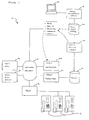
- An automated hotel attendant system 10 is depicted in Figure 1 for providing hotel guests with additional services by means of speech recognition without the need to be connected to an operator.
- a hotel guest checks in he/she typically provides their name, address, checkout date and other registration information to the hotel attendant.
- additional information such as the guest's nationality or dialect may also be gathered from the hotel guest. This information as well as an assigned hotel guess room number will be captured by a conventional hotel registration system 14 via a computer 12 or other user interface device and stored in a hotel guest database 20.
- a lexicon training system 30 will automatically transform the written form of a guest's name into one or more phonetic pronunciations of the name. Using the known pronunciation of the guest's name, it is then possible for lexicon training system 30 to build a speaker-independent speech recognition model that is used by a speech recognizer 22. This speech recognition model is stored in a lexicon 32 that is accessed by speech recognizer 22. Each hotel guest's specific phonetic pronunciation can be automatically updated in lexicon 32 every time that guest checks in or check out of the hotel.
- an automated attendant 50 uses speech recognition to provide voice dialing by name to another hotel guest room without knowing their room number.
- a call placed from a hotel telephone 16 via the hotel's telephone switching system (e.g., PBX) 18 is received by automated attendant 50 which in turn will provide the call routing function.
- a spoken name of a hotel guest is recognized by speech recognizer 22 using the updated lexicon 32.
- Automated attendant 50 maps the spoken name to their assigned telephone extension by using the hotel guest name to retrieve the telephone extension from hotel guest database 20.
- automated attendant 50 causes telephone switching system 18 to call the retrieved telephone extension, and thereby properly route the requested call.
- an automated attendant of the present invention can be used in conjunction with a spelled name recognizer or a conventional directory assistance module. As a last resort, the automated attendant should transfer the guest's call to a hotel operator. In addition, automated attendant 50 also provides voice dialing to other hotel services and extensions (e.g., front desk room service or hotel restaurant).
- the automated attendant system 10 of the present invention can also provide access to other hotel services.
- the hotel guest's phonetic pronunciation can be used to customize a message in a voice mail system 26 via a speech synthesizer 24. The customized message is played when the guest is not in their room to receive a call.
- the guest's nationality might be used to provide a wake-up call in that nationality's corresponding language. It is also envisioned that the automated attendant of the present invention might also be interfaced with other hotel systems 28.
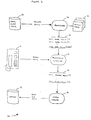
- lexicon training system 30 is shown in greater detail.
- lexicon training system generates pronunciations of spelled names by converting the characters that spell those names into word-phoneme data and using these generated pronunciations to train speech recognizer 22.
- a robust and reliable phoneticizer is imperative to implementing lexicon training system 30.
- a spelled form of the guest's name serves as input to phoneticizer 34.
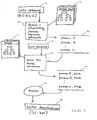
- FIG. 3 An exemplary embodiment of phoneticizer 34 is shown in Figure 3 to illustrate the principles of generating multiple pronunciations based on the spelled form of a hotel guest's name.
- a letter-only pronunciation generator would have great difficulty properly pronouncing the word Bible.
- Based on the sequence of letters only the letter-only system would likely pronounce the word "Bib-I", much as a grade school child learning to read might do.
- the fault in conventional systems lies in the inherent ambiguity imposed by the pronunciation rules of many languages.
- the English language for example, has hundreds of different pronunciation rules, making it difficult and computationally expensive to approach the problem on a word-by-word basis.
- phoneticizer 34 employs two stages, the first stage employing a set of letter-only decision trees 72 and the second stage employing a set of mixed-decision trees 74.
- An input sequence 76 such as the sequence of letters B-I-B-L-E, is fed to a dynamic programming phoneme sequence generator 78.
- the sequence generator uses the letter-only trees 72 to generate a list of pronunciations 80, representing possible pronunciation candidates of the spelled word input sequence.
- the sequence generator sequentially examines each letter in the sequence, applying the decision tree associated with that letter to select a phoneme pronunciation for that letter based on probability data contained in the letter-only tree.
- the set of letter-only decision trees includes a decision tree for each letter in the alphabet.
- Figure 4 shows an example of a letter-only decision tree for the letter E.
- the decision tree comprises a plurality of internal nodes (illustrated as ovals in the Figure) and a plurality of leaf nodes (illustrated as rectangles in the Figure).
- Each internal node is populated with a yes-no question.
- Yes-no questions are questions that can be answered either yes or no.
- these questions are directed to the given letter (in this case the letter E) and its neighboring letters in the input sequence.
- each internal node branches either left or right depending on whether the answer to the associated question is yes or no.
- the null phoneme, i.e., silence, is represented by the symbol '-'.
- the sequence generator 78 (Fig. 3) thus uses the letter-only decision trees 72 to construct one or more pronunciation hypotheses that are stored in list 80.
- each pronunciation has associated with it a numerical score arrived at by combining the probability scores of the individual phonemes selected using the decision tree 72.
- Word pronunciations may be scored by constructing a matrix of possible combinations and then using dynamic programming to select the n-best candidates.
- the n-best candidates may be selected using a substitution technique that first identifies the most probably word candidate and then generates additional candidates through iterative substitution, as follows.
- the pronunciation with the highest probability score is selected by first multiplying the respective scores of the highest-scoring phonemes (identified by examining the leaf nodes) and then using this selection as the most probable candidate or first-best word candidate. Additional (n-best) candidates are then selected by examining the phoneme data in the leaf nodes again to identify the phoneme, not previously selected, that has the smallest difference from an initially selected phoneme. This minimally-different phoneme is then substituted for the initially selected one to thereby generate the second-best word candidate. The above process may be repeated iteratively until the desired number of n-best candidates have been selected. List 80 may be sorted in descending score order, so that the pronunciation judged the best by the letter-only analysis appears first in the list.
- a letter-only analysis will frequently produce poor results. This is because the letter-only analysis has no way of determining at each letter what phoneme will be generated by subsequent letters. Thus, a letter-only analysis can generate a high scoring pronunciation that actually would not occur in natural speech. For example, the proper name, Achilles, would likely result in a pronunciation that phoneticizes both II's: ah-k-ih-l-l-iy-z. In natural speech, the second I is actually silent: ah-k-ih-l-iy-z.
- the sequence generator using letter-only trees has no mechanism to screen out word pronunciations that would never occur in natural speech.
- a mixed-tree score estimator 82 uses the set of mixed-decision trees 74 to assess the viability of each pronunciation in list 80.
- the score estimator works by sequentially examining each letter in the input sequence along with the phonemes assigned to each letter by sequence generator 78.
- the set of mixed trees has a mixed tree for each letter of the alphabet.
- An exemplary mixed tree is shown in Figure 5.
- the mixed tree has internal nodes and leaf nodes. The internal nodes are illustrated as ovals and the leaf nodes as rectangles in Figure 5. The internal nodes are each populated with a yes-no question and the leaf nodes are each populated with probability data.
- the internal nodes of the mixed tree can contain two different classes of questions.
- An internal node can contain a question about a given letter and its neighboring letters in the sequence, or it can contain a question about the phoneme associated with that letter and neighboring phonemes corresponding to that sequence.
- the decision tree is thus mixed, in that it contains mixed classes of questions.
- the abbreviations used in Figure 5 are similar to those used in Figure 4, with some additional abbreviations.
- the symbol L represents a question about a letter and its neighboring letters.
- the symbol P represents a question about a phoneme and its neighboring phonemes.
- the abbreviations CONS and SYL are phoneme classes, namely consonant and syllabic.
- the mixed-tree score estimator rescores each of the pronunciations in list 80 based on the mixed-tree questions and using the probability data in the lead nodes of the mixed trees. If desired, the list of pronunciations may be stored in association with the respective score as in list 84. If desired, list 84 can be sorted in descending order so that the first listed pronunciation is the one with the highest score.
- the pronunciation occupying the highest score position in list 84 will be different from the pronunciation occupying the highest score position in list 80. This occurs because the mixed-tree score estimator, using the mixed trees 74, screens out those pronunciations that do not contain self-consistent phoneme sequences or otherwise represent pronunciations that would not occur in natural speech. As noted above, phoneticizer 34 depicted in Figure 3 represents only one possible embodiment.
- the pronunciations from list 84 can be used to form pronunciation dictionaries for both speech recognition and speech synthesis applications.
- a selector module 86 can access list 84 to retrieve one or more of the pronunciations in the list.
- selector 86 retrieves the pronunciation with the highest score and provides this as the output pronunciation 88.
- the pronunciation dictionary is used during the speech recognizer training phase to supply pronunciations for words, such as hotel guest names, that are not already found in a recognizer lexicon.
- n-best pronunciations 38 for each spelled guest name can serve as the input to a model trainer 46 in Figure 2.
- Hidden Markov Model HMM
- a HMM model associated with each guest name is stored in lexicon 32 for use by speech recognizer 22.
- Model trainer 46 is a module which builds HMM models by concatenating context dependent phoneme models corresponding to one or more generated pronunciations.
- Lexicon training system 30 can optionally implement a pronunciation extractor 40 which can generate one or several aligned pronunciations as output 44 that serves as input to model trainer 46.
- the spoken name of the hotel guest may be captured via a telephone 16 or other audible receiving device.
- the spoken name represents the preferred pronunciation of the guest's name, and thus should be used by model trainer 46.
- the spoken name may be converted into a digital form that is in turn used to select one or more pronunciations from among the n-best pronunciations 38 that correspond to the guest's name.
- model trainer 46 may build a dynamic grammar using n-best pronunciations 38 and perform recognition on the spoken speech input using the dynamic grammar to select one or more aligned pronunciations 44.
- n-best pronunciations 38 for each guest's name may be used to generate phoneme sounds for concatenated playback.
- speech synthesizer 24 may provide a proper pronunciation of a guest's name to a hotel employee (e.g., the receptionist at the front desk) whose is interacting with the guest. It is also envisioned that speech synthesizer 24 may be used to augment the features of an E-mail reader or other text-to-speech applications.
- Automated attendant system 10 including an automated attendant module, lexicon training system 30, speech recognizer 22 and speech synthesizer 24, can each be packaged separately or collectively for use with other hotel systems.
- automated attendant system 10 should be specifically designed to interface with other existing hotel systems, such as the hotel registration system, the hotel billing and accounting system, the hotel telephone switching system, ect. Minimal customization should be needed to implement these types of interfaces. For instance, rather than modifying an existing hotel guest database to incorporate pronunciation, nationality, ect. into an existing data structure, automated attendant system 10 may acquire hotel guest information from either an interface established at the operating system level, via a screen capture at registration time, or from an API defined for hotel registration system 14.
- the present invention may also provide a computer program comprising computer interpretable code that when executed on a computer will put into practice the technical effect of the present invention. Further, the present invention may provide a computer program product comprising a computer readable storage medium having code recorded thereon that when executed on a computer will put into practice the technical effect of the present invention.
Landscapes
- Engineering & Computer Science (AREA)
- Computational Linguistics (AREA)
- Health & Medical Sciences (AREA)
- Audiology, Speech & Language Pathology (AREA)
- Human Computer Interaction (AREA)
- Physics & Mathematics (AREA)
- Acoustics & Sound (AREA)
- Multimedia (AREA)
- Artificial Intelligence (AREA)
- Signal Processing (AREA)
- Telephonic Communication Services (AREA)
- Management, Administration, Business Operations System, And Electronic Commerce (AREA)
Applications Claiming Priority (2)
| Application Number | Priority Date | Filing Date | Title |
|---|---|---|---|
| US09/070,399 US6314165B1 (en) | 1998-04-30 | 1998-04-30 | Automated hotel attendant using speech recognition |
| US70399 | 1998-04-30 |
Publications (3)
| Publication Number | Publication Date |
|---|---|
| EP0953967A2 true EP0953967A2 (fr) | 1999-11-03 |
| EP0953967A3 EP0953967A3 (fr) | 2000-06-28 |
| EP0953967B1 EP0953967B1 (fr) | 2004-12-29 |
Family
ID=22095067
Family Applications (1)
| Application Number | Title | Priority Date | Filing Date |
|---|---|---|---|
| EP99303197A Expired - Lifetime EP0953967B1 (fr) | 1998-04-30 | 1999-04-26 | Portier d'hôtel automatique utilisant la reconnaissance de la parole |
Country Status (7)
| Country | Link |
|---|---|
| US (1) | US6314165B1 (fr) |
| EP (1) | EP0953967B1 (fr) |
| JP (1) | JP3135233B2 (fr) |
| KR (1) | KR100574768B1 (fr) |
| CN (1) | CN1116770C (fr) |
| DE (1) | DE69922872T2 (fr) |
| TW (1) | TW424221B (fr) |
Cited By (6)
| Publication number | Priority date | Publication date | Assignee | Title |
|---|---|---|---|---|
| EP1215661A1 (fr) * | 2000-12-14 | 2002-06-19 | TELEFONAKTIEBOLAGET L M ERICSSON (publ) | Appareil portable à reconnaissance de la parole |
| EP1220200A1 (fr) * | 2000-12-18 | 2002-07-03 | Siemens Aktiengesellschaft | Procédé et dispositif pour la reconnaissance de la parole indépendente du locuteur, pour un appareil de télécommunication ou de données numériques |
| EP1302928A1 (fr) * | 2001-10-16 | 2003-04-16 | Siemens Aktiengesellschaft | Procédé de reconnaissance de la parole, en particulier de noms, et dispositif de reconnaissance de la parole |
| EP1308930A3 (fr) * | 2001-11-02 | 2007-05-09 | Matsushita Electric Industrial Co., Ltd. | Appareil de sélection de chaîne utilisant la reconnaisance de parole et procédé de contrôle associé |
| FR3066848A1 (fr) * | 2017-05-29 | 2018-11-30 | Virtual OnQ Systems, LLC | Supervision de chambre d'hotel activee par la voix |
| CN113936654A (zh) * | 2021-09-17 | 2022-01-14 | 上海擎朗智能科技有限公司 | 一种控制方法、送餐机器人及计算机可读存储介质 |
Families Citing this family (87)
| Publication number | Priority date | Publication date | Assignee | Title |
|---|---|---|---|---|
| US6411932B1 (en) * | 1998-06-12 | 2002-06-25 | Texas Instruments Incorporated | Rule-based learning of word pronunciations from training corpora |
| US6425131B2 (en) * | 1998-12-30 | 2002-07-23 | At&T Corp. | Method and apparatus for internet co-browsing over cable television and controlled through computer telephony |
| US8250620B1 (en) * | 1998-12-30 | 2012-08-21 | At&T Intellectual Property Ii, L.P. | System and method for sharing information between a concierge and guest |
| JP2002024412A (ja) * | 2000-07-03 | 2002-01-25 | Toshimitsu Kagawa | 宿泊室の設備操作システム |
| JP2002032491A (ja) * | 2000-07-19 | 2002-01-31 | Toshimitsu Kagawa | 宿泊客に対する情報提供システム |
| EP1317749B1 (fr) * | 2000-07-31 | 2007-05-09 | Eliza Corporation | Procede et systeme d'amelioration de la precision dans un systeme de reconnaissance de la parole |
| TW472232B (en) * | 2000-08-11 | 2002-01-11 | Ind Tech Res Inst | Probability-base fault-tolerance natural language understanding method |
| US20020087317A1 (en) * | 2000-12-29 | 2002-07-04 | Lee Victor Wai Leung | Computer-implemented dynamic pronunciation method and system |
| US6967947B1 (en) * | 2001-03-29 | 2005-11-22 | At&T Corp. | Method and system for providing controllable enhanced call service features at mobile locations |
| US6763102B1 (en) * | 2001-04-05 | 2004-07-13 | At&T Corp. | Method for handling incoming calls directed to a virtual communication service subscriber via a guest PBX |
| US6925154B2 (en) * | 2001-05-04 | 2005-08-02 | International Business Machines Corproation | Methods and apparatus for conversational name dialing systems |
| US7533020B2 (en) * | 2001-09-28 | 2009-05-12 | Nuance Communications, Inc. | Method and apparatus for performing relational speech recognition |
| US7308404B2 (en) * | 2001-09-28 | 2007-12-11 | Sri International | Method and apparatus for speech recognition using a dynamic vocabulary |
| US6996519B2 (en) * | 2001-09-28 | 2006-02-07 | Sri International | Method and apparatus for performing relational speech recognition |
| US8285537B2 (en) * | 2003-01-31 | 2012-10-09 | Comverse, Inc. | Recognition of proper nouns using native-language pronunciation |
| US20040156493A1 (en) * | 2003-02-06 | 2004-08-12 | Comverse, Ltd. | Method and apparatus for providing a central telephony service for a calling party at the called party telephone |
| AU2004200809B2 (en) * | 2003-03-07 | 2006-05-11 | Samsung Electronics Co., Ltd. | Method and system for providing data services to mobile communication terminals and mobile communication terminal therefor |
| US7756726B2 (en) * | 2003-09-25 | 2010-07-13 | International Business Machines Corporation | Secured medical sign-in |
| US7660715B1 (en) * | 2004-01-12 | 2010-02-09 | Avaya Inc. | Transparent monitoring and intervention to improve automatic adaptation of speech models |
| CN100592385C (zh) * | 2004-08-06 | 2010-02-24 | 摩托罗拉公司 | 用于对多语言的姓名进行语音识别的方法和系统 |
| US8923838B1 (en) | 2004-08-19 | 2014-12-30 | Nuance Communications, Inc. | System, method and computer program product for activating a cellular phone account |
| US8677377B2 (en) | 2005-09-08 | 2014-03-18 | Apple Inc. | Method and apparatus for building an intelligent automated assistant |
| US7653543B1 (en) | 2006-03-24 | 2010-01-26 | Avaya Inc. | Automatic signal adjustment based on intelligibility |
| US7983401B1 (en) | 2006-08-15 | 2011-07-19 | At&T Mobility Ii Llc | Customized provision of automated menu options |
| US7925508B1 (en) | 2006-08-22 | 2011-04-12 | Avaya Inc. | Detection of extreme hypoglycemia or hyperglycemia based on automatic analysis of speech patterns |
| US7962342B1 (en) | 2006-08-22 | 2011-06-14 | Avaya Inc. | Dynamic user interface for the temporarily impaired based on automatic analysis for speech patterns |
| US9318108B2 (en) | 2010-01-18 | 2016-04-19 | Apple Inc. | Intelligent automated assistant |
| US8041344B1 (en) | 2007-06-26 | 2011-10-18 | Avaya Inc. | Cooling off period prior to sending dependent on user's state |
| US9386154B2 (en) | 2007-12-21 | 2016-07-05 | Nuance Communications, Inc. | System, method and software program for enabling communications between customer service agents and users of communication devices |
| US8996376B2 (en) | 2008-04-05 | 2015-03-31 | Apple Inc. | Intelligent text-to-speech conversion |
| US10241752B2 (en) | 2011-09-30 | 2019-03-26 | Apple Inc. | Interface for a virtual digital assistant |
| US10241644B2 (en) | 2011-06-03 | 2019-03-26 | Apple Inc. | Actionable reminder entries |
| US8682667B2 (en) | 2010-02-25 | 2014-03-25 | Apple Inc. | User profiling for selecting user specific voice input processing information |
| US8391464B1 (en) | 2010-06-24 | 2013-03-05 | Nuance Communications, Inc. | Customer service system, method, and software program product for responding to queries using natural language understanding |
| US10134385B2 (en) * | 2012-03-02 | 2018-11-20 | Apple Inc. | Systems and methods for name pronunciation |
| US9721563B2 (en) | 2012-06-08 | 2017-08-01 | Apple Inc. | Name recognition system |
| US9547647B2 (en) | 2012-09-19 | 2017-01-17 | Apple Inc. | Voice-based media searching |
| WO2014197334A2 (fr) | 2013-06-07 | 2014-12-11 | Apple Inc. | Système et procédé destinés à une prononciation de mots spécifiée par l'utilisateur dans la synthèse et la reconnaissance de la parole |
| CN103474063B (zh) * | 2013-08-06 | 2015-12-23 | 福建华映显示科技有限公司 | 语音辨识系统以及方法 |
| DE102013216427B4 (de) * | 2013-08-20 | 2023-02-02 | Bayerische Motoren Werke Aktiengesellschaft | Vorrichtung und Verfahren zur fortbewegungsmittelbasierten Sprachverarbeitung |
| WO2015073766A1 (fr) * | 2013-11-18 | 2015-05-21 | Microsoft Technology Licensing, Llc | Identification d'un contact |
| GB201320334D0 (en) * | 2013-11-18 | 2014-01-01 | Microsoft Corp | Identifying a contact |
| US9430463B2 (en) | 2014-05-30 | 2016-08-30 | Apple Inc. | Exemplar-based natural language processing |
| US9338493B2 (en) | 2014-06-30 | 2016-05-10 | Apple Inc. | Intelligent automated assistant for TV user interactions |
| US9668121B2 (en) | 2014-09-30 | 2017-05-30 | Apple Inc. | Social reminders |
| US9519827B2 (en) * | 2014-12-24 | 2016-12-13 | International Business Machines Corporation | Personalized, automated receptionist |
| US10567477B2 (en) | 2015-03-08 | 2020-02-18 | Apple Inc. | Virtual assistant continuity |
| US9578173B2 (en) | 2015-06-05 | 2017-02-21 | Apple Inc. | Virtual assistant aided communication with 3rd party service in a communication session |
| US10747498B2 (en) | 2015-09-08 | 2020-08-18 | Apple Inc. | Zero latency digital assistant |
| US10671428B2 (en) | 2015-09-08 | 2020-06-02 | Apple Inc. | Distributed personal assistant |
| US10366158B2 (en) | 2015-09-29 | 2019-07-30 | Apple Inc. | Efficient word encoding for recurrent neural network language models |
| US11010550B2 (en) | 2015-09-29 | 2021-05-18 | Apple Inc. | Unified language modeling framework for word prediction, auto-completion and auto-correction |
| US10691473B2 (en) | 2015-11-06 | 2020-06-23 | Apple Inc. | Intelligent automated assistant in a messaging environment |
| US10049668B2 (en) | 2015-12-02 | 2018-08-14 | Apple Inc. | Applying neural network language models to weighted finite state transducers for automatic speech recognition |
| US10223066B2 (en) | 2015-12-23 | 2019-03-05 | Apple Inc. | Proactive assistance based on dialog communication between devices |
| US10446143B2 (en) | 2016-03-14 | 2019-10-15 | Apple Inc. | Identification of voice inputs providing credentials |
| US9934775B2 (en) | 2016-05-26 | 2018-04-03 | Apple Inc. | Unit-selection text-to-speech synthesis based on predicted concatenation parameters |
| US9972304B2 (en) | 2016-06-03 | 2018-05-15 | Apple Inc. | Privacy preserving distributed evaluation framework for embedded personalized systems |
| US10249300B2 (en) | 2016-06-06 | 2019-04-02 | Apple Inc. | Intelligent list reading |
| US10049663B2 (en) | 2016-06-08 | 2018-08-14 | Apple, Inc. | Intelligent automated assistant for media exploration |
| DK179588B1 (en) | 2016-06-09 | 2019-02-22 | Apple Inc. | INTELLIGENT AUTOMATED ASSISTANT IN A HOME ENVIRONMENT |
| US10509862B2 (en) | 2016-06-10 | 2019-12-17 | Apple Inc. | Dynamic phrase expansion of language input |
| US10490187B2 (en) | 2016-06-10 | 2019-11-26 | Apple Inc. | Digital assistant providing automated status report |
| US10586535B2 (en) | 2016-06-10 | 2020-03-10 | Apple Inc. | Intelligent digital assistant in a multi-tasking environment |
| US10067938B2 (en) | 2016-06-10 | 2018-09-04 | Apple Inc. | Multilingual word prediction |
| US10192552B2 (en) | 2016-06-10 | 2019-01-29 | Apple Inc. | Digital assistant providing whispered speech |
| DK179049B1 (en) | 2016-06-11 | 2017-09-18 | Apple Inc | Data driven natural language event detection and classification |
| DK201670540A1 (en) | 2016-06-11 | 2018-01-08 | Apple Inc | Application integration with a digital assistant |
| DK179415B1 (en) | 2016-06-11 | 2018-06-14 | Apple Inc | Intelligent device arbitration and control |
| DK179343B1 (en) | 2016-06-11 | 2018-05-14 | Apple Inc | Intelligent task discovery |
| US10043516B2 (en) | 2016-09-23 | 2018-08-07 | Apple Inc. | Intelligent automated assistant |
| US10593346B2 (en) | 2016-12-22 | 2020-03-17 | Apple Inc. | Rank-reduced token representation for automatic speech recognition |
| US20210327304A1 (en) * | 2017-01-24 | 2021-10-21 | Tienovix, Llc | System and method for augmented reality guidance for use of equpment systems |
| EP3574504A1 (fr) | 2017-01-24 | 2019-12-04 | Tietronix Software, Inc. | Système et procédé de guidage de réalité augmentée tridimensionnelle pour l'utilisation d'un équipement médical |
| US20210295048A1 (en) * | 2017-01-24 | 2021-09-23 | Tienovix, Llc | System and method for augmented reality guidance for use of equipment systems |
| US20210327303A1 (en) * | 2017-01-24 | 2021-10-21 | Tienovix, Llc | System and method for augmented reality guidance for use of equipment systems |
| DK201770439A1 (en) | 2017-05-11 | 2018-12-13 | Apple Inc. | Offline personal assistant |
| DK179745B1 (en) | 2017-05-12 | 2019-05-01 | Apple Inc. | SYNCHRONIZATION AND TASK DELEGATION OF A DIGITAL ASSISTANT |
| DK179496B1 (en) | 2017-05-12 | 2019-01-15 | Apple Inc. | USER-SPECIFIC Acoustic Models |
| DK201770431A1 (en) | 2017-05-15 | 2018-12-20 | Apple Inc. | Optimizing dialogue policy decisions for digital assistants using implicit feedback |
| DK201770432A1 (en) | 2017-05-15 | 2018-12-21 | Apple Inc. | Hierarchical belief states for digital assistants |
| DK179560B1 (en) | 2017-05-16 | 2019-02-18 | Apple Inc. | FAR-FIELD EXTENSION FOR DIGITAL ASSISTANT SERVICES |
| US10580098B2 (en) * | 2017-05-29 | 2020-03-03 | Virtual OnQ Systems, LLC | Voice activated hotel room monitor |
| CN108932946B (zh) * | 2018-06-29 | 2020-03-13 | 百度在线网络技术(北京)有限公司 | 客需服务的语音交互方法和装置 |
| US11844654B2 (en) | 2019-08-19 | 2023-12-19 | Caption Health, Inc. | Mid-procedure view change for ultrasound diagnostics |
| CN110491374A (zh) * | 2019-08-27 | 2019-11-22 | 北京明日汇科技管理有限公司 | 基于神经网络的酒店服务语音交互识别方法及装置 |
| KR102222597B1 (ko) * | 2020-02-03 | 2021-03-05 | (주)라이언로켓 | 콜미 서비스를 위한 음성 합성 장치 및 방법 |
Family Cites Families (18)
| Publication number | Priority date | Publication date | Assignee | Title |
|---|---|---|---|---|
| JPS62140593A (ja) * | 1985-12-13 | 1987-06-24 | Nec Corp | 外線呼自動内線転送装置 |
| JPS62166642A (ja) * | 1986-01-20 | 1987-07-23 | Fujitsu Ltd | 電話転送方式 |
| JPH0353649A (ja) * | 1989-07-21 | 1991-03-07 | Toshiba Corp | 電話交換装置 |
| JPH0420158A (ja) * | 1990-05-15 | 1992-01-23 | Mitsubishi Electric Corp | 構内交換装置 |
| US5212730A (en) | 1991-07-01 | 1993-05-18 | Texas Instruments Incorporated | Voice recognition of proper names using text-derived recognition models |
| EP0562138A1 (fr) | 1992-03-25 | 1993-09-29 | International Business Machines Corporation | Méthode et dispositif pour créer automatiquement des modèles de Markov de mots nouveaux devant être ajoutés à un vocabulaire destiné à la reconnaissance de la parole |
| JP3144595B2 (ja) | 1992-05-08 | 2001-03-12 | ソニー株式会社 | 音声アダプタ |
| JPH0818670A (ja) * | 1994-07-04 | 1996-01-19 | Mitsubishi Denki Bill Techno Service Kk | 構内交換機 |
| DE69635015T2 (de) * | 1995-11-17 | 2006-03-30 | At & T Corp. | Automatische vokabularerzeugung für auf einem telekommunikationsnetzwerk basierte sprachgesteuerte wahl |
| US5799065A (en) * | 1996-05-06 | 1998-08-25 | Matsushita Electric Industrial Co., Ltd. | Call routing device employing continuous speech |
| US5752230A (en) | 1996-08-20 | 1998-05-12 | Ncr Corporation | Method and apparatus for identifying names with a speech recognition program |
| US5930336A (en) * | 1996-09-30 | 1999-07-27 | Matsushita Electric Industrial Co., Ltd. | Voice dialing server for branch exchange telephone systems |
| US6092044A (en) * | 1997-03-28 | 2000-07-18 | Dragon Systems, Inc. | Pronunciation generation in speech recognition |
| DE19751123C1 (de) * | 1997-11-19 | 1999-06-17 | Deutsche Telekom Ag | Vorrichtung und Verfahren zur sprecherunabhängigen Sprachnamenwahl für Telekommunikations-Endeinrichtungen |
| US6230131B1 (en) * | 1998-04-29 | 2001-05-08 | Matsushita Electric Industrial Co., Ltd. | Method for generating spelling-to-pronunciation decision tree |
| US6029132A (en) * | 1998-04-30 | 2000-02-22 | Matsushita Electric Industrial Co. | Method for letter-to-sound in text-to-speech synthesis |
| US6016471A (en) * | 1998-04-29 | 2000-01-18 | Matsushita Electric Industrial Co., Ltd. | Method and apparatus using decision trees to generate and score multiple pronunciations for a spelled word |
| US6233553B1 (en) * | 1998-09-04 | 2001-05-15 | Matsushita Electric Industrial Co., Ltd. | Method and system for automatically determining phonetic transcriptions associated with spelled words |
-
1998
- 1998-04-30 US US09/070,399 patent/US6314165B1/en not_active Expired - Lifetime
-
1999
- 1999-04-26 TW TW088106631A patent/TW424221B/zh not_active IP Right Cessation
- 1999-04-26 DE DE69922872T patent/DE69922872T2/de not_active Expired - Fee Related
- 1999-04-26 EP EP99303197A patent/EP0953967B1/fr not_active Expired - Lifetime
- 1999-04-27 JP JP11119834A patent/JP3135233B2/ja not_active Expired - Fee Related
- 1999-04-29 KR KR1019990015389A patent/KR100574768B1/ko not_active Expired - Fee Related
- 1999-04-29 CN CN99106311A patent/CN1116770C/zh not_active Expired - Fee Related
Cited By (8)
| Publication number | Priority date | Publication date | Assignee | Title |
|---|---|---|---|---|
| EP1215661A1 (fr) * | 2000-12-14 | 2002-06-19 | TELEFONAKTIEBOLAGET L M ERICSSON (publ) | Appareil portable à reconnaissance de la parole |
| WO2002049005A3 (fr) * | 2000-12-14 | 2002-08-15 | Ericsson Telefon Ab L M | Terminal mobile a commande vocale |
| EP1220200A1 (fr) * | 2000-12-18 | 2002-07-03 | Siemens Aktiengesellschaft | Procédé et dispositif pour la reconnaissance de la parole indépendente du locuteur, pour un appareil de télécommunication ou de données numériques |
| EP1302928A1 (fr) * | 2001-10-16 | 2003-04-16 | Siemens Aktiengesellschaft | Procédé de reconnaissance de la parole, en particulier de noms, et dispositif de reconnaissance de la parole |
| EP1308930A3 (fr) * | 2001-11-02 | 2007-05-09 | Matsushita Electric Industrial Co., Ltd. | Appareil de sélection de chaîne utilisant la reconnaisance de parole et procédé de contrôle associé |
| FR3066848A1 (fr) * | 2017-05-29 | 2018-11-30 | Virtual OnQ Systems, LLC | Supervision de chambre d'hotel activee par la voix |
| EP3410385A1 (fr) * | 2017-05-29 | 2018-12-05 | Virtual OnQ Systems, LLC | Moniteur de chambre d'hôtel activé par la voix |
| CN113936654A (zh) * | 2021-09-17 | 2022-01-14 | 上海擎朗智能科技有限公司 | 一种控制方法、送餐机器人及计算机可读存储介质 |
Also Published As
| Publication number | Publication date |
|---|---|
| KR19990083596A (ko) | 1999-11-25 |
| CN1116770C (zh) | 2003-07-30 |
| DE69922872T2 (de) | 2005-12-29 |
| EP0953967A3 (fr) | 2000-06-28 |
| JP3135233B2 (ja) | 2001-02-13 |
| KR100574768B1 (ko) | 2006-04-28 |
| EP0953967B1 (fr) | 2004-12-29 |
| TW424221B (en) | 2001-03-01 |
| DE69922872D1 (de) | 2005-02-03 |
| US6314165B1 (en) | 2001-11-06 |
| JP2000032140A (ja) | 2000-01-28 |
| CN1246023A (zh) | 2000-03-01 |
Similar Documents
| Publication | Publication Date | Title |
|---|---|---|
| EP0953967B1 (fr) | Portier d'hôtel automatique utilisant la reconnaissance de la parole | |
| US6016471A (en) | Method and apparatus using decision trees to generate and score multiple pronunciations for a spelled word | |
| USRE42868E1 (en) | Voice-operated services | |
| US6233553B1 (en) | Method and system for automatically determining phonetic transcriptions associated with spelled words | |
| US6684185B1 (en) | Small footprint language and vocabulary independent word recognizer using registration by word spelling | |
| US6363342B2 (en) | System for developing word-pronunciation pairs | |
| US6243680B1 (en) | Method and apparatus for obtaining a transcription of phrases through text and spoken utterances | |
| US5283833A (en) | Method and apparatus for speech processing using morphology and rhyming | |
| US8065144B1 (en) | Multilingual speech recognition | |
| EP1143415A1 (fr) | Génération de multiples prononciations d'un nom propre pour la reconnaissance de parole | |
| US20030149566A1 (en) | System and method for a spoken language interface to a large database of changing records | |
| EP0953970A2 (fr) | Procédé et dispositif utilisant des arbres de décision pour générer et juger des prononciations multiples | |
| Chung et al. | A dynamic vocabulary spoken dialogue interface | |
| KR20000005278A (ko) | 자동 음성인식 방법 및 장치_ | |
| EP1397797B1 (fr) | Reconnaissance de la parole | |
| Gagnoulet et al. | MAIRIEVOX: A voice-activated information system | |
| Georgila et al. | Large Vocabulary Search Space Reduction Employing Directed Acyclic Word Graphs and Phonological Rules | |
| Seneff et al. | A dynamic vocabulary spoken dialogue interface | |
| Hunt | An examination of three classes of ASR dialogue systems: PC-based dictation, in-car systems and automated directory assistance | |
| Németh et al. | Replacing a Human Agent by an Automatic Reverse Directory Service |
Legal Events
| Date | Code | Title | Description |
|---|---|---|---|
| PUAI | Public reference made under article 153(3) epc to a published international application that has entered the european phase |
Free format text: ORIGINAL CODE: 0009012 |
|
| AK | Designated contracting states |
Kind code of ref document: A2 Designated state(s): DE FR GB |
|
| AX | Request for extension of the european patent |
Free format text: AL;LT;LV;MK;RO;SI |
|
| PUAL | Search report despatched |
Free format text: ORIGINAL CODE: 0009013 |
|
| AK | Designated contracting states |
Kind code of ref document: A3 Designated state(s): AT BE CH CY DE DK ES FI FR GB GR IE IT LI LU MC NL PT SE |
|
| AX | Request for extension of the european patent |
Free format text: AL;LT;LV;MK;RO;SI |
|
| 17P | Request for examination filed |
Effective date: 20001228 |
|
| AKX | Designation fees paid |
Free format text: DE FR GB |
|
| 17Q | First examination report despatched |
Effective date: 20030303 |
|
| RIC1 | Information provided on ipc code assigned before grant |
Ipc: 7G 10L 15/26 A |
|
| GRAP | Despatch of communication of intention to grant a patent |
Free format text: ORIGINAL CODE: EPIDOSNIGR1 |
|
| GRAS | Grant fee paid |
Free format text: ORIGINAL CODE: EPIDOSNIGR3 |
|
| GRAA | (expected) grant |
Free format text: ORIGINAL CODE: 0009210 |
|
| AK | Designated contracting states |
Kind code of ref document: B1 Designated state(s): DE FR GB |
|
| REG | Reference to a national code |
Ref country code: GB Ref legal event code: FG4D |
|
| REF | Corresponds to: |
Ref document number: 69922872 Country of ref document: DE Date of ref document: 20050203 Kind code of ref document: P |
|
| PLBE | No opposition filed within time limit |
Free format text: ORIGINAL CODE: 0009261 |
|
| STAA | Information on the status of an ep patent application or granted ep patent |
Free format text: STATUS: NO OPPOSITION FILED WITHIN TIME LIMIT |
|
| ET | Fr: translation filed | ||
| 26N | No opposition filed |
Effective date: 20050930 |
|
| PGFP | Annual fee paid to national office [announced via postgrant information from national office to epo] |
Ref country code: DE Payment date: 20070419 Year of fee payment: 9 |
|
| PGFP | Annual fee paid to national office [announced via postgrant information from national office to epo] |
Ref country code: GB Payment date: 20070425 Year of fee payment: 9 |
|
| PGFP | Annual fee paid to national office [announced via postgrant information from national office to epo] |
Ref country code: FR Payment date: 20070411 Year of fee payment: 9 |
|
| GBPC | Gb: european patent ceased through non-payment of renewal fee |
Effective date: 20080426 |
|
| PG25 | Lapsed in a contracting state [announced via postgrant information from national office to epo] |
Ref country code: DE Free format text: LAPSE BECAUSE OF NON-PAYMENT OF DUE FEES Effective date: 20081101 |
|
| REG | Reference to a national code |
Ref country code: FR Ref legal event code: ST Effective date: 20081231 |
|
| PG25 | Lapsed in a contracting state [announced via postgrant information from national office to epo] |
Ref country code: FR Free format text: LAPSE BECAUSE OF NON-PAYMENT OF DUE FEES Effective date: 20080430 |
|
| PG25 | Lapsed in a contracting state [announced via postgrant information from national office to epo] |
Ref country code: GB Free format text: LAPSE BECAUSE OF NON-PAYMENT OF DUE FEES Effective date: 20080426 |