EP0954321B1 - Synergistische, gold und ein corticosteroid enthaltende zusammensetzungen. - Google Patents
Synergistische, gold und ein corticosteroid enthaltende zusammensetzungen. Download PDFInfo
- Publication number
- EP0954321B1 EP0954321B1 EP97910157A EP97910157A EP0954321B1 EP 0954321 B1 EP0954321 B1 EP 0954321B1 EP 97910157 A EP97910157 A EP 97910157A EP 97910157 A EP97910157 A EP 97910157A EP 0954321 B1 EP0954321 B1 EP 0954321B1
- Authority
- EP
- European Patent Office
- Prior art keywords
- auranofin
- gold compound
- tpa
- corticosteroids
- corticosteroid
- Prior art date
- Legal status (The legal status is an assumption and is not a legal conclusion. Google has not performed a legal analysis and makes no representation as to the accuracy of the status listed.)
- Expired - Lifetime
Links
Images
Classifications
-
- A—HUMAN NECESSITIES
- A61—MEDICAL OR VETERINARY SCIENCE; HYGIENE
- A61K—PREPARATIONS FOR MEDICAL, DENTAL OR TOILETRY PURPOSES
- A61K31/00—Medicinal preparations containing organic active ingredients
- A61K31/70—Carbohydrates; Sugars; Derivatives thereof
-
- A—HUMAN NECESSITIES
- A61—MEDICAL OR VETERINARY SCIENCE; HYGIENE
- A61K—PREPARATIONS FOR MEDICAL, DENTAL OR TOILETRY PURPOSES
- A61K31/00—Medicinal preparations containing organic active ingredients
- A61K31/56—Compounds containing cyclopenta[a]hydrophenanthrene ring systems; Derivatives thereof, e.g. steroids
- A61K31/57—Compounds containing cyclopenta[a]hydrophenanthrene ring systems; Derivatives thereof, e.g. steroids substituted in position 17 beta by a chain of two carbon atoms, e.g. pregnane or progesterone
-
- A—HUMAN NECESSITIES
- A61—MEDICAL OR VETERINARY SCIENCE; HYGIENE
- A61K—PREPARATIONS FOR MEDICAL, DENTAL OR TOILETRY PURPOSES
- A61K31/00—Medicinal preparations containing organic active ingredients
- A61K31/56—Compounds containing cyclopenta[a]hydrophenanthrene ring systems; Derivatives thereof, e.g. steroids
- A61K31/58—Compounds containing cyclopenta[a]hydrophenanthrene ring systems; Derivatives thereof, e.g. steroids containing heterocyclic rings, e.g. danazol, stanozolol, pancuronium or digitogenin
-
- A—HUMAN NECESSITIES
- A61—MEDICAL OR VETERINARY SCIENCE; HYGIENE
- A61K—PREPARATIONS FOR MEDICAL, DENTAL OR TOILETRY PURPOSES
- A61K33/00—Medicinal preparations containing inorganic active ingredients
- A61K33/24—Heavy metals; Compounds thereof
-
- A—HUMAN NECESSITIES
- A61—MEDICAL OR VETERINARY SCIENCE; HYGIENE
- A61K—PREPARATIONS FOR MEDICAL, DENTAL OR TOILETRY PURPOSES
- A61K33/00—Medicinal preparations containing inorganic active ingredients
- A61K33/24—Heavy metals; Compounds thereof
- A61K33/242—Gold; Compounds thereof
-
- A—HUMAN NECESSITIES
- A61—MEDICAL OR VETERINARY SCIENCE; HYGIENE
- A61P—SPECIFIC THERAPEUTIC ACTIVITY OF CHEMICAL COMPOUNDS OR MEDICINAL PREPARATIONS
- A61P17/00—Drugs for dermatological disorders
-
- A—HUMAN NECESSITIES
- A61—MEDICAL OR VETERINARY SCIENCE; HYGIENE
- A61P—SPECIFIC THERAPEUTIC ACTIVITY OF CHEMICAL COMPOUNDS OR MEDICINAL PREPARATIONS
- A61P17/00—Drugs for dermatological disorders
- A61P17/06—Antipsoriatics
-
- A—HUMAN NECESSITIES
- A61—MEDICAL OR VETERINARY SCIENCE; HYGIENE
- A61P—SPECIFIC THERAPEUTIC ACTIVITY OF CHEMICAL COMPOUNDS OR MEDICINAL PREPARATIONS
- A61P29/00—Non-central analgesic, antipyretic or antiinflammatory agents, e.g. antirheumatic agents; Non-steroidal antiinflammatory drugs [NSAID]
Definitions
- the present invention relates to pharmaceutical compositions comprising a gold compound in combination with a corticosteroid and their use in the treatment of dermatological disorders.
- Auranofin (1-thio- ⁇ -D-glucopyranose 2,3,4.6-tetraacetato-S)-(triethylphosphine)-Au(I) was among the most potent and efficacious of the compounds tested and is now used in the treatment of rheumatoid arthritis in man.
- Gold compounds have also been administered by intravenous and oral routes for the treatment of asthma, tuberculosis, pemphigus vulgaris, various forms of arthritis, cancer and infection.
- treatment with gold compounds has been frequently associated with unacceptable and on occasions serious side effects.
- Corticosteroids have also found similar therapeutic applications.
- the success of topical corticosteroids in the therapy of inflammatory and proliferative disorders of the skin has led to vigorous development of new corticosteroids since their first topical use.
- An increase in potency has been achieved by chemical modification of the natural corticosteroid, hydrocortisone, without precise knowledge of the mechanism of action of corticosteroids.
- the development of more potent corticosteroids has extended their usefulness in a wide variety of skin diseases, but, especially with long term use, has led to unwanted effects.
- Systemic effects such as hypothalmic pituitary-adrenal-axis depression were already known from the systemic use of corticosteroids.
- Local side effects after topical application were observed only with the more potent synthetic steroids.
- corticosteroids The most common serious side effects of topical corticosteroids are thinning of the skin, striae and telangiectasia. During long term treatment with very potent corticosteroids, inflammatory cells are affected and the proliferation of keratinocytes and the activity of fibroblasts are also inhibited.
- Fibroblasts synthesize important structural and functional components of the dermis, namely collagen, elastin and glycosaminoglycans.
- the inhibition of keratinocyte proliferation leads to thinning of the epidermis.
- the effect on the epidermis is usually reversible, the dermis can be irreversibly damaged.
- Dermatological disorders are frequently associated with manifestations other than just inflammation.
- psoriasis also contains a component of cellular hyperproliferation (hyperplasia), the mechanism of which is fundamentally different from that of inflammation and thus may not necessarily be affected by the topical gold/corticosteroid formulations.
- the inflammatory component of different dermatological conditions may range from very mild to very severe, necessitating variations in the formulation, in particular the choice of corticosteroid which would enable not only effective and appropriate treatment of the inflammatory component, but also provide the differential action in dermatological conditions where there is an additional component such as cellular hyperproliferation.
- immune, autoimmune and infection disorders can also be associated with multiple manifestations, where effective treatment may rely on targeting only one of the manifestations of the disorder, or more than one, depending on the disorder treated and the assessment of the patient.
- the present invention is based on a surprising finding that important differences exist between corticosteroids with respect to the degree of potentiation of effects and the type of effect potentiated, when combined with a gold compound. That is to say, different corticosteroids, when combined with a gold compound, do not all have the expected similarity of synergistic action against inflammation and also demonstrate differential synergistic action with respect to inflammation and hyperplasia.
- the present invention provides a pharmaceutical composition
- a pharmaceutical composition comprising a gold compound and a corticosteroid selected from fluocinolone acetonide and mometasone furoate in combination with a pharmaceutically acceptable carrier, excipient, adjuvant or solvent.
- composition of the first aspect may be formulated for systemic administration, oral administration, local administration, or topical administration or for administration by intra-articular injection.
- the present invention provides products containing a corticosteroid selected from fluocinolone acetonide and hydrocortisone, and a gold compound as a combined preparation for simultaneous, separate or sequential use in reducing epidermal hyperplasia.
- a corticosteroid selected from fluocinolone acetonide and hydrocortisone
- a gold compound as a combined preparation for simultaneous, separate or sequential use in reducing epidermal hyperplasia.
- the epidermal hyperplasia may be associated with psoriasis.
- the present invention provides products containing a corticosteroid selected from fluocinolone acetonide and mometasone furoate, and a gold compound as a combined preparation for simultaneous, separate or sequential use in reducing inflammation.
- the inflammation may be reduced in a skin condition selected from the group consisting of atopic dermatitis, contact dermatitis, seborrhoeic dermatitis and psoriasis.
- the present invention provides the use of (i) a corticosteroid selected from fluocinolone acetonide and hydrocortisone, and (ii) a gold compound in the manufacture of a medicament for reducing epidermal hyperplasia.
- the epidermal hyperplasia may be associated with psoriasis.
- the present invention provides the use of (i) a corticosteroid selected from fluocinolone acetonide and mometasone furoate, and (ii) a gold compound in the manufacture of a medicament for reducing inflammation.
- the inflammation may be associated with dermatitis or psoriasis.
- the dermatitis may be selected from the group consisting of atopic dermatitis, contact dermatitis, and seborrhoeic dermatitis.
- the gold compound is preferably auranofin.
- the gold compounds used in the present invention are lipid soluble. Even more preferably the gold compounds used are formulated for topical application.
- systemically or locally administered compositions are also within the scope of the present invention including those administered by injection, preferably intra-articularly.
- the corticosteroid can be formulated for oral, topical, systemic or local administration.
- TPA (12- O -tetradecanoylphorbol 13-acetate), model of psoriasis, as an example of an immune-mediated disorder which has an inflammatory as well as a cellular hyperproliferation component, will be used to demonstrate differential action of different corticosteroids as well as differential action of different formulations of a gold compound and a corticosteroid.
- TPA TPA
- TPA increases the activity of the phospholipase C/inositol trisphosphate/diacylglycerol system. This system activates the protein kinase C and arachidonic acid pathways. Both these systems have been implicated in the pathogenesis of psoriasis. TPA-treated mouse is believed to be a suitable model for psoriasis. This animal model will be used to show differential actions of different corticosteroids and the synergistic effects of compositions comprising a gold compound and a corticosteroid.
- Topical corticosteroids can be grouped according to their strength: weak, medium, strong and very strong.
- Vasoconstriction assay is considered the best method of assessing the potency of various preparations. It is not known whether the measurement of vasoconstriction predicts anti-inflammatory activity.
- Other methods of assaying include clinical trial, dermal thickness radiograph, biopsy for assessing epidermal thinning, and mitotic inhibition assays.
- Example 1 Animal treatment and methods of measurement
- Auranofin was kindly donated by Smith Kline and Beecham Pharmaceuticals, King of Prussia, Philadelphia, USA.
- Dexamethasone was kindly donated by Roussel Uclaf, Paris, France.
- Fluocortolone 21-pivalate was kindly donated by Schering AG, Berlin, Germany.
- Sorbolene cream A.P.F. was obtained from Wille Laboratories, Carole Park, Queensland, Australia.
- Auranofin (20 mg) was dissolved in 10 mL of acetone to give the strength 0.2 %. Auranofin solution was freshly prepared for each experiment.
- mice Female BALB/c mice aged 6 to 8 weeks were obtained from the University of Sydney, and treated according to a protocol approved by the University of Sydney Animal Care and Ethics Committee.
- mice were housed in stainless steel cages, 6 mice per cage under normal laboratory conditions (room temperature at about 22°C) at least 7 days before the experiments for acclimatization. Food and water were allowed ad libitum throughout the experiment period. The backs of the mice were shaved with an electric clipper two days before each treatment and only those mice showing no hair regrowth were used (i.e., the mice in the resting phase of the hair growth cycle were selected). During treatment, the mice were held with their tails and put on top of the cage so that they grasped the cage and rested there. The solutions were applied to an area approximately 2 cm x 2 cm on the shaved back of the mice by using a "Pipetman" to apply the solution.
- mice were killed routinely by cervical dislocation between 9 a.m. and I 1 a.m. to avoid variations due to circadian rhythms, and an area (1 cm x 1 cm) was excised from the centre of the treated area by scalpel and scissors. The rest of the tissues were disposed by combustion. The tissues were then fixed, embedded, sectioned and stained.
- the method of preparation of skin sections was adapted from a method developed by the Department of pathology, University of Sydney and shown to be successful.
- tissue-Tek VIP 200 Triaffin wax
- the tissue was dehydrated in a graded series of alcohol and xylene at room temperature, and was then infiltrated with 4 changes of paraffin wax ("Paraplast" tissue mounting medium) at 60°C. It was finally embedded in fresh paraffin wax.
- Sections 5 ⁇ m thick were cut on an American Optical Spencer "820" microtome. The sections were then mounted on clean microscope slides using wood glue ("Selleys” Aquadhere, 1:100 dilution with water) as adhesive, and were allowed to dry in an oven at 45°C for at least 2 hours (usually overnight).
- wood glue "Selleys” Aquadhere, 1:100 dilution with water
- mice The back skin of shaved mice was folded and measured by using a "Etalon" micrometer screw gauge. One measurement was taken for each mouse.
- Epidermal thickness was determined by image analysis. This image analysis system was a minicomputer (Tracor Northern TN8500) attached to a light microscope (Zeiss Axioplan) and a camcorder (Sony DXC-3000P). Sections were taken from each tissue block and 20 measurements were taken at fixed intervals from each section. The average value for the 20 measurements was obtained and entered as one value for each mouse. The mean and SEM for the six mice in each treatment group were calculated.
- Infiltration of inflammatory cells was determined by the same image analysis system using the section taken from the block of mouse skin embedded in paraffin wax or Spurr's resin and stained with haematoxylin and eosin or toluidine blue respectively. For each section, 10 fields, unless otherwise stated, were chosen randomly and the cell density per mm 2 of field determined. The average value for the 10 fields was obtained and entered as one value for each mouse. The mean and SEM for the six mice in each treatment group were calculated.
- the measurement of the inflammatory cell infiltration included the background values which included other materials in the dermis stained in the same way.- However, the increase, if there is any, reflects the migration of inflammatory cells.
- Per cent inhibition Total response due to TPA - Total response due to drug Total response due to TPA - Total response due to acetone ⁇ 100 %
- the Hill coefficient ( ⁇ ) measures the slope of the dose-effect curve which can be markedly influenced by the shape of the curve that describes the binding of the drug to the receptor. For many drugs, ⁇ lies between 0.6 and 1.5. The use of the Hill coefficient not only improves the fit of the data, but also indicates the influence of changes in dose or concentration on response: for example, when ⁇ is greater than 1, the slope is very steep, meaning that a marked change in drug effect is associated with a small change in dose or concentration of drug. On the other hand, when ⁇ is less than 1, with a shallow hyperbolic concentration effect relationship, the activity occurs over a wide range of drug levels. Hence, the different values of ⁇ can dramatically affect the drug's clinical usefulness
- the overall significance of differences between treatments was determined by one way analysis of variance, while the Tukey HSD test was used to examine the significance level of specific contrasts.
- the Systat for Windows program (Systat Inc, Evanston, Illinois, USA.) was used.
- mice Forty two female BALB/c strain mice were divided into the treatment groups and the mice were treated with a single application (100 ⁇ L) of TPA (0.01% in acetone) and sacrificed at days 1, 2, 3, 5 and 8 and the time course of TPA effects on epidermal hyperplasia, dermal inflammatory cell infiltration and skin-fold thickness measured as described in Example 1.
- TPA 0.01% in acetone
- the experiment showed that a single application of TPA caused epidermal thickening, dermal inflammation and an increase in skin-fold thickness that lasted for at least 8 days.
- the peak effects were observed at 72 hours for epidermal hyperplasia and at 24 hours for dermal inflammation and skin-fold thickening.
- mice were sacrificed 24 hours after the application of TPA.
- betamethasone dexamethasone, hydrocortisone, hydrocortisone acetate.
- betamethasone dipropionate betamethasone valerate
- fluocinolone acetonide halcinonide
- mometasone furoate triamcinolone acetonide
- mice were divided into treatment groups. TPA and corticosteroids were premixed to the concentrations required and applied to the backs of mice immediately. For those steroids not very soluble in acetone (i.e., betamethasone, dexamethasone, hydrocortisone and hydrocortisone acetate), the drugs were dissolved in 100 ⁇ L dimethylformamide before further dilution with acetone. The efficacy of corticosteroids in inhibiting epidermal hyperplasia, inflammatory cell infiltration and skin-fold thickness was assessed as described previously. Concentration-response curves were determined after computer-fitting of data. The curve fitting technique was generated by a computer programme called "The Engineer" in which the parameters in the Hill Equation were generated.
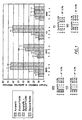
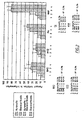
- Tables 2 and 3 provide an estimate of the efficacies (E max ), potencies (IC 50 ) and slope of the concentration-response curve ( ⁇ ) for the 12 corticosteroids investigated in this study. These values were obtained from the Hill equation which is a modified form of the Michaelis-Menton equation.
- E max values from the Hill equation could be subject to error due to some uncertainty about measurements made at the top of the concentration-response curves. Therefore, IC 50 values were determined by two methods: (a) using the E max value generated from the Hill equation (Tables 5 and 6), and (b) directly from the concentration-response curve, taking the IC 50 value as that concentration that inhibited 50% of the TPA-induced hyperplasia and inflammation (Tables 7 and 8). The difference between IC 50 values, and hence relative potencies, determined by the two methods was not great. However, direct reading from the concentration-response curve was considered more reliable and these readings were used for calculating the "synergistic factors" given in Tables 9 and 10.
- Corticosteroids IC 50 for inhibition of inflammatory cell infiltration in the dermis (M x 10 -4 ) Relative potency Hydrocortisone acetate 77.33 1.0 Hydrocortisone 61.48 1.26 Betamethasone 13.12 5.89 Dexamethasone 4.44 17.42 Fluocortolone 21-pivalate 1.10 70.30 Triamcinolone acetonide 0.39 198.28 Alclometasone dipropionate 0.32 241.66 Halcinonide 0.31 249.45 Betamethasone dipropionate 0.29 266.66 Betamethasone valerate 0.29 266.66 Mometasone furoate 0.20 386.65 Fluocinolone acetonide 0.16 483.31 Table 7 Actual and relative potencies of topical corticosteroids for inhibition of TPA-induced epidermal hyperplasia (values taken from concentration-response curve where IC 50 is the concentration that inhibited 50% of the TPA effect).
- Corticosteroids IC 50 for inhibition of epidermal thickening (M x 10 -4 ) Relative potency Hydrocortisone acetate 70.00 1.0 Hydrocortisone 45.10 1.55 Betamethasone 50.00 1.40 Dexamethasone 2.00 35.0 Triamcinolone acetonide 1.40 50.0 Betamethasone dipropionate 1.40 50.0 Halcinonide 1.10 63.64 Alclometasone dipropionate 1.00 70.0 Fluocortolone 21-pivalate 0.60 116.67 Mometasone furoate 0.40 175.0 Betamethasone valerate 0.22 318.18 Fluocinolone acetonide 0.21 333.33 Table 8 Actual and relative potencies of topical corticosteroids for inhibition of TPA-induced inflammatory cell infiltration into the dermis (values taken from concentration-response curve where IC 50 is the concentration that inhibited 50% of the TPA effect).
- Corticosteroids IC 50 for inhibition of inflammatory cell infiltration in the dermis (M ⁇ 10 -4 ) Relative potency Hydrocortisone acetate 110.0 1.0 Hydrocortisone 60.0 1.83 Betamethasone 21.0 5.23 Dexamethasone 4.10 26.83 Fluocortolone 21-pivalate 1.10 100.0 Triamcinolone acetonide 0.70 157.14 Betamethasone valerate 0.65 169.23 Alclometasone dipropionate 0.60 183.33 Halcinonide 0.60 183.33 Betamethasone dipropionate 0.40 275.0 Mometasone furoate 0.30 366.67 Fluocinolone acetonide 0.25 440.0
- hydrocortisone, hydrocortisone acetate, betamethasone and dexamethasone had low to medium potencies with respect to both inhibition of TPA-induced epidermal hyperplasia and TPA-induced inflammatory cell infiltration. This ranking was consistent with corresponding potencies in clinical setting that was shown in Table 1.
- Halcinonide, triamcinolone acetonide, alclometasone dipropionate, betamethasone dipropionate, and fluocortolone 21-pivalate were found to have medium to strong potencies in inhibition of TPA-induced epidermal hyperplasia and inflammatory cell infiltration, and these values were consistent with the clinical potencies.
- mometasone furoate, betamethasone valerate, betamethasone dipropionate, and fluocinolone acetonide had strong to very strong potencies for TPA-induced epidermal hyperplasia.
- betamethasone valerate was shown to be the most potent agent.
- their potencies for inhibition of TPA-induced inflammatory cell infiltration were investigated, they were also shown to have strong to very strong anti-inflammatory effect.
- Fluocinolone acetonide was found to be the most potent agent, with a relative potency of 483 (Table 6) or 440 (Table 8).
- the present study examines whether combinations of auranofin and corticosteroids had a synergistic effect in suppressing TPA lesions.
- TPA corticosteroids with different clinical potencies ranging from weak to strong were chosen, namely, hydrocortisone, fluocinolone acetonide, betamethasone dipropionate and mometasone furoate.
- TPA was premixed with the corticosteroids in the presence or absence of a fixed concentration ofauranofin (0.2%) to produce the required concentrations and applied to the backs of mice immediately.
- Concentration-response curves were determined by non-linear regression using least squares fitting.
- IC 50 values were determined by reading the value from the graph that corresponded to 50% of the effect produced by TPA (Tables 9 and 10).
- IC 50 ' refers to the value for the combination of steroid and auranofin.
- Table 9 Apparent IC 50 values obtained from the computer fitted graph for the effects on TPA-induced epidermal hyperplasia of four corticosteroids in the absence and presence of auranofin (0.2%).
- the value termed the 'synergistic factor' is defined as the IC 50 value for the steroid determined in the absence of auranofin divided by the IC 50 for the same steroid determined in the presence of auranofin (0.2%).
- Synergism refers to situations in which a combination of two drugs produces an effect that is significantly greater than the algebraic sum of the effects when the same dose or concentration of each drug is observed separately in the same test system. Synergism can result in a multifold potentiation of the effects of one or both drugs or it can give rise to effects that are qualitatively different from those elicited by the drugs when used separately.
- Gold compounds and corticosteroids, as well as their formulations, which can be suitably used in the present invention have been discussed in detail in the present application or in Australian patent No. 616 755, which is incorporated herein by reference.
Landscapes
- Health & Medical Sciences (AREA)
- Life Sciences & Earth Sciences (AREA)
- General Health & Medical Sciences (AREA)
- Animal Behavior & Ethology (AREA)
- Veterinary Medicine (AREA)
- Medicinal Chemistry (AREA)
- Chemical & Material Sciences (AREA)
- Public Health (AREA)
- Pharmacology & Pharmacy (AREA)
- Epidemiology (AREA)
- Nuclear Medicine, Radiotherapy & Molecular Imaging (AREA)
- Organic Chemistry (AREA)
- General Chemical & Material Sciences (AREA)
- Chemical Kinetics & Catalysis (AREA)
- Bioinformatics & Cheminformatics (AREA)
- Engineering & Computer Science (AREA)
- Dermatology (AREA)
- Inorganic Chemistry (AREA)
- Rheumatology (AREA)
- Pain & Pain Management (AREA)
- Molecular Biology (AREA)
- Pharmaceuticals Containing Other Organic And Inorganic Compounds (AREA)
- Steroid Compounds (AREA)
- Contacts (AREA)
- Manufacture And Refinement Of Metals (AREA)
- Acyclic And Carbocyclic Compounds In Medicinal Compositions (AREA)
- Liquid Crystal Substances (AREA)
Claims (14)
- Eine pharmazeutische Zusammensetzung, die eine Goldverbindung und ein Corticosteroid, ausgewählt aus Fluocinolonacetonid oder Mometasonfuorat, in Kombination mit einer pharmazeutisch geeigneten Trägersubstanz, einem Bindemittel, Zusatzmittel oder Lösungsmittel enthält.
- Eine Zusammensetzung gemäß Anspruch 1, wobei die Zusammensetzung für eine systemische Verabreichung, orale Verabreichung, lokale Anwendung oder topische Anwendung oder für eine Verabreichung durch intraartikuläre Injektion formuliert wird.
- Eine Zusammensetzung gemäß Anspruch 1 oder Anspruch 2, wobei es sich bei der Goldverbindung um Auranofin handelt.
- Produkte, die ein Corticosteroid, ausgewählt aus Fluocinolonacetonid oder Hydrocortison, und eine Goldverbindung, als Kombinationspräparat für eine gleichzeitige, getrennte oder aufeinanderfolgende Anwendung zur Verminderung von epidermaler Hyperplasie enthalten.
- Produkte gemäß Anspruch 4, wobei die epidermale Hyperplasie mit einer Psoriasis in Verbindung steht.
- Produkte, die ein Corticosteroid, ausgewählt aus Fluocinolonacetonid oder Mometasonfuroat, und eine Goldverbindung als Kombinationspräparat für eine gleichzeitige, getrennte oder aufeinanderfolgende Anwendung zur Verminderung von Entzündungen enthalten.
- Produkte wie in Anspruch 6 beansprucht, wobei die Entzündung auf einen Hauterkrankung begrenzt wird, die aus Neurodermitis, Kontaktdermatitis, seborrhoische Dermatitis und Psoriasis ausgewählt ist.
- Produkte gemäß einem der Ansprüche 4 bis 7, wobei es sich bei der Goldverbindung um Auranofin handelt.
- Verwendung eines (i) Corticosteroids, ausgewählt aus Fluocinolonacetonid oder Hydrocortison, und (ii) einer Goldverbindung zur Herstellung eines Medikaments zum Vermindern einer epidermalen Hyperplasie.
- Verwendung nach Anspruch 9, wobei die epidermale Hyperplasie mit Psoriasis in Verbindung steht.
- Verwendung eines (i) Corticosteroids, ausgewählt aus Fluocinolonacetonid oder Mometasonfuorat, und (ii) einer Goldverbindung zur Herstellung eines Medikaments zur Verminderung von Entzündungen.
- Verwendung nach Anspruch 11, wobei die Entzündung mit einer Dermatitis oder Psoriasis in Verbindung steht.
- Verwendung nach Anspruch 12, wobei es sich bei der Dermatitis um eine Erkrankung aus der Gruppe Neurodermitis, Kontaktdermatitis, seborrhoische Dermatitis handelt.
- Verwendung nach einem der Ansprüche 8 bis 13, wobei es sich bei der Goldverbindung um Auranofin handelt.
Applications Claiming Priority (3)
| Application Number | Priority Date | Filing Date | Title |
|---|---|---|---|
| AUPO3473A AUPO347396A0 (en) | 1996-11-04 | 1996-11-04 | Synergistic gold-containing compositions |
| AUPO347396 | 1996-11-04 | ||
| PCT/AU1997/000747 WO1998019683A1 (en) | 1996-11-04 | 1997-11-04 | Synergistic gold-containing compositions |
Publications (3)
| Publication Number | Publication Date |
|---|---|
| EP0954321A1 EP0954321A1 (de) | 1999-11-10 |
| EP0954321A4 EP0954321A4 (de) | 2001-06-27 |
| EP0954321B1 true EP0954321B1 (de) | 2006-01-11 |
Family
ID=3797784
Family Applications (1)
| Application Number | Title | Priority Date | Filing Date |
|---|---|---|---|
| EP97910157A Expired - Lifetime EP0954321B1 (de) | 1996-11-04 | 1997-11-04 | Synergistische, gold und ein corticosteroid enthaltende zusammensetzungen. |
Country Status (12)
| Country | Link |
|---|---|
| US (2) | US20020094973A1 (de) |
| EP (1) | EP0954321B1 (de) |
| JP (1) | JP2001508042A (de) |
| KR (1) | KR100662888B1 (de) |
| CN (1) | CN1130201C (de) |
| AT (1) | ATE315398T1 (de) |
| AU (1) | AUPO347396A0 (de) |
| CA (1) | CA2270561A1 (de) |
| DE (1) | DE69735091T2 (de) |
| ES (1) | ES2256878T3 (de) |
| WO (1) | WO1998019683A1 (de) |
| ZA (1) | ZA979906B (de) |
Families Citing this family (3)
| Publication number | Priority date | Publication date | Assignee | Title |
|---|---|---|---|---|
| KR100836893B1 (ko) * | 2006-06-23 | 2008-06-11 | (주)두비엘 | 콜로이드 금의 아쥬반트로의 사용 |
| JP4491000B2 (ja) * | 2007-08-17 | 2010-06-30 | 株式会社東芝 | メモリシステム |
| JP2011246442A (ja) * | 2010-04-28 | 2011-12-08 | Rohto Pharmaceutical Co Ltd | 光老化抑制剤および皮膚菲薄化抑制剤 |
Family Cites Families (5)
| Publication number | Priority date | Publication date | Assignee | Title |
|---|---|---|---|---|
| EP0356435B1 (de) * | 1987-03-19 | 1995-10-18 | Arthropharm Pty. Limited | Antientzündungsmittel und zusammensetzungen |
| NZ228367A (en) * | 1988-03-23 | 1992-02-25 | Smithkline Beecham Corp | Topical composition containing a gold compound for treating inflammatory conditions |
| US5527779A (en) * | 1988-03-23 | 1996-06-18 | Top Gold Pty Limited | Topically applied gold organic complex |
| US5061700A (en) * | 1989-11-16 | 1991-10-29 | Gordon Jay Dow | Glyceryl acetate ointment vehicles |
| GB9504265D0 (en) * | 1995-03-03 | 1995-04-19 | Medeva Plc | Corticosteroid-containing pharmaceutical composition |
-
1996
- 1996-11-04 AU AUPO3473A patent/AUPO347396A0/en not_active Abandoned
-
1997
- 1997-11-04 AT AT97910157T patent/ATE315398T1/de not_active IP Right Cessation
- 1997-11-04 ZA ZA9709906A patent/ZA979906B/xx unknown
- 1997-11-04 CN CN97199438A patent/CN1130201C/zh not_active Expired - Fee Related
- 1997-11-04 CA CA002270561A patent/CA2270561A1/en not_active Abandoned
- 1997-11-04 WO PCT/AU1997/000747 patent/WO1998019683A1/en not_active Ceased
- 1997-11-04 JP JP52087898A patent/JP2001508042A/ja not_active Ceased
- 1997-11-04 EP EP97910157A patent/EP0954321B1/de not_active Expired - Lifetime
- 1997-11-04 ES ES97910157T patent/ES2256878T3/es not_active Expired - Lifetime
- 1997-11-04 KR KR1019997003995A patent/KR100662888B1/ko not_active Expired - Fee Related
- 1997-11-04 DE DE69735091T patent/DE69735091T2/de not_active Expired - Fee Related
- 1997-11-04 US US09/297,652 patent/US20020094973A1/en not_active Abandoned
-
2005
- 2005-02-28 US US11/069,083 patent/US20050267204A1/en not_active Abandoned
Also Published As
| Publication number | Publication date |
|---|---|
| AUPO347396A0 (en) | 1996-12-05 |
| US20050267204A1 (en) | 2005-12-01 |
| KR20000053075A (ko) | 2000-08-25 |
| DE69735091T2 (de) | 2006-08-24 |
| WO1998019683A1 (en) | 1998-05-14 |
| KR100662888B1 (ko) | 2007-01-02 |
| ATE315398T1 (de) | 2006-02-15 |
| US20020094973A1 (en) | 2002-07-18 |
| HK1023515A1 (en) | 2000-09-15 |
| CN1235550A (zh) | 1999-11-17 |
| CA2270561A1 (en) | 1998-05-14 |
| JP2001508042A (ja) | 2001-06-19 |
| ES2256878T3 (es) | 2006-07-16 |
| ZA979906B (en) | 1998-05-25 |
| EP0954321A4 (de) | 2001-06-27 |
| CN1130201C (zh) | 2003-12-10 |
| DE69735091D1 (de) | 2006-04-06 |
| EP0954321A1 (de) | 1999-11-10 |
Similar Documents
| Publication | Publication Date | Title |
|---|---|---|
| DE60127827T2 (de) | Verwendung von einem insulin-sensibilisator in der behandlung von alopecia | |
| EP0189738A1 (de) | Topische Mittel zur Verhütung oder Behandlung trockener Haut | |
| US20220152033A1 (en) | Compositions and methods for deep dermal drug delivery | |
| KR20210107560A (ko) | 콜히친을 포함하는 알레르기성 피부 질환 또는 피부 소양증 치료용 조성물 | |
| JP2000143486A (ja) | 皮膚外用剤 | |
| CZ20001920A3 (cs) | Použití směsi diolu a alfa-hydroxykyseliny pro léčbu hyperkeratózních kožních onemocnění | |
| Gupta et al. | Pityriasis versicolor: a review of pharmacological treatment options | |
| JP2021510159A (ja) | セルドゥラチニブ含有局所皮膚医薬組成物およびその使用 | |
| Hughes et al. | Allergic contact dermatitis and autoeczematization to Proctosedyl® cream and Proctomyxin® cream | |
| US20050267204A1 (en) | Synergistic gold-containing compositions | |
| JP2005507903A (ja) | 抗ざ瘡組み合わせ組成物 | |
| AU747169B2 (en) | Synergistic gold-containing compositions | |
| JP2005519868A (ja) | n−ドコサノールによるウイルス阻害 | |
| MXPA99004182A (en) | Synergistic gold-containing compositions | |
| EP3452171A1 (de) | Behandlung von aktiven hauterkrankungen mit gegen den energiestoffwechsel gerichteten wirkstoffen | |
| JP2002128702A (ja) | 局所活性成分の効力のモノ−アシル−(リゾ)−グリセロリン脂質による増強方法およびその用途 | |
| Hickman | Dandruff and seborrheic dermatitis: use of medicated shampoos | |
| JP3957690B2 (ja) | 養毛料 | |
| US9566262B2 (en) | Itch suppression by fucoxanthin | |
| US9233085B1 (en) | Topical application of AMPK activators for pharmacological prevention of chronic pain | |
| Christoffers et al. | Hand eczema | |
| MX2007006426A (es) | Champus de propionato de clobetasol para el tratamiento de dermatitis seborreica del cuero cabelludo. | |
| Piepponen et al. | Treatment of dandruff with a ketoconazole 2% shampoo | |
| JPWO2000027402A1 (ja) | 局所投与用iv型アレルギー性疾患治療剤 | |
| HK1023515B (en) | Synergistic gold-containing compositions |
Legal Events
| Date | Code | Title | Description |
|---|---|---|---|
| PUAI | Public reference made under article 153(3) epc to a published international application that has entered the european phase |
Free format text: ORIGINAL CODE: 0009012 |
|
| 17P | Request for examination filed |
Effective date: 19990413 |
|
| AK | Designated contracting states |
Kind code of ref document: A1 Designated state(s): AT BE CH DE DK ES FR GB GR IE IT LI PT |
|
| A4 | Supplementary search report drawn up and despatched |
Effective date: 20010515 |
|
| AK | Designated contracting states |
Kind code of ref document: A4 Designated state(s): AT BE CH DE DK ES FR GB GR IE IT LI PT |
|
| 17Q | First examination report despatched |
Effective date: 20031030 |
|
| GRAP | Despatch of communication of intention to grant a patent |
Free format text: ORIGINAL CODE: EPIDOSNIGR1 |
|
| RTI1 | Title (correction) |
Free format text: SYNERGISTIC COMPOSITIONS CONTAINING GOLD AND A CORTICOSTEROID |
|
| GRAS | Grant fee paid |
Free format text: ORIGINAL CODE: EPIDOSNIGR3 |
|
| RAP1 | Party data changed (applicant data changed or rights of an application transferred) |
Owner name: PSIRON LTD |
|
| GRAA | (expected) grant |
Free format text: ORIGINAL CODE: 0009210 |
|
| AK | Designated contracting states |
Kind code of ref document: B1 Designated state(s): AT BE CH DE DK ES FR GB GR IE IT LI PT |
|
| PG25 | Lapsed in a contracting state [announced via postgrant information from national office to epo] |
Ref country code: LI Free format text: LAPSE BECAUSE OF FAILURE TO SUBMIT A TRANSLATION OF THE DESCRIPTION OR TO PAY THE FEE WITHIN THE PRESCRIBED TIME-LIMIT Effective date: 20060111 Ref country code: IT Free format text: LAPSE BECAUSE OF FAILURE TO SUBMIT A TRANSLATION OF THE DESCRIPTION OR TO PAY THE FEE WITHIN THE PRESCRIBED TIME-LIMIT;WARNING: LAPSES OF ITALIAN PATENTS WITH EFFECTIVE DATE BEFORE 2007 MAY HAVE OCCURRED AT ANY TIME BEFORE 2007. THE CORRECT EFFECTIVE DATE MAY BE DIFFERENT FROM THE ONE RECORDED. Effective date: 20060111 Ref country code: CH Free format text: LAPSE BECAUSE OF FAILURE TO SUBMIT A TRANSLATION OF THE DESCRIPTION OR TO PAY THE FEE WITHIN THE PRESCRIBED TIME-LIMIT Effective date: 20060111 Ref country code: BE Free format text: LAPSE BECAUSE OF FAILURE TO SUBMIT A TRANSLATION OF THE DESCRIPTION OR TO PAY THE FEE WITHIN THE PRESCRIBED TIME-LIMIT Effective date: 20060111 Ref country code: AT Free format text: LAPSE BECAUSE OF FAILURE TO SUBMIT A TRANSLATION OF THE DESCRIPTION OR TO PAY THE FEE WITHIN THE PRESCRIBED TIME-LIMIT Effective date: 20060111 |
|
| REG | Reference to a national code |
Ref country code: CH Ref legal event code: EP |
|
| REG | Reference to a national code |
Ref country code: IE Ref legal event code: FG4D |
|
| REF | Corresponds to: |
Ref document number: 69735091 Country of ref document: DE Date of ref document: 20060406 Kind code of ref document: P |
|
| PG25 | Lapsed in a contracting state [announced via postgrant information from national office to epo] |
Ref country code: DK Free format text: LAPSE BECAUSE OF FAILURE TO SUBMIT A TRANSLATION OF THE DESCRIPTION OR TO PAY THE FEE WITHIN THE PRESCRIBED TIME-LIMIT Effective date: 20060411 |
|
| PG25 | Lapsed in a contracting state [announced via postgrant information from national office to epo] |
Ref country code: PT Free format text: LAPSE BECAUSE OF FAILURE TO SUBMIT A TRANSLATION OF THE DESCRIPTION OR TO PAY THE FEE WITHIN THE PRESCRIBED TIME-LIMIT Effective date: 20060612 |
|
| REG | Reference to a national code |
Ref country code: ES Ref legal event code: FG2A Ref document number: 2256878 Country of ref document: ES Kind code of ref document: T3 |
|
| REG | Reference to a national code |
Ref country code: CH Ref legal event code: PL |
|
| ET | Fr: translation filed | ||
| PLBE | No opposition filed within time limit |
Free format text: ORIGINAL CODE: 0009261 |
|
| STAA | Information on the status of an ep patent application or granted ep patent |
Free format text: STATUS: NO OPPOSITION FILED WITHIN TIME LIMIT |
|
| 26N | No opposition filed |
Effective date: 20061012 |
|
| PGFP | Annual fee paid to national office [announced via postgrant information from national office to epo] |
Ref country code: IT Payment date: 20070921 Year of fee payment: 11 Ref country code: ES Payment date: 20071219 Year of fee payment: 11 Ref country code: DE Payment date: 20071101 Year of fee payment: 11 |
|
| PG25 | Lapsed in a contracting state [announced via postgrant information from national office to epo] |
Ref country code: GR Free format text: LAPSE BECAUSE OF FAILURE TO SUBMIT A TRANSLATION OF THE DESCRIPTION OR TO PAY THE FEE WITHIN THE PRESCRIBED TIME-LIMIT Effective date: 20060412 |
|
| PGFP | Annual fee paid to national office [announced via postgrant information from national office to epo] |
Ref country code: GB Payment date: 20071031 Year of fee payment: 11 Ref country code: FR Payment date: 20071108 Year of fee payment: 11 |
|
| GBPC | Gb: european patent ceased through non-payment of renewal fee |
Effective date: 20081104 |
|
| PG25 | Lapsed in a contracting state [announced via postgrant information from national office to epo] |
Ref country code: IT Free format text: LAPSE BECAUSE OF NON-PAYMENT OF DUE FEES Effective date: 20081104 |
|
| PGFP | Annual fee paid to national office [announced via postgrant information from national office to epo] |
Ref country code: IE Payment date: 20071113 Year of fee payment: 11 |
|
| REG | Reference to a national code |
Ref country code: FR Ref legal event code: ST Effective date: 20090731 |
|
| PG25 | Lapsed in a contracting state [announced via postgrant information from national office to epo] |
Ref country code: IE Free format text: LAPSE BECAUSE OF NON-PAYMENT OF DUE FEES Effective date: 20081104 Ref country code: DE Free format text: LAPSE BECAUSE OF NON-PAYMENT OF DUE FEES Effective date: 20090603 |
|
| PG25 | Lapsed in a contracting state [announced via postgrant information from national office to epo] |
Ref country code: GB Free format text: LAPSE BECAUSE OF NON-PAYMENT OF DUE FEES Effective date: 20081104 |
|
| REG | Reference to a national code |
Ref country code: ES Ref legal event code: FD2A Effective date: 20081105 |
|
| PG25 | Lapsed in a contracting state [announced via postgrant information from national office to epo] |
Ref country code: ES Free format text: LAPSE BECAUSE OF NON-PAYMENT OF DUE FEES Effective date: 20081105 |
|
| PG25 | Lapsed in a contracting state [announced via postgrant information from national office to epo] |
Ref country code: FR Free format text: LAPSE BECAUSE OF NON-PAYMENT OF DUE FEES Effective date: 20081130 |