EP0955358B1 - Genetisch veränderte, L-Sorbose Reduktase defiziente Mutanten - Google Patents
Genetisch veränderte, L-Sorbose Reduktase defiziente Mutanten Download PDFInfo
- Publication number
- EP0955358B1 EP0955358B1 EP99104563A EP99104563A EP0955358B1 EP 0955358 B1 EP0955358 B1 EP 0955358B1 EP 99104563 A EP99104563 A EP 99104563A EP 99104563 A EP99104563 A EP 99104563A EP 0955358 B1 EP0955358 B1 EP 0955358B1
- Authority
- EP
- European Patent Office
- Prior art keywords
- sorbose
- microorganism
- gene
- genetically engineered
- sorbose reductase
- Prior art date
- Legal status (The legal status is an assumption and is not a legal conclusion. Google has not performed a legal analysis and makes no representation as to the accuracy of the status listed.)
- Expired - Lifetime
Links
- LKDRXBCSQODPBY-AMVSKUEXSA-N L-(-)-Sorbose Chemical compound OCC1(O)OC[C@H](O)[C@@H](O)[C@@H]1O LKDRXBCSQODPBY-AMVSKUEXSA-N 0.000 title claims description 125
- 230000002950 deficient Effects 0.000 title claims description 14
- 108090000623 proteins and genes Proteins 0.000 claims description 90
- 108090000854 Oxidoreductases Proteins 0.000 claims description 78
- 244000005700 microbiome Species 0.000 claims description 56
- 102000004316 Oxidoreductases Human genes 0.000 claims description 54
- 239000012634 fragment Substances 0.000 claims description 25
- 108020004414 DNA Proteins 0.000 claims description 24
- 230000000694 effects Effects 0.000 claims description 24
- 238000000034 method Methods 0.000 claims description 24
- CIWBSHSKHKDKBQ-JLAZNSOCSA-N Ascorbic acid Chemical compound OC[C@H](O)[C@H]1OC(=O)C(O)=C1O CIWBSHSKHKDKBQ-JLAZNSOCSA-N 0.000 claims description 20
- FBPFZTCFMRRESA-FSIIMWSLSA-N D-Glucitol Natural products OC[C@H](O)[C@H](O)[C@@H](O)[C@H](O)CO FBPFZTCFMRRESA-FSIIMWSLSA-N 0.000 claims description 20
- FBPFZTCFMRRESA-JGWLITMVSA-N D-glucitol Chemical compound OC[C@H](O)[C@@H](O)[C@H](O)[C@H](O)CO FBPFZTCFMRRESA-JGWLITMVSA-N 0.000 claims description 20
- 238000004519 manufacturing process Methods 0.000 claims description 20
- 229960002920 sorbitol Drugs 0.000 claims description 20
- 230000004151 fermentation Effects 0.000 claims description 19
- 238000000855 fermentation Methods 0.000 claims description 18
- 241000589236 Gluconobacter Species 0.000 claims description 17
- 238000003780 insertion Methods 0.000 claims description 17
- 230000037431 insertion Effects 0.000 claims description 17
- 230000035772 mutation Effects 0.000 claims description 17
- 102000004169 proteins and genes Human genes 0.000 claims description 14
- 230000015572 biosynthetic process Effects 0.000 claims description 12
- 241000589220 Acetobacter Species 0.000 claims description 11
- 108090000765 processed proteins & peptides Proteins 0.000 claims description 11
- ZZZCUOFIHGPKAK-UHFFFAOYSA-N D-erythro-ascorbic acid Natural products OCC1OC(=O)C(O)=C1O ZZZCUOFIHGPKAK-UHFFFAOYSA-N 0.000 claims description 10
- 229930003268 Vitamin C Natural products 0.000 claims description 10
- 235000019154 vitamin C Nutrition 0.000 claims description 10
- 239000011718 vitamin C Substances 0.000 claims description 10
- 108091028043 Nucleic acid sequence Proteins 0.000 claims description 9
- 230000008569 process Effects 0.000 claims description 9
- FWMNVWWHGCHHJJ-SKKKGAJSSA-N 4-amino-1-[(2r)-6-amino-2-[[(2r)-2-[[(2r)-2-[[(2r)-2-amino-3-phenylpropanoyl]amino]-3-phenylpropanoyl]amino]-4-methylpentanoyl]amino]hexanoyl]piperidine-4-carboxylic acid Chemical compound C([C@H](C(=O)N[C@H](CC(C)C)C(=O)N[C@H](CCCCN)C(=O)N1CCC(N)(CC1)C(O)=O)NC(=O)[C@H](N)CC=1C=CC=CC=1)C1=CC=CC=C1 FWMNVWWHGCHHJJ-SKKKGAJSSA-N 0.000 claims description 8
- 238000012217 deletion Methods 0.000 claims description 7
- 230000037430 deletion Effects 0.000 claims description 7
- 230000014509 gene expression Effects 0.000 claims description 7
- 238000007792 addition Methods 0.000 claims description 6
- 125000003275 alpha amino acid group Chemical group 0.000 claims description 6
- 150000001413 amino acids Chemical class 0.000 claims description 6
- 229920001184 polypeptide Polymers 0.000 claims description 6
- 102000004196 processed proteins & peptides Human genes 0.000 claims description 6
- 238000006467 substitution reaction Methods 0.000 claims description 6
- 239000003242 anti bacterial agent Substances 0.000 claims description 5
- 230000003115 biocidal effect Effects 0.000 claims description 5
- 230000004071 biological effect Effects 0.000 claims description 5
- 238000006243 chemical reaction Methods 0.000 claims description 3
- 230000002452 interceptive effect Effects 0.000 claims description 3
- 108091033319 polynucleotide Proteins 0.000 claims 3
- 102000040430 polynucleotide Human genes 0.000 claims 3
- 239000002157 polynucleotide Substances 0.000 claims 3
- 241000589232 Gluconobacter oxydans Species 0.000 description 49
- 238000002703 mutagenesis Methods 0.000 description 27
- 231100000350 mutagenesis Toxicity 0.000 description 27
- 239000013598 vector Substances 0.000 description 27
- 239000013612 plasmid Substances 0.000 description 21
- 239000002609 medium Substances 0.000 description 17
- 210000004027 cell Anatomy 0.000 description 14
- 241000588724 Escherichia coli Species 0.000 description 13
- 239000002773 nucleotide Substances 0.000 description 12
- 125000003729 nucleotide group Chemical class 0.000 description 12
- 239000003550 marker Substances 0.000 description 11
- 235000018102 proteins Nutrition 0.000 description 10
- PEDCQBHIVMGVHV-UHFFFAOYSA-N Glycerine Chemical compound OCC(O)CO PEDCQBHIVMGVHV-UHFFFAOYSA-N 0.000 description 9
- 238000004458 analytical method Methods 0.000 description 8
- 238000009396 hybridization Methods 0.000 description 8
- 239000000047 product Substances 0.000 description 8
- 241000894006 Bacteria Species 0.000 description 7
- FBPFZTCFMRRESA-KVTDHHQDSA-N D-Mannitol Chemical compound OC[C@@H](O)[C@@H](O)[C@H](O)[C@H](O)CO FBPFZTCFMRRESA-KVTDHHQDSA-N 0.000 description 7
- XJLXINKUBYWONI-DQQFMEOOSA-N [[(2r,3r,4r,5r)-5-(6-aminopurin-9-yl)-3-hydroxy-4-phosphonooxyoxolan-2-yl]methoxy-hydroxyphosphoryl] [(2s,3r,4s,5s)-5-(3-carbamoylpyridin-1-ium-1-yl)-3,4-dihydroxyoxolan-2-yl]methyl phosphate Chemical compound NC(=O)C1=CC=C[N+]([C@@H]2[C@H]([C@@H](O)[C@H](COP([O-])(=O)OP(O)(=O)OC[C@@H]3[C@H]([C@@H](OP(O)(O)=O)[C@@H](O3)N3C4=NC=NC(N)=C4N=C3)O)O2)O)=C1 XJLXINKUBYWONI-DQQFMEOOSA-N 0.000 description 7
- 238000002105 Southern blotting Methods 0.000 description 6
- 238000010367 cloning Methods 0.000 description 6
- 238000003752 polymerase chain reaction Methods 0.000 description 6
- 239000000523 sample Substances 0.000 description 6
- 238000012546 transfer Methods 0.000 description 6
- RFSUNEUAIZKAJO-ARQDHWQXSA-N Fructose Chemical compound OC[C@H]1O[C@](O)(CO)[C@@H](O)[C@@H]1O RFSUNEUAIZKAJO-ARQDHWQXSA-N 0.000 description 5
- 238000003556 assay Methods 0.000 description 5
- 230000007812 deficiency Effects 0.000 description 5
- 230000006870 function Effects 0.000 description 5
- 230000002068 genetic effect Effects 0.000 description 5
- 230000013011 mating Effects 0.000 description 5
- 229930027945 nicotinamide-adenine dinucleotide Natural products 0.000 description 5
- 238000012163 sequencing technique Methods 0.000 description 5
- 238000002741 site-directed mutagenesis Methods 0.000 description 5
- 239000000758 substrate Substances 0.000 description 5
- 238000004809 thin layer chromatography Methods 0.000 description 5
- 230000017105 transposition Effects 0.000 description 5
- IJGRMHOSHXDMSA-UHFFFAOYSA-N Atomic nitrogen Chemical compound N#N IJGRMHOSHXDMSA-UHFFFAOYSA-N 0.000 description 4
- VTYYLEPIZMXCLO-UHFFFAOYSA-L Calcium carbonate Chemical compound [Ca+2].[O-]C([O-])=O VTYYLEPIZMXCLO-UHFFFAOYSA-L 0.000 description 4
- HEDRZPFGACZZDS-UHFFFAOYSA-N Chloroform Chemical compound ClC(Cl)Cl HEDRZPFGACZZDS-UHFFFAOYSA-N 0.000 description 4
- RFSUNEUAIZKAJO-VRPWFDPXSA-N D-Fructose Natural products OC[C@H]1OC(O)(CO)[C@@H](O)[C@@H]1O RFSUNEUAIZKAJO-VRPWFDPXSA-N 0.000 description 4
- 102000004190 Enzymes Human genes 0.000 description 4
- 108090000790 Enzymes Proteins 0.000 description 4
- 108700026244 Open Reading Frames Proteins 0.000 description 4
- 229940088710 antibiotic agent Drugs 0.000 description 4
- 210000000349 chromosome Anatomy 0.000 description 4
- 238000010276 construction Methods 0.000 description 4
- 238000004520 electroporation Methods 0.000 description 4
- 229910052564 epsomite Inorganic materials 0.000 description 4
- 229930027917 kanamycin Natural products 0.000 description 4
- 229960000318 kanamycin Drugs 0.000 description 4
- SBUJHOSQTJFQJX-NOAMYHISSA-N kanamycin Chemical compound O[C@@H]1[C@@H](O)[C@H](O)[C@@H](CN)O[C@@H]1O[C@H]1[C@H](O)[C@@H](O[C@@H]2[C@@H]([C@@H](N)[C@H](O)[C@@H](CO)O2)O)[C@H](N)C[C@@H]1N SBUJHOSQTJFQJX-NOAMYHISSA-N 0.000 description 4
- 229930182823 kanamycin A Natural products 0.000 description 4
- 235000010355 mannitol Nutrition 0.000 description 4
- 230000003647 oxidation Effects 0.000 description 4
- 238000007254 oxidation reaction Methods 0.000 description 4
- 239000013615 primer Substances 0.000 description 4
- 238000012216 screening Methods 0.000 description 4
- 239000000126 substance Substances 0.000 description 4
- 238000011144 upstream manufacturing Methods 0.000 description 4
- QTBSBXVTEAMEQO-UHFFFAOYSA-N Acetic acid Chemical compound CC(O)=O QTBSBXVTEAMEQO-UHFFFAOYSA-N 0.000 description 3
- 229920001817 Agar Polymers 0.000 description 3
- OKTJSMMVPCPJKN-UHFFFAOYSA-N Carbon Chemical compound [C] OKTJSMMVPCPJKN-UHFFFAOYSA-N 0.000 description 3
- 206010010144 Completed suicide Diseases 0.000 description 3
- 108091035707 Consensus sequence Proteins 0.000 description 3
- 239000003155 DNA primer Substances 0.000 description 3
- 241000702191 Escherichia virus P1 Species 0.000 description 3
- XEKOWRVHYACXOJ-UHFFFAOYSA-N Ethyl acetate Chemical compound CCOC(C)=O XEKOWRVHYACXOJ-UHFFFAOYSA-N 0.000 description 3
- 108020000290 Mannitol dehydrogenase Proteins 0.000 description 3
- 108700005075 Regulator Genes Proteins 0.000 description 3
- 239000008272 agar Substances 0.000 description 3
- 230000001580 bacterial effect Effects 0.000 description 3
- 229940041514 candida albicans extract Drugs 0.000 description 3
- 229910052799 carbon Inorganic materials 0.000 description 3
- 239000006285 cell suspension Substances 0.000 description 3
- 239000013611 chromosomal DNA Substances 0.000 description 3
- 210000000172 cytosol Anatomy 0.000 description 3
- 238000005516 engineering process Methods 0.000 description 3
- 238000002474 experimental method Methods 0.000 description 3
- 238000010353 genetic engineering Methods 0.000 description 3
- 230000012010 growth Effects 0.000 description 3
- 230000006872 improvement Effects 0.000 description 3
- 230000007246 mechanism Effects 0.000 description 3
- 235000015097 nutrients Nutrition 0.000 description 3
- 230000006798 recombination Effects 0.000 description 3
- 238000005215 recombination Methods 0.000 description 3
- 239000006228 supernatant Substances 0.000 description 3
- 230000009466 transformation Effects 0.000 description 3
- 239000012138 yeast extract Substances 0.000 description 3
- JNRLEMMIVRBKJE-UHFFFAOYSA-N 4,4'-Methylenebis(N,N-dimethylaniline) Chemical compound C1=CC(N(C)C)=CC=C1CC1=CC=C(N(C)C)C=C1 JNRLEMMIVRBKJE-UHFFFAOYSA-N 0.000 description 2
- 108020004705 Codon Proteins 0.000 description 2
- 108010054576 Deoxyribonuclease EcoRI Proteins 0.000 description 2
- 241000702189 Escherichia virus Mu Species 0.000 description 2
- 150000001120 L-sorbose derivatives Chemical class 0.000 description 2
- CSNNHWWHGAXBCP-UHFFFAOYSA-L Magnesium sulfate Chemical compound [Mg+2].[O-][S+2]([O-])([O-])[O-] CSNNHWWHGAXBCP-UHFFFAOYSA-L 0.000 description 2
- 101150027059 SR gene Proteins 0.000 description 2
- FAPWRFPIFSIZLT-UHFFFAOYSA-M Sodium chloride Chemical compound [Na+].[Cl-] FAPWRFPIFSIZLT-UHFFFAOYSA-M 0.000 description 2
- 108010020764 Transposases Proteins 0.000 description 2
- 102000008579 Transposases Human genes 0.000 description 2
- XSQUKJJJFZCRTK-UHFFFAOYSA-N Urea Chemical compound NC(N)=O XSQUKJJJFZCRTK-UHFFFAOYSA-N 0.000 description 2
- 238000004166 bioassay Methods 0.000 description 2
- 229910000019 calcium carbonate Inorganic materials 0.000 description 2
- 238000012219 cassette mutagenesis Methods 0.000 description 2
- 230000010261 cell growth Effects 0.000 description 2
- 238000005119 centrifugation Methods 0.000 description 2
- 239000002962 chemical mutagen Substances 0.000 description 2
- 239000003153 chemical reaction reagent Substances 0.000 description 2
- 230000001419 dependent effect Effects 0.000 description 2
- 238000002744 homologous recombination Methods 0.000 description 2
- 230000006801 homologous recombination Effects 0.000 description 2
- 208000015181 infectious disease Diseases 0.000 description 2
- KFZMGEQAYNKOFK-UHFFFAOYSA-N isopropyl alcohol Natural products CC(C)O KFZMGEQAYNKOFK-UHFFFAOYSA-N 0.000 description 2
- 101150066555 lacZ gene Proteins 0.000 description 2
- 239000006166 lysate Substances 0.000 description 2
- 239000000203 mixture Substances 0.000 description 2
- 229910052757 nitrogen Inorganic materials 0.000 description 2
- 230000037361 pathway Effects 0.000 description 2
- 239000013600 plasmid vector Substances 0.000 description 2
- 238000002708 random mutagenesis Methods 0.000 description 2
- 239000011541 reaction mixture Substances 0.000 description 2
- 230000008707 rearrangement Effects 0.000 description 2
- 238000005204 segregation Methods 0.000 description 2
- 239000002904 solvent Substances 0.000 description 2
- UCSJYZPVAKXKNQ-HZYVHMACSA-N streptomycin Chemical compound CN[C@H]1[C@H](O)[C@@H](O)[C@H](CO)O[C@H]1O[C@@H]1[C@](C=O)(O)[C@H](C)O[C@H]1O[C@@H]1[C@@H](NC(N)=N)[C@H](O)[C@@H](NC(N)=N)[C@H](O)[C@H]1O UCSJYZPVAKXKNQ-HZYVHMACSA-N 0.000 description 2
- RWQNBRDOKXIBIV-UHFFFAOYSA-N thymine Chemical compound CC1=CNC(=O)NC1=O RWQNBRDOKXIBIV-UHFFFAOYSA-N 0.000 description 2
- LWIHDJKSTIGBAC-UHFFFAOYSA-K tripotassium phosphate Chemical compound [K+].[K+].[K+].[O-]P([O-])([O-])=O LWIHDJKSTIGBAC-UHFFFAOYSA-K 0.000 description 2
- SPOMEWBVWWDQBC-UHFFFAOYSA-K tripotassium;dihydrogen phosphate;hydrogen phosphate Chemical compound [K+].[K+].[K+].OP(O)([O-])=O.OP([O-])([O-])=O SPOMEWBVWWDQBC-UHFFFAOYSA-K 0.000 description 2
- VBUYCZFBVCCYFD-NUNKFHFFSA-N 2-dehydro-L-idonic acid Chemical compound OC[C@H](O)[C@@H](O)[C@H](O)C(=O)C(O)=O VBUYCZFBVCCYFD-NUNKFHFFSA-N 0.000 description 1
- 244000283763 Acetobacter aceti Species 0.000 description 1
- 235000007847 Acetobacter aceti Nutrition 0.000 description 1
- 241000589212 Acetobacter pasteurianus Species 0.000 description 1
- 244000235858 Acetobacter xylinum Species 0.000 description 1
- 235000002837 Acetobacter xylinum Nutrition 0.000 description 1
- GUBGYTABKSRVRQ-XLOQQCSPSA-N Alpha-Lactose Chemical compound O[C@@H]1[C@@H](O)[C@@H](O)[C@@H](CO)O[C@H]1O[C@@H]1[C@@H](CO)O[C@H](O)[C@H](O)[C@H]1O GUBGYTABKSRVRQ-XLOQQCSPSA-N 0.000 description 1
- 108010006654 Bleomycin Proteins 0.000 description 1
- UXVMQQNJUSDDNG-UHFFFAOYSA-L Calcium chloride Chemical compound [Cl-].[Cl-].[Ca+2] UXVMQQNJUSDDNG-UHFFFAOYSA-L 0.000 description 1
- 108091026890 Coding region Proteins 0.000 description 1
- 108700010070 Codon Usage Proteins 0.000 description 1
- HEBKCHPVOIAQTA-NGQZWQHPSA-N D-Arabitol Natural products OC[C@H](O)C(O)[C@H](O)CO HEBKCHPVOIAQTA-NGQZWQHPSA-N 0.000 description 1
- HEBKCHPVOIAQTA-QWWZWVQMSA-N D-arabinitol Chemical compound OC[C@@H](O)C(O)[C@H](O)CO HEBKCHPVOIAQTA-QWWZWVQMSA-N 0.000 description 1
- VBUYCZFBVCCYFD-UHFFFAOYSA-N D-arabino-2-Hexulosonic acid Natural products OCC(O)C(O)C(O)C(=O)C(O)=O VBUYCZFBVCCYFD-UHFFFAOYSA-N 0.000 description 1
- 238000007900 DNA-DNA hybridization Methods 0.000 description 1
- 241001302584 Escherichia coli str. K-12 substr. W3110 Species 0.000 description 1
- CWYNVVGOOAEACU-UHFFFAOYSA-N Fe2+ Chemical compound [Fe+2] CWYNVVGOOAEACU-UHFFFAOYSA-N 0.000 description 1
- 108010074122 Ferredoxins Proteins 0.000 description 1
- 229930091371 Fructose Natural products 0.000 description 1
- 239000005715 Fructose Substances 0.000 description 1
- 241000032686 Gluconacetobacter liquefaciens Species 0.000 description 1
- 241001330169 Gluconobacter albidus Species 0.000 description 1
- 241001518248 Gluconobacter cerinus Species 0.000 description 1
- 241001631175 Gluconobacter roseus Species 0.000 description 1
- 241001216837 Gluconobacter sphaericus Species 0.000 description 1
- WQZGKKKJIJFFOK-GASJEMHNSA-N Glucose Natural products OC[C@H]1OC(O)[C@H](O)[C@@H](O)[C@@H]1O WQZGKKKJIJFFOK-GASJEMHNSA-N 0.000 description 1
- 108091027305 Heteroduplex Proteins 0.000 description 1
- PWGOWIIEVDAYTC-UHFFFAOYSA-N ICR-170 Chemical compound Cl.Cl.C1=C(OC)C=C2C(NCCCN(CCCl)CC)=C(C=CC(Cl)=C3)C3=NC2=C1 PWGOWIIEVDAYTC-UHFFFAOYSA-N 0.000 description 1
- 241000589216 Komagataeibacter hansenii Species 0.000 description 1
- GUBGYTABKSRVRQ-QKKXKWKRSA-N Lactose Natural products OC[C@H]1O[C@@H](O[C@H]2[C@H](O)[C@@H](O)C(O)O[C@@H]2CO)[C@H](O)[C@@H](O)[C@H]1O GUBGYTABKSRVRQ-QKKXKWKRSA-N 0.000 description 1
- 239000006142 Luria-Bertani Agar Substances 0.000 description 1
- 229930195725 Mannitol Natural products 0.000 description 1
- 229930193140 Neomycin Natural products 0.000 description 1
- 238000012408 PCR amplification Methods 0.000 description 1
- 239000001888 Peptone Substances 0.000 description 1
- 108010080698 Peptones Proteins 0.000 description 1
- 101100084022 Pseudomonas aeruginosa (strain ATCC 15692 / DSM 22644 / CIP 104116 / JCM 14847 / LMG 12228 / 1C / PRS 101 / PAO1) lapA gene Proteins 0.000 description 1
- 108091081062 Repeated sequence (DNA) Proteins 0.000 description 1
- 241000191043 Rhodobacter sphaeroides Species 0.000 description 1
- VYPSYNLAJGMNEJ-UHFFFAOYSA-N Silicium dioxide Chemical compound O=[Si]=O VYPSYNLAJGMNEJ-UHFFFAOYSA-N 0.000 description 1
- 108010012306 Tn5 transposase Proteins 0.000 description 1
- 241000700605 Viruses Species 0.000 description 1
- 240000008042 Zea mays Species 0.000 description 1
- 235000005824 Zea mays ssp. parviglumis Nutrition 0.000 description 1
- 235000002017 Zea mays subsp mays Nutrition 0.000 description 1
- GQXSDDHYUVYJCQ-NHRVJRKFSA-N [(3as,4as,8ar,8bs)-2,2,7,7-tetramethyl-4a,5,8a,8b-tetrahydro-[1,3]dioxolo[3,4]furo[1,3-d][1,3]dioxin-3a-yl]methanol Chemical compound O([C@H]12)C(C)(C)OC[C@@H]1O[C@]1(CO)[C@H]2OC(C)(C)O1 GQXSDDHYUVYJCQ-NHRVJRKFSA-N 0.000 description 1
- 238000010521 absorption reaction Methods 0.000 description 1
- 239000012190 activator Substances 0.000 description 1
- WQZGKKKJIJFFOK-PHYPRBDBSA-N alpha-D-galactose Chemical compound OC[C@H]1O[C@H](O)[C@H](O)[C@@H](O)[C@H]1O WQZGKKKJIJFFOK-PHYPRBDBSA-N 0.000 description 1
- 150000003863 ammonium salts Chemical class 0.000 description 1
- 238000013459 approach Methods 0.000 description 1
- 239000012736 aqueous medium Substances 0.000 description 1
- 230000008901 benefit Effects 0.000 description 1
- WQZGKKKJIJFFOK-VFUOTHLCSA-N beta-D-glucose Chemical compound OC[C@H]1O[C@@H](O)[C@H](O)[C@@H](O)[C@@H]1O WQZGKKKJIJFFOK-VFUOTHLCSA-N 0.000 description 1
- 229960001561 bleomycin Drugs 0.000 description 1
- OYVAGSVQBOHSSS-UAPAGMARSA-O bleomycin A2 Chemical compound N([C@H](C(=O)N[C@H](C)[C@@H](O)[C@H](C)C(=O)N[C@@H]([C@H](O)C)C(=O)NCCC=1SC=C(N=1)C=1SC=C(N=1)C(=O)NCCC[S+](C)C)[C@@H](O[C@H]1[C@H]([C@@H](O)[C@H](O)[C@H](CO)O1)O[C@@H]1[C@H]([C@@H](OC(N)=O)[C@H](O)[C@@H](CO)O1)O)C=1N=CNC=1)C(=O)C1=NC([C@H](CC(N)=O)NC[C@H](N)C(N)=O)=NC(N)=C1C OYVAGSVQBOHSSS-UAPAGMARSA-O 0.000 description 1
- 239000006227 byproduct Substances 0.000 description 1
- 239000001110 calcium chloride Substances 0.000 description 1
- 229910001628 calcium chloride Inorganic materials 0.000 description 1
- 239000004202 carbamide Substances 0.000 description 1
- 239000005018 casein Substances 0.000 description 1
- BECPQYXYKAMYBN-UHFFFAOYSA-N casein, tech. Chemical compound NCCCCC(C(O)=O)N=C(O)C(CC(O)=O)N=C(O)C(CCC(O)=N)N=C(O)C(CC(C)C)N=C(O)C(CCC(O)=O)N=C(O)C(CC(O)=O)N=C(O)C(CCC(O)=O)N=C(O)C(C(C)O)N=C(O)C(CCC(O)=N)N=C(O)C(CCC(O)=N)N=C(O)C(CCC(O)=N)N=C(O)C(CCC(O)=O)N=C(O)C(CCC(O)=O)N=C(O)C(COP(O)(O)=O)N=C(O)C(CCC(O)=N)N=C(O)C(N)CC1=CC=CC=C1 BECPQYXYKAMYBN-UHFFFAOYSA-N 0.000 description 1
- 235000021240 caseins Nutrition 0.000 description 1
- 230000008859 change Effects 0.000 description 1
- 239000007806 chemical reaction intermediate Substances 0.000 description 1
- 150000001805 chlorine compounds Chemical class 0.000 description 1
- 230000002759 chromosomal effect Effects 0.000 description 1
- 238000003776 cleavage reaction Methods 0.000 description 1
- 210000001072 colon Anatomy 0.000 description 1
- 239000002131 composite material Substances 0.000 description 1
- 238000006482 condensation reaction Methods 0.000 description 1
- 230000001276 controlling effect Effects 0.000 description 1
- 235000005822 corn Nutrition 0.000 description 1
- 230000009089 cytolysis Effects 0.000 description 1
- 230000003247 decreasing effect Effects 0.000 description 1
- 229910000397 disodium phosphate Inorganic materials 0.000 description 1
- 238000001952 enzyme assay Methods 0.000 description 1
- 239000000284 extract Substances 0.000 description 1
- 230000002349 favourable effect Effects 0.000 description 1
- 230000037433 frameshift Effects 0.000 description 1
- 229930182830 galactose Natural products 0.000 description 1
- 238000010363 gene targeting Methods 0.000 description 1
- 238000012252 genetic analysis Methods 0.000 description 1
- 239000011521 glass Substances 0.000 description 1
- 239000001963 growth medium Substances 0.000 description 1
- 229910001385 heavy metal Inorganic materials 0.000 description 1
- 230000001900 immune effect Effects 0.000 description 1
- 230000002779 inactivation Effects 0.000 description 1
- 238000002955 isolation Methods 0.000 description 1
- 125000001449 isopropyl group Chemical group [H]C([H])([H])C([H])(*)C([H])([H])[H] 0.000 description 1
- 239000008101 lactose Substances 0.000 description 1
- 230000002934 lysing effect Effects 0.000 description 1
- 229910052943 magnesium sulfate Inorganic materials 0.000 description 1
- 235000019341 magnesium sulphate Nutrition 0.000 description 1
- SQQMAOCOWKFBNP-UHFFFAOYSA-L manganese(II) sulfate Chemical compound [Mn+2].[O-]S([O-])(=O)=O SQQMAOCOWKFBNP-UHFFFAOYSA-L 0.000 description 1
- 229910000357 manganese(II) sulfate Inorganic materials 0.000 description 1
- 239000000594 mannitol Substances 0.000 description 1
- 238000013507 mapping Methods 0.000 description 1
- 239000000463 material Substances 0.000 description 1
- 235000013372 meat Nutrition 0.000 description 1
- HEBKCHPVOIAQTA-UHFFFAOYSA-N meso ribitol Natural products OCC(O)C(O)C(O)CO HEBKCHPVOIAQTA-UHFFFAOYSA-N 0.000 description 1
- 238000002156 mixing Methods 0.000 description 1
- 238000010369 molecular cloning Methods 0.000 description 1
- 229960004927 neomycin Drugs 0.000 description 1
- 150000002823 nitrates Chemical class 0.000 description 1
- 108020004707 nucleic acids Proteins 0.000 description 1
- 102000039446 nucleic acids Human genes 0.000 description 1
- 150000007523 nucleic acids Chemical class 0.000 description 1
- 230000001590 oxidative effect Effects 0.000 description 1
- 230000007918 pathogenicity Effects 0.000 description 1
- 239000008188 pellet Substances 0.000 description 1
- 150000002972 pentoses Chemical class 0.000 description 1
- 235000019319 peptone Nutrition 0.000 description 1
- 101150009573 phoA gene Proteins 0.000 description 1
- 229910000160 potassium phosphate Inorganic materials 0.000 description 1
- 235000011009 potassium phosphates Nutrition 0.000 description 1
- 230000003389 potentiating effect Effects 0.000 description 1
- 230000001737 promoting effect Effects 0.000 description 1
- 230000009467 reduction Effects 0.000 description 1
- 230000001105 regulatory effect Effects 0.000 description 1
- 230000010076 replication Effects 0.000 description 1
- 108091008146 restriction endonucleases Proteins 0.000 description 1
- 229920006395 saturated elastomer Polymers 0.000 description 1
- 230000007017 scission Effects 0.000 description 1
- 230000035945 sensitivity Effects 0.000 description 1
- 239000011780 sodium chloride Substances 0.000 description 1
- 239000007921 spray Substances 0.000 description 1
- 238000010561 standard procedure Methods 0.000 description 1
- 239000007858 starting material Substances 0.000 description 1
- 229960005322 streptomycin Drugs 0.000 description 1
- 229940113082 thymine Drugs 0.000 description 1
- 239000011573 trace mineral Substances 0.000 description 1
- 235000013619 trace mineral Nutrition 0.000 description 1
- 230000026683 transduction Effects 0.000 description 1
- 238000010361 transduction Methods 0.000 description 1
- 230000001131 transforming effect Effects 0.000 description 1
- 230000005945 translocation Effects 0.000 description 1
- 241001515965 unidentified phage Species 0.000 description 1
- 229930003231 vitamin Natural products 0.000 description 1
- 239000011782 vitamin Substances 0.000 description 1
- 235000013343 vitamin Nutrition 0.000 description 1
- 229940088594 vitamin Drugs 0.000 description 1
Images



Classifications
-
- C—CHEMISTRY; METALLURGY
- C12—BIOCHEMISTRY; BEER; SPIRITS; WINE; VINEGAR; MICROBIOLOGY; ENZYMOLOGY; MUTATION OR GENETIC ENGINEERING
- C12N—MICROORGANISMS OR ENZYMES; COMPOSITIONS THEREOF; PROPAGATING, PRESERVING, OR MAINTAINING MICROORGANISMS; MUTATION OR GENETIC ENGINEERING; CULTURE MEDIA
- C12N9/00—Enzymes; Proenzymes; Compositions thereof; Processes for preparing, activating, inhibiting, separating or purifying enzymes
- C12N9/0004—Oxidoreductases (1.)
-
- C—CHEMISTRY; METALLURGY
- C12—BIOCHEMISTRY; BEER; SPIRITS; WINE; VINEGAR; MICROBIOLOGY; ENZYMOLOGY; MUTATION OR GENETIC ENGINEERING
- C12N—MICROORGANISMS OR ENZYMES; COMPOSITIONS THEREOF; PROPAGATING, PRESERVING, OR MAINTAINING MICROORGANISMS; MUTATION OR GENETIC ENGINEERING; CULTURE MEDIA
- C12N15/00—Mutation or genetic engineering; DNA or RNA concerning genetic engineering, vectors, e.g. plasmids, or their isolation, preparation or purification; Use of hosts therefor
- C12N15/09—Recombinant DNA-technology
- C12N15/10—Processes for the isolation, preparation or purification of DNA or RNA
- C12N15/102—Mutagenizing nucleic acids
Definitions
- the present invention relates to novel genetically engineered L-sorbose reductase-deficient mutants of a microorganism belonging to the genus Gluconobacter or Acetobacter which are of advantage in the use for the production of L-sorbose by fermentation as well as in improvement of vitamin C production process.
- the production of vitamin C has been conducted by Reichstein method which involves a fermentation process for the conversion from D-sorbitol to L-sorbose by a microorganism belonging to the genus Gluconobacter or Acetobacter , as a sole biological step.
- the said conversion to L-sorbose is one of the key steps for the efficacy of vitamin C production. It was, however, observed that the product, L-sorbose, was consumed after the consumption of the substrate, D-sorbitol, during the oxidative fermentation with the said microorganism.
- the present invention provides a novel genetically engineered microorganism derived from a microorganism belonging to the genus Gluconobacter or Acetobacter which is characterized in that the biological activity thereof for reducing L-sorbose is substantially nullified by means of genetic engineering. And it has the said biological activity less than 10% of that of the original microorganism; the said activity is e.g. 0.07 to 0.02 units/mg protein or less according to the definition of the activity described below (e.g. in Example 1 (iii)).
- the gene of the genetically engineered microorganism of the present invention must carry a stably integrated mutation, preferably at least one mutation with the aid of disruption, addition, insertion, deletion and/or substitution of nucleotide(s) within the region required for the formation of active L-sorbose reductase in cells of the microorganism.
- the said mutation may be caused by the gene disruption within the region required for the formation of active L-sorbose reductase.
- Such disruption may contain at least one interfering DNA fragment selected from the group consisting of a transposon, an antibiotics resistant gene cassette and any DNA sequences which prevent the host microorganism from the formation of active L-sorbose reductase.
- the said mutation may be produced by mutagenesis with the aid of site-directed mutagenesis.
- mutagenesis can be effected in the region required for the formation of active L-sorbose reductase, which region may include a structural gene of L-sorbose reductase and expression control sequences, such as promoter, operator, terminator, DNA encoding repressor, activator and the like.
- Another aspect of the present invention provides the use of an L-sorbose reductase gene of a microorganism belonging to the genus Gluconobacter or Acetobacter in producing the genetically engineered microorganism as described above, in which the said gene is characterized in that it encodes the amino acid sequence of L-sorbose reductase described in SEQ ID NO: 2 or its functional equivalents containing insertion, deletion, addition and/or substitution of one or more amino acid(s) in said SEQ ID NO: 2.
- a further aspect of the present invention provides an efficient method for producing L-sorbose by the fermentation of a microorganism in an appropriate medium, which comprises use of the genetically engineered microorganism of the present invention described above.
- the present invention also provides an efficient vitamin C production process containing a fermentation step for the production of L-sorbose which is characterized in that the said fermentation is carried out by using the genetically engineered microorganism of the present invention as described above.
- the present invention provides a novel genetically engineered microorganism derived from a microorganism belonging to the genus Gluconobacter or Acetobacter which is characterized in that the biological activity thereof for reducing L-sorbose is substantially nullified by means of genetic engineering.
- the said genetically engineered microorganism may be a microorganism belonging to genus Gluconobacter or Acetobacter , which includes Gluconobacter albidus , Gluconobacter capsulatus , Gluconobacter cerinus , Gluconobacter dioxyacetonicus, Gluconobacter gluconicus , Gluconobacter industrius , Gluconobacter melanogenus (IFO 3293 and FERM P-8386 [National Institute of Bioscience and Human-Technology, Japan]), Gluconobacter nonoxygluconicus, Gluconobacter oxydans, Gluconobacter oxydans subsp.
- Gluconobacter suboxydans IFO 3291 has been deposited in the form of a mixture with Gluconobacter oxydans DSM4025 as FERM BP-3813 and Gluconobacter melanogenus IFO 3293 as FERM BP-8256. Further details can be taken from EP 518136 . For Gluconobacter suboxydans (IFO 3291) and Gluconobacter melanogenus (IFO 3293) see also EP 728 840 ( US patent application No. 08/606 807 ).
- the present invention involves genetic engineering to target the region of the gene of the microorganism required for the formation of the active L-sorbose reductase.
- the typical methodologies for this purpose are known as gene disruption with transposon or selection marker gene cassette and site-directed mutagenesis.
- gene disruption method is useful to identify the target gene of the microorganism as well as to block the gene function.
- conventional mutagenesis can also be applicable by the treatment of the target DNA fragment with e.g. a chemical mutagen, ultra violet irradiation and the like.
- Gene disruption may be carried out by the introduction of an interfering DNA fragment into chromosomal DNA of the microorganism with the aid of transposon mutagenesis, introduction of a gene cassette carrying a selection marker, such as antibiotics resistant gene, DNA sequences which nullify the formation of active L-sorbose reductase.
- a selection marker such as antibiotics resistant gene
- Transposon mutagenesis is known as a potent tool for genetic analysis (P. Gerhardt et al., "Methods for General and Molecular Bacteriology” Chapter 17, Transposon Mutagenesis; American Society for Microbiology).
- This method utilizes a transposable elements which are distinct DNA segments having the unique capacity to move (transpose) to new sites within the genome of the host organisms.
- the transposition process is independent of the classical homologous recombination system of the organism.
- the insertion of a transposable element into a new genomic site does not require extensive DNA homology between the ends of the element and its target site.
- Transposable elements have been found in a wide variety of prokaryotic and eukaryotic organisms, where they can cause null mutations, chromosome rearrangements, and novel patterns of gene expression on insertion in the coding region or regulatory sequences of resident genes and operons.
- Prokaryotic transposable elements can be roughly divided into three different classes.
- Class I consists of simple elements such as insertion sequences (IS elements), which are approximately 800 to 1,500 bp in length.
- IS elements normally consist of a gene encoding an enzyme required for transposition (i.e. transposase), flanked by terminally repeated DNA sequences which serve as substrate for the transposase.
- IS elements were initially identified in the lactose and galactose utilization operons of enteric bacteria, where the elements were found to cause often unstable, polar mutation on insertion.
- Class II consists of composite transposable elements.
- the members of this class are also referred to as transposons or Tn elements.
- Transposons in prokaryotes have been identified as a class of complex transposable elements, often containing simple IS elements (or parts thereof) as direct or inverted repeats at their termini, behaving formally like IS elements but carrying additional genes unrelated to transposition functions, such as antibiotic resistance, heavy-metal resistance or pathogenicity determinant genes.
- the insertion of a transposon into a particular genetic locus or replicon (phage) is designated by using a double colon, e.g. lacZ ::Tn5 or 1::Tn5.
- Class III includes "transposable" bacteriophages, such as Mu and its relatives.
- Phage Mu is both a virus and a transposon. It is known that it can integrate at multiple sites in the host chromosome, thereby frequently causing mutations.
- Tn5 is known to have almost no insertion specificity, and its size is relatively small.
- Tn5 is also one of the most frequently used transposable elements which is readily derived from the sources, such as pfd-Tn5 [American Type Culture Collection, USA (ATCC) ATCC 77330] or pCHR81 (ATCC 37535).
- ATCC American Type Culture Collection, USA
- pCHR81 ATCC 37535
- Tn5 derivatives which consists of 19 bp of the Tn5 inverted repeats required for transposition coupled to antibiotic resistance or other selectable marker genes are also useful for the present invention.
- Mini-Tn5s are inserted into a suicide vector, in addition to the Tn5 transposase ( tnp ), to construct an efficient suicide Tn5 mutagenesis system.
- Further information how to work with Tn5 transposons can be taken from the following references, P. Gerhardt et al., "Methods for General and Molecular Bacteriology" Chapter 17, Transposon Mutagenesis; American Society for Microbiology, 1994 ; K.N.
- Tn5 Information describing how Tn5 can be derived from pfd-Tn5 see explanation of pfd-Tn5 (ATCC 77330) obtainable from the ATCC Home Page on Internet, [http://www.atcc.org/catalogs/recomb.html].
- the suicide plasmid pfd-Tn5 can be introduced into E. coli as well as other Gram negative bacterium by electroporation (see the reference for recommended conditions).
- the plasmid itself can be used as a Tn5 donor.
- one can construct a suicide Tn5 vector by introducingpfd-Tn5 plasmid into the recipient E.
- Random mutagenesis with transposon involves the introduction of a transposon into a target bacterial cell via transformation, transduction, conjugal mating or electroporation by using suicide plasmid or phage vectors.
- the resulting mutants may be screened with the aid of the marker carried by the transposon.
- Transposition of the transposon into the genome of the recipient bacterium can be detected after the vector used has been lost by segregation.
- suicide vectors including a derivative of phage P1 and narrow-host-range plasmids are commonly used.
- the phage P1 vectors and the plasmid vectors can be transferred by infection and by transformation, conjugal mating or electroporation, respectively, into the recipient cells, wherein these vectors preferably lack the appropriate origins of recipients.
- the choice of suicide vector and transposon to be used depends on criteria including phage sensitivity, intrinsic antibiotic resistance of the recipient cell, the availability of a gene transfer system including transformation, conjugal transfer, electroporation, or infection to introduce transposon-carrying vector into E. coli .
- phage P1 (ATCC25404) which injects its DNA into a microorganism belonging to the genus Gluconobacter or Acetobacter , however, this DNA will be unable to replicate and will be lost by segregation.
- P1 phage carrying Tn5 P1::Tn5
- P1::Tn5 can be used in the form of phage lysate which may be prepared by lysing E. coli carrying P1::Tn5 in accordance with known procedures (see: e.g. Methods for General and Molecular Bacteriology" Chapter 17, Transposon Mutagenesis; American Society for Microbiology or US patent 5082785, 1992 ).
- the other preferable suicide vectors which can be used in the present invention are plasmid suicide vectors, which may be based on replicon derived from plasmid RP4, or its relative RK2 (ATCC37125), carrying the same broad-host-range conjugal transfer of mobilization functions and sites but a narrow-host-range origin of replication.
- These vectors can be mobilized at a high frequency from E. coli to a microorganism belonging to the genus Gluconobacter or Acetobacter but cannot be stably maintained in the recipient cells.
- These vectors contain, in addition to Tn5, the IncP-type mobilization ( mob; oriT ) site and are based on commonly used E.
- coli cloning vectors such as pACYC177 (ATCC37031), pACYC184 (ATCC37033), and pBR325 [ Bolivar F., 1978, Gene 4: 121-136 ; a derivative of pBR322 (ATCC31344)], all of which cannot replicate in nonenteric bacteria (pSUPseries, Simon R. et al., 1983, Bio/Technology 1: 784-791 ).
- pSUP-type plasmids can be mobilized in bi-parental mating experiments by providing the transfer function in trans from a chromosomally integrated copy of the IncP plasmid RP4 in the donor strain itself (e. g., strain S17-1) or in tri-parental mating experiments by providing the transfer functions from plasmid pRK2013 (ATCC37159) harbored by a nondonor, nonrecipient helper strain of E. coli .
- the recipient cell which received the transposon can be selected by the marker carried by the element, e.g. resistance to particular antibiotics.
- the marker of Km r or Nm r can be usually used.
- Km r or Nm r markers genetic markers of Tc r , Gm r , Sp r , Ap r , Cm r and the like can be used as the alternative marker genes.
- the other transposons carrying readily visualized gene products such as those encoded by lacZ , luxAB or phoA can also be used.
- Tn5 derivatives are especially useful if the target bacterial strain has an intrinsic resistance to the antibiotics normally used to select for Tn5 (kanamycin, neomycin, bleomycin and streptomycin) or if a secondary mutagenesis of a strain already harboring a Tn5 derivative is to be carried out ( P. Gerhardt et al., "Methods for General and Molecular Bacteriology" Chapter 17, Transposon Mutagenesis; American Society for Microbiology ).
- Tn5 mutagenesis protocol A powerful extension of the Tn5 mutagenesis protocol is the use of gene replacement techniques to substitute the wild-type gene in the original bacterial strain with its well-characterized Tn5-mutated analog carried by a plasmid in E. coli .
- region-directed mutagenesis with Tn5 or its derivatives or gene cassettes carrying selection markers can be used efficiently to inactivate the target genes and operons carried by the cloned region.
- Tn5 itself or its derivatives mentioned above or any gene cassettes with selection markers e. g., Km r gene cassette carried by pUC4K (Pharmacia, Uppsala, Sweden) can be used.
- This approach is very efficient when one likes to inactivate the gene of interest, e. g., the gene of a mutant strain developed from the parent strain from which the wild-type gene was once cloned.
- the only limitation in these types of replacement experiments is the length of homologous sequences needed for the double-crossover recombination event; 0.5 - 5 kb long homologous sequences at both ends are preferably required.
- the preferable vectors for the region-directed mutagenesis are the same as those useful for transposon mutagenesis; above mentioned suicide phage and plasmid vectors.
- site-directed mutagenesis can also be used to inactivate the target genes.
- Oligonucleotide primers including addition and deletion of nucleotides for frame-shift, or substitution of nucleotides for introduction of stop codons or different codons are used for mutating genes of interest.
- the mutagenesis with the primers including mutation(s) can be conducted usually in E. coli with any commercial site-directed mutagenesis kits. This-type mutagenesis is useful if Tn5- or region directed-cassette-mutagenesis causes polar effect affecting gene expression of downstream or upstream.
- the preferable vectors for introducing the mutated gene into the target microorganism are the same as those useful for transposon mutagenesis.
- aimed mutant can be isolated by biological assay, e. g., enzymological or immunological screening to detect deficiency of the target gene product.
- the mutated gene can be tagged with selection marker gene described above at the site not affecting gene expression of downstream or upstream to facilitate the selection of the gene replacement.
- the L-sorbose reductase-deficient mutant can be selected generally as follows: 3,000 to 10,000 transposon mutants are subjected to the product assay with L-sorbose as the substrate to select the mutant which does not convert L-sorbose to D-sorbitol.
- the first screening can be done preferably in microtiter plates with the reaction mixture containing L-sorbose.
- the formation of the product, D-sorbitol is firstly detected by TLC with appropriate developing solvent; candidates forming undetectable amount of D-sorbitol are selected.
- the candidate mutants are subjected to assay of L-sorbose reductase activity as exemplified in the Example 1 of the present invention to confirm L-sorbose reductase-deficiency.
- colony- or Southern-hybridization is usually conducted with labeled-DNA fragment containing the transposon used as the probe by the standard methods ( Molecular cloning, a laboratory manual second edition, Maniatis T., et al., 1989 ).
- Such a mutant was isolated as described in Example 1 of the present invention.
- the transposon mutant is useful for further identifying the target L-sorbose reductase gene and determining its nucleotide sequence of the region tagged with the transposon.
- the DNA fragment inserted by a transposon can be cloned into any E. coli cloning vectors, preferably pUC18, pUC19, pBluescript II (Stratagene Cloning Systems, CA, USA) and their relatives, by selecting transformants showing both phenotypes of selection markers of the vector and the transposon.
- the nucleotide sequences adjacent to the transposon are able to be determined by e.g., a chain termination method ( Sanger F. S., et al., Proc. Natl. Acad. Sci. USA 74:5463-5467,1977 ).
- the resulting nucleotide sequences may be partial sequences whose reading frame might be difficult to be determined.
- nucleotide sequences Once the nucleotide sequences were determined, they can be subjected to homology search performed with nucleotide and/or protein sequence data bases by using genetic analysis program, e. g., BLASTP search ( Lipman et al., J. Mol. Biol. 215: 403-410, 1990 ). If any homologous sequences are found, their amino acid sequences can be aligned to find any consensus sequences which are conserved between the homologous proteins. According to the consensus sequences, oligonucleotide primers can be synthesized and used to amplify the partial DNA of the target gene by polymerase chain reaction (PCR). Besides the consensus sequences, any amino acid sequences, which are determined after adjusting the reading frame by the alignment of homologous proteins, can be used for designing the PCR primers.
- PCR polymerase chain reaction
- the resulting PCR-born partial gene can be used as a probe to obtain the whole target gene through Southern- and colony-hybridization.
- Southern-hybridization reveals size of the DNA fragment containing the target gene and one can construct a mini-gene library containing the DNA fragments with the aimed size.
- the mini-library can then be screened with the partial gene as the probe by colony-hybridization to obtain the whole target gene. Then complete nucleotide sequence of the target gene can be determined to identify its open reading frame.
- the region inserted by a transposon may be a regulatory gene controlling the expression of the structure gene of L-sorbose reductase; the regulatory gene can also be the target for disrupting L-sorbose reductase gene.
- Cloned DNA fragment containing the partial or whole L-sorbose reductase gene of the target microorganism can be used for disrupting the L-sorbose reductase gene of the target microorganism.
- a schematic procedure and mechanism for the disruption are illustrated in Fig. 4 and 5, respectively.
- the DNA fragment is first cloned into E. coli vector such as pBluescript II SK. Then a gene cassette carrying a selection marker such as Km r gene is inserted into the target L-sorbose reductase gene not to form active L-sorbose reductase.
- the resulting DNA fragment with disrupted L-sorbose reductase gene is recloned on a suicide vector such as pSUP202.
- the suicide plasmid carrying disrupted gene can be introduced into the recipient microorganism by any gene transfer methods including conjugal mating as described above.
- Selection of the target mutant generated by double crossover recombination event can be done by isolating colonies expressing the selection marker gene (e.g., Km r ) and characterizing its chromosomal DNA by Southern-blot hybridization.
- the L-sorbose reductase deficiency of the candidate mutant is confirmed not to show detectable enzyme activity of L-sorbose reductase.
- Such a mutant was isolated as described in Example 5 of the present invention as the strain SR3.
- Non-assimilation of L-sorbose can be examined with any media containing 1-500 g/L of D-sorbitol for L-sorbose fermentation by chasing the concentration of L-sorbose once converted from D-sorbitol in the fermentation broth.
- L-sorbose-containing medium can also be used for confirming non-assimilation of L-sorbose under fermentation conditions.
- the mutants provided in the present invention may be cultured in an aqueous medium supplemented with appropriate nutrients under aerobic conditions.
- the cultivation may be conducted at pH between about 3.0 and 9.0, preferably between about 5.0 and 8.0. While the cultivation period varies depending upon pH, temperature and nutrient medium used, usually 1 to 6 days will bring about favorable results.
- a preferred temperature range for carrying out the cultivation is from about 13°C to 45°C preferably from about 18°C to 42°C.
- the culture medium contains such nutrients as assimilable carbon sources, digestible nitrogen sources and inorganic substances, vitamins, trace elements and the other growth promoting factors.
- assimilable carbon sources glycerol, D-glucose, D-mannitol, D-fructose, D-arabitol, D-sorbitol, L-sorbose, and the like can be used.
- organic or inorganic substances may also be used as nitrogen sources, such as yeast extract, meat extract, peptone, casein, corn steep liquor, urea, amino acids, nitrates, ammonium salts and the like.
- inorganic substances magnesium sulfate, potassium phosphate, ferrous and ferric chlorides, calcium carbonate and the like may be used.
- the L-sorbose reductase-deficient mutant of the present invention can be applied to the fermentative oxidation of D-sorbitol and is expected to improve the yield of vitamin C by increasing L-sorbose usable for the step of condensation reaction of L-sorbose to produce diacetone-L-sorbose.
- the L-sorbose reductase-deficient mutant of the present invention may be applied to any processes for vitamin C production which include L-sorbose as a reaction intermediate.
- Transposon mutagenesis was carried out ( Manning R. F. et al., USP5082785 ) to construct L-sorbose reductase deficient strain from 2-keto-L-gulonic acid-producing L42-9 strain obtained from G. melanogenus IFO 3293 by means of multi-step mutations with chemical mutagens including NTG and ICR170, ultraviolet irradiation etc.
- Manning R. F. et al., USP5082785 to construct L-sorbose reductase deficient strain from 2-keto-L-gulonic acid-producing L42-9 strain obtained from G. melanogenus IFO 3293 by means of multi-step mutations with chemical mutagens including NTG and ICR170, ultraviolet irradiation etc.
- coli W3110 carrying P1::Tn5 maintained on LB agar plate containing 30 ⁇ g/ml of kanamycin was inoculated into 5 ml of P1 medium (LB supplemented with 0.01 M MgSO 4 ⁇ 7H 2 O and 10 ⁇ g/ml thymine) and cultivated at 30°C overnight.
- P1 medium LB supplemented with 0.01 M MgSO 4 ⁇ 7H 2 O and 10 ⁇ g/ml thymine
- One ml of this culture was transferred to 100 ml of the same medium in a 500 ml-Erlenmyer flask and grown to OD550 of approximately 0.09 at 30°C for 95 min.
- the resulting culture was cooled on ice for 10 min and centrifuged at 3500 rpm at 4°C for 20 min.
- the cells were suspended in 25 ml of P1 medium and the cell suspension was transferred to a 300 ml-flask and incubated at 42°C for 20 min without shaking.
- lysis of the cell was observed by standing at 37°C for 90 min, the cells were lysed by adding 0.5 ml of chloroform.
- the mixture was then vortexed thoroughly, stood at room temperature for 10 min, and centrifuged at 10,000 rpm at 4°C for 15 min. After the supernatant was transferred into a sterile screw-top glass bottle, 0.5 ml of chloroform was added again and the lysate was stored at 4°C.
- the recipient cell L42-9 grown on No. 4 agar plate consisting of 0.5% glycerol, 0.5% yeast extract (Difco) and 0.5% MgSO 4 ⁇ 7H 2 O was inoculated into a tube containing 5 ml of No. 4 medium and grown on a tube shaker at 30°C overnight.
- One ml of the culture was transferred to 30 ml of the same medium in a 500-Erlenmyer flask and cultured at 30°C for 3 hr.
- the culture was centrifuged for 15 min.
- the resulting pellet was suspended in 1.8 ml of 100 mM MC buffer consisting of 100 mM MgSO 4 ⁇ 7H 2 O and 100 mM CaCl 2 .
- 0.1 ml of the cell suspension was mixed with 0.1 ml of phage solution diluted 10-fold with 10 mM MC buffer in the tube and placed at 30°C for 60 min. After 0.8 ml of No. 4 medium was added, the tube was incubated at room temperature for 2 hr. The infected cell suspension of the volume of 0.2 ml was then spread on agar plates of No. 4 medium containing 100 ⁇ g/ml of kanamycin, and incubated at 27°C for 5 days.
- one mutant designated 26-9A was obtained as a candidate of L-sorbose reductase-deficient mutant.
- Strain 26-9A produced a faint amount of D-sorbitol from L-sorbose, while the other Tn5-mutants and the parent L42-9 produced significant amount of D-sorbitol.
- L-Sorbose reductase activity was determined by photometric assay in the presence of NADPH ( T. Sugisawa et al., Agric. Biol. Chem., 55: 2043-2049, 1991 ).
- the reaction mixture contained 5 mg/ml of L-sorbose, 0.4 mg/ml of NADPH in 50 mM KH 2 PO 4 -K 2 HPO 4 buffer (pH7.0) and 10 ⁇ l of enzyme solution.
- the change in absorption resulting from substrate-dependent oxidation of NADPH was followed at 340 nm with a Kontron spectrophotometer UVIKON 810.
- One unit of the reductase activity was defined as the amount of the enzyme catalyzing the formation of 1 ⁇ mole of NADP per min.
- L-Sorbose reductase activities of strain 26-9A and its parent L42-9 were determined as described above to be less than 0.01 and 0.21 units/mg protein, respectively.
- Tn5 fragment to the chromosome of the Strain 26-9A was confirmed by a colony blot hybridization with 32 P-labeled Col E1::Tn5 DNA as the probe.
- New Tn5-mutants were re-constructed by using pSUP202 (Ap r Cm r Tc r '; SimonR. et al., BIO/TECHNOL., 1: 784-791, 1983 ) with the DNA fragment containing Tn5 to confirm that L-sorbose reductase deficiency of 26-9A was caused by the Tn5 insertion, not by different mutation simultaneously occurred on the different position of 26-9A DNA from the position of the Tn5 insertion.
- melanogenus IFO 3293 showed L-sorbose reductase activity of 0.20 units/mg cytosol protein. It should be concluded that the Tn5 insertion in 26-9A caused L-sorbose reductase deficiency.
- Tn5-inserted region on pSR02 was determined by the dideoxy chain termination method ( Sanger F. et al., Proc. Natl. Acad. Sci. USA., 74: 5463-5467, 1977 ) (Fig. 1). Analysis of the Tn5-inserted region by the homology search with BLASTP program ( Lipman D. J. et al., J. Mol. Biol. 215: 403-410, 1990 ) revealed that the region encodes a polypeptide having a homology with polypeptides belonging to mannitol dehydrogenase (MDH) family.
- MDH mannitol dehydrogenase
- mannitol 2-dehydrogenase (EC 1.1.1.67) of Rhodobacter sphaeroides ( Schneider K.-H. et al, J. Gen. Microbiol., 1993 ) catalyzes the NAD-dependent oxidation of mannitol into fructose.
- L-Sorbose reductase of Gluconobacter catalyzes not only the reduction of L-sorbose and D-fructose to produce D-sorbitol and D-mannitol in the presence of NADPH but also the oxidation of D-sorbitol and D-mannitol to produce L-sorbose and D-fructose in the presence of NADP (Sugisawa T. et al., ibid).
- Partial L-sorbose reeducate gene of G. suboxydans IFO 3291 was cloned by PCR amplification with a set of primers synthesized according to the amino acid sequences (SEQ ID NO: 3 and SEQ ID NO: 4) shown in Fig. 2; the degenerate primers were synthesized in consideration of the codon usage of Gluconobacter .
- the PCR gave about 300 bp product.
- Southern- and colony-hybridization analyses using this PCR-amplified fragment as a probe complete L-sorbose reductase gene of G. suboxydans IFO 3291 was obtained in an 8.0 kb EcoRV fragment.
- Example 4 Determination of nucleotide sequence of L-sorbose reductase gene from G. suboxydans IFO 3291.
- Example 5 Construction of L-sorbose reductase gene disruptant from G. suboxydans IFO 3291.
- the plasmid pUC4K, pSR03-1, and pSUP202 are the starting material plasmids.
- pUC4K is a source of Km resistant gene cassette and is available from Pharmacia (Uppsala, Sweden; Code No. 27-4958-01).
- the plasmid pSR03-1 is a derivative of the commercially available vector, pBluescript II SK (Stratagene CA, usa; Catalog No. 212205 and 212206) carrying Eco RV fragment obtained in Example 3.
- the vector pSUP202 is a derivative of pBR325 carrying a fragment containing a mob site, and as it is well known, pBR325 is a derivative of pBR 322.
- pBR itself dose not seem to be commercially available
- an alternative material e.g. pBR322 (ATCC 31344), pACYC177 (ATCC 37031) or pACYC184 (ATCC 37033) is believed to be readily applicable for the person skilled in the art, as described as pSUP series by Simon R. et al. (1983, Bio/Technology 1: 784-791 ). Construction of a mob site-containing plasmid is also be reported by Simon R. et al. (ibid).
- Figure 4 shows the scheme for the construction of a L-sorbose reductase gene targeting vector, pSUP202-SR::Km.
- Eco RV fragment of 8.0 kb was cloned in the Eco RI site of pBluescript II SK vector ( Alting-Mees M. A. et al., Methods in enzymology 216: 483-95, Academic Press, London, 1992 ) to produce pSR03-1.
- a kanamycin-resistant-gene cassette (Km cassette) was inserted into an Eco RI site in the cloned L-sorbose reductase gene to obtain pSR04-1.
- This L-sorbose reductase gene disrupted with Km cassette was subcloned in a suicide vector pSUP202.
- the resulting pSR05-2, pSUP202-SR::Km (Km r ) was then introduced into G. suboxydans IFO3291 to obtain L-sorbose reductase-null mutant (Km r ).
- the aimed gene disruption was finally confirmed by Southern-hybridization analysis.
- a schematic mechanism for the disruption is illustrated in Fig. 5.
- a L-sorbose reductase deficient mutant SR3 was thus obtained.
- L-sorbose reductase-gene-targeted mutant, SR3, and G. suboxydans IFO 3291 showed L-sorbose reductase activity of below 0.02 and 0.681 units/mg protein, respectively.
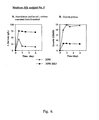
- strain SR3 and G. suboxydans IFO 3291 were evaluated with 8% sorbitol-No.5 medium in 500 ml Erlenmeyer flask (Fig. 6). Strain SR3 and G. suboxydans IFO 3291 could convert 80 g/L D-sorbitol to L-sorbose within 24 hr (data not shown). G. suboxydans IFO3291 assimilated most of the converted L-sorbose within 48 hr. On the other hand, strain SR3 hardly utilized L-sorbose until the 3rd day; the remaining L-sorbose was more than 70 g/L. Strain SR3 and G. suboxydans IFO 3291 showed OD600 (cell growth) of 6.4 and 24 after 6 days, respectively.
- strain SR3 and G. suboxydans IFO 3291 were evaluated with 2% sorbitol-SCM medium in 500 ml Erlenmeyer flask (Fig. 7). Strain SR3 and G. suboxydans IFO 3291 could convert 20 g/L D-sorbitol to L-sorbose within 12 hr. G. suboxydans IFO3291 assimilated half of the converted L-sorbose in 23 hr. On the other hand, strain SR3 hardly utilized L-sorbose. Strain SR3 and G. suboxydans IFO 3291 showed OD600 (cell growth) of 2.5 and 5.9 after 23 hr, respectively.
Landscapes
- Life Sciences & Earth Sciences (AREA)
- Chemical & Material Sciences (AREA)
- Health & Medical Sciences (AREA)
- Engineering & Computer Science (AREA)
- Genetics & Genomics (AREA)
- Zoology (AREA)
- Organic Chemistry (AREA)
- Bioinformatics & Cheminformatics (AREA)
- Wood Science & Technology (AREA)
- General Engineering & Computer Science (AREA)
- Biomedical Technology (AREA)
- Biotechnology (AREA)
- Microbiology (AREA)
- Biochemistry (AREA)
- Molecular Biology (AREA)
- General Health & Medical Sciences (AREA)
- Medicinal Chemistry (AREA)
- Crystallography & Structural Chemistry (AREA)
- Physics & Mathematics (AREA)
- Biophysics (AREA)
- Plant Pathology (AREA)
- Micro-Organisms Or Cultivation Processes Thereof (AREA)
Claims (13)
- Genetisch veränderter Mikroorganismus, der von einem Mikroorganismus der Gattung Gluconobacter oder Acetobacter abstammt, und der ein Gen enthält, das für ein Protein mit L-Sorbosereduktaseaktivität codiert, wobei dieses Gen eine stabil integrierte Mutation aufweist, wobei besagter genetisch veränderte Mikroorganismus bezüglich der Umwandlung von L-Sorbose in D-Sorbitol defizient ist und wobei die L-Sorbosereduktaseaktivität in diesem genetisch veränderten Mikroorganismus weniger als 10% der Menge der Aktivität des Wildtyp-Mikroorganismus beträgt.
- Der genetisch veränderte Mikroorganismus nach Anspruch 1, wobei dessen Gen mindestens eine Mutation mittels Disruption, Addition, Insertion, Deletion und/oder Substitution innerhalb einer Region, die für die Bildung einer aktiven L-Sorbosereduktase erforderlich ist, trägt.
- Der genetisch veränderte Mikroorganismus nach Anspruch 2, wobei die Disruption mindestens ein interferierendes DNA-Fragment ausgewählt aus der Gruppe bestehend aus einem Transposon, einer Antibiotikaresistenz-Genkassette und DNA-Sequenzen, die den Wirtsorganismus an der Bildung einer aktiven L-Sorbosereduktase hindern, enthält.
- Der genetisch veränderte Mikroorganismus nach Anspruch 2 oder 3, wobei besagte für die Bildung einer aktiven L-Sorbosereduktase erforderliche Region in der DNA-Sequenz ausgewählt aus der Gruppe bestehend aus einem Strukturgen, das für L-Sorbosereduktase codiert, und seinen Expressionskontrollsequenzen, liegt.
- Der genetisch veränderte Mikroorganismus nach einem der Ansprüche 1 bis 4, wobei das Gen, das für ein Protein mit L-Sorbosereduktaseaktivität codiert, ausgewählt ist aus der Gruppe bestehend aus SEQ ID NO:1, einem Fragment von SEQ ID NO:1, das für ein Polypeptid mit L-Sorbosereduktaseaktivität codiert, und einem Polynukleotid, das für SEQ ID NO:2 codiert.
- Verwendung eines L-Sorbosereduktasegens für die Erzeugung eines genetisch veränderten Mikroorganismus der Gattung Gluconobacter oder Acetobacter nach einem der Ansprüche 1 bis 5, wobei besagtes Gen dadurch gekennzeichnet ist, daß es für die Aminosäuresequenz der in SEQ ID NO:2 beschriebenen L-Sorbosereduktase oder ihr funktionelles Äquivalent, das eine Insertion, Deletion, Addition und/oder Substitution von einer oder mehreren Aminosäure(n) in dieser SEQ ID NO:2 enthält, codiert.
- Verfahren zur Herstellung von L-Sorbose durch Fermentation eines Mikroorganismus in einem entsprechenden Medium, umfassend die Verwendung von besagtem, in Ansprüchen 1 bis 5 definierten, genetisch verändertem Mikroorganismus.
- Verfahren zur Herstellung von Vitamin C, umfassend einen Fermentationsschritt für die Herstellung von L-Sorbose, dadurch gekennzeichnet, daß das Verfahren die Verwendung eines, in ein in einem der Ansprüche 1 bis 5 definierten, genetisch veränderten Mikroorganismus umfasst.
- Verfahren zur Herstellung eines genetisch veränderten Mikroorganismus nach Anspruch 1, umfassend:(a) Bereitstellen eines Miroorganismus der Gattung Gluconobacter oder Acetobacter, der ein Gen enthält, das für ein Protein mit L-Sorbosereduktaseaktivität codiert, und(b) Einführen einer Mutation in dieses Polynukleotid, die zu einer biologischen Aktivität zur Reduktion von L-Sorbose führt, die weniger als 10% der Aktivitätsmenge des Wildtyp-Mikroorganismus beträgt.
- Verfahren zur Herstellung eines genetisch veränderten Mikroorganismus, umfassend die folgenden Schritte:(a) Bereitstellen eines Miroorganismus der Gattung Gluconobacter oder Acetobacter, der ein Gen enthält, das für ein Protein mit L-Sorbosereduktaseaktivität codiert,(b) genetisches Verändern dieses Mikroorganismus durch Einführen einer stabilen Mutation in dieses Gen,(c) Bestimmen der L-Sorbosereduktaseaktivität des Mikroorganismus, der das in Schritt (b) erhaltene mutierte Gen enthält,(d) Selektieren eines Mikroorganismus basierend auf Schritt (c), in dem die L-Sorbosereduktaseaktivität weniger als 10% des Wildtyp-Organismus beträgt.
- Verfahren nach Anspruch 9 oder 10, wobei der Mikroorganismus durch Gendisruption, -addition, -insertion, -deletion und/oder -substitution innerhalb einer Region, die für die Bildung einer aktiven L-Sorbosereduktase erforderlich ist, genetisch verändert wird.
- Verfahren nach einem der Ansprüche 9 bis 11, wobei das Gen, das für die L-Sorbosereduktase codiert, ausgewählt ist aus der Gruppe bestehend aus SEQ ID NO:1, einem Fragment von SEQ ID NO:1, das für ein Polypeptid mit L-Sorbosereduktaseaktivität codiert, und einem Polynukleotid, das für SEQ ID NO:2 codiert.
- Verfahren zur Herstellung von L-Sorbose oder Vitamin C, umfassend einen Fermentationsschritt für die Herstellung von L-Sorbose in einem entsprechenden Medium mit einem Mikroorganismus, der mit einem Verfahren nach einem der Ansprüche 9 bis 12 hergestellt wird.
Priority Applications (1)
| Application Number | Priority Date | Filing Date | Title |
|---|---|---|---|
| EP99104563A EP0955358B1 (de) | 1998-03-13 | 1999-03-08 | Genetisch veränderte, L-Sorbose Reduktase defiziente Mutanten |
Applications Claiming Priority (3)
| Application Number | Priority Date | Filing Date | Title |
|---|---|---|---|
| EP98104546 | 1998-03-13 | ||
| EP98104546 | 1998-03-13 | ||
| EP99104563A EP0955358B1 (de) | 1998-03-13 | 1999-03-08 | Genetisch veränderte, L-Sorbose Reduktase defiziente Mutanten |
Publications (3)
| Publication Number | Publication Date |
|---|---|
| EP0955358A2 EP0955358A2 (de) | 1999-11-10 |
| EP0955358A3 EP0955358A3 (de) | 2000-03-15 |
| EP0955358B1 true EP0955358B1 (de) | 2007-09-12 |
Family
ID=26149081
Family Applications (1)
| Application Number | Title | Priority Date | Filing Date |
|---|---|---|---|
| EP99104563A Expired - Lifetime EP0955358B1 (de) | 1998-03-13 | 1999-03-08 | Genetisch veränderte, L-Sorbose Reduktase defiziente Mutanten |
Country Status (1)
| Country | Link |
|---|---|
| EP (1) | EP0955358B1 (de) |
Cited By (1)
| Publication number | Priority date | Publication date | Assignee | Title |
|---|---|---|---|---|
| EP4488376A1 (de) | 2023-07-07 | 2025-01-08 | Annikki GmbH | Verfahren zur herstellung einer wässerigen lösung enthaltend l-sorbose |
Families Citing this family (5)
| Publication number | Priority date | Publication date | Assignee | Title |
|---|---|---|---|---|
| CN1351665A (zh) * | 1999-03-17 | 2002-05-29 | 藤泽药品工业株式会社 | 山梨糖醇脱氢酶、其编码基因及它们的用途 |
| WO2006084720A2 (en) * | 2005-02-11 | 2006-08-17 | Dsm Ip Assets B.V. | Hpr kinase from gluconobacter oxydan |
| US20080160588A1 (en) * | 2005-02-11 | 2008-07-03 | Bastian Chevreux | Alcohol Dehydrogenase Gene from Gluconobacter Oxydans |
| WO2006084701A1 (en) * | 2005-02-11 | 2006-08-17 | Dsm Ip Assets B.V. | Phosphotransferase gene from gluconobacter oxydans |
| BRPI0606935A2 (pt) * | 2005-02-11 | 2009-07-28 | Dsm Ip Assets Bv | novo gene sms 04 |
Family Cites Families (2)
| Publication number | Priority date | Publication date | Assignee | Title |
|---|---|---|---|---|
| EP0233050B1 (de) * | 1986-02-11 | 1992-09-16 | Takeda Chemical Industries, Ltd. | Verfahren zur Herstellung von L-Sorbose |
| ATE360685T1 (de) * | 1995-02-27 | 2007-05-15 | Dsm Ip Assets Bv | D-sorbitol-dehydrogenase |
-
1999
- 1999-03-08 EP EP99104563A patent/EP0955358B1/de not_active Expired - Lifetime
Non-Patent Citations (1)
| Title |
|---|
| None * |
Cited By (2)
| Publication number | Priority date | Publication date | Assignee | Title |
|---|---|---|---|---|
| EP4488376A1 (de) | 2023-07-07 | 2025-01-08 | Annikki GmbH | Verfahren zur herstellung einer wässerigen lösung enthaltend l-sorbose |
| WO2025012225A1 (de) | 2023-07-07 | 2025-01-16 | Annikki Gmbh | Verfahren zur herstellung einer wässerigen lösung enthaltend l-sorbose |
Also Published As
| Publication number | Publication date |
|---|---|
| EP0955358A2 (de) | 1999-11-10 |
| EP0955358A3 (de) | 2000-03-15 |
Similar Documents
| Publication | Publication Date | Title |
|---|---|---|
| US5082785A (en) | Biosynthesis of 2 keto-l-gulonic acid | |
| KR101558622B1 (ko) | mRNA의 안정화를 통한 표적 생성물의 증가된 제조 | |
| EP1688499B1 (de) | Alkohol-Aldehyd-Deshydrogenasen | |
| JP2012040016A (ja) | エタノール生産用の不活性化乳酸デヒドロゲナーゼ(ldh)遺伝子を有する好熱性微生物 | |
| Van Dien et al. | Reconstruction of C3 and C4 metabolism in Methylobacterium extorquens AM1 using transposon mutagenesis | |
| Hüsken et al. | High-rate 3-methylcatechol production in Pseudomonas putida strains by means of a novel expression system | |
| US6653115B1 (en) | D-sorbitol dehydrogenase gene | |
| EP0373181B1 (de) | Neue coenzym unabhängige l-sorbosone dehydrogenase | |
| US6664082B1 (en) | Genetically engineered L-sorbose reductase-deficient mutants | |
| EP0955358A2 (de) | Genetisch veränderte, L-Sorbose Reduktase defiziente Mutanten | |
| Trefzer et al. | Biocatalytic conversion of avermectin to 4 ″-oxo-avermectin: Improvement of cytochrome p450 monooxygenase specificity by directed evolution | |
| JP2008228628A (ja) | ニトリルヒドラターゼの製造方法 | |
| Schleyer et al. | An easy cloning and expression vector system for Gluconobacter oxydans | |
| US6830899B1 (en) | Method for the production of para-hydroxybenzoate in Pseudomonas mendocina | |
| HUP0104772A2 (hu) | Szubsztituált fenolok előállítására alkalmazható, termelő törzsek létrehozása az eugenol- és ferulasav-katabolizmusgénjeinek specifikus inaktiválásával | |
| MXPA99002383A (en) | Deficient mutants in l-sorbosa reductase modified geneticame | |
| EP0897984B1 (de) | D-Sorbitoldehydrogenase Gen | |
| Fukaya | Vinegar: genetic improvement of Acetobacter and Gluconobacter | |
| JP2007049932A (ja) | ハロヒドリンエポキシダーゼ活性を有するロドコッカス属細菌の形質転換体 | |
| JP4329129B2 (ja) | ビオチン生合成遺伝子を含むdna断片およびその利用 | |
| US20030175854A1 (en) | System and method for gene expression in thermus strains | |
| WO2004029250A1 (en) | Dna encoding flavin-adenine-dinucleotide-dependent-d-erythronate-4-phosphate-dehydrogenase, pdxr, and microbial production of vitamin b6 | |
| WO2010070909A1 (ja) | 5-ケトグルコン酸産生能を有する高温耐性菌、及び高温耐性菌を用いた5-ケトグルコン酸の製造方法 | |
| HK1021993B (en) | Genetically engineered l-sorbose reductase-deficient mutants | |
| Leeuwen et al. | Novel Dehalogenase Mechanism for |
Legal Events
| Date | Code | Title | Description |
|---|---|---|---|
| PUAI | Public reference made under article 153(3) epc to a published international application that has entered the european phase |
Free format text: ORIGINAL CODE: 0009012 |
|
| AK | Designated contracting states |
Kind code of ref document: A2 Designated state(s): BE CH DE DK ES FR GB IE IT LI NL SE |
|
| AX | Request for extension of the european patent |
Free format text: AL;LT;LV;MK;RO;SI |
|
| PUAL | Search report despatched |
Free format text: ORIGINAL CODE: 0009013 |
|
| AK | Designated contracting states |
Kind code of ref document: A3 Designated state(s): AT BE CH CY DE DK ES FI FR GB GR IE IT LI LU MC NL PT SE |
|
| AX | Request for extension of the european patent |
Free format text: AL;LT;LV;MK;RO;SI |
|
| 17P | Request for examination filed |
Effective date: 20000818 |
|
| AKX | Designation fees paid |
Free format text: BE CH DE DK ES FR GB IE IT LI NL SE |
|
| 17Q | First examination report despatched |
Effective date: 20031103 |
|
| RAP1 | Party data changed (applicant data changed or rights of an application transferred) |
Owner name: DSM IP ASSETS B.V. |
|
| GRAP | Despatch of communication of intention to grant a patent |
Free format text: ORIGINAL CODE: EPIDOSNIGR1 |
|
| RIC1 | Information provided on ipc code assigned before grant |
Ipc: C12N 9/04 20060101ALI20061218BHEP Ipc: C12P 19/02 20060101ALI20061218BHEP Ipc: C12P 17/04 20060101ALI20061218BHEP Ipc: C12N 1/21 20060101AFI20061218BHEP |
|
| GRAS | Grant fee paid |
Free format text: ORIGINAL CODE: EPIDOSNIGR3 |
|
| GRAA | (expected) grant |
Free format text: ORIGINAL CODE: 0009210 |
|
| AK | Designated contracting states |
Kind code of ref document: B1 Designated state(s): BE CH DE DK ES FR GB IE IT LI NL SE |
|
| REG | Reference to a national code |
Ref country code: GB Ref legal event code: FG4D |
|
| REG | Reference to a national code |
Ref country code: CH Ref legal event code: EP |
|
| REF | Corresponds to: |
Ref document number: 69937086 Country of ref document: DE Date of ref document: 20071025 Kind code of ref document: P |
|
| REG | Reference to a national code |
Ref country code: IE Ref legal event code: FG4D |
|
| ET | Fr: translation filed | ||
| PG25 | Lapsed in a contracting state [announced via postgrant information from national office to epo] |
Ref country code: CH Free format text: LAPSE BECAUSE OF FAILURE TO SUBMIT A TRANSLATION OF THE DESCRIPTION OR TO PAY THE FEE WITHIN THE PRESCRIBED TIME-LIMIT Effective date: 20070912 Ref country code: LI Free format text: LAPSE BECAUSE OF FAILURE TO SUBMIT A TRANSLATION OF THE DESCRIPTION OR TO PAY THE FEE WITHIN THE PRESCRIBED TIME-LIMIT Effective date: 20070912 |
|
| NLV1 | Nl: lapsed or annulled due to failure to fulfill the requirements of art. 29p and 29m of the patents act | ||
| PG25 | Lapsed in a contracting state [announced via postgrant information from national office to epo] |
Ref country code: BE Free format text: LAPSE BECAUSE OF FAILURE TO SUBMIT A TRANSLATION OF THE DESCRIPTION OR TO PAY THE FEE WITHIN THE PRESCRIBED TIME-LIMIT Effective date: 20070912 |
|
| REG | Reference to a national code |
Ref country code: CH Ref legal event code: PL |
|
| PG25 | Lapsed in a contracting state [announced via postgrant information from national office to epo] |
Ref country code: NL Free format text: LAPSE BECAUSE OF FAILURE TO SUBMIT A TRANSLATION OF THE DESCRIPTION OR TO PAY THE FEE WITHIN THE PRESCRIBED TIME-LIMIT Effective date: 20070912 Ref country code: ES Free format text: LAPSE BECAUSE OF FAILURE TO SUBMIT A TRANSLATION OF THE DESCRIPTION OR TO PAY THE FEE WITHIN THE PRESCRIBED TIME-LIMIT Effective date: 20071223 |
|
| PG25 | Lapsed in a contracting state [announced via postgrant information from national office to epo] |
Ref country code: SE Free format text: LAPSE BECAUSE OF FAILURE TO SUBMIT A TRANSLATION OF THE DESCRIPTION OR TO PAY THE FEE WITHIN THE PRESCRIBED TIME-LIMIT Effective date: 20071212 |
|
| PLBE | No opposition filed within time limit |
Free format text: ORIGINAL CODE: 0009261 |
|
| STAA | Information on the status of an ep patent application or granted ep patent |
Free format text: STATUS: NO OPPOSITION FILED WITHIN TIME LIMIT |
|
| PG25 | Lapsed in a contracting state [announced via postgrant information from national office to epo] |
Ref country code: DK Free format text: LAPSE BECAUSE OF FAILURE TO SUBMIT A TRANSLATION OF THE DESCRIPTION OR TO PAY THE FEE WITHIN THE PRESCRIBED TIME-LIMIT Effective date: 20070912 |
|
| PGFP | Annual fee paid to national office [announced via postgrant information from national office to epo] |
Ref country code: FR Payment date: 20080317 Year of fee payment: 10 Ref country code: DE Payment date: 20080430 Year of fee payment: 10 |
|
| 26N | No opposition filed |
Effective date: 20080613 |
|
| GBPC | Gb: european patent ceased through non-payment of renewal fee |
Effective date: 20080308 |
|
| PG25 | Lapsed in a contracting state [announced via postgrant information from national office to epo] |
Ref country code: IE Free format text: LAPSE BECAUSE OF NON-PAYMENT OF DUE FEES Effective date: 20080310 |
|
| PG25 | Lapsed in a contracting state [announced via postgrant information from national office to epo] |
Ref country code: GB Free format text: LAPSE BECAUSE OF NON-PAYMENT OF DUE FEES Effective date: 20080308 |
|
| REG | Reference to a national code |
Ref country code: FR Ref legal event code: ST Effective date: 20091130 |
|
| PG25 | Lapsed in a contracting state [announced via postgrant information from national office to epo] |
Ref country code: DE Free format text: LAPSE BECAUSE OF NON-PAYMENT OF DUE FEES Effective date: 20091001 |
|
| PG25 | Lapsed in a contracting state [announced via postgrant information from national office to epo] |
Ref country code: FR Free format text: LAPSE BECAUSE OF NON-PAYMENT OF DUE FEES Effective date: 20091123 |
|
| PG25 | Lapsed in a contracting state [announced via postgrant information from national office to epo] |
Ref country code: IT Free format text: LAPSE BECAUSE OF NON-PAYMENT OF DUE FEES Effective date: 20080331 |