EP0955366A1 - Antigenes protein aus malassezia - Google Patents
Antigenes protein aus malassezia Download PDFInfo
- Publication number
- EP0955366A1 EP0955366A1 EP96941211A EP96941211A EP0955366A1 EP 0955366 A1 EP0955366 A1 EP 0955366A1 EP 96941211 A EP96941211 A EP 96941211A EP 96941211 A EP96941211 A EP 96941211A EP 0955366 A1 EP0955366 A1 EP 0955366A1
- Authority
- EP
- European Patent Office
- Prior art keywords
- antigenic protein
- malassezia
- antigenic
- polynucleotide
- seq
- Prior art date
- Legal status (The legal status is an assumption and is not a legal conclusion. Google has not performed a legal analysis and makes no representation as to the accuracy of the status listed.)
- Granted
Links
Images











Classifications
-
- C—CHEMISTRY; METALLURGY
- C12—BIOCHEMISTRY; BEER; SPIRITS; WINE; VINEGAR; MICROBIOLOGY; ENZYMOLOGY; MUTATION OR GENETIC ENGINEERING
- C12N—MICROORGANISMS OR ENZYMES; COMPOSITIONS THEREOF; PROPAGATING, PRESERVING, OR MAINTAINING MICROORGANISMS; MUTATION OR GENETIC ENGINEERING; CULTURE MEDIA
- C12N15/00—Mutation or genetic engineering; DNA or RNA concerning genetic engineering, vectors, e.g. plasmids, or their isolation, preparation or purification; Use of hosts therefor
- C12N15/09—Recombinant DNA-technology
- C12N15/11—DNA or RNA fragments; Modified forms thereof; Non-coding nucleic acids having a biological activity
-
- A—HUMAN NECESSITIES
- A61—MEDICAL OR VETERINARY SCIENCE; HYGIENE
- A61K—PREPARATIONS FOR MEDICAL, DENTAL OR TOILETRY PURPOSES
- A61K39/00—Medicinal preparations containing antigens or antibodies
- A61K39/0002—Fungal antigens, e.g. Trichophyton, Aspergillus, Candida
-
- C—CHEMISTRY; METALLURGY
- C07—ORGANIC CHEMISTRY
- C07K—PEPTIDES
- C07K14/00—Peptides having more than 20 amino acids; Gastrins; Somatostatins; Melanotropins; Derivatives thereof
- C07K14/37—Peptides having more than 20 amino acids; Gastrins; Somatostatins; Melanotropins; Derivatives thereof from fungi
-
- C—CHEMISTRY; METALLURGY
- C07—ORGANIC CHEMISTRY
- C07K—PEPTIDES
- C07K16/00—Immunoglobulins [IG], e.g. monoclonal or polyclonal antibodies
- C07K16/14—Immunoglobulins [IG], e.g. monoclonal or polyclonal antibodies against material from fungi, algea or lichens
-
- C—CHEMISTRY; METALLURGY
- C12—BIOCHEMISTRY; BEER; SPIRITS; WINE; VINEGAR; MICROBIOLOGY; ENZYMOLOGY; MUTATION OR GENETIC ENGINEERING
- C12P—FERMENTATION OR ENZYME-USING PROCESSES TO SYNTHESISE A DESIRED CHEMICAL COMPOUND OR COMPOSITION OR TO SEPARATE OPTICAL ISOMERS FROM A RACEMIC MIXTURE
- C12P21/00—Preparation of peptides or proteins
-
- C—CHEMISTRY; METALLURGY
- C12—BIOCHEMISTRY; BEER; SPIRITS; WINE; VINEGAR; MICROBIOLOGY; ENZYMOLOGY; MUTATION OR GENETIC ENGINEERING
- C12Q—MEASURING OR TESTING PROCESSES INVOLVING ENZYMES, NUCLEIC ACIDS OR MICROORGANISMS; COMPOSITIONS OR TEST PAPERS THEREFOR; PROCESSES OF PREPARING SUCH COMPOSITIONS; CONDITION-RESPONSIVE CONTROL IN MICROBIOLOGICAL OR ENZYMOLOGICAL PROCESSES
- C12Q1/00—Measuring or testing processes involving enzymes, nucleic acids or microorganisms; Compositions therefor; Processes of preparing such compositions
- C12Q1/68—Measuring or testing processes involving enzymes, nucleic acids or microorganisms; Compositions therefor; Processes of preparing such compositions involving nucleic acids
-
- A—HUMAN NECESSITIES
- A61—MEDICAL OR VETERINARY SCIENCE; HYGIENE
- A61K—PREPARATIONS FOR MEDICAL, DENTAL OR TOILETRY PURPOSES
- A61K38/00—Medicinal preparations containing peptides
-
- A—HUMAN NECESSITIES
- A61—MEDICAL OR VETERINARY SCIENCE; HYGIENE
- A61K—PREPARATIONS FOR MEDICAL, DENTAL OR TOILETRY PURPOSES
- A61K39/00—Medicinal preparations containing antigens or antibodies
-
- Y—GENERAL TAGGING OF NEW TECHNOLOGICAL DEVELOPMENTS; GENERAL TAGGING OF CROSS-SECTIONAL TECHNOLOGIES SPANNING OVER SEVERAL SECTIONS OF THE IPC; TECHNICAL SUBJECTS COVERED BY FORMER USPC CROSS-REFERENCE ART COLLECTIONS [XRACs] AND DIGESTS
- Y10—TECHNICAL SUBJECTS COVERED BY FORMER USPC
- Y10S—TECHNICAL SUBJECTS COVERED BY FORMER USPC CROSS-REFERENCE ART COLLECTIONS [XRACs] AND DIGESTS
- Y10S530/00—Chemistry: natural resins or derivatives; peptides or proteins; lignins or reaction products thereof
- Y10S530/855—Proteins from animals other than mammals or birds
- Y10S530/858—Proteins from animals other than mammals or birds insects; venom
Definitions
- Usable therapies for allergoses include antihistaminics, steroidal anti-inflammatory drugs, and mediator release suppressors, and the therapy of hyposensitization using a diagnostically specified antigen serves excellently. It should be noted, however, that the currently available method of therapy of hyposensitization requires an antigen solution to be intracutaneously administered little by little once or twice each week for three to four months over which period the starting dose is escalated to a maintenance dose, which is then maintained for one to three years. If dose escalation is easy, it can be expected that excellent therapeutic effects can be obtained. However, grave side reactions can occur because of the above uncertain potency of the antigen used, and because of the presence of various impurity substances therein, thereby greatly limiting its use of the antigen.
- Another embodiment of the present invention relates to a diagnostic agent for Malassezia allergoses or Malassezia infectious diseases, characterized in that the diagnostic agent includes, as an active ingredient, the isolated and purified antigenic protein or antigenic fragments thereof of the present invention, or the recombinant Malassezia antigenic protein or antigenic fragments thereof of the present invention.
- the strain which can be used in order to obtain the purified, antigenic protein of the present invention may be any strain, as long as the strain belongs to the genus Malassezia , and is exemplified, for instance, by M. furfur ( Malassezia furfur ) TIMM2782.
- the above strain is identified as Malassezia furfur TIMM2782 and deposited with an accession number FERM BP-5611 with National Institute of Bioscience and Human-Technology, Agency of Industrial Science and Technology, which is addressed at 1-3, Higashi 1-chome, Tsukuba-shi, Ibaraki-ken, Japan, zip code: 305; date of original deposit: September 12, 1995; and date of transfer request to the International Deposit: July 29, 1996.
- the antigenic fragment of the present invention is an antigenic fragment derived from the purified, antigenic protein, characterized in that the antigenic protein has an antigenic epitope contained in the above-described purified, antigenic protein.
- the antigenic fragments are exemplified by, for instance, antigenic fragments derived from purified, antigenic protein containing at least one antigenic epitope contained in MF-1, MF-2, MF-3, MF-4, MF-5, MF-6, MF-7, MF-8, MF-9, MF-10, MF-11, MF-12, MF-13, and the like, among which preference is given to those containing at least one T cell epitope or B cell epitope.
- the antigenic fragments of the present invention include fragments derived from the purified, antigenic protein of Malassezia .
- the fragments cause immune responses in mammals, especially in humans, for instance, minimum levels of stimulation of IgE production, IgE binding, induction of IgG and IgM antibody production, and T cell proliferation, and/or lymphokine secretion, and/or induction of T cell anergy.
- the antigenicity of the antigenic fragment of the present invention can also be assessed in in vitro tests, such as RAST method, ELISA method, and histamine release tests, as well as in skin tests and intracutaneous tests to human volunteers.
- an isolated and purified, antigenic protein, a starting material is enzymatically digested with a protease, such as lysylendopeptidase or trypsin, or cleaved by chemical treatment with agents such as cyanogen bromide, after which a fragment having a desired antigenicity is isolated and purified by known methods of protein purification. It is also possible to express and prepare the desired antigenic fragment using a portion of the gene encoding an antigenic protein derived from Malassezia . Further, it can be also prepared by chemical synthesis utilizing peptide synthesis technology based on information on the chemical structure of the antigenic fragment.
- a protease such as lysylendopeptidase or trypsin
- agents such as cyanogen bromide
- the isolated and purified, antigenic protein from Malassezia of the present invention can be isolated by fractionating a crude antigen prepared from Malassezia cells as a starting material by an appropriate combination of effective separation methods using ion exchange chromatography, chelate resin chromatography, hydrophobic chromatography, gel filtration chromatography, and the like, then measuring the binding of each fraction with an IgE antibody of patient sera by RAST method, immunoblotting, and the like, to search for a protein that binds to the IgE antibody in the allergic patient sera, or to search for a protein that induces immune responses, including activation of T cell response, T cell anergy, and the like, by various methods using patient lymphocytes.
- This method comprises centrifuging a cell disruption extract of cultured M. furfur ( Malassezia furfur ) TIMM 2782 cells, lyophilizing the resulting supernatant, and thereafter subjecting the lyophilized product to anionic exchange chromatography (for instance, DEAE-cellulose column chromatography) to obtain a fraction eluted with 0.1 M NaCl; concentrating the resulting eluted fraction using an ultrafiltration membrane (MW 10,000), and thereafter subjecting the resulting concentrate to gel filtration chromatography (for instance, Sephacryl S-200HR column chromatography) to obtain a fraction eluted at molecular weights of 30,000 to 50,000; concentrating the resulting eluted fraction using an ultrafiltration membrane (MW 10,000), and thereafter subjecting the resulting concentrate to gel filtration chromatography (for instance, Sephadex G-75 Superfine column chromatography) to obtain a fraction eluted at a molecular weight of about 40,000; subjecting the resulting eluted fraction to zinc chelating
- the present invention provides a diagnostic agent for allergoses or infectious diseases of which causative microorganisms are Malassezia fungi, using an isolated and purified, antigenic protein from Malassezia or an antigenic fragment having at least one antigenic epitope derived from the antigenic protein.
- the present invention provides a therapeutic drug for allergoses of which causative microorganisms are Malassezia fungi, including, as an active ingredient, an isolated and purified, antigenic protein from Malassezia or an antigenic fragment having at least one antigenic epitope.
- the therapeutic drug of the present invention for allergoses can be administered via ordinary pathways, including, for instance, oral, intracutaneous, subcutaneous, intramuscular, and intraperitoneal pathways. Further, it can be used as percutaneous or transmucosal drugs, such as troches, sublingual tablets, eyedrops, intranasal sprays, poultices, creams, and lotions. Regarding the dosage and administration frequency of the therapeutic drug of the present invention for allergoses, the therapeutic drug can be suitably administered at a selected dose in a range of about not more than 20 mg per administration for an adult, depending on administration pathways, symptoms, and the like, and about once every week.
- a tag group may be added to the peptide chain to facilitate the purification of the recombinant antigenic protein of the present invention or to increase its solubility.
- An example of the tag group includes polyhistidine, which can be purified by metal affinity chromatography. Additionally, if necessary, an endoprotease-specific recognition site may be introduced between the tag group and the desired peptide, and the resulting peptide is then treated with the protease, to facilitate the isolation of the peptide free of undesirable sequences.
- an endoprotease recognition site may be prepared between two regions each containing at least one T cell epitope by the above-described recombination technique or synthesis.
- polynucleotides encoding the recombinant Malassezia antigenic protein, wherein the polynucleotide results from at least one of deletion, addition, insertion or substitution of one or more bases in the base sequence having an entire or partial sequence of the base sequence as shown by any one of SEQ ID NOs:1 to 7 in Sequence Listing.
- polynucleotides capable of hybridizing to the polynucleotide wherein the polynucleotides each encodes an antigenic protein having Malassezia allergen activity.
- the polynucleotide encoding a recombinant Malassezia antigenic protein can be obtained by a method as described below. It is possible to determine the N-terminal amino acid sequence or internal amino acid sequence of a Malassezia antigenic protein purified by a combination of various ordinary chromatographies, or that of a Malassezia antigenic protein purified by one-dimensional or two-dimensional electrophoresis.
- An oligonucleotide capable of encoding these amino acid sequences is synthesized and purified. Since one kind of amino acid is usually encoded by a number of codons, this oligonucleotide is a mixture prepared in consideration of all these codons.
- PCR is carried out to yield a polynucleotide of the present invention encoding the Malassezia antigenic protein, using this oligonucleotide and oligo(dT) as primers, and a cDNA synthesized from a total RNA or a genomic DNA extracted and purified from Malassezia fungi as a template. Oligonucleotides corresponding to two portions of an amino acid sequence for the antigenic protein may be used as primers for PCR, and PCR may be repeated in cases when the cDNA is not amplified by carrying out PCR once.
- the antigenic fragment of the present invention is also characterized in that the antigenic fragment binds to the IgE antibody at a substantially low level as compared to an antigenic protein from Malassezia .
- the antigenic fragment of the present invention is still also characterized in that the antigenic fragment has a lower activity of activation of IgE-mediated immune response than that of the antigenic protein.
- the present invention provides a synthetic oligonucleotide probe and a synthetic oligonucleotide primer capable of hybridizing to the polynucleotide of the present invention.
- probes or primers containing an entire or partial sequence of the base sequences as shown by any one of SEQ ID NOs:1 to 7.
- the gene encoding proteins having equivalent functions can be isolated by hybridization method using the probe.
- This probe is prepared by, for instance, inserting the above gene or fragments thereof into an appropriate vector; introducing the vector into E.
- the therapeutic drug of the present invention for allergoses is used as a hyposensitization therapeutic drug, it can be used alone, or in the form of a combination drug containing commonly used adjuvants and various additives, such as stabilizers, excipients, dissolution aids, emulsifiers, buffers, soothing agents, preservatives, and coloring agents, which are added by conventional methods as occasion demands.
- a purified, recombinant antigenic protein in the powder form is dissolved in a phenol-supplemented physiological saline and used for a stock solution of an antigen for hyposensitization treatment.
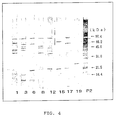
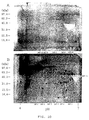
- each fraction was subjected to SDS-PAGE, and it was then transferred onto a nitrocellulose membrane, blocked with 3% bovine serum albumin (BSA), and treated with pooled sera from patients. Thereafter, the fraction was reacted with a diluted alkaline phosphatase-labeled goat anti-human IgE antiserum, and an enzyme substrate was then added, followed by detection of allergenic protein.
- BSA bovine serum albumin
- the antigenic protein-containing fraction obtained was concentrated using an ultrafiltration membrane (MW 10,000), and the resulting concentrate was then subjected to gel filtration chromatography using the Sephadex G-75 Superfine column (1.5 x 100 cm) to obtain a fraction eluted at a molecular weight of about 40,000.
- the gel filtration product obtained was further subjected to ion exchange chromatography using a column of Mono Q PC 1.6/5, and elution was carried out in the same manner as above to isolate antigenic proteins.
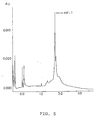
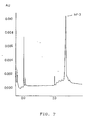
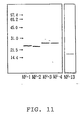
- MF-1 was isolated from Peak 2 ( Figure 5); MF-2 was isolated from Peak 1 (Figure 6); MF-3 was isolated from Peak 3 ( Figure 7); and MF-4 was isolated from Peak 4 ( Figure 8).
- the column was washed with the same buffer followed by elution at buffers pH decreasing levels of 7.0, 6.0, 5.0, and 4.0.
- the fraction eluted with the pH 5.0 buffer was collected and concentrated, and the concentrate was then further purified by chromatography using the Sephadex G-75 Superfine column (1.5 x 100 cm), to thereby isolate MF-2.
- the fraction eluted at pH 4.0 was concentrated using an ultrafiltration membrane (MW 10,000), and the concentrate was then further purified by chromatography using the above-mentioned Sephadex G-75 Superfine column, to give MF-1 fraction eluted at a molecular weight of about 40,000.
- the resulting effluent fraction was concentrated using an ultrafiltration membrane (MW 10,000), and the concentrate was then purified by chromatography using the above-mentioned Sephadex G-75 Superfine column, to give a fraction eluted at a molecular weight of about 40,000. Thereafter, the eluted fraction was purified by anion exchange column chromatography of Mono Q, to isolate MF-3 and MF-4.
- cell fusion was carried out by taking out splenocytes and mixing with myeloma cells (P3X63-Ag8.653) in a 4:1 ratio, and then adding 43% polyethylene glycol 2000 thereto. This mixture was sown into 96-well microplate wells at 2 x 10 5 splenocytes/well, and hybridomas were proliferated in an HAT medium selectively. The presence of the desired antibody produced was examined by ELISA using the culture supernatant to select antibody-producing cells.
- the 5B4 strain (FERM BP-5608) was obtained as a clone of a hybridoma that produces the M-40 monoclonal antibody against the purified antigenic protein MF-1;
- the 8G11 strain (FERM BP-5609) was obtained as a clone of a hybridoma that produces the M-3 monoclonal antibody against the purified antigenic protein MF-2;
- the 10C1 strain (FERM BP-5610) was obtained as a clone of a hybridoma that produces the M-1 monoclonal antibody against the purified antigenic protein MF-3.
- the resin obtained was transferred into a lesser column of 5 ml capacity.
- a solution of 40 mg of the Malassezia partially purified crude antigen 2782 in a 0.05 M Tris-HCl buffer (pH 8.0) was applied to the column. After the column was thoroughly washed with a 0.1 M Tris-HCl buffer (pH 8.0), elution of the antibody-bound antigenic protein was carried out with a 0.1 M glycine-HCl buffer (pH 2.5).
- the eluate was immediately made neutral again by the addition of a 1 M Tris-HCl buffer (pH 8.0), and the neutralized eluate was then concentrated using an ultrafiltration membrane (MW 10,000), followed by gel filtration chromatography using the Sephadex G-75 Superfine column (1.5 x 100 cm) in the same manner as above, to isolate about 300 ⁇ g of MF-3 of high purity.
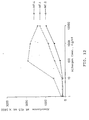
- the purified antigenic protein MF-3 was stepwise diluted, and its antigen potency was determined by ELISA. Specifically, after applying each dilution of the purified antigenic protein MF-3 to a microplate, the microplate was washed with a physiological saline containing 0.01% Tween 20, blocked with PBS containing 3% BSA, washed with a physiological saline containing 0.01% Tween 20, and then pooled sera were added. The microplate was kept standing at 37°C for 2 hours, and a secondary antibody, a peroxidase-labeled goat anti-human IgE antiserum was added, and subsequently a substrate solution was added; after color development, absorbance at 450 nm was determined. The results are shown in Figure 13.
- the purified antigenic protein MF-2 (0.04 mg) was dissolved in 200 ⁇ l of a borate-buffered saline (pH 8.0). To this solution were added 800 ⁇ l of 5 M guanidine hydrochloride, 1 ⁇ l of 4-vinylpyridine, and 2 ⁇ l of tributyl phosphine.
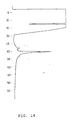
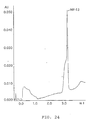
- the antigenic fragments that were bound to patient serum IgE were present in peaks eluted around 20.02, 21.41, and 24.07 minutes. Of these peaks, the 21.41-minute peak was found to contain a peptide having an amino acid sequence consisting of HHQTYVNNLNAAXK (SEQ ID NO:58, wherein X is an undetermined amino acid).
- the ratio of the amount of the 3 H-thymidine uptake of the antigen-added and non-added groups was expressed as the SI (stimulation index).
- SI stimulation index
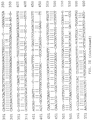
- MF-2 is a protein having the partial amino acid sequence of SEQ ID NO:48 homologous to a peroxisome membrane protein (PMP-20) derived from Candida boidinii
- MF-3 is a protein having the above partial amino acid sequence homologous to iron/manganese-superoxide dismutase
- MF-4 is a protein having the above N-terminal amino acid sequence homologous to iron/manganese-superoxide dismutase in the same manner as in MF-3.
- Plaque hybridization was carried out using the MF-3 cDNA fragment with about 380 bp as shown by SEQ ID NO:25 obtained in Example 13-a) as a probe according to the method described in Example 11-d).
- Six clones with strong signals out of positive clones were subjected to further analysis. Specifically, E. coli cells harbouring the plasmid which has a region containing an MF-3 cDNA were obtained from these phages by automatic subcloning in E. coli.
- the plasmids were purified from these E. coli cells, and pMF3-1, which contained the longest fragment with about 750 bp cDNA, was selected, and the base sequence of the cDNA was then determined.
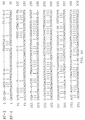
- the base sequence is shown by SEQ ID NO:3 in Sequence Listing, and the MF-3 gene encodes a polypeptide having an amino acid sequence as shown by SEQ ID NO:10 in Sequence Listing.
- An MF-5 cDNA fragment was amplified by carrying out RT-PCR according to the method described in Example 11-b). MF5F1 and M13M4 primers were used in the first PCR reaction, and MF5F1 and MF5R2 primers were used in the second PCR reaction. As a result of the PCR reaction, a cDNA fragment with about 900 bp in length was amplified.
- the base sequence of the cDNA fragment amplified is shown by SEQ ID NO:32 in Sequence Listing. The amino acid sequence deduced from SEQ ID NO:32 was identical to the amino acid sequence determined from the MF-5 protein. Therefore, it is clearly demonstrated that this cDNA fragment is an MF-5 gene.
- Plaque hybridization was carried out using the MF-5 cDNA fragment with about 900 bp as shown by SEQ ID NO:32 obtained in Example 15-a) as a probe according to the method described in Example 11-d). Twelve clones with strong signals out of positive clones were subjected to further analysis. Specifically, E. coli cells harbouring the plasmid which has a region containing an MF-5 cDNA were obtained from these phages by automatic subcloning in E. coli . The plasmids were purified from these E. coli cells, and pMF5-6 and pMF5-7, which contained the longest fragment with about 1.6 kbp cDNA, was selected, and the base sequence of the cDNA was then determined.
- oligonucleotide mixtures MF7F1 and MF7F2 deduced from the N-terminal amino acid sequence of the MF-7 protein described in Example 10 were synthesized and purified to be used as primers for PCR.
- the base sequences of MF7F1 and MF7F2 are shown by SEQ ID NOs:39 and 40 in Sequence Listing, respectively.
- An MF-7 cDNA fragment was amplified by carrying out RT-PCR according to the method described in Example 11-b). MF7F1 and M13M4 primers were used in the first PCR reaction, and MF7F2 and M13M4 primers were used in the second PCR reaction.
- a cDNA fragment with about 0.4 kbp in length was amplified.
- the amplified cDNA fragment was cloned into a pUC118 vector.
- the base sequence of the cDNA fragment amplified is shown by SEQ ID NO:41 in Sequence Listing.
- the amino acid sequence deduced from SEQ ID NO:41 was nearly identical to the amino acid sequence determined from the MF-7 protein described in Example 10. Therefore, it is clearly demonstrated that this cDNA fragment is an MF-7 gene.
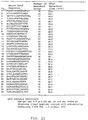
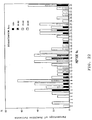
- AD atopic dermatitis
- BA bronchial asthma
- AD+BA both complications
Landscapes
- Chemical & Material Sciences (AREA)
- Life Sciences & Earth Sciences (AREA)
- Health & Medical Sciences (AREA)
- Organic Chemistry (AREA)
- Genetics & Genomics (AREA)
- General Health & Medical Sciences (AREA)
- Molecular Biology (AREA)
- Engineering & Computer Science (AREA)
- Biochemistry (AREA)
- Medicinal Chemistry (AREA)
- Biophysics (AREA)
- Proteomics, Peptides & Aminoacids (AREA)
- Mycology (AREA)
- Zoology (AREA)
- Wood Science & Technology (AREA)
- Immunology (AREA)
- Microbiology (AREA)
- Biotechnology (AREA)
- General Engineering & Computer Science (AREA)
- Bioinformatics & Cheminformatics (AREA)
- Biomedical Technology (AREA)
- Gastroenterology & Hepatology (AREA)
- Public Health (AREA)
- Veterinary Medicine (AREA)
- Pharmacology & Pharmacy (AREA)
- Epidemiology (AREA)
- Animal Behavior & Ethology (AREA)
- Physics & Mathematics (AREA)
- Chemical Kinetics & Catalysis (AREA)
- Plant Pathology (AREA)
- General Chemical & Material Sciences (AREA)
- Analytical Chemistry (AREA)
- Peptides Or Proteins (AREA)
- Medicines Containing Antibodies Or Antigens For Use As Internal Diagnostic Agents (AREA)
- Preparation Of Compounds By Using Micro-Organisms (AREA)
- Pharmaceuticals Containing Other Organic And Inorganic Compounds (AREA)
- Measuring Or Testing Involving Enzymes Or Micro-Organisms (AREA)
Priority Applications (1)
| Application Number | Priority Date | Filing Date | Title |
|---|---|---|---|
| EP06018603A EP1792992A1 (de) | 1995-12-12 | 1996-12-10 | Antigenes Protein aus Malassezia |
Applications Claiming Priority (7)
| Application Number | Priority Date | Filing Date | Title |
|---|---|---|---|
| JP34662795 | 1995-12-12 | ||
| JP34662795 | 1995-12-12 | ||
| JP25761296 | 1996-09-05 | ||
| JP25761396 | 1996-09-05 | ||
| JP8257612A JPH09221498A (ja) | 1995-12-12 | 1996-09-05 | マラセチア由来の抗原性蛋白質 |
| JP8257613A JPH1077296A (ja) | 1996-09-05 | 1996-09-05 | 組換えマラセチア抗原性蛋白質並びにその遺伝子 |
| PCT/JP1996/003602 WO1997021817A1 (en) | 1995-12-12 | 1996-12-10 | Antigenic protein originating in malassezia |
Related Child Applications (1)
| Application Number | Title | Priority Date | Filing Date |
|---|---|---|---|
| EP06018603A Division EP1792992A1 (de) | 1995-12-12 | 1996-12-10 | Antigenes Protein aus Malassezia |
Publications (3)
| Publication Number | Publication Date |
|---|---|
| EP0955366A1 true EP0955366A1 (de) | 1999-11-10 |
| EP0955366A4 EP0955366A4 (de) | 2002-08-14 |
| EP0955366B1 EP0955366B1 (de) | 2006-09-06 |
Family
ID=27334643
Family Applications (2)
| Application Number | Title | Priority Date | Filing Date |
|---|---|---|---|
| EP96941211A Expired - Lifetime EP0955366B1 (de) | 1995-12-12 | 1996-12-10 | Antigenes protein aus malassezia |
| EP06018603A Withdrawn EP1792992A1 (de) | 1995-12-12 | 1996-12-10 | Antigenes Protein aus Malassezia |
Family Applications After (1)
| Application Number | Title | Priority Date | Filing Date |
|---|---|---|---|
| EP06018603A Withdrawn EP1792992A1 (de) | 1995-12-12 | 1996-12-10 | Antigenes Protein aus Malassezia |
Country Status (10)
| Country | Link |
|---|---|
| US (3) | US6432407B1 (de) |
| EP (2) | EP0955366B1 (de) |
| JP (1) | JP3990730B2 (de) |
| KR (1) | KR100465382B1 (de) |
| AT (1) | ATE338819T1 (de) |
| AU (1) | AU717150B2 (de) |
| CA (1) | CA2238278C (de) |
| DE (1) | DE69636527D1 (de) |
| TW (1) | TW565567B (de) |
| WO (1) | WO1997021817A1 (de) |
Cited By (2)
| Publication number | Priority date | Publication date | Assignee | Title |
|---|---|---|---|---|
| EP2881466A4 (de) * | 2012-06-28 | 2016-03-09 | Univ Hiroshima | Neuartiger histaminliberator in menschlichem schweiss |
| EP2886554A4 (de) * | 2012-08-17 | 2016-09-07 | Univ Hiroshima | An schweissallergie-antigenprotein bindender monoklonaler ige-antikörper |
Families Citing this family (8)
| Publication number | Priority date | Publication date | Assignee | Title |
|---|---|---|---|---|
| EP0955366B1 (de) * | 1995-12-12 | 2006-09-06 | Takara Bio Inc. | Antigenes protein aus malassezia |
| DE69738525T2 (de) * | 1996-09-04 | 2009-02-19 | Takara Bio Inc., Otsu | Pilz-antigene und verfahren zu deren herstellung |
| CN1140801C (zh) * | 2000-03-01 | 2004-03-03 | 胡军 | 检测血液中淋巴细胞对特定抗原反应性的方法 |
| PT103510B (pt) * | 2006-06-27 | 2009-07-21 | Inst Nac De Saude Dr Ricardo J | Utilização da fasciolina (fh8) e/ou de seus derivados na detecção de hospedeiros infectados por fasciola hepática por intradermoreacção |
| DK2214656T3 (en) * | 2007-10-26 | 2019-03-25 | Avivagen Inc | COMPOSITIONS AND PROCEDURES TO ENHANCE IMMUNE RESPONSE |
| US9295816B2 (en) * | 2009-12-09 | 2016-03-29 | Osprey Medical, Inc. | Catheter with distal and proximal ports |
| AU2019362384B2 (en) | 2018-10-18 | 2025-01-16 | Basf Se | Process for producing ammonium (METH-) acrylate |
| WO2021204850A1 (en) | 2020-04-09 | 2021-10-14 | Basf Se | Biocatalytic synthesis of monomer mixtures for polyacrylamide manufacturing |
Family Cites Families (1)
| Publication number | Priority date | Publication date | Assignee | Title |
|---|---|---|---|---|
| EP0955366B1 (de) * | 1995-12-12 | 2006-09-06 | Takara Bio Inc. | Antigenes protein aus malassezia |
-
1996
- 1996-12-10 EP EP96941211A patent/EP0955366B1/de not_active Expired - Lifetime
- 1996-12-10 JP JP52192697A patent/JP3990730B2/ja not_active Expired - Fee Related
- 1996-12-10 WO PCT/JP1996/003602 patent/WO1997021817A1/ja not_active Ceased
- 1996-12-10 AT AT96941211T patent/ATE338819T1/de not_active IP Right Cessation
- 1996-12-10 DE DE69636527T patent/DE69636527D1/de not_active Expired - Lifetime
- 1996-12-10 KR KR10-1998-0704249A patent/KR100465382B1/ko not_active Expired - Fee Related
- 1996-12-10 CA CA002238278A patent/CA2238278C/en not_active Expired - Fee Related
- 1996-12-10 AU AU10413/97A patent/AU717150B2/en not_active Ceased
- 1996-12-10 US US09/091,097 patent/US6432407B1/en not_active Expired - Fee Related
- 1996-12-10 EP EP06018603A patent/EP1792992A1/de not_active Withdrawn
- 1996-12-12 TW TW085115374A patent/TW565567B/zh not_active IP Right Cessation
-
2002
- 2002-04-01 US US10/109,670 patent/US6911208B2/en not_active Expired - Fee Related
-
2005
- 2005-04-28 US US11/116,371 patent/US7491405B2/en not_active Expired - Fee Related
Non-Patent Citations (8)
| Title |
|---|
| HALLEWELL R A ET AL: "SEQUENCE OF A CDNA CODING FOR MOUSE MANGANESE SUPEROXIDE DISMUTASE" NUCLEIC ACIDS RESEARCH, OXFORD UNIVERSITY PRESS, SURREY, GB, vol. 23, no. 14, 9 December 1986 (1986-12-09), page 9539 XP001057377 ISSN: 0305-1048 * |
| JOHANSSON S ET AL: "IGE-BINDING COMPONENTS IN PITYROSPORUM-ORBICULARE IDENTIFIED BY AN IMMUNOBLOTTING TECHNIQUE" ACTA DERMATO-VENEREOLOGICA, vol. 71, no. 1, 1991, pages 11-16, XP001022790 ISSN: 0001-5555 * |
| LINDBLOM L ET AL: "Cloning and sequencing of the cDNA encoding the Pityrosporum orbiculare 37 kDa major allergen." JOURNAL OF ALLERGY AND CLINICAL IMMUNOLOGY, vol. 97, no. 1 PART 3, 1996, page 374 XP001034009 Fifty-second Annual Meeting of the American Academy of Allergy Asthma and Immunology;New Orleans, Louisiana, USA; March 15-20, 1996 ISSN: 0091-6749 * |
| MENENDEZ M CARMEN ET AL: "Cloning and expression of the Mycobacterium fortuitum superoxide dismutase gene." FEMS MICROBIOLOGY LETTERS, vol. 134, no. 2-3, 1995, pages 273-278, XP001063033 ISSN: 0378-1097 * |
| See also references of WO9721817A1 * |
| SENTANDREU M ET AL: "Cloning of cDNA coding for Candida albicans cell surface proteins." JOURNAL OF MEDICAL & VETERINARY MYCOLOGY, vol. 33, no. 2, 1995, pages 105-111, XP001022554 ISSN: 0268-1218 * |
| YASUEDA HIROSHI ET AL: "Identification and cloning of two novel allergens from the lipophilic yeast, Malassezia furfur." BIOCHEMICAL AND BIOPHYSICAL RESEARCH COMMUNICATIONS, vol. 248, no. 2, 20 July 1998 (1998-07-20), pages 240-244, XP002184076 ISSN: 0006-291X * |
| ZARGARI A ET AL: "Identification of allergen components of the opportunistic yeast Pityrosporum orbiculare by monoclonal antibodies." ALLERGY (COPENHAGEN), vol. 49, no. 1, 1994, pages 50-56, XP001022533 ISSN: 0105-4538 * |
Cited By (5)
| Publication number | Priority date | Publication date | Assignee | Title |
|---|---|---|---|---|
| EP2881466A4 (de) * | 2012-06-28 | 2016-03-09 | Univ Hiroshima | Neuartiger histaminliberator in menschlichem schweiss |
| US9457071B2 (en) | 2012-06-28 | 2016-10-04 | Hiroshima University | Histamine releaser contained in human sweat |
| US9709576B2 (en) | 2012-06-28 | 2017-07-18 | Hiroshima University | Histamine releaser contained in human sweat |
| EP2886554A4 (de) * | 2012-08-17 | 2016-09-07 | Univ Hiroshima | An schweissallergie-antigenprotein bindender monoklonaler ige-antikörper |
| US9989538B2 (en) | 2012-08-17 | 2018-06-05 | Hiroshima University | Monoclonal IgE antibody that binds to sweat allergy antigen protein |
Also Published As
| Publication number | Publication date |
|---|---|
| EP0955366B1 (de) | 2006-09-06 |
| JP3990730B2 (ja) | 2007-10-17 |
| US6432407B1 (en) | 2002-08-13 |
| US20030105283A1 (en) | 2003-06-05 |
| TW565567B (en) | 2003-12-11 |
| US20080069829A1 (en) | 2008-03-20 |
| AU717150B2 (en) | 2000-03-16 |
| CA2238278A1 (en) | 1997-06-19 |
| ATE338819T1 (de) | 2006-09-15 |
| KR100465382B1 (ko) | 2005-04-14 |
| EP0955366A4 (de) | 2002-08-14 |
| KR19990071959A (ko) | 1999-09-27 |
| AU1041397A (en) | 1997-07-03 |
| US6911208B2 (en) | 2005-06-28 |
| CA2238278C (en) | 2009-03-03 |
| DE69636527D1 (de) | 2006-10-19 |
| WO1997021817A1 (en) | 1997-06-19 |
| EP1792992A1 (de) | 2007-06-06 |
| US7491405B2 (en) | 2009-02-17 |
Similar Documents
| Publication | Publication Date | Title |
|---|---|---|
| US7547440B2 (en) | T-cell epitope peptides | |
| WO1994004676A1 (en) | Stress protein epitopes | |
| CA2639051A1 (en) | Fungal antigens and process for producing the same | |
| US7491405B2 (en) | Antigenic protein originating in Malassezia | |
| US5710126A (en) | T cell epitopes of ryegrass pollen allergen | |
| JPH05502589A (ja) | アレルギー疾患の診断および治療用のカバ花粉アレルゲンp14 | |
| EP0463059B1 (de) | Allergene proteine aus ambrosia und verwendung davon | |
| JPWO1997021817A1 (ja) | マラセチア由来の抗原性蛋白質 | |
| NZ252013A (en) | T cell receptor epitopes for short ragweed pollen | |
| Shen et al. | Molecular cloning of cDNA coding for the 68 kDa allergen of Penicillium notatum using MoAbs | |
| US5698204A (en) | Recombinant allergenic proteins from ragweed pollen | |
| US7108858B2 (en) | Non-anaphylactic forms of allergens and their use | |
| EP1104768B1 (de) | Aspergillus Fumigatus Peptidsequenzen zur Diagnose von Aspergillose | |
| KR20040004481A (ko) | Der p Ⅲ 단백질 알레르겐을 암호화하는 분리된 핵산 | |
| JP3983246B2 (ja) | マラセチア由来の抗原性蛋白質 | |
| JP4044605B2 (ja) | マラセチア由来の抗原性蛋白質 | |
| JPH09501043A (ja) | Dermatophagoides(室内塵ダニ)由来の主要アレルゲンのt細胞エピトープ | |
| JPH09221498A (ja) | マラセチア由来の抗原性蛋白質 | |
| JPH1077296A (ja) | 組換えマラセチア抗原性蛋白質並びにその遺伝子 | |
| KR100733887B1 (ko) | DerpⅢ단백질알레르겐을암호화하는분리된핵산 | |
| HUT67010A (en) | Supressor t-cell hybridoma | |
| Brodard | Lol p XI, a new major grass pollen allergen, is a member of a family of soybean trypsin inhibitor-related proteins |
Legal Events
| Date | Code | Title | Description |
|---|---|---|---|
| PUAI | Public reference made under article 153(3) epc to a published international application that has entered the european phase |
Free format text: ORIGINAL CODE: 0009012 |
|
| 17P | Request for examination filed |
Effective date: 19980710 |
|
| AK | Designated contracting states |
Kind code of ref document: A1 Designated state(s): AT BE CH DE DK ES FI FR GB GR IE IT LI LU MC NL PT SE |
|
| K1C1 | Correction of patent application (title page) published |
Effective date: 19991110 |
|
| A4 | Supplementary search report drawn up and despatched |
Effective date: 20020627 |
|
| AK | Designated contracting states |
Kind code of ref document: A4 Designated state(s): AT BE CH DE DK ES FI FR GB GR IE IT LI LU MC NL PT SE |
|
| RAP1 | Party data changed (applicant data changed or rights of an application transferred) |
Owner name: TAKARA BIO INC. |
|
| 17Q | First examination report despatched |
Effective date: 20030905 |
|
| GRAP | Despatch of communication of intention to grant a patent |
Free format text: ORIGINAL CODE: EPIDOSNIGR1 |
|
| GRAS | Grant fee paid |
Free format text: ORIGINAL CODE: EPIDOSNIGR3 |
|
| RIC1 | Information provided on ipc code assigned before grant |
Ipc: A61K 39/395 20060101ALI20060508BHEP Ipc: A61K 39/00 20060101ALI20060508BHEP Ipc: G01N 33/53 20060101ALI20060508BHEP Ipc: C12Q 1/68 20060101ALI20060508BHEP Ipc: C12P 21/08 20060101ALI20060508BHEP Ipc: C07K 16/14 20060101ALI20060508BHEP Ipc: C07K 14/37 20060101ALI20060508BHEP Ipc: C12N 15/31 20060101AFI20060508BHEP |
|
| GRAA | (expected) grant |
Free format text: ORIGINAL CODE: 0009210 |
|
| AK | Designated contracting states |
Kind code of ref document: B1 Designated state(s): AT BE CH DE DK ES FI FR GB GR IE IT LI LU MC NL PT SE |
|
| PG25 | Lapsed in a contracting state [announced via postgrant information from national office to epo] |
Ref country code: NL Free format text: LAPSE BECAUSE OF FAILURE TO SUBMIT A TRANSLATION OF THE DESCRIPTION OR TO PAY THE FEE WITHIN THE PRESCRIBED TIME-LIMIT Effective date: 20060906 Ref country code: IT Free format text: LAPSE BECAUSE OF FAILURE TO SUBMIT A TRANSLATION OF THE DESCRIPTION OR TO PAY THE FEE WITHIN THE PRE;WARNING: LAPSES OF ITALIAN PATENTS WITH EFFECTIVE DATE BEFORE 2007 MAY HAVE OCCURRED AT ANY TIME BEFORE 2007. THE CORRECT EFFECTIVE DATE MAY BE DIFFERENT FROM THE ONE RECORDED.SCRIBED TIME-LIMIT Effective date: 20060906 Ref country code: FI Free format text: LAPSE BECAUSE OF FAILURE TO SUBMIT A TRANSLATION OF THE DESCRIPTION OR TO PAY THE FEE WITHIN THE PRESCRIBED TIME-LIMIT Effective date: 20060906 Ref country code: BE Free format text: LAPSE BECAUSE OF FAILURE TO SUBMIT A TRANSLATION OF THE DESCRIPTION OR TO PAY THE FEE WITHIN THE PRESCRIBED TIME-LIMIT Effective date: 20060906 Ref country code: AT Free format text: LAPSE BECAUSE OF FAILURE TO SUBMIT A TRANSLATION OF THE DESCRIPTION OR TO PAY THE FEE WITHIN THE PRESCRIBED TIME-LIMIT Effective date: 20060906 |
|
| REG | Reference to a national code |
Ref country code: GB Ref legal event code: FG4D Free format text: NOT ENGLISH |
|
| REG | Reference to a national code |
Ref country code: GB Ref legal event code: ERR Free format text: NOTIFICATION HAS BEEN RECEIVED FROM THE EUROPEAN PATENT OFFICE THAT THE PUBLICATION LANGUAGE IS ACTUALLY ENGLISH |
|
| REG | Reference to a national code |
Ref country code: CH Ref legal event code: EP |
|
| REG | Reference to a national code |
Ref country code: IE Ref legal event code: FG4D |
|
| REF | Corresponds to: |
Ref document number: 69636527 Country of ref document: DE Date of ref document: 20061019 Kind code of ref document: P |
|
| PG25 | Lapsed in a contracting state [announced via postgrant information from national office to epo] |
Ref country code: SE Free format text: LAPSE BECAUSE OF FAILURE TO SUBMIT A TRANSLATION OF THE DESCRIPTION OR TO PAY THE FEE WITHIN THE PRESCRIBED TIME-LIMIT Effective date: 20061206 Ref country code: DK Free format text: LAPSE BECAUSE OF FAILURE TO SUBMIT A TRANSLATION OF THE DESCRIPTION OR TO PAY THE FEE WITHIN THE PRESCRIBED TIME-LIMIT Effective date: 20061206 |
|
| PG25 | Lapsed in a contracting state [announced via postgrant information from national office to epo] |
Ref country code: DE Free format text: LAPSE BECAUSE OF FAILURE TO SUBMIT A TRANSLATION OF THE DESCRIPTION OR TO PAY THE FEE WITHIN THE PRESCRIBED TIME-LIMIT Effective date: 20061207 |
|
| PG25 | Lapsed in a contracting state [announced via postgrant information from national office to epo] |
Ref country code: IE Free format text: LAPSE BECAUSE OF NON-PAYMENT OF DUE FEES Effective date: 20061211 |
|
| PG25 | Lapsed in a contracting state [announced via postgrant information from national office to epo] |
Ref country code: ES Free format text: LAPSE BECAUSE OF FAILURE TO SUBMIT A TRANSLATION OF THE DESCRIPTION OR TO PAY THE FEE WITHIN THE PRESCRIBED TIME-LIMIT Effective date: 20061217 |
|
| REG | Reference to a national code |
Ref country code: CH Ref legal event code: NV Representative=s name: VOSSIUS & PARTNER |
|
| PG25 | Lapsed in a contracting state [announced via postgrant information from national office to epo] |
Ref country code: MC Free format text: LAPSE BECAUSE OF NON-PAYMENT OF DUE FEES Effective date: 20061231 |
|
| PG25 | Lapsed in a contracting state [announced via postgrant information from national office to epo] |
Ref country code: PT Free format text: LAPSE BECAUSE OF FAILURE TO SUBMIT A TRANSLATION OF THE DESCRIPTION OR TO PAY THE FEE WITHIN THE PRESCRIBED TIME-LIMIT Effective date: 20070219 |
|
| NLV1 | Nl: lapsed or annulled due to failure to fulfill the requirements of art. 29p and 29m of the patents act | ||
| ET | Fr: translation filed | ||
| PLBE | No opposition filed within time limit |
Free format text: ORIGINAL CODE: 0009261 |
|
| STAA | Information on the status of an ep patent application or granted ep patent |
Free format text: STATUS: NO OPPOSITION FILED WITHIN TIME LIMIT |
|
| 26N | No opposition filed |
Effective date: 20070607 |
|
| REG | Reference to a national code |
Ref country code: CH Ref legal event code: PCAR Free format text: VOSSIUS & PARTNER;NADELBERG 3;4051 BASEL (CH) |
|
| PG25 | Lapsed in a contracting state [announced via postgrant information from national office to epo] |
Ref country code: GR Free format text: LAPSE BECAUSE OF FAILURE TO SUBMIT A TRANSLATION OF THE DESCRIPTION OR TO PAY THE FEE WITHIN THE PRESCRIBED TIME-LIMIT Effective date: 20061207 |
|
| PG25 | Lapsed in a contracting state [announced via postgrant information from national office to epo] |
Ref country code: LU Free format text: LAPSE BECAUSE OF NON-PAYMENT OF DUE FEES Effective date: 20061210 |
|
| PGFP | Annual fee paid to national office [announced via postgrant information from national office to epo] |
Ref country code: CH Payment date: 20081216 Year of fee payment: 13 |
|
| PGFP | Annual fee paid to national office [announced via postgrant information from national office to epo] |
Ref country code: FR Payment date: 20081212 Year of fee payment: 13 |
|
| PGFP | Annual fee paid to national office [announced via postgrant information from national office to epo] |
Ref country code: GB Payment date: 20081210 Year of fee payment: 13 |
|
| REG | Reference to a national code |
Ref country code: CH Ref legal event code: PL |
|
| GBPC | Gb: european patent ceased through non-payment of renewal fee |
Effective date: 20091210 |
|
| REG | Reference to a national code |
Ref country code: FR Ref legal event code: ST Effective date: 20100831 |
|
| PG25 | Lapsed in a contracting state [announced via postgrant information from national office to epo] |
Ref country code: LI Free format text: LAPSE BECAUSE OF NON-PAYMENT OF DUE FEES Effective date: 20091231 Ref country code: FR Free format text: LAPSE BECAUSE OF NON-PAYMENT OF DUE FEES Effective date: 20091231 Ref country code: CH Free format text: LAPSE BECAUSE OF NON-PAYMENT OF DUE FEES Effective date: 20091231 |
|
| PG25 | Lapsed in a contracting state [announced via postgrant information from national office to epo] |
Ref country code: GB Free format text: LAPSE BECAUSE OF NON-PAYMENT OF DUE FEES Effective date: 20091210 |