EP0955584A2 - Synchronisation rapide pour des programmes écrits dans le langage de programmation Java - Google Patents
Synchronisation rapide pour des programmes écrits dans le langage de programmation Java Download PDFInfo
- Publication number
- EP0955584A2 EP0955584A2 EP99650040A EP99650040A EP0955584A2 EP 0955584 A2 EP0955584 A2 EP 0955584A2 EP 99650040 A EP99650040 A EP 99650040A EP 99650040 A EP99650040 A EP 99650040A EP 0955584 A2 EP0955584 A2 EP 0955584A2
- Authority
- EP
- European Patent Office
- Prior art keywords
- thread
- computer
- shared object
- oid
- computer program
- Prior art date
- Legal status (The legal status is an assumption and is not a legal conclusion. Google has not performed a legal analysis and makes no representation as to the accuracy of the status listed.)
- Granted
Links
Images
Classifications
-
- G—PHYSICS
- G06—COMPUTING OR CALCULATING; COUNTING
- G06F—ELECTRIC DIGITAL DATA PROCESSING
- G06F9/00—Arrangements for program control, e.g. control units
- G06F9/06—Arrangements for program control, e.g. control units using stored programs, i.e. using an internal store of processing equipment to receive or retain programs
- G06F9/46—Multiprogramming arrangements
- G06F9/52—Program synchronisation; Mutual exclusion, e.g. by means of semaphores
Definitions
- the present invention relates, in general, to data processing, and, more particularly, to thread synchronization in JAVA language programs.
- the JAVATM (a trademark of Sun Microsystems, Inc.) programming language is an object-oriented programming language developed by Sun Microsystems, Inc., the Assignee of the present invention.
- the JAVA programming language has found success as a language and programming environment for networked applications.
- the JAVA programming language is attractive due to its many features, including standardized support for concurrent execution of program threads.
- the JAVA programming language's concurrency features are provided at both a language (syntactic) level and through a "threads" library.
- an object's methods can be declared "synchronized". Methods within a class that are declared synchronized do not run concurrently and run under control of "monitors" to ensure that variables remain in a consistent state.
- the JAVA language requires calls to the operating system (O/S) kernel to allocate thread synchronization resources. Calls to the kernel may require tens if not hundreds of instructions depending on the O/S in use. In comparison, the synchronized method itself may require only a few lines of code. As an example, a dictionary hash table method can be implemented with fewer than ten instructions, but to implement it as a synchronized method requires more than 100 instruction in a typical operating system. Hence, thread synchronization significantly adds to the execution time of many programs.
- O/S operating system
- This overhead is required in programs that make heavy use of multi-threading and depend on thread synchronization. However, this overhead is undesirable in programs that are single-threaded. Similarly, even in multithreaded programs, a large number of the threads may in fact execute correctly without the synchronization overhead. Hence, a need exists for a thread synchronization mechanism that only incurs the overhead associated with O/S thread management resource allocation only when those resources are needed.
- a preemptable thread operating system e.g., Solaris and Windows/NT
- O/S techniques and devices that enable one thread to interrupt another concurrently executing thread.
- an executing thread cannot predict whether it will continue to execute or whether it will be blocked by another thread.
- the application cannot manage thread synchronization on its own because it lacks visibility as to when threads will be blocked.
- Preemptable threads are also valuable in multiprocessing machines to efficiently distribute execution of threads across multiple processors.
- Non-preemptable multithreading is an simpler form of multithreading that supports a mode of thread execution, whereby once a thread begins to execute, it cannot be blocked by another thread. A thread may halt or block itself, yield control to other threads, or be blocked by virtue of waiting for input/output (I/O) to complete.
- I/O input/output
- Non-preemptive operating systems will likely exist in information appliances and simpler operating systems for some time. Where the O/S ensures that each thread cannot be preempted, allocation of thread synchronization resources in the O/S increases program execution time with little benefit.
- Multithreading takes advantage of parallelism inherent in (or designed into) many programs.
- legacy programs often exhibit little parallelism.
- some programs by the nature of their behavior do not exhibit a high degree of parallelism.
- These programs are slowed by having to incur the overhead associated with multithreading operating systems without reaping any benefits because of their non-parallel structure.
- each synchronized thread refers to at least one object identified by an object identification (OID) that is shared among a plurality of synchronized threads.
- OID object identification
- One of the synchronized threads is selected for execution.
- an entry sequence indicates that the shared object should be locked by pushing its OID onto a lock stack.
- the operations defined by the selected thread are executed and the indication is removed by popping the OID from the lock stack.
- the present invention involves a method for handling synchronized threads in programs written in the JAVA programming language that postpones initiating the high-overhead thread synchronization structures until it is determined that they are needed to ensure program correctness.
- the application itself ensures that the programs are deterministic, and the high overhead associated with multi-threaded synchronization serves only to slow program execution. Accordingly, in accordance with the present invention implementation of complex synchronization mechanisms including full data structures is postponed such that they may in fact never be implemented.
- JAVA programming language synchronization involved an O/S assigned lock and monitor object that were created each time a program entered a method labeled "synchronized".
- the monitor object required data structures that were quite large, including two queue headers, a counter, and an owner field. The size of these structures prohibits them being included in a standard object header.
- the present invention addresses this difficulty by avoiding the creation of these lock and monitor objects until they are necessary.
- the present invention is described in terms of a JAVA programming environment implementation such as a JAVA virtual machine (JVM), just-in-time (JIT) compiler, or a compile time or run time mechanism that converts JAVA programming language code into another programming language.
- JVM JAVA virtual machine
- JIT just-in-time
- JIT just-in-time
- compile time or run time mechanism that converts JAVA programming language code into another programming language.
- the present invention is useful in any programming language that enables statements or program objects to access multithreading features of an operating system.
- the present invention does not require changes to the programming language itself, but rather provides method for implementing a program such that the program is not forced to perform unnecessary O/S operations to support thread synchronization.
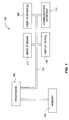
- FIG. 1 illustrates in block diagram form a computer system incorporating an apparatus and system in accordance with the present invention.
- Processor architectures and computing systems are usefully represented as a collection of interacting functional units as shown in FIG. 1. These functional units perform the functions of fetching instructions and data from memory, processing fetched instructions, managing memory transactions, interfacing with external I/O and displaying information.
- FIG. 1 shows a typical general purpose computer system 100 incorporating a processor 102 and using both an application program and an operating system executing in processor 102.
- Computer system 100 in accordance with the present invention comprises an system bus 101 for communicating information, processor 102 coupled with bus 101 through input/output (I/O) devices within processor 102.
- Processor 102 is coupled to memory system 107 using a memory bus 103 to store information and instructions for processor 102.
- Memory system 107 comprises, for example, one or more levels of cache memory and main memory in memory unit 107. It should be understood that some cache memory is included on-chip with processor 102 in most applications in addition to cache and memory in memory system 107.
- User I/O devices 106 are coupled to bus 101 and are operative to communicate information in appropriately structured form to and from the other parts of computer 100.
- User I/O devices may include a keyboard, mouse, magnetic or tape reader, optical disk, or other available I/O devices, including another computer.
- Mass storage device 117 is coupled to bus 101 and may be implemented using one or more magnetic hard disks, magnetic tapes, CD ROMs, large banks of random access memory, or the like. A wide variety of random access and read-only memory technologies are available and are equivalent for purposes of the present invention. Mass storage 117 includes computer programs and data stored therein. Some or all of mass storage 117 may be configured to be incorporated as part of memory system 107.
- the present invention is particularly useful in operating systems where O/S threads are not preemptable.
- operating systems with preemptable threads can be made to work with the present invention by forcing only one thread at a time to execute.
- the present invention can be used on operating systems that handle both preemptive and non-preemptive threads on a task-by-task basis.
- a primary method for thread synchronization in many software languages is a monitor and lock paradigm.
- the present invention simplifies this locking process, the functionality achieved by the present invention must meet the language specifications so that the threads behave in a predictable manner.
- a lock operation behaves by first attempting to obtain a lock on a specified object (e.g., the object x in the examples herein). The lock operation will prevent further thread execution until the lock operation is completed (i.e., a lock is obtained). Only after the lock operation completes are the statements in the body of the synchronized method executed. When execution of all the statements in the body of a given thread are completed or the thread is otherwise terminated, an unlock operation is performed on the same lock.
- the present invention is directed to a method for efficiently implementing the locking mechanism specified in the application to provide expected application behavior.
- monitor data structures will only be needed when an executing thread is blocked for some time in a manner that is not known to the application itself.
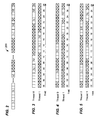
- FIG. 2 diagramatically shows a thread 200 generated in accordance with the present invention.
- Each software application comprises a collection of tasks directed to implement particular application behavior.
- Each task is in turn implemented by a plurality of threads such as thread 200 shown in FIG. 2.
- Each thread issues a stream of use, assign, lock, and unlock operations as dictated by the semantics of the program it is executing.
- Each atomic operation is represented in FIG. 2 by a box in thread 200.
- Thread 200 may include any number of atomic operations from fewer than ten operations up to several hundred operations, or thousands of operations in an essentially single threaded task. The ellipses in FIG. 2 indicate that any number of non-blocking and blocking operations may be included in a typical thread 200.
- a multithreaded application or task a plurality of threads 200 are implemented to perform task behavior.
- a multithreaded application is caused to execute in a "serial" fashion meaning that the threads are not preemptable. As described above, this may be imposed by the operating system.
- the present invention operates to ensure that synchronized thread 0 and thread 1 shown in FIG. 3 - FIG. 5 cannot execute concurrently. This is done, for example, by executing each synchronized method in a construct called a "critical section" such that program control enters a critical section before executing the synchronized method and no other thread can enter the critical section until the first thread to enter exits.
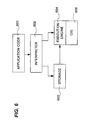
- FIG. 3 - FIG. 5 illustrates various situations during execution of synchronized threads labeled thread 0 and thread 1 and use the same nomenclature and graphical representations described above in reference to FIG. 2.
- FIG. 3 shows a situation in which thread 0, executes a number of operations, at least one of which accesses a shared object (not shown).
- Thread 0 is synchronized with thread 1 in FIG. 3 because thread 1, for example, accesses the shared object also.
- Thread 0 and thread 1 may be related as producer-consumer (i.e., one thread changes the shared object and the other thread uses the changed object) or the shared object may support only one access at a time and so thread 0 and thread 1 are synchronized to avoid conflict.
- the lock and unlock operations in each thread are performed at any time during the thread execution upon entering and exiting a critical section of the thread (i.e., a method within a thread containing operations that access the shared object).
- a thread may execute more than one lock operation before executing an unlock operation (as shown in FIG. 2), but each lock must be followed by an unlock before the shared object is available to another thread.
- the programming language may allow explicit object locking/unlocking. Alternatively, in the case of the JAVA programming language a "synchronized" statement in the method implies the locking/unlocking operations.
- the lock operation is implemented in accordance with the present invention by pushing an object identification (OID) onto a special purpose stack (701 in FIG. 7).
- OID object identification
- the OID is an address of the shared object "x" in memory, although any OID that uniquely identifies a locked object or object is equivalent to the specific implementation.
- the lock operation does not cause the OS to allocate resources or create data structures to provide thread synchronization.
- a thread may acquire multiple locks in this manner, although only a single lock is shown for simplicity.
- the thread may acquire multiple locks on the same object such that each acquired lock must be unlocked before the object becomes available for another thread.
- monitorLockProcessing and monitorUnlockProcessing represent methods that call conventional lock/unlock operations.
- thread 1 may execute before thread 0 in any of the examples, and other mechanisms must be employed to constrain order.
- these mechanisms in the JAVA programming language include the wait(), notify() and notifyAll() methods available in the JAVA programming language Threads class, although equivalents are available in other program languages.
- thread 1 and thread 0 are not CPU bound meaning that there are many available CPU cycles as compared to the number of operations that must be completed. In other words, neither thread 0 nor thread conflict with each other during their execution even though they access a shared variable and so are declared synchronized. The number of clock cycles required to execute most instructions is fairly predictable with the notable exception of memory operations, operations that require input/output (I/O), and instructions that wait for a specified event to occur, and the like.
- thread synchronization is not really an issue because thread 1 and thread 0 do not execute concurrently. In this case, no O/S thread synchronization resources are needed (although they are nevertheless allocated in the prior art).
- a significant feature of the present invention is that the situation shown in FIG. 3 will not result in expenditure of O/S resources (i.e., creation of an O/S monitor object) even though the application specified synchronous threads.
- FIG. 4 shows a related situation in which, even though thread 0 and thread 1 block while an object is locked during execution, they do not in fact conflict.
- the blocking in thread 0 occurs between operations 6 and 9 and may be caused by, for example, an I/O operation.
- a lock is placed on the shared object, hence, during the blocking phase the shared object remains locked.
- thread 1 does not attempt to access the shared object until its own lock operation at operation 18, there is no conflict.
- conventional processing would have expended OS resources to create monitor objects at time 5 even though none are in fact needed.
- the shared object's OID is pushed onto stack 701 (shown in FIG. 7) when thread 0 first blocks after the lock is in place (i.e., time 6), and the OID is removed when the thread resumes at time 10.
- This first embodiment results in minimal resource expenditure as the lock is implemented without a call to the OS by simply pushing an OID onto stack 701.
- the system delays pushing the OID onto stack 701 until 1) thread 0 resumes, and 2) the resumed thread is not the thread that last blocked.
- a lock is never implemented in the example of FIG. 4 because thread 0 resumes before any other thread has created a lock.
- FIG. 5 shows an example including thread 0 that blocks at operation 8 during its execution.
- the blocking operation in thread 0 resumes at operation 18.
- thread 1 unblocks and resumes execution until operation 14 in which it attempts to obtain the lock on the shared object.
- the shared object is already locked by thread 0 and conventional lock/monitor processing is required to notify thread 1 when it can continue.
- thread 1 is blocked by the monitor object created during the time indicated by the bold-lined boxes 15-22.
- thread 0 blocks again, but this time the shared object is unlocked, enabling thread 1 to resume.
- allocation of thread synchronization data structures is delayed until operation at time 8 when thread 0 blocks.
- the OID is not placed on stack 701 until thread 1 unblocks at time 10. Hence, only when the lock/monitor resource is actually needed are the resources allocated.
- thread 0 and thread 1 execute in a manner substantially identical to prior synchronization methods.
- the first embodiment provides improved performance because synchronization resources are not allocated at all in situations resembling that shown in FIG. 3 and FIG 4.
- allocation of lock/monitor resources is postponed until a thread resumes.
- thread 1 is blocked by the application itself because it is now aware of the lock on the object because stack 701 is maintained in application or user memory space.
- thread 1 resumes at time 10 it determines if it was or was not the last thread that blocked without a call to the O/S.
- thread 1 was not the last thread that blocked, hence, monitor objects are required to synchronize thread 1 with thread 0.
- monitor resources are not required. The longer it is possible to delay allocation of the synchronization resources the more likely it becomes that one of the conflicting threads will unlock the shared object and synchronization will be unnecessary.
- monitor resources can be implemented by without involving operating system resources. As described in reference to FIG. 5, the unblocking of thread 1 at operation 10 can be handled without the OS because the information that the shared object is locked is held in application memory space. While the present invention can be implemented using conventional OS synchronization resources, it is desirable to implement the monitor object in application memory space to avoid the tens or hundreds of operations that may be required to implement the monitor objects in kernel memory space using OS synchronization resources.
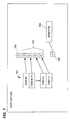
- FIG. 6 shows fundamental software or hardware implemented devices that implement the present invention.
- Computer system 100 (shown in FIG. 1) executes application code 601 using an interpreter 602.
- Application code 601 includes single threaded or multithreaded code in a conventional language such as the JAVA programming language.
- Interpreter 602 receives the application code and generates executable instructions that can be executed by execution engine 604.
- the executable instructions may include calls to OS 606, or may manipulate data in memory 107 directly.
- Interpreter 602 may be implemented in the form of a compiler that is operable prior to run time (i.e., at compile time) or operable at run time such as a just-in-time compiler provided with the JAVA virtual machine.
- the executable instructions from interpreter 602 may also be stored in storage 603 (e.g., magnetic media, optical media and the like) for later execution by execution engine 604 at run time.
- Objects 703 are locked by a corresponding entry in stack 701.
- object 705 is locked by a monitor object 704 created in a conventional fashion.
- execution engine 604 shown in FIG. 6
- OID object ID
- the fact that an object is locked and the number of times it is locked is recorded by execution engine 604 (shown in FIG. 6) by pushing the address of the object (indicated as object ID or OID in FIG. 7) onto stack 701 at lock time.
- the entry is popped from stack 701 at unlock time and the object associated with the popped OID becomes an unlocked object 702.
- the thread does not block while an object is locked, there is nothing more than needs to be done to ensure thread synchronization. If, however, the thread does block then the objects on stack 701 can be allocated monitor data structures 704 that are then used in a traditional way and stack 701 emptied.
- Memory 107 is allocated into application or user memory space 701 and kernel or OS memory space 702.
Landscapes
- Engineering & Computer Science (AREA)
- Software Systems (AREA)
- Theoretical Computer Science (AREA)
- Physics & Mathematics (AREA)
- General Engineering & Computer Science (AREA)
- General Physics & Mathematics (AREA)
- Debugging And Monitoring (AREA)
- Devices For Executing Special Programs (AREA)
Applications Claiming Priority (2)
| Application Number | Priority Date | Filing Date | Title |
|---|---|---|---|
| US73637 | 1987-07-15 | ||
| US09/073,637 US6349322B1 (en) | 1998-05-06 | 1998-05-06 | Fast synchronization for programs written in the JAVA programming language |
Publications (3)
| Publication Number | Publication Date |
|---|---|
| EP0955584A2 true EP0955584A2 (fr) | 1999-11-10 |
| EP0955584A3 EP0955584A3 (fr) | 2001-03-21 |
| EP0955584B1 EP0955584B1 (fr) | 2010-04-07 |
Family
ID=22114899
Family Applications (1)
| Application Number | Title | Priority Date | Filing Date |
|---|---|---|---|
| EP99650040A Expired - Lifetime EP0955584B1 (fr) | 1998-05-06 | 1999-05-05 | Synchronisation rapide pour des programmes écrits dans le langage de programmation Java |
Country Status (4)
| Country | Link |
|---|---|
| US (1) | US6349322B1 (fr) |
| EP (1) | EP0955584B1 (fr) |
| JP (1) | JP2000029726A (fr) |
| DE (1) | DE69942218D1 (fr) |
Cited By (5)
| Publication number | Priority date | Publication date | Assignee | Title |
|---|---|---|---|---|
| EP1217517A1 (fr) * | 2000-12-22 | 2002-06-26 | Sun Microsystems, Inc. | Synchronisation d'appels dans un système serveur-client |
| KR100439186B1 (ko) * | 2001-12-28 | 2004-07-05 | 한국전자통신연구원 | 자바 가상머신의 멀티 쓰레드 시스템에서의 동기화 장치및 방법 |
| US6792601B1 (en) | 2000-05-18 | 2004-09-14 | International Business Machines Corporation | Multiple mode object locking method and system |
| EP1310867A3 (fr) * | 2001-10-24 | 2004-11-03 | Sun Microsystems, Inc. | Exécution de méthodes synchronisées dans des environnements de calcul Java |
| CN100356326C (zh) * | 2003-03-21 | 2007-12-19 | 清华大学 | 基于操作栈记录的恢复的Java线程迁移的方法 |
Families Citing this family (12)
| Publication number | Priority date | Publication date | Assignee | Title |
|---|---|---|---|---|
| US7458061B2 (en) * | 2002-06-14 | 2008-11-25 | Sun Microsystems, Inc. | Protecting object identity in a language with built-in synchronization objects |
| US7200846B2 (en) * | 2002-08-05 | 2007-04-03 | Sun Microsystems, Inc. | System and method for maintaining data synchronization |
| JP3857259B2 (ja) | 2002-08-14 | 2006-12-13 | 日本電信電話株式会社 | オブジェクト状態転送方法,オブジェクト状態転送装置およびオブジェクト状態転送プログラム並びにそのプログラムの記録媒体 |
| US20040040029A1 (en) * | 2002-08-22 | 2004-02-26 | Mourad Debbabi | Method call acceleration in virtual machines |
| CA2430383A1 (fr) * | 2003-05-30 | 2004-11-30 | Ibm Canada Limited - Ibm Canada Limitee | Verrous a declenchement efficace en cas d'exception |
| CA2430763A1 (fr) * | 2003-05-30 | 2004-11-30 | Ibm Canada Limited - Ibm Canada Limitee | Deblocage efficace de verrous advenant une exception |
| US7765555B2 (en) * | 2005-06-17 | 2010-07-27 | Oracle America, Inc. | Facilitating bulk lock-unbiasing in an object-based system |
| US20070124545A1 (en) * | 2005-11-29 | 2007-05-31 | Anton Blanchard | Automatic yielding on lock contention for multi-threaded processors |
| KR100714710B1 (ko) * | 2006-02-22 | 2007-05-04 | 삼성전자주식회사 | 입출력 작업에 의해 블로킹된 스레드를 강제 종료하는 장치및 방법 |
| US8381203B1 (en) * | 2006-11-03 | 2013-02-19 | Nvidia Corporation | Insertion of multithreaded execution synchronization points in a software program |
| US9535686B2 (en) * | 2013-03-15 | 2017-01-03 | International Business Machines Corporation | Dynamic library replacement |
| US10289604B2 (en) * | 2014-08-07 | 2019-05-14 | Wisconsin Alumni Research Foundation | Memory processing core architecture |
Citations (1)
| Publication number | Priority date | Publication date | Assignee | Title |
|---|---|---|---|---|
| EP0840215A1 (fr) | 1996-11-04 | 1998-05-06 | Sun Microsystems, Inc. | Procédé et dispositif pour synchronisation de fils dans des systèmes basés sur des objets |
Family Cites Families (8)
| Publication number | Priority date | Publication date | Assignee | Title |
|---|---|---|---|---|
| US6108715A (en) * | 1994-12-13 | 2000-08-22 | Microsoft Corporation | Method and system for invoking remote procedure calls |
| US5970242A (en) * | 1996-01-24 | 1999-10-19 | Sun Microsystems, Inc. | Replicating code to eliminate a level of indirection during execution of an object oriented computer program |
| JP3746826B2 (ja) * | 1996-02-19 | 2006-02-15 | 富士通株式会社 | 資源ロック制御機構 |
| US5706515A (en) * | 1996-03-25 | 1998-01-06 | Sun Microsystems, Inc. | System and method for implementing an atomic wait for notification operation |
| US5946487A (en) * | 1996-06-10 | 1999-08-31 | Lsi Logic Corporation | Object-oriented multi-media architecture |
| US5862376A (en) * | 1996-06-24 | 1999-01-19 | Sun Microsystems, Inc. | System and method for space and time efficient object locking |
| US5835908A (en) * | 1996-11-19 | 1998-11-10 | Microsoft Corporation | Processing multiple database transactions in the same process to reduce process overhead and redundant retrieval from database servers |
| US5924098A (en) * | 1997-06-30 | 1999-07-13 | Sun Microsystems, Inc. | Method and apparatus for managing a linked-list data structure |
-
1998
- 1998-05-06 US US09/073,637 patent/US6349322B1/en not_active Expired - Lifetime
-
1999
- 1999-05-05 DE DE69942218T patent/DE69942218D1/de not_active Expired - Fee Related
- 1999-05-05 EP EP99650040A patent/EP0955584B1/fr not_active Expired - Lifetime
- 1999-05-06 JP JP11126259A patent/JP2000029726A/ja active Pending
Patent Citations (1)
| Publication number | Priority date | Publication date | Assignee | Title |
|---|---|---|---|---|
| EP0840215A1 (fr) | 1996-11-04 | 1998-05-06 | Sun Microsystems, Inc. | Procédé et dispositif pour synchronisation de fils dans des systèmes basés sur des objets |
Non-Patent Citations (1)
| Title |
|---|
| BERSHAD, B N ET AL.: "Fast Mutual Exclusion for Uniprocessors", FIFTH SYMPOSIUM ON ARCHITECTURAL SUPPORTS FOR PROGRAMMING LANGUAGES AND OPERATING SYSTEMS, October 1992 (1992-10-01) |
Cited By (7)
| Publication number | Priority date | Publication date | Assignee | Title |
|---|---|---|---|---|
| US6792601B1 (en) | 2000-05-18 | 2004-09-14 | International Business Machines Corporation | Multiple mode object locking method and system |
| EP1217517A1 (fr) * | 2000-12-22 | 2002-06-26 | Sun Microsystems, Inc. | Synchronisation d'appels dans un système serveur-client |
| US7707584B2 (en) | 2000-12-22 | 2010-04-27 | Oracle America, Inc. | Method and apparatus for synchronizing calls in a server and client system |
| EP1310867A3 (fr) * | 2001-10-24 | 2004-11-03 | Sun Microsystems, Inc. | Exécution de méthodes synchronisées dans des environnements de calcul Java |
| US6918109B2 (en) | 2001-10-24 | 2005-07-12 | Sun Microsystems, Inc. | Execution of synchronized Java methods in Java computing environments |
| KR100439186B1 (ko) * | 2001-12-28 | 2004-07-05 | 한국전자통신연구원 | 자바 가상머신의 멀티 쓰레드 시스템에서의 동기화 장치및 방법 |
| CN100356326C (zh) * | 2003-03-21 | 2007-12-19 | 清华大学 | 基于操作栈记录的恢复的Java线程迁移的方法 |
Also Published As
| Publication number | Publication date |
|---|---|
| DE69942218D1 (de) | 2010-05-20 |
| EP0955584B1 (fr) | 2010-04-07 |
| US6349322B1 (en) | 2002-02-19 |
| EP0955584A3 (fr) | 2001-03-21 |
| JP2000029726A (ja) | 2000-01-28 |
Similar Documents
| Publication | Publication Date | Title |
|---|---|---|
| US6349322B1 (en) | Fast synchronization for programs written in the JAVA programming language | |
| US6510437B1 (en) | Method and apparatus for concurrent thread synchronization | |
| US6615342B1 (en) | Method and apparatus for object-oriented interrupt system | |
| EP0735473B1 (fr) | Méthode et appareil pour gérer une base de données dans un environnement d'exploitation d'objets distribué | |
| JP4709469B2 (ja) | スレッドを明示的に中断することなく整合状態とする方法及び装置 | |
| US7395383B2 (en) | Realtime-safe read copy update with per-processor read/write locks | |
| US6173442B1 (en) | Busy-wait-free synchronization | |
| US5666533A (en) | Program execution management using process enclaves which define the scope of high-level language semantics and threads improving cooperation between processes written in multiple languages | |
| US9323586B2 (en) | Obstruction-free data structures and mechanisms with separable and/or substitutable contention management mechanisms | |
| KR100437704B1 (ko) | 공간효율적인오브젝트로킹을위한시스템및방법 | |
| JP3575593B2 (ja) | オブジェクトのロック管理方法及び装置 | |
| US8176264B2 (en) | Software transactional memory for dynamically sizable shared data structures | |
| US6161147A (en) | Methods and apparatus for managing objects and processes in a distributed object operating environment | |
| US5881286A (en) | Method and apparatus for space efficient inter-process communications | |
| US20090055603A1 (en) | Modified computer architecture for a computer to operate in a multiple computer system | |
| US20060005191A1 (en) | Almost non-blocking linked stack implementation | |
| IL178527A (en) | Modified computer architecture with coordinated objects | |
| US7747996B1 (en) | Method of mixed lock-free and locking synchronization | |
| US7793023B2 (en) | Exclusion control | |
| US6752836B1 (en) | Method and apparatus for high-concurrency client locking with java in a data processing system | |
| Vitek | Atomicity in Real-Time Computing | |
| Fraser | Multithreaded Programming | |
| Press | Kernel and Operating System Services | |
| Davoli et al. | Guide to the MIKONOS Operating System Project Version 0.4 | |
| Manjunatha | Concurrency Programming Guide Contents |
Legal Events
| Date | Code | Title | Description |
|---|---|---|---|
| PUAI | Public reference made under article 153(3) epc to a published international application that has entered the european phase |
Free format text: ORIGINAL CODE: 0009012 |
|
| AK | Designated contracting states |
Kind code of ref document: A2 Designated state(s): DE FR GB |
|
| AX | Request for extension of the european patent |
Free format text: AL;LT;LV;MK;RO;SI |
|
| PUAL | Search report despatched |
Free format text: ORIGINAL CODE: 0009013 |
|
| AK | Designated contracting states |
Kind code of ref document: A3 Designated state(s): AT BE CH CY DE DK ES FI FR GB GR IE IT LI LU MC NL PT SE |
|
| AX | Request for extension of the european patent |
Free format text: AL;LT;LV;MK;RO;SI |
|
| 17P | Request for examination filed |
Effective date: 20010517 |
|
| AKX | Designation fees paid |
Free format text: DE FR GB |
|
| 17Q | First examination report despatched |
Effective date: 20070202 |
|
| GRAP | Despatch of communication of intention to grant a patent |
Free format text: ORIGINAL CODE: EPIDOSNIGR1 |
|
| GRAS | Grant fee paid |
Free format text: ORIGINAL CODE: EPIDOSNIGR3 |
|
| GRAA | (expected) grant |
Free format text: ORIGINAL CODE: 0009210 |
|
| AK | Designated contracting states |
Kind code of ref document: B1 Designated state(s): DE FR GB |
|
| REG | Reference to a national code |
Ref country code: GB Ref legal event code: FG4D |
|
| REF | Corresponds to: |
Ref document number: 69942218 Country of ref document: DE Date of ref document: 20100520 Kind code of ref document: P |
|
| PLBE | No opposition filed within time limit |
Free format text: ORIGINAL CODE: 0009261 |
|
| STAA | Information on the status of an ep patent application or granted ep patent |
Free format text: STATUS: NO OPPOSITION FILED WITHIN TIME LIMIT |
|
| REG | Reference to a national code |
Ref country code: FR Ref legal event code: ST Effective date: 20110131 |
|
| 26N | No opposition filed |
Effective date: 20110110 |
|
| PG25 | Lapsed in a contracting state [announced via postgrant information from national office to epo] |
Ref country code: DE Free format text: LAPSE BECAUSE OF NON-PAYMENT OF DUE FEES Effective date: 20101201 |
|
| PG25 | Lapsed in a contracting state [announced via postgrant information from national office to epo] |
Ref country code: FR Free format text: LAPSE BECAUSE OF NON-PAYMENT OF DUE FEES Effective date: 20100607 |
|
| PGFP | Annual fee paid to national office [announced via postgrant information from national office to epo] |
Ref country code: GB Payment date: 20180502 Year of fee payment: 20 |
|
| REG | Reference to a national code |
Ref country code: GB Ref legal event code: PE20 Expiry date: 20190504 |
|
| PG25 | Lapsed in a contracting state [announced via postgrant information from national office to epo] |
Ref country code: GB Free format text: LAPSE BECAUSE OF EXPIRATION OF PROTECTION Effective date: 20190504 |