EP0958541B1 - Intelligenter netzwerk-browser mit grösser werdendem auf konzepten basierendem indexierer - Google Patents
Intelligenter netzwerk-browser mit grösser werdendem auf konzepten basierendem indexierer Download PDFInfo
- Publication number
- EP0958541B1 EP0958541B1 EP98903781A EP98903781A EP0958541B1 EP 0958541 B1 EP0958541 B1 EP 0958541B1 EP 98903781 A EP98903781 A EP 98903781A EP 98903781 A EP98903781 A EP 98903781A EP 0958541 B1 EP0958541 B1 EP 0958541B1
- Authority
- EP
- European Patent Office
- Prior art keywords
- index
- conceptual information
- network
- document
- information
- Prior art date
- Legal status (The legal status is an assumption and is not a legal conclusion. Google has not performed a legal analysis and makes no representation as to the accuracy of the status listed.)
- Expired - Lifetime
Links
Images



Classifications
-
- G—PHYSICS
- G06—COMPUTING OR CALCULATING; COUNTING
- G06F—ELECTRIC DIGITAL DATA PROCESSING
- G06F16/00—Information retrieval; Database structures therefor; File system structures therefor
- G06F16/30—Information retrieval; Database structures therefor; File system structures therefor of unstructured textual data
-
- Y—GENERAL TAGGING OF NEW TECHNOLOGICAL DEVELOPMENTS; GENERAL TAGGING OF CROSS-SECTIONAL TECHNOLOGIES SPANNING OVER SEVERAL SECTIONS OF THE IPC; TECHNICAL SUBJECTS COVERED BY FORMER USPC CROSS-REFERENCE ART COLLECTIONS [XRACs] AND DIGESTS
- Y10—TECHNICAL SUBJECTS COVERED BY FORMER USPC
- Y10S—TECHNICAL SUBJECTS COVERED BY FORMER USPC CROSS-REFERENCE ART COLLECTIONS [XRACs] AND DIGESTS
- Y10S707/00—Data processing: database and file management or data structures
- Y10S707/99941—Database schema or data structure
- Y10S707/99944—Object-oriented database structure
Definitions
- This invention relates generally to methods and apparatus for browsing network information and, more particularly, to a method and apparatus for organizing information from network documents in a conceptual index to facilitate browsing.
- ISPs Internet Service Providers
- Web browser a Uniform Resource Locator
- content a Uniform Resource Locator
- Web pages often refer to other Web pages using "hypertext link” or “hyperlinks” that include words or phrases representing the other pages in a form that gives the browser a URL for the corresponding Web page when a user selects a hyperlink. Hyperlinks are made possible by building Web pages using the Hypertext Markup Language (HTML).
- HTML Hypertext Markup Language
- the URL identifies a specific computer on the Internet, called a "Web Server," and, more particularly, the location of a Web page located on the Web Server.
- the Web browser retrieves the Web page and displays it for the user.
- WebWatcher is a server-based interface agent that resides between the user and the Web. Any user running a browser can enter the system simply by typing a topic of interest in WebWatcher's FrontDoor page. WebWatcher replaces the current page with a modified page that embeds WebWatcher command menus and enables WebWatcher to follow the user browsing the Web; and presents the user with a highlighted listing of recommended hyperlinks. Because WebWatcher is a server- based system it logs data from thousands of users to "train" itself and refine its search knowledge. If a user signals that a particular search was successful, WebWatcher annotates each explored hyperlink with user keywords, adding to the knowledge base from previous sessions. WebWatcher uses information retrieval techniques based on the frequency of weighted terms and documents for all hyperlinks on a page, as well as user statistics associated with those links.
- Letizia is a client-side personal agent and thus resides on the computer running the user's browser, as opposed to on a separate server. Letizia collects information about the user's browsing habits and tries to anticipate additional items of interest. Making inferences about user interests and using various heuristics, Letizia conducts a resource-limited search of the Web during idle times looking for promising links to suggest when prompted.
- systems and methods consistent with the present invention substantially obviate one or more of the problems due to limitations, shortcomings, and disadvantages of the related art by incrementally indexing conceptual information in network documents, and integrating the information in a manner usable by the user in a browsing session.
- a method for accessing information from a network comprises the steps, performed by a processor, of: receiving a document from the network containing content; extracting conceptual information from the content of the document; analyzing the extracted conceptual information semantically; and assembling an index of the extracted conceptual information that reflects relations based on semantic data in a stored lexicon.
- Systems consistent with the present invention assist users browsing the Web by constructing a dynamic conceptual index of documents visited by the browser and documents from the immediate neighborhood of those documents, such as those connected by a hyperlink.
- the conceptual index is a hierarchically organized taxonomy of word and phrase concepts found in the indexed material along with corresponding locations of those concepts in the documents.
- users can access the documents at the specific location corresponding to a selected concept.
- the evolving index provides two important functions: (1) an automatically assembled conceptual logbook of the user's path through the Web, and (2) a facility for conceptual "peripheral vision" that displays concepts in documents one step ahead of the browser while navigating the Web.
- Conceptual indexing involves techniques for automatically organizing all of the words and phrases of material into a conceptual taxonomy that explicitly links each concept to its most specific generalizations.
- the taxonomy is a graph structure that orders concepts by generality using ISA ("is a") links.
- ISA is a
- the following taxonomy represents the relationship between the concepts "computer” and "laptop”: computer
- the "computer” concept is a more general form of the "laptop” concept.
- the "computer” concept is depicted as a parent of the "laptop” concept in the graph structure.
- the taxonomy can be used alone to organize information for browsing, or it can be used as an adjunct to search and retrieval techniques to construct better queries.
- Conceptual indexing of text preferably involves four steps: (1) heuristic identification of phrases in the text, (2) mapping these phrases into internal conceptual structures, (3) classifying the structures into a taxonomy, and (4) linking the concept to the location of the phrase in the text.
- a broad coverage English lexicon is consulted to determine semantic relationships to other concepts based on recorded knowledge about the meanings of words. If any of the words of an indexed phrase do not yet have conceptual counterparts in the evolving taxonomy, they are assimilated into the taxonomy using information from the lexicon.
- the subsumption relationships come from the lexicon.
- the lexicon provides the following subsumption relationships in the taxonomy: computer
- Structural relationships are derived from the phrases in the text being indexed, such as: new computer
- taxonomy The concept of a taxonomy is closely analogous to the organization of books in a library. In general, books on the same topic are located on the same shelf and in close proximity. Similarly, the taxonomy places like concepts in close proximity so that the concept “laptop” is close to “recent toshiba laptop,” the concept “server” is close to “WWW server,” and so forth.
- the taxonomy aids in formulating queries.
- terms are treated as concepts and are expanded by their specific children in the taxonomy.
- a query for "fast computer” will be expanded to a query for "fast computer” and “fast graphic workstation” because "graphic workstation” is a more specific kind of "computer,” according to the above taxonomy.
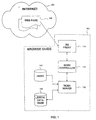
- FIG 1 illustrates the components of a browse guide (BG) system 100 consistent with the present invention.
- BG 100 assists users browsing the Web by constructing a dynamic conceptual index of documents visited by the user using a browser and documents from the immediate neighborhood of those documents.
- BG 100 includes software modules written in the JAVA programming language.
- BG 100 is thus platform-independent and can run on any conventional computer, such as a personal computer with a Pentium microprocessor manufactured by Intel Corp. running the Microsoft Windows 95 operating system.
- the computer is preferably equipped with hardware, such as a modem, for connecting to the Internet 160, which is depicted in FIG. 1 as the cloud surrounding Web pages 180. This is intended to show that the Web pages 180 constitute documents on the Internet 160 that are accessible to computers connected to the Internet 160.
- hardware such as a modem
- BG 100 includes BG proxy 110, index controller 120, index server 130, index 140, and lexical database 150.
- BG proxy 110 performs two general functions: (1) monitoring a user's activity browsing the Web, and (2) accessing information from Web, including documents visited by the user's browser (not shown) and documents from the immediate neighborhood of those documents.
- Index controller 120 controls the operations of BG 100 by, in part, maintaining a queue identifying the information and documents to be indexed in the conceptual taxonomy, and index server 130 performs the indexing functions, including incrementally building index 140 using lexical database 150.
- Lexical database 150 contains the English language lexicon used in building the conceptual taxonomy, i.e., index 140, in accordance with the methodology described above.
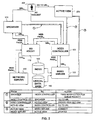
- FIG. 2 is an information flow diagram that explains the operation of BG 100.
- the "URL” in this label represents any URL for a site on the Internet and the subscript “N” indicates that multiple URLs may pass between the modules.
- the "WEB PAGE” in this label represents any Web page, document, file, etc. available on the Internet, and the subscripted "N” indicates that multple Web pages may pass between the modules.
- the single quote (') next to the "N" on a number of the lines with the WEB PAGE N label indicates that the page has been modified from its original state.
- BG proxy 110 intercepts the URL before providing it to network server 220 on the Internet 160, to retrieve the requested Web page.
- Network server 220 then provides the Web page identified by the URL to the BG proxy 110, which in turn provides the page to browser 210 for display.
- the retrieved Web page is modified by BG proxy 110. In part, this modification enables index controller 120 to connect to browser 210 and monitor its activity.
- BG proxy 110 also provides the retrieved Web page to index controller 120, and Index controller 120 passes the Web page to index server 130 for indexing.
- the indexing process involves parsing the retrieved Web page, and assimilating the concepts in the Web page into taxonomy index 140 using lexical database 150.
- index server 130 In parsing the retrieved Web page, index server 130 also determines the presence of any Web pages referenced in the retrieved Web page by identifying the hyperlinks in that page. If there are any referenced Web pages, index server 130 provides the URLs for those pages to index controller 120.
- Index controller 120 maintains a priority queue of URLs for Web pages to be indexed by index server 130.
- the queue includes the URLs referenced in pages previously indexed.
- the priority is set according to the user's activity, although other priorities are possible.
- index controller 120 causes the retrieval of the corresponding Web page and provides that page to index server 130 for assimilation of the page's concepts into taxonomy index 140 ahead of Web pages for any other URLs in the queue.
- index controller 120 provides each URL in the queue to BG proxy 110 to retrieve the corresponding Web page, which is in turn passed through index controller 120 to index server 130 for assimilation of the concepts in that Web page into index 140.
- User 205 can also query index 140. By inputting a query word or phrase, user 205 instructs index controller 120 to generate and display an active view 230 that includes concepts and corresponding URLs from index 140 . When index controller 120 receives a request for an active view, it passes the request to index server 130 to access index 140 for the concepts containing the search terms.
- BG 100 builds connections between browser 210 and index controller 120, index controller 120 and each active view 230, and index server 130 and each active view 230. These three connections are labeled (1), (2), and (3) in Fig. 2. A key table at the bottom of FIG. 2 explains the information flow along these connections.
- the first connection (1) between browser 210 and index controller 120 enables index controller to monitor user 205 activity for managing the queue priority.
- the second connection (2) between index controller 120 and active view 230 exists as a result of index controller 120 creating active view 230 in response to a request from user 205 and links active view 230 to browser 210 via the first connection (1).
- This link enables the user to select a concept from active view 230 for display of a corresponding Web page by browser 210.
- index server 130 exists as a result of index controller 120 creating active view 230 in response to a request from user 205 and links active view 230 to index server 130.
- This link enables index server 130 to update or refresh the active view 230 when additional information is assimilated into index 140 and active view 230 includes a fragment of index 140 modified by this assimilation. In this fashion, information is dynamically organized in real-time during a browsing session.
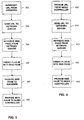
- Figures 3 and 4 are flow diagrams illustrating the steps of two processes performed by BG proxy 110.
- the first process relates to the operation intercepting URLs from browser 210 for indexing of the corresponding Web pages, and the second concerns the functions associated with the queue processing operation of index controller 120.
- BG proxy 110 intercepts the input URL from browser 210 (step 300). BG proxy 110 then sends the intercepted URL to network server 220 on the Internet to retrieve the corresponding Web page (step 310). When the Web page is retrieved (step 320), BG proxy 110 embeds a "plug in" into the Web page (step 330). BG proxy 110 provides the modified Web page to browser 210 for display (step 340) and to index controller 120 for further processing by index server 130 (step 350).
- the embedded "plug-in" is a computer program written in, for example, the C++ programming language, and enables index controller 120 to connect to browser 210 and to monitor activity of browser 210. This in turn enables index controller 120 to prioritize the retrieval of Web pages corresponding to entries in the URL queue.
- index controller 120 When URL queue of the index controller 120 is not empty, index controller 120 provides each URL in the queue to BG proxy 110.
- BG proxy 110 After BG proxy receives a URL from index controller 120 (step 400), BG proxy 110 transmits the URL to the appropriate network server in the Internet to retrieve the Web page corresponding to the URL (step 410).
- BG proxy 110 receives the Web page (step 420), BG proxy 110 embeds the plug-in for index controller 120 (step 430), and then provides the modified Web page to index controller 120 (step 440), which will in turn provide the page to index server 130 for assimilation of the concepts in the page into index 140.
- Figures 5 through 9 are flow charts illustrating the steps of five processes performed by index controller 120.
- the first process of index controller 120 (see FIG. 5) is a pass-through function.
- index controller 120 receives a modified Web page from BG proxy 110 (step 510)
- index controller provides the modified Web page to index server 130 for assimilation (step 520).
- index controller 120 concerns the URL queue.
- index server 130 identifies any URLs in Web pages being indexed.
- Index controller 120 receives a set of URLs from index server 130 for each Web page that has been indexed (step 610). The set may be empty if the indexed Web page contains no hyperlinks referencing other URLs and Web pages.
- Each URL in the set is added to the index controller's 120 queue for Web page retrieval and processing in accordance with a priority (step 620). For example, index controller 120 sets a high priority for the set of URLs corresponding to the Web page currently displayed by browser 210. In this manner, browse guide 100 assimilates the pages neighboring the currently displayed page before working on pages for other URLs in the queue.
- index controller 120 is constantly monitoring its queue to determine whether there are any URL entries (step 710). If there are no URLs in the queue. then index controller 120 remains in the monitoring state (step 710). If the queue is not empty (step 710), then index controller 120 selects the next URL in the queue with the highest priority and fetches that URL from the queue (steps 720 and 730). Index controller 120 then provides the URL to BG proxy 110 (step 740), which, as explained above with reference to FIG. 4, retrieves the corresponding Web page from the Internet.
- the fourth index controller 120 process concerns the second connection (2) (see FIG. 2) between active view 230 and index controller 120.
- Browse guide 100 includes an interface, such as a display with dialogue boxes, for users to browse and query index 140.
- An exemplary interface 1200 is shown in FIG. 12 and contains a display with two boxes 1210 and 1220.
- users can input a concept to view a fragment of index 140.
- box 1210 includes the word "cryptography”.
- BG 100 would in turn display in a "concept browser” a portion of index 140 with the concept "cryptography” as the most general concept (i.e., at the root) with the more specific concepts branched below.
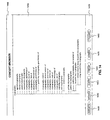
- An exemplary concept browser display 1400 for the "cryptography" concept from an exemplary index is shown in FIG. 14.
- Display 1400 includes two part: the first part 1410 is the requested taxonomy fragment, and the second part 1420 is for buttons 1430 to 1480 that the user can select to initiate various operations by pointing a mouse icon on a button and clicking on the mouse button.
- Parents button 1430 is used to display the parents of a select, highlighted concept in area 1410.
- Browse button 1440 is used to browse through index 140.
- Query button 1450 is used to allow the user to build an active view from a selected, highlighted concept.
- Freeze button 1460 is used to instruct the system not to modify area 1410, regardless of whether index 140 assimilates additional Web pages.
- Dismiss button 1470 is used to instruct browse guide 100 to close the display, and exclude button 1480 is used to eliminate a highlighted concept from the area 1410.
- the second box 1220 in interface 1200 is for the user to select and input a query term for BG 100 to create an active view (i.e., query index 140).
- FIG. 2 shows only one active view
- BG 100 preferably supports multiple active views as well as multiple concept browsers so the user can work with many of both view.
- the word "online” in box 1220 is for an active view
- the exemplary active view for the "online” query is shown in FIG. 13.
- Display 1300 includes two part: the first part 1310 is the results of a query on index 140 with corresponding URLs, and the second part 1320 is for buttons 1330 to 1390 that the user can select to initiate various operations by pointing a mouse icon on a button and clicking on the mouse button.
- the query results are ordered or ranked based on a quality of match between the query phrase and text in Web pages using the concepts in index 140. This process is described in U.S. patent application Serial No. 08/499,268, for "Method and Apparatus for Generating Query Responses in a Computer-Based Document Retrieval System," filed July 7, 1995, which is incorporated herein.
- Buttons 1330 to 1380 correspond to buttons 1430 to 1480, respectively, and perform the same functions as those described above with reference to buttons 1430 to 1480.
- the new "GO TO URL" button 1390 instructs index controller 120 to provide the URL for a highlighted word or phrase to browser 210 to in turn access the identified server and to retrieve and display the corresponding Web page.
- index controller 120 receives from the user a request to query index 140 in the form of a request for an active view (step 810).
- index controller 120 sets up and displays the requested active view with the results of the query of index 140 (step 820), and connects the active view to index server 130 (step 830). This connection enables index server 130 to update the displayed active view as index 140 changes, assimilating concepts from additional pages.
- index controller 120 (see FIG. 9) concerns the connection between index controller 120 and browser 210 (see (1) in Fig. 2)).
- Index controller monitors browser 210 activity, retrieving notifications from browser 210 as the displayed Web pages selected by the user are displayed (step 910).
- index controller 120 reprioritizes the URLs in the queue so that browse guide 100 assimilates concepts of the corresponding Web pages in a priority that closely matches the user's interest, as demonstrated by the Web page currently displayed by browser 210.
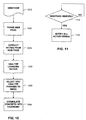
- Index server 130 maintains taxonomy index 140 by assimilating concepts from new Web pages into the taxonomy using information from the Web pages and from the relations in lexical database 150. Flow charts of the steps of the two processes performed by index server 130 are shown in FIGs. 10 and 11. In FIG. 10, index server 130 receives as input a Web page (step 1010). While this description focuses on indexing Web pages from the Internet, information from other documents, such as e-mail messages, text files, and databases, may also be assimilated into the taxonomy.
- Index server 130 parses the Web page to identify text in the page for assimilation (step 1020), and then extract words from the Web page (step 1030).
- This extraction process is commonly referred to as "chunkifying" the text, a process by which a set of predetermined rules is used to determine the text in the page that correspond to words. This can be done by a conventional process that involves examining the page for spaces in between characters and punctuation.
- Index server 130 identifies the words that do not appear in lexical database 150 and analyzes those "unknown” words to determine whether they represent concepts capable of assimilation into index 140 (step 1040). This step involves a morphological process in which index server 130 determines whether the unknown words include other known words that exist in lexical database 150. For example, index server 130 parses the word “sparcstation” to determine that it is comprised of two words “sparc” and "station”, and to infer from this morphology where to fit the unknown word "sparcstation” in the taxonomy.
- index server 130 tags them as different parts of speech, for example, noun, adjective, etc. (step 1050), using known techniques, such as the extracting operation taught by Eric Brill, "Some Advances in Rule-Based Part of Speech Tagging," AAAI Conference, 1994. Index server 130 then assimilates the words and phrases extracted from the Web page into index 140 along with a reference to the location of each word and phrase in the Web page.
- browse guide 100 instructs browser 210 to display a Web page with a highlighted passage corresponding to the selected phrase.
- index server 130 also performs operations in connection with updating active views.
- index server 130 updates all active views affected by changes to index 140. For example, the active view for "online” described above is updated to reflect changes to index 140, such as when additional Web pages that include the word “online” and related concepts are assimilated into index 140.
- the present invention automatically organizes information retrieved during a session browsing the Internet in a conceptual index to facilitate the browsing process.
- Using tools to query and browse the incrementally-built conceptual index users can access the documents at the specific location corresponding to a selected concept. Since the indexing process involves not only retrieving information from pages actually visited but also from neighboring pages, the present invention provides a "peripheral vision" that displays concepts in documents one step ahead of the browser while navigating the Web.
Landscapes
- Engineering & Computer Science (AREA)
- Theoretical Computer Science (AREA)
- Data Mining & Analysis (AREA)
- Databases & Information Systems (AREA)
- Physics & Mathematics (AREA)
- General Engineering & Computer Science (AREA)
- General Physics & Mathematics (AREA)
- Information Transfer Between Computers (AREA)
Claims (21)
- Verfahren zum Erzeugen eines Index von Informationen, die in einem Netzwerk (160) gespeichert sind, das die folgenden, von einem Prozessor ausgeführten Schritte umfasst:Abfangen einer Anforderung zum Durchsuchen des Netzwerks (160), wobei die Anforderung eine Kennung für ein Netzwerk-Dokument (180) enthält;Empfangen des Netzwerk-Dokumentes (180), das Inhalt enthält;Extrahieren konzeptioneller Informationen aus dem Inhalt des Dokumentes;semantisches Analysieren der extrahierten konzeptionellen Informationen; undZusammenstellen eines Index (140) der extrahierten konzeptionellen Informationen, der Beziehungen auf der Basis semantischer Daten in einem gespeicherten Lexikon widerspiegelt, oder aus dem Inhalt des Dokumentes.
- Verfahren nach Anspruch 1, wobei der Schritt des Extrahierens die folgenden Teilschritte einschließt:automatisches Zugreifen auf Netzwerk-Dokumente, die in dem empfangenen Netzwerk-Dokument (180) identifiziert werden, undExtrahieren konzeptioneller Informationen aus dem Inhalt über das Dokument.
- Verfahren nach Anspruch 1, das des Weiteren die folgenden Schritte einschließt:Erzeugen einer aktiven Ansicht (230), die extrahierte konzeptionelle Informationen aus dem Index (140) enthält; undAnzeigen der aktiven Ansicht (230).
- Verfahren nach Anspruch 3, wobei der Schritt des Erzeugens die folgenden Teilschritte einschließt:Empfangen einer Anforderung zum Abfragen des Index (140) einschließlich eines Suchbegriffs; undIdentifizieren konzeptioneller Informationen in dem Index (140), die in Beziehung zu dem Suchbegriff stehen.
- Verfahren nach Anspruch 4, wobei der Schritt des Anzeigens die folgenden Teilschritte einschließt:Darstellen der identifizierten konzeptionellen Informationen aus dem Index (140) mit entsprechenden Kennungen für Stellen in dem Netzwerk-Dokument (180) für die identifizierten konzeptionellen Informationen.
- Verfahren nach Anspruch 3, das des Weiteren den folgenden Schritt umfasst:Empfangen einer Auswahl-Anforderung für eine der Kennungen, um eine Ansicht einer entsprechenden Stelle in dem Netzwerk-Dokument (180) anzuzeigen.
- Verfahren nach Anspruch 3, wobei der Prozessor mit einem Speicher verbunden ist und wobei das Verfahren des Weiteren den folgenden Schritt umfasst:Speichern der aktiven Ansicht (230) in dem Speicher.
- Vorrichtung (100) zum Erzeugen eines Index von Informationen, die in einem Netzwerk (160) gespeichert sind, die umfasst:eine Komponente (110), die so ausgeführt ist, dass sie eine Anforderung zum Durchsuchen des Netzwerks (160) abfängt, wobei die Anforderung eine Kennung für ein Netzwerk-Dokument (180) enthält;eine empfangende Komponente (220), die so ausgeführt ist, dass sie das Netzwerk-Dokument (180) empfängt, das Inhalt enthält;eine extrahierende Komponente (120, 130), die so ausgeführt ist, dass sie konzeptionelle Informationen aus dem Inhalt des Dokumentes extrahiert;einen Prozessor, der so ausgeführt ist, dass er die extrahierten konzeptionellen Informationen semantisch analysiert; undeine Zusammenstelleinrichtung, die so ausgeführt ist, dass sie einen Index der extrahierten konzeptionellen Informationen zusammenstellt, der Beziehungen auf der Basis semantischer Daten in einem gespeicherten Lexikon widerspiegelt.
- Vorrichtung nach Anspruch 8, wobei die extrahierende Komponente (120, 130) enthält:eine zugreifende Komponente (120), die so ausgeführt ist, dass sie automatisch auf Netzwerk-Dokumente zugreift, die in dem empfangenen Netzwerk-Dokument identifiziert werden;eine extrahierende Komponente (130), die so ausgeführt ist, dass sie konzeptionelle Informationen aus dem Inhalt über das Dokument extrahiert; undeinen Prozessor, der so ausgeführt ist, dass er die extrahierten konzeptionellen Informationen semantisch analysiert.
- Vorrichtung nach Anspruch 8, die des Weiteren umfasst:eine Ansichterzeugungs-Einrichtung, die eine aktive Ansicht (230) erzeugt, die extrahierte konzeptionelle Informationen aus dem Index (140) enthält; undeine Anzeigekomponente, die so ausgeführt ist, dass sie die aktive Ansicht (230) anzeigt.
- Vorrichtung nach Anspruch 10, wobei die Ansichterzeugungs-Einrichtung enthält:eine Komponente, die so ausgeführt ist, dass sie eine Anforderung zum Abfragen des Index (140) einschließlich eines Suchbegriffs empfängt; undeine identifizierende Komponente, die so ausgeführt ist, dass sie konzeptionelle Informationen in dem Index (140) identifiziert, die in Beziehung zu dem Suchbegriff stehen.
- Vorrichtung nach Anspruch 11, wobei die Anzeigevorrichtung enthält:eine Komponente, die so ausgeführt ist, dass sie die identifizierten konzeptionellen Informationen aus dem Index (140) mit entsprechenden Kennungen für Stellen in dem Netzwerk-Dokument für die identifizierten konzeptionellen Informationen darstellt.
- Vorrichtung nach Anspruch 8, die des Weiteren umfasst:eine Komponente, die so ausgeführt ist, dass sie eine Auswahl-Anforderung für eine der Kennungen empfängt, um eine Ansicht einer entsprechenden Stelle in dem Netzwerk-Dokument (180) anzuzeigen.
- Vorrichtung nach Anspruch 12, die des Weiteren umfasst:einen Speicher, der so ausgeführt ist, dass er die aktive Ansicht (230) speichert.
- Computerprogramm-Erzeugnis, das umfasst:ein durch Computer nutzbares Medium mit darin enthaltenem computerlesbarem Code zum Erzeugen eines Index von Informationen, die in einem Netzwerk (160) gespeichert sind, wobei das durch Computer nutzbare Medium umfasst:einen Modul (110), der so ausgeführt ist, dass er eine Anforderung zum Durchsuchen des Netzwerks (160) abfängt, wobei die Anforderung eine Kennung für ein Netzwerk-Dokument (180) enthält;einen empfangenden Modul (220), der so ausgeführt ist, dass er das Netzwerk-Dokument empfängt, das Inhalt enthält;einen extrahierenden Modul (120, 130), der so ausgeführt ist, dass er konzeptionelle Informationen aus dem Inhalt des Dokumentes extrahiert;einen verarbeitenden Modul, der so ausgeführt ist, dass er die extrahierten konzeptionellen Informationen semantisch analysiert; undeinen zusammenstellenden Modul, der so ausgeführt ist, dass er einen Index der extrahierten konzeptionellen Informationen zusammenstellt, der Beziehungen auf der Basis semantischer Daten in einem gespeicherten Lexikon widerspiegelt.
- Durch Computer nutzbares Medium nach Anspruch 15, wobei der extrahierende Modul (120, 130) enthält:einen zugreifenden Modul (120), der so ausgeführt ist, dass er automatisch auf Netzwerk-Dokumente zugreift, die in dem empfangenen Netzwerk-Dokument identifiziert werden; undeinen extrahierenden Modul (130), der so ausgeführt ist, dass er konzeptionelle Informationen aus dem Inhalt über das Dokument extrahiert.
- Durch Computer nutzbares Medium nach Anspruch 15, das des Weiteren enthält:einen Ansichterzeugungs-Modul, der so ausgeführt ist, dass er eine aktive Ansicht (230) erzeugt, die extrahierte konzeptionelle Informationen aus dem Index (140) enthält; undeinen anzeigenden Modul, der so ausgeführt ist, dass er die aktive Ansicht (230) anzeigt.
- Durch Computer nutzbares Medium nach Anspruch 17, wobei der Ansichterzeugungs-Modul enthält:einen empfangenden Modul, der so ausgeführt ist, dass er eine Anforderung zum Abfragen des Index (140) einschließlich eines Suchbegriffs empfängt; undeinen identifizierenden Modul, der so ausgeführt ist, dass er konzeptionelle Informationen in dem Index (140) identifiziert, die in Beziehung zu dem Suchbegriff stehen.
- Durch Computer nutzbares Medium nach Anspruch 18, wobei der anzeigende Modul enthält:einen eine Ansicht darstellenden Modul, der so ausgeführt ist, dass er die identifizierten konzeptionellen Informationen aus dem Index (140) mit entsprechenden Kennungen für Stellen in dem Netzwerk-Dokument (180) für die identifizierten konzeptionellen Informationen darstellt.
- Durch Computer nutzbares Medium nach Anspruch 17, das des Weiteren umfasst:einen empfangenden Modul, der so ausgeführt ist, dass er eine Auswahl-Anforderung für eine der Kennungen empfängt, um eine Ansicht einer entsprechenden Stelle in dem Netzwerk-Dokument (180) anzuzeigen.
- Durch Computer nutzbares Medium nach Anspruch 17, das des Weiteren umfasst:einen speichemden Modul, der so ausgeführt ist, dass er die aktive Ansicht (230) speichert.
Applications Claiming Priority (3)
| Application Number | Priority Date | Filing Date | Title |
|---|---|---|---|
| US797630 | 1991-11-25 | ||
| US08/797,630 US6415319B1 (en) | 1997-02-07 | 1997-02-07 | Intelligent network browser using incremental conceptual indexer |
| PCT/US1998/001588 WO1998035304A1 (en) | 1997-02-07 | 1998-01-30 | Intelligent network browser using incremental conceptual indexer |
Publications (2)
| Publication Number | Publication Date |
|---|---|
| EP0958541A1 EP0958541A1 (de) | 1999-11-24 |
| EP0958541B1 true EP0958541B1 (de) | 2003-01-08 |
Family
ID=25171379
Family Applications (1)
| Application Number | Title | Priority Date | Filing Date |
|---|---|---|---|
| EP98903781A Expired - Lifetime EP0958541B1 (de) | 1997-02-07 | 1998-01-30 | Intelligenter netzwerk-browser mit grösser werdendem auf konzepten basierendem indexierer |
Country Status (6)
| Country | Link |
|---|---|
| US (1) | US6415319B1 (de) |
| EP (1) | EP0958541B1 (de) |
| JP (1) | JP2001510607A (de) |
| CA (1) | CA2279546A1 (de) |
| DE (1) | DE69810593D1 (de) |
| WO (1) | WO1998035304A1 (de) |
Families Citing this family (86)
| Publication number | Priority date | Publication date | Assignee | Title |
|---|---|---|---|---|
| US7467137B1 (en) | 1994-09-02 | 2008-12-16 | Wolfe Mark A | System and method for information retrieval employing a preloading procedure |
| US6604103B1 (en) * | 1994-09-02 | 2003-08-05 | Mark A. Wolfe | System and method for information retrieval employing a preloading procedure |
| US6006252A (en) * | 1996-10-08 | 1999-12-21 | Wolfe; Mark A. | System and method for communicating information relating to a network resource |
| US8626763B1 (en) | 1997-05-22 | 2014-01-07 | Google Inc. | Server-side suggestion of preload operations |
| US7257604B1 (en) | 1997-11-17 | 2007-08-14 | Wolfe Mark A | System and method for communicating information relating to a network resource |
| US6215483B1 (en) * | 1998-06-17 | 2001-04-10 | Webtv Networks, Inc. | Combining real-time and batch mode logical address links |
| US6144958A (en) * | 1998-07-15 | 2000-11-07 | Amazon.Com, Inc. | System and method for correcting spelling errors in search queries |
| US6332139B1 (en) | 1998-11-09 | 2001-12-18 | Mega Chips Corporation | Information communication system |
| JP2001075965A (ja) * | 1999-06-30 | 2001-03-23 | Mega Chips Corp | 情報通信システム |
| US6938270B2 (en) | 1999-04-07 | 2005-08-30 | Microsoft Corporation | Communicating scripts in a data service channel of a video signal |
| US6665681B1 (en) * | 1999-04-09 | 2003-12-16 | Entrieva, Inc. | System and method for generating a taxonomy from a plurality of documents |
| US6594691B1 (en) * | 1999-10-28 | 2003-07-15 | Surfnet Media Group, Inc. | Method and system for adding function to a web page |
| JP2003517686A (ja) * | 1999-12-17 | 2003-05-27 | キム、シハン | 情報コード化および検索システムとその方法 |
| AUPQ475799A0 (en) * | 1999-12-20 | 2000-01-20 | Youramigo Pty Ltd | An internet indexing system and method |
| US20020010709A1 (en) * | 2000-02-22 | 2002-01-24 | Culbert Daniel Jason | Method and system for distilling content |
| US7114124B2 (en) * | 2000-02-28 | 2006-09-26 | Xerox Corporation | Method and system for information retrieval from query evaluations of very large full-text databases |
| KR100363619B1 (ko) * | 2000-04-21 | 2002-12-05 | 배동훈 | 나선형 도우넛 형태를 갖는 컨텐츠 구조 및 컨텐츠디스플레이 시스템 |
| US7383299B1 (en) * | 2000-05-05 | 2008-06-03 | International Business Machines Corporation | System and method for providing service for searching web site addresses |
| US6766524B1 (en) | 2000-05-08 | 2004-07-20 | Webtv Networks, Inc. | System and method for encouraging viewers to watch television programs |
| US7464381B1 (en) * | 2000-05-12 | 2008-12-09 | Oracle International Corporation | Content update proxy method |
| US7523158B1 (en) | 2000-05-12 | 2009-04-21 | Oracle International Corporation | System and method for partial page updates using a proxy element |
| EP1407381B1 (de) * | 2000-05-29 | 2008-02-13 | Saora Kabushiki Kaisha | System und verfahren zum speichern von navigierten daten |
| US20030120653A1 (en) * | 2000-07-05 | 2003-06-26 | Sean Brady | Trainable internet search engine and methods of using |
| US7058700B1 (en) | 2000-07-13 | 2006-06-06 | Oracle International Corporation | Delta caching |
| US20020049792A1 (en) * | 2000-09-01 | 2002-04-25 | David Wilcox | Conceptual content delivery system, method and computer program product |
| US20020124056A1 (en) * | 2001-03-01 | 2002-09-05 | International Business Machines Corporation | Method and apparatus for modifying a web page |
| US20020147775A1 (en) * | 2001-04-06 | 2002-10-10 | Suda Aruna Rohra | System and method for displaying information provided by a provider |
| US20040205558A1 (en) * | 2001-10-18 | 2004-10-14 | Ibm Corporation | Method and apparatus for enhancement of web searches |
| US7346548B2 (en) * | 2001-10-25 | 2008-03-18 | Goldman Sachs & Co. | System, method, apparatus and means evaluating historical network activity |
| JP2003208434A (ja) * | 2001-11-07 | 2003-07-25 | Nec Corp | 情報検索システム及びそれに用いる情報検索方法 |
| US7428517B2 (en) * | 2002-02-27 | 2008-09-23 | Brands Michael Rik Frans | Data integration and knowledge management solution |
| JP2003337699A (ja) * | 2002-03-13 | 2003-11-28 | Saora Inc | 情報処理装置及びその方法、及びそのプログラムを記憶した記憶媒体 |
| JP2003283545A (ja) * | 2002-03-22 | 2003-10-03 | Toshiba Corp | 通信システム及び通信システムのコネクション制御方法 |
| US7120641B2 (en) * | 2002-04-05 | 2006-10-10 | Saora Kabushiki Kaisha | Apparatus and method for extracting data |
| US20030195896A1 (en) * | 2002-04-15 | 2003-10-16 | Suda Aruna Rohra | Method and apparatus for managing imported or exported data |
| US20030229846A1 (en) * | 2002-06-07 | 2003-12-11 | Anil Sethi | System and method for capturing digital data directly from an electronic device and processing the data into XML form on a computer chip |
| US20040221001A1 (en) * | 2002-07-05 | 2004-11-04 | Anjali Anagol-Subbarao | Web service architecture and methods |
| US20040006610A1 (en) * | 2002-07-05 | 2004-01-08 | Anjali Anagol-Subbarao | Architecture and method for configuration validation web service |
| GB0302263D0 (en) * | 2003-01-31 | 2003-03-05 | Roke Manor Research | Secure network browsing |
| GB0302640D0 (en) * | 2003-02-06 | 2003-03-12 | Rolls Royce Plc | Database arrangement |
| US7188308B2 (en) | 2003-04-08 | 2007-03-06 | Thomas Weise | Interface and method for exploring a collection of data |
| WO2004111877A1 (ja) * | 2003-05-19 | 2004-12-23 | Saora Kabushiki Kaisha | 情報処理方法及びその装置、及びそのプログラム |
| US20050044192A1 (en) * | 2003-07-28 | 2005-02-24 | Applin John R. | Web site management system with link management functionality |
| US7302370B2 (en) * | 2003-11-17 | 2007-11-27 | Oracle International Corporation | System and method for managing browser sessions in single and multi-server workflow environments |
| US9021529B2 (en) | 2004-07-15 | 2015-04-28 | Microsoft Technology Licensing, Llc | Content recordation techniques |
| US20060036451A1 (en) | 2004-08-10 | 2006-02-16 | Lundberg Steven W | Patent mapping |
| JP2006053745A (ja) * | 2004-08-11 | 2006-02-23 | Saora Inc | データ処理方法及びその装置、及びそのプログラム |
| US7540051B2 (en) | 2004-08-20 | 2009-06-02 | Spatial Systems, Inc. | Mapping web sites based on significance of contact and category |
| US7606793B2 (en) | 2004-09-27 | 2009-10-20 | Microsoft Corporation | System and method for scoping searches using index keys |
| US7644107B2 (en) * | 2004-09-30 | 2010-01-05 | Microsoft Corporation | System and method for batched indexing of network documents |
| US20070073678A1 (en) * | 2005-09-23 | 2007-03-29 | Applied Linguistics, Llc | Semantic document profiling |
| WO2006128183A2 (en) | 2005-05-27 | 2006-11-30 | Schwegman, Lundberg, Woessner & Kluth, P.A. | Method and apparatus for cross-referencing important ip relationships |
| US20070006129A1 (en) * | 2005-06-01 | 2007-01-04 | Opasmedia Oy | Forming of a data retrieval, searching from a data retrieval system, and a data retrieval system |
| US20060294049A1 (en) * | 2005-06-27 | 2006-12-28 | Microsoft Corporation | Back-off mechanism for search |
| CN100585591C (zh) * | 2005-07-15 | 2010-01-27 | 国际商业机器公司 | 用于实现交互式浏览的系统和方法 |
| WO2007014341A2 (en) * | 2005-07-27 | 2007-02-01 | Schwegman, Lundberg & Woessner, P.A. | Patent mapping |
| US20070073745A1 (en) * | 2005-09-23 | 2007-03-29 | Applied Linguistics, Llc | Similarity metric for semantic profiling |
| US7827191B2 (en) * | 2005-12-14 | 2010-11-02 | Microsoft Corporation | Discovering web-based multimedia using search toolbar data |
| US20080033943A1 (en) * | 2006-08-07 | 2008-02-07 | Bea Systems, Inc. | Distributed index search |
| US9015197B2 (en) | 2006-08-07 | 2015-04-21 | Oracle International Corporation | Dynamic repartitioning for changing a number of nodes or partitions in a distributed search system |
| US7860704B2 (en) * | 2006-12-13 | 2010-12-28 | Microsoft Corporation | Lexicon-based content correlation and navigation |
| AU2008233083A1 (en) * | 2007-03-30 | 2008-10-09 | Knewco, Inc. | Data structure, system and method for knowledge navigation and discovery |
| CN101378400B (zh) * | 2007-08-30 | 2013-01-30 | 国际商业机器公司 | 实现桌面应用和Web应用聚合的方法、服务器和系统 |
| EP2031820B1 (de) * | 2007-08-31 | 2014-07-30 | Alcatel Lucent | Verfahren zur Anreicherung des Inhaltes einer Webseite mit Präsenzinformationen |
| US9348912B2 (en) | 2007-10-18 | 2016-05-24 | Microsoft Technology Licensing, Llc | Document length as a static relevance feature for ranking search results |
| US20090217179A1 (en) * | 2008-02-21 | 2009-08-27 | Albert Mons | System and method for knowledge navigation and discovery utilizing a graphical user interface |
| US20090228817A1 (en) * | 2008-03-10 | 2009-09-10 | Randy Adams | Systems and methods for displaying a search result |
| US20090228811A1 (en) * | 2008-03-10 | 2009-09-10 | Randy Adams | Systems and methods for processing a plurality of documents |
| US8812493B2 (en) | 2008-04-11 | 2014-08-19 | Microsoft Corporation | Search results ranking using editing distance and document information |
| US11048765B1 (en) | 2008-06-25 | 2021-06-29 | Richard Paiz | Search engine optimizer |
| US20100131513A1 (en) | 2008-10-23 | 2010-05-27 | Lundberg Steven W | Patent mapping |
| US7669136B1 (en) * | 2008-11-17 | 2010-02-23 | International Business Machines Corporation | Intelligent analysis based self-scheduling browser reminder |
| US11423018B1 (en) | 2010-04-21 | 2022-08-23 | Richard Paiz | Multivariate analysis replica intelligent ambience evolving system |
| US11379473B1 (en) | 2010-04-21 | 2022-07-05 | Richard Paiz | Site rank codex search patterns |
| US8738635B2 (en) | 2010-06-01 | 2014-05-27 | Microsoft Corporation | Detection of junk in search result ranking |
| US8886811B2 (en) | 2010-11-29 | 2014-11-11 | Motorola Mobility Llc | Method and device for improving a browsing experience |
| US9904726B2 (en) | 2011-05-04 | 2018-02-27 | Black Hills IP Holdings, LLC. | Apparatus and method for automated and assisted patent claim mapping and expense planning |
| US8495484B2 (en) * | 2011-08-02 | 2013-07-23 | International Business Machines Corporation | Intelligent link population and recommendation |
| US20130042008A1 (en) | 2011-08-12 | 2013-02-14 | Splunk Inc. | Elastic scaling of data volume |
| US10268731B2 (en) | 2011-10-03 | 2019-04-23 | Black Hills Ip Holdings, Llc | Patent mapping |
| US8892547B2 (en) | 2011-10-03 | 2014-11-18 | Black Hills Ip Holdings, Llc | System and method for prior art analysis |
| US9495462B2 (en) | 2012-01-27 | 2016-11-15 | Microsoft Technology Licensing, Llc | Re-ranking search results |
| WO2014008866A1 (en) * | 2012-07-11 | 2014-01-16 | Xie Wanxia | System and method for indexing, ranking, and analyzing web activity within event driven architecture |
| JP6021487B2 (ja) * | 2012-07-18 | 2016-11-09 | キヤノン株式会社 | 情報処理システム、制御方法、サーバ、情報処理装置およびコンピュータプログラム |
| US11741090B1 (en) | 2013-02-26 | 2023-08-29 | Richard Paiz | Site rank codex search patterns |
| US11809506B1 (en) | 2013-02-26 | 2023-11-07 | Richard Paiz | Multivariant analyzing replicating intelligent ambience evolving system |
Family Cites Families (32)
| Publication number | Priority date | Publication date | Assignee | Title |
|---|---|---|---|---|
| US5062074A (en) | 1986-12-04 | 1991-10-29 | Tnet, Inc. | Information retrieval system and method |
| US4849898A (en) | 1988-05-18 | 1989-07-18 | Management Information Technologies, Inc. | Method and apparatus to identify the relation of meaning between words in text expressions |
| US4839853A (en) | 1988-09-15 | 1989-06-13 | Bell Communications Research, Inc. | Computer information retrieval using latent semantic structure |
| US4984178A (en) | 1989-02-21 | 1991-01-08 | Texas Instruments Incorporated | Chart parser for stochastic unification grammar |
| US5276616A (en) | 1989-10-16 | 1994-01-04 | Sharp Kabushiki Kaisha | Apparatus for automatically generating index |
| US5404514A (en) | 1989-12-26 | 1995-04-04 | Kageneck; Karl-Erbo G. | Method of indexing and retrieval of electronically-stored documents |
| US5301109A (en) | 1990-06-11 | 1994-04-05 | Bell Communications Research, Inc. | Computerized cross-language document retrieval using latent semantic indexing |
| US5321833A (en) | 1990-08-29 | 1994-06-14 | Gte Laboratories Incorporated | Adaptive ranking system for information retrieval |
| US5325298A (en) | 1990-11-07 | 1994-06-28 | Hnc, Inc. | Methods for generating or revising context vectors for a plurality of word stems |
| DE69229521T2 (de) | 1991-04-25 | 2000-03-30 | Nippon Steel Corp | Datenbankauffindungssystem |
| US5418943A (en) | 1991-10-23 | 1995-05-23 | At&T Corp. | Information system with knowledge base and data base |
| US5428778A (en) | 1992-02-13 | 1995-06-27 | Office Express Pty. Ltd. | Selective dissemination of information |
| GB9220404D0 (en) | 1992-08-20 | 1992-11-11 | Nat Security Agency | Method of identifying,retrieving and sorting documents |
| US5440481A (en) | 1992-10-28 | 1995-08-08 | The United States Of America As Represented By The Secretary Of The Navy | System and method for database tomography |
| US5594837A (en) | 1993-01-29 | 1997-01-14 | Noyes; Dallas B. | Method for representation of knowledge in a computer as a network database system |
| US5544352A (en) | 1993-06-14 | 1996-08-06 | Libertech, Inc. | Method and apparatus for indexing, searching and displaying data |
| US5475588A (en) | 1993-06-18 | 1995-12-12 | Mitsubishi Electric Research Laboratories, Inc. | System for decreasing the time required to parse a sentence |
| US5418918A (en) | 1993-09-10 | 1995-05-23 | Compaq Computer Corp. | Scanning initial CD-ROM sectors for a boot record and executing said boot record to load and execute floppy disk image corresponding to the existing floppy drive |
| US5600831A (en) * | 1994-02-28 | 1997-02-04 | Lucent Technologies Inc. | Apparatus and methods for retrieving information by modifying query plan based on description of information sources |
| US5708825A (en) * | 1995-05-26 | 1998-01-13 | Iconovex Corporation | Automatic summary page creation and hyperlink generation |
| US5724571A (en) * | 1995-07-07 | 1998-03-03 | Sun Microsystems, Inc. | Method and apparatus for generating query responses in a computer-based document retrieval system |
| US5822539A (en) * | 1995-12-08 | 1998-10-13 | Sun Microsystems, Inc. | System for adding requested document cross references to a document by annotation proxy configured to merge and a directory generator and annotation server |
| US5974455A (en) * | 1995-12-13 | 1999-10-26 | Digital Equipment Corporation | System for adding new entry to web page table upon receiving web page including link to another web page not having corresponding entry in web page table |
| US6081829A (en) * | 1996-01-31 | 2000-06-27 | Silicon Graphics, Inc. | General purpose web annotations without modifying browser |
| US6076088A (en) * | 1996-02-09 | 2000-06-13 | Paik; Woojin | Information extraction system and method using concept relation concept (CRC) triples |
| US5937163A (en) * | 1996-03-26 | 1999-08-10 | Industrial Technology Research Institute | Method and system at a host node for hierarchically organizing the links visited by a world wide web browser executing at the host node |
| US5894554A (en) * | 1996-04-23 | 1999-04-13 | Infospinner, Inc. | System for managing dynamic web page generation requests by intercepting request at web server and routing to page server thereby releasing web server to process other requests |
| US5918013A (en) * | 1996-06-03 | 1999-06-29 | Webtv Networks, Inc. | Method of transcoding documents in a network environment using a proxy server |
| US6026409A (en) * | 1996-09-26 | 2000-02-15 | Blumenthal; Joshua O. | System and method for search and retrieval of digital information by making and scaled viewing |
| US5918237A (en) * | 1996-09-30 | 1999-06-29 | At&T Corp. | System and method for providing multimedia bookmarks for hypertext markup language files |
| US6038561A (en) * | 1996-10-15 | 2000-03-14 | Manning & Napier Information Services | Management and analysis of document information text |
| US5870559A (en) * | 1996-10-15 | 1999-02-09 | Mercury Interactive | Software system and associated methods for facilitating the analysis and management of web sites |
-
1997
- 1997-02-07 US US08/797,630 patent/US6415319B1/en not_active Expired - Lifetime
-
1998
- 1998-01-30 CA CA002279546A patent/CA2279546A1/en not_active Abandoned
- 1998-01-30 JP JP53478398A patent/JP2001510607A/ja not_active Ceased
- 1998-01-30 DE DE69810593T patent/DE69810593D1/de not_active Expired - Lifetime
- 1998-01-30 EP EP98903781A patent/EP0958541B1/de not_active Expired - Lifetime
- 1998-01-30 WO PCT/US1998/001588 patent/WO1998035304A1/en not_active Ceased
Also Published As
| Publication number | Publication date |
|---|---|
| JP2001510607A (ja) | 2001-07-31 |
| EP0958541A1 (de) | 1999-11-24 |
| DE69810593D1 (de) | 2003-02-13 |
| WO1998035304A1 (en) | 1998-08-13 |
| US6415319B1 (en) | 2002-07-02 |
| CA2279546A1 (en) | 1998-08-13 |
Similar Documents
| Publication | Publication Date | Title |
|---|---|---|
| US6415319B1 (en) | Intelligent network browser using incremental conceptual indexer | |
| US8626743B2 (en) | Techniques for personalized and adaptive search services | |
| US6848077B1 (en) | Dynamically creating hyperlinks to other web documents in received world wide web documents based on text terms in the received document defined as of interest to user | |
| US7062488B1 (en) | Task/domain segmentation in applying feedback to command control | |
| CA2210581C (en) | Methods and/or systems for accessing information | |
| US6101503A (en) | Active markup--a system and method for navigating through text collections | |
| US6321228B1 (en) | Internet search system for retrieving selected results from a previous search | |
| US20140222796A1 (en) | Methods and apparatus for facilitating delivery of a service associated with a product | |
| WO2000029985A1 (en) | Method and system for summarizing topics of documents browsed by a user | |
| EP1250663A1 (de) | Indizierungsystem und -verfahren | |
| KR20050038589A (ko) | 정보검색 지원시스템, 컴퓨터 프로그램 및 프로그램기억매체 | |
| CA2251043A1 (en) | Method of organizing information retrieved from the internet using knowledge based representation | |
| US7483877B2 (en) | Dynamic comparison of search systems in a controlled environment | |
| US7490082B2 (en) | System and method for searching internet domains | |
| Eichmann | Advances in network information discovery and retrieval | |
| US7496600B2 (en) | System and method for accessing web-based search services | |
| Abdulmunim et al. | Links Evaluation and Ranking Based on Semantic Metadata Analysis | |
| Ho et al. | Jamaica: a World Wide Web profiler | |
| Decker et al. | How to use ontobroker | |
| EP1775662A1 (de) | Verfahren und Computersystem für den autorisierten Zugriff eines Benutzers auf Informationsinhalte | |
| Naik et al. | Web Search Engines and Search Strategies | |
| Patamarjarnkul | A Customized Web Search Engine Using a Tiny WebSQL Query Language | |
| Fleming | Enhance Web Search Scheme | |
| Wu et al. | Information Exploration on the World Wide Web | |
| van der Merwe | The Future of Web Searching |
Legal Events
| Date | Code | Title | Description |
|---|---|---|---|
| PUAI | Public reference made under article 153(3) epc to a published international application that has entered the european phase |
Free format text: ORIGINAL CODE: 0009012 |
|
| 17P | Request for examination filed |
Effective date: 19990826 |
|
| AK | Designated contracting states |
Kind code of ref document: A1 Designated state(s): DE FR GB NL SE |
|
| 17Q | First examination report despatched |
Effective date: 20010709 |
|
| GRAG | Despatch of communication of intention to grant |
Free format text: ORIGINAL CODE: EPIDOS AGRA |
|
| RAP1 | Party data changed (applicant data changed or rights of an application transferred) |
Owner name: SUN MICROSYSTEMS, INC. |
|
| GRAG | Despatch of communication of intention to grant |
Free format text: ORIGINAL CODE: EPIDOS AGRA |
|
| GRAH | Despatch of communication of intention to grant a patent |
Free format text: ORIGINAL CODE: EPIDOS IGRA |
|
| GRAH | Despatch of communication of intention to grant a patent |
Free format text: ORIGINAL CODE: EPIDOS IGRA |
|
| GRAA | (expected) grant |
Free format text: ORIGINAL CODE: 0009210 |
|
| AK | Designated contracting states |
Kind code of ref document: B1 Designated state(s): DE FR GB NL SE |
|
| PG25 | Lapsed in a contracting state [announced via postgrant information from national office to epo] |
Ref country code: NL Free format text: LAPSE BECAUSE OF FAILURE TO SUBMIT A TRANSLATION OF THE DESCRIPTION OR TO PAY THE FEE WITHIN THE PRESCRIBED TIME-LIMIT Effective date: 20030108 Ref country code: FR Free format text: LAPSE BECAUSE OF FAILURE TO SUBMIT A TRANSLATION OF THE DESCRIPTION OR TO PAY THE FEE WITHIN THE PRESCRIBED TIME-LIMIT Effective date: 20030108 |
|
| REG | Reference to a national code |
Ref country code: GB Ref legal event code: FG4D |
|
| PGFP | Annual fee paid to national office [announced via postgrant information from national office to epo] |
Ref country code: SE Payment date: 20030128 Year of fee payment: 6 Ref country code: FR Payment date: 20030128 Year of fee payment: 6 |
|
| PGFP | Annual fee paid to national office [announced via postgrant information from national office to epo] |
Ref country code: NL Payment date: 20030130 Year of fee payment: 6 |
|
| PGFP | Annual fee paid to national office [announced via postgrant information from national office to epo] |
Ref country code: DE Payment date: 20030203 Year of fee payment: 6 |
|
| REF | Corresponds to: |
Ref document number: 69810593 Country of ref document: DE Date of ref document: 20030213 Kind code of ref document: P |
|
| PG25 | Lapsed in a contracting state [announced via postgrant information from national office to epo] |
Ref country code: SE Free format text: LAPSE BECAUSE OF FAILURE TO SUBMIT A TRANSLATION OF THE DESCRIPTION OR TO PAY THE FEE WITHIN THE PRESCRIBED TIME-LIMIT Effective date: 20030408 |
|
| PG25 | Lapsed in a contracting state [announced via postgrant information from national office to epo] |
Ref country code: DE Free format text: LAPSE BECAUSE OF FAILURE TO SUBMIT A TRANSLATION OF THE DESCRIPTION OR TO PAY THE FEE WITHIN THE PRESCRIBED TIME-LIMIT Effective date: 20030409 |
|
| RAP2 | Party data changed (patent owner data changed or rights of a patent transferred) |
Owner name: SUN MICROSYSTEMS, INC. |
|
| PLBE | No opposition filed within time limit |
Free format text: ORIGINAL CODE: 0009261 |
|
| STAA | Information on the status of an ep patent application or granted ep patent |
Free format text: STATUS: NO OPPOSITION FILED WITHIN TIME LIMIT |
|
| EN | Fr: translation not filed | ||
| 26N | No opposition filed |
Effective date: 20031009 |
|
| PGFP | Annual fee paid to national office [announced via postgrant information from national office to epo] |
Ref country code: GB Payment date: 20040128 Year of fee payment: 7 |
|
| PG25 | Lapsed in a contracting state [announced via postgrant information from national office to epo] |
Ref country code: GB Free format text: LAPSE BECAUSE OF NON-PAYMENT OF DUE FEES Effective date: 20050130 |
|
| GBPC | Gb: european patent ceased through non-payment of renewal fee |
Effective date: 20050130 |