EP0960330B1 - Excitation électrique de substances de marquage au niveau d'électrodes enrobées - Google Patents
Excitation électrique de substances de marquage au niveau d'électrodes enrobées Download PDFInfo
- Publication number
- EP0960330B1 EP0960330B1 EP98903034.1A EP98903034A EP0960330B1 EP 0960330 B1 EP0960330 B1 EP 0960330B1 EP 98903034 A EP98903034 A EP 98903034A EP 0960330 B1 EP0960330 B1 EP 0960330B1
- Authority
- EP
- European Patent Office
- Prior art keywords
- electrode
- electrodes
- label
- coated
- insulating film
- Prior art date
- Legal status (The legal status is an assumption and is not a legal conclusion. Google has not performed a legal analysis and makes no representation as to the accuracy of the status listed.)
- Expired - Lifetime
Links
Images




Classifications
-
- G—PHYSICS
- G01—MEASURING; TESTING
- G01N—INVESTIGATING OR ANALYSING MATERIALS BY DETERMINING THEIR CHEMICAL OR PHYSICAL PROPERTIES
- G01N21/00—Investigating or analysing materials by the use of optical means, i.e. using sub-millimetre waves, infrared, visible or ultraviolet light
- G01N21/75—Systems in which material is subjected to a chemical reaction, the progress or the result of the reaction being investigated
- G01N21/76—Chemiluminescence; Bioluminescence
-
- G—PHYSICS
- G01—MEASURING; TESTING
- G01N—INVESTIGATING OR ANALYSING MATERIALS BY DETERMINING THEIR CHEMICAL OR PHYSICAL PROPERTIES
- G01N21/00—Investigating or analysing materials by the use of optical means, i.e. using sub-millimetre waves, infrared, visible or ultraviolet light
- G01N21/62—Systems in which the material investigated is excited whereby it emits light or causes a change in wavelength of the incident light
- G01N21/66—Systems in which the material investigated is excited whereby it emits light or causes a change in wavelength of the incident light electrically excited, e.g. electroluminescence
-
- G—PHYSICS
- G01—MEASURING; TESTING
- G01N—INVESTIGATING OR ANALYSING MATERIALS BY DETERMINING THEIR CHEMICAL OR PHYSICAL PROPERTIES
- G01N33/00—Investigating or analysing materials by specific methods not covered by groups G01N1/00 - G01N31/00
- G01N33/48—Biological material, e.g. blood, urine; Haemocytometers
- G01N33/50—Chemical analysis of biological material, e.g. blood, urine; Testing involving biospecific ligand binding methods; Immunological testing
- G01N33/53—Immunoassay; Biospecific binding assay; Materials therefor
- G01N33/543—Immunoassay; Biospecific binding assay; Materials therefor with an insoluble carrier for immobilising immunochemicals
- G01N33/54366—Apparatus specially adapted for solid-phase testing
- G01N33/54373—Apparatus specially adapted for solid-phase testing involving physiochemical end-point determination, e.g. wave-guides, FETS, gratings
- G01N33/5438—Electrodes
-
- Y—GENERAL TAGGING OF NEW TECHNOLOGICAL DEVELOPMENTS; GENERAL TAGGING OF CROSS-SECTIONAL TECHNOLOGIES SPANNING OVER SEVERAL SECTIONS OF THE IPC; TECHNICAL SUBJECTS COVERED BY FORMER USPC CROSS-REFERENCE ART COLLECTIONS [XRACs] AND DIGESTS
- Y10—TECHNICAL SUBJECTS COVERED BY FORMER USPC
- Y10S—TECHNICAL SUBJECTS COVERED BY FORMER USPC CROSS-REFERENCE ART COLLECTIONS [XRACs] AND DIGESTS
- Y10S435/00—Chemistry: molecular biology and microbiology
- Y10S435/968—High energy substrates, e.g. fluorescent, chemiluminescent, radioactive
-
- Y—GENERAL TAGGING OF NEW TECHNOLOGICAL DEVELOPMENTS; GENERAL TAGGING OF CROSS-SECTIONAL TECHNOLOGIES SPANNING OVER SEVERAL SECTIONS OF THE IPC; TECHNICAL SUBJECTS COVERED BY FORMER USPC CROSS-REFERENCE ART COLLECTIONS [XRACs] AND DIGESTS
- Y10—TECHNICAL SUBJECTS COVERED BY FORMER USPC
- Y10S—TECHNICAL SUBJECTS COVERED BY FORMER USPC CROSS-REFERENCE ART COLLECTIONS [XRACs] AND DIGESTS
- Y10S436/00—Chemistry: analytical and immunological testing
- Y10S436/805—Optical property
-
- Y—GENERAL TAGGING OF NEW TECHNOLOGICAL DEVELOPMENTS; GENERAL TAGGING OF CROSS-SECTIONAL TECHNOLOGIES SPANNING OVER SEVERAL SECTIONS OF THE IPC; TECHNICAL SUBJECTS COVERED BY FORMER USPC CROSS-REFERENCE ART COLLECTIONS [XRACs] AND DIGESTS
- Y10—TECHNICAL SUBJECTS COVERED BY FORMER USPC
- Y10S—TECHNICAL SUBJECTS COVERED BY FORMER USPC CROSS-REFERENCE ART COLLECTIONS [XRACs] AND DIGESTS
- Y10S436/00—Chemistry: analytical and immunological testing
- Y10S436/806—Electrical property or magnetic property
-
- Y—GENERAL TAGGING OF NEW TECHNOLOGICAL DEVELOPMENTS; GENERAL TAGGING OF CROSS-SECTIONAL TECHNOLOGIES SPANNING OVER SEVERAL SECTIONS OF THE IPC; TECHNICAL SUBJECTS COVERED BY FORMER USPC CROSS-REFERENCE ART COLLECTIONS [XRACs] AND DIGESTS
- Y10—TECHNICAL SUBJECTS COVERED BY FORMER USPC
- Y10S—TECHNICAL SUBJECTS COVERED BY FORMER USPC CROSS-REFERENCE ART COLLECTIONS [XRACs] AND DIGESTS
- Y10S436/00—Chemistry: analytical and immunological testing
- Y10S436/815—Test for named compound or class of compounds
- Y10S436/816—Alkaloids, amphetamines, and barbiturates
Definitions
- the present invention relates to electrical excitation of label substances at electrodes covered with insulating layer/layers and utilisation of the resulting luminescence (electrogenerated luminescence, EL) in analytical methods, especially in bioaffinity assays.
- EL electrogenerated luminescence
- the analyte (A) can be selectively captured from a solution upon a solid support with the aid of antibodies immobilised on the surface of the solid support, and the amount of (A) can be quantified using another antibody selectively binding with (A) and being labelled with a suitable marker substance.
- a marker substance can be, for instance, radioactive isotope, enzyme, molecule that absorbs light or produces fluorescence or phosphorescence, certain metal chelates etc., which can be coupled with chemical bonds with an antibody.
- purified (A) can be labelled (A-L) and the amount of unlabelled (A) can be determined by antibodies immobilised on a solid support with exploiting competitive reaction between (A-L) and analyte (A).
- DNA- and RNA-probing assays are based on the analogous bioaffinity principles as immunoassays and can be performed along with related procedures. Also, other chemical and biochemical analysis methods can be based on analogous principles.
- label compounds luminescing at different wavelengths.
- Various methods and strategies in immunoassays are described, e.g., in " The Immunoassay Handbook", Edited by David Wild, Stockton Press Ltd., New York, 1994, pages 1-618 .
- Electrochemiluminescence can be generated in non-aqueous solvents at inert metal electrodes with a rather simple apparatus.
- bioaffinity assays which are of commercial importance are normally applicable in aqueous solutions only. Samples are practically always aqueous and therefore the detection method of a label substance must be applicable in aqueous solution.
- transition metal chelates can serve as electrochemiluminescent labels in micellar solutions, which, in principle, are not fully aqueous solutions.
- these methods utilising conventional electrochemistry and inert metal electrodes do not allow simultaneous excitation of several label substances possessing sufficiently differing emission spectra and/or luminescence lifetime.
- Mainly inert active metal e.g. Pt and Au
- carbon electrodes are applied in conventional electrochemistry. Their utilisation is restricted to a narrow potential window due to the water decomposition reactions, hydrogen and oxygen evolution. Luminophores usable as fluorescent or phosphorescent labels cannot normally be electrically excited in aqueous solution at these electrodes due to the inaccessibility of the highly anodic and cathodic potentials required for the excitation reactions. With suitably selected semiconductor electrodes a wider potential window is achievable, but only very rare labelling substances can be excited at this type of electrodes in fully aqueous solutions.
- Pt and Au Luminophores usable as fluorescent or phosphorescent labels
- US 4, 280, 815 is directed to performing anodic chemiluminiscent immunoassay, wherein the anode can have a metal or metal oxide surface.
- the present invention provides considerable improvement for use of active metal electrodes or semiconductor electrodes and makes it possible to simultaneously excite a variety of different labelling substances in fully aqueous solution.
- the invention utilises a new type of electrodes, conductors covered with an insulating film, which are useless in the field of conventional electrochemistry. Below these electrodes are called either as insulator electrodes or insulating film-coated electrodes.
- the aim of the invention is a method and apparatus, with which one or several different types of label substances can be simultaneously electrically excited, so that the resulting luminescence can be utilised in bioaffinity assays such as immunoassays and DNA or RNA probing assays.
- tantalum electrodes were claimed to be fully equivalent with aluminium electrodes and usable in the same applications as aluminium electrodes (UK Patent GB 2 217 007 B ).
- tantalum oxide is an n-type semiconductor with a band gap ca. 4 eV ( S.
- insulator electrode is determined as an electrode on which at least one of the coating layers consists of material that has band gap larger than 5 eV.
- the present invention is based on a, preferably thin, normally close to 4 nm thick, good-quality, insulating film as defined in claim 1, upon the surface of which or in the vicinity of which the bioaffinity reactions are performed, or to the vicinity of which the products of the bioaffinity reaction are brought with a suitable medium such as electrolyte solution, or upon suitable supporting material such as surface of magnetic latex particles.
- a suitable medium such as electrolyte solution
- suitable supporting material such as surface of magnetic latex particles.
- the hot electrons can be injected into the conduction band of water and thus produce hydrated electrons as cathodic mediators for reduction reactions as has been described in the cases of radiolysis of water or photoionisation of solutes.
- the insulating film on the electrodes also provides the basis for the Fermi level of the base conductor to reach highly anodic pulse potentials, which makes a new anodic process, a hole injection into the valence band of water, possible.
- This process is analogous to the electron injection into the conduction band of water, and results in the generation of hydroxyl radicals by dissociation of H 2 O + -ion formed (valence band hole in the water) to proton and hydroxyl radical as known from the pulse radiolysis of water.
- Certain metal oxides, Al 2 O 3 , SiO 2 , and MgO may produce hydroxyl radical also by other solid state mechanisms as described in references: S. Kulmala, T. Ala-Kleme, A. Kulmala, D.
- Hydroxyl radical having a strong tendency to addition and hydrogen abstraction reactions, can be transformed into other oxidising radicals which are better suited reactants in producing redox luminescence.
- hydroxyl radicals can be generated from hydrogen peroxide according to reaction: H 2 O 2 + e - ⁇ ⁇ OH + OH -
- the present type of insulator electrodes has not been utilised in analytical chemistry, except in the case of aluminium electrodes covered with naturally existing poor-quality and too thin oxide film (UK Patent GB 2 217 007 B ) that have not led to any practical applications of such aluminium electrodes.
- the present invention forms a major improvement of the said electrodes by realising the correct role of the insulating films and their deliberate preparation.
- electrodes have a conductive base layer that can be composed of e.g., carbon (graphite, glassy carbon) or metal such as Be, Mg, Al, Ga, In, Au, Pt, Cu, Fe, Ru, stainless steel, Zn, Hg, Ag, Ni, Pd, Hf, Zr, (also Ta is suitable as the base conductor although Ta 2 O 5 is not usable as an insulating film).
- a conductive base layer can be composed of e.g., carbon (graphite, glassy carbon) or metal such as Be, Mg, Al, Ga, In, Au, Pt, Cu, Fe, Ru, stainless steel, Zn, Hg, Ag, Ni, Pd, Hf, Zr, (also Ta is suitable as the base conductor although Ta 2 O 5 is not usable as an insulating film).
- metal such as Be, Mg, Al, Ga, In, Au, Pt, Cu, Fe, Ru, stainless steel, Zn, Hg, Ag, Ni, Pd, Hf, Zr
- the conductor can be also a heavily doped semiconductor or metal oxide such as Si, Ge, Sn, ZnO, SnO 2 etc.
- the base conductor can be also composed of conductive polymer such as polyaniline, polypymole, polyacetylene, polytiophene or of corresponding polymers made from substituted monomers.
- the resistivity of the base conductor must be ⁇ 10 ⁇ cm.
- Insulating layer(s) of the electrode can be made of SiO 2 , MgO, nitrides, insulating paraffines, other solid or liquid hydrocarbons, organic insulating polymers such as, Teflon, polyethene, polypropene, polystyrene, polyacrylamides, epoxy-plastics etc.
- Normally metal oxides can be used as insulating film material only in the case of utilisation of pulsed excitation, because DC-cathodisation normally ruins the insulating properties of the oxide films within few milliseconds.
- Coating films of the electrodes can be manufactured by anodic oxidation, by Atomic Layer Epitaxy (ALE), by spraying polymeric or polymerisable material on the surface of the electrode, by dipping the electrodes in the above-mentioned solution and letting the solvent evaporate, by Langmuir-Blodgett methods or by other methods known from other coating processes.
- ALE Atomic Layer Epitaxy
- SiO 2 films there are several alternative methods to manufacture good-quality SiO 2 films known in the electronics industry.
- this kind of insulating film cannot be produced by letting aluminium to be oxidised in air, but can be manufactured by other methods.
- a preferred method is anodic oxidation of aluminium in suitable electrolyte solution and successive coating with organic material(s) as electrical insulating layer according to claim 1, to prevent the aqueous solution spoiling the insulating properties of the oxide film during the bioaffinity assays that is always inevitable to some degree in the absence of other shielding coating layers.
- Aluminium oxide film can also be made by coating some other material with aluminium, such as plastic, graphite, glassy carbon, metal, and subsequently oxidising aluminium and adding a final shielding layer, as electrical insulating layer according to claim 1.
- Suitable polymeric films can be readily created by dipping the electrode in polystyrene solution which has been made by dissolving polystyrene in an organic solvent such as benzene or toluene.
- polystyrene solution which has been made by dissolving polystyrene in an organic solvent such as benzene or toluene.
- organic solvent such as benzene or toluene.
- other polymers that can be dissolved as dilute solutions of solvents can be utilised in fabrication of thin polymer films.
- polyamides, polyamines, polybutadiens, polycarbonates, polyenes, polyesters, polyethylenes, polyethyleneimides, polyformaldehyde etc. as has been described in the textbooks of polymer chemistry.
- Polymeric films can also be made from mixtures of polymers or they can be doped with inorganic materials.
- Polymeric film can be made exceptionally smooth by using commercially available apparatuses for growing of these films.
- the electrode surface need not to be totally coated with an insulating film designed for active use in excitation of labels, but insulating films can be in the form of very small spots or islands, surrounded by a thicker insulating film not allowing current transport with any mechanism.
- the electrodes are not necessarily always plate-like, but can also have a shape of a net, spike(s), tube(s), a plate with hole(s), etc.
- Analogous polymeric films can be created also by allowing polymerisation to occur at the surface of a conductor or at the surface of insulating film-covered conductor.
- the reactants of polymerisation reaction are dissolved separately in a suitable inert solvent such as toluene, benzene, dichlormethane, etc.
- a suitable inert solvent such as toluene, benzene, dichlormethane, etc.
- One of the components can be deposited with a special deposition device, or the electrode is automatically dipped in a solution of the component and solvent is allowed to evaporate.
- Another component can be deposited in an analogous way and polymerisation is allowed to occur.
- the reactants of polymerisation reaction are mixed in a solvent just before deposition.
- the optimal thickness of the films can be experimentally found by adjusting the concentration of coating materials in the solvents or by using coating apparatus for adjustment of the film thickness.
- Polymer must be divided in the spray to droplets with diameter 1-1000 nm in an appropriate solvent, such as, toluene, benzene, cyclohexane, chlorinated hydrocarbons, DMF, DMSO, or alcohols.
- aluminium oxide films are suitable especially in basic conditions because these films are not dissolved in basic aqueous solutions. MgO films can be made e.g. by ALE-techniques and also these films can be coated with other films as pointed out above in the case of aluminium oxide films.
- SiO 2 is the most important insulating film material in electronics industry based on silicon technologies. There are several methods available for fabrication of good-quality SiO 2 films in this field of industry. Therefore, technically mature silicon technology is preferable in the fabrication of the electrode materials utilised in the embodiment of this invention.
- Inorganic insulating films can be totally replaced with suitable organic insulating films, if the production of oxidising species, generally necessary for excitation most of the label substances, is provided by addition of suitable coreactants such as peroxydisulfate, peroxydiphosphate, or hydrogen peroxide which produce strongly oxidising radicals via one-electron reduction. Often, the combination of inorganic and organic film is preferable.
- the present invention makes a dramatic improvement over the prior art, specially, with increasing the reproducibility to a level required in practical analytical methods.
- Other advantages of the present invention are the excitation event itself and the accurate timing of excitation.
- a number of very differing label substances (emission spectra and luminescence lifetimes of which are different) can be simultaneously excited which allows multiparametric assays (Example 17). They also render a possibility to improve accuracy of determinations by internal standardisation. For instance, in homogeneous assays where unreacted excess label is not separated from immunocomplexes, dual labelling enables to quantitate simultaneously two different antibodies or their concentration ratio (Example 23). This allows efficient exclusion of matrix effects arising from deviating sample compositions often preventing the exploitation of homogeneous assays.
- Other major advantages of the present invention is the simplicity and low cost of the measuring instrument.
- luminophores can serve as the labels.
- 9-fuorenylmethylchloroformate emission 309 nm
- luminol emission 420 nm
- fluorescein emission 516 nm
- salicylates emission in the region 400-450 nm
- aminonaphthalene sulphonates emission in the range of 400-500 nm
- coumarines emission in the range of 450 nm - 550 nm
- aromatic lanthanide(III) chelates such as certain derivatives of terbium(III) complexes with following ligands: N 1 -(4-aminobenzyl)diethylenetriamine-N 1 ,N 2 ,N 3 ,N 3 -tetra-acetate (Tb(III)- 1 ), 4-(phenylethyl)(1-
- a high electric field across the insulating films induces also to some extent solid state electroluminescence in the film.
- This solid state electroluminescence makes possible the excitation of luminophores also by energy transfer from the intrinsic emission centres, if the luminophores are located sufficiently close to the insulating film. This effect enhances the proximity effect required by homogeneous assays.
- the insulating film-coated electrodes described in the present invention can be used in an EL cell which contains at least two electrodes: an insulating film-covered working electrode and a counter electrode.
- the insulating film-coated working electrode is formed as defined by the claims, and depending on the optical properties and the thickness of the conducting material it can be either optically transparent or non-transparent. Usually the transmittance of the sufficiently thin base conductor is high enough in the desired optical range. The use of a transparent working electrode makes possible the measurement of electrically excited luminescence through the working electrode.
- the selection of the counter electrode of the method is not critical.
- Conventional inert electrode materials Pt, Au
- metal oxide electrodes such as indium tin oxide
- the anode material can be readily made optically transparent.
- Stainless steel is also advantageous electrode material. If a non-transparent metal electrode serves as a counter electrode its shape can be chosen so that the luminescence is measurable behind the counter electrode.
- Optically transparent counter electrode can be prepared from adequate metal film, e.g., from plastic or glass coated with a thin Au-film which can be further coated with a thin shielding film allowing electron and/or hole tunnelling through the outer film.
- the excitation of the label in the detection stage can be done by cathodic voltage pulse train, but in the case of base material being anodically oxidisable material such as Si, Al, Be or Mg, it is sometimes beneficial to grow the oxide film thicker by oxidising anodic pulse before each cathodic excitation pulse.
- either a low-cost semiconductor detector or more expensive and more sensitive photomultiplier tube are suitable light detectors for the electroluminometer.
- novel electrodes described in the present invention can be used to electric excitation of also other kind of luminophores than presented in Description and Examples of the present invention, because it is obvious that also many other kind of molecules can be excited at insulating film-coated electrodes with the present methods.
- the use of insulating film-covered electrodes is not limited to certain equipment construction or just to analytical methods described hereby.
- the electrodes consist of a conducting base material that has been coated with an organic or inorganic insulating film or multiple layers of such films, so that either one or several label compounds can be excited to an excited state which is deexcited by emission of ultraviolet, visible or infrared light, in aqueous solution providing the basis for reproducible analytical applications in bioaffinity assays such as immunoassays and DNA-probing assays.
- Al-electrode (Merck Art. 1057) moulded and cut to the final shape was first washed in ultrasound bath with hexane. Hexane was then allowed to evaporate. The electrodes were first oxidised galvanostatically with current density of 2 mA/cm 2 in 0.5 mol/L boric acid solution neutralised with ammonia until the anodising voltage of 2.92 V was reached. After this the anodising was continued potentiostatically until the current density was less than 10 ⁇ A/cm 2 .
- Coating oxidised electrode with polystyrene The anodised parts of electrodes were coated first with polystyrene by sonicating the electrode for 10 s in the solution containing 0.7 mg/mL of polystyrene in benzene. Next the electrode was slowly lifted from the solution and allowed to dry at room temperature. The dry electrode was then slowly immersed into above-mentioned polystyrene solution further twice allowing the solvent totally to evaporate at room temperature between each immersion.
- Coating electrode with antibody Typically electrodes were coated with a monoclonal antibody by incubating the electrode overnight in TSA-buffer (0.05 mol/L Tris-HCl, pH 7.75, 0.9% NaCl, 0.05% NaN 3 ) containing the antibody (10 ⁇ g/mL; anti-PLA 2 , clone 2E1, Labmaster Oy, Turku, Finland). Next day the electrode was washed six times with wash solution (0.01 mol/L Tris-HCl, pH 7.75, 0.9% NaCl and 0.02% Tween 20) and equilibrated overnight in saturation solution (TSA-buffer containing per litre 1 g bovine serum albumin, 60 g sorbitol and 1 mmol CaCl 2 ). The equilibrated electrode can be dried at room temperature without washing and stored dry at least for 3 months.
- TSA-buffer 0.05 mol/L Tris-HCl, pH 7.75, 0.9% NaCl, 0.05% NaN 3
- the labelled antibody was separated from unreacted chelate by gel filtration (Sepharose 6B 1 x50 cm, Sephadex G-50 1 x 5 cm) using TSA-buffer as eluent. Typically 5 - 10 chelate molecules can be bound in this way to one antibody molecule. To improve the stability, 0.1% bovine serum albumin was added to labelled antibody.
- the immunoassay was carried out in the wells of microtiter strips. First, 25 ⁇ L of standard and 175 ⁇ L assay buffer (0.05 mol/L Tris-HCl, pH 7.75, 0.9% NaCl, 0.5% NaN 3 , 0.5% bovine serum albumin, 0.05% bovine gammaglobulin and 0.01% Tween 40) were added. Next the electrode was added and after incubation for 1 h the electrode was washed with running wash solution and allowed to react with labelled antibody (500 ng/200 ⁇ L) for 1 h.
- assay buffer 0.05 mol/L Tris-HCl, pH 7.75, 0.9% NaCl, 0.5% NaN 3 , 0.5% bovine serum albumin, 0.05% bovine gammaglobulin and 0.01% Tween 40
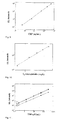
- Fig. 4 shows typical standard curves obtained in the assays, where (a) electrodes were air-oxidised, (b) electrodes were anodised with 2.92 V, and (c) electrodes anodised with 2.92 V and coated with thin polystyrene layer as described above (in the measuring solution of 1 mol/L K 2 S 2 O 8 ).
- the measurements were performed using aluminium cup electrodes and the instrument described in an academic thesis of S.
- the electrodes were cleaned and anodised as described in Example 1 and the electrodes were covered with thin layer of epoxy resin.
- Coating electrodes with epoxy resin Both components of the Super epoxy glue (Loctite Finland Oy, art. n:o 120-1, Finland) were dissolved 1% (w/v) in toluene. The components were mixed 1:1 and the electrode was immersed into this solution in ultrasound bath and then lifted slowly out of this solution. The flowing solution from the lower edge was dried and the electrode was allowed to dry at room temperature until toluene was evaporated and then further in an oven at 40°C for 24 h. Thicker coatings can be made by repeating the procedure.
- Super epoxy glue Lictite Finland Oy, art. n:o 120-1, Finland
- Electrodes were coated with antibody by physical adsorption by incubating the electrode in TSA-buffer containing the coating antibody (clone 8661, specific to the alpha chain of THS, Pharmacia, Uppsala, Sweden) 30 ⁇ g/mL for 3.0 h. After the coating the surface was washed with running wash solution and equilibrated overnight in TSA-buffer, pH 7.75, containing 0.1% bovine serum albumin and 5% D-sorbitol. After the equilibration the electrodes were dried and they were stable in storage for at least one year.
- TSA-buffer containing the coating antibody (clone 8661, specific to the alpha chain of THS, Pharmacia, Uppsala, Sweden) 30 ⁇ g/mL for 3.0 h. After the coating the surface was washed with running wash solution and equilibrated overnight in TSA-buffer, pH 7.75, containing 0.1% bovine serum albumin and 5% D-sorbitol. After the equilibration
- the labelled antibody for the assay of THS was prepared in the same way as in Example 1.
- the monoclonal antibody that is specific to the ß-chain of TSH (clone 5404, Medix Oy, Helsinki, Finland) was labelled.
- TSH standards (0, 0.25, 1.5, 9, 54, 324 ⁇ U/mL) were prepared by diluting the stock standard (Scripps Laboratories Inc, San Diego, USA) in TSA-buffer containing 7% bovine serum albumin.
- THS standard (20 ⁇ L) and 180 ⁇ L (300 ng) of labelled antibody were added to the polystyrene wells. After incubation for 1h, the electrode was washed and the EL was measured as in Example 1a-1b, but using the electroluminometer constructed by modifying an Arcus fluorometer (Wallac, Turku, Finland). The rake electrodes were as in Fig. 3c.
- Fig. 5 displays standard curves obtained with electrodes covered (a) with naturally existing oxide film, and (b) with electrodes covered with an anodic oxide film and an epoxy film.
- Thyroxine was bound to gelatine as follows. T4-N-hydroxysuccinimide ester (1 mg, Wallac Oy, Turku, Finland) was dissolved in 194 mL of dioxane and 0.1 mL of this solution was added to 1 mL of 0.05 mol/L phosphate buffer, pH 7.3, containing 20 mg of gelatin (E. Merck, Darmstadt, Germany). After the reaction overnight at +4°C gelatin was separated from small-molecular reagents by gel filtration using PD10-column (Pharmacia, Uppsala, Sweden) and phosphate buffer as eluent as above.
- PD10-column Pharmacia, Uppsala, Sweden
- the purified conjugate was labelled with isothiocyanate derivative of terbium chelate as in Example 1, but in this case the molar ratio of Tb-chelate to gelatin was 200:1. By assumption that the molecular weight of gelatin is 1 million it is possible to bind about 100 Tb-chelates to one gelatin molecule.
- Electrodes were coated with rabbit anti-mouse immunoglobulin (Dako, Glostrup, Denmark) by incubating the electrode overnight in 0.1 mol/L phosphate buffer, pH 4.9, containing the antibody 5 ⁇ g/mL. Next day the electrode was washed with wash solution as in Example 1 and equilibrated overnight in TSA-buffer containing 0.1% bovine serum albumin, 6% D-sorbitol and 1 mmol/L CaCl 2 . The coated electrode was dried without washing. It could be stored at room temperature without loss of activity for at least 3 months.
- the standards of T4 (0, 10, 50, 100, 150 and 300 nmol/L) were prepared in 0.01 mol/L HEPES-, 0.001 mol/L sodium phosphate buffer, pH 7.4, containing 0.1 mol/L NaCl and 0.1 % NaN 3 (HEPES-buffer), and 0.1 % casein.
- Tb-chelate Labelling the probe with Tb-chelate.
- the oligonucleotide containing amino groups (TTCGGGAAGTCGCCGGTCATCGTAGA-(C-NH 2 ) 25 -5', Wallac, Turku, Finland) was labelled with Tb-chelate as in Example 2 except that the labelled nucleotide was purified using NAP-5 and NAP-10 columns (Pharmacia, Uppsala, Sweden).
- Coating electrode with streptavidin The electrode was coated by incubating for 12-15 h in TSA-buffer containing streptavidin 10 ⁇ g/mL. Next day the electrode was washed with wash solution and equilibrated overnight in TSA-buffer containing 0.1% NaN 3 . 0.5% bovine serum albumin and 6% sorbitol overnight. The electrode was dried and stored dry.
- Hybridisation A sequence of 170 base pairs, from K562 human cell line, amplified with PCR from chromosome Ph 1 (TYKS, Turku, Finland) was used as a positive sample and distilled water was a negative control.
- the positive sample and the negative control were kept in 100 °C for 10 minutes and then cooled down on an ice bath after which they were centrifuged with a microcentrifuge for 1 minute at 12000 rpm.
- Sample (50 ⁇ l) was pipetted into a disposable cuvette followed by 200 ⁇ l of the assay buffer, which contained 2 ng of biotinylated probe and 2 ng of the probe labelled with Tb(III) chelate.
- This embodiment does not form part of the invention but represents background art that is useful for understanding the invention.
- Silanisation of the aluminium electrode The oxide-covered aluminium electrode was first washed with toluene in ultrasonic bath and then dried at 100 °C for 1 hour. Silanisation was carried out by sonicating the electrode twice for 30 seconds in a 5-% toluene solution of dicloromethylsilane. After the silanisation the electrode was rinsed once with toluene and twice with methanol.
- Coating electrode with antibody The electrode was coated as in Example 2.
- Anti-TSH antibody was labelled with the isothiocyanate derivative of Tb(III)- 2 -chelate as shown in Examples 1 and 2.
- TSH standards were prepared as in Example 2.
- Coating electrode with polystyrene A suitably sized Mg electrode (Merck Art. 5812) was washed in hexane using ultrasonic bath. Hexane was allowed to evaporate and the electrode was coated with polystyrene as in Example 1.
- the electrode was antibody-coated with mouse anti-human CRP antibody (clone 7H4, Labmaster Ltd., Turku) by incubating it for 1 hour in TSA buffer (pH 8.7) containing 10 ⁇ g/mL of antibody. The electrode was washed, stabilised and stored as in Example 1.
- the antibody (mouse anti-human C-reactive protein, CRP, clone 5F3, Labmaster Ltd., Turku) was labelled as in Example 1.
- Silicon electrodes were made from n-Si discs doped with antimony. The orientation of Si discs was (111) and resistivity 0.008-0.015 ⁇ cm (Okmetic Ltd., Finland). The electrodes were cut into the size of 8.0 x 55 mm before surface treatments.
- Si electrode was anodised in a similar electrolyte solution as aluminium in Example 1, but using pulse anodising with a pulse train instead of DC anodising.
- the pulse train consisted anodic and cathodic pulses (200- ⁇ s each, +5 V or -5 V, frequency 100 Hz) with 10-ms intermittent zero level between the pulses.
- the electrode was rinsed with quartz distilled water.
- Coating electrode with antibody Typically oxide-covered silicon electrode (0.80 x 0.005 x 5.0 cm) was coated with mouse anti- ⁇ 2 -microglobulin antibody (clone 6G12, Labmaster Ltd., Turku) by incubating overnight in 0.2 M NaH 2 PO 4 solution, which contained 10 ⁇ g/mL of antibody. The next day the electrode was washed six times with washing solution (0.01 M TRIS-HCl buffer, pH 7.75, 0.9% NaCl and 0.02% Tween 20) and saturated overnight in a saturation solution, which was 0.05 M TRIS-HCl buffer, pH 7.75, containing 1 g of bovine serum albumin, 60 g of sorbitol and 1 mmol CaCl 2 per litre. The saturated electrode can be stored dry at least for 3 months after washing (6 times).
- Second monoclonal anti- ⁇ 2 -microglobulin antibody (clone 1F10, Labmaster Ltd., Turku) was labelled with isothiosyanato derivative of the Tb(II)-4 [Tb 3+ - N 2 -(4-isothiocyanatobenzoyl)-diethylentriamine-N 1 , N 1 , N 3 , N 3 - tetraacetate] (Wallac Ltd., Turku) by allowing the antibody to react with the chelate in molar ratio of 1:60 at pH 9.5. pH was adjusted with 1 M Na 2 CO 3 solution.
- Labelled antibody was purified from unreacted chelate by gelfiltration (Sepharose 6B 1 x 50 cm, Sephadex G-50 1 x 5 cm) using TSA buffer (0.05 mol/L TRIS-HCl, pH 7.75, 0.9% NaCl, 0.05% NaN 3 ) as mobile phase. Typically in this way, 5-10 chelate molecule can be bound to one antibody molecule. To improve the stability, 0.1% of bovine serum albumin was added into the solution of labelled antibody.
- TSA buffer contained 7.5% bovine serum albumin.
- Immunochemical determination Immunochemical reaction was performed in disposable polystyrene cuvettes (1 mL, Brand, Cat. Number 7590 15, Wertheim, Germany), the volume of which were reduced to 250 ⁇ l by a Teflon filler. Standards were diluted 1:50 with the assay buffer (0.05 mol/L TRIS-HCl, pH 7.75 containing 0.9% of NaCl, 0.05% of NaN3, 0.5% of bovine serum albumin and 0.01% Tween 20) and were added to the bottom of cuvette (40 ⁇ L). Then 160 ⁇ L of labelled antibody (500 ng containing 100 ng of labelled and 400 ng of unlabelled antibody, clone 1F10) in the assay buffer was added. Finally, the electrode coated with antibody was placed into the cuvette. Immunochemical reaction was allowed to take place for 1 h and the electrode was washed six times with washing solution.
- the assay buffer 0.05 mol/L TRIS-HCl, pH 7.75 containing 0.9% of NaCl, 0.05%
- EL was measured using electroluminometer and a cuvette especially prepared for this purpose.
- a Pt-wire served as counter electrode in the cuvette.
- Borate buffer, 0.2 mol/L, pH 7.75, containing 2 mmol/L K 2 S 2 O 8 was used as a measuring buffer.
- Coating electrodes with polystyrene Silicon electrodes were prepared and anodised as in Example 7. The anodised electrodes were coated with polystyrene by sonicating the electrode for 30 seconds in a solution containing 1.5 mg/mL of polystyrene in benzene. After this, the electrode was lifted up slowly from the solution and allowed to dry at room temperature.
- Electrodes were coated with antibody as in Examples 2 and 7 (clone 8661 Pharmacia, Uppsala, Sweden). The immunoassay was done in similar cuvettes as in Example 7, but using the labelled antibody prepared in Example 2 (80 ng of Tb(III)-2 labelled antibody/electrode) and the standard solution from Example 2.
- Figure 11 shows the standard curves obtained with potentiostatic excitation (-10 V , 200 ⁇ s excitation pulses, 500 excitation cycles). Electrodes that were not anodised (a), anodised electrodes (b), and the electrodes that were both anodised and coated with polystyrene (c).
- DNA hybridisation method exploiting Si-electrodes modified by anodisation and coaling with polystyrene.
- Silicon electrodes were prepared from n-Si discs doped with antimony. The orientation of Si discs was (111) and resistivity 0.008-0.015 ⁇ cm (Okmetic Ltd., Finland). The electrodes were cut into the size of 8.0 x 55 mm before surface treatments.
- Electrodes were anodised in a neutral 0.5 M ammoniumborate buffer first galvanostatically (1 mA/cm 2 ) up to 5.2 V and then potentiostatically for 10 minutes.
- the anodised parts of the electrode were coated with polystyrene at first by sonicating the electrode for 10 seconds in a solution containing 10 mg/mL of polystyrene in benzene. After this the electrode was lifted up slowly from the solution and allowed to dry at room temperature.
- Hybridisation and the EL measuring were carried out as in Example 4 except that the electroluminometer and the cuvettes were as in Example 7. The results are shown Fig. 12 .
- the Si-electrodes were prepared and anodised as in Example 9 and coated with antibody. as in Example 3.
- Cup electrodes (volume 450 ⁇ l) made of Zn (Johnson Matthey Alfa Products) were first washed in an ultrasonic bath with hexane. Next, they were either treated cathodically in a peroxodisulfate solution in order to produce a thin oxide layer, or were coated directly with organic layers.
- Immunoassay was done in the same way as in Example 1 but with the reagents from Example 2. Standard curves are shown in Fig. 14 .
- Immunometric determination of ⁇ 0 2 -microglobulin exploiting insulator electrodes composed from glass plates covered with indium tin oxide surface film and coated with alternating layers of polystyrene and paraffin.
- the electrodes (7.0 x 55 mm) were cut out from indium tin oxide-coated glass plates (Lohja Oy, Lohja, Finland) and then coated with polystyrene-paraffin-polystyrene layers as in Example 11.
- Second monoclonal anti- ⁇ 2 -microglobulin antibody (clone 1F10, Labmaster Ltd., Turku, Finland) was labelled with the isothiocyanato derivative of Tb(III)- 2 chelate.
- the labelling was done as in Example 7 with the isothiocyanato derivative of Tb(III)- 4 chelate.
- the label was purified by gelfiltration as in Example 7.
- Au-PET foils (Intrex film, type 28FX43, Sierracin, Sylmar, California, USA) were glued on glass plates (8.0 x 55 mm) and the plate electrodes obtained were coated with polystyrene-paraffin-polystyrene layers as in Example 7.
- the immunochemical detection of ⁇ 2 -microglobulin was done as in Example 7, but using the labelled antibody prepared in Example 12. Standard curve is shown in Fig. 16 .
- Electrodes coated with conducting polymer were coated further with paraffin layer by dipping them into a hexane solution containing 1.0 mg/mL of paraffin. The electrodes were allowed to dry for 12 hours. After this the electrodes were coated with polystyrene layer by dipping them into a benzene solution containing 1.0 mg/mL of polystyrene.
- Aluminium oxide layer was grown from Al(CH 3 ) 3 and water on the steel plate (50 x 50 mm) at 200°C by using ALE-technique. Ninety cycles that produce about 5 nm thick oxide layer, were used in growing. Before the steel plate was taken out of the reactor, it was allowed to cool down to 60°C in 10 mbar nitrogen atmosphere.
- Aluminium oxide-coated steel was cut to 7.0 mm wide strips and they were covered with a thin polystyrene layer by dipping them twice into a benzene solution containing 0.7 mg/mL of polystyrene. The strips were allowed to dry between and after dipping for 8 h at room temperature.
- Immunoassay was done in the same way as in Example, except that TSA buffer (pH 7.8) were the incubation buffer. Standard curve is shown in Figure 18 .
- Magnesium electrodes were coated with polystyrene as described in Example 6 and coated with mouse IgG as in Example 1.
- PLA 2 and TSH standards 25 ⁇ L of each
- 175 ⁇ L of mixture of antibodies in TSA-buffer 500 ng anti-PLA 2 -antibody and 300 ng anti-TSH antibody
- Electrodes 7.0 mm x 0.3mm x 50 mm
- Electrodes were inserted into cuvettes and incubated for 1 h with shaking. Electrodes were washed with a wash solution and EL was measured with an electroluminometer as in Example 16. Standard curves are shown in Fig. 20 .
- Aluminium electrodes were anodised and coated with polystyrene as in Example 1.
- Magnesium electrodes were coated with polystyrene film as in Example 6. Latex particles were coated with antibodies as in Example 18.
- Immunoassay About 180 million coated latex particles (20 ⁇ l of dilution of 1:20) were applied to 1.5-mL polypropylene centrifugal tubes saturated with bovine serum albumin. To this suspension, 20 ⁇ L of standard and 20 ⁇ l of ALF-labelled antibody (600 ng) were added and the mixture was incubated for 15 min at room temperature. Then the particles were separated by centrifugation and washed 2 times with the wash solution. Particles were suspended into 200 ⁇ l of a solution containing 1 mmol/L substrate (phosphoric acid ester of 5-fluorosalisylic acid, FSAF, Kronem Systems Inc. Mississauga, Ontario, Canada).
- substrate phosphoric acid ester of 5-fluorosalisylic acid, FSAF, Kronem Systems Inc. Mississauga, Ontario, Canada.
- the supernatant was separated after a 15-min incubation and 100 ⁇ L of it was transferred into EL-cuvette. It contained a disposable coated Mg-working electrode and 2 non-disposable platinum wires as the counter electrode. Then 150 ⁇ l of 0.1 M NaOH containing 1.0 mmol/L potassium peroxodisulfate were added. EL was measured through a 420-nm interference filter. The standard curve (a) is shown in Fig. 22 .
- An alternative detection method was the following: 150 ⁇ L of supernatant was added to 100 ⁇ L of 0.5 mM Tb(III)-EDTA solution in 0.2 M NaOH. The solution was mixed with a pipette and allowed to react for 15 min.
- Immunoassay for ⁇ 2 -microglobulin on microtiter strips by detaching Tb ions from antibodies after the immunoreaction and measuring free Tb ions with a new complex using anodised silicon electrodes.
- Example 7 The wells of microtiter strips were coated as described in Example 7 for the electrodes.
- the antibody was labelled with Tb(III)- 1 chelate as in Example 7 and the immunoassay was performed also as in Example 7.
- the wells were washed with the wash solution and 200 ⁇ L of 0.1 M glycine-H 2 SO 4 -buffer, pH 2.5, were added followed by a 15-min incubation.
- 150 ⁇ L of the incubated solution was taken into the cuvette and 45 ⁇ L of 0.5 mol/L Na 2 CO 3 containing 5x10 -4 mol/L of ligand 5 was added.
- the solution was mixed well and 205 ⁇ L of measuring buffer was added.
- the Tb(III)- 5 chelate thus produced was quantified with oxide-coated silicon electrodes as in Example 7.
- the standard curve is shown in Fig. 23 .
- Liposomes containing Tb-5-complex were prepared. They were bound to antibodies (anti- ⁇ 2 -microglobulin, clone 6G12, Labmaster Oy, Turku, Finland) according to GP. Vonk, B. Wagner, Clin. Chem., 37 (1991) 1519 .
- the immunoreaction was made as in Example 20, except that the buffer did not contain detergents.
- 230 ⁇ L of 0.1 % Triton X-100, pH 3.2, in 0.1 M glycin buffer were added and incubated for 10 min.
- 60 ⁇ L of 0.5 mol/L Na 2 CO 3 containing 5x10 -4 mol/L of ligand 5 were added.
- Measuring buffer (240 ⁇ L) was added to the cuvette and EL was measured using 5 V (DC) anodised silicon electrodes as in Example 20. Standard curves are shown in Fig. 24 .
- Microtiter strips were coated as in Example 20.
- the antibody (clone 1F10, Labmaster Oy, Turku, Finland) was labelled with a photodetachable label (Rhodamine Green sulfosuccinimidyl ester, Molecular Probes, R-7091, Eugene, USA) according to the manufacturer's instructions.
- a photodetachable label Rhodamine Green sulfosuccinimidyl ester, Molecular Probes, R-7091, Eugene, USA
- the immunoassay was carried out in the wells of microtiter plates as in Example 20, except that after the washing, 200 ⁇ L of 0.05 M Na 2 B 4 O 7 were pipetted into the wells.
- Homogeneous immunoassay for ⁇ 2 -microglobulin exploiting energy transfer from donor to acceptor, enabling to observe delayed light emission from acceptor with an life-time related to the emission life-time of the donor.
- Coating antibody (clone 6G12, Labmaster Oy, Turku, Finland) was labelled with Tb(III)- 2 -isothiocyanate as the labelling of anti-TSH antibody in Example 2.
- Second monoclonal antibody (clone 1F10, Labmaster Oy, Turku, Finland) was labelled with Rhodamine B isothiocyanate (Sigma, R 1755) using label/antibody ratio of 90:1.
- Rhodamine B-labelled antibody was diluted after purification into an 0.2 M borate buffer, pH 7.8, including 4 % bovine serum albumin.
- Standard solution 40 ⁇ L; the same standards as in Example 7 in dilution of 1:50 made into 0.2 M borate buffer, pH 7.8, containing 4 % of bovine serum albumin and 0.005 % Tween 20
- 160 ⁇ L of Rhodamine B-labelled antibody 800 ng
- Electrode was inserted into the cuvette containing disposable steel counter electrodes. After a 20-min incubation with shaking, the cuvette was tightly closed and placed into the electroluminometer. The ratio of EL signal at 490 nm and 670 nm (delay time 500 ⁇ s; measuring window 3.0 ms) was measured. Results are in Fig. 26 .
- the coating antibody (clone 6G12, Labmaster Oy, Turku, Finland) was labelled with 9-fuorenylmethylclhoroformate (FMOC, Aldrich, No. 16,0512) according the manufacturer's instructions with using label/antibody ratio of 80:1.
- Coating of electrodes Silicon electrodes were prepared and anodised as in Example 9. They were coated with FMOC-labelled antibody as was done with unlabelled antibody in Example 7.
- Latex particles were coated with antibodies (Clone 1F10, Labmaster Oy, Turku, Finland) as in Example 10.
- Standard solution 40 ⁇ L; the same standard solutions as in Example 7 as a dilution of 1:50 made up by 0.2 M borate buffer, pH 7.8, including 4 % bovine serum albumin and 0.005% Tween 20
- 160 ⁇ L of the former buffer containing 1 mmol/L K 2 S 2 O 8 and 20 ⁇ L of the particle suspension were mixed in the cuvette.
- the reaction was allowed to proceed with shaking for 20 min and then 10 min without shaking.
- EL was measured as in Example 7.
- Standard curve is shown in Fig. 27 .
Landscapes
- Health & Medical Sciences (AREA)
- Immunology (AREA)
- Life Sciences & Earth Sciences (AREA)
- Chemical & Material Sciences (AREA)
- Engineering & Computer Science (AREA)
- Physics & Mathematics (AREA)
- Pathology (AREA)
- General Physics & Mathematics (AREA)
- Analytical Chemistry (AREA)
- General Health & Medical Sciences (AREA)
- Biochemistry (AREA)
- Biomedical Technology (AREA)
- Hematology (AREA)
- Molecular Biology (AREA)
- Urology & Nephrology (AREA)
- Cell Biology (AREA)
- Medicinal Chemistry (AREA)
- Food Science & Technology (AREA)
- Microbiology (AREA)
- Biotechnology (AREA)
- Nuclear Medicine, Radiotherapy & Molecular Imaging (AREA)
- Chemical Kinetics & Catalysis (AREA)
- Plasma & Fusion (AREA)
- Investigating Or Analysing Materials By The Use Of Chemical Reactions (AREA)
Claims (16)
- Procédé d'utilisation d'une électrode recouverte d'un film isolant (C/I) en tant que cathode pour l'excitation électrique de molécules de marquage d'au moins un type, dans des procédés de bioaffinité, dans lequel les molécules de marquage sont excitées par des impulsions électriques en solution, sur la surface ou à proximité de l'électrode recouverte d'un film isolant, suivie de la détection du signal ou des signaux de luminescence émis par le marqueur ou les marqueurs, et la quantification du marqueur ou des marqueurs, caractérisé en ce que l'électrode recouverte d'un film isolant comprend un matériau électriquement conducteur (C) ayant une résistivité inférieure à 10 Ωcm, et un film isolant (I) comprenant une ou plusieurs couches de film dont au moins l'une est un isolant électrique ayant une largeur de bande interdite supérieure ou égale à 5 eV, caractérisé en ce que la couche isolante comprend au moins un matériau choisi dans le groupe consistant en le dioxyde de silicium, l'oxyde de magnésium, un nitrure, un polymère organique, une paraffine ou d'autres hydrocarbures.
- Procédé selon la revendication 1, dans lequel le matériau de base conducteur (C) est en métal, polymère conducteur, ou matériau semi-conducteur dopé électroniquement conducteur.
- Procédé selon la revendication 1 ou 2, dans lequel la couche isolante (I) est un polymère organique, tel que le poly(amide), le poly(acrylamide), le poly(éthène), le poly(propylène), les hydrocarbures fluorés ou chlorés, ou un autre polymère apparenté disposé en tant que film de 1 à 200 nm d'épaisseur, soit directement sur le matériau conducteur soit sur sa surface d'oxyde ou de nitrure formée spontanément ou spécifiquement.
- Procédé selon la revendication 1 ou 2, dans lequel la couche isolante (I) est du dioxyde de silicium ou de l'oxyde de magnésium réalisé par oxydation anodique ou thermiquement à des températures élevées ou par une technique ALE sur un conducteur (C), le procédé comprenant une étape de retouche d'une destruction de ladite couche d'oxyde induite par des ruptures électriques ou par les réactions du solvant, en faisant passer des impulsions anodiques entre les impulsions d'excitation cathodiques de luminophores ; et dans lequel le matériau de base d'électrode (C) est de préférence en silicium ou silicium composite rendu conducteur par dopage avec d'autres matériaux, laquelle couche est facultativement enrobée en outre d'un film organique ou inorganique d'une épaisseur de 1 à 200 nm.
- Procédé selon la revendication 1 ou 2, dans lequel le marqueur fait partie d'une molécule détectable de forme :
(L)n-Xx-Yy,
dans laquelle,
L est un marqueur ou un mélange de différents types de marqueurs, ledit marqueur étant un dérivé d'un luminophore organique, tel qu'un dérivé de fluorescéine, d'acide aminonaphtalènesulfonique, de salicylates, de rhodamines ou de coumarines ; un dérivé de chélates de lanthanide, tel qu'un dérivé de chélates de Tb (III), Eu (III), Y (III), Sm (III), Dy (III), Gd (III) ; un dérivé de chélates de métal de transition, tel que des chélates de ruthénium (II)-trisbipyridyle ou ruthénium (II)-trispyrazyle ; dans lequel un ou plusieurs desdits dérivés sont liés par l'intermédiaire de groupes fonctionnels appropriés soit directement soit par l'intermédiaire d'un ou plusieurs composés de liaison (X) à un composé (Y), dans lequel (Y) est représenté à titre d'exemple en tant que protéine, anticorps, enzyme ou acide nucléique, qui a une affinité contre l'analyte à quantifier, et dans lequel les indices entiers n, x et y expriment le nombre de (L), (X) et (Y), et sont supérieurs ou égaux à 1, et dans lequel le composé (Y) peut se lier à une cellule, un composant cellulaire, un virus, une bactérie, un acide nucléique, un ADN, un ARN, un fragment d'ADN, un fragment d'ARN, un polysaccharide, une protéine, un polypeptide, une enzyme, un métabolite, une hormone, une substance pharmacologique, un médicament, un alcaloïde, un stéroïde, une vitamine, un acide aminé, un glucide, un polluant environnemental, ou un anticorps, et dans lequel le composé de liaison (X) peut contenir, en tant que fonction de liaison essentielle, un groupe chimique tel qu'uréido, thiouréido, amide, imide substitué, thioéther, -S-S-, sulfonamide, ou sulfonamide N-substitué, qui fait partie d'une molécule plus grande ou d'un polymère plus grand se fixant au composé (Y). - Procédé selon l'une quelconque des revendications 1 à 5, dans lequel plus d'un type de marqueur est utilisé simultanément, de sorte que les spectres d'émission et/ou la durée de vie de luminescence des marqueurs s'écartent les uns des autres, permettant la mesure de plusieurs analytes en même temps ou l'exploitation d'un étalonnage interne.
- Procédé selon l'une quelconque des revendications 1 à 6, dans lequel la quantification d'un analyte est réalisée sur une électrode à isolant qui est enrobée d'un composé (Y') soit par adsorption physique soit par des liaisons covalentes, dans lequel (Y') a une affinité spécifique avec le même analyte qu'(Y) selon la revendication 5, et dans lequel la réaction d'affinité se produit sur la surface du film isolant avant l'étape de détection.
- Procédé selon la revendication 5, dans lequel une compétition de liaison à (Y) sur la surface de l'électrode à isolant est créée entre un analyte marqué (L)n-Xx-Aa, dans lequel les indices entiers n, x et a expriment le nombre de (L), (X) et (A), et un analyte (A) provenant de l'échantillon, permettant de déterminer la concentration en analyte.
- Procédé selon la revendication 5 ou 8, dans lequel la liaison de (L)n-Xx-Yy à (A) sur la surface de l'électrode à isolant est inhibée par le (A) provenant de l'échantillon, permettant de déterminer la concentration en analyte.
- Procédé selon l'une quelconque des revendications 1 à 9, dans lequel seules les molécules de marquage situées à proximité du film de couche isolant sont excitées par les impulsions électriques permettant à l'analyse d'être réalisée par le principe de dosage homogène, et la séparation de marqueur libre (L)n-Xx-Yy n'est pas nécessaire avant l'étape de détection,
ou la quantification est réalisée avec le principe hétérogène et le marqueur libre (L)n-Xx-Yy est éliminé de la proximité de l'électrode par une étape de lavage avant l'étape de détection,
ou l'immunoréaction de base est réalisée dans une chambre d'incubation séparée avec des matériaux de support solide de petite taille, tels que des particules de latex paramagnétiques, moyennant quoi seule la détection du marqueur est réalisée sur la surface d'électrode, après une incubation et des lavages éventuels, en amenant les matériaux de support solide à proximité de l'électrode. - Procédé selon l'une quelconque des revendications 1 à 10, dans lequel des composants d'oxydation et de réduction primaires générés dans une cellule électrochimique sont transformés en composants de réduction ou d'oxydation secondaires en ajoutant des coréactifs appropriés, tels que le peroxodisulfate, le peroxodiphosphate ou le peroxyde d'hydrogène et d'autres composés qui donnent, en raison d'une réduction à un électron, un agent fortement oxydant, ou les composants d'oxydation générés dans la cellule sont transformés en composants plus appropriés pour exciter le marqueur utilisé, par exemple, par l'ajout d'un sel des ions contenant de l'halogénure ou des séries de pseudo-halogénure tels que F-, Cl-, Br-, I-, SCN-, CN- ou N3 -.
- Procédé selon la revendication 5 ou 10, dans lequel le signal de luminescence est généré par des impulsions électriques sur une électrode couverte d'un film isolant défini par les revendications 1 et 2, dans lequel le marqueur selon la revendication 5 comprend une enzyme capable d'amplifier des luminophores luminescents et, spécifiquement, dans lequel ladite enzyme est une phosphatase alcaline et la molécule luminescente est une molécule extrêmement luminescente ou un chélate de lanthanide généré par ladite enzyme.
- Procédé selon les revendications 5 ou 10, dans lequel le luminophore est détaché de la molécule liée à un support solide avant la quantification du signal de luminescence.
- Procédé selon la revendication 1 ou 2, dans lequel la couche isolante est un oxyde ou un nitrure et en outre enrobée d'une ou plusieurs couches organiques, pour son utilisation dans un dosage analytique, de préférence un dosage de bioaffinité, impliquant des anticorps, des antigènes ou des acides nucléiques, avec ou sans agents d'oxydation ou de réduction secondaires mentionnés à la revendication 11.
- Construction d'une électrode recouverte d'un film isolant pour son utilisation dans le procédé selon la revendication 1 ou 2, en tant que cathode pour l'excitation électrique de molécules de marquage d'au moins un type, caractérisée en ce que l'électrode recouverte d'un film isolant comprend un matériau électriquement conducteur (C) ayant une résistivité inférieure à 10 Ωcm, et un film isolant (I) comprenant une ou plusieurs couches de film dont au moins l'une est un isolant électrique ayant une largeur de bande interdite supérieure ou égale à 5 eV, la couche isolante comprenant au moins un matériau choisi dans le groupe consistant en le dioxyde de silicium, l'oxyde de magnésium, un nitrure, un polymère organique, une paraffine ou d'autres hydrocarbures et dans laquelle ladite électrode est optiquement transparente, à la gamme de longueurs d'onde d'émission desdits marqueurs, permettant une mesure de lumière par l'intermédiaire de l'électrode.
- Construction selon la revendication 15, dans laquelle ladite électrode est réalisée totalement ou partiellement par des techniques d'épitaxie en couches atomiques, ALE.
Applications Claiming Priority (3)
| Application Number | Priority Date | Filing Date | Title |
|---|---|---|---|
| FI970593 | 1997-02-12 | ||
| FI970593A FI970593A7 (fi) | 1997-02-12 | 1997-02-12 | Pinnoitettujen johteiden käyttö analyyttisiin tarkoituksiin |
| PCT/FI1998/000114 WO1998036266A1 (fr) | 1997-02-12 | 1998-02-10 | Excitation electrique de substances de marquage au niveau d'electrodes enrobees |
Publications (2)
| Publication Number | Publication Date |
|---|---|
| EP0960330A1 EP0960330A1 (fr) | 1999-12-01 |
| EP0960330B1 true EP0960330B1 (fr) | 2015-04-08 |
Family
ID=8548187
Family Applications (1)
| Application Number | Title | Priority Date | Filing Date |
|---|---|---|---|
| EP98903034.1A Expired - Lifetime EP0960330B1 (fr) | 1997-02-12 | 1998-02-10 | Excitation électrique de substances de marquage au niveau d'électrodes enrobées |
Country Status (5)
| Country | Link |
|---|---|
| US (2) | US6251690B1 (fr) |
| EP (1) | EP0960330B1 (fr) |
| AU (1) | AU5989698A (fr) |
| FI (1) | FI970593A7 (fr) |
| WO (1) | WO1998036266A1 (fr) |
Families Citing this family (29)
| Publication number | Priority date | Publication date | Assignee | Title |
|---|---|---|---|---|
| FI970593A7 (fi) * | 1997-02-12 | 1998-08-13 | Ala Kleme Timo | Pinnoitettujen johteiden käyttö analyyttisiin tarkoituksiin |
| US6136268A (en) * | 1999-08-17 | 2000-10-24 | Orion Diagnostica | Method for luminescence measurements |
| JP3764102B2 (ja) * | 1999-09-06 | 2006-04-05 | 株式会社日立製作所 | 薄膜型電子源及び薄膜型電子源の製造方法並びに表示装置 |
| US6487326B1 (en) * | 1999-11-29 | 2002-11-26 | Board Of Regents, The University Of Texas System | Thin film fiber optic electrode sensor array and apparatus |
| FR2821937B1 (fr) * | 2001-03-07 | 2003-06-06 | Saint Gobain | Dispositif electrocommandable a proprietes optiques et/ou energetiques variables |
| EP2420824B1 (fr) | 2001-06-29 | 2018-11-28 | Meso Scale Technologies LLC | Plaque multipuits ayant un réseau de puits et un kit pour l'utilisation dans la conduite d'un essai ECL |
| JP2003028797A (ja) * | 2001-07-11 | 2003-01-29 | Hitachi Software Eng Co Ltd | 蛍光読み取り装置 |
| WO2003031953A2 (fr) * | 2001-10-12 | 2003-04-17 | University Of Florida | Procedes et appareil de detection de composes nitroaromatiques |
| DE10214250A1 (de) * | 2002-03-30 | 2003-10-23 | Hans-Joachim Galla | Mikrotiterplatte mit elektrisch leitfähiger und optisch transparenter Beschichtung |
| FI118611B (fi) * | 2002-04-15 | 2008-01-15 | Labmaster Oy | Eriste-elektrodilaitteet |
| FR2839364B1 (fr) * | 2002-05-03 | 2004-12-24 | Commissariat Energie Atomique | Procede de detection d'une reconnaissance molecukaire par electrochimiluminescence |
| FR2841985A1 (fr) * | 2002-07-04 | 2004-01-09 | Commissariat Energie Atomique | Detection d'une reconnaissance moleculaire par electrochimiluminescence sur polymere conducteur |
| US7312040B2 (en) * | 2002-09-20 | 2007-12-25 | Agilent Technologies, Inc. | Microcapsule biosensors and methods of using the same |
| JP4073323B2 (ja) * | 2003-01-23 | 2008-04-09 | 日立ソフトウエアエンジニアリング株式会社 | 機能性ビーズ、その読み取り方法および読み取り装置 |
| US7981362B2 (en) | 2003-11-04 | 2011-07-19 | Meso Scale Technologies, Llc | Modular assay plates, reader systems and methods for test measurements |
| FI119894B (fi) * | 2005-03-30 | 2009-04-30 | Labmaster Oy | Elektrokemiluminesenssiin perustuva analyysimenetelmä ja siinä käytettävä laite |
| US7696329B2 (en) * | 2006-06-23 | 2010-04-13 | Florida State University Research Foundation, Inc. | Immunoglobulin peptides against heated bovine blood |
| FI20100246A7 (fi) | 2010-06-11 | 2011-12-12 | Jarkko Eskola | Menetelmät ja laitteet luminesenssin tuottamiseksi integroiduista elektrodisiruista katodisten ja bipolaaristen pulssien avulla |
| RU2568979C2 (ru) | 2010-06-11 | 2015-11-20 | Закрытое акционерное общество "Научные приборы" | Интегрированные углеродные электродные чипы для электрического возбуждения хелатов лантанидов и способы анализа с их использованием |
| KR101789356B1 (ko) * | 2010-10-25 | 2017-10-23 | 에프. 호프만-라 로슈 아게 | 전기화학발광 검출에 있어서의 신호 증강 화합물의 용도 |
| CA2824404C (fr) | 2011-01-06 | 2023-01-03 | Meso Scale Technologies, Llc | Cartouches d'essai destinees a l'analyse pcr et methodes d'utilisation associees |
| US10241111B2 (en) | 2016-10-21 | 2019-03-26 | AhuraTech LLC | Electroluminescent binding assays |
| US9756701B1 (en) | 2016-10-21 | 2017-09-05 | AhuraTech LLC | System and method for producing light in a liquid media |
| US10021761B2 (en) | 2016-10-21 | 2018-07-10 | AhuraTech LLC | System and method for producing light in a liquid media |
| US10159136B2 (en) | 2016-10-21 | 2018-12-18 | AhuraTech LLC | System and method for producing light in a liquid media |
| FI127861B (en) * | 2017-06-29 | 2019-04-15 | Labmaster Oy | A method and a device for dynamic generation of hot electrons into aqueous solutions |
| FI20175623A1 (en) | 2017-06-29 | 2018-12-30 | Labmaster Oy | A method and devices for adaptive measuring of electrochemiluminescence |
| KR102725471B1 (ko) | 2022-02-18 | 2024-11-06 | 호서대학교 산학협력단 | 피라미드 구조를 이용한 음극전계발광 소자 및 그 형성 방법과 항체 부착 방법 |
| CN115494129A (zh) * | 2022-09-26 | 2022-12-20 | 中国科学院长春应用化学研究所 | 一种热电子发光分析仪 |
Citations (4)
| Publication number | Priority date | Publication date | Assignee | Title |
|---|---|---|---|---|
| EP0522677A1 (fr) * | 1991-07-10 | 1993-01-13 | TDK Corporation | Procédé pour le mesurage de la concentration d'immunoréactant au moyen luminescence électrochimique |
| WO1993022678A2 (fr) * | 1992-04-23 | 1993-11-11 | Massachusetts Institute Of Technology | Procedes et appareil optiques et electriques de detection de molecules |
| US20070034930A1 (en) * | 2005-08-11 | 2007-02-15 | Micron Technology, Inc. | Discrete trap non-volatile multi-functional memory device |
| US20130143379A1 (en) * | 2011-12-05 | 2013-06-06 | Elpida Memory, Inc. | Leakage reduction in dram mim capacitors |
Family Cites Families (10)
| Publication number | Priority date | Publication date | Assignee | Title |
|---|---|---|---|---|
| US4280815A (en) * | 1979-06-18 | 1981-07-28 | Technicon Instruments Corporation | Electrochemiluminescent immunoassay and apparatus therefor |
| JP2686928B2 (ja) * | 1985-08-26 | 1997-12-08 | アンリツ株式会社 | シリコン・ゲルマニウム混晶薄膜導電体 |
| US5591581A (en) * | 1986-04-30 | 1997-01-07 | Igen, Inc. | Electrochemiluminescent rhenium moieties and methods for their use |
| US5308754A (en) * | 1988-03-21 | 1994-05-03 | Kankare Jouko J | Electrogenerated luminescence in solution |
| SE461117B (sv) * | 1988-03-21 | 1990-01-08 | Jouko J Kankare | Foerfarande foer bestaemning av koncentrationen av en luminiscerande lantanid foerening |
| GB8927503D0 (en) * | 1989-12-04 | 1990-02-07 | Kronem Systems Inc | Enzyme-amplified lanthanide chelate luminescence |
| US5340714A (en) * | 1992-05-08 | 1994-08-23 | Monitor Diagnostics, Inc. | Use of nonmetallic tetrapyrrole molecules and novel signal solutions in chemiluminescent reactions and assays |
| US5624711A (en) * | 1995-04-27 | 1997-04-29 | Affymax Technologies, N.V. | Derivatization of solid supports and methods for oligomer synthesis |
| JP2803631B2 (ja) * | 1995-07-03 | 1998-09-24 | 株式会社デンソー | エレクトロルミネッセンス素子およびその製造方法 |
| FI970593A7 (fi) * | 1997-02-12 | 1998-08-13 | Ala Kleme Timo | Pinnoitettujen johteiden käyttö analyyttisiin tarkoituksiin |
-
1997
- 1997-02-12 FI FI970593A patent/FI970593A7/fi unknown
-
1998
- 1998-02-10 US US09/341,955 patent/US6251690B1/en not_active Expired - Lifetime
- 1998-02-10 EP EP98903034.1A patent/EP0960330B1/fr not_active Expired - Lifetime
- 1998-02-10 WO PCT/FI1998/000114 patent/WO1998036266A1/fr not_active Ceased
- 1998-02-10 AU AU59896/98A patent/AU5989698A/en not_active Abandoned
-
2001
- 2001-02-09 US US09/779,881 patent/US6645776B2/en not_active Expired - Lifetime
Patent Citations (4)
| Publication number | Priority date | Publication date | Assignee | Title |
|---|---|---|---|---|
| EP0522677A1 (fr) * | 1991-07-10 | 1993-01-13 | TDK Corporation | Procédé pour le mesurage de la concentration d'immunoréactant au moyen luminescence électrochimique |
| WO1993022678A2 (fr) * | 1992-04-23 | 1993-11-11 | Massachusetts Institute Of Technology | Procedes et appareil optiques et electriques de detection de molecules |
| US20070034930A1 (en) * | 2005-08-11 | 2007-02-15 | Micron Technology, Inc. | Discrete trap non-volatile multi-functional memory device |
| US20130143379A1 (en) * | 2011-12-05 | 2013-06-06 | Elpida Memory, Inc. | Leakage reduction in dram mim capacitors |
Non-Patent Citations (2)
| Title |
|---|
| FLEMING R M ET AL: "Defect dominated charge transport in amorphous Ta2O5 thin films", JOURNAL OF APPLIED PHYSICS, AMERICAN INSTITUTE OF PHYSICS, US, vol. 88, no. 2, 15 July 2000 (2000-07-15), pages 850 - 862, XP012051219, ISSN: 0021-8979, DOI: 10.1063/1.373747 * |
| KULMALA S, HAAPAKKA K: "Mechanism of electrogenerated luminescence of terbium(III)-{2,6-bis[N,N-bis(carboxymethyl)aminomethyl]-4-benzoylphenol} chelate at an oxide-covered aluminium electrode", JOURNAL OF ALLOYS AND COMPOUNDS, vol. 225, 1995, pages 502 - 506, XP004072024 * |
Also Published As
| Publication number | Publication date |
|---|---|
| US20020081749A1 (en) | 2002-06-27 |
| AU5989698A (en) | 1998-09-08 |
| US6251690B1 (en) | 2001-06-26 |
| FI970593A0 (fi) | 1997-02-12 |
| EP0960330A1 (fr) | 1999-12-01 |
| FI970593L (fi) | 1998-08-13 |
| FI970593A7 (fi) | 1998-08-13 |
| US6645776B2 (en) | 2003-11-11 |
| WO1998036266A1 (fr) | 1998-08-20 |
Similar Documents
| Publication | Publication Date | Title |
|---|---|---|
| US6251690B1 (en) | Electrical excitation of label substances at insulating film-coated conductors | |
| US5308754A (en) | Electrogenerated luminescence in solution | |
| KR100381462B1 (ko) | 전기화학발광을이용한생체분자반응속도측정방법 | |
| EP0580979B1 (fr) | Procédé de détection par induction d'électrochimiluminescence | |
| EP1204858B1 (fr) | Procede de mesures de l' electroluminescence | |
| US5756011A (en) | Detecting or quantifying multiple analytes using labelling techniques | |
| WO1996017248A9 (fr) | Methodes de mesure de la progression de reactions biomoleculaires par electrochimioluminescence | |
| EP0070832A1 (fr) | Composition fluorescente micro-encapsulee, ensemble de test et systeme d'essai immunologique | |
| WO1987007386A1 (fr) | Procede immunoanalytique en phase solide | |
| Namba et al. | Highly sensitive electrochemiluminescence immunoassay using the ruthenium chelate-labeled antibody bound on the magnetic micro beads | |
| CN115480055B (zh) | 电化学发光免疫分析试剂盒及其使用方法 | |
| GB2217007A (en) | Electrochemical analysis of analytes in solution | |
| CN111351938A (zh) | 电激发标记分子的方法和绝缘膜涂覆的电极 | |
| EP1322670B1 (fr) | Electrochimioluminescence de composes d'acridane | |
| CN115629208B (zh) | 采用电中性金属配合物增强电化学发光免疫分析性能的方法 | |
| Jandreski | Chemiluminescence technology in immunoassays | |
| US7186568B1 (en) | Electrochemiluminescence from acridan compounds | |
| AU2002215610A1 (en) | Electrochemiluminescence from acridan compounds | |
| AU676665B2 (en) | Methods and apparatus for improved luminescence assays usingparticle concentration and chemiluminescence detection | |
| FI111758B (fi) | Lyoluminesenssin käyttö analyyttisiin tarkoituksiin | |
| FI111663B (fi) | Elektrokemiluminesenssin aikaerotteisen mittaustavan käyttö analyyttisiin tarkoituksiin | |
| JPH11201972A (ja) | 発光シリコンを用いた測定法 | |
| HK1013861B (en) | Method of detection by inducing electrochemiluminescence |
Legal Events
| Date | Code | Title | Description |
|---|---|---|---|
| PUAI | Public reference made under article 153(3) epc to a published international application that has entered the european phase |
Free format text: ORIGINAL CODE: 0009012 |
|
| 17P | Request for examination filed |
Effective date: 19990726 |
|
| AK | Designated contracting states |
Kind code of ref document: A1 Designated state(s): CH DE DK FI GB IT LI NL SE |
|
| 17Q | First examination report despatched |
Effective date: 20060929 |
|
| RAP1 | Party data changed (applicant data changed or rights of an application transferred) |
Owner name: LABMASTER OY |
|
| RIN1 | Information on inventor provided before grant (corrected) |
Inventor name: KORPELA, TIMO KALEVI Inventor name: ESKOLA, JARKKO UOLEVI Inventor name: ALA-KLEME, TIMO VAEIMOE KALEVI Inventor name: KULMALA, SAKARI MIKAEL |
|
| RIN1 | Information on inventor provided before grant (corrected) |
Inventor name: KORPELA, TIMO KALEVI Inventor name: ESKOLA, JARKKO UOLEVI Inventor name: ALA-KLEME, TIMO VAEIMOE KALEVI Inventor name: KULMALA, SAKARI MIKAEL |
|
| REG | Reference to a national code |
Ref country code: DE Ref legal event code: R079 Ref document number: 69843382 Country of ref document: DE Free format text: PREVIOUS MAIN CLASS: G01N0021660000 Ipc: G01N0033530000 |
|
| GRAP | Despatch of communication of intention to grant a patent |
Free format text: ORIGINAL CODE: EPIDOSNIGR1 |
|
| RIC1 | Information provided on ipc code assigned before grant |
Ipc: G01N 33/543 20060101ALI20140807BHEP Ipc: G01N 33/58 20060101ALI20140807BHEP Ipc: G01N 21/66 20060101ALI20140807BHEP Ipc: G01N 33/53 20060101AFI20140807BHEP Ipc: G01N 21/76 20060101ALI20140807BHEP |
|
| INTG | Intention to grant announced |
Effective date: 20140911 |
|
| GRAS | Grant fee paid |
Free format text: ORIGINAL CODE: EPIDOSNIGR3 |
|
| GRAA | (expected) grant |
Free format text: ORIGINAL CODE: 0009210 |
|
| AK | Designated contracting states |
Kind code of ref document: B1 Designated state(s): CH DE DK FI GB IT LI NL SE |
|
| REG | Reference to a national code |
Ref country code: GB Ref legal event code: FG4D |
|
| REG | Reference to a national code |
Ref country code: CH Ref legal event code: EP |
|
| REG | Reference to a national code |
Ref country code: DE Ref legal event code: R096 Ref document number: 69843382 Country of ref document: DE Effective date: 20150521 |
|
| REG | Reference to a national code |
Ref country code: NL Ref legal event code: VDEP Effective date: 20150408 |
|
| PG25 | Lapsed in a contracting state [announced via postgrant information from national office to epo] |
Ref country code: NL Free format text: LAPSE BECAUSE OF FAILURE TO SUBMIT A TRANSLATION OF THE DESCRIPTION OR TO PAY THE FEE WITHIN THE PRESCRIBED TIME-LIMIT Effective date: 20150408 |
|
| REG | Reference to a national code |
Ref country code: DE Ref legal event code: R097 Ref document number: 69843382 Country of ref document: DE |
|
| PG25 | Lapsed in a contracting state [announced via postgrant information from national office to epo] |
Ref country code: DK Free format text: LAPSE BECAUSE OF FAILURE TO SUBMIT A TRANSLATION OF THE DESCRIPTION OR TO PAY THE FEE WITHIN THE PRESCRIBED TIME-LIMIT Effective date: 20150408 |
|
| PLBE | No opposition filed within time limit |
Free format text: ORIGINAL CODE: 0009261 |
|
| STAA | Information on the status of an ep patent application or granted ep patent |
Free format text: STATUS: NO OPPOSITION FILED WITHIN TIME LIMIT |
|
| 26N | No opposition filed |
Effective date: 20160111 |
|
| PG25 | Lapsed in a contracting state [announced via postgrant information from national office to epo] |
Ref country code: IT Free format text: LAPSE BECAUSE OF FAILURE TO SUBMIT A TRANSLATION OF THE DESCRIPTION OR TO PAY THE FEE WITHIN THE PRESCRIBED TIME-LIMIT Effective date: 20150408 |
|
| REG | Reference to a national code |
Ref country code: CH Ref legal event code: PL |
|
| PG25 | Lapsed in a contracting state [announced via postgrant information from national office to epo] |
Ref country code: LI Free format text: LAPSE BECAUSE OF NON-PAYMENT OF DUE FEES Effective date: 20160229 Ref country code: CH Free format text: LAPSE BECAUSE OF NON-PAYMENT OF DUE FEES Effective date: 20160229 |
|
| PGFP | Annual fee paid to national office [announced via postgrant information from national office to epo] |
Ref country code: FI Payment date: 20170217 Year of fee payment: 20 Ref country code: DE Payment date: 20170210 Year of fee payment: 20 |
|
| PGFP | Annual fee paid to national office [announced via postgrant information from national office to epo] |
Ref country code: GB Payment date: 20170223 Year of fee payment: 20 |
|
| PG25 | Lapsed in a contracting state [announced via postgrant information from national office to epo] |
Ref country code: SE Free format text: LAPSE BECAUSE OF FAILURE TO SUBMIT A TRANSLATION OF THE DESCRIPTION OR TO PAY THE FEE WITHIN THE PRESCRIBED TIME-LIMIT Effective date: 20150408 |
|
| REG | Reference to a national code |
Ref country code: DE Ref legal event code: R071 Ref document number: 69843382 Country of ref document: DE |
|
| REG | Reference to a national code |
Ref country code: GB Ref legal event code: PE20 Expiry date: 20180209 |
|
| PG25 | Lapsed in a contracting state [announced via postgrant information from national office to epo] |
Ref country code: GB Free format text: LAPSE BECAUSE OF EXPIRATION OF PROTECTION Effective date: 20180209 |