EP0960806A1 - Cadre de bicyclette - Google Patents
Cadre de bicyclette Download PDFInfo
- Publication number
- EP0960806A1 EP0960806A1 EP98308604A EP98308604A EP0960806A1 EP 0960806 A1 EP0960806 A1 EP 0960806A1 EP 98308604 A EP98308604 A EP 98308604A EP 98308604 A EP98308604 A EP 98308604A EP 0960806 A1 EP0960806 A1 EP 0960806A1
- Authority
- EP
- European Patent Office
- Prior art keywords
- frame
- tubes
- profiles
- bicycle frame
- magnesium
- Prior art date
- Legal status (The legal status is an assumption and is not a legal conclusion. Google has not performed a legal analysis and makes no representation as to the accuracy of the status listed.)
- Withdrawn
Links
- 229910045601 alloy Inorganic materials 0.000 claims abstract description 38
- 239000000956 alloy Substances 0.000 claims abstract description 38
- FYYHWMGAXLPEAU-UHFFFAOYSA-N Magnesium Chemical compound [Mg] FYYHWMGAXLPEAU-UHFFFAOYSA-N 0.000 claims abstract description 25
- 229910052749 magnesium Inorganic materials 0.000 claims abstract description 25
- 239000011777 magnesium Substances 0.000 claims abstract description 25
- 239000004411 aluminium Substances 0.000 claims abstract description 16
- 229910052782 aluminium Inorganic materials 0.000 claims abstract description 16
- XAGFODPZIPBFFR-UHFFFAOYSA-N aluminium Chemical compound [Al] XAGFODPZIPBFFR-UHFFFAOYSA-N 0.000 claims abstract description 16
- 239000000126 substance Substances 0.000 claims abstract description 14
- 238000003466 welding Methods 0.000 claims abstract description 13
- 238000010276 construction Methods 0.000 claims abstract description 10
- HCHKCACWOHOZIP-UHFFFAOYSA-N Zinc Chemical compound [Zn] HCHKCACWOHOZIP-UHFFFAOYSA-N 0.000 claims abstract description 4
- 239000000203 mixture Substances 0.000 claims abstract description 4
- 239000011701 zinc Substances 0.000 claims abstract description 4
- 229910052725 zinc Inorganic materials 0.000 claims abstract description 4
- WPBNNNQJVZRUHP-UHFFFAOYSA-L manganese(2+);methyl n-[[2-(methoxycarbonylcarbamothioylamino)phenyl]carbamothioyl]carbamate;n-[2-(sulfidocarbothioylamino)ethyl]carbamodithioate Chemical compound [Mn+2].[S-]C(=S)NCCNC([S-])=S.COC(=O)NC(=S)NC1=CC=CC=C1NC(=S)NC(=O)OC WPBNNNQJVZRUHP-UHFFFAOYSA-L 0.000 claims abstract 2
- 238000000034 method Methods 0.000 claims description 15
- PWHULOQIROXLJO-UHFFFAOYSA-N Manganese Chemical compound [Mn] PWHULOQIROXLJO-UHFFFAOYSA-N 0.000 claims description 2
- 238000001125 extrusion Methods 0.000 claims description 2
- 229910052748 manganese Inorganic materials 0.000 claims description 2
- 239000011572 manganese Substances 0.000 claims description 2
- 238000011282 treatment Methods 0.000 abstract description 18
- 230000003247 decreasing effect Effects 0.000 abstract description 3
- 238000004519 manufacturing process Methods 0.000 description 17
- 229910000831 Steel Inorganic materials 0.000 description 15
- 239000010959 steel Substances 0.000 description 15
- 238000012360 testing method Methods 0.000 description 7
- 230000003068 static effect Effects 0.000 description 6
- 230000000712 assembly Effects 0.000 description 5
- 238000000429 assembly Methods 0.000 description 5
- 230000006378 damage Effects 0.000 description 5
- 239000000463 material Substances 0.000 description 5
- 229910052751 metal Inorganic materials 0.000 description 4
- 239000002184 metal Substances 0.000 description 4
- 238000003825 pressing Methods 0.000 description 4
- 238000005476 soldering Methods 0.000 description 4
- 238000010521 absorption reaction Methods 0.000 description 3
- 230000008901 benefit Effects 0.000 description 3
- 238000004512 die casting Methods 0.000 description 3
- 150000002739 metals Chemical class 0.000 description 3
- 229910052750 molybdenum Inorganic materials 0.000 description 3
- 239000011733 molybdenum Substances 0.000 description 3
- 230000035939 shock Effects 0.000 description 3
- 229910000861 Mg alloy Inorganic materials 0.000 description 2
- 229910001297 Zn alloy Inorganic materials 0.000 description 2
- 238000005422 blasting Methods 0.000 description 2
- 230000008859 change Effects 0.000 description 2
- 238000005260 corrosion Methods 0.000 description 2
- 238000009661 fatigue test Methods 0.000 description 2
- 238000010438 heat treatment Methods 0.000 description 2
- 239000010410 layer Substances 0.000 description 2
- 229910001234 light alloy Inorganic materials 0.000 description 2
- 230000008569 process Effects 0.000 description 2
- 238000004080 punching Methods 0.000 description 2
- 229910000952 Be alloy Inorganic materials 0.000 description 1
- 235000013405 beer Nutrition 0.000 description 1
- 230000015572 biosynthetic process Effects 0.000 description 1
- 239000002131 composite material Substances 0.000 description 1
- 230000001268 conjugating effect Effects 0.000 description 1
- 239000004035 construction material Substances 0.000 description 1
- 230000007797 corrosion Effects 0.000 description 1
- 125000004122 cyclic group Chemical group 0.000 description 1
- 238000013016 damping Methods 0.000 description 1
- 230000006866 deterioration Effects 0.000 description 1
- 238000011161 development Methods 0.000 description 1
- 238000006073 displacement reaction Methods 0.000 description 1
- 239000000945 filler Substances 0.000 description 1
- 229910001095 light aluminium alloy Inorganic materials 0.000 description 1
- -1 magnesium Chemical class 0.000 description 1
- 238000002844 melting Methods 0.000 description 1
- 230000008018 melting Effects 0.000 description 1
- 238000012986 modification Methods 0.000 description 1
- 230000004048 modification Effects 0.000 description 1
- 230000007935 neutral effect Effects 0.000 description 1
- 230000010355 oscillation Effects 0.000 description 1
- 238000010422 painting Methods 0.000 description 1
- 230000000737 periodic effect Effects 0.000 description 1
- 238000012545 processing Methods 0.000 description 1
- 239000011241 protective layer Substances 0.000 description 1
- 230000002829 reductive effect Effects 0.000 description 1
- 230000002441 reversible effect Effects 0.000 description 1
- 238000005096 rolling process Methods 0.000 description 1
- 238000005728 strengthening Methods 0.000 description 1
- 239000000725 suspension Substances 0.000 description 1
- 230000002459 sustained effect Effects 0.000 description 1
- 230000007704 transition Effects 0.000 description 1
- 238000002604 ultrasonography Methods 0.000 description 1
- 238000005491 wire drawing Methods 0.000 description 1
Images
Classifications
-
- B—PERFORMING OPERATIONS; TRANSPORTING
- B62—LAND VEHICLES FOR TRAVELLING OTHERWISE THAN ON RAILS
- B62K—CYCLES; CYCLE FRAMES; CYCLE STEERING DEVICES; RIDER-OPERATED TERMINAL CONTROLS SPECIALLY ADAPTED FOR CYCLES; CYCLE AXLE SUSPENSIONS; CYCLE SIDE-CARS, FORECARS, OR THE LIKE
- B62K19/00—Cycle frames
- B62K19/02—Cycle frames characterised by material or cross-section of frame members
- B62K19/04—Cycle frames characterised by material or cross-section of frame members the material being wholly or mainly metallic, e.g. of high elasticity
- B62K19/12—Cycle frames characterised by material or cross-section of frame members the material being wholly or mainly metallic, e.g. of high elasticity having cast members
-
- B—PERFORMING OPERATIONS; TRANSPORTING
- B62—LAND VEHICLES FOR TRAVELLING OTHERWISE THAN ON RAILS
- B62K—CYCLES; CYCLE FRAMES; CYCLE STEERING DEVICES; RIDER-OPERATED TERMINAL CONTROLS SPECIALLY ADAPTED FOR CYCLES; CYCLE AXLE SUSPENSIONS; CYCLE SIDE-CARS, FORECARS, OR THE LIKE
- B62K19/00—Cycle frames
- B62K19/02—Cycle frames characterised by material or cross-section of frame members
- B62K19/04—Cycle frames characterised by material or cross-section of frame members the material being wholly or mainly metallic, e.g. of high elasticity
- B62K19/06—Cycle frames characterised by material or cross-section of frame members the material being wholly or mainly metallic, e.g. of high elasticity tubular
Definitions
- This invention generally relates to alloy support and construction members, but more specifically to bicycle frames and their parts, especially when constructed from magnesium-based alloys.
- the tubes can be extruded as a single unit or constructed from steel strips which are rolled in on themselves and welded along their length to form a tube,
- the assemblies can be cast as well as punched.
- the problems associated with these well known frames include: their substantial weight, as a rule up to 3.5 kg (in more expensive frames, tubes with variable thickness of the walls are used to decrease the weight); the high demands of accuracy required for conjugating the tubes and the holes in the assembly; the environmentally unhealthy process of soldering.
- Any changes in the geometry of the frame requires the development and production of new assemblies tools and equipment which makes the manufacturing process of experimental samples or small batches of frames more complicated and more expensive.
- the manufacturing of analogous frames from light weight metals or alloys is more difficult because of the complexity of soldering light weight metals or alloys, particularly magnesium, and the high temperature of soldering, which for light weight metals (especially magnesium) is very close to the melting temperature.
- the mechanical characteristics of the tubes and assemblies and the frame's geometry are effected; during heating up to high temperatures under the influence of inside tensions the tube can bend and straightness may be lost.
- the indicated weight above is in fact limited by the reliability of the bicycle frames and any further decrease in weight requires a move to more light alloys, in particular magnesium with density of 1.75-1.9g/cm 3 .
- a bicycle frame manufactured from a magnesium-based alloy is discussed in US-A-4921267. This is also briefly described in Smolik ( supra ). Further details can be found in corporation documents Kirk Precision Ltd.
- the bicycle frame is manufactured by die casting method. The method used in this frame does not allow for the potential benefits of moving to more light alloys because the specific durability characteristics of cast magnesium alloys are as a rule not very high - as a result the weight of the manufactured bicycle frames is nearly 2kg, which is similar to the weight of aluminium frames.
- an alloy with a high content of aluminium was used - up to 9%, which brings (see below) a deterioration of the dynamical characteristics of the frame. Die casting also brings difficulties in the manufacture of small batches or experimental samples of bicycle frames.
- the present invention seeks to provide an increase in the reliability and a decrease in the weight of a bicycle frame, and also to increase its dynamical characteristics.
- this can be achieved if a bicycle frame is manufactured by welding-tubes and/or profiles, wherein the tubes and/or profiles are extrusions or welded strips of deformed magnesium-based alloys.
- the purpose can be achieved if a bicycle frame, formed from deformed magnesium-based alloy, wherein the elemental composition of the deformed magnesium-based alloy includes at least one element from the following: aluminium, manganese and zinc.
- the concentration of aluminium in the magnesium-based alloy is less than or equal to 5%.
- the tubes and/or profiles of the frame are stress and/or heat and/or chemical treated.
- the manufactured bicycle frame made by welding these tubes and/or profiles are additionally treated by stress and/or heat and/or chemical treatment.
- Stress treatment preferably involves treatment by creating elastic and/or plastic deformations (quasi-static impulse or periodic impulse) and includes standard operations for treatment by pressure (rolling, wire drawing, riveting, etc), ultrasound and/or vibration treatment, shot blasting treatment, treatment with pressure by impulsive magnetic fields, etc.
- Chemical treatment preferably involves the formation, by chemical, electrical or plasma-chemical methods on the surface of the treated product, of a layer with chemical structure which is different from the chemical structure of the alloy, which can also act as a base for the following painting. This layer, which has special characteristics such as to protect against corrosion, increases the longevity of the bicycle frame, and also increases the fatigue limit (for example the number of cycles under constant cyclic loading the frame withstands before destruction).
- the extruded tubes and/or profiles are deformed into the required shape during the treatment, for example transformed from round section tubes into oval tubes. In many cases this method is preferable compared to the direct pressing of the tubes into the oval form.
- This type of punching treatment can also be used to produce tubes and/or profiles in which the cross-section changes along the tube and/or profile.
- the deformation of magnesium-based alloy in many cases has to be done with high temperature so in many cases the combination of stress and heat treatment must be used.
- Analogous treatment can be used to change the thickness of the wall of the tubes and/or hollow profiles.
- Some of the particular chemical treatments produce an anti-corrosion cover and can be applied only on some of the pans of the surface elements from which the frame will be welded. For example, it could be applied only on the surface. or parts of the surface, of the rear dropouts since the dropouts are always in contact with the steel elements of the rear wheel axle.
- the chemical treatment could be applied before, or after the welding the frame.
- the main constructional elements of the welded bicycle frame must be manufactured from tubes and/or profiles extruded from a deformed magnesium-based alloy. These include the tubes of the triangle of the frame (down tube, head tube, top tube, seat tube and bottom bracket) and stays (chain and seat).
- the additional elements of the frame could be manufactured by punching, or by die-casting magnesium alloys (bridges. sometimes dropouts) and can be subsequently welded onto the main elements.
- the other elements such as nuts, cable guiders and cable stoppers, can be manufactured from alloys based on other different materials and can be fixed for example by riveting.
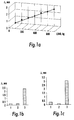
- Figure 1a shows the dependence of deformation (deflection of bottom bracket) of the frame, as described in the following example, with weight 1.245kg on its static load according to test DIN 79100-4.3.2. With loads up to 800 kg the deformation is almost linear in proportion to the load, but the remaining deformation is a few times Less than for high quality chrome-molybdenum steel frame with weight 2.7kg.
- Figure 1b shows the differing residual deformation after an applied load of 300kg for:
- Figure 1c shows the differing residual deformation after an applied load of 600kg for:
- alloys with a concentration of aluminium of not more than 5% increases the stability of weld's characteristics, and also increases the dynamical characteristics of the bicycle frame.
- the preferred frame having high static rigidity, the speed of absorption of vibrations and shocks is sharply increased.
- the manufacture method provides extremely lightweight magnesium-based alloy frames which keep their high rigidity and which show an increase in their dynamic characteristics compared to other frames. Compared to existing welded aluminium bicycle frames the preferred bicycle frame has extremely better dynamical characteristics, has 20-25% less weight and still has the high rigidity and reliability required of a bicycle frame.
- the preferred bicycle frame is the first frame manufactured by welding extruded parts (tubes and/or profiles) from deformed magnesium-based alloys.
- a bicycle frame was manufactured for a road bicycle from extruded Mg-Al-Mn-Zn alloy tubes, where the alloy contained about 4.5% aluminium. Hand TIG-welding was used, the filler metal had chemical contents the same as the main material.
- extruded (hot pressed) tubes were used with a constant cross section as described below (all dimensions are in mm):
- the tubes were manufactured by pressing on presses with loads of 350 and 630 metric tonnes from rods 70 - 110 mm with drawing out 20 - 35.
- the temperature of pressing was 320 - 370°C, the speed of pressing was 1.5 - 8 m/min. Part of tubes were then dragged and/or rolled at room temperature.
- the weight of frame was 1.245kg for a size of 49.53cm, the frame successfully passed all tests according to toughened DIN 79100-4.3, DIN 79100-4.2.2 and ISO 4210-4.6.1, ISO 4210-4.6.2 standards. In particular during tests according to the standard DIN 79100-4.3.2 instead of using a maximum static load of 300kg, a maximum load of 1,000kg was used. During impact load testing according to standard ISO 4210-4.6.1, 4.6.2 the tests were repeated 10 times each, instead of the required 1 and 2 times accordingly.
- a mountain bicycle frame was also manufactured from a similar alloy.
- the following tubes were used:
- the weight of the frame became 1.29kg with a height of 48.26cm, almost without plastic deformations the frame successfully finished static loading according to standard DIN 79100-4.3.2 up to 1,700 kg.
- the frame sustained over 85,000 cycles without destruction. After shot blasting treatment the welded frame was kept for 30 minutes in a temperature of 170 - 200°C and the number of cycles was increased to 115,000 - 125,000 cycles before destruction.
- a very durable forged fork was fixed in the head tube of the frame.
- the complete fork-frame assembly was secured (the fork was fixed to a joint and the rear suspension was fixed securely) to the bars of the vibration stand, which imitate the bicycle wheel axles.
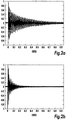
- the bars oscillated with amplitude 8.5 mm (the distance between the end stops was 17 mm) and with frequency 7.5 - 8 Hz.
- the displacement of the oscillation phase between the front and rear bars was 5 mm (when one bar is in a neutral position the other bar is lifted up or pushed down by 5 mm).
- the total static load on the frame was 95 kg including 25 kg on the head joint and 45 kg on the saddle joint and 25 kg on the bracket joint. This stand imitates the riding on a rough road.
- the frame can be considered reliable if it is not destroyed during a limited number of cycles.
- the standard steel frame of a road bicycle was destroyed on average after 20,000 -25,000 cycles (tested continuously for 40-50 minutes), but a high quality chrome-molybdenum frame of a mountain bicycle after 100,000 - 140,000 cycles.
- the mountain bicycle frame which was described above and was manufactured from deformed magnesium-based alloy was destroyed after 250,000 - 300,000 cycles, but after covering it with a protective layer up to 400,000 cycles.
- the frame welded from preliminary riveted down and top tubes also survived in 400,000 load cycles.
Landscapes
- Engineering & Computer Science (AREA)
- Mechanical Engineering (AREA)
- Automatic Cycles, And Cycles In General (AREA)
Applications Claiming Priority (2)
| Application Number | Priority Date | Filing Date | Title |
|---|---|---|---|
| RU98109909 | 1998-05-29 | ||
| RU98109909/28A RU98109909A (ru) | 1998-05-29 | Велосипедная рама |
Publications (1)
| Publication Number | Publication Date |
|---|---|
| EP0960806A1 true EP0960806A1 (fr) | 1999-12-01 |
Family
ID=20206410
Family Applications (1)
| Application Number | Title | Priority Date | Filing Date |
|---|---|---|---|
| EP98308604A Withdrawn EP0960806A1 (fr) | 1998-05-29 | 1998-10-21 | Cadre de bicyclette |
Country Status (3)
| Country | Link |
|---|---|
| EP (1) | EP0960806A1 (fr) |
| AU (1) | AU3949099A (fr) |
| WO (1) | WO1999062758A1 (fr) |
Cited By (1)
| Publication number | Priority date | Publication date | Assignee | Title |
|---|---|---|---|---|
| EP2618794A1 (fr) * | 2010-09-24 | 2013-07-31 | Dietmar Lenz | Dispositif facilitant la mobilité |
Citations (3)
| Publication number | Priority date | Publication date | Assignee | Title |
|---|---|---|---|---|
| EP0177646A1 (fr) * | 1983-03-21 | 1986-04-16 | Francis George Kirk | Bicyclette et cadre correspondant |
| WO1994004766A1 (fr) * | 1992-08-25 | 1994-03-03 | Gesellschaft Für Innenhochdruckverfahren Mbh & Co Kg | Charpente en pieces creuses, son procede de fabrication et son utilisation |
| US5507888A (en) * | 1993-03-18 | 1996-04-16 | Aluminum Company Of America | Bicycle frames and aluminum alloy tubing therefor and methods for their production |
Family Cites Families (3)
| Publication number | Priority date | Publication date | Assignee | Title |
|---|---|---|---|---|
| GB1525759A (en) * | 1975-12-22 | 1978-09-20 | Magnesium Elektron Ltd | Magnesium alloys |
| US4621827A (en) * | 1977-11-07 | 1986-11-11 | Klein Gary G | Light weight bicycle with improved chainstay structure and method |
| AU3093692A (en) * | 1992-11-20 | 1994-06-22 | Techma Gesellschaft Mit Beschrankter Haftung | High-strength magnesium alloy |
-
1998
- 1998-10-21 EP EP98308604A patent/EP0960806A1/fr not_active Withdrawn
-
1999
- 1999-05-24 WO PCT/GB1999/001641 patent/WO1999062758A1/fr not_active Ceased
- 1999-05-24 AU AU39490/99A patent/AU3949099A/en not_active Abandoned
Patent Citations (3)
| Publication number | Priority date | Publication date | Assignee | Title |
|---|---|---|---|---|
| EP0177646A1 (fr) * | 1983-03-21 | 1986-04-16 | Francis George Kirk | Bicyclette et cadre correspondant |
| WO1994004766A1 (fr) * | 1992-08-25 | 1994-03-03 | Gesellschaft Für Innenhochdruckverfahren Mbh & Co Kg | Charpente en pieces creuses, son procede de fabrication et son utilisation |
| US5507888A (en) * | 1993-03-18 | 1996-04-16 | Aluminum Company Of America | Bicycle frames and aluminum alloy tubing therefor and methods for their production |
Non-Patent Citations (2)
| Title |
|---|
| Dubbel Taschenbuch für Maschinenbau (extracts) * |
| Mc Graw-Hill Encyclopedia of Science & Technology (volume 10 extracts) * |
Cited By (1)
| Publication number | Priority date | Publication date | Assignee | Title |
|---|---|---|---|---|
| EP2618794A1 (fr) * | 2010-09-24 | 2013-07-31 | Dietmar Lenz | Dispositif facilitant la mobilité |
Also Published As
| Publication number | Publication date |
|---|---|
| AU3949099A (en) | 1999-12-20 |
| WO1999062758A1 (fr) | 1999-12-09 |
Similar Documents
| Publication | Publication Date | Title |
|---|---|---|
| Lesko | Industrial design: Materials and manufacturing guide | |
| US6030570A (en) | Steel reinforced filled polymer torque rod | |
| US5404690A (en) | Impact beam assembly method and apparatus | |
| EP2599650B1 (fr) | Composants de châssis de véhicule automobile | |
| JP6265089B2 (ja) | 自動車用足廻り部品の疲労強度向上方法 | |
| US5452911A (en) | High efficiency high clearance chinstay and method of making same for bicycles | |
| Akhyar et al. | Structural simulations of bicycle frame behaviour under various load conditions | |
| US20120001397A1 (en) | Extruded torque rods | |
| EP0960806A1 (fr) | Cadre de bicyclette | |
| Deetz | The use of wrought magnesium in bicycles | |
| Seelam et al. | Buggy role cage–analysis and design | |
| RU2709289C2 (ru) | Трубчатая пружина для транспортных средств и способ изготовления трубчатой пружины | |
| Kondaiah et al. | Shape and material optimization of a two wheeler front suspension frame for pipe type and rectangular cross sections | |
| EP0788903B1 (fr) | Procédé de fabrication d'un essieu à poutre de torsion pour véhicules à moteur et essieu à poutre de torsion | |
| Likavčan et al. | Influence of manufacturing defects in bicycle frames on their fatigue strength | |
| Ramasubramanian et al. | Design and development of roll cage for all terrain vehicles | |
| Muthyala | Design and Crash Analysis of Ladder Chassis | |
| Chung et al. | The development of lightweight vehicle using aluminum space frame body | |
| Wibowo et al. | Finite element simulation of A356 and A6061 aluminum combination bicycle elements to optimize weight of frame | |
| Kuczek et al. | Research on an Innovative FLEX Bicycle Frame with a Softtail Vibration Damping System | |
| Hadryś et al. | Deceleration and deformation during dynamic loading of model car body parts after post-accident repair | |
| Kulkarni et al. | Mechanical Analysis of Different Composites Used in Automotive Chassis Design. | |
| Garg et al. | Design analysis of the roll cage for all-terrain vehicle | |
| Ganio-Mego | Evaluating and Comparing Bicycle Tubing Materials: a simplified FEM methodology | |
| US20170327179A1 (en) | Bicycle handlebar |
Legal Events
| Date | Code | Title | Description |
|---|---|---|---|
| PUAI | Public reference made under article 153(3) epc to a published international application that has entered the european phase |
Free format text: ORIGINAL CODE: 0009012 |
|
| AK | Designated contracting states |
Kind code of ref document: A1 Designated state(s): AT BE CH DE DK ES FI FR GB GR IE IT LI LU MC NL PT SE |
|
| AX | Request for extension of the european patent |
Free format text: AL;LT;LV;MK;RO;SI |
|
| 17P | Request for examination filed |
Effective date: 20000522 |
|
| AKX | Designation fees paid |
Free format text: AT BE CH DE DK ES FI FR GB GR IE IT LI LU MC NL PT SE |
|
| 17Q | First examination report despatched |
Effective date: 20000726 |
|
| STAA | Information on the status of an ep patent application or granted ep patent |
Free format text: STATUS: THE APPLICATION IS DEEMED TO BE WITHDRAWN |
|
| 18D | Application deemed to be withdrawn |
Effective date: 20020501 |