EP0960924A1 - Strahlenhärtbare druckempfindliche Kleber auf Basis von Poly(1-alkene) - Google Patents
Strahlenhärtbare druckempfindliche Kleber auf Basis von Poly(1-alkene) Download PDFInfo
- Publication number
- EP0960924A1 EP0960924A1 EP99109989A EP99109989A EP0960924A1 EP 0960924 A1 EP0960924 A1 EP 0960924A1 EP 99109989 A EP99109989 A EP 99109989A EP 99109989 A EP99109989 A EP 99109989A EP 0960924 A1 EP0960924 A1 EP 0960924A1
- Authority
- EP
- European Patent Office
- Prior art keywords
- pressure
- sensitive adhesive
- polymer component
- component
- polymer
- Prior art date
- Legal status (The legal status is an assumption and is not a legal conclusion. Google has not performed a legal analysis and makes no representation as to the accuracy of the status listed.)
- Withdrawn
Links
Images

Classifications
-
- C—CHEMISTRY; METALLURGY
- C09—DYES; PAINTS; POLISHES; NATURAL RESINS; ADHESIVES; COMPOSITIONS NOT OTHERWISE PROVIDED FOR; APPLICATIONS OF MATERIALS NOT OTHERWISE PROVIDED FOR
- C09J—ADHESIVES; NON-MECHANICAL ASPECTS OF ADHESIVE PROCESSES IN GENERAL; ADHESIVE PROCESSES NOT PROVIDED FOR ELSEWHERE; USE OF MATERIALS AS ADHESIVES
- C09J123/00—Adhesives based on homopolymers or copolymers of unsaturated aliphatic hydrocarbons having only one carbon-to-carbon double bond; Adhesives based on derivatives of such polymers
- C09J123/02—Adhesives based on homopolymers or copolymers of unsaturated aliphatic hydrocarbons having only one carbon-to-carbon double bond; Adhesives based on derivatives of such polymers not modified by chemical after-treatment
-
- C—CHEMISTRY; METALLURGY
- C09—DYES; PAINTS; POLISHES; NATURAL RESINS; ADHESIVES; COMPOSITIONS NOT OTHERWISE PROVIDED FOR; APPLICATIONS OF MATERIALS NOT OTHERWISE PROVIDED FOR
- C09J—ADHESIVES; NON-MECHANICAL ASPECTS OF ADHESIVE PROCESSES IN GENERAL; ADHESIVE PROCESSES NOT PROVIDED FOR ELSEWHERE; USE OF MATERIALS AS ADHESIVES
- C09J123/00—Adhesives based on homopolymers or copolymers of unsaturated aliphatic hydrocarbons having only one carbon-to-carbon double bond; Adhesives based on derivatives of such polymers
- C09J123/02—Adhesives based on homopolymers or copolymers of unsaturated aliphatic hydrocarbons having only one carbon-to-carbon double bond; Adhesives based on derivatives of such polymers not modified by chemical after-treatment
- C09J123/18—Homopolymers or copolymers of hydrocarbons having four or more carbon atoms
- C09J123/20—Homopolymers or copolymers of hydrocarbons having four or more carbon atoms having four to nine carbon atoms
-
- C—CHEMISTRY; METALLURGY
- C08—ORGANIC MACROMOLECULAR COMPOUNDS; THEIR PREPARATION OR CHEMICAL WORKING-UP; COMPOSITIONS BASED THEREON
- C08L—COMPOSITIONS OF MACROMOLECULAR COMPOUNDS
- C08L23/00—Compositions of homopolymers or copolymers of unsaturated aliphatic hydrocarbons having only one carbon-to-carbon double bond; Compositions of derivatives of such polymers
- C08L23/02—Compositions of homopolymers or copolymers of unsaturated aliphatic hydrocarbons having only one carbon-to-carbon double bond; Compositions of derivatives of such polymers not modified by chemical after-treatment
- C08L23/04—Homopolymers or copolymers of ethene
- C08L23/08—Copolymers of ethene
- C08L23/0807—Copolymers of ethene with unsaturated hydrocarbons only containing four or more carbon atoms
- C08L23/0815—Copolymers of ethene with unsaturated hydrocarbons only containing four or more carbon atoms with aliphatic 1-olefins containing one carbon-to-carbon double bond
-
- C—CHEMISTRY; METALLURGY
- C08—ORGANIC MACROMOLECULAR COMPOUNDS; THEIR PREPARATION OR CHEMICAL WORKING-UP; COMPOSITIONS BASED THEREON
- C08L—COMPOSITIONS OF MACROMOLECULAR COMPOUNDS
- C08L23/00—Compositions of homopolymers or copolymers of unsaturated aliphatic hydrocarbons having only one carbon-to-carbon double bond; Compositions of derivatives of such polymers
- C08L23/02—Compositions of homopolymers or copolymers of unsaturated aliphatic hydrocarbons having only one carbon-to-carbon double bond; Compositions of derivatives of such polymers not modified by chemical after-treatment
- C08L23/10—Homopolymers or copolymers of propene
- C08L23/12—Polypropene
-
- C—CHEMISTRY; METALLURGY
- C08—ORGANIC MACROMOLECULAR COMPOUNDS; THEIR PREPARATION OR CHEMICAL WORKING-UP; COMPOSITIONS BASED THEREON
- C08L—COMPOSITIONS OF MACROMOLECULAR COMPOUNDS
- C08L2314/00—Polymer mixtures characterised by way of preparation
- C08L2314/06—Metallocene or single site catalysts
-
- C—CHEMISTRY; METALLURGY
- C08—ORGANIC MACROMOLECULAR COMPOUNDS; THEIR PREPARATION OR CHEMICAL WORKING-UP; COMPOSITIONS BASED THEREON
- C08L—COMPOSITIONS OF MACROMOLECULAR COMPOUNDS
- C08L2666/00—Composition of polymers characterized by a further compound in the blend, being organic macromolecular compounds, natural resins, waxes or and bituminous materials, non-macromolecular organic substances, inorganic substances or characterized by their function in the composition
- C08L2666/02—Organic macromolecular compounds, natural resins, waxes or and bituminous materials
- C08L2666/04—Macromolecular compounds according to groups C08L7/00 - C08L49/00, or C08L55/00 - C08L57/00; Derivatives thereof
-
- C—CHEMISTRY; METALLURGY
- C08—ORGANIC MACROMOLECULAR COMPOUNDS; THEIR PREPARATION OR CHEMICAL WORKING-UP; COMPOSITIONS BASED THEREON
- C08L—COMPOSITIONS OF MACROMOLECULAR COMPOUNDS
- C08L53/00—Compositions of block copolymers containing at least one sequence of a polymer obtained by reactions only involving carbon-to-carbon unsaturated bonds; Compositions of derivatives of such polymers
-
- Y—GENERAL TAGGING OF NEW TECHNOLOGICAL DEVELOPMENTS; GENERAL TAGGING OF CROSS-SECTIONAL TECHNOLOGIES SPANNING OVER SEVERAL SECTIONS OF THE IPC; TECHNICAL SUBJECTS COVERED BY FORMER USPC CROSS-REFERENCE ART COLLECTIONS [XRACs] AND DIGESTS
- Y10—TECHNICAL SUBJECTS COVERED BY FORMER USPC
- Y10T—TECHNICAL SUBJECTS COVERED BY FORMER US CLASSIFICATION
- Y10T428/00—Stock material or miscellaneous articles
- Y10T428/28—Web or sheet containing structurally defined element or component and having an adhesive outermost layer
- Y10T428/2852—Adhesive compositions
- Y10T428/2878—Adhesive compositions including addition polymer from unsaturated monomer
Definitions
- This invention relates to pressure-sensitive adhesive compositions, and, more particularly, to pressure-sensitive adhesive compositions formed from at least two polymeric materials at least one of which is a poly(1-alkene) based pressure-sensitive adhesive, to methods for making such pressure-sensitive adhesive compositions, and to tapes and articles including such pressure-sensitive adhesive compositions.
- Pressure-sensitive adhesive tapes are used for many diverse applications including, for example, marking, holding, protecting, sealing and masking purposes. These tapes comprise a backing, or other substrate, and a pressure-sensitive adhesive. Pressure-sensitive adhesives used in pressure-sensitive adhesive tapes generally adhere with no more than applied finger pressure and often stay tacky for months or years. Pressure-sensitive adhesives exert a strong holding force and should be removable from a smooth surface without leaving a residue.
- pressure-sensitive adhesive tapes may be used, for example, to secure a wound dressing or to restrict movement of a joint or limb. It is important that the pressure-sensitive adhesive tape adhere well to skin without causing skin damage on removal.
- Electrical tapes typically comprise a pressure-sensitive adhesive applied to a plasticized polyvinyl chloride backing or a polyethylene or rubber film backing. Electrical tape is used to insulate, hold, reinforce and protect electrical wires. Other uses include identifying wires in electrical circuitry, and protecting terminals during manufacture of electrical circuit boards.
- Packaging applications require a large variety of tapes for uses such as closing packages, protecting labels, sealing packages from moisture, and strapping and bundling loose parts.
- Packaging tapes are subjected to continuous shear and low angle peel forces.
- the adhesive mass is of low cohesive strength, it fails in shear; if the shear resistance is improved by adding firmness to the adhesive, it has a tendency to be less tacky and fail adhesively.
- Pressure-sensitive adhesives require a delicate balance of viscous and elastic properties which result in a four-fold balance of adhesion, cohesion, stretchiness and elasticity.
- Pressure-sensitive adhesives generally comprise polymers that are inherently tacky or polymers that are tackified by the addition of tackifying resins.
- pressure-sensitive adhesives include tackified natural rubbers; synthetic rubbers such as butyl rubber; and tackified linear, radial, star, branched and tapered block copolymers such as styrene-butadiene, styrene-ethylene/butylene and styrene-isoprene; polyvinyl ethers; acrylics, especially those having long chain alkyl groups; poly(1-alkene)s (also referred to as poly- ⁇ -olefins); and silicones.
- Polyolefin catalyst systems i.e., Ziegler-Natta (ZN) and metallocene have made it possible to synthesize high molecular weight poly(1-alkene) pressure-sensitive adhesives including homopolymers of C 6 to C 10 poly(1-alkenes).
- poly(1-alkene) material by-products of isotactic polypropylene that are described as atactic copolymers of C 3 -C 6 and C 3 -C 8 with molecular weights up to 50,000, have found uses as hot melt adhesives. These copolymers also make pressure-sensitive adhesives when mixed with tackifiers.
- Pressure-sensitive adhesives comprising blends of poly(1-alkenes) and flow-control agents are used to protect surfaces such as automobile paint finishes and may be removed without leaving residue.
- the present invention provides a radiation-curable pressure-sensitive adhesive composition, comprising:
- pressure-sensitive adhesive compositions will not necessarily have all of the beneficial physical properties defined in the previous paragraph.
- Such pressure-sensitive adhesive compositions may be further defined as radiation curable pressure-sensitive adhesive compositions comprising (a) a pressure-sensitive adhesive component comprising at least one poly(1-alkene) with an inherent viscosity of at least about 0.4 deciliters/gram (dL/g), (b) from about 2 to about 100 parts by weight, per 100 parts of the pressure-sensitive adhesive component, of a polymer component comprising at least one non-pressure-sensitive polymer having (i) a G' of at least about 5x10 6 dynes/cm 2 at 1 Hz and at the use temperature, and (ii) a tertiary carbon content of about 1 to about 50 mole percent, based on the total moles of the polymer component, provided that if the tertiary carbon content of the polymer component is about 1 to about 10 mole percent, the shear viscosity of the polymer component is greater than about 500
- a method of making a radiation crosslinkable pressure-sensitive adhesive composition comprising melt mixing (i) a pressure-sensitive adhesive component having at least one poly(1-alkene) with an inherent viscosity greater than about 0.4 dL/g, (ii) about 2 to about 100 parts by weight, per 100 parts of said pressure-sensitive adhesive component, of a polymer component comprising at least one non-pressure-sensitive polymer having a G' of at least about 5x10 6 dynes/cm 2 at 1 Hz at the use temperature and having a tertiary carbon content of about 1 to about 50 mole percent, based on the total moles of the polymer component, provided that if the tertiary carbon mole percent is from about 1 to about 10 mole percent, the polymer component has a shear viscosity greater than about 500 Pa-s at 175°C, and (iii) a radiation activatable crosslinking agent.
- a pressure-sensitive adhesive article can be made by (1) forming said composition into a shaped article, and (2) cooling, if needed, the shaped article.
- the shaped article may be a pressure-sensitive adhesive suitable for subsequent lamination to a surface or may be a pressure-sensitive adhesive layer on a substrate.
- the radiation crosslinkable pressure-sensitive adhesive may be exposed to radiation to create a partially or fully radiation crosslinked pressure-sensitive adhesive.
- the method may be used to make poly(1-alkene) pressure-sensitive adhesives having improved shear properties and approximately equivalent peel properties, compared to poly(1-alkene) pressure-sensitive adhesives not containing the polymer component.
- the method may be used to make, with less radiation exposure, pressure-sensitive adhesives having peel properties and shear properties equivalent to poly(1-alkene) pressure-sensitive adhesives not containing the polymer component.
- the reduction in radiation exposure may be realized by lowering the radiation dose to which the pressure-sensitive adhesive composition is exposed, shortening the process line, or increasing the speed of the process line.
- the present invention further provides articles such as pressure-sensitive adhesive tapes or sheets and double-coated pressure-sensitive adhesive tapes or sheets made by extrusion or coextrusion methods.
- the radiation-crosslinked pressure-sensitive adhesives of the invention provides the advantage of surprisingly high shear properties (up to over 10,000 minutes) with decreases in peel adhesion of as little as 10% or less compared to crosslinked pressure-sensitive adhesives of similar compositions (tested at the same shear rate) that do not contain the polymer component of the invention. Shear values of up to five times that of ultraviolet crosslinked poly(1-alkene) pressure-sensitive adhesives not containing the polymer component have been observed with no corresponding decrease in peel adhesion at room temperature (25°C).
- the present invention provides the advantage of having the option of producing pressure-sensitive adhesive compositions having peel and shear properties equivalent to those of ultraviolet crosslinked poly(1-alkene) pressure-sensitive adhesives not containing the polymer component by only exposing the pressure-sensitive adhesive compositions of the invention to approximately 25% of the ultraviolet light irradiation that would be used to produce the adhesive not containing the polymer component. If the irradiation intensity is not reduced, as much as a four-fold increase in line speed may be achieved.
- a further advantage of the method of making a pressure-sensitive adhesive composition disclosed in this invention is that no solvent is required for the process which, among other things, eliminates the need for a solvent coater.
- Other advantages include the small amount of residuals produces in making the compositions of the invention and the ability to recycle poly(1-alkene) products.
- the present invention relates to radiation crosslinkable pressure-sensitive adhesive compositions generally comprising a poly(1-alkene) pressure-sensitive adhesive component, a non-pressure-sensitive adhesive polymer component able to crosslink with the pressure-sensitive adhesive component, and radiation-activatable crosslinking agent(s).
- the pressure-sensitive adhesive composition is generally made in a melt-mix process wherein the poly(1-alkene) component is mixed with the polymer component in a molten or softened state along with a crosslinking agent and any additional additives such as tackifier. Mixing may be done by any method that results in a substantially homogeneous distribution of the components.
- the pressure-sensitive adhesive composition may be formed into coatings or layers by extrusion methods using batch or continuous process methods. The coatings may be solidified by quenching using direct methods such as chill rolls or water baths and indirect methods such as air or gas impingement.
- the pressure-sensitive adhesive composition may alternatively be formed into other shapes.
- the composition may remain uncured or may be partially or completely cured by exposure to radiation.
- the composition may be partially or totally cured before or after it is formed into its final shape.
- Poly(1-alkene) Pressure-Sensitive Adhesive Component (“Poly(1-alkene) Component” )
- One component of the radiation crosslinkable pressure-sensitive adhesive composition of the invention is itself a pressure-sensitive adhesive comprising one or more poly(1-alkene)s.
- a suitable poly(1-alkene) has a glass transition temperature (T g ) preferably in the range of -70°C to 0°C, more preferably in the range of -60°C to -20°C, and an average inherent viscosity in the range of 0.4 dL/g to 9.0 dL/g, preferably in the range of 0.5 dL/g to 6.0 dL/g, and more preferably in the range of 1.5 dL/g to 4.0 dL/g as determined using a Number 50 Cannon-Fenske Viscometer tube, with a 0.1 g/dL solution of polymer in toluene, at 27°C.
- the ranges of inherent viscosity should provide a poly(1-alkene) polymer that is soft enough to be melt processed.
- An inherent viscosity above these values may result in a polymer that is difficult to melt process.
- An inherent viscosity below the above-stated values may cause the pressure-sensitive adhesive composition to cohesively fracture and leave a residue when removed.
- Crosslinking the pressure-sensitive adhesive composition may extend the lower range of acceptable inherent viscosity for the poly(1-alkene) component beyond that which is acceptable for an uncrosslinked poly(1-alkene).
- Number average molecular weights of the uncrosslinked poly(1-alkene) polymers are preferably in the range of 5,000 to 50,000,000, more preferably 50,000 to 5,000,000.
- Useful poly(1-alkene)s include, for example, non-crystalline polymers such as C 5 to C 12 poly(1-alkene) homopolymers and copolymers, including copolymers with C 3 ; more preferably C 6 to C 10 poly(1-alkene) homopolymers and copolymers, including copolymers with C 3 ; most preferably C 6 to C 8 poly(1-alkene) homopolymers and copolymers, including copolymers with C 3 .
- Particularly useful poly(1-alkene)s are poly(1-hexene) and poly(1-octene), described in U.S. Pat. No. 5,644,007(Davidson, et al).
- Another group of useful poly(1-alkene)s is those that have pendent groups susceptible to crosslinking and have been obtained either through copolymerization, as described in U.S. Pat. No. 5,112,882 (Babu, et al), or through chemical modification, as described in U.S. Pat. No. 5,407,970 (Babu, et al).
- Useful poly(1-alkene)s are generally self-tacky or made tacky by adding a tackifier miscible in the poly(1-alkene). Tackifier may also be added to a self-tacky polymer to augment pressure-sensitive adhesive properties such as peel adhesion and tack. Tackifiers often lower the viscosity of a polymer and thus may be used to make the polymer more suitable for hot melt processing.
- Hydrocarbon tackifiers are preferred for use in the pressure-sensitive adhesive compositions of the present invention.
- Useful tackifying resins include resins derived by polymerization of the following: C 5 to C 9 unsaturated hydrocarbon monomers, polyterpenes, synthetic polyterpenes, and the like. Examples of useful commercially available tackifying resins are those available under the trade names WINGTACKTM 95 and WINGTACKTM115 from Goodyear Tire and Rubber Co., Akron, Ohio. Other useful hydrocarbon tackifier resins are available under the trade names REGALREZTM 1078 and REGALREZTM 1126 from Hercules Chemical Co., Wilmington, DE, and under the trade names ARKONTM P90 and ARKONTM P115 from Arakawa Chemical Co. (USA), Chicago, IL.
- the tackifier may be ethylenically unsaturated; however, saturated tackifiers are preferred for those applications where oxidation resistance is important.
- the total amount of tackifying resin in the poly(1-alkene) component preferably is from 0 to 150 parts by weight, more preferably 5 to 50 parts by weight, and most preferably 25 to 35 parts by weight, per 100 parts of the poly(1-alkene) component.
- Non-Pressure-Sensitive Adhesive Polymer Component (“Polymer Component")
- a second component of the radiation crosslinkable pressure-sensitive adhesive compositions of the present invention is a non-pressure-sensitive adhesive polymer component that may be crosslinked with the pressure-sensitive adhesive component. That is, this component contains at least one polymer that lacks one or more physical characteristics which a pressure-sensitive adhesive requires to be so designated. Typically this polymer component is a melt processable organic polymeric material. The polymer component preferably has a G' of at least about 5x10 6 dynes/cm 2 at 1 Hz at the use temperature and a multiplicity of reaction sites for crosslinking.
- the improved peel and shear properties of the pressure-sensitive adhesive composition of this invention are a direct result of the addition of the polymer component when added in an appropriate amount. If the weight ratio of the polymer component to the poly(1-alkene) component is substantially greater than 1:1, the peel and shear strengths of the composition are typically detrimentally effected.
- the tolerated concentration of the polymer component may be increased by adding plasticizers and/or tackifying materials to the pressure-sensitive adhesive composition.
- the effective concentration of the polymer component depends on the specific types, concentrations, and characteristics of the polymer(s) in the polymer component and of each of the other components used in the pressure-sensitive adhesive composition.
- the amount of polymer component in the pressure-sensitive adhesive composition may vary from about 2 to about 100 parts by weight, and preferably from about 8 to about 60 parts, per 100 parts of the poly(1-alkene) component.
- the polymer component preferably has sufficient viscoelastic characteristics to impart in the pressure-sensitive adhesive composition satisfactory cohesive strength to avoid splitting of the adhesive mass upon removal. That is, the cohesive strength of the resultant adhesive mass preferably is higher than the bond strength between the adhesive and the adherend.
- the desirable visco-elastic characteristics may be achieved by using polymers having a shear elastic modulus, i.e ., G', of greater than about 5x10 6 dynes/cm 2 measured at 1 Hz at the use temperature. Polymers with a G' less than this value tend to form a radiation crosslinked pressure-sensitive adhesive showing little or no improvement in shear performance over a crosslinked pressure-sensitive adhesive not containing the polymer component.
- the use temperature approaches the melting temperature, T m , of the polymer component, the polymer component may begin to melt, causing the pressure-sensitive adhesive to fail cohesively. It is recommended that the polymer component be chosen so the use temperature does not come within 10°C of the polymer component's melting temperature.
- the melting temperature of a polymeric material may be determined by dynamic analysis, at a given frequency, in conjunction with the determination of G'.
- T m of the polymer component was characterized using mechanical spectroscopy under the same conditions as those described herein for the determination of G'. The melting temperature was determined, from the data collected for the G' determination, by using a graph of G' versus °C for a polymer component.
- a tangential line was extended from the elastic modulus data line both above and below the melting transition portion of the elastic modulus (G') data.
- the points at which the data deviates from the tangent are characterized as the "onset” (T onset ) and “final” (T final ) temperatures.
- the T m is defined as the average of T onset and T final .
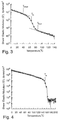
- Figure 3 graphically depicts this technique.
- Figures 3 and 4 respectively, show a T m close to, and distant from, the use temperature of 70°C.
- the polymer component is characterized by having crosslinking sites sufficient to provide crosslinking with the poly(1-alkene). These crosslinking sites may be provided by tertiary carbon atoms in the polymer component molecule. They may also be provided by, e.g ., unsaturated carbon bonds. However, it should be noted that unsaturated bonds, i.e ., alkenyl and aromatic bonds, tend to absorb ultraviolet (UV) radiation which may interfere with crosslinking when UV radiation is used for crosslinking. However, the presence of unsaturated bonds need not hamper the curing process. Radiation-activated crosslinking agents activated by means other than UV radiation in the absorption range of the unsaturated bonds of the polymer component may be used.
- agents include those that may be activated by exposure to heat or visible irradiation, such as dicumyl peroxide subjected to thermal radiation. Determination of the most favorable activation means depends on the initiators used and on the characteristics of the specific polymer(s) used.
- the experiments conducted in the present invention used a free radical initiation process to promote crosslinking.
- Benzophenone was used to initiate hydrogen abstraction of primary (1°), secondary (2°), or tertiary (3°) hydrogens to create free radicals. Because the bond dissociation energies and ease of abstraction are lowest for tertiary hydrogens, which are bonded to tertiary carbons, the propensity of a polymer to have crosslinking sites was estimated based on the concentration of tertiary carbons in the polymer. Other methods may also be used to estimate the concentration of crosslinkable sites.
- the desired amount of crosslinking may be achieved with a concentration of tertiary carbons ranging from approximately 1 mole percent to approximately 50 mole percent of the total moles of the polymer component, preferably from about 10 to about 50 mole percent.
- Radiation-crosslinked pressure-sensitive adhesives containing a polymer component with a tertiary carbon content of as little as 1 mole percent have crosslinked to provide an adhesive composition that exhibits an increase in room temperature shear performance with little or no decrease in peel adhesion when compared to similar compositions not containing the polymer component of this invention.
- the characteristics of the pressure-sensitive adhesive composition appear to be influenced by additional factors.
- the G' and the amount of crosslinkable sites do not appear to fully account for the behavior of the resulting pressure-sensitive adhesive.
- the performance of the pressure-sensitive adhesives may not be improved over a pressure-sensitive adhesive not containing the polymer component unless the shear viscosity of the polymer component is greater than about 500 Pa-s at 175°C.
- a shear viscosity below about 500 Pa-s at 175°C appears to have little or no detrimental effect on performance of the resulting pressure-sensitive adhesive.
- the shear viscosity of the polymer component (or the pressure sensitive adhesive composition) is high enough to prevent the polymer component from mixing with the poly(1-alkene) under the given mixing conditions, the pressure sensitive adhesive properties of the resulting composition may be poor regardless of the G' and tertiary carbon content.
- ⁇ R the viscosity ratio
- the viscosity ratio is calculated ⁇ D / ⁇ M where ⁇ D is the melt viscosity of the dispersed phase (usually the polymer component) and ⁇ M is the melt viscosity of the matrix phase (usually the poly(1-alkene)).
- ⁇ R approaches 3 it appears that poor dispersion of the dispersed phase component in the matrix component may occur and poor peel values may result.
- FIG. 1 and FIG. 2 show Plots of G' against °C for polymer components.
- Fig. 1 also shows whether the pressure sensitive adhesives containing the polymer components have a static shear performance greater, or less, than 10,000 minutes at a use temperature of 25°C.
- FIG. 2 shows the same information for a use temperature of 70°C.
- the shear performance of the pressure-sensitive adhesive compositions containing a polymer component having a tertiary carbon content between 1 and 35 atomic percent is generally over 10,000 minutes at 25°C if the G' of the polymer component is greater than about 5x10 6 dynes/cm 2 at 1Hz at 25°C.
- FIG. 1 also shows whether the pressure sensitive adhesives containing the polymer components have a static shear performance greater, or less, than 10,000 minutes at a use temperature of 25°C.
- FIG. 2 shows the same information for a use temperature of 70°C.
- the shear strength of the pressure-sensitive adhesive composition containing a polymer component with a tertiary carbon content between 1 and 35 atomic percent is generally over 10,000 minutes at 70°C if the G' of the polymer component is greater than about 5x10 6 dynes/cm 2 at 1 Hz at 70°C. In most cases in which the shear property was less than 10,000 minutes, the G' value at the use temperature was within approximately 10°C of the melting temperature of the polymer component.
- the polymer component may be a homopolymer or a copolymer, may be linear or branched, and may also be a mixture thereof.
- Suitable homopolymers include, for example, propylene, available under the trade name EASTOFLEXTM P1023 from Eastman Chemical Co., Kingsport, TN, and under the trade names ESCORENETM 3505, ESCORENETM 3445, ESCORENETM 1024 and ACHIEVETM 3825 from Exxon Chemical Co., Houston, TX.
- Suitable copolymers include, for example, poly(ethylene-butene) available under the trade name EXACTTM 4011 from Exxon Chemical Co., Houston, TX; poly(ethylene-octene) available under the trade names ENGAGETM EG8200 and AFFINITYTM PL1845 from Dow Chemical Co., Midland, MI, poly(propylene-ethylene) available under the trade name EASTOFLEXTM 1060 from Eastman Chemical Co., Houston, TX; and linear low density polyethylene available under the trade name DOWLEXTM 2045 from Dow Chemical Co.; polystyrene copolymers such as poly(styrene-ethylene/butylene-styrene) available under the trade name KRATONTM G1657 from Shell Chemical Co., Houston, TX and poly(styrene-isoprenbe-styrene) available under the trade name KRATONTM D1107 from Shell Chemical Co.; polystyrene; polymethacrylate; and polymethylmeth
- the preferred homopolymers are propylene, such as that available under the trade names EASTOFLEXTM P1023 and ESCORENETM 3505, 3445, or 1024, and copolymers such as poly(ethylene-butene) available under the trade name EXACTTM 4011; poly(ethylene-octene), available under the trade names ENGAGETM EG8200 and AFFINITYTM PL1845, and liner low density polyethylene, available under the trade name DOWLEXTM 2045.
- the more preferred polymer components are the homopolymers ESCORENETM 3445 and 1024, and copolymers such as, for example, EXACTTM 4011 and AFFINITYTM PL1845.
- a third component of the radiation crosslinkable pressure-sensitive adhesive composition is a radiation-activatable crosslinking agent.
- These agents are compounds which, under the influence of activating radiation, connect polymer chains and may become incorporated therein.
- the activating radiation may comprise actinic (electromagnetic) or thermal radiation, including exposing dicumyl peroxide to thermal radiation to generate free radicals.
- Crosslinking the components of a composition may increase the molecular weight of the individual polymer molecules in a pressure-sensitive adhesive composition and concurrently increase the composition's cohesive strength.
- Suitable radiation activatable crosslinking agents include, but are not limited to: aldehydes, such as benzaldehyde, acetaldehyde, and their substituted derivatives; ketones, such as acetophenone, benzophenone, and their substituted derivatives; quinones such as the benzoquinones, anthraquinone, and their substituted derivatives; thioxanthones such as 2-isopropylthioxanthone and 2-dodecylthioxanthone; and certain chromophore-substituted vinyl halomethyl-sym-triazines such as 2,4-bis-(trichloromethyl)-6-(3',4'-dimethoxyphenyl)-sym-triazine.
- concentration of radiation activatable crosslinking agent may be in the range of 0.05 to 6.0 percent by weight of the poly(1-alkene) component, preferably 0.1 to 2.0 percent by weight, and more
- additives such as pigments, fillers, waxes, extenders, oils, plasticizers, ultraviolet stabilizers, and antioxidants may be used in the pressure-sensitive adhesive composition.
- fillers include, but are not limited to, inorganic fillers such as zinc oxide, alumina trihydrate, talc, titanium dioxide, aluminum oxide, and silica.
- Pigments and fillers may be incorporated into the adhesive composition to manipulate the properties of the adhesive. For instance, very fine pigments may increase cohesive strength and stiffness, reduce cold flow, and reduce tack. Plate-like pigments such as mica, graphite, and talc may provide acid and chemical resistance and low gas permeability.
- Clays, hydrated silicas, calcium silicates, silico-aluminates, and carbon blacks may increase cohesive strength and stiffness.
- Plasticizers may modify the physical properties of polymer components and make them easier to process.
- antioxidants and ultraviolet stabilizers may be used to protect against severe environmental aging caused by ultraviolet light or heat.
- Antioxidants and ultraviolet stabilizers include, for example, hindered phenols, amines, and sulfur and phosphorous hydroxide decomposers.
- a pressure-sensitive adhesive composition of this invention is made by mixing a pressure-sensitive adhesive component comprising at least one poly(1-alkene) pressure-sensitive adhesive, a non-pressure-sensitive-adhesive polymer component having reactive sites for crosslinking, and a radiation activatable crosslinking agent. Solvent is not required but may be added as a carrier fluid to introduce additive components. The mixture is hot melt coated, usually onto a substrate, and may be irradiated to cause crosslinking. More than one poly(1-alkene) component, polymer component and/or crosslinking agent may be used depending on the desired properties and ultimate use of the pressure-sensitive adhesive.
- a substantially uniform distribution is generally indicated when any discrete phase of any one of the components has a shorter profile than a layer of the pressure-sensitive adhesive composition, for example when the pressure-sensitive adhesive composition is coated onto a substrate.
- a discrete phase of any one component is preferably 1/10 th the thickness of the pressure-sensitive adhesive composition layer, and more preferably 1/100 th the thickness.
- the components are melt mixed in a molten or softened state using devices that provide dispersive mixing, distributive mixing, or a combination of dispersive and distributive mixing.
- the specific temperature used depends on the materials being mixed. Mixing methods are explained in Rauwendaal, C., Polymer Extrusion (3 rd ed. 1994), Hanser Publishers, Cincinnati, OH. Both batch and continuous methods of blending may be used. Examples of batch machines include internal mixing apparatus available under the trade names BRABENDERTM or BANBURYTM, or roll mixers. Examples of continuous methods include single screw extruding, twin screw extruding, disk extruding, reciprocating single screw extruding, and pin barrel single screw extruding.
- the continuous methods may include distributive elements such as cavity transfer elements available, e.g ., under the trade name CTMTM from RAPRA Technology, Ltd., Shrewsbury, England, pin mixing elements, and static mixing elements as well as dispersive elements, e.g ., mixing elements available under the trade names MADDOCKTM and SAXTONTM.
- distributive elements such as cavity transfer elements available, e.g ., under the trade name CTMTM from RAPRA Technology, Ltd., Shrewsbury, England, pin mixing elements, and static mixing elements as well as dispersive elements, e.g ., mixing elements available under the trade names MADDOCKTM and SAXTONTM.
- the softened or molten pressure-sensitive adhesive composition may be formed into coatings by well known batch or continuous hot melt coating techniques.
- An example of a batch coating process is the placement of a portion of the blended mixture between a substrate desired to be coated and a release liner, pressing this composite structure in a heated platen press, at a controlled temperature and pressure, to form a pressure-sensitive adhesive coating of a desired thickness on the substrate, and cooling the resultant coating.
- Continuous coating methods include, for example, extrusion and coextrusion.
- the pressure-sensitive adhesive composition may be extruded onto a preformed backing to form an adhesive article. This may be done by drawing the pressure-sensitive adhesive composition out of a film die and contacting it with a moving plastic web or other suitable substrate. These methods are explained in, for example, Michaeli, W., Extrusion Dies , (2 nd ed. 1992), Hanser Publishers, Kunststoff, Germany.
- the extruded adhesive and the preformed backing may be nipped together. In the case of heat sensitive backings, the extruded adhesive should be allowed to cool before contacting the backing.
- adhesive articles may be prepared by laminating a preformed film of the pressure-sensitive adhesive composition to a preformed backing using heat and pressure to ensure that the adhesive and the backing bond together.
- a pressure-sensitive adhesive composition extruded from a film die may be joined with a backing material extruded from another film die with the composite material being cooled to form a pressure-sensitive adhesive tape.
- the pressure-sensitive adhesive composition may be applied to a moving web using a die having flexible die lips, such as a reverse orifice coating die.
- a source of contact dies is Extrusion Dies, Inc., Chippewa Falls, WI.
- a variation of this method involves coextruding the pressure-sensitive adhesive composition, the backing, and a low adhesion backsize through either a feedblock die or a multimanifold die, such as those described in U.S. Pat. Nos.
- Any suitable substrates may be used, including, but not limited to, natural and synthetic cloth including fiber-glass cloth, metalized films and foils, polymeric films, nonwoven materials, paper and polymer coated paper, foam backings, and micro-porous articles.
- Polymeric films include, but are not limited to, polyolefins such as polypropylene, polyethylene, low density polyethylene, linear low density polyethylene and high density polyethylene; polyesters such as polyethylene terephthalate; polycarbonates; cellulose acetates; polyimides available under the trade name KAPTONTM from E.I. du Pont de Nemours and Company, Wilmington, DE.
- Nonwoven materials generally made from randomly oriented fibers, include, but are not limited to, nylon, polypropylene, ethylene-vinyl acetate copolymer, polyurethane, rayon and the like.
- Foam backings include, but are not limited to acrylic, silicone, polyurethane, polyethylene, neoprene rubber, and polypropylene, and may be filled or unfilled.
- Micro-porous articles include, for example, microvoided polymers and thermally-induced phase separated polymeric constructions. Backings that are layered, such as polyethylene-aluminum membrane composites, are also suitable.
- the pressure-sensitive adhesive coatings are typically solidified by quenching, using direct methods, such as chill rolls or water baths, or indirect methods, such as air or gas impingement.
- the composition coating or article may be exposed to activating radiation to crosslink the poly(1-alkene) and polymer components. This exposure usually occurs after the crosslinkable pressure-sensitive adhesive is applied to a substrate or release liner or after it has been transferred from a release liner to another substrate, and is usually done at room temperature. However, the pressure-sensitive adhesive may be exposed to radiation before application to the substrate if the composition is already formed into its final shape or if the crosslinked composition could still be processed into a final shape.
- the radiation activatable crosslinking agent in the pressure-sensitive adhesive composition may be exposed to actinic (electromagnetic) radiation thereby generating free radicals which promote the crosslinking process.
- actinic radiation sources include infrared, visible, and ultraviolet radiation. The use of UV radiation is explained in Hoyle and Kinstle, Radiation Curing of Polymeric Materials , (American Chemical Society, 1990).
- the preferable wavelength range to activate the radiation activatable crosslinking agents disclosed herein is 250 to 400 nm.
- the dose of radiant energy applied in this wavelength range is preferably less than 1500 millijoules/cm 2 and more preferably less than 800 millijoules/cm 2 . Details of a radiation crosslinking process are disclosed in U.S.
- crosslinker that may be activated by heat, for example, a triazine compound.
- the heat generated to melt the polymer mixture in the extrusion process may initiate thermal crosslinking.
- conditions must be carefully controlled to ensure that the crosslinking takes place only as the material exits the extruder and not while it is still in the extruder.
- Pressure-sensitive adhesive articles of the invention may comprise a layer of the pressure-sensitive adhesive composition coated on a backing which may have a releasable surface on the side opposite that coated with the pressure-sensitive adhesive.
- the articles may be in the form of rolls, sheets or other shapes determined by the specific use requirements.
- the exposed surface of the pressure-sensitive adhesive coating may subsequently be applied to a surface from which it could be later released, i.e., a release liner, or directly to the desired substrate.
- Transfer articles may also be made. These articles comprise the pressure-sensitive adhesive composition between two release liners.
- the release liners often comprise a clear polymeric material such as polyolefin or polyester that is transparent to ultraviolet radiation.
- each release liner is first coated with a release material, such as silicone, to obtain easier release from the pressure-sensitive adhesive of the invention.
- the process of making the radiation-crosslinked poly(1-alkene) pressure-sensitive adhesives of this invention has several advantages over processes known to the art. Not only may one make pressure-sensitive adhesives that have excellent room temperature and elevated temperature shear properties, but one may also make radiation-crosslinked pressure-sensitive adhesives having shear and peel adhesion performance similar to known crosslinked pressure-sensitive adhesives but requiring much less radiation exposure during the curing process.
- this invention provides poly(1-alkene) containing pressure-sensitive adhesives that are cohesively strong at both room and elevated temperatures and methods of improving the properties of a pressure-sensitive adhesive by the addition of a polymer component.
- the invention provides pressure-sensitive adhesives that may be used to produce tapes that are substantially odor-free and physiologically inert. These tapes can be utilized in a myriad of applications including high temperature masking tapes, medical tapes, industrial tapes, and other high performance applications.
- Shear (or melt) viscosity ( ⁇ ) of the polymer component was determined in accordance with (ASTM D 2857-95) using a high pressure capillary rheometer available under the trade name RHEOGRAPHTM 2001 from Gottfert Co., Buchen, Germany, operated with a capillary die 30 mm long and 1 mm in diameter at a temperature of 175°C unless otherwise stated.
- RHEOGRAPHTM 2001 from Gottfert Co., Buchen, Germany
- G' was determined as part of the characterization of the polymer component's viscoelastic properties.
- a sample of approximately 1 to 5 grams of the polymer component was placed in a Rheometrics Dynamic Analyzer (RDA) available under the trade name RHEOMETRICSTM RDA-11 from Rheometrics Scientific, Inc., Piscataway, NJ. Analysis was performed in the dynamic mode with 8 mm parallel plates. The sample temperature was controlled to within 1°C of the test temperature using a thermally regulated nitrogen purge.
- the elastic modulus, G', loss modulus G'', and tangent delta were determined at a frequency of 1 Hz and a strain amplitude of between 5 and 10% while heating the specimen at 1°C per minute from 0°C to 200°C. The values were recorded in dynes/cm 2 at 1 Hz and at the use temperatures of 25°C and 70°C.
- the tertiary carbon content of the polymer component was determined by using 1 H and 13 C nuclear magnetic resonance (NMR) spectra for the polymer. Approximately 100 mg of polymer was dissolved in approximately 1 ml of o-dichlorobenzene. The resulting solution was placed in a spectrometer available under the trade name UNITYTM 500 NMR Spectrometer, Model No. NMR 73809-14X, from Varian Associates, Inc., Palo Alto, CA. The spectrometer was operated at between 110°C and 220°C. Spectra were run using acquisition times of between 0.4 and 0.8 seconds and pulse widths of between 3.4 and 7.4 microseconds.
- NMR nuclear magnetic resonance
- the segment type(s) was determined from the 1 H NMR data while the quantitative concentration of the component(s) was determined from the 13 C NMR data.
- Pressure-sensitive adhesive tape samples 1.25 cm wide and 15 cm long were tested for 180° peel adhesion to stainless steel. The samples were adhered to the test surfaces by rolling the tapes with a 2.1 Kg (4.5 lb.) roller using 4 passes. After aging at ambient temperatures ( ⁇ 22°C) for approximately 1 hour, the tapes were tested using a slip/peel tester (Model 3M90, Instrumentors, Inc., Strongville, OH) in 180° geometry at 30.5 cm/min (12 in/min) peel rate. Each reported value is an average value based on the results of three samples.
- Pressure-sensitive adhesive tape samples were tested for their shear strength at 25°C and 70°C.
- a 25.4 mm x 25.4 mm (1.0 in x 1.0 in) section of tape was adhered to a vertical stainless steel sheet with a 2.1 Kg (4.5 lb.) roller using 4 passes.
- the samples were either placed on a rack in a room at 25°C and 50% relative humidity or in an oven set at 70°C. The amount of time it took for the weighted tape to fall off the steel sheet was recorded. The test was stopped at 10,000 minutes. Each reported value is an average value based on the results of three samples. Mode of failure was cohesive unless otherwise noted.
- DOWLEXTM 2045 a semi-crystalline Ziegler-Natta-catalyzed linear low density polyethylene / polyoctene copolymer available from Dow Chemical Co. 0.92 1400 270 1.1 1830 ACHIEVETM 3825 a metallocene-catalyzed polypropylene homopolymer available from Exxon Chemical Co. 0.90 971 424 33.4 359
- EASTOFLEXTM 1023 a self tacky amorphous polypropylene homopolymer available from Eastman Chemical Co. 0.85 16 1 33.4 3
- EASTOFLEXTM 1060 a self tacky amorphous polypropylene/ polyethylene copolymer available from Eastman Chemical Co.
- ENGAGETM 8200 a semi-crystalline metallocene-catalyzed polyethylene/polyoctene copolymer available from Dow Chemical Co. 0.87 190 38 5 1025 KRATONTM 1657 a styrene-ethylene/butylene-styrene di-block/tri-block copolymer available from Shell Chemical Co. 0.90 21 20 10.6 2092 KRATONTM G1750 a self-tacky ethylene-propylene star polymer available from Shell Chemical Co. 0.86 2 0.8 20.6 1226 PETROTHENETM 212-000 a semi-crystalline high pressure Ziegler-Natta-catalyzed low density polyethylene available from Quantum Chemical Co., Cincinnati, OH.
- ESCORENETM 1024 a Ziegler-Natta-catalyzed isotactic polypropylene homopolymer available from Exxon Chemical Co. 0.90 350 120 33.4 461
- EXACTTM 4038 a semi-crystalline metallocene-catalyzed polyethylene/polybutylene copolymer available from Exxon 0.885 45 0.9 5.4 162
- EXACTTM 4023 a semi-crystalline metallocene-catalyzed polyethylene/polybutylene copolymer available from Exxon 0.882 37 0.7 5.4 255
- Examples 1-8 illustrate the influence of G' and the tertiary carbon content of the polymer component on the shear and peel properties of the pressure-sensitive adhesive composition.
- Example 1 an adhesive tape comprising a pressure-sensitive adhesive composition of the invention was prepared by a melt-mixing, or melt-blending, process.
- a co-rotating twin screw extruder was used (Model ZSK 30, Werner-Pfleiderer, Stuttgart, Germany, having a 30 mm diameter barrel and a length to diameter ratio of 37:1. It was operated at 225 rpm resulting in operating pressures of 3.45 to 8.25 Mpa (500-1200 psi) and total flow rates of 2.7 kg/hr (6 lbs/hr)).
- a screw design possessing 12 zones was employed with forward kneading elements in Zones 2, 4, 6, and 8 and conveying elements in the odd numbered zones and zones 10 and 12. Each zone has a port through which materials may be added.
- the polymer component, EXACTTM 4011 was metered into zone 1 of the extruder using a weigh feeder at rates of 0 to 2.27 kg/hr (0 to 5 lbs/hr).
- the poly(1-alkene) component was fed into zone 3 of the extruder.
- the poly(1-alkene) component comprised a self-tacky poly(1-octene) with an inherent viscosity of 2.6 dL/g made in a manner similar to that described in U.S. Pat. No. 5,644,007, Example 3.
- the poly(1-alkene) component Prior to being added to the twin screw extruder, the poly(1-alkene) component was softened in a 51 mm (2 in) single screw extruder available as Model No. 2 with Packer, Serial: B3252, from Bonnot Corp., Uniontown, OH, operating at 10-20 rpm and between 163°C and 185°C.
- the flow rate of the mixture of all components was controlled using a Zenith gear pump at 10-20 rpm.
- the feed rates of the poly(1-alkene) and polymer component were adjusted to provide a ratio of these materials of 100:25, respectively, based on a feed rate of 4.55 kg/hour (10 lbs/ hour) of the poly(1-alkene) component.
- the temperature of the twin screw extruder increased from 149°C to 182°C (300°F to 360°F) between zone 1 and 2 of the extruder, and was maintained at 182°C (360°F) in the remaining zones.
- the melt temperature was consistent at approximately 194°C (390°F).
- the blend flowing out of the extruder was conveyed using a Zenith gear pump.
- a screen pack changer filter was located at the exit of the Zenith gear pump to collect any contaminants prior to coating.
- the twin-screw extruder was continuously discharged at a pressure of at least about 3.45 MPa (500 psi) through a 15 cm (6 inch) wide contact die.
- the die was maintained at about 190°C (375°F) and the die gap was 0.25 mm (10 mils).
- the blended adhesive composition was extruded at a rate of 2.7 kg/hr (6 lbs/hr) onto a 51 ⁇ m (2 mil) thick biaxially oriented polyethylene terephthalate film web, which was fed at a rate of 7.6 m/mm (25 fpm) onto a casting roll maintained at 104°C to form an adhesive coating on the web with a thickness of about 25 ⁇ m (1 mil).
- the coated web was wound together with a release coated paper liner to form an adhesive tape.
- UV curing lamp Model No. 3461, Fusion Systems, Inc., Rockville, MD
- H bulb 7.6 meters per minute (25 feet/min).
- the adhesive composition was exposed to a UV radiation dose of approximately 500 mJ/cm 2 at wavelength ranges of 320 to 390 nm.
- a light meter UV Power PuckTM , Serial 1025, available from EIT, Sterling ,VA
- the speed of the process line was altered to ensure that the pressure-sensitive adhesive composition was exposed to about 500 mJ/cm 2 of radiation. All test samples were selected from the center five centimeters of the web to avoid inconsistent results that could occur due to any variation in UV dosage across the web.
- Examples 2-8 were made in a manner similar to Example 1 except different polymer components were used.
- the polymers used as the polymer components in Examples 2-8 were AFFINITYTM 1845, DOWLEXTM 2045, ACHIEVETM 3825, EASTOFLEXTM 1023, EASTOFLEXTM 1060, ENGAGETM 8200 and KRATONTM 1657, respectively.
- Comparative Examples C1-C3 were made in a manner similar to Example 1 except the polymer components were different. In Comparative Example 1 no polymer component was added. In Comparative Example 2 and 3, the polymer components were a poly(ethylene-propylene) available under the trade name KRATONTM 1750 from Shell Chemical Co.,and a low density polyethylene available under the trade name PETROTHENETM 212-000 from Quantum Chemical Company, Cincinnatti, OH, respectively.
- the pressure-sensitive adhesive tapes of the above examples were tested for 180° peel adhesion, 25°C shear strength and 70°C shear strength.
- Table 1 for the cured compositions, the room temperature (25°C) shear properties were improved by up to approximately 6 fold and the elevated temperature (70°C) shear properties were improved by up to approximately 28.5 fold as compared to those of a poly(1-alkene) pressure-sensitive adhesive not containing one of the polymer components of this invention.
- the attendant drop in peel properties compared to those of a poly(1-alkene) pressure-sensitive adhesive not containing one of the polymers of this invention was less than 20%.
- Examples 8 and CE5 were each obtained from different process runs than the other data in Table 1( first and third, respectively).
- This normalization does not alter any conclusions but makes it easier to compare data from different process runs.
- the normalization is required due to fluctuations in the adhesion characteristics of the poly(1-alkene control material (poly(1-alkene) pressure sensitive adhesive not containing a polymer component) which varied in peel force between runs while no differences in shear values were observed.
- Examples 9-16 illustrate the influence of tackifier concentration on adhesive performance of the polymer component of the pressure-sensitive adhesive composition.
- Examples 9-16 were made in a manner similar to Example 1 except different polymers, tackifier concentrations, and ratios of poly(1-alkene) component to polymer component were used in some cases.
- Examples 9 and 10 were made in a manner similar to Example 1 except no tackifier was added and ENGAGETM 8200 was used as the polymer component.
- the ratios of poly(1-alkene) component to polymer component were 90:10 and 80:20, respectively.
- Examples 11 and 12 were made as Examples 9 and 10 except ARKONTM P-90 was added as a tackifier.
- the ratios of poly(1-alkene) component to polymer component to tackifier were 90:10:30 and 80:20:30, respectively.
- Example 13 was made in a manner similar to Examples 9 and 10 but with KRATONTM D1107 as the polymer component, and the ratio of poly(1-alkene) component to polymer component was 75:25.
- Example 14 was made as Example 13 except ARKONTM P-90 was added as a tackifier. The ratio of poly(1-alkene) component to polymer component to tackifier was 75:25:30.
- Example 15 was made as Example 14 except the ratio of poly(1-alkene) component to polymer component to tackifier was 50:50:30.
- Example 16 was made as Example 14 except the tackifier concentration was 60 parts by weight instead of 30 parts.
- Comparative Example 4 was made as Example 9 except no polymer component was added.
- the compositions containing ENGAGETM 8200 and KRATONTM D1107 were made during different process runs.
- the comparative (containing no polymer component or tackifier) produced from the run that produced the 1107 data had Uncured Peel and Shear values of 21.1 N/dm and 26 minutes, respectively.
- Examples 17-19 illustrates the polymer component concentration effect on the adhesive properties of the pressure-sensitive adhesive composition.
- Examples 17-19 were made in a manner similar to Example 4 except the ratio of the poly(1-alkene) component to polymer component to tackifier were 100:4:30, 100:8:30, and 100:16:30, respectively.
- Comparative Example 5 was made as Example 17 except no polymer component was added.
- the uncured and cured pressure-sensitive adhesive tapes of the above examples were tested for 180° peel adhesion, 25°C shear strength and 70°C shear strength. As seen in Table 3, all cured examples showed at least a 4 fold increase in shear performance when compared to CE5, with no decrease in peel performance. The uncured examples showed an increase in shear performance with increasing polymer component content and a dramatic increase of 30 fold at 16 parts of polymer component, with a decrease in peel performance of 20% or less.
- Examples 20-23 illustrate the influence of the G' of the polymer component on the pressure-sensitive adhesive composition. All of these polymer components had a tertiary carbon content of 33.4 mole percent.
- Examples 20-23 were made in a manner similar to Example 1 except the polymer components were different.
- the polymer components were ESCORENETM 3505G, ESCORENETM 3445, ACHIEVETM 3825 and ESCORENETM1024, respectively.
- Comparative Example 6 was made in a manner similar to Example 20, but no polymer component was added.
- the uncured and cured pressure-sensitive adhesive tapes of the above examples were tested for 180° peel adhesion, 25°C shear strength and 70°C shear strength.
- the results are reported in Table 4.
- the data generally shows that the shear performance for a pressure-sensitive adhesive composition with a polymer component having a G' less than 5x10 6 dynes/cm 2 at 1Hz at the use temperature is several times lower than that for a pressure-sensitive adhesive composition with a polymer component having a G' greater than 5x10 6 dynes/cm 2 at 1Hz at the use temperature.
- Examples 24 and Comparative Examples 7 and 8 illustrate the influence of the shear viscosity of the polymer component on shear strength of the pressure-sensitive adhesive composition.
- Example 24 and comparative examples 7 and 8 were made in a manner similar to Example 20 except the type of polymer component varied.
- the polymer component were EXACTTM 4011, EXACTTM 4038, and EXACTTM 4023, respectively.
- the pressure-sensitive adhesive tapes of the above examples were tested for 180° peel adhesion, 25°C shear strength. As seen in Table 5, the 25°C shear strengths of the cured compositions with high shear viscosities were much better than the compositions with low shear viscosities when comparing compositions with identical tertiary carbon contents and comparable G' values.
- Examples 25-26 illustrate the influence of radiation dose on shear strength.
- Examples 25-26 and Comparative Example 9 were made in a manner similar to Example 3, Example 20 and Comparative Example 1, respectively, except samples of each were exposed to different doses of ultraviolet radiation as shown in Table 6.
- the pressure-sensitive adhesive tapes of the above examples were tested for 180° peel adhesion and 25°C shear strength. As seen in Table 6, pressure-sensitive adhesive compositions were obtained having higher room temperature shear properties than the control sample exposed to the same dose. In addition, compositions were obtained having shear properties similar to, or better than, those of the control, after exposure to dose rates lower than those used for the control. For example, Example 26 was exposed to a UV dosage of 150 mJ/cm 2 and had a shear value of 2282 minutes. This is higher than the shear value of 1678 of Control Example CE9 when it was exposed to a UV dosage of 550 mJ/cm 2 .
- Examples 27-29 illustrate the influence of a C 6 poly(1-alkene) pressure-sensitive adhesive used in place of a C 8 poly(1-alkene) pressure-sensitive adhesive.
- Examples 27-29 were made in a manner similar to Example 4 except the poly(1-alkene) component was comprised of a self-tacky poly(1-hexene) with an inherent viscosity of 2.4 dL/g made in a manner similar to that described in U.S. Pat. No. 5,644,007, Example 4.
- the ratio of pressure-sensitive adhesive component to polymer component to tackifier were 100:5:30, 100:11:30 ,and 100:25:30, respectively.
- Comparative Example 10 was made in a manner similar to Example 27 except no polymer component was added.
- the pressure-sensitive adhesive tapes of the above examples were tested for 180° peel adhesion and 25°C shear strength. As seen in the Table 7, shear values were improved over the comparative example, but a polymer component concentration of 25 parts per 100 parts by weight of poly(1-alkene) caused a drop in peel values.
Landscapes
- Chemical & Material Sciences (AREA)
- Organic Chemistry (AREA)
- Adhesives Or Adhesive Processes (AREA)
- Adhesive Tapes (AREA)
- Compositions Of Macromolecular Compounds (AREA)
Applications Claiming Priority (2)
| Application Number | Priority Date | Filing Date | Title |
|---|---|---|---|
| US09/087,611 US6177190B1 (en) | 1998-05-29 | 1998-05-29 | Radiation curable poly(1-alkene) based pressure-sensitive adhesives |
| US87611 | 1998-05-29 |
Publications (1)
| Publication Number | Publication Date |
|---|---|
| EP0960924A1 true EP0960924A1 (de) | 1999-12-01 |
Family
ID=22206219
Family Applications (1)
| Application Number | Title | Priority Date | Filing Date |
|---|---|---|---|
| EP99109989A Withdrawn EP0960924A1 (de) | 1998-05-29 | 1999-05-21 | Strahlenhärtbare druckempfindliche Kleber auf Basis von Poly(1-alkene) |
Country Status (3)
| Country | Link |
|---|---|
| US (1) | US6177190B1 (de) |
| EP (1) | EP0960924A1 (de) |
| JP (1) | JP2000026822A (de) |
Cited By (5)
| Publication number | Priority date | Publication date | Assignee | Title |
|---|---|---|---|---|
| US6544643B1 (en) | 2000-09-26 | 2003-04-08 | 3M Innovative Properties Company | Pressure sensitive adhesive comprising poly(1-alkene) elastomer and multifunctional (meth)acrylate, articles prepared therefrom and a method of making |
| WO2007070091A1 (en) * | 2005-12-15 | 2007-06-21 | Kimberly-Clark Worldwide, Inc. | Oil-resistant elastic attachment adhesive and laminates containing it |
| WO2008089971A1 (en) * | 2007-01-23 | 2008-07-31 | Borealis Technology Oy | Hybrid composites |
| WO2009002653A1 (en) * | 2007-06-21 | 2008-12-31 | Exxonmobil Chemical Patents Inc. | Crosslinked polyethylene articles and processes to produce same |
| EP2826898B1 (de) | 2013-07-15 | 2019-03-13 | Ewald Dörken Ag | Bikomponentenfaser zur herstellung von spinnvliesen |
Families Citing this family (21)
| Publication number | Priority date | Publication date | Assignee | Title |
|---|---|---|---|---|
| US6342397B1 (en) * | 1998-06-04 | 2002-01-29 | Erkki Soini | Homogeneous biospecific assay using a solid phase, two-photon excitation and confocal fluorescence detection |
| US20040132922A1 (en) * | 2001-05-17 | 2004-07-08 | Hidetoshi Abe | Heat activated adhesive |
| US7998579B2 (en) * | 2002-08-12 | 2011-08-16 | Exxonmobil Chemical Patents Inc. | Polypropylene based fibers and nonwovens |
| US7795366B2 (en) * | 2002-08-12 | 2010-09-14 | Exxonmobil Chemical Patents Inc. | Modified polyethylene compositions |
| WO2004014997A2 (en) * | 2002-08-12 | 2004-02-19 | Exxonmobil Chemical Patents Inc. | Plasticized polyolefin compositions |
| US7531594B2 (en) * | 2002-08-12 | 2009-05-12 | Exxonmobil Chemical Patents Inc. | Articles from plasticized polyolefin compositions |
| US8003725B2 (en) * | 2002-08-12 | 2011-08-23 | Exxonmobil Chemical Patents Inc. | Plasticized hetero-phase polyolefin blends |
| US7271209B2 (en) * | 2002-08-12 | 2007-09-18 | Exxonmobil Chemical Patents Inc. | Fibers and nonwovens from plasticized polyolefin compositions |
| US7223822B2 (en) * | 2002-10-15 | 2007-05-29 | Exxonmobil Chemical Patents Inc. | Multiple catalyst and reactor system for olefin polymerization and polymers produced therefrom |
| US7700707B2 (en) | 2002-10-15 | 2010-04-20 | Exxonmobil Chemical Patents Inc. | Polyolefin adhesive compositions and articles made therefrom |
| US7550528B2 (en) * | 2002-10-15 | 2009-06-23 | Exxonmobil Chemical Patents Inc. | Functionalized olefin polymers |
| US7541402B2 (en) | 2002-10-15 | 2009-06-02 | Exxonmobil Chemical Patents Inc. | Blend functionalized polyolefin adhesive |
| BR0315341B1 (pt) | 2002-10-15 | 2014-02-18 | Adesivos compreendendo poliolefina. | |
| US8192813B2 (en) | 2003-08-12 | 2012-06-05 | Exxonmobil Chemical Patents, Inc. | Crosslinked polyethylene articles and processes to produce same |
| US8389615B2 (en) | 2004-12-17 | 2013-03-05 | Exxonmobil Chemical Patents Inc. | Elastomeric compositions comprising vinylaromatic block copolymer, polypropylene, plastomer, and low molecular weight polyolefin |
| CN101218296B (zh) | 2005-07-15 | 2010-12-08 | 埃克森美孚化学专利公司 | 弹性体组合物 |
| US8765217B2 (en) | 2008-11-04 | 2014-07-01 | Entrotech, Inc. | Method for continuous production of (meth)acrylate syrup and adhesives therefrom |
| US20100113692A1 (en) * | 2008-11-04 | 2010-05-06 | Mcguire Jr James E | Apparatus for Continuous Production of Partially Polymerized Compositions |
| US8329079B2 (en) * | 2009-04-20 | 2012-12-11 | Entrochem, Inc. | Method and apparatus for continuous production of partially polymerized compositions and polymers therefrom |
| IN2014CN00802A (de) * | 2011-08-04 | 2015-04-03 | Henkel US IP LLC | |
| US11376776B2 (en) * | 2020-08-26 | 2022-07-05 | Coretech System Co., Ltd. | Method of measuring true shear viscosity profile of molding material in capillary and molding system performing the same |
Citations (4)
| Publication number | Priority date | Publication date | Assignee | Title |
|---|---|---|---|---|
| US4332655A (en) * | 1975-04-15 | 1982-06-01 | Raychem Corporation | Adhesive compositions comprising ethylene/polar monomer copolymer and an elastomer |
| WO1993011184A1 (en) * | 1991-11-27 | 1993-06-10 | Minnesota Mining And Manufacturing Company | Radiation curable saturated polyolefin pressure-sensitive adhesive |
| WO1997048777A1 (en) * | 1996-06-20 | 1997-12-24 | Minnesota Mining And Manufacturing Company | Alpha-olefin adhesive compositions |
| WO1998023699A1 (en) * | 1996-11-26 | 1998-06-04 | Minnesota Mining And Manufacturing Company | Radiation-curable poly(alpha-olefin) adhesives |
Family Cites Families (23)
| Publication number | Priority date | Publication date | Assignee | Title |
|---|---|---|---|---|
| US3630980A (en) | 1968-06-25 | 1971-12-28 | Flintkote Co | Pressure-sensitive hot melt adhesives |
| US3565985A (en) | 1969-04-10 | 1971-02-23 | Dow Chemical Co | Method of preparing multilayer plastic articles |
| US3850858A (en) | 1973-09-28 | 1974-11-26 | Eastman Kodak Co | Hot melt pressure sensitive adhesives |
| US4181752A (en) | 1974-09-03 | 1980-01-01 | Minnesota Mining And Manufacturing Company | Acrylic-type pressure sensitive adhesives by means of ultraviolet radiation curing |
| US4217428A (en) | 1975-03-31 | 1980-08-12 | Eastman Kodak Company | Blends of substantially amorphous higher 1-olefin copolymers and tackifying resins useful as pressure-sensitive adhesives |
| US4022728A (en) | 1975-06-10 | 1977-05-10 | Eastman Kodak Company | Hot melt pressure sensitive adhesives |
| US4072735A (en) | 1976-06-03 | 1978-02-07 | Eastman Kodak Company | Hot melt pressure sensitive adhesives |
| US4105718A (en) | 1977-07-06 | 1978-08-08 | Eastman Kodak Company | Peroxide treated substantially amorphous polyolefin/hydrocarbon rubber blends useful as pressure-sensitive adhesives |
| US4259470A (en) * | 1979-08-30 | 1981-03-31 | Eastman Kodak Company | Propylene/1-butene or 1-pentene/higher 1-olefin copolymers useful as pressure-sensitive hot-melt adhesives |
| US4329384A (en) | 1980-02-14 | 1982-05-11 | Minnesota Mining And Manufacturing Company | Pressure-sensitive adhesive tape produced from photoactive mixture of acrylic monomers and polynuclear-chromophore-substituted halomethyl-2-triazine |
| US5112882A (en) | 1989-09-06 | 1992-05-12 | Minnesota Mining And Manufacturing Company | Radiation curable polyolefin pressure sensitive adhesive |
| US5294668A (en) | 1990-11-15 | 1994-03-15 | Minnesota Mining And Manufacturing Company | Polyolefin pressure-sensitive adhesive compositions containing macromonomers |
| US5589122A (en) | 1991-10-01 | 1996-12-31 | Minnesota Mining And Manufacturing Company | Method of making double-sided pressure-sensitive adhesive tape |
| CA2116679C (en) | 1991-10-01 | 2003-11-04 | David B. Herridge | Coextruded pressure-sensitive adhesive tape and method of making |
| CA2106262C (en) | 1992-10-01 | 2003-11-18 | Ralph H. Bland | Tear resistant multilayer films and articles incorporating such films |
| US5407970A (en) | 1993-04-13 | 1995-04-18 | Minnesota Mining And Manufacturing Company | Radiation-curable poly(α-olefin) adhesives containing pendant olefinic funtionality |
| EP0779898B1 (de) | 1994-09-09 | 1998-08-05 | Minnesota Mining And Manufacturing Company | Verfahren für die verpackungspolymerisation von olefinmonomeren |
| CN1084779C (zh) | 1995-02-16 | 2002-05-15 | 美国3M公司 | 压敏粘合剂及其制备方法和由其制得的粘合带 |
| DE19603919A1 (de) * | 1995-02-23 | 1996-08-29 | Beiersdorf Ag | Selbstklebeband, gefüllt mit Mikrovollkugeln |
| KR19990014952A (ko) | 1995-05-22 | 1999-02-25 | 워렌리차드보비 | 보호성 접착 제품 |
| EP0868498B1 (de) | 1995-12-22 | 2003-01-22 | Minnesota Mining And Manufacturing Company | Gemischtes druckempfindliches klebemittel |
| US5644007A (en) | 1996-04-26 | 1997-07-01 | Minnesota Mining And Manufacturing Company | Continuous process for the production of poly(1-alkenes) |
| US5723546A (en) | 1997-03-24 | 1998-03-03 | Rexene Corporation | Low- and high-molecular weight amorphous polyalphaolefin polymer blends having high melt viscosity, and products thereof |
-
1998
- 1998-05-29 US US09/087,611 patent/US6177190B1/en not_active Expired - Fee Related
-
1999
- 1999-05-21 EP EP99109989A patent/EP0960924A1/de not_active Withdrawn
- 1999-05-31 JP JP11152011A patent/JP2000026822A/ja active Pending
Patent Citations (4)
| Publication number | Priority date | Publication date | Assignee | Title |
|---|---|---|---|---|
| US4332655A (en) * | 1975-04-15 | 1982-06-01 | Raychem Corporation | Adhesive compositions comprising ethylene/polar monomer copolymer and an elastomer |
| WO1993011184A1 (en) * | 1991-11-27 | 1993-06-10 | Minnesota Mining And Manufacturing Company | Radiation curable saturated polyolefin pressure-sensitive adhesive |
| WO1997048777A1 (en) * | 1996-06-20 | 1997-12-24 | Minnesota Mining And Manufacturing Company | Alpha-olefin adhesive compositions |
| WO1998023699A1 (en) * | 1996-11-26 | 1998-06-04 | Minnesota Mining And Manufacturing Company | Radiation-curable poly(alpha-olefin) adhesives |
Cited By (5)
| Publication number | Priority date | Publication date | Assignee | Title |
|---|---|---|---|---|
| US6544643B1 (en) | 2000-09-26 | 2003-04-08 | 3M Innovative Properties Company | Pressure sensitive adhesive comprising poly(1-alkene) elastomer and multifunctional (meth)acrylate, articles prepared therefrom and a method of making |
| WO2007070091A1 (en) * | 2005-12-15 | 2007-06-21 | Kimberly-Clark Worldwide, Inc. | Oil-resistant elastic attachment adhesive and laminates containing it |
| WO2008089971A1 (en) * | 2007-01-23 | 2008-07-31 | Borealis Technology Oy | Hybrid composites |
| WO2009002653A1 (en) * | 2007-06-21 | 2008-12-31 | Exxonmobil Chemical Patents Inc. | Crosslinked polyethylene articles and processes to produce same |
| EP2826898B1 (de) | 2013-07-15 | 2019-03-13 | Ewald Dörken Ag | Bikomponentenfaser zur herstellung von spinnvliesen |
Also Published As
| Publication number | Publication date |
|---|---|
| JP2000026822A (ja) | 2000-01-25 |
| US6177190B1 (en) | 2001-01-23 |
Similar Documents
| Publication | Publication Date | Title |
|---|---|---|
| US6177190B1 (en) | Radiation curable poly(1-alkene) based pressure-sensitive adhesives | |
| EP2370538B1 (de) | Verfahren zur herstellung von haftartikeln | |
| EP1629059B1 (de) | Thermisches verbindungsmaterial und verfahren zu dessen herstellung | |
| EP2569369B1 (de) | Härtbare zusammensetzung, haftkleber, herstellungsverfahren dafür und haftartikel | |
| EP2035519B1 (de) | Klebende zusammensetzungen, klebende erzeugnisse und verfahren zu deren herstellung | |
| EP2403916B1 (de) | Klebender gegenstand mit acrylschaumstoffschicht | |
| CA2509900C (en) | Release compositions and articles made therefrom | |
| EP1098933B1 (de) | Polymermischungen und daraus hergestellte klebebänder | |
| US20110076905A1 (en) | Pressure-sensitive adhesive composed of polypropylene resin | |
| EP0614472B1 (de) | Strahlenhaertbarer, druckempfindlicher klebstoff auf der basis gesaettigter polyolefine | |
| WO1995033013A1 (en) | Extrudable release coating | |
| US20110052911A1 (en) | Adhesive tape with a viscoelastic polyolefin backing | |
| JP2004513210A (ja) | 粘着剤 | |
| US6544643B1 (en) | Pressure sensitive adhesive comprising poly(1-alkene) elastomer and multifunctional (meth)acrylate, articles prepared therefrom and a method of making | |
| AU2001229500A1 (en) | Pressure sensitive adhesive comprising poly(1-alkene) elastomer and multifunctional (meth)acrylate, articles prepared therefrom and a method of making |
Legal Events
| Date | Code | Title | Description |
|---|---|---|---|
| PUAI | Public reference made under article 153(3) epc to a published international application that has entered the european phase |
Free format text: ORIGINAL CODE: 0009012 |
|
| AK | Designated contracting states |
Kind code of ref document: A1 Designated state(s): DE FR GB IT |
|
| AX | Request for extension of the european patent |
Free format text: AL;LT;LV;MK;RO;SI |
|
| 17P | Request for examination filed |
Effective date: 20000531 |
|
| AKX | Designation fees paid |
Free format text: DE FR GB IT |
|
| STAA | Information on the status of an ep patent application or granted ep patent |
Free format text: STATUS: THE APPLICATION HAS BEEN WITHDRAWN |
|
| 18W | Application withdrawn |
Effective date: 20040319 |