EP0962432A1 - Procédé et appareil pour l'enlévement des imputités ioniques du béton armé - Google Patents
Procédé et appareil pour l'enlévement des imputités ioniques du béton armé Download PDFInfo
- Publication number
- EP0962432A1 EP0962432A1 EP98109948A EP98109948A EP0962432A1 EP 0962432 A1 EP0962432 A1 EP 0962432A1 EP 98109948 A EP98109948 A EP 98109948A EP 98109948 A EP98109948 A EP 98109948A EP 0962432 A1 EP0962432 A1 EP 0962432A1
- Authority
- EP
- European Patent Office
- Prior art keywords
- electrolyte
- concrete structure
- electrode
- concrete
- metal
- Prior art date
- Legal status (The legal status is an assumption and is not a legal conclusion. Google has not performed a legal analysis and makes no representation as to the accuracy of the status listed.)
- Withdrawn
Links
- 238000000034 method Methods 0.000 title claims abstract description 25
- 239000012535 impurity Substances 0.000 title claims abstract description 23
- 239000011150 reinforced concrete Substances 0.000 title claims abstract description 21
- 239000004567 concrete Substances 0.000 claims abstract description 63
- 239000003792 electrolyte Substances 0.000 claims abstract description 58
- 230000003014 reinforcing effect Effects 0.000 claims abstract description 29
- 229910052751 metal Inorganic materials 0.000 claims abstract description 23
- 239000002184 metal Substances 0.000 claims abstract description 23
- 150000003839 salts Chemical class 0.000 claims abstract description 20
- 239000007772 electrode material Substances 0.000 claims abstract description 15
- 150000007524 organic acids Chemical class 0.000 claims abstract description 12
- 239000002253 acid Substances 0.000 claims abstract description 6
- XLYOFNOQVPJJNP-UHFFFAOYSA-N water Substances O XLYOFNOQVPJJNP-UHFFFAOYSA-N 0.000 claims description 14
- 239000000463 material Substances 0.000 claims description 13
- FYYHWMGAXLPEAU-UHFFFAOYSA-N Magnesium Chemical compound [Mg] FYYHWMGAXLPEAU-UHFFFAOYSA-N 0.000 claims description 11
- 229910052749 magnesium Inorganic materials 0.000 claims description 11
- 239000011777 magnesium Substances 0.000 claims description 11
- 239000004411 aluminium Substances 0.000 claims description 9
- 229910052782 aluminium Inorganic materials 0.000 claims description 9
- XAGFODPZIPBFFR-UHFFFAOYSA-N aluminium Chemical compound [Al] XAGFODPZIPBFFR-UHFFFAOYSA-N 0.000 claims description 9
- BVKZGUZCCUSVTD-UHFFFAOYSA-M Bicarbonate Chemical compound OC([O-])=O BVKZGUZCCUSVTD-UHFFFAOYSA-M 0.000 claims description 8
- 239000001632 sodium acetate Substances 0.000 claims description 7
- 235000017281 sodium acetate Nutrition 0.000 claims description 7
- QGZKDVFQNNGYKY-UHFFFAOYSA-O Ammonium Chemical compound [NH4+] QGZKDVFQNNGYKY-UHFFFAOYSA-O 0.000 claims description 6
- DGAQECJNVWCQMB-PUAWFVPOSA-M Ilexoside XXIX Chemical compound C[C@@H]1CC[C@@]2(CC[C@@]3(C(=CC[C@H]4[C@]3(CC[C@@H]5[C@@]4(CC[C@@H](C5(C)C)OS(=O)(=O)[O-])C)C)[C@@H]2[C@]1(C)O)C)C(=O)O[C@H]6[C@@H]([C@H]([C@@H]([C@H](O6)CO)O)O)O.[Na+] DGAQECJNVWCQMB-PUAWFVPOSA-M 0.000 claims description 6
- 229910052783 alkali metal Inorganic materials 0.000 claims description 6
- 150000001340 alkali metals Chemical class 0.000 claims description 6
- 229910052784 alkaline earth metal Inorganic materials 0.000 claims description 6
- SCVFZCLFOSHCOH-UHFFFAOYSA-M potassium acetate Chemical compound [K+].CC([O-])=O SCVFZCLFOSHCOH-UHFFFAOYSA-M 0.000 claims description 6
- FGIUAXJPYTZDNR-UHFFFAOYSA-N potassium nitrate Chemical compound [K+].[O-][N+]([O-])=O FGIUAXJPYTZDNR-UHFFFAOYSA-N 0.000 claims description 6
- -1 alkaline earth metal acetate Chemical class 0.000 claims description 5
- VWDWKYIASSYTQR-UHFFFAOYSA-N sodium nitrate Inorganic materials [Na+].[O-][N+]([O-])=O VWDWKYIASSYTQR-UHFFFAOYSA-N 0.000 claims description 5
- QTBSBXVTEAMEQO-UHFFFAOYSA-M Acetate Chemical compound CC([O-])=O QTBSBXVTEAMEQO-UHFFFAOYSA-M 0.000 claims description 4
- 239000007864 aqueous solution Substances 0.000 claims description 4
- 239000004317 sodium nitrate Substances 0.000 claims description 4
- 235000010344 sodium nitrate Nutrition 0.000 claims description 4
- PWHULOQIROXLJO-UHFFFAOYSA-N Manganese Chemical compound [Mn] PWHULOQIROXLJO-UHFFFAOYSA-N 0.000 claims description 3
- HCHKCACWOHOZIP-UHFFFAOYSA-N Zinc Chemical compound [Zn] HCHKCACWOHOZIP-UHFFFAOYSA-N 0.000 claims description 3
- 229910052748 manganese Inorganic materials 0.000 claims description 3
- 239000011572 manganese Substances 0.000 claims description 3
- 235000011056 potassium acetate Nutrition 0.000 claims description 3
- 239000004323 potassium nitrate Substances 0.000 claims description 3
- 235000010333 potassium nitrate Nutrition 0.000 claims description 3
- 229910052708 sodium Inorganic materials 0.000 claims description 3
- 239000011701 zinc Substances 0.000 claims description 3
- 229910052725 zinc Inorganic materials 0.000 claims description 3
- 229910002651 NO3 Inorganic materials 0.000 claims 2
- NHNBFGGVMKEFGY-UHFFFAOYSA-N Nitrate Chemical compound [O-][N+]([O-])=O NHNBFGGVMKEFGY-UHFFFAOYSA-N 0.000 claims 2
- VEXZGXHMUGYJMC-UHFFFAOYSA-M Chloride anion Chemical compound [Cl-] VEXZGXHMUGYJMC-UHFFFAOYSA-M 0.000 description 22
- 230000008569 process Effects 0.000 description 7
- 239000000243 solution Substances 0.000 description 5
- VMHLLURERBWHNL-UHFFFAOYSA-M Sodium acetate Chemical compound [Na+].CC([O-])=O VMHLLURERBWHNL-UHFFFAOYSA-M 0.000 description 4
- UIIMBOGNXHQVGW-UHFFFAOYSA-M Sodium bicarbonate Chemical compound [Na+].OC([O-])=O UIIMBOGNXHQVGW-UHFFFAOYSA-M 0.000 description 4
- 150000001805 chlorine compounds Chemical class 0.000 description 4
- 239000004033 plastic Substances 0.000 description 4
- 229920003023 plastic Polymers 0.000 description 4
- 229910000831 Steel Inorganic materials 0.000 description 3
- 230000008020 evaporation Effects 0.000 description 3
- 238000001704 evaporation Methods 0.000 description 3
- 150000002500 ions Chemical class 0.000 description 3
- 238000012986 modification Methods 0.000 description 3
- 230000004048 modification Effects 0.000 description 3
- 235000005985 organic acids Nutrition 0.000 description 3
- 239000010959 steel Substances 0.000 description 3
- 238000012360 testing method Methods 0.000 description 3
- 150000007513 acids Chemical class 0.000 description 2
- 239000000654 additive Substances 0.000 description 2
- 150000001450 anions Chemical class 0.000 description 2
- 239000011244 liquid electrolyte Substances 0.000 description 2
- 239000013521 mastic Substances 0.000 description 2
- 229910000030 sodium bicarbonate Inorganic materials 0.000 description 2
- 235000017557 sodium bicarbonate Nutrition 0.000 description 2
- 239000002562 thickening agent Substances 0.000 description 2
- 239000013008 thixotropic agent Substances 0.000 description 2
- OKTJSMMVPCPJKN-UHFFFAOYSA-N Carbon Chemical compound [C] OKTJSMMVPCPJKN-UHFFFAOYSA-N 0.000 description 1
- BVKZGUZCCUSVTD-UHFFFAOYSA-L Carbonate Chemical compound [O-]C([O-])=O BVKZGUZCCUSVTD-UHFFFAOYSA-L 0.000 description 1
- 230000000996 additive effect Effects 0.000 description 1
- 239000000853 adhesive Substances 0.000 description 1
- 230000001070 adhesive effect Effects 0.000 description 1
- 230000003466 anti-cipated effect Effects 0.000 description 1
- 230000009286 beneficial effect Effects 0.000 description 1
- WPYMKLBDIGXBTP-UHFFFAOYSA-N benzoic acid group Chemical group C(C1=CC=CC=C1)(=O)O WPYMKLBDIGXBTP-UHFFFAOYSA-N 0.000 description 1
- 239000000872 buffer Substances 0.000 description 1
- 230000009172 bursting Effects 0.000 description 1
- 229910052799 carbon Inorganic materials 0.000 description 1
- BVKZGUZCCUSVTD-UHFFFAOYSA-N carbonic acid Chemical class OC(O)=O BVKZGUZCCUSVTD-UHFFFAOYSA-N 0.000 description 1
- 150000001735 carboxylic acids Chemical class 0.000 description 1
- 230000008859 change Effects 0.000 description 1
- 239000003795 chemical substances by application Substances 0.000 description 1
- 238000010276 construction Methods 0.000 description 1
- 238000011109 contamination Methods 0.000 description 1
- 239000011162 core material Substances 0.000 description 1
- 238000012937 correction Methods 0.000 description 1
- 238000005260 corrosion Methods 0.000 description 1
- 230000007797 corrosion Effects 0.000 description 1
- 239000008367 deionised water Substances 0.000 description 1
- 230000001419 dependent effect Effects 0.000 description 1
- 150000001991 dicarboxylic acids Chemical class 0.000 description 1
- 238000009792 diffusion process Methods 0.000 description 1
- 230000000694 effects Effects 0.000 description 1
- 238000005265 energy consumption Methods 0.000 description 1
- 239000000835 fiber Substances 0.000 description 1
- 239000002657 fibrous material Substances 0.000 description 1
- 229920002457 flexible plastic Polymers 0.000 description 1
- 238000005259 measurement Methods 0.000 description 1
- 238000013508 migration Methods 0.000 description 1
- 230000005012 migration Effects 0.000 description 1
- 239000000203 mixture Substances 0.000 description 1
- 150000002823 nitrates Chemical class 0.000 description 1
- 230000003204 osmotic effect Effects 0.000 description 1
- 238000002161 passivation Methods 0.000 description 1
- 239000002985 plastic film Substances 0.000 description 1
- 238000012545 processing Methods 0.000 description 1
- 230000002787 reinforcement Effects 0.000 description 1
- 238000005488 sandblasting Methods 0.000 description 1
- 238000007789 sealing Methods 0.000 description 1
- 239000003381 stabilizer Substances 0.000 description 1
- 229910021653 sulphate ion Inorganic materials 0.000 description 1
- 239000004094 surface-active agent Substances 0.000 description 1
- 230000009974 thixotropic effect Effects 0.000 description 1
- 238000009736 wetting Methods 0.000 description 1
Images


Classifications
-
- C—CHEMISTRY; METALLURGY
- C04—CEMENTS; CONCRETE; ARTIFICIAL STONE; CERAMICS; REFRACTORIES
- C04B—LIME, MAGNESIA; SLAG; CEMENTS; COMPOSITIONS THEREOF, e.g. MORTARS, CONCRETE OR LIKE BUILDING MATERIALS; ARTIFICIAL STONE; CERAMICS; REFRACTORIES; TREATMENT OF NATURAL STONE
- C04B41/00—After-treatment of mortars, concrete, artificial stone or ceramics; Treatment of natural stone
- C04B41/53—After-treatment of mortars, concrete, artificial stone or ceramics; Treatment of natural stone involving the removal of at least part of the materials of the treated article, e.g. etching, drying of hardened concrete
- C04B41/5369—Desalination, e.g. of reinforced concrete
- C04B41/5376—Electrochemical desalination
-
- C—CHEMISTRY; METALLURGY
- C04—CEMENTS; CONCRETE; ARTIFICIAL STONE; CERAMICS; REFRACTORIES
- C04B—LIME, MAGNESIA; SLAG; CEMENTS; COMPOSITIONS THEREOF, e.g. MORTARS, CONCRETE OR LIKE BUILDING MATERIALS; ARTIFICIAL STONE; CERAMICS; REFRACTORIES; TREATMENT OF NATURAL STONE
- C04B41/00—After-treatment of mortars, concrete, artificial stone or ceramics; Treatment of natural stone
- C04B41/009—After-treatment of mortars, concrete, artificial stone or ceramics; Treatment of natural stone characterised by the material treated
-
- C—CHEMISTRY; METALLURGY
- C04—CEMENTS; CONCRETE; ARTIFICIAL STONE; CERAMICS; REFRACTORIES
- C04B—LIME, MAGNESIA; SLAG; CEMENTS; COMPOSITIONS THEREOF, e.g. MORTARS, CONCRETE OR LIKE BUILDING MATERIALS; ARTIFICIAL STONE; CERAMICS; REFRACTORIES; TREATMENT OF NATURAL STONE
- C04B41/00—After-treatment of mortars, concrete, artificial stone or ceramics; Treatment of natural stone
- C04B41/60—After-treatment of mortars, concrete, artificial stone or ceramics; Treatment of natural stone of only artificial stone
- C04B41/72—After-treatment of mortars, concrete, artificial stone or ceramics; Treatment of natural stone of only artificial stone involving the removal of part of the materials of the treated articles, e.g. etching
-
- C—CHEMISTRY; METALLURGY
- C04—CEMENTS; CONCRETE; ARTIFICIAL STONE; CERAMICS; REFRACTORIES
- C04B—LIME, MAGNESIA; SLAG; CEMENTS; COMPOSITIONS THEREOF, e.g. MORTARS, CONCRETE OR LIKE BUILDING MATERIALS; ARTIFICIAL STONE; CERAMICS; REFRACTORIES; TREATMENT OF NATURAL STONE
- C04B2111/00—Mortars, concrete or artificial stone or mixtures to prepare them, characterised by specific function, property or use
- C04B2111/20—Resistance against chemical, physical or biological attack
- C04B2111/26—Corrosion of reinforcement resistance
Definitions
- the present invention relates to a method and an apparatus for the removal of ionic impurities from concrete, particularly reinforced concrete structures, in particular to the removal of chloride ions.
- EP-A-723 947 describes a method of treating concrete without the use of a battery.
- the known method requires connection of the rebar to an external electrode in contact with an electrolyte which also contacts the concrete.
- the electrolytes proposed are highly aggressive alkalis. Further, it is necessary to make several connections between the rebar and the external electrode which damages the surface of the concrete.
- the present invention may provide a method removing an ionic impurity from a reinforced concrete structure comprising the steps of:
- the present invention may also provide a method of removing an ionic impurity from a reinforced concrete structure comprising the steps of:
- the present invention may include an apparatus for removing an ionic impurity from a reinforced concrete structure comprising:
- the present invention may also include an apparatus for removing an ionic impurity from a reinforced concrete structure comprising:
- the electrode material is more electropositive than the material of the reinforcing, e.g. magnesium or aluminium for steel reinforced concrete, when an anion is to be removed from the concrete, e.g. chloride.
- the process is preferably carried out over several days or weeks and does not necessarily involve an external energy source nor does it require damaging the outer layer of concrete to obtain access to the rebar reinforcing of the concrete, e.g. to make a current connection.
- Salts of weak acids, in particular salts of organic acids are particularly preferred for the electrolyte. It is preferred if the major additive to the aqueous electrolyte is the above mentioned salt or salts.
- Fig. 1 is a schematic side view and Fig. 2 a schematic cross-sectional view II-II through an apparatus 1 for the removal of ionic impurities from reinforced concrete in accordance with a first embodiment of the present invention.
- the apparatus 1 includes an outer electrolyte container 2 which may be made of any suitable impervious material, preferably plastic.
- the plastic container 2 may be pre-formed and may be sealed to the concrete structure 6 by means of seals 4 which may be of closed-cell rubber, rubber adhesive, sealing putty, mastic or similar material.
- seals 4 may be of closed-cell rubber, rubber adhesive, sealing putty, mastic or similar material.
- An alternative and simple and effective way of making a suitable container 2 is to use strong impermeable flexible plastic sheet and to form this into the container 2 on site.
- the outer edges of the sheet may be clamped sealingly to the concrete structure 6 by means of steel bands or straps which apply pressure to the outer edges of the sheet through continuous rubber pads along the outside of the sheet adjacent to the edges. If necessary a mastic or putty seal may be applied along the outer edge of the sheet, between the sheet and the concrete to seal off any pits recesses or irregularities in the surface of the concrete.
- the container 2 is filled to the required level with an electrolyte 8.
- the concrete deionising process takes several days or weeks.
- the container 2 is also sealed to the concrete so as to reduce evaporation of the electrolyte 8.
- Liquid electrolyte 8 may be introduced into the container 2 by making a hole in the container which can be sealed again after filling.
- electrolyte 8 is an aqueous solution of at least a salt.
- the salt may include the salt of a weak acid.
- the electrolyte 8 may also include the salt of an organic acid, i.e. those based are carbon chemistry. Typical organic acids are carboxylic or dicarboxylic acids.
- a non-limiting list of organic acids from which the salt electrolyte 8 may be made is: acetic, carbonic, citric, gluconic, tartaric, benzoic or mixtures and derivatives thereof.
- biodegradable salts of an organic acid i.e. those which do not represent a hazard either to the environment or to the concrete.
- chloride removal particularly preferred for the removal of chloride from concrete are acetate, or bicarbonate salts, in particular water soluble ammonium, alkali metal or alkaline earth metal acetates or bicarbonates, more preferably sodium or potassium acetate or bicarbonate.
- chloride removal are water soluble nitrates of ammonium, an alkali metal or an alkali earth metal, in particular sodium or potassium nitrate.
- the present invention also includes the addition of other agents to the electrolyte 8, for instance, acids or alkalis to control pH, surfactants or pH stabilisers and buffers, thickening agents such as fibres or thixotropic agents although tests have indicated that such additives are not essential to the invention.
- the concentration of the salt in the water may be typically 0.5 mol/litre but the invention is not limited thereto.
- Deionised water may be used to form the salt electrolyte 8.
- the pH of the electrolyte 8 is basic, e.g. a pH in the range 9 to 11. Too high a pH may passivate certain electrodes 7 such as magnesium and too low a pH may result in poor activity of some electrodes, e.g. with aluminium.
- the elcctrolyte 8 may tend to become more alkaline with time of processing so it may be advisable to start with an electrolyte hjaving a pH at the lower end of the range 9-11.
- Fig. 2 Also shown in Fig. 2 are the rebar reinforcements 5 in the concrete and one or more electrodes 7 placed in contact with the electrolyte 8.
- the present invention it is not necessary to form a substantial external current connection between the rebar 5 and the electrode 7, e.g. by connecting the two by wires. This avoids the necessity of creating holes in the concrete to make contact with the rebar 5.
- the present invention does include providing such contacts for measurement purposes e.g. to measure the potential difference between the rebar 5 and the electrode 7 which may give some indication of the progress of the deionisation of the concrete but is not essential to the invention.
- the electrode material used may depend upon the electrolyte 8 used, the ion to be extracted from the concrete and the material of the rebar 5, particularly the surface material thereof when this is different from the core material of the rebar 5.
- the purpose of the electrode 7 is to set up an electrochemical cell with the electrolyte 8 and the rebar 5 so that the ion to be removed is attracted to the electrode 7 and repelled from the rebar 5. Distinction is often made between an electrolytic cell in which an external supply of electric power electrolyses an electrolyte, and a galvanic cell in which there is no external current source but a potential difference is generated.
- the electrochemical cell in accordance with the present invention is not an electrolytic cell in accordance with this nomenclature as there is no external current source.
- the method of removal of ionic impurities in accordance with the present invention may be described as galvanic removal or galvanic assisted removal.
- galvanic removal or galvanic assisted removal.
- the electrode 7 is a sacrificial electrode within the electrochemical cell created by the electrode 7, the rebar 5 and the electrolyte 8.
- the electrochemical cell generated may not be the only process transporting the chloride out of the concrete, for instance, there may also be diffusion or osmotic forces on the chloride ions.
- the electrochemical cell created by the system in accordance with the present invention may assist the flow of chloride ions out of the concrete as one of several beneficial processes.
- the electrode 7 For anions such as chloride or sulphate ions, the electrode 7 should form a cell in which it is the anode and the rebar 5 the cathode. To remove positive ions from the concrete, the electrode 7 should be the cathode.
- aluminium or magnesium electrodes 7 are preferred, although manganese and zinc may also be used. It is anticipated that there are no specific limitations on the form of the electrode 7.
- the electrode 7 may be in the form of strips of metal or a net or grid or blocks of metal.
- Fig. 3 shows another embodiment of the present invention for the treatment of a vertical or inclined section of reinforced concrete.
- Electrodes 7 such as magnesium or aluminium, may be placed against the concrete structure 6.
- An outer container 2 is either pre-constructed and placed, or constructed on site around the concrete structure 6 and electrodes 7, for instance from plastic sheeting and the space between the concrete and the sheet is filled with electrolyte of the type described above. If considerable heights are to be treated the pressure generated at the bottom of the container 2 may be high.
- a rigid material may be used for the construction of the container 2 or a plurality of smaller containers 2 may be used.
- a container 2 having a height less than the complete height may be used to progressively treat the complete height by moving the container 2 after each treatment period to a new section.
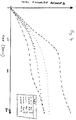
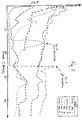
- Fig. 5 the voltage difference (EMF) between the rebar 5 and the electrode 7 versus time for the above examples. Noticeable is the rise in potential in example 2 after pH correction as well as the consistently higher values for the combination magnesium electrode and acetate electrolyte of sample 5. Additional electrodes were introduced into the electrolyte of example 4 after 14 days. This resulted in an increase in EMF which however rapidly decayed again. There was no significant change in chloride removal as can be seen from Fig. 4. It is noticeable that removal of chloride continues even in the examples with low EMF but that increases in the EMF are sometimes accompanied by some increase in the rate of removal of chloride. This indicates that the electrochemical potentials generated are not necessarily the only forces influencing the processes of chloride removal in accordance with the present invention but that these electrochemical forces may assist such removal.
- the concrete surfaces may be cleaned by high pressure water jets or sand blasting before application of the container 2.
- a stirrer may be introduced into the electrolyte to prevent passivation of the electrodes 7 by concentration of impurities therearound.
- the stirrer may be operated intermittently, e.g. once a day and may be driven by solar cells.
- To reduce evaporation layers of plastic balls may be floated on the surface of the electrolyte where this is possible. Further, to obtain maximum wetting of the concrete surface liquid electrolytes are preferred.
- the present invention includes the use of thixotropic agents or thickeners such as cellulosic fibres in the electrolyte to reduce the fluidity of the electrolyte and hence making it easier to contain, form seals and reduce evaporation.
- the electrolyte may be applied to the concrete surface in the form of pre-impregnated sponge or fibrous material, e.g. sheets.
- the concentration of the electrolyte may also be different from the values given above, e.g. between 0.1 and 1.5 mol/litre.
Landscapes
- Chemical & Material Sciences (AREA)
- Engineering & Computer Science (AREA)
- Ceramic Engineering (AREA)
- Materials Engineering (AREA)
- Structural Engineering (AREA)
- Organic Chemistry (AREA)
- Chemical Kinetics & Catalysis (AREA)
- Electrochemistry (AREA)
- Water Supply & Treatment (AREA)
- Working Measures On Existing Buildindgs (AREA)
Priority Applications (1)
| Application Number | Priority Date | Filing Date | Title |
|---|---|---|---|
| EP98109948A EP0962432A1 (fr) | 1998-05-30 | 1998-05-30 | Procédé et appareil pour l'enlévement des imputités ioniques du béton armé |
Applications Claiming Priority (1)
| Application Number | Priority Date | Filing Date | Title |
|---|---|---|---|
| EP98109948A EP0962432A1 (fr) | 1998-05-30 | 1998-05-30 | Procédé et appareil pour l'enlévement des imputités ioniques du béton armé |
Publications (1)
| Publication Number | Publication Date |
|---|---|
| EP0962432A1 true EP0962432A1 (fr) | 1999-12-08 |
Family
ID=8232038
Family Applications (1)
| Application Number | Title | Priority Date | Filing Date |
|---|---|---|---|
| EP98109948A Withdrawn EP0962432A1 (fr) | 1998-05-30 | 1998-05-30 | Procédé et appareil pour l'enlévement des imputités ioniques du béton armé |
Country Status (1)
| Country | Link |
|---|---|
| EP (1) | EP0962432A1 (fr) |
Cited By (1)
| Publication number | Priority date | Publication date | Assignee | Title |
|---|---|---|---|---|
| JP2021059927A (ja) * | 2019-10-09 | 2021-04-15 | 川田建設株式会社 | コンクリート構造物の塩分除去方法 |
Citations (7)
| Publication number | Priority date | Publication date | Assignee | Title |
|---|---|---|---|---|
| US4440605A (en) * | 1981-02-13 | 1984-04-03 | The Marine Resources Company | Repair of reinforced concrete structures by mineral accretion |
| US5141607A (en) * | 1990-07-31 | 1992-08-25 | Corrpro Companies, Inc. | Method and apparatus for the removal of chlorides from steel reinforced concrete structures |
| US5296120A (en) * | 1990-05-21 | 1994-03-22 | Eltech Systems Corporation | Apparatus for the removal of chloride from reinforced concrete structures |
| GB2279664A (en) * | 1993-07-07 | 1995-01-11 | Concrete Repairs Ltd | Anode for impressed current re-alkalization and dechlorination of reinforced concrete subjected to carbonation attack or aggressive ion penetration |
| JPH0789773A (ja) * | 1993-07-29 | 1995-04-04 | Denki Kagaku Kogyo Kk | コンクリート再生用電解質材及びその再生方法 |
| JPH07330467A (ja) * | 1994-06-08 | 1995-12-19 | Denki Kagaku Kogyo Kk | コンクリートの電気化学的処理方法 |
| EP0723947A1 (fr) * | 1995-01-24 | 1996-07-31 | Freyssinet International (Stup) | Procédé de régénération et de protection du béton armé |
-
1998
- 1998-05-30 EP EP98109948A patent/EP0962432A1/fr not_active Withdrawn
Patent Citations (7)
| Publication number | Priority date | Publication date | Assignee | Title |
|---|---|---|---|---|
| US4440605A (en) * | 1981-02-13 | 1984-04-03 | The Marine Resources Company | Repair of reinforced concrete structures by mineral accretion |
| US5296120A (en) * | 1990-05-21 | 1994-03-22 | Eltech Systems Corporation | Apparatus for the removal of chloride from reinforced concrete structures |
| US5141607A (en) * | 1990-07-31 | 1992-08-25 | Corrpro Companies, Inc. | Method and apparatus for the removal of chlorides from steel reinforced concrete structures |
| GB2279664A (en) * | 1993-07-07 | 1995-01-11 | Concrete Repairs Ltd | Anode for impressed current re-alkalization and dechlorination of reinforced concrete subjected to carbonation attack or aggressive ion penetration |
| JPH0789773A (ja) * | 1993-07-29 | 1995-04-04 | Denki Kagaku Kogyo Kk | コンクリート再生用電解質材及びその再生方法 |
| JPH07330467A (ja) * | 1994-06-08 | 1995-12-19 | Denki Kagaku Kogyo Kk | コンクリートの電気化学的処理方法 |
| EP0723947A1 (fr) * | 1995-01-24 | 1996-07-31 | Freyssinet International (Stup) | Procédé de régénération et de protection du béton armé |
Non-Patent Citations (2)
| Title |
|---|
| PATENT ABSTRACTS OF JAPAN vol. 095, no. 007 31 August 1995 (1995-08-31) * |
| PATENT ABSTRACTS OF JAPAN vol. 096, no. 004 30 April 1996 (1996-04-30) * |
Cited By (1)
| Publication number | Priority date | Publication date | Assignee | Title |
|---|---|---|---|---|
| JP2021059927A (ja) * | 2019-10-09 | 2021-04-15 | 川田建設株式会社 | コンクリート構造物の塩分除去方法 |
Similar Documents
| Publication | Publication Date | Title |
|---|---|---|
| JP3099830B2 (ja) | 鉄筋コンクリートの陰極防蝕方法 | |
| US6303017B1 (en) | Cathodic protection of reinforced concrete | |
| US5198082A (en) | Process for rehabilitating internally reinforced concrete by removal of chlorides | |
| US4865702A (en) | Process of electrochemically re-alkalizing reinforced concrete | |
| US4832803A (en) | Removal of chlorides from concrete | |
| CN1246499C (zh) | 采用电渗处理的增强混凝土中钢的阴极保护 | |
| HK1006165B (en) | Process for rehabilitating internally reinforced concrete by removal of chlorides | |
| CN107558753A (zh) | 一种缺陷混凝土电化学加固修复方法 | |
| US5407543A (en) | Process for rehabilitating internally reinforced concrete by electrical treatment | |
| CN101412635B (zh) | 碳化钢筋混凝土的电化学再碱化方法 | |
| EP0200428B1 (fr) | Enlèvement des chlorures du béton | |
| CN201115981Y (zh) | 碳化钢筋混凝土的电化学再碱化装置 | |
| CA2428016C (fr) | Protection cathodique de beton renforce avec un inhibiteur de corrosion impregne | |
| JP4743814B2 (ja) | コンクリート構造体の補修方法及びコンクリート構造体の補修液 | |
| Otero et al. | Electrochemical chloride removal from reinforced concrete structures and its ability to repassivate prerusted steel surfaces | |
| AU682690B2 (en) | Realkalization and dechlorination of concrete by surface mounted electrochemical means | |
| GB2279664A (en) | Anode for impressed current re-alkalization and dechlorination of reinforced concrete subjected to carbonation attack or aggressive ion penetration | |
| WO1996035828A1 (fr) | Procede de traitement electrochimique de regeneration du beton arme | |
| US7967970B2 (en) | Method for the cathodic protection of the reinforcements of ferroconcrete edifices against corrosion | |
| JP3797675B2 (ja) | 中性化した部分を有するコンクリートのアルカリ度の回復方法 | |
| CA1337285C (fr) | Re-alcalisation electrochimique du beton | |
| JP2021116219A (ja) | 電気化学的処理工法及び電極用ユニットパネル | |
| CN112062600A (zh) | 混凝土除氯系统及其制作方法 | |
| Schneck | Long term behaviour of box girder sections with residual chloride after the application of ECE | |
| JP2024007864A (ja) | 既設鉄筋コンクリート構造物の塩害対策工法 |
Legal Events
| Date | Code | Title | Description |
|---|---|---|---|
| PUAI | Public reference made under article 153(3) epc to a published international application that has entered the european phase |
Free format text: ORIGINAL CODE: 0009012 |
|
| AK | Designated contracting states |
Kind code of ref document: A1 Designated state(s): BE FR LU |
|
| AX | Request for extension of the european patent |
Free format text: AL;LT;LV;MK;RO;SI |
|
| 17P | Request for examination filed |
Effective date: 20000525 |
|
| AKX | Designation fees paid |
Free format text: BE FR LU |
|
| REG | Reference to a national code |
Ref country code: DE Ref legal event code: 8566 |
|
| 17Q | First examination report despatched |
Effective date: 20020219 |
|
| STAA | Information on the status of an ep patent application or granted ep patent |
Free format text: STATUS: THE APPLICATION IS DEEMED TO BE WITHDRAWN |
|
| 18D | Application deemed to be withdrawn |
Effective date: 20020702 |