EP0962857A2 - Verteilte Logik zur Befehlsvollendung - Google Patents
Verteilte Logik zur Befehlsvollendung Download PDFInfo
- Publication number
- EP0962857A2 EP0962857A2 EP99303608A EP99303608A EP0962857A2 EP 0962857 A2 EP0962857 A2 EP 0962857A2 EP 99303608 A EP99303608 A EP 99303608A EP 99303608 A EP99303608 A EP 99303608A EP 0962857 A2 EP0962857 A2 EP 0962857A2
- Authority
- EP
- European Patent Office
- Prior art keywords
- instruction
- completion
- unit
- central
- older
- Prior art date
- Legal status (The legal status is an assumption and is not a legal conclusion. Google has not performed a legal analysis and makes no representation as to the accuracy of the status listed.)
- Withdrawn
Links
Images



Classifications
-
- G—PHYSICS
- G06—COMPUTING OR CALCULATING; COUNTING
- G06F—ELECTRIC DIGITAL DATA PROCESSING
- G06F9/00—Arrangements for program control, e.g. control units
- G06F9/06—Arrangements for program control, e.g. control units using stored programs, i.e. using an internal store of processing equipment to receive or retain programs
- G06F9/30—Arrangements for executing machine instructions, e.g. instruction decode
- G06F9/38—Concurrent instruction execution, e.g. pipeline or look ahead
- G06F9/3836—Instruction issuing, e.g. dynamic instruction scheduling or out of order instruction execution
-
- G—PHYSICS
- G06—COMPUTING OR CALCULATING; COUNTING
- G06F—ELECTRIC DIGITAL DATA PROCESSING
- G06F9/00—Arrangements for program control, e.g. control units
- G06F9/06—Arrangements for program control, e.g. control units using stored programs, i.e. using an internal store of processing equipment to receive or retain programs
- G06F9/30—Arrangements for executing machine instructions, e.g. instruction decode
- G06F9/38—Concurrent instruction execution, e.g. pipeline or look ahead
-
- G—PHYSICS
- G06—COMPUTING OR CALCULATING; COUNTING
- G06F—ELECTRIC DIGITAL DATA PROCESSING
- G06F9/00—Arrangements for program control, e.g. control units
- G06F9/06—Arrangements for program control, e.g. control units using stored programs, i.e. using an internal store of processing equipment to receive or retain programs
- G06F9/30—Arrangements for executing machine instructions, e.g. instruction decode
- G06F9/38—Concurrent instruction execution, e.g. pipeline or look ahead
- G06F9/3824—Operand accessing
- G06F9/3834—Maintaining memory consistency
-
- G—PHYSICS
- G06—COMPUTING OR CALCULATING; COUNTING
- G06F—ELECTRIC DIGITAL DATA PROCESSING
- G06F9/00—Arrangements for program control, e.g. control units
- G06F9/06—Arrangements for program control, e.g. control units using stored programs, i.e. using an internal store of processing equipment to receive or retain programs
- G06F9/30—Arrangements for executing machine instructions, e.g. instruction decode
- G06F9/38—Concurrent instruction execution, e.g. pipeline or look ahead
- G06F9/3836—Instruction issuing, e.g. dynamic instruction scheduling or out of order instruction execution
- G06F9/3838—Dependency mechanisms, e.g. register scoreboarding
- G06F9/384—Register renaming
-
- G—PHYSICS
- G06—COMPUTING OR CALCULATING; COUNTING
- G06F—ELECTRIC DIGITAL DATA PROCESSING
- G06F9/00—Arrangements for program control, e.g. control units
- G06F9/06—Arrangements for program control, e.g. control units using stored programs, i.e. using an internal store of processing equipment to receive or retain programs
- G06F9/30—Arrangements for executing machine instructions, e.g. instruction decode
- G06F9/38—Concurrent instruction execution, e.g. pipeline or look ahead
- G06F9/3836—Instruction issuing, e.g. dynamic instruction scheduling or out of order instruction execution
- G06F9/3842—Speculative instruction execution
-
- G—PHYSICS
- G06—COMPUTING OR CALCULATING; COUNTING
- G06F—ELECTRIC DIGITAL DATA PROCESSING
- G06F9/00—Arrangements for program control, e.g. control units
- G06F9/06—Arrangements for program control, e.g. control units using stored programs, i.e. using an internal store of processing equipment to receive or retain programs
- G06F9/30—Arrangements for executing machine instructions, e.g. instruction decode
- G06F9/38—Concurrent instruction execution, e.g. pipeline or look ahead
- G06F9/3854—Instruction completion, e.g. retiring, committing or graduating
-
- G—PHYSICS
- G06—COMPUTING OR CALCULATING; COUNTING
- G06F—ELECTRIC DIGITAL DATA PROCESSING
- G06F9/00—Arrangements for program control, e.g. control units
- G06F9/06—Arrangements for program control, e.g. control units using stored programs, i.e. using an internal store of processing equipment to receive or retain programs
- G06F9/30—Arrangements for executing machine instructions, e.g. instruction decode
- G06F9/38—Concurrent instruction execution, e.g. pipeline or look ahead
- G06F9/3854—Instruction completion, e.g. retiring, committing or graduating
- G06F9/3856—Reordering of instructions, e.g. using queues or age tags
-
- G—PHYSICS
- G06—COMPUTING OR CALCULATING; COUNTING
- G06F—ELECTRIC DIGITAL DATA PROCESSING
- G06F9/00—Arrangements for program control, e.g. control units
- G06F9/06—Arrangements for program control, e.g. control units using stored programs, i.e. using an internal store of processing equipment to receive or retain programs
- G06F9/30—Arrangements for executing machine instructions, e.g. instruction decode
- G06F9/38—Concurrent instruction execution, e.g. pipeline or look ahead
- G06F9/3854—Instruction completion, e.g. retiring, committing or graduating
- G06F9/3858—Result writeback, i.e. updating the architectural state or memory
-
- G—PHYSICS
- G06—COMPUTING OR CALCULATING; COUNTING
- G06F—ELECTRIC DIGITAL DATA PROCESSING
- G06F9/00—Arrangements for program control, e.g. control units
- G06F9/06—Arrangements for program control, e.g. control units using stored programs, i.e. using an internal store of processing equipment to receive or retain programs
- G06F9/30—Arrangements for executing machine instructions, e.g. instruction decode
- G06F9/38—Concurrent instruction execution, e.g. pipeline or look ahead
- G06F9/3861—Recovery, e.g. branch miss-prediction, exception handling
Definitions
- the present invention relates generally to a superscalar processor and in particular to increasing completion of more instructions per cycle. Still more particularly, the invention relates to improving the instruction completion scheme and completion unit of the superscalar processor.
- Microprocessors are classified as superscalar if the microprocessor ("processor") is capable of completing multiple instructions per clock cycle.
- the architecture of a superscalar processor utilizes multiple parallel processing units within the processor to allow completion of more multiple instructions per clock cycle. These processing units generally include multiple execution units operating in parallel, a dispatch unit for sending instructions and data to the execution units, a completion unit containing a ("completion table") for tracking and retiring the instructions and rename buffers (rename registers) for preloading instructions for the execution units.
- the tracking and retiring feature of the completion table provides for completing instructions out of order.
- Pipelining is a method of fetching and decoding instructions so that an execution unit does not have to wait for instructions; the execution unit begins executing a second instruction before the first has been completed.
- current architecture uses speculative execution (executing instructions from different branch paths) and branch prediction to increase performance of the processor. Branch prediction is utilized to predict the way an instruction will branch the next time it is executed and is generally correct 90 percent of the time.
- Figure 4 is a simplified block diagram illustrating instruction flow in a superscalar processor. Multiple instructions are retrieved from the instruction cache by the fetcher 402 and placed in either the Branch Processing unit 404 or the Instruction Queue 406. After entering the Instruction Queue 406, instructions are issued to the various execution units by the dispatch unit 408. The dispatch rate is contingent on, among other things, the execution unit busy status, rename buffer availability (not shown) and completion table buffer availability. In current processors, instruction completion logic is performed in a single unit, the completion unit, within the processor. Completion unit 418, tracks instructions from dispatch through execution and finish, allowing for out of order execution of instructions.
- Status of an instruction is transmitted by execution unit 410, 412, 414 or 416 to completion table 418 when that execution unit finishes with the instruction.
- the completion unit then completes, or retires, the instruction and sends a completion signal to the remaining execution units, allowing write-back of finished data into architected registers.
- completion unit 418 there is a fixed number of instructions that may be completed or retired per cycle by the completion unit; a limiting factor that may lead to a bottle-neck in the instruction dispatch logic. All instructions are tracked, completed and committed to specific architected registers by completion unit 418.
- One reason that the processor 400 may drop in efficiency and speed if the completion unit 418 stalls is that execution units 410, 412, 414, and 416 cannot send a finish signal to update a corresponding instruction status in completion unit 418.
- the execution units 410, 412, 414, and 416 stall because finish signals cannot be transmitted to a full completion unit 418 queue.
- the backup continues because rename buffers (not shown) cannot now transfer instructions to execution units 410, 412, 414, and 416.
- the dispatch unit 408 makes the determination that the rename buffers are full and there is no room for additional instructions. So, the dispatch unit 408 will not dispatch an instruction, unless there is space available in the rename buffers, causing the
- a second reason for a completion unit 418 bottleneck is that the completion unit 418, though it is capable of retiring multiple instructions at the same time, must retire instructions in program order. If the instruction in completion table 418, entry 0 (the first instruction retiring position), is unable to be retired because an instruction is still being executed, instruction completion can be stalled.
- the speed of processors capable of executing multiple instructions per clock cycle is limited by the ability of the processor's completion table to complete or retire instructions.
- Each execution unit within a superscalar processor has an associated completion table that contains a copy of the status of all instructions dispatched but not completed.
- a central completion table maintains the status of every dispatched instruction as reported by the dispatch unit and the individual execution units.
- Execution units send finish signals to the completion table responsible for retiring a particular type of instruction.
- the central completion table retires instructions that may cause an interrupt and instructions whose results may target the same register.
- the execution units' associated completion tables retire the balance of the instructions and the execution units send instruction status to the central completion table and to each execution unit. This reduces the number of instructions that are retired by the central completion table,increasing the number of instructions retired per clock cycle.
- Processor 100 is a single integrated circuit superscalar processor, such as the PowerPC ⁇ processor available from IBM Corporation of Armonk, New York. Accordingly, processor 100 includes various units, registers, buffers, memories, and other sections, all of which are formed by integrated circuitry. Processor 100 also operates according to reduced instruction set computing ("RISC”) techniques.
- RISC reduced instruction set computing
- Processor 100 includes level one (L1) instruction and data caches (“I Cache” and “D Cache”) 102 and 104, respectively, each having an associated memory management unit (“I MMU” and “D MMU”) 106 and 108.
- processor 100 is connected to system address bus 110 and to system data bus 112 via bus interface unit 114. Instructions are retrieved from system memory (not shown) to processor 100 through bus interface unit 114 and are stored in instruction cache 102, while data retrieved through bus interface unit 114 is stored in data cache 104. Instructions are fetched as needed from instruction cache 102 by instruction unit 116, which includes instruction fetch logic, instruction branch prediction logic, an instruction queue and a dispatch unit.
- the dispatch unit within instruction unit 116 dispatches instructions as appropriate to executions units such as system unit 118, integer unit 120, floating point unit 122, or load/store unit 124.
- System unit 118 executes condition register logical, special register transfer, and other system instructions.
- Integer or "fixed-point" unit 120 performs add, subtract, multiply, divide, shift or rotate operations on integers, retrieving operands from and storing results in integer or general purpose registers ("GPR File") 126.
- Floating point unit 122 performs single precision and/or double precision multiply/add operations, retrieving operands from and storing results in floating point registers ("FPR File”) 128.
- Load/store unit 124 loads instruction operands from data cache 104 into integer or floating point registers 126 or 128 as needed, and stores instructions results when available from integer or floating point registers 126 or 128 into data cache 104.
- Load and store queues 130 are utilized for these transfers from data cache 104 to and from integer or floating point registers 126 or 128.
- Completion unit 132 which includes reorder buffers, operates in conjunction with instruction unit 116 to support out-of-order instruction processing, and also operates in connection with rename buffers within integer and floating point registers 126 and 128 to avoid conflict for a specific register for instruction results.
- Common on-chip processor (“COP”) and joint test action group (“JTAG”) unit 134 provides a serial interface to the system for performing boundary scan interconnect tests.
- Processor 100 may include, for example, multiple integer and floating point execution units to increase processing throughput.
- Central completion table 132 controls all instruction retirement.
- Central completion table 132 has an instruction queue with a fixed number of retirement positions, limiting the output.
- additional completion tables are added to the processor and each execution unit has an instruction completion table for completing instructions not completed by the Central completion table 132.
- Each execution unit is responsible for completing its own type of instructions.
- the execution unit broadcasts the completion information to other execution units and to a Central completion table.
- Multiple completion tables, operating in parallel, would allow a higher rate of instruction completion.
- the rate of completion is increased and the Central completion table 132 queue is emptied faster; increasing the rate of completion, the completion table queue is emptied faster; thereby, providing a higher instruction dispatch rate per cycle since the rename buffers are also released faster.
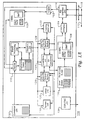
- FIG. 1A the operation of the major components of the processor was described.
- Figure 1B the operation of the processor is basically the same, with the exception of additional completion tables 136, 138, 140 and 142.
- Each execution unit; integer unit 120, load/store unit 124, floating point unit 122 and system unit 118 has an associated completion table. If the rename buffers 126 and 128 are open, instructions are sent from the Instruction unit 116 and received by an execution unit, for example floating point unit 122.
- the individual execution unit in this case floating point unit 122, determines the type of instruction, finishes the instruction and sends the finish information to the Central completion table 132 and the floating point unit 122 associated completion table 140.
- the Central completion table 132 or the completion table 140 will retire the instruction to a specific architected register.
- the instruction completion queue in the central completion table 132 becomes less crowded by transferring instructions, ordinarily retired by the central completion table 132, to the execution unit completion tables 136, 138, 140 and 142. This reduction of instructions to the central completion table 132 provides a higher overall throughput.
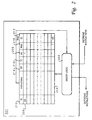
- Central completion table instruction queue 200 is used to maintain the status of all instructions in the machine. Instructions may be completed out of order with respect to each other and an instruction must not be allowed to complete if a previous instruction, that may cause an interrupt, exists in the processor pipeline. Preventing an instruction from completing out of order is accomplished by having an "interruptible bit" applied to the instruction by the dispatch unit for each entry in the completion table instruction queue 200 that may cause an interrupt.
- snoop logic 202 is applied to incoming instructions, such as 204, allowing snooping of central completion table instruction queue 200 to determine whether any older instruction has interruptible bit 206 turned on.
- Incoming instruction 204 has multiple parts that, among other things, determine what to do with the instruction, when to complete the instruction and whether there are related instructions within the queue. Parts of the instruction that are significant to the present invention are illustrated in Figure 2. For instance, ID 208 is the instruction identifier and is what distinguishes a particular instruction within the queue. The body, or instruction, is identified in the illustrated table by the heading "Instructions.” "Int.” 206 is an "interruptible" bit included in the finished instruction to identify an older instruction that may cause an interrupt in the instruction flow. The processor will be able to complete instructions out of order with respect to each other and still maintain program order by using the interruptible bit.
- Branch pending bit BP 214 indicates that the instruction is in an unresolved branch path. when the branch is resolved, this bit is turned off to indicate the instruction is no longer speculative.
- TC 218 is a bit placed by the dispatch unit after the dispatch unit snoops the central completion table and determines there is an older instruction that has targeted the same register. When the TC 218 bit is on, the older instruction must be completed by the central completion table.
- Wait bit 216 is a bit within the incoming instruction that is turned on when an interruptible instruction, such as instruction 208, is detected. Instruction ID 208 is then latched in with the wait ID 212 of the incoming instruction 204 by turning on wait bit 216 of instruction 204.
- interruptible instruction ID 208 When the older, interruptible instruction ID 208 is complete, it can now simply be snooped by instruction 204.
- the instruction ID 208 is compared to wait ID 212 of instruction 204 and if the ID's match, wait bit 216 of instruction 204 is turned off. Instruction 204 can then be completed if ready.
- Incoming instruction 204 simply snoops the central completion table instruction queue 200 for an interruptible instruction ID, in this case, instruction 208.
- ID 210 of instruction 208 is compared with wait ID 212 of instruction 204 in the completion queue. If there is a match, wait bit 216 is turned off and instruction 204 can be completed.
- step 300 depicts the dispatch unit sending an instruction to an execution unit.
- step 302 illustrates a signal, indicating an instruction dispatch to the execution unit, being sent to the central completion unit.
- step 304 illustrates the execution unit writing the instruction status to its local completion table.
- step 306 depicts the execution unit executing the instruction received.
- step 308 which illustrates the execution unit finishing the instruction.
- step 310 which depicts the execution unit sending a finish signal to the central completion table. This step updates the status of the instruction within the central completion table.
- step 312 which illustrates the finish signal also being sent to the completion table of the execution unit.
- step 313 which illustrates the execution unit writing the results of the finished instruction to its completion table.
- step 314 depicts the execution unit checking the associated completion table to determine what type of instruction has been executed.
- step 316 illustrates one of three checks made by the execution unit to determine the type of instruction.
- Step 316 illustrates the check to determine whether the instruction is in a speculative path. If the instruction is in a speculative path, the process then proceeds to step 317, which depicts the execution unit waiting for the speculative path to resolve itself. The process then returns to step 316 and continues until the speculative path is resolved.
- step 318 depicts the execution unit checking whether there is an older instruction in its completion table which has not completed, but can cause an interrupt (such as a load or store instruction). If the older instruction in the completion table of the execution unit may cause an interrupt, the process then passes to step 322 which illustrates the central completion table completing (retiring) the finished instruction.
- the central Completion table clears out the completed instructions by committing the instruction to a target address, or discards the instruction due to an interrupt or wrong branch prediction. When the central completion table completes the instruction it broadcasts completion information to the execution unit to update all completion tables in the processor.
- step 324 depicts the central completion table updating the individual completion tables of the execution units with the completion information. If the older instruction would not cause an interrupt, the process then proceeds to step 320 which illustrates the execution unit checking whether the older instruction may have the same target register as the instruction. If it does, the process passes to step 322 and step 324 which is discussed above.
- step 326 depicts the execution unit updating its completion table and all the other completion tables, including the central completion table.
- step 328 illustrates the execution unit completing the instruction.
- the execution unit also sends completion data to all the other execution units and to the central completion table. If the instruction can be retired by the execution unit completion table, the execution unit will complete it.
- step 330 depicts the execution unit updating the appropriate architected registers and releasing all the rename buffers associated with the instruction.
- the process divides instructions between the central completion table and the individual completion tables of the execution units.
- Each completion table can handle instructions from different branch paths by including a branch pending bit for each instruction when dispatched.
- the branch pending bit if turned on, indicates that the instruction is in an unresolved branch path. When the branch is resolved, this bit is turned off to indicate the instruction is no longer speculative.
- instruction flow that may be inhibited by conventional completion units within a processor, may be improved in the present invention by the distributed completion scheme and multiple completion tables. Multiple completion tables, operating in parallel, would allow a higher rate of instruction completion.
- Each execution unit completes its own type of instructions and broadcasts completion information to the other execution units and a central completion table.
- completion rate is increased.
- the central completion table queue is emptied faster, increasing the rate of instruction completion. As the central completion table queue is emptied at a faster rate, a higher instruction dispatch rate per cycle is achieved.
Landscapes
- Engineering & Computer Science (AREA)
- Software Systems (AREA)
- Theoretical Computer Science (AREA)
- Physics & Mathematics (AREA)
- General Engineering & Computer Science (AREA)
- General Physics & Mathematics (AREA)
- Advance Control (AREA)
Applications Claiming Priority (2)
| Application Number | Priority Date | Filing Date | Title |
|---|---|---|---|
| US09/087,886 US6134645A (en) | 1998-06-01 | 1998-06-01 | Instruction completion logic distributed among execution units for improving completion efficiency |
| US87886 | 1998-06-01 |
Publications (2)
| Publication Number | Publication Date |
|---|---|
| EP0962857A2 true EP0962857A2 (de) | 1999-12-08 |
| EP0962857A3 EP0962857A3 (de) | 2001-01-03 |
Family
ID=22207854
Family Applications (1)
| Application Number | Title | Priority Date | Filing Date |
|---|---|---|---|
| EP99303608A Withdrawn EP0962857A3 (de) | 1998-06-01 | 1999-05-10 | Verteilte Logik zur Befehlsvollendung |
Country Status (7)
| Country | Link |
|---|---|
| US (1) | US6134645A (de) |
| EP (1) | EP0962857A3 (de) |
| JP (1) | JP3182741B2 (de) |
| KR (1) | KR20000005685A (de) |
| CN (1) | CN1124546C (de) |
| CA (1) | CA2271533C (de) |
| TW (1) | TW493140B (de) |
Families Citing this family (11)
| Publication number | Priority date | Publication date | Assignee | Title |
|---|---|---|---|---|
| JP3469469B2 (ja) | 1998-07-07 | 2003-11-25 | 富士通株式会社 | 情報処理装置 |
| US7472258B2 (en) * | 2003-04-21 | 2008-12-30 | International Business Machines Corporation | Dynamically shared group completion table between multiple threads |
| US7278011B2 (en) * | 2004-04-08 | 2007-10-02 | International Business Machines Corporation | Completion table configured to track a larger number of outstanding instructions without increasing the size of the completion table |
| JP4499123B2 (ja) * | 2007-02-23 | 2010-07-07 | 富士通株式会社 | 受付制御方法及び受付制御システム |
| WO2013014779A1 (ja) * | 2011-07-27 | 2013-01-31 | 富士通株式会社 | 電子装置、デバイスアクセス方法、およびプログラム |
| CN102722341B (zh) * | 2012-05-17 | 2014-12-24 | 杭州中天微系统有限公司 | 存储载入单元投机执行控制装置 |
| WO2014036085A1 (en) | 2012-08-31 | 2014-03-06 | Dolby Laboratories Licensing Corporation | Reflected sound rendering for object-based audio |
| US9384002B2 (en) | 2012-11-16 | 2016-07-05 | International Business Machines Corporation | Speculative finish of instruction execution in a processor core |
| US10713049B2 (en) * | 2014-04-25 | 2020-07-14 | Avago Technologies International Sales Pte. Limited | Stunt box to broadcast and store results until retirement for an out-of-order processor |
| US10423423B2 (en) | 2015-09-29 | 2019-09-24 | International Business Machines Corporation | Efficiently managing speculative finish tracking and error handling for load instructions |
| US10761856B2 (en) * | 2018-07-19 | 2020-09-01 | International Business Machines Corporation | Instruction completion table containing entries that share instruction tags |
Family Cites Families (11)
| Publication number | Priority date | Publication date | Assignee | Title |
|---|---|---|---|---|
| US4318173A (en) * | 1980-02-05 | 1982-03-02 | The Bendix Corporation | Scheduler for a multiple computer system |
| US5388219A (en) * | 1992-03-02 | 1995-02-07 | International Business Machines Corporation | Efficient channel and control unit for host computer |
| US5481683A (en) * | 1992-10-30 | 1996-01-02 | International Business Machines Corporation | Super scalar computer architecture using remand and recycled general purpose register to manage out-of-order execution of instructions |
| TW295646B (de) * | 1995-01-25 | 1997-01-11 | Ibm | |
| US5802340A (en) * | 1995-08-22 | 1998-09-01 | International Business Machines Corporation | Method and system of executing speculative store instructions in a parallel processing computer system |
| US5758117A (en) * | 1995-12-14 | 1998-05-26 | International Business Machines Corporation | Method and system for efficiently utilizing rename buffers to reduce dispatch unit stalls in a superscalar processor |
| US5841999A (en) * | 1996-04-17 | 1998-11-24 | International Business Machines Corporation | Information handling system having a register remap structure using a content addressable table |
| US5764971A (en) * | 1996-12-11 | 1998-06-09 | Industrial Technology Research Institute | Method and apparatus for implementing precise interrupts in a pipelined data processing system |
| US5913048A (en) * | 1997-03-31 | 1999-06-15 | International Business Machines Corporation | Dispatching instructions in a processor supporting out-of-order execution |
| US5887161A (en) * | 1997-03-31 | 1999-03-23 | International Business Machines Corporation | Issuing instructions in a processor supporting out-of-order execution |
| US5875326A (en) * | 1997-04-25 | 1999-02-23 | International Business Machines Corporation | Data processing system and method for completing out-of-order instructions |
-
1998
- 1998-06-01 US US09/087,886 patent/US6134645A/en not_active Expired - Fee Related
-
1999
- 1999-05-10 EP EP99303608A patent/EP0962857A3/de not_active Withdrawn
- 1999-05-12 CA CA002271533A patent/CA2271533C/en not_active Expired - Fee Related
- 1999-05-19 KR KR1019990018034A patent/KR20000005685A/ko not_active Ceased
- 1999-05-20 JP JP14060199A patent/JP3182741B2/ja not_active Expired - Fee Related
- 1999-05-28 TW TW088108859A patent/TW493140B/zh not_active IP Right Cessation
- 1999-05-31 CN CN99106952A patent/CN1124546C/zh not_active Expired - Fee Related
Also Published As
| Publication number | Publication date |
|---|---|
| CA2271533A1 (en) | 1999-12-01 |
| JP2000020307A (ja) | 2000-01-21 |
| TW493140B (en) | 2002-07-01 |
| KR20000005685A (ko) | 2000-01-25 |
| CN1237732A (zh) | 1999-12-08 |
| US6134645A (en) | 2000-10-17 |
| JP3182741B2 (ja) | 2001-07-03 |
| CA2271533C (en) | 2001-12-04 |
| EP0962857A3 (de) | 2001-01-03 |
| CN1124546C (zh) | 2003-10-15 |
Similar Documents
| Publication | Publication Date | Title |
|---|---|---|
| US6728866B1 (en) | Partitioned issue queue and allocation strategy | |
| US5611063A (en) | Method for executing speculative load instructions in high-performance processors | |
| US5870582A (en) | Method and apparatus for completion of non-interruptible instructions before the instruction is dispatched | |
| US7237094B2 (en) | Instruction group formation and mechanism for SMT dispatch | |
| US7552318B2 (en) | Branch lookahead prefetch for microprocessors | |
| US6065103A (en) | Speculative store buffer | |
| US5961636A (en) | Checkpoint table for selective instruction flushing in a speculative execution unit | |
| EP0871109B1 (de) | Beförderung von Ergebnissen von Speicherungsbefehlen | |
| EP0751458B1 (de) | Verfahren und Anordnung zur Überwachung von Ressourcenzuteilung innerhalb eines Prozessors | |
| US5751983A (en) | Out-of-order processor with a memory subsystem which handles speculatively dispatched load operations | |
| US7603497B2 (en) | Method and apparatus to launch write queue read data in a microprocessor recovery unit | |
| US6189089B1 (en) | Apparatus and method for retiring instructions in excess of the number of accessible write ports | |
| US5931957A (en) | Support for out-of-order execution of loads and stores in a processor | |
| US7093106B2 (en) | Register rename array with individual thread bits set upon allocation and cleared upon instruction completion | |
| US5898864A (en) | Method and system for executing a context-altering instruction without performing a context-synchronization operation within high-performance processors | |
| US6192461B1 (en) | Method and apparatus for facilitating multiple storage instruction completions in a superscalar processor during a single clock cycle | |
| JPH096611A (ja) | データ処理システムにおけるデータをバッファリングする方法およびシステム | |
| JP2003523574A (ja) | 2次リオーダ・バッファ・マイクロプロセッサ | |
| US6134645A (en) | Instruction completion logic distributed among execution units for improving completion efficiency | |
| JP3207124B2 (ja) | カウント/リンク・レジスタ変更命令の投機実行をサポートする方法及び装置 | |
| US7603543B2 (en) | Method, apparatus and program product for enhancing performance of an in-order processor with long stalls | |
| US5996085A (en) | Concurrent execution of machine context synchronization operations and non-interruptible instructions | |
| US6266767B1 (en) | Apparatus and method for facilitating out-of-order execution of load instructions | |
| US5751946A (en) | Method and system for detecting bypass error conditions in a load/store unit of a superscalar processor | |
| US6098168A (en) | System for completing instruction out-of-order which performs target address comparisons prior to dispatch |
Legal Events
| Date | Code | Title | Description |
|---|---|---|---|
| PUAI | Public reference made under article 153(3) epc to a published international application that has entered the european phase |
Free format text: ORIGINAL CODE: 0009012 |
|
| AK | Designated contracting states |
Kind code of ref document: A2 Designated state(s): DE FR GB IE |
|
| AX | Request for extension of the european patent |
Free format text: AL;LT;LV;MK;RO;SI |
|
| PUAL | Search report despatched |
Free format text: ORIGINAL CODE: 0009013 |
|
| AK | Designated contracting states |
Kind code of ref document: A3 Designated state(s): AT BE CH CY DE DK ES FI FR GB GR IE IT LI LU MC NL PT SE |
|
| AX | Request for extension of the european patent |
Free format text: AL;LT;LV;MK;RO;SI |
|
| 17P | Request for examination filed |
Effective date: 20010324 |
|
| AKX | Designation fees paid |
Free format text: DE FR GB IE |
|
| 17Q | First examination report despatched |
Effective date: 20070222 |
|
| STAA | Information on the status of an ep patent application or granted ep patent |
Free format text: STATUS: THE APPLICATION IS DEEMED TO BE WITHDRAWN |
|
| 18D | Application deemed to be withdrawn |
Effective date: 20080905 |