EP0963370B1 - Integrin antagonisten - Google Patents
Integrin antagonisten Download PDFInfo
- Publication number
- EP0963370B1 EP0963370B1 EP97952325A EP97952325A EP0963370B1 EP 0963370 B1 EP0963370 B1 EP 0963370B1 EP 97952325 A EP97952325 A EP 97952325A EP 97952325 A EP97952325 A EP 97952325A EP 0963370 B1 EP0963370 B1 EP 0963370B1
- Authority
- EP
- European Patent Office
- Prior art keywords
- alkyl
- group
- compound
- aryl
- acid
- Prior art date
- Legal status (The legal status is an assumption and is not a legal conclusion. Google has not performed a legal analysis and makes no representation as to the accuracy of the status listed.)
- Expired - Lifetime
Links
- 102000006495 integrins Human genes 0.000 title abstract description 23
- 108010044426 integrins Proteins 0.000 title abstract description 23
- 239000005557 antagonist Substances 0.000 title description 2
- 150000001875 compounds Chemical class 0.000 claims abstract description 125
- 150000003839 salts Chemical class 0.000 claims abstract description 28
- 230000001732 thrombotic effect Effects 0.000 claims abstract description 8
- 238000000034 method Methods 0.000 claims description 62
- 150000001412 amines Chemical class 0.000 claims description 53
- 150000001408 amides Chemical class 0.000 claims description 25
- LFQSCWFLJHTTHZ-UHFFFAOYSA-N Ethanol Chemical compound CCO LFQSCWFLJHTTHZ-UHFFFAOYSA-N 0.000 claims description 24
- -1 N-protected amino Chemical group 0.000 claims description 24
- 239000000047 product Substances 0.000 claims description 21
- 208000007536 Thrombosis Diseases 0.000 claims description 20
- 239000000651 prodrug Chemical class 0.000 claims description 18
- 229940002612 prodrug Drugs 0.000 claims description 18
- 125000001424 substituent group Chemical group 0.000 claims description 17
- 229910052739 hydrogen Inorganic materials 0.000 claims description 16
- 125000003118 aryl group Chemical group 0.000 claims description 15
- 238000006243 chemical reaction Methods 0.000 claims description 14
- 239000003814 drug Substances 0.000 claims description 12
- 125000004169 (C1-C6) alkyl group Chemical group 0.000 claims description 11
- RTZKZFJDLAIYFH-UHFFFAOYSA-N Diethyl ether Chemical compound CCOCC RTZKZFJDLAIYFH-UHFFFAOYSA-N 0.000 claims description 11
- KXDHJXZQYSOELW-UHFFFAOYSA-M Carbamate Chemical compound NC([O-])=O KXDHJXZQYSOELW-UHFFFAOYSA-M 0.000 claims description 9
- 241000124008 Mammalia Species 0.000 claims description 9
- 239000003146 anticoagulant agent Substances 0.000 claims description 9
- 125000003178 carboxy group Chemical group [H]OC(*)=O 0.000 claims description 8
- 125000004122 cyclic group Chemical group 0.000 claims description 8
- YGYAWVDWMABLBF-UHFFFAOYSA-N Phosgene Chemical compound ClC(Cl)=O YGYAWVDWMABLBF-UHFFFAOYSA-N 0.000 claims description 7
- 230000001404 mediated effect Effects 0.000 claims description 6
- 230000008569 process Effects 0.000 claims description 6
- 125000000008 (C1-C10) alkyl group Chemical group 0.000 claims description 5
- 125000004209 (C1-C8) alkyl group Chemical group 0.000 claims description 5
- 206010002388 Angina unstable Diseases 0.000 claims description 5
- 208000007814 Unstable Angina Diseases 0.000 claims description 5
- 150000004677 hydrates Chemical class 0.000 claims description 5
- 201000004332 intermediate coronary syndrome Diseases 0.000 claims description 5
- 125000003386 piperidinyl group Chemical group 0.000 claims description 5
- 239000012453 solvate Chemical class 0.000 claims description 5
- 206010028980 Neoplasm Diseases 0.000 claims description 4
- 208000032109 Transient ischaemic attack Diseases 0.000 claims description 4
- 150000001735 carboxylic acids Chemical class 0.000 claims description 4
- 239000007795 chemical reaction product Substances 0.000 claims description 4
- 125000001072 heteroaryl group Chemical group 0.000 claims description 4
- 239000008194 pharmaceutical composition Substances 0.000 claims description 4
- 229910052703 rhodium Inorganic materials 0.000 claims description 4
- 239000010948 rhodium Substances 0.000 claims description 4
- MHOVAHRLVXNVSD-UHFFFAOYSA-N rhodium atom Chemical compound [Rh] MHOVAHRLVXNVSD-UHFFFAOYSA-N 0.000 claims description 4
- 208000011580 syndromic disease Diseases 0.000 claims description 4
- 238000002560 therapeutic procedure Methods 0.000 claims description 4
- 201000010875 transient cerebral ischemia Diseases 0.000 claims description 4
- 208000004476 Acute Coronary Syndrome Diseases 0.000 claims description 3
- 206010002383 Angina Pectoris Diseases 0.000 claims description 3
- 206010053567 Coagulopathies Diseases 0.000 claims description 3
- 206010051055 Deep vein thrombosis Diseases 0.000 claims description 3
- 206010014498 Embolic stroke Diseases 0.000 claims description 3
- 206010062506 Heparin-induced thrombocytopenia Diseases 0.000 claims description 3
- 229910018828 PO3H2 Inorganic materials 0.000 claims description 3
- 208000010378 Pulmonary Embolism Diseases 0.000 claims description 3
- 208000017442 Retinal disease Diseases 0.000 claims description 3
- 206010038923 Retinopathy Diseases 0.000 claims description 3
- 229910006069 SO3H Inorganic materials 0.000 claims description 3
- 206010043647 Thrombotic Stroke Diseases 0.000 claims description 3
- 201000007023 Thrombotic Thrombocytopenic Purpura Diseases 0.000 claims description 3
- 206010047249 Venous thrombosis Diseases 0.000 claims description 3
- 125000003545 alkoxy group Chemical group 0.000 claims description 3
- 208000015294 blood coagulation disease Diseases 0.000 claims description 3
- 230000000747 cardiac effect Effects 0.000 claims description 3
- 230000003197 catalytic effect Effects 0.000 claims description 3
- 208000009190 disseminated intravascular coagulation Diseases 0.000 claims description 3
- 210000003709 heart valve Anatomy 0.000 claims description 3
- 208000010125 myocardial infarction Diseases 0.000 claims description 3
- 238000010577 post-coronary angioplasty Methods 0.000 claims description 3
- 125000006273 (C1-C3) alkyl group Chemical group 0.000 claims 2
- 208000033386 Buerger disease Diseases 0.000 claims 2
- 206010043540 Thromboangiitis obliterans Diseases 0.000 claims 2
- 150000001335 aliphatic alkanes Chemical class 0.000 claims 2
- 239000003054 catalyst Substances 0.000 claims 2
- 125000005647 linker group Chemical group 0.000 claims 2
- 229910000000 metal hydroxide Inorganic materials 0.000 claims 2
- 150000004692 metal hydroxides Chemical class 0.000 claims 2
- XZMCDFZZKTWFGF-UHFFFAOYSA-N Cyanamide Chemical compound NC#N XZMCDFZZKTWFGF-UHFFFAOYSA-N 0.000 claims 1
- 239000012024 dehydrating agents Substances 0.000 claims 1
- 238000004519 manufacturing process Methods 0.000 claims 1
- 239000000203 mixture Substances 0.000 abstract description 46
- 230000000694 effects Effects 0.000 abstract description 9
- 238000001727 in vivo Methods 0.000 abstract description 9
- 238000000338 in vitro Methods 0.000 abstract description 6
- XEKOWRVHYACXOJ-UHFFFAOYSA-N Ethyl acetate Chemical compound CCOC(C)=O XEKOWRVHYACXOJ-UHFFFAOYSA-N 0.000 description 61
- YMWUJEATGCHHMB-UHFFFAOYSA-N Dichloromethane Chemical compound ClCCl YMWUJEATGCHHMB-UHFFFAOYSA-N 0.000 description 44
- DTQVDTLACAAQTR-UHFFFAOYSA-N Trifluoroacetic acid Chemical compound OC(=O)C(F)(F)F DTQVDTLACAAQTR-UHFFFAOYSA-N 0.000 description 43
- HEMHJVSKTPXQMS-UHFFFAOYSA-M Sodium hydroxide Chemical compound [OH-].[Na+] HEMHJVSKTPXQMS-UHFFFAOYSA-M 0.000 description 30
- 235000019439 ethyl acetate Nutrition 0.000 description 28
- 239000000243 solution Substances 0.000 description 28
- 238000002360 preparation method Methods 0.000 description 27
- 239000002253 acid Substances 0.000 description 26
- 239000011347 resin Substances 0.000 description 24
- 229920005989 resin Polymers 0.000 description 24
- ZRALSGWEFCBTJO-UHFFFAOYSA-N Guanidine Chemical compound NC(N)=N ZRALSGWEFCBTJO-UHFFFAOYSA-N 0.000 description 22
- OKKJLVBELUTLKV-UHFFFAOYSA-N Methanol Chemical compound OC OKKJLVBELUTLKV-UHFFFAOYSA-N 0.000 description 19
- VYPSYNLAJGMNEJ-UHFFFAOYSA-N Silicium dioxide Chemical compound O=[Si]=O VYPSYNLAJGMNEJ-UHFFFAOYSA-N 0.000 description 18
- CSNNHWWHGAXBCP-UHFFFAOYSA-L Magnesium sulfate Chemical compound [Mg+2].[O-][S+2]([O-])([O-])[O-] CSNNHWWHGAXBCP-UHFFFAOYSA-L 0.000 description 16
- 239000000463 material Substances 0.000 description 16
- ZMANZCXQSJIPKH-UHFFFAOYSA-N Triethylamine Chemical compound CCN(CC)CC ZMANZCXQSJIPKH-UHFFFAOYSA-N 0.000 description 15
- ZMXDDKWLCZADIW-UHFFFAOYSA-N N,N-Dimethylformamide Chemical compound CN(C)C=O ZMXDDKWLCZADIW-UHFFFAOYSA-N 0.000 description 13
- YXFVVABEGXRONW-UHFFFAOYSA-N Toluene Chemical compound CC1=CC=CC=C1 YXFVVABEGXRONW-UHFFFAOYSA-N 0.000 description 13
- 238000010511 deprotection reaction Methods 0.000 description 13
- 239000002585 base Substances 0.000 description 12
- 239000003446 ligand Substances 0.000 description 12
- VLKZOEOYAKHREP-UHFFFAOYSA-N n-Hexane Chemical compound CCCCCC VLKZOEOYAKHREP-UHFFFAOYSA-N 0.000 description 12
- 239000000284 extract Substances 0.000 description 11
- XLYOFNOQVPJJNP-UHFFFAOYSA-N water Substances O XLYOFNOQVPJJNP-UHFFFAOYSA-N 0.000 description 11
- 229910001868 water Inorganic materials 0.000 description 11
- 102100022337 Integrin alpha-V Human genes 0.000 description 10
- CHJJGSNFBQVOTG-UHFFFAOYSA-N N-methyl-guanidine Natural products CNC(N)=N CHJJGSNFBQVOTG-UHFFFAOYSA-N 0.000 description 10
- 108010048673 Vitronectin Receptors Proteins 0.000 description 10
- 239000000853 adhesive Substances 0.000 description 10
- 230000001070 adhesive effect Effects 0.000 description 10
- 230000015572 biosynthetic process Effects 0.000 description 10
- SWSQBOPZIKWTGO-UHFFFAOYSA-N dimethylaminoamidine Natural products CN(C)C(N)=N SWSQBOPZIKWTGO-UHFFFAOYSA-N 0.000 description 10
- 239000003112 inhibitor Substances 0.000 description 10
- 108090000765 processed proteins & peptides Proteins 0.000 description 10
- GJDPHVNRYGIHKZ-UHFFFAOYSA-N tert-butyl n-[methoxysulfanyl-[(2-methylpropan-2-yl)oxycarbonylamino]methylidene]carbamate Chemical compound CC(C)(C)OC(=O)NC(SOC)=NC(=O)OC(C)(C)C GJDPHVNRYGIHKZ-UHFFFAOYSA-N 0.000 description 10
- 238000012360 testing method Methods 0.000 description 10
- QTBSBXVTEAMEQO-UHFFFAOYSA-N Acetic acid Chemical compound CC(O)=O QTBSBXVTEAMEQO-UHFFFAOYSA-N 0.000 description 9
- 230000027455 binding Effects 0.000 description 9
- 238000004587 chromatography analysis Methods 0.000 description 9
- 0 *C(CNC(CCNC(C1CCNCC1)=O)=O)C(O)=O Chemical compound *C(CNC(CCNC(C1CCNCC1)=O)=O)C(O)=O 0.000 description 8
- IYMAXBFPHPZYIK-BQBZGAKWSA-N Arg-Gly-Asp Chemical compound NC(N)=NCCC[C@H](N)C(=O)NCC(=O)N[C@@H](CC(O)=O)C(O)=O IYMAXBFPHPZYIK-BQBZGAKWSA-N 0.000 description 8
- VEXZGXHMUGYJMC-UHFFFAOYSA-N Hydrochloric acid Chemical compound Cl VEXZGXHMUGYJMC-UHFFFAOYSA-N 0.000 description 8
- JGFZNNIVVJXRND-UHFFFAOYSA-N N,N-Diisopropylethylamine (DIPEA) Chemical compound CCN(C(C)C)C(C)C JGFZNNIVVJXRND-UHFFFAOYSA-N 0.000 description 8
- 229940079593 drug Drugs 0.000 description 8
- 150000002148 esters Chemical class 0.000 description 8
- 230000006870 function Effects 0.000 description 8
- 229910052943 magnesium sulfate Inorganic materials 0.000 description 8
- 230000001225 therapeutic effect Effects 0.000 description 8
- WCFJUSRQHZPVKY-UHFFFAOYSA-N 3-[(2-methylpropan-2-yl)oxycarbonylamino]propanoic acid Chemical compound CC(C)(C)OC(=O)NCCC(O)=O WCFJUSRQHZPVKY-UHFFFAOYSA-N 0.000 description 7
- 238000003556 assay Methods 0.000 description 7
- 125000004432 carbon atom Chemical group C* 0.000 description 7
- 229910052681 coesite Inorganic materials 0.000 description 7
- 229910052906 cristobalite Inorganic materials 0.000 description 7
- 238000009472 formulation Methods 0.000 description 7
- 238000004108 freeze drying Methods 0.000 description 7
- 238000007327 hydrogenolysis reaction Methods 0.000 description 7
- 210000004623 platelet-rich plasma Anatomy 0.000 description 7
- 230000003389 potentiating effect Effects 0.000 description 7
- 102000005962 receptors Human genes 0.000 description 7
- 108020003175 receptors Proteins 0.000 description 7
- 239000000377 silicon dioxide Substances 0.000 description 7
- 208000010110 spontaneous platelet aggregation Diseases 0.000 description 7
- 229910052682 stishovite Inorganic materials 0.000 description 7
- 238000003786 synthesis reaction Methods 0.000 description 7
- 229910052905 tridymite Inorganic materials 0.000 description 7
- VRPJIFMKZZEXLR-UHFFFAOYSA-N 2-[(2-methylpropan-2-yl)oxycarbonylamino]acetic acid Chemical compound CC(C)(C)OC(=O)NCC(O)=O VRPJIFMKZZEXLR-UHFFFAOYSA-N 0.000 description 6
- VHYFNPMBLIVWCW-UHFFFAOYSA-N 4-Dimethylaminopyridine Chemical compound CN(C)C1=CC=NC=C1 VHYFNPMBLIVWCW-UHFFFAOYSA-N 0.000 description 6
- XTWYTFMLZFPYCI-KQYNXXCUSA-N 5'-adenylphosphoric acid Chemical compound C1=NC=2C(N)=NC=NC=2N1[C@@H]1O[C@H](COP(O)(=O)OP(O)(O)=O)[C@@H](O)[C@H]1O XTWYTFMLZFPYCI-KQYNXXCUSA-N 0.000 description 6
- XTWYTFMLZFPYCI-UHFFFAOYSA-N Adenosine diphosphate Natural products C1=NC=2C(N)=NC=NC=2N1C1OC(COP(O)(=O)OP(O)(O)=O)C(O)C1O XTWYTFMLZFPYCI-UHFFFAOYSA-N 0.000 description 6
- IJGRMHOSHXDMSA-UHFFFAOYSA-N Atomic nitrogen Chemical compound N#N IJGRMHOSHXDMSA-UHFFFAOYSA-N 0.000 description 6
- SJRJJKPEHAURKC-UHFFFAOYSA-N N-Methylmorpholine Chemical compound CN1CCOCC1 SJRJJKPEHAURKC-UHFFFAOYSA-N 0.000 description 6
- JUJWROOIHBZHMG-UHFFFAOYSA-N Pyridine Chemical compound C1=CC=NC=C1 JUJWROOIHBZHMG-UHFFFAOYSA-N 0.000 description 6
- 210000004027 cell Anatomy 0.000 description 6
- KRKNYBCHXYNGOX-UHFFFAOYSA-N citric acid Chemical compound OC(=O)CC(O)(C(O)=O)CC(O)=O KRKNYBCHXYNGOX-UHFFFAOYSA-N 0.000 description 6
- 230000005764 inhibitory process Effects 0.000 description 6
- BWHMMNNQKKPAPP-UHFFFAOYSA-L potassium carbonate Chemical compound [K+].[K+].[O-]C([O-])=O BWHMMNNQKKPAPP-UHFFFAOYSA-L 0.000 description 6
- 102000004196 processed proteins & peptides Human genes 0.000 description 6
- LMDZBCPBFSXMTL-UHFFFAOYSA-N 1-Ethyl-3-(3-dimethylaminopropyl)carbodiimide Substances CCN=C=NCCCN(C)C LMDZBCPBFSXMTL-UHFFFAOYSA-N 0.000 description 5
- FPQQSJJWHUJYPU-UHFFFAOYSA-N 3-(dimethylamino)propyliminomethylidene-ethylazanium;chloride Chemical compound Cl.CCN=C=NCCCN(C)C FPQQSJJWHUJYPU-UHFFFAOYSA-N 0.000 description 5
- 238000002965 ELISA Methods 0.000 description 5
- 108010049003 Fibrinogen Proteins 0.000 description 5
- 102000008946 Fibrinogen Human genes 0.000 description 5
- UIIMBOGNXHQVGW-UHFFFAOYSA-M Sodium bicarbonate Chemical class [Na+].OC([O-])=O UIIMBOGNXHQVGW-UHFFFAOYSA-M 0.000 description 5
- FAPWRFPIFSIZLT-UHFFFAOYSA-M Sodium chloride Chemical compound [Na+].[Cl-] FAPWRFPIFSIZLT-UHFFFAOYSA-M 0.000 description 5
- 208000024248 Vascular System injury Diseases 0.000 description 5
- 208000012339 Vascular injury Diseases 0.000 description 5
- 102100023038 WD and tetratricopeptide repeats protein 1 Human genes 0.000 description 5
- AKZWRTCWNXHHFR-PDIZUQLASA-N [(3S)-oxolan-3-yl] N-[(2S,3S)-4-[(5S)-5-benzyl-3-[(2R)-2-carbamoyloxy-2,3-dihydro-1H-inden-1-yl]-4-oxo-3H-pyrrol-5-yl]-3-hydroxy-1-phenylbutan-2-yl]carbamate Chemical compound NC(=O)O[C@@H]1Cc2ccccc2C1C1C=N[C@](C[C@H](O)[C@H](Cc2ccccc2)NC(=O)O[C@H]2CCOC2)(Cc2ccccc2)C1=O AKZWRTCWNXHHFR-PDIZUQLASA-N 0.000 description 5
- 230000002785 anti-thrombosis Effects 0.000 description 5
- 229940012952 fibrinogen Drugs 0.000 description 5
- 229920000642 polymer Polymers 0.000 description 5
- 230000002265 prevention Effects 0.000 description 5
- 235000018102 proteins Nutrition 0.000 description 5
- 102000004169 proteins and genes Human genes 0.000 description 5
- 108090000623 proteins and genes Proteins 0.000 description 5
- YBJHBAHKTGYVGT-ZKWXMUAHSA-N (+)-Biotin Chemical compound N1C(=O)N[C@@H]2[C@H](CCCCC(=O)O)SC[C@@H]21 YBJHBAHKTGYVGT-ZKWXMUAHSA-N 0.000 description 4
- JWOHBPPVVDQMKB-UHFFFAOYSA-N 1-[(2-methylpropan-2-yl)oxycarbonyl]piperidine-4-carboxylic acid Chemical compound CC(C)(C)OC(=O)N1CCC(C(O)=O)CC1 JWOHBPPVVDQMKB-UHFFFAOYSA-N 0.000 description 4
- HBAQYPYDRFILMT-UHFFFAOYSA-N 8-[3-(1-cyclopropylpyrazol-4-yl)-1H-pyrazolo[4,3-d]pyrimidin-5-yl]-3-methyl-3,8-diazabicyclo[3.2.1]octan-2-one Chemical class C1(CC1)N1N=CC(=C1)C1=NNC2=C1N=C(N=C2)N1C2C(N(CC1CC2)C)=O HBAQYPYDRFILMT-UHFFFAOYSA-N 0.000 description 4
- QOSSAOTZNIDXMA-UHFFFAOYSA-N Dicylcohexylcarbodiimide Chemical compound C1CCCCC1N=C=NC1CCCCC1 QOSSAOTZNIDXMA-UHFFFAOYSA-N 0.000 description 4
- KDLHZDBZIXYQEI-UHFFFAOYSA-N Palladium Chemical compound [Pd] KDLHZDBZIXYQEI-UHFFFAOYSA-N 0.000 description 4
- 108010031318 Vitronectin Proteins 0.000 description 4
- 102100035140 Vitronectin Human genes 0.000 description 4
- 125000000217 alkyl group Chemical group 0.000 description 4
- 229940024606 amino acid Drugs 0.000 description 4
- 235000001014 amino acid Nutrition 0.000 description 4
- 150000001413 amino acids Chemical class 0.000 description 4
- 229960004676 antithrombotic agent Drugs 0.000 description 4
- 210000004369 blood Anatomy 0.000 description 4
- 239000008280 blood Substances 0.000 description 4
- RYYVLZVUVIJVGH-UHFFFAOYSA-N caffeine Chemical compound CN1C(=O)N(C)C(=O)C2=C1N=CN2C RYYVLZVUVIJVGH-UHFFFAOYSA-N 0.000 description 4
- 230000001413 cellular effect Effects 0.000 description 4
- 208000037265 diseases, disorders, signs and symptoms Diseases 0.000 description 4
- 150000003840 hydrochlorides Chemical class 0.000 description 4
- 239000007924 injection Substances 0.000 description 4
- 238000002347 injection Methods 0.000 description 4
- 239000000543 intermediate Substances 0.000 description 4
- 231100000252 nontoxic Toxicity 0.000 description 4
- 230000003000 nontoxic effect Effects 0.000 description 4
- 239000000546 pharmaceutical excipient Substances 0.000 description 4
- 238000000746 purification Methods 0.000 description 4
- 239000002904 solvent Substances 0.000 description 4
- 239000007858 starting material Substances 0.000 description 4
- 150000003456 sulfonamides Chemical class 0.000 description 4
- HIDJWBGOQFTDLU-UHFFFAOYSA-N 4-[(2-methylpropan-2-yl)oxycarbonylamino]butanoic acid Chemical compound CC(C)(C)OC(=O)NCCCC(O)=O HIDJWBGOQFTDLU-UHFFFAOYSA-N 0.000 description 3
- 108091003079 Bovine Serum Albumin Proteins 0.000 description 3
- DGAQECJNVWCQMB-PUAWFVPOSA-M Ilexoside XXIX Chemical compound C[C@@H]1CC[C@@]2(CC[C@@]3(C(=CC[C@H]4[C@]3(CC[C@@H]5[C@@]4(CC[C@@H](C5(C)C)OS(=O)(=O)[O-])C)C)[C@@H]2[C@]1(C)O)C)C(=O)O[C@H]6[C@@H]([C@H]([C@@H]([C@H](O6)CO)O)O)O.[Na+] DGAQECJNVWCQMB-PUAWFVPOSA-M 0.000 description 3
- MUBZPKHOEPUJKR-UHFFFAOYSA-N Oxalic acid Chemical compound OC(=O)C(O)=O MUBZPKHOEPUJKR-UHFFFAOYSA-N 0.000 description 3
- OFOBLEOULBTSOW-UHFFFAOYSA-N Propanedioic acid Natural products OC(=O)CC(O)=O OFOBLEOULBTSOW-UHFFFAOYSA-N 0.000 description 3
- 230000002378 acidificating effect Effects 0.000 description 3
- 230000000890 antigenic effect Effects 0.000 description 3
- 229940127218 antiplatelet drug Drugs 0.000 description 3
- CSKNSYBAZOQPLR-UHFFFAOYSA-N benzenesulfonyl chloride Chemical compound ClS(=O)(=O)C1=CC=CC=C1 CSKNSYBAZOQPLR-UHFFFAOYSA-N 0.000 description 3
- 230000000903 blocking effect Effects 0.000 description 3
- 229940098773 bovine serum albumin Drugs 0.000 description 3
- FNXLCIKXHOPCKH-UHFFFAOYSA-N bromamine Chemical compound BrN FNXLCIKXHOPCKH-UHFFFAOYSA-N 0.000 description 3
- 239000000872 buffer Substances 0.000 description 3
- 239000002775 capsule Substances 0.000 description 3
- 239000000969 carrier Substances 0.000 description 3
- 230000021164 cell adhesion Effects 0.000 description 3
- 239000003153 chemical reaction reagent Substances 0.000 description 3
- 239000003795 chemical substances by application Substances 0.000 description 3
- 238000003776 cleavage reaction Methods 0.000 description 3
- 230000008878 coupling Effects 0.000 description 3
- 238000010168 coupling process Methods 0.000 description 3
- 238000005859 coupling reaction Methods 0.000 description 3
- 230000001419 dependent effect Effects 0.000 description 3
- XBDQKXXYIPTUBI-UHFFFAOYSA-N dimethylselenoniopropionate Natural products CCC(O)=O XBDQKXXYIPTUBI-UHFFFAOYSA-N 0.000 description 3
- 201000010099 disease Diseases 0.000 description 3
- YVPJCJLMRRTDMQ-UHFFFAOYSA-N ethyl diazoacetate Chemical compound CCOC(=O)C=[N+]=[N-] YVPJCJLMRRTDMQ-UHFFFAOYSA-N 0.000 description 3
- 150000002431 hydrogen Chemical class 0.000 description 3
- 230000003993 interaction Effects 0.000 description 3
- 239000002502 liposome Substances 0.000 description 3
- 239000007788 liquid Substances 0.000 description 3
- 150000007522 mineralic acids Chemical class 0.000 description 3
- 229910052757 nitrogen Inorganic materials 0.000 description 3
- 150000007524 organic acids Chemical class 0.000 description 3
- 239000000106 platelet aggregation inhibitor Substances 0.000 description 3
- 229910000027 potassium carbonate Inorganic materials 0.000 description 3
- 238000000159 protein binding assay Methods 0.000 description 3
- UMJSCPRVCHMLSP-UHFFFAOYSA-N pyridine Natural products COC1=CC=CN=C1 UMJSCPRVCHMLSP-UHFFFAOYSA-N 0.000 description 3
- 208000037803 restenosis Diseases 0.000 description 3
- 238000012552 review Methods 0.000 description 3
- VUPQHSHTKBZVML-UHFFFAOYSA-J rhodium(3+);tetraacetate Chemical compound [Rh+3].[Rh+3].CC([O-])=O.CC([O-])=O.CC([O-])=O.CC([O-])=O VUPQHSHTKBZVML-UHFFFAOYSA-J 0.000 description 3
- 229920006395 saturated elastomer Polymers 0.000 description 3
- 230000007017 scission Effects 0.000 description 3
- 239000000741 silica gel Substances 0.000 description 3
- 229910002027 silica gel Inorganic materials 0.000 description 3
- 239000011734 sodium Substances 0.000 description 3
- 229910052708 sodium Inorganic materials 0.000 description 3
- 239000011780 sodium chloride Substances 0.000 description 3
- 239000003381 stabilizer Substances 0.000 description 3
- 238000003756 stirring Methods 0.000 description 3
- 239000000725 suspension Substances 0.000 description 3
- 210000001519 tissue Anatomy 0.000 description 3
- 239000003981 vehicle Substances 0.000 description 3
- RYHBNJHYFVUHQT-UHFFFAOYSA-N 1,4-Dioxane Chemical compound C1COCCO1 RYHBNJHYFVUHQT-UHFFFAOYSA-N 0.000 description 2
- HZAXFHJVJLSVMW-UHFFFAOYSA-N 2-Aminoethan-1-ol Chemical compound NCCO HZAXFHJVJLSVMW-UHFFFAOYSA-N 0.000 description 2
- 229960000549 4-dimethylaminophenol Drugs 0.000 description 2
- YYROPELSRYBVMQ-UHFFFAOYSA-N 4-toluenesulfonyl chloride Chemical compound CC1=CC=C(S(Cl)(=O)=O)C=C1 YYROPELSRYBVMQ-UHFFFAOYSA-N 0.000 description 2
- GFMRZAMDGJIWRB-UHFFFAOYSA-N 5-[(2-methylpropan-2-yl)oxycarbonylamino]pentanoic acid Chemical compound CC(C)(C)OC(=O)NCCCCC(O)=O GFMRZAMDGJIWRB-UHFFFAOYSA-N 0.000 description 2
- NLXLAEXVIDQMFP-UHFFFAOYSA-N Ammonia chloride Chemical compound [NH4+].[Cl-] NLXLAEXVIDQMFP-UHFFFAOYSA-N 0.000 description 2
- QGZKDVFQNNGYKY-UHFFFAOYSA-O Ammonium Chemical compound [NH4+] QGZKDVFQNNGYKY-UHFFFAOYSA-O 0.000 description 2
- 239000004475 Arginine Substances 0.000 description 2
- CIWBSHSKHKDKBQ-JLAZNSOCSA-N Ascorbic acid Chemical compound OC[C@H](O)[C@H]1OC(=O)C(O)=C1O CIWBSHSKHKDKBQ-JLAZNSOCSA-N 0.000 description 2
- FERIUCNNQQJTOY-UHFFFAOYSA-N Butyric acid Chemical compound CCCC(O)=O FERIUCNNQQJTOY-UHFFFAOYSA-N 0.000 description 2
- OYPRJOBELJOOCE-UHFFFAOYSA-N Calcium Chemical compound [Ca] OYPRJOBELJOOCE-UHFFFAOYSA-N 0.000 description 2
- UXVMQQNJUSDDNG-UHFFFAOYSA-L Calcium chloride Chemical compound [Cl-].[Cl-].[Ca+2] UXVMQQNJUSDDNG-UHFFFAOYSA-L 0.000 description 2
- 229920002261 Corn starch Polymers 0.000 description 2
- XBPCUCUWBYBCDP-UHFFFAOYSA-N Dicyclohexylamine Chemical compound C1CCCCC1NC1CCCCC1 XBPCUCUWBYBCDP-UHFFFAOYSA-N 0.000 description 2
- IAZDPXIOMUYVGZ-UHFFFAOYSA-N Dimethylsulphoxide Chemical compound CS(C)=O IAZDPXIOMUYVGZ-UHFFFAOYSA-N 0.000 description 2
- 108090000790 Enzymes Proteins 0.000 description 2
- 102000004190 Enzymes Human genes 0.000 description 2
- VZCYOOQTPOCHFL-OWOJBTEDSA-N Fumaric acid Chemical compound OC(=O)\C=C\C(O)=O VZCYOOQTPOCHFL-OWOJBTEDSA-N 0.000 description 2
- 108010010803 Gelatin Proteins 0.000 description 2
- DHMQDGOQFOQNFH-UHFFFAOYSA-N Glycine Chemical compound NCC(O)=O DHMQDGOQFOQNFH-UHFFFAOYSA-N 0.000 description 2
- AEMRFAOFKBGASW-UHFFFAOYSA-N Glycolic acid Chemical compound OCC(O)=O AEMRFAOFKBGASW-UHFFFAOYSA-N 0.000 description 2
- 101100435109 Homo sapiens PRNP gene Proteins 0.000 description 2
- 108010042918 Integrin alpha5beta1 Proteins 0.000 description 2
- XEEYBQQBJWHFJM-UHFFFAOYSA-N Iron Chemical compound [Fe] XEEYBQQBJWHFJM-UHFFFAOYSA-N 0.000 description 2
- LPHGQDQBBGAPDZ-UHFFFAOYSA-N Isocaffeine Natural products CN1C(=O)N(C)C(=O)C2=C1N(C)C=N2 LPHGQDQBBGAPDZ-UHFFFAOYSA-N 0.000 description 2
- ODKSFYDXXFIFQN-BYPYZUCNSA-P L-argininium(2+) Chemical compound NC(=[NH2+])NCCC[C@H]([NH3+])C(O)=O ODKSFYDXXFIFQN-BYPYZUCNSA-P 0.000 description 2
- DCXYFEDJOCDNAF-REOHCLBHSA-N L-asparagine Chemical compound OC(=O)[C@@H](N)CC(N)=O DCXYFEDJOCDNAF-REOHCLBHSA-N 0.000 description 2
- AFVFQIVMOAPDHO-UHFFFAOYSA-N Methanesulfonic acid Chemical compound CS(O)(=O)=O AFVFQIVMOAPDHO-UHFFFAOYSA-N 0.000 description 2
- 239000007832 Na2SO4 Substances 0.000 description 2
- NBIIXXVUZAFLBC-UHFFFAOYSA-N Phosphoric acid Chemical compound OP(O)(O)=O NBIIXXVUZAFLBC-UHFFFAOYSA-N 0.000 description 2
- NQRYJNQNLNOLGT-UHFFFAOYSA-N Piperidine Chemical compound C1CCNCC1 NQRYJNQNLNOLGT-UHFFFAOYSA-N 0.000 description 2
- 108010022425 Platelet Glycoprotein GPIIb-IIIa Complex Proteins 0.000 description 2
- 102000015795 Platelet Membrane Glycoproteins Human genes 0.000 description 2
- 108010010336 Platelet Membrane Glycoproteins Proteins 0.000 description 2
- 229920000954 Polyglycolide Polymers 0.000 description 2
- ZLMJMSJWJFRBEC-UHFFFAOYSA-N Potassium Chemical compound [K] ZLMJMSJWJFRBEC-UHFFFAOYSA-N 0.000 description 2
- LCTONWCANYUPML-UHFFFAOYSA-N Pyruvic acid Chemical compound CC(=O)C(O)=O LCTONWCANYUPML-UHFFFAOYSA-N 0.000 description 2
- PMZURENOXWZQFD-UHFFFAOYSA-L Sodium Sulfate Chemical compound [Na+].[Na+].[O-]S([O-])(=O)=O PMZURENOXWZQFD-UHFFFAOYSA-L 0.000 description 2
- QAOWNCQODCNURD-UHFFFAOYSA-N Sulfuric acid Chemical compound OS(O)(=O)=O QAOWNCQODCNURD-UHFFFAOYSA-N 0.000 description 2
- 239000013504 Triton X-100 Substances 0.000 description 2
- 229920004890 Triton X-100 Polymers 0.000 description 2
- XSQUKJJJFZCRTK-UHFFFAOYSA-N Urea Chemical compound NC(N)=O XSQUKJJJFZCRTK-UHFFFAOYSA-N 0.000 description 2
- 206010000891 acute myocardial infarction Diseases 0.000 description 2
- 102000019997 adhesion receptor Human genes 0.000 description 2
- 108010013985 adhesion receptor Proteins 0.000 description 2
- 150000001299 aldehydes Chemical class 0.000 description 2
- 125000001931 aliphatic group Chemical group 0.000 description 2
- RDOXTESZEPMUJZ-UHFFFAOYSA-N anisole Chemical compound COC1=CC=CC=C1 RDOXTESZEPMUJZ-UHFFFAOYSA-N 0.000 description 2
- 239000003963 antioxidant agent Substances 0.000 description 2
- 235000006708 antioxidants Nutrition 0.000 description 2
- 239000008346 aqueous phase Substances 0.000 description 2
- 239000007864 aqueous solution Substances 0.000 description 2
- ODKSFYDXXFIFQN-UHFFFAOYSA-N arginine Natural products OC(=O)C(N)CCCNC(N)=N ODKSFYDXXFIFQN-UHFFFAOYSA-N 0.000 description 2
- 235000009697 arginine Nutrition 0.000 description 2
- 125000003710 aryl alkyl group Chemical group 0.000 description 2
- 229960001230 asparagine Drugs 0.000 description 2
- 238000013096 assay test Methods 0.000 description 2
- QVGXLLKOCUKJST-UHFFFAOYSA-N atomic oxygen Chemical compound [O] QVGXLLKOCUKJST-UHFFFAOYSA-N 0.000 description 2
- 230000008901 benefit Effects 0.000 description 2
- WPYMKLBDIGXBTP-UHFFFAOYSA-N benzoic acid Chemical compound OC(=O)C1=CC=CC=C1 WPYMKLBDIGXBTP-UHFFFAOYSA-N 0.000 description 2
- 125000001584 benzyloxycarbonyl group Chemical group C(=O)(OCC1=CC=CC=C1)* 0.000 description 2
- 239000011230 binding agent Substances 0.000 description 2
- 229920002988 biodegradable polymer Polymers 0.000 description 2
- 239000004621 biodegradable polymer Substances 0.000 description 2
- 230000004071 biological effect Effects 0.000 description 2
- 229960002685 biotin Drugs 0.000 description 2
- 235000020958 biotin Nutrition 0.000 description 2
- 239000011616 biotin Substances 0.000 description 2
- 230000036983 biotransformation Effects 0.000 description 2
- SIPUZPBQZHNSDW-UHFFFAOYSA-N bis(2-methylpropyl)aluminum Chemical compound CC(C)C[Al]CC(C)C SIPUZPBQZHNSDW-UHFFFAOYSA-N 0.000 description 2
- 229910052794 bromium Inorganic materials 0.000 description 2
- 229960001948 caffeine Drugs 0.000 description 2
- VJEONQKOZGKCAK-UHFFFAOYSA-N caffeine Natural products CN1C(=O)N(C)C(=O)C2=C1C=CN2C VJEONQKOZGKCAK-UHFFFAOYSA-N 0.000 description 2
- 239000011575 calcium Substances 0.000 description 2
- 229910052791 calcium Inorganic materials 0.000 description 2
- 239000001110 calcium chloride Substances 0.000 description 2
- 229910001628 calcium chloride Inorganic materials 0.000 description 2
- 238000005119 centrifugation Methods 0.000 description 2
- HVYWMOMLDIMFJA-DPAQBDIFSA-N cholesterol Chemical compound C1C=C2C[C@@H](O)CC[C@]2(C)[C@@H]2[C@@H]1[C@@H]1CC[C@H]([C@H](C)CCCC(C)C)[C@@]1(C)CC2 HVYWMOMLDIMFJA-DPAQBDIFSA-N 0.000 description 2
- OEYIOHPDSNJKLS-UHFFFAOYSA-N choline Chemical compound C[N+](C)(C)CCO OEYIOHPDSNJKLS-UHFFFAOYSA-N 0.000 description 2
- 229960001231 choline Drugs 0.000 description 2
- 235000015165 citric acid Nutrition 0.000 description 2
- 238000007796 conventional method Methods 0.000 description 2
- 238000001816 cooling Methods 0.000 description 2
- 229920001577 copolymer Polymers 0.000 description 2
- 239000008120 corn starch Substances 0.000 description 2
- 230000003111 delayed effect Effects 0.000 description 2
- 238000013461 design Methods 0.000 description 2
- 238000011161 development Methods 0.000 description 2
- XYWDPYKBIRQXQS-UHFFFAOYSA-N di-isopropyl sulphide Natural products CC(C)SC(C)C XYWDPYKBIRQXQS-UHFFFAOYSA-N 0.000 description 2
- HPNMFZURTQLUMO-UHFFFAOYSA-N diethylamine Chemical compound CCNCC HPNMFZURTQLUMO-UHFFFAOYSA-N 0.000 description 2
- ZUOUZKKEUPVFJK-UHFFFAOYSA-N diphenyl Chemical compound C1=CC=CC=C1C1=CC=CC=C1 ZUOUZKKEUPVFJK-UHFFFAOYSA-N 0.000 description 2
- 239000002552 dosage form Substances 0.000 description 2
- 239000003937 drug carrier Substances 0.000 description 2
- 239000012636 effector Substances 0.000 description 2
- 229940088598 enzyme Drugs 0.000 description 2
- RIFGWPKJUGCATF-UHFFFAOYSA-N ethyl chloroformate Chemical compound CCOC(Cl)=O RIFGWPKJUGCATF-UHFFFAOYSA-N 0.000 description 2
- 125000000816 ethylene group Chemical group [H]C([H])([*:1])C([H])([H])[*:2] 0.000 description 2
- 239000002319 fibrinogen receptor antagonist Substances 0.000 description 2
- 239000003527 fibrinolytic agent Substances 0.000 description 2
- 238000001914 filtration Methods 0.000 description 2
- 239000000796 flavoring agent Substances 0.000 description 2
- 239000012458 free base Substances 0.000 description 2
- 239000008273 gelatin Substances 0.000 description 2
- 229920000159 gelatin Polymers 0.000 description 2
- 235000019322 gelatine Nutrition 0.000 description 2
- 235000011852 gelatine desserts Nutrition 0.000 description 2
- 239000011521 glass Substances 0.000 description 2
- KWIUHFFTVRNATP-UHFFFAOYSA-N glycine betaine Chemical compound C[N+](C)(C)CC([O-])=O KWIUHFFTVRNATP-UHFFFAOYSA-N 0.000 description 2
- 229940093915 gynecological organic acid Drugs 0.000 description 2
- 229910052736 halogen Inorganic materials 0.000 description 2
- 150000002367 halogens Chemical class 0.000 description 2
- 230000023597 hemostasis Effects 0.000 description 2
- PWSKHLMYTZNYKO-UHFFFAOYSA-N heptane-1,7-diamine Chemical compound NCCCCCCCN PWSKHLMYTZNYKO-UHFFFAOYSA-N 0.000 description 2
- SYECJBOWSGTPLU-UHFFFAOYSA-N hexane-1,1-diamine Chemical compound CCCCCC(N)N SYECJBOWSGTPLU-UHFFFAOYSA-N 0.000 description 2
- 239000001257 hydrogen Substances 0.000 description 2
- NPZTUJOABDZTLV-UHFFFAOYSA-N hydroxybenzotriazole Substances O=C1C=CC=C2NNN=C12 NPZTUJOABDZTLV-UHFFFAOYSA-N 0.000 description 2
- 238000011534 incubation Methods 0.000 description 2
- 230000002401 inhibitory effect Effects 0.000 description 2
- 239000003456 ion exchange resin Substances 0.000 description 2
- 229920003303 ion-exchange polymer Polymers 0.000 description 2
- JJWLVOIRVHMVIS-UHFFFAOYSA-N isopropylamine Chemical compound CC(C)N JJWLVOIRVHMVIS-UHFFFAOYSA-N 0.000 description 2
- HQKMJHAJHXVSDF-UHFFFAOYSA-L magnesium stearate Chemical compound [Mg+2].CCCCCCCCCCCCCCCCCC([O-])=O.CCCCCCCCCCCCCCCCCC([O-])=O HQKMJHAJHXVSDF-UHFFFAOYSA-L 0.000 description 2
- 239000012528 membrane Substances 0.000 description 2
- WXEHBUMAEPOYKP-UHFFFAOYSA-N methylsulfanylethane Chemical compound CCSC WXEHBUMAEPOYKP-UHFFFAOYSA-N 0.000 description 2
- FEMOMIGRRWSMCU-UHFFFAOYSA-N ninhydrin Chemical compound C1=CC=C2C(=O)C(O)(O)C(=O)C2=C1 FEMOMIGRRWSMCU-UHFFFAOYSA-N 0.000 description 2
- 239000003921 oil Substances 0.000 description 2
- 235000005985 organic acids Nutrition 0.000 description 2
- 239000011368 organic material Substances 0.000 description 2
- CTSLXHKWHWQRSH-UHFFFAOYSA-N oxalyl chloride Chemical compound ClC(=O)C(Cl)=O CTSLXHKWHWQRSH-UHFFFAOYSA-N 0.000 description 2
- 239000001301 oxygen Substances 0.000 description 2
- 229910052760 oxygen Inorganic materials 0.000 description 2
- 125000001997 phenyl group Chemical group [H]C1=C([H])C([H])=C(*)C([H])=C1[H] 0.000 description 2
- 230000004962 physiological condition Effects 0.000 description 2
- 229920000747 poly(lactic acid) Polymers 0.000 description 2
- 239000004633 polyglycolic acid Substances 0.000 description 2
- 239000004626 polylactic acid Substances 0.000 description 2
- 239000011591 potassium Substances 0.000 description 2
- 229910052700 potassium Inorganic materials 0.000 description 2
- 239000003755 preservative agent Substances 0.000 description 2
- 150000003141 primary amines Chemical class 0.000 description 2
- 125000006239 protecting group Chemical group 0.000 description 2
- 230000002829 reductive effect Effects 0.000 description 2
- YGSDEFSMJLZEOE-UHFFFAOYSA-N salicylic acid Chemical compound OC(=O)C1=CC=CC=C1O YGSDEFSMJLZEOE-UHFFFAOYSA-N 0.000 description 2
- 229910000030 sodium bicarbonate Inorganic materials 0.000 description 2
- 239000012279 sodium borohydride Substances 0.000 description 2
- 229910000033 sodium borohydride Inorganic materials 0.000 description 2
- 229910052938 sodium sulfate Inorganic materials 0.000 description 2
- 239000007787 solid Substances 0.000 description 2
- 229940124530 sulfonamide Drugs 0.000 description 2
- 239000000829 suppository Substances 0.000 description 2
- 239000003826 tablet Substances 0.000 description 2
- YAPQBXQYLJRXSA-UHFFFAOYSA-N theobromine Chemical compound CN1C(=O)NC(=O)C2=C1N=CN2C YAPQBXQYLJRXSA-UHFFFAOYSA-N 0.000 description 2
- 229940124597 therapeutic agent Drugs 0.000 description 2
- 229960000103 thrombolytic agent Drugs 0.000 description 2
- JOXIMZWYDAKGHI-UHFFFAOYSA-N toluene-4-sulfonic acid Chemical compound CC1=CC=C(S(O)(=O)=O)C=C1 JOXIMZWYDAKGHI-UHFFFAOYSA-N 0.000 description 2
- VZCYOOQTPOCHFL-UHFFFAOYSA-N trans-butenedioic acid Natural products OC(=O)C=CC(O)=O VZCYOOQTPOCHFL-UHFFFAOYSA-N 0.000 description 2
- GETQZCLCWQTVFV-UHFFFAOYSA-N trimethylamine Chemical compound CN(C)C GETQZCLCWQTVFV-UHFFFAOYSA-N 0.000 description 2
- 239000002691 unilamellar liposome Substances 0.000 description 2
- 108010047303 von Willebrand Factor Proteins 0.000 description 2
- 102100036537 von Willebrand factor Human genes 0.000 description 2
- 229960001134 von willebrand factor Drugs 0.000 description 2
- QBYIENPQHBMVBV-HFEGYEGKSA-N (2R)-2-hydroxy-2-phenylacetic acid Chemical compound O[C@@H](C(O)=O)c1ccccc1.O[C@@H](C(O)=O)c1ccccc1 QBYIENPQHBMVBV-HFEGYEGKSA-N 0.000 description 1
- NWZSZGALRFJKBT-KNIFDHDWSA-N (2s)-2,6-diaminohexanoic acid;(2s)-2-hydroxybutanedioic acid Chemical compound OC(=O)[C@@H](O)CC(O)=O.NCCCC[C@H](N)C(O)=O NWZSZGALRFJKBT-KNIFDHDWSA-N 0.000 description 1
- 125000004191 (C1-C6) alkoxy group Chemical group 0.000 description 1
- 125000004890 (C1-C6) alkylamino group Chemical group 0.000 description 1
- DYLIWHYUXAJDOJ-OWOJBTEDSA-N (e)-4-(6-aminopurin-9-yl)but-2-en-1-ol Chemical compound NC1=NC=NC2=C1N=CN2C\C=C\CO DYLIWHYUXAJDOJ-OWOJBTEDSA-N 0.000 description 1
- WBYWAXJHAXSJNI-VOTSOKGWSA-M .beta-Phenylacrylic acid Natural products [O-]C(=O)\C=C\C1=CC=CC=C1 WBYWAXJHAXSJNI-VOTSOKGWSA-M 0.000 description 1
- NWUYHJFMYQTDRP-UHFFFAOYSA-N 1,2-bis(ethenyl)benzene;1-ethenyl-2-ethylbenzene;styrene Chemical compound C=CC1=CC=CC=C1.CCC1=CC=CC=C1C=C.C=CC1=CC=CC=C1C=C NWUYHJFMYQTDRP-UHFFFAOYSA-N 0.000 description 1
- ASOKPJOREAFHNY-UHFFFAOYSA-N 1-Hydroxybenzotriazole Chemical compound C1=CC=C2N(O)N=NC2=C1 ASOKPJOREAFHNY-UHFFFAOYSA-N 0.000 description 1
- NXILIHONWRXHFA-UHFFFAOYSA-N 1-[(2-methylpropan-2-yl)oxycarbonyl]piperidine-3-carboxylic acid Chemical compound CC(C)(C)OC(=O)N1CCCC(C(O)=O)C1 NXILIHONWRXHFA-UHFFFAOYSA-N 0.000 description 1
- NPEIGRBGMUJNFE-UHFFFAOYSA-N 1-aminohexan-1-ol Chemical compound CCCCCC(N)O NPEIGRBGMUJNFE-UHFFFAOYSA-N 0.000 description 1
- RBZRMBCLZMEYEH-UHFFFAOYSA-N 1h-pyrazol-1-ium-1-carboximidamide;chloride Chemical compound Cl.NC(=N)N1C=CC=N1 RBZRMBCLZMEYEH-UHFFFAOYSA-N 0.000 description 1
- MEKOFIRRDATTAG-UHFFFAOYSA-N 2,2,5,8-tetramethyl-3,4-dihydrochromen-6-ol Chemical compound C1CC(C)(C)OC2=C1C(C)=C(O)C=C2C MEKOFIRRDATTAG-UHFFFAOYSA-N 0.000 description 1
- YYQUWEHEBOMRPH-NYUBLWNDSA-N 2-[(2s,5r,8s,11s)-5-benzyl-11-[3-(diaminomethylideneamino)propyl]-3,6,9,12,15-pentaoxo-8-propan-2-yl-1,4,7,10,13-pentazacyclopentadec-2-yl]acetic acid Chemical compound N1C(=O)[C@H](CC(O)=O)NC(=O)CNC(=O)[C@H](CCCN=C(N)N)NC(=O)[C@H](C(C)C)NC(=O)[C@H]1CC1=CC=CC=C1 YYQUWEHEBOMRPH-NYUBLWNDSA-N 0.000 description 1
- QKNYBSVHEMOAJP-UHFFFAOYSA-N 2-amino-2-(hydroxymethyl)propane-1,3-diol;hydron;chloride Chemical compound Cl.OCC(N)(CO)CO QKNYBSVHEMOAJP-UHFFFAOYSA-N 0.000 description 1
- MSWZFWKMSRAUBD-IVMDWMLBSA-N 2-amino-2-deoxy-D-glucopyranose Chemical compound N[C@H]1C(O)O[C@H](CO)[C@@H](O)[C@@H]1O MSWZFWKMSRAUBD-IVMDWMLBSA-N 0.000 description 1
- AKVBCGQVQXPRLD-UHFFFAOYSA-N 2-aminooctanoic acid Chemical compound CCCCCCC(N)C(O)=O AKVBCGQVQXPRLD-UHFFFAOYSA-N 0.000 description 1
- BFSVOASYOCHEOV-UHFFFAOYSA-N 2-diethylaminoethanol Chemical compound CCN(CC)CCO BFSVOASYOCHEOV-UHFFFAOYSA-N 0.000 description 1
- 229940013085 2-diethylaminoethanol Drugs 0.000 description 1
- 125000000094 2-phenylethyl group Chemical group [H]C1=C([H])C([H])=C(C([H])=C1[H])C([H])([H])C([H])([H])* 0.000 description 1
- BMYNFMYTOJXKLE-UHFFFAOYSA-N 3-azaniumyl-2-hydroxypropanoate Chemical compound NCC(O)C(O)=O BMYNFMYTOJXKLE-UHFFFAOYSA-N 0.000 description 1
- BLFRQYKZFKYQLO-UHFFFAOYSA-N 4-aminobutan-1-ol Chemical compound NCCCCO BLFRQYKZFKYQLO-UHFFFAOYSA-N 0.000 description 1
- MBVFRSJFKMJRHA-UHFFFAOYSA-N 4-fluoro-1-benzofuran-7-carbaldehyde Chemical compound FC1=CC=C(C=O)C2=C1C=CO2 MBVFRSJFKMJRHA-UHFFFAOYSA-N 0.000 description 1
- LQGKDMHENBFVRC-UHFFFAOYSA-N 5-aminopentan-1-ol Chemical compound NCCCCCO LQGKDMHENBFVRC-UHFFFAOYSA-N 0.000 description 1
- SUTWPJHCRAITLU-UHFFFAOYSA-N 6-aminohexan-1-ol Chemical compound NCCCCCCO SUTWPJHCRAITLU-UHFFFAOYSA-N 0.000 description 1
- FPRZYWCRQHFPSX-UHFFFAOYSA-N 8-[(2-methylpropan-2-yl)oxycarbonylamino]octanoic acid Chemical compound CC(C)(C)OC(=O)NCCCCCCCC(O)=O FPRZYWCRQHFPSX-UHFFFAOYSA-N 0.000 description 1
- QTBSBXVTEAMEQO-UHFFFAOYSA-M Acetate Chemical compound CC([O-])=O QTBSBXVTEAMEQO-UHFFFAOYSA-M 0.000 description 1
- WEVYAHXRMPXWCK-UHFFFAOYSA-N Acetonitrile Chemical compound CC#N WEVYAHXRMPXWCK-UHFFFAOYSA-N 0.000 description 1
- NIXOWILDQLNWCW-UHFFFAOYSA-M Acrylate Chemical compound [O-]C(=O)C=C NIXOWILDQLNWCW-UHFFFAOYSA-M 0.000 description 1
- 102000002260 Alkaline Phosphatase Human genes 0.000 description 1
- 108020004774 Alkaline Phosphatase Proteins 0.000 description 1
- GUBGYTABKSRVRQ-XLOQQCSPSA-N Alpha-Lactose Chemical compound O[C@@H]1[C@@H](O)[C@@H](O)[C@@H](CO)O[C@H]1O[C@@H]1[C@@H](CO)O[C@H](O)[C@H](O)[C@H]1O GUBGYTABKSRVRQ-XLOQQCSPSA-N 0.000 description 1
- 206010003178 Arterial thrombosis Diseases 0.000 description 1
- BSYNRYMUTXBXSQ-UHFFFAOYSA-N Aspirin Chemical compound CC(=O)OC1=CC=CC=C1C(O)=O BSYNRYMUTXBXSQ-UHFFFAOYSA-N 0.000 description 1
- 201000001320 Atherosclerosis Diseases 0.000 description 1
- 208000037260 Atherosclerotic Plaque Diseases 0.000 description 1
- IYHHRZBKXXKDDY-UHFFFAOYSA-N BI-605906 Chemical compound N=1C=2SC(C(N)=O)=C(N)C=2C(C(F)(F)CC)=CC=1N1CCC(S(C)(=O)=O)CC1 IYHHRZBKXXKDDY-UHFFFAOYSA-N 0.000 description 1
- 239000005711 Benzoic acid Substances 0.000 description 1
- 241000283690 Bos taurus Species 0.000 description 1
- CPELXLSAUQHCOX-UHFFFAOYSA-M Bromide Chemical compound [Br-] CPELXLSAUQHCOX-UHFFFAOYSA-M 0.000 description 1
- WKBOTKDWSSQWDR-UHFFFAOYSA-N Bromine atom Chemical compound [Br] WKBOTKDWSSQWDR-UHFFFAOYSA-N 0.000 description 1
- NMAJGFHUHCRRIS-UHFFFAOYSA-N CC(C)C(NN)O Chemical compound CC(C)C(NN)O NMAJGFHUHCRRIS-UHFFFAOYSA-N 0.000 description 1
- 241000282472 Canis lupus familiaris Species 0.000 description 1
- WBYWAXJHAXSJNI-SREVYHEPSA-N Cinnamic acid Chemical compound OC(=O)\C=C/C1=CC=CC=C1 WBYWAXJHAXSJNI-SREVYHEPSA-N 0.000 description 1
- KRKNYBCHXYNGOX-UHFFFAOYSA-K Citrate Chemical compound [O-]C(=O)CC(O)(CC([O-])=O)C([O-])=O KRKNYBCHXYNGOX-UHFFFAOYSA-K 0.000 description 1
- RYGMFSIKBFXOCR-UHFFFAOYSA-N Copper Chemical compound [Cu] RYGMFSIKBFXOCR-UHFFFAOYSA-N 0.000 description 1
- 108010069514 Cyclic Peptides Proteins 0.000 description 1
- 102000001189 Cyclic Peptides Human genes 0.000 description 1
- FBPFZTCFMRRESA-FSIIMWSLSA-N D-Glucitol Natural products OC[C@H](O)[C@H](O)[C@@H](O)[C@H](O)CO FBPFZTCFMRRESA-FSIIMWSLSA-N 0.000 description 1
- FBPFZTCFMRRESA-KVTDHHQDSA-N D-Mannitol Chemical compound OC[C@@H](O)[C@@H](O)[C@H](O)[C@H](O)CO FBPFZTCFMRRESA-KVTDHHQDSA-N 0.000 description 1
- FBPFZTCFMRRESA-JGWLITMVSA-N D-glucitol Chemical compound OC[C@H](O)[C@@H](O)[C@H](O)[C@H](O)CO FBPFZTCFMRRESA-JGWLITMVSA-N 0.000 description 1
- WQZGKKKJIJFFOK-QTVWNMPRSA-N D-mannopyranose Chemical compound OC[C@H]1OC(O)[C@@H](O)[C@@H](O)[C@@H]1O WQZGKKKJIJFFOK-QTVWNMPRSA-N 0.000 description 1
- 239000004375 Dextrin Substances 0.000 description 1
- 229920001353 Dextrin Polymers 0.000 description 1
- FEWJPZIEWOKRBE-JCYAYHJZSA-N Dextrotartaric acid Chemical compound OC(=O)[C@H](O)[C@@H](O)C(O)=O FEWJPZIEWOKRBE-JCYAYHJZSA-N 0.000 description 1
- KCXVZYZYPLLWCC-UHFFFAOYSA-N EDTA Chemical compound OC(=O)CN(CC(O)=O)CCN(CC(O)=O)CC(O)=O KCXVZYZYPLLWCC-UHFFFAOYSA-N 0.000 description 1
- LVGKNOAMLMIIKO-UHFFFAOYSA-N Elaidinsaeure-aethylester Natural products CCCCCCCCC=CCCCCCCCC(=O)OCC LVGKNOAMLMIIKO-UHFFFAOYSA-N 0.000 description 1
- 241000283086 Equidae Species 0.000 description 1
- PIICEJLVQHRZGT-UHFFFAOYSA-N Ethylenediamine Chemical compound NCCN PIICEJLVQHRZGT-UHFFFAOYSA-N 0.000 description 1
- 108010037362 Extracellular Matrix Proteins Proteins 0.000 description 1
- 102000010834 Extracellular Matrix Proteins Human genes 0.000 description 1
- 241000282326 Felis catus Species 0.000 description 1
- 108010067306 Fibronectins Proteins 0.000 description 1
- 102000016359 Fibronectins Human genes 0.000 description 1
- KRHYYFGTRYWZRS-UHFFFAOYSA-N Fluorane Chemical compound F KRHYYFGTRYWZRS-UHFFFAOYSA-N 0.000 description 1
- WQZGKKKJIJFFOK-GASJEMHNSA-N Glucose Natural products OC[C@H]1OC(O)[C@H](O)[C@@H](O)[C@@H]1O WQZGKKKJIJFFOK-GASJEMHNSA-N 0.000 description 1
- WHUUTDBJXJRKMK-UHFFFAOYSA-N Glutamic acid Natural products OC(=O)C(N)CCC(O)=O WHUUTDBJXJRKMK-UHFFFAOYSA-N 0.000 description 1
- 239000004471 Glycine Substances 0.000 description 1
- 108010046674 GpenGRGDSPCA Proteins 0.000 description 1
- HTTJABKRGRZYRN-UHFFFAOYSA-N Heparin Chemical compound OC1C(NC(=O)C)C(O)OC(COS(O)(=O)=O)C1OC1C(OS(O)(=O)=O)C(O)C(OC2C(C(OS(O)(=O)=O)C(OC3C(C(O)C(O)C(O3)C(O)=O)OS(O)(=O)=O)C(CO)O2)NS(O)(=O)=O)C(C(O)=O)O1 HTTJABKRGRZYRN-UHFFFAOYSA-N 0.000 description 1
- 241000282412 Homo Species 0.000 description 1
- UFHFLCQGNIYNRP-UHFFFAOYSA-N Hydrogen Chemical compound [H][H] UFHFLCQGNIYNRP-UHFFFAOYSA-N 0.000 description 1
- 108060003951 Immunoglobulin Proteins 0.000 description 1
- 102000008394 Immunoglobulin Fragments Human genes 0.000 description 1
- 108010021625 Immunoglobulin Fragments Proteins 0.000 description 1
- 102100025306 Integrin alpha-IIb Human genes 0.000 description 1
- 101710149643 Integrin alpha-IIb Proteins 0.000 description 1
- CKLJMWTZIZZHCS-REOHCLBHSA-N L-aspartic acid Chemical compound OC(=O)[C@@H](N)CC(O)=O CKLJMWTZIZZHCS-REOHCLBHSA-N 0.000 description 1
- WHUUTDBJXJRKMK-VKHMYHEASA-N L-glutamic acid Chemical compound OC(=O)[C@@H](N)CCC(O)=O WHUUTDBJXJRKMK-VKHMYHEASA-N 0.000 description 1
- HNDVDQJCIGZPNO-YFKPBYRVSA-N L-histidine Chemical compound OC(=O)[C@@H](N)CC1=CN=CN1 HNDVDQJCIGZPNO-YFKPBYRVSA-N 0.000 description 1
- KDXKERNSBIXSRK-YFKPBYRVSA-N L-lysine Chemical compound NCCCC[C@H](N)C(O)=O KDXKERNSBIXSRK-YFKPBYRVSA-N 0.000 description 1
- GUBGYTABKSRVRQ-QKKXKWKRSA-N Lactose Natural products OC[C@H]1O[C@@H](O[C@H]2[C@H](O)[C@@H](O)C(O)O[C@@H]2CO)[C@H](O)[C@@H](O)[C@H]1O GUBGYTABKSRVRQ-QKKXKWKRSA-N 0.000 description 1
- 240000007472 Leucaena leucocephala Species 0.000 description 1
- 235000010643 Leucaena leucocephala Nutrition 0.000 description 1
- WHXSMMKQMYFTQS-UHFFFAOYSA-N Lithium Chemical compound [Li] WHXSMMKQMYFTQS-UHFFFAOYSA-N 0.000 description 1
- KDXKERNSBIXSRK-UHFFFAOYSA-N Lysine Natural products NCCCCC(N)C(O)=O KDXKERNSBIXSRK-UHFFFAOYSA-N 0.000 description 1
- 239000004472 Lysine Substances 0.000 description 1
- FYYHWMGAXLPEAU-UHFFFAOYSA-N Magnesium Chemical compound [Mg] FYYHWMGAXLPEAU-UHFFFAOYSA-N 0.000 description 1
- 229930195725 Mannitol Natural products 0.000 description 1
- 229920000168 Microcrystalline cellulose Polymers 0.000 description 1
- 241000699670 Mus sp. Species 0.000 description 1
- HTLZVHNRZJPSMI-UHFFFAOYSA-N N-ethylpiperidine Chemical compound CCN1CCCCC1 HTLZVHNRZJPSMI-UHFFFAOYSA-N 0.000 description 1
- MBBZMMPHUWSWHV-BDVNFPICSA-N N-methylglucamine Chemical compound CNC[C@H](O)[C@@H](O)[C@H](O)[C@H](O)CO MBBZMMPHUWSWHV-BDVNFPICSA-N 0.000 description 1
- 208000034827 Neointima Diseases 0.000 description 1
- GRYLNZFGIOXLOG-UHFFFAOYSA-N Nitric acid Chemical compound O[N+]([O-])=O GRYLNZFGIOXLOG-UHFFFAOYSA-N 0.000 description 1
- REYJJPSVUYRZGE-UHFFFAOYSA-N Octadecylamine Chemical compound CCCCCCCCCCCCCCCCCCN REYJJPSVUYRZGE-UHFFFAOYSA-N 0.000 description 1
- 102000004264 Osteopontin Human genes 0.000 description 1
- 108010081689 Osteopontin Proteins 0.000 description 1
- 229910019142 PO4 Inorganic materials 0.000 description 1
- 241001494479 Pecora Species 0.000 description 1
- 229940083963 Peptide antagonist Drugs 0.000 description 1
- 208000018262 Peripheral vascular disease Diseases 0.000 description 1
- GLUUGHFHXGJENI-UHFFFAOYSA-N Piperazine Chemical compound C1CNCCN1 GLUUGHFHXGJENI-UHFFFAOYSA-N 0.000 description 1
- 108010001014 Plasminogen Activators Proteins 0.000 description 1
- 102000001938 Plasminogen Activators Human genes 0.000 description 1
- 239000002202 Polyethylene glycol Substances 0.000 description 1
- 229920001710 Polyorthoester Polymers 0.000 description 1
- 241000288906 Primates Species 0.000 description 1
- WUGQZFFCHPXWKQ-UHFFFAOYSA-N Propanolamine Chemical compound NCCCO WUGQZFFCHPXWKQ-UHFFFAOYSA-N 0.000 description 1
- 101000781681 Protobothrops flavoviridis Disintegrin triflavin Proteins 0.000 description 1
- IWYDHOAUDWTVEP-UHFFFAOYSA-N R-2-phenyl-2-hydroxyacetic acid Natural products OC(=O)C(O)C1=CC=CC=C1 IWYDHOAUDWTVEP-UHFFFAOYSA-N 0.000 description 1
- 241000700159 Rattus Species 0.000 description 1
- 108010071390 Serum Albumin Proteins 0.000 description 1
- 102000007562 Serum Albumin Human genes 0.000 description 1
- 208000007718 Stable Angina Diseases 0.000 description 1
- 108010023197 Streptokinase Proteins 0.000 description 1
- 208000006011 Stroke Diseases 0.000 description 1
- KDYFGRWQOYBRFD-UHFFFAOYSA-N Succinic acid Natural products OC(=O)CCC(O)=O KDYFGRWQOYBRFD-UHFFFAOYSA-N 0.000 description 1
- 229930006000 Sucrose Natural products 0.000 description 1
- CZMRCDWAGMRECN-UGDNZRGBSA-N Sucrose Chemical compound O[C@H]1[C@H](O)[C@@H](CO)O[C@@]1(CO)O[C@@H]1[C@H](O)[C@@H](O)[C@H](O)[C@@H](CO)O1 CZMRCDWAGMRECN-UGDNZRGBSA-N 0.000 description 1
- 241000282887 Suidae Species 0.000 description 1
- NINIDFKCEFEMDL-UHFFFAOYSA-N Sulfur Chemical compound [S] NINIDFKCEFEMDL-UHFFFAOYSA-N 0.000 description 1
- FEWJPZIEWOKRBE-UHFFFAOYSA-N Tartaric acid Natural products [H+].[H+].[O-]C(=O)C(O)C(O)C([O-])=O FEWJPZIEWOKRBE-UHFFFAOYSA-N 0.000 description 1
- 108090000190 Thrombin Proteins 0.000 description 1
- 102000002938 Thrombospondin Human genes 0.000 description 1
- 108060008245 Thrombospondin Proteins 0.000 description 1
- 102100023935 Transmembrane glycoprotein NMB Human genes 0.000 description 1
- 108090000435 Urokinase-type plasminogen activator Proteins 0.000 description 1
- 102000003990 Urokinase-type plasminogen activator Human genes 0.000 description 1
- HCHKCACWOHOZIP-UHFFFAOYSA-N Zinc Chemical compound [Zn] HCHKCACWOHOZIP-UHFFFAOYSA-N 0.000 description 1
- LKQPFLOCXQOROH-XNIJJKJLSA-N [(2r,3s,4r,5r)-5-(6-aminopurin-9-yl)-3,4-dihydroxy-5-(4-nitrophenyl)oxolan-2-yl]methyl dihydrogen phosphate Chemical compound C1=NC=2C(N)=NC=NC=2N1[C@]1(C=2C=CC(=CC=2)[N+]([O-])=O)O[C@H](COP(O)(O)=O)[C@@H](O)[C@H]1O LKQPFLOCXQOROH-XNIJJKJLSA-N 0.000 description 1
- 230000001594 aberrant effect Effects 0.000 description 1
- 230000002159 abnormal effect Effects 0.000 description 1
- 238000010521 absorption reaction Methods 0.000 description 1
- 229960001138 acetylsalicylic acid Drugs 0.000 description 1
- 150000007513 acids Chemical class 0.000 description 1
- 230000009471 action Effects 0.000 description 1
- 239000004480 active ingredient Substances 0.000 description 1
- 230000001154 acute effect Effects 0.000 description 1
- 239000002671 adjuvant Substances 0.000 description 1
- 239000000443 aerosol Substances 0.000 description 1
- 230000004931 aggregating effect Effects 0.000 description 1
- 230000002776 aggregation Effects 0.000 description 1
- 238000004220 aggregation Methods 0.000 description 1
- QBYJBZPUGVGKQQ-SJJAEHHWSA-N aldrin Chemical compound C1[C@H]2C=C[C@@H]1[C@H]1[C@@](C3(Cl)Cl)(Cl)C(Cl)=C(Cl)[C@@]3(Cl)[C@H]12 QBYJBZPUGVGKQQ-SJJAEHHWSA-N 0.000 description 1
- 239000000783 alginic acid Substances 0.000 description 1
- 235000010443 alginic acid Nutrition 0.000 description 1
- 229920000615 alginic acid Polymers 0.000 description 1
- 229960001126 alginic acid Drugs 0.000 description 1
- 150000004781 alginic acids Chemical class 0.000 description 1
- 125000004453 alkoxycarbonyl group Chemical group 0.000 description 1
- 125000002877 alkyl aryl group Chemical group 0.000 description 1
- 125000005907 alkyl ester group Chemical group 0.000 description 1
- 229910000147 aluminium phosphate Inorganic materials 0.000 description 1
- 150000003862 amino acid derivatives Chemical class 0.000 description 1
- 150000001414 amino alcohols Chemical class 0.000 description 1
- 238000004458 analytical method Methods 0.000 description 1
- 238000002399 angioplasty Methods 0.000 description 1
- 230000001745 anti-biotin effect Effects 0.000 description 1
- 230000003466 anti-cipated effect Effects 0.000 description 1
- 230000002769 anti-restenotic effect Effects 0.000 description 1
- 229940127090 anticoagulant agent Drugs 0.000 description 1
- 229940127219 anticoagulant drug Drugs 0.000 description 1
- 229960003121 arginine Drugs 0.000 description 1
- 108010072041 arginyl-glycyl-aspartic acid Proteins 0.000 description 1
- 125000006615 aromatic heterocyclic group Chemical group 0.000 description 1
- 210000005249 arterial vasculature Anatomy 0.000 description 1
- 125000004104 aryloxy group Chemical group 0.000 description 1
- 229960005070 ascorbic acid Drugs 0.000 description 1
- 235000010323 ascorbic acid Nutrition 0.000 description 1
- 239000011668 ascorbic acid Substances 0.000 description 1
- 235000003704 aspartic acid Nutrition 0.000 description 1
- 239000012298 atmosphere Substances 0.000 description 1
- 125000004429 atom Chemical group 0.000 description 1
- 235000010233 benzoic acid Nutrition 0.000 description 1
- RROBIDXNTUAHFW-UHFFFAOYSA-N benzotriazol-1-yloxy-tris(dimethylamino)phosphanium Chemical compound C1=CC=C2N(O[P+](N(C)C)(N(C)C)N(C)C)N=NC2=C1 RROBIDXNTUAHFW-UHFFFAOYSA-N 0.000 description 1
- 125000001797 benzyl group Chemical group [H]C1=C([H])C([H])=C(C([H])=C1[H])C([H])([H])* 0.000 description 1
- CUNSRDNJMLJVKI-UHFFFAOYSA-N benzyl n-(8-hydroxyoctyl)carbamate Chemical compound OCCCCCCCCNC(=O)OCC1=CC=CC=C1 CUNSRDNJMLJVKI-UHFFFAOYSA-N 0.000 description 1
- MSWZFWKMSRAUBD-UHFFFAOYSA-N beta-D-galactosamine Natural products NC1C(O)OC(CO)C(O)C1O MSWZFWKMSRAUBD-UHFFFAOYSA-N 0.000 description 1
- WQZGKKKJIJFFOK-VFUOTHLCSA-N beta-D-glucose Chemical compound OC[C@H]1O[C@@H](O)[C@H](O)[C@@H](O)[C@@H]1O WQZGKKKJIJFFOK-VFUOTHLCSA-N 0.000 description 1
- OQFSQFPPLPISGP-UHFFFAOYSA-N beta-carboxyaspartic acid Natural products OC(=O)C(N)C(C(O)=O)C(O)=O OQFSQFPPLPISGP-UHFFFAOYSA-N 0.000 description 1
- 229960003237 betaine Drugs 0.000 description 1
- 125000005841 biaryl group Chemical group 0.000 description 1
- 239000012148 binding buffer Substances 0.000 description 1
- 239000000227 bioadhesive Substances 0.000 description 1
- 239000004305 biphenyl Substances 0.000 description 1
- 235000010290 biphenyl Nutrition 0.000 description 1
- 229920001400 block copolymer Polymers 0.000 description 1
- GDTBXPJZTBHREO-UHFFFAOYSA-N bromine Substances BrBr GDTBXPJZTBHREO-UHFFFAOYSA-N 0.000 description 1
- 239000001273 butane Substances 0.000 description 1
- WEDIIKBPDQQQJU-UHFFFAOYSA-N butane-1-sulfonyl chloride Chemical compound CCCCS(Cl)(=O)=O WEDIIKBPDQQQJU-UHFFFAOYSA-N 0.000 description 1
- KDYFGRWQOYBRFD-NUQCWPJISA-N butanedioic acid Chemical compound O[14C](=O)CC[14C](O)=O KDYFGRWQOYBRFD-NUQCWPJISA-N 0.000 description 1
- 201000011510 cancer Diseases 0.000 description 1
- 239000004202 carbamide Substances 0.000 description 1
- 150000001720 carbohydrates Chemical class 0.000 description 1
- 235000014633 carbohydrates Nutrition 0.000 description 1
- 125000005708 carbonyloxy group Chemical group [*:2]OC([*:1])=O 0.000 description 1
- 150000003857 carboxamides Chemical class 0.000 description 1
- 150000001733 carboxylic acid esters Chemical class 0.000 description 1
- 230000002612 cardiopulmonary effect Effects 0.000 description 1
- 230000017455 cell-cell adhesion Effects 0.000 description 1
- 230000035289 cell-matrix adhesion Effects 0.000 description 1
- 210000003570 cell-matrix junction Anatomy 0.000 description 1
- 230000036755 cellular response Effects 0.000 description 1
- 239000001913 cellulose Substances 0.000 description 1
- 235000010980 cellulose Nutrition 0.000 description 1
- 229920002678 cellulose Polymers 0.000 description 1
- 239000002738 chelating agent Substances 0.000 description 1
- 229910052801 chlorine Inorganic materials 0.000 description 1
- FZFAMSAMCHXGEF-UHFFFAOYSA-N chloro formate Chemical compound ClOC=O FZFAMSAMCHXGEF-UHFFFAOYSA-N 0.000 description 1
- 235000012000 cholesterol Nutrition 0.000 description 1
- 235000013985 cinnamic acid Nutrition 0.000 description 1
- 229930016911 cinnamic acid Natural products 0.000 description 1
- 238000000576 coating method Methods 0.000 description 1
- 238000004440 column chromatography Methods 0.000 description 1
- 229940124301 concurrent medication Drugs 0.000 description 1
- 238000007596 consolidation process Methods 0.000 description 1
- 238000010276 construction Methods 0.000 description 1
- 238000013270 controlled release Methods 0.000 description 1
- 229910052802 copper Inorganic materials 0.000 description 1
- 239000010949 copper Substances 0.000 description 1
- 238000007887 coronary angioplasty Methods 0.000 description 1
- 238000004132 cross linking Methods 0.000 description 1
- 239000012043 crude product Substances 0.000 description 1
- 238000002425 crystallisation Methods 0.000 description 1
- 108010045325 cyclic arginine-glycine-aspartic acid peptide Proteins 0.000 description 1
- 230000003247 decreasing effect Effects 0.000 description 1
- 239000007933 dermal patch Substances 0.000 description 1
- 235000019425 dextrin Nutrition 0.000 description 1
- 239000000032 diagnostic agent Substances 0.000 description 1
- 229940039227 diagnostic agent Drugs 0.000 description 1
- 238000000502 dialysis Methods 0.000 description 1
- 150000004985 diamines Chemical class 0.000 description 1
- 235000005911 diet Nutrition 0.000 description 1
- 230000037213 diet Effects 0.000 description 1
- 238000007865 diluting Methods 0.000 description 1
- 239000003085 diluting agent Substances 0.000 description 1
- ZZVUWRFHKOJYTH-UHFFFAOYSA-N diphenhydramine Chemical group C=1C=CC=CC=1C(OCCN(C)C)C1=CC=CC=C1 ZZVUWRFHKOJYTH-UHFFFAOYSA-N 0.000 description 1
- 239000001177 diphosphate Substances 0.000 description 1
- XPPKVPWEQAFLFU-UHFFFAOYSA-J diphosphate(4-) Chemical compound [O-]P([O-])(=O)OP([O-])([O-])=O XPPKVPWEQAFLFU-UHFFFAOYSA-J 0.000 description 1
- 235000011180 diphosphates Nutrition 0.000 description 1
- 150000002016 disaccharides Chemical class 0.000 description 1
- 208000035475 disorder Diseases 0.000 description 1
- 238000004090 dissolution Methods 0.000 description 1
- 238000004821 distillation Methods 0.000 description 1
- 231100000673 dose–response relationship Toxicity 0.000 description 1
- 239000006196 drop Substances 0.000 description 1
- 238000009510 drug design Methods 0.000 description 1
- 239000000975 dye Substances 0.000 description 1
- 230000007515 enzymatic degradation Effects 0.000 description 1
- 230000002255 enzymatic effect Effects 0.000 description 1
- CCIVGXIOQKPBKL-UHFFFAOYSA-M ethanesulfonate Chemical compound CCS([O-])(=O)=O CCIVGXIOQKPBKL-UHFFFAOYSA-M 0.000 description 1
- 125000004494 ethyl ester group Chemical group 0.000 description 1
- LVGKNOAMLMIIKO-QXMHVHEDSA-N ethyl oleate Chemical compound CCCCCCCC\C=C/CCCCCCCC(=O)OCC LVGKNOAMLMIIKO-QXMHVHEDSA-N 0.000 description 1
- 229940093471 ethyl oleate Drugs 0.000 description 1
- 229940012017 ethylenediamine Drugs 0.000 description 1
- 238000001704 evaporation Methods 0.000 description 1
- 230000008020 evaporation Effects 0.000 description 1
- 210000002744 extracellular matrix Anatomy 0.000 description 1
- 238000000605 extraction Methods 0.000 description 1
- 239000010685 fatty oil Substances 0.000 description 1
- 238000003818 flash chromatography Methods 0.000 description 1
- 235000019634 flavors Nutrition 0.000 description 1
- 239000012530 fluid Substances 0.000 description 1
- 229910052731 fluorine Inorganic materials 0.000 description 1
- 235000013355 food flavoring agent Nutrition 0.000 description 1
- 235000003599 food sweetener Nutrition 0.000 description 1
- 239000001530 fumaric acid Substances 0.000 description 1
- 235000011087 fumaric acid Nutrition 0.000 description 1
- 125000000524 functional group Chemical group 0.000 description 1
- 239000007789 gas Substances 0.000 description 1
- 239000000499 gel Substances 0.000 description 1
- 230000008570 general process Effects 0.000 description 1
- 229960002442 glucosamine Drugs 0.000 description 1
- 239000008103 glucose Substances 0.000 description 1
- 235000013922 glutamic acid Nutrition 0.000 description 1
- 239000004220 glutamic acid Substances 0.000 description 1
- 239000003102 growth factor Substances 0.000 description 1
- 239000000122 growth hormone Substances 0.000 description 1
- 150000002357 guanidines Chemical class 0.000 description 1
- 125000005843 halogen group Chemical group 0.000 description 1
- 125000005059 halophenyl group Chemical group 0.000 description 1
- 229960002897 heparin Drugs 0.000 description 1
- 229920000669 heparin Polymers 0.000 description 1
- 125000005842 heteroatom Chemical group 0.000 description 1
- HNDVDQJCIGZPNO-UHFFFAOYSA-N histidine Natural products OC(=O)C(N)CC1=CN=CN1 HNDVDQJCIGZPNO-UHFFFAOYSA-N 0.000 description 1
- 229960002885 histidine Drugs 0.000 description 1
- 230000003054 hormonal effect Effects 0.000 description 1
- 229940088597 hormone Drugs 0.000 description 1
- XGIHQYAWBCFNPY-AZOCGYLKSA-N hydrabamine Chemical compound C([C@@H]12)CC3=CC(C(C)C)=CC=C3[C@@]2(C)CCC[C@@]1(C)CNCCNC[C@@]1(C)[C@@H]2CCC3=CC(C(C)C)=CC=C3[C@@]2(C)CCC1 XGIHQYAWBCFNPY-AZOCGYLKSA-N 0.000 description 1
- IKDUDTNKRLTJSI-UHFFFAOYSA-N hydrazine monohydrate Substances O.NN IKDUDTNKRLTJSI-UHFFFAOYSA-N 0.000 description 1
- 239000000017 hydrogel Substances 0.000 description 1
- 229910000040 hydrogen fluoride Inorganic materials 0.000 description 1
- 229920001477 hydrophilic polymer Polymers 0.000 description 1
- 125000004356 hydroxy functional group Chemical group O* 0.000 description 1
- 125000004029 hydroxymethyl group Chemical group [H]OC([H])([H])* 0.000 description 1
- 206010020718 hyperplasia Diseases 0.000 description 1
- 102000018358 immunoglobulin Human genes 0.000 description 1
- 229940072221 immunoglobulins Drugs 0.000 description 1
- 239000007943 implant Substances 0.000 description 1
- 230000036512 infertility Effects 0.000 description 1
- 238000001802 infusion Methods 0.000 description 1
- 208000014674 injury Diseases 0.000 description 1
- 150000007529 inorganic bases Chemical class 0.000 description 1
- 238000006713 insertion reaction Methods 0.000 description 1
- 238000013152 interventional procedure Methods 0.000 description 1
- 238000001990 intravenous administration Methods 0.000 description 1
- 229910052740 iodine Inorganic materials 0.000 description 1
- 229910052742 iron Inorganic materials 0.000 description 1
- 238000002955 isolation Methods 0.000 description 1
- 239000008101 lactose Substances 0.000 description 1
- 230000000670 limiting effect Effects 0.000 description 1
- 150000002632 lipids Chemical class 0.000 description 1
- 239000012669 liquid formulation Substances 0.000 description 1
- 239000007791 liquid phase Substances 0.000 description 1
- 229910052744 lithium Inorganic materials 0.000 description 1
- 239000000314 lubricant Substances 0.000 description 1
- 229960003646 lysine Drugs 0.000 description 1
- 239000011777 magnesium Substances 0.000 description 1
- 229910052749 magnesium Inorganic materials 0.000 description 1
- 159000000003 magnesium salts Chemical class 0.000 description 1
- 235000019359 magnesium stearate Nutrition 0.000 description 1
- 235000019341 magnesium sulphate Nutrition 0.000 description 1
- VZCYOOQTPOCHFL-UPHRSURJSA-N maleic acid Chemical compound OC(=O)\C=C/C(O)=O VZCYOOQTPOCHFL-UPHRSURJSA-N 0.000 description 1
- 239000011976 maleic acid Substances 0.000 description 1
- 230000036210 malignancy Effects 0.000 description 1
- 238000007726 management method Methods 0.000 description 1
- 229960002510 mandelic acid Drugs 0.000 description 1
- 239000000594 mannitol Substances 0.000 description 1
- 235000010355 mannitol Nutrition 0.000 description 1
- 229910052751 metal Inorganic materials 0.000 description 1
- 239000002184 metal Substances 0.000 description 1
- HZVOZRGWRWCICA-UHFFFAOYSA-N methanediyl Chemical compound [CH2] HZVOZRGWRWCICA-UHFFFAOYSA-N 0.000 description 1
- 229940098779 methanesulfonic acid Drugs 0.000 description 1
- UZKWTJUDCOPSNM-UHFFFAOYSA-N methoxybenzene Substances CCCCOC=C UZKWTJUDCOPSNM-UHFFFAOYSA-N 0.000 description 1
- WBYWAXJHAXSJNI-UHFFFAOYSA-N methyl p-hydroxycinnamate Natural products OC(=O)C=CC1=CC=CC=C1 WBYWAXJHAXSJNI-UHFFFAOYSA-N 0.000 description 1
- 235000019813 microcrystalline cellulose Nutrition 0.000 description 1
- 239000008108 microcrystalline cellulose Substances 0.000 description 1
- 229940016286 microcrystalline cellulose Drugs 0.000 description 1
- 230000005012 migration Effects 0.000 description 1
- 238000013508 migration Methods 0.000 description 1
- 238000002156 mixing Methods 0.000 description 1
- 238000012986 modification Methods 0.000 description 1
- 230000004048 modification Effects 0.000 description 1
- 239000003607 modifier Substances 0.000 description 1
- 150000002772 monosaccharides Chemical class 0.000 description 1
- SYSQUGFVNFXIIT-UHFFFAOYSA-N n-[4-(1,3-benzoxazol-2-yl)phenyl]-4-nitrobenzenesulfonamide Chemical class C1=CC([N+](=O)[O-])=CC=C1S(=O)(=O)NC1=CC=C(C=2OC3=CC=CC=C3N=2)C=C1 SYSQUGFVNFXIIT-UHFFFAOYSA-N 0.000 description 1
- 125000001624 naphthyl group Chemical group 0.000 description 1
- 125000004923 naphthylmethyl group Chemical group C1(=CC=CC2=CC=CC=C12)C* 0.000 description 1
- 230000008692 neointimal formation Effects 0.000 description 1
- 229910017604 nitric acid Inorganic materials 0.000 description 1
- 125000000449 nitro group Chemical group [O-][N+](*)=O 0.000 description 1
- 125000004433 nitrogen atom Chemical group N* 0.000 description 1
- 239000002736 nonionic surfactant Substances 0.000 description 1
- 230000009871 nonspecific binding Effects 0.000 description 1
- 239000002674 ointment Substances 0.000 description 1
- 230000003287 optical effect Effects 0.000 description 1
- 235000006408 oxalic acid Nutrition 0.000 description 1
- 125000004430 oxygen atom Chemical group O* 0.000 description 1
- 238000006213 oxygenation reaction Methods 0.000 description 1
- 229910052763 palladium Inorganic materials 0.000 description 1
- 125000001312 palmitoyl group Chemical group O=C([*])C([H])([H])C([H])([H])C([H])([H])C([H])([H])C([H])([H])C([H])([H])C([H])([H])C([H])([H])C([H])([H])C([H])([H])C([H])([H])C([H])([H])C([H])([H])C([H])([H])C([H])([H])[H] 0.000 description 1
- FJKROLUGYXJWQN-UHFFFAOYSA-N papa-hydroxy-benzoic acid Natural products OC(=O)C1=CC=C(O)C=C1 FJKROLUGYXJWQN-UHFFFAOYSA-N 0.000 description 1
- 239000008188 pellet Substances 0.000 description 1
- 125000001792 phenanthrenyl group Chemical group C1(=CC=CC=2C3=CC=CC=C3C=CC12)* 0.000 description 1
- OAHKWDDSKCRNFE-UHFFFAOYSA-N phenylmethanesulfonyl chloride Chemical compound ClS(=O)(=O)CC1=CC=CC=C1 OAHKWDDSKCRNFE-UHFFFAOYSA-N 0.000 description 1
- UYWQUFXKFGHYNT-UHFFFAOYSA-N phenylmethyl ester of formic acid Natural products O=COCC1=CC=CC=C1 UYWQUFXKFGHYNT-UHFFFAOYSA-N 0.000 description 1
- NBIIXXVUZAFLBC-UHFFFAOYSA-K phosphate Chemical compound [O-]P([O-])([O-])=O NBIIXXVUZAFLBC-UHFFFAOYSA-K 0.000 description 1
- 239000010452 phosphate Substances 0.000 description 1
- 150000008105 phosphatidylcholines Chemical class 0.000 description 1
- XKJCHHZQLQNZHY-UHFFFAOYSA-N phthalimide Chemical compound C1=CC=C2C(=O)NC(=O)C2=C1 XKJCHHZQLQNZHY-UHFFFAOYSA-N 0.000 description 1
- 210000002381 plasma Anatomy 0.000 description 1
- 238000002616 plasmapheresis Methods 0.000 description 1
- 229940127126 plasminogen activator Drugs 0.000 description 1
- 229920001983 poloxamer Polymers 0.000 description 1
- 229920000724 poly(L-arginine) polymer Polymers 0.000 description 1
- 229920000768 polyamine Polymers 0.000 description 1
- 108010011110 polyarginine Proteins 0.000 description 1
- 229920001610 polycaprolactone Polymers 0.000 description 1
- 229920002721 polycyanoacrylate Polymers 0.000 description 1
- 229920001223 polyethylene glycol Polymers 0.000 description 1
- 229920000656 polylysine Polymers 0.000 description 1
- 229920006324 polyoxymethylene Polymers 0.000 description 1
- 229920001184 polypeptide Polymers 0.000 description 1
- 229920001296 polysiloxane Polymers 0.000 description 1
- 229920000136 polysorbate Polymers 0.000 description 1
- CHKVPAROMQMJNQ-UHFFFAOYSA-M potassium bisulfate Chemical compound [K+].OS([O-])(=O)=O CHKVPAROMQMJNQ-UHFFFAOYSA-M 0.000 description 1
- 229910000343 potassium bisulfate Inorganic materials 0.000 description 1
- 239000000843 powder Substances 0.000 description 1
- 239000002244 precipitate Substances 0.000 description 1
- 238000002953 preparative HPLC Methods 0.000 description 1
- 230000002335 preservative effect Effects 0.000 description 1
- 125000002924 primary amino group Chemical group [H]N([H])* 0.000 description 1
- MFDFERRIHVXMIY-UHFFFAOYSA-N procaine Chemical compound CCN(CC)CCOC(=O)C1=CC=C(N)C=C1 MFDFERRIHVXMIY-UHFFFAOYSA-N 0.000 description 1
- 229960004919 procaine Drugs 0.000 description 1
- 230000001737 promoting effect Effects 0.000 description 1
- 235000019260 propionic acid Nutrition 0.000 description 1
- 125000001436 propyl group Chemical group [H]C([*])([H])C([H])([H])C([H])([H])[H] 0.000 description 1
- 150000003212 purines Chemical class 0.000 description 1
- 229940107700 pyruvic acid Drugs 0.000 description 1
- IUVKMZGDUIUOCP-BTNSXGMBSA-N quinbolone Chemical compound O([C@H]1CC[C@H]2[C@H]3[C@@H]([C@]4(C=CC(=O)C=C4CC3)C)CC[C@@]21C)C1=CCCC1 IUVKMZGDUIUOCP-BTNSXGMBSA-N 0.000 description 1
- 230000009467 reduction Effects 0.000 description 1
- 230000002441 reversible effect Effects 0.000 description 1
- 229960004889 salicylic acid Drugs 0.000 description 1
- 238000007127 saponification reaction Methods 0.000 description 1
- 108010073863 saruplase Proteins 0.000 description 1
- 150000003335 secondary amines Chemical class 0.000 description 1
- UQDJGEHQDNVPGU-UHFFFAOYSA-N serine phosphoethanolamine Chemical group [NH3+]CCOP([O-])(=O)OCC([NH3+])C([O-])=O UQDJGEHQDNVPGU-UHFFFAOYSA-N 0.000 description 1
- 230000011664 signaling Effects 0.000 description 1
- 229920000260 silastic Polymers 0.000 description 1
- 235000012239 silicon dioxide Nutrition 0.000 description 1
- 229920002379 silicone rubber Polymers 0.000 description 1
- 239000004945 silicone rubber Substances 0.000 description 1
- 230000015590 smooth muscle cell migration Effects 0.000 description 1
- 210000000329 smooth muscle myocyte Anatomy 0.000 description 1
- 239000001509 sodium citrate Substances 0.000 description 1
- 235000011152 sodium sulphate Nutrition 0.000 description 1
- 239000007790 solid phase Substances 0.000 description 1
- 238000010532 solid phase synthesis reaction Methods 0.000 description 1
- 238000000638 solvent extraction Methods 0.000 description 1
- 239000011877 solvent mixture Substances 0.000 description 1
- 238000003797 solvolysis reaction Methods 0.000 description 1
- 239000000600 sorbitol Substances 0.000 description 1
- 125000006850 spacer group Chemical group 0.000 description 1
- 230000002269 spontaneous effect Effects 0.000 description 1
- 239000008174 sterile solution Substances 0.000 description 1
- 239000012258 stirred mixture Substances 0.000 description 1
- 238000003860 storage Methods 0.000 description 1
- 229960005202 streptokinase Drugs 0.000 description 1
- 239000000126 substance Substances 0.000 description 1
- 239000000758 substrate Substances 0.000 description 1
- 239000005720 sucrose Substances 0.000 description 1
- 150000005846 sugar alcohols Chemical class 0.000 description 1
- PXQLVRUNWNTZOS-UHFFFAOYSA-N sulfanyl Chemical class [SH] PXQLVRUNWNTZOS-UHFFFAOYSA-N 0.000 description 1
- 229910052717 sulfur Inorganic materials 0.000 description 1
- 239000011593 sulfur Substances 0.000 description 1
- 238000001356 surgical procedure Methods 0.000 description 1
- 238000013268 sustained release Methods 0.000 description 1
- 239000012730 sustained-release form Substances 0.000 description 1
- 239000003765 sweetening agent Substances 0.000 description 1
- 230000008685 targeting Effects 0.000 description 1
- 239000011975 tartaric acid Substances 0.000 description 1
- 235000002906 tartaric acid Nutrition 0.000 description 1
- DYHSDKLCOJIUFX-UHFFFAOYSA-N tert-butoxycarbonyl anhydride Chemical compound CC(C)(C)OC(=O)OC(=O)OC(C)(C)C DYHSDKLCOJIUFX-UHFFFAOYSA-N 0.000 description 1
- 150000003512 tertiary amines Chemical class 0.000 description 1
- HJUGFYREWKUQJT-UHFFFAOYSA-N tetrabromomethane Chemical compound BrC(Br)(Br)Br HJUGFYREWKUQJT-UHFFFAOYSA-N 0.000 description 1
- 125000001935 tetracenyl group Chemical group C1(=CC=CC2=CC3=CC4=CC=CC=C4C=C3C=C12)* 0.000 description 1
- WROMPOXWARCANT-UHFFFAOYSA-N tfa trifluoroacetic acid Chemical compound OC(=O)C(F)(F)F.OC(=O)C(F)(F)F WROMPOXWARCANT-UHFFFAOYSA-N 0.000 description 1
- 229960004559 theobromine Drugs 0.000 description 1
- 125000005309 thioalkoxy group Chemical group 0.000 description 1
- 229960004072 thrombin Drugs 0.000 description 1
- 230000002537 thrombolytic effect Effects 0.000 description 1
- 239000012049 topical pharmaceutical composition Substances 0.000 description 1
- 230000009466 transformation Effects 0.000 description 1
- 108091007466 transmembrane glycoproteins Proteins 0.000 description 1
- 230000008733 trauma Effects 0.000 description 1
- IIHPVYJPDKJYOU-UHFFFAOYSA-N triphenylcarbethoxymethylenephosphorane Chemical compound C=1C=CC=CC=1P(C=1C=CC=CC=1)(=CC(=O)OCC)C1=CC=CC=C1 IIHPVYJPDKJYOU-UHFFFAOYSA-N 0.000 description 1
- RIOQSEWOXXDEQQ-UHFFFAOYSA-N triphenylphosphine Chemical compound C1=CC=CC=C1P(C=1C=CC=CC=1)C1=CC=CC=C1 RIOQSEWOXXDEQQ-UHFFFAOYSA-N 0.000 description 1
- YFTHZRPMJXBUME-UHFFFAOYSA-N tripropylamine Chemical compound CCCN(CCC)CCC YFTHZRPMJXBUME-UHFFFAOYSA-N 0.000 description 1
- HRXKRNGNAMMEHJ-UHFFFAOYSA-K trisodium citrate Chemical compound [Na+].[Na+].[Na+].[O-]C(=O)CC(O)(CC([O-])=O)C([O-])=O HRXKRNGNAMMEHJ-UHFFFAOYSA-K 0.000 description 1
- 229940038773 trisodium citrate Drugs 0.000 description 1
- 125000002221 trityl group Chemical group [H]C1=C([H])C([H])=C([H])C([H])=C1C([*])(C1=C(C(=C(C(=C1[H])[H])[H])[H])[H])C1=C([H])C([H])=C([H])C([H])=C1[H] 0.000 description 1
- 150000003672 ureas Chemical class 0.000 description 1
- 229960005356 urokinase Drugs 0.000 description 1
- 238000003828 vacuum filtration Methods 0.000 description 1
- 208000019553 vascular disease Diseases 0.000 description 1
- 210000004509 vascular smooth muscle cell Anatomy 0.000 description 1
- 229960005080 warfarin Drugs 0.000 description 1
- PJVWKTKQMONHTI-UHFFFAOYSA-N warfarin Chemical compound OC=1C2=CC=CC=C2OC(=O)C=1C(CC(=O)C)C1=CC=CC=C1 PJVWKTKQMONHTI-UHFFFAOYSA-N 0.000 description 1
- 229910052725 zinc Inorganic materials 0.000 description 1
- 239000011701 zinc Substances 0.000 description 1
Classifications
-
- C—CHEMISTRY; METALLURGY
- C07—ORGANIC CHEMISTRY
- C07C—ACYCLIC OR CARBOCYCLIC COMPOUNDS
- C07C311/00—Amides of sulfonic acids, i.e. compounds having singly-bound oxygen atoms of sulfo groups replaced by nitrogen atoms, not being part of nitro or nitroso groups
- C07C311/01—Sulfonamides having sulfur atoms of sulfonamide groups bound to acyclic carbon atoms
- C07C311/02—Sulfonamides having sulfur atoms of sulfonamide groups bound to acyclic carbon atoms of an acyclic saturated carbon skeleton
- C07C311/03—Sulfonamides having sulfur atoms of sulfonamide groups bound to acyclic carbon atoms of an acyclic saturated carbon skeleton having the nitrogen atoms of the sulfonamide groups bound to hydrogen atoms or to acyclic carbon atoms
- C07C311/06—Sulfonamides having sulfur atoms of sulfonamide groups bound to acyclic carbon atoms of an acyclic saturated carbon skeleton having the nitrogen atoms of the sulfonamide groups bound to hydrogen atoms or to acyclic carbon atoms to acyclic carbon atoms of hydrocarbon radicals substituted by carboxyl groups
-
- A—HUMAN NECESSITIES
- A61—MEDICAL OR VETERINARY SCIENCE; HYGIENE
- A61P—SPECIFIC THERAPEUTIC ACTIVITY OF CHEMICAL COMPOUNDS OR MEDICINAL PREPARATIONS
- A61P9/00—Drugs for disorders of the cardiovascular system
- A61P9/10—Drugs for disorders of the cardiovascular system for treating ischaemic or atherosclerotic diseases, e.g. antianginal drugs, coronary vasodilators, drugs for myocardial infarction, retinopathy, cerebrovascula insufficiency, renal arteriosclerosis
-
- C—CHEMISTRY; METALLURGY
- C07—ORGANIC CHEMISTRY
- C07C—ACYCLIC OR CARBOCYCLIC COMPOUNDS
- C07C311/00—Amides of sulfonic acids, i.e. compounds having singly-bound oxygen atoms of sulfo groups replaced by nitrogen atoms, not being part of nitro or nitroso groups
- C07C311/15—Sulfonamides having sulfur atoms of sulfonamide groups bound to carbon atoms of six-membered aromatic rings
- C07C311/16—Sulfonamides having sulfur atoms of sulfonamide groups bound to carbon atoms of six-membered aromatic rings having the nitrogen atom of at least one of the sulfonamide groups bound to hydrogen atoms or to an acyclic carbon atom
- C07C311/19—Sulfonamides having sulfur atoms of sulfonamide groups bound to carbon atoms of six-membered aromatic rings having the nitrogen atom of at least one of the sulfonamide groups bound to hydrogen atoms or to an acyclic carbon atom to an acyclic carbon atom of a hydrocarbon radical substituted by carboxyl groups
-
- C—CHEMISTRY; METALLURGY
- C07—ORGANIC CHEMISTRY
- C07D—HETEROCYCLIC COMPOUNDS
- C07D211/00—Heterocyclic compounds containing hydrogenated pyridine rings, not condensed with other rings
- C07D211/04—Heterocyclic compounds containing hydrogenated pyridine rings, not condensed with other rings with only hydrogen or carbon atoms directly attached to the ring nitrogen atom
- C07D211/06—Heterocyclic compounds containing hydrogenated pyridine rings, not condensed with other rings with only hydrogen or carbon atoms directly attached to the ring nitrogen atom having no double bonds between ring members or between ring members and non-ring members
- C07D211/36—Heterocyclic compounds containing hydrogenated pyridine rings, not condensed with other rings with only hydrogen or carbon atoms directly attached to the ring nitrogen atom having no double bonds between ring members or between ring members and non-ring members with hetero atoms or with carbon atoms having three bonds to hetero atoms with at the most one bond to halogen, e.g. ester or nitrile radicals, directly attached to ring carbon atoms
- C07D211/60—Carbon atoms having three bonds to hetero atoms with at the most one bond to halogen, e.g. ester or nitrile radicals
- C07D211/62—Carbon atoms having three bonds to hetero atoms with at the most one bond to halogen, e.g. ester or nitrile radicals attached in position 4
-
- C—CHEMISTRY; METALLURGY
- C07—ORGANIC CHEMISTRY
- C07C—ACYCLIC OR CARBOCYCLIC COMPOUNDS
- C07C2601/00—Systems containing only non-condensed rings
- C07C2601/12—Systems containing only non-condensed rings with a six-membered ring
- C07C2601/14—The ring being saturated
Definitions
- This invention relates to novel ⁇ -sulfonamido and ⁇ -sulfinamido containing carboxylic acid compounds which are potent inhibitors of Arginyl-Glycyl-Aspartyl-(RGD)-dependent integrins.
- the present invention relates to these ⁇ -sutfonamido and ⁇ -sulfinamido containing carboxylic acids, their pharmaceutically-acceptable salts, and pharmaceutically-acceptable compositions thereof which are useful as potent inhibitors of integrin adhesive functions in mammals.
- the invention relates to methods for using these inhibitors as therapeutic agents for disease states in mammals characterized by aberrant cellular adhesive disorders that occur during thrombosis and restenosis.
- vascular injury and thrombosis are prevalent during the development and progression of vascular disease states. These include conditions such as atherosclerosis, acute myocardial infarction, chronic stable angina, unstable angina, transient ischemic attacks, stroke, peripheral vascular disease, arterial thrombosis, and conditions induced by interventional procedures such as restenosis following angioplasty.
- Cellular adhesions can be characterized as either cell-cell adhesions or cell-matrix adhesions.
- Cells utilize a variety of cell surface adhesion receptors and adhesive proteins to facilitate these adhesive interactions.
- platelets play a major role in this type of adhesive interaction that occurs during acute thrombosis. Platelet aggregation, thrombus formation and consolidation of clots mediated by platelets are principally achieved by adhesive protein crosslinking of the platelet glycoprotein (GPIIb-IIIa) also referred to as ⁇ ⁇ ⁇ 3 which is found on the platelet surface.
- GPIIb-IIIa platelet glycoprotein
- This heterodimeric adhesion receptor is one member of a large family of heterodimeric transmembrane glycoprotein receptors, called integrins (Hynes, R.O., "Integrins: Versatility, Modulation and Signaling in Cell Adhesion", Cell 69:11 (1992)).
- vitronectin receptors ⁇ v ⁇ 3 and ⁇ v ⁇ 5
- fibronectin receptor ⁇ 5 ⁇ 1
- the vitronectin receptor, ⁇ v ⁇ 3 has been postulated to play roles in cellular migration of smooth muscle cells following vascular injury that can ultimately lead to restenosis of the vessel (Yue, T.L., et al ., "Osteopontin-Stimulated Vascular Smooth Muscle Cell Migration is Mediated by ⁇ 3 Integrin", Exp. Cell. Res.
- ⁇ ⁇ ⁇ 3 , ⁇ v ⁇ 3 , ⁇ v ⁇ 5 , and ⁇ 5 ⁇ 1 ) such as fibrinogen, fibronectin, von Willebrand factor, thrombospondin, osteopontin, vitronectin and others, contain and utilize the tripeptide sequence, Arg-Gly-Asp (RGD) to bind to their respective integrins.
- RGD Arg-Gly-Asp
- Small synthetic peptides containing the RGD sequence have been shown to bind to these integrins and to compete for the binding of natural adhesive ligands (Rouslahti, E. and Pierschbacher, M.D., "New Perspectives in Cell Adhesion: RGD and Integrins", Science 238:491-497 (1987)).
- Peptides containing the RGD sequence or mimetic compounds have thus been the basis for the discovery of several potent and highly specific inhibitors of platelet ⁇ ⁇ ⁇ 3 which are useful as antithrombotic agents.
- This literature has been extensively reviewed. See Coller, B.S., "Blockade of Platelet GPIIb/IIIa Receptors as an Antithrombotic Strategy", Circulation 92:2373-2380 (1995); Cook, N.S., et al ., “Platelet Glycoprotein IIb/IIIa Antagonists", Drugs of the Future 19:135-159 (1994); T.
- cyclic peptide cyclo[Arg-Gly-Asp-D-Phe-Val] is a very potent and specific inhibitor of the vitronectin receptor ⁇ v ⁇ 3 (Pfaff, M., et al ., "Selective Recognition of Cyclic RGD Peptides of NMR Defined Conformation by ⁇ ⁇ ⁇ 3 , ⁇ v ⁇ 3 , and ⁇ 5 ⁇ 1 Integrins", J . Biol. Chem. 269:20233-20238 (1994); Jonczyk, A., et al ., European Patent Application 578083A2 (1994)).
- the present invention describes the preparation of novel compounds which inhibit the adhesive function of various RGD-dependent integrins. More specifically, the novel compounds are non-specific inhibitors of the platelet integrin ⁇ ⁇ ⁇ 3 and the vitronectin receptor ⁇ v ⁇ 3 .
- the present invention relates to novel ⁇ -sulfonamido and ⁇ -sulfinamido containing carboxylic acids or carboxylic esters, their pharmaceutically-acceptable stereoisomers, salts, hydrates, solvates and prodrug derivatives, and pharmaceutically-acceptable compositions thereof which have particular biological properties and are useful as potent antithrombotics and/or antirestenotic agents in mammals.
- the present invention provides a compound of the formula: wherein:
- the present invention includes pharmaceutical compositions comprising a pharmaceutically-effective amount of the compounds of this invention and a pharmaceutically-acceptable carrier.
- the present invention includes methods which comprise administering the compounds of the present invention and pharmaceutical compositions thereof for preventing or treating disease states characterized by thrombosis or vascular injury in mammals.
- the methods of this invention comprise administering such pharmaceutical compositions in combination with an additional therapeutic agent such as an antithrombotic, a thrombolytic agent or an anticoagulant, or any combination thereof.
- the preferred compounds also include their pharmaceutically-acceptable stereoisomers, hydrates, solvates, salts and prodrug derivatives.
- alkyl refers to saturated and unsaturated aliphatic groups including straight-chain and branched-chain and cyclic groups, or any combination thereof, having the number of carbon atoms specified, or if no number is specified, having up to 12 carbon atoms. Cyclic alkyls typically comprise a monocyclic aliphatic ring having 3 to 12 carbon atoms and preferably 3 to 7 carbon atoms. The cyclic alkyls of this invention may include one or more nitrogen atoms. Preferably, "alkyl” refers to straight-chain and branched-chain groups; more preferably straight-chain groups.
- aryl refers to an unsubstituted or substituted aromatic ring, substituted with one, two or three substituents selected from C 1-6 alkoxy, C 1-6 alkyl, C 1-6 alkylamino, hydroxy, halogen, cyano, hydroxyl, mercapto, nitro, thioalkoxy, carboxaldehyde, carboxyl, carboalkoxy and carboxamide, including but not limited to carbocyclic aryl, heterocyclic aryl, and biaryl groups and the like, all of which may be optionally substituted.
- aryl groups include phenyl, halophenyl, C 1-6 alkylphenyl, naphthyl, biphenyl, phenanthrenyl, naphthacenyl, and aromatic heterocyclics.
- heteroaryl refers to any aryl group, containing from one to four heteroatoms, selected from the group consisting of nitrogen, oxygen and sulfur.
- arylalkyl refers to one, two, or three aryl groups appended to an alkyl group having the number of carbon atoms designated. Suitable arylalkyl groups include, but are not limited to, benzyl, picolyl, naphthylmethyl, phenethyl, benzhydryl, trityl, and the like, all of which may be optionally substituted. Similarly, the term “alkylaryl” refers to an alkyl group, having the number of carbon atoms designated, appended to one, two, or three aryl groups.
- halo or halogen as used herein refer to Cl, Br, F or I substituents.
- oxy refers to an oxygen (O) atom.
- carbonyloxy refers to -C(O)-O-.
- salts include salts of compounds derived from the combination of a compound of the present invention and an organic or inorganic acid. These compounds are useful in both free base and salt form. In practice, the use of the salt form amounts to use of the base form; both acid and base addition salts are within the scope of the present invention.
- “Pharmaceutically-acceptable acid addition salt” refers to those salts which retain the biological effectiveness and properties of the free bases and which are not biologically or otherwise undesirable, formed with inorganic acids such as hydrochloric acid, hydrobromic acid, hyroiodic acid, sulfuric acid, nitric acid, phosphoric acid and the like, and organic acids such as acetic acid, propionic acid, glycolic acid, pyruvic acid, oxalic acid, maleic acid, malonic acid, succinic acid, fumaric acid, tartaric acid, citric acid, benzoic acid, cinnamic acid, mandelic acid, methanesulfonic acid, ethanesulfonic acid, p-toluenesulfonic acid, salicylic acid and the like.
- inorganic acids such as hydrochloric acid, hydrobromic acid, hyroiodic acid, sulfuric acid, nitric acid, phosphoric acid and the like
- “Pharmaceutically-acceptable base addition salts” include those derived from inorganic bases such as sodium, potassium, lithium, ammonium, calcium, magnesium, iron, zinc, copper, manganese, aluminum salts and the like. Particularly preferred are the ammonium, potassium, sodium, calcium and magnesium salts.
- Salts derived from pharmaceutically-acceptable organic nontoxic bases include salts of primary, secondary, and tertiary amines, substituted amines including naturally occurring substituted amines, cyclic amines and basic ion-exchange resins, such as isopropylamine, trimethylamine, diethylamine, triethylamine, tripropylamine, ethano,amine, 2-diethylaminoethanol, trimethamine, dicyclohexylamine, lysine, arginine, histidine, caffeine, procaine, hydrabamine, choline, betaine, ethylenediamine, glucosamine, methylglucamine, theobromine, purines, piperizine, piperidine, N-ethylpiperidine, polyamine resins and the like.
- Particularly preferred organic nontoxic bases are isopropylamine, diethylamine, ethanolamine, trimethamine, dicyclohexylamine, choline
- prodrug derivatives refers to compounds of the invention which have metabolically cleavable groups and become, by sovolysis or under physiological conditions, compounds of the invention which are pharmaceutically-active in vivo.
- ester derivatives of compounds of this invention are often active in vivo, but may have only weak or no activity in vitro.
- Other derivatives of the compounds of this invention have activity in both their acid and acid derivative forms, but the acid derivative form often offers advantages of solubility, tissue compatibility, or delayed release in the mammalian organism. See Bundgard, H., "Design of Prodrugs", pp. 7-9, 21-24, Elsevier, Amsterdam, 1985.
- Prodrugs include acid derivatives well known to practitioners of the art, such as esters prepared by the reaction of the parent acid with a suitable alcohol, or amides prepared by reaction of the parent acid with an amine. Simple aliphatic or aromatic esters derived from acidic groups pendant on the compounds of this invention are preferred prodrug derivatives. In some cases, it is desirable to prepare double ester-type prodrugs such as (aclyoxy)alkyl esters or [(alkoxycarbonyl)oxy]alkyl esters.
- Bio property for the purposes herein means an in vivo effector or antigenic function or activity that is directly or indirectly performed by a compound of this invention. Effector functions include receptor or ligand binding, any enzyme activity or enzyme modulatory activity, any carrier binding activity, any hormonal activity, any activity in promoting or inhibiting adhesion of cells to an extracellular matrix or cell surface molecules, or any structural role. Antigenic functions include possession of an epitope or antigenic site that is capable of reacting with antibodies raised against it.
- the compounds of this invention carbon atoms bonded to four non-identical substituents are asymmetric. Accordingly, the compounds may exist as stereoisomers, including enantiomers and diastereomers.
- the compounds of this invention having one or more centers of asymmetry may exist as enantiomers or mixtures thereof (e.g. racemates).
- compounds that have two or more asymmetric centers can exist as diastereomers.
- the syntheses described herein may employ racemates, enantiomers or diastereomers as starting materials or intermediates. Diastereomeric products resulting from such syntheses may be separated by chromatographic or crystallization methods, or by other methods known in the art.
- enantiomeric product mixtures may be separated using methods known in the art. See for example, Jacqes, Collet and Wilen “Enantiomers, Racemates and Resolutions” (Krieger Publishing Co., Malabar, FL 1991).
- Each of the asymmetric centers when present in the compounds of this invention, may be in one of two configurations (R or S), and both are within the scope of the present invention.
- Some of the compounds may be designated either D or L, which is a less preferred indicator of the configuration of the compound, based on the compound of this invention having a configuration that is similar to known amino acids.
- the final products may, in some cases, contain a small amount of the products having D or L-form residues; however, these products do not affect their therapeutic or diagnostic application.
- This replacement can be made by methods known in the art.
- the following references describe preparation of peptide analogs which include these alternative-linking moieties: Spatola, A.F., Vega Data (March 1983), Vol.
- the present invention provides compounds of the formula: wherein:
- a substituents can be incorporated in the compounds of the invention in the order written above or in the reverse order.
- a suitable "A” substituent is C 0-8 alkyl-O-C 0-8 alkyl-CO-NR 5 -C 0-8 alkyl.
- the "Z" substituent can be positioned to the right or to the left of this sequence.
- Preferred "Y" substituents are -COOH and -COOR 4 , more preferably -COOH.
- R 4 is preferably C 1-10 alkyl.
- Preferred "A" substituents are selected from the group consisting of C 0-8 alkyl-NR 5 -CO-C 0-8 alkyl, C 0-8 alkyl-CO-NR 5 -C 0-8 alkyl, C 0-8 alkyl-NR 5 -CO-C 1-8 alkyl-NR 5 -CO-C 0-8 alkyl, C 0-8 alkyl-NR 5 -CO-C 1-8 alkyl-CO-NR 5 -C 0-8 alkyl, C 0-8 alkyl-CO-NR 5 -C 1-8 alkyl-NR 5 -CO-C 0-8 alkyl, C 0-8 alkyl-CO-NR 5 -C 0-8 alkyl-CO-NR 5 -C 0-8 alkyl, C 0-8 alkyl-CO-NR 5 -C 0-8 alkyl-CO-NR 5 -C 0-8 alkyl, C 0-8 alkyl-CO-C 1-8 alkyl-
- More preferred "A" substituents are selected from the group consisting of C 0-8 alkyl-CO-NR 5 -C 0-8 alkyl, C 0-8 alkyl-O-C 0-8 alkyl-CO-NR 5 -C 0-8 alkyl, C 0-8 alkyl-O-C 2-8 alkyl-O-C 0-8 alkyl-CO-NR 5 -C 0-8 alkyl, C 0-8 alkyl-S-C 0-8 alkyl-CO-NR 5 -C 0-8 alkyl, C 0-8 alkyl-S(O n )-C 1-8 alkyl-CO-NR 5 -C 0-8 alkyl, C 0-8 alkyl-NR 5 -CO-C 0-8 alkyl-S-C 0-8 alkyl, C 0-8 alkyl-NR 5 -CO-C 1-8 alkyl-S(O n )-C 0-8 alkyl, C 0-8 al
- R 9 , R 10 and R 11 are independently selected from the group consisting of H and C 1-6 alkyl. More preferably, R 9 , R 10 and R 11 are H.
- R 2 substituents are -SO 2 -aryl and -SO 2 -C 1-10 alkyl. More preferably, R 2 is-SO 2 -aryl.
- R 3 substituents are H and C 1-8 alkyl. More preferably, R 3 is H.
- Preferred compounds and subgroups of compounds may be selected from any combination of the formulas presented in this specification with one or more of the preferred groupings of substituents at a particular location.
- prodrug refers to a pharmacologically-inactive derivative of a parent drug molecule that requires biotransformation, either spontaneous or enzymatic, within the organism to release the active drug.
- Prodrugs are variations or derivatives of the compounds of this invention which have metabolically cleavable groups and become, by solvolysis under physiological conditions, or by enzymatic degradation, compounds which are pharmaceutically active in vivo.
- Prodrug compounds of this invention may be called single, double, triple etc., depending on the number of biotransformation steps required to release the active drug within the organism, and indicating the number of functionalities present in a precursor-type form.
- Prodrug forms often offer advantages of solubility, tissue compatibility, or delayed release in the mammalian organism (see, Bundgard, H., Design of Prodrugs , pp. 7-9, 21-24, Elsevier, Amsterdam 1985 and Silverman, R.B., The Organic Chemistry of Drug Design and Drug Action, pp. 352-401, Academic Press, San Diego, CA, 1992).
- Prodrugs commonly known in the art include acid derivatives well known to practitioners of the art, such as, for example, esters prepared by reaction of the parent acids with a suitable alcohol, or amides prepared by reaction of the parent acid compound with an amine, or basic groups reacted to form an acylated base derivative.
- the prodrug derivatives of this invention may be combined with other features herein taught to enhance bioavailability.
- the compounds of the present invention may be synthesized by either solid or liquid phase methods described and referenced in standard textbooks, or by a combination of both methods. These methods are well known in the art. See, Bodanszky, M., in "The Principles of Peptide Synthesis", Hafner, K., Rees, C.W., Trost, B.M., Lehn, J.-M., Schleyer, P. v-R., Zahradnik, R., Eds., Springer-Verlag, Berlin, 1984. Starting materials are commercially available reagents and reactions are carried out in standard laboratory glassware and reaction vessels under reaction conditions of standard temperature and pressure, except where otherwise indicated.
- reaction products are isolated and purified by conventional methods, typically by solvent extraction into a compatible solvent.
- the products may be further purified by column chromatography or other appropriate methods.
- the preparation of the carbamate containing compound 107 typifies the construction of compounds containing this linkage (Scheme 3-A).
- a suitable protected amino alcohol illustrated with analog 100
- This material is condensed with the differentially protected diamino propionate derivative 103 , thus producing the carbamate linked intermediate ( 104 ).
- the CBz group on the terminal amine is then removed with palladium and hydrogen ( 105 ) and the formed amine is reacted with N,N'-bis(tert-butoxycarbonyl)-S-methoxy-isothiourea producing the protected guanidine derivative ( 106 ).
- the compound is completely deprotected with neat TFA at room temperature and then subjected to a salt exchange with HCI providing the desired amino acids ( 107 ).
- the compounds of this invention may be isolated as the free acid or base or converted to salts of various inorganic and organic acids and bases. Such salts are within the scope of this invention. Non-toxic and physiologically-compatible salts are particularly useful although other less desirable salts may have use in the processes of isolation and purification.
- a number of methods are useful for the preparation of the salts described above and are known to those skilled in the art. For example, reaction of the free acid or free base form of a compound of the structures recited above with one or more molar equivalents of the desired acid or base in a solvent or solvent mixture in which the salt is insoluble, or in a solvent like water after which the solvent is removed by evaporation, distillation or freeze drying. Alternatively, the free acid or base form of the product may be passed over an ion exchange resin to form the desired salt or one salt form of the product may be converted to another using the same general process.
- Diagnostic applications of the compounds of this invention will typically utilize formulations such as solution or suspension.
- the compounds of this invention may be utilized in compositions such as tablets, capsules or elixirs for oral administration, suppositories, sterile solutions or suspensions or injectable administration, and the like, or incorporated into shaped articles.
- Subjects in need of treatment (typically mammalian) using the compounds of this invention can be administered dosages that will provide optimal efficacy.
- the dose and method of administration will vary from subject to subject and be dependent upon such factors as the type of mammal being treated, its sex, weight, diet, concurrent medication, overall clinical condition, the particular compounds employed, the specific use for which these compounds are employed, and other factors which those skilled in the medical arts will recognize.
- Formulations of the compounds of this invention are prepared for storage or administration by mixing the compound having a desired degree of purity with physiologically acceptable carriers, excipients, stabilizers etc., and may be provided in sustained release or timed release formulations.
- Acceptable carriers or diluents for therapeutic use are well known in the pharmaceutical field, and are described, for example, in Remington's Pharmaceutical Sciences, Mack Publishing Co., (A.R. Gennaro edit. 1985).
- Such materials are nontoxic to the recipients at the dosages and concentrations employed, and include buffers such as phosphate, citrate, acetate and other organic acid salts, antioxidants such as ascorbic acid, low molecular weight (less than about ten residues) peptides such as polyarginine, proteins, such as serum albumin, gelatin, or immunoglobulins, hydrophilic polymers such as polyvinylpyrrolidinone, amino acids such as glycine, glutamic acid, aspartic acid, or arginine, monosaccharides, disaccharides, and other carbohydrates including cellulose or its derivatives, glucose, mannose or dextrins, chelating agents such as EDTA, sugar alcohols such as mannitol or sorbitol, counterions such as sodium and/or nonionic surfactants such as Tween, Pluronics or polyethyleneglycol.
- buffers such as phosphate, citrate, acetate and other organic acid salts
- antioxidants such as as
- Dosage formulations of the compounds of this invention to be used for therapeutic administration must be sterile. Sterility is readily accomplished by filtration through sterile membranes such as 0.2 micron membranes, or by other conventional methods. Formulations typically will be stored in lyophilized form or as an aqueous solution.
- the pH of the preparations of this invention typically will be between 3 and 11, more preferably from 5 to 9 and most preferably from 7 to 8. It will be understood that use of certain of the foregoing excipients, carriers, or stabilizers will result in the formation of cyclic polypeptide salts.
- While the preferred route of administration is by injection, other methods of administration are also anticipated such as intravenously (bolus and/or infusion), subcutaneously, intramuscularly, colonically, rectally, nasally or intraperitoneally, employing a variety of dosage forms such as suppositories, implanted pellets or small cylinders, aerosols, oral dosage formulations and topical formulations such as ointments, drops and dermal patches.
- dosage forms such as suppositories, implanted pellets or small cylinders, aerosols, oral dosage formulations and topical formulations such as ointments, drops and dermal patches.
- the compounds of this invention are desirably incorporated into shaped articles such as implants which may employ inert materials such as biodegradable polymers or synthetic silicones, for example, Silastic, silicone rubber or other polymers commercially available.
- the compounds of this invention may also be administered in the form of liposome delivery systems, such as small unilamellar vesicles, large unilamellar vesicles and multilamellar vesicles.
- Liposomes can be formed from a variety of lipids, such as cholesterol, stearylamine or phosphatidylcholines.
- the compounds of this invention may also be delivered by the use of antibodies, antibody fragments, growth factors, hormones, or other targeting moieties, to which the compound molecules are coupled.
- the compounds of this invention may also be coupled with suitable polymers as targetable drug carriers.
- suitable polymers can include polyvinylpyrrolidinone, pyran copolymer, polyhydroxy-propyl-methacrylamide-phenol, polyhydroxyethyl-aspartamide-phenol, or polyethyleneoxide-polylysine substituted with palmitoyl residues.
- inhibitors of this invention may be coupled to a class of biodegradable polymers useful in achieving controlled release of a drug, for example polylactic acid, polyglycolic acid, copolymers of polylactic and polyglycolic acid, polyepsilon caprolactone, polyhydroxy butyric acid, polyorthoesters, polyacetals, polydihydropyrans, polycyanoacrylates and cross linked or amphipathic block copolymers of hydrogels.
- Polymers and semipermeable polymer matrices may be formed into shaped articles, such as valves, stents, tubing, prostheses and the like.
- Therapeutic compound liquid formulations generally are placed into a container having a sterile access port, for example, an intravenous solution bag or vial having a stopper pierceable by hypodermic injection needle.
- Therapeutically-effective dosages may be determined by either in vitro or in vivo methods. For each particular compound of the present invention, individual determinations may be made to determine the optimal dosage required.
- the range of therapeutically-effective dosages will naturally be influenced by the route of administration, the therapeutic objectives, and the condition of the patient. For injection by hypodermic needle, it may be assumed the dosage is delivered into the body's fluids. For other routes of administration, the absorption efficiency must be individually determined for each inhibitor by methods well known in pharmacology. Accordingly, it may be necessary for the therapist to titer the dosage and modify the route of administration as required to obtain the optimal therapeutic effect.
- the determination of effective dosage levels that is, the dosage levels necessary to achieve the desired result, will be within the ambit of one skilled in the art. Typically, applications of compound are commenced at lower dosage levels, with dosage levels being increased until the desired effect is achieved.
- a typical dosage might range from about 0.001 mg/kg to about 1000 mg/kg, preferably from about 0.01 mg/kg to about 100 mg/kg, and more preferably from about 0.10 mg/kg to about 20 mg/kg.
- the compounds of this invention may be administered several times daily, and other dosage regimens may also be useful.
- a compound or mixture of compounds of this invention is compounded with a physiologically acceptable vehicle, carrier, excipient, binder, preservative, stabilizer, dye, flavor etc., as called for by accepted pharmaceutical practice.
- a physiologically acceptable vehicle carrier, excipient, binder, preservative, stabilizer, dye, flavor etc.
- the amount of active ingredient in these compositions is such that a suitable dosage in the range indicated is obtained.
- Typical adjuvants which may be incorporated into tablets, capsules and the like are a binder such as acacia, corn starch or gelatin, and excipient such as microcrystalline cellulose, a disintegrating agent like corn starch or alginic acid, a lubricant such as magnesium stearate, a sweetening agent such as sucrose or lactose, or a flavoring agent.
- a dosage form is a capsule, in addition to the above materials it may also contain a liquid carrier such as water, saline, or a fatty oil.
- Other materials of various types may be used as coatings or as modifiers of the physical form of the dosage unit.
- Sterile compositions for injection can be formulated according to conventional pharmaceutical practice.
- dissolution or suspension of the active compound in a vehicle such as an oil or a synthetic fatty vehicle like ethyl oleate, or into a liposome may be desired.
- a vehicle such as an oil or a synthetic fatty vehicle like ethyl oleate
- Buffers, preservatives, antioxidants and the like can be incorporated according to accepted pharmaceutical practice.
- the compounds of this invention may be used alone, or in combination with other therapeutic or diagnostic agents.
- the compounds of this invention may be coadministered along with other compounds typically prescribed for these conditions according to generally accepted medical practice, such as anticoagulant agents, thrombolytic agents, or other antithrombotics, including platelet aggregation inhibitors, tissue plasminogen activators, urokinase, prourokinase, streptokinase, heparin, aspirin, or warfarin.
- the compounds of this invention can be utilized in vivo, ordinarily in mammals such as primates, (e.g. humans), sheep, horses, cattle, pigs, dogs, cats, rats and mice, or in vitro.
- abnormal thrombus formation characterizes the rupture of an established atherosclerotic plaque which is the major cause of acute myocardial infarction and unstable angina, as well as also characterizing the occlusive coronary thrombus formation resulting from either thrombolytic therapy or percutaneous transluminal coronary angioplasty (PTCA).
- PTCA percutaneous transluminal coronary angioplasty
- the compounds of the present invention preferably have an IC 50 of less than about 2.0 ⁇ M, more preferably less than about 1.0 ⁇ M, and most preferably less than about 200 nM, as measured by one or more of the assays described herein..
- a condition characterized by undesired thrombosis such as, by way of illustration and not limitation, (a) the treatment or prevention of any thrombotically mediated acute coronary syndrome including myocardial infarction, unstable angina, refractory angina, occlusive coronary thrombus occurring post-thrombolytic therapy or post-coronary angioplasty, (b) the treatment or prevention of any thrombotically mediated cerebrovascular syndrome including embolic stroke, thrombotic stroke or transient ischemic attacks, (c) the treatment or prevention of any thrombotic syndrome occurring in the venous system including deep venous thrombosis or pulmonary embolus occurring
- coagulopathy and disseminated intravascular coagulation e.g. the treatment or prevention of thrombotic complications associated with instrumentation (e.g. cardiac or other intravascular catheterization, intra-aortic balloon pump, coronary stent or cardiac valve), (h) those involved with the fitting of prosthetic devices, (i) vascularization of solid tumors and (j) retinopathy.
- Compound (2) was synthesized by standard automated solid-phase synthesis protocols using an Applied Biosystems 431 A Peptide Synthesizer.
- the resin (1) was deprotected with 50% TFA/CH 2 Cl 2 followed by coupling with N-Boc- ⁇ -alanine.
- the Boc group was removed again with 50% TFA/CH 2 Cl 2 followed by coupling with N-Boc-glycine.
- the Boc group was removed with TFA and the resin dried.
- the resin (2) (0.5 mmol of peptide theoretical) was neutralized with 10% DIEA/CH 2 Cl 2 and swelled and saturated with DMF (15 ml). 1H-Pyrazole-1-carboxamidine hydrochloride (2 g, 13.8 mmol) and DIEA (2.9 ml, 15.7 mmol) were added to the resin mixture. The reaction was allowed to proceed at 37° for 2 hr. after which the Kaiser ninhydrin test of a resin sample was negative. The resulting resin was washed with CH 2 Cl 2 and CH 3 OH and dried in vacuo.
- Part D HF Cleavage of the resin (3).
- the resin (3) (1 g) was suspended in HF (10 ml/g resin) containing 10% by volume anisole and 2% methylethylsulfide (MES) employing a type 1B HF cleavage apparatus.
- HF methylethylsulfide
- the liquid HF was condensed into the cleavage vessel with the aid of liquid nitrogen cooling and was then maintained at -10° C for 30 min and at 0°C for an additional 30 min.
- the HF was removed in vacuo and the resin transferred to a fritted glass funnel.
- the resin was washed with ether followed by extraction of the crude product from the resin with 2N aqueous acetic acid. Lyophilization of the extracts furnished a white powder.
- the product (4) was purified by preparative HPLC. MS (ES) 395 (M+H + )
- a solution containing NaOH (6.04 g, 151 mmol) in 50 ml H20 was cooled to 0°C and bromine (1.40 ml, 26.9 mmol) was added. The resulting solution was stirred at 0°C for 5 min.
- a cooled solution of A-2 (5.23 g, 20.7 mmol) and NaOH (1.66 g, 41.4 mmol) in 15 ml of H 2 O was added at once and mixture stirred at 0°C for 5 min then heated to 80°C for 15 min.
- the solution was then cooled to 25°C and acidified with 12N HCl (11 ml) and stirred until gas evolution ceased.
- the solution was then made basic by the addition of 2N NaOH and 20 ml of THF was added along with di-t-butyl dicarbonate (9.0 g, 41.4 mmol). After stirring overnight at 25°C the THF was removed at reduced pressure and the basic aqueous phase extracted with ethyl acetate (2 x 50 ml). The aqueous phase was then made acidic with 10% KHSO 4 and extracted with ethyl acetate (3 x 100 ml). The pooled acidic extracts were dried over Na 2 SO 4 filtered and evaporated giving A-3 as a white solid, mp 111-112°C.
- Compound (19) was synthesized by the method of Part A of Example 6 using trans-(Boc-4-aminomethyl)-cyclohexanecarboxylic acid and N-Boc-4-aminobutyric acid in place of 8-(N-Boc)aminooctanoic acid and using HBTU in place of BOP.
- Scheme 4-A depicts a metal catalyzed carbene insertion reaction suitable for preparing the starting material 123.
- 2-(2-Phthaloylethoxy)ethanol 123 (200mg, 0.85mmol) is prepared by Scheme 4-A and is thereafter treated with phosgene (2.2mL, 1.93M in toluene, 4.3mmol). After 1h, the mixture is concentrated and the residue dissolved in pyridine (2mL). This mixture is then added dropwise to a solution of amine 103 (255mg, 0.85mmol) in pyridine (2mL). After 1h, the mixture is poured into H 2 O and ethyl acetate (EtOAc). The layers are separated, the aqueous layer washed with EtOAc (2x), and the combined extracts are dried (MgSO 4 ) and concentrated.
- EtOAc ethyl acetate
- the residue is purified by chromatography (SiO 2 , 1:1 hexane:EtOAc) affording 180mg (32%) of the desired carbamate.
- Deprotection of the phthalimide is accomplished by treatment of the carbamate product with hydrazine hydrate (0.80mL) in ethanol (2mL). After 1h, the mixture is concentrated, partitioned between NaHCO 3 (aq) and EtOAc, and the layers are separated. The organic extract is washed with NaHCO 3 (aq)(2x), dried (MgSO 4 ), and concentrated yielding 66mg (48%) of the corresponding amine.
- the protected guanidine is prepared according to a similar procedure described for the preparation of 107 (Scheme 1). Deprotection with trifluoroacetic acid (TFA) yields the TFA salt of the desired product 126. MS (m/e) 418 (MH+).
- the carbamate derivative 127 was prepared following the same procedures described for the preparation of 107 (Scheme 1). Alcohol 124 (75mg) was treated with phosgene followed by amine 103 (89mg) yielding the carbamate (63mg). Deprotection of the CBz by hydrogenolysis and subsequent treatment of the resulting amine (50mg) with N,N'-bis( tert -butoxycarbonyl)-S-methoxy-isothiourea (35mg) yielded the protected guanidine (30mg). Deprotection with trifluoroacetic acid yielded the TFA salt of the desired product 127 . MS (m/e) 432 (MH+).
- the product 128 was prepared following the same general procedures described for the preparation of 127.
- CBz protected 4-aminobutanol (1.0g) was treated with rhodium(II) acetate dimer (10mg) and ethyl diazoacetate (0.52mL) yielding the homologated ester (440mg).
- the carbamate derivative 131 was prepared following the same procedures described for the preparation of 107 (Example 16, step 1).
- Alcohol 130 (237mg) was treated with phosgene followed by amine 103 (263mg) yielding the carbamate (368mg).
- Deprotection of the CBz by hydrogenolysis and subsequent treatment of the resulting amine (116mg) with N,N'-bis( tert -butoxycarbonyl)-S-methoxy-isothiourea (147mg) yielded the protected guanidine (104mg, 59%).
- Deprotection with trifluoroacetic acid yielded the TFA salt which upon treatment with aqueous HCI and lyophilization yielded the HCI salt of the desired product 131.
- the amide derivative 137 was then prepared following the same procedures described for 107 (Scheme 3-A, steps 2-4). Hydrogenolysis of 134 (152mg) yielded the corresponding amine (130mg). Treatment of the amine (111mg) with N,N'-bis( tert -butoxycarbonyl)-S-methoxy-isothiourea (85mg) yielded the protected guanidine (100mg, 57%). Deprotection with trifluoroacetic acid yielded the TFA salt which upon treatment with aqueous HCl and lyophilization yielded the HCl salt of the desired product 137. MS (m/e) 446 (M+).
- the amide derivative 138 was prepared following the same general procedures described for the preparation of 137 (Scheme 6).
- Treatment of acid 132 (128mg, prepared according to the rhodium catalyzed method described for 121, Scheme 4 starting from CBz protected 5-aminopentanol) with amine 103 (130mg) and EDCI (83mg) in CH 2 Cl 2 yielded amide 135 (140mg, 56%).
- Hydrogenolysis of 135 (310mg) yielded the corresponding amine (226mg).
- the amide derivative 139 was prepared following the same general procedures described for the preparation of 137 (Scheme 6).
- Treatment of acid 133 (200mg, prepared according to the rhodium catalyzed method described for 121, Scheme 4 starting from CBz protected 6-aminohexanol) with amine 103 (195mg), EDCI (124mg), and triethylamine (0.23mL) in CH 2 Cl 2 yielded amide 136 (169mg, 44%).
- Hydrogenolysis of 136 (294mg) yielded the corresponding amine (141mg).
- the amide derivative 140 was prepared following the same general procedures described for the preparation of acid 121 (Scheme 4) and amide 137 (Scheme 6).
- Alcohol 129 (1.45g, 6.07mmol) was treated with ethyl diazoacetate (0.70mL, 6.68mmol) and rhodium(II) acetate dimer (75mg) yielding the corresponding ester (993mg, 50%).
- the ability of compounds to inhibit the adhesive function of other integrins that are closely related to GPIIb-IIIa can also be measured in vitro by measuring their ability to inhibit the binding of adhesive ligands to various integrins such as vitronectin receptor ( ⁇ v ⁇ 3 ) and fibronectin receptor ( ⁇ 5 ⁇ 1 ).
- GPIIb-IIIa and vitronectin receptor, ⁇ v ⁇ 3 were prepared in purified form, by methods described in Fitzgerald, L.A., et al., Anal Biochem (1985) 151 : 169-177 and Smith, J.W., J. Biol Chem (1988) 263 : 18726-18731 (the disclosure of which is incorporated herein by reference).
- GPIIb-IIIa or vitronectin receptor, ⁇ v ⁇ 3 are coated onto microtiter plates.
- the coated support is then contacted with fibrinogen for the GPIIb-IIIa assay, or is contacted with vitronectin for the vitronectin receptor, ⁇ v ⁇ 3 and with test materials and incubated for sufficient time to reach maximal ligand binding to immobilized integrins.
- the adhesive ligands fibrinogen or vitronectin were typically provided at a concentration of 2-50 nM and the test material can, if desired, be added at a series of diultions. Typical incubations were 2-4 hr at 25°C, the time and temperature being interdependent.
- Purified platelet GPIIb-IIIa was prepared by Fitzgerald, L.A., et al ., Anal Biochem 151:169-177 (1985). Vitronectin receptor, ⁇ v ⁇ 3 , was prepared as described by Smith, J.W., J. Biol Chem (1988) 263 : 18726-18731. After purification, the receptors were each stored in 0.1% Triton X-100 at 0.1-1.0 mg/ml.
- the receptors were coated to the wells of 96-well flat-bottom enzyme-linked immunoassay (ELISA) plates (Linbro EIA-Plus microtiter plate, Flow Laboratories) after diluting 1:200 with a solution of 20 mM Tris-HCl, 150 mM NaCl, 1 mM CaCl 2 , pH 7.4 to reduce the Triton X-100 concentration to below its critical micellar concentration and adding an aliquot of 100 ⁇ l to each well. The wells were allowed to incubate overnight at 4°C, and then aspirated to dryness.
- ELISA enzyme-linked immunoassay
- BSA bovine serum albumin
- the corresponding ligands (fibrinogen, von Willebrand Factor, or vitronectin) were conjugated to biotin using commercially available reagents and standard protocols.
- the labeled ligands were added to the receptor-coated wells at a final concentration of 2-10 nM (100 ⁇ l/well) and incubated for 3 hr at 25°C in the presence or absence of test samples. After incubation, the wells were aspirated to dryness and bound ligand containing biotin label was quantitated.
- the bound protein was detected by the addition of anti-biotin antibody conjugated to alkaline phosphatase followed by addition of substrate (p-nitrophenyl adenosine phosphate), and determination of the optical density of each well at 405 nM. Decreased color development was observed in wells incubated with test samples which inhibited binding of ligand to receptor. From the various concentrations of test samples, the concentration of inhibitor (IC 50 ) which half-maximally inhibits ligand binding was determined.
- the Aggregation-Human/PRP/ADP Assay is useful for evaluating therapeutic compounds.
- Platelet rich plasma is prepared from healthy human volunteers for use in determining inhibition of platelet aggregation by compounds. Blood was collected via a 21 gauge butterfly cannula, using a two-syringe technique into 1/10 volume of 105 trisodium citrate.
- Platelet rich plasma was prepared at room temperature by centrifugation of the citrated whole blood at 100 x g for 15 minutes.
- the PRP contained approximately 200-400,000 platelets/ ⁇ l.
- Platelet poor plasma was prepared by centrifugation of citrated whole blood at 12,000 x g for 2 minutes.
- Platelet aggregation was assayed in a Chrono-log whole blood aggregometer (Chrono-log Corporation, Havertown, PA) using the PRP prepared above according to the manufacturers directions. Inhibition of platelet aggregation was studied by adding varying amounts of test materials followed by adenosine diphosphate (ADP, 20 ⁇ M) to stirred human PRP. Specifically, the human PRP was incubated with the compound for 1-2 min. at 37°C prior to addition of the aggregating agent ADP. From full dose response curves the concentration (IC 50 ) to half-maximally inhibit platelet aggregation for test compounds was determined.
- ADP adenosine diphosphate
- a number of compounds of the invention display potent inhibition of ligand binding to GPllb-IIIa and the vitronectin receptor, ⁇ v ⁇ 3 , as well as inhibition of ADP-induced human platelet aggregation with IC 50 's which are submicromolar and would be expected to display antiintegrin activities in vivo.
Landscapes
- Chemical & Material Sciences (AREA)
- Organic Chemistry (AREA)
- Health & Medical Sciences (AREA)
- Engineering & Computer Science (AREA)
- Bioinformatics & Cheminformatics (AREA)
- Nuclear Medicine, Radiotherapy & Molecular Imaging (AREA)
- Life Sciences & Earth Sciences (AREA)
- Cardiology (AREA)
- Heart & Thoracic Surgery (AREA)
- Chemical Kinetics & Catalysis (AREA)
- General Chemical & Material Sciences (AREA)
- Medicinal Chemistry (AREA)
- Urology & Nephrology (AREA)
- Pharmacology & Pharmacy (AREA)
- Vascular Medicine (AREA)
- Animal Behavior & Ethology (AREA)
- General Health & Medical Sciences (AREA)
- Public Health (AREA)
- Veterinary Medicine (AREA)
- Pharmaceuticals Containing Other Organic And Inorganic Compounds (AREA)
- Acyclic And Carbocyclic Compounds In Medicinal Compositions (AREA)
- Medicines That Contain Protein Lipid Enzymes And Other Medicines (AREA)
- Organic Low-Molecular-Weight Compounds And Preparation Thereof (AREA)
- Hydrogenated Pyridines (AREA)
Claims (21)
- Verbindung mit der Formel:wobei:
 und alle deren pharmazeutisch akzeptablen Stereoisomere, Salze, Hydrate, Solvate und Prodrug-Derivate.Y ausgewählt ist aus der Gruppe bestehend aus -COOH, -PO3H2, -SO3H und -COOR4; wobei R4 ausgewählt ist aus der Gruppe bestehend aus C1-10Alkyl, C1-8Alkylaryl, Aryl-C1-8Alkyl, C1-8Alkyloxycarbonyloxy-C1-8Alkyl, Aryloxycarbonyloxy-C1-8Alkyl, C1-8Alkyloxycarbonyloxyaryl, C1-8Alkylcarbonyloxy-C1-8Alkyl, Arylcarbonyloxy-C1-8Alkyl und C1-8Alkylcarbonyloxyaryl;A ausgewählt ist aus der Gruppe bestehend aus C6-12Alkyl, C0-8Alkyl-NR5-CO-C0-8Alkyl, C0-8Alkyl-CO-NR5-C0-8Alkyl, C0-8Alkyl-O-C0-8Alkyl, C0-8Alkyl-NR5-CO-C1-8Alkyl-NR5-CO-C0-8Alkyl, C0-8Alkyl-NR5-CO-C1-8Alkyl-CO-NR5-C0-8Alkyl, C0-8Alkyl-CO-NR5-C1-8Alkyl-NR5-CO-C0-8Alkyl, C0-8Alkyl-CO-NR5-C0-8Alkyl-CO-NR5-C0-8Alkyl, C0-8Alkyl-CO-C1-8Alkyl-CO-NR5-C0-8Alkyl, C0-8Alkyl-CO-C0-8Alkyl-NR5-CO-C0-8Alkyl, C0-8Alkyl-O-C2-8Alkyl-NR5-CO-C0-8Alkyl, C0-8Alkyl-O-C0-8Alkyl-CO-NR5-C0-8Alkyl, C0-8Alkyl-O-C2-8Alkyl-O-C0-8Alkyl-CO-NR5-C0-8Alkyl, C0-8Alkyl-S-C0-8Alkyl, C0-8Alkyl-S(On)-C0-8Alkyl, C0-8Alkyl-S-C2-8Alkyl-NR5-CO-C0-8Alkyl, C0-8Alkyl-S(On)-C2-8Alkyl-NR5-CO-C0-8Alkyl, C0-8Alkyl-S-C0-8Alkyl-CO-NR5-C0-8Alkyl, C0-8Alkyl-S(On)-C1-8Alkyl-CO-NR5-C0-8Alkyl, C0-8Alkyl-NR5-CO-C0-8Alkyl-S-C0-8Alkyl, C0-8Alkyl-NR5-CO-C1-8Alkyl-S(On)-C0-8Alkyl, C0-8Alkyl-CO-NR5-C2-8Alkyl-S-C0-8Alkyl, C0-8Alkyl-CO-NR5-C2-8Alkyl-S(On)-C0-8Alkyl, C0-8Alkyl-NR5-C0-8Alkyl-CO2-C0-8Alkyl, C0-8Alkyl-NR5-C0-8Alkyl-CS-O-C0-8Alkyl, C0-8Alkyl-NR5-C0-8Alkyl-CO-NR5-C0-8Alkyl, C0-8Alkyl-NR5-C0-8Alkyl-CS-NR5-C0-8Alkyl, C0-8Alkyl-O-C0-8Alkyl-CO2-C0-8Alkyl, C0-8Alkyl-O-C0-8Alkyl-CS-O-C0-8Alkyl, C0-8Alkyl-SiR7R8-C0-8Alkyl, C0-8Alkyl-SiR7R8-C0-8Alkyl-NR6-CO-C0-8Alkyl and C0-8Alkyl-SiR7R8-C0-8Alkyl-CO-NR6-C0-8Alkyl; wobei R5, R6, R7 und R8 unabhängig voneinander ausgewählt sind aus der Gruppe bestehend aus H und C1-6Alkyl; und wobei n = 1 oder 2 gilt;Z ausgewählt ist aus der Gruppe bestehend aus -NH-C(NR9R10)=NR11, -NH-C(R9)=NR11, -C(NR9R10)=NR11 und Piperidinyl; wobei R9, R10 und R11 unabhängig voneinander ausgewählt sind aus der Gruppe bestehend aus H, C1-6Alkyl, Aryl-C1-3Alkyl und Aryl, oder wobei zwei der R9-, R10- oder R11-Substituenten einen (CH2)p enthaltenden cyclischen Ring bilden, wobei p = 2-5 gilt;R1 ist H;R2 ausgewählt ist aus der Gruppe bestehend aus -SOm-Aryl, -SOm-C1-10Alkyl und -SOm-Heteroaryl, wobei m = 1-2 ist;R3 ausgewählt ist aus der Gruppe bestehend aus H, C1-8Alkyl, Aryl, C1-8Alkylaryl und Heteroaryl;
- Verbindung gemäß Anspruch 1, wobei Y ausgewählt ist aus der Gruppe bestehend aus -COOH und -COOR4.
- Verbindung gemäß Anspruch 2, wobei Y -COOH ist.
- Verbindung gemäß Anspruch 1, wobei R4 C1-10Alkyl ist.
- Verbindung gemäß Anspruch 1, wobei A ausgewählt ist aus der Gruppe bestehend aus C0-8Alkyl-NR5-CO-C0-8Alkyl, C0-8Alkyl-CO-NR5-C0-8Alkyl, C0-8Alkyl-NR5-CO-C1-8AlkylNR5-CO-C0-8Alkyl, C0-8Alkyl-NR5-CO-C1-8Alkyl-CO-NR5-C0-8Alkyl, C0-8Alkyl-CO-NR5-C1-8Alkyl-NR5-CO-C0-8Alkyl, C0-8Alkyl-CO-NR5-C0-8Alkyl-CO-NR5-C0-8Alkyl, C0-8Alkyl-CO-C1-8Alkyl-CO-NR5-C0-8Alkyl, C0-8Alkyl-O-C2-8Alkyl-NR5-CO-C0-8Alkyl, C0-8Alkyl-O-C0-8Alkyl-CO-NR5-C0-8Alkyl, C0-8 Alkyl-O-C2-8Alkyl-O-C0-8Alkyl-CO-NR5-C0-8Alkyl, C0-8Alkyl-S-C2-8Alkyl-NR5-CO-C0-8Alkyl, C0-8Alkyl-S(On)-C2-8Alkyl-NR5-CO-C0-8Alkyl, C0-8Alkyl-S-C0-8 Alkyl-CO-NR5-C0-8Alkyl, C0-8Alkyl-S(On)-C1-8Alkyl-CO-NR5-C0-8Alkyl, C0-8Alkyl-NR5-CO-C0-8Alkyl-S-C0-8Alkyl, C0-8Alkyl-NR5-CO-C1-8Alkyl-S(On)-C0-8Alkyl, C0-8Alkyl-CO-NR5-C2-8Alkyl-S-C0-8Alkyl, C0-8Alkyl-CO-NR5-C2-8Alkyl-S(On)-C0-8Alkyl, C0-8Alkyl-NR5-C0-8Alkyl-CO2-C0-8Alkyl, C0-8Alkyl-NR5-C0-8Alkyl-CS-O-C0-8Alkyl, C0-8Alkyl-NR5-C0-8Alkyl-CO-NR5-C0-8Alkyl, C0-8Alkyl-NR5-C0-8Alkyl-CS-NR5-C0-8Alkyl, C0-8Alkyl-O-C0-8Alkyl-CO2-C0-8Alkyl, C0-8Alkyl-O-C0-8Alkyl-CS-O-C0-8Alkyl, C0-8Alkyl-SiR7R8-C0-8Alkyl, C0-8Alkyl-SiR7R8-C0-8Alkyl-NR6-CO-C0-8Alkyl und C0-8Alkyl-SiR7R8-C0-8Alkyl-CO-NR6-C0-8Alkyl.
- Verbindung gemäß Anspruch 5, wobei A ausgewählt ist aus der Gruppe bestehend aus C0-8Alkyl-CO-NR5-C0-8Alkyl, C0-8Alkyl-O-C0-8Alkyl-CO-NR5-C0-8Alkyl, C0-8Alkyl-O-C2-8Alkyl-O-C0-8Alkyl-CO-NR5-C0-8Alkyl, C0-8Alkyl-S-C0-8Alkyl-CO-NR5-C0-8Alkyl, C0-8Alkyl-S(On)-C1-8Alkyl-CO-NR5-C0-8Alkyl, C0-8 Alkyl-NR5-CO-C0-8Alkyl-S-C0-8Alkyl, C0-8Alkyl-NR5-CO-C1-8Alkyl-S(On)-C0-8Alkyl, C0-8Alkyl-NR5-C0-8Alkyl-CO2-C0-8Alkyl, C0-8Alkyl-NR5-C0-8Alkyl-CO-NR5-C0-8Alkyl, C0-8Alkyl-O-C0-8Alkyl-CO2-C0-8Alkyl.
- Verbindung gemäß Anspruch 1, wobei Z -NH-C(NR9R10)=NR11 ist.
- Verbindung gemäß Anspruch 7, wobei R9, R10 und R11 unabhängig voneinander ausgewählt sind aus der Gruppe bestehend aus H und C1-6Alkyl.
- Verbindung gemäß Anspruch 1, wobei R2 ausgewählt ist aus der Gruppe bestehend aus -SO2-Aryl und -SO2-C1-10Alkyl.
- Verbindung gemäß Anspruch 9, wobei R2 -SO2-Aryl ist.
- Verbindung gemäß Anspruch 1, wobei R3 ausgewählt ist aus der Gruppe bestehend aus H und C1-8Alkyl.
- Verbindung gemäß Anspruch 11 wobei R3 H ist.
- Verbindung gemäß Anspruch 1 mit einem IC50-Wert von weniger als etwa 200 nM.
- Verbindung ausgewählt aus der Gruppe bestehend aus:
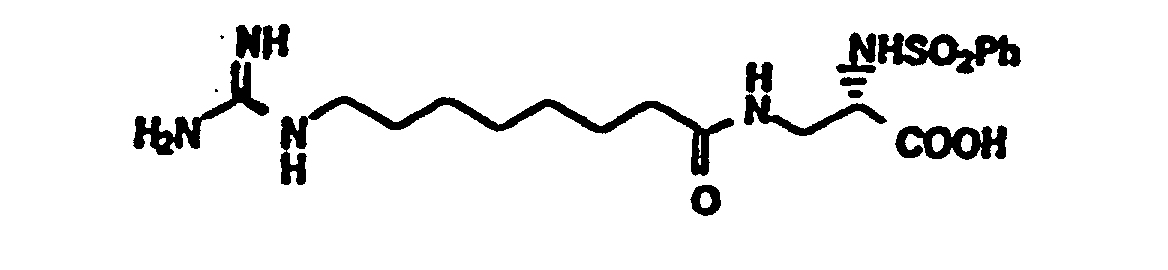
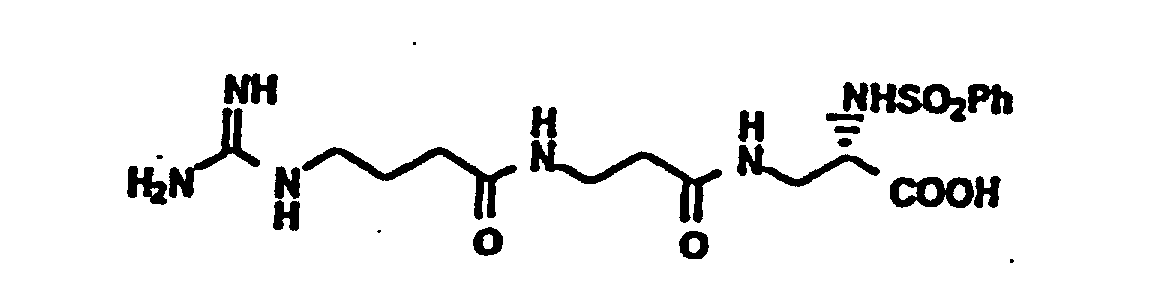
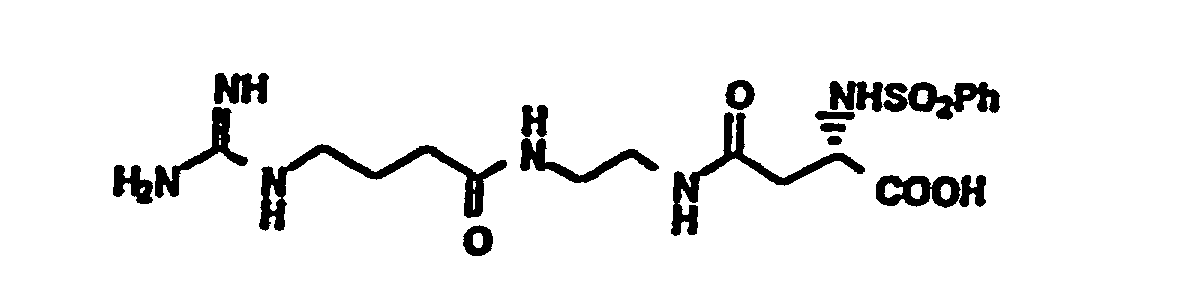
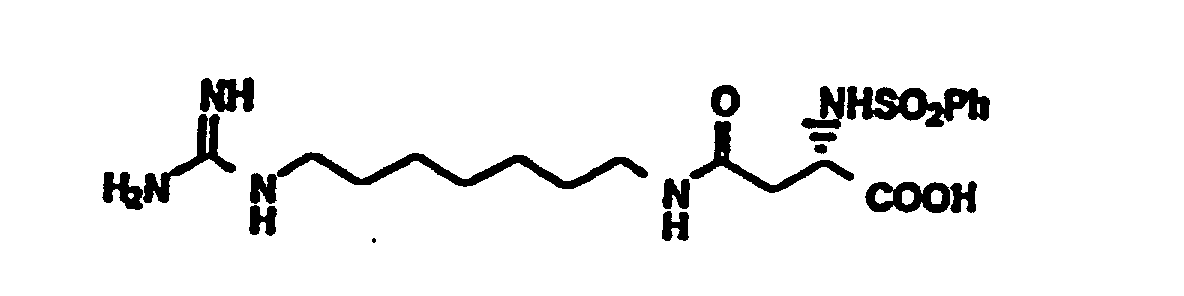
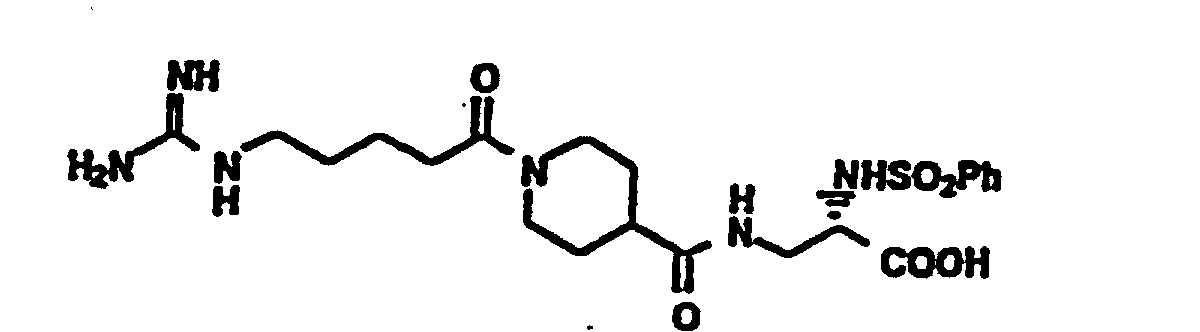

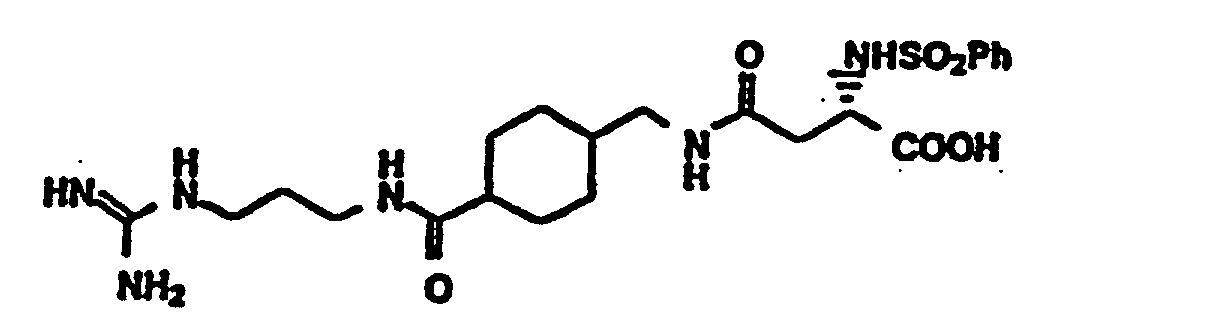


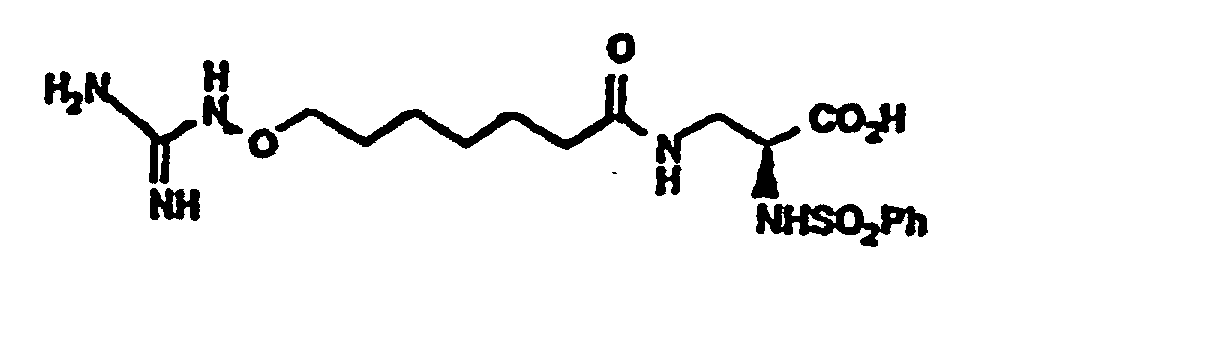
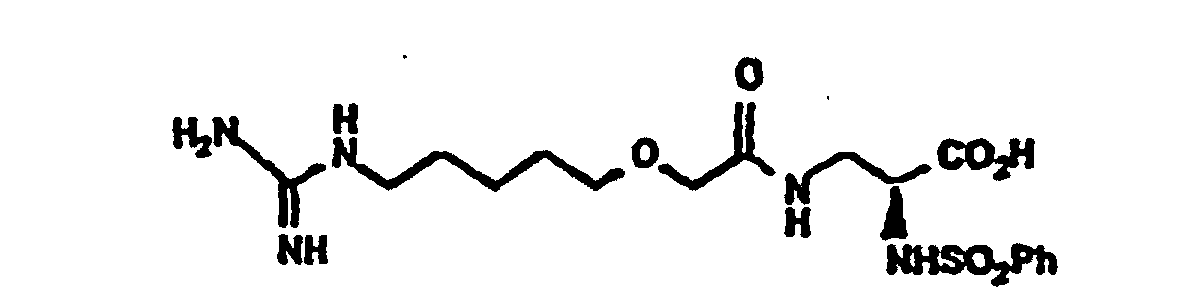


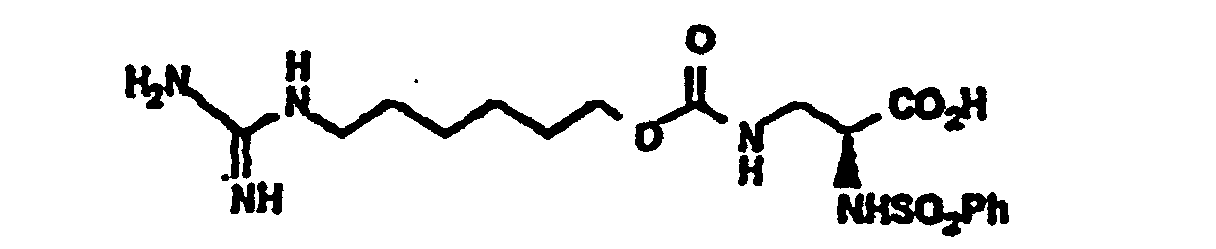

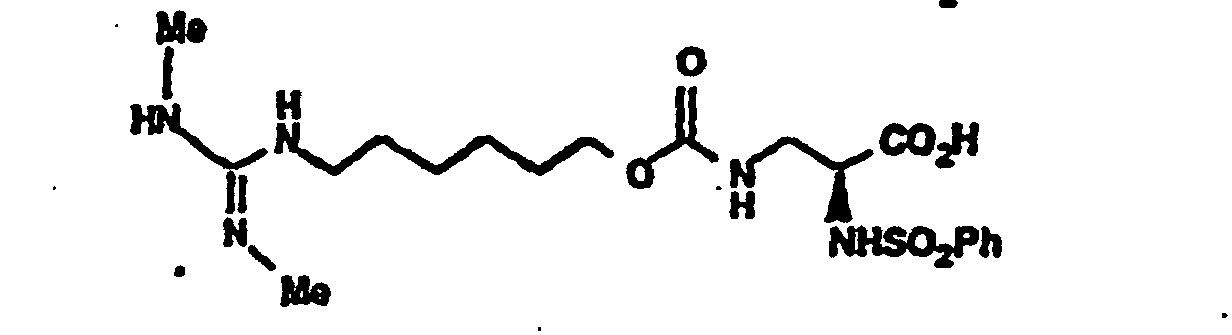



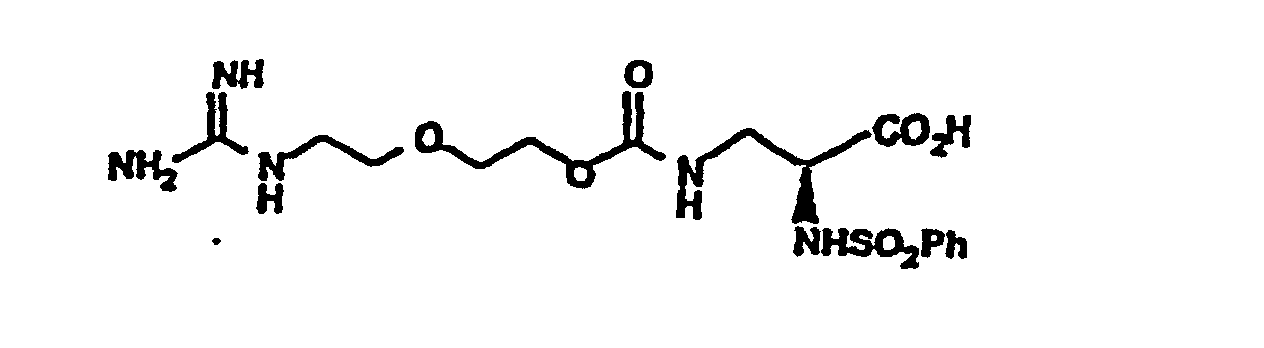

- Pharmazeutische Zusammensetzung zur Verhinderung oder Behandlung eines Zustandes in einem Säugetier, der durch unerwünschte Thrombose charakterisiert ist, umfassend einen therapeutisch akzeptablen Träger und eine therapeutisch effektive Menge einer Verbindung gemäß Anspruch 1.
- Verwendung einer Verbindung wie in Anspruch 1 definiert für die Herstellung eines Arzneimittels zur Verhinderung oder Behandlung eines Zustandes in einem Säugetier, der durch unerwünschte Thrombose charakterisiert ist.
- Verwendung gemäß Anspruch 16, wobei der Zustand ausgewählt ist aus der Gruppe bestehend aus: Akutem Koronarsyndrom, myokardialer Infarktierung, instabiler Angina, refraktärer Angina, okklusivem koronarem Thrombus auftretend post-thrombolytischer Therapie oder post-koronarer Angioplastie, einem thrombotisch vermittelten zerebrovaskulären Syndrom, embolischem Schlaganfall, thrombotischem Schlaganfall, vorübergehenden ischämischen Anfällen, tiefe Venenthrombose, pulmonalem Embolus, Koagulopathie, disseminierte intravasale Koagulation, thrombotische thrombocytopenische Purpura, Thromboangiitis obliterans, mit Heparin-induzierter Thrombozytopenie assoziierter thrombotischer Krankheit, mit extrakorporaler Zirkulation assoziierte thrombotische Komplikationen, mit Instrumentierung wie Herzkatheterisierung oder anderer intravasaler Katherterisierung, intraaortaler Ballonpumpe, koronarem Stent oder einer Herzklappe assozierte thrombotische Komplikationen, das Anpassen von prothetischen Vorrichtungen erfordernde Zustände, Vaskularisierung von festen Tumoren und Retinopathie.
- Verfahren zur Herstellung eines mit einem Ether verbundenen Säureamids mit der allgemeinen Formel:wobei das Verfahren die aufeinanderfolgenden SchritteQ1ist,
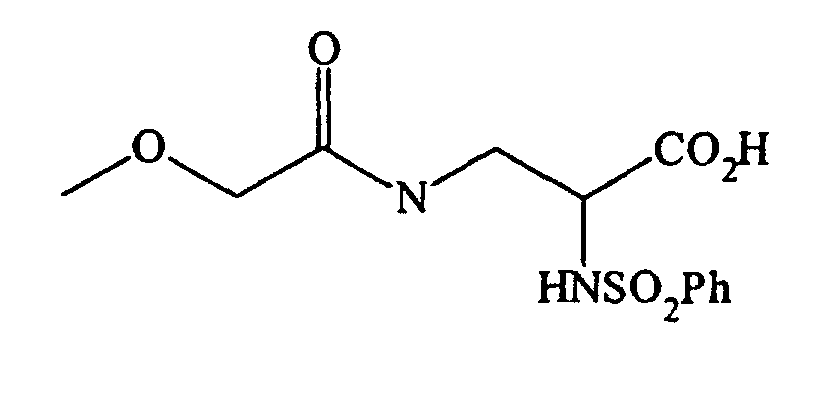 Z ausgewählt ist aus der Gruppe bestehend aus -NH-C(R9)=NR11, -C(NR9R10)=NR11 und Piperidinyl; wobei R9, R10 und R11 unabhängig voneinander ausgewählt sind aus der Gruppe bestehend aus H, C1-6Alkyl, Aryl-C1-3Alkyl und Aryl, oder wobei zwei der R9-, R10- oder R11-Substituenten einen (CH2)p enthaltenden cyclischen Ring bilden, wobei p = 2-5 gilt;L eine Verbindungsgruppe ist ausgewählt aus der Gruppe bestehend aus einer Bindung, -O-, einer von einem C1-8-Alkan abgeleiteten, divalenten Gruppe und einer divalenten Alkoxygruppe der allgemeinen Formel -O-C1-C8-;a) zur Reaktion bringen eines N-geschützen Aminoalkohols in der Gegenwart einer katalytischen Menge Rhodiumkatalysators mit einem Alkyldiazoacetat, um einen Alpha-Alkoxyester zu erhalten;b) Verseifen des Reaktionsproduktes aus Schritt (a) mit einem Metallhydroxid, um eine Carbonsäure zu erhalten;c) zur Reaktion bringen des Produktes aus Schritt (b) mit einem Amin und einem Carbodiamid-Dehydratisierungsmittel, um das mit einem Ether verbundene Säureamid zu erhalten.
- Verfahren zur Herstellung eines mit einem Ether verbundenen Carbamats mit der allgemeinen Formelwobei das Verfahren die aufeinanderfolgenden SchritteQ2ist;
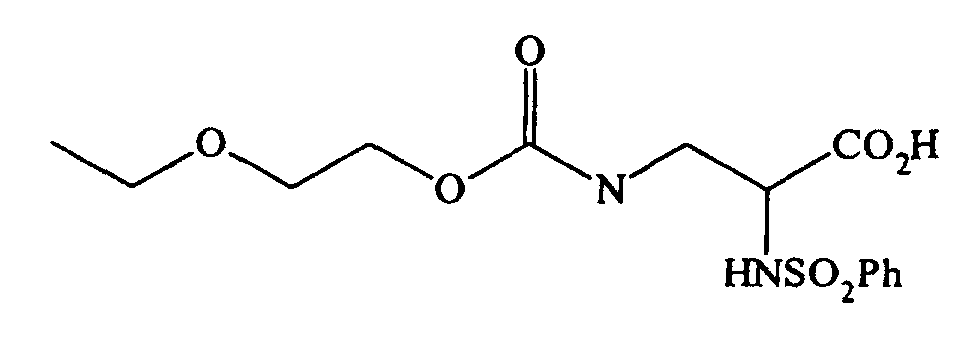 Z ausgewählt ist aus der Gruppe bestehend aus -NH-C(R9)=NR11, -C(NR9R10)=NR11 und Piperidinyl; wobei R9, R10 und R11 unabhängig voneinander ausgewählt sind aus der Gruppe bestehend aus H, C1-6Alkyl, Aryl-C1-3Alkyl und Aryl, oder wobei zwei der R9-, R10- oder R11-Substituenten einen (CH2)p enthaltenden cyclischen Ring bilden, wobei p = 2-5 gilt;L eine Verbindungsgruppe ist ausgewählt aus der Gruppe bestehend aus einer Bindung, -O-, einer von einem C1-8-Alkan abgeleiteten, divalenten Gruppe und einer divalenten Alkoxygruppe der allgemeinen Formel -O-C1-C8-;a) zur Reaktion bringen eines N-geschützen Aminoalkohols in der Gegenwart einer katalytischen Menge Rhodiumkatalysators mit einem Alkyldiazoacetat, um einen Alpha-Alkoxyester zu erhalten;b) Verseifen des Reaktionsproduktes aus Schritt (a) mit einem Metallhydroxid, um eine Carbonsäure zu erhalten;c) Reduzieren der Reaktion von Schritt (b), um einen Alkohol zu erhalten,d) zur Reaktion bringen des Alkohol-Reaktionsproduktes des Schrittes (c) zuerst mit Phosgen und dann mit Amin um das mit einem Ether verbundene Carbamat zu erhalten.
- Verbindung gemäß Anspruch 1 zur Verwendung zur Verhinderung oder Behandlung eines Zustandes in einem Säugetier, der durch unerwünschte Thrombose charakterisiert ist.
- Verbindung gemäß Anspruch 1 zur Verwendung zur Verhinderung oder Behandlung eines Zustands ausgewählt aus der Gruppe bestehend aus: Akutem Koronarsyndrom, myokardialer Infarktierung, instabiler Angina, refraktärer Angina, okklusivem koronarem Thrombus auftretend post-thrombolytischer Therapie oder post-koronarer Angioplastie, einem thrombotisch vermittelten zerebrovaskulären Syndrom, embolischem Schlaganfall, thrombotischem Schlaganfall, vorübergehenden ischämischen Anfällen, tiefe Venenthrombose, pulmonalem Embolus, Koagulopathie, disseminierte intravasale Koagulation, thrombotische thrombocytopenische Purpura, Thromboangiitis obliterans, mit Heparin-induzierter Thrombozytopenie assoziierter thrombotischer Krankheit, mit extrakorporaler Zirkulation assoziierte thrombotische Komplikationen, mit Instrumentierung wie Herzkatheterisierung oder anderer intravasaler Katherterisierung, intraaortaler Ballonpumpe, koronarem Stent oder einer Herzklappe assozierte thrombotische Komplikationen, das Anpassen von prothetischen Vorrichtungen erfordernde Zustände, Vaskularisierung von festen Tumoren und Retinopathie.
Applications Claiming Priority (3)
| Application Number | Priority Date | Filing Date | Title |
|---|---|---|---|
| US762117 | 1985-08-02 | ||
| US76211796A | 1996-12-09 | 1996-12-09 | |
| PCT/US1997/022495 WO1998025892A1 (en) | 1996-12-09 | 1997-12-08 | Integrin antagonists |
Publications (2)
| Publication Number | Publication Date |
|---|---|
| EP0963370A1 EP0963370A1 (de) | 1999-12-15 |
| EP0963370B1 true EP0963370B1 (de) | 2003-03-19 |
Family
ID=25064189
Family Applications (1)
| Application Number | Title | Priority Date | Filing Date |
|---|---|---|---|
| EP97952325A Expired - Lifetime EP0963370B1 (de) | 1996-12-09 | 1997-12-08 | Integrin antagonisten |
Country Status (7)
| Country | Link |
|---|---|
| EP (1) | EP0963370B1 (de) |
| JP (1) | JP2001506632A (de) |
| AT (1) | ATE234812T1 (de) |
| AU (1) | AU5596298A (de) |
| CA (1) | CA2272090A1 (de) |
| DE (1) | DE69720062D1 (de) |
| WO (1) | WO1998025892A1 (de) |
Families Citing this family (26)
| Publication number | Priority date | Publication date | Assignee | Title |
|---|---|---|---|---|
| JP2001504456A (ja) * | 1996-10-30 | 2001-04-03 | メルク エンド カンパニー インコーポレーテッド | インテグリン拮抗薬 |
| GB9805655D0 (en) | 1998-03-16 | 1998-05-13 | Celltech Therapeutics Ltd | Chemical compounds |
| US6521626B1 (en) | 1998-03-24 | 2003-02-18 | Celltech R&D Limited | Thiocarboxamide derivatives |
| GB9814414D0 (en) | 1998-07-03 | 1998-09-02 | Celltech Therapeutics Ltd | Chemical compounds |
| GB9821061D0 (en) | 1998-09-28 | 1998-11-18 | Celltech Therapeutics Ltd | Chemical compounds |
| GB9826174D0 (en) | 1998-11-30 | 1999-01-20 | Celltech Therapeutics Ltd | Chemical compounds |
| US6518283B1 (en) | 1999-05-28 | 2003-02-11 | Celltech R&D Limited | Squaric acid derivatives |
| EP1209152A4 (de) | 1999-08-05 | 2003-03-12 | Meiji Seika Kaisha | Omega-amino-alpha-hydroxy-carbonsäure-derivate mit einem integrin alpha v beta antagonismus |
| US6534513B1 (en) | 1999-09-29 | 2003-03-18 | Celltech R&D Limited | Phenylalkanoic acid derivatives |
| CA2352957A1 (en) | 1999-09-29 | 2001-04-05 | Ortho-Mcneil Pharmaceutical, Inc. | Isonipecotamides for the treatment of integrin-mediated disorders |
| US6455539B2 (en) | 1999-12-23 | 2002-09-24 | Celltech R&D Limited | Squaric acid derivates |
| DE60130910T2 (de) | 2000-04-17 | 2008-07-10 | Ucb Pharma, S.A. | Enamin-derivate als zell-adhäsionsmoleküle |
| US6403608B1 (en) | 2000-05-30 | 2002-06-11 | Celltech R&D, Ltd. | 3-Substituted isoquinolin-1-yl derivatives |
| US6545013B2 (en) | 2000-05-30 | 2003-04-08 | Celltech R&D Limited | 2,7-naphthyridine derivatives |
| WO2002004426A1 (en) | 2000-07-07 | 2002-01-17 | Celltech R & D Limited | Squaric acid derivatives containing a bicyclic heteroaromatic ring as integrin antagonists |
| CA2417059A1 (en) | 2000-08-02 | 2002-02-07 | Celltech R&D Limited | 3-substituted isoquinolin-1-yl derivatives |
| US6500630B2 (en) * | 2001-01-12 | 2002-12-31 | Mayo Foundation For Medical Education And Research | Marker for inflammatory conditions |
| JP2004529918A (ja) | 2001-04-09 | 2004-09-30 | オーソ−マクニール・フアーマシユーチカル・インコーポレーテツド | インテグリンに由来する疾患の治療のためのキナゾリンおよびキナゾリン類似化合物 |
| CN1247258C (zh) | 2001-04-24 | 2006-03-29 | 默克专利有限公司 | 使用抗血管生成剂和TNFα的联合疗法 |
| US20040224986A1 (en) | 2002-08-16 | 2004-11-11 | Bart De Corte | Piperidinyl targeting compounds that selectively bind integrins |
| KR20080089489A (ko) | 2006-01-18 | 2008-10-06 | 메르크 파텐트 게엠베하 | 인테그린 리간드를 사용하는 암치료용 특이적 요법 |
| EA017864B1 (ru) | 2007-01-18 | 2013-03-29 | Мерк Патент Гмбх | Специфическая терапия и лекарственное средство на основе интегриновых лигандов для лечения рака |
| KR101072899B1 (ko) * | 2008-01-21 | 2011-10-17 | 주식회사 파나진 | 아미노산 스페이서가 결합된 펩티드 핵산의 합성 및 그의응용 |
| AU2010252280A1 (en) | 2009-05-25 | 2012-01-19 | Merck Patent Gmbh | Continuous administration of cilengitide in cancer treatments |
| ES2864079T3 (es) | 2014-05-30 | 2021-10-13 | Pfizer | Derivados de carbonitrilo como moduladores selectivos del receptor de andrógenos |
| WO2023275715A1 (en) | 2021-06-30 | 2023-01-05 | Pfizer Inc. | Metabolites of selective androgen receptor modulators |
Family Cites Families (4)
| Publication number | Priority date | Publication date | Assignee | Title |
|---|---|---|---|---|
| CA2150550A1 (en) * | 1992-12-01 | 1994-06-09 | Melissa S. Egbertson | Fibrinogen receptor antagonists |
| CA2227265C (en) * | 1995-08-14 | 2012-01-03 | The Scripps Research Institute | Methods and compositions useful for inhibition of .alpha.v.beta.5 mediated angiogenesis |
| DE19548709A1 (de) * | 1995-12-23 | 1997-07-03 | Merck Patent Gmbh | Tyrosinderivate |
| DK0891325T3 (da) * | 1996-03-29 | 2002-05-21 | Searle & Co | Para-substituerede phenylpropansyrederivater som integrinantagonister |
-
1997
- 1997-12-08 CA CA002272090A patent/CA2272090A1/en not_active Abandoned
- 1997-12-08 WO PCT/US1997/022495 patent/WO1998025892A1/en not_active Ceased
- 1997-12-08 AU AU55962/98A patent/AU5596298A/en not_active Abandoned
- 1997-12-08 DE DE69720062T patent/DE69720062D1/de not_active Expired - Lifetime
- 1997-12-08 EP EP97952325A patent/EP0963370B1/de not_active Expired - Lifetime
- 1997-12-08 JP JP52687298A patent/JP2001506632A/ja active Pending
- 1997-12-08 AT AT97952325T patent/ATE234812T1/de not_active IP Right Cessation
Also Published As
| Publication number | Publication date |
|---|---|
| AU5596298A (en) | 1998-07-03 |
| WO1998025892A1 (en) | 1998-06-18 |
| JP2001506632A (ja) | 2001-05-22 |
| EP0963370A1 (de) | 1999-12-15 |
| CA2272090A1 (en) | 1998-06-18 |
| ATE234812T1 (de) | 2003-04-15 |
| DE69720062D1 (de) | 2003-04-24 |
Similar Documents
| Publication | Publication Date | Title |
|---|---|---|
| EP0963370A1 (de) | Integrale antagonisten | |
| US5880136A (en) | Sulfonamide fibrinogen receptor antagonists | |
| US5227490A (en) | Fibrinogen receptor antagonists | |
| EP0977745B1 (de) | Thiarylsulfonamid-hydroxamsäurederivate | |
| US6020334A (en) | Piperazinones, their production and use | |
| EP1183235A2 (de) | INHIBITOREN VON FAKTOR Xa | |
| AU712082B2 (en) | Fibrinogen receptor antagonists | |
| US6245809B1 (en) | Integrin antagonists | |
| WO2001012600A9 (en) | INHIBITORS OF FACTOR Xa | |
| PL198032B1 (pl) | Pochodne amidów, sposób ich wytwarzania, ich zastosowanie oraz zawierające je kompozycje farmaceutyczne | |
| JPH11508242A (ja) | アリールスルホニルアミノベンゼン誘導体およびXa因子阻害物質としてのその使用 | |
| JP2003500376A (ja) | Xa因子の阻害剤 | |
| EP0673247A1 (de) | Fibrinogen rezeptor antagonisten | |
| EP1185512A2 (de) | Faktor xa inhibitoren | |
| US5795893A (en) | Fibrinogen receptor antagonists | |
| TWI399203B (zh) | 作為TAFIa抑制劑之脲衍生物及磺醯二胺衍生物 | |
| US7001887B2 (en) | Peptide derivatives | |
| US5358956A (en) | Fibrinogen receptor antagonists | |
| WO2002006280A2 (en) | INHIBITORS OF FACTOR Xa | |
| JP4106337B2 (ja) | 新規なアミノ酸誘導体、その製造方法及び該誘導体を含む薬剤組成物 | |
| WO1997016444A1 (en) | Antithrombotic n-amidinopiperidine and benzamidine derivatives | |
| EP0800395A1 (de) | Antagonisten der fibrinogen-rezeptoren | |
| CA2198478A1 (en) | Fibrinogen receptor antagonists | |
| US20030212076A1 (en) | Fibrinogen receptor antagonists | |
| HK1000509B (en) | Novel sulfonamide fibrinogen receptor antagonists |
Legal Events
| Date | Code | Title | Description |
|---|---|---|---|
| PUAI | Public reference made under article 153(3) epc to a published international application that has entered the european phase |
Free format text: ORIGINAL CODE: 0009012 |
|
| 17P | Request for examination filed |
Effective date: 19990708 |
|
| AK | Designated contracting states |
Kind code of ref document: A1 Designated state(s): AT BE CH DE DK ES FI FR GB GR IE IT LI LU MC NL PT SE |
|
| 17Q | First examination report despatched |
Effective date: 20001130 |
|
| GRAG | Despatch of communication of intention to grant |
Free format text: ORIGINAL CODE: EPIDOS AGRA |
|
| RAP1 | Party data changed (applicant data changed or rights of an application transferred) |
Owner name: MILLENNIUM PHARMACEUTICALS, INC. Owner name: ELI LILLY AND COMPANY |
|
| GRAG | Despatch of communication of intention to grant |
Free format text: ORIGINAL CODE: EPIDOS AGRA |
|
| GRAH | Despatch of communication of intention to grant a patent |
Free format text: ORIGINAL CODE: EPIDOS IGRA |
|
| GRAH | Despatch of communication of intention to grant a patent |
Free format text: ORIGINAL CODE: EPIDOS IGRA |
|
| GRAH | Despatch of communication of intention to grant a patent |
Free format text: ORIGINAL CODE: EPIDOS IGRA |
|
| GRAA | (expected) grant |
Free format text: ORIGINAL CODE: 0009210 |
|
| AK | Designated contracting states |
Designated state(s): AT BE CH DE DK ES FI FR GB GR IE IT LI LU MC NL PT SE |
|
| PG25 | Lapsed in a contracting state [announced via postgrant information from national office to epo] |
Ref country code: NL Free format text: LAPSE BECAUSE OF FAILURE TO SUBMIT A TRANSLATION OF THE DESCRIPTION OR TO PAY THE FEE WITHIN THE PRESCRIBED TIME-LIMIT Effective date: 20030319 Ref country code: LI Free format text: LAPSE BECAUSE OF FAILURE TO SUBMIT A TRANSLATION OF THE DESCRIPTION OR TO PAY THE FEE WITHIN THE PRESCRIBED TIME-LIMIT Effective date: 20030319 Ref country code: IT Free format text: LAPSE BECAUSE OF FAILURE TO SUBMIT A TRANSLATION OF THE DESCRIPTION OR TO PAY THE FEE WITHIN THE PRESCRIBED TIME-LIMIT;WARNING: LAPSES OF ITALIAN PATENTS WITH EFFECTIVE DATE BEFORE 2007 MAY HAVE OCCURRED AT ANY TIME BEFORE 2007. THE CORRECT EFFECTIVE DATE MAY BE DIFFERENT FROM THE ONE RECORDED. Effective date: 20030319 Ref country code: GR Free format text: LAPSE BECAUSE OF FAILURE TO SUBMIT A TRANSLATION OF THE DESCRIPTION OR TO PAY THE FEE WITHIN THE PRESCRIBED TIME-LIMIT Effective date: 20030319 Ref country code: FR Free format text: LAPSE BECAUSE OF FAILURE TO SUBMIT A TRANSLATION OF THE DESCRIPTION OR TO PAY THE FEE WITHIN THE PRESCRIBED TIME-LIMIT Effective date: 20030319 Ref country code: FI Free format text: LAPSE BECAUSE OF FAILURE TO SUBMIT A TRANSLATION OF THE DESCRIPTION OR TO PAY THE FEE WITHIN THE PRESCRIBED TIME-LIMIT Effective date: 20030319 Ref country code: CH Free format text: LAPSE BECAUSE OF FAILURE TO SUBMIT A TRANSLATION OF THE DESCRIPTION OR TO PAY THE FEE WITHIN THE PRESCRIBED TIME-LIMIT Effective date: 20030319 Ref country code: BE Free format text: LAPSE BECAUSE OF FAILURE TO SUBMIT A TRANSLATION OF THE DESCRIPTION OR TO PAY THE FEE WITHIN THE PRESCRIBED TIME-LIMIT Effective date: 20030319 Ref country code: AT Free format text: LAPSE BECAUSE OF FAILURE TO SUBMIT A TRANSLATION OF THE DESCRIPTION OR TO PAY THE FEE WITHIN THE PRESCRIBED TIME-LIMIT Effective date: 20030319 |
|
| REG | Reference to a national code |
Ref country code: GB Ref legal event code: FG4D |
|
| REG | Reference to a national code |
Ref country code: CH Ref legal event code: EP |
|
| REG | Reference to a national code |
Ref country code: IE Ref legal event code: FG4D |
|
| REF | Corresponds to: |
Ref document number: 69720062 Country of ref document: DE Date of ref document: 20030424 Kind code of ref document: P |
|
| PG25 | Lapsed in a contracting state [announced via postgrant information from national office to epo] |
Ref country code: SE Free format text: LAPSE BECAUSE OF FAILURE TO SUBMIT A TRANSLATION OF THE DESCRIPTION OR TO PAY THE FEE WITHIN THE PRESCRIBED TIME-LIMIT Effective date: 20030619 Ref country code: DK Free format text: LAPSE BECAUSE OF FAILURE TO SUBMIT A TRANSLATION OF THE DESCRIPTION OR TO PAY THE FEE WITHIN THE PRESCRIBED TIME-LIMIT Effective date: 20030619 |
|
| PG25 | Lapsed in a contracting state [announced via postgrant information from national office to epo] |
Ref country code: PT Free format text: LAPSE BECAUSE OF FAILURE TO SUBMIT A TRANSLATION OF THE DESCRIPTION OR TO PAY THE FEE WITHIN THE PRESCRIBED TIME-LIMIT Effective date: 20030620 |
|
| PG25 | Lapsed in a contracting state [announced via postgrant information from national office to epo] |
Ref country code: DE Free format text: LAPSE BECAUSE OF FAILURE TO SUBMIT A TRANSLATION OF THE DESCRIPTION OR TO PAY THE FEE WITHIN THE PRESCRIBED TIME-LIMIT Effective date: 20030621 |
|
| NLV1 | Nl: lapsed or annulled due to failure to fulfill the requirements of art. 29p and 29m of the patents act | ||
| PG25 | Lapsed in a contracting state [announced via postgrant information from national office to epo] |
Ref country code: ES Free format text: LAPSE BECAUSE OF FAILURE TO SUBMIT A TRANSLATION OF THE DESCRIPTION OR TO PAY THE FEE WITHIN THE PRESCRIBED TIME-LIMIT Effective date: 20030930 |
|
| REG | Reference to a national code |
Ref country code: CH Ref legal event code: PL |
|
| PG25 | Lapsed in a contracting state [announced via postgrant information from national office to epo] |
Ref country code: LU Free format text: LAPSE BECAUSE OF NON-PAYMENT OF DUE FEES Effective date: 20031208 Ref country code: IE Free format text: LAPSE BECAUSE OF NON-PAYMENT OF DUE FEES Effective date: 20031208 Ref country code: GB Free format text: LAPSE BECAUSE OF NON-PAYMENT OF DUE FEES Effective date: 20031208 |
|
| PG25 | Lapsed in a contracting state [announced via postgrant information from national office to epo] |
Ref country code: MC Free format text: LAPSE BECAUSE OF NON-PAYMENT OF DUE FEES Effective date: 20031231 |
|
| PLBE | No opposition filed within time limit |
Free format text: ORIGINAL CODE: 0009261 |
|
| STAA | Information on the status of an ep patent application or granted ep patent |
Free format text: STATUS: NO OPPOSITION FILED WITHIN TIME LIMIT |
|
| EN | Fr: translation not filed | ||
| 26N | No opposition filed |
Effective date: 20031222 |
|
| GBPC | Gb: european patent ceased through non-payment of renewal fee |
Effective date: 20031208 |
|
| REG | Reference to a national code |
Ref country code: IE Ref legal event code: MM4A |