EP0964564A2 - Verfahren zur Abfrage gespeicherter Rufnummerninformationen - Google Patents
Verfahren zur Abfrage gespeicherter Rufnummerninformationen Download PDFInfo
- Publication number
- EP0964564A2 EP0964564A2 EP99110338A EP99110338A EP0964564A2 EP 0964564 A2 EP0964564 A2 EP 0964564A2 EP 99110338 A EP99110338 A EP 99110338A EP 99110338 A EP99110338 A EP 99110338A EP 0964564 A2 EP0964564 A2 EP 0964564A2
- Authority
- EP
- European Patent Office
- Prior art keywords
- telecommunications terminal
- terminal
- number information
- stored
- telecommunication
- Prior art date
- Legal status (The legal status is an assumption and is not a legal conclusion. Google has not performed a legal analysis and makes no representation as to the accuracy of the status listed.)
- Withdrawn
Links
Images
Classifications
-
- H—ELECTRICITY
- H04—ELECTRIC COMMUNICATION TECHNIQUE
- H04M—TELEPHONIC COMMUNICATION
- H04M1/00—Substation equipment, e.g. for use by subscribers
- H04M1/26—Devices for calling a subscriber
- H04M1/27—Devices whereby a plurality of signals may be stored simultaneously
-
- H—ELECTRICITY
- H04—ELECTRIC COMMUNICATION TECHNIQUE
- H04M—TELEPHONIC COMMUNICATION
- H04M1/00—Substation equipment, e.g. for use by subscribers
- H04M1/26—Devices for calling a subscriber
- H04M1/27—Devices whereby a plurality of signals may be stored simultaneously
- H04M1/274—Devices whereby a plurality of signals may be stored simultaneously with provision for storing more than one subscriber number at a time, e.g. using toothed disc
- H04M1/2745—Devices whereby a plurality of signals may be stored simultaneously with provision for storing more than one subscriber number at a time, e.g. using toothed disc using static electronic memories, e.g. chips
- H04M1/2753—Devices whereby a plurality of signals may be stored simultaneously with provision for storing more than one subscriber number at a time, e.g. using toothed disc using static electronic memories, e.g. chips providing data content
- H04M1/2757—Devices whereby a plurality of signals may be stored simultaneously with provision for storing more than one subscriber number at a time, e.g. using toothed disc using static electronic memories, e.g. chips providing data content by data transmission, e.g. downloading
-
- H—ELECTRICITY
- H04—ELECTRIC COMMUNICATION TECHNIQUE
- H04M—TELEPHONIC COMMUNICATION
- H04M3/00—Automatic or semi-automatic exchanges
- H04M3/42—Systems providing special services or facilities to subscribers
- H04M3/487—Arrangements for providing information services, e.g. recorded voice services or time announcements
- H04M3/493—Interactive information services, e.g. directory enquiries ; Arrangements therefor, e.g. interactive voice response [IVR] systems or voice portals
- H04M3/4931—Directory assistance systems
-
- H—ELECTRICITY
- H04—ELECTRIC COMMUNICATION TECHNIQUE
- H04M—TELEPHONIC COMMUNICATION
- H04M3/00—Automatic or semi-automatic exchanges
- H04M3/38—Graded-service arrangements, i.e. some subscribers prevented from establishing certain connections
- H04M3/382—Graded-service arrangements, i.e. some subscribers prevented from establishing certain connections using authorisation codes or passwords
Definitions
- the invention is based on a method for querying stored data Number information according to the genus of Main claim.
- the call list feature is already known at the stored number information at least one with a telecommunication terminal connected to a telecommunication network incoming call can be queried can, the phone number information in a the Telecommunication terminal stored memory are.
- the inventive method with the features of Main claim has the advantage that from one second telecommunication terminal connected to the telecommunication network a connection to the the first telecommunications terminal allocated memory and that the stored number information the second telecommunications terminal are transmitted. On In this way, remote access to the call list is possible that a user is not locally available to query the call list his telecommunications terminal is bound, but the Call list on any access of the telecommunication network can query. In this way, a better accessibility of the user within the telecommunication network achieved.
- the stored number information only after entering a permissible access authorization on the second telecommunication terminal to the second Telecommunications terminal are transmitted. To this This ensures that the call list is only available to authorized users queried on the second telecommunications terminal can be.
- connection from second telecommunications terminal to the memory only then is established when on the second telecommunications terminal one for querying the stored phone number information appropriate identifier is entered.
- a remote query an answering machine of the first telecommunication terminal can, for example, from a remote query distinguished the call list of the first telecommunications terminal become.
- Another advantage is that the saved Number information after transmission to the second telecommunications terminal in a the second telecommunications terminal allocated memory. To this The call list remains on the second telecommunications terminal available so that the user can view this call log at any time on the second telecommunication terminal without renewed fees can retrieve.
- a prompt signal transmitted to the second telecommunications terminal is that in response to the prompt signal for querying the stored phone number information corresponding identifier on the second telecommunications terminal is entered and that the stored phone number information at the earliest then to the second telecommunications terminal are transmitted when on the first telecommunications terminal or at the private branch exchange for the query identifier corresponding to the stored call number information was received.
- the user of the second telecommunications terminal based on the request signal notice that there is a call list on first telecommunications terminal or one with the first PBX-connected private branch exchange is available. This eliminates the need to enter an identifier avoided.
- Another advantage is that, provided that the saved Phone number information includes a phone number, after receiving the stored phone number information from second telecommunications terminal dialed this number becomes. In this way, the second telecommunications terminal an automatic callback is initiated so that the There is no dialing process for the user and ease of use is increased.
- Another advantage is that the number is first is selected when a selection button is pressed, which this number from on the second telecommunications terminal received stored phone number information selects. In this way, it is at the discretion of the user a call back to the second telecommunications terminal transferred call number of the call list of the first To start telecommunications terminal. The service is thus even more adapted to the needs of the user and unnecessary callbacks are prevented.
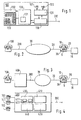
- FIG. 1 shows a block diagram of a first one Telecommunication terminal with a memory for a call list
- Figure 2 with a via a telecommunications network the second connected to the first telecommunication terminal Telecommunications terminal
- Figure 3 on a private branch exchange connected to the first telecommunications terminal second telecommunications terminal
- Figure 4 is a block diagram a private branch exchange for connecting the first Telecommunications terminal
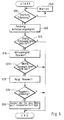
- Figure 5 is a flow chart for controlling the first telecommunication terminal or the private branch exchange.
- 100 denotes a first telecommunication terminal, the one display device 132 and a keyboard 133, which are connected to a controller 130.
- the controller 130 comprises a first memory 131 for one Call log.
- a line interface is also connected to the controller 130 110 connected via which the first telecommunications terminal 100 via a first connecting line 200 on a public or private switching network 30 according to Figure 2 is connected.
- the first telecommunications terminal 100 further includes an interface 120 Speaker 122 and a microphone 121 connected to the line interface 110 is connected.
- a second telecommunication terminal 10 via a second Connection line 20 is also connected to the switching network 30.
- the switching network 30 can be a act analog or a digital switching network.
- the second telecommunication terminal 10 can, according to FIG. 2, a display device 5 and a selection button 35 have.
- the second telecommunication terminal 10 can have a second memory 15 assigned to it be connected.
- the second memory 15 can also second telecommunications terminal 10 can be integrated.
- the first telecommunication terminal 100 also together with a third telecommunication terminal 101, a fourth telecommunication terminal 102 and possibly further telecommunication terminals to a private branch exchange 400 can be connected.
- the first telecommunications terminal 100 is then like the third telecommunications terminal 101 and the fourth telecommunications terminal 102 via the private branch exchange 400 and the first Connection line 200 with the switching network 30 according to FIG 3 connected.
- Private branch exchange 400 includes a third Memory 430, the second call list 431 and a subscriber list 432 with the phone numbers to the private branch exchange 400 connected participants.
- the entries In the second call list 431 there is the number in each case the correspondingly called, to the private branch exchange 400 connected telecommunication terminals 100, 101, 102 assigned from the subscriber list 432, so that everyone Entry of the second call list 431 corresponding to the called connected to the private branch exchange 400 100, 101, 102 can be assigned.
- the second call list 431 can thus be sent to everyone at the private branch exchange 400 connected telecommunication terminals 100, 101, 102 can be provided together.
- the private branch exchange 400 also includes a password memory 440, one Receiver 410 for signals such. B. after the multi-frequency method (DTMF) are encoded and a transmitter 420 which a character transmitter, for example a modem or a transmitter for z. B. DTMF signals or an announcement device for Voice signals or the like can be.
- DTMF multi-frequency method
- first memory 131 or third memory 430 can in the respective call list additional information such as date, time, number of calls together saved with the corresponding subscriber ID if a subscriber ID or Number information of a person calling via the switching network 30 Participant is available.
- additional information such as date, time, number of calls together saved with the corresponding subscriber ID if a subscriber ID or Number information of a person calling via the switching network 30 Participant is available.
- the user of the first telecommunication terminal 100 After actuation of a key of the keyboard 133 on the display device 132 of the first telecommunications terminal 100 indicates whether calls are in the call list of the first memory 131 stand.
- the keyboard 133 By pressing the keyboard 133 can then the data of the individual calls from the call list is displayed become.
- the display device 132 of the first telecommunication terminal 100 with a corresponding one Size also directly show the call list.
- an entry in the call list can be selected, on the display device 132 of the first telecommunication terminal 100 displayed and to distinguish from optionally further on the display device 132 of the first telecommunications terminal 100 displayed entries marked in the call list.
- an entry in the call list By pressing one corresponding key on the keyboard 133 or by lifting one handset of the first, not shown in FIG Telecommunications terminal 100 becomes the one currently selected or marked entry in the call list automatically dialed by the corresponding phone number.
- the selection can however, already with the selection or marking of the corresponding entry in the call list.
- the entries in the call list can already be the Act numbers of the corresponding incoming calls.
- a query of the call list of the first telecommunication terminal 100 is also from others to the switching network 30 connected telecommunication terminals, for example from the second telecommunication terminal 10 possible.
- the first telecommunication terminal 100 by means of his number from the second telecommunications terminal 10 called.
- Control of private branch exchange 400 becomes the first Telecommunications terminal 100 occupied.
- From the second telecommunication terminal 10 can now be an identifier for the query that stored for the first telecommunications terminal 100 Data can be entered. This identifier is sent to the first Telecommunications terminal 100 or the private branch exchange 400 transferred.
- Detects controller 130 of the first telecommunications terminal 100 or the control of the private branch exchange 400 the identifier, so it can be the first memory 131 or the third Memory 430 via line interface 110 of the first Telecommunications terminal 100 or one in Figure 4 line interface of the private branch exchange, not shown Address 400.
- the first telecommunications terminal 100 relevant entries in the call list can then caused by the controller 130 of the first telecommunication terminal 100 or the control of the private branch exchange 400 via the switching network 30 the second telecommunication terminal 10 is sent, if the received from the second telecommunications terminal 10 Identifier already in this regard by the controller 130 of the first telecommunications terminal 100 or the Control of the private branch exchange 400 was evaluated that from the second telecommunications terminal 10 with the call list those relating to the first telecommunications terminal 100 Entries should be queried. Otherwise causes the Controller 130 of the first telecommunication terminal 100 or the control of the private branch exchange 400 Sending a request signal to the second telecommunications terminal 10 for further identification entry.
- the response to the request signal is on the second telecommunications terminal 10 the specially for the query of the saved Number information corresponding to the call list Identifier entered. Is this identifier by the Controller 130 of the first telecommunication terminal 100 or the control of the private branch exchange 400 is detected, the entries in the call list that are the first Telecommunications terminal 100 relate to the second Telecommunications terminal 10 transmitted.
- the transmitted to the second telecommunication terminal 10 Entries in the call list can then be made in a corresponding manner on the display device 5 of the second telecommunication terminal 10 displayed and in the second memory 15 can be saved.
- Using the selection button 35 can on the display device 5 of the second telecommunications terminal 10 shown entry of the transmitted Call list selected and in the already described Way for a call back from the second telecommunication terminal 10, initiated by pressing a button again a keyboard 25 of the second telecommunication terminal 10 or by lifting a handset of the second telecommunication terminal 10 can be used.
- the call back can also be activated by pressing the selection button 35 to select an entry in the call list. If the call list contains only one entry, you can, if necessary even without pressing any key after calling the Call list the callback will be initiated automatically.
- Is the switching network 30 an ISDN network, so the entries the call list as data information in a signaling channel, especially a D channel, in the form of a command transmitted to the second telecommunications terminal 10 become. Also those on the second telecommunication terminal 10 IDs to be entered to query the entries in the call list for the first telecommunications terminal 100 can in D channel to the first telecommunications terminal 100 transmitted become. The identifiers and the entries in the call list but can also be in the form of an encoded string, especially according to the multi-frequency method (DTMF) or in Form of coded voice signals in a B channel of the ISDN switching network 30 are transmitted.
- the line interface 110 of the first telecommunication terminal 100 or the line interface of the private branch exchange 400 are used in addition to the processing of the lower Layers of the protocol for data exchange in the D channels to separate the B and D channels.
- the identifiers for querying the entries in the call list and the entries in the call list can be additional or alternative also in the form of data packets to the first telecommunications terminal 100 or to the second telecommunications terminal 10 are transmitted.
- the switching network can 30 as a telecommunications network, as an Internet, as a LAN (Local Area Network), as a WAN (Wide Area Network) or the like be trained.
- An assignment of the entries in the call list 431 of the third Memory 430 to the respective to the private branch exchange 400 connected telecommunication terminals 100, 101, 102 is done by assigning the respective entry to the call list 431 of the third memory 430 to the number of the respective stored in the subscriber list 432 to the private branch exchange 400 connected telecommunication terminals 100, 101, 102.
- the entries in the call list only after entering a permissible access authorization on the second telecommunications terminal 10 to the second Telecommunications terminal 10 are transmitted.
- Such Access authorization can be a password that is entered using the Keyboard 25 of the second telecommunications terminal 10 entered and to the first telecommunications terminal 100 respectively the private branch exchange 400 is transmitted.
- the controller 130 of the first telecommunication terminal 100 or the control of the private branch exchange 400 transmits the entries in the call list only then to the second telecommunications terminal 10 if the password received is from second telecommunications terminal 10 is permitted.
- the private branch exchange 400 can be regulated by means of the password be that from the second telecommunications terminal 10 all entries in the call list 431 of the private branch exchange 400 or just the entries from special to the private branch exchange 400 connected telecommunication terminals queried can be. To do this, a comparison is made of the second Telecommunications terminal 10 received password with the passwords stored in the password memory 440 instead.
- the password memory 440 can be, for example, for each connected to the private branch exchange 400 100, 101, 102 has its own memory area provide.
- the memory 131 of the first telecommunication terminal 100 or the memory 430 of the private branch exchange 400 can also add a speed dial list and / or a phone book list included, where subscriber numbers are saved together with their names.
- the first telecommunication terminal 100 is as trained digital terminal. However, it can be for the first Telecommunications terminal 100 also an analog terminal be used.
- the number of a calling subscriber can then, for example, by means of a modulation method from the exchange to the first telecommunication terminal 100 are transmitted during the call pause, for example, like this for example in the United States and is realized in Great Britain.
- the one transmitted in this way The number of a calling subscriber is then in an analog first telecommunication terminal 100 as well stored in the call list, if there is one is.
- both a digital and an analog switching network 30 can also be used.
- the identifiers, if necessary Passwords and the entries in the call list then via the voice channel when using the digital ISDN network transmitted via a B channel and / or a D channel.
- the coded DTMF string of the identifiers and, if applicable Passwords from the second telecommunication terminal 10 is sent, for example, in the DTMF receiver 410 of the private branch exchange 400 received.
- entries in the call list 431 of the third memory 430 from the character transmitter 420 of the private branch exchange 400 to the second telecommunications terminal 10 broadcast.
- the character transmitter 410 can also be a Announcement device from the entries in the call list 431 the third memory 430 in the form of coded speech signals, that is, in speech form to the second telecommunications terminal 10 are transmitted.
- the character transmitter 420 can also be designed as a modem.
- the second memory 15 can have entries in the call list of the first Telecommunications terminal 100 or the private branch exchange 400 after transmission to the second telecommunications terminal 10 and save your own call list for incoming calls on the second telecommunication terminal 10 include. Includes the second telecommunications terminal 10 no display device 5, the entries in the call list from the first telecommunication terminal 100 or of the private branch exchange 400 to the second telecommunications terminal 10 in the form of coded speech signals, ie in Language form are transmitted. However, the display device 5 provided on the second telecommunications terminal 10, so one or more lines from the first telecommunication terminal 100 or from the private branch exchange 400 the second telecommunications terminal 10 transmitted call list on the display device 5 of the second telecommunication terminal 10 are initially shown.
- FIG. 5 is a flow chart for the controller 130 of the first Telecommunications terminal 100 or the Control of private branch exchange 400 shown. In doing so Assume that the controller 130 of the first telecommunication terminal 100 also a password memory includes. At a program point 500 the respective checks Control whether a first identifier is stored for the query Information was received. If so, so is branched to a program point 505, otherwise branches to a program point 540. At program point 540 the respective control system goes through a waiting loop. Subsequently is branched back to program point 500.
- Program point 505 causes the respective control Sending a request signal to the first identifier transmitting second telecommunications terminal 10, the Call number when establishing a connection from the second telecommunications terminal 10 to the first telecommunications terminal 100 was transmitted and the second telecommunications terminal 10 identified in the first telecommunications terminal 100.
- the request signal contains a request for Enter a second identifier.
- Program item 510 branches.
- the program point 510 the checks respective control, whether within a given time the second identifier for querying the stored number information the respective call list was received. If this is the case, the program branches to a program point 515, otherwise the program part is exited.
- Program point 515 causes the respective control Transmission of an interrogation signal to the second telecommunication terminal 10, the second telecommunications terminal 10 should prompt the entry of at least one password.
- the program then branches to a program point 520.
- Program point 520 checks the respective controller whether a password received within a further predetermined time has been. If this is the case, program point 525 branches, otherwise the program part is exited.
- Program point 525 compares the respective control or the passwords received for admissibility in the respective Password storage stored data. Then becomes a program point 530 branches.
- the respective controller checks whether this or that of the second Telecommunications terminal 10 received passwords allowed are. If this is the case, program point 535 branches, otherwise the program part is exited.
- Program point 535 causes the respective control Transmission of the relevant for the password or passwords received Entries of the respective call list to the second telecommunication terminal 10. Then the program part leave.
- the method according to the invention is both for wired and also realizable for wireless switching networks 30, thus for example also for a mobile radio network, in particular according to the GSM standard (Global System for Mobile Communications).
- GSM Global System for Mobile Communications
- the second telecommunications terminal 10 it may be necessary to call for a call back from the first telecommunications terminal 100 or from the Private branch exchange 400 of received entries from a call list the corresponding call number for the callback with a corresponding one Provide area code for which it is necessary on the second telecommunications terminal 10 the location of the enter second telecommunications terminal 10. This is especially with a mobile second telecommunications terminal 10 important.
- the on the second telecommunications terminal 10 number to be dialed from the first telecommunications terminal 100 or from the private branch exchange 400 transmitted to the second telecommunications terminal 10 The call list can then be supplemented with the correct area code, called back from the second telecommunications terminal 10 become.
Landscapes
- Engineering & Computer Science (AREA)
- Signal Processing (AREA)
- Computer Networks & Wireless Communication (AREA)
- Telephonic Communication Services (AREA)
- Sub-Exchange Stations And Push- Button Telephones (AREA)
Abstract
Description
Claims (12)
- Verfahren zur Abfrage gespeicherter Rufnummerninformationen mindestens eines bei einem an ein Telekommunikationsnetz (30) angeschlossenenen ersten Telekommunikationsendgerät (100) eingegangenen Rufes, wobei die Rufnummerninformationen in einem dem ersten Telekommunikationsendgerät (100) zugeordneten Speicher (131, 430) abgelegt sind, dadurch gekennzeichnet, daß von einem zweiten an das Telekommunikationsnetz (30) angeschlossenen Telekommunikationsendgerät (10) eine Verbindung zu dem dem ersten Telekommunikationsendgerät (100) zugeordneten Speicher (131, 430) aufgebaut wird und daß die gespeicherten Rufnummerninformationen an das zweite Telekommunikationsendgerät (10) übertragen werden.
- Verfahren nach Anspruch 1, dadurch gekennzeichnet, daß die gespeicherten Rufnummerninformationen an einer Anzeigevorrichtung (5) des zweiten Telekommunikationsendgerätes (10) dargestellt werden.
- Verfahren nach Anspruch 1 oder 2, dadurch gekennzeichnet, daß die gespeicherten Rufnummerninformationen nur nach Eingabe einer zulässigen Zugangsberechtigung am zweiten Telekommunikationsendgerät (10) zum zweiten Telekommunikationsendgerät (10) übertragen werden.
- Verfahren nach Anspruch 1, 2 oder 3, dadurch gekennzeichnet, daß die Verbindung vom zweiten Telekommunikationsendgerät (10) zum Speicher (131, 430) nur dann aufgebaut wird, wenn am zweiten Telekommunikationsendgerät (10) eine für die Abfrage der gespeicherten Rufnummerninformationen entsprechende Kennung eingegeben wird.
- Verfahren nach einem der vorherigen Ansprüche, dadurch gekennzeichnet, daß die gespeicherten Rufnummerninformationen in Form einer codierten Zeichenfolge, insbesondere nach dem Mehrfrequenzverfahren (MFV) an das zweite Telelcommunikationsendgerät (10) übertragen werden.
- Verfahren nach einem der vorherigen Ansprüche, dadurch gekennzeichnet, daß die gespeicherten Rufnummerninformationen in Form eines Befehls in einem Signalisierungskanal, insbesondere einem D-Kanal eines digitalen Vermittlungsnetzes, insbesondere eines Integrated Services Data Network (ISDN), an das zweite Telekommunikationsendgerät (10) übertragen werden.
- Verfahren nach einem der vorherigen Ansprüche, dadurch gekennzeichnet, daß die gespeicherten Rufnummerninformationen in Form von Datenpaketen an das zweite Telekommunikationsendgerät (10) übertragen werden.
- Verfahren nach einem der vorherigen Ansprüche, dadurch gekennzeichnet, daß die gespeicherten Rufnummerninformationen in Form codierter Sprachsignale an das zweite Telekommunikationsendgerät (10) übertragen werden.
- Verfahren nach einem der vorherigen Ansprüche, dadurch gekennzeichnet, daß die gespeicherten Rufnummerninformationen nach Übertragung zum zweiten Telekommunikationsendgerät (10) in einem dem zweiten Telekommunikationsendgerät (10) zugeordneten Speicher (15) abgelegt werden.
- Verfahren nach einem der vorherigen Ansprüche, dadurch gekennzeichnet, daß vom ersten Telekommunikationsendgerät (100) oder einer mit dem ersten Telekommunikationsendgerät (100) verbundenen Nebenstellenanlage (400) ein Aufforderungssignal an das zweite Telekommunikationsendgerät (10) übertragen wird, daß als Antwort auf das Aufforderungssignal die für die Abfrage der gespeicherten Rufnummerninformationen entsprechende Kennung am zweiten Telekommunikationsendgerät (10) eingegeben wird und daß die gespeicherten Rufnummerninformationen frühestens dann an das zweite Telekommunikationsendgerät (10) übertragen werden, wenn am ersten Telekommunikationsendgerät (100) oder an der Nebenstellenanlage (400) die für die Anfrage der gespeicherten Rufnummerninformationen entsprechende Kennung empfangen wurde.
- Verfahren nach einem der vorherigen Ansprüche, dadurch gekennzeichnet, daß, sofern die gespeicherten Rufnummerninformationen eine Rufnummer umfassen, nach Empfang der gespeicherten Rufnummerninformationen vom zweiten Telekommunikationsendgerät (10) diese Rufnummer angewählt wird.
- Verfahren nach Anspruch 11, dadurch gekennzeichnet, daß die Rufnummer erst dann angewählt wird, wenn eine Auswahltaste (35) betätigt wird, die diese Rufnummer aus den am zweiten Telekommunikationsendgerät (10) empfangenen gespeicherten Rufnummerninformationen auswählt.
Applications Claiming Priority (2)
| Application Number | Priority Date | Filing Date | Title |
|---|---|---|---|
| DE19825659A DE19825659A1 (de) | 1998-06-09 | 1998-06-09 | Verfahren zur Abfrage gespeicherter Rufnummerninformationen |
| DE19825659 | 1998-06-09 |
Publications (2)
| Publication Number | Publication Date |
|---|---|
| EP0964564A2 true EP0964564A2 (de) | 1999-12-15 |
| EP0964564A3 EP0964564A3 (de) | 2003-07-30 |
Family
ID=7870358
Family Applications (1)
| Application Number | Title | Priority Date | Filing Date |
|---|---|---|---|
| EP99110338A Withdrawn EP0964564A3 (de) | 1998-06-09 | 1999-05-28 | Verfahren zur Abfrage gespeicherter Rufnummerninformationen |
Country Status (2)
| Country | Link |
|---|---|
| EP (1) | EP0964564A3 (de) |
| DE (1) | DE19825659A1 (de) |
Cited By (1)
| Publication number | Priority date | Publication date | Assignee | Title |
|---|---|---|---|---|
| WO2006101148A1 (en) * | 2005-03-21 | 2006-09-28 | Matsushita Electric Industrial Co., Ltd. | Method and system for enabling originating and destination telephones to conduct a call session |
Families Citing this family (1)
| Publication number | Priority date | Publication date | Assignee | Title |
|---|---|---|---|---|
| DE10046252A1 (de) * | 2000-09-19 | 2002-03-28 | Deutsche Telekom Ag | Verfahren und Vorrichtung zur Abfrage der eingerichteten Rufnummern eines Anschlusses |
Family Cites Families (4)
| Publication number | Priority date | Publication date | Assignee | Title |
|---|---|---|---|---|
| US5390236A (en) * | 1992-03-31 | 1995-02-14 | Klausner Patent Technologies | Telephone answering device linking displayed data with recorded audio message |
| CA2189604C (en) * | 1995-12-11 | 2001-01-16 | Burt Joseph Bossi | Method of providing telecommunications network-based message services |
| US5684869A (en) * | 1995-12-27 | 1997-11-04 | Lucent Technologies, Inc. | Telephone station remote access device and method |
| DE19618193A1 (de) * | 1996-05-07 | 1997-11-13 | Deutsche Telekom Ag | Verfahren zur automatischen Programmierung von Telekommunikationsendgeräten |
-
1998
- 1998-06-09 DE DE19825659A patent/DE19825659A1/de not_active Withdrawn
-
1999
- 1999-05-28 EP EP99110338A patent/EP0964564A3/de not_active Withdrawn
Cited By (3)
| Publication number | Priority date | Publication date | Assignee | Title |
|---|---|---|---|---|
| WO2006101148A1 (en) * | 2005-03-21 | 2006-09-28 | Matsushita Electric Industrial Co., Ltd. | Method and system for enabling originating and destination telephones to conduct a call session |
| US7929680B2 (en) | 2005-03-21 | 2011-04-19 | Panasonic Corporation | Method and system for enabling originating and destination telephones to conduct a call session |
| CN1838701B (zh) * | 2005-03-21 | 2012-01-04 | 松下电器产业株式会社 | 用中继电话机使发话和目的电话机通话的方法及应用 |
Also Published As
| Publication number | Publication date |
|---|---|
| EP0964564A3 (de) | 2003-07-30 |
| DE19825659A1 (de) | 1999-12-16 |
Similar Documents
| Publication | Publication Date | Title |
|---|---|---|
| DE19518754C2 (de) | Basisspeicherung und Basisregistrierung von Handgeräten | |
| DE69836901T2 (de) | Verfahren zum Hinzufügen von Kontext zu Kommunikationen | |
| DE4424896C2 (de) | Verfahren zum Errichten und Abrufen eines Telefonbenutzerprofils | |
| DE69531052T2 (de) | Telekommunikationsverfahren und eine zu seiner Durchführung geeignete Vorrichtung | |
| DE10062067B4 (de) | Telefonapparat | |
| EP0461572B1 (de) | Multifunktionales, in verschiedene Betriebsarten umsteuerbares Funkgerät | |
| DE19818780A1 (de) | Erkennung einer vollständig gewählten Nummer in einem WLL-Endgerät ohne festgelegte Zeitverzögerung | |
| DE60217740T2 (de) | Verfahren zur Sprachauswahl und Mobilkommunikationssystem | |
| DE60304939T2 (de) | Anruferidentifizierung basiert auf Spracherkennung | |
| DE69533519T2 (de) | Teilnehmernetzwerkseinheit | |
| EP0830042A2 (de) | Telekommunikationsgerät zum Betrieb an einem festen Telekommunikationsnetz | |
| EP0439065A2 (de) | Teilnehmerendeinrichtung mit Zwischenspeicher und einer damit verbundenen Wählhilfe | |
| DE19744965A1 (de) | Verfahren zum telefonischen Anfordern von Dienstleistungen | |
| CH641616A5 (de) | Schaltungsanordnung fuer eine fernsprechanlage mit speicher fuer die rufnummern vergeblich anrufender sprechstellen. | |
| EP0964564A2 (de) | Verfahren zur Abfrage gespeicherter Rufnummerninformationen | |
| DE19619521A1 (de) | Verfahren und Anordnung zum Aufbau von temporären Telekommunikationsverbindungen | |
| DE3328059C2 (de) | Verfahren zur empfangsseitigen Auswahl von über eine Vermittlungsstelle einer Fernmelde- bzw. Fernsprechanlage laufende Daten- bzw. Sprechverbindungen | |
| EP0720340A2 (de) | Verfahren zur empfangsseitigen Auswahl von Fernmeldeverbindungen | |
| EP1303973B1 (de) | Verfahren zum aufbauen einer kommunikationsverbindung und telekommunikationssystem | |
| DE102004013861A1 (de) | Bereitstellung einer personalisierten Anzeigeinformation bei einer Telekommunikationsanbahnung | |
| DE4020618C2 (de) | Verfahren zur Signalisierung von Fernsprech-Rückrufverbindungen | |
| EP0431539B1 (de) | Teilnehmereinrichtung zur Übertragung zwischengespeicherter Nachrichten über ein Nachrichtennetz für vermittelte Verbindungen | |
| DE69733569T2 (de) | Aufbau einer telekommunikationsverbindung | |
| DE10345443B4 (de) | Verfahren zum Aufbauen einer Kommunikationsverbindung | |
| WO1993005606A1 (de) | Fernsprecheinrichtung |
Legal Events
| Date | Code | Title | Description |
|---|---|---|---|
| PUAI | Public reference made under article 153(3) epc to a published international application that has entered the european phase |
Free format text: ORIGINAL CODE: 0009012 |
|
| AK | Designated contracting states |
Kind code of ref document: A2 Designated state(s): AT BE CH CY DE DK ES FI FR GB GR IE IT LI LU MC NL PT SE |
|
| AX | Request for extension of the european patent |
Free format text: AL;LT;LV;MK;RO;SI |
|
| RAP1 | Party data changed (applicant data changed or rights of an application transferred) |
Owner name: SIEMENS AKTIENGESELLSCHAFT |
|
| PUAL | Search report despatched |
Free format text: ORIGINAL CODE: 0009013 |
|
| AK | Designated contracting states |
Designated state(s): AT BE CH CY DE DK ES FI FR GB GR IE IT LI LU MC NL PT SE |
|
| AX | Request for extension of the european patent |
Extension state: AL LT LV MK RO SI |
|
| RIC1 | Information provided on ipc code assigned before grant |
Ipc: 7H 04M 1/57 B Ipc: 7H 04M 3/38 B Ipc: 7H 04M 1/27 B Ipc: 7H 04M 3/42 A |
|
| 17P | Request for examination filed |
Effective date: 20030804 |
|
| 17Q | First examination report despatched |
Effective date: 20031106 |
|
| AKX | Designation fees paid |
Designated state(s): AT CH DE FR GB IT LI |
|
| STAA | Information on the status of an ep patent application or granted ep patent |
Free format text: STATUS: THE APPLICATION IS DEEMED TO BE WITHDRAWN |
|
| 18D | Application deemed to be withdrawn |
Effective date: 20040317 |