EP0966443B1 - Derives amines de l'acide heteroaryle-hexanoique, leur preparation, et leur utilisation comme inhibiteurs selectifs du mip-1 alpha par fixation a son recepteur ccr1 - Google Patents
Derives amines de l'acide heteroaryle-hexanoique, leur preparation, et leur utilisation comme inhibiteurs selectifs du mip-1 alpha par fixation a son recepteur ccr1 Download PDFInfo
- Publication number
- EP0966443B1 EP0966443B1 EP98906013A EP98906013A EP0966443B1 EP 0966443 B1 EP0966443 B1 EP 0966443B1 EP 98906013 A EP98906013 A EP 98906013A EP 98906013 A EP98906013 A EP 98906013A EP 0966443 B1 EP0966443 B1 EP 0966443B1
- Authority
- EP
- European Patent Office
- Prior art keywords
- alkyl
- hydroxy
- amide
- carboxylic acid
- quinoxaline
- Prior art date
- Legal status (The legal status is an assumption and is not a legal conclusion. Google has not performed a legal analysis and makes no representation as to the accuracy of the status listed.)
- Expired - Lifetime
Links
- 0 *[C@@](C=O)NP Chemical compound *[C@@](C=O)NP 0.000 description 3
Classifications
-
- C—CHEMISTRY; METALLURGY
- C07—ORGANIC CHEMISTRY
- C07D—HETEROCYCLIC COMPOUNDS
- C07D213/00—Heterocyclic compounds containing six-membered rings, not condensed with other rings, with one nitrogen atom as the only ring hetero atom and three or more double bonds between ring members or between ring members and non-ring members
- C07D213/02—Heterocyclic compounds containing six-membered rings, not condensed with other rings, with one nitrogen atom as the only ring hetero atom and three or more double bonds between ring members or between ring members and non-ring members having three double bonds between ring members or between ring members and non-ring members
- C07D213/04—Heterocyclic compounds containing six-membered rings, not condensed with other rings, with one nitrogen atom as the only ring hetero atom and three or more double bonds between ring members or between ring members and non-ring members having three double bonds between ring members or between ring members and non-ring members having no bond between the ring nitrogen atom and a non-ring member or having only hydrogen or carbon atoms directly attached to the ring nitrogen atom
- C07D213/60—Heterocyclic compounds containing six-membered rings, not condensed with other rings, with one nitrogen atom as the only ring hetero atom and three or more double bonds between ring members or between ring members and non-ring members having three double bonds between ring members or between ring members and non-ring members having no bond between the ring nitrogen atom and a non-ring member or having only hydrogen or carbon atoms directly attached to the ring nitrogen atom with hetero atoms or with carbon atoms having three bonds to hetero atoms with at the most one bond to halogen, e.g. ester or nitrile radicals, directly attached to ring carbon atoms
- C07D213/78—Carbon atoms having three bonds to hetero atoms, with at the most one bond to halogen, e.g. ester or nitrile radicals
- C07D213/81—Amides; Imides
- C07D213/82—Amides; Imides in position 3
-
- A—HUMAN NECESSITIES
- A61—MEDICAL OR VETERINARY SCIENCE; HYGIENE
- A61P—SPECIFIC THERAPEUTIC ACTIVITY OF CHEMICAL COMPOUNDS OR MEDICINAL PREPARATIONS
- A61P1/00—Drugs for disorders of the alimentary tract or the digestive system
-
- A—HUMAN NECESSITIES
- A61—MEDICAL OR VETERINARY SCIENCE; HYGIENE
- A61P—SPECIFIC THERAPEUTIC ACTIVITY OF CHEMICAL COMPOUNDS OR MEDICINAL PREPARATIONS
- A61P17/00—Drugs for dermatological disorders
-
- A—HUMAN NECESSITIES
- A61—MEDICAL OR VETERINARY SCIENCE; HYGIENE
- A61P—SPECIFIC THERAPEUTIC ACTIVITY OF CHEMICAL COMPOUNDS OR MEDICINAL PREPARATIONS
- A61P29/00—Non-central analgesic, antipyretic or antiinflammatory agents, e.g. antirheumatic agents; Non-steroidal antiinflammatory drugs [NSAID]
-
- A—HUMAN NECESSITIES
- A61—MEDICAL OR VETERINARY SCIENCE; HYGIENE
- A61P—SPECIFIC THERAPEUTIC ACTIVITY OF CHEMICAL COMPOUNDS OR MEDICINAL PREPARATIONS
- A61P3/00—Drugs for disorders of the metabolism
- A61P3/08—Drugs for disorders of the metabolism for glucose homeostasis
- A61P3/10—Drugs for disorders of the metabolism for glucose homeostasis for hyperglycaemia, e.g. antidiabetics
-
- A—HUMAN NECESSITIES
- A61—MEDICAL OR VETERINARY SCIENCE; HYGIENE
- A61P—SPECIFIC THERAPEUTIC ACTIVITY OF CHEMICAL COMPOUNDS OR MEDICINAL PREPARATIONS
- A61P31/00—Antiinfectives, i.e. antibiotics, antiseptics, chemotherapeutics
- A61P31/12—Antivirals
-
- A—HUMAN NECESSITIES
- A61—MEDICAL OR VETERINARY SCIENCE; HYGIENE
- A61P—SPECIFIC THERAPEUTIC ACTIVITY OF CHEMICAL COMPOUNDS OR MEDICINAL PREPARATIONS
- A61P31/00—Antiinfectives, i.e. antibiotics, antiseptics, chemotherapeutics
- A61P31/12—Antivirals
- A61P31/14—Antivirals for RNA viruses
- A61P31/18—Antivirals for RNA viruses for HIV
-
- A—HUMAN NECESSITIES
- A61—MEDICAL OR VETERINARY SCIENCE; HYGIENE
- A61P—SPECIFIC THERAPEUTIC ACTIVITY OF CHEMICAL COMPOUNDS OR MEDICINAL PREPARATIONS
- A61P35/00—Antineoplastic agents
-
- A—HUMAN NECESSITIES
- A61—MEDICAL OR VETERINARY SCIENCE; HYGIENE
- A61P—SPECIFIC THERAPEUTIC ACTIVITY OF CHEMICAL COMPOUNDS OR MEDICINAL PREPARATIONS
- A61P37/00—Drugs for immunological or allergic disorders
- A61P37/02—Immunomodulators
-
- A—HUMAN NECESSITIES
- A61—MEDICAL OR VETERINARY SCIENCE; HYGIENE
- A61P—SPECIFIC THERAPEUTIC ACTIVITY OF CHEMICAL COMPOUNDS OR MEDICINAL PREPARATIONS
- A61P37/00—Drugs for immunological or allergic disorders
- A61P37/02—Immunomodulators
- A61P37/06—Immunosuppressants, e.g. drugs for graft rejection
-
- A—HUMAN NECESSITIES
- A61—MEDICAL OR VETERINARY SCIENCE; HYGIENE
- A61P—SPECIFIC THERAPEUTIC ACTIVITY OF CHEMICAL COMPOUNDS OR MEDICINAL PREPARATIONS
- A61P37/00—Drugs for immunological or allergic disorders
- A61P37/08—Antiallergic agents
-
- A—HUMAN NECESSITIES
- A61—MEDICAL OR VETERINARY SCIENCE; HYGIENE
- A61P—SPECIFIC THERAPEUTIC ACTIVITY OF CHEMICAL COMPOUNDS OR MEDICINAL PREPARATIONS
- A61P43/00—Drugs for specific purposes, not provided for in groups A61P1/00-A61P41/00
-
- A—HUMAN NECESSITIES
- A61—MEDICAL OR VETERINARY SCIENCE; HYGIENE
- A61P—SPECIFIC THERAPEUTIC ACTIVITY OF CHEMICAL COMPOUNDS OR MEDICINAL PREPARATIONS
- A61P9/00—Drugs for disorders of the cardiovascular system
- A61P9/10—Drugs for disorders of the cardiovascular system for treating ischaemic or atherosclerotic diseases, e.g. antianginal drugs, coronary vasodilators, drugs for myocardial infarction, retinopathy, cerebrovascula insufficiency, renal arteriosclerosis
-
- C—CHEMISTRY; METALLURGY
- C07—ORGANIC CHEMISTRY
- C07C—ACYCLIC OR CARBOCYCLIC COMPOUNDS
- C07C237/00—Carboxylic acid amides, the carbon skeleton of the acid part being further substituted by amino groups
- C07C237/02—Carboxylic acid amides, the carbon skeleton of the acid part being further substituted by amino groups having the carbon atoms of the carboxamide groups bound to acyclic carbon atoms of the carbon skeleton
- C07C237/22—Carboxylic acid amides, the carbon skeleton of the acid part being further substituted by amino groups having the carbon atoms of the carboxamide groups bound to acyclic carbon atoms of the carbon skeleton having nitrogen atoms of amino groups bound to the carbon skeleton of the acid part, further acylated
-
- C—CHEMISTRY; METALLURGY
- C07—ORGANIC CHEMISTRY
- C07D—HETEROCYCLIC COMPOUNDS
- C07D209/00—Heterocyclic compounds containing five-membered rings, condensed with other rings, with one nitrogen atom as the only ring hetero atom
- C07D209/02—Heterocyclic compounds containing five-membered rings, condensed with other rings, with one nitrogen atom as the only ring hetero atom condensed with one carbocyclic ring
- C07D209/04—Indoles; Hydrogenated indoles
- C07D209/30—Indoles; Hydrogenated indoles with hetero atoms or with carbon atoms having three bonds to hetero atoms with at the most one bond to halogen, directly attached to carbon atoms of the hetero ring
- C07D209/42—Carbon atoms having three bonds to hetero atoms with at the most one bond to halogen, e.g. ester or nitrile radicals
-
- C—CHEMISTRY; METALLURGY
- C07—ORGANIC CHEMISTRY
- C07D—HETEROCYCLIC COMPOUNDS
- C07D213/00—Heterocyclic compounds containing six-membered rings, not condensed with other rings, with one nitrogen atom as the only ring hetero atom and three or more double bonds between ring members or between ring members and non-ring members
- C07D213/02—Heterocyclic compounds containing six-membered rings, not condensed with other rings, with one nitrogen atom as the only ring hetero atom and three or more double bonds between ring members or between ring members and non-ring members having three double bonds between ring members or between ring members and non-ring members
- C07D213/04—Heterocyclic compounds containing six-membered rings, not condensed with other rings, with one nitrogen atom as the only ring hetero atom and three or more double bonds between ring members or between ring members and non-ring members having three double bonds between ring members or between ring members and non-ring members having no bond between the ring nitrogen atom and a non-ring member or having only hydrogen or carbon atoms directly attached to the ring nitrogen atom
- C07D213/60—Heterocyclic compounds containing six-membered rings, not condensed with other rings, with one nitrogen atom as the only ring hetero atom and three or more double bonds between ring members or between ring members and non-ring members having three double bonds between ring members or between ring members and non-ring members having no bond between the ring nitrogen atom and a non-ring member or having only hydrogen or carbon atoms directly attached to the ring nitrogen atom with hetero atoms or with carbon atoms having three bonds to hetero atoms with at the most one bond to halogen, e.g. ester or nitrile radicals, directly attached to ring carbon atoms
- C07D213/78—Carbon atoms having three bonds to hetero atoms, with at the most one bond to halogen, e.g. ester or nitrile radicals
- C07D213/81—Amides; Imides
-
- C—CHEMISTRY; METALLURGY
- C07—ORGANIC CHEMISTRY
- C07D—HETEROCYCLIC COMPOUNDS
- C07D215/00—Heterocyclic compounds containing quinoline or hydrogenated quinoline ring systems
- C07D215/02—Heterocyclic compounds containing quinoline or hydrogenated quinoline ring systems having no bond between the ring nitrogen atom and a non-ring member or having only hydrogen atoms or carbon atoms directly attached to the ring nitrogen atom
- C07D215/16—Heterocyclic compounds containing quinoline or hydrogenated quinoline ring systems having no bond between the ring nitrogen atom and a non-ring member or having only hydrogen atoms or carbon atoms directly attached to the ring nitrogen atom with hetero atoms or with carbon atoms having three bonds to hetero atoms with at the most one bond to halogen, e.g. ester or nitrile radicals, directly attached to ring carbon atoms
- C07D215/48—Carbon atoms having three bonds to hetero atoms with at the most one bond to halogen
-
- C—CHEMISTRY; METALLURGY
- C07—ORGANIC CHEMISTRY
- C07D—HETEROCYCLIC COMPOUNDS
- C07D215/00—Heterocyclic compounds containing quinoline or hydrogenated quinoline ring systems
- C07D215/02—Heterocyclic compounds containing quinoline or hydrogenated quinoline ring systems having no bond between the ring nitrogen atom and a non-ring member or having only hydrogen atoms or carbon atoms directly attached to the ring nitrogen atom
- C07D215/16—Heterocyclic compounds containing quinoline or hydrogenated quinoline ring systems having no bond between the ring nitrogen atom and a non-ring member or having only hydrogen atoms or carbon atoms directly attached to the ring nitrogen atom with hetero atoms or with carbon atoms having three bonds to hetero atoms with at the most one bond to halogen, e.g. ester or nitrile radicals, directly attached to ring carbon atoms
- C07D215/48—Carbon atoms having three bonds to hetero atoms with at the most one bond to halogen
- C07D215/54—Carbon atoms having three bonds to hetero atoms with at the most one bond to halogen attached in position 3
-
- C—CHEMISTRY; METALLURGY
- C07—ORGANIC CHEMISTRY
- C07D—HETEROCYCLIC COMPOUNDS
- C07D217/00—Heterocyclic compounds containing isoquinoline or hydrogenated isoquinoline ring systems
- C07D217/22—Heterocyclic compounds containing isoquinoline or hydrogenated isoquinoline ring systems with hetero atoms or with carbon atoms having three bonds to hetero atoms with at the most one bond to halogen, e.g. ester or nitrile radicals, directly attached to carbon atoms of the nitrogen-containing ring
- C07D217/26—Carbon atoms having three bonds to hetero atoms with at the most one bond to halogen
-
- C—CHEMISTRY; METALLURGY
- C07—ORGANIC CHEMISTRY
- C07D—HETEROCYCLIC COMPOUNDS
- C07D221/00—Heterocyclic compounds containing six-membered rings having one nitrogen atom as the only ring hetero atom, not provided for by groups C07D211/00 - C07D219/00
- C07D221/02—Heterocyclic compounds containing six-membered rings having one nitrogen atom as the only ring hetero atom, not provided for by groups C07D211/00 - C07D219/00 condensed with carbocyclic rings or ring systems
- C07D221/04—Ortho- or peri-condensed ring systems
- C07D221/06—Ring systems of three rings
- C07D221/16—Ring systems of three rings containing carbocyclic rings other than six-membered
-
- C—CHEMISTRY; METALLURGY
- C07—ORGANIC CHEMISTRY
- C07D—HETEROCYCLIC COMPOUNDS
- C07D235/00—Heterocyclic compounds containing 1,3-diazole or hydrogenated 1,3-diazole rings, condensed with other rings
- C07D235/02—Heterocyclic compounds containing 1,3-diazole or hydrogenated 1,3-diazole rings, condensed with other rings condensed with carbocyclic rings or ring systems
- C07D235/04—Benzimidazoles; Hydrogenated benzimidazoles
- C07D235/24—Benzimidazoles; Hydrogenated benzimidazoles with hetero atoms or with carbon atoms having three bonds to hetero atoms with at the most one bond to halogen, e.g. ester or nitrile radicals, directly attached in position 2
-
- C—CHEMISTRY; METALLURGY
- C07—ORGANIC CHEMISTRY
- C07D—HETEROCYCLIC COMPOUNDS
- C07D237/00—Heterocyclic compounds containing 1,2-diazine or hydrogenated 1,2-diazine rings
- C07D237/26—Heterocyclic compounds containing 1,2-diazine or hydrogenated 1,2-diazine rings condensed with carbocyclic rings or ring systems
- C07D237/28—Cinnolines
-
- C—CHEMISTRY; METALLURGY
- C07—ORGANIC CHEMISTRY
- C07D—HETEROCYCLIC COMPOUNDS
- C07D241/00—Heterocyclic compounds containing 1,4-diazine or hydrogenated 1,4-diazine rings
- C07D241/02—Heterocyclic compounds containing 1,4-diazine or hydrogenated 1,4-diazine rings not condensed with other rings
- C07D241/10—Heterocyclic compounds containing 1,4-diazine or hydrogenated 1,4-diazine rings not condensed with other rings having three double bonds between ring members or between ring members and non-ring members
- C07D241/14—Heterocyclic compounds containing 1,4-diazine or hydrogenated 1,4-diazine rings not condensed with other rings having three double bonds between ring members or between ring members and non-ring members with hetero atoms or with carbon atoms having three bonds to hetero atoms with at the most one bond to halogen, e.g. ester or nitrile radicals, directly attached to ring carbon atoms
- C07D241/24—Carbon atoms having three bonds to hetero atoms with at the most one bond to halogen, e.g. ester or nitrile radicals
-
- C—CHEMISTRY; METALLURGY
- C07—ORGANIC CHEMISTRY
- C07D—HETEROCYCLIC COMPOUNDS
- C07D241/00—Heterocyclic compounds containing 1,4-diazine or hydrogenated 1,4-diazine rings
- C07D241/36—Heterocyclic compounds containing 1,4-diazine or hydrogenated 1,4-diazine rings condensed with carbocyclic rings or ring systems
- C07D241/38—Heterocyclic compounds containing 1,4-diazine or hydrogenated 1,4-diazine rings condensed with carbocyclic rings or ring systems with only hydrogen or carbon atoms directly attached to the ring nitrogen atoms
- C07D241/40—Benzopyrazines
- C07D241/44—Benzopyrazines with hetero atoms or with carbon atoms having three bonds to hetero atoms with at the most one bond to halogen, e.g. ester or nitrile radicals, directly attached to carbon atoms of the hetero ring
-
- C—CHEMISTRY; METALLURGY
- C07—ORGANIC CHEMISTRY
- C07D—HETEROCYCLIC COMPOUNDS
- C07D277/00—Heterocyclic compounds containing 1,3-thiazole or hydrogenated 1,3-thiazole rings
- C07D277/60—Heterocyclic compounds containing 1,3-thiazole or hydrogenated 1,3-thiazole rings condensed with carbocyclic rings or ring systems
- C07D277/62—Benzothiazoles
- C07D277/68—Benzothiazoles with hetero atoms or with carbon atoms having three bonds to hetero atoms with at the most one bond to halogen, e.g. ester or nitrile radicals, directly attached in position 2
-
- C—CHEMISTRY; METALLURGY
- C07—ORGANIC CHEMISTRY
- C07D—HETEROCYCLIC COMPOUNDS
- C07D307/00—Heterocyclic compounds containing five-membered rings having one oxygen atom as the only ring hetero atom
- C07D307/77—Heterocyclic compounds containing five-membered rings having one oxygen atom as the only ring hetero atom ortho- or peri-condensed with carbocyclic rings or ring systems
- C07D307/78—Benzo [b] furans; Hydrogenated benzo [b] furans
- C07D307/82—Benzo [b] furans; Hydrogenated benzo [b] furans with hetero atoms or with carbon atoms having three bonds to hetero atoms with at the most one bond to halogen, e.g. ester or nitrile radicals, directly attached to carbon atoms of the hetero ring
- C07D307/84—Carbon atoms having three bonds to hetero atoms with at the most one bond to halogen
-
- C—CHEMISTRY; METALLURGY
- C07—ORGANIC CHEMISTRY
- C07D—HETEROCYCLIC COMPOUNDS
- C07D307/00—Heterocyclic compounds containing five-membered rings having one oxygen atom as the only ring hetero atom
- C07D307/77—Heterocyclic compounds containing five-membered rings having one oxygen atom as the only ring hetero atom ortho- or peri-condensed with carbocyclic rings or ring systems
- C07D307/78—Benzo [b] furans; Hydrogenated benzo [b] furans
- C07D307/82—Benzo [b] furans; Hydrogenated benzo [b] furans with hetero atoms or with carbon atoms having three bonds to hetero atoms with at the most one bond to halogen, e.g. ester or nitrile radicals, directly attached to carbon atoms of the hetero ring
- C07D307/84—Carbon atoms having three bonds to hetero atoms with at the most one bond to halogen
- C07D307/85—Carbon atoms having three bonds to hetero atoms with at the most one bond to halogen attached in position 2
-
- C—CHEMISTRY; METALLURGY
- C07—ORGANIC CHEMISTRY
- C07D—HETEROCYCLIC COMPOUNDS
- C07D333/00—Heterocyclic compounds containing five-membered rings having one sulfur atom as the only ring hetero atom
- C07D333/50—Heterocyclic compounds containing five-membered rings having one sulfur atom as the only ring hetero atom condensed with carbocyclic rings or ring systems
- C07D333/52—Benzo[b]thiophenes; Hydrogenated benzo[b]thiophenes
- C07D333/62—Benzo[b]thiophenes; Hydrogenated benzo[b]thiophenes with hetero atoms or with carbon atoms having three bonds to hetero atoms with at the most one bond to halogen, e.g. ester or nitrile radicals, directly attached to carbon atoms of the hetero ring
- C07D333/68—Carbon atoms having three bonds to hetero atoms with at the most one bond to halogen
-
- C—CHEMISTRY; METALLURGY
- C07—ORGANIC CHEMISTRY
- C07D—HETEROCYCLIC COMPOUNDS
- C07D333/00—Heterocyclic compounds containing five-membered rings having one sulfur atom as the only ring hetero atom
- C07D333/50—Heterocyclic compounds containing five-membered rings having one sulfur atom as the only ring hetero atom condensed with carbocyclic rings or ring systems
- C07D333/52—Benzo[b]thiophenes; Hydrogenated benzo[b]thiophenes
- C07D333/62—Benzo[b]thiophenes; Hydrogenated benzo[b]thiophenes with hetero atoms or with carbon atoms having three bonds to hetero atoms with at the most one bond to halogen, e.g. ester or nitrile radicals, directly attached to carbon atoms of the hetero ring
- C07D333/68—Carbon atoms having three bonds to hetero atoms with at the most one bond to halogen
- C07D333/70—Carbon atoms having three bonds to hetero atoms with at the most one bond to halogen attached in position 2
-
- C—CHEMISTRY; METALLURGY
- C07—ORGANIC CHEMISTRY
- C07D—HETEROCYCLIC COMPOUNDS
- C07D401/00—Heterocyclic compounds containing two or more hetero rings, having nitrogen atoms as the only ring hetero atoms, at least one ring being a six-membered ring with only one nitrogen atom
- C07D401/02—Heterocyclic compounds containing two or more hetero rings, having nitrogen atoms as the only ring hetero atoms, at least one ring being a six-membered ring with only one nitrogen atom containing two hetero rings
- C07D401/12—Heterocyclic compounds containing two or more hetero rings, having nitrogen atoms as the only ring hetero atoms, at least one ring being a six-membered ring with only one nitrogen atom containing two hetero rings linked by a chain containing hetero atoms as chain links
-
- C—CHEMISTRY; METALLURGY
- C07—ORGANIC CHEMISTRY
- C07D—HETEROCYCLIC COMPOUNDS
- C07D403/00—Heterocyclic compounds containing two or more hetero rings, having nitrogen atoms as the only ring hetero atoms, not provided for by group C07D401/00
- C07D403/02—Heterocyclic compounds containing two or more hetero rings, having nitrogen atoms as the only ring hetero atoms, not provided for by group C07D401/00 containing two hetero rings
- C07D403/12—Heterocyclic compounds containing two or more hetero rings, having nitrogen atoms as the only ring hetero atoms, not provided for by group C07D401/00 containing two hetero rings linked by a chain containing hetero atoms as chain links
-
- C—CHEMISTRY; METALLURGY
- C07—ORGANIC CHEMISTRY
- C07D—HETEROCYCLIC COMPOUNDS
- C07D405/00—Heterocyclic compounds containing both one or more hetero rings having oxygen atoms as the only ring hetero atoms, and one or more rings having nitrogen as the only ring hetero atom
- C07D405/02—Heterocyclic compounds containing both one or more hetero rings having oxygen atoms as the only ring hetero atoms, and one or more rings having nitrogen as the only ring hetero atom containing two hetero rings
- C07D405/12—Heterocyclic compounds containing both one or more hetero rings having oxygen atoms as the only ring hetero atoms, and one or more rings having nitrogen as the only ring hetero atom containing two hetero rings linked by a chain containing hetero atoms as chain links
-
- C—CHEMISTRY; METALLURGY
- C07—ORGANIC CHEMISTRY
- C07D—HETEROCYCLIC COMPOUNDS
- C07D409/00—Heterocyclic compounds containing two or more hetero rings, at least one ring having sulfur atoms as the only ring hetero atoms
- C07D409/02—Heterocyclic compounds containing two or more hetero rings, at least one ring having sulfur atoms as the only ring hetero atoms containing two hetero rings
- C07D409/12—Heterocyclic compounds containing two or more hetero rings, at least one ring having sulfur atoms as the only ring hetero atoms containing two hetero rings linked by a chain containing hetero atoms as chain links
-
- C—CHEMISTRY; METALLURGY
- C07—ORGANIC CHEMISTRY
- C07D—HETEROCYCLIC COMPOUNDS
- C07D471/00—Heterocyclic compounds containing nitrogen atoms as the only ring hetero atoms in the condensed system, at least one ring being a six-membered ring with one nitrogen atom, not provided for by groups C07D451/00 - C07D463/00
- C07D471/02—Heterocyclic compounds containing nitrogen atoms as the only ring hetero atoms in the condensed system, at least one ring being a six-membered ring with one nitrogen atom, not provided for by groups C07D451/00 - C07D463/00 in which the condensed system contains two hetero rings
- C07D471/04—Ortho-condensed systems
Definitions
- the present invention relates to novel hexanoic acid derivatives, methods of use and pharmaceutical compositions containing them.
- the compounds of the invention are potent and selective inhibitors of MIP-1 ⁇ binding to its receptor CCR11 found on inflammatory and immunomodulatory cells (preferably leukocytes and lymphocytes).
- CCR1 receptor is also sometimes referred to as the CC-CKR1 receptor.
- MIP-1 ⁇ and the related chemokine shown to interact with CCR1 (e.g., RANTES and MCP-3)) induced chemotaxis of THP-1 cells and human leukocytes and are potentially useful for the treatment or prevention of autoimmune diseases (such as rheumatoid arthritis, type I diabetes (recent onset), inflammatory bowel disease, optic neuritis, psoriasis, multiple sclerosis, polymyalgia rheumatica, uveitis, and vasculitis), acute and chronic inflammatory conditions (such as osteoarthritis, adult Respiratory Distress Syndrome, Respiratory Distress Syndrome of infancy, ischemia reperfusion injury, and glomerulonephritis), allergic conditions (such as asthma and atopic dermatitis).
- autoimmune diseases such as rheumatoid arthritis, type I diabetes (recent onset), inflammatory bowel disease, optic neuritis, psoriasis, multiple sclerosis, polymyal
- Infection associated with inflammation such as viral inflammation (including influenza and hepatitis) and Guillian-Barre), transplantation tissue rejection (chronic and acute), organ rejection (chronic and acute), atherosclerosis, restenosis. HIV inactivity (co-receptor usage), and granulomatous diseases (including sarcoidosis, leprosy and tuberculosis).
- MIP-1 ⁇ and RANTES are soluble chemotactic peptides (chemokines) which are produced by inflammatory cells, in particular CD8+ lymphocytes, polymorphonuclear leukocytes (PMNs) and macrophages, J. Biol. Chem. 270(30) 29671-29675 (1995 ). These chemokines act by inducing the migration and activation of key inflammatory and immunomodulatory cells. Elevated levels of chemokines have been found in the synovial fluid of rheumatoid arthritis patients, chronic and rejecting tissue transplant patients and in , the nasal secretions of allergic rhinitis patients following allergen exposure ( Teran , et al., J.
- PCT publication WO 92/17490. published October 15, 1992 . refers to peptides containing at least one O-phosphate monoester or diester. The compounds are claimed to possess activity for inhibiting retroviruses.
- European Patent Publication 708,085, published April 24, 1996 refers to antiviral ethers of aspartate protease inhibitors.
- European Patent Publication 321,132 published June 21, 1989 , refers to non-peptidic renin inhibitors.
- R 2 is phenyl-(CH 2 ) m -, naphthyl-(CH 2 ) m , (C 3 -C 10 )cydoalkyl-(CH 2 ) m -, (C 1 -C 6 )alkyl or (C 2 -C 9 )heteroaryl-(CH 2 ) m -, wherein m is an interger from zero to four, wherein each of said phenyl, naphthyl, (C 3 -C 10 )cycloalkyl or (C 2 -C 9 )heteroaryl moieties of said phenyl-(CH 2 ) m -naphthyl-(CH 2 ) 1 -, (C 3 -C 10 )cycloalkyl-(CH 2 ) m or (C 2 -C 9 )heteroaryl-(CH 2 ) m groups may optionally be substituted with one or more substituents (preferably one
- R 3 is hydrogen, (C 1 -C 10 )alkyl, (C 3 -C 10 )cycloalkyl-(CH 2 ) n -, (C 2 -C 9 )heterocycloalkyl-(CH 2 ) n -, (C 2 -C 9 )heteroaryl-(CH 2 ) n - or aryl-(CH 2 ) n - wherein n is an interger from zero to six; wherein said R 3 (C 1 -C 10 )alkyl group may optionally be substituted with one or more substituents, (preferably from one to three substituents) independently selected from hydrogen, halo, CN, (C 1 -C 6 )alkyl optionally substituted with one or more fluorine atoms (preferably one to three fluorine atoms), hydroxy, hydroxy-(C 1 -C 6 )alkyl, (C 1 -C 6 )alkoxy optionally substituted with one or more flu
- the present invention also relates to the pharmaceutically acceptable acid addition salts of compounds of the formula I.
- the acids which are used to prepare the pharmaceutically acceptable acid addition salts of the aforementioned base compounds of this invention are those which form non-toxic acid addition salts, i.e ., salts containing pharmacologically acceptable anions, such as the hydrochloride, hydrobromide, hydroiodide, nitrate, sulfate, bisulfate, phosphate, acid phosphate, acetate, lactate, citrate, acid citrate, tartrate, bitartrate, succinate, maleate, fumarate, gluconate, saccharate, benzoate, methanesulfonate, ethanesulfonate, benzenesulfonate, p-totuenesulfonate and pamoate i.e. , 1.1'-methylene-bis-(2-hydroxy-3- naphthoate)]salts.
- the invention also relates to base addition salts of formula I.
- the chemical bases that may be used as reagents to prepare pharmaceutically acceptable base salts of those compounds of formula I that are acidic in nature are those that form non-toxic base salts with such compounds.
- Such non-toxic base salts include, but are not limited to those derived from such pharmacologically acceptable cations such as alkali metal cations (e,g. , potassium and sodium) and alkaline earth metal cations ( e.g. , calcium and magnesium), ammonium or watersoluble amine addition salts such as N-methylglucamine-(meglumine), and the lower alkanolammonium and other base salts of pharmaceutically acceptable organic amines.
- the compounds of this invention may contain olefin-like double bonds. When such bonds are present, the compounds of the invention exist as cis and trans configurations and as mixtures thereof.
- alkyl and alkenyl groups referred to herein, as well as the alkyl moieties of other groups referred to herein (e.g. , alkoxy), may be linear or branched, and they may also be cyclic (e.g. , cyclopropyl, cyclobutyl, cyclopentyl, cyclohexyl or cycloheptyl) or be linear or branched and contain cyclic moieties. Branched groups such as 2-methylbutyl, 2-methylpentyl are defined such that the lowest number is the carbon furthest from the point of attachment. Unless otherwise indicated, halogen includes fluorine, chlorine, bromine, and iodine.
- (C 3 -C 10 )Cycloalkyl when used herein refers to cycloalkyl groups containing zero to two levels of unsaturation such as cyclopropyl, cyclobutyl, cyclopentyl, cyclopentenyl, cyclohexyl, cyclohexenyl, 1,3-cyclohexadiene, cycloheptyl, cycloheptenyl, bicyclo[3.2.1]octane, norbomanyl etc ..
- Heterocycloalkyl when used herein refers to pyrrolidinyl, tetrahydrofuranyl, dihydrofuranyl, tetrahydropyranyl, pyranyl, thiopyranyl, aziridinyl, oxiranyl, methylenedioxyl, chromenyl, isoxazolidinyl, 1,3-oxazolidin-3-yl, isothiazolidinyl, 1,3-thiazolidin-3-yl, 1,2-pyrazolidin-2-yl, 1,3-pyrazolidin-1-yl, piperidinyl, thiomorpholinyl, 1,2-tetrahydrothiazin-2-yl, 1,3-tetrahydrothiazin-3-yl, tetrahydrothiadiazinyl, morpholinyl, 1,2-tetrahydrodiazin-2-yl, 1,3-tetrahydrodiazin-1-yl, tetra
- Heteroaryl when used herein refers to furyl, thienyl, thiazolyl, pyrazolyl, isothiazolyl, oxazolyl, isoxazolyl, pyrrolyl, triazolyl, tetrazolyl, imidazolyl, 1,3,5-oxadiazolyl, 1,2,4-oxadiazolyl, 1,2,3-oxadiazolyl, 1,3,5-thiadiazolyl, 1,2,3-thiadiazolyl, 1,2,4-thiadiazolyl, pyridyl, pyrimidyl, pyrazinyl, pyridazinyl, 1,2,4-triazinyl, 1,2,3-triazinyl, 1,3,5-triazinyl, pyrazolo[3,4-b]pyridinyl, cinnolinyl, pteridinyl, purinyl, 6,7-dihydr
- Aryl when used herein refers to phenyl or naphthyl.
- the compounds of this Invention include all conformational isomers (e.g. , cis and trans isomers) and all optical isomers of compounds of the formula I ( e.g. , enantiomers and diastereomers), as well as racemic, diastereomeric and other mixtures of such isomers.
- Preferred compounds of the compounds of formula I include those with the stereochemistry depicted in formula
- R 3 is optionally substituted (C 1 -C 10 )alkyl, benzyl, pyranyl or (C 3 -C 10 )cycloalkyl-(CH 2 ) n -, wherein any of the carbon-carbon single bonds of said (C 1 -C 10 )alkyl may be optionally replaced by a carbon-carbon double bond; more preferably optionally substituted n-butyl, t-butyl, 2-methylpropyl, 2-methylbutyl, 3-methylbutyl, n-pentyl, 2-methyl-pentyl, allyl, cyclopentyl, cyclopentyl, 2-methylcyclohexyl, cyclohexylmethyl, or cycloheptyl, more preferably wherein the substituent is fluoro, (C 1 -C 6 )alkyl or hydroxy.
- the present invention also relates to a pharmaceutical composition for treating or preventing a disorder or condition selected from autoimmune diseases (such as rheumatoid arthritis, type I diabetes (recent onset), inflammatory bowel disease, optic neuritis, psoriasis, multiple sclerosis, polymyalgia rheumatica, uveltis, and vasculitis), acute and chronic inflammatory conditions (such as osteoarthritis, adult respiratory distress syndrome.
- autoimmune diseases such as rheumatoid arthritis, type I diabetes (recent onset)
- inflammatory bowel disease such as rheumatoid arthritis, type I diabetes (recent onset)
- optic neuritis such as rheumatoid arthritis, type I diabetes (recent onset)
- psoriasis such as multiple sclerosis
- polymyalgia rheumatica such as uveltis
- vasculitis such as osteoarthritis, adult respiratory distress syndrome.
- Respiratory Distress Syndrome of Infancy ischemia reperfusion injury, and glomerulonephritis
- allergic conditions such as asthma and atopic dermatitis
- infection associated with inflammation such as viral inflammation, (including influenza and hepatitis) and Gulllian-Barre)
- transplantation tissue rejection atherosclerosis, restenosis.
- HiV Infectivity co-receptor usage
- granulomatous diseases including sarcoidosis, leprosy and tuberculosis
- the present invention also relates to a pharmaceutical composition for treating or preventing a disorder or condition that can be treated or prevented by inhibiting MIP-1 ⁇ binding to the receptor CCR1 in a mammal, preferably a human, comprising an amount of a compound of the formula I, or a pharmaceutically acceptable salt thereof, effective in heating or preventing such disorder or condition and a pharmaceutically acceptable carrier.
- a pharmaceutical composition for treating or preventing a disorder or condition that can be treated or prevented by inhibiting MIP-1 ⁇ binding to the receptor CCR1 in a mammal, preferably a human comprising an amount of a compound of the formula I, or a pharmaceutically acceptable salt thereof, effective in heating or preventing such disorder or condition and a pharmaceutically acceptable carrier.
- disorders and conditions are those enumerated in the preceding paragraph.
- the present invention also relates to the use of a compound according to claim 1, or a pharmaceutically acceptable salt thereof, in the manufacture of a medicament for the treatment or prevention of a disorder or condition selected from autoimmune diseases (such as rheumatoid arthrttis, type I diabetes (recent onset), inflammatory bowel disease, optic neuritis, psoriasis, multiple sclerosis, polymyalgia rheumatica, uveitis, and vasculitis), acute and chronic inflammatory conditions (such as osteoarthritis, adult respiratory distress syndrome, Respiratory Distress Syndrome of infancy, ischemia reperfusion injury, and glomerulonephritis), allergic conditions (such as asthma and atopic dermatitis), infection associated with inflammation (such as viral Inflammation (including Influenza and hepatitis) and Guillian-Barre), transplantation tissue rejection, atherosclerosis, restenosis, HIV infectivity (co-receptor usage), and granulomatous diseases (including s
- the present invention also relates to the use of a compound according to claim 1, or a pharmaceutically acceptable salt thereof, in the manufacture of a medicament for the treatment or prevention of a disorder or condition that can be treated or prevented by antagonizing the CCR1 receptor in a mammal, preferably a human.
- the present invention also relates to a pharmaceutical composition for treating or preventing a disorder or condition selected from autoimmune diseases (such as rheumatoid arthritis, type I diabetes (recent onset), inflammatory bowel disease, optic neuritis, psoriasis, multiple sclerosis, polymyalgia rheumatica, uveitis, and vasculitis), acute and chronic inflammatory conditions (such as osteoarthritis, adult respiratory distress syndrome, Respiratory Distress Syndrome of infancy, ischemia reperfusion injury, and glomerulonephritis), allergic conditions (such as asthma and atopic dermatitis), infection associated with inflammation (such as viral inflammation (including influenza and hepatitis) and Guillian-Barre), transplantation tissue rejection, atherosclerosis, restenosis, HI ⁇ / infectivity (co-receptor usage), and granulomatous diseases (including sarcoidosis, leprosy and tuberculosis) in a mammal, preferably a
- the present invention also relates to a pharmaceutical composition for treating or preventing a disorder or condition that can be treated or prevented by antagonizing the CCR1 receptor in a mammal, preferably a human, comprising a CCR1 receptor antagonizing effective amount of a compound of the formula I, or a pharmaceutically acceptable salt thereof, and a pharmaceutically acceptable carrier.
- the present invention also relates to a method for treating or preventing a disorder or condition selected from autoimmune diseases (such as rheumatoid arthritis, type I diabetes (recent onset), inflammatory bowel disease, optic neuritis, psoriasis, multiple sclerosis, polymyalgia rheumatica, uveitis, and vasculitis), acute and chronic inflammatory conditions (such as osteoarthritis, adult respiratory distress syndrome.
- autoimmune diseases such as rheumatoid arthritis, type I diabetes (recent onset)
- inflammatory bowel disease such as rheumatoid arthritis, type I diabetes (recent onset)
- optic neuritis such as rheumatoid arthritis, type I diabetes (recent onset)
- psoriasis such as multiple sclerosis
- polymyalgia rheumatica such as uveitis, and vasculitis
- acute and chronic inflammatory conditions such as osteoarthritis, adult
- Respiratory Distress Syndrome of infancy ischemia reperfusion injury, and glomerulonephritis
- allergic conditions such as asthma and atopic dermatitis
- infection associated with inflammation such as viral inflammation (including influenza and hepatitis) and Guillian-Barre)
- transplantation tissue rejection such as atherosclerosis, restenosis, HIV infectivity (co-receptor usage)
- granulomatous diseases including sarcoidosis, leprosy and tuberculosis
- a mammal preferably a human, comprising administering to a mammal in need of such treatment or prevention a CCR1 receptor antagonizing effective amount of a compound of formula I, or a pharmaceutical acceptable salt thereof.
- the present invention also relates to a compound according to claim 1, or a pharmaceutically acceptable salt thereof for treating or preventing a disorder or condition that can be treated or prevented by antagonizing the CCR1 receptor in a mammal.
- the present invention also relates to a compound according to claim 1, or a pharmaceutically acceptable salt thereof, for treating or preventing a disorder or condition selected from autoimmune diseases, acute and chronic inflammatory conditions, allergic conditions, infection associated with inflammation, viral, transplantation tissue rejection, atherosclerosis, restenosis, HIV infectivity, and granulomatous in a mammal.
- a disorder or condition selected from autoimmune diseases, acute and chronic inflammatory conditions, allergic conditions, infection associated with inflammation, viral, transplantation tissue rejection, atherosclerosis, restenosis, HIV infectivity, and granulomatous in a mammal.
- This invention also relates to pharmaceutical composition containing and methods of treating or preventing comprising administering prodrugs of compounds of the formula I.
- Compounds of formula I having free amino, amido, hydroxy or carboxylic groups can be converted into prodrugs.
- Prodrugs include compounds wherein an amino acid residue, or a polypeptide chain of two or more (e.g., two, three or four) amino acid residues which are covalently joined through peptide bonds to free amino, hydroxy or carboxylic acid groups of compounds of formula I.
- the amino acid residues include the 20 naturally occurring amino acids commonly designated by three letter symbols and also include, 4-hydroxyproline, hydroxylysine, demosine, isodemosine, 3-methylhistidine, norvalin, beta-alanine, gamma-aminobutyric acid, citrulline homocysteine, homoserine, ornithine and methionine sulfone.
- Prodrugs also include compounds wherein carbonates, carbamates, amides and alkyl esters which are covalently bonded to the above substituents of formula I through the carbonyl carbon prodrug sidechain.
- Prodrugs also include compounds of formula I in which the secondary amide and its ⁇ -hydroxy when taken together form a group of the formula wherein R 1 , R 2 , R 3 , R 4 and R 5 are as defined in formula I and U and V are independently carbonyl, methylene, SO 2 or SO 3 , and b is an integer from one to three wherein each methylene group is optionally substituted with hydroxy.
- compounds of the formula I wherein either or both R 4 or R 5 are other than hydrogen, are prepared from compounds of the formula II (i.e. IIa and IIb) by reaction with a compound of the formula R 4 R 5 NH in a polar solvent at a temperature from about 0°C to about 100°C, preferably the boiling point of the solvent used, i.e. 65°C when methanol is the solvent.
- Suitable solvents include, alcohols, such as methanol, ethanol, or butanols or ethers such as glyme or dioxane (an acid catalyst is preferably used with an ether solvent).
- the solvent is dioxane.
- compounds of formula I wherein either or both R 4 and R 5 are hydrogen, can be prepared from compounds of formula II, (i.e. IIa and IIb) by reaction with ammonia or another volatile amine in a polar solvent at a temperature from about -10°C to about 35°C, preferably at about 30°C.
- Suitable solvents include, alcohols, such as methanol, ethanol, or butanols; or ethers such as glyme or dioxane (an acid catalyst may be used with an ether solvent).
- the solvent is methanol.
- Compounds of formula II are prepared by coupling a compound of formula III (i.e. IIIa and IIIb) with an acid of the formula R 1 CO 2 H. Such a coupling reaction is generally conducted at a temperature of about -30°C to about 80°C, preferably about 0°C to about 25°C.
- Suitable coupling reagents which activate the carboxylic acid functionality are dicyclohexylcarbodiimide/hydroxybenzotriazole (DCC/HBT), N-3-dimethylaminopropyl-N'-ethylcarbodiimide (EDC)/HBT, 2-ethyoxy-1-ethoxycarbonyl-1,2-dihydroquinoline (EEDQ), carbonyl diimidazole (CDI)/dimethylaminopyridine (DMAP), and diethylphosphorylcyanide.
- the coupling is conducted in an inert solvent, preferably an aprotic solvent, such as acetonitirile, dichloromethane, chloroform, and dimethylformamide.
- the preferred solvent is dichloromethane.
- R 3 is (C 1 -C 10 )alkyl, (C 3 -C 10 )cycloalkyl-(CH 2 ) n -, (C 2 -C 9 )heterocycloalkyl-(CH 2 ) n -, (C 2 -C 9 )heteroaryl-(CH 2 ) n -, or aryl-(CH 2 ) n - can be prepared by deprotection of compounds of the formula IV (i.e. IVa and lVb).
- Suitable protecting groups, of the formula P include carbobenzyloxy, t-butoxy carbonyl or 9-fluorenyl-methylenoxy carbonyl.
- a compound of formula III, wherein R 3 is (C 1 -C 10 )alkyl substituted by one to three fluoro groups can be prepared from compounds of the formula IV, wherein R 3 is (C 1 -C 10 )alkyl, wherein one of the carbon-carbon single bonds of said (C 1 -C 10 )alkyl has been replaced by a carbon-carbon double bond, by reaction with hydrogen fluoride in pyridine (i.e. pyridinium poly(hydrogen fluoride), in a reaction inert solvent.
- Suitable solvents include cyclohexane, toluene or benzene, preferably benzene.
- the aforesaid reaction is run at a temperature from about - 78°C to about 35°C.
- this reaction is carried out in benzene at about 25°C.
- Suitable leaving groups include chloro, fluoro, bromo, iodo, mesylate, triflate or tosylate.
- the leaving group is a triflate, iodide or bromide.
- Triflates may be easily prepared according to the method of Beard, et al., J Org Chem., 38, 3673 (1973 ).
- Suitable bases include lithium dialkyl amides such as lithium N-isopropyl-N-cyclohexylamide or potassium hydride.
- Suitable solvents include ethers (such as THF, glyme or dioxane) benzene or toluene, preferably THF. The aforesaid reaction is conducted at about -78°C to about 0°C. preferably at about -78°C.
- compounds of the formula IV wherein R 3 is (C 1 -C 10 )alkyl, (C 3 -C 10 )cycloalkyl-(CH 2 ) n - or (C 2 -C 9 )heterocycloalkyl-(CH 2 ) n - can be prepared by reaction of a compound of formula V with an aldehyde or ketone precursor of R 3 in an aldol condensation.
- the degree of completion for the conversion of compounds of the formula II to the aldol product of formula I may be assessed using one or more analytical techniques, such as thin layer chromatography (tlc) or mass spectrometry. In some instances it may be possible or desirable to isolate the intermediate of formula VI.
- the compound of formula VI may be converted into the compound of formula IV by the elimination of water using techniques which are familiar to those skilled in the art, for example, by heating to the reflux temperature a solution of the compound of formula VI in a solvent such as benzene, toluene or xylene, in the presence of a catalytic amount of phosphorous pentoxide, benzene- or p-toluene-sulfonic acid with provision for the removal of the water generated, preferably (methoxycarbonylsulfamoyl)-triethylammonium hydroxide (Burgess reagent).
- a solvent such as benzene, toluene or xylene
- a catalytic amount of phosphorous pentoxide, benzene- or p-toluene-sulfonic acid with provision for the removal of the water generated, preferably (methoxycarbonylsulfamoyl)-triethylammonium hydro
- the aldol reaction is typically carried out in a polar solvent such as DMSO, DMF, tetrahydrofuran (THF), methanol or ethanol, at a temperature from about -78°C to about 80°C.
- a polar solvent such as DMSO, DMF, tetrahydrofuran (THF), methanol or ethanol
- THF tetrahydrofuran
- methanol or ethanol methanol
- THF tetrahydrofuran
- This method also provides for introduction of hydrogen isotopes (i.e. , deuterium, tritium) by replacing 1 H 2 with 2 H 2 or 3 H 2 in the above procedure.
- hydrogen isotopes i.e. , deuterium, tritium
- An alternative procedure employing the use of reagents such as ammonium formate and Pd/C in methanol at the reflux temperature under an inert atmosphere (e.g., nitrogen or argon gas) is also effective in reducing the carbon-carbon double bond of compounds of the formula I.
- Another alternative method involves selective reduction of the carbon-carbon bond. This can be accomplished using samarium and iodine or samarium iodide (Sml 2 ) in methanol or ethanol at about room temperature, as described by R. Yanada et. al., Synlett., 443-4 (1995 ).
- compounds of the formula V can also be made by the method of DeCamp et al., (Tetrahedron Lett., 32, 1867 (1991 )).
- Aldehyde or ketone precursors of the group R 3 are commercially available (e.g., cyclohexanone) or can be made by methods well known to those of ordinary skill in the art, such as described in J. Am. Chem. Soc., 90, 7001 (1968 ) and J. Org. Chem., 40, 574 (1975 ).
- the pressure of each of the above reactions is not critical. Generally, the reactions will be conducted at a pressure of about one to about three atmospheres, preferably at ambient pressure (about one atmosphere).
- the compounds of the formula I which are basic in nature are capable of forming a wide variety of different salts with various inorganic and organic acids. Although such salts must be pharmaceutically acceptable for administration to animals, it is often desirable in practice to initially isolate a compound of the formula I from the reaction mixture as a pharmaceutically unacceptable salt and then simply convert the latter back to the free base compound by treatment with an alkaline reagent, and subsequently convert the free base to a pharmaceutically acceptable acid addition salt.
- the acid addition salts of the base compounds of this invention are readily prepared by treating the base compound with a substantially equivalent amount of the chosen mineral or organic acid in an aqueous solvent medium or in a suitable organic solvent such as methanol or ethanol. Upon careful evaporation of the solvents, the desired solid salt is obtained.
- the acids which are used to prepare the pharmaceutically acceptable acid addition salts of the base compounds of this invention are those which form non-toxic acid addition salts, i.e ., salts containing pharmacologically acceptable anions, such as hydrochloride, hydrobromide, hydroiodide, nitrate, sulfate or bisulfate, phosphate or acid phosphate, acetate, lactate, citrate or acid citrate, tartrate or bitartrate, succinate, maleate, fumarate, gluconate, saccharate, benzoate, methanesulfonate and pamoate [ i.e., 1,1'-methylene-bis-(2-hydroxy-3-naphthoate)] salts.
- non-toxic acid addition salts i.e ., salts containing pharmacologically acceptable anions, such as hydrochloride, hydrobromide, hydroiodide, nitrate, sulfate or bisulfate, phosphate or
- Those compounds of the formula I which are also acidic in nature, are capable of forming base salts with various pharmacologically acceptable cations.
- such salts include the alkali metal or alkaline-earth metal salts and particularly, the sodium and potassium salts. These salts are all prepared by conventional techniques.
- the chemical bases which are used as reagents to prepare the pharmaceutically acceptable base salts of this invention are those which form non-toxic base salts with the herein described acidic compounds of formula I. These non-toxic base salts include those derived from such pharmacologically acceptable cations as sodium, potassium, calcium and magnesium, etc.
- salts can easily be prepared by treating the corresponding acidic compounds with an aqueous solution containing the desired pharmacologically acceptable cations, and then evaporating the resulting solution to dryness, preferably under reduced pressure.
- they may also be prepared by mixing lower alkanolic solutions of the acidic compounds and the desired alkali metal alkoxide together, and then evaporating the resulting solution to dryness in the same manner as before.
- stoichiometric quantities of reagents are preferably employed in order to ensure completeness of reaction and maximum product yields.
- the active compounds are potent antagonists of the CCR1 receptors.
- the active compounds are useful in the treatment or prevention of autoimmune diseases (such as rheumatoid arthritis, type I diabetes (recent onset), inflammatory bowel disease, optic neuritis, psoriasis, multiple sclerosis, polymyalgia rheumatica, uveitis, and vasculitis), acute and chronic inflammatory conditions (such as osteoarthritis, adult respiratory distress syndrome, Respiratory Distress Syndrome of infancy, ischemia reperfusion injury, and glomerulonephritis), allergic conditions (such as asthma and atopic dermatitis), infection associated with inflammation (such as viral inflammation (including influenza and hepatitis) and Guillian-Barre), transplantation tissue rejection, atherosclerosis, restenosis, HIV infectivity (co-receptor usage), and granulomatous diseases (including
- the activity of the compounds of the invention can be assessed according to procedures know to those of ordinary skill in the art. Examples of recognized methods for determining CCR1 induced migration can be found in Coligan, J. E., Kruisbeek, A.M., Margulies, D.H., Shevach, E.M., Strober, W. editors: Current Protocols In Immunology, 6.12.1- 6.12.3. (John Wiley and Sons, NY, 1991 ). One specific example of how to determine the activity of a compound for inhibiting migration is described in detail below.
- the ability of compounds to inhibit the chemotaxis to various chemokines can be evaluated using standard 48 or 96 well Boyden Chambers with a 5 micron polycarbonate filter. All reagents and cells can be prepared in standard RPMI (BioWhitikker Inc.) tissue culture medium supplemented with 1 mg/ml of bovine serum albumin. Briefly, MIP-1 ⁇ (Peprotech, Inc., P.O. Box 275, Rocky Hill NJ) or other test agonists, were placed into the lower chambers of the Boyden chamber. A polycarbonate filter was then applied and the upper chamber fastened. The amount of agonist chosen is that determined to give the maximal amount of chemotaxis in this system (e.g., 1 nM for MIP-1 ⁇ should be adequate).
- THP-1 cells ATCC TIB-202
- primary human monocytes or primary lymphocytes
- Compound dilutions can be prepared using standard serological techniques and are mixed with cells prior to adding to the chamber.
- the chamber is removed, the cells in the upper chamber aspirated, the upper part of the filter wiped and the number of cells migrating can be determined according to the following method.
- the chamber (a 96 well variety manufactured by Neuroprobe) can be centrifuged to push cells off the lower chamber and the number of cells can be quantitated against a standard curve by a color change of the dye fluorocein diacetate.
- the filter For primary human monocytes, or lymphocytes, the filter can be stained with Dif Quik® dye (American Scientific Products) and the number of cells migrating can be determined microscopically.
- Dif Quik® dye American Scientific Products
- the number of cells migrating in the presence of the compound are divided by the number of cells migrating in control wells (without the compound).
- the quotant is the % inhibition for the compound which can then be plotted using standard graphics techniques against the concentration of compound used.
- the 50% inhibition point is then determined using a line fit analysis for all concentrations tested.
- the line fit for all data points must have an coefficient of correlation (R squared) of > 90% to be considered a valid assay.
- compositions of the present invention may be formulated in a conventional manner using one or more pharmaceutically acceptable carriers.
- the active compounds of the invention may be formulated for oral, buccal, intranasal, parenteral (e.g. , intravenous, intramuscular or subcutaneous) or rectal administration or in a form suitable for administration by inhalation or insufflation.
- the active compounds of the invention may also be formulated for sustained delivery.
- the pharmaceutical compositions may take the form of, for example, tablets or capsules prepared by conventional means with pharmaceutically acceptable excipients such as binding agents (e.g. , pregelatinized maize starch, polyvinylpyrrolidone or hydroxypropyl methylcellulose); fillers ( e.g., lactose, microcrystalline cellulose or calcium phosphate); lubricants ( e.g. , magnesium stearate, talc or silica); disintegrants ( e.g. , potato starch or sodium starch glycolate); or wetting agents (e.g. , sodium lauryl sulphate).
- binding agents e.g. , pregelatinized maize starch, polyvinylpyrrolidone or hydroxypropyl methylcellulose
- fillers e.g., lactose, microcrystalline cellulose or calcium phosphate
- lubricants e.g. , magnesium stearate, talc or silica
- disintegrants e
- Liquid preparations for oral administration may take the form of, for example, solutions, syrups or suspensions, or they may be presented as a dry product for constitution with water or other suitable vehicle before use.
- Such liquid preparations may be prepared by conventional means with pharmaceutically acceptable additives such as suspending agents (e.g. , sorbitol syrup, methyl cellulose or hydrogenated edible fats); emulsifying agents (e.g. , lecithin or acacia); non-aqueous vehicles (e.g. , almond oil, oily esters or ethyl alcohol); and preservatives (e.g., methyl or propyl p-hydroxybenzoates or sorbic acid).
- suspending agents e.g. , sorbitol syrup, methyl cellulose or hydrogenated edible fats
- emulsifying agents e.g. , lecithin or acacia
- non-aqueous vehicles e.g. , almond oil, oily esters or eth
- the composition may take the form of tablets or lozenges formulated in conventional manner.
- the active compounds of the invention may be formulated for parenteral administration by injection, including using conventional catheterization techniques or infusion.
- Formulations for injection may be presented in unit dosage form, e.g., in ampules or in multi-dose containers, with an added preservative.
- the compositions may take such forms as suspensions, solutions or emulsions in oily or aqueous vehicles, and may contain formulating agents such as suspending, stabilizing and/or dispersing agents.
- the active ingredient may be in powder form for reconstitution with a suitable vehicle, e.g. , sterile pyrogen-free water, before use.
- the active compounds of the invention may also be formulated in rectal compositions such as suppositories or retention enemas, e.g. , containing conventional suppository bases such as cocoa butter or other glycerides.
- the active compounds of the invention are conveniently delivered in the form of a solution or suspension from a pump spray container that is squeezed or pumped by the patient or as an aerosol spray presentation from a pressurized container or a nebulizer, with the use of a suitable propellant, e.g., dichlorodifluoromethane, trichlorofluoromethane, dichlorotetrafluoroethane, carbon dioxide or other suitable gas.
- a suitable propellant e.g., dichlorodifluoromethane, trichlorofluoromethane, dichlorotetrafluoroethane, carbon dioxide or other suitable gas.
- the dosage unit may be determined by providing a valve to deliver a metered amount.
- the pressurized container or nebulizer may contain a solution or suspension of the active compound.
- Capsules and cartridges for use in an inhaler or insufflator may be formulated containing a powder mix of a compound of the invention and a suitable powder base such as lactose or starch.
- a proposed dose of the active compounds of the invention for oral, parenteral or buccal administration to the average adult human for the treatment of the conditions referred to above is 0.1 to 1000 mg of the active ingredient per unit dose which could be administered, for example, 1 to 4 times per day.
- Aerosol formulations for treatment of the conditions referred to above are preferably arranged so that each metered dose or "puff" of aerosol contains 20 ⁇ g to 1000 ⁇ g of the compound of the invention.
- the overall daily dose with an aerosol will be within the range 0.1 mg to 1000 mg.
- Administration may be several times daily, for example 2, 3, 4 or 8 times, giving for example, 1, 2 or 3 doses each time.
- the active agents can be formulated for sustained delivery according to methods well known to those of ordinary skill in the art. Examples of such formulations can be found in United States Patents 3,538,214 , 4,060,598 , 4,173,626 , 3,119,742, and 3,492,397 .
- the compounds of the invention can also be utilized in combination therapy with other therapeutic agents such as with immunosuppressant agents such as cyclosporin A and FK-506, Cellcept®, rapamycin, leuflonamide or with classical anti-inflammatory agents (e.g. cyclooxygenase/lipoxegenase inhibitors) such as tenidap, aspirin, acetaminophen, naproxen and piroxicam, steroids including prednisone, azathioprine and biological agents such as OKT-3, anti IL-2 monoclonal antibodies (such as TAC),.
- immunosuppressant agents such as cyclosporin A and FK-506, Cellcept®, rapamycin, leuflonamide
- classical anti-inflammatory agents e.g. cyclooxygenase/lipoxegenase inhibitors
- tenidap tenidap
- aspirin acetaminophen
- LRMS Low Resolution Mass Spectra
- LRMS Low Resolution Mass Spectra
- APCI Atmospheric Pressure Chemical Ionization
- Room or ambient temperature refers to 20-25°C. All non-aqueous reactions were run under a nitrogen atmosphere for convenience and to maximize yields. Concentration at reduced pressure means that a rotary evaporator was used.
- the names for the compounds of the invention were created by the Autonom 2.0 PC-batch version from Beilstein Informationssysteme GmbH (ISBN 3-89536-976-4).
- Methylamine was bubbled into a solution of the product from Method A (55 mg, 0.129 mmol) in methanol (2.5 mL). The solution was stirred for 2 hours at room temperature and the solvent was removed under reduced pressure to provide the title compound (57 mg, 98%) as a pure white solid.
- terahydrofuran (2 mL) and 1,1,1,3,3,3 hexamethyldisilazane (0.82 mL, 3.88 mmol).
- THF terahydrofuran
- 1,1,1,3,3,3 hexamethyldisilazane (0.82 mL, 3.88 mmol).
- the mixture was cooled to 0°C and n-butyl lithium (1.48 mL of a 2.5 M solution in hexanes, 3.72 mmol) was added dropwise via syringe. The mixture was stirred for 15 minutes and then cooled to -78°C.
- Method H was converted to the title compound by procedures analogous to those of Methods A and B, from Example 1, except that quinoline-3-carboxylic acid is replaced with quinoxaline-2-carboxylic acid and methylamine is replaced with ammonia gas.
- QUINOXALINE-2-CARBOXYLIC ACID [1(S)-BENZYL-4(S)-CARBAMOYL-2(S)-HYDROXY-4-(1-HYDROXY-CYCLOHEXYL)-BUTYL]-AMIDE
- QUINOXALlNE-2-CARBOXYLlC ACID [1(S)-BENZYL-4(R)-CARBAMOYL-2(S)-HYDROXY-4-(1-HYDROXY-CYCLOHEXYL)-BUTYL]-AMIDE
- Method I The products from Method I were converted to the title compounds by procedures analogous to those of Methods A and B, from Example 1, except that quinoline-3-carboxylic acid is replaced with quinoxaline-2-carboxylic acid and methylamine is replaced with ammonia gas.
- Method J The products from Method J were converted to the title compounds by procedures analogous to those of Methods A and B, from Example 1, except that quinoline-3-carboxylic acid is replaced with quinoxaline-2-carboxylic acid and methylamine is replaced with ammonia gas.
- Trifluoro-methanesulfonic acid 4- ⁇ 3(S)-hydroxy-7-methyl-5(R)-methylcarbamoyl-2(S)-[(quinoline-3-carbonyl)-amino]-octyl ⁇ -phenyl ester 188-170 596 51.
- Trifluoro-methanesulfonic acid 4- ⁇ 3(S)-hydroxy-7-methyl-5(R)-methylcarbamoyl-2(S)-[(quinoxaline-2-carbonyl)-amino]-octyl ⁇ -phenyl ester 597 Reference Example 52.
- Quinoxaline-2-carboxylic acid (2(S)-hydroxy-6-methyl-4(R)-methylcarbamoyl-1(S)-naphthalen-2-ylmethyl-heptyl)-amide 121-123 128.
- Quinoxaline-2-carboxylic acid 1(S)-benzyl-4(R)-carbamoyl-2(S)-hydroxy-7,7-dimethyl-octyl)-amide 77-79 463, 446 129.
- Quinoxaline-2-carboxylic acid 1(S)-benzyl-2(S)-hydroxy-7,7-dimethyl-4(R)-methylcarbamoyl-octyl)-amide 195-199 477, 459 130.
- Quinoxaline-2-carboxylic acid (1(S)-benzyl-4-carbamoyl-4(S)-cyclohexyl-2(S)-hydroxy-butyl)-amide 178-180 461, 444 170.
- Quinoxaline-2-carboxylic acid (1(S)-benzyl-4-carbamoyl-4(S)-cyclohexyl-2(S)-hydroxy-butyl)-amide 229-232 447 171.
- Quinoxaline-2-carboxylic acid (1(S)-benzyl-4-carbamoyl-4(S)-cyclopentyl-2(S)-hydroxy-butyl)-amide; 126-128 447 Reference Example 172.
- Quinoxaline-2-carboxylic acid [4(R)-carbamoyl-1(S)-(2-fluoro-benzyl)-2(S)-hydroxy-7-methyl-octyl]amide 213-215 466 176.
- Quinoxaline-2-carboxylic acid [1(S)-benzyl-4(S)-carbamoyl-2(S)-hydroxy-4-(4-isopropyl-cyclohexyl)-butyl]-amide; 502 177.
- Quinoxaline-2-carboxylic acid (1(S)- benzyl-4(R)-carbamoyl-2(S)-hydroxy-5-o-tolyl-pentyl)-amide 168-171 276.
- Quinoxaline-2-carboxylic acid (1(S)-benzyl-2(S)-hydroxy-4-(R)-hydroxycarbamoyl-5-phenyl-pentyl)-amide 190-192 277.
Landscapes
- Chemical & Material Sciences (AREA)
- Organic Chemistry (AREA)
- Health & Medical Sciences (AREA)
- Life Sciences & Earth Sciences (AREA)
- Public Health (AREA)
- Veterinary Medicine (AREA)
- Animal Behavior & Ethology (AREA)
- General Health & Medical Sciences (AREA)
- Chemical Kinetics & Catalysis (AREA)
- General Chemical & Material Sciences (AREA)
- Medicinal Chemistry (AREA)
- Nuclear Medicine, Radiotherapy & Molecular Imaging (AREA)
- Pharmacology & Pharmacy (AREA)
- Engineering & Computer Science (AREA)
- Bioinformatics & Cheminformatics (AREA)
- Immunology (AREA)
- Diabetes (AREA)
- Virology (AREA)
- Communicable Diseases (AREA)
- Oncology (AREA)
- Cardiology (AREA)
- Pain & Pain Management (AREA)
- AIDS & HIV (AREA)
- Molecular Biology (AREA)
- Emergency Medicine (AREA)
- Endocrinology (AREA)
- Hematology (AREA)
- Obesity (AREA)
- Urology & Nephrology (AREA)
- Vascular Medicine (AREA)
- Pulmonology (AREA)
- Heart & Thoracic Surgery (AREA)
- Transplantation (AREA)
- Tropical Medicine & Parasitology (AREA)
- Rheumatology (AREA)
- Dermatology (AREA)
- Pharmaceuticals Containing Other Organic And Inorganic Compounds (AREA)
- Acyclic And Carbocyclic Compounds In Medicinal Compositions (AREA)
- Organic Low-Molecular-Weight Compounds And Preparation Thereof (AREA)
- Thiazole And Isothizaole Compounds (AREA)
Abstract
Claims (19)
- Composé de formule

R2 représente un groupe phényl-(CH2)m-, naphtyl-(CH2)m-, (cycloalkyle en C3 à C10)-(CH2)m-, alkyle en C1 à C6 ou (hétéroaryle en C2 à C9)-(CH2)m-, dans lequel m représente un nombre entier de zéro à quatre, chacun desdits groupements phényle, naphtyle, cycloalkyle en C3 à C10 et hétéroaryle en C2 à C9 desdits groupes phényl-(CH2)m-, naphtyl-(CH2)m-, (cycloalkyle en C3 à C10)-(CH2)m- et (hétéroaryle en C2 à C9) - (CH2)m- pouvant être facultativement substitué avec un ou plusieurs substituants choisis, indépendamment, entre l'hydrogène, des substituants halogéno, CN, alkyle en C1 à C6 facultativement substitué avec un ou plusieurs atomes de fluor (de préférence un à trois atomes de fluor), hydroxy, hydroxyalkyle en C1 à C6, alkoxy en C1 à C6 facultativement substitué avec un ou plusieurs atomes de fluor (de préférence un à trois atomes de fluor), (alkoxy en C1 à C6) - (alkyle en C1 à C6), HO- (C=O) -, (alkyle en C1 à C6)-O-(C=O)-, HO-(C=O)-(alkyle en C1 à C6), (alkyle en C1 à C6)-O-(C=O)-(alkyle en C1 à C6), (alkyle en C1 à C6)-(C=O)-O-, (alkyle en C1 à C6)-(C=O)-O-(alkyle en C1 à C6), H(O=C)-, H(O=C)-(alkyle en C1 à C6), (alkyle en C1 à C6) (O=C)-, (alkyle en C1 à C6) (O=C)-(alkyle en C1 à C6), NO2, amino, alkylamino en C1 à C6, (alkyle en C1 à C6)2amino, aminoalkyle en C1 à C6, (alkyle en C1 à C6)amino(alkyle en C1 à C6), (alkyle en C1 à C6)2amino(alkyle en C1 à C6), H2N-(C=O)-, (alkyle en C1 à C6) - NH- (C=O) -, (alkyle en C1 à C6)2N-(C=O)-, H2N(C=O)-(alkyle en C1 à C6), (alkyle en C1 à C6)-HN(C=O)-(alkyle en C1 à C6), (alkyle en C1 à C6)2N-(C=O) -(alkyle en C1 à C6), H (O=C) -NH-, (alkyle en C1 à C6) (C=O) -NH, (alkyle en C1 à C6)(C=O)-[NH] (alkyle en C1 à C6), (alkyle en C1 à C6) (C=O)-[N- (alkyle en C1 à C6)] (alkyle en C1 à C6), (alkyle en C1 à C6) -S-, (alkyle en C1 à C6) - (S=O) -, (alkyle en C1 à C6)-SO2-, (alkyle en C1 à C6)-SO2-NH-, H2N-SO2-, H2N-SO2-(alkyle en C1 à C6), (alkyle en C1 à C6)-HN-SO2-(alkyle en C1 à C6), (alkyle en C1 à C6)2N-SO2-(alkyle en C1 à C6), CF3SO3-, (alkyle en C1 à C6)-SO3-, phényle, phénoxy, benzyloxy, cycloalkyle en C3 à C10, hétérocycloalkyle en C2 à C9 et hétéroaryle en C2 à C9 ;
R3 représente l'hydrogène, un groupe alkyle en C1 à C10, (cycloalkyle en C3 à C10)-(CH2)m-, (hétérocycloalkyle en C2 à C9)-(CH2)n-, (hétéroaryle en C2 à C9)-(CH2)n- ou aryl-(CH2)n- ; dans lequel n représente un nombre entier de zéro à six ;
ledit groupe alkyle en C1 à C10 R3 pouvant être facultativement substitué avec un ou plusieurs substituants choisis, indépendamment, entre l'hydrogène, des substituants halogéno, CN, alkyle en C1 à C6 facultativement substitué avec un ou plusieurs atomes de fluor (de préférence un à trois atomes de fluor), hydroxy, hydroxyalkyle en C1 à C6, alkoxy en C1 à C6 facultativement substitué avec un ou plusieurs atomes de fluor, (alkoxy en C1 à C6) (alkyle en C1 à C6), HO-(C=O)-, (alkyle en C1 à C6)-O-(C=O) -, HO- (C=O) - (alkyle en C1 à C6), (alkyle en C1 à C6) -O- (C=O) - (alkyle en C1 à C6), (alkyle en C1 à C6)-(C=O)-O-, (alkyle en C1 à C6) - (C=O)-O-(alkyle en C1 à C6), H(O=C)-, H(O=C)-(alkyle en C1 à C6), (alkyle en C1 à C6) (O=C) -, (alkyle en C1 à C6) (O=C)-(alkyle en C1 à C6), NO2, amino, alkylamino en C1 à C6, (alkyle en C1 à C6)2amino, aminoalkyle en C1 à C6, (alkyle en C1 à C6) - amino (alkyle en C1 à C6), (alkyle en C1 à C6)2amino (alkyle en C1 à C6), H2N- (C=O) -, (alkyle en C1 à C6) -NH- (C=O) -, (alkyle en C1 à C6)2N-(C=O)-, H2N(C=O)-(alkyle en C1 à C6), (alkyle en C1 à C6)-HN(C=O)-(alkyle en C1 à C6), (alkyle en C1 à C6)2N-(C=O)-(alkyle en C1 à C6), H(O=C) -NH-, (alkyle en C1 à C6)(C=O)-NH, (alkyle en C1 à C6) (C=O)-[NH] (alkyle en C1 à C6), (alkyle en C1 à C6) (C=O)-[N-(alkyle en C1 à C6)] - (alkyle en C1 à C6), (alkyle en C1 à C6) -S-, (alkyle en C1 à C6) - (S=O) -, (alkyle en C1 à C6) -SO2-, (alkyle en C1 à C6) -SO2-NH-, H2N-SO2-, H2N-SO2-(alkyle en C1 à C6), (alkyle en C1 à C6) - NH-SO2-(alkyle en C1 à C6), (alkyle en C1 à C6)2N-SO2-(alkyle en C1 à C6), CF3SO3-, (alkyle en C1 à C6)-SO3-, phényle, cycloalkyle en C3 à C10, hétérocycloalkyle en C2 à C9 et hétéroaryle en C2 à C9 ; n'importe laquelle des liaisons simples carbone-carbone dudit groupe alkyle en C1 à C10 pouvant être facultativement remplacée par une double liaison carbone-carbone ;
le groupement cycloalkyle en C3 à C10 dudit groupe (cycloalkyle en C3 à C10)-(CH2)n R3 pouvant être facultativement substitué avec un à trois substituants choisis, indépendamment, dans le groupe consistant en l'hydrogène, des substituants halogéno, CN, alkyle en C1 à C6 facultativement substitué avec un ou plusieurs atomes de fluor, hydroxy, hydroxyalkyle en C1 à C6, alkoxy en C1 à C6 facultativement substitué avec un ou plusieurs atomes de fluor (de préférence un à trois atomes de fluor), (alkoxy en C1 à C6)-(alkyle en C1 à C6), HO-(C=O)-, (alkyle en C1 à C6)-O-(C=O)-, HO-(C=O)-(alkyle en C1 à C6), (alkyle en C1 à C6)-O-(C=O)-(alkyle en C1 à C6), (alkyle en C1 à C6)-(C=O)-O, (alkyle en C1 à C6)-(C=O)-O-(alkyle en C1 à C6) , H(O=C)-, H(O=C)-(alkyle en C1 à C6), (alkyle en C1 à C6) (O=C) -, (alkyle en C1 à C6) (O=C) - (alkyle en C1 à C6), NO2, amino, alkylamino en C1 à C6, (alkyle en C1 à C6)2amino, aminoalkyle en C1 à C6, (alkyle en C1 à C6) - amino (alkyle en C1 à C6), (alkyle en C1 à C6)2amino(alkyle en C1 à C6), H2N-(C=O)-, (alkyle en C1 à C6)-NH-(C=O)-, (alkyle en C1 à C6)2N-(C=O)-, H2N(C=O)-(alkyle en C1 à C6), (alkyle en C1 à C6)-HN(C=O)-(alkyle en C1 à C6), (alkyle en C1 à C6)2N-(C=O)-(alkyle en C1 à C6), H(O=C)-NH-, (alkyle en C1 à C6)(C=O)-NH, (alkyle en C1 à C6) (C=O)-[NH] (alkyle en C1 à C6), (alkyle en C1 à C6) (C=O)-[N-(alkyle en C1 à C6)] - (alkyle en C1 à C6), (alkyle en C1 à C6) -S-, (alkyle en C1 à C6) - (S=O)-, (alkyle en C1 à C6)-SO2-, (alkyle en C1 à C6)-SO2-NH-, H2N-SO2-, H2N-SO2-(alkyle en C1 à C6), (alkyle en C1 à C6) - NH-SO2-(alkyle en C1 à C6), (alkyle en C1 à C6)2N-SO2-(alkyle en C1 à C6), CF3SO3-, (alkyle en C1 à C6)-SO3-, phényle, cycloalkyle en C3 à C10, hétérocycloalkyle en C2 à C9 et hétéroaryle en C2 à C9 ;
le groupement hétérocycloalkyle en C2 à C9 dudit groupe (hétérocycloalkyle en C2 à C9)-(CH2)n- R3 pouvant contenir un à trois hétéroatomes choisis, indépendamment, entre l'azote, le soufre, l'oxygène, >S(=O), >SO2 et NR6, ledit groupement hétérocycloalkyle en C2 à C9 dudit groupe (hétérocycloalkyle en C2 à C9)-(CH2)n- pouvant être facultativement substitué sur n'importe lequel des atomes de carbone du cycle pouvant former une liaison supplémentaire avec un substituant choisi, indépendamment, dans le groupe consistant en l'hydrogène, des substituants halogéno, CN, (alkyle en C1 à C6) facultativement substitué avec un ou plusieurs atomes de fluor, hydroxy, hydroxyalkyle en C1 à C6, alkoxy en C1 à C6 facultativement substitué avec un ou plusieurs atomes de fluor, (alkoxy en C1 à C6) (alkyle en C1 à C6), HO-(C=O)-, (alkyle en C1 à C6)-O-(C=O)-, HO-(C=O) - (alkyle en C1 à C6), (alkyle en C1 à C6)-O-(C=O)-(alkyle en C1 à C6), (alkyle en C1 à C6)-(C=O)-O-, (alkyle en C1 à C6) - (C=O)-O-(alkyle en C1 à C6), H(O=C)-, H(O=C)-(alkyle en C1 à C6), (alkyle en C1 à C6) (O=C)-, (alkyle en C1 à C6) (O=C)-(alkyle en C1 à C6), NO2, amino, alkylamino en C1 à C6, (alkyle en C1 à C6)2amino, aminoalkyle en C1 à C6, (alkyle en C1 à C6) - amino (alkyle en C1 à C6), (alkyle en C1 à C6)2amino(alkyle en C1 à C6), H2N- (C=O) -, (alkyle en C1 à C6)-NH-(C=O)-, (alkyle en C1 à C6)2N-(C=O)-, H2N(C=O)-(alkyle en C1 à C6), (alkyle en C1 à C6)-HN(C=O)-(alkyle en C1 à C6), (alkyle en C1 à C6)2N-(C=O)-(alkyle en C1 à C6), H(O=C)-NH-, (alkyle en C1 à C6) (C=O) -NH, (alkyle en C1 à C6) (C=O) - [NH] (alkyle en C1 à C6), (alkyle en C1 à C6) (C=O)-[N-(alkyle en C1 à C6)] - (alkyle en C1 à C6), (alkyle en C1 à C6)-S-, (alkyle en C1 à C6)-(S=O) -, (alkyle en C1 à C6)-SO2-, (alkyle en C1 à C6)-SO2-NH-, H2N-SO2-, H2N-SO2-(alkyle en C1 à C6), (alkyle en C1 à C6)-NH-SO2- (alkyle en C1 à C6), (alkyle en C1 à C6)2N-SO2-(alkyle en C1 à C6), CF3SO3-, (alkyle en C1 à C6)-SO3-, phényle, cycloalkyle en C3 à C10, hétérocycloalkyle en C2 à C9 et hétéroaryle en C2 à C9 ;
le groupement hétéroaryle en C2 à C9 dudit groupe (hétéroaryle en C2 à C9)-(CH2)n- R3 pouvant contenir un à trois hétéroatomes choisis, indépendamment, entre l'azote, le soufre et l'oxygène, ledit groupement hétéroaryle en C2 à C9 dudit groupe (hétéroaryle en C2 à C9)-(CH2)n- pouvant être facultativement substitué sur n'importe lequel des atomes de carbone du cycle pouvant former une liaison supplémentaire avec un substituant choisi dans le groupe consistant en l'hydrogène, des substituants halogéno, CN, alkyle en C1 à C6 facultativement substitué avec un ou plusieurs atomes de fluor, hydroxy, hydroxyalkyle en C1 à C6, alkoxy en C1 à C6 facultativement substitué avec un ou plusieurs atomes de fluor, (alkoxy en C1 à C6) (alkyle en C1 à C6), HO-(C=O)-, (alkyle en C1 à C6)-O-(C=O)-, HO-(C=O)-(alkyle en C1 à C6), (alkyle en C1 à C6) -O- (C=O) - (alkyle en C1 à C6), (alkyle en C1 à C6) - (C=O) -O-, (alkyle en C1 à C6) - (C=O) -O- (alkyle en C1 à C6), H (O=C) -, H (O=C) - (alkyle en C1 à C6), (alkyle en C1 à C6) - (O=C)-, (alkyle en C1 à C6) (O=C) - (alkyle en C1 à C6), NO2, amino, alkylamino en C1 à C6, (alkyle en C1 à C6)2amino, aminoalkyle en C1 à C6, (alkyle en C1 à C6)amino(alkyle en C1 à C6), (alkyle en C1 à C6)2amino(alkyle en C1 à C6), H2N-(C=O)-, (alkyle en C1 à C6)-NH-(C=O)-, (alkyle en C1 à C6)2-N-(C=O)-, H2N (C=O) = (alkyle en C1 à C6), (alkyle en C1 à C6) - HN(C=O)-(alkyle en C1 à C6), (alkyle en C1 à C6)2N-(C=O)-(alkyle en C1 à C6), H (O=C) -NH-, (alkyle en C1 à C6)(C=O)-NH, (alkyle en C1 à C6) (C=O)-[NH] (alkyle en C1 à C6), (alkyle en C1 à C6) (C=O) - [N- (alkyle en C1 à C6)](alkyle en C1 à C6), (alkyle en C1 à C6) -S-, (alkyle en C1 à C6) - (S=O) -, (alkyle en C1 à C6) -SO2-, (alkyle en C1 à C6) -SO2-NH-, H2N-SO2-, H2N-SO2- (alkyle en C1 à C6), (alkyle en C1 à C6) -NH-SO2- (alkyle en C1 à C6), (alkyle en C1 à C6) 2N-SO2- (alkyle en C1 à C6), CF3SO3-, (alkyle en C1 à C6) -SO3-, phényle, cycloalkyle en C3 à C10, hétérocycloalkyle en C2 à C9 et hétéroaryle en C2 à C9 ; et
ledit groupement aryle dudit groupe aryl-(CH2)n- R3 étant un groupement phényle ou naphtyle facultativement substitué, lesdits groupes phényle et naphtyle pouvant être facultativement substitués avec un à trois substituants choisis, indépendamment, dans le groupe consistant en l'hydrogène, des substituants halogéno, CN, alkyle en C1 à C6 facultativement substitué avec un ou plusieurs atomes de fluor, hydroxy, hydroxyalkyle en C1 à C6, alkoxy en C1 à C6 facultativement substitué avec un ou plusieurs atomes de fluor, (alkoxy en C1 à C6)(alkyle en C1 à C6), HO-(C=O) -, (alkyle en C1 à C6)-O-(C=O)-, HO-(C=O)-(alkyle en C1 à C6), (alkyle en C1 à C6)-O-(C=O) - (alkyle en C1 à C6), (alkyle en C1 à C6) - (C=O) -O-, (alkyle en C1 à C6) - (C=O) -O- (alkyle en C1 à C6), H(O=C)-, H(O=C)-(alkyle en C1 à C6), (alkyle en C1 à C6) (O=C) -, (alkyle en C1 à C6) (O=C)-(alkyle en C1 à C6), NO2, amino, alkylamino en C1 à C6, (alkyle en C1 à C6)2amino, aminoalkyle en C1 à C6, (alkyle en C1 à C6) amino (alkyle en C1 à C6), (alkyle en C1 à C6)2-amino(alkyle en C1 à C6), H2N-(C=O)-, (alkyle en C1 à C6) - NH- (C=O) -, (alkyle en C1 à C6)2N-(C=O)-, H2N (C=O) - (alkyle en C1 à C6), (alkyle en C1 à C6) -HN(C=O) -(alkyle en C1 à C6), (alkyle en C1 à C6) 2N- (C=O) - (alkyle en C1 à C6), H (O=C) -NH-, (alkyle en C1 à C6) (C=O) -NH, (alkyle en C1 à C6) (C=O) - [NH] (alkyle en C1 à C6), (alkyle en C1 à C6) (C=O) - [N- (alkyle en C1 à C6)]-(alkyle en C1 à C6), (alkyle en C1 à C6) -S-, (alkyle en C1 à C6)-(S=O)-, (alkyle en C1 à C6) -SO2-, (alkyle en C1 à C6) -SO2-NH-, H2N-SO2-, H2N-SO2-(alkyle en C1 à C6), (alkyle en C1 à C6) -HN-SO2- (alkyle en C1 à C6), (alkyle en C1 à C6) 2N-SO2- (alkyle en C1 à C6), CF3SO3-, (alkyle en C1 à C6)-SO3-, phényle, cycloalkyle en C3 à C10, hétérocycloalkyle en C2 à C9 et hétéroaryle en C2 à C9 ;
ou bien R3 et l'atome de carbone auquel il est fixé forment un noyau carbocyclique penta- à heptagonal, n'importe lequel des atomes de carbone dudit noyau carbocyclique pentagonal pouvant être facultativement substitué avec un substituant choisi dans le groupe consistant en l'hydrogène, des substituants halogéno, CN, alkyle en C1 à C6 facultativement substitué avec un ou plusieurs atomes de fluor (de préférence un à trois atomes de fluor), hydroxy, hydroxyalkyle en C1 à C6, alkoxy en C1 à C6 facultativement substitué avec un ou plusieurs atomes de fluor (de préférence un à trois atomes de fluor), (alkoxy en C1 à C6) (alkyle en C1 à C6), HO- (C=O) -, (alkyle en C1 à C6)-O-(C=O)-, HO-(C=O)-(alkyle en C1 à C6), (alkyle en C1 à C6)-O-(C=O)-(alkyle en C1 à C6), (alkyle en C1 à C6) - (C=O) -O-, (alkyle en C1 à C6) - (C=O) -O- (alkyle en C1 à C6), H (O=C) -, H (O=C) - (alkyle en C1 à C6), (alkyle en C1 à C6) - (O=C)-, (alkyle en C1 à C6) (O=C)-(alkyle en C1 à C6), NO2, amino, alkylamino en C1 à C6, (alkyle en C1 à C6)2amino, aminoalkyle en C1 à C6, (alkyle en C1 à C6) amino (alkyle en C1 à C6), (alkyle en C1 à C6)2amino (alkyle en C1 à C6), H2N-(C=O)-, (alkyle en C1 à C6)-NH-(C=O)-, (alkyle en C1 à C6) 2-N-(C=O) -, H2N(C=O)-(alkyle en C1 à C6), (alkyle en C1 à C6) - HN (C=O) - (alkyle en C1 à C6), (alkyle en C1 à C6) 2N- (C=O) - (alkyle en C1 à C6), H(O=C)-NH-, (alkyle en C1 à C6)(C=O)-NH, (alkyle en C1 à C6) (C=O) - [NH] (alkyle en C1 à C6), (alkyle en C1 à C6) (C=O) - [N- (alkyle en C1 à C6)] (alkyl en C1 à C6), (alkyle en C1 à C6) -S-, (alkyle en C1 à C6) - (S=O) -, (alkyle en C1 à C6) -SO2-, (alkyle en C1 à C6) -SO2-NH-, H2N-SO2-, H2N-SO2-(alkyle en C1 à C6), (alkyle en C1 à C6) -HN-SO2- (alkyle en C1 à C6), (alkyle en C1 à C6)2N-SO2- (alkyle en C1 à C6), CF3SO3-, (alkyle en C1 à C6) -SO3-, phényle, cycloalkyle en C3 à C10, hétérocycloalkyle en C2 à C9 et hétéroaryle en C2 à C9 ; une des liaisons carbone-carbone dudit noyau carbocyclique penta- à heptagonal pouvant être facultativement condensée à un noyau phényle facultativement substitué, dans lequel les substituants peuvent être choisis, indépendamment, entre l'hydrogène, des substituants halogéno, CN, alkyle en C1 à C6 facultativement substitué avec un ou plusieurs atomes de fluor (de préférence un à trois atomes de fluor), hydroxy, hydroxyalkyle en C1 à C6, alkoxy en C1 à C6 facultativement substitué avec un ou plusieurs atomes de fluor (de préférence un à trois atomes de fluor), (alkoxy en C1 à C6) (alkyle en C1 à C6), HO- (C=O) -, (alkyle en C1 à C6) -O- (C=O) -, HO- (C=O) - (alkyle en C1 à C6), (alkyle en C1 à C6) -O- (C=O) - (alkyle en C1 à C6), (alkyle en C1 à C6) - (C=O) -O-, (alkyle en C1 à C6) - (C=O) =O- (alkyle en C1 à C6), H (O=C) -, H (O=C) - (alkyle en C1 à C6), (alkyle en C1 à C6) (O=C) -, (alkyle en C1 à C6) (O=C) - (alkyle en C1 à C6), NO2, amino, alkylamino en C1 à C6, (alkyle en C1 à C6) 2amino, aminoalkyle en C1 à C6, (alkyle en C1 à C6) - amino (alkyle en C1 à C6), (alkyle en C1 à C6)2amino (alkyle en C1 à C6), H2N- (C=O) -, (alkyle en C1 à C6) -NH- (C=O) -, (alkyle en C1 à C6)2N-(C=O)-, H2N(C=O)-(alkyle en C1 à C6), (alkyle en C1 à C6) -HN(C=O) -(alkyle en C1 à C6), (alkyle en C1 à C6) 2N- (C=O) - (alkyle en C1 à C6), H (O=C) -NH-, (alkyle en C1 à C6) (C=O) -NH, (alkyle en C1 à C6) (C=O)-[NH] (alkyle en C1 à C6), (alkyle en C1 à C6) (C=O)-[N-(alkyle en C1 à C6)] - (alkyle en C1 à C6), (alkyle en C1 à C6) -S-, (alkyle en C1 à C6) - (S=O)-, (alkyle en C1 à C6)-SO2-, (alkyle en C1 à C6) -SO2-NH-, H2N-SO2-, H2N-SO2-(alkyle en C1 à C6) , (alkyle en C1 à C6) - HN-SO2-(alkyle en C1 à C6), (alkyle en C1 à C6)2N-SO2- (alkyle en C1 à C6), CF3SO3-, (alkyle en C1 à C6)-SO3-, phényle, cycloalkyle en C3 à C10, hétérocycloalkyle en C2 à C9 et hétéroaryle en C2 à C9 ;
R4 représente l'hydrogène, un groupe alkyle en C1 à C6, hydroxy, alkoxy en C1 à C6, hydroxyalkyle en C1 à C6, (alkoxy en C1 à C6) - (C=O) -, (cycloalkyle en C3 à C10) - (CH2) p-, (hétérocycloalkyle en C2 à C9) - (CH2)p-, (hétéroaryle en C2 à C9) - (CH2)p-, phényl-(CH2)p- ou naphtyl-(CH2)p-, dans lequel p représente un nombre entier de zéro à quatre ; lesdits groupes hétérocycloalkyle en C2 à C9, hétéroaryle en C2 à C9, phényle et naphtyle desdits groupes (hétérocycloalkyle en C2 à C9) - (CH2) p-, (hétéroaryle en C2 à C9) - (CH2) p-, phényl-(CH2)p- et naphtyl-(CH2)p- pouvant être facultativement substitués sur n'importe lequel des atomes du noyau pouvant porter une liaison supplémentaire avec un substituant choisi dans le groupe consistant en l'hydrogène, des substituants halogéno, CN, alkyle en C1 à C6 facultativement substitué avec un ou plusieurs atomes de fluor, hydroxy, hydroxyalkyle en C1 à C6, alkoxy en C1 à C6 facultativement substitué avec un ou plusieurs atomes de fluor, (alkoxy en C1 à C6)(alkyle en C1 à C6), HO-(C=O)-, (alkyle en C1 à C6)-O-(C=O)-, HO-(C=O)-(alkyle en C1 à C6), (alkyle en C1 à C6)-O-(C=O)-(alkyle en C1 à C6), (alkyle en C1 à C6)-(C=O)-O-, (alkyle en C1 à C6)-(C-O)-O-(alkyle en C1 à C6), H(O=C)-, H(O=C)-(alkyle en C1 à C6), (alkyle en C1 à C6) (O=C) -, (alkyle en C1 à C6) (O=C) - (alkyle en C1 à C6), NO2, amino, alkylamino en C1 à C6, (alkyle en C1 à C6)2amino, aminoalkyle en C1 à C6, (alkyle en C1 à C6)-amino (alkyle en C1 à C6), (alkyle en C1 à C6)2amino (alkyle en C1 à C6), H2N- (C=O) -, (alkyle en C1 à C6) - NH- (C=O) -, (alkyle en C1 à C6)2N-(C=O)-, H2N (C=O) - (alkyle en C1 à C6), (alkyle en C1 à C6) -HN (C=O) - (alkyle en C1 à C6), (alkyle en C1 à C6) 2N- (C=O) - (alkyle en C1 à C6), H (O=C) -NH-, (alkyle en C1 à C6)(C=O)-NH, (alkyle en C1 à C6)(C=O)-[NH] (alkyle en C1 à C6), (alkyle en C1 à C6) (C=O) - [N- (alkyle en C1 à C6)] - (alkyle en C1 à C6), (alkyle en C1 à C6) -S-, (alkyle en C1 à C6) - (S=O) -, (alkyle en C1 à C6) -SO2-, (alkyle en C1 à C6) -SO2-NH-, H2N-SO2-, H2N-SO2- (alkyle en C1 à C6), (alkyle en C1 à C6) -HN-SO2- (alkyle en C1 à C6), (alkyle en C1 à C6) 2N-SO2 (alkyle en C1 à C6), CF3SO3-, (alkyle en C1 à C6) -SO3-, phényle, cycloalkyle en C3 à C10, hétérocycloalkyle en C2 à C9 et hétéroaryle en C2 à C9 ;
ou bien R4 et R5, conjointement avec l'atome d'azote auquel ils sont fixés, forment un groupe hétérocycloalkyle en C2 à C9 dans lequel n'importe lequel des atomes du cycle dudit groupe hétérocycloalkyle en C2 à C9 peut être facultativement substitué, de préférence avec zéro à deux substituants, avec un substituant choisi dans le groupe consistant en l'hydrogène, des substituants halogéno, CN, alkyle en C1 à C6 facultativement substitués avec un ou plusieurs atomes de fluor, hydroxy, hydroxyalkyle en C1 à C6, alkoxy en C1 à C6 facultativement substitué avec un ou plusieurs atomes de fluor, (alkoxy en C1 à C6) (alkyle en C1 à C6), HO- (C=O) -, (alkyle en C1 à C6)-O-(C=O)-, HO-(C=O)-(alkyle en C1 à C6), (alkyle en C1 à C6) -O- (C=O) - (alkyle en C1 à C6), (alkyle en C1 à C6)-(C=O)-O-, (alkyle en C1 à C6) - (C=O) -O- (alkyle en C1 à C6), H (O=C) -, H (O=C) - (alkyle en C1 à C6), (alkyle en C1 à C6) - (O=C) -, (alkyle en C1 à C6) (O=C) - (alkyle en C1 à C6), NO2, amino, alkylamino en C1 à C6, (alkyle en C1 à C6)2amino, aminoalkyle en C1 à C6, (alkyle en C1 à C6)amino(alkyle en C1 à C6), (alkyle en C1 à C6) 2amino (alkyle en C1 à C6), H2N-(C=O)-, (alkyle en C1 à C6)-NH-(C=O)-, (alkyle en C1 à C6) 2-N- (C=O) -, H2N (C=O) - (alkyle en C1 à C6), (alkyle en C1 à C6) - HN (C=O) - (alkyle en C1 à C6), (alkyle en C1 à C6) 2N- (C=O) - (alkyle en C1 à C6), H (O=C) -NH-, (alkyle en C1 à C6) (C=O) -NH, (alkyle en C1 à C6) (C=O) - [NH] (alkyle en C1 à C6), (alkyle en C1 à C6) (C=O) - [N- (alkyle en C1 à C6)] (alkyl en C1 à C6), (alkyle en C1 à C6) -S-, (alkyle en C1 à C6) - (S=O) -, (alkyle en C1 à C6) -SO2-, (alkyle en C1 à C6) -SO2-NH-, H2N-SO2-, H2N-SO2-(alkyle en C1 à C6), (alkyle en C1 à C6) -HN-SO2 (alkyle en C1 à C6), (alkyle en C1 à C6) 2N-SO2- (alkyle en C1 à C6), CF3SO3-, (alkyle en C1 à C6)-SO3-, phényle, cycloalkyle en C3 à C10, hétérocycloalkyle en C2 à C9 et hétéroaryle en C2 à C9 ;
R5 représente l'hydrogène, un groupe alkyle en C1 à C6 ou amino ;
R6 représente l'hydrogène, un groupe alkyle en C1 à C6, (alkoxy en C1 à C6) - (CH2) g-, (alkoxy en C1 à C6) (C=O) - (CH2)g-, (alkyle en C1 à C6) - (SO2) - (CH2)g-, (aryle en C6 à C10)oxy-(CH2)g-, (aryle en C6 à C10)oxy- (C=O) - (CH2)g- ou (aryle en C6 à C10) - (SO2) - (CH2) g-, dans lequel g représente un nombre entier de zéro à quatre ;
sous réserve que le composé de formule I ne soit pas un composé de formule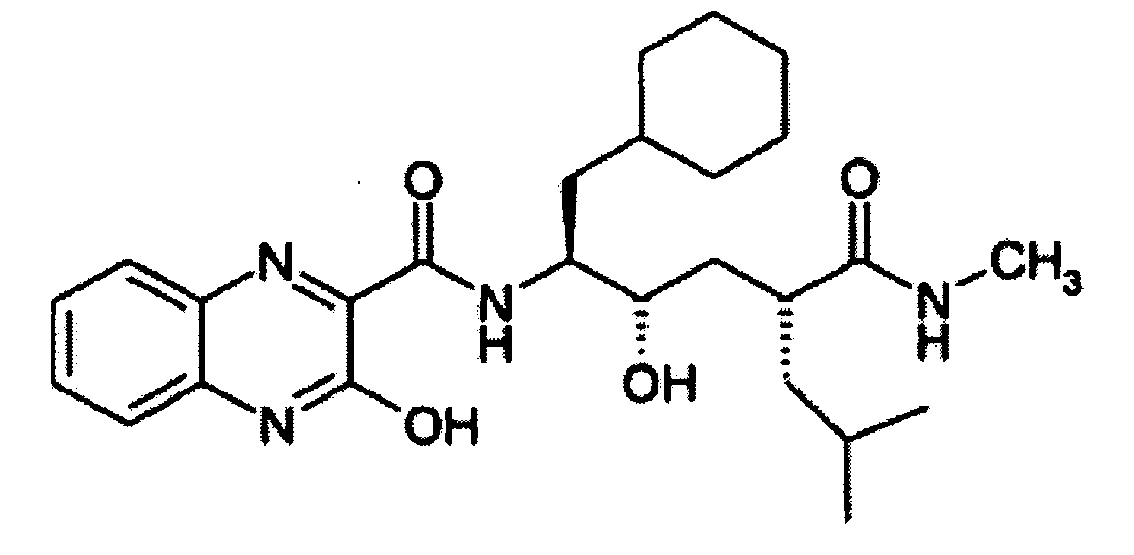
- Composé suivant la revendication 1, ou un de ses sels pharmaceutiquement acceptables, le composé de formule I ayant la stéréochimie exacte représentée par la formule

- Composé suivant la revendication 1 ou la revendication 2, ou un de ses sels pharmaceutiquement acceptables, dans lequel R2 représente un groupe benzyle facultativement substitué, et les substituants facultatifs sont tels que définis dans la revendication 1.
- Composé suivant la revendication 1 ou la revendication 2, ou un de ses sels pharmaceutiquement acceptables, dans lequel R3 représente un groupe, facultativement substitué, alkyle en C1 à C10 ou (cycloalkyle en C3 à C10) - (CH2)n-, et les substituants facultatifs sont tels que définis dans la revendication 1.
- Composé suivant la revendication 4, ou un de ses sels pharmaceutiquement acceptables, dans lequel R3 représente un groupe, facultativement substitué, n-butyle, tertiobutyle, 2-méthylpropyle, 2-méthylbutyle, 3-méthylbutyle, n-pentyle, 2-méthylpentyle, cyclopentyle, cyclohexyle, 2-méthylcyclohexyle ou cyclohexylméthyle, et les substituants facultatifs sont tels que définis dans la revendication 1.
- Composé suivant la revendication 1 ou la revendication 2, ou un de ses sels pharmaceutiquement acceptables, dans lequel R3 est substitué avec un substituant fluoro ou hydroxy.
- Composé suivant la revendication 5, ou un de ses sels pharmaceutiquement acceptables, dans lequel R3 est substitué avec un substituant fluoro ou hydroxy.
- Composé suivant la revendication 1, ou un de ses sels pharmaceutiquement acceptables, dans lequel R3 représente un groupe 4,4-difluorocyclohexylméthyle, 2-fluoro-2-méthylbutyle, isobutyle ou 1-hydroxycyclohexyle.
- Composé suivant la revendication 2, ou un de ses sels pharmaceutiquement acceptables, dans lequel R3 représente un groupe 4,4-difluorocyclohexylméthyle, 2-fluoro-2-méthylbutyle, 2-méthylpropyle, 2-hydroxy-2-méthylbutyle, 2-hydroxy-2-méthylpropyle ou 1-hydroxycyclohexyle.
- Composé suivant la revendication 1, ou un de ses sels pharmaceutiquement acceptables, dans lequel R4 et R5 sont choisis, indépendamment, entre l'hydrogène, des groupes hydroxy, amino, méthyle et éthyle.
- Composé suivant la revendication 1, ou un de ses sels pharmaceutiquement acceptables, ledit composé étant :le [4(R)-carbamoyl-7-fluoro-1-(3(S)-fluorobenzyl)-2(S)-hydroxy-7-méthyloctyl]-amide d'acide quinoxaline-2-carboxylique ;le [4(R)-carbamoyl-1-(2(S)-fluorobenzyl)-2(S)-hydroxy-7-méthyloctyl]-amide d'acide quinoxaline-2-carboxylique ;le [1(S)-benzyl-4(S)-carbamoyl-4(S)-(2,6-diméthyltétra-hydropyranne-4-yl)-2(S)-hydroxybutyl]-amide d'acide quinoxaline-2-carboxylique ;le [1(S)-benzyl-4(R)-carbamoyl-7-fluoro-2(S)-hydroxy-7-méthyloctyl)]-amide d'acide quinoxaline-2-carboxylique ;le [1(S)-benzyl-5-cyclohexyl-2(S)-hydroxy-4(R)-méthyl= carbamoylpentyl)]-amide d'acide quinoxaline-2-carboxylique ;le [1(S)-cyclohexylméthyl-2(S)-hydroxy-7-méthyl-4(R)-méthylcarbamoyloctyl]-amide d'acide quinoxaline-2-carboxylique ;le [1(S)-benzyl-2(S)-hydroxy-4(S)-hydroxycarbamoyl-4-(1-hydroxy-4-méthylcyclohexyl)-butyl]-amide d'acide quinoxaline-2-carboxylique ;le [1(S)-benzyl-4(S)-(4,4-difluoro-1-hydroxycyclohexyl)-2(S)-(hydroxy-4-hydroxycarbamoylbutyl)]-amide d'acide quinoxaline-2-carboxylique ;le [1(S)-benzyl-4(S)-carbamoyl-4(S)-(4,4-difluorocyclohexyl)-2(S)-hydroxybutyl]amide d'acide quinoxaline-2-carboxylique ;le (4(R)-carbamoyl-2(S)-hydroxy-7-méthyl-1(S)-thiophène-2-ylméthyloctyl)-amide d'acide quinoxaline-2-carboxylique ;le [1(S)-benzyl-4(R)-carbamoyl-7-chloro-2(S)-hydroxyoct-6-ényl)]-amide d'acide quinoxaline-2-carboxylique ;le [1(S)-benzyl-4(R)-carbamoyl-2(S)-hydroxy-5-phénylpentyl)]-amide d'acide quinoxaline-2-carboxylique ; oule (4(R)-carbamoyl-2(S)-hydroxy-7-méthyl-1(S)-thiazole-4(R)-ylméthyloctyl)-amide d'acide quinoxaline-2-carboxylique ;
- Composition pharmaceutique pour le traitement ou la prévention d'une affection ou d'un état faisant partie du groupe consistant en des maladies auto-immunes, des états inflammatoires aigus et chroniques, des états allergiques, une infection associée à une inflammation, une infection virale, le rejet d'un tissu après transplantation, l'athérosclérose, une resténose, une infectivité par le HIV et des maladies granulomateuses chez un mammifère, comprenant une quantité d'un composé suivant la revendication 1 ou d'un de ses sels pharmaceutiquement acceptables, qui est efficace dans le traitement ou la prévention d'une telle affection ou d'un tel état et un support pharmaceutiquement acceptable.
- Composition pharmaceutique pour le traitement ou la prévention d'une affection ou d'un état qui peut être traité ou prévenu en inhibant la liaison de la MIP-1α au récepteur CCR1 chez un mammifère, comprenant une quantité d'un composé suivant la revendication 1 ou d'un de ses sels pharmaceutiquement acceptables, efficace dans le traitement ou la prévention d'une telle affection ou d'un tel état et un support pharmaceutiquement acceptable.
- Utilisation d'un composé suivant la revendication 1 ou d'un de ses sels pharmaceutiquement acceptables, dans la production d'un médicament pour le traitement ou la prévention d'une affection ou d'un état faisant partie du groupe consistant en des maladies auto-immunes, des états inflammatoires aigus et chroniques, des états allergiques, une infection associée à une inflammation, une infection virale, le rejet d'un tissu après transplantation, l'athérosclérose, une resténose, l'infectivité par le HIV et des maladies granulomateuses chez un mammifère.
- Utilisation d'un composé suivant la revendication 1 ou d'un de ses sels pharmaceutiquement acceptables, dans la production d'un médicament pour le traitement ou la prévention d'une affection ou d'un état qui peut être traité ou prévenu en antagonisant le récepteur CCR1 chez un mammifère.
- Composition pharmaceutique pour le traitement ou la prévention d'une affection ou d'un état faisant partie du groupe consistant en des maladies auto-immunes, des états inflammatoires aigus et chroniques, des états allergiques, une infection associée à une inflammation, une infection virale, le rejet d'un tissu après transplantation, l'athérosclérose, une resténose, l'infectivité par le HIV et des maladies granulomateuses chez un mammifère, comprenant une quantité, efficace pour antagoniser les récepteurs CCR1, d'un composé suivant la revendication 1 ou un de ses sels pharmaceutiquement acceptables et un support pharmaceutiquement acceptable.
- Composition pharmaceutique pour le traitement ou la prévention d'une affection ou d'un état qui peut être traité ou prévenu en antagonisant le récepteur CCR1 chez un mammifère, comprenant une quantité, efficace pour antagoniser les récepteurs CCR1, d'un composé suivant la revendication 1 ou d'un de ses sels pharmaceutiquement acceptables et un support pharmaceutiquement acceptable.
- Composé suivant la revendication 1, ou un de ses sels pharmaceutiquement acceptables, destiné au traitement ou à la prévention d'un trouble ou d'une affection qui peut être traité ou prévue en antagonisant le récepteur CCR1 chez un mammifère.
- Composé suivant la revendication 1, ou un de ses sels pharmaceutiquement acceptables, destiné au traitement ou à la prévention d'un trouble ou d'une affection choisi entre des maladies auto-immunes, des états inflammatoires aigus et chroniques, des états allergiques, une infection associée à une inflammation, une infection virale, le rejet d'un tissu après transplantation, l'athérosclérose, une resténose, l'infectivité par le HIV et des maladies granulomateuses chez un mammifère.
Applications Claiming Priority (3)
| Application Number | Priority Date | Filing Date | Title |
|---|---|---|---|
| US3916997P | 1997-02-26 | 1997-02-26 | |
| US39169P | 1997-02-26 | ||
| PCT/US1998/001568 WO1998038167A1 (fr) | 1997-02-26 | 1998-02-05 | Derives amines de l'acide heteroaryle-hexanoique, leur preparation, et leur utilisation comme inhibiteurs selectifs du mip-1 alpha par fixation a son recepteur ccr1 |
Publications (2)
| Publication Number | Publication Date |
|---|---|
| EP0966443A1 EP0966443A1 (fr) | 1999-12-29 |
| EP0966443B1 true EP0966443B1 (fr) | 2009-01-28 |
Family
ID=21904033
Family Applications (1)
| Application Number | Title | Priority Date | Filing Date |
|---|---|---|---|
| EP98906013A Expired - Lifetime EP0966443B1 (fr) | 1997-02-26 | 1998-02-05 | Derives amines de l'acide heteroaryle-hexanoique, leur preparation, et leur utilisation comme inhibiteurs selectifs du mip-1 alpha par fixation a son recepteur ccr1 |
Country Status (40)
| Country | Link |
|---|---|
| US (1) | US6403587B1 (fr) |
| EP (1) | EP0966443B1 (fr) |
| JP (1) | JP3771591B2 (fr) |
| KR (1) | KR100447553B1 (fr) |
| CN (1) | CN1248968A (fr) |
| AP (1) | AP1056A (fr) |
| AR (1) | AR011168A1 (fr) |
| AT (1) | ATE421954T1 (fr) |
| AU (1) | AU745687B2 (fr) |
| BG (1) | BG103688A (fr) |
| BR (1) | BR9807858A (fr) |
| CA (1) | CA2282834C (fr) |
| DE (1) | DE69840519D1 (fr) |
| DK (1) | DK0966443T3 (fr) |
| DZ (1) | DZ2439A1 (fr) |
| EA (1) | EA002146B1 (fr) |
| ES (1) | ES2319700T3 (fr) |
| GT (1) | GT199800042A (fr) |
| HN (1) | HN1998000035A (fr) |
| HR (1) | HRP980103A2 (fr) |
| HU (1) | HUP0001319A3 (fr) |
| ID (1) | ID23789A (fr) |
| IL (1) | IL131163A (fr) |
| IS (1) | IS5139A (fr) |
| MA (1) | MA24488A1 (fr) |
| MY (1) | MY121294A (fr) |
| NO (1) | NO313877B1 (fr) |
| NZ (1) | NZ336629A (fr) |
| OA (1) | OA11090A (fr) |
| PA (1) | PA8447801A1 (fr) |
| PE (1) | PE59099A1 (fr) |
| PL (1) | PL335484A1 (fr) |
| SK (1) | SK112899A3 (fr) |
| TN (1) | TNSN98036A1 (fr) |
| TR (1) | TR199902056T2 (fr) |
| UA (1) | UA67735C2 (fr) |
| UY (1) | UY24908A1 (fr) |
| WO (1) | WO1998038167A1 (fr) |
| YU (1) | YU41399A (fr) |
| ZA (1) | ZA981602B (fr) |
Cited By (1)
| Publication number | Priority date | Publication date | Assignee | Title |
|---|---|---|---|---|
| EP4608403A4 (fr) * | 2022-10-24 | 2026-04-01 | Hadasit Medical Res Services&Development Ltd | Modulateurs et leurs utilisations |
Families Citing this family (44)
| Publication number | Priority date | Publication date | Assignee | Title |
|---|---|---|---|---|
| US6207665B1 (en) * | 1997-06-12 | 2001-03-27 | Schering Aktiengesellschaft | Piperazine derivatives and their use as anti-inflammatory agents |
| PL192083B1 (pl) | 1997-11-18 | 2006-08-31 | Dupont Pharmaceuticals Res Lab | Pochodne amin cyklicznych i ich zastosowanie |
| US6673801B1 (en) * | 1998-02-05 | 2004-01-06 | Pfizer Inc. | Dihydroxyhexanoic acid derivatives |
| WO2000042045A2 (fr) * | 1999-01-13 | 2000-07-20 | Warner-Lambert Company | Heterocycles fonctionnalises en tant que modulateurs des recepteurs de chimiokines |
| AU2862300A (en) * | 1999-01-29 | 2000-08-18 | Millennium Pharmaceuticals, Inc. | Methods for preventing graft rejection and ischemia-reperfusion injury |
| CA2361256A1 (fr) * | 1999-01-29 | 2000-08-03 | James B. Rottman | Methode de traitement des troubles inflammatoires demyelinisants utilisant des agonistes de la fonction ccr1 |
| US6329510B1 (en) | 1999-01-29 | 2001-12-11 | Millennium Pharmaceuticals, Inc. | Anti-CCR1 antibodies and methods of use therefor |
| US6361979B1 (en) * | 1999-02-12 | 2002-03-26 | Pfizer Inc. | Microbial conversion of 2-methylquinoxaline |
| ES2250132T3 (es) | 1999-05-18 | 2006-04-16 | Teijin Limited | Remedios preventivos para enfermedades asociadas a quimioquinas. |
| CN1192773C (zh) | 1999-08-04 | 2005-03-16 | 帝人株式会社 | 环胺ccr3拮抗剂 |
| EP1498417A1 (fr) * | 2000-02-04 | 2005-01-19 | Pfizer Products Inc. | Amides hétérocycliques |
| UA72789C2 (en) | 2000-02-04 | 2005-04-15 | Pfizer Prod Inc | Heterocyclic amide derivatives |
| JP2003528071A (ja) | 2000-03-23 | 2003-09-24 | エラン ファーマスーティカルズ インコーポレイテッド | アルツハイマー病治療用組成物および方法 |
| US6362177B1 (en) | 2000-05-16 | 2002-03-26 | Teijin Limited | Cyclic amine derivatives and their use as drugs |
| JP2004502665A (ja) | 2000-06-30 | 2004-01-29 | イーラン ファーマスーティカルズ、インコーポレイテッド | アルツハイマー病を治療する化合物 |
| PE20020276A1 (es) | 2000-06-30 | 2002-04-06 | Elan Pharm Inc | COMPUESTOS DE AMINA SUSTITUIDA COMO INHIBIDORES DE ß-SECRETASA PARA EL TRATAMIENTO DE ALZHEIMER |
| US6846813B2 (en) | 2000-06-30 | 2005-01-25 | Pharmacia & Upjohn Company | Compounds to treat alzheimer's disease |
| JP2004503604A (ja) * | 2000-07-24 | 2004-02-05 | ザ・ユニバーシティ・オブ・クイーンズランド | 化合物およびホスホリパーゼ阻害剤 |
| US6740636B2 (en) | 2000-07-31 | 2004-05-25 | Schering Aktiengesellschaft | Non-peptide CCR1 receptor antagonists in combination with cyclosporin A for the treatment of heart transplant rejection |
| US6693134B2 (en) * | 2001-05-29 | 2004-02-17 | Chemokine Therapeutics Corporation | Bicyclic aromatic chemokine receptor ligands |
| JP4547148B2 (ja) | 2001-06-22 | 2010-09-22 | ベンド・リサーチ・インコーポレーテッド | 非晶質薬剤の吸着物の医薬組成物 |
| WO2003002122A1 (fr) * | 2001-06-27 | 2003-01-09 | Elan Pharmaceuticals, Inc. | Derives de beta-hydroxyamine utiles dans le traitement de la maladie d'alzheimer |
| AR037460A1 (es) * | 2001-11-30 | 2004-11-10 | Smithkline Beecham Plc | Compuesto de hidroxietileno, composicion farmaceutica que lo comprende, uso del mismo para la fabricacion de un medicamento y procedimiento para su preparacion |
| PE20030701A1 (es) | 2001-12-20 | 2003-08-21 | Schering Corp | Compuestos para el tratamiento de trastornos inflamatorios |
| WO2003063833A1 (fr) | 2002-02-01 | 2003-08-07 | Pfizer Products Inc. | Compositions pharmaceutiques de dispersions amorphes de medicaments et materiaux formant des microphases lipophiles |
| JP2005530775A (ja) * | 2002-05-14 | 2005-10-13 | ファイザー・プロダクツ・インク | ジヒドロキシヘキサン酸誘導体、それらの中間体、および製法 |
| AU2003249474A1 (en) | 2002-08-12 | 2004-02-25 | Pfizer Products Inc. | Pharmaceutical compositions of semi-ordered drugs and polymers |
| MXPA05001781A (es) * | 2002-08-12 | 2005-04-25 | Pfizer Prod Inc | Formas cristalinas de [4-carbamoil -1-(3- fluorobencil)-2, 7-dihidroxi- 7-metil- octil]-amida del acido quinoxalina-2- carboxilico. |
| US20040087571A1 (en) * | 2002-10-30 | 2004-05-06 | Pfizer Inc | Methods of using CCR1 antagonists as immunomodulatory agents |
| US20040097554A1 (en) * | 2002-10-30 | 2004-05-20 | Pfizer Inc | Heteroaryl-hexanoic acid amide derivatives as immonomodulatory agents |
| AU2003291839B2 (en) * | 2002-12-13 | 2009-01-22 | Ym Biosciences Australia Pty Ltd | Nicotinamide-based kinase inhibitors |
| JP4896518B2 (ja) * | 2002-12-13 | 2012-03-14 | ワイエム・バイオサイエンシズ・オーストラリア・ピーティーワイ・リミテッド | ニコチンアミド系キナーゼ阻害薬 |
| CA2508171C (fr) * | 2002-12-13 | 2012-08-28 | Cytopia Pty Ltd | Inhibiteurs de kinase a base de nicotinamide |
| MXPA06001417A (es) | 2003-08-04 | 2006-05-15 | Pfizer Prod Inc | Composiciones farmaceuticas de adsorbatos de farmacos amorfos y materiales que forman microfases lipofilas. |
| KR20070008517A (ko) * | 2003-10-24 | 2007-01-17 | 아벤티스 파마슈티칼스 인크. | 카텝신 저해물질로서 신규한 케토-옥사디아졸 유도체 |
| EP2036896B1 (fr) | 2006-06-23 | 2012-03-14 | Daiichi Sankyo Company, Limited | Composé aminé cyclique |
| EP2771484A1 (fr) | 2011-10-28 | 2014-09-03 | Galderma Research & Development | Nouveaux marqueurs d'infiltrat leucocytaire de rosacée et utilisations de ceux-ci |
| UY36034A (es) | 2014-03-18 | 2015-09-30 | Astrazeneca Ab | Derivados de 3,5-diamino-6-cloro-pirazina-2-carboxamida y sales farmaceuticamente aceptables de estos |
| DK3050574T3 (da) | 2015-01-28 | 2020-01-20 | Univ Bordeaux | Anvendelse af plerixafor til behandling og/eller forebyggelse af akutte forværringer af kronisk obstruktiv lungesygdom |
| EP3551034A1 (fr) | 2016-12-07 | 2019-10-16 | Progenity, Inc. | Méthodes, dispositifs et systèmes de détection pour le tractus gastro-intestinal |
| CA3045310A1 (fr) | 2016-12-14 | 2018-06-21 | Progenity, Inc. | Traitement d'une maladie du tractus gastro-intestinal avec une chimoikine/un inhibiteur du recepteur de chimiokine |
| WO2020106757A1 (fr) | 2018-11-19 | 2020-05-28 | Progenity, Inc. | Dispositif ingérable pour administrer un agent thérapeutique au tube digestif |
| CN121197633A (zh) | 2019-12-13 | 2025-12-26 | 比特比德科有限责任公司 | 用于将治疗剂递送至胃肠道的可摄取装置 |
| WO2025090574A1 (fr) * | 2023-10-23 | 2025-05-01 | Ohio State Innovation Foundation | Composés améliorant le goût salé |
Family Cites Families (11)
| Publication number | Priority date | Publication date | Assignee | Title |
|---|---|---|---|---|
| US4727060A (en) | 1984-11-13 | 1988-02-23 | Ciba-Geigy Corporation | Novel 5-amino-4-hydroxyvaleryl derivatives |
| EP0364493A1 (fr) | 1987-08-07 | 1990-04-25 | The Upjohn Company | Peptides inhibiteurs de la renine a liaisons non peptidiques |
| IL88619A0 (en) * | 1987-12-15 | 1989-07-31 | Pfizer | Non-peptidic renin inhibitors |
| US4923864A (en) | 1987-12-15 | 1990-05-08 | Pfizer Inc. | Certain heterocyclic-hexanamides useful for treating hypertension |
| EP0374098A3 (fr) * | 1988-12-15 | 1991-05-02 | Ciba-Geigy Ag | Inhibiteurs de protéase rétrovirale |
| EP0578745A1 (fr) | 1991-04-04 | 1994-01-19 | The Upjohn Company | Composes contenant du phosphore et servant d'inhibiteurs de retrovirus |
| IE922316A1 (en) | 1991-07-17 | 1993-01-27 | Smithkline Beecham Corp | Retroviral protease inhibitors |
| AU3735793A (en) | 1992-02-26 | 1993-09-13 | Smithkline Beecham Corporation | Retroviral protease inhibitors |
| DE69322269T2 (de) | 1992-05-27 | 1999-04-22 | Conagra, Inc., Omaha, Nebr. | Lebensmittelbehälter und dergleichen mit durch druck aufgetragenen schichten |
| IL110898A0 (en) | 1993-09-10 | 1994-11-28 | Narhex Australia Pty Ltd | Polar-substituted hydrocarbons |
| PT708085E (pt) | 1994-10-19 | 2002-11-29 | Novartis Ag | Eteres antivirais de isosteros de substrato de aspartato protease |
-
1998
- 1998-02-05 CN CN98802888A patent/CN1248968A/zh active Pending
- 1998-02-05 KR KR10-1999-7007788A patent/KR100447553B1/ko not_active Expired - Fee Related
- 1998-02-05 ES ES98906013T patent/ES2319700T3/es not_active Expired - Lifetime
- 1998-02-05 HU HU0001319A patent/HUP0001319A3/hu unknown
- 1998-02-05 DE DE69840519T patent/DE69840519D1/de not_active Expired - Lifetime
- 1998-02-05 EA EA199900678A patent/EA002146B1/ru not_active IP Right Cessation
- 1998-02-05 DK DK98906013T patent/DK0966443T3/da active
- 1998-02-05 AU AU61354/98A patent/AU745687B2/en not_active Ceased
- 1998-02-05 IL IL13116398A patent/IL131163A/xx not_active IP Right Cessation
- 1998-02-05 BR BR9807858-5A patent/BR9807858A/pt not_active IP Right Cessation
- 1998-02-05 ID IDW990920A patent/ID23789A/id unknown
- 1998-02-05 US US09/380,269 patent/US6403587B1/en not_active Expired - Fee Related
- 1998-02-05 WO PCT/US1998/001568 patent/WO1998038167A1/fr not_active Ceased
- 1998-02-05 YU YU41399A patent/YU41399A/sh unknown
- 1998-02-05 PL PL98335484A patent/PL335484A1/xx unknown
- 1998-02-05 SK SK1128-99A patent/SK112899A3/sk unknown
- 1998-02-05 AT AT98906013T patent/ATE421954T1/de not_active IP Right Cessation
- 1998-02-05 TR TR1999/02056T patent/TR199902056T2/xx unknown
- 1998-02-05 JP JP53764498A patent/JP3771591B2/ja not_active Expired - Fee Related
- 1998-02-05 NZ NZ336629A patent/NZ336629A/xx unknown
- 1998-02-05 EP EP98906013A patent/EP0966443B1/fr not_active Expired - Lifetime
- 1998-02-05 CA CA002282834A patent/CA2282834C/fr not_active Expired - Fee Related
- 1998-02-23 GT GT199800042A patent/GT199800042A/es unknown
- 1998-02-25 PE PE1998000140A patent/PE59099A1/es not_active Application Discontinuation
- 1998-02-25 MY MYPI98000802A patent/MY121294A/en unknown
- 1998-02-25 DZ DZ980049A patent/DZ2439A1/fr active
- 1998-02-25 HN HN1998000035A patent/HN1998000035A/es unknown
- 1998-02-26 MA MA24983A patent/MA24488A1/fr unknown
- 1998-02-26 AP APAP/P/1998/001200A patent/AP1056A/en active
- 1998-02-26 ZA ZA9801602A patent/ZA981602B/xx unknown
- 1998-02-26 TN TNTNSN98036A patent/TNSN98036A1/fr unknown
- 1998-02-26 HR HR60/039,169A patent/HRP980103A2/hr not_active Application Discontinuation
- 1998-02-26 PA PA19988447801A patent/PA8447801A1/es unknown
- 1998-02-26 AR ARP980100869A patent/AR011168A1/es unknown
- 1998-02-26 UY UY24908A patent/UY24908A1/es not_active IP Right Cessation
- 1998-05-02 UA UA99074134A patent/UA67735C2/uk unknown
-
1999
- 1999-07-30 IS IS5139A patent/IS5139A/is unknown
- 1999-08-20 OA OA9900188A patent/OA11090A/en unknown
- 1999-08-24 BG BG103688A patent/BG103688A/bg unknown
- 1999-08-25 NO NO19994101A patent/NO313877B1/no unknown
Cited By (1)
| Publication number | Priority date | Publication date | Assignee | Title |
|---|---|---|---|---|
| EP4608403A4 (fr) * | 2022-10-24 | 2026-04-01 | Hadasit Medical Res Services&Development Ltd | Modulateurs et leurs utilisations |
Also Published As
Similar Documents
| Publication | Publication Date | Title |
|---|---|---|
| US6403587B1 (en) | Heteroaryl-hexanoic acid amide derivatives, their preparation and their use as selective inhibitors of MIP-1-α binding to its CCR 1 receptor | |
| EP1051405B1 (fr) | Nouveaux derives d'acide dihydroxyhexanoique | |
| US20040087571A1 (en) | Methods of using CCR1 antagonists as immunomodulatory agents | |
| US20020198207A1 (en) | Novel Hexanoic acid derivatives | |
| KR20050009776A (ko) | 헤테로사이클릭 아미드 유도체 | |
| US6673801B1 (en) | Dihydroxyhexanoic acid derivatives | |
| WO2003035066A1 (fr) | Derives de 2-aminoquinolone utilises en tant qu'inhibiteurs de l'impdh | |
| MXPA99007887A (en) | Heteroaryl-hexanoic acid amide derivatives, their preparation and their use as selective inhibitors of mip-1-alpha binding to its ccr1 receptor | |
| CZ9902904A3 (cs) | Deriváty amidů heteroarylhexanových kyselin, farmaceutické kompozice na jejich bázi a způsoby léčení nebo prevence | |
| US6858744B2 (en) | Dihydoxyhexanoic acid derivatives, their intermediates, and methods of making | |
| HK1025328A (en) | Heteroaryl-hexanoic acid amide derivatives, their preparation and their use as selective inhibitors of mip-1-alpha binding to its ccr 1 receptor | |
| MXPA00007690A (en) | Novel dihydroxyhexanoic acid derivatives | |
| US20040049057A1 (en) | Dihydro-furan-2-one derivatives, their intermediates and methods of manufacture | |
| HK1034969B (en) | Dihydroxyhexanoic acid derivatives | |
| CZ20002760A3 (cs) | Nové deriváty dihydroxyhexanové kyseliny a farmaceutický prostředek, který je obsahuje |
Legal Events
| Date | Code | Title | Description |
|---|---|---|---|
| PUAI | Public reference made under article 153(3) epc to a published international application that has entered the european phase |
Free format text: ORIGINAL CODE: 0009012 |
|
| 17P | Request for examination filed |
Effective date: 19990720 |
|
| AK | Designated contracting states |
Kind code of ref document: A1 Designated state(s): AT BE CH DE DK ES FI FR GB GR IE IT LI LU NL PT SE |
|
| AX | Request for extension of the european patent |
Free format text: AL PAYMENT 19990720;LT PAYMENT 19990720;LV PAYMENT 19990720;MK PAYMENT 19990720;RO PAYMENT 19990720;SI PAYMENT 19990720 |
|
| 17Q | First examination report despatched |
Effective date: 20030121 |
|
| GRAP | Despatch of communication of intention to grant a patent |
Free format text: ORIGINAL CODE: EPIDOSNIGR1 |
|
| GRAS | Grant fee paid |
Free format text: ORIGINAL CODE: EPIDOSNIGR3 |
|
| GRAA | (expected) grant |
Free format text: ORIGINAL CODE: 0009210 |
|
| AK | Designated contracting states |
Kind code of ref document: B1 Designated state(s): AT BE CH DE DK ES FI FR GB GR IE IT LI LU NL PT SE |
|
| AX | Request for extension of the european patent |
Extension state: AL LT LV MK RO SI |
|
| REG | Reference to a national code |
Ref country code: GB Ref legal event code: FG4D |
|
| REG | Reference to a national code |
Ref country code: CH Ref legal event code: EP |
|
| REG | Reference to a national code |
Ref country code: IE Ref legal event code: FG4D |
|
| REG | Reference to a national code |
Ref country code: DK Ref legal event code: T3 |
|
| REF | Corresponds to: |
Ref document number: 69840519 Country of ref document: DE Date of ref document: 20090319 Kind code of ref document: P |
|
| REG | Reference to a national code |
Ref country code: SE Ref legal event code: TRGR |
|
| REG | Reference to a national code |
Ref country code: ES Ref legal event code: FG2A Ref document number: 2319700 Country of ref document: ES Kind code of ref document: T3 |
|
| LTIE | Lt: invalidation of european patent or patent extension |
Effective date: 20090128 |
|
| PG25 | Lapsed in a contracting state [announced via postgrant information from national office to epo] |
Ref country code: PT Free format text: LAPSE BECAUSE OF FAILURE TO SUBMIT A TRANSLATION OF THE DESCRIPTION OR TO PAY THE FEE WITHIN THE PRESCRIBED TIME-LIMIT Effective date: 20090629 Ref country code: AT Free format text: LAPSE BECAUSE OF FAILURE TO SUBMIT A TRANSLATION OF THE DESCRIPTION OR TO PAY THE FEE WITHIN THE PRESCRIBED TIME-LIMIT Effective date: 20090128 |
|
| PG25 | Lapsed in a contracting state [announced via postgrant information from national office to epo] |
Ref country code: BE Free format text: LAPSE BECAUSE OF FAILURE TO SUBMIT A TRANSLATION OF THE DESCRIPTION OR TO PAY THE FEE WITHIN THE PRESCRIBED TIME-LIMIT Effective date: 20090128 |
|
| REG | Reference to a national code |
Ref country code: CH Ref legal event code: PL |
|
| PG25 | Lapsed in a contracting state [announced via postgrant information from national office to epo] |
Ref country code: LI Free format text: LAPSE BECAUSE OF NON-PAYMENT OF DUE FEES Effective date: 20090228 Ref country code: CH Free format text: LAPSE BECAUSE OF NON-PAYMENT OF DUE FEES Effective date: 20090228 |
|
| PLBE | No opposition filed within time limit |
Free format text: ORIGINAL CODE: 0009261 |
|
| STAA | Information on the status of an ep patent application or granted ep patent |
Free format text: STATUS: NO OPPOSITION FILED WITHIN TIME LIMIT |
|
| 26N | No opposition filed |
Effective date: 20091029 |
|
| PGFP | Annual fee paid to national office [announced via postgrant information from national office to epo] |
Ref country code: SE Payment date: 20091223 Year of fee payment: 13 |
|
| PGFP | Annual fee paid to national office [announced via postgrant information from national office to epo] |
Ref country code: IE Payment date: 20100114 Year of fee payment: 13 Ref country code: DK Payment date: 20100107 Year of fee payment: 13 |
|
| PGFP | Annual fee paid to national office [announced via postgrant information from national office to epo] |
Ref country code: IT Payment date: 20100220 Year of fee payment: 13 Ref country code: FR Payment date: 20100222 Year of fee payment: 13 Ref country code: FI Payment date: 20100127 Year of fee payment: 13 |
|
| PGFP | Annual fee paid to national office [announced via postgrant information from national office to epo] |
Ref country code: GB Payment date: 20100107 Year of fee payment: 13 Ref country code: DE Payment date: 20100226 Year of fee payment: 13 |
|
| PGFP | Annual fee paid to national office [announced via postgrant information from national office to epo] |
Ref country code: ES Payment date: 20100225 Year of fee payment: 13 |
|
| PGFP | Annual fee paid to national office [announced via postgrant information from national office to epo] |
Ref country code: NL Payment date: 20100208 Year of fee payment: 13 |
|
| PG25 | Lapsed in a contracting state [announced via postgrant information from national office to epo] |
Ref country code: GR Free format text: LAPSE BECAUSE OF FAILURE TO SUBMIT A TRANSLATION OF THE DESCRIPTION OR TO PAY THE FEE WITHIN THE PRESCRIBED TIME-LIMIT Effective date: 20090429 |
|
| PG25 | Lapsed in a contracting state [announced via postgrant information from national office to epo] |
Ref country code: LU Free format text: LAPSE BECAUSE OF NON-PAYMENT OF DUE FEES Effective date: 20090205 |
|
| REG | Reference to a national code |
Ref country code: NL Ref legal event code: V1 Effective date: 20110901 |
|
| REG | Reference to a national code |
Ref country code: DK Ref legal event code: EBP |
|
| REG | Reference to a national code |
Ref country code: SE Ref legal event code: EUG |
|
| GBPC | Gb: european patent ceased through non-payment of renewal fee |
Effective date: 20110205 |
|
| REG | Reference to a national code |
Ref country code: FR Ref legal event code: ST Effective date: 20111102 |
|
| REG | Reference to a national code |
Ref country code: IE Ref legal event code: MM4A |
|
| PG25 | Lapsed in a contracting state [announced via postgrant information from national office to epo] |
Ref country code: FI Free format text: LAPSE BECAUSE OF NON-PAYMENT OF DUE FEES Effective date: 20110205 |
|
| PG25 | Lapsed in a contracting state [announced via postgrant information from national office to epo] |
Ref country code: NL Free format text: LAPSE BECAUSE OF NON-PAYMENT OF DUE FEES Effective date: 20110901 Ref country code: IT Free format text: LAPSE BECAUSE OF NON-PAYMENT OF DUE FEES Effective date: 20110205 |
|
| PG25 | Lapsed in a contracting state [announced via postgrant information from national office to epo] |
Ref country code: IE Free format text: LAPSE BECAUSE OF NON-PAYMENT OF DUE FEES Effective date: 20110207 Ref country code: FR Free format text: LAPSE BECAUSE OF NON-PAYMENT OF DUE FEES Effective date: 20110228 |
|
| PG25 | Lapsed in a contracting state [announced via postgrant information from national office to epo] |
Ref country code: GB Free format text: LAPSE BECAUSE OF NON-PAYMENT OF DUE FEES Effective date: 20110205 |
|
| REG | Reference to a national code |
Ref country code: ES Ref legal event code: FD2A Effective date: 20120411 |
|
| REG | Reference to a national code |
Ref country code: DE Ref legal event code: R119 Ref document number: 69840519 Country of ref document: DE Effective date: 20110901 |
|
| PG25 | Lapsed in a contracting state [announced via postgrant information from national office to epo] |
Ref country code: ES Free format text: LAPSE BECAUSE OF NON-PAYMENT OF DUE FEES Effective date: 20110206 |
|
| PG25 | Lapsed in a contracting state [announced via postgrant information from national office to epo] |
Ref country code: SE Free format text: LAPSE BECAUSE OF NON-PAYMENT OF DUE FEES Effective date: 20110206 |
|
| PG25 | Lapsed in a contracting state [announced via postgrant information from national office to epo] |
Ref country code: DE Free format text: LAPSE BECAUSE OF NON-PAYMENT OF DUE FEES Effective date: 20110901 |