EP0968227B1 - Dimere kationische lipide auf dicystinbasis - Google Patents
Dimere kationische lipide auf dicystinbasis Download PDFInfo
- Publication number
- EP0968227B1 EP0968227B1 EP98910189A EP98910189A EP0968227B1 EP 0968227 B1 EP0968227 B1 EP 0968227B1 EP 98910189 A EP98910189 A EP 98910189A EP 98910189 A EP98910189 A EP 98910189A EP 0968227 B1 EP0968227 B1 EP 0968227B1
- Authority
- EP
- European Patent Office
- Prior art keywords
- lipid
- carbon atoms
- moiety
- alk
- alkyl
- Prior art date
- Legal status (The legal status is an assumption and is not a legal conclusion. Google has not performed a legal analysis and makes no representation as to the accuracy of the status listed.)
- Expired - Lifetime
Links
- 0 CCC(C(*)=O)NC(*)(*)C(C(*)*C(*)*)=O Chemical compound CCC(C(*)=O)NC(*)(*)C(C(*)*C(*)*)=O 0.000 description 2
Images
Classifications
-
- A—HUMAN NECESSITIES
- A61—MEDICAL OR VETERINARY SCIENCE; HYGIENE
- A61K—PREPARATIONS FOR MEDICAL, DENTAL OR TOILETRY PURPOSES
- A61K48/00—Medicinal preparations containing genetic material which is inserted into cells of the living body to treat genetic diseases; Gene therapy
-
- C—CHEMISTRY; METALLURGY
- C07—ORGANIC CHEMISTRY
- C07C—ACYCLIC OR CARBOCYCLIC COMPOUNDS
- C07C323/00—Thiols, sulfides, hydropolysulfides or polysulfides substituted by halogen, oxygen or nitrogen atoms, or by sulfur atoms not being part of thio groups
- C07C323/50—Thiols, sulfides, hydropolysulfides or polysulfides substituted by halogen, oxygen or nitrogen atoms, or by sulfur atoms not being part of thio groups containing thio groups and carboxyl groups bound to the same carbon skeleton
- C07C323/51—Thiols, sulfides, hydropolysulfides or polysulfides substituted by halogen, oxygen or nitrogen atoms, or by sulfur atoms not being part of thio groups containing thio groups and carboxyl groups bound to the same carbon skeleton having the sulfur atoms of the thio groups bound to acyclic carbon atoms of the carbon skeleton
- C07C323/60—Thiols, sulfides, hydropolysulfides or polysulfides substituted by halogen, oxygen or nitrogen atoms, or by sulfur atoms not being part of thio groups containing thio groups and carboxyl groups bound to the same carbon skeleton having the sulfur atoms of the thio groups bound to acyclic carbon atoms of the carbon skeleton with the carbon atom of at least one of the carboxyl groups bound to nitrogen atoms
-
- C—CHEMISTRY; METALLURGY
- C07—ORGANIC CHEMISTRY
- C07K—PEPTIDES
- C07K5/00—Peptides containing up to four amino acids in a fully defined sequence; Derivatives thereof
- C07K5/04—Peptides containing up to four amino acids in a fully defined sequence; Derivatives thereof containing only normal peptide links
- C07K5/06—Dipeptides
- C07K5/06086—Dipeptides with the first amino acid being basic
-
- C—CHEMISTRY; METALLURGY
- C12—BIOCHEMISTRY; BEER; SPIRITS; WINE; VINEGAR; MICROBIOLOGY; ENZYMOLOGY; MUTATION OR GENETIC ENGINEERING
- C12N—MICROORGANISMS OR ENZYMES; COMPOSITIONS THEREOF; PROPAGATING, PRESERVING, OR MAINTAINING MICROORGANISMS; MUTATION OR GENETIC ENGINEERING; CULTURE MEDIA
- C12N15/00—Mutation or genetic engineering; DNA or RNA concerning genetic engineering, vectors, e.g. plasmids, or their isolation, preparation or purification; Use of hosts therefor
- C12N15/09—Recombinant DNA-technology
- C12N15/87—Introduction of foreign genetic material using processes not otherwise provided for, e.g. co-transformation
-
- A—HUMAN NECESSITIES
- A61—MEDICAL OR VETERINARY SCIENCE; HYGIENE
- A61K—PREPARATIONS FOR MEDICAL, DENTAL OR TOILETRY PURPOSES
- A61K38/00—Medicinal preparations containing peptides
Definitions
- the present invention is directed to dimeric cationic lipid compounds useful in lipid aggregates for the delivery of macromolecules into cells.
- bioactive substances do not need to enter cells to exert their biological effect, because they operate either by acting on cell surfaces through cell surface receptors or by interacting with extracellular components.
- many natural biological molecules and their analogues such as proteins and polynucleotides, or foreign agents, such as synthetic molecules, which are capable of influencing cell function at the subcellular or molecular level are preferably incorporated within the cell in order to produce their effect.
- the cell membrane presents a selective barrier which may be impermeable to them.
- This protective function is influenced by the complex composition of the cell membrane which includes phospholipids, glycolipids, cholesterol, and intrinsic and extrinsic proteins as well as by a variety of cytoplasmic components. Interactions between these structural and cytoplasmic cell components and their response to external signals make up transport processes responsible for the membrane selsctivity exhibited within and among cell types.
- the membrane barrier may be overcome in the first instance by viral infection or transduction.
- Various techniques for introducing the DNA or mRNA precursors of bioactive peptides into cells include the use of viral vectors, such as recombinant vectors and retroviruses, which have the inherent ability to penetrate cell membranes.
- viral vectors such as recombinant vectors and retroviruses
- the use of such viral agents to integrate exogenous DNA into the chromosomal material of the cell carries a risk of damage to the genome and the possibility of inducing malignant transformation.
- the membrane barrier may also be overcome by associating these agents in complexes with lipid formulations closely resembling the lipid composition of natural cell membranes. These lipids are able to fuse with the cell membranes, and in the process, the associated agents are delivered intracellularly.
- the structure of various types of lipid aggregates in formulations vary depending on a variety of factors which include composition and methods of forming the aggregate. Lipid aggregates include, for example, liposomes, unilamellar vesicles, multilamellar vesicles, micelles and the like, and may have particle sizes in the nanometer to micrometer range.
- the lipids of these formulations may comprise an amphipathic lipid, such as the phospholipids of cell membranes, which form hollow lipid vesicles or liposomes in aqueous systems either spontaneously or by mechanical agitation. This property can be used to entrap the agent to be delivered within the liposomes. In other applications, the agent of interest can be incorporated into the lipid vesicle as an intrinsic membrane component, rather than entrapped in the hollow aqueous interior.
- an amphipathic lipid such as the phospholipids of cell membranes, which form hollow lipid vesicles or liposomes in aqueous systems either spontaneously or by mechanical agitation. This property can be used to entrap the agent to be delivered within the liposomes. In other applications, the agent of interest can be incorporated into the lipid vesicle as an intrinsic membrane component, rather than entrapped in the hollow aqueous interior.
- Liposomes have been utilized as in vivo delivery vehicles and some encouraging results were obtain when this approach was applied to intracellular expression of DNA (Mannino, R.J. and Fould-Fogerite, S., Biotechniques 6:682-690, 1988; Itani, T. et al. Gene 56:267-276. 1987; Nicolau, C. et al. Meth . Enz. 149:157-176, 1987; Straubinger, R.M. and Papahadjopoulos, D. Meth. Enz. 101:512-527, 1983; Wang, C.Y. and Huang, L., Proc. Natl. Acad. Sci. USA 84:7851-7855, 1987; however, the methodology has fundamental problems.
- DOTMA 1,2-bis(oleoyloxy)-3-(trimethylammonia)propane
- DOTAP 1,2-bis(oleoyloxy)-3-(trimethylammonia)propane
- LipofectinTM (Bathesda Research Laboratories, Gaithersburg, MD) is an effective agent for the delivery of highly anionic polynucleotides into living tissue culture cells that comprises positively charged DOTMA liposomes which interact spontaneously with negatively charged polynucleotides to form complexes. When enough positively charged liposomes are used, the net charge on the resulting complexes is also positive. Positively charged complexes prepared in this way spontaneously attach to negatively charged cell surfaces, fuse with the plasma membrane, and efficiently deliver functional polynucleotide into, for example, tissue culture cells.
- Cationic lipids such as DOTMA are toxic to tissue culture cells and are expected to accumulate in the body due to their poorly metabolized ether bonds.
- DOTAP 1,2-bis (oleoyloxy)-3,3-(trimethylammonia)propane
- cationic lipid compounds include those which have been conjugated to a variety of moieties including, for example, carboxyspermine which has been conjugated to one of two types of lipids and includes compounds such as 5-carboxyspermylglycine dioctaoleoylamide (“DOGS”) and dipalmitoyl-phosphatidylethanolamine 5-carboxyspermyl-amide (“DPPES”) (see, e.g ., Behr et al , U.S. Patent No. 5,171,678).
- DOGS 5-carboxyspermylglycine dioctaoleoylamide
- DPES dipalmitoyl-phosphatidylethanolamine 5-carboxyspermyl-amide
- Another cationic lipid conjugate includes derivatization of the lipid with cholesterol ("DC-Chol") which has been formulated into liposomes in combination with DOPE.
- DC-Chol cholesterol
- Lipopolylysine made by conjugating polylysine to DOPE, has been reported to be effective for transfection in the presence of serum (Zhou, X. et al., Biochim. Biophys. Acta 1065:8, 1991).
- these liposomes containing conjugated cationic lipids are said to exhibit lower toxicity and provide more efficient transfection that the DOTMA-containing compositions.
- cationic lipids which have been proposed for use in delivering agents to cells
- no particular cationic lipid has been reported to work well with a wide variety of cell types. Since cell types differ from one another in membrane composition, different cationic lipid compositions and different types of lipid aggregates may be effective for different cell types, either due to their ability to contact and fuse with particular target cell membranes directly or due to different interactions with intracellular membranes or the intracellular environment.
- the present invention provides compositions of novel dimeric cationic lipids, conjugates of these lipids with other molecules, and aggregates of these cationic lipids with polyanionic macromolecules.
- the invention further provides methods for their synthesis, methods of use and a kit for delivering polyanionic macromolecules using these novel cationic lipids.
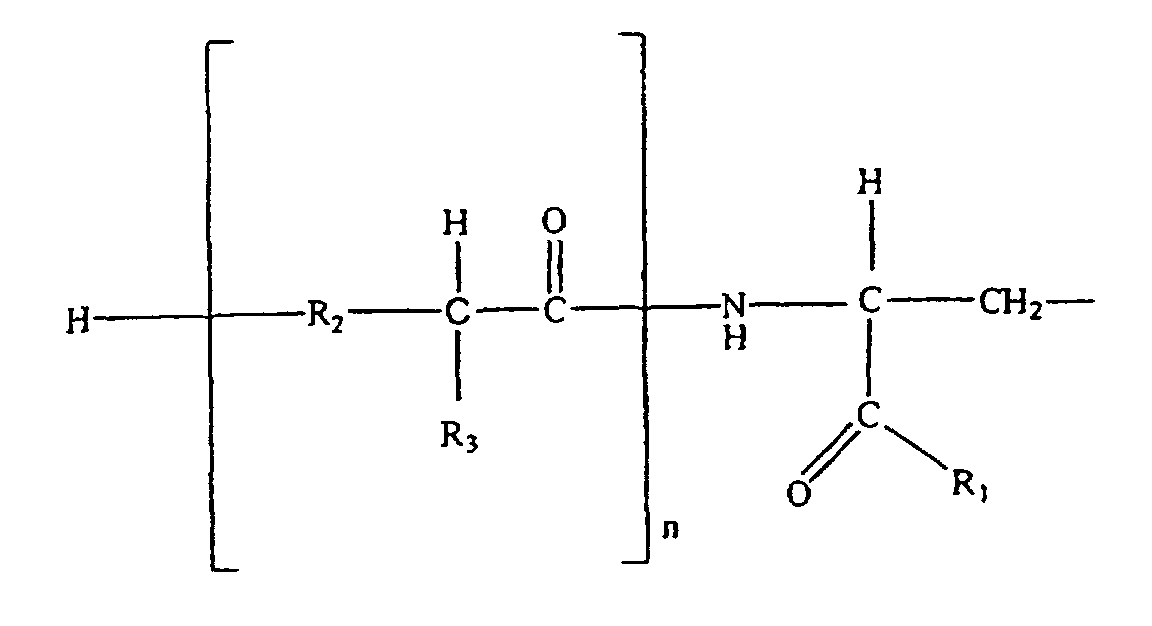
- dimeric cautionic lipids having the structure: Z - S - S - Z [X] m wherein Z is wherein
- lipid of the above without the counter ion (X') m is also included within the scope of our invention.
- R 1 is a lipophilic moiety.
- Suitable lipophilic moieties include, but are not limited to, a symmetrical branched alkyl or alkenyl moiety of 10 to 50 carbon atoms, a unsymmetrical branched alkyl or alkenyl moiety of 10 to 50 carbon atoms, a Steroidyl moiety (such as chotesteryl), a glyceryl moiety, the group -OCH(R 6 R 7 ) wherein R 6 and R 7 are independently selected alkyl groups of 10 to 50 carbon atoms, NH(R 8 ) or -N(R 8 R 9 ), wherein R 8 and R 9 are independently selected alkyl or alkenyl groups of 10 to 50 carbon or taken together form a cyclic amine group of 4 to 10 carbon atoms.
- R 2 is -N(R 4 )(alk 2 H) and R 4 is a substituted alkyl moiety of 1 to 18 carbon atoms
- the substituted alkyl moiety may be substituted with 1 to 3 substituents selected from an arylamine moiety of 5 to 10 carbon atoms, an aralkylamine of 5 to 10 carbon atoms, a heterocyclic amine, F, a guanidinium moiety, an amidinium moiety, -NH 2 , -NHR 10 , -N(R 10 R 11 ), and -N(R 10 R 11 R 12 ) wherein R 10 , R 11 and R 12 are as defined herein above.
- Preferred R 2 groups include -NH(alk,NH) n1 -H wherein n1 is 0 or 1.
- Preferred alk 1 groups include -(CH 2 ) 3 -.
- suitable W 1 groups include amino acid residues optionally substituted with an alkyl of 1 to about 12 carbon atoms or wherein the amino group(s) is substituted to form a secondary, tertiary, or quaterenary amine with an alkyl moiety of 1 to 12 carbon atoms.
- Preferred amino acid residues include lysine, arginine, histidine, ornilhine, tryptophane, phenylalanine, or tyrosine.
- W 1 may be an amino acid analog.
- Suitable amino acid analogs include 3-carboxyspermidine, 5-carboxyspermidine, 6-carboxyspermine or monoalkyl, dialkyl, or peralkyl substituted derivatives thereof which are substituted on one or more amine nitrogens with an alkyl group of 1 to 12 carbon atoms.
- each W 1 may be independently selected, and R 2 may include natural amino acids, unnatural amino acids or a combination of natural and unnatural amino acids.
- R 4 is a substituted alkyl group
- suitable substitutions include the following substituents -F, guanidinium moiety, amidinium moiety, -NH 2 , -NHR 10 , -N(R 10 R 11 ), and -N(R 10 R 11 R 12 ) wherein R 10 , R 11 and R 12 as defined herein above.
- Suitable anions, X include pharmaceutically acceptable anions and polyanions.
- Preferred pharmaceutically acceptable anions and polyanions include trifluoroacetates.
- compositions comprising an anionic macromolecule and a lipid of the present invention.
- Suitable anionic macromolecules include an expression vactor capable of expressing a polypeptide in a cell and an Oligomer, more preferably DNA or RNA.
- Particular preferred lipids of the present invention include but are not limited, to the following compounds:
- the present invention provides compositions which comprise a mixture of a lipid of the present invention mixed with a second lipid.
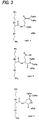
- compositions which comprise a compound of the present invention and a second lipid such as those described in WO 97/03939, and particularly preferred second lipids include Lipid A, Lipid B and Lipid C as depicted in Figure 3.
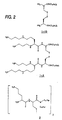
- Preferred lipids of the present invention include Lipids 1-3, 1-1D and 2 as depicted in Figure 2.
- the lipids may be present in a variety of ratios, preferably from about 1:20 to about 20:1.
- Preferably the lipids are present in a 1:1 weight:weight mixture.
- Particularly preferred is a mixture of 1-3 and Lipid A.
- the invention further provides methods for delivering a anionic macromolecule into a cell by contacting said cell with a composition of the present invention. Also provided are methods for interfering with the expression of a preselected in a cell by contacting said cell with a composition of the present invention wherein the anionic macromolecule is an Oligomer having a nucleoside base sequence which is substantially complimentary to an RNA or DNA sequence in the cell that encodes the preselected protein.
- amino acid refers to both natural and unnatural amino acids in either their L- or D- forms. Natural amino acids include alanine, arginine, asparagine, aspartic acid, cysteine, glutamine, glutamic acid, glycine, histidine, isoieucine, leucine, lysine, methionine, phenylalanine, proline, serine, threonine, tryptophan, tyrosine and valine.
- unnatural amino acids include, but are not limited to azetidinecarboxylic acid, 2-aminoadipic acid, 3-aminoadipic acid, ⁇ -alanine, aminopropionic acid, 2-aminobutyric acid, 4-aminobutyric acid 6-aminocaproic acid, 2-aminoheptanoic acid, 2-aminoisobutyric acid, 3-aminoisobutyric acid, 2-aminopimelic acid, 2,4 diaminoisobutyric acid, desmosine, 2,2'-diaminopimelic acid, 2,3-diaminopropionic acid, N-ethylglycine, N-ethylasparagine, hydroxylysine, allohydroxylysine, 3-hydroxyproline, 4-hydroxyproline, isodesmosine, alloisoleucine, N-methylglycine, N-methylisoleucine, N-methylvaline, norvaline, norleucine, ornithine and
- amino acid residue refers to -NH-CH(R)-CO-, wherein R is the side chain group distinguishing each amino acid.
- residue is wherein p is 1, 2 or 3 representing the azetidinecarboxylic acid, proline or pipecolic acid residues, respectively.
- alkyl refers to saturated aliphatic groups including straight-chain, branched-chain and cyclic groups.
- alkenyl refers to unsaturated hydrocarbyl group which contain at least one carbon-carbon double bond and includes straight-chain, branched-chain and cyclic groups.
- aryl refers to aromatic groups which have at least one ring having a conjugated pi electron system and includes carbocyclic aryl, heterocyclic aryl and biaryl groups, all of which may be optionally substituted.
- aralkyl refers to an alkyl group substituted with an aryl group. Suitable aralkyl groups include benzyl, picolyl, and the like, all of which may be optionally substituted.
- aralkenyl refers to an alkenyl group substituted with an aryl group. Suitable aralkenyl groups include styrenyl and the like, all of which may be optionally substituted.
- alkoxy refers to the group -OR wherein R is alkyl.
- alkenyloxy refers to the group -O-R wherein R is alkenyl.
- aryloxy refers to the group -O-R wherein R is aryl.
- aralkyloxy refers to the group -O-R wherein R is aralkyl.
- alkylene refers to a divalent straight chain or branched chain saturated aliphatic radical.
- alkylenecarboxy refers to the group -alk-COOH where alk is alkylene.
- carboxylate refers to the group -C(O)-NH 2 .
- alkylenecarboxamide refers to the group -alk-C(O)NH 2 where alk is alkylene.
- alkylenehydroxy refers to the group - alk-OH wherein alk is alkylene.
- methylene refers to -CH 2 -.
- perfluoroalkyl refers to an alkyl group wherein each hydrogen is replaced by a fluoro.
- Suitable perfluoroalkyl groups include perfluoromethyl (having the structure of CF 3 -) and perfluroethyl (having the structure of CF 3 -CF 2 -) and the like.
- lipophilic moiety refers to a moiety has one or more of the following characteristics: is water insoluble, is soluble in non-polar solvent, favors octanol in octanol/water partition measurements, or is compatible with lipid bilayers and may be bilayer forming.
- aralkylamine refers to an alkylamine substituted with an aryl group. Suitable aralkyl groups include benzyl and other alkyl substituted heterocycles and the like, all of which may be optionally substituted.
- aralkyl refers to an alkyl group substituted with an aryl group. Suitable aralkyl groups include benzyl and other alkyl substituted heterocycles and the like, all of which may be optionally substituted.
- heterocyclic refers to a group having from 1 to 4 heteroatoms as ring atoms in the aromatic ring and the remainder of the ring atoms are carbon atoms. Suitable heteroatoms include but are not limited to oxygen, nitrogen, sulfur, and selenium.
- heterocyclo refers to a reduced heterocyclic ring system comprised of carbon, nitrogen, oxygen and/or sulfur atoms, and includes those heterocyclic systems described in "Handbook of Chemistry and Physics," 49th edition, 1968, R.C. Weast, editor; The Chemical Rubber Co., Cleveland, OH. See particularly Section C, Rules for Naming Organic Compounds, B. Fundamental Heterocyclic Systems.
- steroidyl refers to a group of lipids that contain a hydrogenated cyclopentanoperhydrophenanthrenering system.
- a prefered steroidyl moiety is cholesteryl.
- glycol refers to a mono-,di-, or trivalent radical formed by removal of a hydrogen from one, two, or three of the hydroxyl groups of a glycerol molecule, which is a trihydric sugar alcohol of the formula CH 2 OHCHOHCH 2 OH.
- arylamine refers to aromatic groups that have at least one ring having a conjugated pi electron system and includes carbocyclic aryl, heterocyclic aryl, and biaryl groups, all of which are substituted with an amine.
- substantially complementary refers to the Watson-Crick base pairing of the nucleosides of the target oligonucleotide sequence with the nucleosides of the oligomer provided by this invention. It is preferable that the sequence of the oligomer have sufficient complimentarity to bind and interfere with gene expression of the target oligonucleotide. Preferably the oligomer is at least 50% complimentary to the target oligonucleotide, more preferably at least 70% and most preferably at least 80%.
- amino refers to the substituent of amidine which includes any compound having the monovalent group -C(NH)(NH 2 ).
- oligonucleoside or “Oligomer” refers to a chain of nucleosides that are linked by internucleoside linkages that is generally from about 4 to about 100 nucleosides in length, but which may be greater than about 100 nucleosides in length. They are usually synthesized from nucleoside monomers, but may also be obtained by enzymatic means.
- oligomer refers to a chain of oligonucleosides that have internucleosidyl linkages linking the nucleoside monomers and, thus, includes oligonucleotides, nonionic oligonucleoside alkyl- and aryl-phosphonate analogs, alkyl- and aryl-phosphonoihioates, phosphorothioate or phosphorodithioate analogs of oligonucleotides, phosphoramidate analogs of oligonucleotides, neutral phosphate ester oligonucleoside analogs, such as phosphotriesters and other oligonucieoside analogs and modified oligonucleosides, and also includes nucleoside/non-nucleoside polymers.
- nucieoside/non-nucleoside polymers wherein one or more of the phosphorus group linkages between monomeric units has been replaced by a non-phosphorous linkage such as a formacetal linkage, a thioformacetal linkage, a morpholino linkage, a sulfamate linkage, a silyl linkage, a carbamate linkage, an amide linkage, a guanidine linkage, a nitroxide linkage or a substituted hydrazine linkage.
- a non-phosphorous linkage such as a formacetal linkage, a thioformacetal linkage, a morpholino linkage, a sulfamate linkage, a silyl linkage, a carbamate linkage, an amide linkage, a guanidine linkage, a nitroxide linkage or a substituted hydrazine linkage.
- nucleoside/non-nucleoside polymers wherein both the sugar and the phosphorous moiety have been replaced or modified such as morpholino base analogs, or polyamide base analogs. It also includes nucleoside/non-nucleoside polymers wherein the base, the sugar, and the phosphate backbone of the non-nucleoside are either replaced by a non-nucleoside moiety or wherein a non-nucleoside moiety is inserted into the nucleoside/non-nucleoside polymer.
- said non-nucleoside moiety may serve to link other small molecules which may interact with target sequences or alter uptake into target cells.
- polyfunctional linkers refers to any polymer containing reactive atoms or reactive side chains that can be covalently linked to cationic lipid subunits as those described in the present invention, for example polyfunctional linkers may include but are not limited to polyethylenamine, polypropylenamine, polybutylenamine, polyethylene glycol, oxidized dextran, polyacrylamide, polylysine or a polypeptide derivative having reactive side chains.
- polypeptide derivative reactive side chains include for example the amino acid side chains of lysine, arginine, methionine, histidine, glutamine, asparagine, serine, threonine, glutamate and aspartate.
- lipid aggregate includes liposomes of all types both unilamellar and multilamellar as well as micelles and more amorphous aggregates of cationic lipid or lipid mixed with amphipathic lipids such as phospholipids.
- target cell refers to any cell to which a desired compound is delivered, using a lipid aggregate as carrier for the desired compound.
- transfection refers to the delivery of expressible nucleic acid to a target cell, such that the target cell is rendered capable of expressing said nucleic acid.
- nucleic acid includes both DNA and RNA without regard to molecular weight, and the term “expression” means any manifestation of the functional presence of the nucleic acid within the cell, including without limitation, both transient expression and stable expression.
- delivery refers to a process by which a desired compound is transferred to a target cell such that the desired compound is ultimately located inside the target cell or in, or on the target cell membrane.
- the desired compound is not readily taken up by the target cell and delivery via lipid aggregates is a means for getting the desired compound into the cell.
- delivery to a specific target cell type is preferable and can be facilitated by compounds of the invention.
- the generic structure of functionally active cationic lipids requires three contiguous moieties, e.g. cationic-head-group, linker, and lipid-tail group. While a wide range of structures can be envisioned for each of the three moieties, it has been demonstrated that there is no a priori means to predict which cationic lipid will successfully transfect anionic macromolecules into a particular cell line. The property of a cationic lipid to be formulated with an anionic macromolecule which will then successfully transfect a cell line is empirical. We demonstrate the abilities of novel cationic lipids which are chemically linked into multimeric constructions to enhance the uptake of macromolecules.
- novel dimeric cationic lipids of the present invention have the general structure: Z - S - S - Z [X]' m wherein Z is wherein R 1 , R 2 , R 3 and n are as defined hereinabove.
- R 1 represents the lipid-tail group of the dimeric cationic lipid and is a glyceryl moiety, or a lipophilic moiety.
- Lipophilic moieties include, a symmetrical branched alkyl or alkenyl of 10 to 50 carbon atoms, a unsymmetrical branched alkyl or alkenyl of 10 to 50 carbon atoms, a amine derivative, a steroidyl moiety, -OCH(R 6 R 7 ), wherein R 6 and R 7 are independently selection alkyl groups of about 10 to about 50 carbon atoms, -NH(R 8 ) or -N(R 8 R 9 ), wherein R 8 and R 9 are independently an alkyl or alkenyl moiety of 10 to 50 carbon atoms, or together form a cyclic amine moiety of 4 to 10 carbon atoms.
- Preferred R 8 and R 9 groups include -C 18 H 37 .
- R 1 is a steriadal moiaty
- suitable moieties include, for example, pregnenolone, progesterone, cortisol, corticosterone, aldosterone, androstenedione, testosterone, and cholesterol or analogs thereof.
- the counterion represented by X is an anion or a polyanion that binds to the positively charged groups present on the dimeric cationic lipid via charge-charge interactions.
- the anion or polyanion should be pharmecautically acceptable.
- m is an integer indicating the number of anions or polyanions associated with the cationic lipid. In particular this integer ranges in magnitude from 0 to a number equivalent to the positive charge(s) present on the lipid.
- n is an integer indicating the number of repeating units encklosed by the brackets, n is an integer from 0 to 2.
- the cationic lipids of the present invention include enantiomeric isomers resulting from any or all asymmetric atoms present in the lipid. Included in the scope of the invention are racamic mixtures, diastereomeric mixtures, optical isomars or synthetic optical isomers which are isolated or substantially free of their enantiomeric or diasteriomeric partners.
- the racemic mixtures may be separated into their individual, substantially optically pure isomers by techniques known in the art, such as, for example, the separation of diastereomeric salts formed with optically active acid or base adjuncts folowed by conversion back to the optically active substances.
- the desired optical isomer is synthesized by means of stereospecific reactions, beginning with the appropriate stereoisomer of the desired starting material.
- Methods and theories used to obtain enriched and resolved isomers have been described (Jacques et al ., “Enantiomers, Racemates and Resolutions.” Kreiger,. Malabar, FL, 1991).
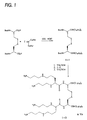
- Exemplary cationic lipids of the invention have the structures shown in the Summary of the Invention above.
- the cationic lipids form aggregates with anionic or polyanionic macromolecules such as oligonucleotides, oligomers, peptides, or polypeptides through attraction between the positively charged lipid and the negatively charged anionic macromolecule.
- the aggregates may comprise multilamellar or unilamellar liposomes or other particles. Hydrophobic interactions between the cationic lipids and the hydrophobic substituents in the anianic or polyanionic macromolecule such as aromatic and alkyl moieties may also facilitate aggregate formation.
- Cationic lipids have been shown to efficiently deliver nucleic acids and peptides into cells and thus are suitable for use in vivo or ex vivo .
- Cationic lipid-anionic macromolecule aggregates may be formed by a variety of methods known in the art. Representative methods are disclosed by Felgner et al., supra; Eppstein et al. supra; Behr et al. supra; Bangham, et al. M. Mol. Biol. 23:238, 1965; Olson, et al. Biochim. Biophys. Acta 557:9, 1979; Szoka, et al. Proc. Natl. Acad. Sci. 75: 4194, 1978; Mayhew, et al. Biochim. Biophys. Acta 775:169, 1984; Kim, et al. Biochim. Biophys.
- aggregates may be formed by preparing lipid particles consisting of either (1) a cationic lipid of the invention or (2) a cationic lipid mixed with a colipid, followed by adding a anionic macromolecule to the lipid particles at about room temperature (about 18 to 26°C). In general, conditions are chosen that are not conducive to deprotection of protected groups. The mixture is then allowed to form an aggregate over a period of about 10 minutes to about 20 hours, with about 15 to 60 minutes most conveniently used. The complexes may be formed over a longer period, but additional enhancement of transfection efficiency will not usually be gained by a longer period of complexing.
- Colipids may be natural or synthetic lipids having no net charge or a positive or negative charge.
- natural colipids that are suitable for preparing lipid aggregates with the cationic lipids of the present invention are dimyristolyphosphatidylethanolamine, dipalmitoyl-phosphatidylethanolamine, palmitoyloleolphosphatidyl-ethanolamine, cholesterol, distearoyalphosphatidyl-ethanolamine, phosphatidylethanolamine, phosphatidylethanolamine covalently linked to polyethylene glycol and mixtures of these colipids.
- the optimal cationic lipid:colipid ratios for a given cationic lipid is determined by mixing experiments to prepare lipid mixtures for aggregation with a anionic macromolecule using cationic lipid:colipid ratios between about 1:0.1 and 1:10. Methods to determine optimal cationic lipid:colipid ratios have been described ( see , Felgner, infra ). Each lipid mixture is optionally tested using more than one oligonucleotide-lipid mixture having different nucleic acid:lipid molar ratios to optimize the oligonucleotide:lipid ratio.
- Suitable molar ratios of cationic lipid:colipid are about 0.1:1 to 1:0.1, 0.2:1 to 1:0.2, 0.4:1 to 1:0.4, or 0.6:1 to 1:0.6.
- Lipid particle preparation containing increasing molar proportions of colipid have been found to enhance oligonucleotide transfection into cells with increasing colipid concentrations.
- the cationic lipids can be used together in admixture, or different concentrations of two or more cationic lipids in admixture, with or without colipid.
- Liposomes or aggregates may be convenuiently prepared by first drying the lipids in solvent (such as chloroform) under reduced pressure. The lipids may then be hydrated and converted to liposomes or aggregates by adding water or low ionic strength buffer (usually less than about 200 mM total ion concentration) followed by agitating (such as vortexing andlor sonication) andlor freezelthaw treatments.
- solvent such as chloroform
- the size of the aggregates or liposomes formed range from about 40 nm to 600 nm in diameter.
- the amount of an oligonucleotide delivered to a representative cell by at least some of the cationic lipids was found to be significantly greater than the amount delivered by commercially available transfection lipids.
- the amount of oligonucleotide delivered into cells was estimated to be about 2- to 100-fold greater for the cationic lipids of the invention based on the observed fluorescence intensity of transfected cells after transfection using a fluorescently labeled oligonucleotide.
- the cationic lipids described herein also transfect some cell types that are not detectably transfected by commercial lipids. Functionality of cationic lipid-DNA aggregates was demonstrated by assaying for the gene product of the exogenous DNA. Similarly, the functionality of cationic lipid-oligonucleotide aggregates were demonstrated by antisense inhibition of a gene product.
- the cationic lipids described herein also differed from commercially available lipids by efficiently delivering an oligonucleotide into cells in tissue culture over a range of cell confluency from about 50-100%. Most commercially available lipids require cells that are at a relatively narrow confluency range for optimal transfection efficiency. For example, LipofectinTM requires cells that are 70-80% confluent for transfecting the highest proportion of cells in a population. The cationic lipids described herein may be used to transfect cells that are about 10-50% confluent, however, it is preferable to transfect at a confluency of 60% to 100% for optimal efficiency. Confluency ranges of 60-95% or 60-90% are thus convenient for transfection protocols with most cell lines in tissue culture.
- the cationic lipid aggregates were used to transfect cells in tissue culture and the RNA and the DNA encoded gene products were expressed in the transfected cells.
- the cationic lipid aggregates may be formed with a variety of macromolecules such as oligonucleotides and oligomers. Oligonucleotides used in aggregate formation may be single stranded or double stranded DNA or RNA, oligonucleotide analogs, or plasmids.
- oligonucieotides such as plasmids or mRNAs will carry one or more genes that are to be expressed in a transfected cell
- comparatively small oligonucleotides will comprise (1) a base sequence that is complementary (via Watson Crick or Hoogsteen binding) to a DNA or RNA sequence present in the cell or (2) a base sequence that permits oligonucleotide binding to a molecule inside a cell such as a peptide, protein, or glycoprotein.
- Exemplary RNAs include ribozymes and antisense RNA sequences that are complementary to a target RNA sequence in a cell.
- An oligonucleotide may be a single stranded unmodified DNA or RNA comprising (a) the purine or pyrimidine bases guanine, adenine, cytosine, thymine and/or uracil: (b) ribose or deoxyribose; and (c) a phosphodiester group that linkage adjacent nucleoside moieties.
- Oligonucleotides typically comprise 2 to about 100 linked nucleosides. Typical oligonucleotides range in size from 2-10, 2-15, 2-20, 2-25, 2-30, 2-50, 8-20, 8-30 or 2-100 linked nucleotides.
- Oligonucleotides are usually linear with uniform polarity and, when regions of inverted polarity are present, such regions comprise no more than one polarity inversion per 10 nucleotides. One inversion per 20 nucleotides is typical. Oligonucleotides can also be circular, branched or double-stranded. Antisense oligonucleotides generally will comprise a sequence of about from 8-30 bases or about 8 ⁇ 50 bases that is substantially complementary to a DNA or RNA base sequence present in the cell.
- oligonucleotide that is delivered into a cell is limited only by the size of anionic macromolecues that can reasonably be prepared and thus DNA or RNA that is 0.1 to 1 Kilobase (Kb), 1 to 20 Kb, 20 Kb to 40 Kb or 40 Kb to 1,000 Kb in length may be delivered into cells.
- Kb Kilobase
- Oligonucleotides also include DNA or RNA comprising one or more covalent modifications.
- Covalent modifications include (a) substitution of an oxygen atom in the phosphodiester linkage of an polynucleotide with a sulfur atom, a methyl group or the like, (b) replacement of the phosphodiester group with a nonphosphorus moiety such as -O-CH 2 O-, -S-CH 2 O- or -O-CH 2 O-S, and (c) replacement of the phosphodiester group with a phosphate analog such as -O-P(S)(O)-O, -O-P(S)(S)-O-, -O-P(CH 3 )(O)-O or -O-P(NHR 10 )(O)-O- where R 10 is alkyl of 1 to about 6 carbon atoms, or an alkyl ether of 1 to aboot 6 carbon atoms.
- substitutions may constitute from about 10% to 100% or about 20% to about 80% of the phosphodiester groups in unmodified DNA or RNA.
- Other modifications include substitutions of or on sugar moiety such as morpholino, arabinose 2'-fluororibose, 2'-flurorarabinose, 2'-O-methylribose, or 2'-O-allytribose.
- the linkage between the nucleotides of the oligonucleotide may be a variety of moieties including both phosphorus-containing moieties and non phosphorus-containing moieties such as formacetal, thioformacetal, riboacetal and the like.
- a linkage usually comprises 2 or 3 atoms between the 5' position of a nucleotide and the 2' or 3' position of an adjacent nucleotide.
- other synthetic linkers may contain greater than 3 atoms.
- the bases contained in the oligonucleotide may be unmodified or modified or natural or unnatural purine or pyrimidine bases and may be in the ⁇ or ⁇ anomer form. Such bases may be selected to enhance the affinity of oligonucleotide binding to its complementary sequence relative to bases found in native DNA or RNA. However, it is preferable that modified bases are not incorporated into an oligonucleotide to an extent that it is unable to bind to complementary sequences to produce a detectably stable duplex or triplex.
- Exemplary bases include adenine, cytosine, guanine, hypoxanthina, inosine, thymine, uracil xanthine, 2-aminopurine, 2,6-diaminopurine, 5-(4-methylthiazol-2-yl) uracil 5-(5-methylthiazol-2-yl) uracil, 5-(4-methylthiazol-2-yl) cytosine, 5-(5-methylthiazol-2-yl) cytosine and the like.
- exemplary bases include alkylated or alkynylated bases having substitutions at, for example, the 5 position of pyrimidines that results in a pyrimidine base other than uracil, thymine or cytosine, (i.e ., 5-mathylcytosine, 5-(1-propynyl) cytosine, 5-(1-butynyl) cytosine, 5-(1-butynyl) uracil, 5-(1-propynyl) uracil and the like).
- modified bases or base analogs in oligonucleotides have been previously described ( see WO 93/10820; WO 92/09705; WO 92/09127, WO 92/09705; WO 92/02258; Nikiforov, et al ., Tet . Lett. 33 :2379, 1992; Clivio, et al ., Tet. Lett . 33 :65, 1992; Nikiforov, et al ., Tet . Lett. 32 :2505, 1991; Xu, et al ., Tet . Lett. 32 :2817, 1991; Clivio, et al ., Tet . Lett . 33 :69, 1992; and Connolly, et al., Nocl. Acids Res. 17: 4957, 1989).
- Aggregates may comprise oligonucleotides or oligomers encoding a therapeutic or diagnostic polypeptide.
- polypeptides include histocompatibility antigens, call adhesion molecules, cytokines, antibodies, antibody fragments, cell receptor subunits, cell receptors, intracellular enzymes and extracellular enzymes or a fragment of any of these.
- the oligonucleotides also may optionally comprise expression control sequences and generally will comprise a transcriptional unit comprising a transcriptional promoter, an enhancer, a transcriptional terminator, an operator or other expression control sequences.
- Oligonucleotides used to form aggregates for transfecting a cell may be present as more than one expression vector.
- 1, 2, 3, or more different expression vectors may be delivered into a cell as desired.
- Expression vectors will typically express 1, 2, or 3 genes when transfected into a cell, although many genes may be present such as when a herpes virus vector or a artificial yeast chromosome is delivered into a cell.
- Expression vectors may further encode selectable markers (e.g. neomycin phosphotransferase, thymidine kinase, xanthine-guanine phosphoribosyl-transferase, and the like) or biologically active proteins such as metabolic enzymes or functional proteins (e.g.
- immunoglobulin genes cell receptor genes, cytokines (e.g . IL-2, IL-4, GM-CSF, ⁇ -INF, and the like)), or genes that encode enzymes that mediate purine or pyrimidine metabolism and the like.
- cytokines e.g . IL-2, IL-4, GM-CSF, ⁇ -INF, and the like
- the nucleic acid sequence of the oligonulcleotide coding for specific genes of interest may be retrieved, without undue experimentation, from the GenBank of EMBL DNA libraries.
- Such sequences may include coding sequences, for example, the coding sequences for structural proteins, hormones, receptors and the like, and the DNA sequences for other DNAs of interest, for example, transcriptional and translational regulatory elements (promoters, enhancers, terminators, signal sequences and the like), vectors (integrating or autonomous), and the like.
- Non-limiting examples of DNA sequences which may be introduced into cells include those sequences coding for fibroblast growth factor ( see WO 87/01728); ciliary neurotrophic factor (Lin at al., Science, 246 :1023, 1989); human interferon- ⁇ receptor (Uze, et al., Cell, 60 :225, 1990); the interleukins and their receptors (reviewed in Mizal, FASEB J., 3 :2379, 1989); hybrid interferons ( see EP0 051, 873); the RNA genome of human rhinovirus (Callahan, Proc. Natl. Acad. Sci., 82 :732, 1985); antibodies including chimeric antibodies ( see U.S.
- Aggregates can be used in antisense inhibition of gene expression in a cell by delivering an antisense oligonucleotide into the cell (see Wagner, Science 260 :1510, 1993 and WO 93/10820).
- Such oligonucleotides will generally comprise a base sequence that is complementary to a target RNA sequence that is expressed by the cell.
- the oligonucleotide may regulate intracellular gene expression by binding to an intracellular nucleic acid binding protein (see Clusel, Nuc. Acids Res. 21 :3405, 1993) or by binding to an intracellular protein or organelle that is not known to bind to nucleic acids ( see WO 92/14843).
- a cell that is blocked for expression of a specific gene(s) is useful for manufacturing and therapeutic applications.
- Exemplary manufacturing uses include inhibiting protease synthesis in a cell to increase production of a protein for a therapeutic or diagnostic application (e . g ., reduce target protein degradation caused by the protease).
- Exemplary therapeutic applications include inhibiting synthesis of cell surface antigens to reduce rejection and/or to induce immunologic tolerance of the cell either after it is implanted into a subject or when the cell is transfected in vivo (e.g . histocompatibility antigens, such as MHC class II genes, and the like).
- Entry of liposomes or aggregates into cells may be by endocytosis or by fusion of the liposome or aggregate with the cell membrane.
- the liposomal membrane is integrated into the cell membrane and the aqueous contents of the liposome merge with the fluid in the cell.
- Endocytosis of liposomes occurs in a limited class of cells; those that are phagocytic, or able to ingest foreign particles.
- phagocytic cells take up liposomes or aggregates, the cells move the spheres into subcellular organelles known as lysosomes, where the liposomal membranes are thought to be degraded. From the lysosome, the liposomal lipid components probably migrate outward to become part of cell's membranes and other liposomal components that resist lysosomal degradation (such as modified oligonucleotides or oligomers) may enter the cytoplasm.
- Lipid fusion involves the transfer of individual lipid molecules from the liposome or aggregate into the plasma membrane (and vice versa); the aqueous contents of the liposome may then enter the celL
- the liposomal lipid must have a particular chemistry in relation to the target cell. Once a liposomal lipid joins the cell membrane it can either remain in the membrane for a period of time or be redistributed to a variety of intracellular membranes.
- the cationic lipids of the present invention can be used to deliver an expression vector into a cell for manufacturing or therapeutic use.
- the expression vectors can be used in gene therapy protocols to deliver a therapeutically useful protein to a cell or for delivering nucleic acids encoding molecules that encode therapeutically useful proteins or proteins that can generate an immune response in a host for vaccine or other immunomodulatory purposes according to known methods (see U.S. Patent Nos.: 5,399,346 and 5,336,615, WO 94/21807 and WO 94/12629).
- the vector-transformed call can be used to produce commercially useful cell lines, such as a cell line for producing therapeutic proteins or enzymes ( e . g . erythropoietin, and the like), growth factors ( e . g . human growth hormone, and the like) or other proteins.
- the aggregates may be utilized to develop cell fines for gene therapy applications in humans or other species including murine, feline, bovine, equine, ovine or non-human primate species.
- the aggregates may be used to deliver anionic macromolecules into cells in tissue culture medium in vitro or in an animal in vivo .
- the title compound was prepared using an identical procedure as described in Example 3 for the prepartion of 1-3, with the exception that di-Boc ornithine succinimidyl ester was used in place of reagent 1-2.
- CAT plasmid pG1035 (described below) was added to 36.0 mL of Opti-MEM® (Gibco/BRL, Gaithersburg, MD) to make a plasmid stock solution. 63 ⁇ g of each lipid mix (from a high concentration stock in 100% ethanol) was added to individual 1.5 mL aliquots Opti-MEM® and mixed thoroughly.
- the culture medium was aspirated from the wells and the cells were rinsed twice in 1 mL Opti-MEM® per well.
- the transfection experiments were performed in triplicate; thus, 1 mL of each transfection mix was then added to each of three wells.
- the cells were cultured in the transfection mix for 5 to 6 hours.
- the transfection mix was then removed and replaced with 1 mL of complete culture medium (DMEM or DMEM/F12 plus 10% fetal bovine serum and 1/100 dilution of penicillin/streptomycin stock, all from Gibco/BRL ⁇ (Gaithershurg, MD) and the cells were allowed to recover overnight before expression of the CAT gene was measured.
- Cell lysates were prepared by rinsing twice in PBS and then were treated with 0.5 mL of 1X Reporter Lysis Buffer (Promega, Madison, Wl). The lysed cells were pipetted into 1.5 mL tubes and frozen in CO 2 /EtOH once and thawed. The crude lysate was then clarified by microcentrifugation at 14,000 rpm for 10 minutes to pellet cell debris. The clear supernatant was recovered and assayed directly or stored at -20°C for assay later.
- 1X Reporter Lysis Buffer Promega, Madison, Wl
- the cell lysates were then assayed for CAT activity and the total protein concentration was determined as described below.
- the CAT activity was normalized to total protein and plotted as shown.
- This assay was performed generally as follows. First, the following reaction mixture was prepared for each sample:
- a CAT activity standard curve was prepared by serially diluting CAT stock (Promega, Madison, WI) 1:1000, 1:10,000 and 1:90,000 in 0.25 M Tris, pH 8/0.5% BSA. The original stock CAT was at 7000 Units/mL. CAT lysate was then added in a labeled tube with Tris/BSA buffer to a final volume of 50 mL.
- reaction mixture Approximately 74 mL of reaction mixture was then added to each sample tube, which was then typically incubated for approximately 1 hour in a 37°C oven. The reaction was terminated by adding 500 mL pristane: mixed cylenes (2:1) (Signma, St. Louis, MO) to each tube. The tubes were then vortexed for 2 minutes and spun for 5 minutes. Approximately 400 mL of the upper phase was transferred to a scintillation vial with 5 mL Scintiverse (Fisher, Pittsburgh, PA). The sample was then counted in a scintillation counter (Packard).
- the total protein content of the clarified cell lysates was determined by mixing 6 ⁇ L of each cell lysate to 300 mL of Coomassie protein assay reagent (Pierce, Rockford, MD) in the wells of an untreated microtiter assay plate. Concentration curve standards were prepared using 6 ⁇ L of 0, 75, 100, 200, 250, 400, 500, 1000, and 1500 mg/mL BSA stock solutions and 300 mL of the Coomassie reagent. The assay samples were allowed to sit for approximately 30 mintues before reading the optical absorbance at 570 nm in a microplate reader (Molecular Probes).
- Table 2 depicts demonstration of plasmid delivery and expression in COS-7, SNB-19, RD and C-8161 cells.
- Table 4 depicts demonstration of plasmid delivery in SBN-19 cells.
- oligonucleotides used for the determination of cationic lipid mediated oligonucleotide uptake in all cell lines tested were:
- oligomers 3498-PS and 3498 were prepared at 300 micromolar, while the oligomer 3793-2 stock was prepared 440 micromolar.
- novel lipids of the present invention used in these evaluations, as listsed in the data tables (Tables 1-4), were at 1 mg/mL in 100% ethanol.
- tissue culture cell stocks SNB-19 (human glioblastoma), C8161 (a human amelanotic metanoma), LOX-IMVI (a human amelanotic melanoma), RD (human rhabdomyosarcoma, ATCC # CCL-136) and COS-7 (African green monkey kidney cells, ATCC # CRL-1651) were maintained in standard cell culture media: DMEM:F12 (1:1) mix from Mediatech, Lot#150901126, 10% fetal bovine serum from Gemini Bioproducts, Lot#A1089K, 100 units/mL penicillin and 100 micrograms/mL streptomycin, from Mediatech, Lot #30001044 and 365 micrograms/mL L-glutamine. The cells were maintained under standard conditions (37°C, 5% CO 2 atmosphere) at all times prior to fixation and microscopic examintion.
- LOX cells were obtained from Southern Research Institute, Cell Biology and Immunology Group, 2000 Ninth Avenue South, Birmingham, AL 35205. SNB-19 cells were obtained from Richard Morrison, Ph.D., Associate Professor, University of Washington, School of Medicine, 1959 N.E. Pacific Street, Seattle, WA 98195. C8161 cells were obtained from William G. Cance, M.D., Professor, University of North Carolina, 3010 Old Clinic Building, CB 7210, Chapel Hill, NC 27599.
- the appropriate cells were plated into 16 well slides (Nunc #178599, glass microscope slide with 16 removable plastic wells attached to the slide surface with a silicone gasket) according to standard tissue culture methods. Each cell line was plated at a starting density (approximately 20,000 cells/well) that allowed them to be healthy and 60-80% confluent one to two days after plating. The cells to were allowed to adhereto the glass and recover from the plating procedure in normal growth medium for 24 to 48 hours before beginning the transfection procedure.
- Oligonucleotide transfection mixes were made up in Opti-MEM® without antiboiotics as follows: 500 ⁇ L aliquots of Opti-MEM® containing a 0.25 micromolar solution of either oligomer 3498-PS, 3498, or 3793-2 (2 micrograms of oligomer per sample) were pipetted into 1.5 mL Eppendorf tubes. Cationic lipid or lipid mixture was then added to the oligomer solution to give a final 9:1 or 6:1 ratio (18 or 12 ⁇ g of lipid total) of cationic lipid to oligomar by weight, as listed in Tables 1 and 3A-3C. The tubes were mixed by vortexing immediately after the addition of lipid.
- the cells Prior to beginning the transfection reactions the cells were rinsed in 200 ⁇ L Opti-MEM®; then, the cells were rinsed with Dulbecco's phosphate buffered saline (PBS) solution, and 200 ⁇ L of oligomer transfection mix was added directly to a well to begin each transfection reaction. Transfection reactions were allowed to contine for four to six hours.
- PBS Dulbecco's phosphate buffered saline
- the cells were then rinsed in PBS from Mediatech and fixed for ten minutes in 200 ⁇ L of 3.7% formaldehyde (Sigma, St. Louis, MO) to terminate the transfection reaction. Then the wells were rinsed again in PBS. The formaldehyde was quenched with 200 ⁇ L of 50 MM glycine (Sigma, St. Louis, MO) for ten minutes. Finally, the wells were then emptied by shaking out the glycine solution. At that time, the plastic chambers and silicone gasket were removed and the cells were covered with Fluoromount-G mounting medium (from Fisher, Pittsburgh, PA with photobleaching inhibitors) and a cover slip.
- Fluoromount-G mounting medium from Fisher, Pittsburgh, PA with photobleaching inhibitors
- Intracellular fluorescence was evaluated under 200X magnification with a Nikon Labophot-2 microscope with an episcopic-fluorescence attachment. Using this equipment we could distinguish extracellular from nuclear and endosomal fluorescence.
- the cells were scored for uptake of FITC labelled oligomer as follows: No nuclear fluorescence, 0; up to 20% fluorescent nuclei, 1; up to 40% fluorescent nuclei, 2; up to 60% fluorescent nuclei, 3; up to 80% fluorescent nuclei, 4; and up to 100% fluorescent nuclei, 5.
- Tables 1 The results of the transfections in COS-7, SNB-19 C-8161, LOX and RD cells are tabulated in Tables 1 and The results of the transfections in COS-7, SNB-19 C-8161, LOX and RD cells are tabulated in Tables 1 and 3A to 3C.
- Table 1 depicts demonstration of nuclear delivery of three different oligonucleotide constructs to COS-7, SNB-19, C-8161 and RD cells.
- Tables 3A to 3C depict demonstration of nuclear delivery of three different oligonucleotide constructs to COS-7 (Table 3A), SNB-19 (Table 3B and LOX (Table 3C) cells.
Landscapes
- Chemical & Material Sciences (AREA)
- Health & Medical Sciences (AREA)
- Organic Chemistry (AREA)
- Genetics & Genomics (AREA)
- Life Sciences & Earth Sciences (AREA)
- Engineering & Computer Science (AREA)
- Biotechnology (AREA)
- Molecular Biology (AREA)
- General Health & Medical Sciences (AREA)
- Medicinal Chemistry (AREA)
- Zoology (AREA)
- Biophysics (AREA)
- Biomedical Technology (AREA)
- Wood Science & Technology (AREA)
- Biochemistry (AREA)
- Bioinformatics & Cheminformatics (AREA)
- General Engineering & Computer Science (AREA)
- Epidemiology (AREA)
- Physics & Mathematics (AREA)
- Veterinary Medicine (AREA)
- Public Health (AREA)
- Plant Pathology (AREA)
- Animal Behavior & Ethology (AREA)
- Microbiology (AREA)
- Pharmacology & Pharmacy (AREA)
- Proteomics, Peptides & Aminoacids (AREA)
- Medicinal Preparation (AREA)
- Pharmaceuticals Containing Other Organic And Inorganic Compounds (AREA)
- Medicines That Contain Protein Lipid Enzymes And Other Medicines (AREA)
- Medicines Containing Antibodies Or Antigens For Use As Internal Diagnostic Agents (AREA)
Claims (41)
- Lipid der Formel Z-S-S-Z, worin Zist, worin
 und pharmazeutisch annehmbare Salze davon.a) n = 0, 1 oder 2 ist;b) R1 eine Glycerylgruppierung oder eine lipophile Gruppierung ist, die aus der aus folgenden bestehenden Gruppe ausgewählt ist: einem symmetrischen verzweigten Alkyl oder Alkenyl mit 10 bis 50 Kohlenstoffatomen, einem unsymmetrischen verzweigten Alkyl oder Alkenyl mit 10 bis 50 Kohlenstoffatomen, einer Steroidylgruppierung, -OCH(R6R7), worin R6 und R7 jeweils unabhängig voneinander aus Alkylgruppen mit 10 bis 50 Kohlenstoffatomen ausgewählt sind, -NH(R8) oder -N(R8R9), worin R8 und R9 jeweils unabhängig voneinander eine Alkyl- oder Alkenylgruppierung mit 10 bis 50 Kohlenstorfatomen sind oder gemeinsam eine Amingruppierung mit 4 bis 10 Kohlenstoffatomen bilden;c) R2i) -NH-[Alk1-NH]n1-, worin n1 eine ganze Zahl von 0 bis 2 ist und Alk1 eine Alkylengruppe mit 2 bis 6 Kohlenstoffatomen ist;ii) -[W1]n2-, worin n2 eine ganze Zahl von 0 bis 3 ist und die W1 jeweils unabhängig voneinander ausgewählte Aminosäurereste sind;iii) -N(R4)(Alk2-) ist, worin R4 Wasserstoff, Alkyl mit 1 bis 18 Kohlenstoffatomen, gegebenenfalls mono-, di- oder trisubstituiert mit Y1, Y2 und/oder Y3; Alkenyl mit 2 bis 12 Kohlenstoffatomen, Aryl mit 6 bis 14 Atomen und Aralkyl mit 7 bis 15 Kohlenstoffatomen ist und Alk2 eine unverzweigte oder verzweigte Alkylengruppe mit 1 bis 18 Kohlenstoffatomen ist, die gegebenenfalls mit Y1, Y2 und/oder Y3 mono-, di- oder trisubstituiert sind, worin Y1, Y2 und Y3 jeweils unabhängig voneinander aus der aus folgenden bestehenden Gruppe ausgewählt sind: Arylamin mit 5 bis 10 Kohlenstoffatomen, Aralkylamin mit 5 bis 10 Kohlenstoffatomen, heterozyklischem Amin, Fluor, einer Guanidiniumgruppierung, einer Amidiniumgruppierung, -NH2, -NHR10, -NR10R11 und -N(R10R11R12), worin R10, R11 und R12 jeweils unabhängig voneinander aus Alkyl mit 1 bis 12 Kohlenstoffatomen, Alkyl mit 1 bis 12 Kohlenstoffen, das mit 1 bis 25 Fluoratomen substituiert ist, sowie Alkenyl mit 2 bis 12 Kohlenstoffatomen ausgewählt sind;d) R3i) -NH-[Alk3]n3-H,
worin n3 eine ganze Zahl von 0 bis 4 ist und Alk3 eine Alkylengruppe mit 2 bis 6 Kohlenstoffatomen ist;ii) -[W2]n4H,
worin n4 eine ganze Zahl von 0 bis 3 ist und die W2 jeweils unabhängig voneinander ausgewählte Aminosäurereste sind;iii) eine negativ geladene Gruppe, die aus der aus -Alk4C(O)O-: -Alk4-S(O2)O-; -Alk4P(O)(O-)O- und -Alk4OP(O)(O-)(O-) bestehenden Gruppe ausgewählt ist, worin Alk4 eine Alkylengruppe mit 1 bis 6 Kohlenstoffatomen ist;iv) ein Heterozyklus mit 4 bis 10 Ringatomen, wobei die Ringatome aus Kohlenstoff- und Heteroatomen ausgewählt sind, worin die Heteroatome aus der aus Sauerstoff, Stickstoff und S(O)i bestehenden Gruppe ausgewählt sind, worin i = 0, 1 oder 2 ist;v) Alkyl mit 1 bis 12 Kohlenstoffatomen, die gegebenenfalls mit einem Substituenten substituiert sind, der aus Fluor, einer Guanidiniumgruppierung, einer Amidiniumgruppierung, -NH2, -NHR10, -NR10R11 oder NR10R11R12, worin R10, R11 und R12 wie oben definiert sind; odervi) W-(CH2)t-NH-(CH2)q- ist, worin t und q jeweils unabhängig voneinander ausgewählte ganze Zahlen von 2 bis 6 sind und W eine Guanidiniumgruppierung, eine Amidiniumgruppierung, -NH2, -NHR10, -NR10R11 oder -NR10R11R12 ist, worin R10, R11 und R12 wie oben definiert sind, - Lipid nach Anspruch 1, worin R1 eine Alkyl- oder Alkenylgruppierung mit 10 bis 40 Kohlenstoffatomen ist.
- Lipid nach Anspruch 1, worin R1 eine Steroidylgruppierung ist.
- Lipid nach Anspruch 3, worin die Steroidylgruppierung Cholesteryl ist.
- Lipid nach Anspruch 1, worin R1 -OCH(R6R7) ist, worin R6 und R7 Alkylgruppierungen mit 10 bis 50 Kohlenstoffatomen sind.
- Lipid nach Anspruch 1, worin R1 -NH(R8) oder -N(R8R9) ist, worin R8 und R9 jeweils unabhängig voneinander eine Alkyl- oder Alkenylgruppierung mit 10 bis 50 Kohlenstoffatomen ist.
- Lipid nach Anspruch 6, worin R1 -N(R8R9) ist, worin R8 und R9 jeweils -C18H37 sind.
- Lipid nach Anspruch 1, worin R1 eine zyklische Amingruppierung mit etwa 4 bis etwa 10 Kohlenstoffatomen ist.
- Lipid nach Anspruch 2, worin R1 -C18H37 ist.
- Lipid nach Anspruch 1, worin R2 -N(R4)(Alk2)- ist.
- Lipid nach Anspruch 1, worin R2 -[W1]n2 ist.
- Lipid nach Anspruch 11, worin W1 ein Aminosäurerest ist, der gegebenenfalls mit einem Alkyl mit 1 bis 12 Kohlenstoffatomen substituiert ist, oder worin die Aminogruppe(n) substituiert ist bzw. sind, um ein sekundäres, tertiäres oder quaternäres Amin mit einer Alkylgruppierung mit 1 bis 12 Kohlenstoffatomen zu bilden.
- Lipid nach Anspruch 11, worin W1 ein Aminosäurerest ist, der aus der aus Lysin, Arginin, Histidin, Ornithin, Tryptophan, Phenylalanin und Tyrosin bestehenden Gruppe ausgewählt ist.
- Lipid nach Anspruch 11, worin W1 ein Aminosäureanalog ist, das aus der aus 3-Carboxyspermidin, 5-Carboxyspermidin, 6-Carboxyspermin oder Monoalkyl-, Dialkyloder Peralkyl-substituierten Derivaten davon bestehenden Gruppe ausgewählt ist, die an einem oder mehreren Aminostickstoffen mit einer Alkylgruppe mit 1 bis 12 Kohlenstoffatomen substituiert sind.
- Lipid nach Anspruch 1, worin R1 -NH-[Alk1-NH]n1 ist.
- Lipid nach Anspruch 15, worin Alk1 -(CH2)3 ist.
- Lipid nach Anspruch 16, worin n1 = 2 ist.
- Lipid nach Anspruch 16, worin n1 = 1 ist.
- Lipid nach Anspruch 15, worin R2 W-(CH2)t-NH-(CH2)q- ist.
- Lipid nach Anspruch 19, worin W -NH2 ist.
- Lipid nach Anspruch 20, worin t und q jeweils 3 sind.
- Lipid nach Anspruch 1, worin R2 -NH-[Alk3]n3-H, -[W2]n4H oder W-(CH2)t-NH-(CH2)q- ist.
- Lipid nach Anspruch 1, worin R3 eine negativ geladene Gruppe ist.
- Lipid nach Anspruch 1,worin R3 Alkyl mit 1 bis 12 Kohlenstoffatomen ist, das gegebenenfalls mit einem Substituenten substituiert ist, der aus -F, einer Guanidiniumgruppierung, einer Amidiniumgruppierung, -NH2-, -NHR10, -N(R10R11) und -N(R10R11R12) ausgewählt ist.
- Lipid nach Anspruch 1, worin R3 W-(CH2)t-NH-(CH2)q- ist, worin W -NH2 ist.
- Lipid nach Anspruch 25,worin t und q = 3 sind.
- Lipid nach Anspruch 1, das weiters [X] umfasst, worin X- ein pharmazeutisch annehmbares Anion oder Polyanion ist und m eine ganze Zahl ist, die so gewählt ist, dass [X]m gleich einer positiven Ladung des Lipids ist.
- Lipid nach Anspruch 1 mit der Struktur:
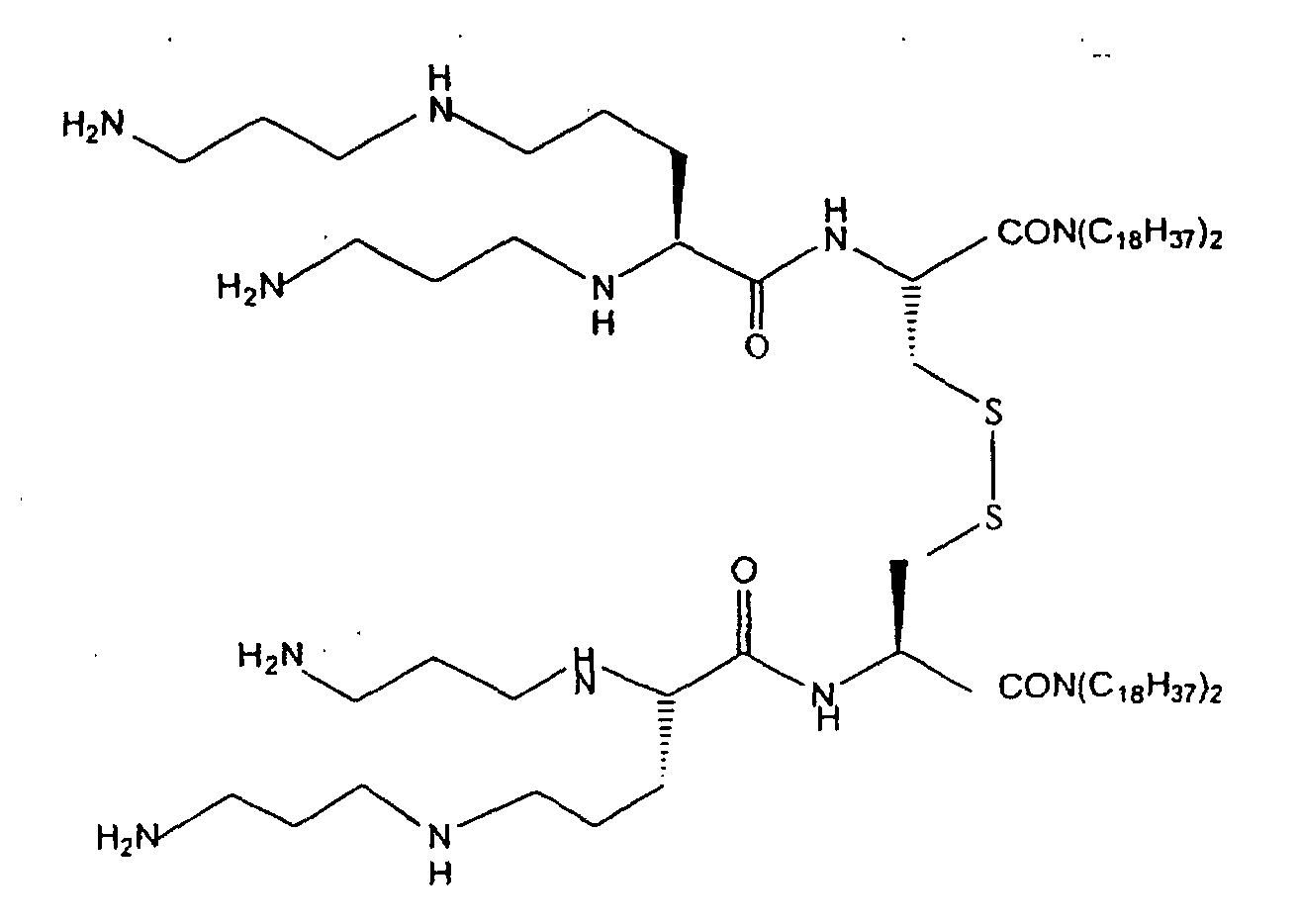
- Lipid nach Anspruch 1 mit der Struktur:
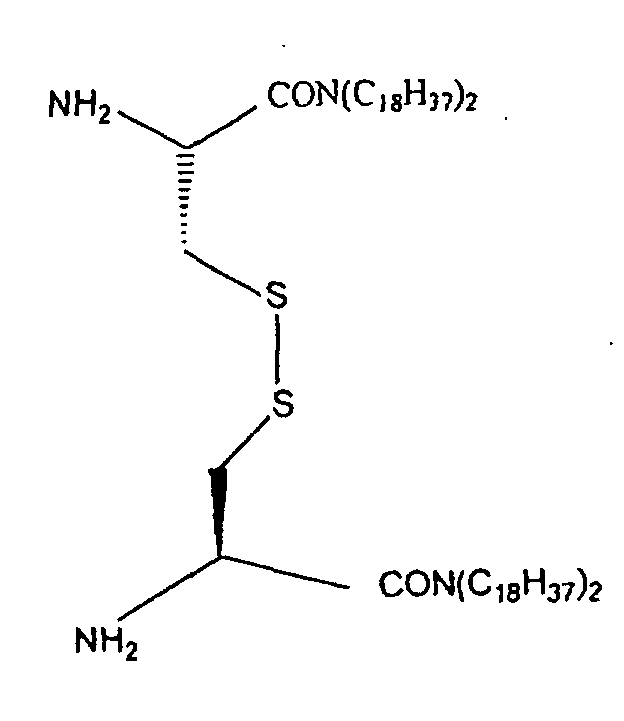
- Lipid nach Anspruch 1 mit der Struktur:
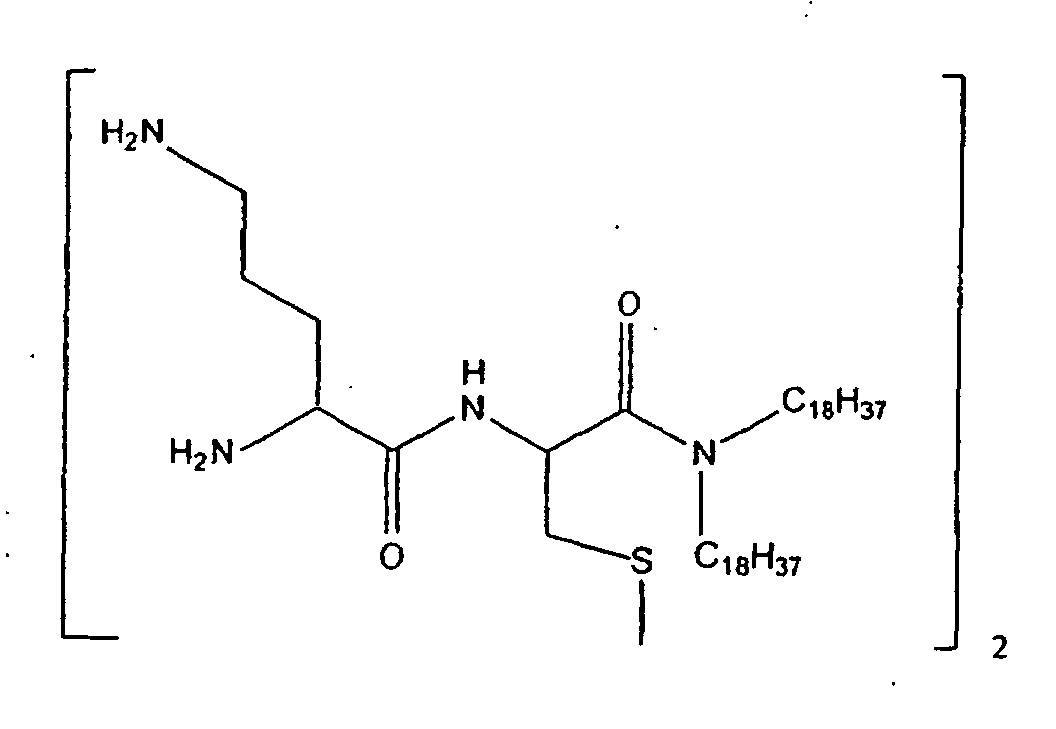
- Zusammensetzung, die ein anionisches Makromolekül und ein Lipid nach Anspruch 1 umfasst.
- Zusammensetzung nach Anspruch 31, worin das anionische Makromolekül einen Expressionsvektor umfasst, der zur Expression eines Polypeptids in einer Zelle fähig ist.
- Zusammensetzung nach Anspruch 31, worin das anionische Makromolekül ein Oligonucleotid oder ein Oligomer ist.
- Zusammensetzung nach Anspruch nach Anspruch 31, worin das anionische Makromolekül DNA oder RNA ist.
- Verfahren zum Abgeben eines anionischen Makromoleküls in eine Zelle in vitro, umfassend das Kontaktieren einer Zusammensetzung nach Anspruch 31 mit der Zelle.
- Verfahren zur Störung der Expression eines Proteins in einer Zelle in vitro, umfassend das Kontaktieren einer Zusammensetzung nach Anspruch 33 mit der Zelle, worin das Oligomer eine Basensequenz aufweist, die im Wesentlichen komplementär zu einer RNA-Sequenz in der Zelle ist, die für das Protein kodiert.
- Set zum Abgeben eines anionischen Makromoleküls in eine Zelle, umfassend eine Zusammensetzung nach Anspruch 31.
- Zusammensetzung, die ein Lipid nach Anspruch 1 und ein zweites Lipid umfasst, das aus Lipid A, Lipid B und Lipid C aus Fig. 3 ausgewählt ist.
- Zusammensetzung, die ein Lipid nach Anspruch 19 und ein zweites Lipid umfasst, das aus Lipid A, Lipid B und Lipid C aus Fig. 3 ausgewählt ist.
- Zusammensetzung, die ein Lipid nach Anspruch 27 und ein zweites Lipid umfasst, das aus Lipid A, Lipid B und Lipid C aus Fig. 3 ausgewählt ist.
- Zusammensetzung, die ein Lipid nach Anspruch 27 und Lipid A aus Fig. 3 umfasst.
Applications Claiming Priority (3)
| Application Number | Priority Date | Filing Date | Title |
|---|---|---|---|
| US08/812,771 US6034135A (en) | 1997-03-06 | 1997-03-06 | Dimeric cationic lipids |
| US812771 | 1997-03-06 | ||
| PCT/US1998/004349 WO1998039359A1 (en) | 1997-03-06 | 1998-03-05 | Dimeric cationic lipids on dicystine basis |
Publications (2)
| Publication Number | Publication Date |
|---|---|
| EP0968227A1 EP0968227A1 (de) | 2000-01-05 |
| EP0968227B1 true EP0968227B1 (de) | 2003-05-28 |
Family
ID=25210580
Family Applications (1)
| Application Number | Title | Priority Date | Filing Date |
|---|---|---|---|
| EP98910189A Expired - Lifetime EP0968227B1 (de) | 1997-03-06 | 1998-03-05 | Dimere kationische lipide auf dicystinbasis |
Country Status (6)
| Country | Link |
|---|---|
| US (1) | US6034135A (de) |
| EP (1) | EP0968227B1 (de) |
| AU (1) | AU732333B2 (de) |
| CA (1) | CA2281915A1 (de) |
| DE (1) | DE69815075T2 (de) |
| WO (1) | WO1998039359A1 (de) |
Families Citing this family (147)
| Publication number | Priority date | Publication date | Assignee | Title |
|---|---|---|---|---|
| WO2000053722A2 (en) * | 1999-03-10 | 2000-09-14 | Phogen Limited | Delivery of nucleic acids and proteins to cells |
| IL144828A0 (en) * | 1999-03-11 | 2002-06-30 | Fujisawa Pharmaceutical Co | A pipecolic acid derivative containing liposome composition |
| AU6912500A (en) * | 1999-08-25 | 2001-03-19 | Gmp Companies, Inc. | Enhanced oxygen delivery in mammals, methods and reagents related thereto |
| US7102024B1 (en) | 2000-08-01 | 2006-09-05 | Schwartz David A | Functional biopolymer modification reagents and uses thereof |
| AU2001247697B2 (en) * | 2000-03-22 | 2006-06-22 | Solulink, Incorporated | Hydrazine-based and carbonyl-based bifunctional crosslinking reagents |
| US6686461B1 (en) * | 2000-03-22 | 2004-02-03 | Solulink Bioscience, Inc. | Triphosphate oligonucleotide modification reagents and uses thereof |
| EP1519714B1 (de) | 2002-06-28 | 2010-10-20 | Protiva Biotherapeutics Inc. | Verfahren und vorrichtung zur herstellung von liposomen |
| CA2518475C (en) | 2003-03-07 | 2014-12-23 | Alnylam Pharmaceuticals, Inc. | Irna agents comprising asymmetrical modifications |
| EP2669377A3 (de) | 2003-04-17 | 2015-10-14 | Alnylam Pharmaceuticals Inc. | Modifizierte iRNA-Wirkstoffe |
| CN1882693B (zh) * | 2003-09-15 | 2012-08-15 | 普洛体维生物治疗公司 | 聚乙二醇修饰的脂质化合物及其应用 |
| US7158353B2 (en) * | 2003-11-06 | 2007-01-02 | Seagate Technology Llc | Magnetoresistive sensor having specular sidewall layers |
| CA2569664C (en) * | 2004-06-07 | 2013-07-16 | Protiva Biotherapeutics, Inc. | Lipid encapsulated interfering rna |
| US20060134189A1 (en) * | 2004-11-17 | 2006-06-22 | Protiva Biotherapeutics, Inc | siRNA silencing of apolipoprotein B |
| EP1948674A4 (de) | 2005-11-02 | 2009-02-04 | Protiva Biotherapeutics Inc | Modifizierte sirna-moleküle und anwendungen davon |
| EP2229186A2 (de) | 2007-12-04 | 2010-09-22 | Alnylam Pharmaceuticals Inc. | Kohlenhydrat-konjugate als mittel zur abgabe von oligonukleotiden |
| US9006191B2 (en) * | 2007-12-27 | 2015-04-14 | Protiva Biotherapeutics, Inc. | Silencing of polo-like kinase expression using interfering RNA |
| EP3100718B1 (de) * | 2008-01-02 | 2019-11-27 | Arbutus Biopharma Corporation | Verbesserte zusammensetzungen und verfahren zur freisetzung von nukleinsäuren |
| US8575123B2 (en) | 2008-04-11 | 2013-11-05 | Tekmira Pharmaceuticals Corporation | Site-specific delivery of nucleic acids by combining targeting ligands with endosomolytic components |
| EP2279254B1 (de) | 2008-04-15 | 2017-07-05 | Protiva Biotherapeutics Inc. | Neue lipidformulierungen zur nukleinsäurezuführung |
| AU2009303345B2 (en) | 2008-10-09 | 2015-08-20 | Arbutus Biopharma Corporation | Improved amino lipids and methods for the delivery of nucleic acids |
| EP2405921A4 (de) | 2009-01-26 | 2013-05-22 | Protiva Biotherapeutics Inc | Zusammensetzungen und verfahren zur dämpfung der apolipoprotien-c-iii-expression |
| US8975389B2 (en) | 2009-03-02 | 2015-03-10 | Alnylam Pharmaceuticals, Inc. | Nucleic acid chemical modifications |
| US8569256B2 (en) | 2009-07-01 | 2013-10-29 | Protiva Biotherapeutics, Inc. | Cationic lipids and methods for the delivery of therapeutic agents |
| US9018187B2 (en) | 2009-07-01 | 2015-04-28 | Protiva Biotherapeutics, Inc. | Cationic lipids and methods for the delivery of therapeutic agents |
| ES2613498T3 (es) | 2009-07-01 | 2017-05-24 | Protiva Biotherapeutics Inc. | Nuevas formulaciones de lípidos para el suministro de agentes terapéuticos a tumores sólidos |
| WO2011011447A1 (en) | 2009-07-20 | 2011-01-27 | Protiva Biotherapeutics, Inc. | Compositions and methods for silencing ebola virus gene expression |
| WO2011109427A2 (en) | 2010-03-01 | 2011-09-09 | Alnylam Pharmaceuticals, Inc. | Improving the biological activity of sirna through modulation of its thermodynamic profile |
| US8455455B1 (en) | 2010-03-31 | 2013-06-04 | Protiva Biotherapeutics, Inc. | Compositions and methods for silencing genes involved in hemorrhagic fever |
| WO2011123621A2 (en) | 2010-04-01 | 2011-10-06 | Alnylam Pharmaceuticals Inc. | 2' and 5' modified monomers and oligonucleotides |
| WO2011133868A2 (en) | 2010-04-22 | 2011-10-27 | Alnylam Pharmaceuticals, Inc. | Conformationally restricted dinucleotide monomers and oligonucleotides |
| US9725479B2 (en) | 2010-04-22 | 2017-08-08 | Ionis Pharmaceuticals, Inc. | 5′-end derivatives |
| WO2011133876A2 (en) | 2010-04-22 | 2011-10-27 | Alnylam Pharmaceuticals, Inc. | Oligonucleotides comprising acyclic and abasic nucleosides and analogs |
| US9006417B2 (en) | 2010-06-30 | 2015-04-14 | Protiva Biotherapeutics, Inc. | Non-liposomal systems for nucleic acid delivery |
| US8466122B2 (en) | 2010-09-17 | 2013-06-18 | Protiva Biotherapeutics, Inc. | Trialkyl cationic lipids and methods of use thereof |
| CA2839573A1 (en) | 2011-06-21 | 2012-12-27 | Alnylam Pharmaceuticals, Inc. | Angiopoietin-like 3 (angptl3) irna compositions and methods of use thereof |
| US9796974B2 (en) | 2011-11-18 | 2017-10-24 | Alnylam Pharmaceuticals, Inc. | Modified RNAi agents |
| UA118649C2 (uk) | 2011-11-18 | 2019-02-25 | Елнілем Фармасьютікалз, Інк. | ДВОЛАНЦЮГОВИЙ ЗАСІБ ДЛЯ PHKі ТА ФАРМАЦЕВТИЧНА КОМПОЗИЦІЯ ДЛЯ ІНГІБУВАННЯ ЕКСПРЕСІЇ ТРАНСТИРЕТИНУ (TTR) |
| US9035039B2 (en) | 2011-12-22 | 2015-05-19 | Protiva Biotherapeutics, Inc. | Compositions and methods for silencing SMAD4 |
| US9127274B2 (en) | 2012-04-26 | 2015-09-08 | Alnylam Pharmaceuticals, Inc. | Serpinc1 iRNA compositions and methods of use thereof |
| JP6427097B2 (ja) | 2012-06-15 | 2018-11-21 | ザ ブリガム アンド ウィメンズ ホスピタル インコーポレイテッドThe Brigham and Women’s Hospital, Inc. | 癌を処置するための組成物および該組成物を製造するための方法 |
| AU2013296321B2 (en) | 2012-08-03 | 2019-05-16 | Alnylam Pharmaceuticals, Inc. | Modified RNAi agents |
| BR112015013105B1 (pt) | 2012-12-05 | 2022-02-08 | Alnylam Pharmaceuticals, Inc | Agente de rnai de fita dupla capaz de inibir a expressão de pcsk9, seus usos, composição farmacêutica e método de inibição da expressão de pcsk9 em uma célula in vitro |
| US9428453B2 (en) * | 2013-01-02 | 2016-08-30 | Rutgers, The State University Of New Jersey | Cystine diamide analogs for the prevention of cystine stone formation in cystinuria |
| PT2970974T (pt) | 2013-03-14 | 2017-11-29 | Alnylam Pharmaceuticals Inc | Composições de irna de componente do complemento c5 e métodos para a sua utilização |
| AU2014268529C1 (en) | 2013-05-22 | 2020-10-01 | Alnylam Pharmaceuticals, Inc. | TMPRSS6 iRNA compositions and methods of use thereof |
| TWI664187B (zh) | 2013-05-22 | 2019-07-01 | 阿尼拉製藥公司 | 絲胺酸蛋白酶抑制因子A1 iRNA組成物及其使用方法 |
| WO2015042564A1 (en) | 2013-09-23 | 2015-03-26 | Alnylam Pharmaceuticals, Inc. | Methods for treating or preventing transthyretin (ttr) associated diseases |
| WO2015089368A2 (en) | 2013-12-12 | 2015-06-18 | Alnylam Pharmaceuticals, Inc. | Complement component irna compositions and methods of use thereof |
| WO2015106128A2 (en) | 2014-01-09 | 2015-07-16 | Alnylam Pharmaceuticals, Inc. | MODIFIED RNAi AGENTS |
| EP3105331B1 (de) | 2014-02-11 | 2021-06-23 | Alnylam Pharmaceuticals, Inc. | Ketohexokinase (khk)-irna-zusammensetzungen und verfahren zur verwendung davon |
| WO2015153345A1 (en) | 2014-04-03 | 2015-10-08 | Invictus Oncology Pvt. Ltd. | Supramolecular combinatorial therapeutics |
| SG11201609376SA (en) | 2014-05-22 | 2016-12-29 | Alnylam Pharmaceuticals Inc | Angiotensinogen (agt) irna compositions and methods of use thereof |
| IL316808A (en) | 2014-08-20 | 2025-01-01 | Alnylam Pharmaceuticals Inc | Modified double-stranded RNA materials and their uses |
| WO2016040589A1 (en) | 2014-09-12 | 2016-03-17 | Alnylam Pharmaceuticals, Inc. | Polynucleotide agents targeting complement component c5 and methods of use thereof |
| TWI864340B (zh) | 2014-10-10 | 2024-12-01 | 美商艾爾妮蘭製藥公司 | 用於抑制hao1(羥酸氧化酶1(乙醇酸鹽氧化酶))基因表現的組合物及方法 |
| US20170304459A1 (en) | 2014-10-10 | 2017-10-26 | Alnylam Pharmaceuticals, Inc. | Methods and compositions for inhalation delivery of conjugated oligonucleotide |
| WO2016061487A1 (en) | 2014-10-17 | 2016-04-21 | Alnylam Pharmaceuticals, Inc. | Polynucleotide agents targeting aminolevulinic acid synthase-1 (alas1) and uses thereof |
| EP3904519A1 (de) | 2014-10-30 | 2021-11-03 | Genzyme Corporation | Polynukleotidwirkstoffe mit abzielung auf serpinc1 (at3) und verfahren zur verwendung davon |
| TWI769565B (zh) | 2014-11-10 | 2022-07-01 | 美商阿尼拉製藥公司 | B型肝炎病毒(HBV)iRNA組成物及其用途方法 |
| WO2016081444A1 (en) | 2014-11-17 | 2016-05-26 | Alnylam Pharmaceuticals, Inc. | Apolipoprotein c3 (apoc3) irna compositions and methods of use thereof |
| JP2018510621A (ja) | 2015-02-13 | 2018-04-19 | アルナイラム ファーマシューティカルズ, インコーポレイテッドAlnylam Pharmaceuticals, Inc. | パタチン様ホスホリパーゼドメイン含有3(PNPLA3)iRNA組成物およびその使用方法 |
| WO2016164746A1 (en) | 2015-04-08 | 2016-10-13 | Alnylam Pharmaceuticals, Inc. | Compositions and methods for inhibiting expression of the lect2 gene |
| CA2984636A1 (en) | 2015-05-06 | 2016-11-10 | Alnylam Pharmaceuticals, Inc. | Factor xii (hageman factor) (f12), kallikrein b, plasma (fletcher factor) 1 (klkb1), and kininogen 1 (kng1) irna compositions and methods of use thereof |
| EP3307316A1 (de) | 2015-06-12 | 2018-04-18 | Alnylam Pharmaceuticals, Inc. | Gegen komplementkomponente c5 gerichtete irna-zusammensetzungen und verfahren zur verwendung davon |
| WO2016205323A1 (en) | 2015-06-18 | 2016-12-22 | Alnylam Pharmaceuticals, Inc. | Polynucleotde agents targeting hydroxyacid oxidase (glycolate oxidase, hao1) and methods of use thereof |
| WO2016209862A1 (en) | 2015-06-23 | 2016-12-29 | Alnylam Pharmaceuticals, Inc. | Glucokinase (gck) irna compositions and methods of use thereof |
| US10494632B2 (en) | 2015-07-10 | 2019-12-03 | Alnylam Pharmaceuticals, Inc. | Insulin-like growth factor binding protein, acid labile subunit (IGFALS) compositions and methods of use thereof |
| US10889813B2 (en) | 2015-09-02 | 2021-01-12 | Alnylam Pharmaceuticals, Inc. | Programmed cell death 1 ligand 1 (PD-L1) iRNA compositions and methods of use thereof |
| WO2017048620A1 (en) | 2015-09-14 | 2017-03-23 | Alnylam Pharmaceuticals, Inc. | Polynucleotide agents targeting patatin-like phospholipase domain containing 3 (pnpla3) and methods of use thereof |
| EP3387129A1 (de) | 2015-12-10 | 2018-10-17 | Alnylam Pharmaceuticals, Inc. | Zusammensetzungen aus sterolregulatorischem element-bindendem protein (srep) chaperone (scap) irna und verfahren zur verwendung davon |
| EP3469083A1 (de) | 2016-06-10 | 2019-04-17 | Alnylam Pharmaceuticals, Inc. | Gegen komplementkomponente c5 gerichtete irna-zusammensetzungen und verfahren zur verwendung davon zur behandlung von paroxysmaler nächtlicher hämoglobinurie (pnh) |
| TW202313978A (zh) | 2016-11-23 | 2023-04-01 | 美商阿尼拉製藥公司 | 絲胺酸蛋白酶抑制因子A1 iRNA組成物及其使用方法 |
| TWI865997B (zh) | 2016-12-16 | 2024-12-11 | 美商阿尼拉製藥公司 | 使用甲狀腺素運載蛋白(TTR)iRNA組成物於治療或預防TTR相關疾病之方法 |
| WO2018195165A1 (en) | 2017-04-18 | 2018-10-25 | Alnylam Pharmaceuticals, Inc. | Methods for the treatment of subjects having a hepatitis b virus (hbv) infection |
| WO2018209130A1 (en) | 2017-05-11 | 2018-11-15 | Tc1 Llc | Thermal interconnect for implantable blood pump |
| AU2018301829B2 (en) | 2017-07-13 | 2024-08-01 | Alnylam Pharmaceuticals, Inc. | Methods for inhibition of HAO1 (hydroxyacid oxidase 1 (glycolate oxidase) gene expression |
| CA3078971A1 (en) | 2017-11-01 | 2019-05-09 | Alnylam Pharmaceuticals, Inc. | Complement component c3 irna compositions and methods of use thereof |
| WO2019100039A1 (en) | 2017-11-20 | 2019-05-23 | Alnylam Pharmaceuticals, Inc. | Serum amyloid p component (apcs) irna compositions and methods of use thereof |
| JP7348185B2 (ja) | 2017-12-21 | 2023-09-20 | アルニラム ファーマスーティカルズ インコーポレイテッド | キラル富化二本鎖rna剤 |
| JP2022500003A (ja) | 2018-09-18 | 2022-01-04 | アルナイラム ファーマシューティカルズ, インコーポレイテッドAlnylam Pharmaceuticals, Inc. | ケトヘキソキナーゼ(KHK)iRNA組成物およびその使用方法 |
| US10913951B2 (en) | 2018-10-31 | 2021-02-09 | University of Pittsburgh—of the Commonwealth System of Higher Education | Silencing of HNF4A-P2 isoforms with siRNA to improve hepatocyte function in liver failure |
| EP3894559A4 (de) | 2018-12-03 | 2023-04-05 | Triplet Therapeutics, Inc. | Verfahren zur behandlung von störungen der trinukleotid-repeat-expansion im zusammenhang mit mlh3-aktivität |
| US20220056444A1 (en) | 2018-12-05 | 2022-02-24 | Empirico Inc. | Process to inhibit or eliminate eosinophilic diseases of the airway and related conditions |
| JP2022515744A (ja) | 2018-12-20 | 2022-02-22 | プラクシス プレシジョン メディシンズ, インコーポレイテッド | Kcnt1関連障害の治療のための組成物及び方法 |
| EP3911632A1 (de) | 2019-01-15 | 2021-11-24 | Empirico Inc. | Prodrugs von alox-15-inhibitoren und verfahren zur verwendung davon |
| WO2020236600A1 (en) | 2019-05-17 | 2020-11-26 | Alnylam Pharmaceuticals, Inc. | Oral delivery of oligonucleotides |
| WO2021030522A1 (en) | 2019-08-13 | 2021-02-18 | Alnylam Pharmaceuticals, Inc. | SMALL RIBOSOMAL PROTEIN SUBUNIT 25 (RPS25) iRNA AGENT COMPOSITIONS AND METHODS OF USE THEREOF |
| WO2021087036A1 (en) | 2019-11-01 | 2021-05-06 | Alnylam Pharmaceuticals, Inc. | HUNTINGTIN (HTT) iRNA AGENT COMPOSITIONS AND METHODS OF USE THEREOF |
| EP4061945A1 (de) | 2019-11-22 | 2022-09-28 | Alnylam Pharmaceuticals, Inc. | Ataxin3 (atxn3)-rnai-wirkstoffzusammensetzungen und verfahren zu deren verwendung |
| IL293824A (en) | 2019-12-13 | 2022-08-01 | Alnylam Pharmaceuticals Inc | Compositions of RNA material (c9orf72) human chromosome 9 open reading frame 72 and methods of using them |
| AU2020401565A1 (en) | 2019-12-13 | 2022-07-07 | Rutgers, The State University Of New Jersey | Cystine diamide analogs for cystinuria |
| WO2021154941A1 (en) | 2020-01-31 | 2021-08-05 | Alnylam Pharmaceuticals, Inc. | Complement component c5 irna compositions for use in the treatment of amyotrophic lateral sclerosis (als) |
| EP4114947A1 (de) | 2020-03-05 | 2023-01-11 | Alnylam Pharmaceuticals, Inc. | Komplementkomponenten-c3-irna-zusammensetzungen und verfahren zur verwendung davon zur behandlung oder prävention von mit komplementkomponenten-c3-assoziierten erkrankungen |
| WO2021195307A1 (en) | 2020-03-26 | 2021-09-30 | Alnylam Pharmaceuticals, Inc. | Coronavirus irna compositions and methods of use thereof |
| EP4127134A4 (de) | 2020-04-01 | 2024-07-31 | Alnylam Pharmaceuticals, Inc. | Irna-wirkstoffzusammensetzungen mit alpha-2a-adrenergen rezeptor (adra2a) und verfahren zur verwendung davon |
| EP4133077A1 (de) | 2020-04-07 | 2023-02-15 | Alnylam Pharmaceuticals, Inc. | Irna-zusammensetzungen mit transmembran-serinprotease 2 (tmprss2) und verfahren zur verwendung davon |
| WO2021206917A1 (en) | 2020-04-07 | 2021-10-14 | Alnylam Pharmaceuticals, Inc. | ANGIOTENSIN-CONVERTING ENZYME 2 (ACE2) iRNA COMPOSITIONS AND METHODS OF USE THEREOF |
| JP7844347B2 (ja) | 2020-04-27 | 2026-04-13 | アルナイラム ファーマシューティカルズ, インコーポレイテッド | アポリポタンパク質E(ApoE)iRNA剤組成物およびその使用方法 |
| WO2021231698A1 (en) | 2020-05-15 | 2021-11-18 | Korro Bio, Inc. | Methods and compositions for the adar-mediated editing of argininosuccinate lyase (asl) |
| EP4150090A1 (de) | 2020-05-15 | 2023-03-22 | Korro Bio, Inc. | Verfahren und zusammensetzungen zur adar-vermittelten bearbeitung von otoflin (otof) |
| EP4150088A1 (de) | 2020-05-15 | 2023-03-22 | Korro Bio, Inc. | Verfahren und zusammensetzungen zur adar-vermittelten bearbeitung von argininosuccinat-synthetase (ass1) |
| EP4150077A1 (de) | 2020-05-15 | 2023-03-22 | Korro Bio, Inc. | Verfahren und zusammensetzungen zur adar-vermittelten bearbeitung von transmembrankanalähnlichem protein 1 (tmc1) |
| EP4150087A1 (de) | 2020-05-15 | 2023-03-22 | Korro Bio, Inc. | Verfahren und zusammensetzungen zur adar-vermittelten bearbeitung des gap-junction-proteins beta 2 (gjb2) |
| WO2021231691A1 (en) | 2020-05-15 | 2021-11-18 | Korro Bio, Inc. | Methods and compositions for the adar-mediated editing of retinoschisin 1 (rsi) |
| EP4150076A1 (de) | 2020-05-15 | 2023-03-22 | Korro Bio, Inc. | Verfahren und zusammensetzungen zur adar-vermittelten bearbeitung von methyl-cpg-bindendem protein 2 (mecp2) |
| EP4150086A1 (de) | 2020-05-15 | 2023-03-22 | Korro Bio, Inc. | Verfahren und zusammensetzungen zur adar-vermittelten bearbeitung von leucinreicher repeat-kinase 2 (lrrk2) |
| US11408000B2 (en) | 2020-06-03 | 2022-08-09 | Triplet Therapeutics, Inc. | Oligonucleotides for the treatment of nucleotide repeat expansion disorders associated with MSH3 activity |
| CN116075592A (zh) | 2020-06-09 | 2023-05-05 | 阿尔尼拉姆医药品有限公司 | 用于沉默gpam(线粒体甘油-3-磷酸酰基转移酶1)表达的sirna组合物和方法 |
| WO2021252557A1 (en) | 2020-06-09 | 2021-12-16 | Alnylam Pharmaceuticals, Inc. | Rnai compositions and methods of use thereof for delivery by inhalation |
| KR20230050336A (ko) | 2020-07-10 | 2023-04-14 | 인스티튜트 내셔널 드 라 싼테 에 드 라 리셰르셰 메디칼르 (인 썸) | 뇌전증을 치료하기 위한 방법과 조성물 |
| EP4217489A1 (de) | 2020-09-24 | 2023-08-02 | Alnylam Pharmaceuticals, Inc. | Dipeptidylpeptidase 4 (dpp4)-irna-zusammensetzungen und verfahren zur verwendung davon |
| EP4225917A1 (de) | 2020-10-05 | 2023-08-16 | Alnylam Pharmaceuticals, Inc. | G-protein-gekoppelter rezeptor-75 (gpr75)-irna-zusammensetzungen und verfahren zur verwendung davon |
| CA3198823A1 (en) | 2020-10-21 | 2022-04-28 | Alnylam Pharmaceuticals, Inc. | Methods and compositions for treating primary hyperoxaluria |
| EP4232582A1 (de) | 2020-10-23 | 2023-08-30 | Alnylam Pharmaceuticals, Inc. | Mucin-5b (muc5b)-irna-zusammensetzungen und verfahren zur verwendung davon |
| CN117098541A (zh) | 2020-11-25 | 2023-11-21 | 阿卡格拉医药公司 | 用于递送核酸的脂质纳米粒及相关使用方法 |
| WO2022119873A1 (en) | 2020-12-01 | 2022-06-09 | Alnylam Pharmaceuticals, Inc. | Methods and compositions for inhibition of hao1 (hydroxyacid oxidase 1 (glycolate oxidase)) gene expression |
| EP4291654A2 (de) | 2021-02-12 | 2023-12-20 | Alnylam Pharmaceuticals, Inc. | Superoxid-dismutase-1 (sod1)-irna-zusammensetzungen und verfahren zur verwendung davon zur behandlung oder vorbeugung von mit superoxid-dismutase 1 (sod1-) assoziierten neurodegenerativen erkrankungen |
| WO2022182864A1 (en) | 2021-02-25 | 2022-09-01 | Alnylam Pharmaceuticals, Inc. | Prion protein (prnp) irna compositions and methods and methods of use thereof |
| EP4305169A1 (de) | 2021-03-12 | 2024-01-17 | Alnylam Pharmaceuticals, Inc. | Glykogensynthasekinase-3-alpha (gsk3a)-irna-zusammensetzungen und verfahren zur verwendung davon |
| BR112023019981A2 (pt) | 2021-03-29 | 2023-12-12 | Alnylam Pharmaceuticals Inc | Composições do agente irna de huntingtina (htt) e métodos de uso das mesmas |
| EP4330396A1 (de) | 2021-04-29 | 2024-03-06 | Alnylam Pharmaceuticals, Inc. | Signalwandler und aktivator von transkriptionsfaktor 6 (stat6)-irna-zusammensetzungen und verfahren zur verwendung davon |
| JP2024522068A (ja) | 2021-05-18 | 2024-06-11 | アルナイラム ファーマシューティカルズ, インコーポレイテッド | ナトリウム-グルコース共輸送体2(sglt2)irna組成物およびその使用方法 |
| US20240263177A1 (en) | 2021-05-20 | 2024-08-08 | Korro Bio, Inc. | Methods and Compositions for Adar-Mediated Editing |
| WO2022256283A2 (en) | 2021-06-01 | 2022-12-08 | Korro Bio, Inc. | Methods for restoring protein function using adar |
| MX2023014168A (es) | 2021-06-04 | 2024-02-27 | Alnylam Pharmaceuticals Inc | Marco de lectura abierto 72 del cromosoma humano 9 (c9orf72) composiciones de agente de arni y metodos de uso de este. |
| WO2023278410A1 (en) | 2021-06-29 | 2023-01-05 | Korro Bio, Inc. | Methods and compositions for adar-mediated editing |
| US20230194709A9 (en) | 2021-06-29 | 2023-06-22 | Seagate Technology Llc | Range information detection using coherent pulse sets with selected waveform characteristics |
| TW202325312A (zh) | 2021-07-23 | 2023-07-01 | 美商艾拉倫製藥股份有限公司 | β-鏈蛋白(CTNNB1)iRNA組成物及其使用方法 |
| KR20240067943A (ko) | 2021-09-24 | 2024-05-17 | 알닐람 파마슈티칼스 인코포레이티드 | 미소관 연관 단백질 타우(MAPT) iRNA 제제 조성물 및 이의 사용 방법 |
| AU2022370009A1 (en) | 2021-10-22 | 2024-05-16 | Korro Bio, Inc. | Methods and compositions for disrupting nrf2-keap1 protein interaction by adar mediated rna editing |
| EP4423272A2 (de) | 2021-10-29 | 2024-09-04 | Alnylam Pharmaceuticals, Inc. | Huntingtin (htt)-irna-wirkstoffzusammensetzungen und verfahren zur verwendung davon |
| WO2023122762A1 (en) | 2021-12-22 | 2023-06-29 | Camp4 Therapeutics Corporation | Modulation of gene transcription using antisense oligonucleotides targeting regulatory rnas |
| EP4469575A2 (de) | 2022-01-24 | 2024-12-04 | Alnylam Pharmaceuticals, Inc. | Enzym-irna-wirkstoffzusammensetzungen für den heparinsulfatbiosyntheseweg und verfahren zur verwendung davon |
| WO2023230587A2 (en) | 2022-05-25 | 2023-11-30 | Akagera Medicines, Inc. | Lipid nanoparticles for delivery of nucleic acids and methods of use thereof |
| KR20250022763A (ko) | 2022-06-10 | 2025-02-17 | 캠프4 테라퓨틱스 코포레이션 | 조절 rna를 표적으로 하는 안티센스 올리고뉴클레오타이드를 사용하여 프로그래뉼린 발현을 조절하는 방법 |
| CN119907856A (zh) | 2022-09-15 | 2025-04-29 | 阿尔尼拉姆医药品有限公司 | 第13型17β-羟基类固醇脱氢酶(HSD17B13)iRNA组合物及其使用方法 |
| EP4627084A1 (de) | 2022-12-01 | 2025-10-08 | Camp4 Therapeutics Corporation | Modulation der syngap1-gentranskription unter verwendung von gegen regulatorische rnas gerichteten antisense-oligonukleotiden |
| EP4743577A1 (de) | 2023-07-13 | 2026-05-20 | Korro Bio, Inc. | Rna-editierende oligonukleotide und verwendungen davon |
| AU2024287308A1 (en) | 2023-07-13 | 2025-12-18 | Korro Bio, Inc. | Rna-editing oligonucleotides and uses thereof |
| EP4754255A1 (de) | 2023-08-04 | 2026-06-10 | Alnylam Pharmaceuticals, Inc. | Verfahren und zusammensetzungen zur behandlung von ctnnb1-assoziierten erkrankungen |
| WO2025096809A1 (en) | 2023-10-31 | 2025-05-08 | Korro Bio, Inc. | Oligonucleotides comprising phosphoramidate internucleotide linkages |
| WO2025128799A1 (en) | 2023-12-12 | 2025-06-19 | Korro Bio, Inc. | Double-stranded rna-editing oligonucleotides and uses thereof |
| WO2025255388A1 (en) | 2024-06-05 | 2025-12-11 | Camp4 Therapeutics Corporation | Modulation of syngap1 gene transcription using antisense oligonucleotides targeting regulatory rnas |
| WO2026050243A1 (en) | 2024-08-26 | 2026-03-05 | Korro Bio, Inc. | Galnac conjugated oligonucleotides for rna editing |
| WO2026055342A1 (en) | 2024-09-04 | 2026-03-12 | Arsenal Biosciences, Inc. | Synthetic pathway activators |
| WO2026122478A1 (en) | 2024-12-02 | 2026-06-11 | Korro Bio, Inc. | Extrahepatic delivery formulations and methods |
| WO2026136379A1 (en) | 2024-12-17 | 2026-06-25 | Korro Bio, Inc. | Rna-editing oligonucleotides and uses thereof |
Family Cites Families (8)
| Publication number | Priority date | Publication date | Assignee | Title |
|---|---|---|---|---|
| US4897355A (en) * | 1985-01-07 | 1990-01-30 | Syntex (U.S.A.) Inc. | N[ω,(ω-1)-dialkyloxy]- and N-[ω,(ω-1)-dialkenyloxy]-alk-1-yl-N,N,N-tetrasubstituted ammonium lipids and uses therefor |
| FR2645866B1 (fr) * | 1989-04-17 | 1991-07-05 | Centre Nat Rech Scient | Nouvelles lipopolyamines, leur preparation et leur emploi |
| JPH0874B2 (ja) * | 1990-07-27 | 1996-01-10 | アイシス・ファーマシューティカルス・インコーポレーテッド | 遺伝子発現を検出および変調するヌクレアーゼ耐性、ピリミジン修飾オリゴヌクレオチド |
| WO1992009705A1 (en) * | 1990-11-23 | 1992-06-11 | Gilead Sciences, Inc. | Triplex-forming oligomers containing modified bases |
| US5777153A (en) * | 1994-07-08 | 1998-07-07 | Gilead Sciences, Inc. | Cationic lipids |
| CA2223088A1 (en) * | 1995-06-07 | 1996-12-19 | Bob Dale Brown | Novel carbamate-based cationic lipids |
| US6020526A (en) * | 1995-07-21 | 2000-02-01 | Genta, Incorporated | Amide-based cationic lipids |
| WO1998013377A1 (en) * | 1996-03-06 | 1998-04-02 | Biomolecular Research Institute Ltd. | Cytotoxic peptides |
-
1997
- 1997-03-06 US US08/812,771 patent/US6034135A/en not_active Expired - Lifetime
-
1998
- 1998-03-05 DE DE69815075T patent/DE69815075T2/de not_active Expired - Fee Related
- 1998-03-05 CA CA002281915A patent/CA2281915A1/en not_active Abandoned
- 1998-03-05 EP EP98910189A patent/EP0968227B1/de not_active Expired - Lifetime
- 1998-03-05 WO PCT/US1998/004349 patent/WO1998039359A1/en not_active Ceased
- 1998-03-05 AU AU64488/98A patent/AU732333B2/en not_active Ceased
Also Published As
| Publication number | Publication date |
|---|---|
| AU6448898A (en) | 1998-09-22 |
| DE69815075T2 (de) | 2004-04-01 |
| AU732333B2 (en) | 2001-04-12 |
| US6034135A (en) | 2000-03-07 |
| CA2281915A1 (en) | 1998-09-11 |
| DE69815075D1 (de) | 2003-07-03 |
| EP0968227A1 (de) | 2000-01-05 |
| WO1998039359A1 (en) | 1998-09-11 |
Similar Documents
| Publication | Publication Date | Title |
|---|---|---|
| US6034135A (en) | Dimeric cationic lipids | |
| US5877220A (en) | Amide-based oligomeric cationic lipids | |
| US6020526A (en) | Amide-based cationic lipids | |
| WO1998039358A9 (en) | Oligomeric cationic lipids | |
| US5958901A (en) | Phosphonic acid-based cationic lipids | |
| US6638529B2 (en) | Amide-based cationic lipids | |
| AU701106B2 (en) | Novel carbamate-based cationic lipids | |
| WO1997003939A9 (en) | Novel amide-based cationic lipids | |
| WO1996040726A9 (en) | Novel carbamate-based cationic lipids | |
| JP4467084B2 (ja) | 核酸を細胞に導入するための化合物、その製法及びその使用 | |
| JP3525393B2 (ja) | 脂質及び例えばリポソーム中でのその使用 | |
| US5777153A (en) | Cationic lipids | |
| JP4176831B2 (ja) | トランスフェクション剤としてのリポポリアミン及びその医薬的使用 | |
| AU727040B2 (en) | New lipid compounds and compositions containing them which can be used for the transfer of at least one active substance, in particular a polynucleotide, into a target cell and use in gene therapy | |
| FR2759382A1 (fr) | Nouveaux composes et compositions les contenant utilisables pour le transfert d'au moins une substance therapeutiquement active, notamment un polynucleotide, dans une cellule cible et utilisation en therapie genique | |
| US6291423B1 (en) | Lipid complexes for transferring at least a therapeutically active substance, in particular a polynucleotide into a target cell and use in gene therapy | |
| US20040138139A1 (en) | Novel compounds | |
| MXPA99010489A (en) | Compounds, preparation and use for transferring nucleic acids into cells |
Legal Events
| Date | Code | Title | Description |
|---|---|---|---|
| PUAI | Public reference made under article 153(3) epc to a published international application that has entered the european phase |
Free format text: ORIGINAL CODE: 0009012 |
|
| 17P | Request for examination filed |
Effective date: 19991005 |
|
| AK | Designated contracting states |
Kind code of ref document: A1 Designated state(s): CH DE FR GB LI |
|
| 17Q | First examination report despatched |
Effective date: 20010502 |
|
| GRAH | Despatch of communication of intention to grant a patent |
Free format text: ORIGINAL CODE: EPIDOS IGRA |
|
| GRAH | Despatch of communication of intention to grant a patent |
Free format text: ORIGINAL CODE: EPIDOS IGRA |
|
| GRAA | (expected) grant |
Free format text: ORIGINAL CODE: 0009210 |
|
| AK | Designated contracting states |
Designated state(s): CH DE FR GB LI |
|
| REG | Reference to a national code |
Ref country code: GB Ref legal event code: FG4D |
|
| REG | Reference to a national code |
Ref country code: CH Ref legal event code: EP |
|
| REF | Corresponds to: |
Ref document number: 69815075 Country of ref document: DE Date of ref document: 20030703 Kind code of ref document: P |
|
| PGFP | Annual fee paid to national office [announced via postgrant information from national office to epo] |
Ref country code: GB Payment date: 20040225 Year of fee payment: 7 |
|
| PGFP | Annual fee paid to national office [announced via postgrant information from national office to epo] |
Ref country code: FR Payment date: 20040318 Year of fee payment: 7 |
|
| PGFP | Annual fee paid to national office [announced via postgrant information from national office to epo] |
Ref country code: CH Payment date: 20040322 Year of fee payment: 7 |
|
| ET | Fr: translation filed | ||
| PLBE | No opposition filed within time limit |
Free format text: ORIGINAL CODE: 0009261 |
|
| STAA | Information on the status of an ep patent application or granted ep patent |
Free format text: STATUS: NO OPPOSITION FILED WITHIN TIME LIMIT |
|
| PGFP | Annual fee paid to national office [announced via postgrant information from national office to epo] |
Ref country code: DE Payment date: 20040430 Year of fee payment: 7 |
|
| 26N | No opposition filed |
Effective date: 20040302 |
|
| PG25 | Lapsed in a contracting state [announced via postgrant information from national office to epo] |
Ref country code: GB Free format text: LAPSE BECAUSE OF NON-PAYMENT OF DUE FEES Effective date: 20050305 |
|
| PG25 | Lapsed in a contracting state [announced via postgrant information from national office to epo] |
Ref country code: LI Free format text: LAPSE BECAUSE OF NON-PAYMENT OF DUE FEES Effective date: 20050331 Ref country code: CH Free format text: LAPSE BECAUSE OF NON-PAYMENT OF DUE FEES Effective date: 20050331 |
|
| PG25 | Lapsed in a contracting state [announced via postgrant information from national office to epo] |
Ref country code: DE Free format text: LAPSE BECAUSE OF NON-PAYMENT OF DUE FEES Effective date: 20051001 |
|
| REG | Reference to a national code |
Ref country code: CH Ref legal event code: PL |
|
| GBPC | Gb: european patent ceased through non-payment of renewal fee |
Effective date: 20050305 |
|
| PG25 | Lapsed in a contracting state [announced via postgrant information from national office to epo] |
Ref country code: FR Free format text: LAPSE BECAUSE OF NON-PAYMENT OF DUE FEES Effective date: 20051130 |
|
| REG | Reference to a national code |
Ref country code: FR Ref legal event code: ST Effective date: 20051130 |