EP0968963A1 - Procédé de décomposition des substances organiques avec de l'eau électrolysée - Google Patents
Procédé de décomposition des substances organiques avec de l'eau électrolysée Download PDFInfo
- Publication number
- EP0968963A1 EP0968963A1 EP99305146A EP99305146A EP0968963A1 EP 0968963 A1 EP0968963 A1 EP 0968963A1 EP 99305146 A EP99305146 A EP 99305146A EP 99305146 A EP99305146 A EP 99305146A EP 0968963 A1 EP0968963 A1 EP 0968963A1
- Authority
- EP
- European Patent Office
- Prior art keywords
- organic substance
- water
- electrolyzed water
- hydroxyl radicals
- electrolytic chamber
- Prior art date
- Legal status (The legal status is an assumption and is not a legal conclusion. Google has not performed a legal analysis and makes no representation as to the accuracy of the status listed.)
- Granted
Links
- XLYOFNOQVPJJNP-UHFFFAOYSA-N water Substances O XLYOFNOQVPJJNP-UHFFFAOYSA-N 0.000 title claims abstract description 143
- 238000000034 method Methods 0.000 title claims description 40
- 150000002894 organic compounds Chemical class 0.000 title 1
- 239000000126 substance Substances 0.000 claims abstract description 74
- 239000012528 membrane Substances 0.000 claims abstract description 23
- 239000003792 electrolyte Substances 0.000 claims abstract description 16
- VEXZGXHMUGYJMC-UHFFFAOYSA-M Chloride anion Chemical compound [Cl-] VEXZGXHMUGYJMC-UHFFFAOYSA-M 0.000 claims abstract description 13
- IISBACLAFKSPIT-UHFFFAOYSA-N bisphenol A Chemical compound C=1C=C(O)C=CC=1C(C)(C)C1=CC=C(O)C=C1 IISBACLAFKSPIT-UHFFFAOYSA-N 0.000 claims description 46
- QHPQWRBYOIRBIT-UHFFFAOYSA-N 4-tert-butylphenol Chemical compound CC(C)(C)C1=CC=C(O)C=C1 QHPQWRBYOIRBIT-UHFFFAOYSA-N 0.000 claims description 25
- 150000001491 aromatic compounds Chemical class 0.000 claims description 9
- 150000007824 aliphatic compounds Chemical class 0.000 claims description 7
- ISWSIDIOOBJBQZ-UHFFFAOYSA-N Phenol Chemical compound OC1=CC=CC=C1 ISWSIDIOOBJBQZ-UHFFFAOYSA-N 0.000 claims description 4
- ZTQSAGDEMFDKMZ-UHFFFAOYSA-N Butyraldehyde Chemical compound CCCC=O ZTQSAGDEMFDKMZ-UHFFFAOYSA-N 0.000 description 38
- MHAJPDPJQMAIIY-UHFFFAOYSA-N Hydrogen peroxide Chemical compound OO MHAJPDPJQMAIIY-UHFFFAOYSA-N 0.000 description 19
- 238000004128 high performance liquid chromatography Methods 0.000 description 17
- 230000014759 maintenance of location Effects 0.000 description 17
- FAPWRFPIFSIZLT-UHFFFAOYSA-M Sodium chloride Chemical compound [Na+].[Cl-] FAPWRFPIFSIZLT-UHFFFAOYSA-M 0.000 description 14
- 239000012488 sample solution Substances 0.000 description 12
- 239000000047 product Substances 0.000 description 11
- 238000001228 spectrum Methods 0.000 description 11
- 230000008569 process Effects 0.000 description 10
- WCUXLLCKKVVCTQ-UHFFFAOYSA-M Potassium chloride Chemical compound [Cl-].[K+] WCUXLLCKKVVCTQ-UHFFFAOYSA-M 0.000 description 9
- 238000001362 electron spin resonance spectrum Methods 0.000 description 9
- 239000011780 sodium chloride Substances 0.000 description 7
- WEVYAHXRMPXWCK-UHFFFAOYSA-N Acetonitrile Chemical compound CC#N WEVYAHXRMPXWCK-UHFFFAOYSA-N 0.000 description 6
- QWPPOHNGKGFGJK-UHFFFAOYSA-N hypochlorous acid Chemical compound ClO QWPPOHNGKGFGJK-UHFFFAOYSA-N 0.000 description 6
- 238000006243 chemical reaction Methods 0.000 description 5
- 239000007795 chemical reaction product Substances 0.000 description 5
- -1 hydroxyl radicals Chemical class 0.000 description 5
- 239000012535 impurity Substances 0.000 description 5
- 150000001805 chlorine compounds Chemical class 0.000 description 4
- 239000000598 endocrine disruptor Substances 0.000 description 4
- 150000002484 inorganic compounds Chemical class 0.000 description 4
- 229910010272 inorganic material Inorganic materials 0.000 description 4
- 239000011941 photocatalyst Substances 0.000 description 4
- 235000011164 potassium chloride Nutrition 0.000 description 4
- 239000001103 potassium chloride Substances 0.000 description 4
- ZAMOUSCENKQFHK-UHFFFAOYSA-N Chlorine atom Chemical compound [Cl] ZAMOUSCENKQFHK-UHFFFAOYSA-N 0.000 description 3
- 238000004435 EPR spectroscopy Methods 0.000 description 3
- GWEVSGVZZGPLCZ-UHFFFAOYSA-N Titan oxide Chemical compound O=[Ti]=O GWEVSGVZZGPLCZ-UHFFFAOYSA-N 0.000 description 3
- 238000010521 absorption reaction Methods 0.000 description 3
- QVGXLLKOCUKJST-UHFFFAOYSA-N atomic oxygen Chemical compound [O] QVGXLLKOCUKJST-UHFFFAOYSA-N 0.000 description 3
- 239000000460 chlorine Substances 0.000 description 3
- 229910052801 chlorine Inorganic materials 0.000 description 3
- 230000000052 comparative effect Effects 0.000 description 3
- 150000001875 compounds Chemical class 0.000 description 3
- 238000007865 diluting Methods 0.000 description 3
- 238000004821 distillation Methods 0.000 description 3
- 239000007788 liquid Substances 0.000 description 3
- 230000001590 oxidative effect Effects 0.000 description 3
- 239000001301 oxygen Substances 0.000 description 3
- 229910052760 oxygen Inorganic materials 0.000 description 3
- OGIDPMRJRNCKJF-UHFFFAOYSA-N titanium oxide Inorganic materials [Ti]=O OGIDPMRJRNCKJF-UHFFFAOYSA-N 0.000 description 3
- 238000000108 ultra-filtration Methods 0.000 description 3
- OKTJSMMVPCPJKN-UHFFFAOYSA-N Carbon Chemical compound [C] OKTJSMMVPCPJKN-UHFFFAOYSA-N 0.000 description 2
- PMZURENOXWZQFD-UHFFFAOYSA-L Sodium Sulfate Chemical compound [Na+].[Na+].[O-]S([O-])(=O)=O PMZURENOXWZQFD-UHFFFAOYSA-L 0.000 description 2
- 125000001931 aliphatic group Chemical group 0.000 description 2
- 239000007864 aqueous solution Substances 0.000 description 2
- 230000008859 change Effects 0.000 description 2
- 238000010586 diagram Methods 0.000 description 2
- 239000001257 hydrogen Substances 0.000 description 2
- 229910052739 hydrogen Inorganic materials 0.000 description 2
- 239000000463 material Substances 0.000 description 2
- 239000000203 mixture Substances 0.000 description 2
- 230000004048 modification Effects 0.000 description 2
- 238000012986 modification Methods 0.000 description 2
- BASFCYQUMIYNBI-UHFFFAOYSA-N platinum Chemical compound [Pt] BASFCYQUMIYNBI-UHFFFAOYSA-N 0.000 description 2
- 229910052938 sodium sulfate Inorganic materials 0.000 description 2
- 238000001179 sorption measurement Methods 0.000 description 2
- 238000013319 spin trapping Methods 0.000 description 2
- KZBUYRJDOAKODT-UHFFFAOYSA-N Chlorine Chemical compound ClCl KZBUYRJDOAKODT-UHFFFAOYSA-N 0.000 description 1
- UFHFLCQGNIYNRP-UHFFFAOYSA-N Hydrogen Chemical compound [H][H] UFHFLCQGNIYNRP-UHFFFAOYSA-N 0.000 description 1
- 239000007832 Na2SO4 Substances 0.000 description 1
- 229920000557 Nafion® Polymers 0.000 description 1
- QAOWNCQODCNURD-UHFFFAOYSA-L Sulfate Chemical compound [O-]S([O-])(=O)=O QAOWNCQODCNURD-UHFFFAOYSA-L 0.000 description 1
- RTAQQCXQSZGOHL-UHFFFAOYSA-N Titanium Chemical compound [Ti] RTAQQCXQSZGOHL-UHFFFAOYSA-N 0.000 description 1
- 150000001299 aldehydes Chemical class 0.000 description 1
- 150000001412 amines Chemical class 0.000 description 1
- 238000009835 boiling Methods 0.000 description 1
- 239000003054 catalyst Substances 0.000 description 1
- 238000005341 cation exchange Methods 0.000 description 1
- 238000002512 chemotherapy Methods 0.000 description 1
- 238000000354 decomposition reaction Methods 0.000 description 1
- IPZJQDSFZGZEOY-UHFFFAOYSA-N dimethylmethylene Chemical compound C[C]C IPZJQDSFZGZEOY-UHFFFAOYSA-N 0.000 description 1
- 239000012153 distilled water Substances 0.000 description 1
- 230000000694 effects Effects 0.000 description 1
- 238000003487 electrochemical reaction Methods 0.000 description 1
- 238000005868 electrolysis reaction Methods 0.000 description 1
- 230000005802 health problem Effects 0.000 description 1
- XLYOFNOQVPJJNP-ZSJDYOACSA-N heavy water Substances [2H]O[2H] XLYOFNOQVPJJNP-ZSJDYOACSA-N 0.000 description 1
- 150000002431 hydrogen Chemical group 0.000 description 1
- 150000002605 large molecules Chemical class 0.000 description 1
- 238000004519 manufacturing process Methods 0.000 description 1
- 239000004745 nonwoven fabric Substances 0.000 description 1
- 150000002989 phenols Chemical class 0.000 description 1
- 125000001997 phenyl group Chemical group [H]C1=C([H])C([H])=C(*)C([H])=C1[H] 0.000 description 1
- 239000002985 plastic film Substances 0.000 description 1
- 229920006255 plastic film Polymers 0.000 description 1
- 229910052697 platinum Inorganic materials 0.000 description 1
- 229920006254 polymer film Polymers 0.000 description 1
- 229920000098 polyolefin Polymers 0.000 description 1
- 239000011148 porous material Substances 0.000 description 1
- 230000005855 radiation Effects 0.000 description 1
- 238000013040 rubber vulcanization Methods 0.000 description 1
- 150000003839 salts Chemical class 0.000 description 1
- 150000003384 small molecules Chemical class 0.000 description 1
- 235000011152 sodium sulphate Nutrition 0.000 description 1
- 239000000243 solution Substances 0.000 description 1
- 230000001954 sterilising effect Effects 0.000 description 1
- 229920003002 synthetic resin Polymers 0.000 description 1
- 239000000057 synthetic resin Substances 0.000 description 1
- 239000008399 tap water Substances 0.000 description 1
- 235000020679 tap water Nutrition 0.000 description 1
- 238000004065 wastewater treatment Methods 0.000 description 1
- 239000003643 water by type Substances 0.000 description 1
- 239000002759 woven fabric Substances 0.000 description 1
Images





Classifications
-
- A—HUMAN NECESSITIES
- A62—LIFE-SAVING; FIRE-FIGHTING
- A62D—CHEMICAL MEANS FOR EXTINGUISHING FIRES OR FOR COMBATING OR PROTECTING AGAINST HARMFUL CHEMICAL AGENTS; CHEMICAL MATERIALS FOR USE IN BREATHING APPARATUS
- A62D3/00—Processes for making harmful chemical substances harmless or less harmful, by effecting a chemical change in the substances
- A62D3/10—Processes for making harmful chemical substances harmless or less harmful, by effecting a chemical change in the substances by subjecting to electric or wave energy or particle or ionizing radiation
- A62D3/11—Electrochemical processes, e.g. electrodialysis
- A62D3/115—Electrolytic degradation or conversion
-
- C—CHEMISTRY; METALLURGY
- C02—TREATMENT OF WATER, WASTE WATER, SEWAGE, OR SLUDGE
- C02F—TREATMENT OF WATER, WASTE WATER, SEWAGE, OR SLUDGE
- C02F1/00—Treatment of water, waste water, or sewage
- C02F1/46—Treatment of water, waste water, or sewage by electrochemical methods
- C02F1/461—Treatment of water, waste water, or sewage by electrochemical methods by electrolysis
-
- C—CHEMISTRY; METALLURGY
- C02—TREATMENT OF WATER, WASTE WATER, SEWAGE, OR SLUDGE
- C02F—TREATMENT OF WATER, WASTE WATER, SEWAGE, OR SLUDGE
- C02F1/00—Treatment of water, waste water, or sewage
- C02F1/46—Treatment of water, waste water, or sewage by electrochemical methods
- C02F1/461—Treatment of water, waste water, or sewage by electrochemical methods by electrolysis
- C02F1/46104—Devices therefor; Their operating or servicing
- C02F1/4618—Devices therefor; Their operating or servicing for producing "ionised" acidic or basic water
-
- C—CHEMISTRY; METALLURGY
- C02—TREATMENT OF WATER, WASTE WATER, SEWAGE, OR SLUDGE
- C02F—TREATMENT OF WATER, WASTE WATER, SEWAGE, OR SLUDGE
- C02F1/00—Treatment of water, waste water, or sewage
- C02F1/46—Treatment of water, waste water, or sewage by electrochemical methods
- C02F1/461—Treatment of water, waste water, or sewage by electrochemical methods by electrolysis
- C02F1/467—Treatment of water, waste water, or sewage by electrochemical methods by electrolysis by electrochemical disinfection; by electrooxydation or by electroreduction
- C02F1/4672—Treatment of water, waste water, or sewage by electrochemical methods by electrolysis by electrochemical disinfection; by electrooxydation or by electroreduction by electrooxydation
-
- C—CHEMISTRY; METALLURGY
- C02—TREATMENT OF WATER, WASTE WATER, SEWAGE, OR SLUDGE
- C02F—TREATMENT OF WATER, WASTE WATER, SEWAGE, OR SLUDGE
- C02F1/00—Treatment of water, waste water, or sewage
- C02F1/72—Treatment of water, waste water, or sewage by oxidation
-
- A—HUMAN NECESSITIES
- A62—LIFE-SAVING; FIRE-FIGHTING
- A62D—CHEMICAL MEANS FOR EXTINGUISHING FIRES OR FOR COMBATING OR PROTECTING AGAINST HARMFUL CHEMICAL AGENTS; CHEMICAL MATERIALS FOR USE IN BREATHING APPARATUS
- A62D2101/00—Harmful chemical substances made harmless, or less harmful, by effecting chemical change
- A62D2101/20—Organic substances
-
- A—HUMAN NECESSITIES
- A62—LIFE-SAVING; FIRE-FIGHTING
- A62D—CHEMICAL MEANS FOR EXTINGUISHING FIRES OR FOR COMBATING OR PROTECTING AGAINST HARMFUL CHEMICAL AGENTS; CHEMICAL MATERIALS FOR USE IN BREATHING APPARATUS
- A62D2101/00—Harmful chemical substances made harmless, or less harmful, by effecting chemical change
- A62D2101/20—Organic substances
- A62D2101/28—Organic substances containing oxygen, sulfur, selenium or tellurium, i.e. chalcogen
-
- C—CHEMISTRY; METALLURGY
- C02—TREATMENT OF WATER, WASTE WATER, SEWAGE, OR SLUDGE
- C02F—TREATMENT OF WATER, WASTE WATER, SEWAGE, OR SLUDGE
- C02F1/00—Treatment of water, waste water, or sewage
- C02F1/46—Treatment of water, waste water, or sewage by electrochemical methods
- C02F1/461—Treatment of water, waste water, or sewage by electrochemical methods by electrolysis
- C02F1/467—Treatment of water, waste water, or sewage by electrochemical methods by electrolysis by electrochemical disinfection; by electrooxydation or by electroreduction
- C02F1/4672—Treatment of water, waste water, or sewage by electrochemical methods by electrolysis by electrochemical disinfection; by electrooxydation or by electroreduction by electrooxydation
- C02F1/4674—Treatment of water, waste water, or sewage by electrochemical methods by electrolysis by electrochemical disinfection; by electrooxydation or by electroreduction by electrooxydation with halogen or compound of halogens, e.g. chlorine, bromine
-
- C—CHEMISTRY; METALLURGY
- C02—TREATMENT OF WATER, WASTE WATER, SEWAGE, OR SLUDGE
- C02F—TREATMENT OF WATER, WASTE WATER, SEWAGE, OR SLUDGE
- C02F1/00—Treatment of water, waste water, or sewage
- C02F1/72—Treatment of water, waste water, or sewage by oxidation
- C02F1/722—Oxidation by peroxides
-
- C—CHEMISTRY; METALLURGY
- C02—TREATMENT OF WATER, WASTE WATER, SEWAGE, OR SLUDGE
- C02F—TREATMENT OF WATER, WASTE WATER, SEWAGE, OR SLUDGE
- C02F1/00—Treatment of water, waste water, or sewage
- C02F1/46—Treatment of water, waste water, or sewage by electrochemical methods
- C02F1/461—Treatment of water, waste water, or sewage by electrochemical methods by electrolysis
- C02F1/46104—Devices therefor; Their operating or servicing
- C02F1/46109—Electrodes
- C02F2001/46133—Electrodes characterised by the material
- C02F2001/46138—Electrodes comprising a substrate and a coating
-
- C—CHEMISTRY; METALLURGY
- C02—TREATMENT OF WATER, WASTE WATER, SEWAGE, OR SLUDGE
- C02F—TREATMENT OF WATER, WASTE WATER, SEWAGE, OR SLUDGE
- C02F1/00—Treatment of water, waste water, or sewage
- C02F1/46—Treatment of water, waste water, or sewage by electrochemical methods
- C02F1/461—Treatment of water, waste water, or sewage by electrochemical methods by electrolysis
- C02F1/46104—Devices therefor; Their operating or servicing
- C02F1/46109—Electrodes
- C02F2001/46152—Electrodes characterised by the shape or form
- C02F2001/46157—Perforated or foraminous electrodes
- C02F2001/46161—Porous electrodes
-
- C—CHEMISTRY; METALLURGY
- C02—TREATMENT OF WATER, WASTE WATER, SEWAGE, OR SLUDGE
- C02F—TREATMENT OF WATER, WASTE WATER, SEWAGE, OR SLUDGE
- C02F2101/00—Nature of the contaminant
- C02F2101/30—Organic compounds
- C02F2101/305—Endocrine disruptive agents
-
- C—CHEMISTRY; METALLURGY
- C02—TREATMENT OF WATER, WASTE WATER, SEWAGE, OR SLUDGE
- C02F—TREATMENT OF WATER, WASTE WATER, SEWAGE, OR SLUDGE
- C02F2201/00—Apparatus for treatment of water, waste water or sewage
- C02F2201/46—Apparatus for electrochemical processes
- C02F2201/461—Electrolysis apparatus
- C02F2201/46105—Details relating to the electrolytic devices
- C02F2201/46115—Electrolytic cell with membranes or diaphragms
-
- C—CHEMISTRY; METALLURGY
- C02—TREATMENT OF WATER, WASTE WATER, SEWAGE, OR SLUDGE
- C02F—TREATMENT OF WATER, WASTE WATER, SEWAGE, OR SLUDGE
- C02F2201/00—Apparatus for treatment of water, waste water or sewage
- C02F2201/46—Apparatus for electrochemical processes
- C02F2201/461—Electrolysis apparatus
- C02F2201/46105—Details relating to the electrolytic devices
- C02F2201/4612—Controlling or monitoring
- C02F2201/46125—Electrical variables
- C02F2201/4613—Inversing polarity
-
- C—CHEMISTRY; METALLURGY
- C02—TREATMENT OF WATER, WASTE WATER, SEWAGE, OR SLUDGE
- C02F—TREATMENT OF WATER, WASTE WATER, SEWAGE, OR SLUDGE
- C02F2209/00—Controlling or monitoring parameters in water treatment
- C02F2209/04—Oxidation reduction potential [ORP]
-
- C—CHEMISTRY; METALLURGY
- C02—TREATMENT OF WATER, WASTE WATER, SEWAGE, OR SLUDGE
- C02F—TREATMENT OF WATER, WASTE WATER, SEWAGE, OR SLUDGE
- C02F2209/00—Controlling or monitoring parameters in water treatment
- C02F2209/06—Controlling or monitoring parameters in water treatment pH
-
- C—CHEMISTRY; METALLURGY
- C02—TREATMENT OF WATER, WASTE WATER, SEWAGE, OR SLUDGE
- C02F—TREATMENT OF WATER, WASTE WATER, SEWAGE, OR SLUDGE
- C02F2305/00—Use of specific compounds during water treatment
- C02F2305/02—Specific form of oxidant
- C02F2305/023—Reactive oxygen species, singlet oxygen, OH radical
Definitions
- the present invention relates to a method of decomposing an organic substance such as a phenol contained in water.
- the adsorption process is disadvantageous in that it can remove only a limited range of organic substances.
- the ultrafiltration process fails to separate low-molecular-weight compounds from water because they pass together with water through the ultrafiltration membrane, though the process is capable of removing high-molecular-weight compounds from water.
- the distillation process is effective to remove organic substances from water to a certain extent because it relies upon different boiling points thereof. However, the distillation process cannot remove those organic substances completely from water, and requires a great amount of energy as it heats water that contains organic substances.
- hydroxyl radicals have a strong oxidizing ability and a strong sterilizing ability.
- hydroxyl radicals have a strong oxidizing ability and a strong sterilizing ability.
- many organic substances are oxidized by hydroxyl radicals which are formed on the surface of a titanium oxide photocatalyst upon exposure to light.
- the hydroxyl radicals have a very short lifetime, generally in microseconds.
- the inventor has proposed a method of producing electrolyzed water containing hydrogen peroxide by supplying a first electrolytic chamber which houses an anode plate and a cathode plate with an ion-permeable membrane interposed therebetween, with raw water containing an electrolyte as chloride ions, electrolyzing the raw water, and electrolyzing only electrolyzed water obtained at the cathode side in the first electrolytic chamber, at an anode side in a second electrolytic chamber which houses an anode plate and a cathode plate with an ion-permeable membrane interposed therebetween.
- Japanese patent application No. 9-271245 The inventor has studied the electrolyzed water produced by the above method, and found that the electrolyzed water produces hydroxyl radicals successively, so that the hydroxyl radicals have an apparent long lifetime.
- the inventor has completed the present invention based on the above finding.
- a method of decomposing an organic substance comprising the steps of supplying a first electrolytic chamber which houses an anode plate and a cathode plate with an ion-permeable membrane interposed therebetween, with raw water containing an electrolyte as chloride ions, electrolyzing the raw water, electrolyzing only electrolyzed water obtained at a cathode side in the first electrolytic chamber, at an anode side in a second electrolytic chamber which houses an anode plate and a cathode plate with an ion-permeable membrane interposed therebetween, for thereby generating hydroxyl radicals in the electrolyzed water, adding the electrolyzed water containing the hydroxyl radicals to water containing an organic substance to cause the hydroxyl radicals to attack to the organic substance for thereby decomposing the organic substance.
- the raw water containing the electrolyte is supplied to the first electrolytic chamber and then electrolyzed. Thereafter, only the electrolyzed water obtained from the cathode side in the first electrolytic chamber is electrolyzed at the anode side in the second electrolytic chamber which is identical in structure to the first electrolytic chamber, for thereby obtaining electrolyzed water containing hydroxyl radicals.
- hydroxyl radicals have a short lifetime as microseconds, since hydroxyl radicals are produced successively by the method according to the first aspect, the hydroxyl radicals have an apparent long lifetime of several hours after the electrolyzed water is produced.
- the electrolyzed water containing the hydroxyl radicals is then added to water containing an organic substance.
- the hydroxyl radicals attack to the organic substance for thereby decomposing the organic substance with a strong oxidizing capability of the hydroxyl radicals.
- a method of decomposing an organic substance comprising the steps of preparing raw water by adding an electrolyte as chloride ions to water containing an organic substance, supplying the raw water to a first electrolytic chamber which houses an anode plate and a cathode plate with an ion-permeable membrane interposed therebetween, electrolyzing the raw water, electrolyzing only electrolyzed water obtained at a cathode side in said first electrolytic chamber, at an anode side in a second electrolytic chamber which houses an anode plate and a cathode plate with an ion-permeable membrane interposed therebetween, for thereby generating hydroxyl radicals in the electrolyzed water, and causing the hydroxyl radicals to attack to the organic substance contained in the raw water for thereby decomposing the organic substance.
- raw water is prepared by adding the electrolyte to water containing an organic substance, rather than adding electrolyzed water containing the hydroxyl radicals to water containing an organic substance.
- the raw water is supplied to the first electrolytic chamber and then electrolyzed. Thereafter, only the electrolyzed water obtained from the cathode side in the first electrolytic chamber is electrolyzed at the anode side in the second electrolytic chamber which is identical in structure to the first electrolytic chamber. Hydroxyl radicals are produced in the second electrolytic chamber, these radicals attack to the organic substance contained in the raw water, at the same time, an electrochemical reaction of the organic substance occurs in an electrode surface, various of reaction carried out in the system. As a result, the organic substance is decomposed.
- the chloride may be sodium chloride (NaCl) or potassium chloride (KCl), for example.
- the methods according to the above aspects of the present invention are effective to decompose an aromatic compound, which is generally known as not being easily decomposable.
- the methods are capable of decomposing a phenol shown by the following formula (1):
- R may be a group which can be replaced with hydrogen, regardless of whether it is inorganic or organic.
- the phenols shown by the above formula (1) may be p-tertiary butyl phenol shown by the formula (2), bisphenol A shown by the formula (3), or some of decomposed products thereof. It has been suspected that p-tertiary butyl phenol and bisphenol A are endocrine disrupters.
- the above compound has an aliphatic component in the molecule, e.g., - C(CH 3 ) 3 in the formula (2) or > C(CH 3 ) 2 in the formula (3).
- the methods according to the above aspects of the present invention decompose and remove the organic substance including the aliphatic component. Therefore, the methods according to the above aspects of the present invention are effective to decompose aliphatic compounds such as amines shown by the formulas (4) to (6) shown below and an aldehyde shown by the formula (7) shown below.
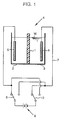
- FIG. 1 shows an equipment which is used to carry out a method of decomposing and removing organic substances according to the present invention.
- the equipment has an electrolytic cell 4 having a pair of chambers 2, 3 separated from each other by an ion-permeable membrane 1 interposed therebetween.
- the chambers 2, 3 accommodate electrode plates 5, 6 respectively therein, each of the electrode plates 5, 6 composing with titanium mesh as base material and put platinum on it for electrochemical catalyst.
- the electrode plates 5, 6 are electrically connected to an external power supply 8 by an external circuit 7.
- the external circuit 7 has switches 9, 10 which are connected to the electrode plates 5, 6 and the external power supply 8 so as to be able to change the polarities of the electrode plates 5, 6.
- the ion-permeable membrane 1 may be made of woven fabric, non-woven fabric, plastic film (polymer film), or the like.
- the ion-permeable membrane 1 may be made of "Nafion 117" (commercial name) that is a cation exchange membrane manufactured by DuPont, or "U-pore” (trademark) that is a porous film of polyolefin manufactured by Ube Industries, Ltd.
- the equipment shown in FIG. 1 operates as follows:
- the switches 9, 10 are operated to connect the electrode plates 5, 6 to the external power supply 8 such that the electrode plate 5 will act as an anode and the electrode plate 6 as a cathode.
- the chambers 2, 3 are supplied with raw water W containing a chloride such as sodium chloride or potassium chloride as an electrolyte.
- a voltage is applied between the electrode plates 5, 6 to carry out a first electrolyzing stage.
- the switches 9, 10 are turned over to reverse the polarity of the current supplied to the electrode plates 5, 6 such that the electrode plate 5 will be a cathode and the electrode plate 6 as an anode, for thereby carrying out a second electrolyzing stage.
- only electrolyzed water obtained at the cathode side in the first electrolyzing stage is electrolyzed at the anode side in the second electrolyzing stage.
- the electrolyzed water containing hydroxide ions was produced at the cathode side in the first electrolyzing stage.
- the second electrolyzing stage is carried out by reversing the polarity of the current charged to the electrode plates 5, 6 such that the electrode plate 5 will be a cathode and the electrode plate 6 as an anode
- oxygen is produced by the electrolysis of the water in the chamber 3 as the anode side in the second electrolyzing stage, and hydrogen peroxide (H 2 O 2 ) and oxygen are generated from the hydroxide ions.
- electrolyzed water containing hydrogen peroxide which is used in the present invention is obtained from the chamber 3 as the anode side in the second electrolyzing stage.
- the electrolyzed water contains hydroxyl radicals ( ⁇ OH) and hydrogen peroxide.
- radicals such as hydroxyl radicals have a short lifetime, and it cannot be easy to detect their existence.
- unstable radicals as the OH radicals can be trapped for chemical reaction, therefore, it is detected by a spin trapping method based on ESR.
- spectrum pattern of the product (electrolyzed water) compared with the known ESR spectrum of hydroxyl radicals ( ⁇ OH), the hydroxyl radicals in the electrolyzed water can easily be confirmed.
- the known ESR spectrum is described in various literatures, for example, "excellent understandable basic knowledge of electrolyzed water of strong acidity" edited by The Japanese Society for Bio/Chemo Dynamic Waters, published by Ohm-sha, page 46 (1997)(Written by Japanese).
- 2.3 liters of raw water W to which sodium chloride was added in such an amount that it would have a concentration of 0.8 g/liter were supplied to each of the chambers 2, 3 of the electrolytic cell 4.
- a voltage was applied between the electrode plates 5, 6 to electrolyze the raw water W with a constant current of 0.8 A for 25 minutes.
- the polarity of the current supplied to the electrode plates 5, 6 is reversed to electrolyze the raw water W with a constant current of 0.8 A for 25 minutes.
- electrolyzed water having a redox potential of 252 mV, pH 5.26, and a effective chlorine concentration of 5.0 ppm was obtained from the chamber 3 which was the anode side in the second electrolyzing stage.
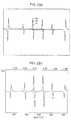
- FIG. 2(a) An ESR spectrum of the electrolyzed water obtained from the chamber 3 which was the anode side in the second electrolyzing stage is shown in FIG. 2(a).
- the ESR spectrum shown in FIG. 2(a) was measured by the electrolyzed water which was produced after about 3 hours. Each of the scanning cycles took 3 minutes to perform, and was conducted such that it started following the end of a previous scanning cycle. It was observed from the ESR spectrum shown in FIG. 2(a) that the amplitude increased from W 1 to W 2 to W 3 through the repeated scanning cycles.
- FIG. 2(b) shows a known ESR spectrum of hydroxyl radicals described in the above literature.
- the electrolyzed water obtained from the chamber 3 is added to water containing an organic substance to cause the hydroxyl radicals to attack to the organic substance for thereby decomposing the organic substance.
- the electrolyzed water obtained from the chamber 3 is added to water containing such an aromatic compound, and decompose the aromatic compound as described below.
- the aromatic compound is p-tertiary butyl phenol as shown by the above formula (2) or bisphenol A as shown by the above formula (3).
- the electrolyzed water is added to water containing an organic substance such as p-tertiary butyl phenol, bisphenol A, or the like.
- an organic substance such as p-tertiary butyl phenol, bisphenol A, or the like.
- p-tertiary butyl phenol or bisphenol A was added to the electrolyzed water for experimental purposes.
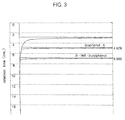
- FIG. 3 shows a chromatogram of p-tertiary butyl phenol and bisphenol A in top water by HPLC. The concentration of these are 10 ppm each.
- the chromatogram shown in FIG. 3 was measured by a high-performance liquid chromatograph (type LC-6A) manufactured by Shimadzu Seisakusho Ltd., using a column (Intersil ODS-3 (250 ⁇ 4.6 mm I.D.)) manufactured by GL Science, under the conditions that the column temperature was 40°C, the mobile phase was a mixture of acetonitrile and water (the volume ratio was 3 : 1), the flow rate was 0.7 milliliter/minute, and the injected amount of the sample solution was 20 microliters.
- LC-6A high-performance liquid chromatograph
- the separated substances were detected by an ultraviolet detector having a wavelength of 220 nm. Since the benzene ring has an absorption band in the ultraviolet region, if an aromatic compound is present in the sample solution, then it can be detected by the ultraviolet detector of the above wavelength.
- a peak of bisphenol A is present at a retention time of 4.9 minutes and a peak of p-tertiary butyl phenol present at a retention time of 6.9 minutes in FIG. 3.
- a peak that is present at a retention time of 3 minutes in the chromatograph shown in FIG. 3 means inorganic salts contained in the tap water.
- FIG. 4 shows a chromatogram, measured by HPLC, of a sample solution I that comprised electrolyzed water which was obtained from the chamber 3 shown in FIG. 1 and to which bisphenol A was added such that it would have a concentration of 10 ppm.
- the chromatogram shown in FIG. 3 was measured under exactly the same conditions as those of the chromatogram shown in FIG. 3.
- a peak of bisphenol A is present at a retention time of 4.9 minutes, which is substantially the same as the retention time for the peak of bisphenol A in FIG. 3, and the intensity thereof is much lower than the peak of bisphenol A shown in FIG. 3.
- the lower intensity of bisphenol A appears to be result from the fact that the bisphenol A contained in the sample solution I was decomposed by hydroxyl radicals contained in the electrolyzed water.
- a peak that is present at a retention time of 3 minutes in the chromatograph shown in FIG. 4 means inorganic compound that is mainly a chlorine compound such as hypochlorous acid. Peaks (A), (B), (C), and (D) that are present respectively at retention times of 6.7, 7.9, 10.0, and 10.6 minutes appear to represent reaction products or decomposed products of bisphenol A.
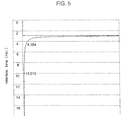
- FIG. 5 shows a chromatogram, measured by HPLC, of a sample solution II that was produced by diluting twice the sample solution I with electrolyzed water obtained from the chamber 3 shown in FIG. 1.
- the chromatogram shown in FIG. 5 was measured under exactly the same conditions as those of the chromatogram shown in FIG. 3. It can be understood from FIG. 5 that a very small peak of bisphenol A is present at a retention time of 4.384 minutes, which is substantially the same as the retention time for the peak of bisphenol A in FIG. 3, and that the chromatogram shown in FIG. 5 is completely free of the peaks (A) - (D) present in the chromatogram shown in FIG. 4.
- a peak that is present at a retention time of 3 minutes in the chromatograph shown in FIG. 5 means inorganic compound that is primarily a chlorine compound such as hypochlorous acid and or NaCl.
- FIG. 6 shows a chromatogram, measured by HPLC, of a sample solution III that was produced by adding p-tertiary butyl phenol to electrolyzed water obtained from the chamber 3 such that the p-tertiary butyl phenol would have a concentration of 10 ppm.
- the chromatogram shown in FIG. 6 was measured under exactly the same conditions as those of the chromatogram shown in FIG. 3.
- a peak of p-tertiary butyl phenol is present at a retention time of 6.7 minutes, which is substantially the same as the retention time for the peak of p-tertiary butyl phenol in FIG. 3, and the intensity thereof is much lower than the peak of p-tertiary butyl phenol shown in FIG. 3.
- the lower intensity of p-tertiary butyl phenol appears to result from the fact that the p-tertiary butyl phenol contained in the sample solution III was decomposed by hydroxyl radicals contained in the electrolyzed water obtained from the chamber 3.
- FIG. 7 shows a chromatogram, measured by HPLC, of a sample solution IV that was produced by diluting twice the sample solution III with electrolyzed water obtained from the chamber 3 shown in FIG. 1.
- the chromatogram shown in FIG. 7 was measured under exactly the same conditions as those of the chromatogram shown in FIG. 3. It can be seen from FIG. 7 that almost no peak is present at the same position as the peak of p-tertiary butyl phenol in the chromatogram shown in FIG. 3, and hence no peak of p-tertiary butyl phenol is present in the chromatogram shown in FIG. 7.
- the peaks (E) - (G) present in the chromatogram shown in FIG. 6 are only slightly recognized.
- a peak that is present at a retention time of 3 minutes in the chromatograph shown in FIG. 7 means inorganic compound that is mainly a chlorine compound such as hypochlorous acid.
- the electrolyzed water obtained from the chamber 3 is added to water containing such an aliphatic compound to decompose the aliphatic compound as described below.
- the aliphatic compound is n-butyl aldehyde as shown by the above formula (7) where R - is CH 3 CH 2 CH 2 CH 2 -, and it is used as a material of synthetic resins, a rubber vulcanization accelerator, etc.
- the electrolyzed water is added to water containing n-butyl aldehyde.
- n-butyl aldehyde a certain amount was added to the electrolyzed water for experimental purposes.
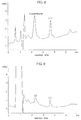
- FIG. 8 shows a comparative chromatogram, measured by HPLC, of an aqueous solution produced by diluting n-butyl aldehyde with distilled water such that it would be of 0.1 volume %.
- the chromatogram shown in FIG. 8 shows a comparative chromatogram, measured by HPLC, of an aqueous solution produced by diluting n-butyl aldehyde with distilled water such that it would be of 0.1 volume %. The chromatogram shown in FIG.
- FIG. 8 A study of the chromatogram shown in FIG. 8 shows that a peak of n-butyl aldehyde is present at a retention time of 2.2 minutes and a peak (H) of an impurity or a partially decomposed product of n-butyl aldehyde is present at a retention time of 3.7 minutes.
- the spectrum of n-butyl aldehyde is illustrated in FIG. 10(a), and the spectrum of the substance represented by the peak (H) is illustrated in FIG. 10(b).
- FIG. 9 shows a chromatogram, measured by HPLC, of a sample solution V that comprised electrolyzed water which was obtained from the chamber 3 shown in FIG. 1 and to which an aqueous solution of 0.1 volume % of n-butyl aldehyde was added such that it would be of 0.002 volume %.
- the chromatogram shown in FIG. 9 was measured under exactly the same conditions as those of the chromatogram shown in FIG. 8.
- FIG. 9 It can be seen from FIG. 9 that two peaks (I), (J) are present in the chromatogram shown in FIG. 9 at substantially the same positions as the peak representing n-butyl aldehyde in FIG. 8 and the peak (H) representing the impurity or the partially decomposed product of n-butyl aldehyde in FIG. 8.
- the spectrum of the substance represented by the peak (I) is illustrated in FIG. 11(a), and the spectrum of the substance represented by the peak (J) is illustrated in FIG. 11(b).
- the spectra shown in FIGS. 11(a) and 11(b) have respective patterns that are entirely different from the spectrums of n-butyl aldehyde and the impurity or the partially decomposed product of n-butyl aldehyde shown in FIGS. 10(a) and 10(b).
- the comparison therefore, reveals that the substances represented by the peaks (I), (J) are entirely different from n-butyl aldehyde and the impurity or the partially decomposed product of n-butyl aldehyde, though their positions on the chromatograms are similar.
- electrolyzed water containing hydroxyl radicals which is obtained from the chamber 3 which serves as the anode side in the second electrolyzing stage is added to water containing an organic substance such as p-tertiary butyl phenol, bisphenol A, n-butyl aldehyde, or decomposed products thereof.
- an organic substance such as p-tertiary butyl phenol, bisphenol A, n-butyl aldehyde, or decomposed products thereof.
- raw water prepared by adding a chloride such as sodium chloride or potassium chloride to water containing such an organic substance may be directly supplied to the chamber 3.
- the method according to present embodiment may be carried out by not only the equipment shown in FIG. 1, but any equipment insofar as it is capable of electrolyzing raw water containing an electrolyte at a cathode side of a first electrolytic chamber which houses an anode plate and a cathode plate with an ion-permeable membrane interposed therebetween, and thereafter electrolyzing the raw water in a second electrolytic chamber which houses an anode plate and a cathode plate with an ion-permeable membrane interposed therebetween.
- Other equipment that can be used to carry out the method according to present embodiment may be equipment disclosed in Japanese patent application No. 9-271245.
- the equipment shown in FIG. 1 employs a chloride such as sodium chloride or potassium chloride as an electrolyte.
- the electrolyte may be a sulfate such as sodium sulfate (Na 2 SO 4 ) or the like.
- the method of decomposing an organic substance according to the present invention may be applied to the field of waste water treatment, for example.
- the present invention provides a method of decomposing an organic substance, comprising the steps of:
- the present invention provides a method of decomposing an organic substance, comprising the steps of:
Landscapes
- Chemical & Material Sciences (AREA)
- Electrochemistry (AREA)
- Chemical Kinetics & Catalysis (AREA)
- General Chemical & Material Sciences (AREA)
- Hydrology & Water Resources (AREA)
- Organic Chemistry (AREA)
- Water Supply & Treatment (AREA)
- Environmental & Geological Engineering (AREA)
- Engineering & Computer Science (AREA)
- Life Sciences & Earth Sciences (AREA)
- Toxicology (AREA)
- Emergency Management (AREA)
- Business, Economics & Management (AREA)
- General Health & Medical Sciences (AREA)
- Health & Medical Sciences (AREA)
- Water Treatment By Electricity Or Magnetism (AREA)
Applications Claiming Priority (2)
| Application Number | Priority Date | Filing Date | Title |
|---|---|---|---|
| JP18627098 | 1998-07-01 | ||
| JP18627098 | 1998-07-01 |
Publications (2)
| Publication Number | Publication Date |
|---|---|
| EP0968963A1 true EP0968963A1 (fr) | 2000-01-05 |
| EP0968963B1 EP0968963B1 (fr) | 2003-01-29 |
Family
ID=16185362
Family Applications (1)
| Application Number | Title | Priority Date | Filing Date |
|---|---|---|---|
| EP99305146A Expired - Lifetime EP0968963B1 (fr) | 1998-07-01 | 1999-06-30 | Procédé de décomposition des substances organiques endocrines avec de l'eau électrolysée |
Country Status (5)
| Country | Link |
|---|---|
| US (1) | US6280600B1 (fr) |
| EP (1) | EP0968963B1 (fr) |
| KR (1) | KR20000011384A (fr) |
| DE (1) | DE69905101T2 (fr) |
| TW (1) | TW548241B (fr) |
Cited By (5)
| Publication number | Priority date | Publication date | Assignee | Title |
|---|---|---|---|---|
| EP1170259A1 (fr) * | 2000-07-05 | 2002-01-09 | Sony International (Europe) GmbH | Dispositif électrochimique et procödé de purification de fluids |
| EP1698594A1 (fr) * | 2005-03-04 | 2006-09-06 | Ecodis | Procédé pour éliminer les polluants des fluides à base d'eau |
| EP2441735A1 (fr) * | 2010-10-14 | 2012-04-18 | Siemens Aktiengesellschaft | Procédé et dispositif de séparation d'ions à partir d'eaux usées |
| WO2012123965A3 (fr) * | 2011-03-01 | 2012-12-27 | Deshmukh Prasanna | Générateur de dose de coagulant dynamisée |
| CN112246202A (zh) * | 2020-10-23 | 2021-01-22 | 重庆理工大学 | 基于光催化技术高效产生羟基自由基的反应器及构建方法 |
Families Citing this family (4)
| Publication number | Priority date | Publication date | Assignee | Title |
|---|---|---|---|---|
| WO2001083378A1 (fr) * | 2000-04-27 | 2001-11-08 | Nippon Oil Corporation | Procede et dispositif de traitement de clarification d'eau |
| WO2012166161A1 (fr) * | 2011-06-03 | 2012-12-06 | Hewlett-Packard Development Company, L.P. | Systèmes permettant d'effacer une encre d'un support |
| KR101696599B1 (ko) * | 2015-10-15 | 2017-01-16 | 순천대학교 산학협력단 | 비수용성 유기 화합물의 효율적인 처리방안으로 이온 용액을 활용하는 전해시스템 |
| KR200487372Y1 (ko) * | 2017-03-27 | 2018-09-07 | 정노광 | 샤워기 홀더 |
Citations (5)
| Publication number | Priority date | Publication date | Assignee | Title |
|---|---|---|---|---|
| DE3428582A1 (de) * | 1983-08-02 | 1985-03-07 | Michael 8068 Pfaffenhofen Gnann | Verfahren zur erzeugung von hydroxylradikalen und anwendung des verfahrens |
| DE4330518A1 (de) * | 1993-09-06 | 1995-03-09 | Manfred Dr Rer Nat Blaschke | Vorrichtung und Verfahren zur Behandlung von Wässern und Abwässern |
| JPH08192158A (ja) * | 1995-01-19 | 1996-07-30 | Matsushita Electric Ind Co Ltd | イオン水生成器 |
| WO1998009917A1 (fr) * | 1996-09-05 | 1998-03-12 | Bakhir Vitold M | Installation de purification electrochimique d'eau et/ou de solutions aqueuses |
| EP0841305A2 (fr) * | 1996-11-07 | 1998-05-13 | Honda Giken Kogyo Kabushiki Kaisha | Procédé et appareil pour la production d'eau électrolysée |
Family Cites Families (6)
| Publication number | Priority date | Publication date | Assignee | Title |
|---|---|---|---|---|
| JPS5128938B1 (fr) * | 1970-11-26 | 1976-08-23 | ||
| KR100253999B1 (ko) * | 1994-10-06 | 2000-04-15 | 서순기 | 오.폐수 정화 처리방법 |
| US5702587A (en) * | 1996-12-20 | 1997-12-30 | Huron Tech Canada, Inc. | Chemical and electrochemical regeneration of active carbon |
| KR19980077286A (ko) * | 1997-04-18 | 1998-11-16 | 임한진 | 펜턴 산화반응을 이용한 전해처리조에서의 유기 폐수의 산화처리 |
| KR19990012843A (ko) * | 1997-07-25 | 1999-02-25 | 지종기 | 강산성 소독수 제조용 소금물 전해방법 및 그 장치 |
| KR100251405B1 (ko) * | 1997-09-08 | 2000-04-15 | 이규철 | 전기분해와 광촉매를 이용한 폐수처리장치 |
-
1999
- 1999-06-25 TW TW088110741A patent/TW548241B/zh not_active IP Right Cessation
- 1999-06-30 DE DE69905101T patent/DE69905101T2/de not_active Expired - Lifetime
- 1999-06-30 EP EP99305146A patent/EP0968963B1/fr not_active Expired - Lifetime
- 1999-06-30 US US09/343,405 patent/US6280600B1/en not_active Expired - Lifetime
- 1999-06-30 KR KR1019990026126A patent/KR20000011384A/ko not_active Ceased
Patent Citations (5)
| Publication number | Priority date | Publication date | Assignee | Title |
|---|---|---|---|---|
| DE3428582A1 (de) * | 1983-08-02 | 1985-03-07 | Michael 8068 Pfaffenhofen Gnann | Verfahren zur erzeugung von hydroxylradikalen und anwendung des verfahrens |
| DE4330518A1 (de) * | 1993-09-06 | 1995-03-09 | Manfred Dr Rer Nat Blaschke | Vorrichtung und Verfahren zur Behandlung von Wässern und Abwässern |
| JPH08192158A (ja) * | 1995-01-19 | 1996-07-30 | Matsushita Electric Ind Co Ltd | イオン水生成器 |
| WO1998009917A1 (fr) * | 1996-09-05 | 1998-03-12 | Bakhir Vitold M | Installation de purification electrochimique d'eau et/ou de solutions aqueuses |
| EP0841305A2 (fr) * | 1996-11-07 | 1998-05-13 | Honda Giken Kogyo Kabushiki Kaisha | Procédé et appareil pour la production d'eau électrolysée |
Non-Patent Citations (1)
| Title |
|---|
| PATENT ABSTRACTS OF JAPAN vol. 1996, no. 611 29 November 1996 (1996-11-29) * |
Cited By (7)
| Publication number | Priority date | Publication date | Assignee | Title |
|---|---|---|---|---|
| EP1170259A1 (fr) * | 2000-07-05 | 2002-01-09 | Sony International (Europe) GmbH | Dispositif électrochimique et procödé de purification de fluids |
| US6673229B2 (en) | 2000-07-05 | 2004-01-06 | Sony International (Europe) Gmbh | Electrochemical apparatus and process for purification of fluids |
| CN100415936C (zh) * | 2000-07-05 | 2008-09-03 | 索尼德国有限责任公司 | 用于流体纯化的电化学装置和方法 |
| EP1698594A1 (fr) * | 2005-03-04 | 2006-09-06 | Ecodis | Procédé pour éliminer les polluants des fluides à base d'eau |
| EP2441735A1 (fr) * | 2010-10-14 | 2012-04-18 | Siemens Aktiengesellschaft | Procédé et dispositif de séparation d'ions à partir d'eaux usées |
| WO2012123965A3 (fr) * | 2011-03-01 | 2012-12-27 | Deshmukh Prasanna | Générateur de dose de coagulant dynamisée |
| CN112246202A (zh) * | 2020-10-23 | 2021-01-22 | 重庆理工大学 | 基于光催化技术高效产生羟基自由基的反应器及构建方法 |
Also Published As
| Publication number | Publication date |
|---|---|
| DE69905101D1 (de) | 2003-03-06 |
| DE69905101T2 (de) | 2003-05-22 |
| US6280600B1 (en) | 2001-08-28 |
| EP0968963B1 (fr) | 2003-01-29 |
| TW548241B (en) | 2003-08-21 |
| KR20000011384A (ko) | 2000-02-25 |
Similar Documents
| Publication | Publication Date | Title |
|---|---|---|
| US20230322589A1 (en) | Methods and systems for electrochemical oxidation of polyfluoroalkyl and perfluoroalkyl contaminants | |
| An et al. | Revealing decay mechanisms of H2O2-based electrochemical advanced oxidation processes after long-term operation for phenol degradation | |
| Gomez-Ruiz et al. | Efficient electrochemical degradation of poly-and perfluoroalkyl substances (PFASs) from the effluents of an industrial wastewater treatment plant | |
| Kuang et al. | A bipolar membrane-integrated electrochlorination process for highly efficient ammonium removal in mature landfill leachate: the importance of ClO• generation | |
| Panizza et al. | Direct and mediated anodic oxidation of organic pollutants | |
| Kim et al. | The electrolytic decomposition mechanism of ammonia to nitrogen at an IrO2 anode | |
| Martinez-Huitle et al. | Electrochemical oxidation of organic pollutants for the wastewater treatment: direct and indirect processes | |
| Zheng et al. | Removal of p-chloroaniline from polluted waters using a cathodic electrochemical ceramic membrane reactor | |
| Daghrir et al. | Efficient treatment of domestic wastewater by electrochemical oxidation process using bored doped diamond anode | |
| Wei et al. | Electrochemical advanced oxidation process with simultaneous persulfate and hydrogen peroxide on-site generations for high salinity wastewater | |
| Sivodia et al. | Assessment of graphite electrode on the removal of anticancer drug cytarabine via indirect electrochemical oxidation process: kinetics & pathway study | |
| Duan et al. | Electrochemical hydrogen peroxide generation and activation using a dual-cathode flow-through treatment system: enhanced selectivity for contaminant removal by electrostatic repulsion | |
| Peng et al. | Flow-through electrochemical activation of persulfate for efficient wastewater treatment using Ti4O7 reactive electrochemical membranes | |
| KR101946029B1 (ko) | 수처리, 탈염 및 화학물질 생산 복합 시스템 | |
| Li et al. | First-principles study of the degradation of perfluorooctanesulfonate and perfluorobutanesulfonate on a Magnéli phase Ti4O7 anode | |
| EP0968963B1 (fr) | Procédé de décomposition des substances organiques endocrines avec de l'eau électrolysée | |
| Zaviska et al. | Electrochemical treatment of bisphenol-A using response surface methodology | |
| Leon-Fernandez et al. | Dehalogenation of 2, 4-Dichlorophenoxyacetic acid by means of bioelectrochemical systems | |
| Shin et al. | Integrating electrochemical oxidation and flow-electrode capacitive deionization for enhanced organic degradation and perchlorate removal in high salinity waters | |
| Ahmadi et al. | Identifying sweet spots for redox reactions in electrochemical advanced oxidation and reduction processes for pollutant degradation and resource recovery | |
| Li et al. | High-efficient degradation of ibuprofen as typical PPCP through a novel electrochemical approach of traditional peroxone method | |
| Herrera-Chávez et al. | Efficient electrochemical advanced degradation of Red CL and Red WB dyes from the tanning industry using a boron-doped diamond anode | |
| Wu et al. | Removal of phenolic compounds by electroassisted advanced process for wastewater purification | |
| JP3928150B2 (ja) | 有機物の分解処理方法 | |
| Yu et al. | Two-stage sequential electrochemical treatment of nitrate brine wastes |
Legal Events
| Date | Code | Title | Description |
|---|---|---|---|
| PUAI | Public reference made under article 153(3) epc to a published international application that has entered the european phase |
Free format text: ORIGINAL CODE: 0009012 |
|
| AK | Designated contracting states |
Kind code of ref document: A1 Designated state(s): DE FR GB |
|
| AX | Request for extension of the european patent |
Free format text: AL;LT;LV;MK;RO;SI |
|
| 17P | Request for examination filed |
Effective date: 20000112 |
|
| AKX | Designation fees paid |
Free format text: DE FR GB |
|
| 17Q | First examination report despatched |
Effective date: 20010607 |
|
| GRAG | Despatch of communication of intention to grant |
Free format text: ORIGINAL CODE: EPIDOS AGRA |
|
| RTI1 | Title (correction) |
Free format text: METHOD OF DECOMPOSING ENDOCRINE-DISRUPTING ORGANIC COMPOUNDS WITH ELECTROLYSED WATER |
|
| GRAG | Despatch of communication of intention to grant |
Free format text: ORIGINAL CODE: EPIDOS AGRA |
|
| GRAH | Despatch of communication of intention to grant a patent |
Free format text: ORIGINAL CODE: EPIDOS IGRA |
|
| GRAH | Despatch of communication of intention to grant a patent |
Free format text: ORIGINAL CODE: EPIDOS IGRA |
|
| GRAA | (expected) grant |
Free format text: ORIGINAL CODE: 0009210 |
|
| AK | Designated contracting states |
Designated state(s): DE FR GB |
|
| REG | Reference to a national code |
Ref country code: GB Ref legal event code: FG4D |
|
| REF | Corresponds to: |
Ref document number: 69905101 Country of ref document: DE Date of ref document: 20030306 Kind code of ref document: P |
|
| ET | Fr: translation filed | ||
| PLBE | No opposition filed within time limit |
Free format text: ORIGINAL CODE: 0009261 |
|
| STAA | Information on the status of an ep patent application or granted ep patent |
Free format text: STATUS: NO OPPOSITION FILED WITHIN TIME LIMIT |
|
| 26N | No opposition filed |
Effective date: 20031030 |
|
| PG25 | Lapsed in a contracting state [announced via postgrant information from national office to epo] |
Ref country code: FR Free format text: LAPSE BECAUSE OF NON-PAYMENT OF DUE FEES Effective date: 20040227 |
|
| REG | Reference to a national code |
Ref country code: FR Ref legal event code: ST |
|
| REG | Reference to a national code |
Ref country code: FR Ref legal event code: RN |
|
| REG | Reference to a national code |
Ref country code: FR Ref legal event code: FC |
|
| PGRI | Patent reinstated in contracting state [announced from national office to epo] |
Ref country code: FR Effective date: 20100128 |
|
| PGFP | Annual fee paid to national office [announced via postgrant information from national office to epo] |
Ref country code: GB Payment date: 20140625 Year of fee payment: 16 |
|
| PGFP | Annual fee paid to national office [announced via postgrant information from national office to epo] |
Ref country code: DE Payment date: 20140625 Year of fee payment: 16 |
|
| PGFP | Annual fee paid to national office [announced via postgrant information from national office to epo] |
Ref country code: FR Payment date: 20140625 Year of fee payment: 16 |
|
| REG | Reference to a national code |
Ref country code: DE Ref legal event code: R082 Ref document number: 69905101 Country of ref document: DE Representative=s name: HASELTINE LAKE LLP, DE |
|
| REG | Reference to a national code |
Ref country code: DE Ref legal event code: R119 Ref document number: 69905101 Country of ref document: DE |
|
| GBPC | Gb: european patent ceased through non-payment of renewal fee |
Effective date: 20150630 |
|
| REG | Reference to a national code |
Ref country code: FR Ref legal event code: ST Effective date: 20160229 |
|
| PG25 | Lapsed in a contracting state [announced via postgrant information from national office to epo] |
Ref country code: DE Free format text: LAPSE BECAUSE OF NON-PAYMENT OF DUE FEES Effective date: 20160101 Ref country code: GB Free format text: LAPSE BECAUSE OF NON-PAYMENT OF DUE FEES Effective date: 20150630 |
|
| PG25 | Lapsed in a contracting state [announced via postgrant information from national office to epo] |
Ref country code: FR Free format text: LAPSE BECAUSE OF NON-PAYMENT OF DUE FEES Effective date: 20150630 |