EP0968995B1 - Verfahren zum kontinuierlichen Herstellen von Acryl-oder Methacrylsäureester - Google Patents
Verfahren zum kontinuierlichen Herstellen von Acryl-oder Methacrylsäureester Download PDFInfo
- Publication number
- EP0968995B1 EP0968995B1 EP99112144A EP99112144A EP0968995B1 EP 0968995 B1 EP0968995 B1 EP 0968995B1 EP 99112144 A EP99112144 A EP 99112144A EP 99112144 A EP99112144 A EP 99112144A EP 0968995 B1 EP0968995 B1 EP 0968995B1
- Authority
- EP
- European Patent Office
- Prior art keywords
- distillation column
- reaction
- catalyst
- weight
- alcohol
- Prior art date
- Legal status (The legal status is an assumption and is not a legal conclusion. Google has not performed a legal analysis and makes no representation as to the accuracy of the status listed.)
- Expired - Lifetime
Links
Images
Classifications
-
- C—CHEMISTRY; METALLURGY
- C07—ORGANIC CHEMISTRY
- C07C—ACYCLIC OR CARBOCYCLIC COMPOUNDS
- C07C51/00—Preparation of carboxylic acids or their salts, halides or anhydrides
- C07C51/02—Preparation of carboxylic acids or their salts, halides or anhydrides from salts of carboxylic acids
-
- C—CHEMISTRY; METALLURGY
- C07—ORGANIC CHEMISTRY
- C07C—ACYCLIC OR CARBOCYCLIC COMPOUNDS
- C07C67/00—Preparation of carboxylic acid esters
- C07C67/03—Preparation of carboxylic acid esters by reacting an ester group with a hydroxy group
Definitions
- the present invention relates to a process for continuously producing an alkyl ester of acrylic or methacrylic acid by ester interchange reaction between a starting alkyl ester of acrylic or methacrylic acid and a starting alcohol.
- alkyl ester (A) the starting alkyl ester of acrylic or methacrylic acid
- alcohol (B) the starting alcohol
- alkyl ester (C) the resulting intended alkyl ester of acrylic or methacrylic acid
- alcohol (D) a by-produced alcohol
- an alkyl ester of acrylic or methacrylic acid can be produced by ester interchange reaction.
- the ester interchange reaction is an equilibrium reaction and various catalysts have been proposed to increase the reaction rate.
- the proposed catalysts include acids such as sulfuric acid and p-toluenesulfonic acid (Japanese Patent Application Laid-Open No. 62-42948), basic substances such as alcoholates, hydroxides, carbonates, phosphates, oxides and complexes of alkali metals and alkaline earth metals (Japanese Patent Application Laid-Open Nos.
- a reaction apparatus having a distillation column, a fractionating column, etc. at an upper position of a reaction vessel is preferably used so that a lower alcohol by-produced in a batch process is separated from the remaining starting mixture, the reaction product and the solvent by distillation. It is apparent that the ester interchange reaction takes place only in a reaction vessel containing a catalyst.
- the distillation column, etc. disposed at an upper position of the reaction vessel is used only to separate the lower alcohol by-produced in the ester interchange reaction from the other components in the reaction vessel. Therefore, in the proposed consecutive process of the reaction and distillation, the ester interchange reaction and the distillation are conducted at the separate portions in the reaction apparatus.
- the ester interchange reaction which is conducted in the liquid phase in the reaction vessel, proceeds only when the equilibrium of the reaction is shifted toward the product side by the moving of the by-produced low-boiling alcohol from liquid phase to vapor phase through the vapor-liquid interface.
- the reaction vessel used in the conventional process is a tank having a vapor-liquid interface area as small as the cross-sectional area of the tank, it is known that the ester interchange reaction proceeds very slowly.
- the batch process takes a reaction time as long as 2 to 5 hours to obtain a sufficient result.
- the conventional process further requires a high reaction temperature to obtain a sufficient reaction rate.
- the high reaction temperature occasionally decreases the selectivity of the intended alkyl ester (C) due to disadvantageous side reactions such as the polymerization of the starting alkyl ester (A) or the resulting alkyl ester (C) and the addition reaction of the alcohol to the double bond of the alkyl esters (A) and (C).
- the ester interchange reaction is carried out in a batch process by placing the alkyl ester (A), the alcohol (B) and a catalyst in a reaction vessel, and then, allowing the ester interchange reaction to take place.
- EP-A-0 640 583 and EP-A-0 040 724 disclose transesterification processes for the preparation of acetic esters carried out in a distillation column.
- an object of the present invention is to overcome the above problems in the conventional process and to provide a process for continuously producing the alkyl ester (C) of acrylic or methacrylic acid with a high reaction rate and a high selectivity.
- the present invention provides a process for continuously producing an alkyl ester of acrylic or methacrylic acid by ester interchange reaction represented by the following reaction scheme: wherein R 1 is hydrogen or methyl, R 2 is an alkyl having 1 to 6 carbon atoms, R 3 is an alkyl having 2 to 20 carbon atoms or a mono- or polyhydroxyalkyl having 2 to 20 carbon atoms such that R 2 OH has a boiling point lower than that of R 3 OH, the process comprising the steps of (1) supplying the starting alkyl ester: and the starting alcohol R 3 OH to a continuous multi-stage distillation column as starting materials; (2) bringing the starting materials into contact with a catalyst in the distillation column to allow the ester interchange reaction to take place between the starting materials while continuously taking out the by-produced alcohol R 2 OH in a vapor form by distillation; and (3) continuously taking out the resultant alkyl ester of acrylic or methacrylic acid: in a liquid form from a lower position of the distillation column.
- ester interchange reaction is represented by the following reaction scheme: wherein R 1 is hydrogen or methyl, R 2 is an alkyl having 1 to 6 carbon atoms, R 3 is an alkyl having 2 to 20 carbon atoms or a mono- or polyhydroxyalkyl having 2 to 20 carbon atoms such that R 2 OH has a boiling point lower than that of R 3 OH.
- the starting alkyl ester (A) is an acrylic or methacrylic ester.
- R 2 constituting the ester moiety of the alkyl ester (A) is an alkyl having 1 to 6 carbon atoms, preferably 1 to 3 carbon atoms, and more preferably methyl or ethyl.
- the starting alcohol (B) represented by R 3 OH is a monohydric alcohol or a polyhydric alcohol having 2 or more hydroxyl groups.
- R 3 is a straight, branched or cyclic alkyl having 2 to 20, preferably 2 to 10 carbon atoms, or a straight, branched or cyclic mono- or polyhydroxyalkyl having 2 to 20, preferably 2 to 6 carbon atoms.
- Examples of the alcohol (B) include ethanol, 1-propanol, 2-propanol, 1-butanol, 2-butanol, t-butanol, 2-ethylhexanol, lauryl alcohol, stearyl alcohol, cyclohexyl alcohol, ethylene glycol, triethylene glycol, tetraethylene glycol, 1,3-butanediol and trimethylolpropane.
- the starting alkyl ester (A) and the starting alcohol (B) are selected so that the by-produced alcohol (D) represented by R 2 OH has a boiling point lower that that of the starting alcohol (B).
- any catalyst may be used so long as the catalyst catalyzes the ester interchange reaction between the alkyl ester (A) and the alcohol (B) to efficiently provide the intended alkyl ester (C).
- the catalyst include acids such as sulfuric acid and p-toluenesulfonic acid; basic substances such as alcoholates, hydroxides, carbonates, phosphates, oxides and complexes of alkali metals or alkaline earth metals; metal alcoholates such as aluminum alcoholates and magnesium alcoholates; titanium compounds such as titanium alcoholates, titanium phenoxide and alkyltitaniums; compounds of lead, zinc or tin; and complexes of copper, iron or zirconium.
- the catalyst include metals, metal oxides and crystalline solid acids, and these solid catalysts may be modified at the surface.
- the catalyst may be soluble or insoluble in the reaction solution under the reaction conditions.
- the catalyst may be mixed with or supported on a compound inert to the reaction.
- the catalyst may react with organic compounds present in the reaction system such as alcohols, acrylic or methacrylic acid, alkyl esters of acrylic or methacrylic acid or phenols generally used as the polymerization inhibitor to form a modified catalyst.
- the catalyst may be heat-treated with the starting materials or the reaction products before being used in the reaction.
- titanium compounds such as esters of titanic acid, titanium alcoholates, titanium phenoxide and alkyltitaniums are preferably used.
- Particularly preferred is a titanium complex resulted from the reaction of these titanium compounds with the organic compounds in the reaction system or a titanium complex formed by heat-treating these titanium compounds with the starting materials or the reaction products prior to use in the reaction.
- the ester interchange reaction is carried out preferably in the presence of a polymerization inhibitor because the reaction includes the compounds easily polymerizable.
- a polymerization inhibitor include hydroquinone, hydroquinone monomethyl ether, di-t-butylcatechol, phenothiazine, p-phenylenediamine and methylene blue.
- the amount of the polymerization inhibitor is preferably 10 ppm to 10 % by weight of the alkyl ester (A).
- any continuous multi-stage distillation column may be used so long as the distillation column has two or more distillation stages and the distillation can be carried out continuously.
- the number of distillation stages of the distillation column means the number of plates in the case of a plate distillation column and the number of theoretical distillation stages in the case of a packed distillation column.
- Examples of the multi-stage distillation column include a plate distillation column using trays such as bubble-cap trays, perforated plate trays, valve trays and counterflow trays, and a packed distillation column packed with a packing such as Raschig ring, Lessing ring, pall ring, Berl saddle, intalox saddle, Dickson packing, McMahon packing, helipack, Sleuser packing and mellapack. Any other distillation columns generally used in a continuous process as a multi-stage distillation column may be used. A distillation column having a combination of a plate portion and a packed portion is also preferably used. Further, a packed distillation column packed partially or entirely with a solid catalyst may be used.
- the ester interchange reaction is an equilibrium reaction generally carried out in a liquid phase.
- the process of the present invention is characterized by carrying out the ester interchange reaction in a reaction-distillation column. Namely, the ester interchange reaction is carried out in a continuous multi-stage distillation column in the presence of the catalyst, preferably at a plurality of stages in the presence of the catalyst while simultaneously removing the low-boiling lower alcohol by-produced in the course of the reaction from the reaction system by distillation.
- the continuous production of the intended alkyl ester (C) of acrylic or methacrylic acid with a great yield and a high selectivity has been first achieved by such a process.
- the ester interchange reaction is an equilibrium reaction
- the low-boiling product substantially the lower alcohol (D)
- the reaction rate cannot be raised in the process where the ester interchanging reaction is carried out in a reaction vessel having a distillation column disposed at an upper position thereof. This is because that the ester interchange reaction of such a process occurs only in the reaction vessel containing the catalyst and that the gas-liquid interface area, through which the low-boiling product is transferred from liquid phase into gas phase by vaporization, is small. Therefore, a sufficient removal of the low-boiling product cannot be attained, thereby failing to shift the equilibrium toward the product side.
- the catalyst is widely distributed within the continuous multi-stage distillation column and the ester interchange reaction is allowed to proceed in a region having a large gas-liquid interface area.
- the reaction liquid supplied to the column flows downward through the column while being repeatedly brought into gas-liquid contact with the vapor coming up from a lower position of the column, thereby ensuring the continuous distillation of the low-boiling product and the continuous ester interchange reaction.
- the low-boiling product, alcohol (D) is vaporized from the reaction liquid to the vapor phase.
- each component in the continuous multi-stage distillation column has a concentration gradient along the length direction of the column.
- the concentration of the high-boiling alkyl ester (C) in the reaction liquid gradually increases from the uppermost catalytic stage toward a lower position of the column.
- the concentration of the low-boiling alcohol (D) in the reaction liquid gradually decreases from the upper position toward the lower position, and may be a very small level near the bottom. In the vapor phase, the concentration of the low-boiling alcohol (D) gradually increases from the lower position toward the upper position of the column.
- the ester interchange reaction proceeds in the continuous multi-stage distillation column.
- the reaction liquid has a composition closed to the equilibrium composition as a result of the reaction, and the vapor phase has a composition approximately in a gas-liquid equilibrium with the reaction liquid. Therefore, the reaction would not proceed any further if the reaction liquid is retained in the given position.
- the reaction liquid flows downward and is repeatedly brought into gas-liquid contact with a vapor phase having a lower concentration of the low-boiling reaction product, i.e., the alcohol (D).
- the reaction further proceeds to concentrate the high-boiling alkyl ester (C) of acrylic or methacrylic acid in the reaction liquid.
- the distillation column is merely used to separate the vapor of the low-boiling starting material from the vapor of the low-boiling product, both transferred into the vapor phase via the gas-liquid interface of the reaction vessel, and reflux the condensed low-boiling starting material into the reaction vessel. Therefore, the process of the present invention has the following advantages as compared with the conventional process.
- the catalyst is required to be present in the continuous multi-stage distillation column, preferably the catalyst is disposed on two or more stages of the continuous multi-stage distillation column.
- the catalyst is a homogenous catalyst soluble in the reaction liquid under the reaction conditions
- the catalyst may be continuously supplied to the distillation column so that the catalyst is present in the reaction system.
- the catalyst is a heterogeneous catalyst insoluble in the reaction liquid under the reaction conditions
- the solid catalyst is disposed in the distillation column so that the catalyst is present in the reaction system.
- the homogenous catalyst may be supplied to the distillation column simultaneously with the starting material after mixed with at least one of the starting alkyl ester (A) and the starting alcohol (B), or the catalyst and the starting materials may be respectively supplied to different stages of the column.
- the catalyst may be supplied to any position so long as at least one stage is included between the supplied position and the bottom of the distillation column.
- the catalyst is preferably supplied to a position between the top of the distillation column and the position where the starting materials are supplied.
- the heterogeneous catalyst may be packed into any position in the distillation column in a desired amount. It is sufficient that the position having the catalyst has at least one theoretical distillation stage, preferably two or more theoretical distillation stages.
- the method of supplying the starting lower alkyl ester (A) and the starting alcohol (B) into the continuous multi-stage distillation column is not particularly limited. Any method may be used so long as the starting materials are brought into contact with the catalyst in at least one stage and preferably two or more stages of the distillation column. The starting materials may be introduced into the same stage of the distillation column or into different stages of the distillation column separately. It is also preferable to continuously supply the higher-boiling alcohol (B) to a stage higher than the stages having the catalyst and continuously supply the lower-boiling alkyl ester (A) to a lower position of the distillation column.
- the higher-boiling starting material being supplied to an upper position may contain a small amount of the lower-boiling starting material.
- the lower-boiling starting material being supplied to a lower position may contain a small amount of the higher-boiling starting material.
- the molar ratio of the alcohol (B) to the alkyl ester (A) supplied to the continuous multi-stage distillation column depends on the kind and the amount of the catalyst and the reaction conditions, and preferably 0.1 to 10.
- the low-boiling lower alcohol (D) by-produced during the reaction in the continuous multi-stage distillation column is continuously taken out from the distillation column in a vapor form.
- the lower alcohol (D) alone may be taken out from the distillation column.
- the alcohol (D) and the starting alkyl ester (A) form an azeotrope
- the alcohol (D) is taken out with the alkyl ester (A) as an azeotropic composition.
- the material taken out may contain a small amount of the high-boiling product.
- the gaseous material such as the alcohol (D) is preferably taken out from the top of the column. In this case, the material may be refluxed at the top of the distillation column to concentrate the low-boiling product.
- the alkyl ester (C) produced by the ester interchange reaction is continuously taken out in a liquid form as the high-boiling product from a lower position of the continuous multi-stage distillation column.
- a high-boiling catalyst soluble in the reaction liquid under the reaction conditions may be also contained, if used, in the liquid taken out from the lower position of the distillation column.
- the outlet for taking out the alkyl ester (C) is preferably positioned at the bottom of the distillation column.
- the amount of the catalyst used in the present invention varies depending on the kind of the catalyst, the kind of the continuous multi-stage distillation column, the kinds and the amount ratio of the starting alkyl ester (A) to the starting alcohol (B) and the reaction conditions such as temperature and pressure.
- the catalyst is generally used in an amount of 0.0001 to 50% by weight of the total weight of the starting alkyl ester (A) and the starting alcohol (B) being supplied.
- the catalyst is a heterogeneous solid catalyst placed in the continuous multi-stage distillation column, the amount is preferably 0.01 to 75% by volume of the void volume of the column.
- the ester interchange reaction takes place in the continuous multi-stage distillation column having the catalyst. Therefore, the amount of the reaction product generally depends on the hold-up of the distillation column.
- a distillation column having a greater hold-up is preferable due to a longer residence time of the reaction liquid, i.e., a longer reaction time.
- the hold-up is excessively great, side reactions . and flooding are likely to occur due to the increased residence time.
- the hold-up of the distillation column in the present invention is generally 0.005 to 0.75 in terms of the volume ratio of the hold-up volume to the void volume of the continuous multi-stage distillation column, although the hold-up varies depending on the distillation conditions and the kind of the distillation column.
- the average residence time of the reaction liquid in the continuous multi-stage distillation column depends on the reaction conditions and the kind and the inner structure, such as the kinds of the plate and packing, of the multi-stage distillation column, and generally 0.01 to 10 hours, preferably 0.05 to 5 hours.
- the reaction temperature namely the temperature inside the continuous multi-stage distillation column depends on the kind of the starting lower alkyl ester (A) and the starting higher alcohol (B), and preferably 30 to 150°C, more preferably 60 to 140°C.
- the pressure may be the atmospheric pressure or a reduced pressure.
- an inert solvent such as an ether, an aliphatic hydrocarbon, an aromatic hydrocarbon, a halogenated aliphatic hydrocarbon or a halogenated aromatic hydrocarbon may be suitably used to facilitate the reaction operations or for other purposes.
- an inert solvent such as an ether, an aliphatic hydrocarbon, an aromatic hydrocarbon, a halogenated aliphatic hydrocarbon or a halogenated aromatic hydrocarbon
- Particularly preferred are hexane, benzene and cyclohexane due to their ability of forming an azeotrope with the alcohol (D) formed by the ester interchange reaction and their inertness to the reaction.
- An inert gas such as nitrogen, helium and argon may be present in the reaction system.
- an inert gas or a gaseous, low-boiling organic compound inert to the reaction may be introduced from a lower position of the continuous multi-stage distillation column to accelerate the removal of the low-boiling alcohol (D) by-produced during the reaction.
- Oxygen or air may be present in the reaction system to suppress polymerization.
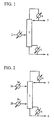
- a starting mixture of the alkyl ester (A) and the alcohol (B) is introduced into a continuous multi-stage distillation column 1 equipped with a reboiler 5 and a condenser 4 via an inlet pipe 2 through a preheater 3.
- the reaction-distillation is carried out by heating the liquid at the bottom of the distillation column by the reboiler 5.
- the liquid component containing the high-boiling alkyl ester (C) produced in the continuous multistage distillation column in the presence of a catalyst is continuously taken out as the bottom liquid from an outlet pipe 6.
- the vapor component containing a low-boiling alcohol (D) is continuously taken out as the top gas, condensed in the condenser 4 and taken out as the top liquid via an outlet pipe 7. Apart of the top liquid may be refluxed to an upper position of the continuous multi-stage distillation column.
- a higher-boiling starting material between the alkyl ester (A) and the alcohol (B), generally the alcohol (B), is introduced into a continuous multi-stage distillation column 1 via an inlet pipe 2a through a preheater 3a.
- a lower-boiling one generally the alkyl ester (A)
- a preheater 3b for vaporization via an inlet pipe 2b, vaporized therein and then continuously introduced into the continuous multi-stage distillation column from a lower position thereof.
- the reaction-distillation takes place.
- the liquid component containing the high-boiling alkyl ester (C) produced in the continuous multi-stage distillation column in the presence of a catalyst is continuously taken out as the bottom liquid from an outlet pipe 6.
- the vapor component containing the low-boiling alcohol (D) is continuously taken out as the top gas, condensed in the condenser 4 and taken out as the top liquid via an outlet pipe 7.
- Apart of the top liquid may be refluxed to an upper position of the continuous multi-stage distillation column.
- a continuous multi-stage distillation column 1 (height: 1150 mm; diameter: 20 mm) as schematically shown in Fig. 1 was packed with Dickson packings (3 mm diameter) made of stainless steel. From an inlet pipe 2 through a preheater 3 positioned 40 cm below the top of the column 1, a liquid mixture was continuously supplied to the distillation column 1 at a flow rate of 88.52 g/hour.
- the liquid mixture had a composition of 61.00% by weight of methyl methacrylate (MMA), 38.41% by weight of n-butanol (n-BuOH), 0.58% by weight of tetra-n-butoxytitanium (Ti(OBu) 4 ) as the catalyst and 0.01% by weight of hydroquinone monomethyl ether (MQ) as the polymerization inhibitor.
- MMA methyl methacrylate
- n-BuOH n-butanol
- Ti(OBu) 4 tetra-n-butoxytitanium
- MQ hydroquinone monomethyl ether
- a liquid containing the catalyst component and the reaction product of n-butyl methacrylate (BMA) was obtained from the bottom at a rate of 74.15 g/hour via an outlet pipe 6.
- the composition of the obtained liquid was 18.06% by weight of MMA, 7.33% by weight of n-BuOH, 73.17% by weight of BMA, 0.69% by weight of Ti(OBu) 4 , 0.01% by weight of MQ and 0.74% by weight of a high-boiling by-product.
- the effluent gas from an outlet pipe at the top of the distillation column 1 was condensed in a condenser 4, and a part of the condensed liquid was taken out via an outlet pipe 7 at a reflux ratio of 1.
- an azeotropic mixture of methanol (MeOH) as the low-boiling product and methyl methacrylate was obtained at a rate of 14.39 g/hour.
- the composition of the azeotropic mixture was 85.84% by weight of MeOH, 14.12% by weight of MMA, 0.04% by weight of n-BuOH and 0.002% by weight of BMA.
- the temperature at the bottom of the distillation column was 108°C during the reaction.
- the hold-up weight of the distillation column measured after the reaction was 17.3 g.
- the conversion of methyl methacrylate was 71.4% and the conversion of n-butanol was 84.0%.
- the selectivity of n-butyl methacrylate was 99.0% based on MMA.
- MMA methyl methacrylate
- n-BuOH n-butanol
- Ti(OBu) 4 tetra-n-butoxytitanium
- MQ hydroquinone monomethyl ether
- a top liquid having a composition of 69.37% by weight of MeOH, 29.75% by weight of MMA, 0.63% by weight of n-BuOH and 0.25% by weight of BMA.
- the residual liquid in the flask weighed 328.1 g and had a composition of 1.00% by weight of MeOH, 12.10% by weight of MMA, 7.31% by weight of n-BuOH, 74.67% by weight of BMA and 4.89% by weight of other components.
- the conversion of methyl methacrylate was 75.0% and the conversion of n-butanol was 84.0%.
- the selectivity of n-butyl methacrylate was 94.0% based on MMA.
- a liquid mixture of 53.47% by weight of methyl methacrylate (MMA), 45.51% by weight of n-butanol (n-BuOH), 1.01% by weight of tetra-n-butoxytitanium (Ti(OBu) 4 ) as the catalyst and 0.01% by weight of hydroquinone monomethyl ether (MQ) as the polymerization inhibitor was continuously supplied to the distillation column 1 at a flow rate of 100.99 g/hour from the inlet pipe 2 through the preheater 3. During the reaction, air was supplied from the bottom at a flow rate of 10 ml/minute.
- a liquid containing the catalyst component and n-butyl methacrylate (BMA) as the reaction product was obtained from the bottom at a rate of 85.06 g/hour via the outlet pipe 6.
- the composition of the obtained liquid was 4.01% by weight of MMA, 14.53% by weight of n-BuOH, 79.45% by weight of BMA, 1.20% by weight of Ti(OBu) 4 , 0.01% by weight of MQ and 0.80% by weight of a high-boiling by-product.
- the effluent gas from an outlet pipe at the top of the distillation column was condensed in the condenser 4 and a portion of the condensed liquid was taken out via the outlet pipe 7 at a reflux ratio of 1.
- an azeotropic mixture of methanol as the low-boiling product and methyl methacrylate was obtained at a rate of 17.95 g/hour.
- the composition thereof was 85.72% by weight of MeOH, 14.10% by weight of MMA, 0.12% by weight of n-BuOH and 0.06% by weight of BMA.
- the temperature at the bottom was 116°C during the reaction.
- the hold-up weight of the distillation column measured after the reaction was 18.3 g.
- the conversion of methyl methacrylate was 89.0% and the conversion of n-butanol was 77.4%.
- the selectivity of n-butyl methacrylate was 99.0% based on MMA.
- a continuous multi-stage distillation column1 (height: 1700 mm; diameter: 20 mm) as schematically shown in Fig. 2 was packed with Dickson packings (3 mm diameter) made of stainless steel.
- n-BuOH n-butanol
- Ti(OBu) 4 tetra-n-butoxytitanium
- MQ hydroquinone monomethyl ether
- a gaseous methyl methacrylate (MMA) was continuously supplied to the distillation column 1 at a position 132 mm below the top thereof at a flow rate of 54.00 g/hour via an inlet pipe 2b through a preheater 3b for vaporization.
- the heat necessary for continuing the reaction-distillation was supplied by heating a liquid at a lower position of the column. During the operation, air was supplied from the bottom at a flow rate of 10 ml/minute.
- a liquid containing the catalyst component and n-butyl methacrylate (BMA) as the reaction product was obtained from the bottom at a rate of 72.55 g/hour via the outlet pipe 6.
- the composition of the obtained liquid was 12.46% by weight of MMA, 3.27% by weight of n-BuOH, 82.80% by weight of BMA, 0.70% by weight of Ti(OBu) 4 , 0.01% by weight of MQ and 0.76% by weight of a high-boiling by-product.
- the effluent gas from an outlet pipe at the top was condensed in the condenser 4 and a part of the condensed liquid was taken out via the outlet pipe 7 at a reflux ratio of 3.
- an azeotropic mixture of methanol as the low-boiling product and methyl methacrylate was obtained at a rate of 15.93 g/hour.
- the composition thereof was 85.84% by weight of MeOH, 14.12% by weight of MMA, 0.04% by weight of n-BuOH and 0.002% by weight of BMA.
- the temperature at the bottom was 120°C during the operation.
- the hold-up weight of the distillation column measured after the reaction was 25.3 g.
- the conversion of methyl methacrylate was 79.1% and the conversion of n-butanol was 93.0%.
- the selectivity of n-butyl methacrylate was 99.0% based on MMA.
- n-BuOH n-butanol
- Ti(OBu) 4 tetra-n-butoxytitanium
- MQ hydroquinone monomethyl ether
- MMA gaseous methyl methacrylate
- a liquid containing the catalyst and n-butyl methacrylate (BMA) as the reaction product was obtained from the bottom at a rate of 81.61 g/hour via the outlet pipe 6.
- the composition of the obtained liquid was 0.70% by weight of MMA, 10.32% by weight of n-BuOH, 87.47% by weight of BMA, 0.63% by weight of Ti(OBu) 4 , 0.01% by weight of MQ and 0.88% by weight of a high-boiling by-product.
- the effluent gas from an outlet pipe at the top was condensed in the condenser 4 and a part of the condensed liquid was taken out via the outlet pipe 7 at a reflux ratio of 2.5.
- an azeotropic mixture of methanol as the low-boiling product and methyl methacrylate was obtained at a rate of 18.93 g/hour.
- the composition was 85.85% by weight of MeOH, 14.12% by weight of MMA, 0.03% by weight of n-BuOH and 0.002% by weight of BMA.
- the temperature at the bottom was 129°C during the reaction.
- the hold-up weight of the distillation column measured after the reaction was 29.7 g.
- the conversion of methyl methacrylate was 94.0% and the conversion of n-butanol was 81.7%.
- the selectivity of n-butyl methacrylate was 99.0% based on MMA.
- the target alkyl ester of acrylic or methacrylic acid can be continuously produced by ester interchange reaction in a high yield, a high conversion and a high selectivity.
Landscapes
- Chemical & Material Sciences (AREA)
- Organic Chemistry (AREA)
- Engineering & Computer Science (AREA)
- Oil, Petroleum & Natural Gas (AREA)
- Organic Low-Molecular-Weight Compounds And Preparation Thereof (AREA)
- Low-Molecular Organic Synthesis Reactions Using Catalysts (AREA)
Claims (8)
- Verfahren zum kontinuierlichen Herstellen eines Alkylesters von Acryl- oder Methacrylsäure mittels Umesterungsreaktion, dargestellt durch das folgende Reaktionsschema:worin R1 Wasserstoff oder Methyl ist, R2 Alkyl mit 1 bis 6 Kohlenstoffatomen ist, R3 ein Alkyl mit 2 bis 20 Kohlenstoffatomen oder ein Mono- oder Polyhydroxyalkyl mit 2 bis 20 Kohlenstoffatomen ist, derart, dass R2OH einen niedrigeren Siedepunkt hat als der von R3OH wobei das Verfahren die Stufen umfasst:
 Zuführen des Ausgangsalkylesters:und des Ausgangsalkohols R3OH als Ausgangsstoffe zu einer kontinuierlichen Mehrstufen-Destillierkolonne;
 In Kontakt Bringen der Ausgangsstoffe mit einem Katalysator in der Destillierkolonne um die Umesterungsreaktion zwischen den Ausgangsstoffen stattfinden zu lassen, während der als Nebenprodukt entstandene Alkohol R2OH in Dampfform durch Destillation kontinuierlich entfernt wird; undKontinuierliches Entnehmen des entstandenen Alkylesters von Acryl- oder Methacrylsäurein flüssiger Form aus einer tieferen Position der Destillierkolonne.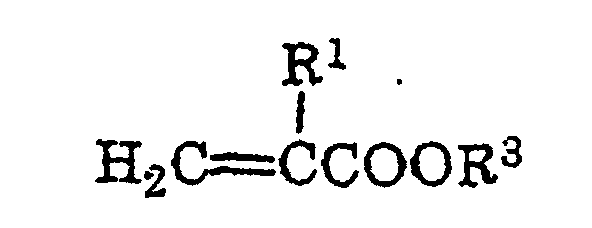
- Verfahren gemäß Anspruch 1, worin der Katalysator ein homogener Katalysator ist, der kontinuierlich der kontinuierlichen Mehrstufen-Destillierkolonne zugeführt wird, so dass der Katalysator in der Destillierkolonne anwesend ist.
- Verfahren gemäß Anspruch 2, worin der homogene Katalysator ein Titankomplex ist.
- Verfahren gemäß Anspruch 1, worin der Katalysator ein heterogener Katalysator ist, der in der kontinuierlichen Mehrstufen-Destillation angeordnet ist, so dass der feste Katalysator in der Destillierkolonne anwesend ist.
- Verfahren gemäß Anspruch 1, worin der Ausgangsalkylester Methacrylsäuremethylester ist und der Ausgangsalkohol 1-Butanol oder 2-Butanol ist.
- Verfahren gemäß Anspruch 5, worin der Katalysator ein homogener Katalysator ist, der kontinuierlich der kontinuierlichen Mehrstufen-Destillierkolonne zugeführt wird, so dass der Katalysator in der Destillierkolonne anwesend ist.
- Verfahren gemäß Anspruch 6, worin der homogene Katalysator ein Titankomplex ist.
- Verfahren gemäß Anspruch 5, worin der Katalysator ein heterogener Katalysator ist, der in der kontinuierlichen Mehrstufen-Destillierkolonne angeordnet ist, so dass der feste Katalysator in der Destillierkolonne anwesend ist.
Applications Claiming Priority (2)
| Application Number | Priority Date | Filing Date | Title |
|---|---|---|---|
| JP18582798 | 1998-07-01 | ||
| JP10185827A JP2000016966A (ja) | 1998-07-01 | 1998-07-01 | アクリル酸エステルまたはメタクリル酸エステルの製造方法 |
Publications (2)
| Publication Number | Publication Date |
|---|---|
| EP0968995A1 EP0968995A1 (de) | 2000-01-05 |
| EP0968995B1 true EP0968995B1 (de) | 2002-08-28 |
Family
ID=16177575
Family Applications (1)
| Application Number | Title | Priority Date | Filing Date |
|---|---|---|---|
| EP99112144A Expired - Lifetime EP0968995B1 (de) | 1998-07-01 | 1999-06-24 | Verfahren zum kontinuierlichen Herstellen von Acryl-oder Methacrylsäureester |
Country Status (5)
| Country | Link |
|---|---|
| US (1) | US6147252A (de) |
| EP (1) | EP0968995B1 (de) |
| JP (1) | JP2000016966A (de) |
| KR (1) | KR20000011362A (de) |
| DE (1) | DE69902609T2 (de) |
Cited By (3)
| Publication number | Priority date | Publication date | Assignee | Title |
|---|---|---|---|---|
| US8455676B2 (en) | 2010-04-19 | 2013-06-04 | Basf Se | Process for preparing carboxylic esters by reactive distillation |
| US10000439B2 (en) | 2012-12-17 | 2018-06-19 | Arkema France | Process for producing alkyl acrylate |
| US10343980B2 (en) | 2016-06-28 | 2019-07-09 | Evonik Roehm Gmbh | Preparation of N,N-(di)alkylaminoalkyl(meth)acrylamide or N,N-(di)alkylaminoalkyl (meth)acrylate and the quaternary ammonium salts thereof as flocculating aids and gelling agents |
Families Citing this family (13)
| Publication number | Priority date | Publication date | Assignee | Title |
|---|---|---|---|---|
| FR2815631B1 (fr) * | 2000-10-25 | 2003-12-19 | Atofina | Procede de fabrication de (meth)acrylates de methylcyclohexyle |
| US8557868B2 (en) | 2000-11-04 | 2013-10-15 | Fxs Ventures, Llc | Ophthalmic and contact lens solutions using low molecular weight amines |
| FR2829134B1 (fr) * | 2001-08-28 | 2006-11-24 | Atofina | Procede de preparation de (meth) acrylates d'alkylimidazolidone |
| DE10200171A1 (de) * | 2002-01-04 | 2003-07-10 | Roehm Gmbh | Verfahren zur kontinuierlichen Herstellung von Alkyl(meth)acrylaten |
| DE10301007A1 (de) * | 2003-01-13 | 2004-07-22 | Röhm GmbH & Co. KG | Verbessertes Verfahren zur kontinuierlichen Herstellung von Alkyl(meth)acrylaten mit mehrfacher Katalysatorrezyklierung. |
| JP4758649B2 (ja) * | 2003-02-07 | 2011-08-31 | 三菱レイヨン株式会社 | メタクリル酸エステルの製造方法 |
| DE10323699A1 (de) * | 2003-05-22 | 2004-12-09 | Röhm GmbH & Co. KG | Verfahren zur kontinuierlichen Herstellung von Alkylamino(meth)acrylamiden |
| JP4953435B2 (ja) * | 2007-02-28 | 2012-06-13 | 学校法人同志社 | バイオディーゼル油製造用固体触媒及び当該固体触媒の製造方法 |
| DE102009002239A1 (de) | 2009-04-07 | 2010-10-14 | Evonik Röhm Gmbh | Verfahren zur kontinuierlichen Herstellung von Alkylamino(meth)acrylamiden |
| JP2013525325A (ja) * | 2010-04-19 | 2013-06-20 | ビーエーエスエフ ソシエタス・ヨーロピア | 反応蒸留によるカルボン酸エステルの製造方法 |
| JP2010222372A (ja) * | 2010-06-10 | 2010-10-07 | Nippon Kasei Chem Co Ltd | グリシジルオキシブチルアクリレートの製造方法 |
| KR102518164B1 (ko) * | 2014-12-01 | 2023-04-06 | 바스프 에스이 | 헤오논(메트)아크릴레이트의 제조 방법 |
| EP3072879A1 (de) | 2015-03-26 | 2016-09-28 | Nitto Europe N.V | Verfahren zur verhinderung der vorzeitigen polymerisation |
Family Cites Families (9)
| Publication number | Priority date | Publication date | Assignee | Title |
|---|---|---|---|---|
| GB960005A (en) * | 1961-01-18 | 1964-06-10 | Distillers Co Yeast Ltd | Production of acrylic and methacrylic esters |
| US3686268A (en) * | 1970-02-24 | 1972-08-22 | Ugine Kuhlmann | Process of manufacture of acrylic and methacrylic higher esters |
| JPS5019716A (de) * | 1973-06-27 | 1975-03-01 | ||
| JPS5842861B2 (ja) * | 1976-03-12 | 1983-09-22 | 三菱レイヨン株式会社 | アクリル酸エステル又はメタクリル酸エステルの製造法 |
| GB1573071A (en) * | 1977-02-10 | 1980-08-13 | Mitsubishi Rayon Co | Process for producing unsaturated carbocylic acid esters |
| DE3019767A1 (de) * | 1980-05-23 | 1981-12-03 | Basf Ag, 6700 Ludwigshafen | Verfahren zur kontinuierlichen herstellung von essigsaeureestern |
| JPS6242948A (ja) * | 1985-08-16 | 1987-02-24 | Asahi Chem Ind Co Ltd | エステル交換反応方法 |
| JPH06293702A (ja) * | 1993-04-12 | 1994-10-21 | Mitsui Toatsu Chem Inc | アクリル酸又はメタクリル酸の高級アルキルエステルの製造方法 |
| KR960006546B1 (ko) * | 1993-07-28 | 1996-05-17 | 한국과학기술연구원 | 초산에스테르의 제조 방법 |
-
1998
- 1998-07-01 JP JP10185827A patent/JP2000016966A/ja active Pending
-
1999
- 1999-06-24 EP EP99112144A patent/EP0968995B1/de not_active Expired - Lifetime
- 1999-06-24 DE DE69902609T patent/DE69902609T2/de not_active Expired - Lifetime
- 1999-06-30 US US09/343,222 patent/US6147252A/en not_active Expired - Lifetime
- 1999-06-30 KR KR1019990025601A patent/KR20000011362A/ko not_active Withdrawn
Cited By (3)
| Publication number | Priority date | Publication date | Assignee | Title |
|---|---|---|---|---|
| US8455676B2 (en) | 2010-04-19 | 2013-06-04 | Basf Se | Process for preparing carboxylic esters by reactive distillation |
| US10000439B2 (en) | 2012-12-17 | 2018-06-19 | Arkema France | Process for producing alkyl acrylate |
| US10343980B2 (en) | 2016-06-28 | 2019-07-09 | Evonik Roehm Gmbh | Preparation of N,N-(di)alkylaminoalkyl(meth)acrylamide or N,N-(di)alkylaminoalkyl (meth)acrylate and the quaternary ammonium salts thereof as flocculating aids and gelling agents |
Also Published As
| Publication number | Publication date |
|---|---|
| EP0968995A1 (de) | 2000-01-05 |
| KR20000011362A (ko) | 2000-02-25 |
| JP2000016966A (ja) | 2000-01-18 |
| DE69902609T2 (de) | 2003-01-30 |
| DE69902609D1 (de) | 2002-10-02 |
| US6147252A (en) | 2000-11-14 |
Similar Documents
| Publication | Publication Date | Title |
|---|---|---|
| US6147252A (en) | Process for continuously producing ester of acrylic or methacrylic acid | |
| JP5448830B2 (ja) | (メタ)アクリル酸無水物の製造方法及び保存方法、並びに(メタ)アクリル酸エステルの製造方法 | |
| RU2476420C2 (ru) | Способ получения этиленгликольдиметакрилата | |
| JPH0840974A (ja) | アクリル酸精製法 | |
| RU2486172C2 (ru) | Способ получения аллилметакрилата | |
| EP0832872B1 (de) | Verfahren zum Herstellen von Diarylcarbonat | |
| JP2005239564A (ja) | (メタ)アクリル酸エステルの製造方法 | |
| JP4192465B2 (ja) | (メタ)アクリル酸類製造時の副生物の分解方法 | |
| CN1312113C (zh) | (甲基)丙烯酸n-烷基氨基烷基酯的制造方法 | |
| JP2001517229A (ja) | カルボン酸ビニルエステルの製造方法 | |
| JP2000005503A (ja) | 反応蒸留装置および反応蒸留方法 | |
| JP2854279B2 (ja) | 反応蒸留装置および反応蒸留方法 | |
| JPH07304713A (ja) | 芳香族炭酸エステルの製造方法 | |
| JP3925401B2 (ja) | (メタ)アクリル酸類製造時の副生物の分解方法 | |
| JP2733034B2 (ja) | カルボン酸エステルの製造方法 | |
| JP2004010528A (ja) | α−オキソカルボン酸の製造法 | |
| JP2733035B2 (ja) | 炭酸エステルの製造方法 | |
| JP2733036B2 (ja) | 炭酸エステルの製造方法 | |
| JPH1045675A (ja) | 炭酸エステルの製造方法 | |
| JP2003226667A (ja) | (メタ)アクリル酸類製造時の副生物の分解方法 | |
| JP2003226669A (ja) | (メタ)アクリル酸エステルの製造方法 | |
| JP4240771B2 (ja) | (メタ)アクリル酸エステルの製造方法 | |
| JPS63198648A (ja) | メタクリル酸の蒸留缶残液の処理方法 | |
| SK283806B6 (sk) | Spôsob výroby izobutylacetátu a zariadenie na vykonávanie tohto spôsobu |
Legal Events
| Date | Code | Title | Description |
|---|---|---|---|
| PUAI | Public reference made under article 153(3) epc to a published international application that has entered the european phase |
Free format text: ORIGINAL CODE: 0009012 |
|
| AK | Designated contracting states |
Kind code of ref document: A1 Designated state(s): DE FR GB IT |
|
| AX | Request for extension of the european patent |
Free format text: AL;LT;LV;MK;RO;SI |
|
| 17P | Request for examination filed |
Effective date: 20000609 |
|
| AKX | Designation fees paid |
Free format text: DE FR GB IT |
|
| GRAG | Despatch of communication of intention to grant |
Free format text: ORIGINAL CODE: EPIDOS AGRA |
|
| 17Q | First examination report despatched |
Effective date: 20010717 |
|
| GRAG | Despatch of communication of intention to grant |
Free format text: ORIGINAL CODE: EPIDOS AGRA |
|
| GRAG | Despatch of communication of intention to grant |
Free format text: ORIGINAL CODE: EPIDOS AGRA |
|
| GRAH | Despatch of communication of intention to grant a patent |
Free format text: ORIGINAL CODE: EPIDOS IGRA |
|
| GRAH | Despatch of communication of intention to grant a patent |
Free format text: ORIGINAL CODE: EPIDOS IGRA |
|
| GRAA | (expected) grant |
Free format text: ORIGINAL CODE: 0009210 |
|
| AK | Designated contracting states |
Kind code of ref document: B1 Designated state(s): DE FR GB IT |
|
| REG | Reference to a national code |
Ref country code: GB Ref legal event code: FG4D |
|
| REF | Corresponds to: |
Ref document number: 69902609 Country of ref document: DE Date of ref document: 20021002 |
|
| ET | Fr: translation filed | ||
| PLBE | No opposition filed within time limit |
Free format text: ORIGINAL CODE: 0009261 |
|
| STAA | Information on the status of an ep patent application or granted ep patent |
Free format text: STATUS: NO OPPOSITION FILED WITHIN TIME LIMIT |
|
| 26N | No opposition filed |
Effective date: 20030530 |
|
| PG25 | Lapsed in a contracting state [announced via postgrant information from national office to epo] |
Ref country code: IT Free format text: LAPSE BECAUSE OF NON-PAYMENT OF DUE FEES;WARNING: LAPSES OF ITALIAN PATENTS WITH EFFECTIVE DATE BEFORE 2007 MAY HAVE OCCURRED AT ANY TIME BEFORE 2007. THE CORRECT EFFECTIVE DATE MAY BE DIFFERENT FROM THE ONE RECORDED. Effective date: 20050624 |
|
| REG | Reference to a national code |
Ref country code: FR Ref legal event code: PLFP Year of fee payment: 17 |
|
| PGFP | Annual fee paid to national office [announced via postgrant information from national office to epo] |
Ref country code: DE Payment date: 20150616 Year of fee payment: 17 Ref country code: GB Payment date: 20150624 Year of fee payment: 17 |
|
| PGFP | Annual fee paid to national office [announced via postgrant information from national office to epo] |
Ref country code: FR Payment date: 20150608 Year of fee payment: 17 |
|
| REG | Reference to a national code |
Ref country code: DE Ref legal event code: R119 Ref document number: 69902609 Country of ref document: DE |
|
| GBPC | Gb: european patent ceased through non-payment of renewal fee |
Effective date: 20160624 |
|
| REG | Reference to a national code |
Ref country code: FR Ref legal event code: ST Effective date: 20170228 |
|
| PG25 | Lapsed in a contracting state [announced via postgrant information from national office to epo] |
Ref country code: FR Free format text: LAPSE BECAUSE OF NON-PAYMENT OF DUE FEES Effective date: 20160630 Ref country code: DE Free format text: LAPSE BECAUSE OF NON-PAYMENT OF DUE FEES Effective date: 20170103 |
|
| PG25 | Lapsed in a contracting state [announced via postgrant information from national office to epo] |
Ref country code: GB Free format text: LAPSE BECAUSE OF NON-PAYMENT OF DUE FEES Effective date: 20160624 |