EP0969363A2 - Gestionnaire de resources compensatoire - Google Patents
Gestionnaire de resources compensatoire Download PDFInfo
- Publication number
- EP0969363A2 EP0969363A2 EP98116261A EP98116261A EP0969363A2 EP 0969363 A2 EP0969363 A2 EP 0969363A2 EP 98116261 A EP98116261 A EP 98116261A EP 98116261 A EP98116261 A EP 98116261A EP 0969363 A2 EP0969363 A2 EP 0969363A2
- Authority
- EP
- European Patent Office
- Prior art keywords
- crm
- component
- transaction
- compensator
- compensating
- Prior art date
- Legal status (The legal status is an assumption and is not a legal conclusion. Google has not performed a legal analysis and makes no representation as to the accuracy of the status listed.)
- Granted
Links
Images








Classifications
-
- G—PHYSICS
- G06—COMPUTING OR CALCULATING; COUNTING
- G06F—ELECTRIC DIGITAL DATA PROCESSING
- G06F9/00—Arrangements for program control, e.g. control units
- G06F9/06—Arrangements for program control, e.g. control units using stored programs, i.e. using an internal store of processing equipment to receive or retain programs
- G06F9/46—Multiprogramming arrangements
-
- G—PHYSICS
- G06—COMPUTING OR CALCULATING; COUNTING
- G06F—ELECTRIC DIGITAL DATA PROCESSING
- G06F11/00—Error detection; Error correction; Monitoring
- G06F11/07—Responding to the occurrence of a fault, e.g. fault tolerance
- G06F11/14—Error detection or correction of the data by redundancy in operations
- G06F11/1471—Error detection or correction of the data by redundancy in operations involving logging of persistent data for recovery
-
- Y—GENERAL TAGGING OF NEW TECHNOLOGICAL DEVELOPMENTS; GENERAL TAGGING OF CROSS-SECTIONAL TECHNOLOGIES SPANNING OVER SEVERAL SECTIONS OF THE IPC; TECHNICAL SUBJECTS COVERED BY FORMER USPC CROSS-REFERENCE ART COLLECTIONS [XRACs] AND DIGESTS
- Y10—TECHNICAL SUBJECTS COVERED BY FORMER USPC
- Y10S—TECHNICAL SUBJECTS COVERED BY FORMER USPC CROSS-REFERENCE ART COLLECTIONS [XRACs] AND DIGESTS
- Y10S707/00—Data processing: database and file management or data structures
- Y10S707/99951—File or database maintenance
- Y10S707/99952—Coherency, e.g. same view to multiple users
- Y10S707/99953—Recoverability
Definitions
- the present invention relates generally to on-line transaction processing applications, and more particularly relates to managing non-transactional resources or non-compliant transactional resources in transaction management systems for on-line transaction processing applications.
- a server application running on a host or server computer in a distributed network provides processing services or methods for client applications running on terminal or workstation computers of the network which are operated by a multitude of users.
- server applications include software for processing class registrations at a university, travel reservations, money transfers and other services at a bank, and sales at a business.
- the processing services provided by the server application typically maintains persistent data or "state" of class schedules, hotel reservations, account balances, order shipments, payments, or inventory for actions initiated by the individual users at their respective stations, such as in a database or other proprietary format data store.
- server applications require coordinating activities on multiple computers, by separate processes on one computer, and even within a single process.
- a money transfer operation in a banking application may involve updates to account information held in separate databases that reside on separate computers that may be geographically remote.
- groups of activities that form parts of an operation are coordinated so as to take effect as a single indivisible unit of work, commonly referred to as a transaction.
- performing sets of activities as a transaction becomes a business necessity. For example, if only one account is updated in a money transfer operation due to a system failure, the bank in effect creates or destroys money.
- a transaction is a collection of actions that conform to a set of properties (referred to as the "ACID" properties) which include atomicity, consistency, isolation, and durability.
- Atomicity means that all activities in a transaction either take effect together as a unit, or all fail.
- Consistency means that after a transaction executes, the system is left in a stable or correct state (i.e., if giving effect to the activities in a transaction would not result in a correct stable state, the system is returned to its initial pre-transaction state).
- Isolation means the transaction is not affected by any other concurrently executing transactions (accesses by transactions to shared resources are serialized, and changes to shared resources are not visible outside the transaction until the transaction completes).
- Durability means that the effects of a transaction are permanent and survive system failures.
- server applications use resource managers to maintain the durable state of the application, such as the record of inventory on hand, pending orders, and accounts receivable.
- Resource managers are a system service that manages durable data, such as may be contained in databases, durable message queues, file systems or other data storage resources.
- One example is the resource manager provided with the Microsoft SQL Server version 6.5. Resource managers operate in cooperation with the transaction manager to enforce the ACID properties on the durable data of the managed resource.
- Resource managers are difficult to develop and implement for a particular resource (e.g., durable data store). This is because a resource manager deals with a number of the more complex issues in transaction processing. Specifically, the resource manager must properly interface with the transaction manager, and guarantee that all operations requested to be done by components on the managed resource adhere to the ACID transactional properties. The resource manager thus must ensure that all updates to the durable data by components that are completed under a specific transaction are made durable when the transaction commits, or are rolled back if the transaction aborts. The resource manager employs transaction-based synchronization protocols to isolate uncommitted work of active transactions. The resource manager also must ensure thread safety, which means the resource manager must be capable of being called by application components from any thread. The resource manager must further provide logging and recovery so that transactions involving the resource are durable over crashes and other failures (communications failures, process failures, and storage medium failures, as well as server system failures).
- an MTS Resource Manager (a resource manager that has been written to support MTS) must meet some additional requirements.
- an MTS Resource Manager implements all (or a substantial subset) of the "OLE Transactions" interfaces, which allow integration into MTS and interface to the MS DTC.
- an MTS Resource Manager must provide a resource dispenser (a service that provides pooling and automatic transaction enlistment for MTS server application components) for their managed resource. If there is no Resource Dispenser, then an alternative mechanism for automatic transaction enlistment must be provided.
- the present invention provides a form of resource management (herein referred to as "compensation” or “compensating resource management”) that allows durable resources to be more easily integrated into a transactional system, and particularly into a component-based on-line transaction processing application environment such as MTS.
- a durable resource is integrated to participate in transactions under the transactional system by providing a compensating action to reverse each normal action performed on the resource as part of a transaction. The normal action is persisted on the resource at the time of request.
- the compensating action is invoked outside of the transaction to return the durable resource to its pre-transaction state.
- information identifying the compensating action to be taken for each normal action performed during a transaction is written to a log on a write-ahead basis. Thus, in the case of a failure, recovery can be performed in accordance with the status of the transaction.
- compensating resource management can be provided for a particular durable resource by implementing a compensating resource manager (CRM).
- CRM compensating resource manager
- a developer implements a compensating action for each normal action that the CRM supports on the durable resource.
- the developer also implements the CRM to perform write-ahead logging in connection with each normal action to specify the compensating action for that normal action.
- the CRM is developed as a pair of components, a CRM worker and a CRM compensator which share state (i.e., data) only through the medium of the log.
- the CRM worker performs the normal action at the time of request by a server application as a part of a transaction for the server application. This action and an interface through which the action is accessed by the server application are specific to the particular CRM.
- the CRM worker When the server application invokes the normal action via the interface, the CRM worker also writes a log record to a system-provided log which identifies the CRM compensator.
- the CRM compensator implements the compensating action corresponding to the CRM worker's normal action.
- the CRM compensator that was designated by the CRM worker is later created to participate in later phases of the two phase commit protocol (e.g., Phase 1 and Phase 2) by taking appropriate further actions in relation to the normal action logged by the CRM worker.
- the CRM compensator supports a system-defined interface by which it receives two phase commit protocol notifications (e.g., prepare, commit and abort notifications) from the transaction manager (by way of a log recovery manager in the illustrated embodiment). These notifications allow the CRM compensator to participate in these phases of the two phase commit protocol.
- the CRM compensator can vote against committal of the transaction and force an abort in response to the prepare notification (e.g., by returning a value to vote "No" in response to the prepare notification).
- the commit notification affords the CRM compensator an opportunity to perform clean-up processing after the normal action of the CRM worker. This clean-up processing is the removal of any state (durable or non-durable) that is being maintained for purposes of compensating for an aborted transaction.
- the commit notification also affords the compensator the opportunity to do any work that is irreversible. For example, in an ATM transaction, an account balance may be debited and cash dispensed. It is undesirable to dispense cash unless the debit is guaranteed to occur.
- a CRM compensator With a CRM that manages the ATM, a CRM compensator would vote "yes" in response to a prepare notification as long as there is physically enough cash in the ATM. Then, in response to the commit notification, the CRM compensator causes the ATM to actually dispense the cash. In response to the abort notification, the CRM compensator performs the compensating action to reverse the CRM worker's normal action. Accordingly, during normal processing of a transaction, the CRM compensator participates in the transaction prepare phase, and is notified of the transaction outcome. The CRM compensator can then clean up on commit, or compensate on abort.
- the CRM compensator is again created and informed of the transaction's outcome based on the log, allowing the CRM compensator to complete transaction processing (as appropriate) involving the resource as if there had not been a failure. For example, if Phase 1 was not complete before a system crash, the transaction is aborted and the CRM compensator is delivered an abort notification.
- each action (defined as the work done during a transaction, or set of log records) implemented by the CRM compensator, including particularly the compensating action, must be idempotent. This means that the CRM compensator's action on a commit or abort of the transaction can be attempted any number of times, and if the action ever succeeds, the action achieves the same result as if the action had succeeded on its first attempt.
- the present invention is directed toward methods, systems, and software products for compensating resource management in on-line transaction processing.
- the invention is incorporated into operating software for server applications on distributed computing systems, entitled “COM+” which is part of the "Microsoft Windows NT Server 5.0" operating system by Microsoft Corporation of Redmond, Washington.
- this software provides a component framework and run-time execution environment for server applications that, among other things, includes system services to support transaction processing using a two phase commit protocol on distributed computing systems.
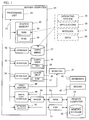
- FIG. 1 and the following discussion are intended to provide a brief, general description of a suitable computing environment in which the invention may be implemented. While the invention will be described in the general context of computer-executable instructions of a computer program that runs on a server computer, those skilled in the art will recognize that the invention also may be implemented in combination with other program modules. Generally, program modules include routines, programs, components, data structures, etc. that perform particular tasks or implement particular abstract data types. Moreover, those skilled in the art will appreciate that the invention may be practiced with other computer system configurations, including single- or multiprocessor computer systems, minicomputers, mainframe computers, as well as personal computers, hand-held computing devices, microprocessor-based or programmable consumer electronics, and the like.
- the illustrated embodiment of the invention also is practiced in distributed computing environments where tasks are performed by remote processing devices that are linked through a communications network. But, some embodiments of the invention can be practiced on stand-alone computers. In a distributed computing environment, program modules may be located in both local and remote memory storage devices.
- an exemplary system for implementing the invention includes a conventional server computer 20, including a processing unit 21, a system memory 22, and a system bus 23 that couples various system components including the system memory to the processing unit 21.
- the processing unit may be any of various commercially available processors, including Intel x86, Pentium and compatible microprocessors from Intel and others, including Cyrix, AMD and Nexgen; Alpha from Digital; MIPS from MIPS Technology, NEC, IDT, Siemens, and others; and the PowerPC from IBM and Motorola. Dual microprocessors and other multi-processor architectures also can be used as the processing unit 21.
- the system bus may be any of several types of bus structure including a memory bus or memory controller, a peripheral bus, and a local bus using any of a variety of conventional bus architectures such as PCI, VESA, Microchannel, ISA and EISA, to name a few.
- the system memory includes read only memory (ROM) 24 and random access memory (RAM) 25.
- ROM read only memory
- RAM random access memory
- BIOS basic input/output system
- BIOS basic routines that help to transfer information between elements within the server computer 20, such as during start-up, is stored in ROM 24.
- the server computer 20 further includes a hard disk drive 27, a magnetic disk drive 28, e.g., to read from or write to a removable disk 29, and an optical disk drive 30, e.g., for reading a CD-ROM disk 31 or to read from or write to other optical media.
- the hard disk drive 27, magnetic disk drive 28, and optical disk drive 30 are connected to the system bus 23 by a hard disk drive interface 32, a magnetic disk drive interface 33, and an optical drive interface 34, respectively.
- the drives and their associated computer-readable media provide nonvolatile storage of data, data structures, computer-executable instructions, etc. for the server computer 20.
- a number of program modules may be stored in the drives and RAM 25, including an operating system 35, one or more application programs 36, other program modules 37, and program data 38.
- the operating system 35 in the illustrated server computer is the Microsoft Windows NT Server operating system, together with the before mentioned Microsoft Transaction Server.
- a user may enter commands and information into the server computer 20 through a keyboard 40 and pointing device, such as a mouse 42.
- Other input devices may include a microphone, joystick, game pad, satellite dish, scanner, or the like.
- These and other input devices are often connected to the processing unit 21 through a serial port interface 46 that is coupled to the system bus, but may be connected by other interfaces, such as a parallel port, game port or a universal serial bus (USB).
- a monitor 47 or other type of display device is also connected to the system bus 23 via an interface, such as a video adapter 48.
- server computers typically include other peripheral output devices (not shown), such as speakers and printers.
- the server computer 20 may operate in a networked environment using logical connections to one or more remote computers, such as a remote client computer 49.
- the remote computer 49 may be a workstation, a server computer, a router, a peer device or other common network node, and typically includes many or all of the elements described relative to the server computer 20, although only a memory storage device 50 has been illustrated in Figure 1.
- the logical connections depicted in Figure 1 include a local area network (LAN) 51 and a wide area network (WAN) 52.
- LAN local area network
- WAN wide area network
- the server computer 20 When used in a LAN networking environment, the server computer 20 is connected to the local network 51 through a network interface or adapter 53. When used in a WAN networking environment, the server computer 20 typically includes a modem 54, or is connected to a communications server on the LAN, or has other means for establishing communications over the wide area network 52, such as the Internet.
- the modem 54 which may be internal or external, is connected to the system bus 23 via the serial port interface 46.
- program modules depicted relative to the server computer 20, or portions thereof may be stored in the remote memory storage device. It will be appreciated that the network connections shown are exemplary and other means of establishing a communications link between the computers may be used.
- the present invention is described below with reference to acts and symbolic representations of operations that are performed by the server computer 20, unless indicated otherwise. Such acts and operations are sometimes referred to as being computer-executed. It will be appreciated that the acts and symbolically represented operations include the manipulation by the processing unit 21 of electrical signals representing data bits which causes a resulting transformation or reduction of the electrical signal representation, and the maintenance of data bits at memory locations in the memory system (including the system memory 22, hard drive 27, floppy disks 29, and CD-ROM 31) to thereby reconfigure or otherwise alter the computer system's operation, as well as other processing of signals.
- the memory locations where data bits are maintained are physical locations that have particular electrical, magnetic, or optical properties corresponding to the data bits.
- FIG. 2 depicts a server application execution environment 82 of the Microsoft Transaction Server (MTS) in which compensating resource management according to the invention is incorporated.
- MTS Microsoft Transaction Server
- a transaction server executive 80 provides run-time or system services to create the run-time execution environment 80 that supports on-line transaction processing by server application components (e.g., server application component 86) on a server computer 84.
- the transaction server executive 80 also provides services for thread and context management to the server application components 86.
- the transaction server executive 80 provides system-defined objects (including a component context object 136) that support component integration interfaces.
- the illustrated transaction server executive 80 is implemented as a dynamic link library (“DLL").
- a DLL is a well-known executable file format which allows dynamic or run-time linking of executable code into an application program's process.
- the transaction server executive 80 is loaded directly into application server processes (e.g., "ASP" 90) that host server application components, and runs transparently in the background of these processes.
- application server processes e.g., "ASP" 90
- the illustrated ASP 90 is a system process that hosts execution of server application components.
- Each ASP 90 can host multiple server application components that are grouped into a collection called a "package.”
- multiple ASPs 90 can execute on the server computer under a multi-threaded, multi-tasking operating system (e.g., Microsoft Windows NT in the illustrated embodiment).
- Each ASP 90 provides a separate trust boundary and fault isolation domain for the server application components. In other words, when run in separate ASPs, a fault by one server application component which causes its ASP to terminate generally does not affect the server application components in another ASP.
- server application components are grouped as a package to be run together in one ASP 90 using an administration utility called "the COM Explorer.” This utility provides a graphical user interface for managing attributes associated with server application components, including grouping the components into packages.
- the execution environment 80 is on the server computer 84 (which may be an example of the computer 20 described above) that is connected in a distributed computer network comprising a large number of client computers 92 which access the server application components in the execution environment.
- the execution environment 80 may reside on a single computer and host server application components accessed by client processes also resident on that computer.
- the server application components 86 that are hosted in the execution environment 80 of the ASP 90 implement the business logic of a server application, such as the code to manage class registrations in a university's registration application or orders in an on-line sales application.
- each server application comprises multiple components, each of which contains program code for a portion of the application's work.
- a banking application may comprise a transfer component, a debit account component, and a credit account component which perform parts of the work of a money transfer operation in the application.
- the debit account component in this banking application example implements program code to debit a specified account in a banking database by a specified amount.
- the credit account component implements program code to credit a specified account in the database by a specified amount.
- the transfer component implements program code that uses the debit account component and credit account component to effect a money transfer between two accounts.
- the server application component 86 in the illustrated embodiment conforms to the Component Object Model ("COM") of Microsoft Corporation's OLE and ActiveX specifications (i.e., is implemented as a "COM Object"), but alternatively may be implemented according to other object standards including the CORBA (Common Object Request Broker Architecture) specification of the Object Management Group.
- OLE's COM specification defines binary standards for components and their interfaces which facilitate the integration of software components. By convention, the interfaces of a COM object are illustrated graphically as a plug-in jack as shown for the server application component 86 in Figure 2. Also, interfaces conventionally are given names beginning with a capital "I.” For a detailed discussion of OLE, see Kraig Brockschmidt, Inside OLE, Second Edition , Microsoft Press, Redmond, Washington, 1995.
- the server application component 86 is executed under control of the transaction server executive 80 in the ASP 90.
- the transaction server executive 80 is responsible for loading the server application DLL 300 into the ASP 90 and instantiating the server application component 86 using the class factory 122.
- the transaction server executive 80 further manages calls to the server application component 86 from client programs (whether resident on the same computer or over a network connection).
- the illustrated execution environment 80 imposes certain additional requirements on the server application component 86 beyond conforming with COM requirements.
- the server application component is implemented in a DLL file (i.e., the server application DLL 120 of Figure 3). (COM objects otherwise alternatively can be implemented in an executable (".exe") file.)
- the component's DLL file 120 has a standard class factory 122 (i.e., the DLL implements and exports the DllGetClassObject method, and supports the lClassFactory interface).
- the server application component exports only interfaces that can be standard marshaled, meaning the component's interfaces are either described by a type library or have a proxy-stub DLL.
- the proxy-stub DLL provides a proxy component 130 in a client process 132 on the client computer 92, and a stub component 131 in the ASP 90 on the server computer 84.
- the proxy component 130 and stub component 131 marshal calls from a client program 134 across to the server computer 84.
- the proxy-stub DLL in the illustrated system is built using the MIDL version 3.00.44 provided with the Microsoft Win32 SDK for Microsoft Windows NT 4.0 with the Oicf compiler switch, and linked with the transaction server executive 80. These additional requirements conform to well known practices.
- the client program 134 of the server application component 86 is a program that uses the server application component.
- the client program can be program code (e.g., an application program, COM Object, etc.) that runs outside the execution environment 80 (out of the control of the transaction server executive 80).
- Such client programs are referred to as "base clients.”
- the client program 134 can be another server application component that also runs under control of the transaction server executive (either in the same or a separate ASP 90).
- the client program 134 can reside on the server computer 84 or on a separate client computer 92 as shown in Figure 2 (in which case the client computer interacts with the server application component 86 remotely through the proxy object 130 and stub object 131).
- the server computer 84 also runs a resource manager 140 and a resource dispenser 144.
- the resource manager 140 is a system service that manages durable data (e.g., data in a database 146).
- the server application component 86 can use the resource manager to maintain the durable state of the server application (such as, the record of inventory on hand, pending orders, and accounts receivable in an on-line sales server application). Examples of resource managers in the illustrated embodiment include the Microsoft SQL Server, durable message queues, and transactional file systems.
- the resource manager 140 supports performing changes or updates by the server application component 86 to the server application's durable state on a transactional basis (i.e., in transactions conforming to the well-known ACID properties).
- the resource dispenser 144 is a service that manages non-durable shared state (i.e., without the guarantee of durability) on behalf of the server application components within the ASP 90. Resource dispensers also are responsible for automatic transaction enlistment in the illustrated execution environment, as described in the above incorporated MTS Patent Applications. Examples of the resource dispenser 144 in the illustrated embodiment include an ODBC resource dispenser that maintains a pool of database connections conforming to the Microsoft Open Database Connectivity ("ODBC") call level interface. The ODBC resource dispenser allocates database connections to the server application component for accessing data from a database 146 (generally, through its resource manager 140). Also, the ODBC resource dispenser reclaims database connections when released by the server application components for later reuse.
- ODBC Microsoft Open Database Connectivity
- the illustrated execution environment 82 further includes a transaction manager 148.
- the transaction manger 148 is a system service that coordinates transactions that span multiple resource managers, including where the resource managers reside on more than one server computer in a distributed network.
- the transaction manager 148 ensures that updates across all resources managers involved in a transaction occur in conformance with the ACID properties using the well known two-phase commit protocol, regardless of failures (e.g., computer or network hardware or software failures, or errors caused by a misbehaved resource manager or application), race conditions (e.g., a transaction that starts to commit while one resource manager initiates an abort), or availability (a resource manager prepares a transaction but never returns).
- the illustrated transaction manager 148 is the Microsoft Distributed Transaction Coordinator (MSDTC) released as part of Microsoft SQL Server 6.5.
- MSDTC Microsoft Distributed Transaction Coordinator
- a component or object-based architecture 200 of a compensating resource manager includes a number of system-provided components and system-defined interfaces that allow developers to more rapidly and easily integrate resources with durable data storage into the MTS execution environment 82 (Fig 2), without having to implement a full resource manager and resource dispenser specific to the resource (e.g., resource manager 140 and resource dispenser 144 of Fig 2).
- the illustrated architecture 200 is particularly applicable to two resource scenarios, namely (1) a legacy or black box transaction processing system that has its own internal mechanism to deal with transactions but does not support the OLE transactions interfaces, and (2) resources with no transactional support.
- the architecture 200 allows easier integration into the MTS environment 82 ( Figure 2) in the former scenario by providing a resource manager infrastructure with support for the OLE transactions interfaces, and eliminating the necessity of having a resource dispenser for the resource manager. Further, the architecture 200 allows the resources in each scenario to be integrated with a simpler, easier to develop resource manager through use of compensating resource management according to the invention.
- the developer need implement only a CRM worker 202 and a CRM compensator 206 that utilize the system-provided components and interfaces of the architecture 200 to provide compensating resource management of the resource.
- the CRM worker 202 and CRM compensator 206 are components conforming to the COM object model.
- the CRM worker 202 and CRM compensator 206 typically are installed into an MTS library package so that they may be used in any MTS server process (e.g., ASP 90).
- the developer implements logic (i.e., program code) specific to the resource to perform a normal action on the resource as part of a transaction.
- the developer also implements a resource-specific interface (e.g., the "lDoWork" interface 210) to which a server application component 86 can issue calls to cause the CRM worker 202 to perform the normal action on the resource.
- the CRM worker 202 enacts the normal action on the resource at the time of the server application component's request, such that the results of the normal action are persistent on the resource immediately after the request.
- the developer implements logic in the CRM compensator 206 that provides compensating actions related to the normal action of the CRM worker 202.
- the developer further implements the CRM compensator 206 to support a system-defined interface (the "lCompensatingResourceManager" interface 212) by which the CRM compensator receives prepare, commit and abort notifications from the transaction manager 148 ( Figure 2).
- These notifications from the transaction manager are delivered to the CRM compensator by way of system-provided infrastructure, a recovery engine and a CRM clerk described below.
- the CRM compensator can cause the transaction to abort in response to the prepare notification, such as where circumstances would prevent successful completion of the transaction.
- the CRM compensator can respond to a commit notification by performing clean-up actions appropriate to the normal action of the CRM worker on the resource.
- the CRM compensator can respond to an abort notification by performing a compensating action that reverses the normal action of the CRM worker.
- the normal, clean-up and compensating actions of the CRM worker and compensator generally vary depending on the specific durable resource being managed.
- the actions can include data processing activities, such as modifying data, writing new data, or deleting data from the resource.
- the CRM compensator's clean-up and/or compensating actions can include activities in addition to data processing, such as dispensing cash, tickets, or other items from an ATM or other automated dispensing machine, which may have irreversible real-world results (such operation having irreversible physical world consequences being referred to herein as "real operations").
- Additional components of the CRM architecture 200 are incorporated into the MTS run-time environment and services, and are thus "system-provided.” This allows the developer to implement only the CRM worker and CRM compensator that are specific to a particular resource, and rely on these system-provided components to provide services to deal with issues such as logging, recovery, and thread safety.
- the system-provided components of the illustrated architecture 200 include a CRM clerk 222, a CRM recovery clerk 224, and a persistent log 226. Each of these also are implemented as COM components. All of these components are run within the application server process (ASP) 90 (also shown in Figure 2).
- ASP application server process
- the CRM architecture 200 provides thread safety in that the system-provided components of the architecture are individually thread safe, meaning they can be called from any thread. Further, the CRM architecture 200 supports all of the OLE transactions interfaces required to interface with MTS. The CRM architecture 200 does not assume that the consumers of the architecture's functionality (i.e., the server application components 86) are themselves thread safe. The CRM architecture 200 guarantees to make all calls into the CRM compensator in the same apartment in which the CRM compensator was created according to standard COM programming practices. In other words, the CRM architecture assumes that its consumers are at least apartment model components (a well known threading model).
- the CRM clerk 222 and CRM recovery clerk 224 provide logging and recovery services in the architecture 200.
- each CRM worker 202 will create its own instance of a CRM clerk (i.e., there is a one-to-one relationship of CRM worker to CRM clerk).
- the CRM worker 202 accesses the CRM clerk 222 through a system-defined interface, the lCrmLogControl interface 230, to queue information that is to be logged in the persistent log 226.
- the CRM clerk will add additional information to the log records before they are written to the log.
- the CRM clerk 222 also is responsible for instantiating the CRM compensator and passing two phase commit notifications to the CRM compensator, as needed.
- the CRM recovery clerk 224 operates as a log and recovery manager, that is common to all compensating resource managers on the computer system.
- the CRM recovery clerk 224 is a singleton COM component, meaning there is only ever one instance of the CRM recovery clerk in the ASP 90.
- the CRM recovery clerk 224 performs the initial recovery on the persistent log 226, which is automatically initiated when the MTS server process (e.g., ASP 90) that hosts the CRM components starts up. Thereafter, the CRM recovery clerk 224 remains active to initiate checkpoints on the log, and to provide a central point through which CRM clerks are monitored.
- the MTS server process e.g., ASP 90
- the CRM recovery clerk 224 supports an "lCrmMonitor” interface 234, which is obtained by calling the "CoCreateInstance()" API method with the CRM recovery clerk's CLSID.
- the "lCrmMonitor” interface is defined in the program listing 320 shown in Figure 18.
- the "lCrmMonitor” interface 234 is used to monitor which transactions are currently in-progress for the CRMs in the ASP 90 (such as by a program or COM component that provides user displays or dialogs for a human operator or administrator).
- the text descriptions provided by the CRM worker when registering the CRM compensator are available to aid in searching for a particular CRM activity.
- the "lCrmMonitor” interface provides a method ("GetClerks()") to obtain an interface pointer to an "lCrmMonitorClerks" interface on a clerks collection object that tracks the CRM clerks 222 of the compensating resource manager architecture 200.
- the "lCrmMonitorClerks" interface is defined in the program listing 319 shown in Figure 17. Through this interface, a pointer to an "lCrmMonitorLogRecords" interface supported on the CRM clerk 222 can be obtained.
- the “lCrmMonitorLogRecords” interface is used to monitor the individual log records maintained by a specific CRM clerk for a given transaction, such as for human recovery described below.
- the "lCrmMonitorLogRecords" is defined in the program listing 318 shown in Figure 16.
- Each ASP 90 that uses the CRM will have its own associated persistent log 226 to store log records.
- the persistent log 226 in the illustrated CRM architecture 200 is a TXF format log file, which has a file name based on the Appld associated with the ASP 90.
- the CRM clerk 222 When writing log records (in response to the "ForceLog()" method described below), the CRM clerk 222 writes log records in a sequential order into the persistent log 226.
- the CRM recovery clerk 224 also periodically initiates check points in the persistent log 226 to reclaim space from log records freed after completed transactions.
- the CRM worker 202 logs sufficient information into the persistent log 226 (through the CRM clerk 222 and CRM recovery clerk 224, as just described) typically, but not necessarily, on a write-ahead basis as it performs its normal action to the resource on behalf of the server application component 86, so that the CRM architecture 200 can cause the CRM compensator 206 to take appropriate actions in response to the two phase commit protocol notifications (e.g., a vote action during prepare, clean-up action on commit, or compensating action on abort).
- the CRM worker 202 also registers a class identifier ("CLSID") of the CRM compensator 206 with the CRM clerk 222.
- CLSID class identifier
- the CRM clerk 222 creates the CRM compensator 206 and calls appropriate methods on its lCrmCompensator (or lCrmCompensatorVariants) interface 212 for each of the two phase commit notifications that it receives from the transaction manager 148 ( Figure 2).
- the CRM clerk 222 delivers individually the log records written by the CRM worker 202 for the transaction - in a forward order for commit and reverse order for abort to preserve the ordering of actions within the transaction.
- the CRM compensator 206 also can log information of its own compensating actions to the persistent log that may be needed during recovery. The CRM worker 202 and the CRM compensator 206 thus share state only through the persistent log 226.
- the persistent log 226 in the illustrated architecture 200 is implemented as a log object 240, a recovery engine 242, and a log file 244.
- the log object 240 is a COM object that encapsulates a serial stream of log records, and is responsible for stably writing a sequential stream of log records into the log file 244.
- the log object 240 provides methods for writing and reading the log records from the log file 244 through an "lLog" interface 246, which are used by the CRM clerk 222, the CRM recovery clerk 224 and the recovery engine 242.
- the log file 244 is a serial data stream stored in non-volatile memory (e.g., on the hard drive 27 in Figure 1), such as a file or collection of files of a file system, in which log records are stored.
- the illustrated log file 244 is a file having the Microsoft TXF file format.
- Each log record in the illustrated log file 244 is identified by a log sequence number (LSN), which are monotonically increasing 64-bit integers in the serial stream.
- LSN log sequence number
- a separate log file is kept for each ASP 90 on the computer 20 ( Figure 1).
- the log file 244 is identified by a file name based on an unique identifier associated with the respective ASP 90 (e.g., the "Appld” in the Microsoft Windows NT operating system), and resides on a same file system path as a log of the transaction manager 148. This facilitates recovery based on the log.
- an unique identifier associated with the respective ASP 90 e.g., the "Appld” in the Microsoft Windows NT operating system
- the recovery engine 242 is a COM object that provides services through an "lLogRecover" interface 248 and "lLogRecoverClerkRegistration" interface for processing the log records from the log file 244 following a system restart according to a log recovery protocol to effect recovery from failures.
- the recovery processing implemented in the illustrated recovery engine 242 is based on the well known ARIES log recovery protocol, although another log recovery protocol or a variation thereof can instead be used. (See, C. Mohan, D. Haderle, B. Lindsay, H. Pirahesh and P. Schwarz, ARIES: A Transaction Recovery Method Supporting Fine-Granularity Locking and Partial Rollbacks Using Write-Ahead Logging , in Readings In Database Systems, Second Edition (Michael Stonebraker ed.
- the CRM recovery clerk 224 and CRM clerk 222 register with the recovery engine 242 so that log records written by these entities can be provided by the recovery engine 242 during recovery.
- the recovery engine 242 also enlists with the transaction manager 148 ( Figure 2) on the transaction in which the CRM worker 202 and CRM clerk 222 participate.
- the recovery engine 242 receives the two phase commit notifications from the transaction manager 148 and passes the notifications along with log records relating to the transaction to the CRM clerk 222, which acts on the notifications by creating the CRM compensator 206 and initiating the appropriate compensating actions by the CRM compensator 206.
- the recovery engine 242 enlists on transactions with the transaction manager 148, and receives two phase commit notifications from the transaction manager using the OLE transactions interfaces.
- the CRM clerk 222 and CRM recovery clerk 224 implement a set of interfaces (including "lLogRecoverClerk,” “lLogRecoverClerkRecordsOnTerminate,” and “lLogRecoverClerkPhaseNotification” interfaces) on which the clerks receive the two phase commit notifications from the recovery engine 242.
- Figure 4 depicts an order of execution of the components within the illustrated CRM architecture 200.
- the server application component 86 creates the CRM worker 202 using conventional COM object instantiation methodology as indicated at step 251.
- the MTS execution environment 82 will automatically associate the CRM worker 202 in that transaction as described in "Automatic Transaction Processing Of Component-Based Sewer Applications," U.S. Patent Application Serial No. 08/959,141 (incorporated herein above by reference).
- the CRM worker 202 creates an instance of the CRM clerk 222 and obtains an interface reference to the lCrmLogControl interface 230 of the CRM clerk 222 by calling the "CreateInstance()" method (a well known application programming interface (API) method in the COM run-time services library used for object instantiation) and specifying the CLSID of the CRM clerk and llD of the lCrmLogControl interface. This also automatically associates the CRM clerk instance in the transaction.
- “CreateInstance()" method a well known application programming interface (API) method in the COM run-time services library used for object instantiation
- the CRM worker 202 After obtaining the lCrmLogControl interface reference, the CRM worker 202 calls a "RegisterCompensator()" method of the interface to register the counterpart CRM compensator 206 for the CRM worker 202 with the CRM clerk 222 as shown at step 253.
- the CRM worker 202 registers the CRM compensator 206 by an identifier of its class (e.g., a program identifier (PROGID) or a class identifier (CLSID)), which under COM provides sufficient identification for the CRM clerk 222 to later create the CRM compensator 206.
- a program identifier PROGID
- CLSID class identifier
- the CRM clerk 222 registers itself with the CRM recovery clerk 224 and the recovery engine 242 using a globally unique identifier (GUID) associated with the specific instance of the CRM clerk class.
- GUID globally unique identifier
- the CRM recovery clerk 224 logs any active CRM clerks with the log 226 to enable later recreating the CRM clerk at recovery.
- the recovery engine 242 enlists with the transaction manager 148 on the server application component's transaction. This allows the recovery engine 242 to receive two phase commit notifications issued by the transaction manager in the transaction, and pass the notifications to the CRM clerk 222.
- the server application component 86 requests that the CRM worker 202 perform work on the resource as part of its transaction.
- the CRM worker 202 performs the requested work (i.e., its normal action)
- the CRM worker first logs sufficient information at step 255 to the persistent log 226 using the CRM clerk 222 for the CRM compensator to be able to take appropriate clean-up and compensating actions.
- the CRM worker 202 writes a sequence of log records to the CRM clerk 222 (using the "WriteLogRecord()" or "WriteLogRecordVariants()" methods), and then causes the records to be written out to the persistent log on the write-ahead basis before performing the requested work (using the "ForceLog()" method).
- the transaction manager 148 issues two phase commit protocol notifications to participants in the transaction (i.e., components enlisted in the transaction), including to the recovery engine 242 which passes the notifications to the CRM clerk 222 along with the log records previously written by the CRM worker 202.
- these notifications are sent after the server application component 86 that initiated the transaction has called SetComplete to indicate that all work in the transaction is complete, or a component in the transaction calls SetAbort indicating the work cannot be successfully completed.
- SetComplete and SetAbort are interface methods of the system-provided context object 136 ( Figure 2), and described in more detail in the above incorporated MTS Patent Applications.
- the transaction manager 148 issues the two phase commit protocol notifications to the recovery engine 242 on the lTransactionResourceAsync interface 238 (which is part of the OLE transactions interfaces).
- the CRM clerk 222 In response to each two phase commit protocol notification, the CRM clerk 222 at step 257 creates the CRM compensator 206 that was previously registered by the CRM worker 202 with the CRM clerk 222. At step 258 the CRM clerk 222 then calls an appropriate method of the lCrmCompensator interface 212 to pass the notification and related log records to the CRM compensator 206. With its call to the CRM compensator 206, the CRM clerk 222 passes an interface pointer for the lCrmLogControl interlace 230 to allow the CRM compensator to write log records of its compensating actions.
- the CRM compensator 206 performs the vote, clean-up or compensating action appropriate to the two phase commit protocol notification based on the information logged by the CRM worker 202. As appropriate, the CRM compensator 206 also may log information of its clean-up or compensating actions for use during recovery.
- Figure 5 depicts a process 280 by which the CRM worker 202 logs information to compensate for its normal action on the resource.
- information is written to the log in a lazy write fashion.
- the CRM worker 202 uses the CRM clerk's lCrmLogControl interlace 230 to queue up log records that represent one action taken by the CRM worker, which are then forced together to the nonvolatile storage in the log file 244.
- the CRM worker 202 preferably performs the logging on a write-ahead basis prior to executing any actions on the resource that may later require compensation.
- the CRM worker 202 builds a log record as a collection of data elements.
- the log record can be structured or unstructured.
- a structured log record is a collection of Variant-type data elements, such as a Visual Basic collection object. Unstructured log records are simply a buffer of bytes.
- a CRM worker written in the Microsoft Visual Basic programming language will write structured log records, while one written in the Microsoft Visual C++ or J++ languages writes unstructured log records.
- the CRM worker 202 in the illustrated compensating resource manager architecture 200 is not permitted to mix structured and unstructured log records, and must write log records of only one of these types.
- the CRM worker 202 at step 282 calls a "WriteLogRecord()" method (or “WriteLogRecordVariants()” method for structured log records) on the lCrmLogControl interlace 230 of the CRM clerk 222 to copy the log record into a queue.
- the CRM worker may repeat the steps 281-282 multiple times to enqueue multiple log records.
- the CRM worker 202 After the CRM worker 202 has queued all the log records for the action that the CRM worker 202 is about to take on the resource, the CRM worker 202 calls the "ForceLog()" method on the lCrmLogControl interface 230 of the CRM clerk 222 in step 284 to cause the queued log records to be written out to the persistent log 226.
- the separate "WriteLogRecord()" and “ForceLog()” methods thus allow the CRM worker 202 to queue up multiple log records and have them written together to the persistent log 226, which enhances logging efficiency.
- the persistent log 226 uses checkpoints to reclaim space of log records from completed transactions in the log file 244.
- the CRM recovery clerk 224 periodically issues initiate check point requests to the recovery engine 242, by calling the "TakeCheckpoint()" method on the lLogRecover interface 248.
- the CRM recovery clerk 224 has a background thread which waits on events or a timeout. On timeout, the CRM recovery clerk 224 checks whether any log records have been written since the last checkpoint. If not, no checkpoint request is initiated. These periodic check point requests allow the recovery engine to automatically resize or grow the log file 244 if not sufficient for the transaction rate and volume of log records.
- the CRM recovery clerk 224 also checks whether there currently are any CRM clerks before initiating a check point request. If there are none, no check point request is initiated. If there currently are CRM clerks, the CRM recovery clerk 224 logs the clerk instance identifiers of the CRM clerks so that the CRM clerks can be created correctly during recovery processing. The CRM recovery clerk 224 logs a single log record, the "clerk list record," containing the clerk instance identifiers of all current CRM clerks.
- the CRM recovery clerk 224 further governs truncation of the log.
- the recovery engine 242 (using the "lLogRecoverClerk::WriteCheckpoint()" method) has the CRM recovery clerk 224 and each CRM clerk 222 write checkpoint log records and return the minimum LSN used for their log records.
- the CRM recovery clerk 224 writes the clerk list log record prior to issuing the initiate check point request to the recovery engine, then returns the LSN of the clerk list log record as its minimum LSN from the recovery engine's write check point request. This guarantees that the clerk list record occurs before any check point records of the CRM clerks 222 in the log file 244, and that the last two check points are maintained in the log file 244.
- each CRM clerk 222 copies its log records forward on an every other check point basis. More specifically, the first time the CRM clerk 222 is called with a write check point request and has a transaction in progress, the CRM clerk 222 returns it minimum LSN in use. The next time, the CRM clerk 222 copies forward all its log records, and returns its new minimum LSN. In copying forward, the CRM clerk 222 reads all log records that it has written to the log file 244, and rewrites the log records to the log file 244. This approach means that only the last two check points are retained in the log file 244, while reducing the frequency at which the CRM clerk 222 must copy forward its log records.
- the persistent log 226 can then wrap to reuse space freed up from completed transactions.
- the timeout interval of the CRM recovery clerk's initiate check point requests is tuned so that most of the transactions complete within two check points and copy forward normally is not required of the CRM clerk 222.
- the CRM clerk 222 begins writing a check point with a begin check point record and ends with an end check point record. This allows the boundaries of the check point to be accurately identified during recovery, and to determine whether the check point was completed successfully or interrupted in a failure.
- the CRM clerk 222 further adds a sequence number to each log record that it writes, and adds a copy flag to log records that are copied forward in a check point.
- the CRM clerk 222 updates the forget record to properly identify the forgotten log record by its new (copied forward) LSN.
- the CRM clerk 222 blocks new log record writes from the CRM worker 202 or CRM compensator 206 so as to preserve the order of log records written via the CRM clerk. Also, two phase commit notifications are blocked while a check point is in progress. Check point requests likewise are blocked during normal writes to the persistent log 226 and during processing transaction completion notifications.
- the transaction manager 148 ( Figure 2) provides the two phase commit notifications to the compensating resource manager through the lTransactionResourceAsync interface 238 of the recovery engine 242 (which enlisted on the transaction during registration of the CRM clerk 222 with the recovery engine).
- the recovery engine 242 reads all log records that have been written to the log in association with the clerk instance identifier of the CRM clerk 222 (which includes the log records written by the CRM worker 202 for its normal action).
- the recovery engine 242 then passes the notification and log records to the CRM clerk 222 using the lLogRecoverClerkPhaseNotification interface (described below) of the CRM clerk.
- the CRM clerk 222 responds to the recovery engine's calls by creating the CRM compensator 206 using the CLSID registered with the CRM resource dispenser 220.
- the CRM clerk 222 then calls a method of the lCrmCompensator (in the unstructured log records case) or lCrmCompensatorVariants (structured log records case) interface 212 on the CRM compensator 206 that is appropriate to the respective two phase commit notification (e.g., the BeginPrepare(), PrepareRecord(), and EndPrepare() for the prepare phase notification).
- the CRM clerk 222 additionally passes a pointer to its lCrmLogControl interface in a call to the "SetLogControl" method on the lCrmCompensator (or lCrmCompensatorVariants) interface 212 of the CRM compensator 206, which the CRM compensator uses for logging its compensating action.
- the implementation of the two phase commit notification methods in the CRM compensator 206 performs the appropriate actions specific to the resource for the action logged by the CRM worker.
- the implementation of the CRM compensator is provided by the developer, e.g., a systems integrator or other programmer, of the compensating resource manager for a particular resource.
- the prepare notification methods i.e., "BeginPrepare()," "PrepareRecord()” and "EndPrepare()
- the CRM compensator 206 determines whether the work done on the resource in the transaction is properly prepared to commit. In the case of most implementations of the CRM compensator, the work of the CRM worker 202 in the transaction has already been made persistent on the resource at the time it was performed by the CRM worker.
- the CRM compensator therefore can be implemented so as to simply set the "bOkToPrepare" parameter of the "EndPrepare()" method to "VARIANT_TRUE" and return.
- the CRM compensator 206 may perform checks to determine whether the work should remain persisted or be compensated, and set the "bOkToPrepare” parameter accordingly. For example, the check may determine whether the work done by the CRM worker is correct or consistent.
- the CRM compensator 206 can perform any clean-up actions to complete the work of the CRM worker on the resource.
- the resource is a file system and the compensating resource manager is to provide the capability to delete files within a transaction
- the CRM worker's normal action may be to rename or hide the file to be deleted, so that the file can be restored on an abort of the transaction.
- the CRM compensator in this example performs a clean-up action that actually deletes the renamed or hidden file upon a commit of the transaction.
- the CRM compensator receives the log records of the CRM worker's action (via the "CommitRecord()" method), such as to read the name of the renamed or hidden file.
- the CRM compensator also uses the lCrmLogControl interface of the CRM clerk 222 to log the clean-up actions for recovery purposes.
- the CRM compensator writes the log information after performing the clean-up action to ensure the clean-up action is taken.
- the CRM compensator 206 logs that the renamed or hidden file has been deleted after deleting the file. If a failure then occurs during the commit phase of the transaction, the clean-up action can be omitted during subsequent recovery.
- the clean-up action implemented in the "EndCommit()" method should be idempotent, so that it may be attempted multiple times with the same results as if it succeeds on the first attempt. Such as in a case where a failure occurs after the CRM compensator performs the clean-up action but before logging that the clean-up action was done, or when failures occur during recovery.
- the CRM compensator 206 performs an idempotent compensating action to reverse the work of the CRM worker 202 that typically is already persisted on the resource.
- the CRM compensator receives the information logged by the CRM worker with the "AbortRecord()" method.
- the CRM compensator also logs the compensating action with the CRM clerk 222 on a write-after basis.
- the CRM compensator can be implemented so as to restore the renamed or hidden file in the "EndAbort()" method.
- the CRM clerk 222 After the CRM compensator successfully completes processing its compensating actions for the commit or abort notification, the CRM clerk 222 writes a clerk end log record to the persistent log 226 to indicate it processing its done and the CRM clerk 222 can be released. The CRM clerk 222 also notifies the CRM recovery clerk 224 so that it can be removed from the list of currently registered CRM clerks.
- the system-provided infrastructure e.g., the CRM recovery clerk 224 and the recovery engine 242 also perform recovery after a failure occurs that interrupts normal processing.
- Recovery is initiated on startup of the ASP 90 (Fig 2).
- the CRM architecture 200 is loaded into the ASP, and the CRM recovery clerk 224 is created.
- the CRM recovery clerk 224 looks for the log file 244 associated with the ASP.
- the log file 244 has a file name based on an identifier (the Appld) of the ASP, and resides on a same file system path as a log file of the transaction manager 148 ( Figure 2). If the log file 244 exists for the ASP, the CRM recovery clerk initiates recovery on the log file 244 (e.g., by creating the recovery engine 242 and calling the "lLogRecover::Recover()" method of the recovery engine).
- the recovery engine 242 implements recovery processing according to the ARIES recovery protocol, and drives each clerk that was registered with the recovery engine (e.g., the CRM recovery clerk 224 and each CRM clerk 222) through analysis, redo and undo phases of recovery processing (using the lLogRecoverClerk interface implemented on the CRM recovery clerk 224 and each CRM clerk 222).
- the CRM recovery clerk 224 logs clerk list log records (prior to check points) and new clerk log records (when a new CRM clerk is created between check points). Due to the way the CRM recovery clerk logs these records, the clerk list and new clerk records identifying the CRM clerk 222 precede (i.e., have lower LSNs) any records logged by such CRM clerk in the log file 244.
- the recovery engine therefore causes the CRM recovery clerk 224 to perform recovery processing of the records identifying the CRM clerk 222 prior to causing the CRM clerk 222 to perform recovery processing of the log records that the CRM clerk wrote.
- the CRM recovery clerk 224 creates a new CRM clerk for each clerk instance identifier identified in the records, and assigns it the respective clerk instance identifier.
- the created CRM clerk identifies itself to the recovery engine 242 with the assigned clerk instance identifier and is then available to receive the log records logged with that clerk instance identifier from the recovery engine.
- the CRM clerk 222 is responsible for properly interpreting the log records, creating the registered CRM compensator 206 and calling the appropriate methods on the CRM compensator according to the transaction outcome.
- the recovery engine 242 passes all log records associated with the clerk instance identifier of the CRM clerk 222 to the CRM clerk (via the "lLogRecoverClerk::AnalyzeRecord()" method).
- the CRM clerk analyzes the log records to perform the appropriate recovery processing. First, the CRM clerk looks for a clerk end record. The CRM clerk logs a clerk end record during normal processing only after the compensating action of the CRM compensator on a commit or abort notification. If a clerk end record is detected, the CRM clerk 222 concludes that the transaction completed successfully (including the compensating actions of the CRM compensator 206) and no recovery is necessary for this instance of the CRM clerk.
- the CRM clerk 222 proceeds to identify a correct sequence of the log records originally written by the CRM clerk.
- the CRM clerk 222 may have survived through multiple check points before the failure, resulting in duplicate copies of some log records with old LSNs.
- the CRM clerk 222 orders the log records it receives from the recovery engine 242 by their LSN.
- the CRM clerk 222 processes the log records to ensure that only one record with a given sequence number exists. Any duplicates are discarded. Additionally, the CRM clerk 222 processes the list for forget log records, and marks the log records that are to be forgotten. The resulting list is the correct log record sequence for the CRM clerk 222.
- the CRM clerk 222 also looks for a clerk begin record in which the CRM clerk logged the class identifier of the CRM compensator which was registered by the CRM worker 202. At the end of its analysis phase, the CRM clerk 222 returns the least LSN in the identified log record sequence to the recovery engine 242.
- the recovery engine 242 further drives the CRM recovery clerk 224 and each CRM clerk 222 through redo and undo phases (via "BeginRedoPass(),” “RedoRecord(),” “BeginUndoPass()” and “UndoRecord()” methods of the lLogRecoverClerk interface), and also delivers notifications to the CRM clerk as to the status of the CRM clerk's transaction (via the lRecoverClerkPhaseNotification interface).
- the CRM recovery clerk 224 and the CRM clerk 222 ignore the redo and undo phases of recovery.
- the recovery engine 242 determines the transaction status from log records that it logged during normal processing, or by again enlisting on the transaction with the transaction manager 148 ( Figure 2).
- the recovery engine 242 finds a prepare record logged for the transaction, the recovery engine delivers a prepare notification to the CRM clerk 222 having the transaction during recovery (via the "OnPrepare()" method of the lRecoverClerkPhaseNotification interface). However, since prepare is not meaningful to the CRM compensator during recovery, the CRM clerk 222 does not pass the prepare notification to the CRM compensator.
- the recovery engine 242 Upon determining that the transaction was committed or aborted, the recovery engine 242 delivers the appropriate notification to the CRM clerk 222 having the transaction during recovery (via the "OnCommit()” or “OnAbort()” methods of the lRecoverClerkPhaseNotification interface). As during normal processing, the CRM clerk 222 responds to these notifications by creating the CRM compensator, and delivering the commit or abort notification to the CRM compensator along with the log records that were written by the CRM worker (via the "BeginCommit(),” “CommitRecord(),” “EndCommit(),” “BeginAbort(),” “AbortRecord()” and “EndAbort()" methods of the lCrmCompensator interface 212).
- the CRM clerk 222 writes a clerk end record to indicate its processing is done, and the CRM clerk can be released.
- the CRM clerk 222 also notifies the CRM recovery clerk 224 so that is can be removed from the list of registered CRM clerks.
- the recovery engine 242 determines that the transaction is in doubt upon re-enlisting on the transaction with the transaction manager 148 ( Figure 2), the recovery engine so notifies the CRM clerk 222 having the transaction (via the "OnlnDoubt()" method of the lLogRecoverClerk interface). In this case, the CRM clerk is responsible for maintaining its log records in the log file 244 through all subsequent check points.
- the recovery engine 242 notifies the CRM recovery clerk 222 and the CRM clerk 224 that recovery is completed (via the "EndRecovery()" method of the lLogRecoverClerk interface). If its transaction was completed during recovery, the CRM clerk 222 is released. The CRM recovery clerk 224 remains after recovery to maintain the list of registered CRM clerks and to initiate check point requests.
- the CRM compensator 206 can use human compensation as part of its clean-up and/or compensating actions. As part of the two phase commit protocol, it is essential that the compensating resource manager be able to perform the appropriate actions to commit or abort the transaction after voting affirmatively in the prepare phase. In compensating resource managers using human compensation, the CRM compensator relies on human action in cases where the clean-up or compensating action fails. On such failure, the CRM compensator provides output to inform a human operator to take appropriate manual action to correct the situation.
- the CRM compensator then continues as if the clean-up or compensating action had succeeded, such as logging appropriate information and indicating "success" (i.e., as the HRESULT return value of the method) on return from the "EndCommit()" or "EndAbort()" call. If necessary, the CRM compensator can request that the CRM clerk 222 replay the log records from the start by returning an error code to the CommitRecord()" or "AbortRecord” calls by which the log records are delivered from the CRM clerk. This allows the full sequence of log records to be saved to a separate file for use in later human compensation when the failure that requires human compensation occurs part way through the CRM compensator's processing of the log records.
- the notice to the human operator can be in the form of an on-screen visual notice, audio notice, print-out report, or other notice.
- the notice will include the log records relevant to the transaction in human readable format, or otherwise provide a way for the human operator to inspect such records (e.g., writing the log records to a separate file viewable by the human operator using a log viewing utility).
- a compensating resource manager that effects credit card billing may use human compensation as part of the compensating action for a credit card charge.
- the compensating action where the transaction aborted is to perform a credit to the account. If the CRM compensator is unable to credit the account, such as due to unavailability of another computer or communications link needed to access the account information, the CRM compensator can instead perform the compensating action through human intervention.
- the CRM compensator notifies the human operator that manual action is needed, and may provide access to the log records for the operator to determine which account to credit and the amount.
- the CRM compensator 206 alternatively can use deferred recovery as part of its clean-up and/or compensating actions.
- deferred recovery the log records of the CRM worker's normal actions remain in the persistent log 226 when the clean-up or compensating action of the CRM compensator 206 fails during normal processing or during recovery processing.
- the CRM compensator 206 returns a failure result from the "EndCommit()" or "EndAbort()" methods. Since the commit or abort phase of the transaction does not complete, the transaction continues to exist and the transaction manager 148 ( Figure 2) retains information on the transaction.
- the CRM architecture 200 and MTS execution environment 82 continue with recovery processing (if during recovery) and also normal processing of other transactions. In a later recovery, the CRM clerk 222 causes the CRM compensator 206 to re-attempt the deferred clean-up or compensating action.
- the lCrmLogControl Interface With reference again to Figure 3, the CRM clerk 222 supports the lCrmLogControl interface 230.
- the lCrmLogControl interface 230 is used by the CRM worker 202 and possibly also the CRM compensator 212 to write records to the persistent log 226.
- the CRM worker 202 also registers its counterpart CRM compensator 212 with the CRM clerk 222 using the lCrmLogControl interface 230.
- the lCrmLogControl interface provides a set of methods as shown in the program listing of Figure 6.
- the "TransactionUOW()" method is used by the CRM to obtain a Transaction Unit Of Work identifier of the transaction in which the CRM worker performs its normal action.
- the CRM worker 202 calls the "RegisterCompensator()" method to register its counterpart CRM compensator 206 with the CRM clerk 222.
- the CRM worker 202 calls the method first after obtaining a pointer to the lCrmLogControl interface (i.e., before using the interface to write any log records to the persistent log), and can only call the method successfully once (subsequent attempts or an attempt by the CRM compensator to call the method result in an E_FAIL return value).
- the CRM worker 202 specifies a class identifier (CLSID) or program identifier (PROGID) in string format of the CRM compensator 206 as the "lpcwstrProgldCompensator" parameter in the call.
- CLSID class identifier
- PROGID program identifier
- the CRM worker 202 also passes a text description in the "lpcwstrDescription" parameter to be used for monitoring or administration.
- the method also performs a number of validation checks to ensure that the CRM can proceed. These checks include verifying that the CRM compensator can be created, and supports at least one of the lCrmCompensator or lCrmCompensatorVariants interfaces (described below). If not, the method returns "E_FAIL” or "E_NOINTERFACE” values, respectively. The method further checks that the current context has valid transaction and activity identifiers. Finally, if the CRM recovery clerk has not completed recovery processing, or if it has detected fatal errors for the CRM, then the method returns values, "XACT_E_RECOVERYINPROGRESS" or "E_FAIL,” respectively.
- the "WriteLogRecordVariants()" method is called by the CRM worker 202 and CRM compensator 206 to write structured log records to the log.
- Structured records are records made up as a collection of Variant-type values. Typically, this method is used where the CRM worker and CRM compensator are written in Microsoft Visual Basic, and the structured record is a Visual Basic Collection object.
- the method returns a failure code, "E_FAIL," if the CRM compensator 206 that was registered by the CRM worker 202 does not support the lCrmCompensatorVariants interface.
- the CRM worker and CRM compensator are not permitted to use both structured and unstructured log records.
- the "ForceLog()" method is called by the CRM worker 202 and CRM compensator 206 to cause log records that were previously written using the "WriteLogRecord()" or “WriteLogRecordVariants()” methods to be written out to the persistent log 226, which is in persistent memory of the computer (e.g., the hard drive 27 in Figure 1) where it survives failure. With the log information persisted, the CRM worker 202 can proceed with its normal action on the resource.
- the "ForgetLogRecord()" method is called by the CRM worker 202 or CRM compensator 206 to cause the CRM clerk to forget the last log record that was written (e.g., using the "WriteLogRecord()" or "WriteLogRecordVariants()” methods).
- the method can only be used to forget the last log record written, and does not allow nesting.
- the forgotten log record is not delivered to the CRM compensator during two phase commit notifications.
- the CRM worker 202 calls the "ForceTransactionToAbort()" method to unilaterally cause the transaction to immediately abort (e.g., via a call to the MTS lTransaction::Abort method, , as described in more detail in the above incorporated MTS Patent Applications).
- a call to the method from the registered CRM compensator 202 returns a failure code "E_FAIL," because the CRM compensator is not active unless the transaction is in the process of completion.
- the "WriteLogRecord()" method is called by the CRM worker 202 or CRM compensator 206 to write unstructured log records (which typically are used where the CRM worker and CRM compensator are written in Microsoft Visual C++ or Visual J++).
- the unstructured records are simply a buffer of bytes.
- the method provides a gathering capability by allowing sections of the log record to built up by the CRM worker (or compensator) as an array of such buffers (the "rgBlob" parameter), which are then copied to a buffer maintained by the CRM clerk in a single operation by this method.
- the method will return a failure code ("E_FAIL") in the following cases: (1) the registered CRM compensator does not support the lCrmCompensator interface, (2) the method was called after a previous successful call to the "WriteLogRecordVariants()" method (since the CRM clerk does not allow structured and unstructured records to be mixed), and (3) the CRM worker calls the method after the transaction has completed or is in the process of completing.
- E_FAIL failure code
- the lCrmCompensator and lCrmCompensatorVariants interfaces.
- the CRM compensator 206 supports one or both of the lCrmCompensator or lCrmCompensatorVariants interfaces 212.
- the interfaces are used by the CRM clerk 222 to deliver two phase commit notifications, and the records logged by the CRM worker 202 during its normal action to the CRM compensator.
- the records for a particular CRM are required to be all either structured or unstructured depending on whether the "WriteLogRecordVariants()" or "WriteLogRecord()" method was used, respectively.
- the lCrmCompensator interface is used to deliver unstructured log records, while the lCrmCompensatorVariants interface delivers structured log records to the CRM compensator.
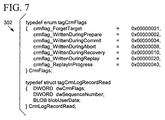
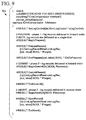
- the lCrmCompensator and lCrmCompensatorVariants interfaces are defined in the program listings 302-303 shown in Figures 7 and 8.
- the "SetLogControl()" method is called by the CRM clerk 222 first after creating the CRM compensator 212 to pass a pointer to the CRM clerk's lCrmLogControl interface 230 (as the "pLogControl" parameter) to the CRM compensator 212. This allows the CRM Compensator to write further log records during transaction completion.
- a return value other than "S_OK" from this method is considered an error of the CRM compensator that will cause a "failfast" of the ASP 90, unless specifically overridden via a registry flag for the CRM compensator CLSID.
- the "BeginPrepare()" method is called by the CRM clerk 222 as the prepare notification (phase 1 of the two phase commit protocol) to the CRM compensator, and indicates that log records are about to be delivered.
- the prepare notification is sent only during normal processing, and not during recovery. Again, a return value other than "S_OK" is considered a CRM compensator error.
- the "PrepareRecord()" method is called by the CRM clerk 222 to deliver a log record to the CRM compensator 206 during the prepare phase.
- the log records are delivered in forward order.
- Unstructured log records are delivered as a "CrmLogRecordRead” data structure, which contains a flags field ("dwCrmFlags"), a sequence number (“dwSequenceNumber”), and the log record data ("blobUserData”).
- the flags field and sequence number provide information that may be useful for debugging or fault identification in circumstances where human compensation is necessary.
- the flags field includes flags that indicate whether the record was forgotten, and when the record was written.
- the sequence number of the log record indicates its sequence in the persistent log 226.
- the CRM compensator 206 can set the forget flag (the "pfForget” parameter) on return from the method to cause the CRM clerk to forget the log record delivered by the method call.
- the CRM compensator can return the value "ERROR_REPLAY_RECORDS" to cause the CRM clerk 222 to repeat delivery of all the log records written by the CRM worker, including also those that were forgotten and those written by the CRM compensator during the prepare phase.
- a return value other than "S_OK” or "ERROR_REPLAY_RECORDS” is considered a CRM compensator error that causes a failfast of the ASP 90.
- the "PrepareRecordVariants()" method is similar to the "PrepareRecord()" method, but delivers structured log records.
- the "EndPrepare()" method is called by the CRM clerk 222 to indicate that all log records available during the prepare phase have been delivered. If no log records were written by the CRM worker 202, the CRM clerk omits calling the PrepareRecord or "PrepareRecordVariants()" methods between its calls to the "BeginPrepare()" and "EndPrepare()” methods.
- the CRM compensator votes on the transaction outcome using the "fOkToPrepare” parameter.
- a return value other than "S_OK" is considered a CRM compensator error that causes a failfast of the ASP 90.
- the CRM clerk 222 calls the "BeginCommit()" or "BeginAbort()” methods to deliver a commit or abort notification, respectively, to the CRM compensator.
- the call also indicates to the CRM compensator that log records are about to be delivered for processing the commit or abort actions by the CRM compensator 206.
- the "fRecovery” parameter is a flag indicating whether the method is being called during recovery or normal processing.
- a return value other than "S_OK" is considered a CRM compensator error that causes a failfast of the ASP 90.
- the "CommitRecord()" and “AbortRecord()” methods are called by the CRM clerk 222 to deliver an unstructured log record during the commit or abort phase processing.
- the CRM clerk calls the similar "CommitRecordVariants()" or “AbortRecordVariants()” methods.
- the CRM clerk 222 delivers log records in the forward order.
- the CRM clerk 222 delivers log records in reverse order.
- the CRM clerk 222 omits calling the "CommitRecord()" (or “AbortRecord()") between "BeginCommit()" (or “BeginAbort()") and "EndCommit()" (or “EndAbort()”) calls.
- the CRM compensator can set the forget flag parameter ("fForget") on return to cause the CRM clerk 222 to forget the delivered log record.
- a return value other than "S_OK” or "ERROR_REPLAY_RECORDS" is considered a CRM compensator error that causes a failfast of the ASP 90.
- EndCommit() and “EndAbort()" methods are called by the CRM clerk 222 to notify the CRM compensator that all log records have been delivered during the commit or abort phase.
- the CRM clerk 222 is free to discard all log records for the transaction upon successful completion of this method.
- a return value other than "S_OK" is considered a CRM compensator error that causes a failfast of the ASP 90.
- the lLogRecover Interface The recovery engine 242 supports the lLogRecover interface 248.
- the interface is used by the CRM recovery clerk 224 to initiate check points during normal processing (via a call to the "TakeCheckpoint()" method), and to initiate recovery on the log file 244 during recovery processing (via the "Recover()" method).
- the lLogRecover interface is defined in the program listing 306 shown in Figure 10.
- the lLogRecoverClerk interface The CRM recovery clerk 224 and each CRM clerk 222 implement the lLogRecoverClerk interface.
- the recovery engine 242 uses the lLogRecoverClerk interface to drive the CRM recovery clerk 224 and the CRM clerk 222 through phases of recovery, and deliver the log records related to such clerk during the recovery phases.
- the recovery engine 242 also uses the lLogRecoverClerk interface to cause the CRM recovery clerk 224 and the CRM clerk 222 to perform their check point processing (via the "WriteCheckpoint()" method).
- the lLogRecoverClerk interface is defined by the program listing 308 shown in Figure 11.
- the lLogRecoverClerkPhaseNotification Interface The CRM clerk 222 implements the lLogRecoverClerkPhaseNotification interface. As the recovery engine 242 receives two phase commit notifications from the transactions in which it has enlisted, the recovery engine uses the lLogRecoverClerkPhaseNotification interface to pass the notification to the CRM clerk 222 that has the transaction.
- the lLogRecoverClerkPhaseNotification interface is defined in the programming listing 310 shown in Figure 12.
- the lLogRecoverClerkRegistration Interface The recovery engine 242 supports the lLogRecoverClerkRegistration, which is called by the CRM recovery clerk 224 and the CRM clerk 222 to register with the persistent log 226. As described above, the CRM recovery clerk 224 registers its class identifier (CLSID) with the recovery clerk, while the CRM clerk registers a clerk instance identifier that uniquely identifies the CRM clerk 222 among other CRM clerks of the same class.
- CLSID class identifier
- the lLogRecoverClerkRegistration interface is defined in the program listing 312 shown in Figure 13.
- the lLog Interface The log object 240 implements the lLog interface, which provides services to the CRM clerk 222, the CRM recovery clerk 224 and the recovery engine 242 for stably writing log records to the log file 244.
- the lLog interface is defined in the program listing 314 shown in Figure 14.
- compensating resource managers can alternatively log an identification (e.g., CLSID or PROGID) of the compensator object in the log information written to the persistent log 226 to be used by the system-provided infrastructure (e.g., the CRM clerk 222 and the CRM recovery clerk 224) to create the compensator component to process two phase commit notifications of the transaction manager 148 (Fig 2).
- an identification e.g., CLSID or PROGID
Landscapes
- Engineering & Computer Science (AREA)
- Theoretical Computer Science (AREA)
- Software Systems (AREA)
- Physics & Mathematics (AREA)
- General Engineering & Computer Science (AREA)
- General Physics & Mathematics (AREA)
- Quality & Reliability (AREA)
- Information Retrieval, Db Structures And Fs Structures Therefor (AREA)
- Multi Processors (AREA)
Applications Claiming Priority (2)
| Application Number | Priority Date | Filing Date | Title |
|---|---|---|---|
| US114230 | 1987-10-27 | ||
| US09/114,230 US6526416B1 (en) | 1998-06-30 | 1998-06-30 | Compensating resource managers |
Publications (3)
| Publication Number | Publication Date |
|---|---|
| EP0969363A2 true EP0969363A2 (fr) | 2000-01-05 |
| EP0969363A3 EP0969363A3 (fr) | 2003-05-28 |
| EP0969363B1 EP0969363B1 (fr) | 2008-02-20 |
Family
ID=22354077
Family Applications (1)
| Application Number | Title | Priority Date | Filing Date |
|---|---|---|---|
| EP98116261A Expired - Lifetime EP0969363B1 (fr) | 1998-06-30 | 1998-08-28 | Gestionnaire de resources compensatoire |
Country Status (5)
| Country | Link |
|---|---|
| US (1) | US6526416B1 (fr) |
| EP (1) | EP0969363B1 (fr) |
| JP (1) | JP4159175B2 (fr) |
| CA (1) | CA2246908A1 (fr) |
| DE (1) | DE69839145T2 (fr) |
Cited By (3)
| Publication number | Priority date | Publication date | Assignee | Title |
|---|---|---|---|---|
| WO2004025461A3 (fr) * | 2002-09-12 | 2004-10-14 | Ibm | Systeme de traitement de donnees adapte a l'integration de processus non homogenes |
| EP1748384A3 (fr) * | 2005-04-06 | 2008-05-28 | International Business Machines Corporation | Traitement de possibilités de compensation dans des systèmes de gestion de flux de travail |
| US7949551B2 (en) | 2005-04-06 | 2011-05-24 | International Business Machines Corporation | Processing of compensation scopes in workflow management systems |
Families Citing this family (50)
| Publication number | Priority date | Publication date | Assignee | Title |
|---|---|---|---|---|
| US6601069B2 (en) * | 2000-12-15 | 2003-07-29 | Hewlett-Packard Development Company, L.P. | Synchronization using commitment |
| US7146399B2 (en) * | 2001-05-25 | 2006-12-05 | 2006 Trident Company | Run-time architecture for enterprise integration with transformation generation |
| US8412746B2 (en) * | 2001-05-25 | 2013-04-02 | International Business Machines Corporation | Method and system for federated querying of data sources |
| US7099885B2 (en) * | 2001-05-25 | 2006-08-29 | Unicorn Solutions | Method and system for collaborative ontology modeling |
| US7877421B2 (en) * | 2001-05-25 | 2011-01-25 | International Business Machines Corporation | Method and system for mapping enterprise data assets to a semantic information model |
| US20030101170A1 (en) * | 2001-05-25 | 2003-05-29 | Joseph Edelstein | Data query and location through a central ontology model |
| US20060064666A1 (en) | 2001-05-25 | 2006-03-23 | Amaru Ruth M | Business rules for configurable metamodels and enterprise impact analysis |
| US7383321B2 (en) | 2002-07-09 | 2008-06-03 | Moyer Alan L | Method and system for communicating between a remote printer and a server |
| US7047386B1 (en) * | 2001-05-31 | 2006-05-16 | Oracle International Corporation | Dynamic partitioning of a reusable resource |
| US7437525B2 (en) | 2001-05-31 | 2008-10-14 | Oracle International Corporation | Guaranteed undo retention |
| US20020194244A1 (en) * | 2001-06-01 | 2002-12-19 | Joan Raventos | System and method for enabling transaction-based service utilizing non-transactional resources |
| US7171410B1 (en) * | 2001-06-02 | 2007-01-30 | Redback Networks, Inc. | Fault tolerant network element |
| US20030126159A1 (en) * | 2001-12-28 | 2003-07-03 | Nwafor John I. | Method and system for rollback of software system upgrade |
| US7916322B2 (en) * | 2002-03-14 | 2011-03-29 | Senshin Capital, Llc | Method and apparatus for uploading content from a device to a remote network location |
| WO2003088142A2 (fr) * | 2002-04-10 | 2003-10-23 | Instasolv, Inc. | Procede et systeme de gestion de systemes informatiques |
| US7406486B1 (en) * | 2002-04-10 | 2008-07-29 | Oracle International Corporation | Transforming transactions to increase parallelism when replicating |
| US8738568B2 (en) | 2011-05-05 | 2014-05-27 | Oracle International Corporation | User-defined parallelization in transactional replication of in-memory database |
| US20040010540A1 (en) * | 2002-07-09 | 2004-01-15 | Puri Anish N. | Method and system for streamlining data transfer between a content provider server and an output server |
| US7076508B2 (en) * | 2002-08-12 | 2006-07-11 | International Business Machines Corporation | Method, system, and program for merging log entries from multiple recovery log files |
| US7103597B2 (en) * | 2002-10-03 | 2006-09-05 | Mcgoveran David O | Adaptive transaction manager for complex transactions and business process |
| US7627817B2 (en) | 2003-02-21 | 2009-12-01 | Motionpoint Corporation | Analyzing web site for translation |
| US7346905B2 (en) * | 2003-06-10 | 2008-03-18 | International Business Machines Corporation | Apparatus and method for maintaining resource integrity without a unified transaction manager in a software environment |
| US7713116B2 (en) * | 2003-06-30 | 2010-05-11 | Microsoft Corporation | Inventory management of virtual items in computer games |
| KR100659971B1 (ko) * | 2003-12-26 | 2006-12-22 | 한국전자통신연구원 | 웹서비스 트랜잭션의 자동중단 처리시스템 및 방법 |
| US7281153B2 (en) * | 2004-04-14 | 2007-10-09 | International Business Machines Corporation | Apparatus, system, and method for transactional peer recovery in a data sharing clustering computer system |
| US7870426B2 (en) * | 2004-04-14 | 2011-01-11 | International Business Machines Corporation | Apparatus, system, and method for transactional peer recovery in a data sharing clustering computer system |
| US7716669B2 (en) * | 2004-04-30 | 2010-05-11 | Microsoft Corporation | Concurrent system applications in a multimedia console |
| US20050243093A1 (en) * | 2004-04-30 | 2005-11-03 | Microsoft Corporation | Universal controller help on a multimedia system |
| US20050246638A1 (en) * | 2004-04-30 | 2005-11-03 | Microsoft Corporation | Presenting in-game tips on a video game system |
| US8707317B2 (en) * | 2004-04-30 | 2014-04-22 | Microsoft Corporation | Reserving a fixed amount of hardware resources of a multimedia console for system application and controlling the unreserved resources by the multimedia application |
| US7798903B2 (en) * | 2004-04-30 | 2010-09-21 | Microsoft Corporation | System and method for accessing system software in a gaming console system via an input device |
| US8074220B2 (en) * | 2004-05-21 | 2011-12-06 | Computer Associates Think, Inc. | System and method for interfacing an application to a distributed transaction coordinator |
| US8095826B1 (en) * | 2004-06-29 | 2012-01-10 | Symantec Operating Corporation | Method and apparatus for providing in-memory checkpoint services within a distributed transaction |
| US7607125B2 (en) * | 2004-11-11 | 2009-10-20 | Microsoft Corporation | Programming language support for integrating undo and exception handling |
| JP2006221352A (ja) * | 2005-02-09 | 2006-08-24 | Ntt Data Corp | 異常系プロセス自動生成方法および異常系プロセス自動生成プログラム |
| US20060288049A1 (en) * | 2005-06-20 | 2006-12-21 | Fabio Benedetti | Method, System and computer Program for Concurrent File Update |
| US7856618B2 (en) * | 2005-08-04 | 2010-12-21 | International Business Machines Corporation | Adaptively generating code for a computer program |
| US20070033592A1 (en) * | 2005-08-04 | 2007-02-08 | International Business Machines Corporation | Method, apparatus, and computer program product for adaptive process dispatch in a computer system having a plurality of processors |
| US7890457B2 (en) * | 2006-10-20 | 2011-02-15 | Oracle International Corporation | Transactionally consistent database workload replay |
| US7516128B2 (en) * | 2006-11-14 | 2009-04-07 | International Business Machines Corporation | Method for cleansing sequence-based data at query time |
| US7747899B2 (en) | 2007-06-26 | 2010-06-29 | Microsoft Corporation | Providing mapping fault processing |
| US8566780B2 (en) | 2007-06-26 | 2013-10-22 | Microsoft Corporation | Object model based mapping |
| US8166481B2 (en) * | 2008-10-20 | 2012-04-24 | Microsoft Corporation | Transaction processing in transactional memory |
| US8499298B2 (en) * | 2010-01-28 | 2013-07-30 | International Business Machines Corporation | Multiprocessing transaction recovery manager |
| US9128918B2 (en) | 2010-07-13 | 2015-09-08 | Motionpoint Corporation | Dynamic language translation of web site content |
| US20120331471A1 (en) * | 2011-06-27 | 2012-12-27 | Microsoft Corporation | Executing molecular transactions |
| US9384302B2 (en) * | 2013-06-17 | 2016-07-05 | International Business Machines Corporation | Generating differences for tuple attributes |
| US10096065B2 (en) | 2015-01-16 | 2018-10-09 | Red Hat, Inc. | Distributed transactions with extended locks |
| US10430402B2 (en) | 2015-01-16 | 2019-10-01 | Red Hat, Inc. | Distributed transaction with dynamic form |
| US10901776B2 (en) | 2017-12-04 | 2021-01-26 | Red Hat, Inc. | Efficient and scalable transaction processing using a consensus-based transaction model |
Family Cites Families (42)
| Publication number | Priority date | Publication date | Assignee | Title |
|---|---|---|---|---|
| US4752928A (en) | 1985-05-06 | 1988-06-21 | Tektronix, Inc. | Transaction analyzer |
| US5125091A (en) | 1989-06-08 | 1992-06-23 | Hazox Corporation | Object oriented control of real-time processing |
| DE69029441T2 (de) | 1989-08-24 | 1997-06-12 | Ibm | System für den Aufruf von Prozeduren von einem Fernnetzwerkknotenpunkt |
| US5151987A (en) | 1990-10-23 | 1992-09-29 | International Business Machines Corporation | Recovery objects in an object oriented computing environment |
| US5212793A (en) | 1991-09-04 | 1993-05-18 | International Business Machines Corp. | Generic initiators |
| US5278982A (en) * | 1991-12-23 | 1994-01-11 | International Business Machines Corporation | Log archive filtering method for transaction-consistent forward recovery from catastrophic media failures |
| EP0930566A3 (fr) | 1992-07-06 | 2006-07-05 | Microsoft Corporation | Méthode et système pour composer des objets |
| WO1994014115A2 (fr) | 1992-12-01 | 1994-06-23 | Microsoft Corporation | Procede et systeme d'interaction sur place avec des objets integres |
| EP0613083B1 (fr) | 1993-02-25 | 2002-01-23 | Sun Microsystems, Inc. | Gestion de transactions dans un système orienté objet |
| JP2557192B2 (ja) | 1993-03-15 | 1996-11-27 | インターナショナル・ビジネス・マシーンズ・コーポレイション | トランザクション処理の同期方法、トランザクション処理のモニタ方法及びトランザクションのコミット処理方法 |
| US5377350A (en) | 1993-04-30 | 1994-12-27 | International Business Machines Corporation | System for cooperative communication between local object managers to provide verification for the performance of remote calls by object messages |
| US5577252A (en) | 1993-07-28 | 1996-11-19 | Sun Microsystems, Inc. | Methods and apparatus for implementing secure name servers in an object-oriented system |
| US5455953A (en) | 1993-11-03 | 1995-10-03 | Wang Laboratories, Inc. | Authorization system for obtaining in single step both identification and access rights of client to server directly from encrypted authorization ticket |
| US5517645A (en) | 1993-11-05 | 1996-05-14 | Microsoft Corporation | Method and system for interfacing components via aggregate components formed by aggregating the components each with an instance of a component manager |
| JPH07262072A (ja) | 1994-03-16 | 1995-10-13 | Fuji Xerox Co Ltd | ファイル管理装置 |
| US5706429A (en) | 1994-03-21 | 1998-01-06 | International Business Machines Corporation | Transaction processing system and method |
| US6330582B1 (en) | 1994-03-21 | 2001-12-11 | International Business Machines Corporation | Apparatus and method enabling a client to control transaction message traffic between server and client processes |
| US5524238A (en) | 1994-03-23 | 1996-06-04 | Breakout I/O Corporation | User specific intelligent interface which intercepts and either replaces or passes commands to a data identity and the field accessed |
| US5864683A (en) | 1994-10-12 | 1999-01-26 | Secure Computing Corporartion | System for providing secure internetwork by connecting type enforcing secure computers to external network for limiting access to data based on user and process access rights |
| US5687370A (en) | 1995-01-31 | 1997-11-11 | Next Software, Inc. | Transparent local and distributed memory management system |
| US5822585A (en) | 1995-02-21 | 1998-10-13 | Compuware Corporation | System and method for cooperative processing using object-oriented framework |
| US5802291A (en) | 1995-03-30 | 1998-09-01 | Sun Microsystems, Inc. | System and method to control and administer distributed object servers using first class distributed objects |
| US5797015A (en) | 1995-04-18 | 1998-08-18 | Pitney Bowes Inc. | Method of customizing application software in inserter systems |
| US5889957A (en) | 1995-06-07 | 1999-03-30 | Tandem Computers Incorporated | Method and apparatus for context sensitive pathsend |
| US5941947A (en) | 1995-08-18 | 1999-08-24 | Microsoft Corporation | System and method for controlling access to data entities in a computer network |
| US5717439A (en) | 1995-10-10 | 1998-02-10 | Xerox Corporation | Hierarchy of saving and retrieving control templates |
| US5764958A (en) | 1995-11-30 | 1998-06-09 | International Business Machines Corporation | Method and apparatus for creating dynamic roles with a system object model |
| US5815665A (en) | 1996-04-03 | 1998-09-29 | Microsoft Corporation | System and method for providing trusted brokering services over a distributed network |
| US5857204A (en) * | 1996-07-02 | 1999-01-05 | Ab Initio Software Corporation | Restoring the state of a set of files |
| US6253252B1 (en) | 1996-07-11 | 2001-06-26 | Andrew Schofield | Method and apparatus for asynchronously calling and implementing objects |
| US5781910A (en) | 1996-09-13 | 1998-07-14 | Stratus Computer, Inc. | Preforming concurrent transactions in a replicated database environment |
| US5884327A (en) | 1996-09-25 | 1999-03-16 | International Business Machines Corporation | System, method and program for performing two-phase commit with a coordinator that performs no logging |
| US5884316A (en) | 1996-11-19 | 1999-03-16 | Microsoft Corporation | Implicit session context system with object state cache |
| US5913061A (en) | 1997-01-08 | 1999-06-15 | Crossroads Software, Inc. | Modular application collaboration |
| US6094688A (en) | 1997-01-08 | 2000-07-25 | Crossworlds Software, Inc. | Modular application collaboration including filtering at the source and proxy execution of compensating transactions to conserve server resources |
| US5933593A (en) | 1997-01-22 | 1999-08-03 | Oracle Corporation | Method for writing modified data from a main memory of a computer back to a database |
| US5875291A (en) | 1997-04-11 | 1999-02-23 | Tandem Computers Incorporated | Method and apparatus for checking transactions in a computer system |
| US5881225A (en) | 1997-04-14 | 1999-03-09 | Araxsys, Inc. | Security monitor for controlling functional access to a computer system |
| US6105147A (en) | 1997-04-16 | 2000-08-15 | Compaq Computer Corporation | Using process pairs as transaction-coordinated resource managers |
| US6026428A (en) | 1997-08-13 | 2000-02-15 | International Business Machines Corporation | Object oriented thread context manager, method and computer program product for object oriented thread context management |
| US5958004A (en) | 1997-10-28 | 1999-09-28 | Microsoft Corporation | Disabling and enabling transaction committal in transactional application components |
| US5890161A (en) | 1997-10-28 | 1999-03-30 | Microsoft Corporation | Automatic transaction processing of component-based server applications |
-
1998
- 1998-06-30 US US09/114,230 patent/US6526416B1/en not_active Expired - Fee Related
- 1998-08-28 DE DE69839145T patent/DE69839145T2/de not_active Expired - Lifetime
- 1998-08-28 EP EP98116261A patent/EP0969363B1/fr not_active Expired - Lifetime
- 1998-09-09 CA CA002246908A patent/CA2246908A1/fr not_active Abandoned
-
1999
- 1999-04-13 JP JP10511199A patent/JP4159175B2/ja not_active Expired - Fee Related
Cited By (5)
| Publication number | Priority date | Publication date | Assignee | Title |
|---|---|---|---|---|
| WO2004025461A3 (fr) * | 2002-09-12 | 2004-10-14 | Ibm | Systeme de traitement de donnees adapte a l'integration de processus non homogenes |
| US7477953B2 (en) | 2002-09-12 | 2009-01-13 | International Business Machines Corporation | Data processing system adapted to integrating non-homogeneous processes |
| US8676635B2 (en) | 2002-09-12 | 2014-03-18 | International Business Machines Corporation | Method and system for managing transactions |
| EP1748384A3 (fr) * | 2005-04-06 | 2008-05-28 | International Business Machines Corporation | Traitement de possibilités de compensation dans des systèmes de gestion de flux de travail |
| US7949551B2 (en) | 2005-04-06 | 2011-05-24 | International Business Machines Corporation | Processing of compensation scopes in workflow management systems |
Also Published As
| Publication number | Publication date |
|---|---|
| EP0969363A3 (fr) | 2003-05-28 |
| CA2246908A1 (fr) | 1999-12-30 |
| JP4159175B2 (ja) | 2008-10-01 |
| DE69839145T2 (de) | 2009-03-05 |
| DE69839145D1 (de) | 2008-04-03 |
| JP2000020364A (ja) | 2000-01-21 |
| US6526416B1 (en) | 2003-02-25 |
| EP0969363B1 (fr) | 2008-02-20 |
Similar Documents
| Publication | Publication Date | Title |
|---|---|---|
| EP0969363B1 (fr) | Gestionnaire de resources compensatoire | |
| US5923833A (en) | Restart and recovery of OMG-compliant transaction systems | |
| US6625602B1 (en) | Method and system for hierarchical transactions and compensation | |
| US6678696B1 (en) | Transaction processing of distributed objects with declarative transactional attributes | |
| JP2644188B2 (ja) | フォールト・トレラント・トランザクション指向データ処理システムおよび方法 | |
| US5465328A (en) | Fault-tolerant transaction-oriented data processing | |
| CN102282548B (zh) | 事务性的存储器中的事务处理 | |
| US6597366B1 (en) | Transparent general purpose object isolation for multi-tier distributed object environments | |
| US6799188B2 (en) | Transaction processing system providing improved methodology for two-phase commit decision | |
| US7665093B2 (en) | Synchronization of runtime and application state via batching of workflow transactions | |
| US6714962B1 (en) | Multi-user server application architecture with single-user object tier | |
| US6988099B2 (en) | Systems and methods for maintaining transactional persistence | |
| US6061708A (en) | System and method for supporting mixed-phase transactions in an object-oriented environment | |
| US6381617B1 (en) | Multiple database client transparency system and method therefor | |
| WO2004077270A2 (fr) | Systemes et procedes de chainage de transactions | |
| US7467371B1 (en) | Binding for business workflow processes | |
| US6389431B1 (en) | Message-efficient client transparency system and method therefor | |
| US20080120618A1 (en) | Issuing syncpoints during execution of a batch application to minimize or eliminate periods of record unavailability due to batch related record locking | |
| CN119066078B (zh) | 分布式锁的处理方法和装置 | |
| US7991971B2 (en) | State management for transactional backup consistency | |
| Barga et al. | Persistent applications via automatic recovery | |
| Silaghi et al. | Porting OMTTs to CORBA | |
| WO2000045286A9 (fr) | Procede et appareil pour l'acces a une base de donnees repartie | |
| Little et al. | Integrating the object transaction service with the Web | |
| Houston et al. | The CORBA Activity Service Framework for supporting extended transactions |
Legal Events
| Date | Code | Title | Description |
|---|---|---|---|
| PUAI | Public reference made under article 153(3) epc to a published international application that has entered the european phase |
Free format text: ORIGINAL CODE: 0009012 |
|
| AK | Designated contracting states |
Kind code of ref document: A2 Designated state(s): AT BE CH CY DE DK ES FI FR GB GR IE IT LI LU MC NL PT SE |
|
| AX | Request for extension of the european patent |
Free format text: AL;LT;LV;MK;RO;SI |
|
| PUAL | Search report despatched |
Free format text: ORIGINAL CODE: 0009013 |
|
| AK | Designated contracting states |
Designated state(s): AT BE CH CY DE DK ES FI FR GB GR IE IT LI LU MC NL PT SE |
|
| AX | Request for extension of the european patent |
Extension state: AL LT LV MK RO SI |
|
| 17P | Request for examination filed |
Effective date: 20031024 |
|
| AKX | Designation fees paid |
Designated state(s): DE FR GB |
|
| 17Q | First examination report despatched |
Effective date: 20041006 |
|
| GRAP | Despatch of communication of intention to grant a patent |
Free format text: ORIGINAL CODE: EPIDOSNIGR1 |
|
| GRAS | Grant fee paid |
Free format text: ORIGINAL CODE: EPIDOSNIGR3 |
|
| GRAA | (expected) grant |
Free format text: ORIGINAL CODE: 0009210 |
|
| AK | Designated contracting states |
Kind code of ref document: B1 Designated state(s): DE FR GB |
|
| REG | Reference to a national code |
Ref country code: GB Ref legal event code: FG4D |
|
| REF | Corresponds to: |
Ref document number: 69839145 Country of ref document: DE Date of ref document: 20080403 Kind code of ref document: P |
|
| ET | Fr: translation filed | ||
| PLBE | No opposition filed within time limit |
Free format text: ORIGINAL CODE: 0009261 |
|
| STAA | Information on the status of an ep patent application or granted ep patent |
Free format text: STATUS: NO OPPOSITION FILED WITHIN TIME LIMIT |
|
| 26N | No opposition filed |
Effective date: 20081121 |
|
| REG | Reference to a national code |
Ref country code: DE Ref legal event code: R082 Ref document number: 69839145 Country of ref document: DE Representative=s name: BOEHMERT & BOEHMERT ANWALTSPARTNERSCHAFT MBB -, DE |
|
| REG | Reference to a national code |
Ref country code: GB Ref legal event code: 732E Free format text: REGISTERED BETWEEN 20150108 AND 20150114 |
|
| REG | Reference to a national code |
Ref country code: DE Ref legal event code: R082 Ref document number: 69839145 Country of ref document: DE Representative=s name: BOEHMERT & BOEHMERT ANWALTSPARTNERSCHAFT MBB -, DE Effective date: 20150126 Ref country code: DE Ref legal event code: R081 Ref document number: 69839145 Country of ref document: DE Owner name: MICROSOFT TECHNOLOGY LICENSING, LLC, REDMOND, US Free format text: FORMER OWNER: MICROSOFT CORP., REDMOND, WASH., US Effective date: 20150126 |
|
| REG | Reference to a national code |
Ref country code: FR Ref legal event code: PLFP Year of fee payment: 18 |
|
| REG | Reference to a national code |
Ref country code: FR Ref legal event code: TP Owner name: MICROSOFT TECHNOLOGY LICENSING, LLC, US Effective date: 20150724 |
|
| REG | Reference to a national code |
Ref country code: FR Ref legal event code: PLFP Year of fee payment: 19 |
|
| PGFP | Annual fee paid to national office [announced via postgrant information from national office to epo] |
Ref country code: DE Payment date: 20160823 Year of fee payment: 19 Ref country code: GB Payment date: 20160824 Year of fee payment: 19 |
|
| PGFP | Annual fee paid to national office [announced via postgrant information from national office to epo] |
Ref country code: FR Payment date: 20160712 Year of fee payment: 19 |
|
| REG | Reference to a national code |
Ref country code: DE Ref legal event code: R119 Ref document number: 69839145 Country of ref document: DE |
|
| GBPC | Gb: european patent ceased through non-payment of renewal fee |
Effective date: 20170828 |
|
| REG | Reference to a national code |
Ref country code: FR Ref legal event code: ST Effective date: 20180430 |
|
| PG25 | Lapsed in a contracting state [announced via postgrant information from national office to epo] |
Ref country code: GB Free format text: LAPSE BECAUSE OF NON-PAYMENT OF DUE FEES Effective date: 20170828 Ref country code: DE Free format text: LAPSE BECAUSE OF NON-PAYMENT OF DUE FEES Effective date: 20180301 |
|
| PG25 | Lapsed in a contracting state [announced via postgrant information from national office to epo] |
Ref country code: FR Free format text: LAPSE BECAUSE OF NON-PAYMENT OF DUE FEES Effective date: 20170831 |