EP0970496B1 - Supercondensateur du type double couche comprenant un electrolyte organique liquide - Google Patents
Supercondensateur du type double couche comprenant un electrolyte organique liquide Download PDFInfo
- Publication number
- EP0970496B1 EP0970496B1 EP98906976A EP98906976A EP0970496B1 EP 0970496 B1 EP0970496 B1 EP 0970496B1 EP 98906976 A EP98906976 A EP 98906976A EP 98906976 A EP98906976 A EP 98906976A EP 0970496 B1 EP0970496 B1 EP 0970496B1
- Authority
- EP
- European Patent Office
- Prior art keywords
- supercapacitor according
- chosen
- specific surface
- surface area
- group
- Prior art date
- Legal status (The legal status is an assumption and is not a legal conclusion. Google has not performed a legal analysis and makes no representation as to the accuracy of the status listed.)
- Expired - Lifetime
Links
Images

Classifications
-
- H—ELECTRICITY
- H01—ELECTRIC ELEMENTS
- H01G—CAPACITORS; CAPACITORS, RECTIFIERS, DETECTORS, SWITCHING DEVICES, LIGHT-SENSITIVE OR TEMPERATURE-SENSITIVE DEVICES OF THE ELECTROLYTIC TYPE
- H01G11/00—Hybrid capacitors, i.e. capacitors having different positive and negative electrodes; Electric double-layer [EDL] capacitors; Processes for the manufacture thereof or of parts thereof
- H01G11/54—Electrolytes
- H01G11/58—Liquid electrolytes
-
- H—ELECTRICITY
- H01—ELECTRIC ELEMENTS
- H01G—CAPACITORS; CAPACITORS, RECTIFIERS, DETECTORS, SWITCHING DEVICES, LIGHT-SENSITIVE OR TEMPERATURE-SENSITIVE DEVICES OF THE ELECTROLYTIC TYPE
- H01G11/00—Hybrid capacitors, i.e. capacitors having different positive and negative electrodes; Electric double-layer [EDL] capacitors; Processes for the manufacture thereof or of parts thereof
- H01G11/54—Electrolytes
- H01G11/58—Liquid electrolytes
- H01G11/62—Liquid electrolytes characterised by the solute, e.g. salts, anions or cations therein
-
- Y—GENERAL TAGGING OF NEW TECHNOLOGICAL DEVELOPMENTS; GENERAL TAGGING OF CROSS-SECTIONAL TECHNOLOGIES SPANNING OVER SEVERAL SECTIONS OF THE IPC; TECHNICAL SUBJECTS COVERED BY FORMER USPC CROSS-REFERENCE ART COLLECTIONS [XRACs] AND DIGESTS
- Y02—TECHNOLOGIES OR APPLICATIONS FOR MITIGATION OR ADAPTATION AGAINST CLIMATE CHANGE
- Y02E—REDUCTION OF GREENHOUSE GAS [GHG] EMISSIONS, RELATED TO ENERGY GENERATION, TRANSMISSION OR DISTRIBUTION
- Y02E60/00—Enabling technologies; Technologies with a potential or indirect contribution to GHG emissions mitigation
- Y02E60/13—Energy storage using capacitors
Definitions
- the invention relates to supercapacitors or capacitors of high capacity, including an electrolyte consisting of an organic solution of a salt.
- a supercapacitor is an intermediate element between the capacitor and the accumulator, in terms of energy and power.
- An accumulator provides a lot of energy (40 to 150 Wh / kg) but this element is limited in power ( ⁇ 5 10 2 W / kg).
- a capacitor provides high impulse power (10 4 to 10 6 W / kg), but its associated mass energy is low ( ⁇ 0.1 Wh / kg).
- supercapacitors is meant any electrochemical system using at least the surface properties of an ideally polarizable material of high specific surface. In other words, the supercapacitor is a high capacity electrochemical capacitor.
- the origin of the operation of a supercapacitor is based on the principle of the double layer. During the charge of the supercapacitor, there are accumulation of ionic species on either side of the two electrodes, at the ideally polarizable material / electrolyte interface. There can be also redox reactions in the presence of redox sites leading to a pseudo-capacitive system.
- Supercapacitors based on the principle of the double layer were made from a variety of materials. These supercapacitors are assembled from two high surface carbon electrodes specific.
- supercapacitors further include current leads, a separator located between the electrodes, an electrolyte and an airtight packaging vis-à-vis the environment.
- One of the key elements of a supercapacitor is constituted by the electrolyte which typically comprises a solution of a salt, i.e. a combination of a salt and a solvent.
- the electrolytes are liquid, of low viscosity and have high conductivity over a wide range of temperatures. They must also be of low cost, chemically and electrochemically stable, and compatible with carbon or others materials constituting the electrodes.
- Patent application EP-A-704 871 describes an electrolyte consisting of an organic solution of a quaternary ammonium salt.
- the examples 1 and 2 particularly mention a solution of ⁇ -butyrotactone 20% monotetramethyl ammonium phthalate or one 20% solution of ⁇ -butyrolactone maleic acid triethylmethyl ammonium.
- Patent application EP-A-694,935 describes a solution in a nitrile solvent of a salt consisting of an ammonium cation and selected anions in particular among trifluoromethyl sulfonate, bistrifluoromethylsulfurylimide, trisfluoromethylsulfurylcarbanion, tetrafluoroborate, hexafluorophosphate, hexafluoroarsenate, perchlorate.
- This document particularly cites tetraalkylammonium tetrafluoroborate.
- US Patent 5,450,279 describes a solution of tetrafluoroborate tetraethylammonium or tetraethylammonium perchlorate in a solvent organic such as propylene carbonate or ⁇ -butyrolactone.
- US Patent 4,562,511 describes a double layer supercapacitor formed of two electrodes separated by a separator impregnated with a electrolyte. Each electrode consists of a layer of carbon polarizable and a conductive layer.
- the electrolyte is a solution of ⁇ -butyrolactone or propylene carbonate and perchlorate of tetraethyl.
- Patent application EP-A-660 346 describes a double layer supercapacitor whose electrolyte is an organic solution of lithium or ammonium salt.
- solvents are mentioned in particular ethylene carbonate, propylene carbonate, butylene carbonate, dimethyl carbonate, ⁇ -butyrolactone, acetonitrile, 1,2-dimethoxyethane, and as salts, lithium salts LiAsF 6 , LiBF 4 , LiPF 6 , LiClO 4 or ammonium.
- n ° 573 describes an electrolyte formed of phosphonium and ammonium salts in solution in the propylene carbonate.
- an electrolyte consisting of an organic solution a salt whose cation is the sodium or potassium cation or the cation of a alkaline earth metal chosen from magnesium or calcium in a solvent comprising one or more amides.
- the invention therefore relates to a supercapacitor ideally polarizable consisting of a positive electrode and its collector current, a negative electrode and its current collector, said electrodes comprising a carbon material with a high specific surface, a separator and a non-aqueous liquid electrolyte impregnating said separator and said electrodes, characterized in that the liquid electrolyte aqueous no3 is an organic solution of a salt corresponding to a cation of high mobility, chosen from the family comprising a sodium or potassium salt or an alkaline earth metal salt chosen from magnesium or calcium, said salts being present alone or in mixture in a solvent comprising one or more amides.
- the properties required for a carbonaceous material usable as that constituent of electrodes are a specific surface per unit of weight high, low electrical resistance and good stability electrochemical.
- Carbonaceous materials can be in the form of powders or fibers and are obtained for example from petroleum pitch, phenolic resin, coconut shells and other products equivalents. Such carbonaceous materials are for example described in the documents US 4,562,511 or US 5,450,279.
- the electrode is based on a carbon material, for example an active carbon with a specific surface of between 300 and 3000 m 2 / g, preferably greater than 1000 m 2 / g.
- each electrode is formed from a porous composite film of a polymeric material, of high specific surface, in particular greater than 10 m 2 / g, loaded with carbonaceous material, in particular activated carbon, and preferably greater than 20 m 2 / g.
- the polymeric material is made of elastomers or polymers thermoplastics which are insoluble in aqueous solvents and / or organic and which ensure the cohesion of the product (polymers or structural elastomers) and thermoplastic polymers or elastomers with polar groupings which remain in the film after processing of the manufacturing process which leads to said porous film.
- polyolefins such as polypropylenes, polyethylenes, copolymers of ethylene and propylene. These polyolefins are such that they can be produced in film form and are well known especially as packaging films.
- low or high density polyethylene optionally comprising as of a more or less significant proportion of an alpha-olefin.
- polyamides such as block polyethers polyamide, polyimides, vinyl copolymers with a high proportion of ethylene monomers such as high polyethylene vinyl acetate proportion of ethylene monomers, acrylic polymers, aromatic polymers such as polystyrenes, such as the copolymer polystyrene-butadiene, fluorinated polymers such as polyfluoride vinylidene, copolymers formed from monomers belonging to one of the families mentioned above, for example fluoride copolymers of vinylidene and hexafluoropropylene, the fluoride copolymers of vinylidene and trifluoroethylene.
- polyamides such as block polyethers polyamide, polyimides, vinyl copolymers with a high proportion of ethylene monomers such as high polyethylene vinyl acetate proportion of ethylene monomers, acrylic polymers, aromatic polymers such as polystyrenes, such as the copolymer polystyrene-butadiene, fluorinated polymers such as
- thermoplastic elastomers or polymers insoluble in solvents are chosen from the group of polyolefins.
- soluble polymers mention is made in particular of polymers which are soluble in the following solvents: water, alcohols, dimethylformamide, dimethyl sulfoxide, tetrahydrofuran, acetone.
- soluble polymers are especially chosen from polyethers such as polyoxyethylene, polyoxypropylene, polyalcohols such as polyvinyl alcohol, ethylene vinyl alcohol copolymers.
- Burnable polymers correspond to soluble polymers in the solvents mentioned above and can be further chosen from polymers whose decomposition temperature is lower than that of structural polymer or elastomer, for example cellulose.
- the composite film comprises at least 30% by weight of charges, advantageously between 40 and 90%, preferably between 50 and 85%.
- porous composite film used in the supercapacitor according to the invention comes in a homogeneous and regular form, that is to say that the charges are intimately mixed with the material polymer, unlike for example sheets obtained by coating a mixture of carbonaceous fillers with a small proportion of binder polymer of the polytetrafluoroethylene type.
- Porous composite films have the advantage of being able to be implemented using winding technology.
- These films are self-supporting, i.e. they avoid the use of a support.
- Said method is therefore an extrusion-elimination method allowing to obtain a composite film with a high specific surface.
- phase a) of the process homogeneous mixing is carried out, either by dissolution or suspension, all of the constituents, know one or more polymers insoluble in solvent and which correspond to the polymeric material forming the structure of the composite film, another polymer or other solvent-soluble or calcinable polymers and a or several charges with a high specific surface, knowing that the polymers ensuring the cohesion of the composite film (insoluble polymers) as well as the charges with a high specific surface are not removed during step c). Mixing can also be done using the extruder allowing implementation of step b).
- soluble polymers which will be eliminated during step c)
- soluble polymers are especially chosen from polyethers such as polyoxyethylene, polyoxypropylene, polyalcohols such as polyvinyl alcohol, ethylene vinyl alcohol copolymers.
- Burnable polymers can be chosen from polymers whose decomposition temperature is lower than that of the polymer or structural elastomer, for example cellulose.
- steps a) and b) are carried out simultaneously to give a precursor intermediate product having a very low specific surface (less than approximately 1 m 2 / g).
- the precursor product can be extruded again in the form of a film, especially a thin film whose thickness is less than about 300 .mu.m.
- the first step is advantageously carried out in a co-rotating twin screw extruder, with a rod die for example, while the second step is advantageously carried out in an extruder single screw with a flat die.
- step c) of elimination allowing to evacuate the soluble polymer.
- This elimination step can be carried out in particular by solubilization of the soluble polymer by bringing it into contact with a suitable solvent.
- Calcination can also be carried out according to a known process. which consists in slowly raising the temperature to the temperature of degradation of the polymer to be eliminated.
- the films are then recovered and have a "BET" specific surface greater than approximately 10 m 2 / g, preferably greater than approximately 20 m 2 / g.
- the electrodes can also be formed from an activated carbon fabric with a specific surface greater than 1000 m 2 / g.
- Other carbon electrodes can be produced from a sheet of metal, for example aluminum, acting as a collector, on which is deposited a paste containing an activated charcoal powder in as a main component and a binder based on a fluorinated resin or equivalent for example.
- an activated carbon fiber fabric one can also deposit by plasma spraying an aluminum layer.
- the electrolyte solution is based on a polar aprotic solvent comprising one or more amides.
- a polar aprotic solvent comprising one or more amides.
- these solvents we choose those which have a high dielectric constant ( ⁇ ), a low viscosity and which maintain their liquid state over a wide range of temperatures.
- amides mention is made in particular of dimethylformamide, formamide, N-methyl formamide, N-methyl propionamide, N, N-dimethyl acetamide alone or as a mixture.
- the polar solvent can also comprise as compound minority esters, nitriles, carbonates.
- the minority term means that said compound does not significantly affect the properties of the solvent ( ⁇ 20% by weight preferably).
- esters mention is made in particular of cyclic esters such as ⁇ -butyrolactone.
- carbonates mention is made in particular of cyclic carbonates such as propylene carbonate.
- the solvent is associated with a co-solvent capable of lowering the viscosity of the solution.
- the viscosity is not too high and in general between 0.0002 and 0.003 Pa.s (0.2 and 3 cps) at 25 ° C.
- the co-solvent is chosen from methyl formate, formate ethyl, dimethyl carbonate, diethyl carbonate, acetate methyl, ethyl acetate, dimethoxy methane, dimethoxy ethane, diethoxy methane, diethoxy ethane, dioxolane, tetrahydrofuran, acetonitrile.
- Preferably salt is present in the solution at a concentration from 0.3 to 3 moles per liter.
- the sodium or potassium salts are preferably chosen from the group consisting of NaCl, NaBr, NaBF 4 , NaPF 6 , NaClO 4 , NaRSO 3 , R being a lower perfluoroalkyl radical (from 1 to 6 carbon atoms, in particular CF 3 ).
- the magnesium or calcium salts are preferably chosen from the group consisting of MgCl 2 , MgSO 4 , Mg (ClO 4 ) 2 , CaCl 2 , Ca (NO 3 ) 2 , CaSO 4 or Ca (ClO 4 ) 2 .
- the separator present between the two electrodes is a separator porous ionic conductor.
- the separator is, for example, made up of a microporous polyethylene film.
- the supercapacitor 1 is formed of two electrodes 2, 3 carbon composites, of a polypropylene polymer film loaded with activated carbon.
- the two electrodes are covered with a current collector 6, 5, and separated by a separator 4.
- a liquid electrolyte of an organic solution used in the supercapacitor according to the invention impregnates the two electrodes.
- the electrolyte consists of dimethyl formamide and sodium tetrafluoroborate.
- the salt concentration is 1.3 moles per liter.
- the electrolyte is formed from a solution of potassium thiocyanate in formamide.
- the salt concentration is 2.8 moles per liter and the conductivity of the electrolyte at 25 ° C is 22 mS / cm.
- Example 2 is repeated with other solvents and other salts of sodium and potassium (examples 3, 4 and 5).
- the electrodes can also be in the form of a film obtained according to the following process.
- the next step is to immerse the film obtained in water at room temperature for a residence time of 5 minutes.
- the movie is then dried at 40 ° C for 1 hour.
- electrolytes are more particularly intended for use in as ionic conductors in the realization of type systems supercapacitor for electrochemical energy storage.
- the applications cover the entire industry concerning electrochemical energy storage. Preferably, these are: applications in the fields of portable, stationary and embark it and in general, applications in the field of electronics, electronic engineering and electrical engineering.
Landscapes
- Chemical & Material Sciences (AREA)
- Chemical Kinetics & Catalysis (AREA)
- Electrochemistry (AREA)
- Engineering & Computer Science (AREA)
- Power Engineering (AREA)
- Microelectronics & Electronic Packaging (AREA)
- Electric Double-Layer Capacitors Or The Like (AREA)
- Secondary Cells (AREA)
Description
- une première étape d'extrusion (i) consistant à former des granulés,
- une seconde étape d'extrusion (ii) consistant à former un film.


- charbon actif 40 % (de surface spécifique 1250 m2/g)
- copolymère éthylène propylène 10%
- polyoxyéthylène 50 % (POE 300 000).
- charbon actif 60%
- copolymère éthylène propylène 15%
- polyoxyéthylène 25%
- élongation à la rupture en %: 0,89 à 20°C ; 1,2 à 40°C ; 1,68 à 60°C
- tension de bobinage (noyau de 6 mm de diamètre) : 0.05 g/µm/mm.
- capacité électrochimique de 26 F/g d'électrode selon la méthode décrite à l'exemple 1.
- surface spécifique "BET" de inférieure à 1 m2/g de film à la sortie de l'extrusion, et surface spécifique "BET" de 60 m2/g de film après passage dans l'eau, par immersion pendant environ cinq minutes.
- coût des sels nettement inférieur à leurs homologues sels de lithium ou d'ammonium quaternaire.
- conductivité des électrolytes élevée souvent supérieure à leurs homologues sels de lithium (supérieure à 20 mS/cm).
- domaine d'électroactivité autorisant un cyclage de l'élément sous une différence de potentiel supérieure ou égale à 2,5 V.
- bonne stabilité électrochimique.
- bonne tenue en température (environ -25 à +85°C).
Claims (15)
- Supercondensateur idéalement polarisable constitué d'une électrode positive (2) et de son collecteur de courant, d'une électrode négative (3) et de son collecteur de courant, lesdites électrodes comprenant un matériau carboné de haute surface spécifique, d'un séparateur (6) et d'un électrolyte liquide non aqueux imprégnant ledit séparateur et lesdites éféctrodes; caractérisé en ce que l'électrolyte liquide non aqueux est une solution organique d'un sel correspondant à un cation de mobilité élevée, choisi dans la famille comprenant un sel de sodium ou de potassium ou un sel de métal alcalino-terreux choisi parmi le magnésium ou le calcium, seul ou en mélange dans un solvant comprenant un ou plusieurs amides.
- Supercondensateur selon la revendication 1, caractérisé en ce que le matériau carboné à haute surface spécifique (BET) présente une surface spécifique comprise entre 300 et 3000 m2/g.
- Supercondensateur selon la revendication 2, caractérisé en ce que le matériau carboné à haute surface spécifique (BET) présente une surface spécifique supérieure à 1000 m2/g.
- Supercondensateur selon l'une des revendications 1 à 3, caractérisé en ce que chaque électrode est formée d'un film de matériau polymérique de surface spécifique (BET) supérieure à 10 m2/g, de préférence supérieure à 20 m2/g chargé en matériau carboné.
- Supercondensateur selon la revendication 4, caractérisé en ce que le matériau polymérique comprend des polymères choisis dans le groupe constitué par les polyoléfines.
- Supercondensateur selon la revendication 1, caractérisé en ce que chaque électrode est formée d'un tissu carboné et activé de surface spécifique (BET) supérieure à 1000 m2/g.
- Supercondensateur selon l'une des revendications précédentes, caractérisé en ce que la solution est à base d'un solvant polaire aprotique comprenant un amide de formule :dans laquelle:
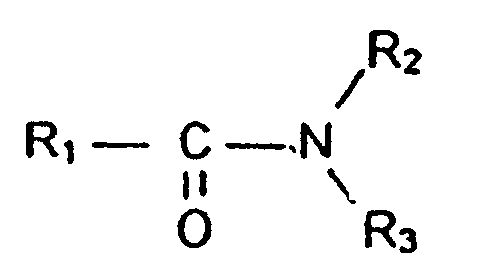 R1 est un atome d'hydrogène ou un radical alkyle de C1 à C3,R2, R3 identiques ou différents sont l'atome d'hydrogène ou un radical méthyle, éthyle ou propyle.
 - Supercondensateur selon la revendication 7, caractérisé en ce que l'amide est choisi dans le groupe constitué par le diméthylformamide, le formamide, le N-méthyle formamide, le N-méthyle propionamide, le N,N-diméthyle acétamide seuls ou en mélange.
- Supercondensateur selon la revendication 1, caractérisé en ce que la solution organique comprend de façon minoritaire un ou plusieurs solvants choisis dans le groupe constitué par les esters, les nitriles, les carbonates.
- Supercondensateur selon la revendication 9, caractérisé en ce que les solvants minoritaires sont choisis dans le groupe constitué par le propylène carbonate, la γ-butyrolactone, l'acétonitrile, seuls ou en mélange.
- Supercondensateur selon la revendication 1, caractérisé en ce que le solvant est en mélange avec un co-solvant susceptible d'abaisser la viscosité de la solution.
- Supercondensateur selon la revendication 11, caractérisé en ce que le co-solvant est choisi dans le groupe constitué par le formate de méthyle, le formate d'éthyle, le carbonate de diméthyle, le carbonate de diéthyle, l'acétate de méthyle, l'acétate d'éthyle, le diméthoxy méthane, le diméthoxy éthane, le diéthoxy méthane, le diéthoxy éthane, le dioxolane, le tétrahydrofuranne, l'acétonitrile.
- Supercondensateur selon la revendication 1, caractérisé en ce que le sel est présent à une concentration de 0,3 à 3 moles par litre.
- Supercondensateur selon la revendication 1 ou 13, caractérisé en ce que les sels de sodium ou de potassium sont choisis dans le groupe constitué par NaCl, NaBr, NaBF4, NaPF6, NaClO4, NaRSO3, R étant un radical inférieur perfluoroalkyle (de 1 à 6 atomes de carbone, notamment CF3), NaAsF6, NaSCN, KF, KCl, KBr, KBF4, KPF6, KNO3, KClO4 ,KRSO3, R étant un radical inférieur perfluoroalkyle (de 1 à 6 atomes de carbone, notamment CF3), KAsF6 ou KSCN.
- Supercondensateur selon la revendication 1 ou 13, caractérisé en ce que les sels d'alcalinoterreux sont choisis dans le groupe constitué par MgCl2, MgSO4, Mg(ClO4)2, CaCl2, Ca(NO3)2, CaSO4 ou Ca(ClO4)2.
Applications Claiming Priority (3)
| Application Number | Priority Date | Filing Date | Title |
|---|---|---|---|
| FR9701351A FR2759211B1 (fr) | 1997-02-06 | 1997-02-06 | Supercondensateur du type double couche comprenant un electrolyte organique liquide |
| FR9701351 | 1997-02-06 | ||
| PCT/FR1998/000211 WO1998035369A1 (fr) | 1997-02-06 | 1998-02-05 | Supercondensateur du type double couche comprenant un electrolyte organique liquide |
Publications (2)
| Publication Number | Publication Date |
|---|---|
| EP0970496A1 EP0970496A1 (fr) | 2000-01-12 |
| EP0970496B1 true EP0970496B1 (fr) | 2004-05-26 |
Family
ID=9503397
Family Applications (1)
| Application Number | Title | Priority Date | Filing Date |
|---|---|---|---|
| EP98906976A Expired - Lifetime EP0970496B1 (fr) | 1997-02-06 | 1998-02-05 | Supercondensateur du type double couche comprenant un electrolyte organique liquide |
Country Status (7)
| Country | Link |
|---|---|
| US (1) | US6671166B1 (fr) |
| EP (1) | EP0970496B1 (fr) |
| AT (1) | ATE268052T1 (fr) |
| AU (1) | AU6298298A (fr) |
| DE (1) | DE69824160T2 (fr) |
| FR (1) | FR2759211B1 (fr) |
| WO (1) | WO1998035369A1 (fr) |
Families Citing this family (24)
| Publication number | Priority date | Publication date | Assignee | Title |
|---|---|---|---|---|
| US7352558B2 (en) * | 2003-07-09 | 2008-04-01 | Maxwell Technologies, Inc. | Dry particle based capacitor and methods of making same |
| US7791860B2 (en) * | 2003-07-09 | 2010-09-07 | Maxwell Technologies, Inc. | Particle based electrodes and methods of making same |
| US7920371B2 (en) | 2003-09-12 | 2011-04-05 | Maxwell Technologies, Inc. | Electrical energy storage devices with separator between electrodes and methods for fabricating the devices |
| US7090946B2 (en) | 2004-02-19 | 2006-08-15 | Maxwell Technologies, Inc. | Composite electrode and method for fabricating same |
| JP4379156B2 (ja) * | 2004-03-03 | 2009-12-09 | パナソニック株式会社 | アルミ電解コンデンサ |
| US7330369B2 (en) | 2004-04-06 | 2008-02-12 | Bao Tran | NANO-electronic memory array |
| US20050218398A1 (en) * | 2004-04-06 | 2005-10-06 | Availableip.Com | NANO-electronics |
| US7862624B2 (en) | 2004-04-06 | 2011-01-04 | Bao Tran | Nano-particles on fabric or textile |
| US20050218397A1 (en) * | 2004-04-06 | 2005-10-06 | Availableip.Com | NANO-electronics for programmable array IC |
| US7019391B2 (en) | 2004-04-06 | 2006-03-28 | Bao Tran | NANO IC packaging |
| US7671398B2 (en) | 2005-02-23 | 2010-03-02 | Tran Bao Q | Nano memory, light, energy, antenna and strand-based systems and methods |
| US7440258B2 (en) | 2005-03-14 | 2008-10-21 | Maxwell Technologies, Inc. | Thermal interconnects for coupling energy storage devices |
| US7540188B2 (en) * | 2006-05-01 | 2009-06-02 | Lynn Karl Wiese | Process condition measuring device with shielding |
| US7555948B2 (en) * | 2006-05-01 | 2009-07-07 | Lynn Karl Wiese | Process condition measuring device with shielding |
| CN100490033C (zh) * | 2006-06-05 | 2009-05-20 | 厦门大学 | 基于液相中的电化学活性物质的超级电容器 |
| US7393699B2 (en) | 2006-06-12 | 2008-07-01 | Tran Bao Q | NANO-electronics |
| WO2008106533A1 (fr) * | 2007-02-27 | 2008-09-04 | Maxwell Technologies, Inc. | Collecteur d'ultracondensateur et/ou ensemble à teneur en magnésium contrôlée |
| US8213157B2 (en) * | 2009-04-17 | 2012-07-03 | University Of Delaware | Single-wall carbon nanotube supercapacitor |
| CN103198928B (zh) * | 2012-01-09 | 2016-07-06 | 中国科学院长春应用化学研究所 | 一种钠离子电化学电容器 |
| WO2014060886A1 (fr) * | 2012-10-17 | 2014-04-24 | Ramot At Tel Aviv University Ltd | Supercondensateur hybride |
| FR3005199B1 (fr) | 2013-04-24 | 2015-05-29 | Commissariat Energie Atomique | Dispositif electrochimique du type supercondensateur a base d'un electrolyte comprenant, comme sel conducteur, au moins un sel a base d'un element alcalin autre que le lithium |
| FR3016245B1 (fr) * | 2014-01-03 | 2021-07-16 | Commissariat Energie Atomique | Cellule electrochimique, systeme de stockage et de restitution d'energie electrique comprenant une telle cellule electrochimique et vehicule comprenant un tel systeme |
| FR3056821B1 (fr) | 2016-09-29 | 2018-11-23 | Paris Sciences Et Lettres - Quartier Latin | Super-condensateur a electrolyte perfectionne |
| WO2018135627A1 (fr) * | 2017-01-23 | 2018-07-26 | 学校法人東京理科大学 | Solution électrolytique destinée à des batteries potassium-ion, batterie potassium-ion, solution électrolytique destinée à des condensateurs potassium-ion et condensateur potassium-ion |
Family Cites Families (22)
| Publication number | Priority date | Publication date | Assignee | Title |
|---|---|---|---|---|
| US3931552A (en) * | 1969-03-06 | 1976-01-06 | P. R. Mallory & Co., Inc. | Capacitor electrolyte |
| US3648126A (en) * | 1970-12-28 | 1972-03-07 | Standard Oil Co Ohio | Electrical capacitor employing paste electrodes |
| GB2044535B (en) * | 1978-12-29 | 1983-08-17 | Matsushita Electric Industrial Co Ltd | Solid state double layer capacitor |
| US4713731A (en) * | 1982-05-03 | 1987-12-15 | Standard Oil Company | Double layer capacitor |
| US4626964A (en) * | 1984-03-19 | 1986-12-02 | Hitachi Maxell, Ltd. | Electrical double layer capacitor and production of the same |
| JPH0666231B2 (ja) * | 1985-03-07 | 1994-08-24 | 松下電器産業株式会社 | 電気二重層コンデンサ |
| JPH02248025A (ja) * | 1989-03-22 | 1990-10-03 | Matsushita Electric Ind Co Ltd | 電気二重層キャパシタ |
| US5160653A (en) * | 1990-02-28 | 1992-11-03 | Aerovox M, Inc. | Electrolytic capacitor and electrolyte therefor |
| JPH04369817A (ja) * | 1991-06-18 | 1992-12-22 | Japan Carlit Co Ltd:The | 電解コンデンサ駆動用電解液 |
| JP2696011B2 (ja) * | 1991-08-01 | 1998-01-14 | 日本原子力研究所 | 電 池 |
| US5303118A (en) * | 1992-04-15 | 1994-04-12 | Nec Corporation | Electric double layer capacitor |
| CA2118401C (fr) * | 1993-02-23 | 2004-08-17 | Kazunari Takeda | Accumulateur et sa methode de fabrication |
| JPH07161589A (ja) * | 1993-12-06 | 1995-06-23 | Nisshinbo Ind Inc | 電気二重層キャパシタ |
| US5418682A (en) * | 1994-06-16 | 1995-05-23 | Rockwell International Corporation | Capacitor having an electrolyte containing a mixture of dinitriles |
| JP3638642B2 (ja) * | 1994-10-14 | 2005-04-13 | 株式会社クラレ | 活性炭シート及び電気二重層キャパシタ |
| JPH08138978A (ja) * | 1994-11-02 | 1996-05-31 | Japan Gore Tex Inc | 電気二重層コンデンサとその電極の製造方法 |
| US5953204A (en) * | 1994-12-27 | 1999-09-14 | Asahi Glass Company Ltd. | Electric double layer capacitor |
| US5754393A (en) * | 1995-03-07 | 1998-05-19 | Asahi Glass Company Ltd. | Electric double layer capacitor |
| US5659457A (en) * | 1995-04-07 | 1997-08-19 | Motorola, Inc. | Carbon electrodes and energy storage device made thereof |
| US5969936A (en) * | 1997-03-24 | 1999-10-19 | Asahi Glass Company Ltd. | Electric double layer capacitor and electrolyte therefor |
| US6205016B1 (en) * | 1997-06-04 | 2001-03-20 | Hyperion Catalysis International, Inc. | Fibril composite electrode for electrochemical capacitors |
| US6094338A (en) * | 1997-07-09 | 2000-07-25 | Mitsubishi Chemical Corporation | Electric double-layer capacitor |
-
1997
- 1997-02-06 FR FR9701351A patent/FR2759211B1/fr not_active Expired - Fee Related
-
1998
- 1998-02-05 WO PCT/FR1998/000211 patent/WO1998035369A1/fr not_active Ceased
- 1998-02-05 EP EP98906976A patent/EP0970496B1/fr not_active Expired - Lifetime
- 1998-02-05 AT AT98906976T patent/ATE268052T1/de not_active IP Right Cessation
- 1998-02-05 AU AU62982/98A patent/AU6298298A/en not_active Abandoned
- 1998-02-05 US US09/367,197 patent/US6671166B1/en not_active Expired - Lifetime
- 1998-02-05 DE DE69824160T patent/DE69824160T2/de not_active Expired - Lifetime
Also Published As
| Publication number | Publication date |
|---|---|
| DE69824160D1 (de) | 2004-07-01 |
| FR2759211A1 (fr) | 1998-08-07 |
| WO1998035369A1 (fr) | 1998-08-13 |
| AU6298298A (en) | 1998-08-26 |
| US6671166B1 (en) | 2003-12-30 |
| DE69824160T2 (de) | 2005-05-25 |
| FR2759211B1 (fr) | 1999-04-30 |
| EP0970496A1 (fr) | 2000-01-12 |
| ATE268052T1 (de) | 2004-06-15 |
Similar Documents
| Publication | Publication Date | Title |
|---|---|---|
| EP0970496A1 (fr) | Supercondensateur du type double couche comprenant un electrolyte organique liquide | |
| CA2295841C (fr) | Produit composite poreux notamment de haute surface specifique, procede de preparation et electrode pour ensemble electrochimique formee d'un film composite poreux | |
| CA2151182C (fr) | Composition d'electrolyte acep basee sur des melanges de copolymeres et de reseaux interpenetres | |
| EP2618409B1 (fr) | Cathode pour cellule de batterie lithium-ion, son procédé de fabrication et cette batterie l'incorporant. | |
| EP3485525B1 (fr) | Materiau a conduction ionique pour generateur electrochimique et procedes de fabrication | |
| EP1018181B1 (fr) | Electrolyte solide polymere et ses procedes de preparation | |
| WO2020163960A1 (fr) | Séparateurs à base de cellulose avec retardateur de flamme, et leurs utilisations en électrochimie | |
| WO2019158891A1 (fr) | Formulation de matière active pour accumulateur li-s et procédé de préparation | |
| EP3231023B1 (fr) | Batterie lithium organique | |
| WO2018158545A1 (fr) | Composition d'electrolyte polymere destinee a etre utilisee dans une batterie | |
| EP3227944A1 (fr) | Batterie lithium organique | |
| WO2019141941A1 (fr) | Formulation sous la forme d'une dispersion solide-liquide pour la fabrication d'une cathode pour batterie li/s et procede de preparation de ladite formulation | |
| EP0507676A2 (fr) | Matériau pour écran semi-conducteur | |
| EP3820812B1 (fr) | Procédé de croissance de nanotubes de carbone en surface et dans le volume d'un substrat carboné poreux et utilisation pour préparer une électrode | |
| EP0818045A1 (fr) | Procede de fabrication de materiaux a rigidite dielectrique amelioree, et utilisation des materiaux obtenus par ce procede dans la fabrication de cables de transport d'energie | |
| EP3695449A1 (fr) | Composition de cathode pour batterie lithium-ion, son procede de preparation, cathode et batterie lithium-ion l'incorporant | |
| EP4655835A1 (fr) | Procédé de fabrication d'un électrolyte tout solide pour batteries secondaires | |
| BE1004725A3 (fr) | Procede pour la preparation de polyindoles, compositions et dispositifs electroconducteurs les contenant et utilisations des polyindoles. | |
| EP1790030B1 (fr) | Materiau a conduction ionique contenant un oligoether sulfate | |
| EP4058508B1 (fr) | Membrane polymere gelifiee pour batterie li-ion | |
| FR2593328A1 (fr) | Materiaux a conduction protonique, leur procede de preparation et leurs applications | |
| FR3166477A1 (fr) | ELECTROLYTE SOLIDE POUR BATTERIE NA-ION et K-ION | |
| FR2626412A1 (fr) | Generateur electrochimique utilisant un polymere conducteur electronique appartenant au groupe du polypyrrole comme cathode et procede de traitement pour ameliorer la capacite massique de cette cathode | |
| WO1993023886A1 (fr) | Electrolyte solide et procede de fabrication d'un generateur en couches minces comportant un tel electrolyte solide | |
| FR3163072A1 (fr) | Revetement de cathode pour batterie tout solide na-ion ou k-ion |
Legal Events
| Date | Code | Title | Description |
|---|---|---|---|
| PUAI | Public reference made under article 153(3) epc to a published international application that has entered the european phase |
Free format text: ORIGINAL CODE: 0009012 |
|
| 17P | Request for examination filed |
Effective date: 19990823 |
|
| AK | Designated contracting states |
Kind code of ref document: A1 Designated state(s): AT BE CH DE DK ES FI FR GB GR IE IT LI LU MC NL PT SE |
|
| RIN1 | Information on inventor provided before grant (corrected) |
Inventor name: HERLEM, GUILLAUME Inventor name: CAPITAINE, FRANCOIS Inventor name: PENNEAU, JEAN-FRANCOIS |
|
| 17Q | First examination report despatched |
Effective date: 20011106 |
|
| GRAP | Despatch of communication of intention to grant a patent |
Free format text: ORIGINAL CODE: EPIDOSNIGR1 |
|
| RAP1 | Party data changed (applicant data changed or rights of an application transferred) |
Owner name: BOLLORE Owner name: ELECTRICITE DE FRANCE (SERVICE NATIONAL) |
|
| GRAS | Grant fee paid |
Free format text: ORIGINAL CODE: EPIDOSNIGR3 |
|
| GRAA | (expected) grant |
Free format text: ORIGINAL CODE: 0009210 |
|
| AK | Designated contracting states |
Kind code of ref document: B1 Designated state(s): AT BE CH DE DK ES FI FR GB GR IE IT LI LU MC NL PT SE |
|
| PG25 | Lapsed in a contracting state [announced via postgrant information from national office to epo] |
Ref country code: NL Free format text: LAPSE BECAUSE OF FAILURE TO SUBMIT A TRANSLATION OF THE DESCRIPTION OR TO PAY THE FEE WITHIN THE PRESCRIBED TIME-LIMIT Effective date: 20040526 Ref country code: IT Free format text: LAPSE BECAUSE OF FAILURE TO SUBMIT A TRANSLATION OF THE DESCRIPTION OR TO PAY THE FEE WITHIN THE PRESCRIBED TIME-LIMIT;WARNING: LAPSES OF ITALIAN PATENTS WITH EFFECTIVE DATE BEFORE 2007 MAY HAVE OCCURRED AT ANY TIME BEFORE 2007. THE CORRECT EFFECTIVE DATE MAY BE DIFFERENT FROM THE ONE RECORDED. Effective date: 20040526 Ref country code: IE Free format text: LAPSE BECAUSE OF FAILURE TO SUBMIT A TRANSLATION OF THE DESCRIPTION OR TO PAY THE FEE WITHIN THE PRESCRIBED TIME-LIMIT Effective date: 20040526 Ref country code: GB Free format text: LAPSE BECAUSE OF FAILURE TO SUBMIT A TRANSLATION OF THE DESCRIPTION OR TO PAY THE FEE WITHIN THE PRESCRIBED TIME-LIMIT Effective date: 20040526 Ref country code: FI Free format text: LAPSE BECAUSE OF FAILURE TO SUBMIT A TRANSLATION OF THE DESCRIPTION OR TO PAY THE FEE WITHIN THE PRESCRIBED TIME-LIMIT Effective date: 20040526 Ref country code: AT Free format text: LAPSE BECAUSE OF FAILURE TO SUBMIT A TRANSLATION OF THE DESCRIPTION OR TO PAY THE FEE WITHIN THE PRESCRIBED TIME-LIMIT Effective date: 20040526 |
|
| RAP1 | Party data changed (applicant data changed or rights of an application transferred) |
Owner name: BOLLORE Owner name: ELECTRICITE DE FRANCE (SERVICE NATIONAL) |
|
| REG | Reference to a national code |
Ref country code: GB Ref legal event code: FG4D Free format text: NOT ENGLISH |
|
| REG | Reference to a national code |
Ref country code: CH Ref legal event code: EP |
|
| REG | Reference to a national code |
Ref country code: IE Ref legal event code: FG4D Free format text: FRENCH |
|
| REF | Corresponds to: |
Ref document number: 69824160 Country of ref document: DE Date of ref document: 20040701 Kind code of ref document: P |
|
| REG | Reference to a national code |
Ref country code: CH Ref legal event code: NV Representative=s name: MICHELI & CIE INGENIEURS-CONSEILS |
|
| PG25 | Lapsed in a contracting state [announced via postgrant information from national office to epo] |
Ref country code: SE Free format text: LAPSE BECAUSE OF FAILURE TO SUBMIT A TRANSLATION OF THE DESCRIPTION OR TO PAY THE FEE WITHIN THE PRESCRIBED TIME-LIMIT Effective date: 20040826 Ref country code: GR Free format text: LAPSE BECAUSE OF FAILURE TO SUBMIT A TRANSLATION OF THE DESCRIPTION OR TO PAY THE FEE WITHIN THE PRESCRIBED TIME-LIMIT Effective date: 20040826 Ref country code: DK Free format text: LAPSE BECAUSE OF FAILURE TO SUBMIT A TRANSLATION OF THE DESCRIPTION OR TO PAY THE FEE WITHIN THE PRESCRIBED TIME-LIMIT Effective date: 20040826 |
|
| PG25 | Lapsed in a contracting state [announced via postgrant information from national office to epo] |
Ref country code: ES Free format text: LAPSE BECAUSE OF FAILURE TO SUBMIT A TRANSLATION OF THE DESCRIPTION OR TO PAY THE FEE WITHIN THE PRESCRIBED TIME-LIMIT Effective date: 20040906 |
|
| GBV | Gb: ep patent (uk) treated as always having been void in accordance with gb section 77(7)/1977 [no translation filed] |
Effective date: 20040526 |
|
| NLV1 | Nl: lapsed or annulled due to failure to fulfill the requirements of art. 29p and 29m of the patents act | ||
| REG | Reference to a national code |
Ref country code: IE Ref legal event code: FD4D |
|
| PG25 | Lapsed in a contracting state [announced via postgrant information from national office to epo] |
Ref country code: LU Free format text: LAPSE BECAUSE OF NON-PAYMENT OF DUE FEES Effective date: 20050205 |
|
| PG25 | Lapsed in a contracting state [announced via postgrant information from national office to epo] |
Ref country code: MC Free format text: LAPSE BECAUSE OF NON-PAYMENT OF DUE FEES Effective date: 20050228 Ref country code: BE Free format text: LAPSE BECAUSE OF NON-PAYMENT OF DUE FEES Effective date: 20050228 |
|
| PLBE | No opposition filed within time limit |
Free format text: ORIGINAL CODE: 0009261 |
|
| STAA | Information on the status of an ep patent application or granted ep patent |
Free format text: STATUS: NO OPPOSITION FILED WITHIN TIME LIMIT |
|
| 26N | No opposition filed |
Effective date: 20050301 |
|
| BERE | Be: lapsed |
Owner name: *BOLLORE Effective date: 20050228 Owner name: *ELECTRICITE DE FRANCE (SERVICE NATIONAL) Effective date: 20050228 |
|
| BERE | Be: lapsed |
Owner name: *ELECTRICITE DE FRANCE (SERVICE NATIONAL) Effective date: 20050228 Owner name: *BOLLORE Effective date: 20050228 |
|
| PG25 | Lapsed in a contracting state [announced via postgrant information from national office to epo] |
Ref country code: PT Free format text: LAPSE BECAUSE OF NON-PAYMENT OF DUE FEES Effective date: 20041026 |
|
| REG | Reference to a national code |
Ref country code: FR Ref legal event code: PLFP Year of fee payment: 19 |
|
| REG | Reference to a national code |
Ref country code: FR Ref legal event code: PLFP Year of fee payment: 20 |
|
| PGFP | Annual fee paid to national office [announced via postgrant information from national office to epo] |
Ref country code: FR Payment date: 20170209 Year of fee payment: 20 Ref country code: DE Payment date: 20170210 Year of fee payment: 20 Ref country code: CH Payment date: 20170214 Year of fee payment: 20 |
|
| REG | Reference to a national code |
Ref country code: DE Ref legal event code: R071 Ref document number: 69824160 Country of ref document: DE |
|
| REG | Reference to a national code |
Ref country code: CH Ref legal event code: PL |