EP0972384B1 - Procede de transmission et systeme radio pour inferer le type de modulation - Google Patents
Procede de transmission et systeme radio pour inferer le type de modulation Download PDFInfo
- Publication number
- EP0972384B1 EP0972384B1 EP99900908A EP99900908A EP0972384B1 EP 0972384 B1 EP0972384 B1 EP 0972384B1 EP 99900908 A EP99900908 A EP 99900908A EP 99900908 A EP99900908 A EP 99900908A EP 0972384 B1 EP0972384 B1 EP 0972384B1
- Authority
- EP
- European Patent Office
- Prior art keywords
- signal
- modulation method
- modulation
- radio system
- transmitted
- Prior art date
- Legal status (The legal status is an assumption and is not a legal conclusion. Google has not performed a legal analysis and makes no representation as to the accuracy of the status listed.)
- Expired - Lifetime
Links
- 238000000034 method Methods 0.000 title claims abstract description 169
- 230000005540 biological transmission Effects 0.000 title claims abstract description 38
- 238000007476 Maximum Likelihood Methods 0.000 claims description 17
- 230000008054 signal transmission Effects 0.000 claims description 14
- 238000001514 detection method Methods 0.000 claims description 5
- 238000010586 diagram Methods 0.000 description 4
- 101000579423 Homo sapiens Regulator of nonsense transcripts 1 Proteins 0.000 description 2
- 102100028287 Regulator of nonsense transcripts 1 Human genes 0.000 description 2
- 238000001228 spectrum Methods 0.000 description 2
- 230000001413 cellular effect Effects 0.000 description 1
- 238000005562 fading Methods 0.000 description 1
- 238000010295 mobile communication Methods 0.000 description 1
- 230000011664 signaling Effects 0.000 description 1
Images


Classifications
-
- H—ELECTRICITY
- H04—ELECTRIC COMMUNICATION TECHNIQUE
- H04L—TRANSMISSION OF DIGITAL INFORMATION, e.g. TELEGRAPHIC COMMUNICATION
- H04L1/00—Arrangements for detecting or preventing errors in the information received
- H04L1/0001—Systems modifying transmission characteristics according to link quality, e.g. power backoff
- H04L1/0036—Systems modifying transmission characteristics according to link quality, e.g. power backoff arrangements specific to the receiver
- H04L1/0038—Blind format detection
-
- H—ELECTRICITY
- H04—ELECTRIC COMMUNICATION TECHNIQUE
- H04L—TRANSMISSION OF DIGITAL INFORMATION, e.g. TELEGRAPHIC COMMUNICATION
- H04L1/00—Arrangements for detecting or preventing errors in the information received
- H04L1/0001—Systems modifying transmission characteristics according to link quality, e.g. power backoff
- H04L1/0002—Systems modifying transmission characteristics according to link quality, e.g. power backoff by adapting the transmission rate
- H04L1/0003—Systems modifying transmission characteristics according to link quality, e.g. power backoff by adapting the transmission rate by switching between different modulation schemes
-
- H—ELECTRICITY
- H04—ELECTRIC COMMUNICATION TECHNIQUE
- H04L—TRANSMISSION OF DIGITAL INFORMATION, e.g. TELEGRAPHIC COMMUNICATION
- H04L27/00—Modulated-carrier systems
- H04L27/0012—Modulated-carrier systems arrangements for identifying the type of modulation
-
- H—ELECTRICITY
- H04—ELECTRIC COMMUNICATION TECHNIQUE
- H04L—TRANSMISSION OF DIGITAL INFORMATION, e.g. TELEGRAPHIC COMMUNICATION
- H04L1/00—Arrangements for detecting or preventing errors in the information received
- H04L1/0001—Systems modifying transmission characteristics according to link quality, e.g. power backoff
- H04L1/0023—Systems modifying transmission characteristics according to link quality, e.g. power backoff characterised by the signalling
- H04L1/0032—Without explicit signalling
-
- Y—GENERAL TAGGING OF NEW TECHNOLOGICAL DEVELOPMENTS; GENERAL TAGGING OF CROSS-SECTIONAL TECHNOLOGIES SPANNING OVER SEVERAL SECTIONS OF THE IPC; TECHNICAL SUBJECTS COVERED BY FORMER USPC CROSS-REFERENCE ART COLLECTIONS [XRACs] AND DIGESTS
- Y02—TECHNOLOGIES OR APPLICATIONS FOR MITIGATION OR ADAPTATION AGAINST CLIMATE CHANGE
- Y02D—CLIMATE CHANGE MITIGATION TECHNOLOGIES IN INFORMATION AND COMMUNICATION TECHNOLOGIES [ICT], I.E. INFORMATION AND COMMUNICATION TECHNOLOGIES AIMING AT THE REDUCTION OF THEIR OWN ENERGY USE
- Y02D30/00—Reducing energy consumption in communication networks
- Y02D30/50—Reducing energy consumption in communication networks in wire-line communication networks, e.g. low power modes or reduced link rate
Definitions
- the invention relates to a data transmission method used for a radio system comprising at least a base station and a terminal which include a transmitter and a receiver for signal transmission and reception, in which data transmission method a signal is transmitted in bursts which comprise a training sequence, at least two predetermined modulation methods can be used for a signal that is to be transmitted, and the modulation method used is interchangeable to another predetermined modulation method.
- the invention also relates to a radio system comprising at least a base station and a terminal each including a transmitter and a receiver for signal transmission and reception, in which radio system the transmitter is arranged to transmit a signal in bursts which comprise a training sequence, it is possible to use at least two predetermined modulation methods for a signal that is to be transmitted, and the modulation method used is interchangeable to another predetermined modulation method.
- the quality of a channel, or a radio path varies continuously.
- the channel quality is affected by many factors, including multipath propagation, fadings, interference from the surroundings, and so on.
- GMSK Gaussian minimum shift keying
- CPM Coded continuous phase modulation methods
- the patent publication EP 619 665 presents a demodulator for a plurality of modulation schemes.
- An object of the invention is thus to provide a method and a radio system implementing the method so as to solve the above problem.
- the receiver can then effectively demodulate and detect a transmitted signal, even though the receiver did not know beforehand the modulation method used by transmitter.
- This is achieved by a data transmission method used for a radio system comprising at least a base station and a terminal, the base station including a transmitter and a receiver and the terminal including a transmitter and a receiver for signal transmission and reception, in which data transmission method a signal is transmitted in bursts which comprise a training sequence, selecting a modulation method from at least two predetermined modulation methods for a signal that is to be transmitted, and the modulation method used is interchangeable to another predetermined modulation method.
- the method is characterized in that when the transmitted signal is received it is demodulated in the manner corresponding to each modulation method; forming an impulse response estimate for each demodulated signal; and inferring the modulation method which is used for the transmitted signal on the basis of maximum likelihood of the energy, the signal-to-noise ratio or the signal-to-interference based on the impulse response estimates and demodulating the received signal according to the inferred modulation method for detection.
- the invention also relates to a data transmission method used for a radio system comprising at least a base station and a terminal which include a transmitter and a receiver for signal transmission and reception, in which data transmission method a signal is transmitted in bursts which comprise a training sequence, selecting a modulation method from two predetermined modulation methods for a signal that is to be transmitted, and the modulation method used is interchangeable to another predetermined modulation method.
- the method is characterized in that when the transmitted signal is received it is demodulated by only one demodulation method; forming an impulse response estimate for the demodulated signal for each modulation method of the received signal; and inferring the modulation method used for the transmitted signal pm the basis of maximum likelihood of the energy, the signal-to-noise ratio or the signal-to-interference based on the impulse response estimates, demodulating the signal according to the inferred modulation method and detecting the demodulated signal.
- the invention also relates to a radio system.
- the radio system comprises at least a base station and a terminal each including a transmitter and a receiver for signal transmission and reception, in which radio system the transmitter is arranged to transmit a signal in bursts which comprise a training sequence and to use at least two predetermined modulation methods for a signal that is to be transmitted, and the modulation method used is interchangeable to another predetermined modulation method.
- the receiver comprises at least a demodulator for demodulating the received signal in the manner corresponding to each modulation method used; means for forming an impulse response estimate for the demodulated signal; means for selecting a demodulated signal for the detector; means for inferring from the impulse response estimate the modulation method which is used for the transmitted signal on the basis of maximum likelihood of the energy, the signal-to-noise ratio or the signal-to-interference and for controlling the means to select for the detector a signal which is demodulated by the demodulator according to the inferred modulation method.
- the invention also relates to a radio system comprising at least a base station and a terminal each including a transmitter and a receiver for signal transmission and reception, in which radio system the transmitter is arranged to transmit a signal in bursts which comprise a training sequence, and to select a modulation method from two predetermined modulation methods for a signal that is to be transmitted, and the modulation method used being interchangeable to another predetermined modulation method.
- the receiver comprises only one demodulator configured to demodulate the at least two predetermined modulation methods used for the transmitted signal; means for forming impulse response estimates which correspond to each modulation method used; means for inferring the modulation method which is used for the transmitted signal on the basis of maximum likelihood of the energy, the signal-to-noise ratio or the signal-to-interference of the impulse response estimates and for selecting to the detector a signal which is demodulated by the demodulator according to the inferred modulation method.
- the invention relates to a receiver for a radio system which comprises at least a base station and a terminal for signal transmission and reception, in which radio system the transmitter is arranged to transmit a signal in bursts which comprise a training sequence and to use at least two predetermined modulation methods for a signal that is to be transmitted, and the modulation method used is interchangeable to another predetermined modulation method.
- the receiver comprises at least one demodulator for demodulating the received signal in the manner corresponding to each modulation method used; means for forming impulse response estimates for each demodulated signal; means for selecting a demodulated signal for the detector; and means for inferring the modulation method which is used for the transmitted signal on the basis of maximum likelihood of the energy, the signal-to-noise ratio or the signal-to-interference of the impulse response estimates and for controlling the means to select for the detector a signal which is demodulated by the demodulator according to the inferred modulation method.
- the invention also relates to a receiver for a radio system which comprises at least a base station and a terminal for signal transmission and reception, in which radio system the transmitter is arranged to transmit a signal in bursts which comprise a training sequence, and to select a modulation method from two predetermined modulation methods for a signal that is to be transmitted, and the modulation method used being interchangeable to another predetermined modulation method.
- the receiver comprises only one demodulator configured to demodulate the at least two predetermined modulation methods used for the transmitted signal; means for forming impulse response estimates which correspond to each modulation method used; means for inferring the modulation method which is used for the transmitted signal on the basis of maximum likelihood of the energy, the signal-to-noise ratio or the signal-to-interference of the impulse response estimates and for selecting for the detector a signal which is demodulated by the demodulator according to the inferred modulation method.
- the method and system of the invention provide many advantages.
- the inventive solution enables different modulation methods to be smoothly combined.
- Data transmission which is faster than in the prior art is realized particularly in packet-form transmission.
- signalling can be carried out according to the prior art without transmitting FACCH bits.
- the solution of the invention is particularly applicable for use in a radio system of the GSM type without, however, restricting to it.
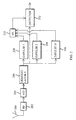
- the receiver either a base station or a terminal, receives a signal by an antenna 100.
- the radio-frequency signal propagates from the antenna to radio frequency means 102 which multiply the signal received by a signal of a local oscillator and low-pass filter the multiplication result.
- the intermediate or baseband signal so formed is converted into a digital signal in an A/D converter 104.
- the digital signal is demodulated in the demodulator 106.
- the demodulator 106 operates in such a way that it comprises a specific demodulator for each of the N modulation alternatives. After the demodulator 106, an impulse response estimate is formed for the demodulated signal in means 108.
- the impulse response estimates propagate to means 110 which infer, on the basis of maximum likelihood, the modulation by which the received signal was modulated upon transmission.
- the principle of maximum likelihood can be based on the energy of the impulse response, a signal-to-noise ratio or a signal-to-interference ratio. High impulse response energy, a good signal-to-noise ratio or a good signal-to-interference ratio indicate the most probable modulation method.
- the means 110 control a selection means 112, preferably a multiplexer, to select a signal to a detector 114 from the demodulator which, on the basis of the maximum likelihood, corresponds best to the modulation of the signal.
- the means 110 also control the detector 114 to operate in a correct mode with respect to the modulation of the signal.
- the detected signal further propagates to prior art processes which are irrelevant to the inventive solution.
- Figure 2 shows another receiver solution which is applicable when differently modulated signals can be demodulated by a single demodulation method.
- modulation methods include Gaussian minimum shift keying (GMSK) and differentially coded binary continuous phase modulation (DBCPM) methods, for example.
- GMSK modulation is a modulation method obvious to those skilled in the art
- DBCPM modulation is presented in the GSM standardization forum.
- a document associated with DBCPM modulation can be found by the code ETSI STC SMG2 WPB: Tdoc SMG2 WPB 52/98.
- a signal is multiplied by a modulation index, such as ⁇ /4.
- the received signal propagates from an antenna 200 to radio frequency means 202 which are similar to those in the case of Figure 1 .
- the intermediate or baseband signal is converted into a digital signal in an A/D converter 204.
- the digital signal is demodulated in a demodulator 206 and an impulse response estimate is formed of the signal in means 208.
- a specific impulse response estimate is formed for each modulation method in a specific estimation block.
- the modulation method is inferred in means 210 on the basis of the impulse response estimate by using the principle of maximum likelihood.
- the principle of maximum likelihood may be based on the energy of the impulse response, a signal-to-noise ratio or a signal-to-interference ratio.
- High impulse response energy, a good signal-to-noise ratio or a good signal-to-interference ratio indicate the most probable modulation method.
- the means 210 control the mode of a detector 212 so that the demodulated signal that has arrived from the demodulator can be detected.
- the detected signal further propagates to prior art processes which are irrelevant to the inventive idea.
- the detector 114 may also influence on the operation of the means 110 for choosing the modulation method.
- the modulation used is inferred again by means of at least partly detected signal, i.e. the correctness of the original inference is checked and the means 110 and the detection mode of the detector 114 are controlled.
- the detection mode of the detector 212 can be changed on the basis of the detected signal.
- the signal can be partly detected by means of portion of a burst, for example.
- FIG. 3 shows an example of a block diagram of a transmitter.
- a transmitter comprises a modulator 300 which is controlled by a controller 302.
- the modulator can modulate a signal to be transmitted by at least two modulation methods.
- the controller 302 chooses the modulation method used by the modulator. For example in the GSM system, connection quality permitting, the transmitter transmits a signal at a high data rate by the DBCPM modulation method, but the transmitter which comprises a burst which contains FACCH information transmits at a lower data transmission rate by the conventional GMSK modulation method.
- DBCPM modulation may have double the data transmission rate as compared with GMSK modulation.
- modulation pairs include quarternary offset quadrature amplitude modulation (Q-O-QAM) and binary offset quadrature amplitude modulation (B-O-QAM).
- Q-O-QAM quarternary offset quadrature amplitude modulation
- B-O-QAM binary offset quadrature amplitude modulation
- the modulated signal propagates next to radio frequency means 304 which multiply the signal by a carrier wave and high-pass filter it.
- the radio-frequency signal propagates to an antenna 306 which radiates the signal as radio waves to its surroundings.
- FIG. 4A shows a normal burst in the GSM radio system.
- the burst comprises a data part 400, a FACCH flag bit 402, a training sequence 404, a second FACCH flag bit 406 and a second data part 408.
- the FACCH signal uses the two bits 402 and 406 on both sides of the training sequence 404. It is very important to transmit the FACCH bits reliably.
- the burst which comprises FACCH bits is therefore always transmitted at a lower data transmission rate, i.e. by the conventional GMSK modulation.
- burst which comprises a data part 410, a training sequence 412 and a second data part 414 is presented in Figure 4B .
- the training sequences 404 and 412 of different bursts are preferably overlapped in time domain, i.e. they are at the same point in the burst.
- the modulated training sequences are also substantially orthogonal and therefore maximally differ from each other and make it easier to separate the modulations.
Landscapes
- Engineering & Computer Science (AREA)
- Computer Networks & Wireless Communication (AREA)
- Signal Processing (AREA)
- Quality & Reliability (AREA)
- Digital Transmission Methods That Use Modulated Carrier Waves (AREA)
- Transmitters (AREA)
- Mobile Radio Communication Systems (AREA)
- Transceivers (AREA)
- Reduction Or Emphasis Of Bandwidth Of Signals (AREA)
- Machines For Laying And Maintaining Railways (AREA)
- Saccharide Compounds (AREA)
- Forging (AREA)
Claims (19)
- Procédé de transmission de données pour un système radio comprenant au moins une station de base et un terminal, la station de base incluant un émetteur et un récepteur et le terminal incluant un émetteur et un récepteur pour la transmission et la réception de signaux, dans lequel procédé de transmission de données un signal est transmis en salves qui comprennent une séquence d'apprentissage (404, 412), la sélection d'un procédé de modulation parmi au moins deux procédés de modulation prédéterminés pour un signal qui doit être transmis, et le procédé de modulation utilisé étant interchangeable avec un autre procédé de modulation prédéterminé, caractérisé en ce que
lorsque le signal transmis est reçu, il est démodulé de la manière correspondant à chaque procédé de modulation ;
une estimation de réponse impulsionnelle est formée pour chaque signal démodulé ; et
le procédé de modulation qui est utilisé pour le signal transmis est inféré sur la base du maximum de vraisemblance de l'énergie, du rapport signal/bruit ou signal/brouillage des estimations de réponse impulsionnelle et le signal reçu est démodulé selon le procédé de modulation inféré pour la détection. - Procédé de transmission de données pour un système radio comprenant au moins une station de base et un terminal qui incluent un émetteur et un récepteur pour la transmission et la réception de signaux, dans lequel procédé de transmission de données un signal est transmis en salves qui comprennent une séquence d'apprentissage (404, 412), la sélection d'un procédé de modulation parmi deux procédés de modulation prédéterminés pour un signal qui doit être transmis, le procédé de modulation utilisé étant interchangeable avec un autre procédé de modulation prédéterminé, caractérisé en ce que
lorsque le signal transmis est reçu, il est démodulé par un seul procédé de démodulation ;
une estimation de réponse impulsionnelle est formée pour le signal démodulé pour chaque procédé de modulation ; et
le procédé de modulation utilisé pour le signal transmis est inféré sur la base du maximum de vraisemblance de l'énergie, du rapport signal/bruit ou signal/brouillage des estimations de réponse impulsionnelle, le signal est démodulé selon le procédé de modulation inféré et le signal démodulé est détecté. - Procédé selon la revendication 2, caractérisé en ce qu'un mode de détection pour détecter le signal est sélectionné selon le procédé de modulation utilisé.
- Procédé selon la revendication 1 ou 2, caractérisé en ce que les séquences d'apprentissage (404, 412) sont chevauchées dans le domaine temporel dans une salve transmise par chaque procédé de modulation.
- Procédé selon la revendication 4, caractérisé en ce que les séquences d'apprentissage (404, 412) modulées par des procédés de modulation différents et chevauchées dans le domaine temporel sont mutuellement orthogonales, moyennant quoi séparer les procédés de modulation différents.
- Procédé selon la revendication 1 ou 2, caractérisé en ce que le signal reçu est détecté au moins partiellement et la partie de détection est utilisée lorsque le procédé de modulation du signal reçu est inféré.
- Procédé selon la revendication 1 ou 2, caractérisé en ce que des procédés de modulation qui opèrent à un débit de transmission de données différent sont utilisés.
- Procédé selon la revendication 7, caractérisé en ce que lorsque le système radio GSM est utilisé et lorsqu'un signal FACCH est transmis, le signal FACCH est toujours transmis à un débit de transmission de données inférieur, moyennant quoi aucun bit FACCH n'est nécessaire dans les salves (412) qui opèrent à des débits de transmission de données supérieurs.
- Procédé selon la revendication 7, caractérisé en ce que deux procédés de modulation sont utilisés, dont un est DBCPM permettant un débit de transmission de données supérieur et l'autre est GMSK.
- Système radio comprenant au moins une station de base et un terminal incluant chacun un émetteur et un récepteur pour la transmission et la réception de signaux, dans lequel système radio l'émetteur est agencé pour transmettre un signal en salves qui comprennent une séquence d'apprentissage (404, 412) et pour utiliser au moins deux procédés de modulation prédéterminés pour un signal qui doit être transmis, le procédé de modulation utilisé étant interchangeable avec un autre procédé de modulation prédéterminé, caractérisé en ce que le récepteur comprend
au moins un démodulateur (106, 206) pour démoduler le signal reçu de la manière correspondant à chaque procédé de modulation ;
des moyens (108) pour former une estimation de réponse impulsionnelle pour chaque signal démodulé ;
des moyens (112) pour sélectionner un signal démodulé pour un détecteur (114) ;
des moyens (110) pour inférer le procédé de modulation qui est utilisé pour le signal transmis sur la base du maximum de vraisemblance de l'énergie, du rapport signal/bruit ou signal/brouillage des estimations de réponse impulsionnelle et pour commander les moyens (112) pour sélectionner pour le détecteur (114) un signal qui est démodulé par le démodulateur (106) selon le procédé de modulation inféré. - Système radio comprenant au moins une station de base et un terminal incluant chacun un émetteur et un récepteur pour la transmission et la réception de signaux, dans lequel système radio l'émetteur est agencé pour transmettre un signal en salves qui comprennent une séquence d'apprentissage (404, 412), et pour sélectionner un procédé de modulation parmi deux procédés de modulation prédéterminés pour un signal qui doit être transmis, le procédé de modulation utilisé étant interchangeable avec un autre procédé de modulation prédéterminé, caractérisé en ce que le récepteur comprend
un démodulateur (206) configuré pour démoduler le signal reçu par un seul procédé de démodulation ;
des moyens (208) pour former pour le signal démodulé des estimations de réponse impulsionnelle qui correspondent à chaque procédé de modulation ;
des moyens (210) pour inférer le procédé de modulation qui est utilisé pour le signal transmis sur la base du maximum de vraisemblance de l'énergie, du rapport signal/bruit ou signal/brouillage des estimations de réponse impulsionnelle et pour sélectionner pour un détecteur (114) un signal qui est démodulé par le démodulateur (206) selon le procédé de modulation inféré. - Système radio selon la revendication 10 ou 11, caractérisé en ce que les séquences d'apprentissage (404, 412) de salves différentes sont chevauchées dans le domaine temporel dans chaque procédé de modulation utilisé par l'émetteur.
- Système radio selon la revendication 12, caractérisé en ce que les séquences d'apprentissage (404, 412) qui sont modulées par des procédés de modulation différents et chevauchées dans le domaine temporel sont mutuellement orthogonales.
- Système radio selon la revendication 10 ou 11, caractérisé en ce que le récepteur est agencé pour détecter le signal reçu au moins partiellement et des moyens (110, 210) pour inférer le procédé de modulation sont agencés pour utiliser la partie détectée.
- Système radio selon la revendication 10, caractérisé en ce que l'émetteur est agencé pour utiliser des procédés de modulation qui opèrent à un débit de transmission de données différent.
- Système radio selon la revendication 15, caractérisé en ce que le système radio est un système radio GSM qui est agencé pour transmettre un signal FACCH, un émetteur de signal FACCH est agencé pour toujours transmettre à un débit de transmission de données inférieur, moyennant quoi aucun bit FACCH n'est nécessaire dans les salves des procédés de modulation qui opèrent à des débits de transmission de données supérieurs.
- Système radio selon la revendication 10 ou 11, caractérisé en ce que l'émetteur est agencé pour utiliser deux procédés de modulation, dont un est DBCPM permettant un débit de transmission de données supérieur et l'autre est GMSK.
- Récepteur pour un système radio qui comprend au moins une station de base et un terminal pour la transmission et la réception de signaux, dans lequel système radio l'émetteur est agencé pour transmettre un signal en salves qui comprennent une séquence d'apprentissage (404, 412) et pour utiliser au moins deux procédés de modulation prédéterminés pour un signal qui doit être transmis, et le procédé de modulation utilisé étant interchangeable avec un autre procédé de modulation prédéterminé, caractérisé en ce que le récepteur comprend
au moins un démodulateur (106, 206) pour démoduler le signal reçu de la manière correspondant à chaque procédé de modulation ;
des moyens (108) pour former des estimations de réponse impulsionnelle pour chaque signal démodulé ;
des moyens (112) pour sélectionner un signal démodulé pour un détecteur (114) ; et
des moyens (110) pour inférer le procédé de modulation qui est utilisé pour le signal transmis sur la base du maximum de vraisemblance de l'énergie, du rapport signal/bruit ou signal/brouillage des estimations de réponse impulsionnelle et pour commander les moyens (112) pour sélectionner pour le détecteur (114) un signal qui est démodulé par le démodulateur (106) selon le procédé de modulation inféré. - Récepteur pour un système radio qui comprend au moins une station de base et un terminal pour la transmission et la réception de signaux, dans lequel système radio l'émetteur est agencé pour transmettre un signal en salves qui comprennent une séquence d'apprentissage (404, 412), et pour sélectionner un procédé de modulation parmi deux procédés de modulation prédéterminés pour un signal qui doit être transmis, et le procédé de modulation utilisé étant interchangeable avec un autre procédé de modulation prédéterminé, caractérisé en ce que le récepteur comprend
un démodulateur (206) configuré pour démoduler le signal reçu par un seul procédé de démodulation ;
des moyens (208) pour former pour le signal démodulé des estimations de réponse impulsionnelle qui correspondent à chaque procédé de modulation ;
des moyens (210) pour inférer le procédé de modulation qui est utilisé pour le signal transmis sur la base du maximum de vraisemblance de l'énergie, du rapport signal/bruit ou signal/brouillage des estimations de réponse impulsionnelle et pour sélectionner pour un détecteur (212) un signal qui est démodulé par le démodulateur (206) selon le procédé de modulation inféré.
Applications Claiming Priority (3)
| Application Number | Priority Date | Filing Date | Title |
|---|---|---|---|
| FI980219 | 1998-01-30 | ||
| FI980219A FI106675B (fi) | 1998-01-30 | 1998-01-30 | Tiedonsiirtomenetelmä ja radiojärjestelmä |
| PCT/FI1999/000063 WO1999039484A2 (fr) | 1998-01-30 | 1999-01-29 | Procede de transmission et systeme radio |
Publications (2)
| Publication Number | Publication Date |
|---|---|
| EP0972384A2 EP0972384A2 (fr) | 2000-01-19 |
| EP0972384B1 true EP0972384B1 (fr) | 2008-08-27 |
Family
ID=8550642
Family Applications (1)
| Application Number | Title | Priority Date | Filing Date |
|---|---|---|---|
| EP99900908A Expired - Lifetime EP0972384B1 (fr) | 1998-01-30 | 1999-01-29 | Procede de transmission et systeme radio pour inferer le type de modulation |
Country Status (10)
| Country | Link |
|---|---|
| US (1) | US6385254B1 (fr) |
| EP (1) | EP0972384B1 (fr) |
| JP (1) | JP4002306B2 (fr) |
| CN (1) | CN1113516C (fr) |
| AT (1) | ATE406745T1 (fr) |
| AU (1) | AU751514B2 (fr) |
| DE (1) | DE69939412D1 (fr) |
| FI (1) | FI106675B (fr) |
| NO (1) | NO994743D0 (fr) |
| WO (1) | WO1999039484A2 (fr) |
Families Citing this family (16)
| Publication number | Priority date | Publication date | Assignee | Title |
|---|---|---|---|---|
| US7039120B1 (en) | 1998-11-30 | 2006-05-02 | Canon Kabushiki Kaisha | Device and method for the dynamic allocation of frequencies for multicarrier modulation systems |
| FR2799596B1 (fr) * | 1999-10-11 | 2004-05-28 | Canon Kk | Dispositif et procede d'optimisation d'un systeme de transmission a modulation multiporteuse |
| FI112892B (fi) * | 1999-04-14 | 2004-01-30 | Nokia Corp | Menetelmä ja vastaanotin eri modulaatiomenetelmillä moduloitujen signaalien vastaanottamiseksi ja dekoodaamiseksi |
| DE69935341T2 (de) | 1999-12-07 | 2007-12-06 | Motorola Semiconducteurs S.A. | Rahmenformat für Funkkommunikationssystem |
| WO2001052493A1 (fr) * | 1999-12-30 | 2001-07-19 | Nokia Corporation | Procede de detection aveugle de modulation |
| US6687507B2 (en) * | 2000-05-03 | 2004-02-03 | Telefonaktiebolaget Lm Ericsson (Publ) | Time of arrival estimation for edge/GSM |
| EP1152549B1 (fr) * | 2000-05-05 | 2005-03-30 | Lucent Technologies Inc. | Système de radiocommunication |
| SE521246C2 (sv) | 2001-06-12 | 2003-10-14 | Ericsson Telefon Ab L M | Blinddetektion |
| GB0124321D0 (en) * | 2001-10-10 | 2001-11-28 | Nokia Corp | Modulation determination |
| GB2392354B (en) | 2002-08-23 | 2006-02-01 | Samsung Electronics Co Ltd | Integrated modulators and demodulators |
| DE50208792D1 (de) * | 2002-09-13 | 2007-01-04 | Siemens Ag | Verfahren und Vorrichtung in einem Kommunikationssystem zum empfängerseitigen Bestimmen einer senderseitig verwendeten Modulation bei adaptiver Modulation |
| US7386063B1 (en) * | 2003-10-31 | 2008-06-10 | Atheros Communications, Inc. | Voting block for identifying WLAN signal modulation type |
| KR101098607B1 (ko) * | 2007-11-06 | 2011-12-23 | 노키아 지멘스 네트웍스 오와이 | 이동 통신 시스템 장치에서의 데이터 전송,시스템 및 방법 |
| KR101406321B1 (ko) * | 2007-12-17 | 2014-06-12 | 한국전자통신연구원 | 신호 전송 방법 및 중계국 |
| JP5141538B2 (ja) * | 2008-12-19 | 2013-02-13 | ヤマハ株式会社 | 信号識別装置、復調装置、自動演奏鍵盤楽器、信号識別方法およびプログラム |
| GB2557298A (en) | 2016-12-05 | 2018-06-20 | Nordic Semiconductor Asa | Demodulators |
Family Cites Families (15)
| Publication number | Priority date | Publication date | Assignee | Title |
|---|---|---|---|---|
| US4227255A (en) * | 1979-04-11 | 1980-10-07 | Telcom, Inc. | Signal classifier |
| IT1236977B (it) * | 1989-12-22 | 1993-05-12 | Italtel Spa | Ricevitore per un sistema radiomobile digitale con cancellazione di segnali interferenti isofrequenziali aventi lo stesso tipo di modulazione,e relativo metodo |
| FR2696604B1 (fr) * | 1992-10-07 | 1994-11-04 | Alcatel Radiotelephone | Dispositif d'estimation d'un canal de transmission. |
| AU677300B2 (en) * | 1993-02-17 | 1997-04-17 | Motorola Solutions, Inc. | Multiple-modulation communication system |
| JPH06343085A (ja) * | 1993-04-07 | 1994-12-13 | Hitachi Ltd | 信号復調復号装置および信号復調復号方法 |
| AU671781B2 (en) * | 1993-10-28 | 1996-09-05 | Motorola, Inc. | Demodulator logic unit adaptable to multiple data protocols |
| US5673293A (en) * | 1994-09-08 | 1997-09-30 | Hitachi America, Ltd. | Method and apparatus for demodulating QAM and VSB signals |
| US5633893A (en) | 1994-09-29 | 1997-05-27 | Ericsson Inc. | Digital modulation method with controlled envelope variation |
| US5799037A (en) * | 1996-02-16 | 1998-08-25 | David Sarnoff Research Center Inc. | Receiver capable of demodulating multiple digital modulation formats |
| US5872815A (en) * | 1996-02-16 | 1999-02-16 | Sarnoff Corporation | Apparatus for generating timing signals for a digital television signal receiver |
| DE19614543C1 (de) * | 1996-04-12 | 1997-08-28 | Philips Patentverwaltung | Entzerrer mit erweiterter Kanalschätzung für einen Empfänger in einem digitalen Übertragungssystem |
| US6005640A (en) * | 1996-09-27 | 1999-12-21 | Sarnoff Corporation | Multiple modulation format television signal receiver system |
| US5905757A (en) * | 1996-10-04 | 1999-05-18 | Motorola, Inc. | Filter co-processor |
| US5940438A (en) * | 1997-02-18 | 1999-08-17 | Mitsubishi Electric Information Technology Center America, Inc (Ita) | Universal modem for digital video, audio and data communications |
| US6167031A (en) * | 1997-08-29 | 2000-12-26 | Telefonaktiebolaget Lm Ericsson (Publ) | Method for selecting a combination of modulation and channel coding schemes in a digital communication system |
-
1998
- 1998-01-30 FI FI980219A patent/FI106675B/fi active
-
1999
- 1999-01-29 EP EP99900908A patent/EP0972384B1/fr not_active Expired - Lifetime
- 1999-01-29 AU AU20573/99A patent/AU751514B2/en not_active Ceased
- 1999-01-29 WO PCT/FI1999/000063 patent/WO1999039484A2/fr not_active Ceased
- 1999-01-29 CN CN99800104A patent/CN1113516C/zh not_active Expired - Fee Related
- 1999-01-29 JP JP53896399A patent/JP4002306B2/ja not_active Expired - Fee Related
- 1999-01-29 AT AT99900908T patent/ATE406745T1/de not_active IP Right Cessation
- 1999-01-29 DE DE69939412T patent/DE69939412D1/de not_active Expired - Lifetime
- 1999-09-21 US US09/401,019 patent/US6385254B1/en not_active Expired - Lifetime
- 1999-09-29 NO NO994743A patent/NO994743D0/no not_active Application Discontinuation
Also Published As
| Publication number | Publication date |
|---|---|
| FI980219A0 (fi) | 1998-01-30 |
| EP0972384A2 (fr) | 2000-01-19 |
| CN1256040A (zh) | 2000-06-07 |
| AU2057399A (en) | 1999-08-16 |
| US6385254B1 (en) | 2002-05-07 |
| FI980219L (fi) | 1999-07-31 |
| DE69939412D1 (de) | 2008-10-09 |
| NO994743L (no) | 1999-09-29 |
| ATE406745T1 (de) | 2008-09-15 |
| NO994743D0 (no) | 1999-09-29 |
| JP2001518274A (ja) | 2001-10-09 |
| WO1999039484A3 (fr) | 1999-09-23 |
| JP4002306B2 (ja) | 2007-10-31 |
| AU751514B2 (en) | 2002-08-15 |
| WO1999039484A2 (fr) | 1999-08-05 |
| FI106675B (fi) | 2001-03-15 |
| CN1113516C (zh) | 2003-07-02 |
Similar Documents
| Publication | Publication Date | Title |
|---|---|---|
| US10498571B2 (en) | Transmission apparatus, reception apparatus and digital radio communication method | |
| US6385254B1 (en) | Transmission method and radio system | |
| KR100661028B1 (ko) | 디지털 통신 시스템에서 위상 회전 기법을 사용하는시그날링 | |
| EP1128586B1 (fr) | Station de base et appareil terminal avec modulation adaptative | |
| US7492833B2 (en) | Method for digital wireless communications | |
| EP0370533B1 (fr) | Système de communication numérique avec taux d'erreur de bit réduit | |
| US6005896A (en) | Radio data communication device and radio data communication method | |
| KR20060093332A (ko) | 송신기, 수신기, 트랜시버, 무선 장치 및 원격통신 시스템 | |
| WO2004004172A1 (fr) | Procede et appareil permettant d'etablir des constellations destinees a des informations d'etat de voie imparfaites au niveau d'un recepteur | |
| US7894551B2 (en) | Modulation scheme detecting apparatus and related method | |
| US6496542B1 (en) | Digital communication system |
Legal Events
| Date | Code | Title | Description |
|---|---|---|---|
| PUAI | Public reference made under article 153(3) epc to a published international application that has entered the european phase |
Free format text: ORIGINAL CODE: 0009012 |
|
| 17P | Request for examination filed |
Effective date: 19990924 |
|
| AK | Designated contracting states |
Kind code of ref document: A2 Designated state(s): AT BE CH CY DE DK ES FI FR GB GR IE IT LI LU MC NL PT SE |
|
| RAP1 | Party data changed (applicant data changed or rights of an application transferred) |
Owner name: NOKIA CORPORATION |
|
| 17Q | First examination report despatched |
Effective date: 20060221 |
|
| GRAP | Despatch of communication of intention to grant a patent |
Free format text: ORIGINAL CODE: EPIDOSNIGR1 |
|
| RTI1 | Title (correction) |
Free format text: TRANSMISSION METHOD AND RADIO SYSTEM FOR INFERRING THE MODULATION TYPE |
|
| GRAS | Grant fee paid |
Free format text: ORIGINAL CODE: EPIDOSNIGR3 |
|
| GRAA | (expected) grant |
Free format text: ORIGINAL CODE: 0009210 |
|
| AK | Designated contracting states |
Kind code of ref document: B1 Designated state(s): AT BE CH CY DE DK ES FI FR GB GR IE IT LI LU MC NL PT SE |
|
| REG | Reference to a national code |
Ref country code: GB Ref legal event code: FG4D |
|
| REG | Reference to a national code |
Ref country code: CH Ref legal event code: EP |
|
| REG | Reference to a national code |
Ref country code: IE Ref legal event code: FG4D |
|
| REF | Corresponds to: |
Ref document number: 69939412 Country of ref document: DE Date of ref document: 20081009 Kind code of ref document: P |
|
| REG | Reference to a national code |
Ref country code: SE Ref legal event code: TRGR |
|
| PG25 | Lapsed in a contracting state [announced via postgrant information from national office to epo] |
Ref country code: ES Free format text: LAPSE BECAUSE OF FAILURE TO SUBMIT A TRANSLATION OF THE DESCRIPTION OR TO PAY THE FEE WITHIN THE PRESCRIBED TIME-LIMIT Effective date: 20081208 |
|
| PG25 | Lapsed in a contracting state [announced via postgrant information from national office to epo] |
Ref country code: AT Free format text: LAPSE BECAUSE OF FAILURE TO SUBMIT A TRANSLATION OF THE DESCRIPTION OR TO PAY THE FEE WITHIN THE PRESCRIBED TIME-LIMIT Effective date: 20080827 |
|
| PG25 | Lapsed in a contracting state [announced via postgrant information from national office to epo] |
Ref country code: BE Free format text: LAPSE BECAUSE OF FAILURE TO SUBMIT A TRANSLATION OF THE DESCRIPTION OR TO PAY THE FEE WITHIN THE PRESCRIBED TIME-LIMIT Effective date: 20080827 |
|
| PG25 | Lapsed in a contracting state [announced via postgrant information from national office to epo] |
Ref country code: DK Free format text: LAPSE BECAUSE OF FAILURE TO SUBMIT A TRANSLATION OF THE DESCRIPTION OR TO PAY THE FEE WITHIN THE PRESCRIBED TIME-LIMIT Effective date: 20080827 |
|
| PG25 | Lapsed in a contracting state [announced via postgrant information from national office to epo] |
Ref country code: PT Free format text: LAPSE BECAUSE OF FAILURE TO SUBMIT A TRANSLATION OF THE DESCRIPTION OR TO PAY THE FEE WITHIN THE PRESCRIBED TIME-LIMIT Effective date: 20090127 |
|
| PLBE | No opposition filed within time limit |
Free format text: ORIGINAL CODE: 0009261 |
|
| STAA | Information on the status of an ep patent application or granted ep patent |
Free format text: STATUS: NO OPPOSITION FILED WITHIN TIME LIMIT |
|
| 26N | No opposition filed |
Effective date: 20090528 |
|
| PG25 | Lapsed in a contracting state [announced via postgrant information from national office to epo] |
Ref country code: MC Free format text: LAPSE BECAUSE OF NON-PAYMENT OF DUE FEES Effective date: 20090131 |
|
| REG | Reference to a national code |
Ref country code: CH Ref legal event code: PL |
|
| PG25 | Lapsed in a contracting state [announced via postgrant information from national office to epo] |
Ref country code: LI Free format text: LAPSE BECAUSE OF NON-PAYMENT OF DUE FEES Effective date: 20090131 Ref country code: CH Free format text: LAPSE BECAUSE OF NON-PAYMENT OF DUE FEES Effective date: 20090131 |
|
| PG25 | Lapsed in a contracting state [announced via postgrant information from national office to epo] |
Ref country code: IE Free format text: LAPSE BECAUSE OF NON-PAYMENT OF DUE FEES Effective date: 20090129 |
|
| PG25 | Lapsed in a contracting state [announced via postgrant information from national office to epo] |
Ref country code: GR Free format text: LAPSE BECAUSE OF FAILURE TO SUBMIT A TRANSLATION OF THE DESCRIPTION OR TO PAY THE FEE WITHIN THE PRESCRIBED TIME-LIMIT Effective date: 20081128 |
|
| PG25 | Lapsed in a contracting state [announced via postgrant information from national office to epo] |
Ref country code: LU Free format text: LAPSE BECAUSE OF NON-PAYMENT OF DUE FEES Effective date: 20090129 |
|
| PGFP | Annual fee paid to national office [announced via postgrant information from national office to epo] |
Ref country code: SE Payment date: 20110111 Year of fee payment: 13 Ref country code: FI Payment date: 20110112 Year of fee payment: 13 Ref country code: FR Payment date: 20110128 Year of fee payment: 13 |
|
| PGFP | Annual fee paid to national office [announced via postgrant information from national office to epo] |
Ref country code: GB Payment date: 20110126 Year of fee payment: 13 |
|
| PG25 | Lapsed in a contracting state [announced via postgrant information from national office to epo] |
Ref country code: CY Free format text: LAPSE BECAUSE OF FAILURE TO SUBMIT A TRANSLATION OF THE DESCRIPTION OR TO PAY THE FEE WITHIN THE PRESCRIBED TIME-LIMIT Effective date: 20080827 |
|
| REG | Reference to a national code |
Ref country code: SE Ref legal event code: EUG |
|
| GBPC | Gb: european patent ceased through non-payment of renewal fee |
Effective date: 20120129 |
|
| REG | Reference to a national code |
Ref country code: FR Ref legal event code: ST Effective date: 20120928 |
|
| PG25 | Lapsed in a contracting state [announced via postgrant information from national office to epo] |
Ref country code: FI Free format text: LAPSE BECAUSE OF NON-PAYMENT OF DUE FEES Effective date: 20120129 Ref country code: SE Free format text: LAPSE BECAUSE OF NON-PAYMENT OF DUE FEES Effective date: 20120130 Ref country code: GB Free format text: LAPSE BECAUSE OF NON-PAYMENT OF DUE FEES Effective date: 20120129 |
|
| PG25 | Lapsed in a contracting state [announced via postgrant information from national office to epo] |
Ref country code: FR Free format text: LAPSE BECAUSE OF NON-PAYMENT OF DUE FEES Effective date: 20120131 |
|
| PGFP | Annual fee paid to national office [announced via postgrant information from national office to epo] |
Ref country code: NL Payment date: 20150110 Year of fee payment: 17 |
|
| PGFP | Annual fee paid to national office [announced via postgrant information from national office to epo] |
Ref country code: IT Payment date: 20150115 Year of fee payment: 17 |
|
| REG | Reference to a national code |
Ref country code: DE Ref legal event code: R081 Ref document number: 69939412 Country of ref document: DE Owner name: NOKIA TECHNOLOGIES OY, FI Free format text: FORMER OWNER: NOKIA CORP., 02610 ESPOO, FI |
|
| PGFP | Annual fee paid to national office [announced via postgrant information from national office to epo] |
Ref country code: DE Payment date: 20160127 Year of fee payment: 18 |
|
| REG | Reference to a national code |
Ref country code: NL Ref legal event code: MM Effective date: 20160201 |
|
| PG25 | Lapsed in a contracting state [announced via postgrant information from national office to epo] |
Ref country code: NL Free format text: LAPSE BECAUSE OF NON-PAYMENT OF DUE FEES Effective date: 20160201 |
|
| PG25 | Lapsed in a contracting state [announced via postgrant information from national office to epo] |
Ref country code: IT Free format text: LAPSE BECAUSE OF NON-PAYMENT OF DUE FEES Effective date: 20160129 |
|
| REG | Reference to a national code |
Ref country code: DE Ref legal event code: R119 Ref document number: 69939412 Country of ref document: DE |
|
| PG25 | Lapsed in a contracting state [announced via postgrant information from national office to epo] |
Ref country code: DE Free format text: LAPSE BECAUSE OF NON-PAYMENT OF DUE FEES Effective date: 20170801 |
|
| REG | Reference to a national code |
Ref country code: DE Ref legal event code: R081 Ref document number: 69939412 Country of ref document: DE Owner name: WSOU INVESTMENTS, LLC, LOS ANGELES, US Free format text: FORMER OWNER: NOKIA TECHNOLOGIES OY, ESPOO, FI |