EP0976254B1 - Telekommunikationsgerät und verfahren - Google Patents
Telekommunikationsgerät und verfahren Download PDFInfo
- Publication number
- EP0976254B1 EP0976254B1 EP98917330A EP98917330A EP0976254B1 EP 0976254 B1 EP0976254 B1 EP 0976254B1 EP 98917330 A EP98917330 A EP 98917330A EP 98917330 A EP98917330 A EP 98917330A EP 0976254 B1 EP0976254 B1 EP 0976254B1
- Authority
- EP
- European Patent Office
- Prior art keywords
- information
- user
- location
- sources
- information sources
- Prior art date
- Legal status (The legal status is an assumption and is not a legal conclusion. Google has not performed a legal analysis and makes no representation as to the accuracy of the status listed.)
- Expired - Lifetime
Links
Images



Classifications
-
- H—ELECTRICITY
- H04—ELECTRIC COMMUNICATION TECHNIQUE
- H04Q—SELECTING
- H04Q3/00—Selecting arrangements
-
- H—ELECTRICITY
- H04—ELECTRIC COMMUNICATION TECHNIQUE
- H04Q—SELECTING
- H04Q3/00—Selecting arrangements
- H04Q3/0016—Arrangements providing connection between exchanges
- H04Q3/0029—Provisions for intelligent networking
-
- H—ELECTRICITY
- H04—ELECTRIC COMMUNICATION TECHNIQUE
- H04L—TRANSMISSION OF DIGITAL INFORMATION, e.g. TELEGRAPHIC COMMUNICATION
- H04L67/00—Network arrangements or protocols for supporting network services or applications
- H04L67/50—Network services
- H04L67/52—Network services specially adapted for the location of the user terminal
-
- H—ELECTRICITY
- H04—ELECTRIC COMMUNICATION TECHNIQUE
- H04W—WIRELESS COMMUNICATION NETWORKS
- H04W4/00—Services specially adapted for wireless communication networks; Facilities therefor
- H04W4/02—Services making use of location information
- H04W4/029—Location-based management or tracking services
-
- H—ELECTRICITY
- H04—ELECTRIC COMMUNICATION TECHNIQUE
- H04L—TRANSMISSION OF DIGITAL INFORMATION, e.g. TELEGRAPHIC COMMUNICATION
- H04L67/00—Network arrangements or protocols for supporting network services or applications
- H04L67/01—Protocols
- H04L67/04—Protocols specially adapted for terminals or networks with limited capabilities; specially adapted for terminal portability
-
- H—ELECTRICITY
- H04—ELECTRIC COMMUNICATION TECHNIQUE
- H04L—TRANSMISSION OF DIGITAL INFORMATION, e.g. TELEGRAPHIC COMMUNICATION
- H04L67/00—Network arrangements or protocols for supporting network services or applications
- H04L67/2866—Architectures; Arrangements
- H04L67/30—Profiles
- H04L67/306—User profiles
-
- H—ELECTRICITY
- H04—ELECTRIC COMMUNICATION TECHNIQUE
- H04W—WIRELESS COMMUNICATION NETWORKS
- H04W24/00—Supervisory, monitoring or testing arrangements
-
- H—ELECTRICITY
- H04—ELECTRIC COMMUNICATION TECHNIQUE
- H04W—WIRELESS COMMUNICATION NETWORKS
- H04W4/00—Services specially adapted for wireless communication networks; Facilities therefor
- H04W4/02—Services making use of location information
-
- H—ELECTRICITY
- H04—ELECTRIC COMMUNICATION TECHNIQUE
- H04W—WIRELESS COMMUNICATION NETWORKS
- H04W48/00—Access restriction; Network selection; Access point selection
- H04W48/08—Access restriction or access information delivery, e.g. discovery data delivery
-
- H—ELECTRICITY
- H04—ELECTRIC COMMUNICATION TECHNIQUE
- H04W—WIRELESS COMMUNICATION NETWORKS
- H04W64/00—Locating users or terminals or network equipment for network management purposes, e.g. mobility management
Definitions
- This invention relates to telecommunications apparatus and method. More particularly, the invention relates to apparatus and methods for delivering information to mobile users in a telecommunicationssystem.
- a given user is associated with a given telecommunications terminal (e.g. a conventional telephone, or a computer with a modem, or a facsimile unit).
- a given telecommunications terminal e.g. a conventional telephone, or a computer with a modem, or a facsimile unit.
- users have become mobile.
- other types of portable terminal include pagers (either tone pagers or message pagers which can receive short textual messages and display them); so called “personal digital assistants" (PDA's) and portable facsimile or computer units adapted to communicate via cellular networks using dedicated modems. Users may also move to and from fixed terminals.
- PDA's personal digital assistants
- portable facsimile or computer units adapted to communicate via cellular networks using dedicated modems. Users may also move to and from fixed terminals.
- multi-media formats consisting of single sets of information presented in multiple media (such as for example image, text and audio files) are entering use.
- the telecommunications channels through which information is delivered comprise channels of varying bandwidth, including optical fibre links; coaxial copper links; conventional subscriber telephone lines; infra-red local area networks; and radio frequency channels.
- radio frequency channels are used for mobile communications.
- radio frequency channels which are used in mobile communications generally have available the lowest bandwidth due to demands on the RF spectrum and to the channel conditions within the RF spectrum. Thus the amount of information which a mobile user can currently receive and select from is relatively limited.
- European patent application EP-A-0718784 describes a system for retrieving information based on a user-defined profile.
- a server acting on behalf of the client identifies information on the basis of the user-defined profile, to generate a personalised newspaper which is delivered to the user.
- This provides for an automatic sorting of the large volume of data available on the World Wide Web to generate a subset of the information available which is tailored to a users specific interest.
- the system is only used for providing a personalised newspaper delivered in electronic form to a static user.
- International patent publication WO93/01665 describes a telecommunications system in which mobile users are able to receive localised information data from base stations in the system.
- Each base station is provided with a localised information database, containing information pertaining to the local area, which can be received by a mobile user being served by the base station on request.
- the user is able to download selected portions of the information contained in the localised information database by stating selections on a mobile terminal.
- the amount of information available to the user is limited to that stored in the localised information database.
- all mobile users in a cell receive the same information, and the information is localised only to the extent that the base stations are separated.
- European patent application EP-A-0660572 describes using a plurality of terminal service profiles (TSPs) which are selected on the basis of a switching system to which a wireless mobile unit is registered.
- the mobile unit may be associated with a stationary telephone set.
- TSPs terminal service profiles
- US patent US 5,579,535 is concerned with providing lists of services and points of interest within the vicinity of a user.
- US 5,579,535 teaches a system comprising a plurality of telepoints that are located at various graphical points (e.g. at airports, shopping malls etc.).
- Information relating to businesses and services is registered at a central computer, whereupon the information is grouped in an unspecified manner according to location.
- the central computer distributes the groups of information to telepoints on the basis of the location of the telepoint and the location relating to the group.
- a user, dialling into one of the telepoints is sent a picture consisting of a plurality of icons, each representing a group of information.
- the user can select an icon of interest, whereupon the information stored on that telepoint relating to the selected icon is sent to the user.
- This information may have a menu structure.
- the user can only select from information that has been sent to the telepoint, and the provision of information is wholly dependent on the user requesting information from a telepoint.
- Canadian patent application CA2160278AA teaches a system for querying a database for location based service information, on the basis of the location of terminals associated with mobile users.
- the location of a terminal associated with a user is tracked via GPS, or from signal strength from a plurality of base stations. Once the location has been identified, it is transmitted to various databases (HLR, billing database etc.) for later use. Examples of later use include providing directions for a mobile user in relation to a destination location, and identifying establishments offering a specified type of business within a user-specified radius.
- the user calls a service phone number, whereupon the services system constructs a query: the user has to enter type of business, location and radius of interest via the keypad digits of his terminal.
- the location can be the user's current location, in which case the system retrieves the user's current location from one of the databases (so the user does not need to enter the location).
- the system processes the query and returns the results to the user.
- CA2160278AA describes the system returning a single result, whereupon the user is given further options relating thereto. These options comprise either composing another query; or placing a call to the establishment corresponding to the result; or requesting directions to the establishment corresponding to the result; or disconnecting from the system.
- a program monitors current user context by monitoring user interactions with a fixed terminal e.g. a user word processing, analysing words typed in, or read, by the user.
- the system attempts to identify documents that are relevant to the user context by accessing an index of documents in an email system, documents stored on a server, and on-line documents etc and then performs a comparison between the user context and the contents of the index.
- Documents that are identified as being relevant to the current user context are summarised and presented to the user in a list, in a minimised window displayed in the fixed terminal display.
- the position of the user, the people that the user is with, and appointments in the user's diary are described as providing inputs that are used to identify restaurants that are relevant to user context.
- One aspect of the present invention provides a method of selecting information sources from which information is provided to users via a telecommunications system, said method comprising:
- the invention provides a system in which information specific to the location of the user may be shortlisted, thereby filtering out information which relates to other locations.
- This method provides a basis for various improvements to known information distribution systems.
- Individual sets of information sources may be selected, and dynamically altered, for each user in the system, thereby providing for personalised information distribution which alters the information delivered dynamically in accordance with the location of each of the users.
- the individual set of information sources may be further filtered with user-specific preference information pre-stored for each user.
- Dual filtering both according to the location of the user and in accordance with pre-stored preference information, can be used to provide particularly useful shortlists whereby the level of expected interest to a user of the information sources selected can be maintained at a high level, whilst nevertheless deriving information from a wide variety of sources.
- information sources from which information is intended to be received in localities surrounding the location of the user, by means of said tracking information, can be stored in a location directory part of said system.
- Advantageously summary information and a system address for each of the selected information sources can be transmitted to a terminal part of said system, to allow the user to receive said summary information and access said information source via said terminal part.
- apparatus for generating a shortlist of information sources from which information can be provided to one or more users in a telecommunications system, said apparatus comprising location storage means arranged to store location data indicating localities in which information from the respective sources is deemed to be relevant; receiving means arranged to receive a detected location of a user; location-dependent selection means arranged to identify, from said information sources, a plurality of information sources on the basis of the received location of the user and said location data; and generate a shortlist of said identified information sources, and means for transmitting the shortlist to a terminal in said telecommunications system for receipt by a user.
- the location data and selection functionality may be provided entirely separately from the information content, which may be stored on different servers. Integration with content from the World Wide Web is also possible, as the information sources may be held remotely.
- Preference information may also be used to filter the information sources, and may also be held separately from the information content for security, for example on another server.
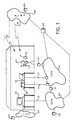
- the telecommunications environment of a user U1 comprises a cellular telephone T1 and a personal digital assistant T2 carried by the user; a facsimile apparatus T3 and conventional telephone T4 at a desk a few feet from the user; and a computer workstation T5 including a modem at a desk top some meters away from the user, all within a single building.
- the workstation T5 in this case comprises a local area network (LAN) server, connected to further terminals T6-T9 (not shown) at different distances from the user.
- LAN local area network
- the various terminals T1-T5 are each capable of receiving different signal formats, as follows:
- a public switched telephone network (PSTN) N1 is connected via a local line L3 to terminal T3, and via local line L4 to terminal T4.
- PSTN public switched telephone network
- An integrated services digital network (ISDN) N2 is interconnected with the PSTN N1 via a gateway G1 (e.g. a local or international switching centre), and is connected via an ISDN line L5 to terminal T5, and hence to local area network N3.
- G1 e.g. a local or international switching centre
- a public land mobile network (PLMN) (e.g. a GSM - compatible digital cellular network) N4 is connected via a gateway G2 to the PSTN N and ISDN N2.
- PLMN public land mobile network
- a base station B1 of the PLMN provides a picocell in the environment of the building within which the user U I is located, and a base station B2 provides a cell within the same general area.
- the networks N1-N4 are capable of delivering data at different rates to the various terminal T1-T5; low speed data via the PLMN N4, higher speed data via the PSTN N1, and yet higher speed data via the ISDN N2 or LAN N3.
- Information sources held for example on file servers IS1-IS4, are distributed throughout the networks N1-N4. Only four file servers are shown, however other distributions are envisaged.
- the user U1 wishes to receive pertinent information from any or all the information sources in the system.
- the user U 1 carries a tracking device via which his position within the telecommunications environment may be tracked.
- the tracking device P1 comprises a chip carrying card or "smart card” carrying data identifying the user, and some or all of the terminals T1-T5 carrying a card reader arranged to read the card.
- the terminals T1-T5 carrying a card reader arranged to read the card.
- it could comprise a 'smart badge' transponder, the location of which is tracked within the building.
- the workstations T5-T5 and the cellular telephone T1 carry such smart card readers.
- Additional smart card readers are installed at access doors within the building, and are connected to the LAN N3 to signal thereon.
- the cellphone T1 comprises, in addition to cellphone communicating components, a global positioning system (GPS) receiver and is arranged to derive and signal its position periodically as disclosed in EP 0467651 (Motorola).
- GPS global positioning system
- the cellphone T1 could perform positioning additionally using a land-based positioning signal, such as by differential GPS positioning, or purely using land-based positioning signals, such as differential GSM triangulation signals.
- the position of the user U1 is known by one or more of several means; firstly, it is known to which terminal he has logged in, for example by password and/or by the insertion of his smart card; secondly, his geographical position is obtained by means of a positioning signal receiver; and thirdly, his position within a building may be known (from the access door system).
- the networks N1-N4 are divided into two geographical regions (A, B), in order to localise location updating signalling within each of the regions, thereby reducing the signalling load on the system. Only two regions are shown for the purposes of illustration. However, larger numbers of geographical regions are also possible. Also for the purposes of illustration, the following description will relate mainly to one of those geographical areas (A), although the characteristics of the information distribution procedures within other geographical regions will then be readily apparent.
- Region A has a number of information sources IS A1 -IS AN available via the networks N1-N4, which provide information associated with various localities within the region.
- a number of terminals T A1 -T AN are located within the region, the terminals including fixed terminals at various locations in the region, and mobile terminals which are at least temporarily within the region.
- the terminals have various technical characteristics, including different information type input and output formats.
- a number of location update devices LU A1 -LU AN are located within the region. These location update devices include fixed terminals, such as the card readers previously referred to, which perform location updating for any users within their respective localities, and mobile terminals, such as the GPS receivers previously referred to, which are carried by a single user and perform location updating for that user alone.
- the location directory store LD A holds records of information sources, terminals and users which are present in its region.
- the regional location directory store LD A may be an element in a distributed hierarchical network of location directory stores.
- agent is used with a number of different senses in the literature; here, except where the context makes it clear that this is unnecessarily limiting, it will be understood to mean an independently executing control program under control of which a computer or computer controlled switching centre performs the functions attributed to the "agent".
- the term is not necessarily limited to control programs which monitor their environment and adapt their behaviour and response thereto, but encompasses such programs.
- Each agent makes use of data, and it is convenient that the agents should therefore operate in "object-oriented” fashion; that is to say, that the data should be “encapsulated” so as to be accessible and alterable only by associated control programs, acting in response to "messages” (which need not, however, be physically transmitted but could simply be data passed via the stack of a single computer).
- the agents may be defined in an object-oriented model such as Object Management Group's Common Object Request Broker Architecture (CORBA). It will, however, be understood that the object oriented format is inessential to the invention.
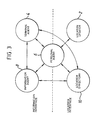
- the software architecture of the system includes a location updater object class 2, a terminal agent object class 4, a personal agent object class 6, an information agent object class 8 and a location directory object class 10.
- Each user in the system has a personal agent 6 operating in the system on its behalf.
- Each information source in the system has an information agent 8 operating in the system on its behalf.
- Each location update device in the system has a location updater object operating in the system on its behalf.
- Each terminal in the system has a terminal agent operating in the system on its behalf.
- each location directory store has a location directory object operating on its behalf.
- Each agent has a section of random access memory storing its software code.
- the relative locations of the agents within the system is not critical, since the agents are accessible by means of the networks N1-N4.
- at least some of the terminal agents 4 may be located on file servers close to the respective terminals they represent, the location updaters may be held on a file server at the point of receipt of the location updating information, the information agents 8 may be located on file servers close to the respective information sources they represent, and the personal agents may be held in the regional server which is co-located with the regional location directory store.
- the personal agent 6 interfaces with each of the location service directory 10, information agents 8, terminal agents 4 and location updaters as will be described below.
- the terminal agent 4 has fields for containing the following data:
- the location updater 2 has fields for containing the following data:
- the location directory 10 has fields for containing the following data:
- the information source descriptions contained in the location directory include the following:
- the terminal records held in the location directory 10 include the following:
- the locality records held in the location directory relating to the information sources and the terminal agents define the following location characteristics, namely a location defined in latitude, longitude and altitude, and a three-dimensional shape defining the locality in which the record is valid, with the defined location at the centre of three-dimensionalshape.
- Localities with which respective information sources are associated are individually configurable. Some information (for example weather information) could therefore be readily accessible by the user over a relatively wide area, whereas other information, being more location-specific (such as local services information), could be filtered out except in a more narrowly-defined locality.
- the location updater 2 provides a location update message, in the case of a fixed location updater when a user registers with the location updater, and in the case of a mobile location updater when the user carrying the location updater moves a predefined threshold distance since a previous location update.
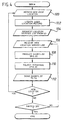
- the personal agent When the personal agent receives a new location for the user, due to location updating or due to the user logging onto a terminal, the personal agent updates its user location record, step 102, and proceeds to request a new location service list from the location directory, step 104.
- the location directory On receipt of a location service list request, the location directory performs a search for geographical intersections between the stored terminal locality records and the stored information source locality records with the user location specified in the location service list request, and produces a location service list providing information source descriptions of all information sources associated with the location of the user, and terminal descriptions of all terminals having a locality associated with that of the user.
- the information source description contains the name of the information source, a summary of its contents, its address and its locality record.
- the terminal description includes the network address of the terminal.
- the location service list is sent to the personal agent, which receives it in step 106. From the list, the personal agent is able to produce a shortlist of information sources, step 108, and select an appropriate terminal for receipt of information by the user, step 110, as described in further detail below.
- the personal agent sends the shortlist information to the terminal agent of the selected terminal, step 112.
- the user is able to access information detailed on the shortlist, which remains valid as long as the user remains in the same location.
- the personal agent receives a new user location from the location updater in question, and returns to step 100.
- a location may not necessarily be a geographical location.
- a means of transport such as a train
- Such information could for example be travel connection information.
- the type of information selected by a personal agent may be information pertaining to services in the local area, other users (friends) in the local area (in this sense, personal agents may also act as information agents by registering their respective information with the location directory for distribution to interested parties in the same locality), local tourist information, etc.
- the personal agent When a personal agent has received a new location service list, the personal agent proceeds to filter out information sources which it considers not potentially of interest to its user. This is carried out as shown in Figure 5.
- the personal agent first selects one of the information sources in the location service list, and checks whether the summary of the information source contents correspond with any of the users preferences. From the summary, the personal agent determines whether a key word search is appropriate. If so, the personal agent requests a key word search to be performed by the corresponding information agent, step 200. The information agent performs a search of the information source contents to determine a fit factor of the contents held and the key words. The personal agent then receives meta-information relating to the information stored and the key word fit results from the information agent, step 202.
- the personal agent simply requests meta-information from the information agent, step 204, and duly receives it, step 206.
- the personal agent performs the stored selection algorithm, using the stored user preferences and the information stored relating to the information source being accessed, 208. Should the selection result indicate an information source containing information potentially of interest to the user in the user's current location, the personal agent adds the information source details to its shortlist, step 210.
- the personal agent proceeds to perform the same sequence of procedures in relation to each information source listed in the location service list, until such time as all information sources associated with the location of the user have been analysed, and all information sources containing information which is potentially of interest to the user have been added to the shortlist.
- the personal agent proceeds to request terminal details from the terminal agents of each of the terminals listed in the location service list, step 300.
- the terminal details received include details of the information format types (for example text files, audio files, image files) supported by the terminal. This is compared by the personal agent with the meta-information of all items on the shortlist, and user terminal-type preferences are taken into account, in order to select a preferred terminal for receipt of information by the user, 302.
- information format types for example text files, audio files, image files
- the selected terminal may either be one of the user's personal terminals, or a public terminal which is in the vicinity of the user at the current user location.
- the personal agent contacts the corresponding terminal agent and requests access to the terminal, 304. Should the terminal agent grant access, the current terminal record of the personal agent is updated, 306. Otherwise, a different terminal must be selected.
- the personal agent sends a cancel terminal command to the terminal agent of the previous terminal, step 308.
- the terminal agent of the selected terminal When the terminal agent of the selected terminal has received the shortlist from the personal agent, the terminal agent sends the summary details of all shortlisted information sources to the terminal for receipt by the user.
- the user may be directed to a newly-selected terminal by a message received for example on the user's personal mobile terminal T1 or T2.
- the user When viewing or otherwise receiving the shortlist, the user is able to select one of the shortlisted information sources, which causes the terminal agent to request a file directly from the selected information source.
- the terminal agent also sends data to the personal agent identifying the selected file, to allow the personal agent to refine the stored user preference information by a learning process, such as by means of a genetic algorithm, and for billing purposes.
- a learning process such as by means of a genetic algorithm
- Each personal agent may periodically report use of the services available to a billing system for billing purposes.
- the information agent when it receives a file request, step 400, it checks the request to determine whether the terminal agent has requested personalisation of the file contents. The user may for example request only a portion of the file contents to be sent, or that content of a particular type be sent. If personalisation is required, the information agent proceeds to personalise the file contents, step 402.
- the terminal agent determines whether format conversion is required or desired.
- format conversion may be performed by resources in the system and may consist of any of the following format conversions (but the following is not intended to be a limiting list):
- the request from the terminal agent to the information agent will contain an indication of whether or not dynamic updating of the information received from the information agent is required. If so, whenever the requested file is updated in the information source, providing the user remains in the locality associated with the information source, the file is re-sent to the terminal agent, step 406.
- the information agent is able to determine each of the users interested in the information stored in the information source since the location directory stores a full list of the current user locations. Thus, whenever an information source is updated, the corresponding information agent checks, for all users for whom dynamic updates were requested, in the location directory to determine whether or not the user remains within its associated locality before the new file is sent.
- personal agents may also register information for distribution to other users in its locality, with the location service directory.
- These users corresponding to the personal agents are mobile, and therefore their personal agents act as mobile information agents which may cause the updating of a user's shortlist, for example when the mobile personal agent providing the information is a friend of the user in question, even when the user remains stationary.
- other information sources may be mobile and also cause such dynamic updating of a user's information source shortlist.
- a method according to an embodiment of the invention may comprise altering the shortlists of information sources of a user in a locality with which an information source is newly associated.
- the newly associated information source may relate to a mobile user in said system, so that movement of the mobile user causes the shortlist of, e.g. the stationary user, to be altered in accordance with the movement of the mobile user.
- the address of mobile agents within the system may not be available in a given region (for example, the personal agent of a user will not be held in the regional server when a user has newly location-updated in the region). For this reason, a locating server resource LS (see Fig. 2) is provided in the system which maintains current network address data for all mobile agents in the system. Thus, a "lost" agent may always be contacted via the locating server resource.
- user preferences may also be location-dependent. Accordingly, the stored preferences may indicate that when a user is located within a business environment, the user would prefer to receive business-related information. The location of the business environment would be stored in the personal preference list. Similarly, when the user is in a shopping centre, the user may prefer to receive information relating to the goods on offer at that shopping centre, whereas the user would otherwise not be interested in such information.
- the information sources referred to herein are not necessarily held on separate network nodes. They may be held on a single server. It is preferred that the sources hold multi-media information. As an example, the sources may include World Wide Web pages which are individually accessible via a system address in the form of a Uniform Resource Locator (URL) via an Internet Connection.
- URL Uniform Resource Locator
Landscapes
- Engineering & Computer Science (AREA)
- Computer Networks & Wireless Communication (AREA)
- Signal Processing (AREA)
- Mobile Radio Communication Systems (AREA)
- Telephonic Communication Services (AREA)
- Information Transfer Between Computers (AREA)
- Information Retrieval, Db Structures And Fs Structures Therefor (AREA)
Claims (36)
- Verfahren zum Erzeugen einer Kurzliste von Informationsquellen, von denen für einen oder mehrere Anwender über ein Telekommunikationssystem Informationen bereitgestellt werden, wobei das Verfahren umfaßt:i) Verfolgen (100) des Ortes eines Anwenders (U1) im System durch Empfang von Verfolgungsinformationen für den Anwender;ii) Zugreifen (104) auf Ortsdaten, die Örtlichkeiten angeben, in bezug auf die vermutet wird, daß für sie Informationen von den jeweiligen Quellen relevant sind;iii) Erzeugen (106, 108) einer Kurzliste von Informationsquellen für den Anwender auf der Grundlage der Verfolgungsinformationen und der Ortsdaten; undiv) Senden (112) der Kurzliste an ein Endgerät (T1, T2), das dem Anwender zugeordnet ist, damit der Anwender eine interessierende Informationsquelle auswählen und dadurch auf Informationen von der Quelle zugreifen kann.
- Verfahren nach Anspruch 1, das einen Schritt des Überwachens von Änderungen in den Verfolgungsinformationen und des Ausführens des Erzeugungsschrittes (iii) als Antwort auf eine Änderung in den Verfolgungsinformationen umfaßt.
- Verfahren nach Anspruch 1 oder Anspruch 2, das das Speichern von Orten, denen jeweilige Informationsquellen zugeordnet sind, umfaßt, wobei der Erzeugungsschritt (iii) das Bestimmen von Durchschnitten zwischen den Orten und dem Ort des Anwenders umfaßt.
- Verfahren nach Anspruch 3, das das individuelle Konfigurieren der Örtlichkeiten umfaßt.
- Verfahren nach einem vorhergehenden Anspruch, das das Ändern der Kurzlisten von Informationsquellen eines Anwenders umfaßt, wenn der Anwender sich an einer Örtlichkeit befindet, der eine Informationsquelle neu zugeordnet worden ist.
- Verfahren nach Anspruch 5, bei dem die neu zugeordnete Informationsquelle auf einen mobilen Anwender im System bezogen ist.
- Verfahren nach einem vorhergehenden Anspruch, das das Empfangen von Verfolgungsinformatiönen im Schritt (i) von einer Ortsaktualisierungsvorrichtung (LU) im System umfaßt.
- Verfahren nach einem der vorhergehenden Ansprüche, das ferner das Erfassen (100), wann ein Anwender Informationen bezüglich eines neuen Ortes anfordert, umfaβt.
- Verfahren nach einem vorhergehenden Anspruch, das das Auswählen (110, 302) des zugeordneten Endgerätes (T1, T2) auf der Grundlage der Verfolgungsinformationen umfaßt.
- Verfahren nach einem der vorhergehenden Ansprüche, das das Bestimmen von Informationsformaten, die von den Endgeräten in dem Telekommunikationssystem akzeptiert werden, das Identifizieren derjenigen Endgeräte, die das Format der durch eine Quelle in der Kurzliste bereitgestellten Informationen akzeptieren, und das Auswählen (302) eines der auf diese Weise identifizierten Endgeräte umfaßt.
- Verfahren nach einem der vorhergehenden Ansprüche, das das Speichern von einem Anwender zugeordneten Präferenzinformationen und das Analysieren (208) von Informationsquellen, die dem Ort des Anwenders zugeordnet sind, im Licht der gespeicherten Prafterenzinformationen umfaßt, um nur jene Informationsquellen, die Informationen enthalten, die wahrscheinlich für den Anwender von Interesse sind, aufzunehmen und sie in der Kurzliste abzulegen (108, 210).
- Verfahren nach Anspruch 11, bei dem die Präferenzinformationen wenigstens einige der folgenden Informationen umfassen: Alter, Geschlecht, Gesundheitszustand, Freunde, Interessen, Präferenzen bezüglich des Informationsformat-Typs, Präferenzen bezüglich dynamischer Aktualisierungen, ortsbasierte Präferenzen und/oder zeit/datum-basierte Präferenzen.
- Verfahren nach einem der vorhergehenden Ansprüche, das ferner den Schritt des Personalisierens (402) der ausgewählten Informationsquellen für den Anwender umfaßt.
- Verfahren nach einem der vorhergehenden Ansprüche, bei dem unterschiedliche Informationsquellen, die demselben Ort zugewiesen sind, in in dem System verteilten Servern (IS1, IS2, IS3, IS4) gespeichert sind.
- Verfahren nach einem der vorhergehenden Ansprüche, bei dem die Informationsquellen Quellen für persönliche Informationen enthalten, die Informationen bezüglich der Anwender des Systems enthalten.
- Verfahren nach einem der vorhergehenden Ansprüche, bei dem die Informationsquellen Quellen umfassen, die endgerätspezifische Informationen enthalten, die von einem Anwender an einem oder mehreren im voraus spezifizierten Endgeräten (T1, T2) wiedergewonnen werden sollen.
- Verfahren nach einem der vorhergehenden Ansprüche, bei denen die Informationsquellen Quellen umfassen, die Informationen über Dienste enthalten, die in der Örtlichkeit verfügbar sind, in der die Informationselemente verteilt werden sollen.
- Verfahren nach einem der vorhergehenden Ansprüche, bei dem die Informationsquellen Textdateien und/oder Bilddateien und/oder Tondateien und/oder Sprachdatendateien und/oder Videodateien umfassen.
- Verfahren nach einem der vorhergehenden Ansprüche, bei dem die Kurzliste Systemadressendaten enthält, anhand derer die Quellen in dem Telekommunikationssystem identifiziert werden können.
- Verfahren nach einem der vorhergehenden Ansprüche, bei dem die Kurzliste Zusammenfassungsinformationen für jede der darin enthaltenen Informationsquellen enthält.
- Vorrichtung zum Erzeugen einer Kurzliste von Informationsquellen, von denen Informationen für einen oder mehrere Anwender in einem Telekommunikationssystem bereitgestellt werden, wobei die Vorrichtung umfaßt:Ortsspeichermittel (LD), die so beschaffen sind, daß sie Ortsdaten speichern, die Örtlichkeiten angeben, für die vermutet wird, daß in ihnen Informationen von den jeweiligen Quellen relevant sind;Empfangsmittel (2), die so beschaffen sind, daß sie ein einen erfaßten Ort eines Anwenders angebendes Signal empfangen;ortsabhängige Auswahlmittel (6, 10), die so beschaffen sind, daß sieaus den Informationsquellen mehrere Informationsquellen auf der Grundlage des erfaßten Ortes des Anwenders und der Ortsdaten identifizieren; undeine Kurzliste der identifizierten Informationsquellen erzeugen; undSendemittel (4), die die Kurzliste an ein Endgerät in dem Telekommunikationssystem senden, damit sie von einem Anwender empfangen wird.
- Vorrichtung nach Anspruch 21, die ferner Mittel enthält, die so betreibbar sind, daß sie Änderungen des erfaßten Ortes des Anwenders überwachen, wobei die ortsabhängigen Auswahlmittel so beschaffen sind, daß sie die Kurzliste als Antwort auf eine Änderung des erfaßten Ortes erzeugen.
- Verfahren nach Anspruch 21 oder 22, bei der die Ortsdaten geographische Koordinaten von Örtlichkeiten spezifizieren, für die die zugeordneten Informationsquellen relevante Informationen enthalten.
- Vorrichtung nach einem der Ansprüche 21 bis 23, bei der auf die Informationsquellen von mehreren im Telekommunikationssystem verteilten Servern (IS1, IS2, IS3, IS4) zugegriffen werden kann, wobei die ortsabhängigen Auswahlmittel (10) so beschaffen sind, daß sie Informationsquellen von mehr als einem der Server für einen Anwender an einem besonderen Ort identifizieren.
- Vorrichtung nach einem der Ansprüche 21 bis 24, die Mittel enthält, die einem Anwender ermöglichen, aus der Kurzliste Informationen auszuwählen, um sie aus der Auswahl an das Endgerät zu senden.
- Vorrichtung nach einem der Ansprüche 21 bis 25, die ferner Mittel (10), die Daten speichern, welche die Orte der Endgeräte in dem Telekommunikationssystem identifizieren, und Mittel (6), die eines der Endgeräte auf der Grundlage, daß sich das Endgerät in der Nähe eines Anwenders befindet, auswählen, umfaßt.
- Vorrichtung nach einem der Ansprüche 21 bis 26, die Mittel (6) umfaßt, die Informationsquellen analysieren, die dem Ort des Anwenders zugeordnet sind, um ferner aus jenen analysierten Informationsquellen auf der Grundlage von dem Anwender zugeordneten Präferenzinformationen diejenigen auszuwählen, die Informationen enthalten, die für den Anwender wahrscheinlich von Interesse sind.
- Vorrichtung nach Anspruch 27, die ferner Mittel (6) umfaßt, die die Präferenzinformationen als Antwort auf das Lernen der von einem Anwender vorgenommenen Auswahl von Informationsquellen aus der Kurzliste abwandeln.
- Vorrichtung nach einem der Ansprüche 21 bis 28, bei der die Ortsspeichermittel (LD) Systemadressendaten halten, wodurch auf die Informationsquellen in dem Telekommunikationssystem zugegriffen werden kann.
- Vorrichtung nach einem der Ansprüche 21 bis 29, die Speichermittel (LD) umfaßt, die Anwenderortsdaten halten, die die Orte der Anwender in dem System angeben.
- Vorrichtung nach einem der Ansprüche 21 bis 30, bei der die Informationsquellen persönliche Informationen enthalten, die auf Anwender des Systems bezogen sind.
- Vorrichtung nach einem der Ansprüche 21 bis 31, bei der die Informationsquellen endgerätspezifische Informationen enthalten, die von einem Anwender an einem oder mehreren im voraus spezifizierten Endgeräten wiedergewonnen werden sollen.
- System, das für einen oder mehrere Anwender in einem Telekommunikationssystem eine Kurzliste von Informationsquellen bereitstellt, aus denen Informationen durch den oder jeden Anwender ausgewählt werden können, wobei das System umfaßt;eine Vorrichtung zum Erzeugen der Kurzliste von Informationsquellen nach einem der Ansprüche 21 bis 32; undOrtserfassungsmittel (LU), die den Ort des Anwenders erfassen, wobei die Empfangsmittel (2) so beschaffen sind, daß sie ein einen erfaßten Ort eines Anwenders angebendes Signal von den Ortserfassungsmitteln empfangen.
- System nach Anspruch 33, bei dem die Ortserfassungsmittel Ortsaktualisierungsmittel enthalten, die von dem oder jedem Anwender getragen werden.
- System nach Anspruch 34, bei dem die Ortsaktualisienngsmittel einen Positionierungssystem-Empfänger und/oder ein Anwenderidentifizierungsmodul zum Identifizieren des Anwenders für in der Nähe des Anwenders befindliche Empfängermittel umfassen.
- Verfahren zum Erzeugen einer Kurzliste von Informationsquellen, von denen Informationen für einen oder mehrere Anwender über ein Telekommunikationssystem bereitgestellt werden können, wobei das Verfahren umfaßt:Verfolgen (100) des Ortes eines Anwenders im System durch Empfangen von Verfolgungsinformationen für den Anwender;Zugreifen (104) auf Ortsdaten, die Örtlichkeiten definieren, für die vermutet wird, daß für sie Informationen von den jeweiligen Quellen relevant sind;Auswählen mehrerer Informationsquellen auf der Grundlage der Durchschnitte zwischen dem Ort und den Örtlichkeiten;Filtern (208) der ausgewählten Informationsquellen auf der Grundlage der Präferenzdaten, die vom Anwender angegebene Präferenzen angeben, um eine verfeinerte Auswahl von Informationsquellen zu schaffen, die Inhalte besitzen, die für den Anwender wahrscheinlich von Interesse sind; undErzeugen einer Kurzliste (108, 210) der gefilterten Informationsquellen.
Applications Claiming Priority (3)
| Application Number | Priority Date | Filing Date | Title |
|---|---|---|---|
| GBGB9707615.2A GB9707615D0 (en) | 1997-04-14 | 1997-04-14 | Telecommunications apparatus and method |
| GB9707615 | 1997-04-14 | ||
| PCT/GB1998/001056 WO1998047295A1 (en) | 1997-04-14 | 1998-04-09 | Telecommunications apparatus and method |
Publications (2)
| Publication Number | Publication Date |
|---|---|
| EP0976254A1 EP0976254A1 (de) | 2000-02-02 |
| EP0976254B1 true EP0976254B1 (de) | 2002-11-06 |
Family
ID=10810813
Family Applications (1)
| Application Number | Title | Priority Date | Filing Date |
|---|---|---|---|
| EP98917330A Expired - Lifetime EP0976254B1 (de) | 1997-04-14 | 1998-04-09 | Telekommunikationsgerät und verfahren |
Country Status (9)
| Country | Link |
|---|---|
| US (1) | US6397040B1 (de) |
| EP (1) | EP0976254B1 (de) |
| JP (1) | JP2001519951A (de) |
| KR (1) | KR100543638B1 (de) |
| AU (1) | AU734640B2 (de) |
| CA (1) | CA2287181C (de) |
| DE (1) | DE69809213T2 (de) |
| GB (1) | GB9707615D0 (de) |
| WO (1) | WO1998047295A1 (de) |
Families Citing this family (120)
| Publication number | Priority date | Publication date | Assignee | Title |
|---|---|---|---|---|
| USRE47908E1 (en) * | 1991-12-23 | 2020-03-17 | Blanding Hovenweep, Llc | Ergonomic man-machine interface incorporating adaptive pattern recognition based control system |
| USRE48056E1 (en) * | 1991-12-23 | 2020-06-16 | Blanding Hovenweep, Llc | Ergonomic man-machine interface incorporating adaptive pattern recognition based control system |
| US6460036B1 (en) * | 1994-11-29 | 2002-10-01 | Pinpoint Incorporated | System and method for providing customized electronic newspapers and target advertisements |
| US9832610B2 (en) | 1994-11-29 | 2017-11-28 | Apple Inc. | System for collecting, analyzing, and transmitting information relevant to transportation networks |
| US5758257A (en) * | 1994-11-29 | 1998-05-26 | Herz; Frederick | System and method for scheduling broadcast of and access to video programs and other data using customer profiles |
| US6560461B1 (en) | 1997-08-04 | 2003-05-06 | Mundi Fomukong | Authorized location reporting paging system |
| US6154172A (en) * | 1998-03-31 | 2000-11-28 | Piccionelli; Gregory A. | System and process for limiting distribution of information on a communication network based on geographic location |
| US7792297B1 (en) | 1998-03-31 | 2010-09-07 | Piccionelli Greg A | System and process for limiting distribution of information on a communication network based on geographic location |
| US6826598B1 (en) | 1998-05-05 | 2004-11-30 | British Telecommunications Public Limited Company | Storage and retrieval of location based information in a distributed network of data storage devices |
| JP2000050335A (ja) * | 1998-07-31 | 2000-02-18 | Nec Corp | 移動通信システム |
| JP4090595B2 (ja) * | 1998-10-08 | 2008-05-28 | 株式会社日立製作所 | 情報通知方法、提供情報装置、無線通信システム |
| SE9900710L (sv) * | 1999-02-25 | 2000-08-26 | Ericsson Telefon Ab L M | Metod och anordning som avser kommunikationsnätverk för mobiltelefoner |
| US6401085B1 (en) | 1999-03-05 | 2002-06-04 | Accenture Llp | Mobile communication and computing system and method |
| US6356905B1 (en) | 1999-03-05 | 2002-03-12 | Accenture Llp | System, method and article of manufacture for mobile communication utilizing an interface support framework |
| US6223165B1 (en) | 1999-03-22 | 2001-04-24 | Keen.Com, Incorporated | Method and apparatus to connect consumer to expert |
| DE69927144T2 (de) | 1999-07-13 | 2006-06-08 | Motorola, Inc., Schaumburg | Bereitstellung von Informationsdiensten in einem Telekommunicationsnetz |
| WO2001018490A1 (de) * | 1999-09-03 | 2001-03-15 | Siemens Aktiengesellschaft | Verfahren und anordnung zur darstellung ortsabhängiger lesezeichen auf einem rechner |
| US6728531B1 (en) | 1999-09-22 | 2004-04-27 | Motorola, Inc. | Method and apparatus for remotely configuring a wireless communication device |
| US6829475B1 (en) | 1999-09-22 | 2004-12-07 | Motorola, Inc. | Method and apparatus for saving enhanced information contained in content sent to a wireless communication device |
| US6725022B1 (en) | 1999-09-22 | 2004-04-20 | Motorola, Inc. | Method and apparatus for enabling the selection of content on a wireless communication device |
| TW571599B (en) * | 1999-09-27 | 2004-01-11 | Qualcomm Inc | Method and system for querying attributes in a cellular communications system |
| US7630986B1 (en) | 1999-10-27 | 2009-12-08 | Pinpoint, Incorporated | Secure data interchange |
| EP1158411B1 (de) * | 1999-11-01 | 2007-03-14 | Seiko Epson Corporation | Datenausgabesteuergerät und Verfahren um Datenausgabedienst zu ermöglichen |
| KR100558027B1 (ko) | 1999-11-01 | 2006-03-10 | 세이코 엡슨 가부시키가이샤 | 데이터 출력 제어장치 |
| US7340262B1 (en) * | 1999-11-18 | 2008-03-04 | Qwest Communications International Inc. | Method and system for providing location-sensitive call management services to a mobile subscriber |
| WO2001048581A2 (en) * | 1999-12-09 | 2001-07-05 | Linden Craig L | Mobile advertising methods and improvements |
| SE517840C2 (sv) * | 1999-12-13 | 2002-07-23 | Telia Ab | Förfarande och system för styrning av tillhandahållande av tjänster i ett datanät |
| GB9930645D0 (en) | 1999-12-23 | 2000-02-16 | Koninkl Philips Electronics Nv | Location alarm |
| JP3941312B2 (ja) * | 1999-12-24 | 2007-07-04 | 株式会社日立製作所 | 道路交通システム及びその情報処理方法 |
| EP1247191A4 (de) * | 1999-12-29 | 2007-12-12 | Harry A Glorikian | Internetverfahren zum verbinden von client-reisenden mit geographisch assozierten daten |
| CA2403737C (en) * | 2000-03-21 | 2012-09-25 | Ted R. Rittmaster | System and process for distribution of information on a communication network |
| DK1275070T3 (da) | 2000-04-18 | 2007-05-14 | British Airways Plc | Fremgangsmåde til drift af et billeteringssystem |
| WO2001082529A2 (en) * | 2000-04-25 | 2001-11-01 | Captivate Network, Inc. | Information portal |
| US6725050B1 (en) * | 2000-05-25 | 2004-04-20 | Sprint Communications Company L.P. | Wireless communication system for an enterprise |
| US7917390B2 (en) * | 2000-06-09 | 2011-03-29 | Sony Corporation | System and method for providing customized advertisements over a network |
| DE60033641T2 (de) * | 2000-06-09 | 2007-06-28 | Alcatel Lucent | Prozessinstruktionübertragung von einem drahtlosen Telekommunikationsgerät zu einem nahen Terminal |
| US7062279B2 (en) | 2000-06-22 | 2006-06-13 | Openwave Systems Inc. | Anonymous positioning of a wireless unit for data network location-based services |
| IT1320534B1 (it) * | 2000-07-11 | 2003-12-10 | Cselt Centro Studi Lab Telecom | Procedimento di trasmissione per reti di comunicazione, relativosistema e terminale. |
| US6931254B1 (en) * | 2000-08-21 | 2005-08-16 | Nortel Networks Limited | Personalized presentation system and method |
| KR100720407B1 (ko) * | 2000-08-24 | 2007-05-22 | (주) 엘지텔레콤 | 위치 확인을 통한 모바일 서베이 시스템 및 그 방법 |
| US6643837B2 (en) * | 2000-09-13 | 2003-11-04 | Metasolv Software, Inc. | System and method for automatically designing communications circuits |
| US6802044B2 (en) | 2000-09-13 | 2004-10-05 | Metasolve Software, Inc. | System and method for designing diverse communications circuits |
| US6892169B1 (en) | 2000-09-13 | 2005-05-10 | Metasolv Software, Inc. | System and method for automatically designing communications circuits |
| US6636590B1 (en) | 2000-10-30 | 2003-10-21 | Ingenio, Inc. | Apparatus and method for specifying and obtaining services through voice commands |
| WO2002041176A1 (en) | 2000-11-20 | 2002-05-23 | British Telecommunicaitons Public Limited Company | Method of updating interests |
| US6681114B2 (en) * | 2000-12-06 | 2004-01-20 | At&T Corp. | On demand multicast messaging system |
| US8554617B2 (en) | 2007-10-02 | 2013-10-08 | Ingenio Llc | Systems and methods to provide alternative connections for real time communications |
| US7139252B2 (en) * | 2001-01-31 | 2006-11-21 | International Business Machines Corporation | System and method for aggregating information to determine users' locations |
| US7184764B2 (en) | 2001-02-08 | 2007-02-27 | Starhome Gmbh | Method and apparatus for supporting cellular data communication to roaming mobile telephony devices |
| EP1347661B1 (de) * | 2001-02-08 | 2007-03-28 | Starhome GmbH | Besucherportal zur Unterstützung von Datenkommunikation von umherstreifenden mobilen Endgeräten |
| US20020133402A1 (en) | 2001-03-13 | 2002-09-19 | Scott Faber | Apparatus and method for recruiting, communicating with, and paying participants of interactive advertising |
| US6895238B2 (en) | 2001-03-30 | 2005-05-17 | Motorola, Inc. | Method for providing entertainment to a portable device |
| US20020165846A1 (en) * | 2001-05-02 | 2002-11-07 | Eric Richer | Personal internet portal |
| JP4516707B2 (ja) * | 2001-07-10 | 2010-08-04 | 株式会社エヌ・ティ・ティ・ドコモ | ネットワーク制御装置、移動通信システム及び移動通信ネットワーク制御方法 |
| JP2003050947A (ja) * | 2001-08-07 | 2003-02-21 | Nec Corp | プロモーションシステム、その情報提供方法及びそのプログラム |
| US20030135493A1 (en) * | 2002-01-15 | 2003-07-17 | Jeffrey Phelan | Method and apparatus for consuming information based on a geographic location profile of a user |
| JP3676312B2 (ja) * | 2002-03-12 | 2005-07-27 | 株式会社エヌ・ティ・ティ・ドコモ | 送信側移動機、受信側移動機、情報通信システム、情報通信方法及びサーバ装置 |
| US6970871B1 (en) * | 2002-04-11 | 2005-11-29 | Sprint Spectrum L.P. | System and method of sorting information based on a location of a mobile station |
| US6748211B1 (en) | 2002-05-22 | 2004-06-08 | Motorola, Inc. | Device and method for transmitting a message from a client device to a service center |
| AU2003231914A1 (en) * | 2002-06-17 | 2003-12-31 | Niragongo Inc | Method and system for providing local based information services |
| NO318841B1 (no) * | 2002-08-20 | 2005-05-09 | Telenor Asa | System og fremgangsmate for a gi mobiltjenester hoyere tilgjengelighet |
| US20040203891A1 (en) * | 2002-12-10 | 2004-10-14 | International Business Machines Corporation | Dynamic service binding providing transparent switching of information services having defined coverage regions |
| US6954649B2 (en) * | 2002-12-12 | 2005-10-11 | Motorola, Inc | Method and device for choosing a system selection algorithm that is location dependent |
| US7480512B2 (en) * | 2004-01-16 | 2009-01-20 | Bones In Motion, Inc. | Wireless device, program products and methods of using a wireless device to deliver services |
| US7991432B2 (en) * | 2003-04-07 | 2011-08-02 | Silverbrook Research Pty Ltd | Method of printing a voucher based on geographical location |
| US7243849B2 (en) * | 2003-04-07 | 2007-07-17 | Silverbrook Research Pty Ltd | Handheld coded data reader |
| JP2005050264A (ja) * | 2003-07-31 | 2005-02-24 | Sony Corp | 情報提供装置および情報提供方法、情報処理装置および情報処理方法、情報提供システム、並びに、プログラム |
| FR2859557B1 (fr) * | 2003-09-09 | 2006-01-06 | France Telecom | Procede et systeme de diffusion d'informations multimedia en fonction de la position geographique d'un utilisateur de telephone mobile |
| US7366683B2 (en) * | 2003-10-06 | 2008-04-29 | Utbk, Inc. | Methods and apparatuses for offline selection of pay-per-call advertisers |
| US8837698B2 (en) | 2003-10-06 | 2014-09-16 | Yp Interactive Llc | Systems and methods to collect information just in time for connecting people for real time communications |
| US7428497B2 (en) * | 2003-10-06 | 2008-09-23 | Utbk, Inc. | Methods and apparatuses for pay-per-call advertising in mobile/wireless applications |
| US7424442B2 (en) | 2004-05-04 | 2008-09-09 | Utbk, Inc. | Method and apparatus to allocate and recycle telephone numbers in a call-tracking system |
| US9202217B2 (en) | 2003-10-06 | 2015-12-01 | Yellowpages.Com Llc | Methods and apparatuses to manage multiple advertisements |
| US8140389B2 (en) | 2003-10-06 | 2012-03-20 | Utbk, Inc. | Methods and apparatuses for pay for deal advertisements |
| US9984377B2 (en) | 2003-10-06 | 2018-05-29 | Yellowpages.Com Llc | System and method for providing advertisement |
| US9208496B2 (en) | 2003-10-06 | 2015-12-08 | Yellowpages.Com Llc | Systems and methods to provide a communication reference in a representation of a geographical region |
| EP1676231A1 (de) * | 2003-10-22 | 2006-07-05 | Bridgestone/Firestone North American Tire, LLC | Verfahren und system zur ausführung einer transaktion |
| JP2005190068A (ja) * | 2003-12-25 | 2005-07-14 | Fanuc Ltd | 制御装置のソフトウェアダウンロードシステム |
| US8612309B2 (en) | 2004-04-09 | 2013-12-17 | Sony Corporation | Preference information collecting system, device, method, and program |
| JP2005301715A (ja) * | 2004-04-13 | 2005-10-27 | Sony Corp | 嗜好情報収集システム,情報検索装置,ユーザ携帯端末,通過情報送信装置,嗜好情報収集法およびコンピュータプログラム |
| US20060105789A1 (en) * | 2004-11-18 | 2006-05-18 | Noah Amit | Websites mapping system and method |
| US8538768B2 (en) | 2005-02-16 | 2013-09-17 | Ingenio Llc | Methods and apparatuses for delivery of advice to mobile/wireless devices |
| US7979308B2 (en) | 2005-03-03 | 2011-07-12 | Utbk, Inc. | Methods and apparatuses for sorting lists for presentation |
| EP1867094A2 (de) | 2005-03-15 | 2007-12-19 | Trapeze Networks, Inc. | System und verfahren zum verteilen von schlüsseln in einem drahtlosen netzwerk |
| US7551574B1 (en) * | 2005-03-31 | 2009-06-23 | Trapeze Networks, Inc. | Method and apparatus for controlling wireless network access privileges based on wireless client location |
| US7353034B2 (en) | 2005-04-04 | 2008-04-01 | X One, Inc. | Location sharing and tracking using mobile phones or other wireless devices |
| US10015630B2 (en) | 2016-09-15 | 2018-07-03 | Proximity Grid, Inc. | Tracking people |
| US10390212B2 (en) | 2016-09-15 | 2019-08-20 | Proximity Grid, Inc. | Tracking system having an option of not being trackable |
| US7761400B2 (en) | 2005-07-22 | 2010-07-20 | John Reimer | Identifying events |
| US8599832B2 (en) | 2005-09-28 | 2013-12-03 | Ingenio Llc | Methods and apparatuses to connect people for real time communications via voice over internet protocol (VOIP) |
| US7724703B2 (en) | 2005-10-13 | 2010-05-25 | Belden, Inc. | System and method for wireless network monitoring |
| US7573859B2 (en) | 2005-10-13 | 2009-08-11 | Trapeze Networks, Inc. | System and method for remote monitoring in a wireless network |
| US8638762B2 (en) | 2005-10-13 | 2014-01-28 | Trapeze Networks, Inc. | System and method for network integrity |
| WO2007044986A2 (en) | 2005-10-13 | 2007-04-19 | Trapeze Networks, Inc. | System and method for remote monitoring in a wireless network |
| US8185437B2 (en) | 2007-07-12 | 2012-05-22 | Utbk, Inc. | Systems and methods to provide communication connections via partners |
| US7558266B2 (en) | 2006-05-03 | 2009-07-07 | Trapeze Networks, Inc. | System and method for restricting network access using forwarding databases |
| US8966018B2 (en) | 2006-05-19 | 2015-02-24 | Trapeze Networks, Inc. | Automated network device configuration and network deployment |
| US8818322B2 (en) | 2006-06-09 | 2014-08-26 | Trapeze Networks, Inc. | Untethered access point mesh system and method |
| US9191799B2 (en) | 2006-06-09 | 2015-11-17 | Juniper Networks, Inc. | Sharing data between wireless switches system and method |
| US9258702B2 (en) | 2006-06-09 | 2016-02-09 | Trapeze Networks, Inc. | AP-local dynamic switching |
| US8340110B2 (en) | 2006-09-15 | 2012-12-25 | Trapeze Networks, Inc. | Quality of service provisioning for wireless networks |
| US9317855B2 (en) | 2006-10-24 | 2016-04-19 | Yellowpages.Com Llc | Systems and methods to provide voice connections via local telephone numbers |
| US7873061B2 (en) | 2006-12-28 | 2011-01-18 | Trapeze Networks, Inc. | System and method for aggregation and queuing in a wireless network |
| US8451825B2 (en) | 2007-02-22 | 2013-05-28 | Utbk, Llc | Systems and methods to confirm initiation of a callback |
| US8843107B2 (en) | 2007-02-08 | 2014-09-23 | Yp Interactive Llc | Methods and apparatuses to connect users of mobile devices to advertisers |
| US8473386B2 (en) | 2007-04-10 | 2013-06-25 | Ingenio Llc | Systems and methods to facilitate real time communications between members of a social network |
| US8601386B2 (en) | 2007-04-20 | 2013-12-03 | Ingenio Llc | Methods and systems to facilitate real time communications in virtual reality |
| US8320368B2 (en) | 2007-06-18 | 2012-11-27 | Utbk, Inc. | Systems and methods to provide communication references based on recommendations to connect people for real time communications |
| US8532276B2 (en) | 2007-06-26 | 2013-09-10 | Ingenio Llc | Systems and methods to provide telephonic connections via concurrent calls |
| US8902904B2 (en) | 2007-09-07 | 2014-12-02 | Trapeze Networks, Inc. | Network assignment based on priority |
| US8295465B2 (en) | 2007-09-25 | 2012-10-23 | Utbk, Inc. | Systems and methods to connect members of a social network for real time communication |
| US20090125230A1 (en) * | 2007-11-14 | 2009-05-14 | Todd Frederic Sullivan | System and method for enabling location-dependent value exchange and object of interest identification |
| US8238942B2 (en) | 2007-11-21 | 2012-08-07 | Trapeze Networks, Inc. | Wireless station location detection |
| US9826344B2 (en) * | 2008-03-28 | 2017-11-21 | At&T Mobility Ii Llc | Systems and methods for determining previous occupation in or proximate to an alert area |
| US8150357B2 (en) | 2008-03-28 | 2012-04-03 | Trapeze Networks, Inc. | Smoothing filter for irregular update intervals |
| US8978105B2 (en) | 2008-07-25 | 2015-03-10 | Trapeze Networks, Inc. | Affirming network relationships and resource access via related networks |
| US8238298B2 (en) | 2008-08-29 | 2012-08-07 | Trapeze Networks, Inc. | Picking an optimal channel for an access point in a wireless network |
| US20100262579A1 (en) * | 2009-04-08 | 2010-10-14 | Research In Motion Limited | Reducing Transmission of Location Updates Based on Loitering |
| US9803986B2 (en) | 2009-11-24 | 2017-10-31 | Core Wireless Licensing S.A.R.L. | Method and apparatus for determining premises semantics |
| US9105057B2 (en) | 2012-01-09 | 2015-08-11 | Yodel Innovations, Llc | System and method for correlating user call response to electronic messages |
Family Cites Families (42)
| Publication number | Priority date | Publication date | Assignee | Title |
|---|---|---|---|---|
| WO1991011874A1 (en) * | 1990-02-02 | 1991-08-08 | Sente Corporation | Single number information exchange routing process |
| US5155689A (en) | 1991-01-17 | 1992-10-13 | By-Word Technologies, Inc. | Vehicle locating and communicating method and apparatus |
| US5315636A (en) * | 1991-06-28 | 1994-05-24 | Network Access Corporation | Personal telecommunications system |
| US5579535A (en) * | 1991-07-01 | 1996-11-26 | Motorola, Inc. | Personal communication system providing supplemental information mode |
| US5689245A (en) | 1992-10-19 | 1997-11-18 | Radio Satellite Corporation | Integrated communications terminal |
| JPH06188831A (ja) * | 1992-12-16 | 1994-07-08 | Fujitsu Ltd | パーソナル通信方式 |
| JPH06269044A (ja) | 1993-03-16 | 1994-09-22 | Nec Corp | 地域情報サービスシステム |
| US5502757A (en) * | 1993-12-22 | 1996-03-26 | At&T Corp. | Location dependent service for a wireless telephone |
| CA2170737A1 (en) | 1994-02-07 | 1995-08-10 | Harold Ii Pace | Mobile location reporting apparatus and methods |
| US5515426A (en) * | 1994-02-28 | 1996-05-07 | Executone Information Systems, Inc. | Telephone communication system having a locator |
| US5678194A (en) | 1994-03-10 | 1997-10-14 | Motorola, Inc. | Method for providing geographic dependent instructions to a user of a communications unit |
| US5539924A (en) | 1994-03-10 | 1996-07-23 | Motorola, Inc. | Method for providing communications within a geographic region |
| US5778304A (en) | 1994-03-10 | 1998-07-07 | Motorola, Inc. | Method for providing communication services based on geographic location |
| US5561704A (en) | 1994-03-16 | 1996-10-01 | At&T Corp. | Proximity based toll free communication services |
| US5649300A (en) | 1994-04-13 | 1997-07-15 | Rotec, A Nevada General Partnership | Message delivery system and method therefor |
| US5583914A (en) | 1994-06-30 | 1996-12-10 | Lucent Technologies Inc. | Intelligent wireless signaling overlay for a telecommunication network |
| DE69502105T2 (de) * | 1994-07-29 | 1998-08-06 | Seiko Communications Holding N.V., Curacao | Zweikanal-werbung mit fahrzeugortungsreferenz |
| US5742905A (en) * | 1994-09-19 | 1998-04-21 | Bell Communications Research, Inc. | Personal communications internetworking |
| US5602901A (en) | 1994-12-22 | 1997-02-11 | Motorola, Inc. | Specialized call routing method and apparatus for a cellular communication system |
| US5727057A (en) | 1994-12-27 | 1998-03-10 | Ag Communication Systems Corporation | Storage, transmission, communication and access to geographical positioning data linked with standard telephony numbering and encoded for use in telecommunications and related services |
| US5797091A (en) | 1995-03-07 | 1998-08-18 | Xypoint Corporation | Personal communication system and method of use |
| US5568153A (en) | 1995-05-30 | 1996-10-22 | Telefonaktiebolaget Lm Ericsson | Individually defined personal home area for subscribers in a cellular telecommunications network |
| JPH099335A (ja) | 1995-06-23 | 1997-01-10 | Daini Denden Kk | 公衆無線基地局所在場所報知システム |
| WO1997001942A1 (en) | 1995-06-28 | 1997-01-16 | Mci Communications Corporation | Method and apparatus for improved call connectivity in an intelligent wireless network |
| US5802468A (en) | 1995-06-28 | 1998-09-01 | Mci Corporation | System and method for identifying calling areas within a communication system |
| US6049711A (en) * | 1995-08-23 | 2000-04-11 | Teletrac, Inc. | Method and apparatus for providing location-based information services |
| US5754955A (en) | 1995-09-22 | 1998-05-19 | Telefonaktiebolaget Lm Ericsson | Providing mobile communications system services in dependence on identification of cell where a mobile-originated call was initiated |
| JP3743037B2 (ja) | 1995-11-01 | 2006-02-08 | 株式会社日立製作所 | 移動端末への情報提供方法、情報提供システム及び移動端末 |
| US5812950A (en) | 1995-11-27 | 1998-09-22 | Telefonaktiebolaget Lm Ericsson (Publ) | Cellular telephone system having prioritized greetings for predefined services to a subscriber |
| US5802454A (en) | 1995-12-15 | 1998-09-01 | Teletrac, Inc. | Remotely distributed location and messaging system |
| US5719929A (en) | 1995-12-28 | 1998-02-17 | Lucent Technologies Inc. | Generalizing specialized telephone numbers |
| US5740538A (en) | 1996-01-05 | 1998-04-14 | Lucent Technologies, Inc. | System and method for identifying the location of a wireless terminal |
| JP3216514B2 (ja) * | 1996-01-31 | 2001-10-09 | 株式会社デンソー | 情報サービス装置 |
| GB2313257A (en) | 1996-05-17 | 1997-11-19 | Motorola Ltd | Selecting data relevant to multiple communication systems in vicinity of a programmable subscriber unit |
| DE19621424A1 (de) | 1996-05-28 | 1997-12-04 | Telemedia Gmbh | Verfahren und Vorrichtung zum Selektieren von Abfragedaten aus einer gespeicherten Datenmenge in Abhängigkeit von der geographischen Momentanposition des Benutzers |
| US5983115A (en) | 1996-08-13 | 1999-11-09 | Lucent Technologies Inc. | Geographic based method for selecting a wireless communications service provider |
| FI103701B (fi) | 1996-10-30 | 1999-08-13 | Nokia Telecommunications Oy | Matkaviestinjärjestelmä ja menetelmä paikkatiedon tuottamiseksi sovell ukselle |
| US5930699A (en) | 1996-11-12 | 1999-07-27 | Ericsson Inc. | Address retrieval system |
| JPH10164661A (ja) | 1996-11-29 | 1998-06-19 | Sanyo Electric Co Ltd | 携帯通信装置 |
| JP3424474B2 (ja) | 1996-12-24 | 2003-07-07 | カシオ計算機株式会社 | データ転送出力システム及びサービスセンター装置 |
| US6026304A (en) * | 1997-01-08 | 2000-02-15 | U.S. Wireless Corporation | Radio transmitter location finding for wireless communication network services and management |
| US6178335B1 (en) * | 1997-03-27 | 2001-01-23 | Siemens Information And Communication Networks, Inc. | Wireless communication system |
-
1997
- 1997-04-14 GB GBGB9707615.2A patent/GB9707615D0/en active Pending
-
1998
- 1998-04-09 DE DE69809213T patent/DE69809213T2/de not_active Expired - Lifetime
- 1998-04-09 US US09/125,708 patent/US6397040B1/en not_active Expired - Lifetime
- 1998-04-09 AU AU70575/98A patent/AU734640B2/en not_active Expired
- 1998-04-09 JP JP54360598A patent/JP2001519951A/ja active Pending
- 1998-04-09 WO PCT/GB1998/001056 patent/WO1998047295A1/en not_active Ceased
- 1998-04-09 KR KR1019997009405A patent/KR100543638B1/ko not_active Expired - Fee Related
- 1998-04-09 EP EP98917330A patent/EP0976254B1/de not_active Expired - Lifetime
- 1998-04-09 CA CA002287181A patent/CA2287181C/en not_active Expired - Lifetime
Also Published As
| Publication number | Publication date |
|---|---|
| AU734640B2 (en) | 2001-06-21 |
| KR100543638B1 (ko) | 2006-01-20 |
| AU7057598A (en) | 1998-11-11 |
| US6397040B1 (en) | 2002-05-28 |
| CA2287181A1 (en) | 1998-10-22 |
| JP2001519951A (ja) | 2001-10-23 |
| EP0976254A1 (de) | 2000-02-02 |
| DE69809213T2 (de) | 2003-07-24 |
| CA2287181C (en) | 2005-05-24 |
| KR20010006320A (ko) | 2001-01-26 |
| WO1998047295A1 (en) | 1998-10-22 |
| DE69809213D1 (de) | 2002-12-12 |
| GB9707615D0 (en) | 1997-06-04 |
Similar Documents
| Publication | Publication Date | Title |
|---|---|---|
| US6397040B1 (en) | Telecommunications apparatus and method | |
| CA2255349C (en) | Method and apparatus for delivering local information to travelers | |
| CA2248926C (en) | Telecommunications routing based on format of message | |
| US6522883B2 (en) | Telecommunications service delivery | |
| US7242949B2 (en) | Multimedia information and information inquiry download service | |
| US7386318B2 (en) | Location based service provider | |
| US7308275B2 (en) | High-rate proximity detection with the ability to provide notification | |
| WO1998059506A2 (en) | Improvements in or relating to information distribution | |
| KR20040093136A (ko) | 서비스를 이동 디바이스에 전달하기 위한 방법 및 장치 | |
| US8275382B2 (en) | Multimedia communicator utilized to offer open services | |
| US6826598B1 (en) | Storage and retrieval of location based information in a distributed network of data storage devices | |
| CN101409918A (zh) | 一种个性化信息的查询方法 | |
| KR20000006760A (ko) | 이동 단말기를 통한 위치정보 서비스 제공방법 | |
| EP1076889B1 (de) | Speicherung und wiederauffindung von information | |
| WO2006041342A1 (en) | Arrangement and method for a location database | |
| KR100736237B1 (ko) | 지역 정보 제공 시스템 및 그 제공 방법 | |
| WO2003107541A2 (en) | Method and system for providing local based information services | |
| KR100357305B1 (ko) | Imt-2000 이동통신시스템에서 특파서비스 제공방법 및장치 | |
| WO2002051194A9 (en) | Position based information retrieval system | |
| JP2001202384A (ja) | 通信ネットワーク情報サービスのためのサーバシステム及び方法 |
Legal Events
| Date | Code | Title | Description |
|---|---|---|---|
| PUAI | Public reference made under article 153(3) epc to a published international application that has entered the european phase |
Free format text: ORIGINAL CODE: 0009012 |
|
| 17P | Request for examination filed |
Effective date: 19990927 |
|
| AK | Designated contracting states |
Kind code of ref document: A1 Designated state(s): DE FR GB IT NL |
|
| 17Q | First examination report despatched |
Effective date: 20010111 |
|
| GRAG | Despatch of communication of intention to grant |
Free format text: ORIGINAL CODE: EPIDOS AGRA |
|
| GRAG | Despatch of communication of intention to grant |
Free format text: ORIGINAL CODE: EPIDOS AGRA |
|
| GRAH | Despatch of communication of intention to grant a patent |
Free format text: ORIGINAL CODE: EPIDOS IGRA |
|
| GRAH | Despatch of communication of intention to grant a patent |
Free format text: ORIGINAL CODE: EPIDOS IGRA |
|
| GRAH | Despatch of communication of intention to grant a patent |
Free format text: ORIGINAL CODE: EPIDOS IGRA |
|
| GRAA | (expected) grant |
Free format text: ORIGINAL CODE: 0009210 |
|
| AK | Designated contracting states |
Kind code of ref document: B1 Designated state(s): DE FR GB IT NL |
|
| REG | Reference to a national code |
Ref country code: GB Ref legal event code: FG4D |
|
| REF | Corresponds to: |
Ref document number: 69809213 Country of ref document: DE Date of ref document: 20021212 |
|
| ET | Fr: translation filed | ||
| PLBE | No opposition filed within time limit |
Free format text: ORIGINAL CODE: 0009261 |
|
| STAA | Information on the status of an ep patent application or granted ep patent |
Free format text: STATUS: NO OPPOSITION FILED WITHIN TIME LIMIT |
|
| 26N | No opposition filed |
Effective date: 20030807 |
|
| REG | Reference to a national code |
Ref country code: HK Ref legal event code: WD Ref document number: 1025458 Country of ref document: HK |
|
| REG | Reference to a national code |
Ref country code: FR Ref legal event code: PLFP Year of fee payment: 19 |
|
| REG | Reference to a national code |
Ref country code: FR Ref legal event code: PLFP Year of fee payment: 20 |
|
| PGFP | Annual fee paid to national office [announced via postgrant information from national office to epo] |
Ref country code: NL Payment date: 20170419 Year of fee payment: 20 |
|
| PGFP | Annual fee paid to national office [announced via postgrant information from national office to epo] |
Ref country code: FR Payment date: 20170419 Year of fee payment: 20 Ref country code: GB Payment date: 20170419 Year of fee payment: 20 Ref country code: DE Payment date: 20170419 Year of fee payment: 20 |
|
| PGFP | Annual fee paid to national office [announced via postgrant information from national office to epo] |
Ref country code: IT Payment date: 20170420 Year of fee payment: 20 |
|
| REG | Reference to a national code |
Ref country code: DE Ref legal event code: R071 Ref document number: 69809213 Country of ref document: DE |
|
| REG | Reference to a national code |
Ref country code: NL Ref legal event code: MK Effective date: 20180408 |
|
| REG | Reference to a national code |
Ref country code: GB Ref legal event code: PE20 Expiry date: 20180408 |
|
| PG25 | Lapsed in a contracting state [announced via postgrant information from national office to epo] |
Ref country code: GB Free format text: LAPSE BECAUSE OF EXPIRATION OF PROTECTION Effective date: 20180408 |