EP0981231A1 - Système de messagerie généralisé - Google Patents
Système de messagerie généralisé Download PDFInfo
- Publication number
- EP0981231A1 EP0981231A1 EP99306303A EP99306303A EP0981231A1 EP 0981231 A1 EP0981231 A1 EP 0981231A1 EP 99306303 A EP99306303 A EP 99306303A EP 99306303 A EP99306303 A EP 99306303A EP 0981231 A1 EP0981231 A1 EP 0981231A1
- Authority
- EP
- European Patent Office
- Prior art keywords
- message
- component
- multimedia
- multimedia message
- generalized
- Prior art date
- Legal status (The legal status is an assumption and is not a legal conclusion. Google has not performed a legal analysis and makes no representation as to the accuracy of the status listed.)
- Withdrawn
Links
Images




Classifications
-
- H—ELECTRICITY
- H04—ELECTRIC COMMUNICATION TECHNIQUE
- H04L—TRANSMISSION OF DIGITAL INFORMATION, e.g. TELEGRAPHIC COMMUNICATION
- H04L69/00—Network arrangements, protocols or services independent of the application payload and not provided for in the other groups of this subclass
- H04L69/24—Negotiation of communication capabilities
-
- G—PHYSICS
- G06—COMPUTING OR CALCULATING; COUNTING
- G06Q—INFORMATION AND COMMUNICATION TECHNOLOGY [ICT] SPECIALLY ADAPTED FOR ADMINISTRATIVE, COMMERCIAL, FINANCIAL, MANAGERIAL OR SUPERVISORY PURPOSES; SYSTEMS OR METHODS SPECIALLY ADAPTED FOR ADMINISTRATIVE, COMMERCIAL, FINANCIAL, MANAGERIAL OR SUPERVISORY PURPOSES, NOT OTHERWISE PROVIDED FOR
- G06Q10/00—Administration; Management
- G06Q10/10—Office automation; Time management
- G06Q10/107—Computer-aided management of electronic mailing [e-mailing]
-
- H—ELECTRICITY
- H04—ELECTRIC COMMUNICATION TECHNIQUE
- H04L—TRANSMISSION OF DIGITAL INFORMATION, e.g. TELEGRAPHIC COMMUNICATION
- H04L51/00—User-to-user messaging in packet-switching networks, transmitted according to store-and-forward or real-time protocols, e.g. e-mail
- H04L51/06—Message adaptation to terminal or network requirements
- H04L51/066—Format adaptation, e.g. format conversion or compression
-
- H—ELECTRICITY
- H04—ELECTRIC COMMUNICATION TECHNIQUE
- H04L—TRANSMISSION OF DIGITAL INFORMATION, e.g. TELEGRAPHIC COMMUNICATION
- H04L69/00—Network arrangements, protocols or services independent of the application payload and not provided for in the other groups of this subclass
- H04L69/08—Protocols for interworking; Protocol conversion
-
- H—ELECTRICITY
- H04—ELECTRIC COMMUNICATION TECHNIQUE
- H04M—TELEPHONIC COMMUNICATION
- H04M3/00—Automatic or semi-automatic exchanges
- H04M3/42—Systems providing special services or facilities to subscribers
- H04M3/50—Centralised arrangements for answering calls; Centralised arrangements for recording messages for absent or busy subscribers ; Centralised arrangements for recording messages
- H04M3/53—Centralised arrangements for recording incoming messages, i.e. mailbox systems
- H04M3/5307—Centralised arrangements for recording incoming messages, i.e. mailbox systems for recording messages comprising any combination of audio and non-audio components
-
- H—ELECTRICITY
- H04—ELECTRIC COMMUNICATION TECHNIQUE
- H04L—TRANSMISSION OF DIGITAL INFORMATION, e.g. TELEGRAPHIC COMMUNICATION
- H04L51/00—User-to-user messaging in packet-switching networks, transmitted according to store-and-forward or real-time protocols, e.g. e-mail
- H04L51/21—Monitoring or handling of messages
- H04L51/224—Monitoring or handling of messages providing notification on incoming messages, e.g. pushed notifications of received messages
-
- H—ELECTRICITY
- H04—ELECTRIC COMMUNICATION TECHNIQUE
- H04M—TELEPHONIC COMMUNICATION
- H04M2203/00—Aspects of automatic or semi-automatic exchanges
- H04M2203/20—Aspects of automatic or semi-automatic exchanges related to features of supplementary services
- H04M2203/2066—Call type detection of indication, e.g. voice or fax, mobile of fixed, PSTN or IP
Definitions
- the present invention relates to a method of facilitating telecommunications messaging and more specifically to a method of facilitating multimedia messaging between various communications devices and access networks.
- Telecommunications messaging such as electronic and voicemail messaging have become important tools in modern society.
- Multimedia messaging generally refers to transmission of messages having multiple forms, such as voice, text, images, data, and video.
- An Internet web page, which incorporates multiple forms, such as text and images, is one example of multimedia messaging.
- these communications devices still lack the necessary multimedia capabilities that would enable a person to hear a fax message over the phone, receive voice messages on a fax machine, dictate e-mail from a remote location, or convert fax or voice mail to e-mail.
- the present invention facilitates communication between persons as well as communication between information systems by providing the recipient of a message with an alternative means for receiving the meaning of an originator's intended message.
- an originator transmits an original multimedia message to a recipient
- the recipient may be unable to render one or more of the original multimedia message components due to access system and/or end device incompatibility.
- the system and method of the present application separates the original multimedia message into components of various multimedia types and generates alternative renderings of each multimedia component of the original message. With this system, recipients are able to receive multimedia messages rendered in standardized formats that are compatible with the multimedia capabilities of the recipient's end device.
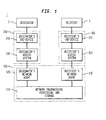
- Figure 1 illustrates a logical network architecture 1 of the present invention for communicating a message between an originator 2 and a recipient 3.
- a network element 100 connects an originator element 200 and a recipient element 300.
- the network element 100 includes a network transmission, processing, and storage element 110, an originator network agent 120, and a recipient network agent 130.
- the originator element 200 includes an originator end device 210 and an originator access system 220.
- each recipient element 300 includes a recipient end device 310 and a recipient access system 320.
- Figure 2 illustrates one example of a logical network architecture 1 of the present invention in which an originator 2 communicates a message to a plurality of recipients 3, 3' and 3".
- Figure 3 illustrates one example of a logical network architecture 1 of the present invention in which one recipient network agent 150 services a plurality of recipient elements 300 and 300'.
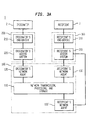
- Figure 3A illustrates another example of a logical network architecture 1 in which recipient 3 is served by two agents, for example, for purposes of load-sharing, redundancy, or specialized functionality.
- Figure 4 illustrates a flow chart for the general operation of the present invention for sending a message.
- User A is the originator 2 of the message and User B is the recipient 3 ofthe message.
- User A composes a multimedia message intended for User B in Step S100.
- the network element 100 receives the multimedia message from User A in Step S200.
- the network element 100 generates a generalized message in Step S300.
- User B is notified of the existence of the generalized message stored in the network element 100 in Step S400.
- User B requests retrieval of the stored message in Step S500.
- the network element 100 transmits multimedia message components ofthe generalized message to User B in Step S600.
- Step S 100 User A composes a multimedia message intended for User B.
- User A is the originator 2 and User B represents one of the intended recipients 3.
- the originator 2 uses an originator end device 210 to compose the multimedia message and to connect with the network element 100.
- the originator end device 210 can be any device capable of composing a multimedia message.
- the originator end device also may be capable of varying its multimedia capabilities. That is, the originator end device may be capable of selecting which multimedia capabilities are to be enabled.
- a personal computer and a video telephone are examples of originator end devices.
- the originator end device 210 connects to the network element 100 by way of an originator access system 220.
- the originator access system 220 may be a wireless and/or wireline system.
- the network element 100 receives the message from User A.
- the network element 100 can be any type of network that has the ability to transmit, process, and store messages between the originator element 200 and the recipient element 300 and their respective end devices 210 and 310.
- the network element 100 has more processing power, built-in memory, and throughput capacity than the originator element 200 and recipient element 300.
- the network element 110 includes a network transmission, processing, and storage element 110, an originator network agent 120 and a recipient network agent 130.
- the originator network agent 120 and the recipient network agent 130 act on behalf of the originator 2 and the recipient 3, respectively, and function to facilitate the generalized messaging construct.
- Network agent 120 or 130 can be a human operator and/or a software "object" such as a file, web page, application, data base or any other item on a computer system.
- the functions performed by the network agents 120 and 130 may include receipt, transmission, and notification of multimedia messages; detection of multimedia capabilities of user end devices; separation and analysis of multimedia message components; determination of alternative renderings to be generated; and/or generation of alternative renderings, specifications for generating alternative renderings, and generalized messages.
- Network agents 120 and 130 may be centralized or distributed. That is, network agents 120 and 130 may be implemented as software in a central-controlled processor associated with the networks, or they may be software in adjunct processors that communicate with the network, or they may be implemented as software "objects" that utilize various network resources as needed.
- Figure 1 the situation in which there is a one-to-one logical association between network agents and end users is shown. However, it is also possible for network agents to service multiple end users. For example, the situation in which one recipient network agent 130 services multiple recipients 3 and 3' is shown in Figure 3. Similarly, multiple agents, perhaps each specializing in a set of functions, could serve the same originator or the same recipient, as shown in Figure 3A.
- Step S300 the network element 100 generates a generalized message.
- the method of generating the generalized message will now be described with reference to Figure 5.
- the originator 2 composes an original message
- the original message is separated into its various multimedia message components in Step 302.
- the separated components of the original multimedia message are referred to as the native components of the multimedia message.
- the separation of the multimedia message S302 may be performed by either the originating element 200 or by the network element 100.
- separation ofthe multimedia message components S302 is accomplished by separately capturing each multimedia element, as with recordings of voice and encoding of video images.
- processing may be required to create or recreate the standardized components recognized by the network.
- Separation into multimedia components generally will also require the capture or creation of information that facilitates coordination among components - for example, time stamps stored with voice and video components that enable synchronized playback; similarly placement information for images to be interspersed with text.
- Such coordination information may be made a part of each component, or may be stored for the message as a whole.
- Step 304 the next step is determination of which types of alternative renderings are to be generated in Step 304. Determination of which types of alternative renderings are generated S304 may be manual or automatic and may be performed by the network element 100 and/or the originator element 200.
- Determination of which types of alternative rendering are to be generated S304 may be accomplished by sensing the multimedia capabilities of the recipient element 300. Sensing of the multimedia capabilities of the recipient elements is performed by the network element 100. Such multimedia capabilities include user-interface capability, protocol capability, format capability, bit rate capability, bandwidth capability, or any other characteristic apparent to one of ordinary skill in the art. For example, if a recipient end device is sensed to be a telephone, which is incapable of displaying text, the text component of the originator's message is converted to audio.
- determination of which types of alternative rendering are to be generated S304 may be accomplished by setting the network element 100 or originator element 200 to generate a predetermined set of alternative renderings.
- alternative rendering generation is autonomous. That is, predetermined default information may be provided in order to standardize the generalized messages when particular alternative renderings have not been specified. This would be desirable, for example, if the recipient or potential recipient and/or recipient's user capabilities were unknown at the time the message was originated.
- Step S306 refers to converting the native components of the multimedia message from one form to another in order to facilitate communication.
- General examples of alternative rendering generation S306 includes conversion from one type of media component to another, conversion from one type of formatting to another, conversion from one type of protocol to another, conversion from one type of bit rate to another, conversion from one bandwidth to another and/or any other type of conversion that would be apparent to one of ordinary skill in the art.
- alternative renderings include a rendering of an image component as text and/or voice; a rendering of a voice component as text and/or image; a rendering of a full-motion video component as image and/or sound; a rendering of a GIF (Graphics Interchange Format) image as a JPEG (Joint Photographic Experts Group) image; and rendering a large television video file, such as a HDTV (High Density Television) file, as a lower bit rate video format.
- GIF Graphics Interchange Format
- JPEG Joint Photographic Experts Group
- HDTV High Density Television
- Alternative rendering generation S306 may be manual or automatic and may be performed by the network element 100 and/or by the originator element 200.
- the originator 2 may provide alternative renderings manually by direct interaction with the network element 100 or through local means provided on the originator end-device 210.
- one or more originator network agents 120 may provide manual or automatic alternative rendering generation S306 alone or in addition to the originator element end-device 210.
- Generating alternative renderings S306 of native multimedia components may entail: 1) automatic media conversions, such as text-to-image or automatic speech recognition; 2) data compression and/or reformatting (e.g., convert high-resolution color image to low-resolution black and white); 3) automatic intelligent extraction of suitable and/or core information from the native components - for example, selection of key video frames for an alternative rendering as image, or key words from a large text message for rendering as a "brief'; and/or 4) interactions with the originator and/or originator's intelligent agent, including the use of stored profile or status information, and queries of the originator and/or originator's agent.
- automatic media conversions such as text-to-image or automatic speech recognition
- data compression and/or reformatting e.g., convert high-resolution color image to low-resolution black and white
- 3) automatic intelligent extraction of suitable and/or core information from the native components for example, selection of key video frames for an alternative rendering as image, or key words from a large text message for
- some or all alternative renderings may be specified by the message originator and/or originator's intelligent agent, but not actually carried out unless and until they are needed.
- the alternative "image" rendering of a "text" message may be specified by the originator as a standard Group III FAX conversion. But the message may be stored and transported in its "text" form and actual text-to-FAX conversion may be deferred until some recipient requires it.
- the alternative rendering initially exists only in the form of the Group III FAX specification and not the FAX image itself.
- information may also be created and stored as part of the alternative renderings, that facilitates coordinated regeneration of the components (e.g., time-stamps in "voice” components).
- the alternative renderings are combined with the native components in Step S308 in order to form a generalized message. That is, the generalized message is formed of a set of multimedia message components made up of both the native components ofthe original multimedia message and the alternative renderings of the native components.
- the generalized message construct matrix 700 is representative of one possible set of multimedia message components that may be adopted in the present invention.
- the set of media components includes a message brief component 702, a text component 704, a voice component 706, and an image component 708.
- the message brief component 702 of the generalized message provides a high-level description of the message contents and construct so that the network element 100 or recipient element 300 can readily ascertain the meaning ofthe message.
- the message brief component 702 can include information such as the subject of the message or subject line, the synchronization characteristics of the message, the size of the message, and any other information that would assist the recipient 3, the recipient element 300, the network element 100 or the recipient network agent 130 during transmission and receipt of the generalized message.
- the message brief component 702 may also contain information mandated by the system in order to receive a message, for example, billing information, security information, and the like.
- multimedia message components include video components, sound components and data components.
- a set of multimedia message components may be formed of any combination of multimedia message components and may include other media components, which are not identified herein but would be apparent to one of ordinary skill in the art.
- the set of multimedia message components can be standardized for a particular implementation or a class of applications in order to facilitate unified messaging between several different types of end devices and access systems.
- a generalized message can be viewed as the generalized message construct matrix 700 illustrated in Figure 6, where columns 702, 704, 706 and 708 represent the type of component and rows 712, 714, 716 and 718 represent the type of rendering.
- the white blocks of the matrix 700 represent the native components of a multimedia message and the shaded blocks of the matrix represent alternative renderings of the native components.
- message components of the same type are stored in columns as shown in Figure 6, and stored components generally are retrieved row by row.
- Each block of the generalized messaging construct matrix 700 contains information useful for rendering components of the multimedia message. This information may include characteristics such as media type, encoding scheme, or size of the component. In addition, there may be multiple encodings for each block for accommodating various recipient end devices and access systems.
- Step S400 User B is notified of the existence of the generalized message stored in the network element.
- notification is provided by the recipient element 300, specifically the recipient end device 310.
- Step S500 User B requests retrieval of the stored message.
- each recipient 3 uses a recipient end device 310 and a recipient access system 320 to retrieve message components of the generalized message.
- the recipient end device 310 may have the same or different media capabilities than the originator end device 210.
- the recipient end device may have multimedia capabilities that may be varied.
- Step S600 the network element 100 transmits the multimedia message components of the generalized message to User B.
- the entire generalized message may be transmitted to the recipient element 300. Alternatively, only those multimedia components corresponding to the multimedia capabilities of the recipient element 300 may be transferred.
- Determination of which multimedia components of the generalized message are to be transferred may be decided by the network element 100, the originator element 200, or the recipient element 300, or any component thereof. The determination may be made based on knowledge, detection, or prediction of the multimedia capabilities of the recipient element 200.
- User B is able to use the recipient element 300 to view, hear or otherwise translate the message components. Further, User B may also select which of the received components to hear and/or view at a certain time. For example, when at a telephone, User B may select only the audio components of the generalized message even if image and text components have also been received. That is, User B may choose to listen to just the component that originated as voice (represented by the white block at the intersection of column 706 and row 716). Or, User B may listen to all of the components of row 716, thereby gaining the most complete understanding of the message that is possible with voice-only access. Moreover, User B may forward the generalized message or components thereof to another intended recipient.
- the generalized message may not include generated alternative renderings. Rather, the generalized message may include specifications for generating alternative renderings of the native components.
- the specifications for generating alternative renderings are any instruction or other information which enables a recipient end user device to generate an alternative rendering.
- the specifications also may inform the recipient as to which alternative rendering or renderings will best convey the intended message of the originator.
- These specifications may be generated by the network element 100 and/or the originator element 200 and may be received by the network element 100 and/or the recipient element 300.
- Alternative renderings may be generated by the network element 100 and/or the recipient element according to alternative rendering specifications included in the generalized message.
- additional alternative renderings or alternative rendering specifications may be generated and added to the generalized message.
- the originator element 200 may specify one set of alternative renderings to be included in the generalized message. This set of alternative renderings may not be recognizable by all of the recipient elements 300.
- the network element 100 may sense the multimedia capabilities of the recipient element 300 and specify additional alternative renderings, which are able to be recognized by the recipient element 300, to be generated and included in the generalized message.
- the originator element 200 may specify one set of alternative rendering specifications to be included in the generalized message. This set of alternative rendering specifications may not be recognizable by all of the recipient elements 300, 300' and/or 300".
- the network element 100 may sense the multimedia capabilities of all the recipient element 300 and specify additional alternative rendering specifications, which are able to be recognized by all recipient element 300, to be included in the generalized message.
- the present invention also encompasses the situation where the originator 2 and recipients 3 are not human end users. Rather, the originator 2 and recipients 3 can be centralized databases or other types of information sources.
- User A composes an original multimedia message with a brief component X bb , a text component X tt , and an image component X ii .
- User A applies the generalized messaging construct to facilitate messaging so recipients having varying multimedia capabilities may access the multimedia message.
- User A composes the message applying the generalized message matrix 700, as shown in Figure 7.
- the diagonal line of white blocks represents the original multimedia message components of the generalized message.
- the presence of a component is indicated by an "X".
- the first subscript indicates the native component and the second subscript indicates how the component is rendered.
- X tt is the text component of the original multimedia message rendered as text
- X tv is the text component of the original multimedia message rendered as voice.
- the original multimedia message includes a message brief component X bb , a text component X tt , and an image component X ii as the native components of the multimedia message.
- Alternative renderings are then generated for each native component.
- the alternative renderings generated are X bt , X bv , X bi , X tb , X tv , X ti , X ib , X it , and X iv .
- alternative renderings of text, voice, and image are generated for the native message brief component
- alternative renderings of brief, voice, and image are generated for the native message text component
- alternative renderings of brief, text, and voice are generated for the native image component.
- User B having a wireless phone as a recipient end device, is then notified of the stored generalized message via the screen on the phone.
- notification is triggered by User B's network agent.
- User B then uses the wireless phone to access components of the generalized message. First, User B requests to hear the voice alternative rendering of the brief component X bv . After listening to the brief, User B then requests to hear the voice alternative rendering of the text component X tv . Finally, deciding that the voice alternative rendering of the image component X iv would not be helpful, User B decides to wait until he returns to his office where he then accesses the message from his personal computer and views the image rendering of the image component X ii .
- the original multimedia message is the same; however, User A knows that User B is limited to a voice-interface end device. In this case, User A specifies that only voice alternative renderings are to be generated for each of the native components. That is, only X bv , X tv , and X ti are generated.
- Multimedia messages are broken down into components of various multimedia types and alternative renderings of each multimedia component of the original message are generated. This provides the recipient of the message, who may be unable to render one or more of the original multimedia message components due to access system and/or end device incompatibility, with an alternative means for receiving the meaning of the originator's intended message.
- the recipient element receives alternative renderings of the original multimedia message components which can convey the meaning of the message to the recipient.
- This system and an approach to multimedia messaging renders messages in multiple, standardized formats and facilitates communication with different end user devices.
- the generalized messaging construct permits end user devices to translate to and from a standardized set of multimedia message components rather than translating directly to and from the various formats of the end user devices themselves.
- the present invention assures end users of effective multimedia messaging.
Landscapes
- Engineering & Computer Science (AREA)
- Signal Processing (AREA)
- Computer Networks & Wireless Communication (AREA)
- Computer Security & Cryptography (AREA)
- Business, Economics & Management (AREA)
- Human Resources & Organizations (AREA)
- Entrepreneurship & Innovation (AREA)
- Strategic Management (AREA)
- Economics (AREA)
- Physics & Mathematics (AREA)
- Computer Hardware Design (AREA)
- Marketing (AREA)
- Operations Research (AREA)
- Quality & Reliability (AREA)
- Tourism & Hospitality (AREA)
- Data Mining & Analysis (AREA)
- General Business, Economics & Management (AREA)
- General Physics & Mathematics (AREA)
- Theoretical Computer Science (AREA)
- Multimedia (AREA)
- Data Exchanges In Wide-Area Networks (AREA)
- Information Transfer Between Computers (AREA)
- Telephonic Communication Services (AREA)
Applications Claiming Priority (2)
| Application Number | Priority Date | Filing Date | Title |
|---|---|---|---|
| US135577 | 1980-03-31 | ||
| US13557798A | 1998-08-18 | 1998-08-18 |
Publications (1)
| Publication Number | Publication Date |
|---|---|
| EP0981231A1 true EP0981231A1 (fr) | 2000-02-23 |
Family
ID=22468702
Family Applications (1)
| Application Number | Title | Priority Date | Filing Date |
|---|---|---|---|
| EP99306303A Withdrawn EP0981231A1 (fr) | 1998-08-18 | 1999-08-10 | Système de messagerie généralisé |
Country Status (7)
| Country | Link |
|---|---|
| EP (1) | EP0981231A1 (fr) |
| JP (1) | JP2000101714A (fr) |
| KR (1) | KR20000017324A (fr) |
| CN (1) | CN1264232A (fr) |
| AU (1) | AU4452499A (fr) |
| BR (1) | BR9903621A (fr) |
| CA (1) | CA2275840A1 (fr) |
Cited By (16)
| Publication number | Priority date | Publication date | Assignee | Title |
|---|---|---|---|---|
| WO2005067328A1 (fr) * | 2003-12-01 | 2005-07-21 | France Telecom | Systeme de creation et de transmission de messages multimedias comportant une composante sonore modifiee |
| WO2005043926A3 (fr) * | 2003-11-04 | 2005-07-21 | Widerthan Com Co Ltd | Emission d'une tonalite de substitution de retour d'appel pour multimedia |
| WO2005107194A1 (fr) * | 2004-05-05 | 2005-11-10 | Nokia Corporation | Optimisation de livraison de messages multimedia |
| FR2871009A1 (fr) * | 2004-05-27 | 2005-12-02 | France Telecom | Procede de traitement d'un message multimedia, systeme de traitement et terminal de telecommunication associe |
| WO2006000975A1 (fr) * | 2004-06-21 | 2006-01-05 | Koninklijke Philips Electronics N.V. | Conversion de format et transfert de donnees multimedia |
| EP1435710A3 (fr) * | 2003-01-03 | 2006-07-26 | Microsoft Corporation | Système et procédé pour une communication améliorée entre un serveur et un client |
| EP1623335A4 (fr) * | 2003-04-22 | 2006-12-06 | Voice Genesis Inc | Systeme de messagerie omnimodale |
| KR100807904B1 (ko) * | 2001-11-20 | 2008-02-27 | 에스케이 텔레콤주식회사 | 멀티미디어 메시징 서비스 릴레이 서버와 멀티미디어 제어서버간의 연동방법 |
| KR100859290B1 (ko) * | 2002-02-09 | 2008-09-19 | 주식회사 엘지이아이 | 이동통신 시스템에서 영상 메시지의 수신 제어 방법 |
| US7451180B2 (en) | 2002-11-20 | 2008-11-11 | Microsoft Corporation | System and method for using packed compressed buffers for improved client server communications |
| WO2008140391A1 (fr) * | 2007-05-11 | 2008-11-20 | Telefonaktiebolaget L M Ericsson (Publ) | Interrogation de capacité d'appel de groupe |
| EP1581852A4 (fr) * | 2002-10-24 | 2008-11-26 | Speechgear Inc | Information integree distribuee sous un format selectionne |
| US7620688B2 (en) | 2003-01-03 | 2009-11-17 | Microsoft Corporation | Progress mode for electronic mail component |
| US7899872B2 (en) | 2003-01-03 | 2011-03-01 | Microsoft Corporation | System and method for improved synchronization between a server and a client |
| US7934155B2 (en) | 2003-09-12 | 2011-04-26 | Koninklijke Philips Electronics N.V. | Method and electronic device for reducing size of an electronic collection of media elements |
| EP2249529A3 (fr) * | 2004-03-23 | 2012-02-08 | NDS Limited | Adaptation optimale d'un contenu multimédia à reproduire sur un dispositif d'abonné mobile |
Families Citing this family (5)
| Publication number | Priority date | Publication date | Assignee | Title |
|---|---|---|---|---|
| KR100352856B1 (ko) * | 2000-09-08 | 2002-09-16 | (주) 엘지텔레콤 | 이동통신 시스템에서 무선응용 프로토콜 적용방법 |
| KR100871223B1 (ko) * | 2002-12-02 | 2008-12-01 | 삼성전자주식회사 | 멀티미디어 메시지를 송수신하는 이동 통신 시스템 및 방법 |
| KR20040052104A (ko) * | 2002-12-13 | 2004-06-19 | 에스케이 텔레콤주식회사 | 서식 편집된 장문 메시지 서비스 기능을 갖는 이동통신시스템 및 서식 편집된 장문 메시지 서비스 방법 |
| CN100563220C (zh) * | 2006-10-26 | 2009-11-25 | 华为技术有限公司 | 通用消息终端与专用消息终端交互的方法 |
| CN101212719B (zh) * | 2006-12-31 | 2011-12-28 | 华为技术有限公司 | 一种无线通信网络中实现融合消息业务的方法及系统 |
Citations (1)
| Publication number | Priority date | Publication date | Assignee | Title |
|---|---|---|---|---|
| US5630060A (en) * | 1993-01-13 | 1997-05-13 | Canon Kabushiki Kaisha | Method and apparatus for delivering multi-media messages over different transmission media |
-
1999
- 1999-06-21 CA CA002275840A patent/CA2275840A1/fr not_active Abandoned
- 1999-08-10 EP EP99306303A patent/EP0981231A1/fr not_active Withdrawn
- 1999-08-12 BR BR9903621-5A patent/BR9903621A/pt not_active Application Discontinuation
- 1999-08-16 KR KR1019990033607A patent/KR20000017324A/ko not_active Ceased
- 1999-08-17 AU AU44524/99A patent/AU4452499A/en not_active Abandoned
- 1999-08-17 CN CN99117912A patent/CN1264232A/zh active Pending
- 1999-08-18 JP JP11230975A patent/JP2000101714A/ja active Pending
Patent Citations (1)
| Publication number | Priority date | Publication date | Assignee | Title |
|---|---|---|---|---|
| US5630060A (en) * | 1993-01-13 | 1997-05-13 | Canon Kabushiki Kaisha | Method and apparatus for delivering multi-media messages over different transmission media |
Non-Patent Citations (1)
| Title |
|---|
| MILLER J G ET AL: "ACCESSING MESSAGES YOUR WAY", AT & T TECHNOLOGY,US,AMERICAN TELEPHONE & TELEGRAPH CO. SHORT HILLS, NEW JERSEY, vol. 10, no. 1, pages 6-9, XP000530274, ISSN: 0889-8979 * |
Cited By (24)
| Publication number | Priority date | Publication date | Assignee | Title |
|---|---|---|---|---|
| KR100807904B1 (ko) * | 2001-11-20 | 2008-02-27 | 에스케이 텔레콤주식회사 | 멀티미디어 메시징 서비스 릴레이 서버와 멀티미디어 제어서버간의 연동방법 |
| KR100859290B1 (ko) * | 2002-02-09 | 2008-09-19 | 주식회사 엘지이아이 | 이동통신 시스템에서 영상 메시지의 수신 제어 방법 |
| EP1581852A4 (fr) * | 2002-10-24 | 2008-11-26 | Speechgear Inc | Information integree distribuee sous un format selectionne |
| US7451180B2 (en) | 2002-11-20 | 2008-11-11 | Microsoft Corporation | System and method for using packed compressed buffers for improved client server communications |
| US7366760B2 (en) | 2003-01-03 | 2008-04-29 | Microsoft Corporation | System and method for improved client server communications of email messages |
| EP1435710A3 (fr) * | 2003-01-03 | 2006-07-26 | Microsoft Corporation | Système et procédé pour une communication améliorée entre un serveur et un client |
| US7899872B2 (en) | 2003-01-03 | 2011-03-01 | Microsoft Corporation | System and method for improved synchronization between a server and a client |
| US7620688B2 (en) | 2003-01-03 | 2009-11-17 | Microsoft Corporation | Progress mode for electronic mail component |
| KR101046016B1 (ko) * | 2003-01-03 | 2011-07-01 | 마이크로소프트 코포레이션 | 이메일 메시지의 향상된 클라이언트 서버 통신을 위한 시스템 및 방법 |
| KR101046875B1 (ko) | 2003-01-03 | 2011-07-05 | 마이크로소프트 코포레이션 | 이메일 메시지의 향상된 클라이언트 서버 통신을 위한 시스템 및 방법 |
| US7730150B2 (en) | 2003-01-03 | 2010-06-01 | Microsoft Corporation | System and method for improved client server communications of email messages |
| US9590927B2 (en) | 2003-01-03 | 2017-03-07 | Microsoft Technology Licensing, Llc | System and method for improved synchronization between a server and a client |
| AU2003262474B2 (en) * | 2003-01-03 | 2009-08-13 | Microsoft Technology Licensing, Llc | System and method for improved client server communications of email messages |
| EP1623335A4 (fr) * | 2003-04-22 | 2006-12-06 | Voice Genesis Inc | Systeme de messagerie omnimodale |
| US7277951B2 (en) | 2003-04-22 | 2007-10-02 | Voice Genesis, Inc. | Omnimodal messaging system |
| US7934155B2 (en) | 2003-09-12 | 2011-04-26 | Koninklijke Philips Electronics N.V. | Method and electronic device for reducing size of an electronic collection of media elements |
| WO2005043926A3 (fr) * | 2003-11-04 | 2005-07-21 | Widerthan Com Co Ltd | Emission d'une tonalite de substitution de retour d'appel pour multimedia |
| WO2005067328A1 (fr) * | 2003-12-01 | 2005-07-21 | France Telecom | Systeme de creation et de transmission de messages multimedias comportant une composante sonore modifiee |
| EP2249529A3 (fr) * | 2004-03-23 | 2012-02-08 | NDS Limited | Adaptation optimale d'un contenu multimédia à reproduire sur un dispositif d'abonné mobile |
| WO2005107194A1 (fr) * | 2004-05-05 | 2005-11-10 | Nokia Corporation | Optimisation de livraison de messages multimedia |
| FR2871009A1 (fr) * | 2004-05-27 | 2005-12-02 | France Telecom | Procede de traitement d'un message multimedia, systeme de traitement et terminal de telecommunication associe |
| WO2006000975A1 (fr) * | 2004-06-21 | 2006-01-05 | Koninklijke Philips Electronics N.V. | Conversion de format et transfert de donnees multimedia |
| WO2008140391A1 (fr) * | 2007-05-11 | 2008-11-20 | Telefonaktiebolaget L M Ericsson (Publ) | Interrogation de capacité d'appel de groupe |
| EP2147540A4 (fr) * | 2007-05-11 | 2013-09-11 | Ericsson Telefon Ab L M | Interrogation de capacité d'appel de groupe |
Also Published As
| Publication number | Publication date |
|---|---|
| KR20000017324A (ko) | 2000-03-25 |
| BR9903621A (pt) | 2000-09-05 |
| AU4452499A (en) | 2000-03-09 |
| JP2000101714A (ja) | 2000-04-07 |
| CN1264232A (zh) | 2000-08-23 |
| CA2275840A1 (fr) | 2000-02-18 |
Similar Documents
| Publication | Publication Date | Title |
|---|---|---|
| CA2275840A1 (fr) | Construit generalise de messagerie | |
| US9653081B2 (en) | Digital media frame | |
| AU2001277956B2 (en) | Method and system for accessing a service available on a second network by a member of a first network | |
| CN1728760B (zh) | 通信设备和方法 | |
| AU2005203333B2 (en) | Method and system for sharing images using a digital media frame | |
| US8682986B2 (en) | Communication device having the capability of performing information exchange between a facsimile medium and an electronic information medium such as an E-mail medium | |
| US7106473B2 (en) | Communication system and communication apparatus building the system | |
| US6421429B1 (en) | Network-based system enabling image communications | |
| US20070300232A1 (en) | Omnimodal messaging system | |
| AU2001277956A1 (en) | Method and system for accessing a service available on a second network by a member of a first network | |
| US6084952A (en) | System and method for communicating electronic messages over a telephone network using acoustical coupling | |
| NZ240864A (en) | Real time interactive distributed image processing via public telephone network | |
| US20080218809A1 (en) | Method and architecture of sending and receiving facsimile over instant messaging software | |
| JP2001078271A (ja) | 移動通信網での発信者情報提供装置及び発信者情報伝送方法 | |
| CN101399837A (zh) | 安全文档传送 | |
| US7006121B2 (en) | Virtual terminal configuring method and device | |
| JP2002051312A (ja) | 情報処理装置、情報処理方法およびその方法をコンピュータに実行可能な記録媒体 | |
| JP2517626B2 (ja) | 通信システム | |
| JPH06290122A (ja) | 情報分割提示型電子メールシステム及び電子メール送受信方法 | |
| KR100566980B1 (ko) | 화상데이터전송기능이 구비된 통합 메시징시스템과 그제어방법 | |
| WO2001022297A1 (fr) | Trame de support numerique | |
| KR20020061884A (ko) | 일반통신망을 이용한 영상정보단말기 | |
| JP3068443B2 (ja) | ファクシミリ装置 | |
| Schumacher | Multimedia conversion and storage in the PCS environment | |
| JPH1041999A (ja) | マルチメディア情報通信端末装置及びマルチメディア情報通信システム |
Legal Events
| Date | Code | Title | Description |
|---|---|---|---|
| PUAI | Public reference made under article 153(3) epc to a published international application that has entered the european phase |
Free format text: ORIGINAL CODE: 0009012 |
|
| AK | Designated contracting states |
Kind code of ref document: A1 Designated state(s): DE FI FR GB SE |
|
| AX | Request for extension of the european patent |
Free format text: AL;LT;LV;MK;RO;SI |
|
| 17P | Request for examination filed |
Effective date: 20000811 |
|
| AKX | Designation fees paid |
Free format text: DE FI FR GB SE |
|
| STAA | Information on the status of an ep patent application or granted ep patent |
Free format text: STATUS: THE APPLICATION HAS BEEN WITHDRAWN |
|
| 18W | Application withdrawn |
Effective date: 20041006 |